I love you, Alemany Farmer’s Market! Plus: what one does with Bitter Melon Greens

Bitter melon greens with paneer

Bitter melon greens with paneer

I do so love you, Alemany Farmer’s Market! I love all the other farmer’s markets too but you are soooo special.

I have found that there are two types of farmer’s markets in the Bay Area. There are farmer’s MARKETS and then there are FARMER’S markets. The former are a lot about marketing. They sell produce, sure, but a lot of it is overpriced, and more than half the stalls are filled with high-profit-margin goods like infused oils in precious glass bottles. I can do that for free at home in an emptied jam jar and no preciousness.

Alemany Farmer's Market (Copyright: Kurt Rogers, The Chronicle)

Alemany Farmer’s Market (Copyright: Kurt Rogers, The Chronicle)

But Alemany farmer’s market, you truly are a FARMER’S market. I love you because you tickle my fancy every time I visit. Where else can I find corn that is blue and smaller than my palm and sticky. Where else can I find a fleshy, hairy stalk that is labeled ‘wild potato’ (even Google flopped on that one). Where else would I see tiny blotchy eggs that were apparently laid by a quail. Where else would I find a prickly pink egg, and not only giant taro with their purple stem still attached but also taro leaves. Where else can I find not one, not two, but three or four choy-related greens.

And no matter how strange and unfamiliar the sight I see, there’s always a crowd of customers expertly assessing, holding, pressing, rifling through the produce. There I stand, mystified, in awe, only to be elbowed aside by a little old lady with her cloth bag who has zeroed in on the unnamed leaves and is tossing aside the rotten ones and snagging the good ones. She is gone before I can gasp — excuse me, lady, can you save some for me, and by the way, what on earth is it?

In this farmer’s market, advice abounds. As soon as I pick up a fruit or vegetable and stand there regarding it, someone or the other’s voice will speak up beside me — you chop it, you fry it with garlic. Or boil it with chicken. Or what have you. More often than not, the English is broken and heavily accented and the accents could come from any part of the world from Africa to Vietnam. If San Francisco is a microcosm, then Alemany Farmer’s Market is a micro-micro-cosm. Or a micro-cosm-cosm? Something like that.

Best of all is when this market reintroduces me to some childhood friends that I didn’t at first recognize. The other day this happened to me twice. First I see these pretty round leaves tied in a bunch. The person at the stall informs me that they are moringa leaves, grown all over the world from Africa to the Himalayas to South-east Asia, a miracle vegetable that can cure all sorts of ailments. Sounds familiar, but what is it? Hold that thought…a post on that will come next.

Bitter melon greens

Bitter melon greens

Next I see a stall with these simply humungus bunches of bright green leaves with tendrils sticking out all over. Turns out these are leaves from the bitter melon plant — bitter gourd, karela, call it what you will. Well. That is an old friend and I love it. I have cooked with it many times. But I didn’t know that the leaves were edible too.

Bitter melon greens with paneer

Turns out they are, down to the stems. They are certainly bitter though, so I tried cooking them with something creamy to smooth out the bitterness. I used ghee and paneer.

The other thing about this recipe is that it is more of a mindset rather than a fixed set of steps. If you don’t have paneer, you might substitute with ricotta. If you don’t have the bitter melon greens, either dandelion greens, radicchio or frisée would be a great replacement. Out of the spices used, if you don’t have one, just leave it out, although of course the character of the dish will morph. The cumin seeds in particular, I would try not to leave out. Heat can come from any source like the cracked red pepper that the Italians use. Ghee of course, can be replaced with butter. Mmm…now I can’t wait to try this completely new recipe with all the replacements made! Here are pictures of the process.

Slicing the greens

Slicing the greens

Other ingredients: paneer, onion, garlic, chili, cumin

Other ingredients: paneer, onion, garlic, chili, cumin

Frying garlic, chili, onion

Frying garlic, chili, onion

Paneer goes in

Paneer goes in

Powdered spices go in

Powdered spices go in

Stir to coat

Stir to coat

Greens go in

Greens go in

Done

Done

Bitter melon greens with paneer

Ingredients
  • 1/2 pound paneer
  • Half a bunch bitter melon greens
  • 1 large shallot or half a medium onion, chopped fine
  • 4-5 cloves garlic, sliced
  • 1-3 serrano chilies, sliced
  • 1 teaspoon cumin seeds
  • 1/4 teaspoon turmeric powder
  • 3/4 teaspoon salt
  • 1/2 teaspoon red chili powder (optional)
  • 1 tablespoon ghee
Method

Rinse and slice the greens. The finer you slice the greens the better the final result. I ultimately didn’t get it super fine but I did try to ensure no stem was longer than half an inch. Dice the paneer into little blocks about 1/4 inch on each side. Finely chop the shallot, garlic and chilies.

Heat the ghee in a wide pan on medium heat. When it is shimmering, put in the cumin seeds. They will presently sizzle, then in goes the garlic and chilies. Let them get a little shriveled (couple minutes) and put in the onion. The onion only needs to cook until pink and translucent, not browned.

Put in paneer at this point, along with the dry masalas (turmeric powder, red chili powder and salt). Stir to combine. Greens go in next. Toss with paneer and spices. Then don’t need to cook for long. When they look shrunk down and shiny, add about half a cup of hot water, cover and cook on low for just about 4 minutes and you are done.

This goes well with chapatis/rotis or rice.

Let's connect... FB-f-Logo__blue_29 pinterest_badge_red Google+ twitter-button-small

A slab of bread rolls — laadi pav


Pav

Pav

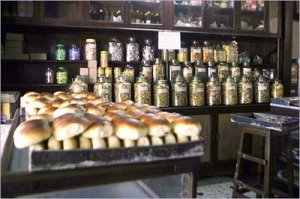
Most people are only dimly aware of this but the Portuguese colonized India long before the British, and hung on till long after. Because of their influence, a particular yeasted bread called pav spread all around Bombay and became very much part of the culture of the city. (A word on that shortly.) Now pão in Portuguese simply means ‘bread’. In India, we have a pretty fraught relationship with yeast breads, as in, we didn’t get around to rising breads much. Most of the use of wheat flour is for flat breads. It’s not that risen breads are not popular in India — they are, very much so. But they come from the European influence, and have always remained a bit foreign. By that I mean that hardly anyone makes risen breads at home. When I was a kid, if one wanted pav, one had to resort to bakeries.

Irani restaurants

By iranichaimumbai (http://creativecommons.org/licenses/by-sa/2.0), via Wikimedia Commons

In the old days, most of the bakeries in Bombay were run by the Iranis, as part of tea-houses called Irani restaurants. They were pretty unique establishments, run by Zoroastrians who escaped Iran around the 1920’s. For me, it is impossible to think back to any neighborhood in South Bombay without thinking of the corner Irani restaurant that served it. The Iranis were foreigners and the rigid customs of Hinduism meant nothing to them. The food they served was mostly Irani cuisine but also had a touch of Europe.

Their clientele looked like the city itself. There were Christians and Parsees, taxi drivers and street workers, middle-class office workers and retirees. For a few rupees you could hang out for hours under the high ceilings, the drone of the fan overhead, read the morning newspaper that was still warm from the press, sit on the wooden colonial-style netted chairs at glass-topped tables in peace while you ate your breakfast.

They were not fancy. Customer service was a bit…brusque. This post has an entertaining story about that. Tea inevitably got poured into the saucer to be drunk. Breakfast was variations on pav. Maska pav is bread and butter. Brun maska pav is hard brown bread with butter. Akuri pav is pav bread with scrambled eggs. And so on.

If you want to further explore the old world of Irani restaurants, here are some websites with pictures and wonderful stories. The Heritage Institute page on it, and one from a website called Irani Chai.

Street food

The Irani restaurants are sadly on their way out. Many have turned into beer bars, one into a McDonalds. If they are around, they have survived by expanding their menus to include dosas and Chinese. But pav bread remains as popular in the city as ever. It fuels much of the manual labor that goes on in the city from the early hours to way past midnight.

I guess this is the appropriate time in this post for me to start referring to the city as Mumbai. People say that no one starves in Mumbai. To eat a decent, wholesome meal, you don’t need to own a kitchen or a stove or even own a pair of shoes. Every street corner has some food stall or the other. Many serve meals centered on pav. Plates and cutlery are completely unnecessary. Food is simply handed to you or may be wrapped in a newspaper.

One is vada pav, which is mashed potato deep-fried in a besan batter, served inside a pav, with garlic chutney. Another is pav bhaji, which is a mashed mixture served with pav with tons of butter. For 50 rupees you can fill your belly with an excellent, pure vegetarian, wonderfully-spiced meal. People, please realize how wonderful this is. The Odd Pantry will showcase all of those recipes eventually.

But one has to start with pav.

Laadi pav

The particular version of Portuguese pão that we in India latched onto looks like a grid of bread buns stuck together at the edges into a slab (‘laadi’). To me the word ‘laadi’ sounds a bit mechanical or construction-related, so it is quite endearing when it is used for bread. Looks a lot like a dinner roll that is available all over America.

But look, this is different. I’ve tried to recreate my favorite street food snacks at home using a standard dinner roll, but the results are terribly disappointing. This is because store-bought dinner rolls have more than a hint of sweetness and that simply does not go with the savory flavors of street food. It totally ruins it, in fact. They often don’t use real butter and one absolutely needs real butter.

This recipe of pav has no sugar whatsoever. None. You don’t need any. And real butter. Just try it.

Flour and yeast

Flour and yeast

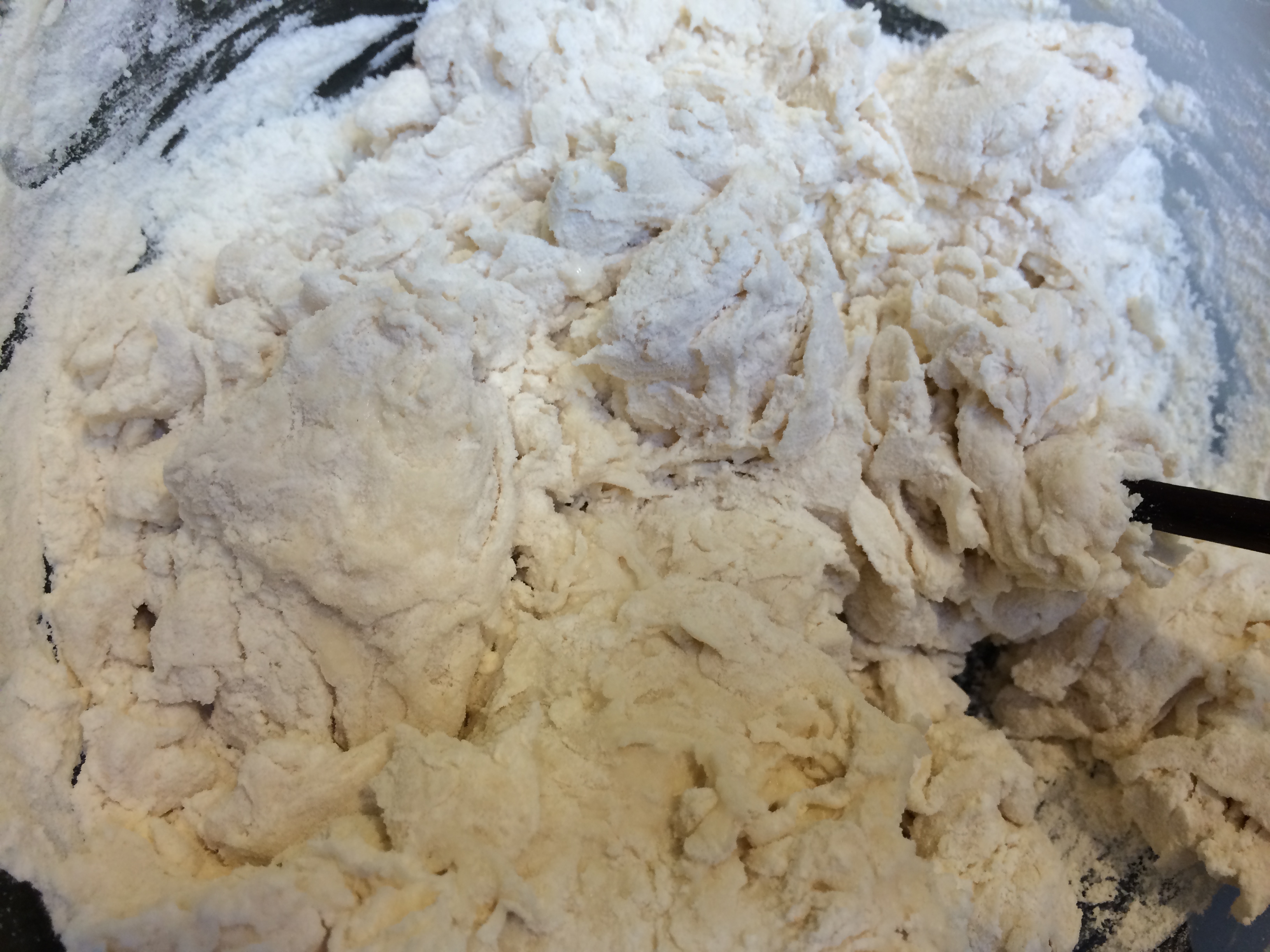
Pour water in and stir

Pour water in and stir

Shaggy mass

Shaggy mass

Shaggy mass with butter poured on

Shaggy mass with butter poured on

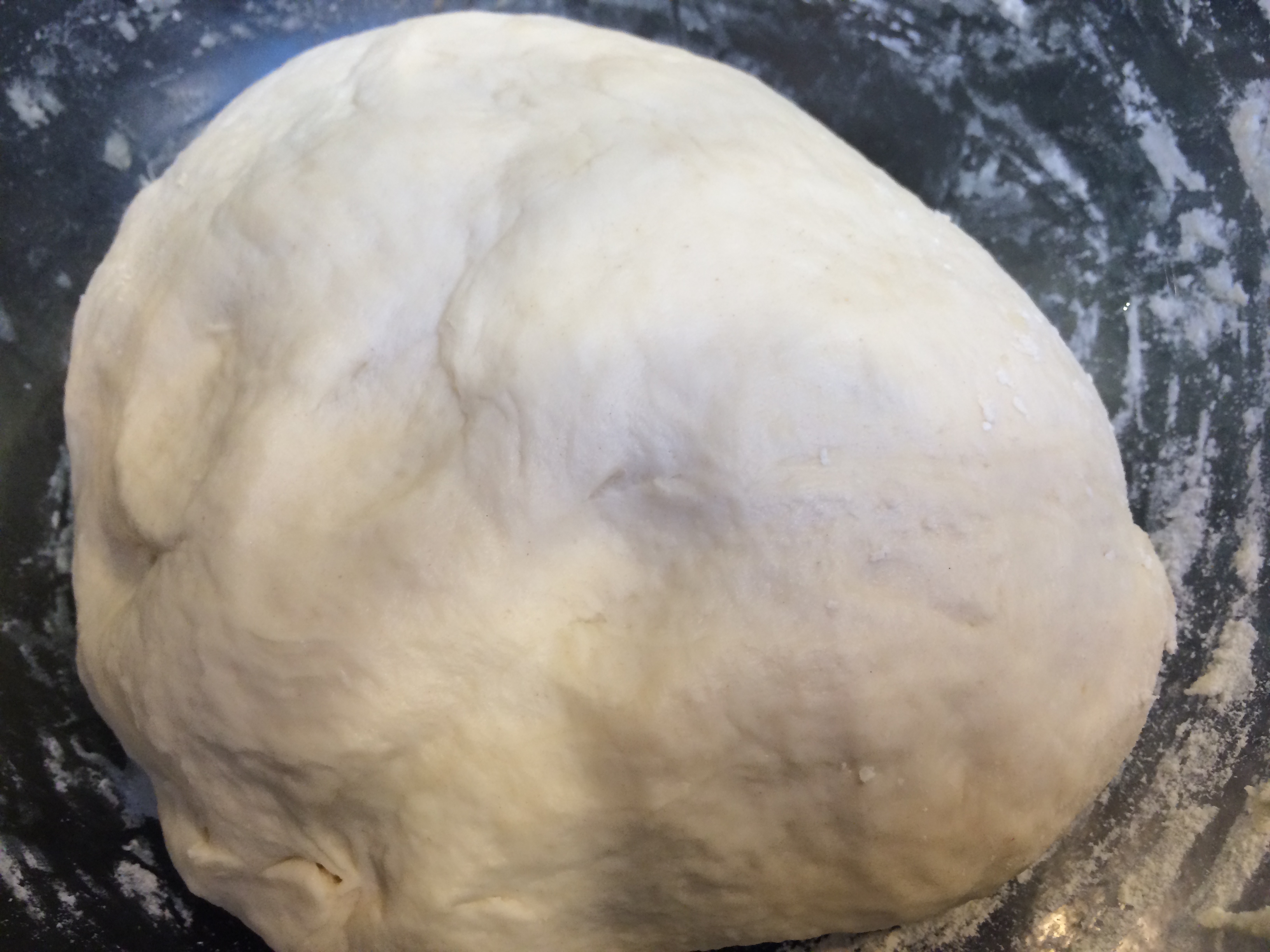
Pav dough

Pav dough

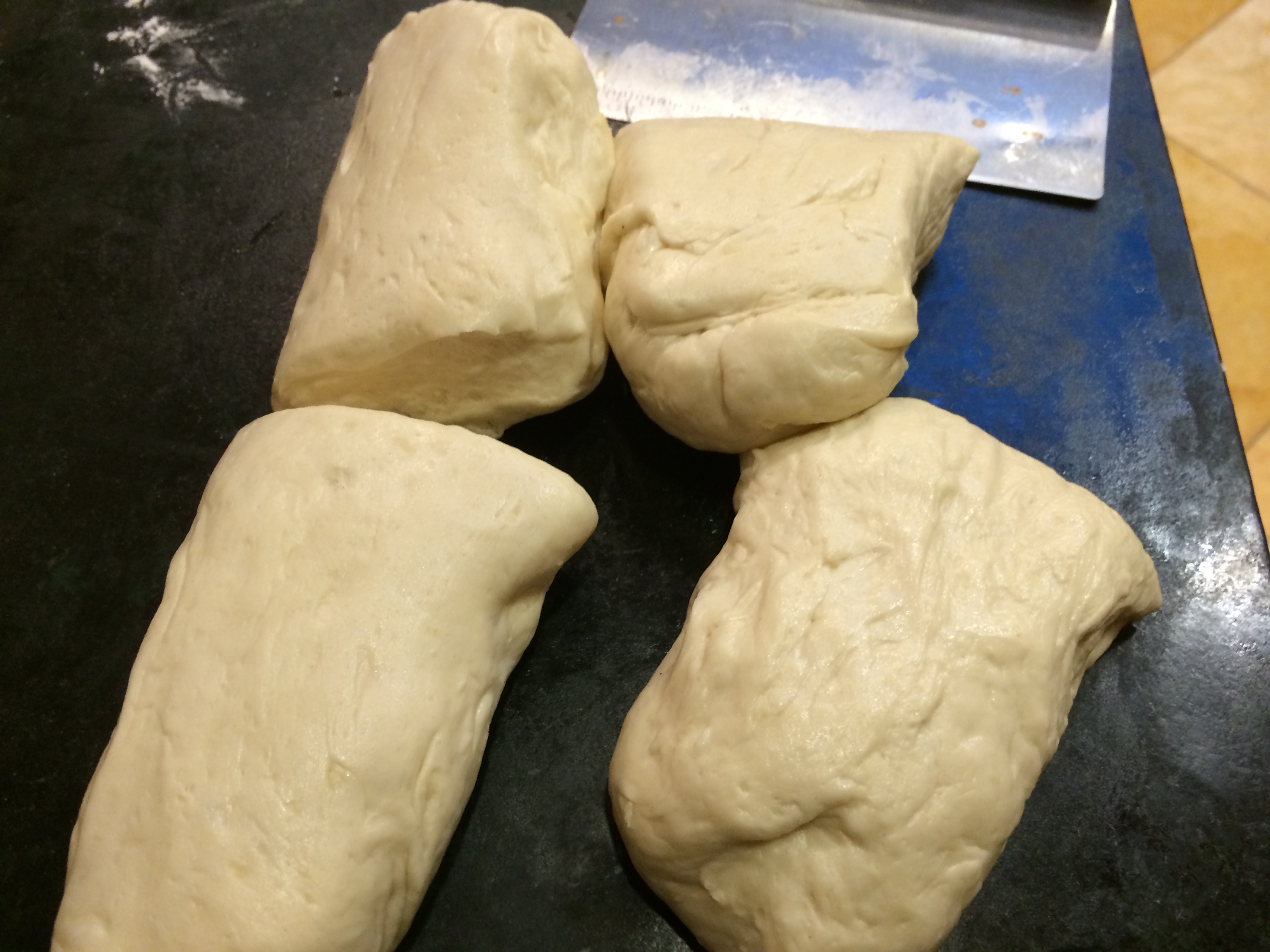
Divided dough

Divided dough

Further divided dough

Further divided dough

Pav rising

Pav rising

Pav risen

Pav risen

Laadi pav

Ingredients
  • 3 cups bread flour (I used King Arthur, substitute with all purpose or maida in India)
  • 1 teaspoon instant yeast. This is also available in most stores as bread machine yeast.
  • 3/4 teaspoon salt
  • 2 tablespoons unsalted butter
Method

Have the flour in a large bowl. Sprinkle in the yeast and stir it in. Then sprinkle in the salt and stir that in. Add 1.25 cups room temperature water and gently stir to moisten all the flour and make a shaggy mass. Cover and go do something else for 15-20 minutes.

Melt the butter — I use the microwave for this. But make sure it is not sizzling, it needs to be just melted. Pour the butter over the flour mixture. Now give it a good kneading, for about 5-7 minutes. The dough will be smooth and shiny.

Cover with plastic wrap and leave it aside at room temperature to rise for 1.5-2 hours. My room temperature is around 70°F. In India, room temperature will be a lot higher, so I would leave it under a fan or airy window.

In 1.5-2 hours, it will have doubled. Gently take the dough out, and using a pastry cutter, divide it into 12 rolls. The way I do this is to first divide in half, then each of those into halves to make 4 quarters, and each of those into 3 to make 12.

Each roll must be shaped like this: take the dough in hand and start by rolling it into a pouch, press down the center point with your thumbs and keep rolling more and more of the bun into the pouch. You are sort of trying to make a stretched balloon with the outer surface. Pinch the seam of the pouch shut. Cover with oil and lay seam-side down on a cookie sheet. Each roll is to be place half inch away from its neighbors in a grid.

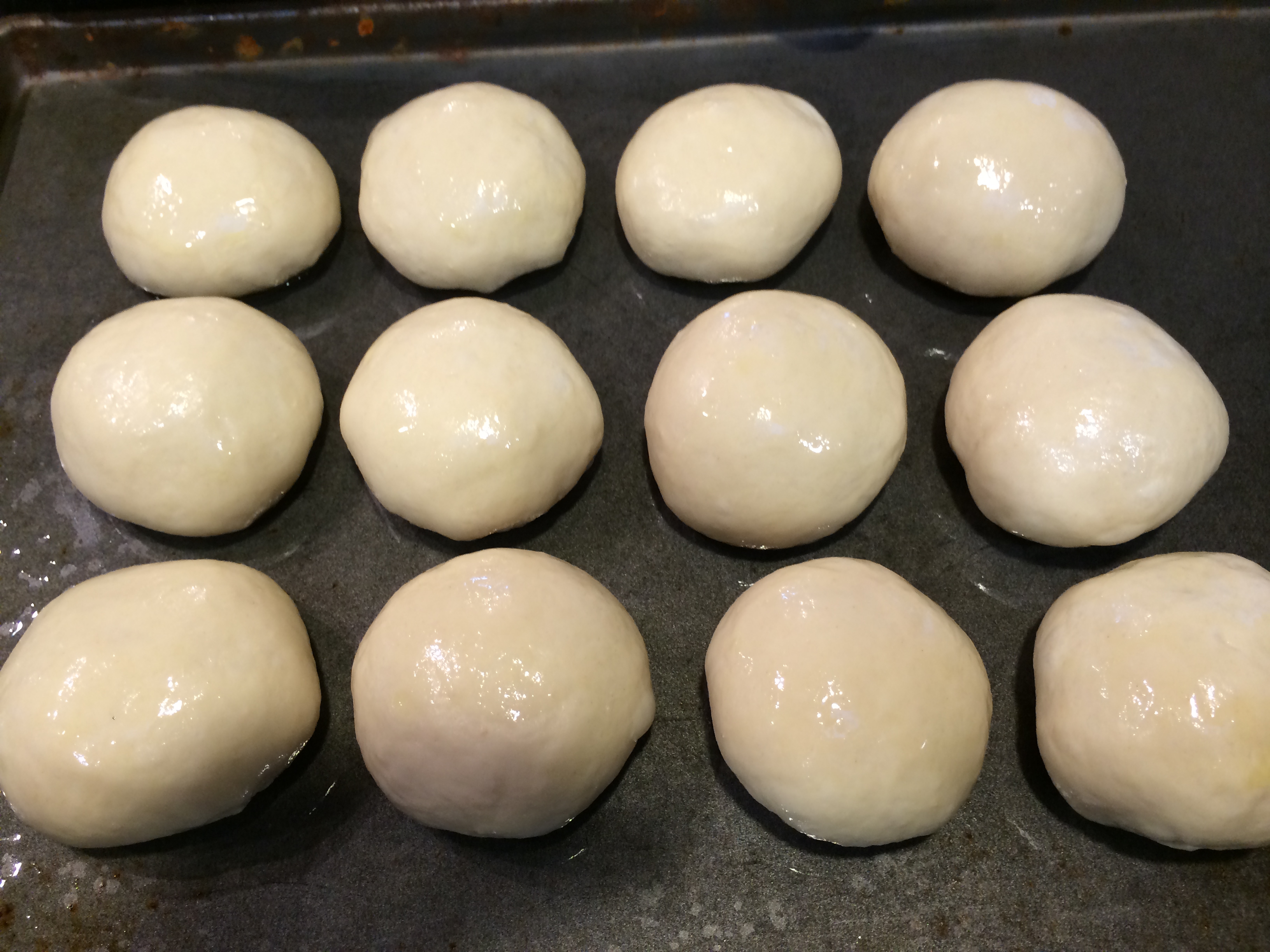
Let it rise for another hour. The rolls will have risen into each other and gotten connected. Bake in a 425°F oven for 15 minutes. If you like, brush with butter right away when they come out.


FB-f-Logo__blue_29 pinterest_badge_red Google+ twitter-button-small

End-of-the-week pasta

End-of-the-week pasta

End-of-the-week pasta

Friday night and the fridge is empty. Dinner needs to be made. The kid is hanging around the kitchen wanting to ‘help’, while the husband wants something simple and non-fussy. But good, of course — it has to be good. What to do? What to do?

Tucked away in a corner of the fridge, there is that radicchio left over from that salad I made, and some green garlic I picked up for a forgotten project. And of course there are some indestructibles hidden in the pantry, the dried mushrooms, the sundried tomatoes. The recipe invents itself! It’s time for the: ‘End-of-the-week Pasta’! Otherwise known as the: ‘Kitchen-sink Pasta’, or perhaps the ‘What-is-that?-throw-it-in Pasta’. Or maybe I want to call it the ‘Fresh Linguini with Radicchio and Slivered Almonds in a Porcini and Green Garlic Sauce’. What do you think?

Fresh Linguini with Radicchio and Slivered Almonds in a Porcini and Green Garlic Sauce

Curtain of linguini

Curtain of linguini

This recipe does not demand fresh homemade pasta, but it does politely ask for it. The delicacy of fresh pasta allows you to individually taste the many — um, disparate ingredients. My daughter loves helping with cranking the pasta machine, and loves the curtain of pasta strands that get extruded, so that’s a plus (no homework on Friday evenings, need to keep her busy). For the fresh pasta look here — It’s nice to be kneaded.

I also used cheddar cubes to finish, which formed nice gooey cheesiness around the strands.

A note about salt. I didn’t add any except to the pasta water, because I had the anchovies. If you leave those out, please do add salt to taste.

Here are some pictures to show the process.

Radicchio gets sliced

Radicchio gets sliced

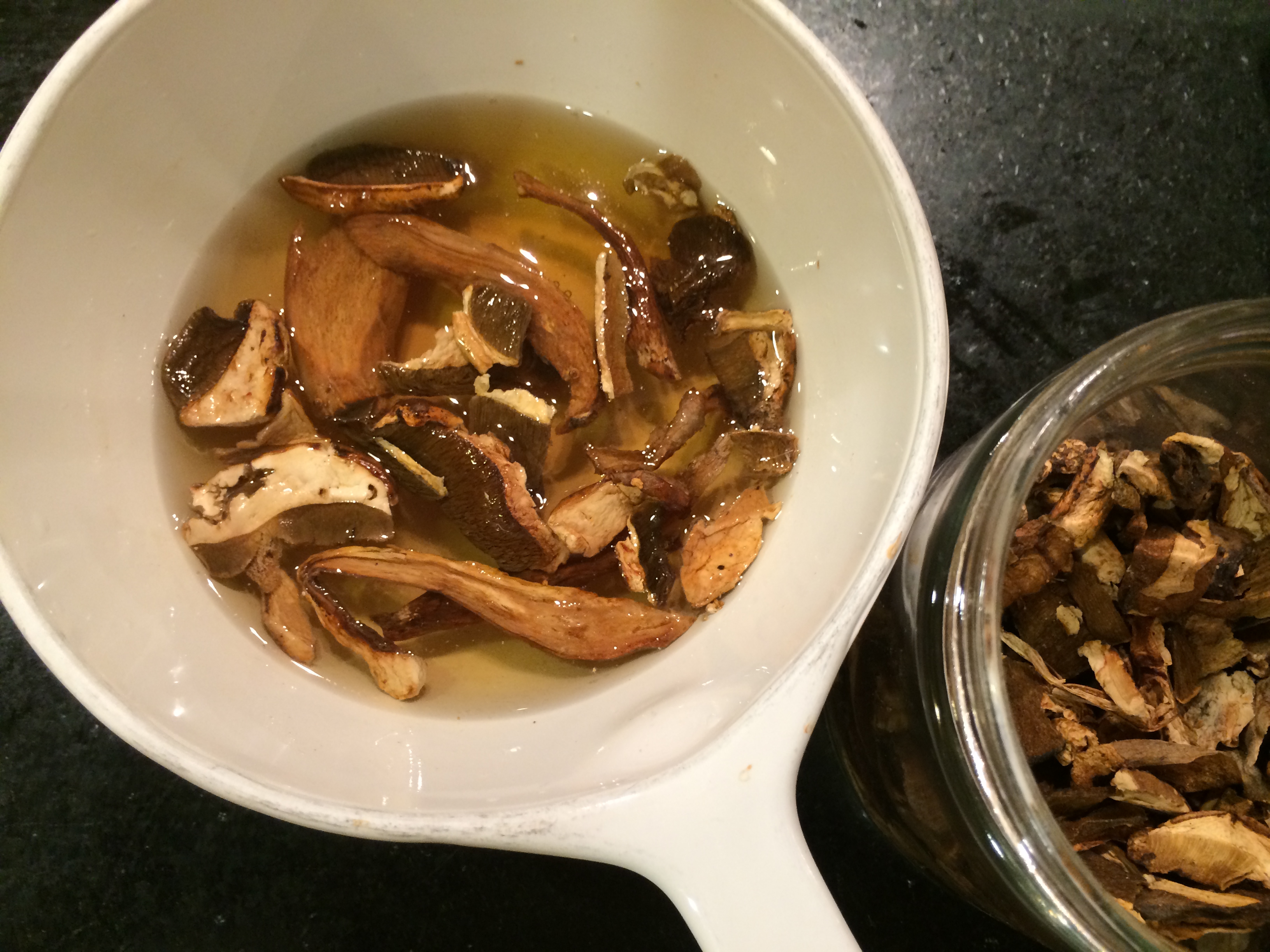
Porcini reconstituting

Porcini reconstituting

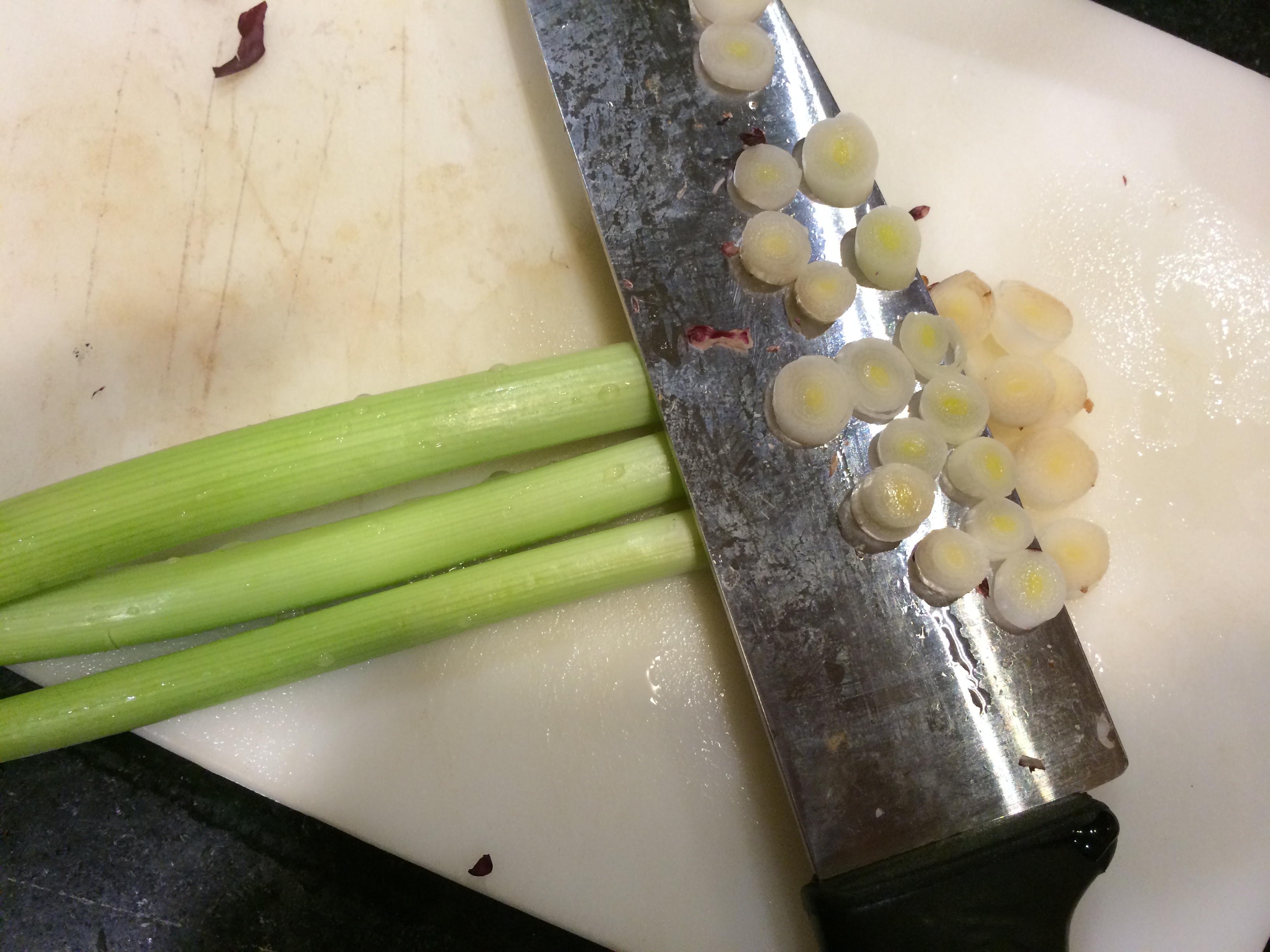
Green garlic sliced

Green garlic sliced

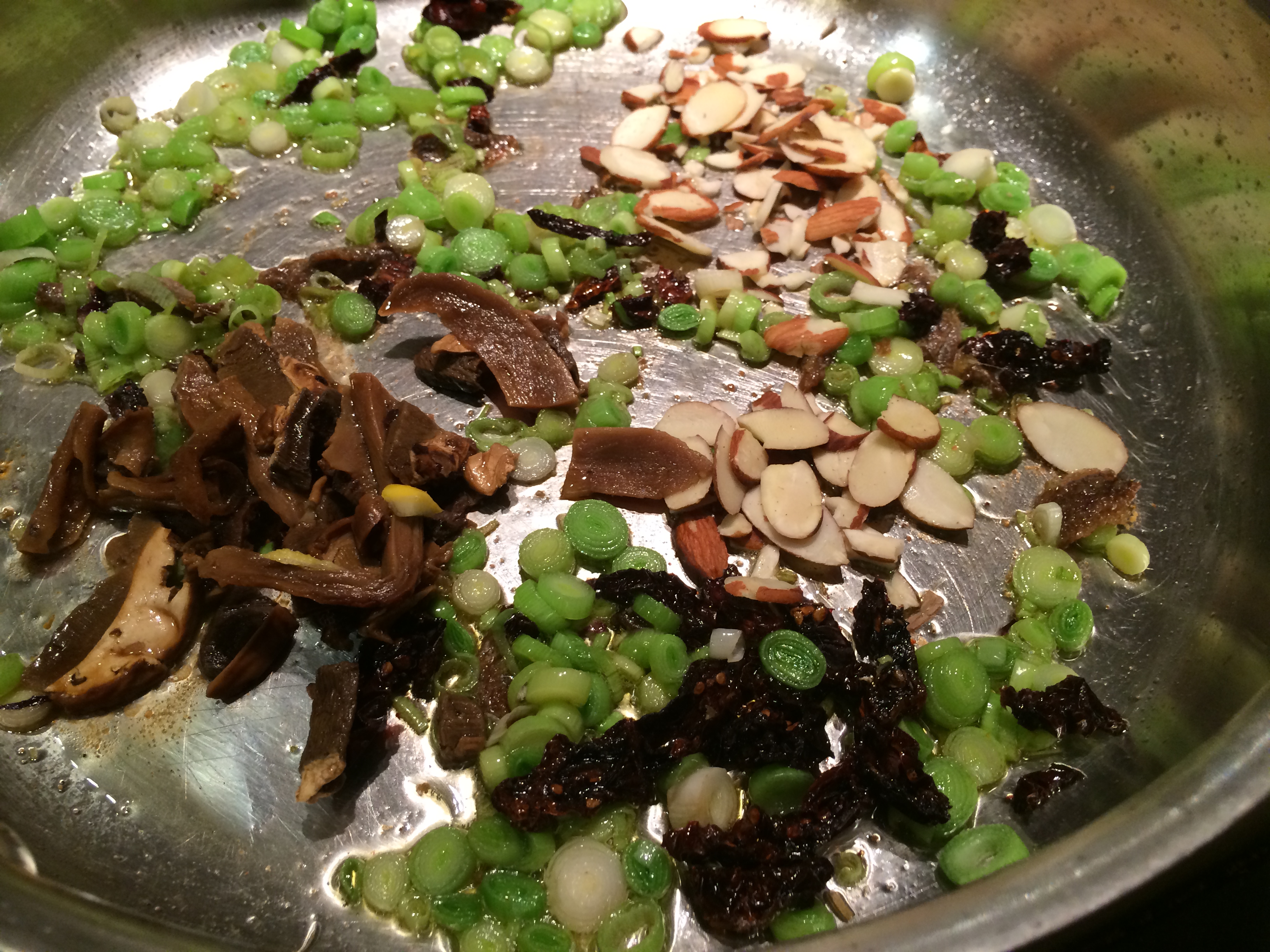
Stuff cooking

Stuff cooking

Stuff cooked

Stuff cooked

Radicchio wilting

Radicchio wilting

Cheddar enters

Cheddar enters

Rapidly disappearing

Rapidly disappearing

Linguini with Radicchio and Slivered Almonds in a Porcini and Green Garlic Sauce

Ingredients:
  • Pasta strands from half a portion of pasta dough from this recipe
  • About a third of a bulb of radicchio
  • Big pinch of dried porcini mushrooms, reconstituted in hot water, or fistful of fresh
  • 3 green garlic stems, green and white parts (substitute with few cloves of garlic)
  • 2 – 3 anchovies
  • Big pinch of sundried tomatoes
  • Big pinch of slivered almonds
  • 2 inch block of great cheddar cheese, cubed
  • 1/4 cup good olive oil
Method:

Slice the radicchio, the mushrooms, and the green garlic. Set salted water to boil for cooking the pasta (about 1/2 gallon). While the water is coming to a boil, prepare the sauce. Heat the olive oil in a wide pan on medium. Put in the green garlic and anchovies. The anchovies can be left whole because they will simply merge into the surroundings. When they start to sizzle, put in the sliced porcini, the slivered almonds, and the sundried tomatoes. After a few minutes of cooking these, the radicchio can go in, just to wilt, it doesn’t need to cook long. Cover to keep warm and turn it off to wait for the pasta.

Meanwhile the water will have come to a boil. The pasta will take only a few minutes if you used the fresh ones, otherwise follow directions on the box. Fish the pasta out and put into the prepared sauce with the addition of a few ladles of pasta water. Toss to combine. Put the cubes of cheddar on top and stir that in to melt incompletely. Yes, incompletely.


For inspiration on green beans, look east

Green beans with Bengali spices

Green beans with Bengali spices

Bengal is a pretty far away land for me, since I am from the west coast of India, and ancestrally hail from even farther away Sindh. Exotic, I think, is the word I would use. In addition to that, I’m fond of the way Bengali sounds (not intelligible to me), full of rounded vowels; and the things they choose to say, seem old-world and fancy. Then, there is art. Sorry, I meant Art. This is what Bengal is known for above everything else (go google Rabindranath Tagore and Satyajit Ray, just to start). And if you think about it, great art is a lot about judicious choice.

So this is what I want to focus on today. A few  choices, judiciously made.

This dish is a dry sauté of green beans, with a simple tempering of whole spices. For vegetables cooked this way, a few choices you make are very consequential. How you cut the vegetables and how small. If they are small enough the high-heat sauté will be enough to cook them all the way through. If not, a slight steam-braise will be necessary, so cooking on low with the lid on to finish is called for. What fat one uses. Subtle choice, and often not subtle at all; the choice of fat can dramatically alter the dish. How high of heat one uses. High enough it is practically a wok-ish stir-fry. Low enough, and the primary means of cooking is from the steam emanating from the vegetable itself.

Naturally, the spices thrown into the fat to temper is consequential too. This is where the Bengali flair comes in. The famous Bengali spice mix, paanch phoran, consists of five disparate seeds from disparate plant families, that nevertheless come together in oil in an unforgettable partnership. For green beans, I find this to be very congenial and I usually cook them this way.

stuff 026Here is what goes into the paanch phoran, from bottom to top:

Fenugreek seeds: Fenugreek is a legume just like beans and peas. It has a distinctive smell that some have compared to maple syrup and a pleasing bitterness.

Fennel seeds: From the carrot family, fennel seeds are used as a mouth-freshener all over India.

Nigella seeds: Also known as kalonji, these small black droplet-shaped seeds are from the buttercup family. A relative, love-in-a-mist, is grown widely in England as an ornamental, I hear. Their flavor is reminiscent of onions when roasted.

Cumin seeds: Another carrot family member. Cumin has been used as a spice in India since ancient times. Its flavor is earthy and sharp at the same time.

Mustard seeds: Little brown balls with a kick. I have always thought of them as having a biscuity taste, whatever that means.

Bah, one can’t really describe a flavor. Go try it and I won’t need to.

Green beans sauteéd with Bengali spices

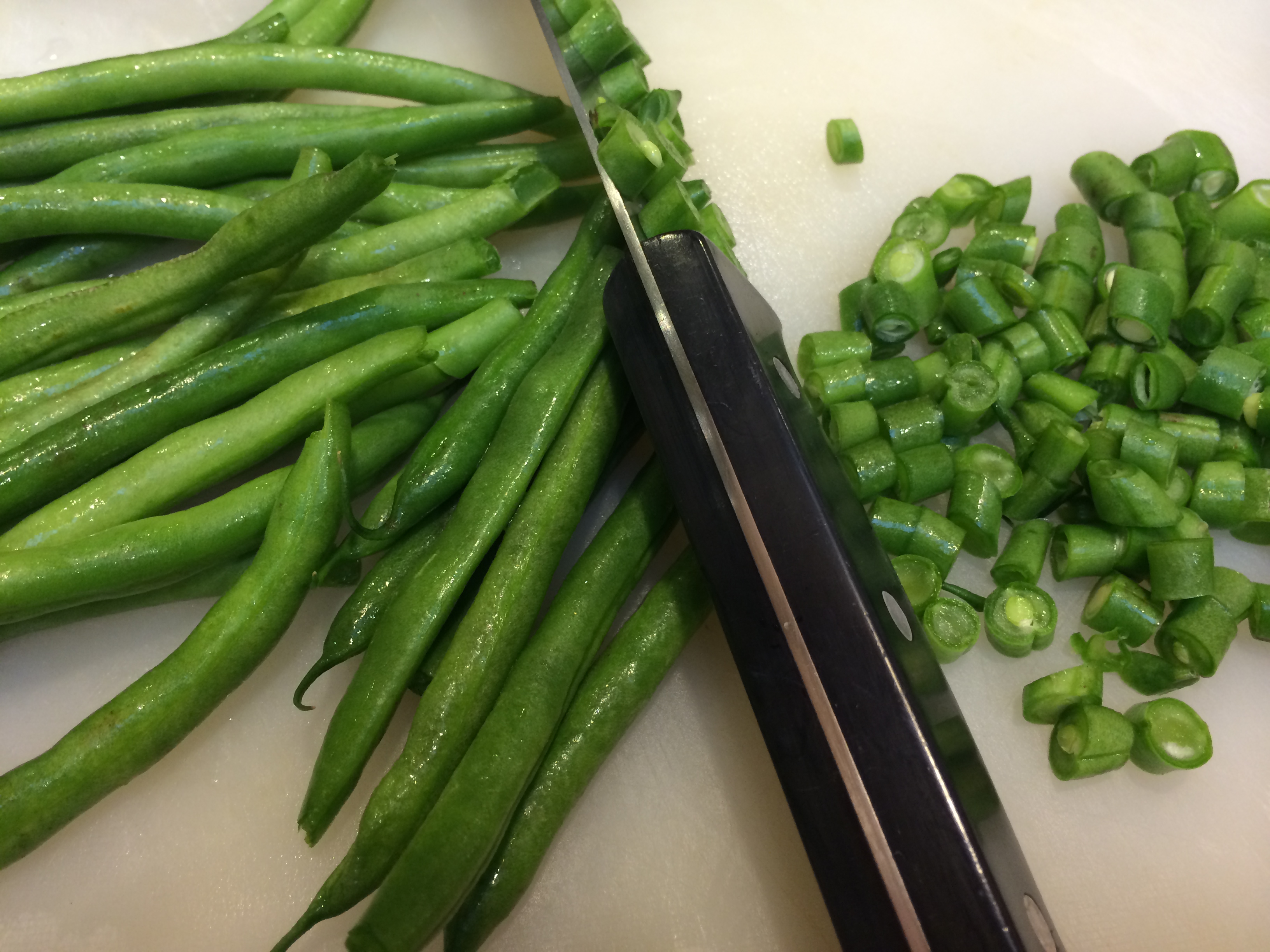
I want the green beans to be basically done with the sauté, so I cut them into small pieces, none wider than about a quarter inch. For the fat, I use mustard oil, for more of the Bengali style.

Cutting the green beans into small rounds

Cutting the green beans into small rounds

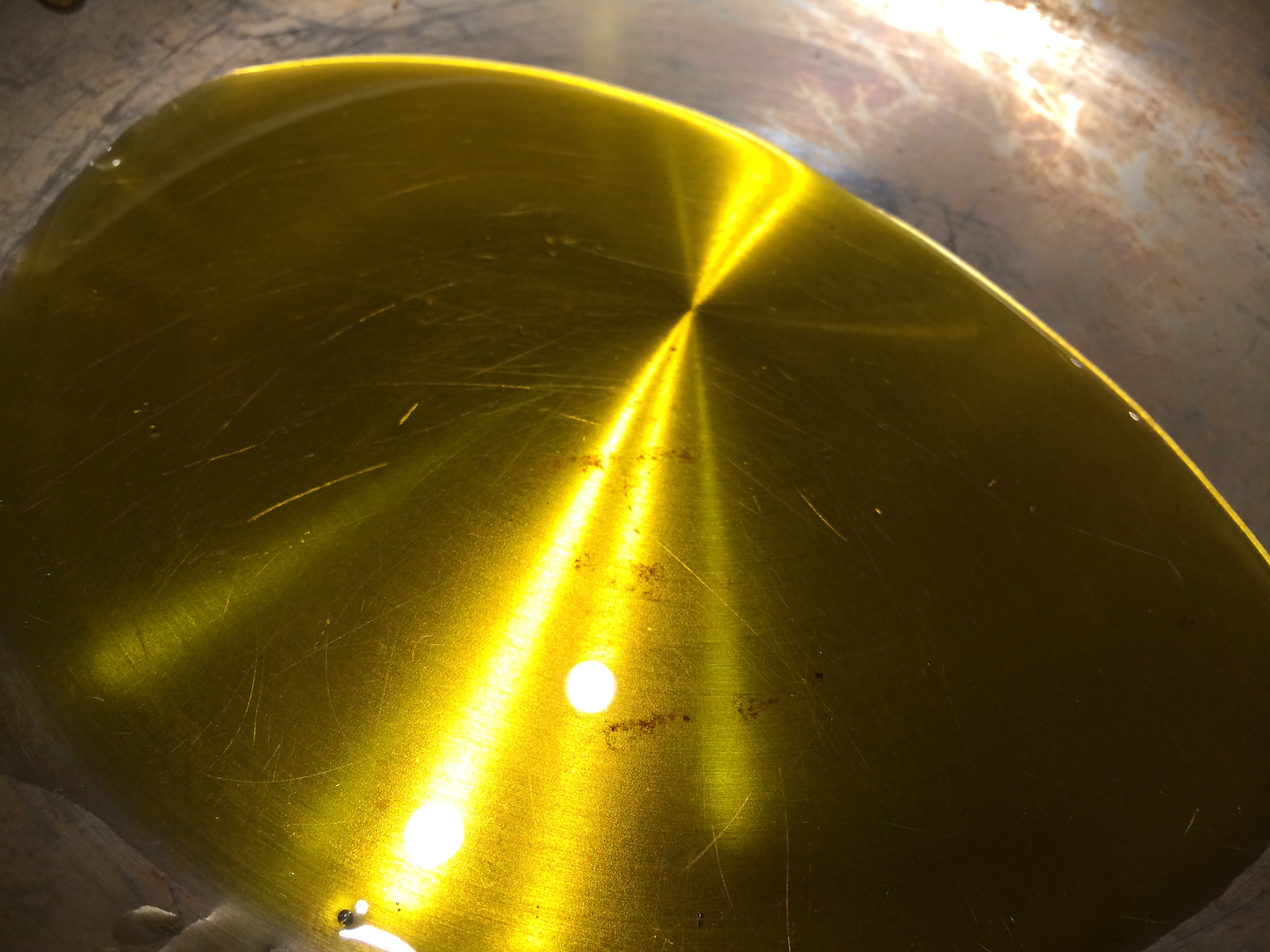
Look how golden the mustard oil is

Look how golden the mustard oil is

Red chili powder

Red chili powder

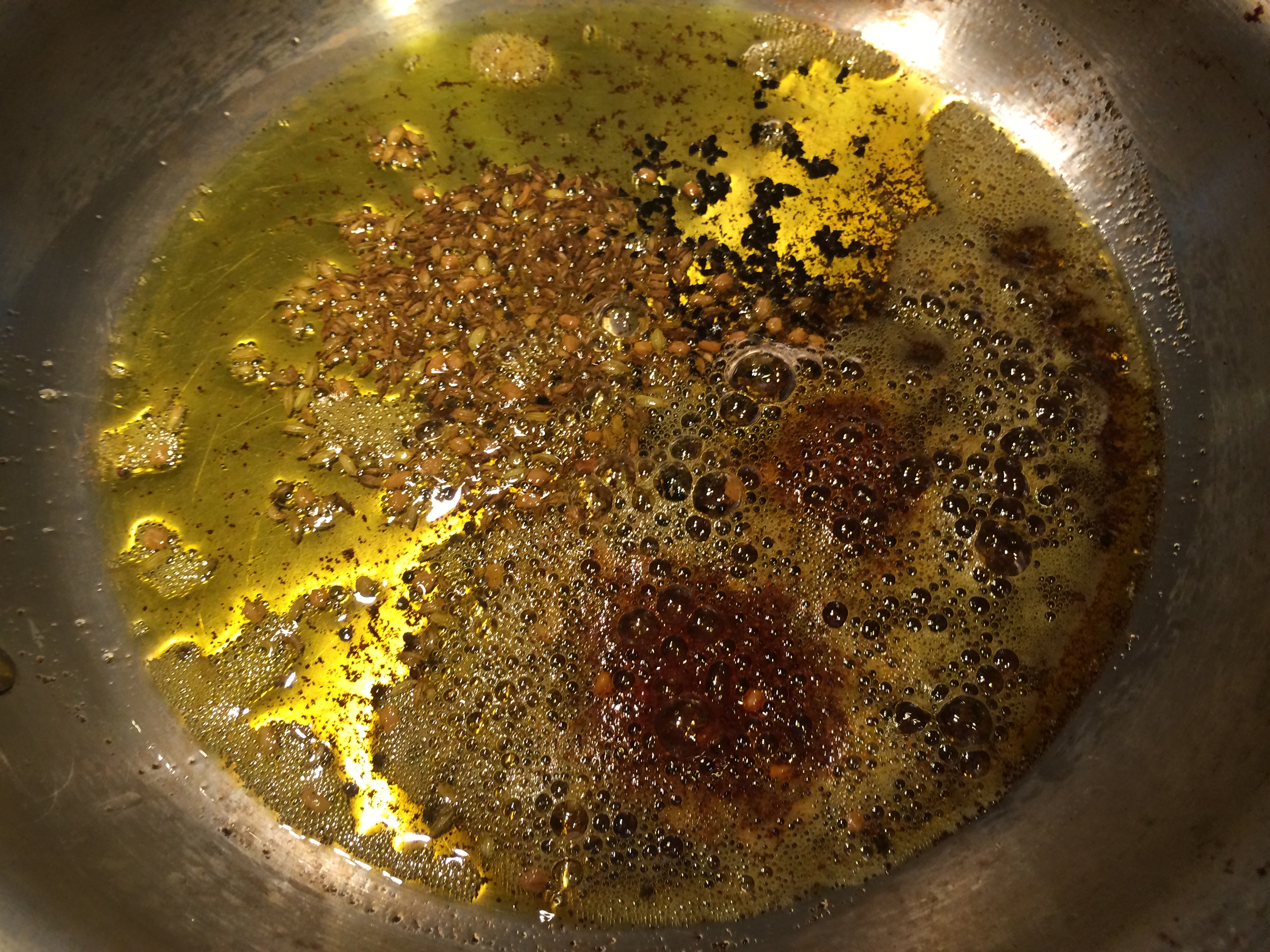
Tempering spices

Tempering spices

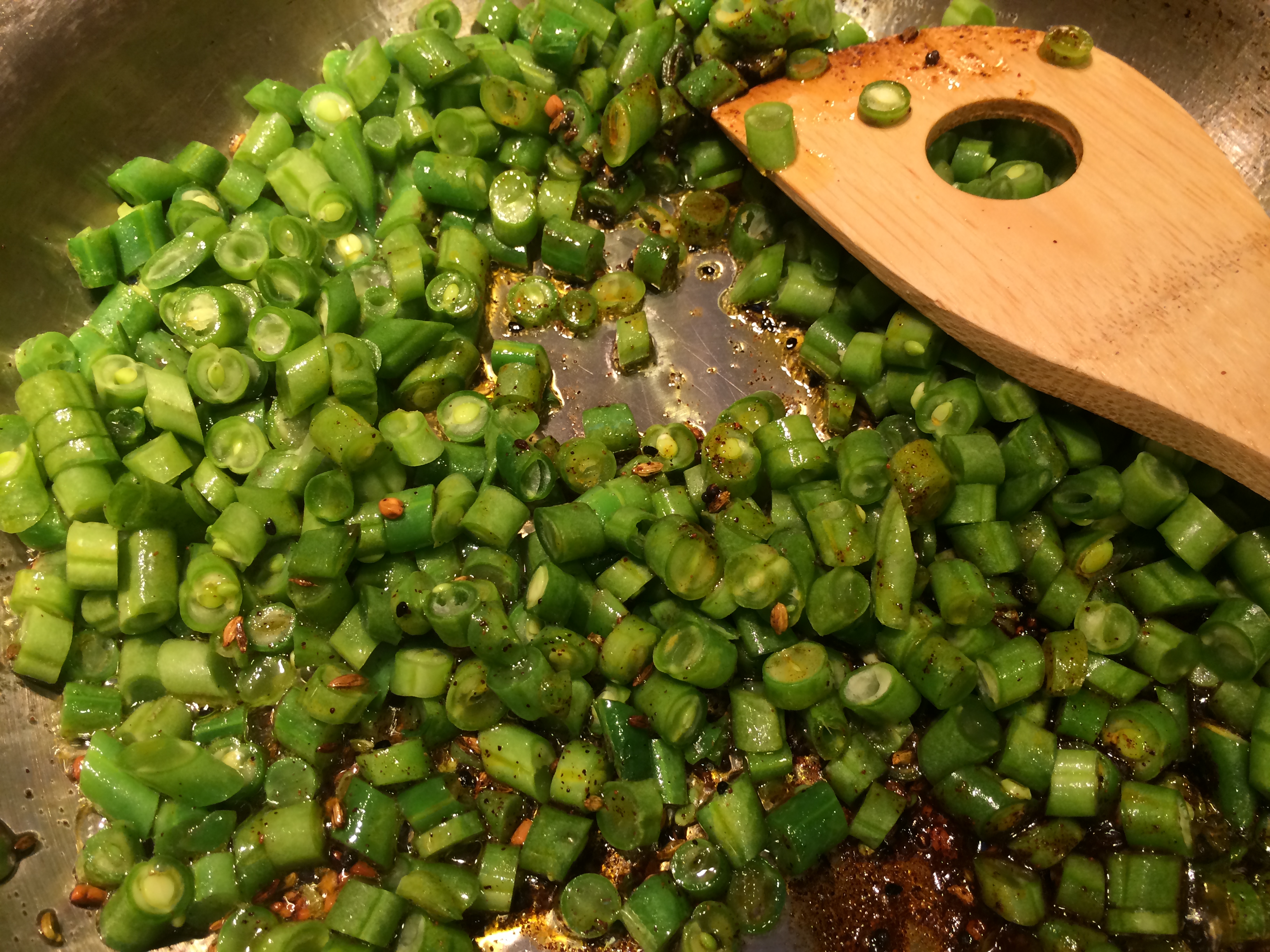
Throw in the green beans

Throw in the green beans

Cook for 10 minutes, uncovered

Cook for 10 minutes, uncovered

Green beans sauteéd with Bengali spices

Ingredients
  • Half a pound of green beans
  • Half a teaspoon red chili powder, or more according to heat tolerence
  • Quarter teaspoon fenugreek seeds
  • Quarter teaspoon nigella seeds (kalonji)
  • Half teaspoon cumin seeds
  • Half teaspoon fennel seeds
  • Half teaspoon mustard seeds
  • 3/4 teaspoon salt
  • 2 tablespoons mustard oil
  • 1 teaspoon brown sugar or jaggery
Method

Heat the oil on medium-high in a wide thick-bottomed pan. This is the temperature that the entire dish will be cooked at. Most Bengali recipes recommend letting the oil smoke first, but I hear that is bad for you, and I like the kick of mustard oil and don’t want to quell it, so I don’t let it smoke.

Throw in the spices in the following sequence: first the red chili powder; then the cumin; when it sizzles the nigella and fennel; when they sizzle the mustard seeds; when those pop the fenugreek.

Now in go the green beans. Stir to coat with oil. Let them cook, uncovered, occasionally stirring. Five minutes in, sprinkle in the salt. Ten minutes in, the beans will be mostly done, some charred, most shriveled, and still crunchy.

In this dish, I really like the effect of some sweetness. The sugar goes in towards the end of cooking, and is simply stirred in. Done.

Salad porn

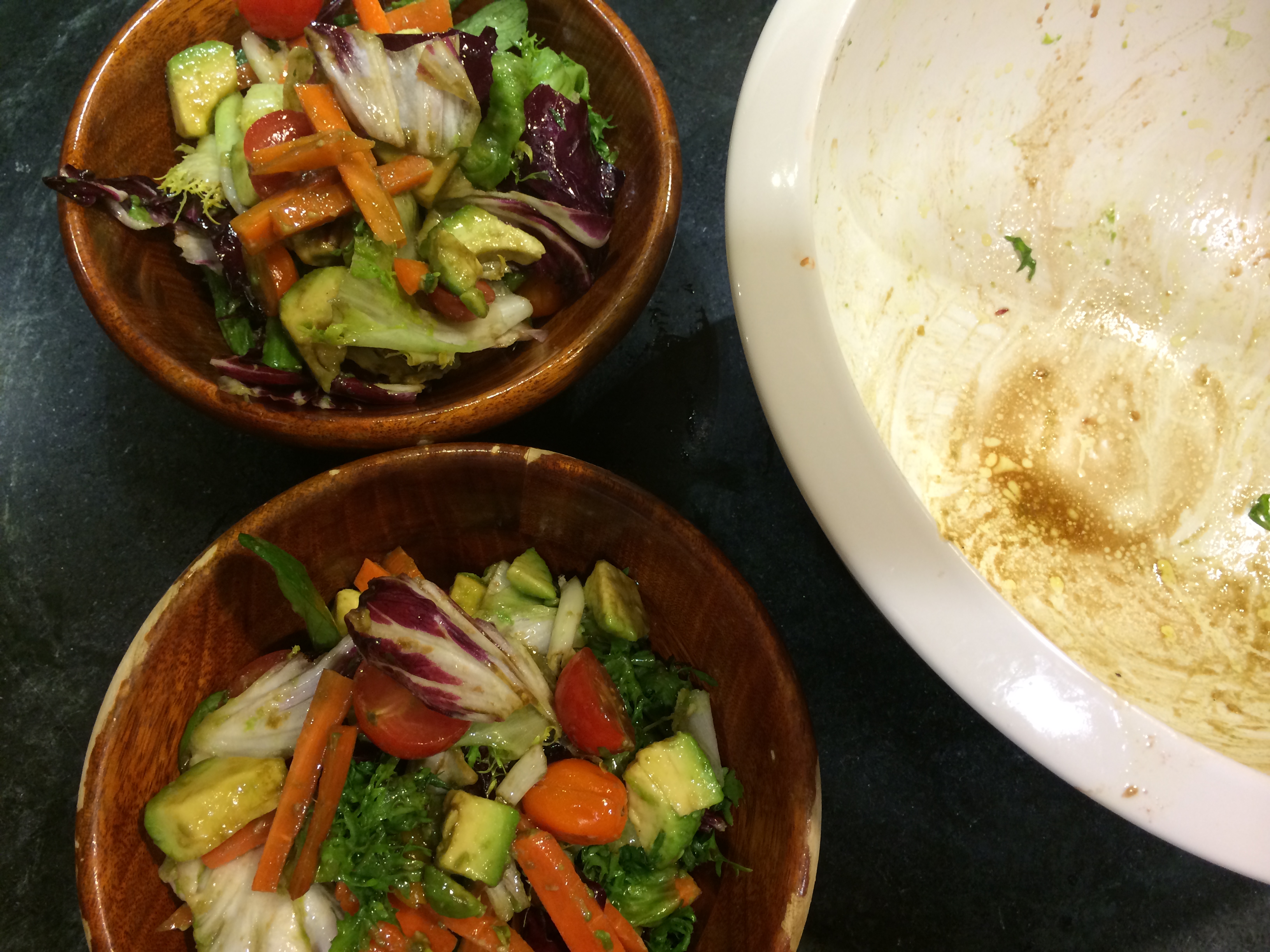
Porn = things that excite you to look at but you can’t touch. That’s what I have for you today, Dear Reader. Not much of a recipe, just pictures of a salad we made for dinner that came out particularly colorful. Lettuce is conspicuous in its absence. In it are bitter radicchio and frisée, cherry tomatoes, blanched green beans, carrots cut into sticks, and avcado.

san bruno 002

Dressed simply with a sprinkle of salt, toss, pours of olive oil, toss, and squirts of balsamic vinegar, toss. It went quick…

san bruno 004


Coconut-yogurty thing from South India

Palladya with rice

Palladya with rice

The other day a friend — Rashmi by name — casually popped in a comment about a ¢#&!Ω# she makes at home, called palladya. Apparently it is similar to the kadhis of the north.

What?! Why have I never heard of this before? Me — a connoisseur of all kadhis everywhere, or so I thought? Why have you kept this secret from me all these years, Rashmi? I thought we were friends. We exchange stories about kids, husbands and various other things. And yet, you kept this from me? Sniff.

Anyway, now that the secret is out, I am glad to have been introduced to this concoction. It is a soupy thing that uses yogurt as a base just like the kadhis of the north, but instead of using chickpea flour for thickening, it uses ground coconut. Floaters are vegetables, a set similar to the ones in this kadhi from Sindh. Some typical ones are okra, white pumpkin/melon (this one), and other squashes. Ever the iconoclast, I used cauliflower; always trying to fit in at the same time, I used baby squashes (this one).

Palladya

This was my first time making it, you can see how it turned out. We had it with rice and it was yummy. Next time I will try to get a finer grind on the coconut by first grating it. And souring the yogurt by leaving it out all day before using it is a tip from Rashmi I didn’t have time to use, but I will next time.

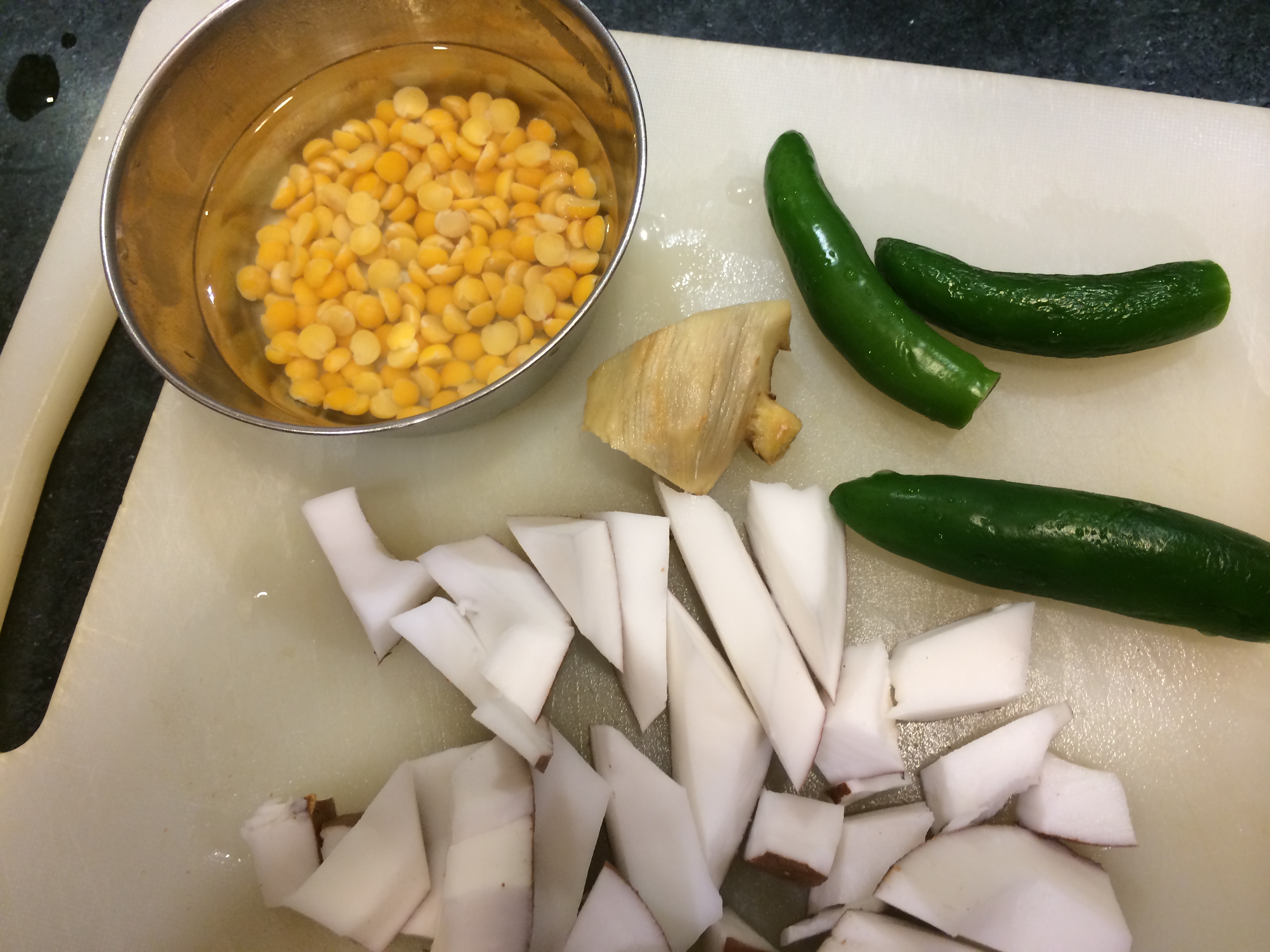
Soaking channa dal, collecting coconut and spices for grinding

Soaking channa dal, collecting coconut and spices for grinding


The grind, should try to get a finer one next time

The grind, should try to get a finer one next time

Cauliflower

Cauliflower

Frozen tinda (apple gourd)

Frozen tinda (apple gourd)

Cuppa yogurt

Cuppa yogurt

Stovetop

Stovetop

Tempering

Tempering

Palladya: kadhi from South India

Ingredients
  • 3 tablespoons channa dal, soaked for half hour in hot water
  • Half a coconut, grated, or 1 cup frozen
  • 3 or more fresh green chilies
  • 1 inch piece of ginger
  • 1 cup yogurt or buttermilk, soured
  • 1 cup cauliflower florets
  • 1 cup summer squash cubed (I used apple gourd/tinda)
  • 1 teaspoon mustard seeds
  • 6 or so curry leaves
  • 1 teaspoon salt
  • 1-2 tablespoons sesame oil (substitute with any oil)
Method

Grind the drained channa dal, coconut, chilies and ginger together. You will need to add some water in order to get a fine grind, I ended up adding about half a cup. Do try to grate your coconut before throwing into the blender, that way you are more assured of getting it to turn into a smooth paste.

Put the veggies in a pot combined with the coconut paste, salt and some water. Bring to a boil, covered. In about 20 minutes of cooking at a simmer, covered, the vegetables will be more or less cooked. Poke with a knife to make sure.

If so, whip up the yogurt and add it to the pot. Stir, this only needs to heat through. Now the tempering. Heat the oil in a small, thick-bottomed pan. Throw in the mustard seeds when it shimmers; wait for it to pop. When they pop, throw in the curry leaves. When they look shriveled, turn off, pour the oil and spices into the palladya, and stir.

The ? vegetable, roasted

Question

This vegetable taunts and beckons me every time I walk by it at the grocery store. I have earlier compared them to caterpillers or seaweed, but now I’m thinking it looks like nothing but a question mark.

What am I? it seems to say at the grocery store. Don’t you want me? And then when I break down under the emotional blackmail and buy some, the bag sits in the fridge untouched for a couple days while I wonder what on earth to do with it. What will you do with me, huh? they say. Why did you buy me if you have no idea what to do with me? Why? How? What? And more importantly, when?

A permanent rebuke, is what it is. But I’m no slouch. I don’t let a mere vegetable sit there passing judgment on me. I’m a food blogger, is what I am.

Thus fortified, let us try to seek the heart of fiddlehead ferns once again. Here is the first such quest. I think I did better this time.

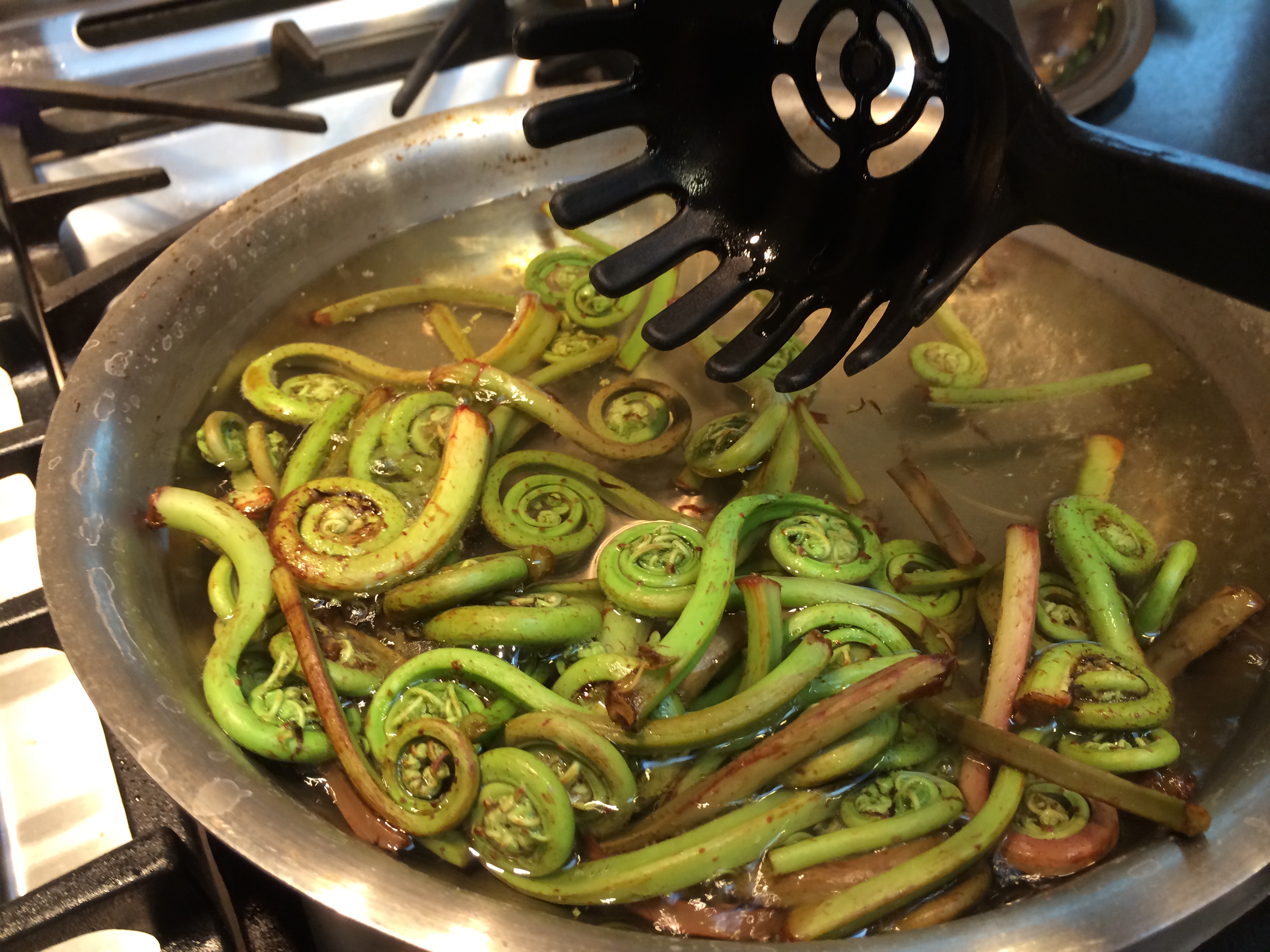
Here is the thing about fiddleheads. Their flavor is often compared to asparagus, but I feel like it has a sort of medicinal sweetness like that of artichoke, which is enhanced by cooking. The fleshy part is quite scanty compared to that of an artichoke, and comes encased in a stem, the fibrous parts of which would be nice to crisp up. So — it would be nice to fully cook the inside and crisp up the outside. Last time I had tried sautéing it and noted the difficulty of getting it to take on a char that way. So this time I tried a different method.

Blanching for 5 minutes to get the inside to cook. Then roasting in a single layer for the crispness.

Roasted fiddlehead ferns

You can see how it turned out. For me, it was finger food. Next time — add some chili powder and maybe lemon squirted on top.

Ingredients:
  • Half a pound of fiddleheads
  • 2 fat cloves of garlic
  • Olive oil — some
  • Salt — some
  • Coriander powder — some
Method:

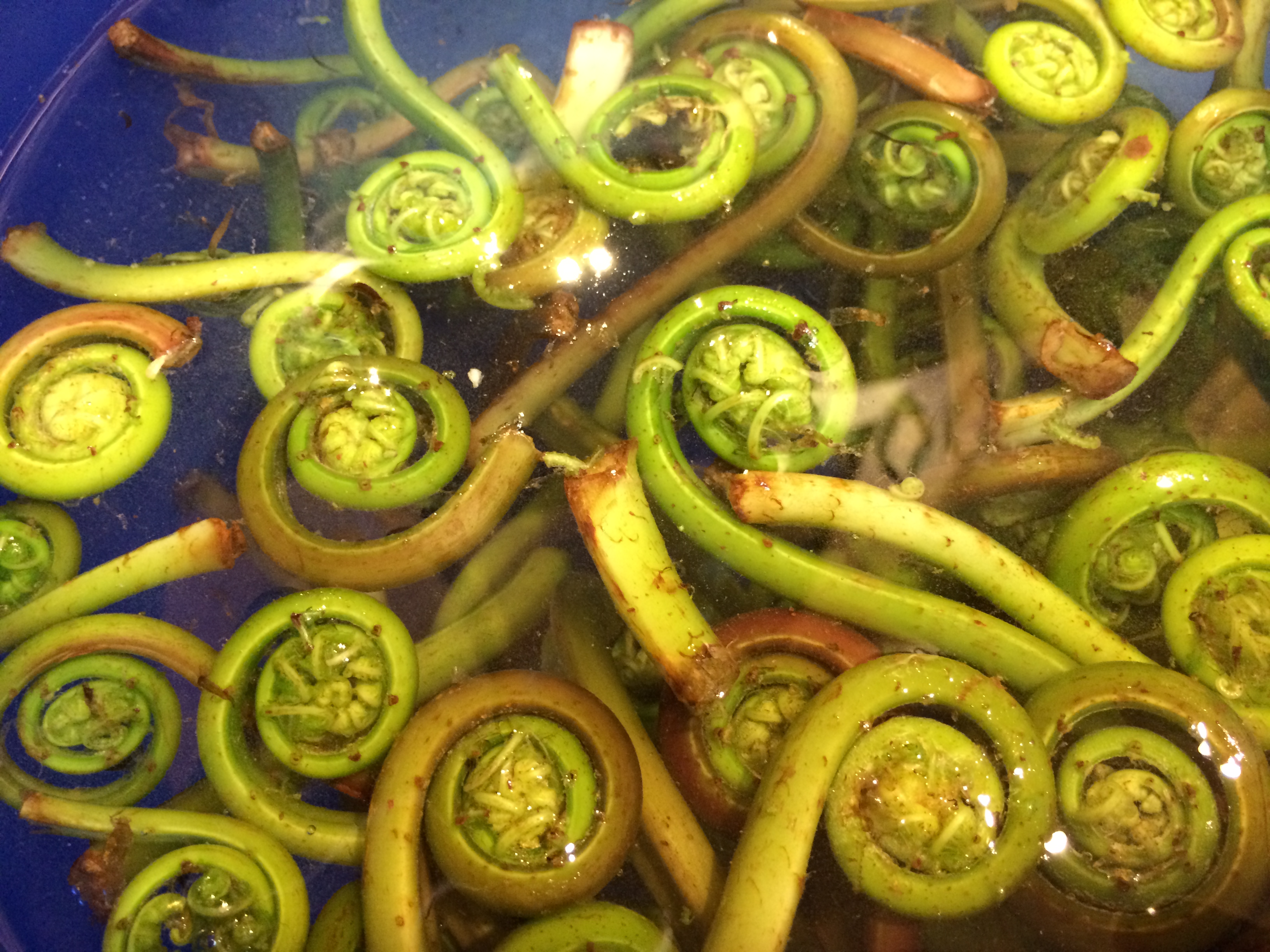
IMG_1328 IMG_1333 IMG_1335Wash the fiddleheads by soaking in a tub of water and swirling it around and possibly rubbing the baby ferns gently. Bring about 4 cups of water to a boil and salt it. When it is boiling, put the fiddleheads in, bring to a boil once again, and let them blanch this way for about 5 minutes.

Fish them out. Lay them out on roasting pan. Cover with more salt and olive oil. Rub coriander powder all over. Place the two fat cloves of garlic tucked in in a  couple places, covered with oil also. Roast at 450°F open, for about 8 to 10 minutes. Halfway during cooking, pull it out and stir to turn most of them over.

IMG_1351IMG_1352

The garlic is also fully roasted by this point, and the paste from inside can be squeezed out like from a toothpaste tube. A teeny bit of garlic paste with a fingerful of crisp fiddlehead spindles — it was delicious.

For more information on fiddleheads (they are the immature fronds of ostrich ferns)  read this:

http://umaine.edu/publications/4198e/

and of course, don’t miss Wikipedia on the subject:

http://en.wikipedia.org/wiki/Matteuccia_struthiopteris

Is it a chutney? Is it rice? It’s both – cilantro rice

IMG_1349

I am very proud of my husband. He went from being a cilantro-hater to a cilantro-tolerator (only if it is minced fine), from there to a wary cilantro-liker (if used in the right dishes), to a must-have-cilantro-flag-waver (in some dishes), to an unabashed cilantro-promoter. The other day he informed me that someone had brought a dish of cilantro-rice to a work potluck. He thought it tasted very nicely savory and wanted me to try making it at home.

This is what marrying an Indian will do to you. Go marry an Indian, all of you — there certainly are enough of us around.

I know he will insist that I put in a disclaimer — that he still can’t stand cilantro that is un-minced and placed right on top of food in all its stemmy and leafy glory. So there you have it, disclaimer placed.

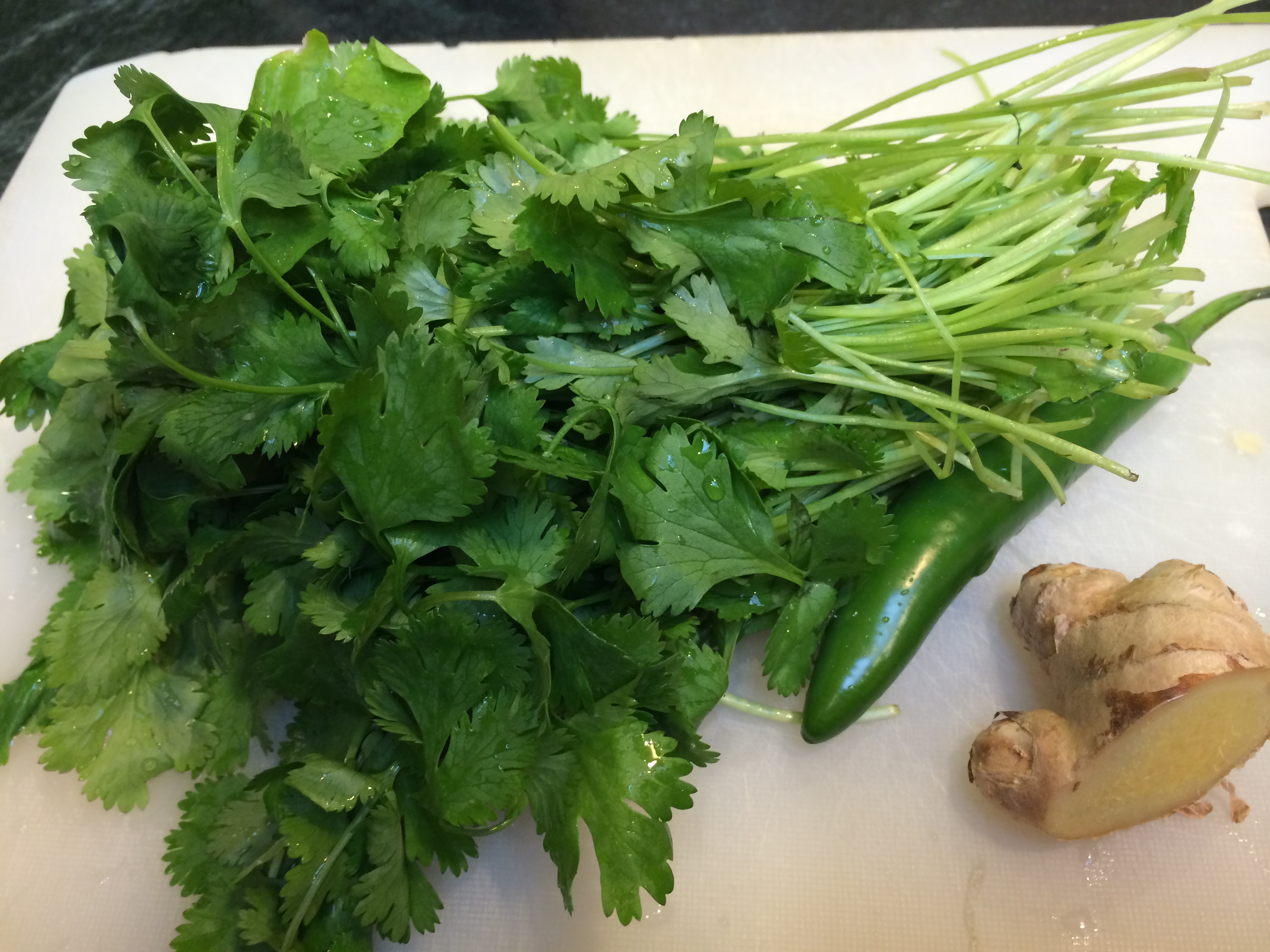
I had never heard of cilantro rice before. Given that I love cilantro and make chutneys with it all the time (here is one and here is another), and also that I’m constantly looking for ways to dress up rice, this is surprising. Cilantro rice marries these two interests. Now that the match has been made, this will be a staple in my kitchen.

Cilantro rice

There are various ways to do this but I basically made a chutney out of the cilantro and cooked it then mixed in rice. You could simply mince the cilantro with a knife or not cook it.

Ingredients
  • 3/4 cup rice
  • Half a bunch cilantro
  • An inch piece of ginger
  • 1 – 4 green serrano chilies
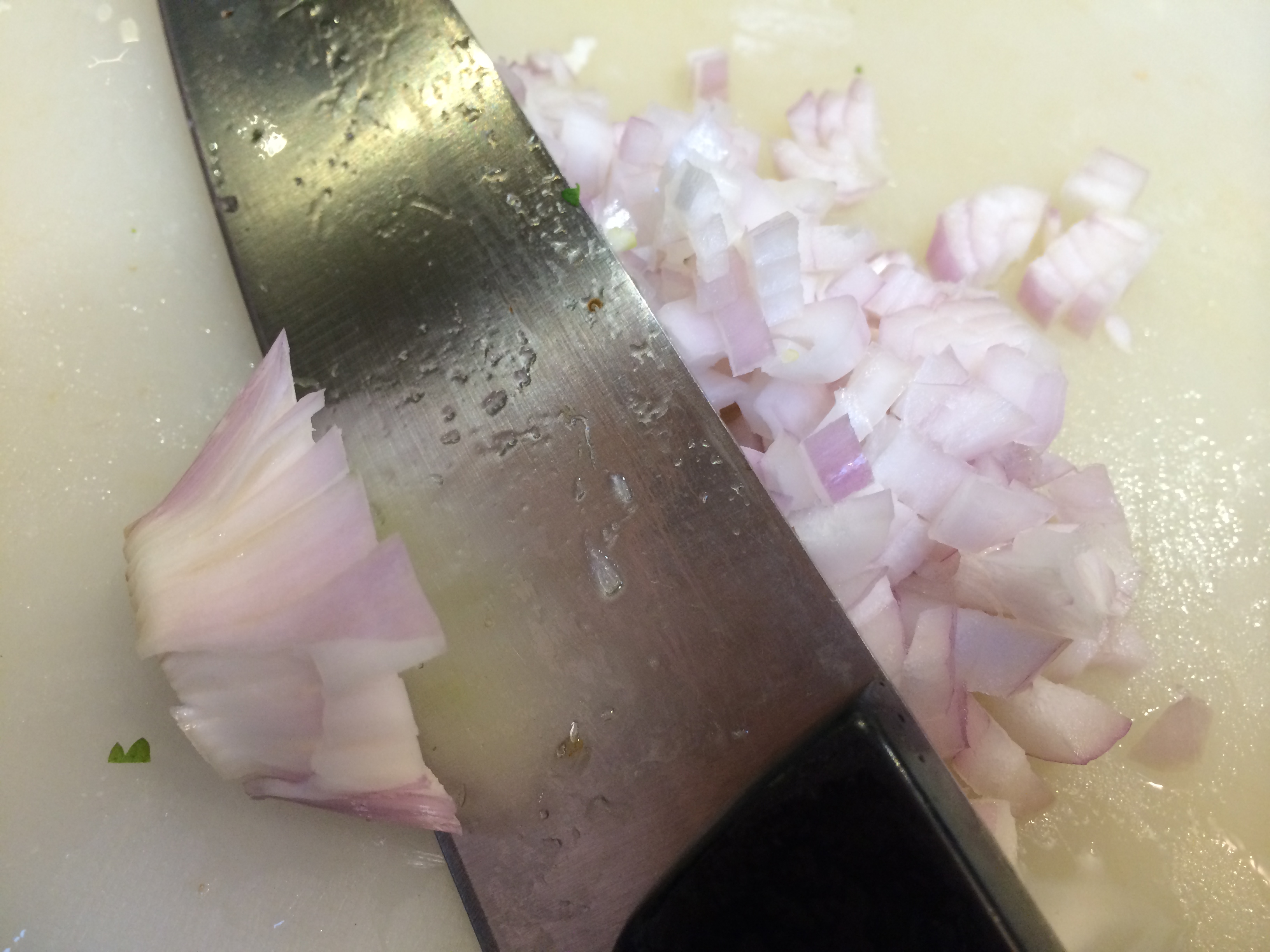
  • 1/2 cup finely chopped onion (I used a shallot)
  • For tempering:
    • 1 tablespoon udad dal
    • 1 teaspoon mustard seeds
    • 6 or so curry leaves
  • 1/4 cup cashew
  • 2 tablespoons sesame oil
  • 1 teaspoon salt
Method

Cook the rice the normal way, but with somewhat less water than usual, to keep the grains from getting too mushy. Grind the cilantro, the chili and the ginger together using as little water as you can get away with — this basically means you are making a chutney. Finely chop the onion.

IMG_1326 IMG_1327

Heat the oil in a wide thick-bottomed pan on medium high. Throw the tempering items in in the following order: first, the udad dal, when it reddens the mustard seeds, when they pop the curry leaves. Stand back if you value your peace. Wait for the leaves to sizzle and be done.

Now in goes the onion. They will start to get translucent and start to redden at the edges.

Clear a little space to make a hot spot on the pan and put in the cashews. As they roast they will take on a few dark spots. This will take a few minutes; now it is time to put in the chutney that you ground before. Throw in the salt, cook the paste down for a few minutes.

IMG_1330 IMG_1345 IMG_1346 IMG_1347 IMG_1348

The rice goes in next. Break up the clumps with your fingers if need be. Stir to coat all the grains with the chutney. Cover and cook for a few minutes on low.

Here is the result — fiddlehead ferns on one side, squash raita on the other. They will come later.

IMG_1354

Country mouse and city mouse – buckwheat pancakes

IMG_0768

Some time ago I hiked up some hills around Lonavla with a friend. We were out having fun, well-prepared with our water bottles and GPS watches and clothes made of modern fabric that is apparently made from gasoline. Our feet were shod in lightweight sneakers that made the shards of rocks underfoot all but disappear.

Incredible views on all sides of us. Buddhist cave carvings from centuries ago ahead of us.

There we ran into a farmer coming downhill on the same trail as us. No gasoline-fabric for him. He had on his airy dhoti around his waist that he probably wore no matter what the situation. A light cloth wound around his head protected him from the sun. Thin as a rake, he walked on those hills as though he didn’t think about it too much, just did it.

I felt weirdly embarrassed. This man naturally belonged here, while we were interlopers from our fat happy internet-savvy world and we clearly didn’t. And he wore no shoes! Shards of rock or not, he was barefoot and scarcely concerned by it. At that moment my shoes happened to pinch a toe or two, and I thought to myself — if the farmer can go without shoes, perhaps I can too. Maybe the rocks are not as bad as they look.

So I tried walking barefoot, hanging the shoes from my neck by their laces. I couldn’t go four steps without hurriedly getting them back on again. Oh, the shooting pain! Tens of jagged rocks at any point poked right into my soft soles.

Marginal environments

As I watched the farmer keep his steady pace down the hill, I realized that although this man had probably never seen a computer keyboard in his life, he had mastered this marginal, mountainous environment and knew secrets about it we didn’t. He fit in here, while the only way we could was to drag paraphernalia from our fat happy internet-savvy world into it.

So…ah yes, buckwheat. Buckwheat is the farmer. Buckwheat grows on mountains with gravelly soil and practically no nourishment and does it six ways to Sunday. It doesn’t need much but gives a lot. Secrets — yes, it knows a few. It scorns pesticides and actively dislikes being coddled with fertilizers. It will grow quickly, produce quickly in a short season from June to September, swamp out the weedy flimflam, laugh blithely about insect pests, and produce a non-grain grain that will feed you all the essential amino acids. Count them — nine — all amino acids essential to humans.

Why a non-grain grain? Because it is a tiny seed and used as a cereal and ground and used as a flour. But it does not come from a grass, as grains usually do. Walks like a grain, quacks like a grain, but is not a grain. As I have gone over before.

Buckwheat certainly has a whiff of the old world. It grows widely in the Himalayas and is used for rotis and gruel. In Japan it is used to make the famous soba noodles. Kasha and blini in Eastern Europe. Immigrants brought this grain to America and in the 18th century 20 times more acreage was devoted to buckwheat than is now.

Then came the use of fertilizer — one of the inventions that fuel our fat happy Internet-savvy generation, and with it crops like wheat and corn that want coddling; and buckwheat was edged out. Makes you wonder what all that buckwheat was being used for, doesn’t it?

Buckwheat pancakes

Undoubtedly a big proportion of the buckwheat flour went into pancakes, given how delicious they are. In our family we were introduced to them via the hippie sensibility of Santa Cruz, where my husband lived for four years. Now they are a weekend staple. They go with maple syrup, but remember to use good, natural, golden maple syrup from the sap of maple trees, not the fake sticky one that comes from corn.

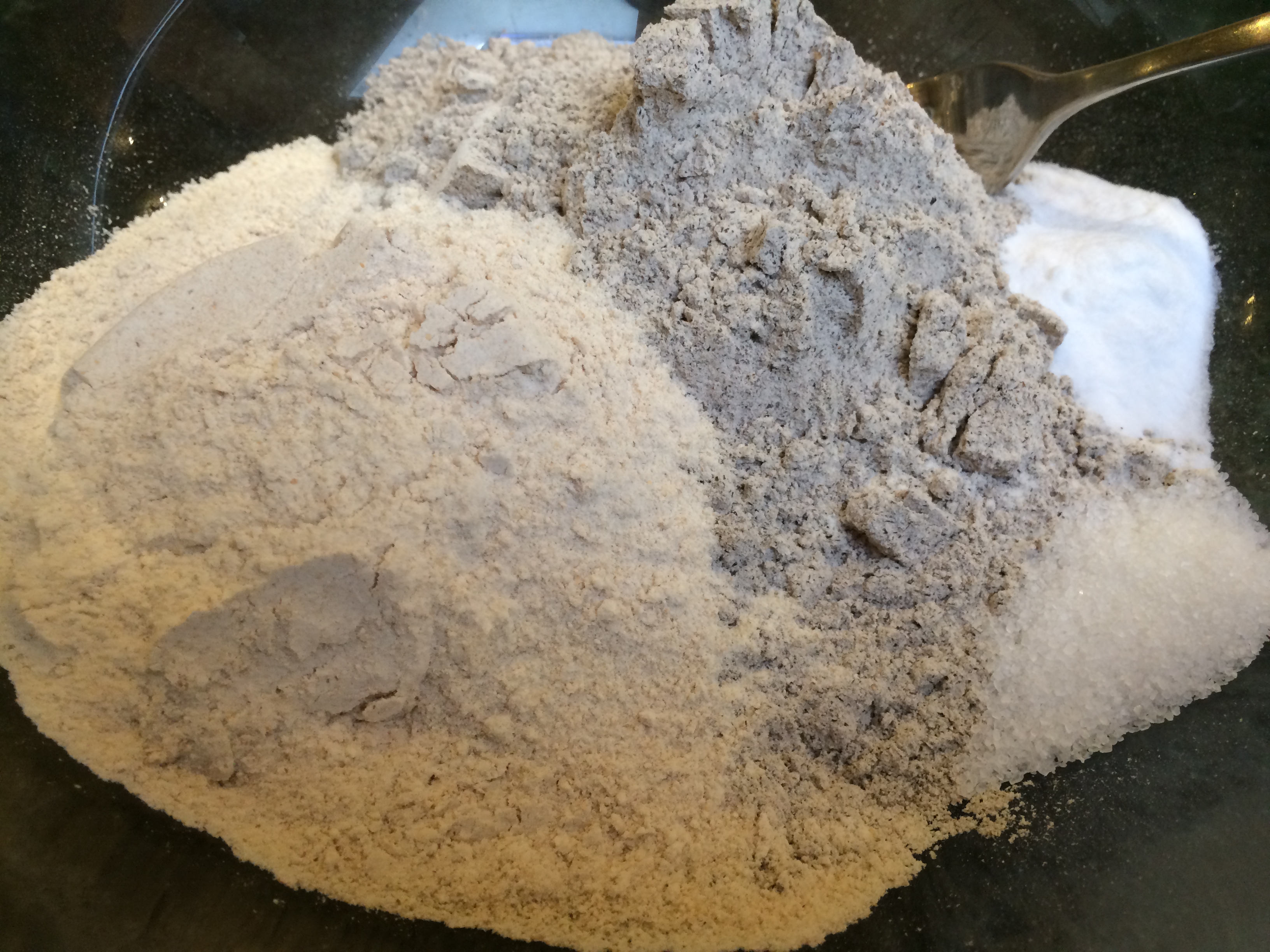
Dry ingredients:
  • 1.5 cups buckwheat flour
  • 1/2 cup white whole wheat flour
  • 1.5 teaspoons baking soda
  • 1 teaspoon salt
Wet ingredients:
  • 2 cups buttermilk
  • 2 eggs
  • 1/4 cup unsalted butter
  • almond oil for cooking
Method:

Stir together the dry ingredients in a large bowl.

IMG_0740

Meanwhile crack the eggs into a separate bowl and whisk. Then whisk in the buttermilk. Melt the butter and whisk that in as well.

IMG_0739 IMG_0745 IMG_0748

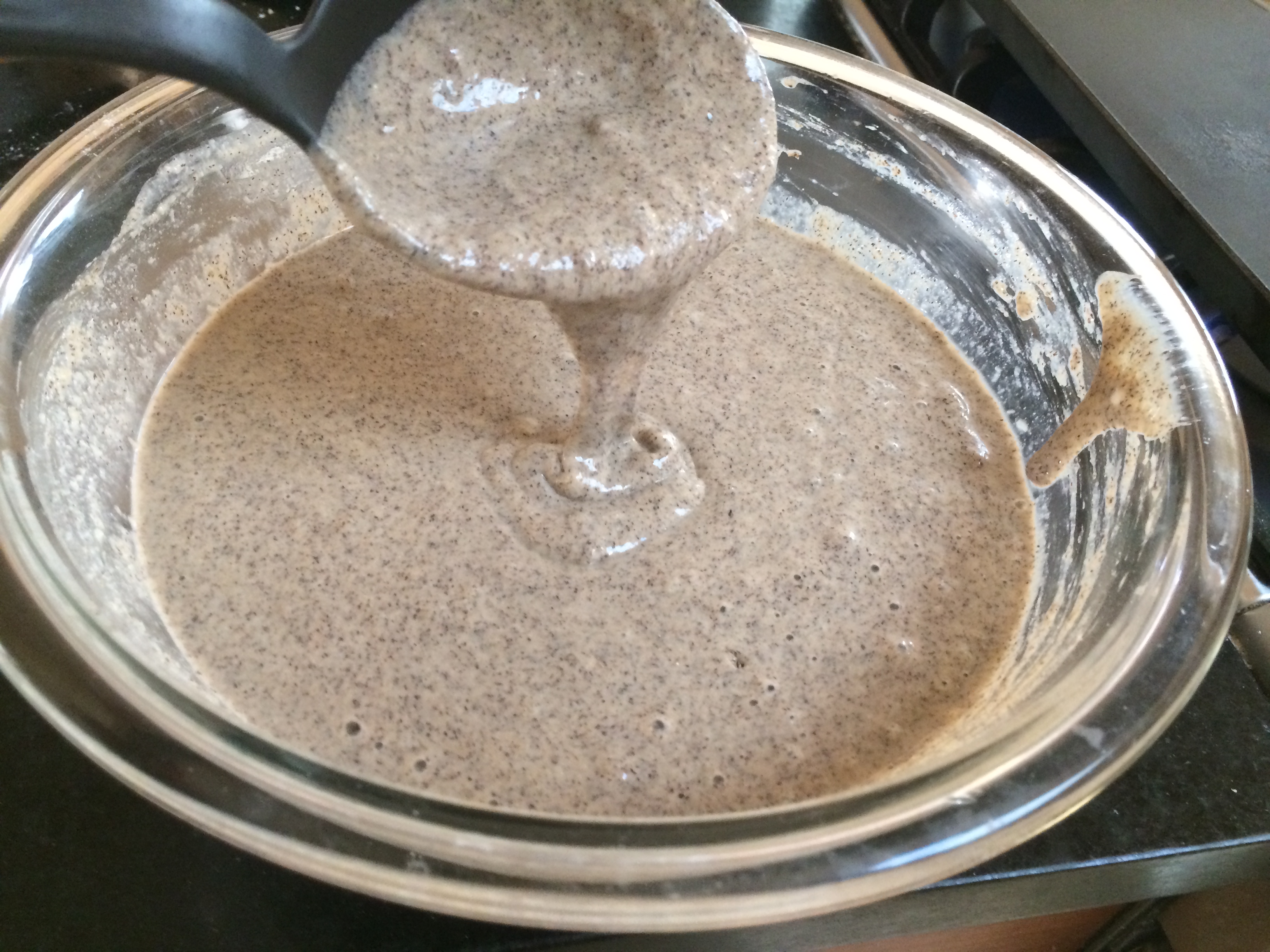
Now that the wet and dry ingredients are separately ready, it is time to combine them. Pour the wet into the dry. Stir gently. Most lumps (almost all) should be gone. The consistency should allow it to pour; you might find you need to add water. I usually add about half a cup.

IMG_0758

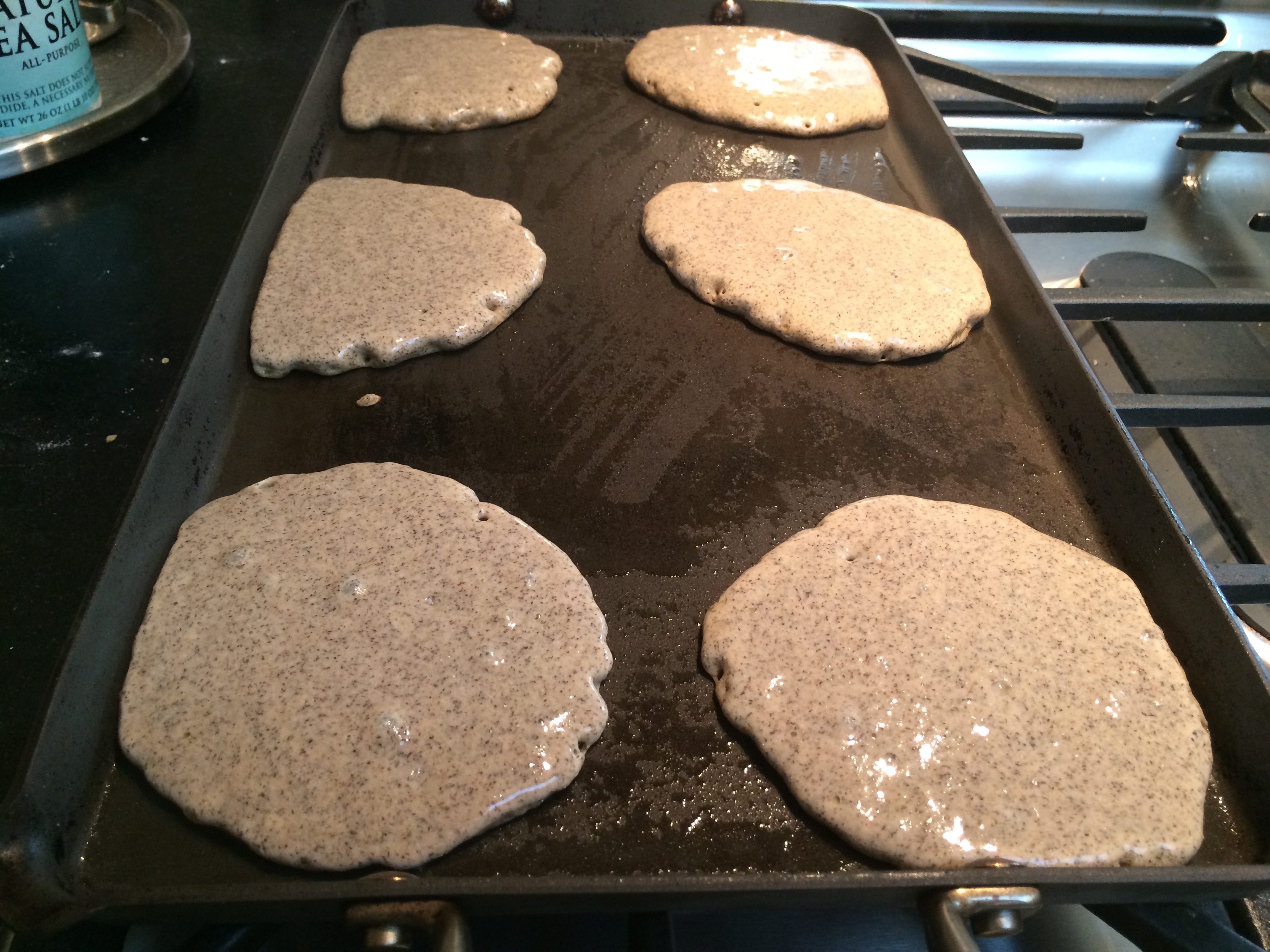
To cook, I have a large non-stick griddle on highish heat. (‘High-ish’ is the point between medium-high and high). We found that butter smokes too much so we use almond oil for cooking. It has a high smoke point and a nice aroma. A tablespoon of oil for each batch of six pancakes works nicely. Spread the oil all over. Pour six ladle-fulls on like shown, each should be about four inches wide. All told you will get about 20 such pancakes.

IMG_0759 IMG_0761

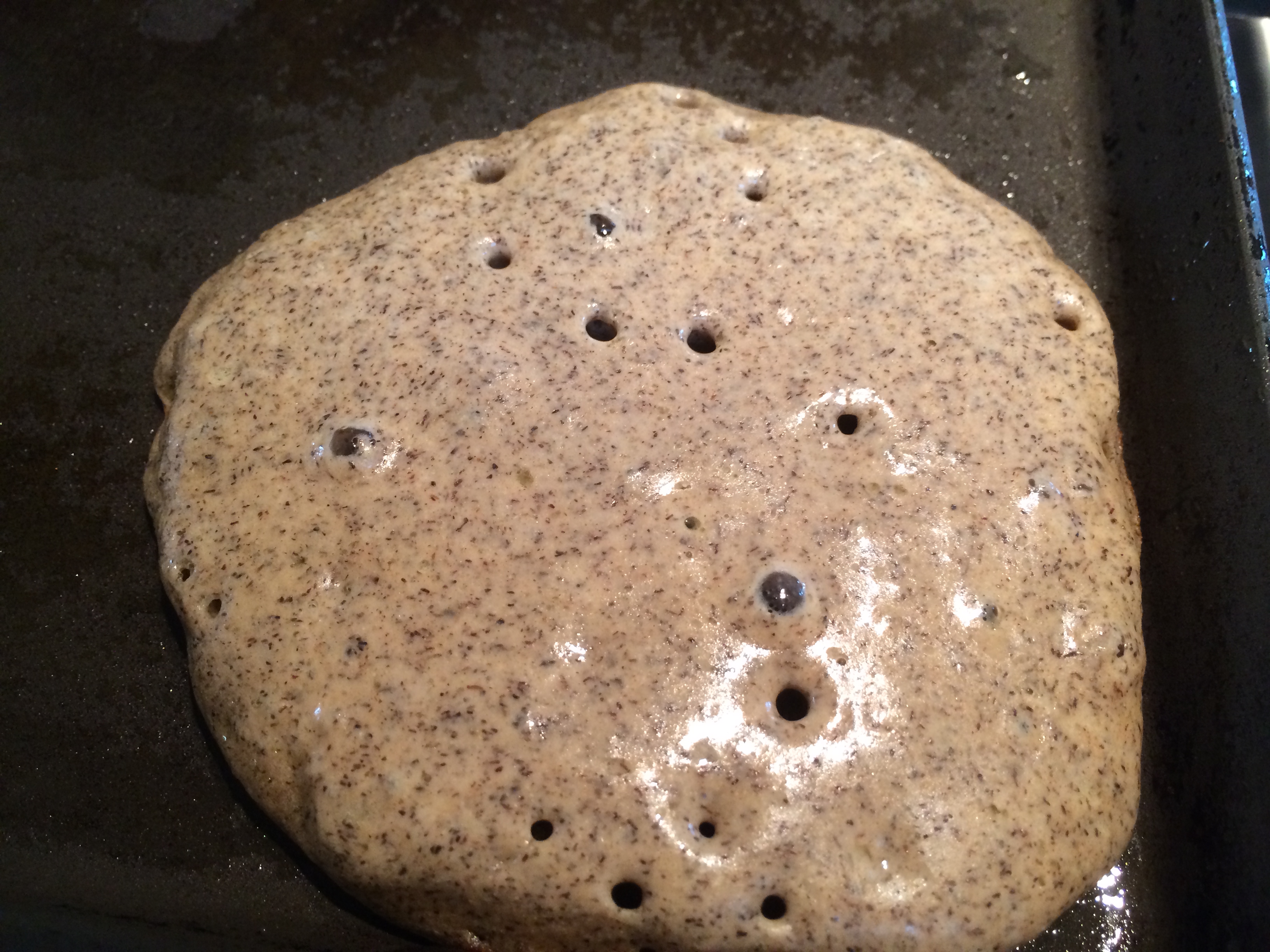
The time to flip each is when several bubbles have arisen and popped; and the edges look set. Flip and cook on the other side for 30 seconds to 1 minute; it will softly rise in the meantime.

IMG_0762 IMG_0763

Here is our nice pile of pancakes. City mouse (wheat flour) meet country mouse (buckwheat).

IMG_0766


A pair of awards….

I just got a blog award!

I just got a blog award!

Do you know why this guy is happy? He just got a blog award!

Actually it was me that got it. And I got two…from my lovely blogger friends.

The WordPress family award from Chef Divya from Divya’s Indian Cookbook. She has lovely homey recipes, each one of which I want to try. You must check out her blog. Thank you chef! Here is a chef’s hat for you to show my gratitude.

Chef's hat from http://www.chefwear.com

Chef’s hat from http://www.chefwear.com

And a Sunshine award from Apsara of Eating Well Diary. Her focus is vegetarian food. With each recipe she has an eye to its nutritional properties. A true Apsara! Here is a traditional Cambodian Apsara dance for your enjoyment Apsara!

Then, I get to display these proudly on my blog….

wordpress-family-award wpid-11-cosmos-under-blue-sky-cosmos-flower-under-sunshine_1440x900_69080

I am supposed to answer 10 questions…

1. Why did you start blogging?

I cook a lot and experiment a lot and I thought putting things on a blog would help me remember what I did last. It hasn’t.

2. Sweet or savory?

For food, people, experiences, travels, books and children: savory. For music: sweet.

3. If you were to go on any reality TV programme, what would it be and why?

The Apprentice, so that I could be fired personally by Donald Trump. No wait — it is because that is the only reality tv show I ever watched.

4. What was the last thing you Googled?

“Blog awards”

5. Night out or night in?

Depends on who with.

6. What has been your favorite blog post to write?

The one that is yet to come. It will blow your mind. Hold on to your hats.

7. What is the one thing you never leave home without?

My heart. I have heard songs like ‘I left my heart in San Francisco’ and I can’t imagine a worse fate. Even though I live there.

8. Where would you most like to travel to?

The Amazon rainforest.

9. If you could have any super power, what would it be?

To be a fly on any wall I choose, spy on people’s lives, then write stories about them.

10. What can we expect to find on your blog in the future?

Posts.

There, that’s taken care of. Now to pass on the award to my fellow-bloggers…how exciting! In no particular order:

1. Kitchen Counter Culture. Annie has an interest in fermentation like me. Maybe some day we will have a transcontinental collaboration and lob microbes at each other across the ocean. She writes often about the politics surrounding food. This is important.

2. Creative Cravings. Ramya pays attention to ingredients and shares that knowledge. This is important too.

3. Mohabhoj: The author dispenses with the traditional recipe format in favor of descriptions. And to be honest, who always needs recipes? Sometimes all you need is an idea.

4. Feeding the Sonis. Sanjana has an entertaining style, and oh yes, recipes too.

5. Yummy Mummy’s Kitchen. Ostensibly a food blog, the author tells stories about her life that I enjoy reading.

6. Sham’s Kitchen. Home-based South Indian cuisine. Northern too. If I could make everything on her blog I would be an expert.

7. Vegetarian Nirvana. I like her sense of style in her photographs. I could learn from that since I sorely lack any.

8. 1861: A blog in the true sense of the word…a log of events and thoughts on the web. About food.

9. The Garden Pond Blog. No, not about food. But we have a garden pond and I found it useful.

As for which award goes to which blogger…both go to all. How persnickety do you think I am?