Burmese broth with bitter greens

Burmese broth with bitter greens

Burmese broth with bitter greens

Two things that I’m having a lot of fun discovering — one is Burmese cuisine with its fishy umami and floral flavors . The other is the leaves of the bitter melon. I can’t decide which to be more excited about; but when you combine them? An explosion of flavors!

So let me tell you what I know about both. I have always loved the bitter melon (karela). This is a cousin of your garden-variety cucumbers and cantaloupes, but its seeds are large and hard, its skin is bumpy, and its flesh is scanty and bitter. Certainly for special tastes; but once your tongue has learned to love it, you really love it.

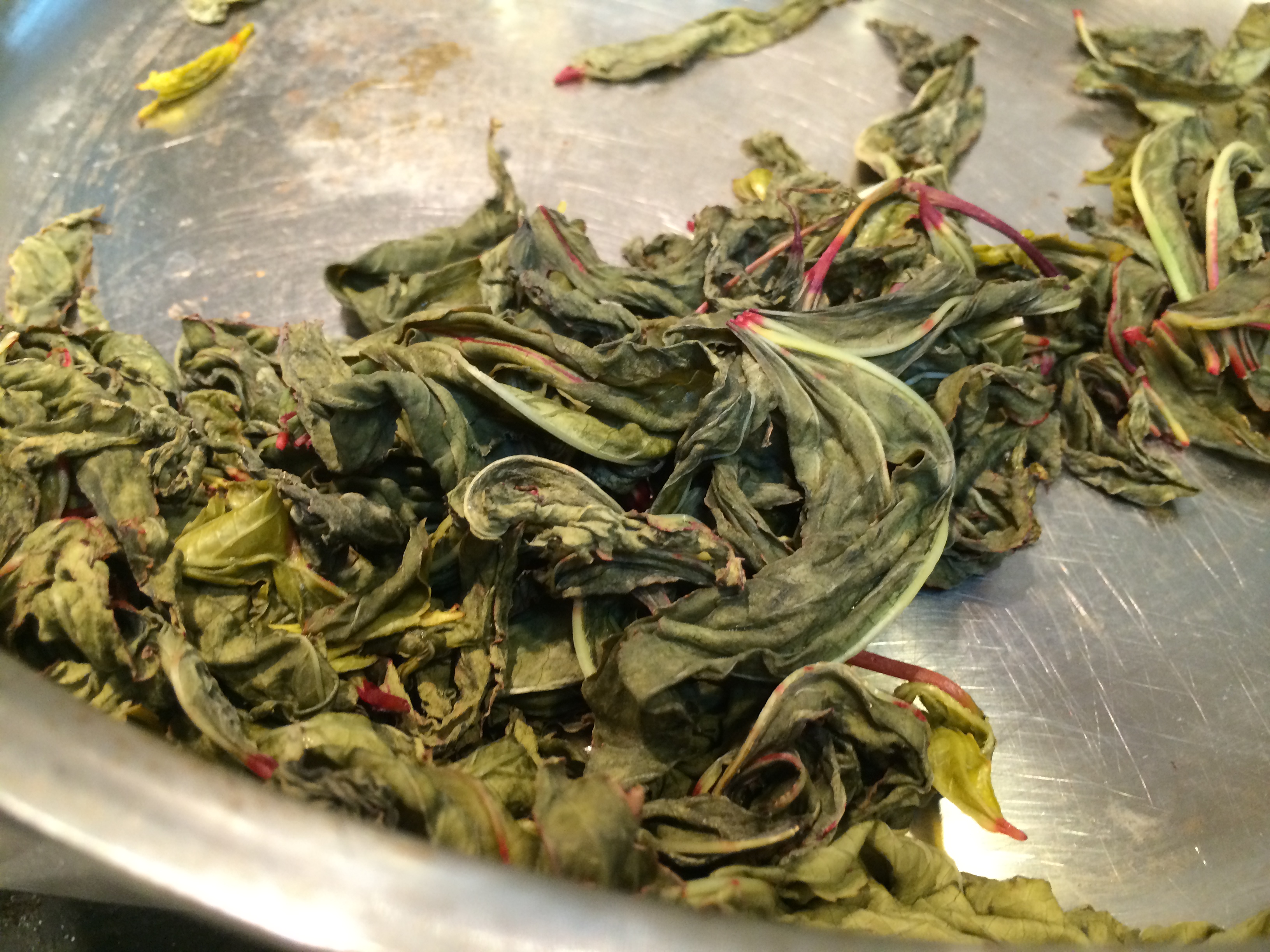
Bitter melon grrens

Bitter melon greens

But then, I recently discovered that its leaves are edible too. One finds them at the farmer’s markets in San Francisco that serve an ethnic clientele. They are sold in giant bunches for a dollar. I leave with my wallet almost intact, and my shopping bag full to bursting with greens, the tendrils spilling over the top.

One of the most enchanting things about buying a bunch of bitter melon greens is the baby gourds one finds attached to some shoots. Normally the gourds are at least six inches long, but with every purchase you also get some baby gourds, some no bigger than your finger tip. These can be thrown into the pot along with the greens, they do not need much cooking.

A baby bitter melon compared to an onion

A baby bitter melon (karela) compared to an onion

Those of you who want to like dandelion leaves, but find that they are just a little too bitter to enjoy, might love the bitter melon leaves. They only have to be cooked long enough to wilt, and have a complex, grassy bitter-tinged flavor.

Now about Burmese cuisine. I admit I don’t know much about it but I’m starting to learn. I recently got a Burmese recipe book; but rather than make any recipe from it, I tried to understand the techniques and flavors and tried to imbue this particular broth with the Burmese gestalt. At the risk of causing derisive laughter among any Burmese readers, I made what I like to think of as a Burmese broth. Unlike Indian food, it only gently cooks onions; it uses lemongrass infusion; and it uses fish sauce instead of the more Chinese soy.

We loved it with some white rice. please let me know in comments if you did too.

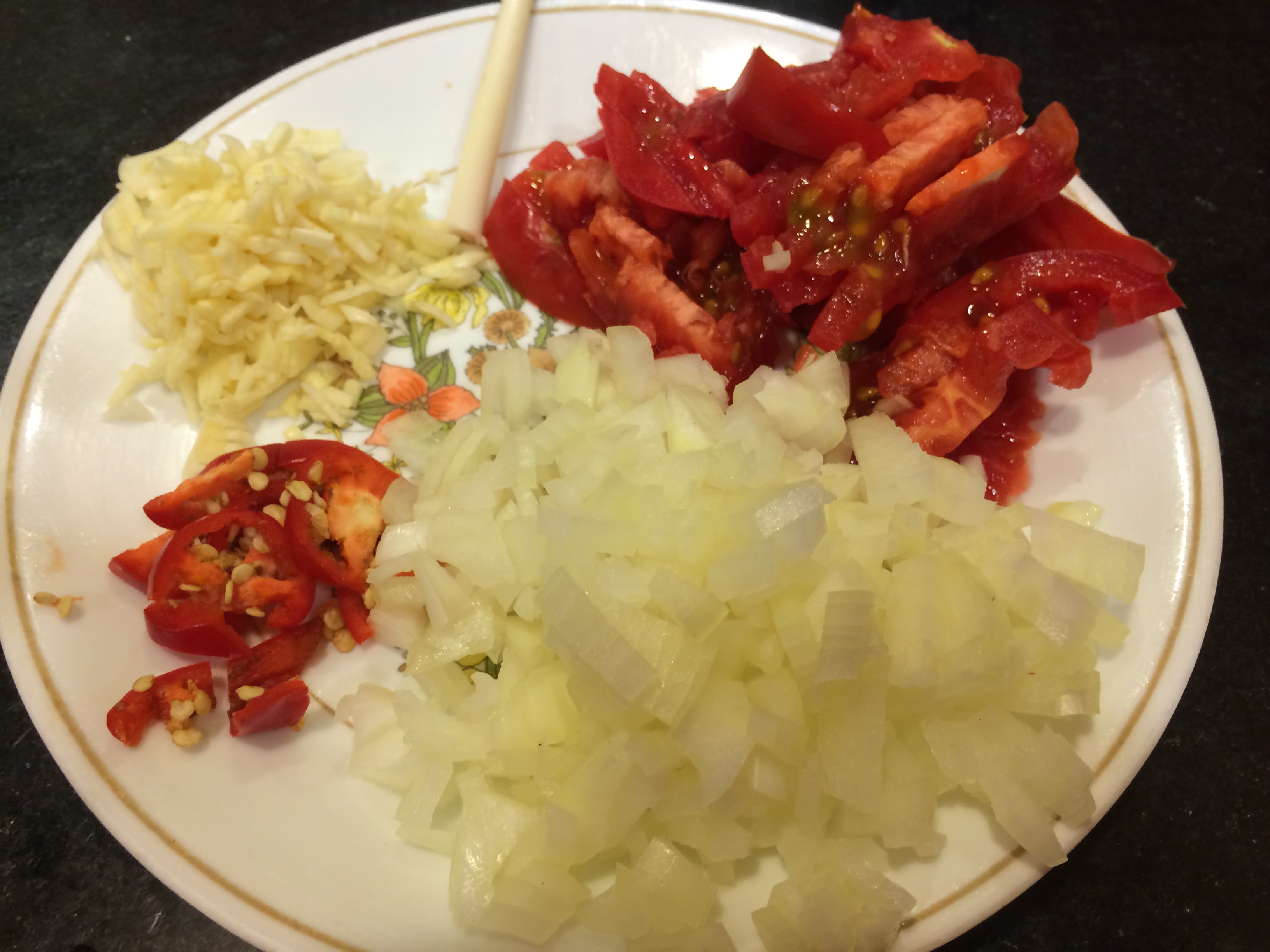
Soften vegetables

Soften vegetables

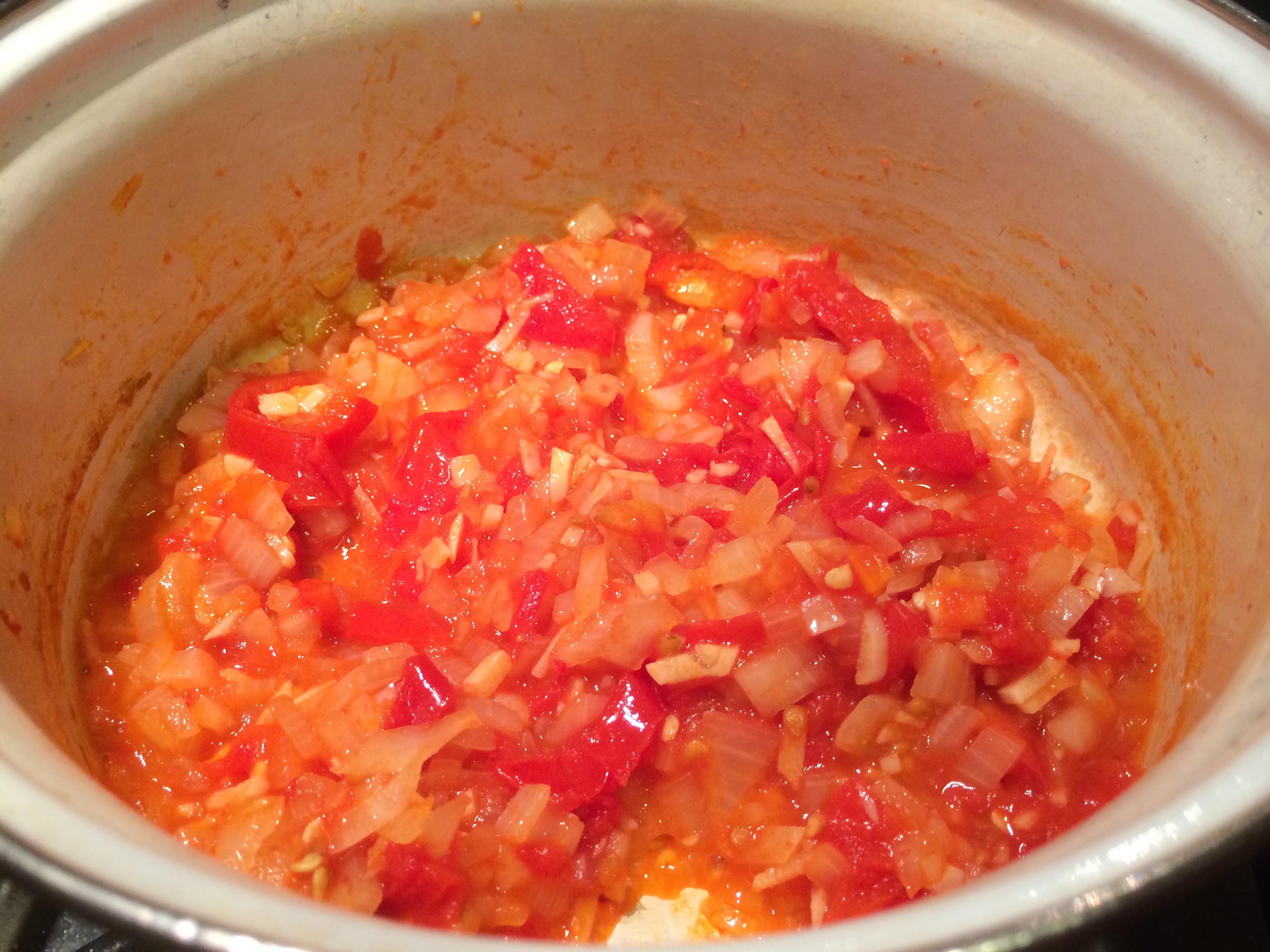
Vegetables in pot

Vegetables in pot

Softened

Softened

Lemongrass

Lemongrass

Add greens

Add greens

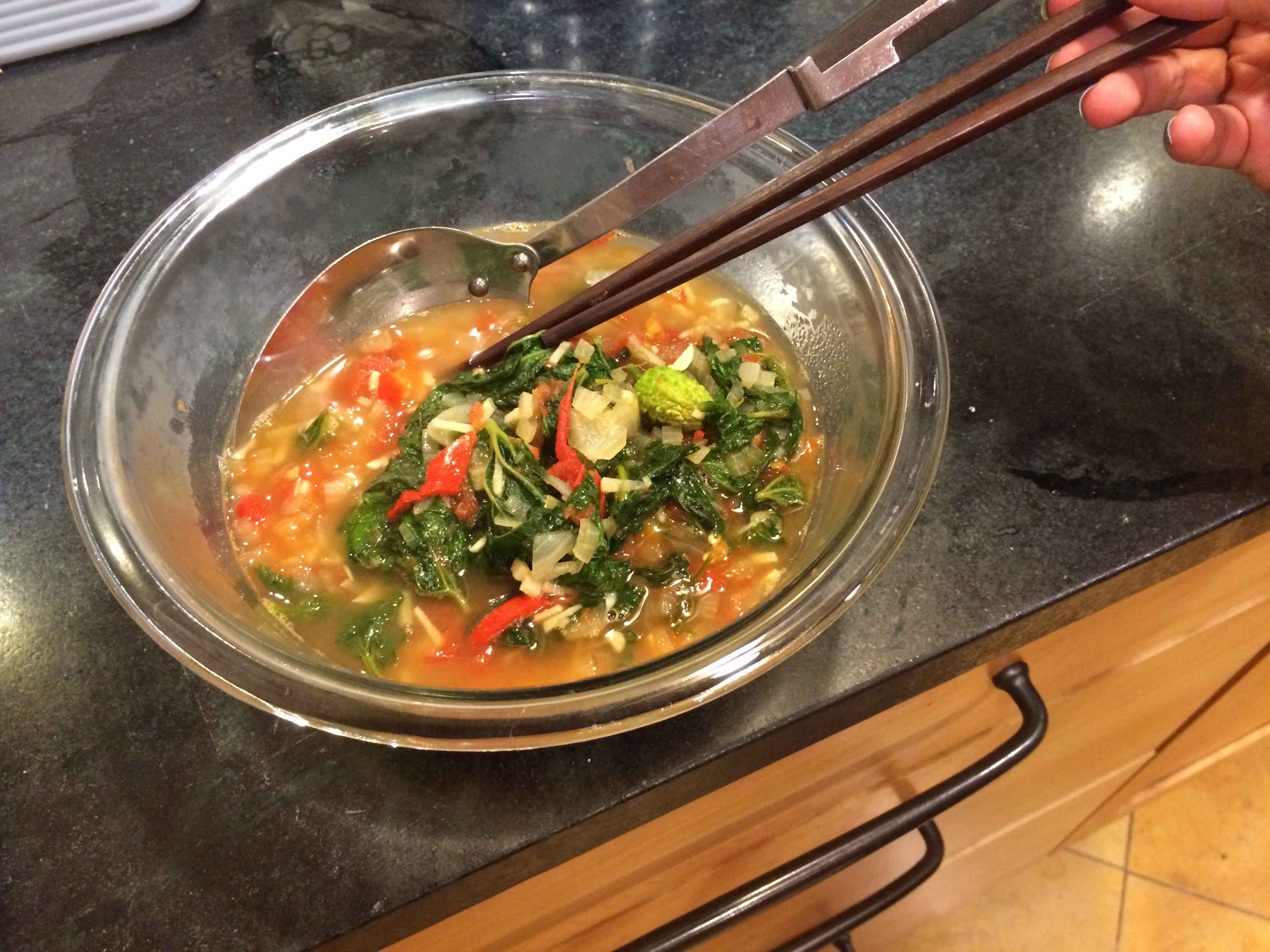
Serve

Serve

Burmese broth with bitter melon greens

Ingredients:
  • Leaves and baby gourds from 1 bunch of bitter melon greens (about 4 cups)
  • 4 big cloves garlic finely minced
  • 2 medium tomatoes sliced
  • 1 chili sliced
  • half onion diced or sliced
  • 1 cleaned stalk of lemongrass (optional)
  • 2 tbsp oil
  • 1.5 cups chicken broth
  • 1 tablespoon fish sauce
  • salt to taste
Method:

Put oil, onions, tomatoes, garlic and chili all together in a thick-bottomed pot and cook gently until softened (about ten minutes). The tomatoes should have liquefied and somewhat dried by now, if not cook a few minutes longer. Now add the broth, the fish sauce, and the lemongrass. Bring to a boil and simmer for ten minutes or so. Add the greens, and allow them to wilt. Turn off the heat.

Serve in soup bowls, with soup spoons and chopsticks for lifting the greens, and some white rice on the side.

(Click here to find me on Facebook and here on Twitter.)

A chutney made from Hibiscus leaves

Hibiscus chutney (gongura pachadi)

Hibiscus chutney (gongura pachadi)

If you are at the market and someone tries to sell you what they call ‘sorrel’ leaves, stop and give them the eye. Because you see, sorrel just means ‘sour’ and it does not tell you what kind of sour leaf this is. A few widely disparate plants all get called by this name, so all you know when someone tries to sell you sorrel, is that it is a plant that produces at least one edible part, and those edible parts produce so much acid that it tastes sour to us.

Hibiscus sabdariffa leaves

Hibiscus sabdariffa leaves

The sorrel that I am talking about today is Hibiscus sabdariffa, with the lovely maple-shaped leaves pictured above. It is known by many other names aside from sorrel. It is commonly known as roselle because of the lovely pinkish-magenta of its stems and flower buds. It is gongura in the state of Andhra Pradesh in India where it is a part of many beloved homey dishes. Meshta when it is grown for jute fiber in the north of India. ‘The flower of Jamaica’ in Mexico where the sepals are steeped into a tea. Such herbal teas, or tisanes, are made all over the tropical world from the sepals of this plant.

(Sepals or the calyx are the petals’ baby sisters — they are the row of sometimes leafy, usually unexciting petal-like things that grow on the outside of the flower, under the petals. Most flowers have them, and children usually render them in green when they draw their cartoon flowers.)

Calyx of roselle (Hibiscus sabdariffa)

Calyx of roselle (Hibiscus sabdariffa)

Hibiscus sabdariffa has gorgeous deep magenta arching sepals. The flower with its pink papery petals is even more beautiful, of course. The same magenta color is found in the edges and the veins of the leaves, making this a particularly attractive plant to grow, to look at, and to buy at the market. It decorated my kitchen for the few days that it sat on the counter after I brought it home. Almost seemed like a pity to mash it down into a grim-looking (but delicious!) chutney.

Gongura Pachadi (Hibiscus chutney)

Let me tell you a bit about this chutney. Made from the leaves, it needs no added souring agent (that would usually help preserve it) because the leaves themselves are very sour. I did not grow up in Andhra Pradesh but in that state, this chutney is almost part of the state religion and woven into daily customs.

Now you might think, leaves, yes, grind them in a blender and you are done. But wait. There is a technique to it. First, you dry them completely on sheets of paper towel. Then they roast a bit, dry. Then they sauté and shrivel in a bit of oil. Then you grind it up. The point is to remove all moisture from the leaves, which will help preserve it better.

The taste is wonderfully sour, a bit metallic (maybe from the iron?), and complex. You can mix it with rice or spread it on a slice of bread, then top it with sliced vegetables, as I did.

Dry-roasting

Dry-roasting in batches

Completely dry

Completely dry

Saute with oil

Saute with oil

Dry-roast spices

Dry-roast spices

All destined for blender

All destined for blender

Blending

Blending

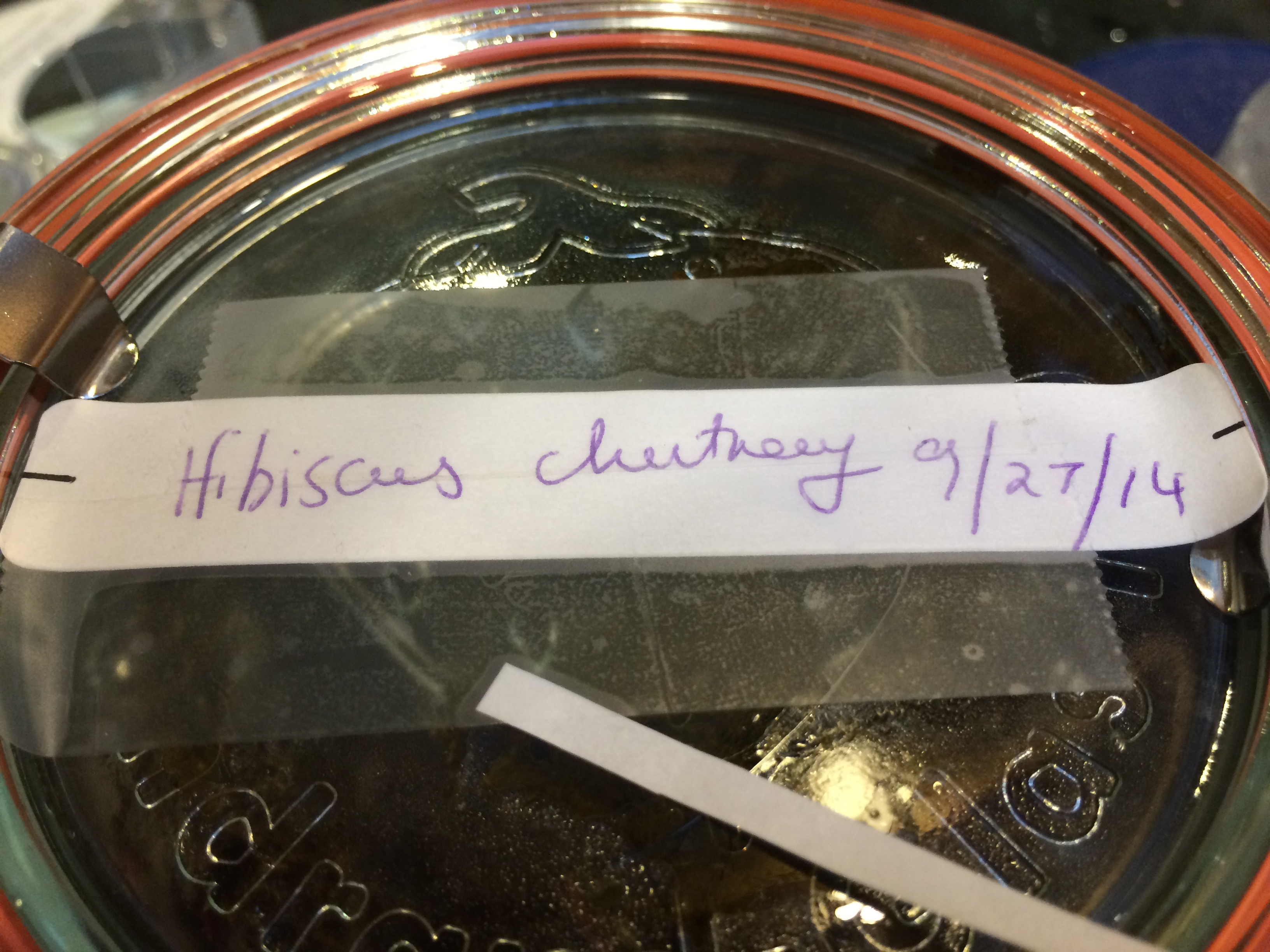
Labeled

Labeled

Hibiscus chutney

Ingredients:
  • Leaves from a big bunch of roselle
  • 1 tablespoon sesame, coconut or other oil + more for blending
  • A tablespoon of sliced shallot or onion
  • 2 cloves garlic
  • Half inch piece of ginger
  • 3 dry red chilies, or to taste
  • 1 teaspoon mustard seeds
  • Half teaspoon fenugreek seeds
  • 3/4 teaspoon salt
Method:

Make sure the leaves are completely dry after rinsing. You can do this by spreading them out on sheets of napkins for an hour or so. Dry-roast the plucked leaves in a flat pan in batches. You do not want them to steam, just quickly dry up and darken as they roast. Once all the leaves are dried and roasted in this manner, return them to the pan with a bit of oil to sauté. Remove them to a plate.

Meanwhile roast the dry spices (mustard, fenugreek, red chili) until darkened. Let them cool a few minutes then give them a whirl in the spice grinder to get a powder. Peel and roughly chop the garlic, ginger and shallot. Throw them into the blender along with the salt, the leaves, and the dry spices. The blender will probably need some liquid to make the blades go; for this, add some more of the oil, rather than allow any water to come near.

Save in a jar and label it so you don’t forget to eat it!


(Click here to find me on Facebook and here on Twitter.)

Roasting corn the sticky way

Roasting corn

Roasting corn

There was a time when corn was a delicious starchy snack. You had to cook it to enjoy it, and sometimes for quite long. But when you did, the kernels had this indescribable corny flavor that you could enjoy with butter, or chilies, or lime, or a number of other ways.

Wait. Rewind. Start over.

There was a time when corn was nothing but a big grass called teosinte, and the cob was basically a stick, and there were maybe five kernels on it. And they were covered with a hard shell. This corn was, shall we say, inedible.

So various talented ancient breeders who saw the possibilities in corn bred it to grow bigger.  And bigger. And made the kernels edible. Then, tasty. Richly colored with purple and red hues, the cobs would make as good a decoration as the kernels would a nutritious tortilla, if you ground them up and slaked it with lime.

Fine. Then came people (closer to modern times) who didn’t care much for these splashy colors and wanted food to be pure white (picky eaters) possibly to better match their bone china. So they bred corn white.

Great. Unknowingly, they also said goodbye to the wonderful nutrients carried in the purple and red hues. Then they realized that if you pick corn and eat it right away it is sweet. If you wait even a few hours, it is starchy. So they got into a sort of fever to eat corn as soon as it came off the farm like one, two, three, ready…pick…eat!

Then came test-tube-wielding lab-coated people who found a teeny-tiny-leetle thing you could change in corn to make it stay sweet longer, so they did. This corn was not really a very good organism, since it could not reproduce on its own. But it was a very desirable crop.

Sweet corn. A sensation. The lab-coats had nowhere left to go but down. They made corn sweeter. And super-sweeter. Closer and closer to candy. Until there wasn’t much difference left between this and this.

Corn Candy corn

Stop! Just stop already. We recently bought corn at the grocery store and ate it eagerly for dinner…such a disappointment. Sweet it was, very much so; but none of that wonderful corn flavor that comes with the starch. We felt like we had eaten dessert early. Where does one go if one misses the savory flavor of corn that goes with a bit of chili, a bit of lime; perhaps some charring? Where does one go for corn of such arrested development?

To the farmer’s market!

Sticky corn

The other day at the farmer’s market I found mounds of corn that went by the name of sticky corn. Some were purple, some not. They were quite a bit smaller than the regular cobs. What they exactly were was a mystery to me, but judging from the people crowding around the piles I guessed that sticky corn is an Asian specialty.

It turns out that way back in the 1500’s almost right after the Portuguese found corn in America, they brought it to China, where it became quite popular. Now once in a while corn will develop waxy grains. Normally this is a defect and the waxy grains don’t bode well for corn itself. But the Chinese, already used to sticky rice, treasured and tended to the defective sticky corn. It became a delicacy.

Breeding away in backwaters of China, sticky corn escaped this drive to turn everything sweet and easy.

From the 1500’s to present-day farmer’s markets in the Bay Area where certain Indian immigrants (me) are sick and tired of candy-sweet corn and are craving the roasted starchy flavor. Of course I swooped in and grabbed some.

Roasted corn

Now I was trying to recreate a specific thing. All over Mumbai there are food stalls that serve but one dish — roasted corn. There are coals and there is fire, and a simple red chili and salt combination with some lime. It turned out that sticky corn needed pre-cooking to achieve this dish but it turned out delicious.

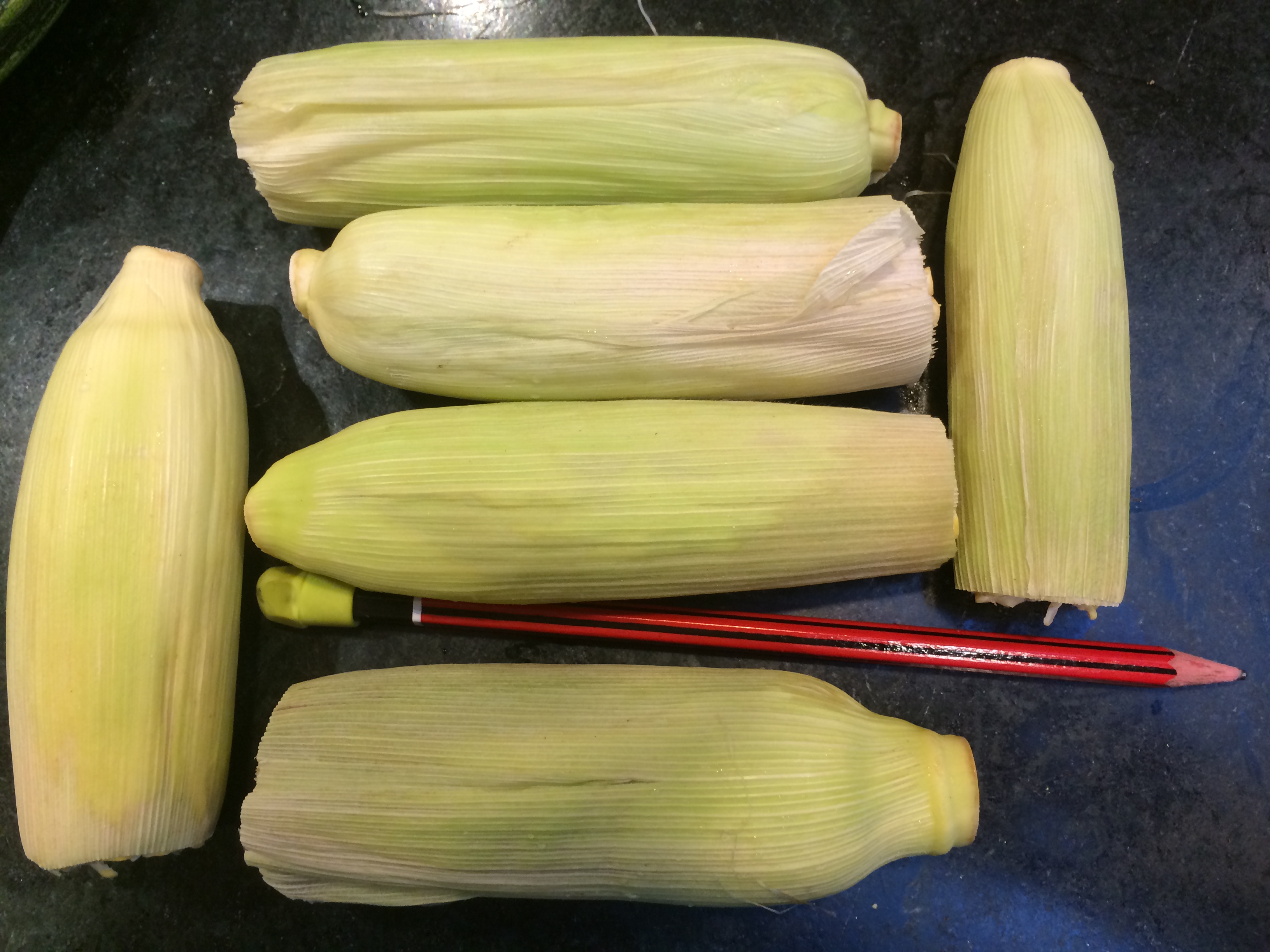
Sticky corn with pencil for scale

Sticky corn with pencil for scale

Sticky corn in pot for boiling

Sticky corn in pot for boiling

Boiled

Boiled

The kernels when boiled

The kernels when boiled

Roasting

Roasting

Served

Served

Roasted sticky corn

  • Servings: 2 cobs per person
  • Print

Ingredients:
  • Sticky corn in their ears
  • Red chili powder
  • Salt
  • Lime or lemon
  • Butter or ghee (optional)
Method:

Pressure cook the ears of corn for 15 minutes with some salt added to the water. If you don’t have a pressure cooker you can boil them for 45 minutes instead.

Take the leaves off the cobs. Hold them with tongs and roast them over an open flame, turning slowly, for about seven minutes each until evenly charred. If you like, rub some ghee or butter over. Serve with quarters of lime and a small bowl with a mix of red chili and salt, so that by dipping the lime in the powdered mix, and rubbing the lime over the entire cob, all the flavorings can be added at once.

Why these beans might fly off at any moment

Winged beans sauteed with red-chili garlic paste

Winged beans sauteed with red-chili garlic paste

The other day, walking through the farmer’s market, I had one of those moments that stops you short in your tracks. I saw an odd sight. I raised a trembling finger and exclaimed — with some rich feeling, I might add — ‘what on earth is that?’

I saw bunches of long frilly green pods sitting next to a whole pile of long frilly green pods. I walked over to the stall where they had already caused a minor stir.

Now The Odd Pantry is no stranger to odd vegetables. It has covered, with delight, the scruffy taro and the anatomical fiddleheads. This one though was new. Completely. At first glance I would have guessed it was a type of seaweed. I could just picture it in great rippling ribbons underwater.

But upon asking the lady of the stall, they turned out to be long beans — yes, legume pods that grow on vines — that had four rows of frills all along the length. Winged beans.

The winged bean

The winged bean

I asked the lady how one would go about eating them.

‘Well,’ she said. Long pause. She looked at me, judging how far to go. ‘Salad, stir-fry.’

Hm. Tight-lipped. The bird was caged but wouldn’t sing. I pressed her for more information. Placing my hand tellingly on my purse, I grilled her for the goods. ‘Out with it,’ I said, noting that she was starting to wilt.

Then it all came tumbling out. She broke off a piece for me to try. Hmm — tastes like — a vegetable. Maybe a fresh green bean of the French sort. ‘Make a paste of garlic and red chili,’ the lady said. ‘I’m Pilipino and that is what we do.’

A man walked up with a cloth shopping bag. ‘You Indian?’ he said to me, waggling his eyebrows. Yes, indeed, I am.

‘You know saag?’ he continues. Eyebrows doing a proper jig, now.

‘Intimately,’ I reply.

‘You cook it like saag!’ he says like a punchline, rifling through the bunch of winged beans.

Hm. I think I’ll stick with what the lady said.

Winged beans (Psophocarpus tetragonolobus)

This has become a habit. The Alemany Farmer’s Market will introduce me to a brand new vegetable that then turns out to be a complete miracle plant, so much so that you would think the Department of Marketing this vegetable is making stuff up. What else can you think about a plant that offers so much?

  • Every part of it can be eaten. From a New York Times article: ‘Theodore Hymowitz, an agronomist at the University of Illinois who is a member of the Academy’s panel on the winged bean, said, ”it’s like an ice cream cone – you eat the whole thing.”
  • Excellent source of vitamins, minerals, protein, calories.
  • It can grow in nutrient-poor soils
  • The seeds can make a coffee substitute
  • The leaves can be a tobacco substitute
  • Can produce a milk like soymilk
  • The milk from the beans can be fermented into tempeh
  • Mushrooms can be grown on the dried pods
  • Can be boiled, roasted, stewed, stir-fried, eaten raw, or in soups
  • Can be grown as animal fodder, and used as a cheap source of protein for fish farmed for food

There is also an enduring mystery about winged beans — nobody has found the wild form of it. Given its wonderful qualities it isn’t surprising to find it cultivated in any resource-poor traditional culture that can grow it. It is grown for its roots in Burma, in South East Asia for its pods, in great variety in New Guinea (where the winged bean has developed a fondness for the mountains).

But the wild form of it has never been found. Where is it really from? Some guess Africa because most of its relatives come from there. Some guess New Guinea because it just seems so at home there. Perhaps the wild form has become extinct. Who knows? Entire careers in botany could be made or broken on this one fact. So if you see a wild winged bean growing somewhere out on your travels, call someone!

Winged bean roots for sale in Burma. (source: Wikimedia Commons user Wagaung own work)

Winged bean roots for sale in Burma. (source: Wikimedia Commons user Wagaung own work)

Winged bean stir-fry

I figured I would stir-fry the winged bean pods using some South East Asian ingredients. Shrimp paste is often used in these cuisines, and I didn’t possess any, so I used anchovies to replace that missing umami flavor. Also, fish sauce. This is a light salty liquid that is extracted from the fermentation of fish. It is a great replacement for soy sauce that can instantly take a dish from tasting Chinese to tasting more tropical, reminiscent of islands and bays and inlets and other such watery waterworlds.

Garlic and red chilies

Garlic and red chilies

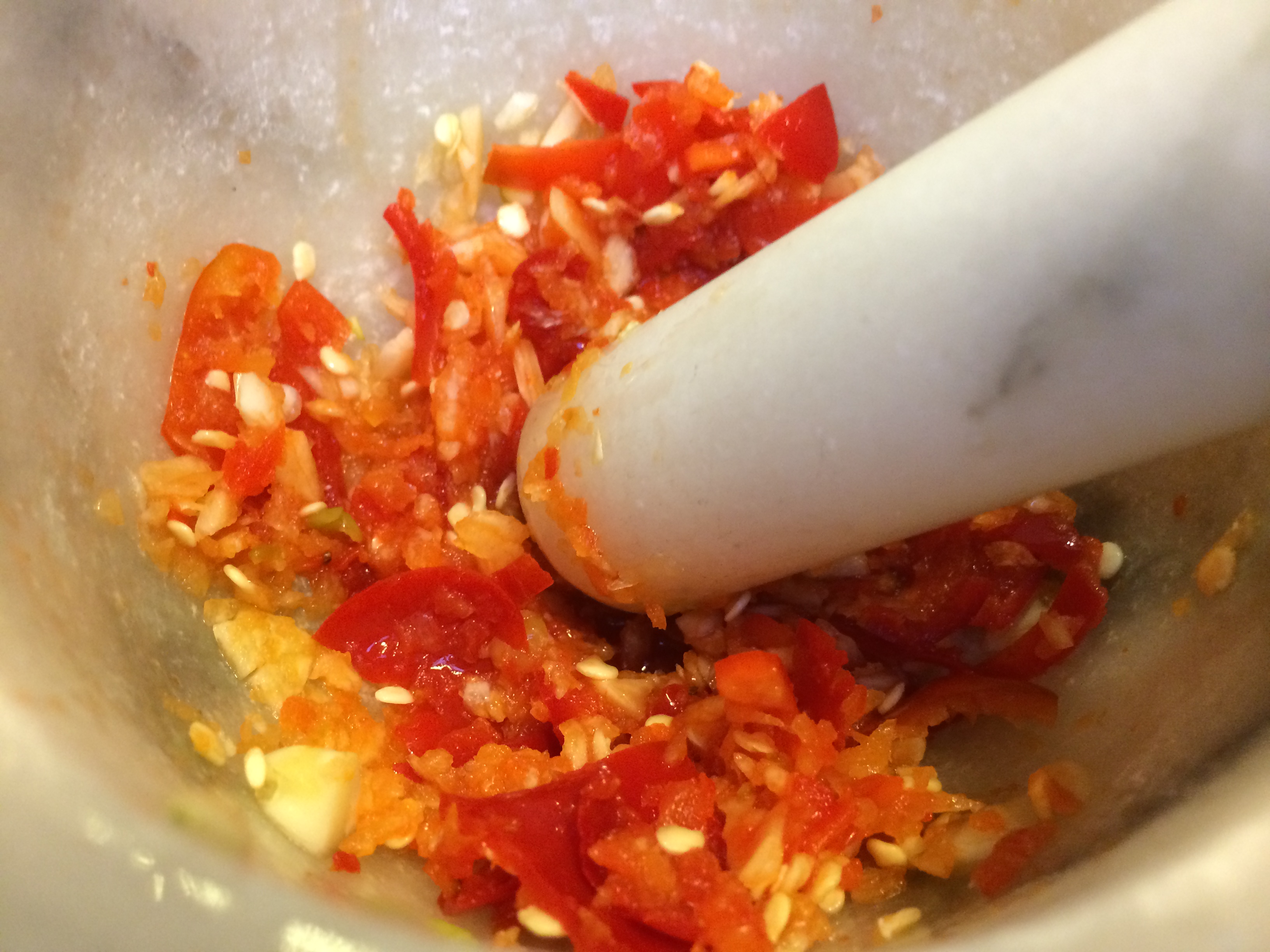
Pound it

Pound it

Anchovies too

Anchovies too

Paste

Paste

Slice the winged beans

Slice the winged beans

Saute

Saute

Sauteed

Sauteed

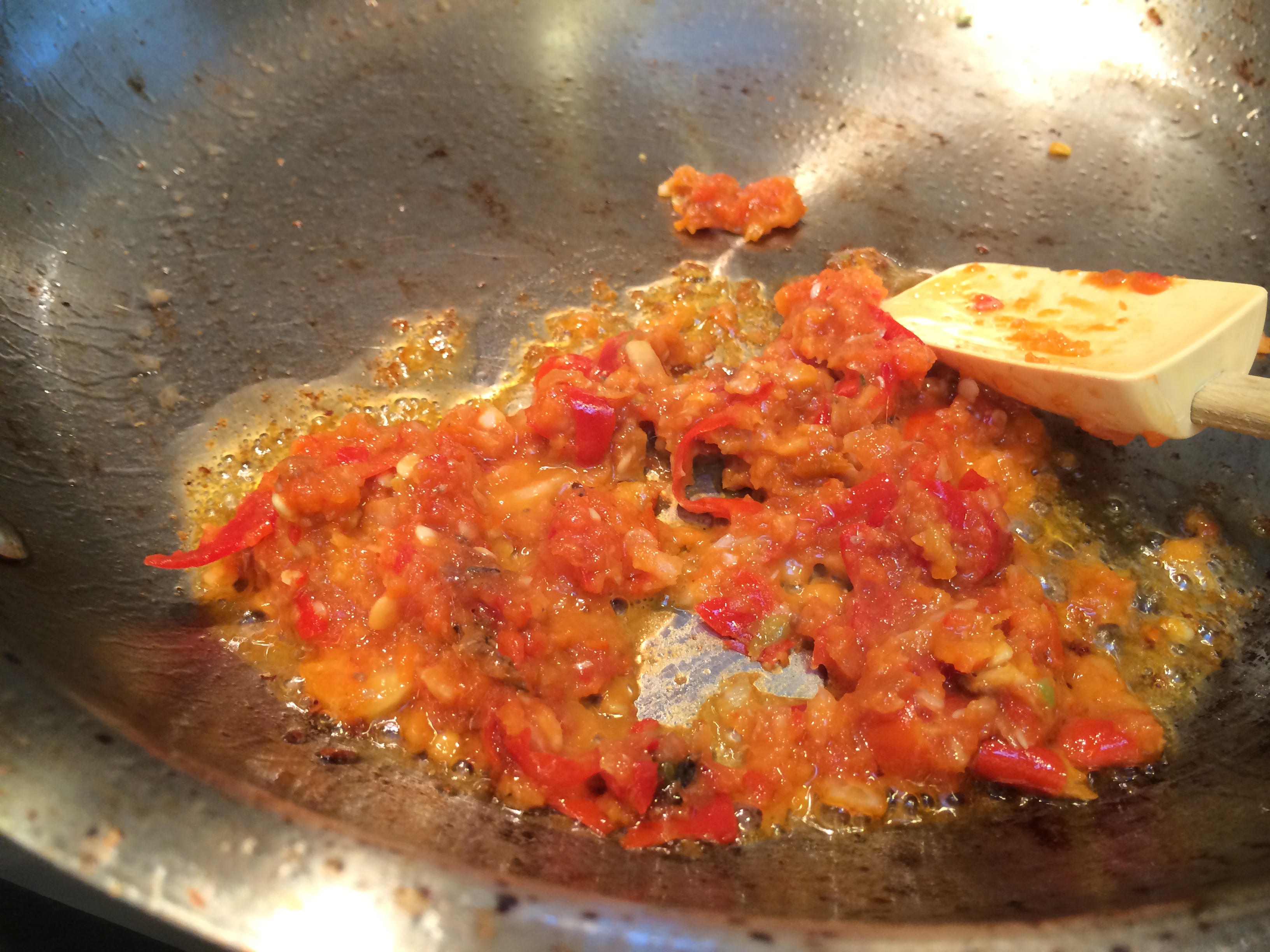
Fry paste

Fry paste

Fried paste

Fried paste

Enter the beans and fish sauce

Enter the beans and fish sauce

Winged bean stir-fry

Ingredients:
  • 3-4 cloves garlic
  • 1-4 fresh red chilies, or according to taste (use fresh green if you can’t find fresh red, I got mine from my garden)
  • a few anchovies (packed in oil)
  • 1 pound winged bean pods (green beans or asparagus would make a good substitute)
  • 1 tablespoon fish sauce
  • 1 – 2 tablespoons oil (I used sesame oil)
Method:

Make a paste of the garlic, fresh chilies and anchovies in a mortar and pestle. Takes about 7 minutes, not too bad. Wash, trim and slice the winged beans lengthwise. If you are using green beans or asparagus, just trim them and leave them intact.

Meanwhile heat half the oil in a wide thick-bottomed pan. When it shimmers put in the winged beans. Stir-fry them on high heat for a few minutes until the frills look a little browned. Remove them with a slotted spoon or tongs.

Add the rest of the oil and fry the paste. It will take a few minutes for it to dry out and for the oil to separate. Watch it carefully and use medium heat to make sure it doesn’t burn. Once this is done, put the winged beans back in, add the tablespoon of fish sauce. Stir to coat the beans with the paste and fish sauce, cover for a few minutes to steam before serving.

(Click here to find me on Facebook and here on Twitter.)

Is it a wrap? A donkey? No–it’s a superbaby…burrito!

Made-from-scratch burrito

Made-from-scratch burrito

When I was new to California, Indian friends who had arrived before me told me eagerly about the exciting new cuisines they had sampled around the Bay Area. It became a bit of a parlor game to find the cuisine ‘most like Indian food’ — which meant, in practice, the most highly flavored with spices. People mentioned Thai food and Ethiopian food as contenders. One strong contender that kept coming up was the Mexican burrito.

Of course, I was told about it from an Indian point of view. Imagine this, friends told me, rice and dal wrapped inside a roti! What could be better! The ‘dal’ in question was refried beans and the ‘roti’ was a tortilla. My friends were talking about the Mission Burrito (=’little donkey’), a fat wrap invented in San Francisco from Mexican ingredients, a cheap and healthful all-in-one meal.

The Mission Burrito is meant to be customized. You stand at the counter while your food server moves through an assembly line with a tortilla laid flat in front of her. You can choose or decline each ingredient. Rice is in. You choose your meat, or none. You choose your beans. I quickly learned that I preferred black beans to refried or whole pinto beans. Shredded iceberg lettuce and cheese are usually turned down by me, but are a yes for most.

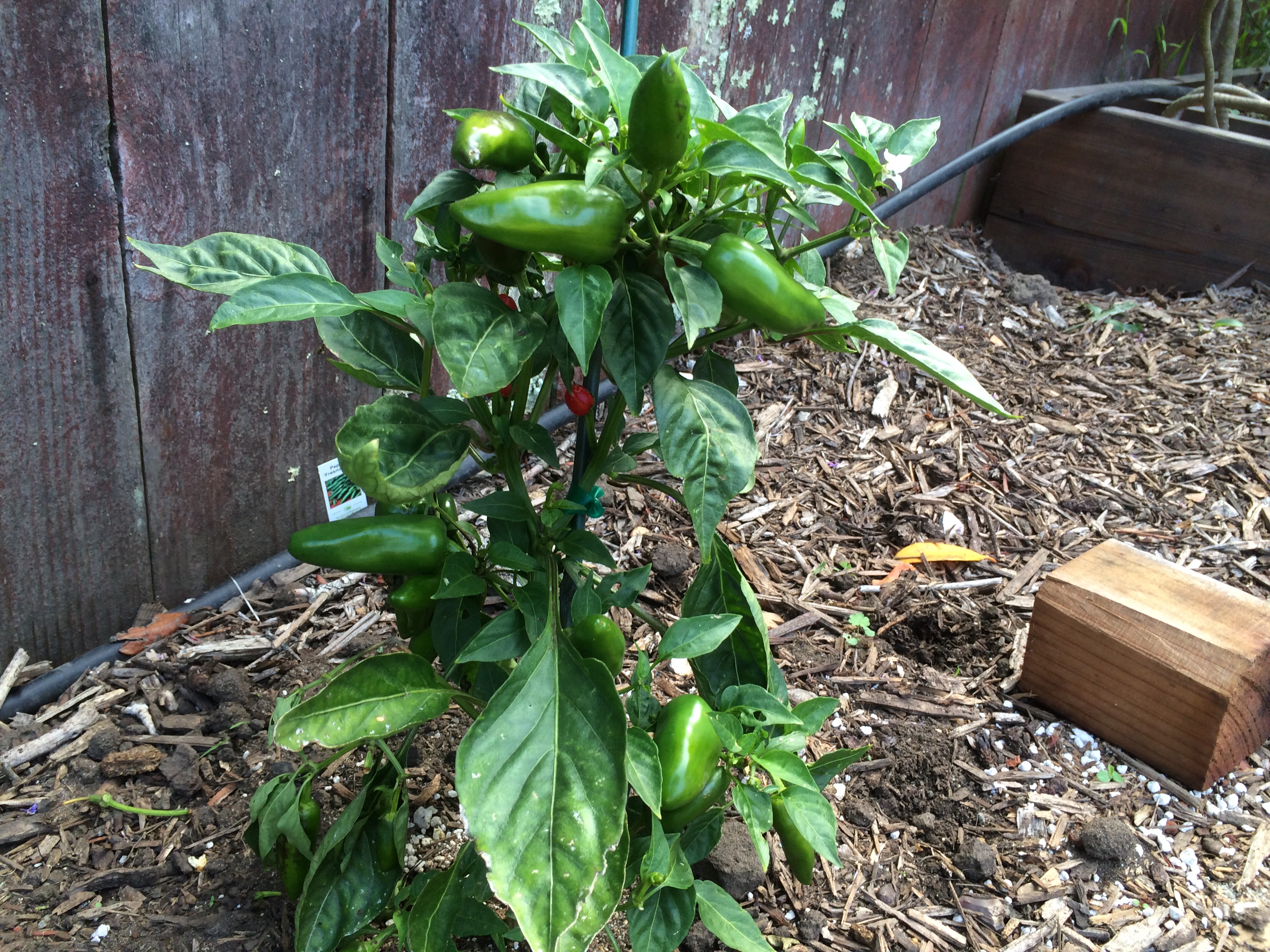
Fresno chilies growing in my yard

Fresno chilies growing in my yard

Then, if you didn’t forget to use the keyword ‘super’ you get the big payoff. The supremacy of the super burrito lies in having all kinds of blandishments added to it — salsa, guacamole, sour cream, hot sauces, heaps of onion and cilantro. For a recent immigrant from India (me, then) — the word ‘super’ meant ‘chutneys’. Fantastic. Then the tortilla is folded into a roll, tucked in at each end, and wrapped in double layers of foil. It can be eaten on the go, with no forks, plates, even napkins around.

People know Silicon Valley for its technical innovations, but its burrito innovations are not far behind. Some places are famous for offering beef brain and beef tongue in the choice of meats. Some offer vegetables grilled on the spot. Many have adopted whole-wheat, spinach or tomato tortillas. One of my favorite taquerías offers cooked cactus (nopales) upon request. A ‘naked’ burrito is served in a bowl, without a tortilla wrapped around it. A ‘baby’ burrito is a smaller sized tortilla, suitable for lunch for a smaller-sized person.

But here’s the other thing about the Bay Area…we must make this at home, from scratch! So here we go.
IMG_3051

Whole-wheat vegan superbaby burrito

For the tortilla I just made an Indian-style whole-wheat roti/chapati that added a nice wheaty complexity to each bite. They were smaller than the regular tortilla size, making this a ‘baby’ burrito. I bought dry black beans and soaked them overnight, then pressure-cooked them for 15 minutes to have the most luscious, earthy, non-metallic tasting black beans ever. The rice was cooked using the liquid drained from the tomatoes. The hot sauce came from this recipe for Mexican hot sauce. For the guacamole I used a nice large Californian Hass avocado. Cilantro and Fresno chilies from my garden. A mix of green zebra and early-girl tomatoes for the salsa. I made it vegan but my husband added some cheddar cheese. You could add sour cream or thick homemade yogurt, whisked.

Yes, it certainly had some Indian flavors….

Black beans soaking

Black beans soaking

Black beans cooked

Black beans cooked

Black beans

Ingredients:
  • 1/4 dry black beans
  • 1/4 teaspoon salt or to taste
Method:

Soak the black beans over night or for about 6 hours. If you are short on time, soak them in near-boiling water for an hour. Drain and pressure-cook for 15 minutes with 1/2 cup water. Add the salt after it is done cooking.

Tomatoes for salsa fresca

Tomatoes for salsa fresca

Tomatoes draining

Tomatoes draining

Onion, chili, cilantro

Onion, chili, cilantro

Salsa Fresca

Ingredients:
  • 4 small tomatoes or 2 medium
  • 1 tablespoon finely chopped onion
  • 1 tablespoon finely chopped hot green chili
  • 1 tablespoon finely minced cilantro
  • Lime juice from half a lime
  • Salt to taste
Method:

Dice the tomatoes and place them in a strainer with some salt mixed in, and allow to drain for half an hour or so. Collect the drained liquid in a bowl, this will be used later for the rice to add a subtle tomato-ness. Meanwhile finely chopped the onion, chili and cilantro. Once the tomatoes seem to be done draining liquid, mix it in with the onion, chili and cilantro. Add lime juice, mix, taste, and adjust for salt.

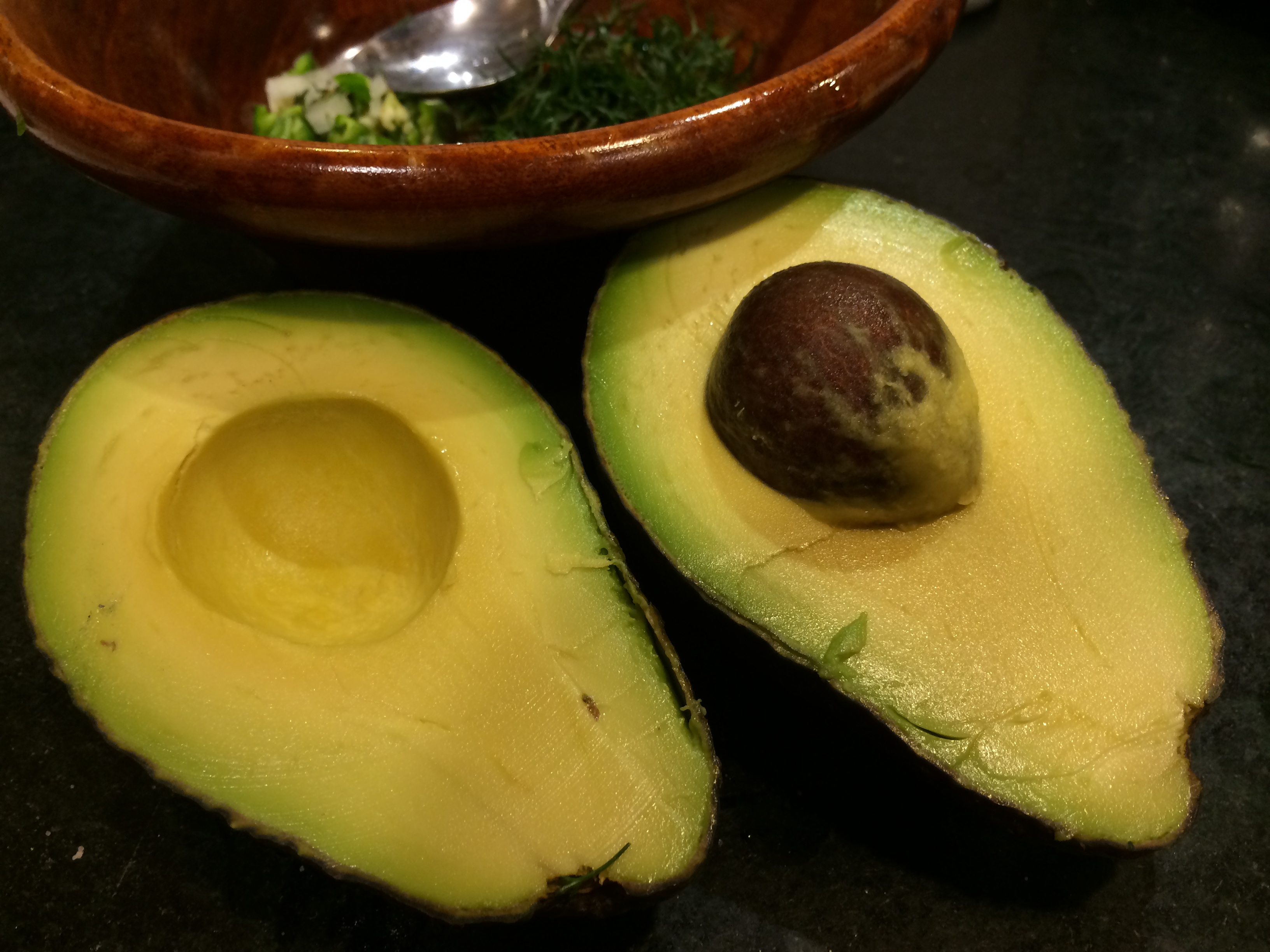
Beautiful Hass avocado

Beautiful Hass avocado

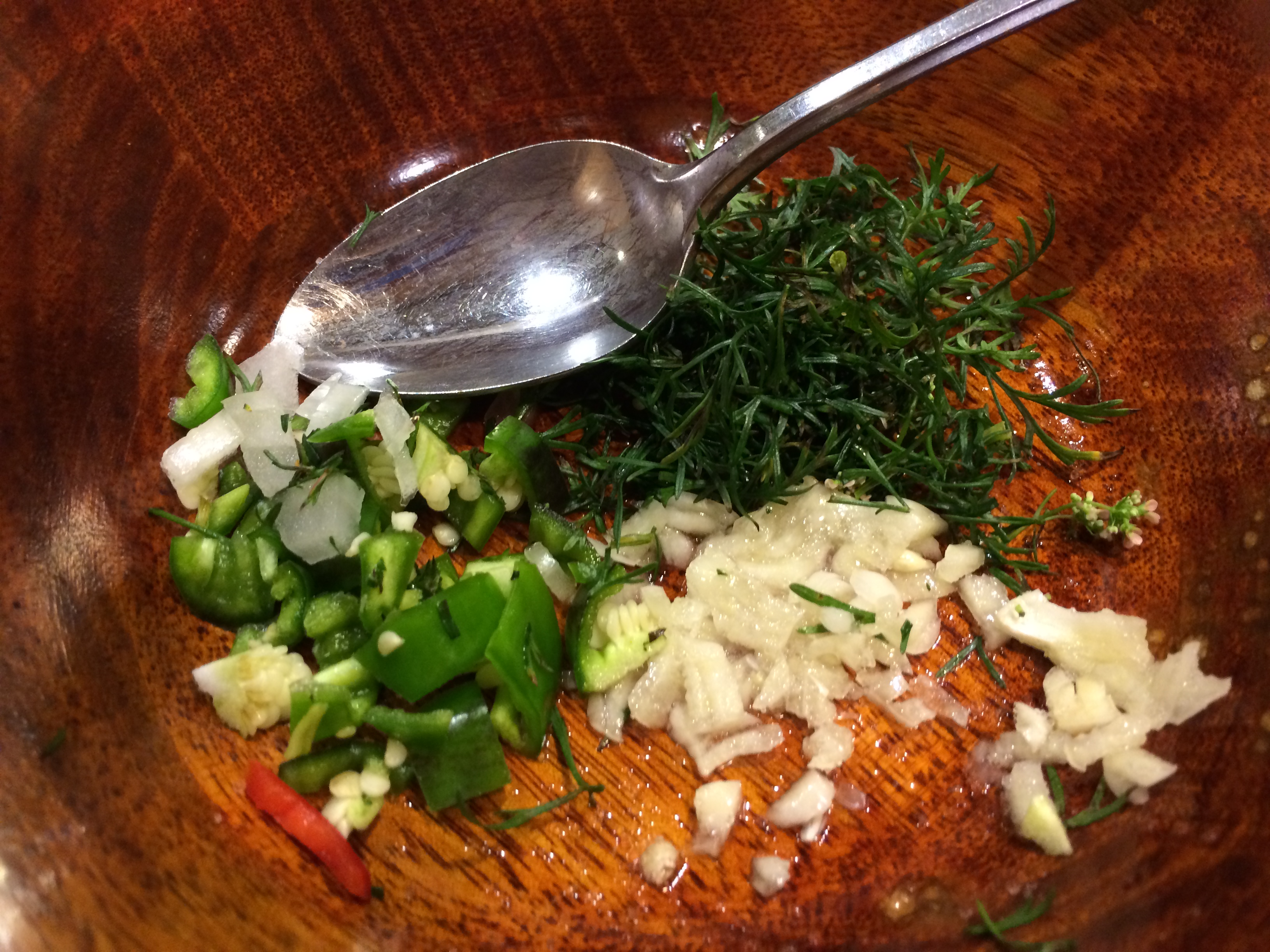
Garlic, chili, cilantro

Garlic, chili, cilantro

Guacamole

Ingredients:
  • One large avocado
  • 1 large garlic clove, minced
  • 1 tablespoon cilantro, minced
  • 1 tablespoon minced chili
  • Juice of half a lime
  • Salt to taste
Method:

Finely mince the garlic, add some salt to it and leave it mixed with salt for about 10 minutes. In this much time it will have turned pasty and ‘cooked’ a little. Cube the avocado flesh, mix it all together with lime juice. You can mash the avocado if you like but I like to leave little chunks.

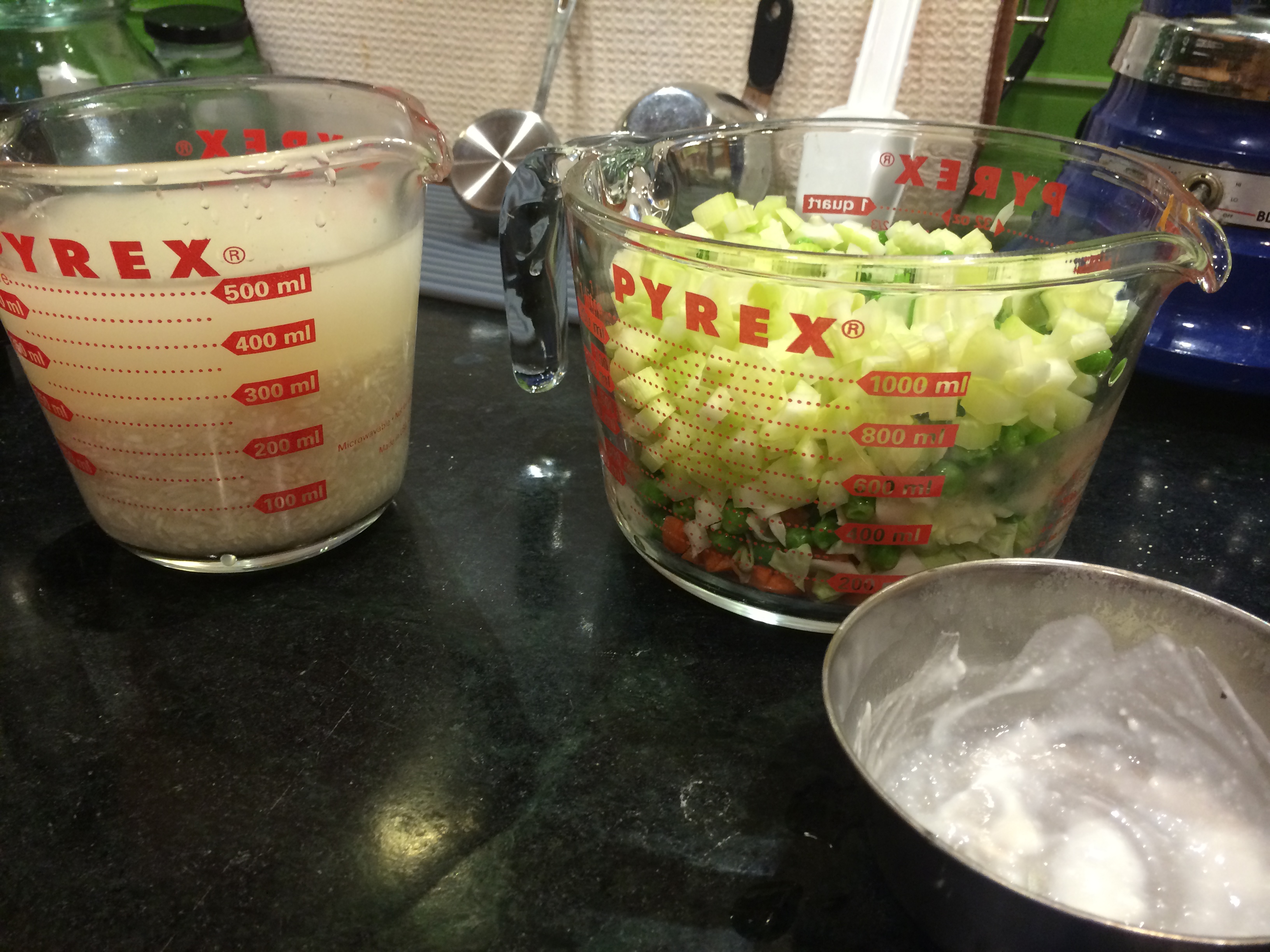
Rice in pot

Rice in pot

Done

Done

Mexican rice

Ingredients:
  • 1/3 cup rice
  • 2/3 cup water including the liquid drained from tomato
  • 1/4 onion, minced
  • 1/2 teaspoon paprika
  • 1/4 teaspoon cumin powder
  • 1/2 tablespoon oil
  • Salt to taste
Method:

Heat the oil in a thick-bottomed pot. When it shimmers put in the minced onion, the cumin and paprika. Let them cook a few minutes on medium heat. Now in goes the rice. Stir to coat with oil. Next put in the water (including tomato liquid) and salt. Cover, bring to a boil, then simmer for 7 minutes. Turn off the flame and let it rest, covered, for a few minutes before opening the lid.

IMG_3054 IMG_3055 IMG_3057IMG_3063

Assembling the burrito

Ingredients:
  • 1 whole-wheat chapati/roti/tortilla
  • Some cheddar cheese, cubed (leave it out if you want it vegan)
  • Some rice
  • Some black beans
  • Some guacamole
  • Some salsa verde
  • Some hot sauce
Method:

I’ve left the amounts vague because you can customize each the way you want to. Layer the ingredients onto the roti laid out flat. Don’t overstuff it if you want a nice roll that you can bind securely. Fold in the two lateral edges to hold the fillings in place, then roll up the entire burrito starting at the bottom. Enjoy.

Found the Vegan Potluck folks who host a wonderful weekly vegan bash! That’s almost poetic. Entering this recipe there. 
(Click here to find me on Facebook and here on Twitter.)

Idiot-proof vegetable pulao

Vegetable pulav with tomato soup

Vegetable pulao with tomato soup

One of the first dishes I ever tried cooking on my own was flavored rice cooked with a few vegetables. This is known as a vegetable pulao — or pilaf — or pulav, the standard-est and basic-est of Indian home recipes. So why has it taken me this long to blog about it?

Because sometimes the simplest things give you the most trouble. It has taken me years for me to get this right. Sometimes the rice isn’t cooked through. If it is, it is cooked too much. Or the vegetables are cut too big and raw on the inside, or they have turned to mush. If all goes right regarding the timing, the thing is tasteless. Gah.

One way to get around these problems is to cook the rice and vegetables separately then combine them. But while there are many perfectly fine recipes that rely on this method (many from the south — yogurt rice, lemon rice, tomato rice etc.), for vegetable pulao, the flavors must fuse, which means cooking together is a must. They must come out with a flourish, all perfectly done at the same time. They say each grain of rice must be separate, so add that to the list of requirements. It must be gently spiced, but not too much — too much would kick it over into being a biryani. That’s fine, but that’s not what we are after.

So now, finally, I present to you my pulao secrets, recently discovered after many years of trial and error, which should make all doubts vanish under the first whiff aroma that hits you when you open the pot. Here they are.

Secrets of pulao

  1. Be stingy with the water. The vegetables you add will leave off some steam of their own, so I would use about a quarter less water than you would with plain rice.

  2. But if you do that, the danger is that the rice will cook and expand and rise above the water line, leaving the upper layer uncooked. Curses! To get around this problem, we use a pressure cooker. (I believe a tightly closed dutch oven slow-cooked in an oven would work as well, but that is not what I did.)

  3. Do not use vegetables that will turn to mush, like tomatoes or zucchini. The vegetables that you do use must be diced. I use vegetables like green beans, carrots, peas, cauliflower, cabbage, bell peppers, celery, etc.

  4. Rice tends to be a bit bland, so you need to fire on all cylinders where the aromatics are concerned. So that means — garlic, ginger, green chilies, onion, and yogurt for richness.

  5. Now this is the most important — do not caramelize the onions! Cook them till softened, but not browned. A lower flame would help. This is because what we are after is a savory flavor, not a sweet caramel browned flavor (there are other excellent rice dishes that explore this profile, we will go into that at some point).

Armed with these tenets we are ready to begin.

Rice soaking and vegetables diced

Rice soaking and vegetables diced

Ginger garlic chili paste with yogurt

Ginger garlic chili paste with yogurt

Onion cooking with bay leaf and cardamom

Onion cooking with bay leaf and cardamom

Paste enters

Paste enters

Paste drying up

Paste drying up

Vegetables enter

Vegetables enter

Rice enters

Rice enters

Done

Done

Vegetable Pulao

Ingredients
  • 1 cup long-grained rice
  • 1.25 cup water
  • 4 cups diced vegetables, mix of carrots, peas, beans, cauliflower (cut slightly larger, because it has the tendency to turn to mush if overcooked), bell pepper, celery, potatoes
  • 1 black cardamom
  • 1 bay leaf
  • 1/3 cup diced onion (this will be about half a medium onion)
  • 3-4 cloves garlic
  • 1 inch piece ginger
  • 1-3 fresh green chilies
  • 1/4 cup plain yogurt
  • 1 teaspoon salt
  • 2 tablespoons oil
Method

Rinse and soak the rice for about half hour. Dice the vegetables — those that cook quickly (like cauliflower) can be left larger, those that cook slowly (like carrot) can be cut smaller. Blend the yogurt along with ginger, garlic and chilies to make a paste.

Heat oil in the pressure cooker or dutch oven on medium heat. When it shimmers, put in the cardamom and bay leaf. Let them cook until an aroma arises. Then put in the onion. It can cook for a few minutes until softened. Now put in the paste and stir to combine with the oil. In about five minutes of cooking, the paste will have dried up and the oil will show separating from the paste.

Now you can put the vegetables in, and simply toss them around to mix with the oil. Drain the rice and add that in as well, and stir to coat the rice with the oil and spices. Now put in the water and salt, and pressure cook for 15 minutes. If you are using a dutch oven, cover it tightly and cook it in the oven for about 20 minutes at 250ºF.

Let it sit covered for a few minutes after taking it off the heat. Before serving, fluff it up lightly with a fork.


(Click here to find me on Facebook and here on Twitter.)

Talking to a Vidarbha Bt cotton farmer

Cotton at the market

Cotton at the market (source: Prakash Puppalwar)

I wrote two posts on Bt cotton but I have to admit it left me more confused than before. I went into it expecting to find that Bt cotton had kickstarted an epidemic of farmer suicides. But the closer I looked, the more the claims of Bt cotton devastation seemed to vanish into thin air. What I was left with though, was a list of problems of technology adoption — the kind of list that is very familiar in every industry that tries out something new.

My mistake lay in hoping for an answer to a simple question — is Bt cotton good or bad? But this type of question might confuse matters more than illuminate them. A better question might be — what problems does it solve, what problems does it create? How does it interact with customs and practices in India?

Look, Bt cotton is a technology. It isn’t the devil himself in the form of a seed, nor is it a benediction from the gods. It is a human-made technology. All of us who use computers know what that means. When they work, they are great. But most of us have had the occasional urge to punch a fist through the screen when it doesn’t do what we expect.

Recap

Bt cotton was introduced in India in 2002 by Mahyco in collaboration with Monsanto. The prior three decades had been tough for cotton farmers in India due to yield losses from the bollworm. Farmers had to spend a huge amount in pesticides and many had given up on growing cotton entirely.

Bt cotton comes with an insecticide in it (one that is safe for humans), that allows the cotton bolls to grow without being eaten by the bollworm. This makes it so that farmers don’t have to purchase extra insecticide and be exposed to those sprays. Plus, Bt cotton is a hybrid that seems to make bigger bolls.

It does come with strings attached. It isn’t the wild form of cotton that humans discovered thousands of years ago that belonged to no one and to everyone. This one has been through years of research and tinkering in the lab. It is a corporate product. Therefore, the seeds are more expensive. In addition, you cannot save seeds from your harvest. You have to purchase a new set of seeds each year.

Despite these strings attached, many (most) cotton farmers have made the determination that Bt cotton is worth growing anyway. I interviewed Bt cotton farmer Sudhindra Kulkarni, who gave me a precise breakdown of his profits from Bt cotton and a comparison with red gram. Please note the dramatically lower cost of the seeds for red gram, and yet, the dramatically higher profit for Bt cotton:

Bt Cotton Red Gram
Yield per acre 15 quintal 5 quintal
Rate for 1 quintal Rs. 5,000/= Rs. 4,650/=
Total for 1 acre Rs. 75,000/= Rs. 23,250/=
Total expense for input Rs. 27,000/= Rs. 7,000/=
Net profit for 1 acre Rs. 48,000/= Rs. 16,520/=

As a matter of fact, the adoption rate of Bt cotton in India is 90%. Farmers are small business owners, and like any other such, they make a business calculation to see if Bt cotton is worth growing for them or not. Sudhindra claims that Bt cotton lifted his family out of poverty. Much as us urban folks would like farmers to remain guardians of India’s halcyon past, they themselves have practical lives to lead in the present.

What’s the problem, then? Clearly the story does not end there or there would be no debate. Where’s the strum und drang here? Why has the Mahyco-Monsanto alliance aroused fears that India is being stealthily colonized again? What about the epidemic of farmers killing themselves?

Farmer distress

Any media consumer who has not investigated this issue deeply themselves gets a constant drumbeat about Bt cotton having devastated Indian farmers. Words like catastrophe, epidemic, even holocaust are thrown around. But upon talking to farmers, Bt cotton appears as a solution to a three-decade-old problem. What gives?

Here are some articles about the fears of farmer distress. Ostensibly the stories are about how Bt cotton is inadvisable to grow. But one has to read them a little smartly to see that the point being made is more nuanced than that: Bt cotton is inadvisable to grow when there is no irrigation. This makes sense — Bt cotton needs water. Being a cash crop, it can’t be eaten as a last resort if it can’t be sold. Plus, the farmers are being advised to be prudent and rotate their crops; plant non-Bt crops as buffers to avoid the bollworm becoming resistant; to grow lower-profit crops like sorghum as well for backup. None of it should be controversial. What is left unsaid are the reasons why farmers might not be following best practices. Some of those I alluded to in this article, where I mentioned the difficulty of disseminating information in regions of high illiteracy. The other reason is obvious when you look at Sudhindra’s chart above — cotton is a cash crop and has the potential to make a good profit, if things go right. Is there perhaps some excessive risk-taking going on?

But what do I know — I can speculate plenty but I know little. So I talked to a farmer from Vidarbha, Maharashtra, a that region is said to have been devastated by crop failures, in order to get some inside information.

Talking to a Vidarbha Bt cotton farmer

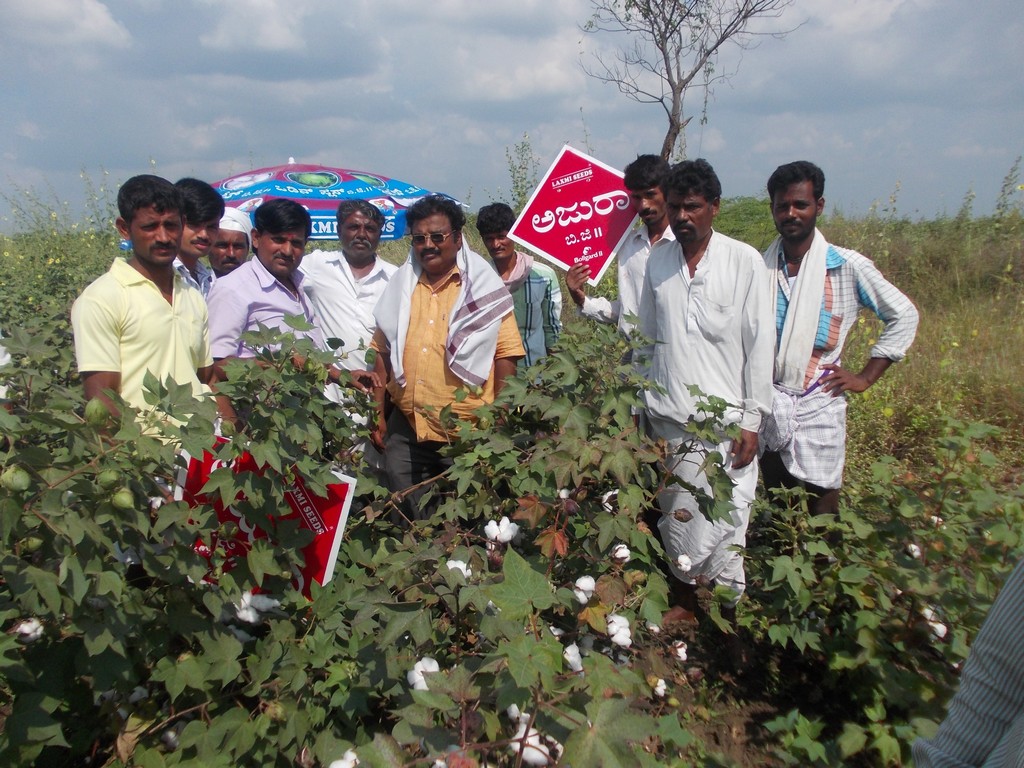
Prakash Puppalwar farms in Yavatmal district in the Vidarbha region. It is known as ‘Cotton City’ because of its traditional ties to the growing and manufacture of cotton goods. He has an ancestral cotton farming background. He is one of a group of farmers that got an education in agriculture and came back to their village to farm so he has a good understanding of best practices, and also a handle on the problems that smaller, less educated farmers may face. I asked him a few questions on the phone and on email, what follows is a translated compilation of his answers.

Prakash Puppalwar in Bt cotton farm

Prakash Puppalwar in Yavatmal Bt cotton farm

What problems do farmers face in Yavatmal?

  • Some farms lack irrigation. We sow cotton in June and expect to harvest in October or November. In June it rains each week, without fail. July too. In August, sometimes there are 15 or 20 dry days at a stretch. During this time, we need some extra water. In addition, sometimes there is power-load-shedding at times when we need electricity for irrigation.
  • We don’t get good weather reports at the time of sowing.
  • Everyone knows that the yield of Bt cotton is high. So labor costs have gone up. Out of the cotton cultivation cost 65% goes towards labor. Plus, it is hard to find skilled labor.
  • As far as good government loans with regulated interest, it is easy enough to get a 15-year loan to build a house. But if you are looking for a 5-year or 10-year loan for farming, it is difficult. You don’t get much and you don’t get it on time. [OP:This is why farmers would have to resort to unauthorized money-lenders.]
  • The government has fixed the MSP (minimum sale price) of cotton too low. In addition, some years back they had stopped the export of cotton entirely. Now it has restarted but not at the previous levels.  They should have an import duty on cotton like they have on sugar. For a while the rate of cotton had gone up to seven thousand. Lately we had to sell it off at three thousand.
  • We do not have crop insurance in case of crop failures.
  • Farmers are eager to learn but they lack knowledge about farming with this new technology. They also lack knowledge about marketing.

Do farms in your district follow best practices for growing Bt cotton?
We do rotate crops. We use chemical and organic inputs in the ratio of 60-40. We are also told by the agriculture institute to have a buffer area of non-Bt cotton surrounding the farm and though we try, we cannot always accomplish this.
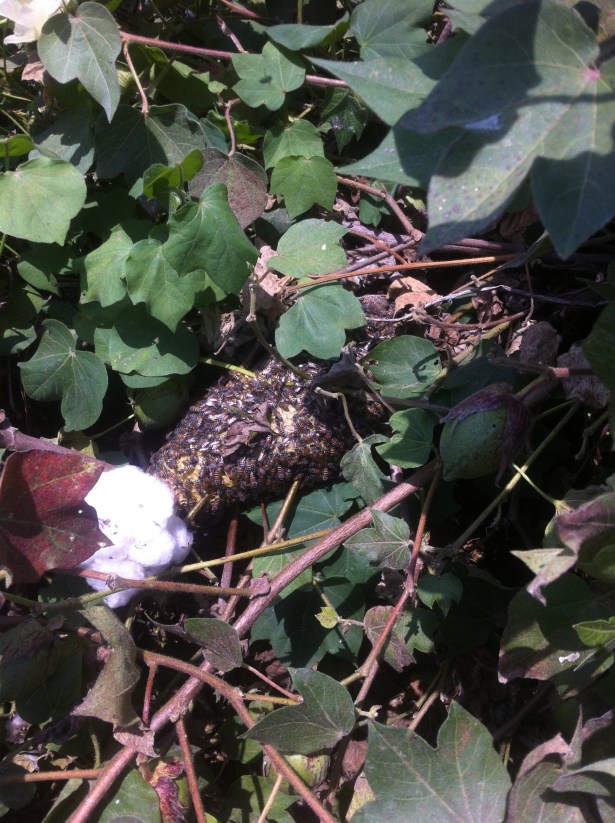
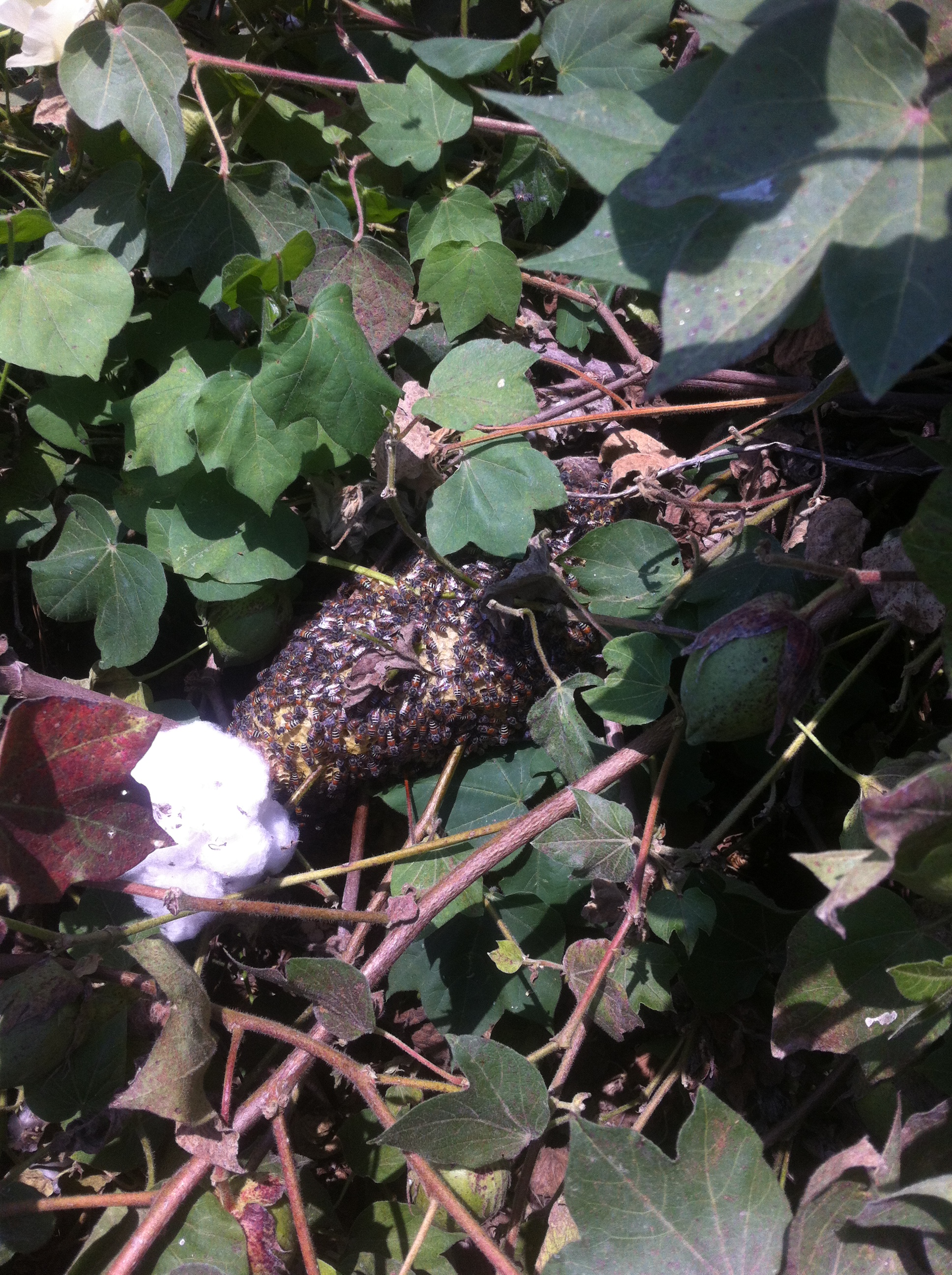
Beehive in Bt cotton (source: Prakash Puppalwar)

Beehive in Bt cotton (source: Prakash Puppalwar)

You seem to have some practical problems. Why do people blame only Bt cotton?
I don’t want to speculate on their reasons. But if we farmers are the patients, shouldn’t we be asked first what our disease is? Look, 100% of the farmers here grow Bt cotton. Why would we do that? With Bt cotton we have got freedom from an old enemy — the pests. We have surety. Even the lady farm workers know that with Bt cotton we have higher production. We have gone from four to ten quintals. I don’t understand why the whole blame should go on the seeds. The seeds are a small part of our cost. Out of our total cost of growing, 65% goes towards labor. Then there is fertilization, irrigation, marketing. The seeds are only 5% of our cost. Why would we blame the seeds? There are a lot of factors that go towards a crop succeeding or failing. You might have great production but if you can’t sell it at a good rate you would have a failed crop anyway. This year we have had only 33% rain that we expected so far. Smaller farms who don’t have irrigation could be wiped out. Those who have irrigation will be fine. That is a very important factor.

But is it the case that conventional cotton is not as dependent on water as is Bt cotton?
It is all about the boll. Conventional cotton did not grow bolls as big as Bt cotton. Plus the quality of the cotton was not as good. Since the bolls are bigger with Bt cotton, naturally it will need more nutrition, and in turn, more water. Specially in the boll-formation stage. This is not surprising.

Have their been a lot of suicides by farmers in your region? 
No doubt, there have been some. But, one has to keep in mind that the government gives one lakh rupees to the families of the bereaved in case of a suicide. People can be asked to provide any kind of statement to the police. One has to keep this fact in mind. [OP: it was not clear to me what exactly he was suggesting here but I didn’t want to probe too much, as the conversation was getting a little too macabre for me.]

Swadeshi fever

Indians have always had a persistent phobia about being swallowed up by the west (clearly certain events in our history have had something to do with this). I don’t think anyone believes that we will literally be colonized again, but each new cultural encroachment by the west arouses fears of soft-colonization — the kind where we lose our cultural soul; where we become addicts who can’t do much but wait for the next cola-fizzed hit from western corporations.

Gandhi promoted this notion as self-reliance or Swadeshi. I have more than  a smidgen of this phobia myself. The sheer psychic disturbance I feel when I see a McDonalds franchise in a place where a vada-pav stall used to be is hard to put in words. I believe that GMO seeds arouse this fear in a visceral way because it is our very food production cycle that would now involve a reliance on products that are Videshi, not Swadeshi. I understand this fear and I feel it too. The blogger from Curry Leaf, one who I admire for her stories and her passion, expresses this fear in the comments on this post.

As this is an emotional reaction, it isn’t wrong or right, and there is no arguing against it. But let me give you a little glimpse of my own inner dialog around this subject.
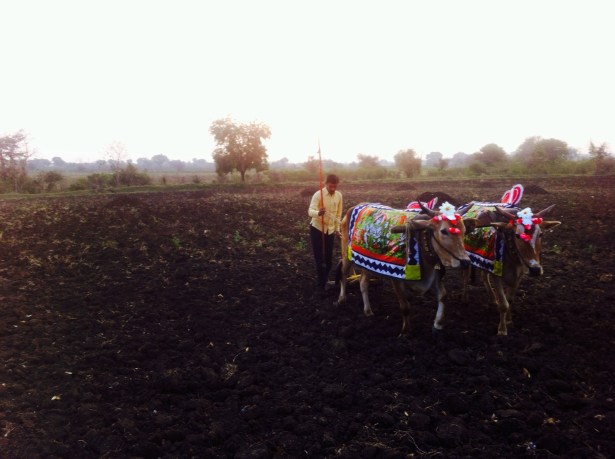
Ground being prepared for sowing

Ground being prepared for sowing (source: Prakash Puppalwar)

I feel like the cultural influences we have already absorbed become invisible to us, and we fear the cultural influences that might occur in the future. Gandhi himself was educated in England and wrote books in impeccable English. We are debating this subject mostly in this foreign language as well, on the Internet created mostly by America. When one’s livelihood is involved, like for the farmers I have talked to, it becomes difficult to give primacy to an abstract principle above one’s own flight from poverty. It is often: Swadeshi for thee, but not for me.

And, one has to remember that cultural influence goes both ways. If Indian cities are now heavily dependent on computers, cell phones, software and the rest, mostly from American companies, one has to think about the legions of Indian engineers they hire too. Where GMO seeds are concerned, the enterprise from the beginning was a collaboration of an Indian company with an American company, and, now there are Indian companies doing the research and production themselves.

GMO is not the first interdependence we have with the west and it won’t be the last.

(Click here to find me on Facebook and here on Twitter.)

References:
1. http://www.indianjpsychiatry.org/article.asp?issn=0019-5545;year=2008;volume=50;issue=2;spage=124;epage=127;aulast=Behere
2. http://artsci.wustl.edu/~anthro/research/stone/stone-wd-largerquestions.pdf
3. http://sap.einaudi.cornell.edu/sites/sap.einaudi.cornell.edu/files/Failure%20of%20Bt%20Cotton%20Herring%20Rao.pdf
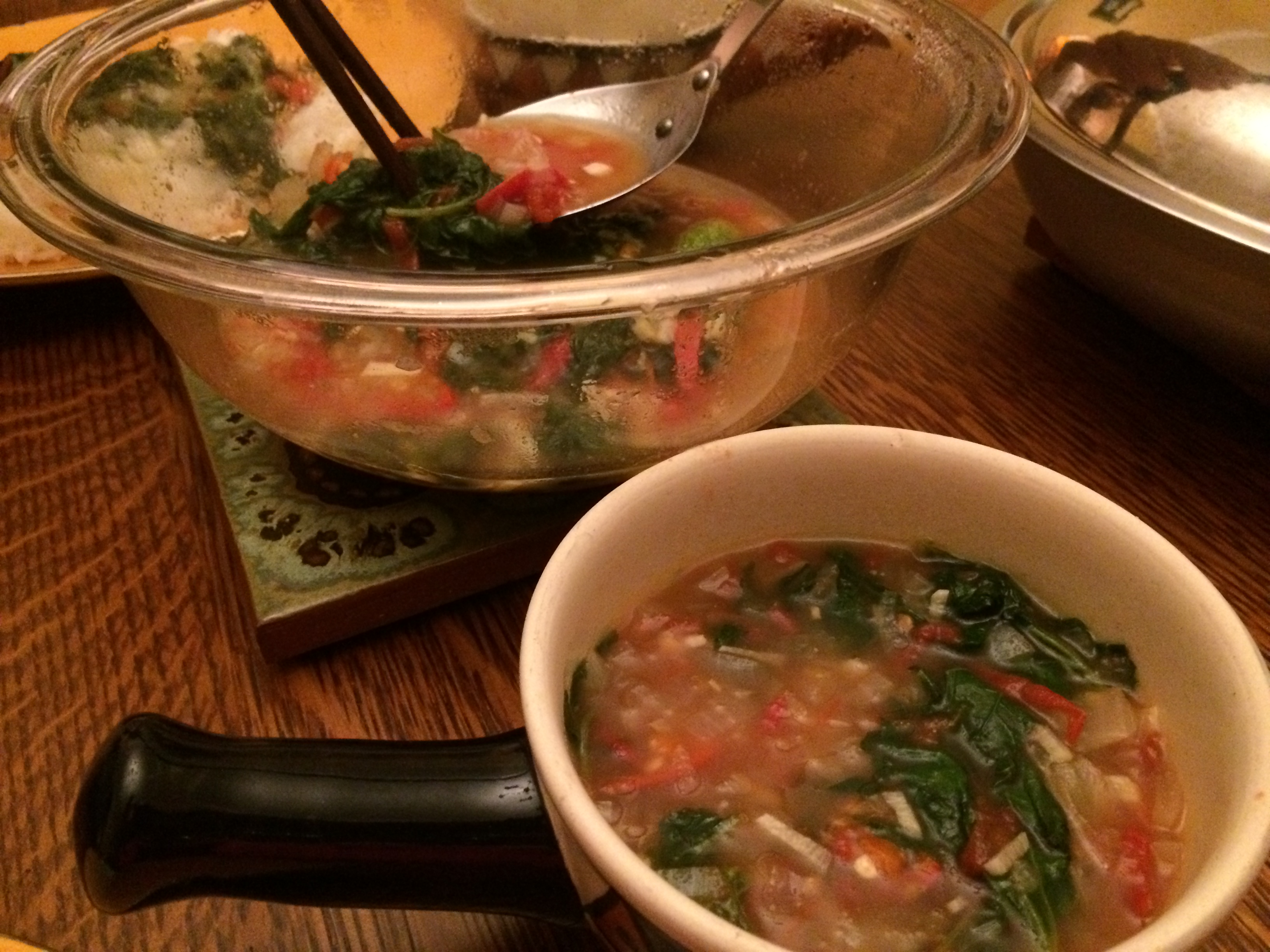
My slimy old pal, stuffed

Stuffed okra

Stuffed

Here is a riddle for all you wonderful folks. Two cousins. One is hairy, one is slimy. I have talked about the hairy one quite a bit recently. The slimy one doesn’t get much love because many people object to its sliminess. Fear not! There are many ways to make it unobjectionable.

Here is the hairy one. And here is the slimy one. Both from the mallow family.
Cousins

OK I have dragged this one out enough. Of course, the hairy one is cotton. But the slimy one is the subject of today’s recipe — okra. The slime is a form of soluble fiber that has many benefits, from slowing absorption of glucose (diabetics take note) to capturing toxic bile and helping with constipation.
Now okra is often not popular. When I mentioned to my husband that okra and cotton were from the same plant family, he said, ‘no wonder okra tastes like cotton’. Funny guy.

But here’s the thing. You can do one of several things. You can use okra in recipes that absolutely thrive on its sliminess and use it to give cohesion to soups and stews. Like gumbo. Or, you can fry and crisp it up. Once you do that, no one would guess at the great gobs of sticky runny goo that normally erupts out of okra pods.

Or, you could do this.

Okra stuffed with spices (Bharela bhindi)

For this dish, the okra pods are left whole. A slit is made along the length of the pod with a paring knife, taking care to leave a pocket, not bust through to the other side. Stuff the pocket full of spices. Fry it. This process seems to dissolve the sliminess as well and makes it a delicious meal with some roti or rice and dal on the side.

While picking okra one has to be careful to pick the very young pods, where the ribs have not turned fibrous and woody (once that happens, there is no going back, and you will not enjoy eating them). A gentle squeeze while selecting them at the market will tell you if the pods are still young. The pods I found at the farmers market are from a variety that has been bred to have minimal ribs, and can be left on the plant longer without risk of turning woody. Nevertheless, I did find one or two that had, and I discarded them.

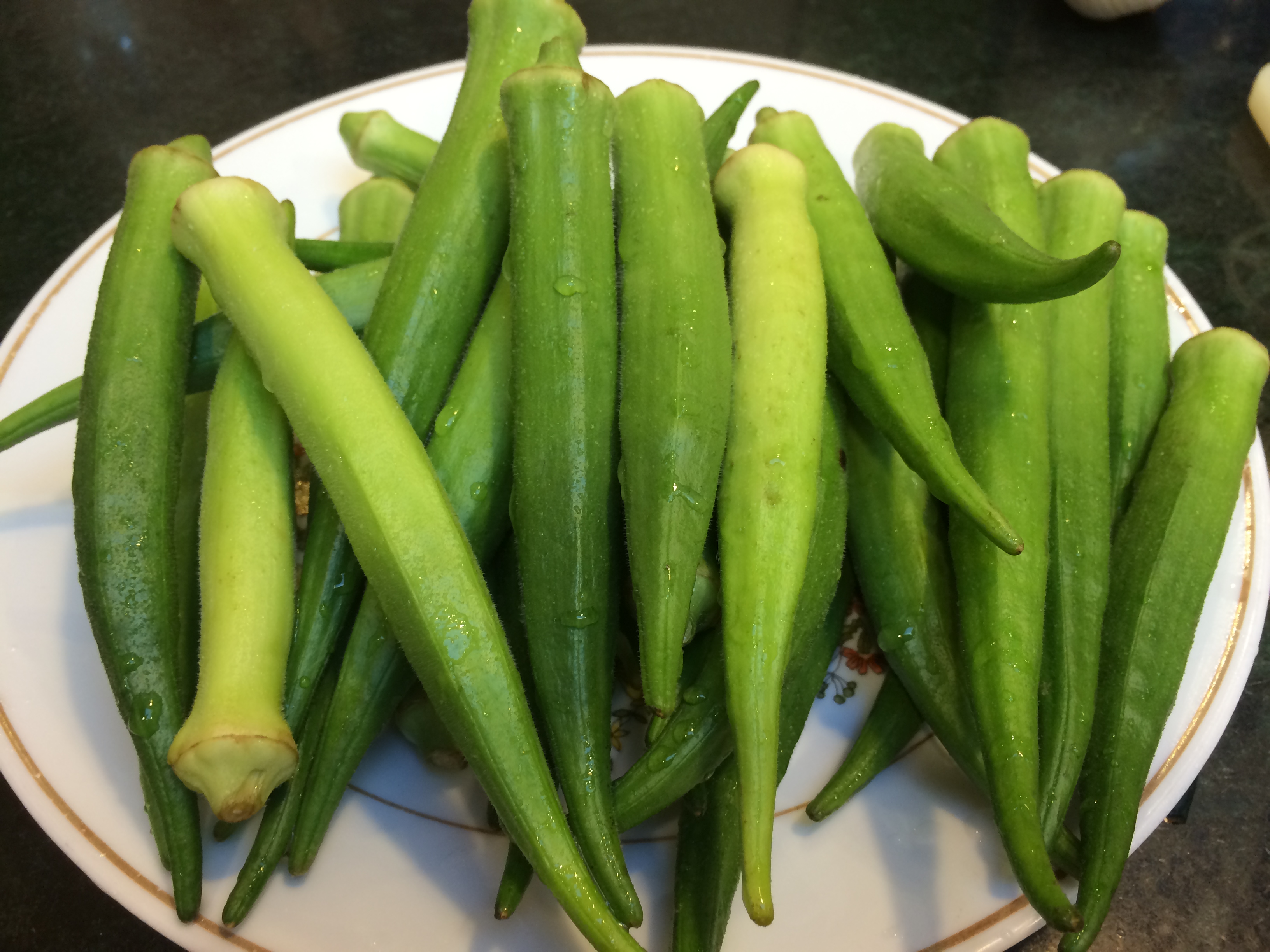
Pound of okra pods

Pound of okra pods

Whole spices

Whole spices

Roasting spices

Roasting spices

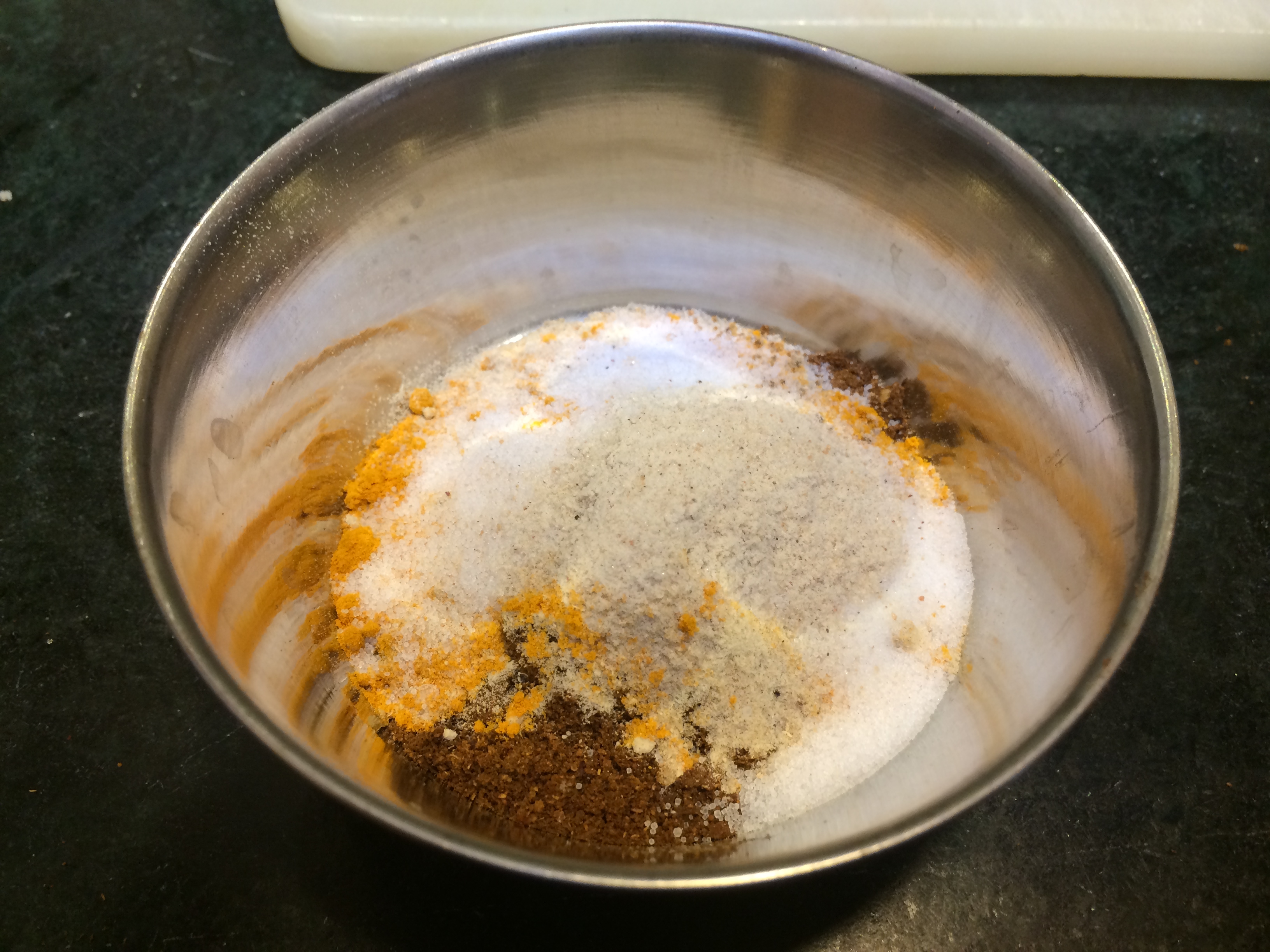
All spices mixed in a bowl

All spices mixed in a bowl

Pocket

Pocket

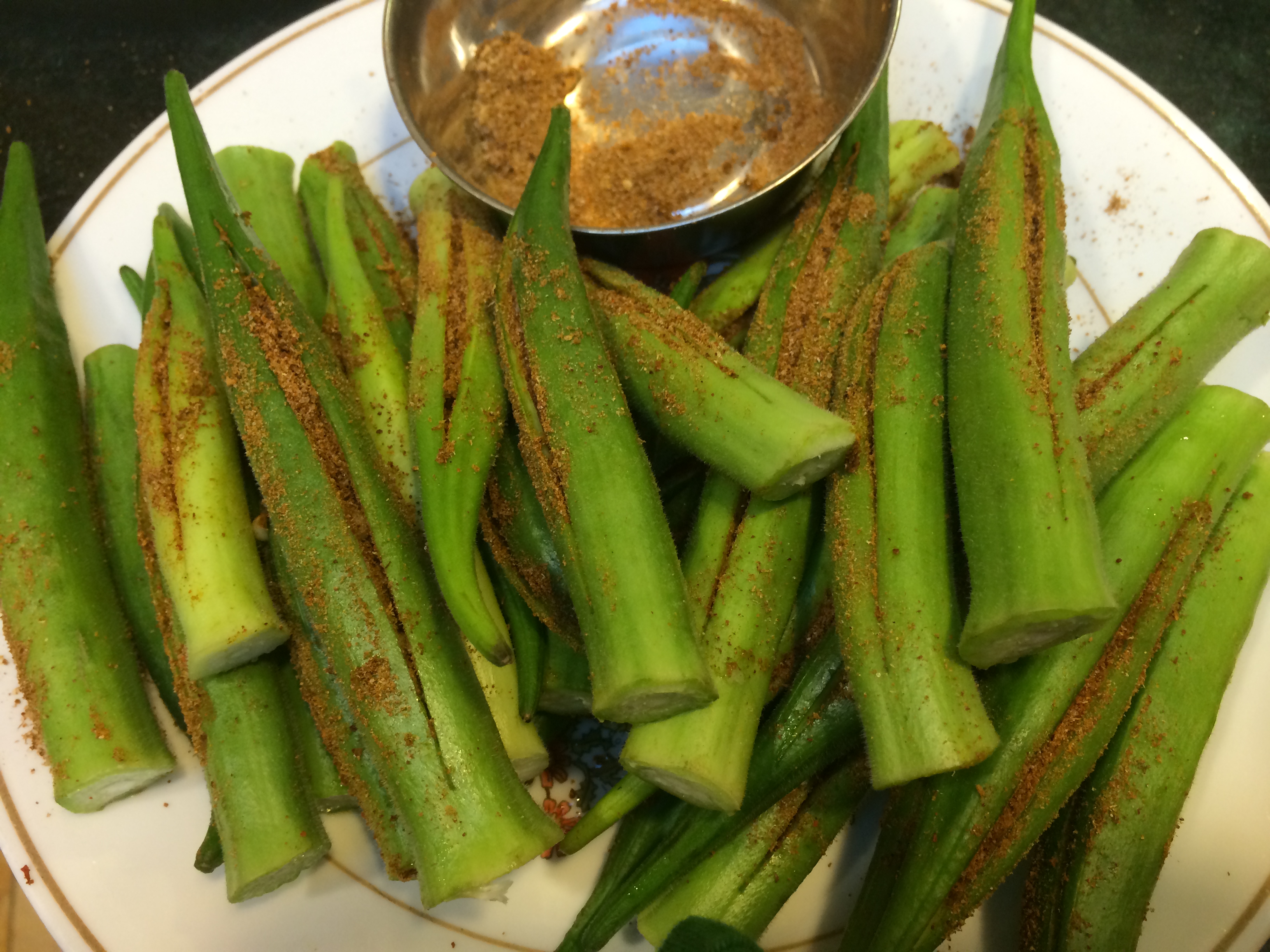
Stuffing the pocket

Stuffing the pocket

Stuffed and ready to go

Stuffed and ready to go

Frying

Frying

Add onion

Add onion

Done

Done

Stuffed okra/bharela bhindi

Ingredients for the spice mix:
  • 2 teaspoons whole coriander
  • 2 teaspoons whole cumin
  • 1/2 teaspoon whole fenugreek seeds
  • 1/2 teaspoon whole fennel seeds
  • 2 whole red chilies, more if you like
  • 1 teaspoon dry mango powder (aamchur)
  • 1/2 teaspoon turmeric powder
  • 1/4 teaspoon asafetida
  • 1/2 teaspoon red chili (if you want more heat) or paprika (for color and flavor)
  • 1 teaspoon salt
Ingredients for okra
  • 1 pound okra pods
  • 3 tablespoons oil
  • 1/4 onion, sliced (optional)
Method

Roast the whole spices from coriander to red chilies in a thick-bottomed pan, just until an aroma arises. Take it off the heat, wait a few minutes for them to cool and grind in a clean coffee grinder. Now mix in the powdered spices from the dry mango powder to the salt.

Wash and completely dry the okra. Take off the very top, the hat that looks like a beanie where the okra is attached to the stem. Using a sharp paring knife, make a slit along the length of the pod, stopping a little short on both ends, to make a pocket. Fill each okra with the spice mixture. A small spoon is very helpful for this. Then using your fingertips, spread spices nicely inside the pocket.

Once all the okra pods have been stuffed, heat the oil in a wide, thick-bottomed pan. When it shimmers, lay the okra pods flat in a single layer. Let them cook on medium-high heat for 10 to 15 minutes until each side is browned. Once in a while give them a turn with tongs or a spoon. Mostly just leave them be.

When they look pretty much browned, squished and done, throw in the onions. The onions only need to cook for a minute or two, the hot pan will soften them quickly. They do not need to brown. Turn off and cover the pan for a few minutes to allow the steam to finish the job.


(Click here to find me on Facebook and here on Twitter.)

Star-studded raisin-pecan bread

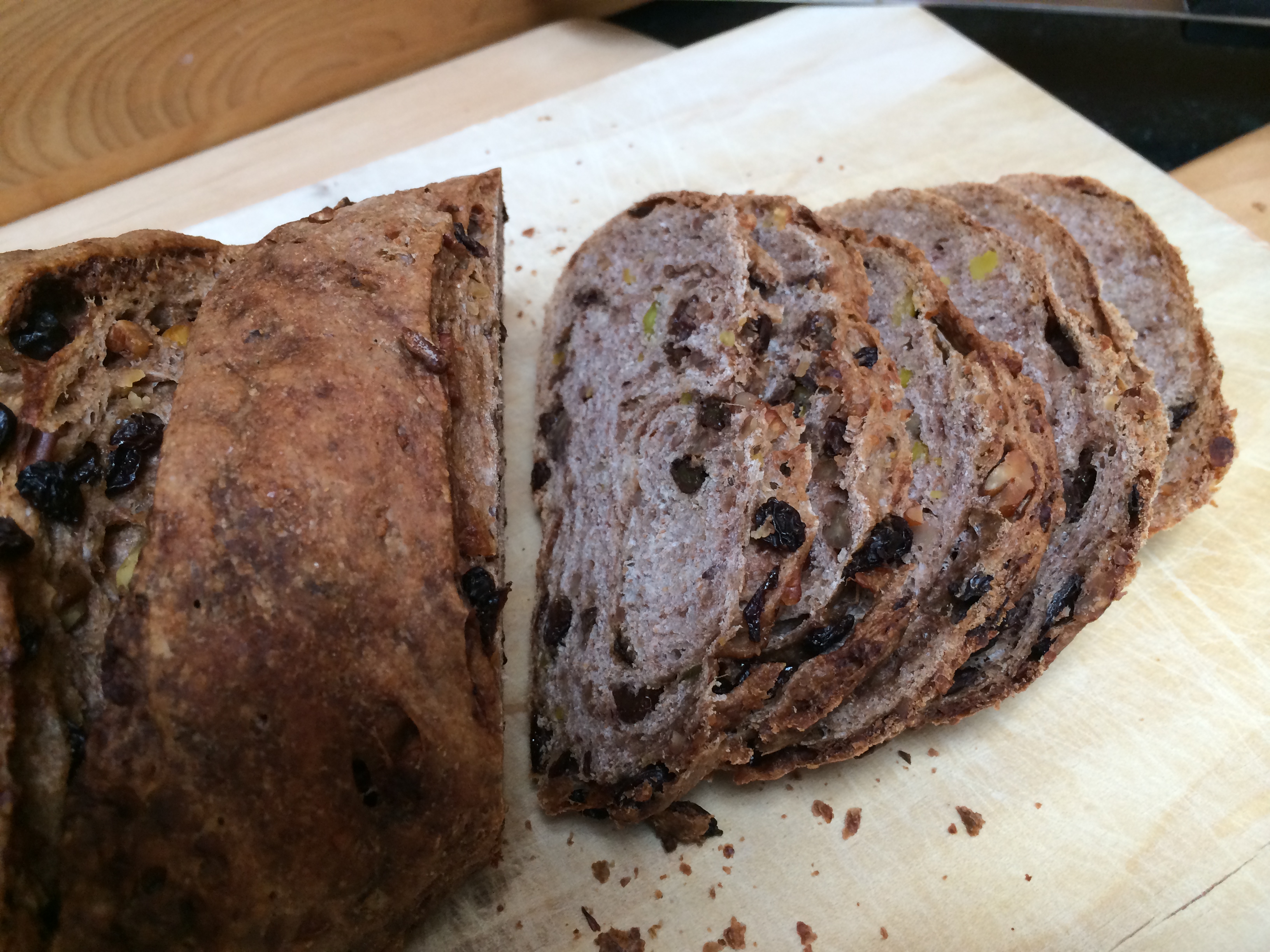
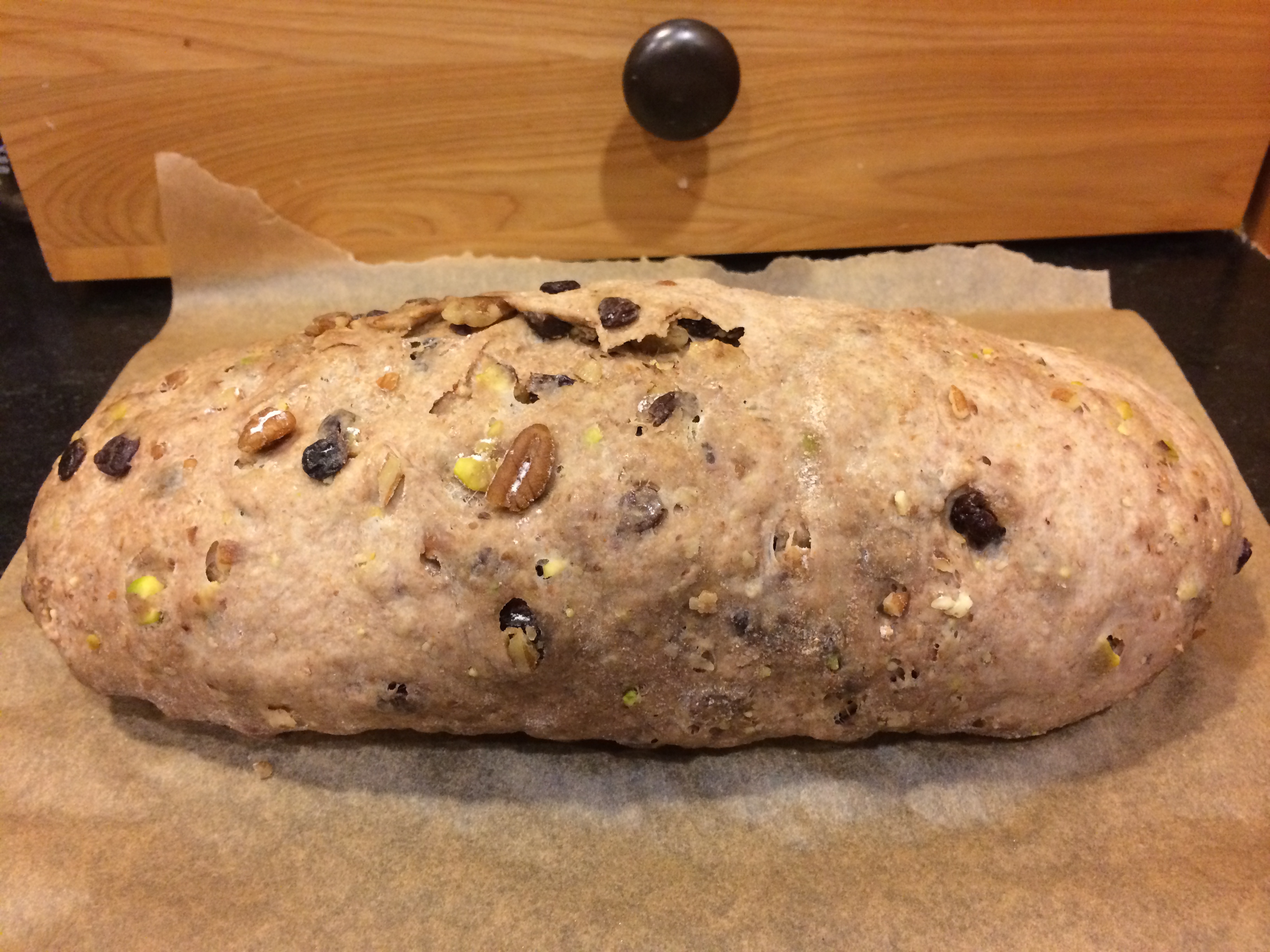
Star-studded bread

Star-studded bread

A lot of what I know about bread-baking I learnt at the home of Rose Levy Berenbaum. No, she is not my favorite aunt or neighbor (though how I wish she were) — she was in her home, on TV, and I was in my home, watching TV and earnestly taking notes.

I have made several of the breads in her book The Bread Bible, and this one is one of my favorites. Of course breads with raisins and nuts are quite common. But the standard configuration they come in is the sliced bread with a square shape, sprinkled with cinnamon and a swirl in the middle. Now that is wonderful, but there’s more to raisin-nut breads than the cinnamon swirl.

The Bread Bible

The Bread Bible

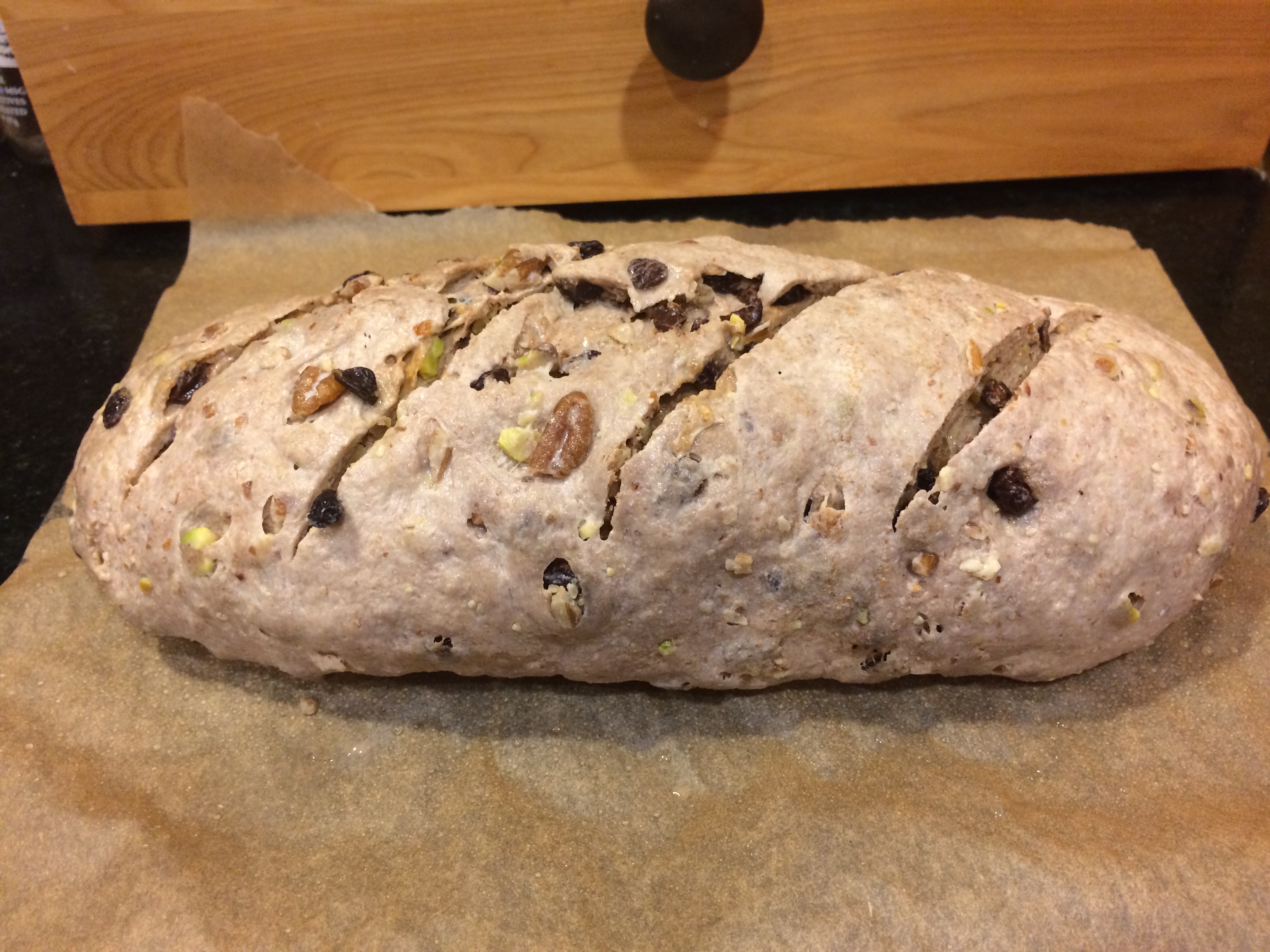
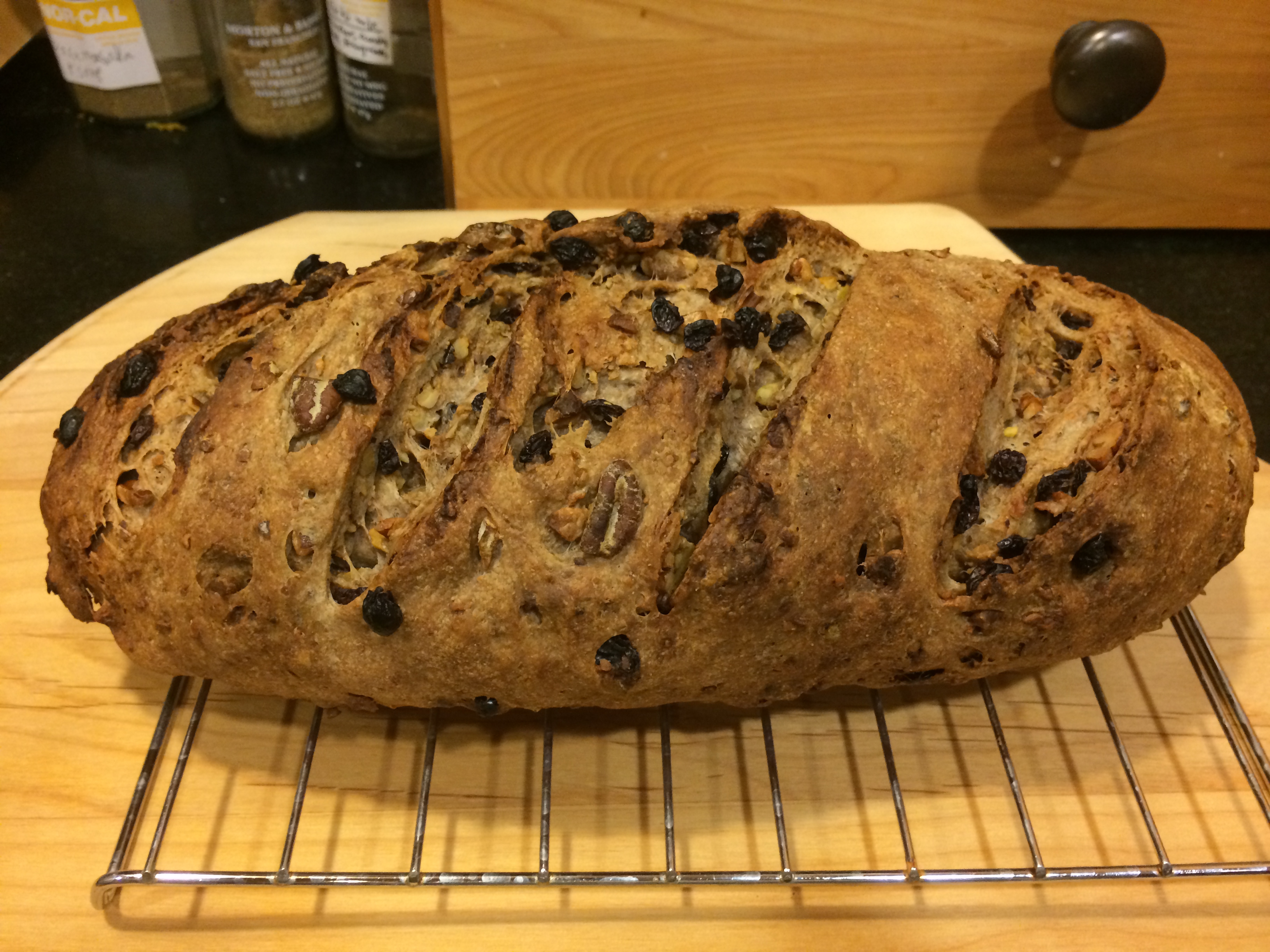
This particular bread (called the Raisin Pecan bread in the book) is a free-form loaf that is baked ‘naked’ in the oven, outside of any pans. Those are my favorite kinds of breads because of their crustiness. There is no cinnamon — that is the other difference. There is no swirl, instead the raisins and pecans are nicely spread throughout the loaf, hence the name that I gave it — star-studded. There is no added sweetness, making it less of a confection and more of an adult dinner bread. Spread with something creamy like clotted cream or a nice white cheddar it is one of the most popular snacks in our home.

She uses some ingenious tricks to enhance the flavor. A sponge is mixed hours ahead or the previous day. Raisins are soaked for 30 minutes, no more; and the soaking water is used in the bread. Some of the pecans are ground fine to be mixed in with the dough, some are just broken bits and add a delightful crunchiness to many bites. The nut and raisins are mixed in in a very delicate procedure, after all the heavy kneading is done,  to avoid a mess of runny raisin juice. Simple, small tricks, but they make a big difference.

I made one more modification — I substituted quite a bit of the flour with whole wheat, because we like that in our household.

Star-studded Raisin-Nut Bread

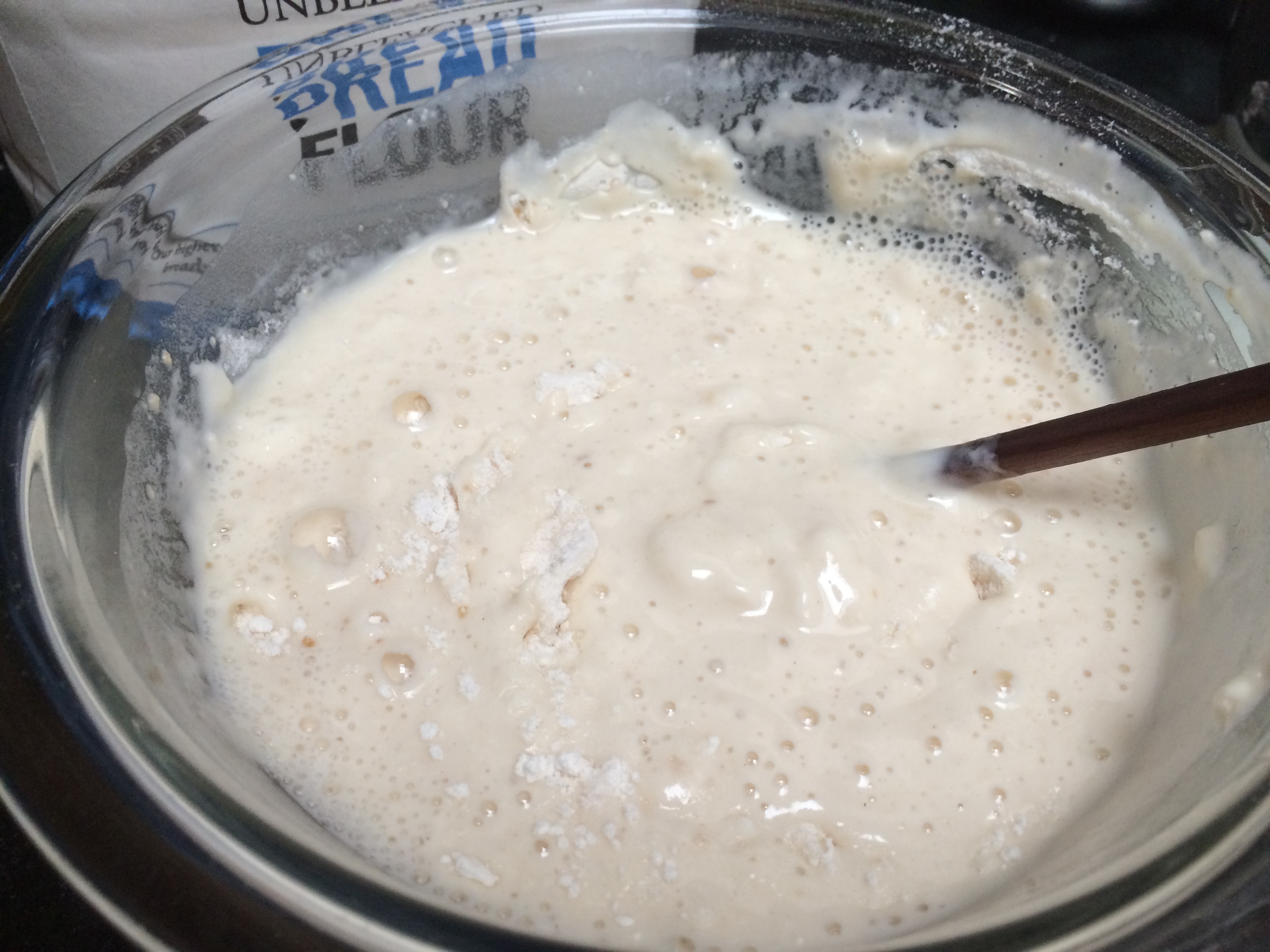
Mixing the sponge

Mixing the sponge

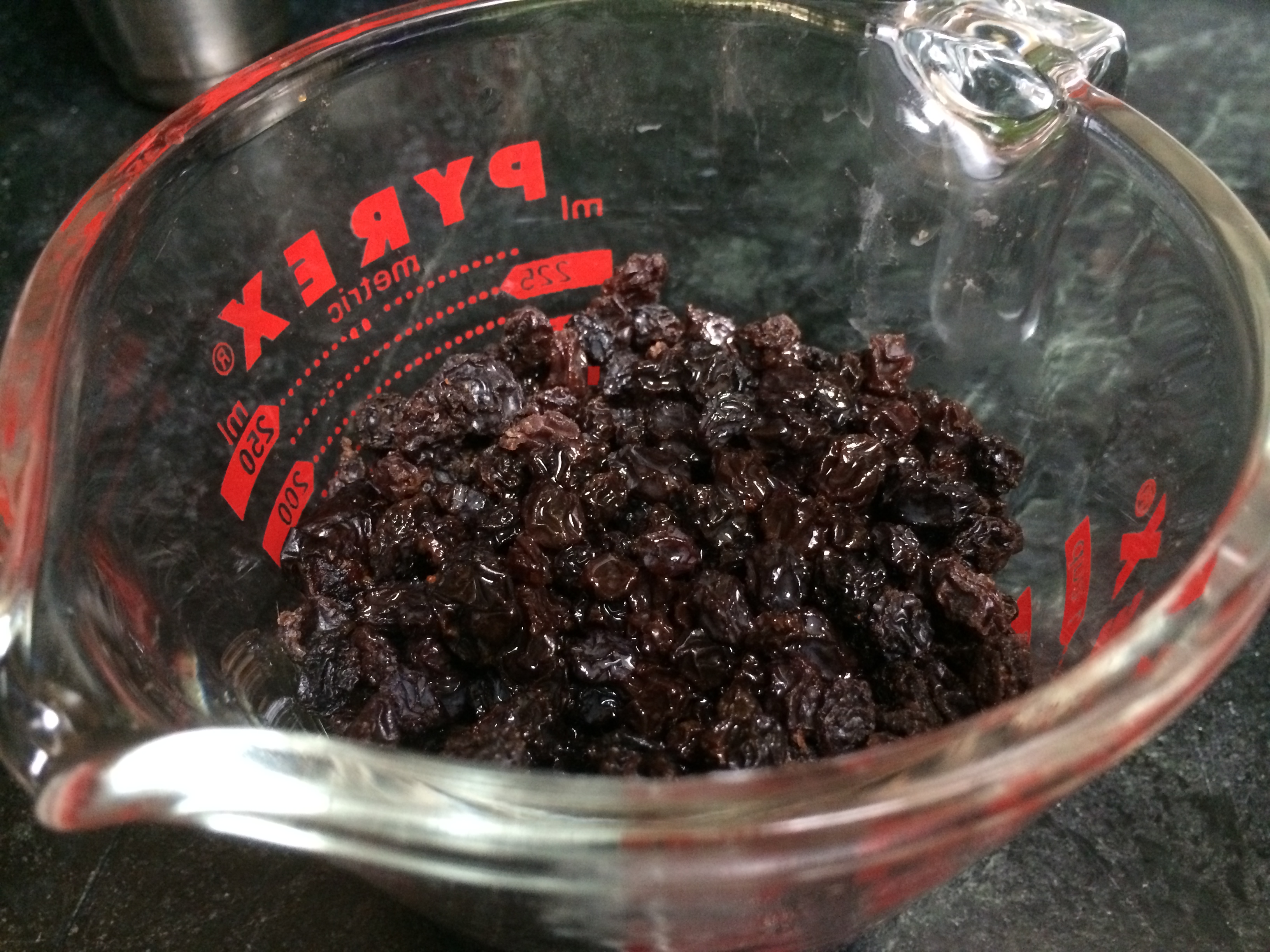
Soaked raisins

Soaked raisins

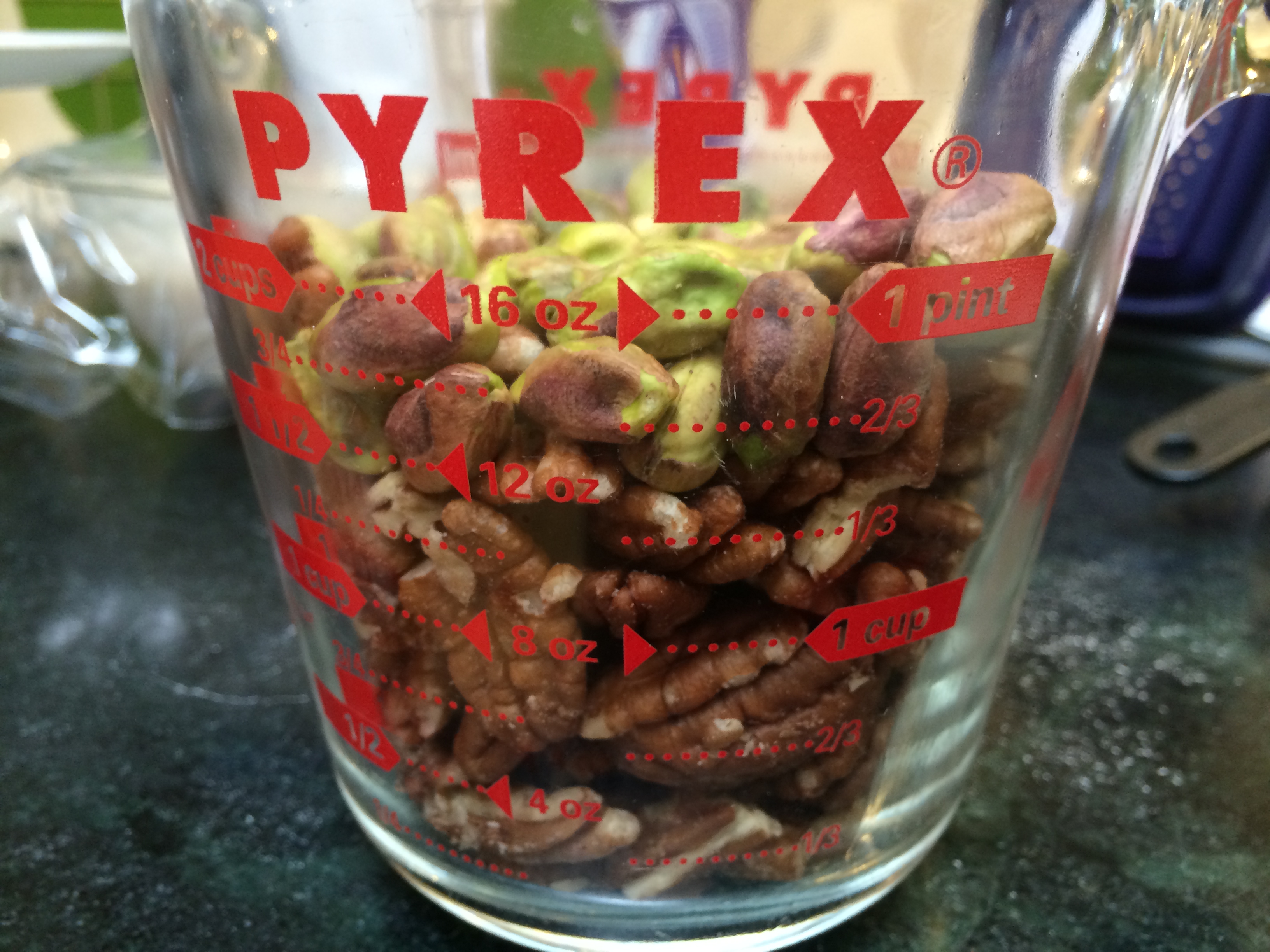
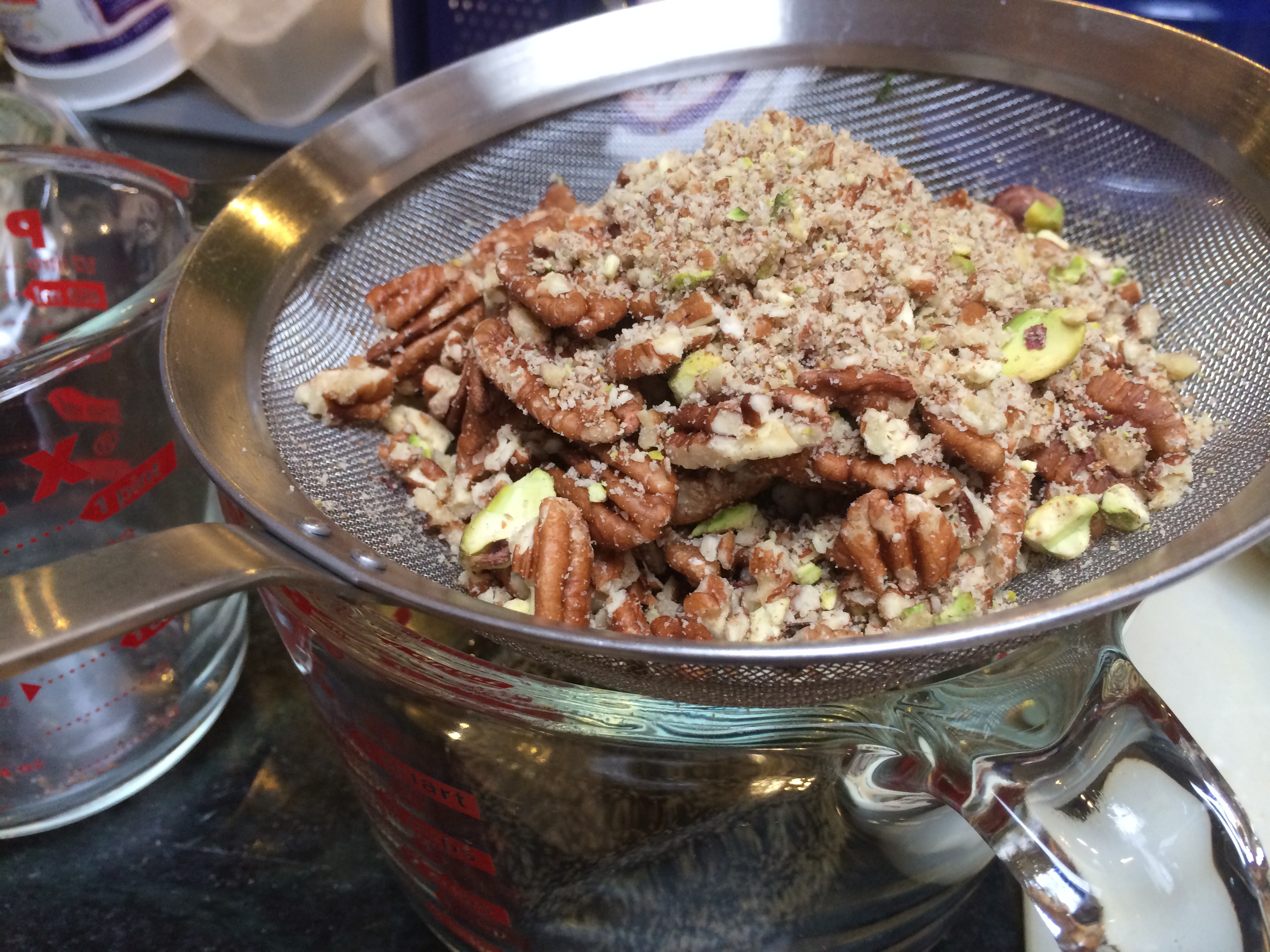
Pecans

Pecans with some pistachio thrown in

Straining ground pecans

Straining ground pecans

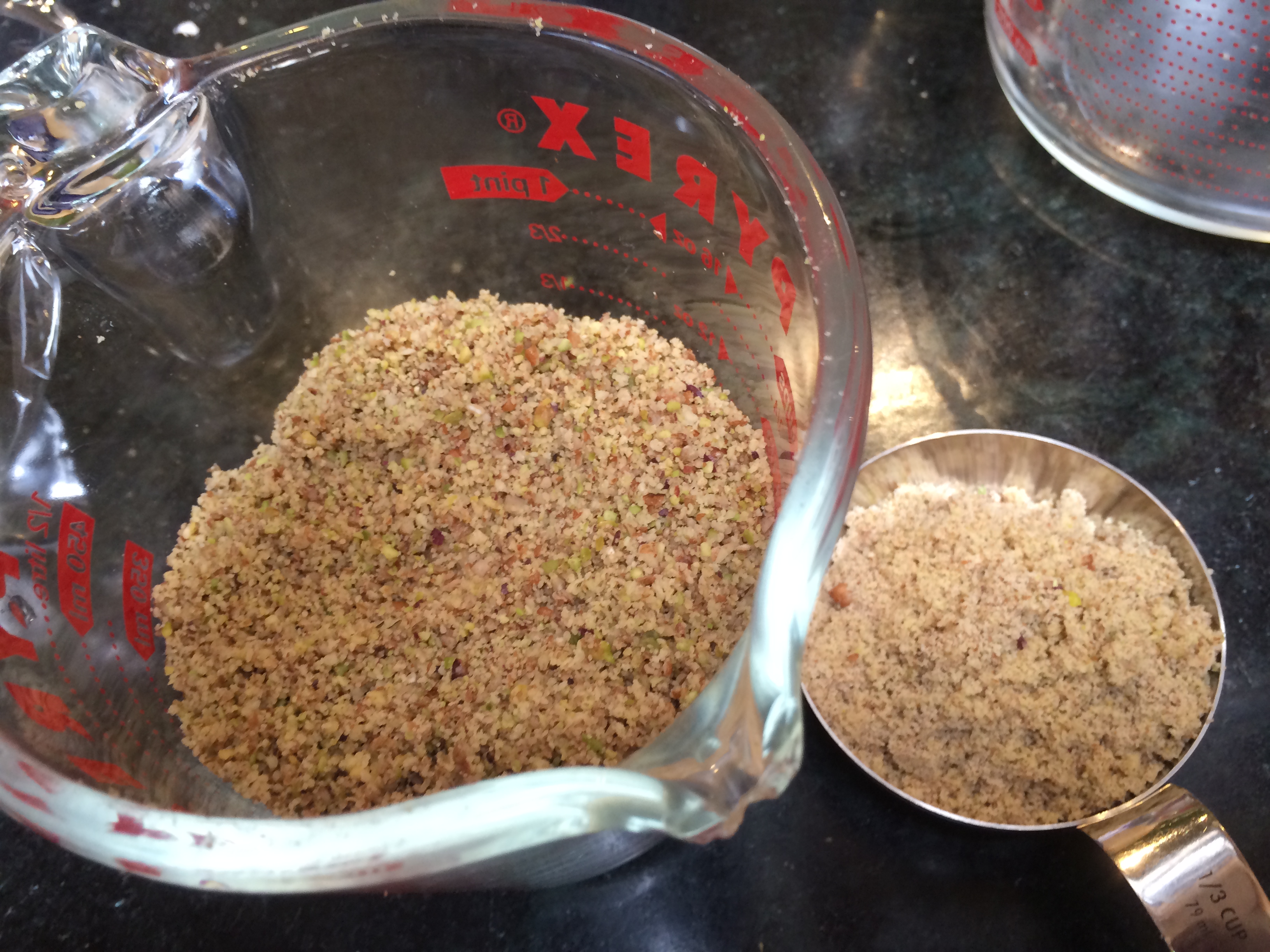
Ground pecans and bits

Ground pecans and bits

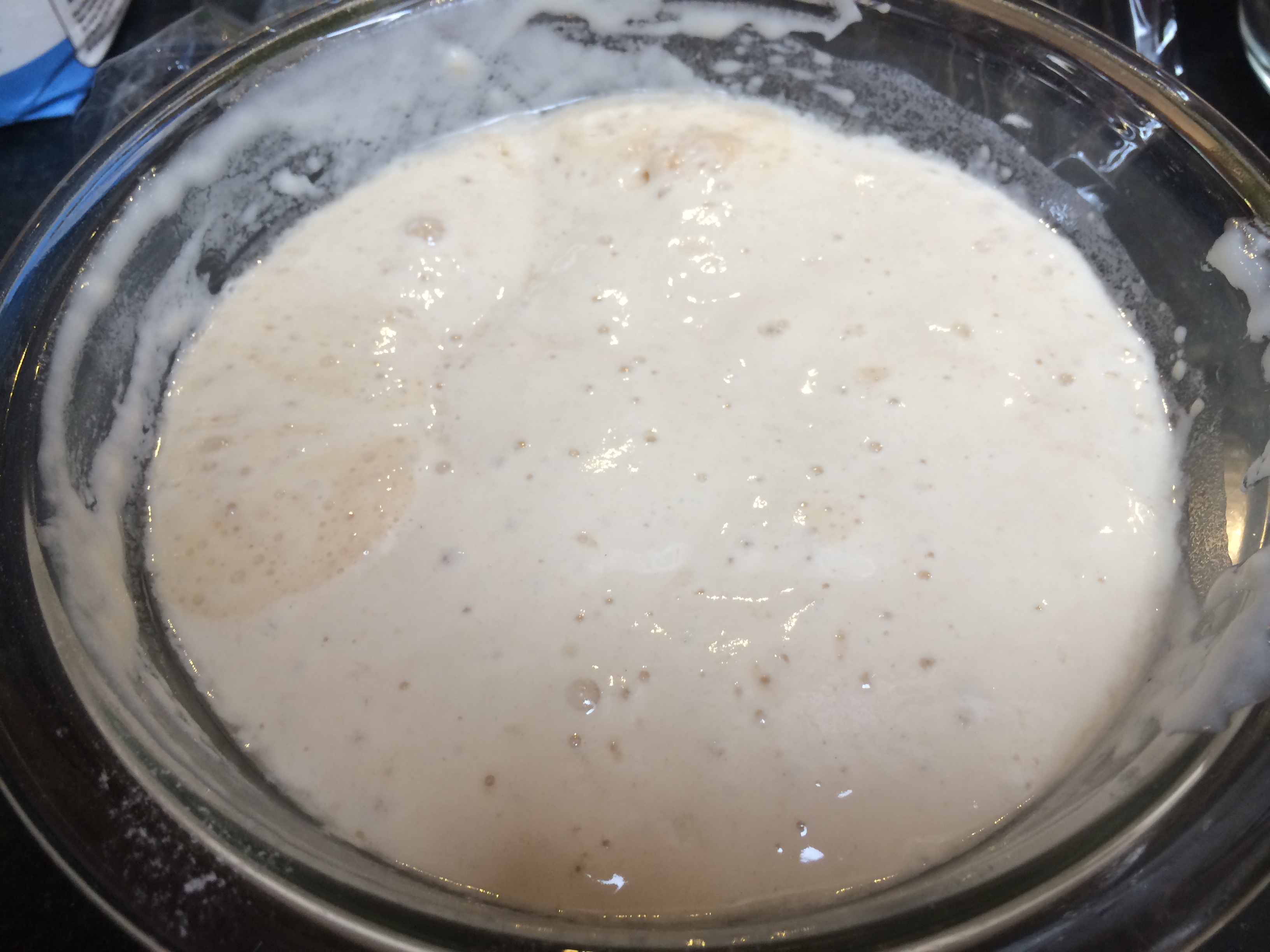
Sponge risen

Sponge risen

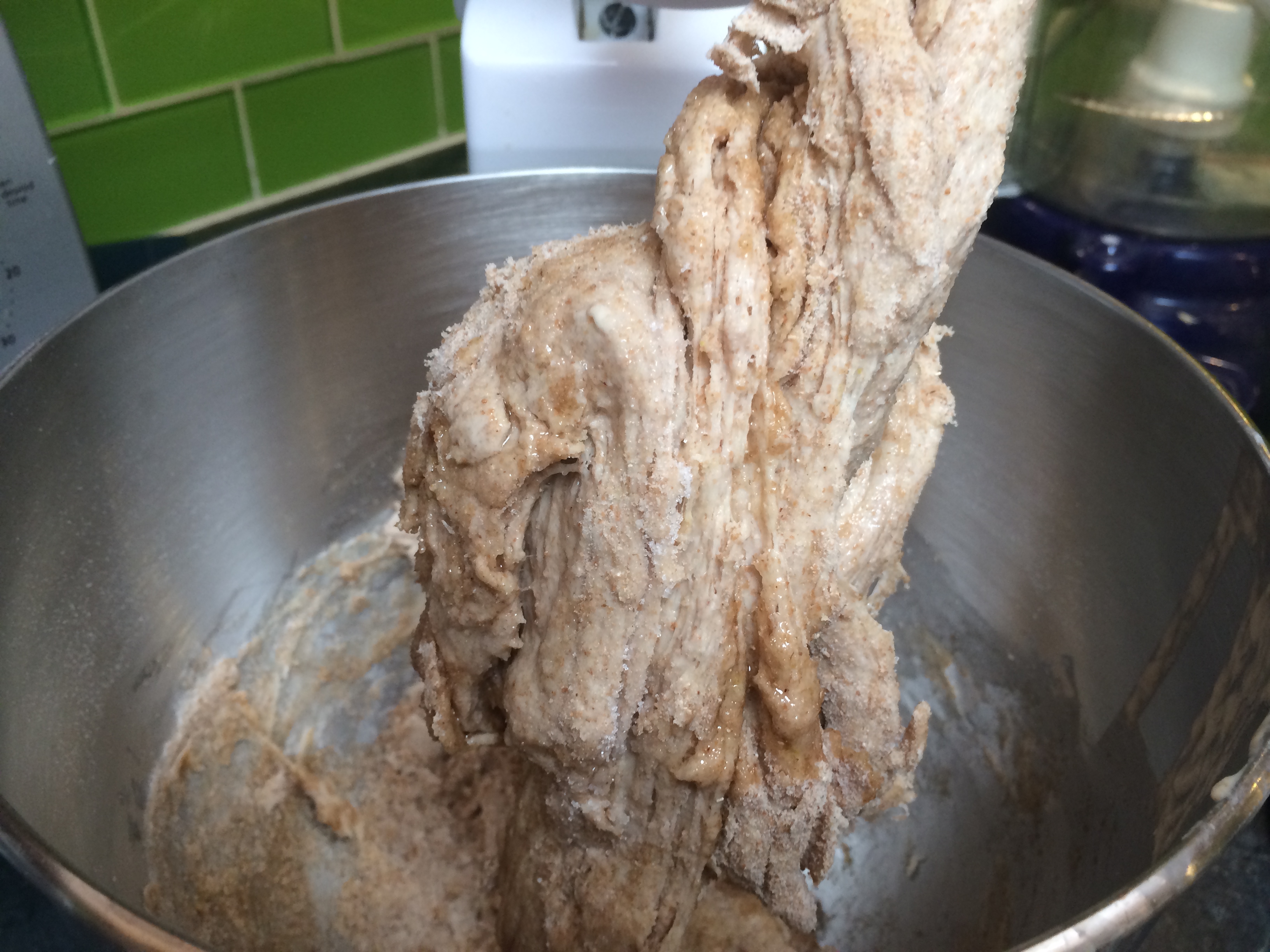
Mixing the dough

Mixing the dough

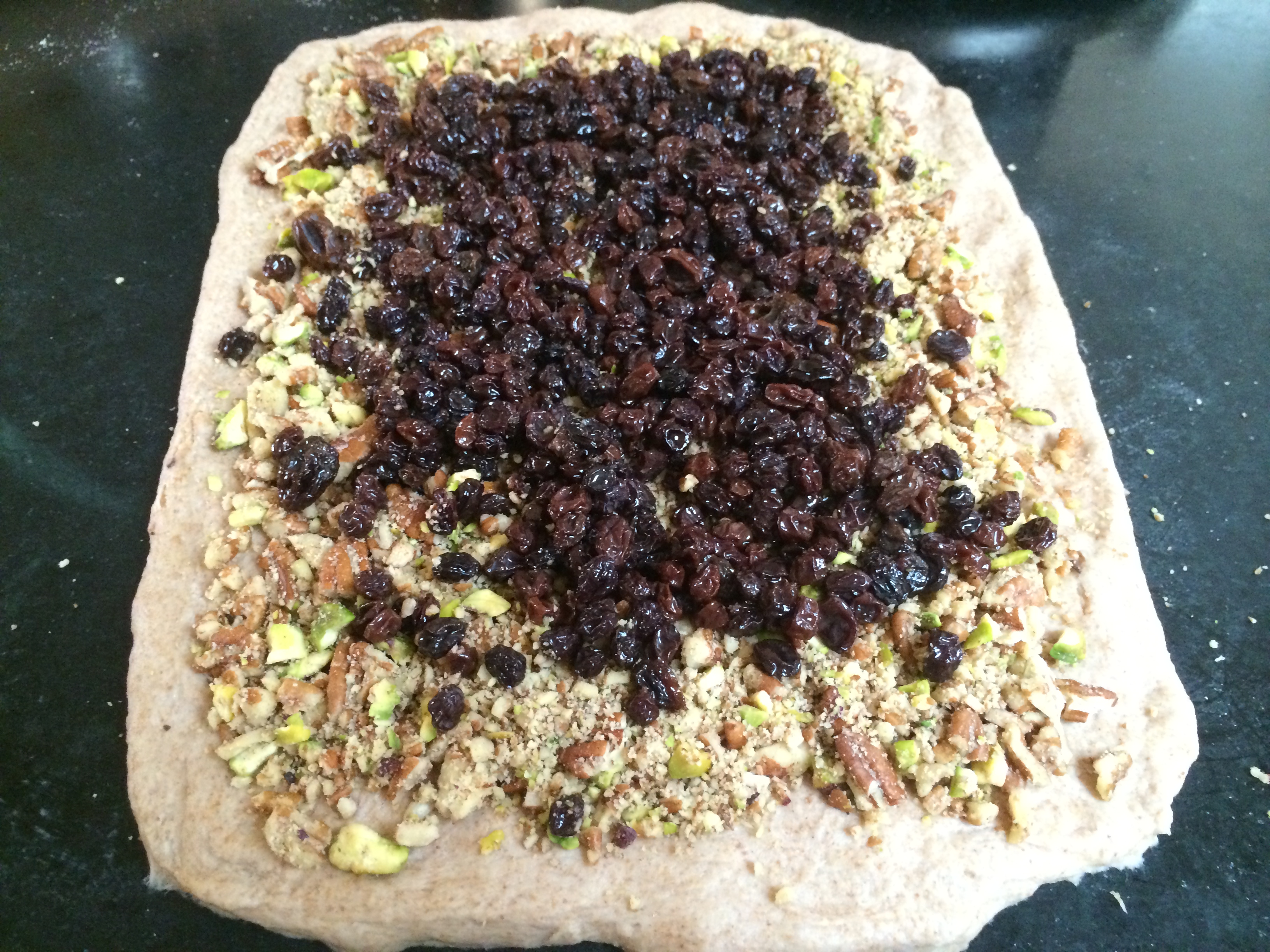
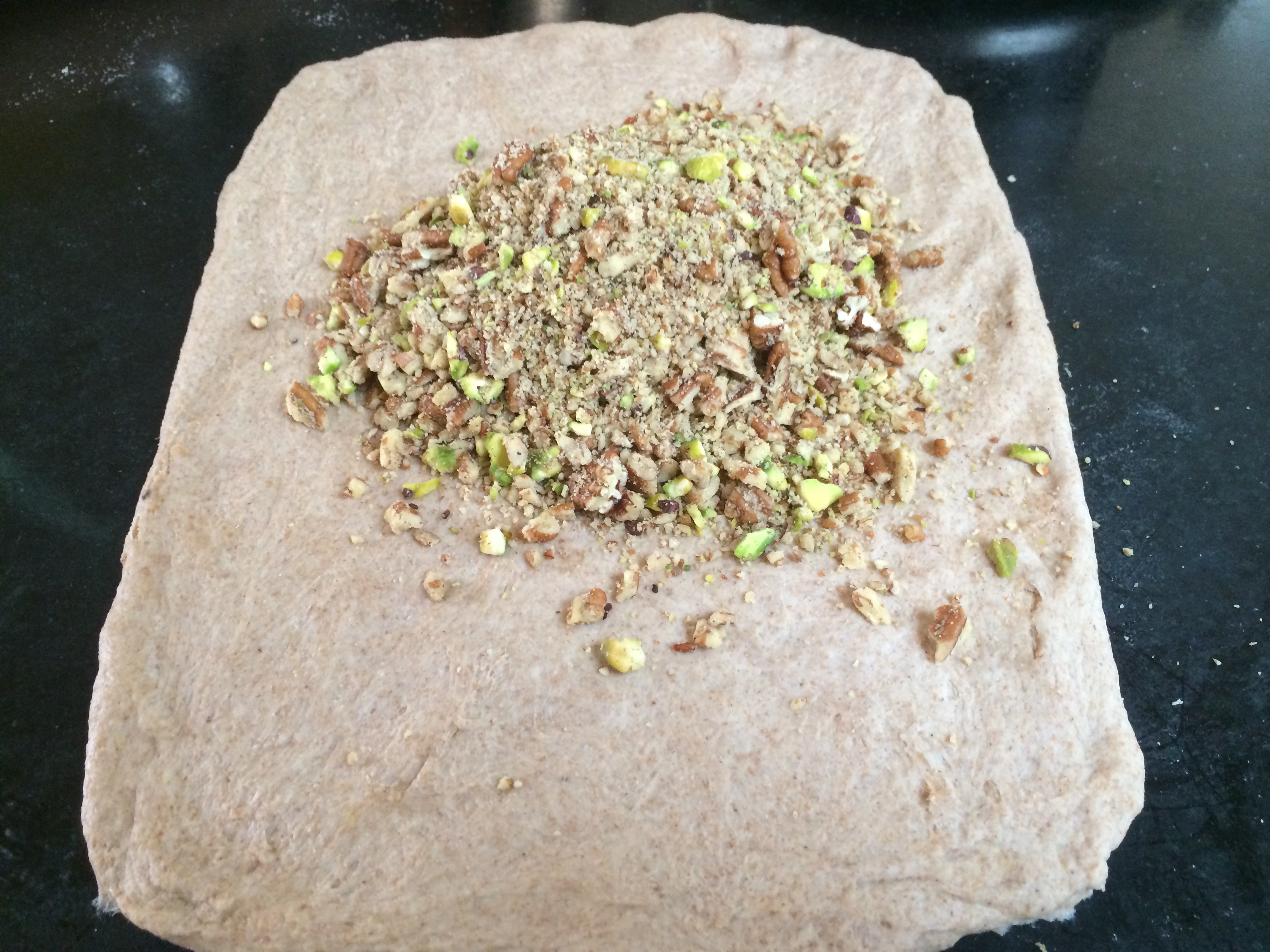
Spreading pecans

Spreading pecans

Adding raisins

Adding raisins

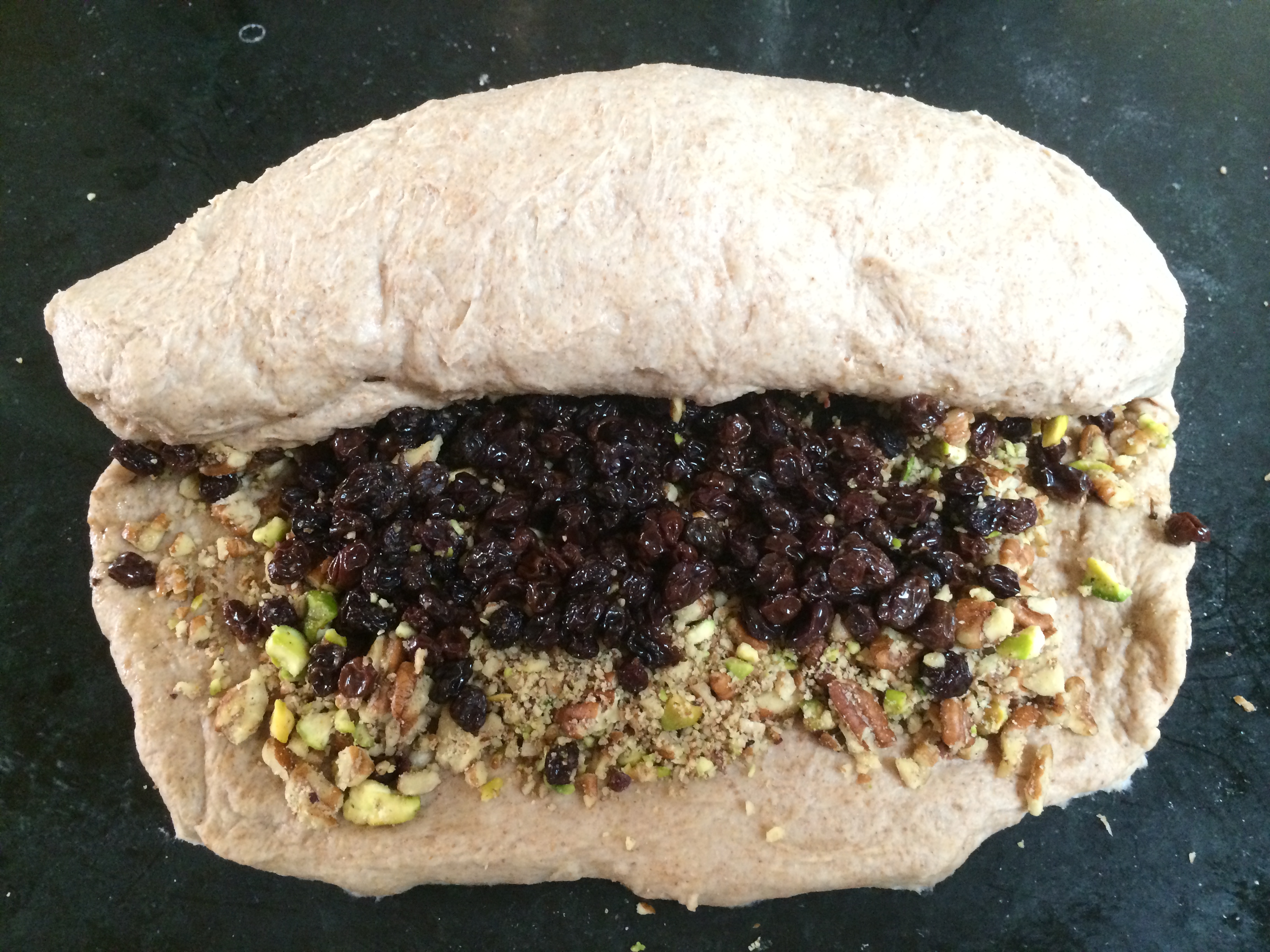
Rolling it up

Rolling it up

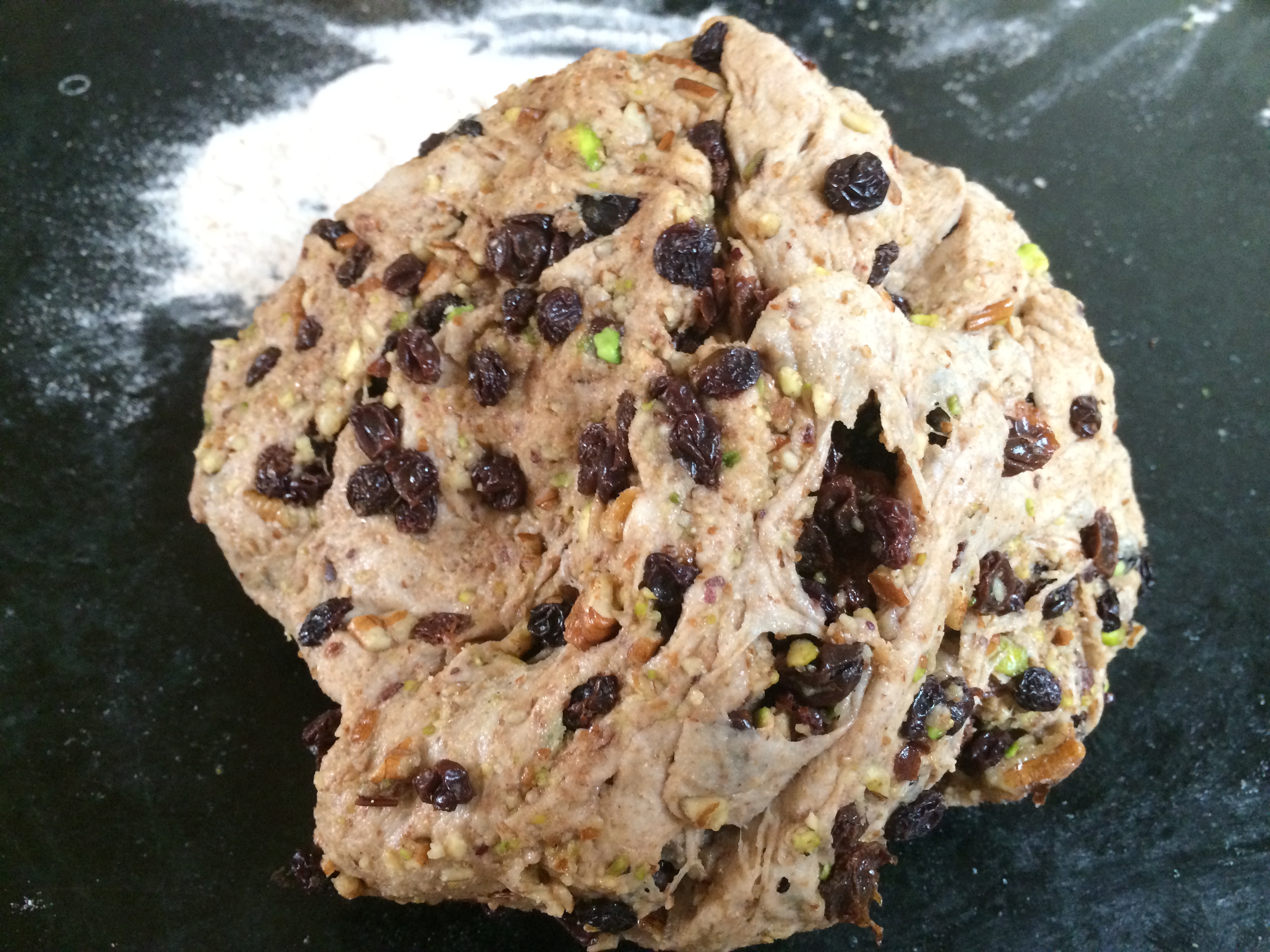
Ready for first rise

Ready for first rise

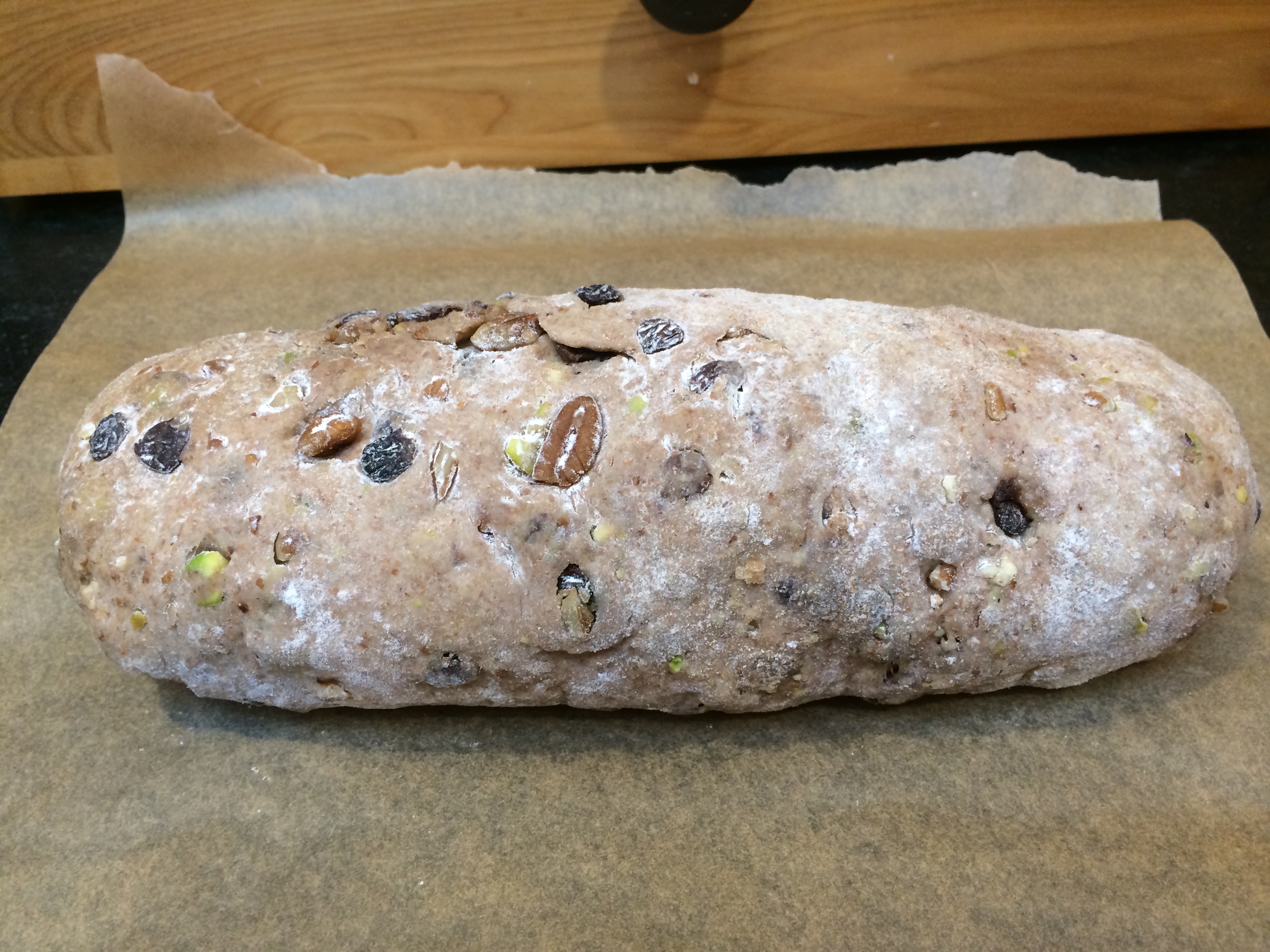
Shaped ready for second rise

Shaped ready for second rise

Risen

Risen

Scored

Scored

Done

Done

Star-studded bread (adapted from Rose Levy Berenbaum's raisin-pecan bread)

  • Servings: 2 pound loaf
  • Print

Ingredients for soaking raisins:
  • 1 cup raisins or currants
  • 1/3 cup water
Method for soaking raisins:

Soak the raisins in hot water for half an hour. At this point, drain the raisins and you will be left with 1/4 cup water, that you can use to make the sponge below.

Ingredients for sponge:
  • 1 cup bread flour
  • 1/2 teaspoon instant yeast
  • 1 cup water (including raisin soaking water)
  • 1 tablespoon demerara sugar
Method for sponge:

Mix the dry ingredients together in a bowl, then pour in the water (remember to use 1/4 cup of the raisin water for added flavor), and stir stir stir with a wooden spoon or chopstick, almost like you are whisking it. The sponge will look like batter with some air incorporated into it. Cover with a plastic wrap and keep aside at room temperature for at least 1.5 hours, at most a whole day.

Ingredients for dough:
  • 1.5 cups plus couple teaspoons more of whole wheat flour
  • 3/4 teaspoon instant yeast
  • 1.25 teaspoon salt
  • 1/2 cup finely ground pecans
  • 1.5 cups coarsely broken pecans (I substituted some with pistachios)
  • 1 tablespoon oil
  • All the sponge from above
  • All the raisins from above
Method for dough:

Stir together the flour, the yeast, the salt. Add in the sponge and the oil and the ground pecans, stir with a chopstick or the dough hook to moisten fully.  Cover with plastic wrap and leave it aside for 10 minutes. Come back to it and knead it properly into a dough. Let it rest for 10 more minutes.

Now flatten the dough and spread it out into a rough rectangle about 10 inches by 15 inches. Spread the broken pecans bits all over the rectangle leaving an inch border on all sides. Then spread the raisins over the same area evenly. Start rolling up the dough from a short end, also taking care to tuck in the edges. All the nuts and raisins will be hidden inside.

You do need to knead it lightly after, just to get it all to combine. At this point nuts and raisins might start falling out of your dough ball, just do your best to tuck them back in.

Cover with oil and allow the first rise until it is doubled, which will take about 2 hours. Shape it into a loaf and allow the second rise till doubled, covered with plastic wrap or a damp towel. This will take about 1 hour.

Heat the oven to 400ºF. Score the bread with a sharp, serrated knife. Each cut should go about half an inch deep. Mist the bread and put into the oven on a middle rack. In the first 5 minutes, mist inside the oven with a water spray bottle and quickly close the oven, about 3 or 4 times. After the first 5 minutes bring the temperature down to 375ºF. Continue baking for 40 to 50 minutes until it is golden brown.

Interview with an Indian GMO farmer

Sudhindra Kulkarni at his farm

Sudhindra Kulkarni at his farm

Dear Reader, at this point I’m starting to think that Bt cotton is quite popular among Indian farmers. I got my first hint when I realized that there is a black market for Bt cotton seeds. If you think about it, there isn’t usually a black market for undesirable goods. The second hint came from the reading I did for this post, where I realized that Bt cotton improves yield for the farmers and reduces insecticide use, overall.

The third hint came a couple days ago, but this time it was bigger than a hint, it was more like someone setting off an alarm clock in my ear, kind of like this:

That was this. A Bt cotton farmer from Karnataka state contacted me after seeing my post and wanted to tell me his story. I had a half-hour long conversation with him in Hindi (second language for both of us) and he gave me permission to put his story on The Odd Pantry. Not to put too fine a point on it, he LOVES GMO cotton.

Background:

Sudhindra Kulkarni is a farmer in the Gulbarga district of Karnataka state. He sounds like a progressive and savvy farmer who has improved his lot far beyond the grinding poverty of his ancestors, all of whom were farmers. In 2012 his name was recommended by someone, he doesn’t know who, to join the Global Farmer Roundtable in Des Moines, Iowa. He was also sent to China as a progressive farmer by the Karnataka government. He had a lot of difficulties communicating because his English is not strong but it sounds like he did make a few good contacts there. He sent me this letter, that he calls his autobiography. I’m not sure why he wrote it, but it is also found on another website, exactly as the one he sent to me.

Interview:

(OP is The Odd Pantry, SK is Sudhindra. His answers translated by me)

OP: How long have you been farming?
SK: This is our family trade. I have been farming since my childhood. In my father’s days we grew wheat, cotton, sorghum. We also kept bullocks [OP: Indian cattle]. He practiced traditional farming methods and faced a lot of poverty. I stayed in the farming line when I grew up. My brother is an entomologist in the Dharwad University. I supported him with my farming. He himself was hardworking and smart and got scholarships. I learnt about modern farming methods and was able to pay back debts. I also built a pakka house for my family [OP: Pakka house is a cement house as opposed to a hut].

OP: How much land do you farm and what do you grow?
SK: I have 25 acres that I inherited from my forefathers and I lease about 25 more for Rs. 8000/= per acre per annum. I grow Bt cotton then rotate with pigeon pea and chickpea. I also grow sorghum for cattle feed [OP: I’ll take some too, please]. I have bullocks.

OP: How did you learn about modern farming methods?
SK: I learnt from my interest in improvement. The government has agriculture programs. I learnt from watching programs on TV. I leveled my land and got better yield. Now I use micronutrients for the soil and urea, potash and DAP. But I use organic methods too. In April we spread cowdung on the fields for manure. I used to practice purely organic methods but I had to give that up. In the old days we never tilled the soil, now we do. But we are still completely dependent on the monsoon. Four or five months of the year we get canal water. The rest of the time we depend on the rains.

Sudhindra's Bt cotton farm

Sudhindra’s Bt cotton farm

OP: How has your experience with Bt cotton been?
SK: I have been growing Bt cotton for ten years. It gives me excellent yield. I get one-and-half to two tons per acre. A farmer that I know is getting excellent yield with Bt cotton with purely organic methods. My cattle eat Bt cotton plants with no problems.

OP: Who helped you write your letter in English?
SK: My brother helps me with English. My 9th standard daughter helps me with Facebook and email. My language is Kannada. I don’t speak English well so it is difficult for me to get my message across.

OP: What is your message for my readers?
SK: My message is this. I have a sincere request. Please think about the economic condition of the farmer. Without good yield a farmer is nothing. Without good yield, a farmer cannot survive. My family would be destroyed. Without good yield, we are zero. Please do not listen to all the stories about farmer suicides. This is not just my story, it is the story of my whole village. [OP: He repeated this request five or six times throughout our conversation.] I don’t have good English so I cannot convince anyone. All this talk that the farmers will become slaves, this is all wrong. We need good yield.

[OP: He ended the conversation with inviting me and my family to stay at his farm, as is the Indian way. Perhaps someday. Then, I sent him one last question by email because I could not understand on the phone. What follows is his answer verbatim, not translated by me.]

OP: What difficulties did you face while practicing organic methods?
SK: # Ans: Animal Manure & cow dung not easily available ( Jeevaamruta )..varmi compost . pest control not possible..because environment not help # After that yield not getting..what we expected.. # Cost of production,overheads..all expense..after calculation..i didn’t get rate. # For me not possible to store my agri products till high rate,because i have also financial commitment .whatever rate i should sale.

Thoughts

So there you have it. Before I talked to him on the phone, my husband and I wondered the usual things one has to: like, is he telling the truth? Has he been coached? Or bribed? Once I talked to him, I immediately felt ashamed for wondering those things. He is clearly an intelligent and committed farmer. To think that he must have been coached to have certain thoughts smacks of condescension. Even to think that he is coachable smacks of condescension.

But in a sense, I am surprised at myself for being surprised at his story. The main beneficiaries of agricultural technology from the start have been farmers. This is true for GMO as well. American farmers have certainly voted with their feet to buy these seeds. Indian farmers are not that different, I guess. We are not Martians, after all.

Obviously, he may love Bt cotton for the high yield it gives him and it could still have other problems. The bollworm could develop resistance to it. Or there could be ripple effects in the environment. Or perhaps there really are no other problems, or if there are, they are better than spraying general insecticides. All or any or none could be true. That would be a different post, however.
(Click here to find me on Facebook and here on Twitter.)