Is Khichdi the Risotto of India?

Khichdi

Khichdi

Good morning everyone! I have been away from my blog home for a long time, but I have certainly not neglected my kitchen. Meanwhile, global warming has given us the warmest January on record, and our San Francisco February, which ought to be dreary and cold, has instead been sparkling with sunshine.

Still, it is time for some winter cooking, no? Let’s talk about khichdi.

What is khichdi? Simply put, it is comfort food, rice cooked with a dal or two. One of my go-to books on cooking, World Vegetarian by Madhur Jaffrey, describes it as the risotto of India. When I first read this, I had not heard of nor eaten any Italian food other than spaghetti and pizza. So at the time my thought was — aha! so risotto is the khichdi of Italy!

But is it? I suppose, in a vague, cross-cultural kind of way. But really, there are differences.

With risotto, the starchification of the rice is so much fetishized that it impacts many choices. The choice of the grain — Italians use a plump starchy variety, that will nevertheless hold on to a firm core. Khichdi on the other hand, can be made with the ‘normal’ medium or long grained rice that you use for other cooking. The cooking technique — risotto is stirred and stirred with nominal additions of water until the starch is drawn out the the rice. The result is something like the Asian congee, or a porridge, but with more definition. While khichdi — starchy though it may be, the effect is produced just by the addition of more or less water.

More importantly, the additions. Risotto can have vegetables, but also seafood and sausages and other meats. While khichdi must, must, must…simply must! have dals cooked along with the rice. Otherwise it is not a khichdi. Since dals take longer to cook than rice, you are already looking at a somewhat gloopier texture, rather than the ideal of each grain of rice being separate. Vegetables are optional. Meats are never used. Carnivores, look away, khichdi is not for you. Though there is the bastardized British version called kedgeree, where, I hear, fish such as kippers are often added.

The accompaniments. With risotto, it seems, one can never have too much parmesan or cheese of one sort or another. For khichdi however, plain yogurt is utterly appropriate. And ghee is the cooking medium of choice.

Split green mung khichdi

There are probably as many versions of khichdi as there are families in India. In my family, this khichdi was eaten every Monday night, along with this dish. It uses a handful of split green mung cooked along with the rice. The texture is meant to be a little wetter and more gloppy than plain white rice, but don’t go all the way to porridgy.

Now just cooking the rice and dal along with some ghee and salt will give you a good dish. But here I have fancied it up a tiny bit with cashews and fried onions.

Rice and split mung measure

Rice and split mung measure

Whole black pepper and cumin

Whole black pepper and cumin

Washed and rinsed

Washed and rinsed

Black pepper floating to the top

Black pepper floating to the top

Frying onions and cashews

Frying onions and cashews

Cooked

Cooked

Topped

Topped

Khichdi with split green mung

Ingredients:
  • 2/3 cups medium- or long-grain rice
  • 1/3 split green mung
  • 1 tablespoon ghee
  • 1 teaspoon whole cumin seeds
  • 1 teaspoon whole black pepper
  • 3/4 teaspoon salt
  • 2.5 cups water
  • 1/4 medium onion, sliced
  • a tiny fistful raw cashews
Method:

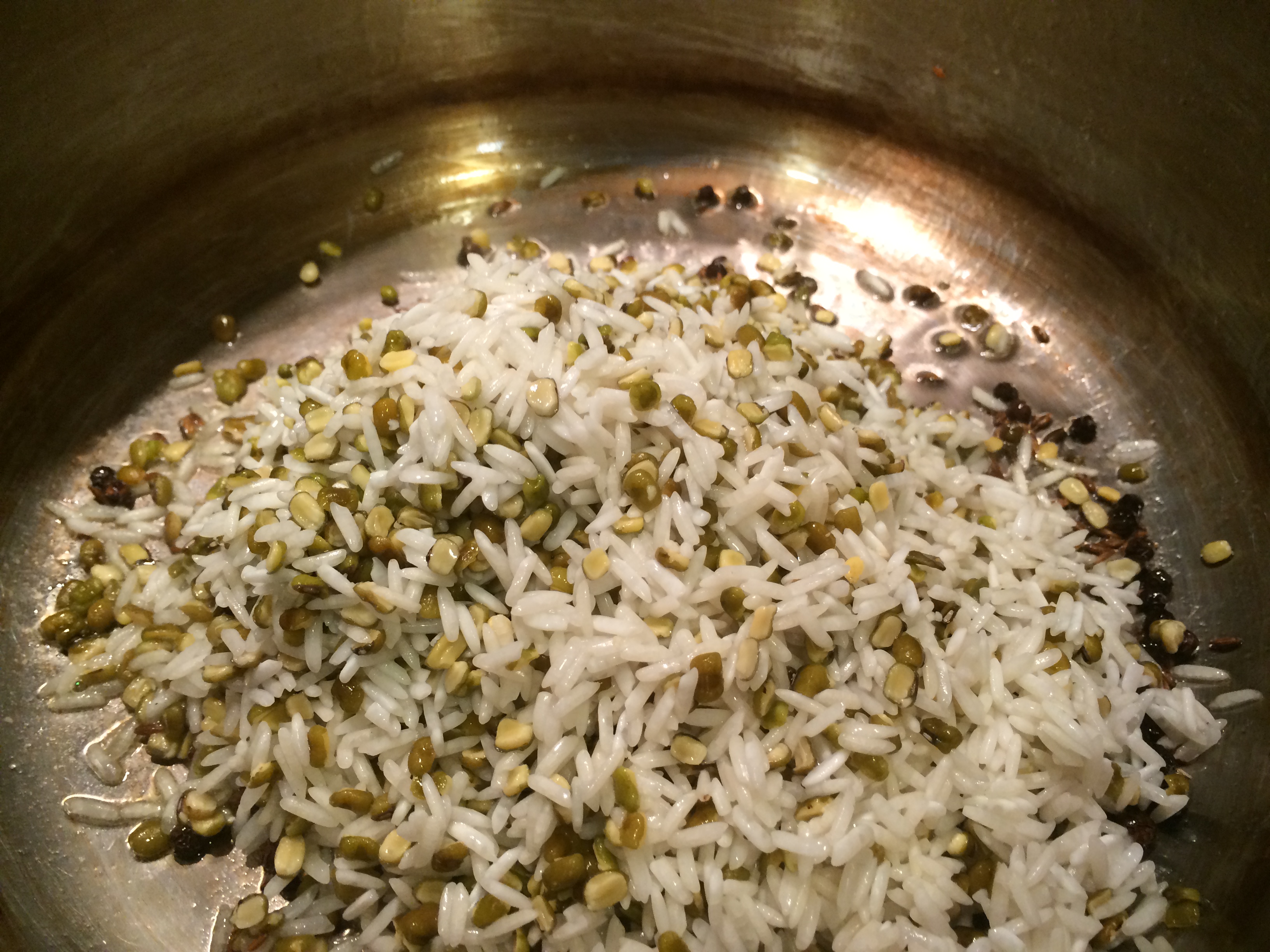
Rinse and drain the rice and split mung together. Put in in a pressure cooker or a nice hefty pot along with two and a half cups water, the salt, the cumin and black pepper. At this point, swish it around so that all the whole black peppers float to the top. This way, it will be easier for you to pick them out after the cooking is done.

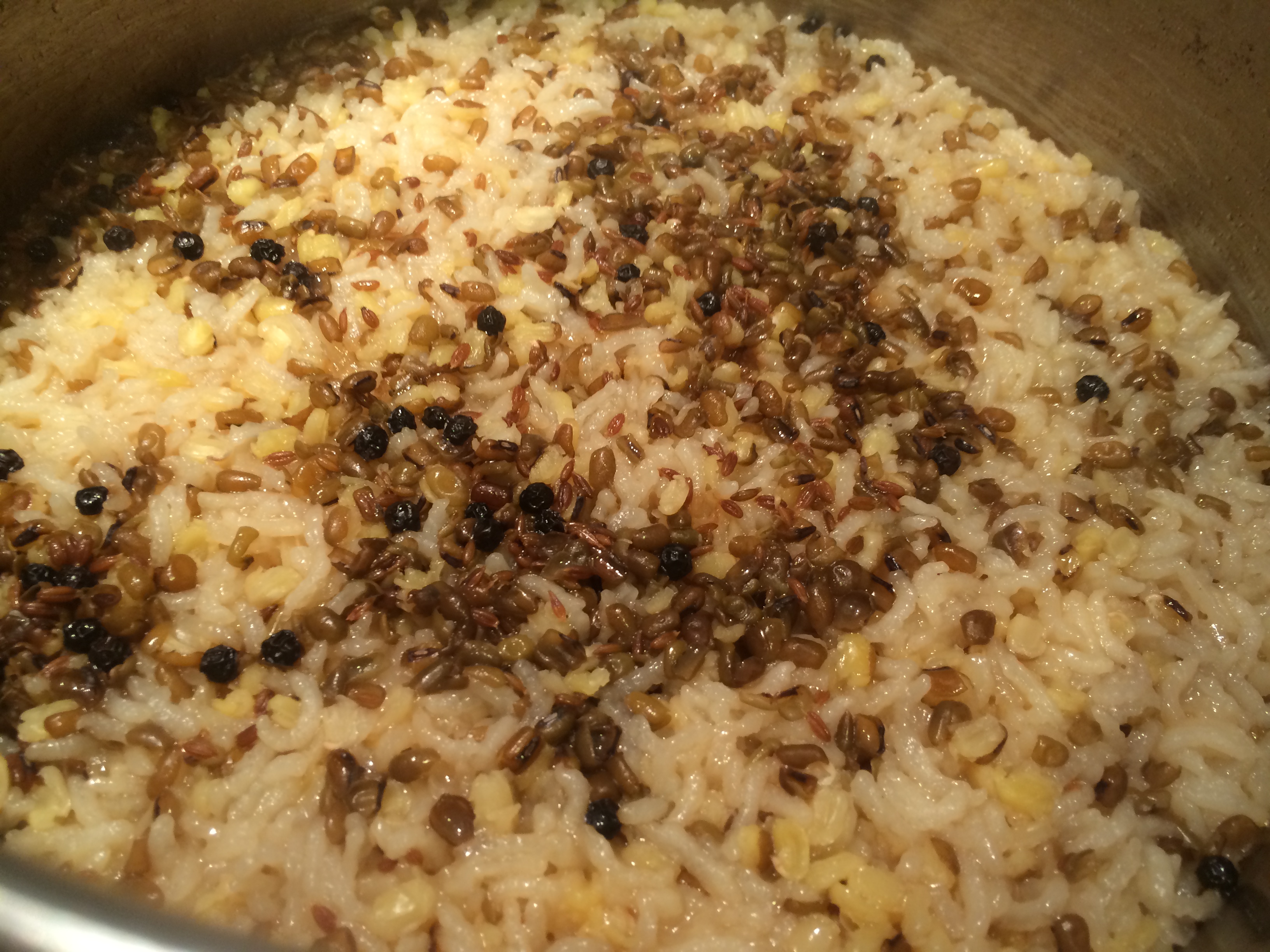
Pressure cook for 15 minutes, or, if boiling in a pot, bring to a boil, cover tightly, and simmer for 45 minutes. Uncover and pick out the whole black peppers.

Separately, heat ghee in a small thick-bottomed pan. Fry sliced onions in it until browned; then give the cashews a light browning as well. Mix this in with the rice, but reserve some to add to the top as garnish.

Enjoy it with some plain yogurt on the side and some sharply tasting pickles or chutneys, some kadhi, or this spinach wonder.

My Thanksgiving Recap

IMG_3855Thanksgiving is one of my favorite American holidays, because — well, that’s easy. It involves cooking!

It took me a long time to warm to the taste of turkey. But having married into an American family that loves their annual turkey dinner, I didn’t really have a choice. It was a love-it-or-leave-it type of deal…well, maybe never quite that harsh. But I was certainly scared straight. I began to not only enjoy that once bland, inscrutable meat, but also crave it. And on the years that we are away from family (like this one), my husband demands a ‘proper’ American turkey meal. In other words, no garam masala in the pumpkin pie, like the White House chef once did¹. No chilies in the cranberry sauce either!

I’ve had a lot of learning to do, but now I can pull off a decent-sized turkey meal with each item made from scratch (naturally). Here is my cheat sheet for my future self, and perhaps any other Thanksgiving seekers for 2015 onward.

Of course, make-ahead prep is integral to Thanksgiving. Here are the dishes that I made, in order of how early I made them.

pumpkin pie

Pumpkin pie

Pumpkin pie

For the crust, I used lard that I had rendered years ago and saved in the freezer. It makes a nice flaky crust with a hint — just a tiny, imperceptible hint — of gaminess. I did add a couple tablespoons of butter for the flavor. Instead of regular old all-purpose flour I used white whole wheat from King Arthur for the added fiber. Just as good and twice as healthy. (Recipe source: Joy of Cooking.)

The filling came from a decent sized pumpkin that I baked for 45 minutes, halved. It gave me enough filling for two pies plus some extra. Of course, evaporated milk and eggs were added to it, plus some spices. Cloves, allspice pulverized in a mortar and pestle. Nutmeg grated. Ginger grated to pulp using one of these handy-dandy doodads dripping with Japanese know-how. Maple syrup and brown sugar, but quite a bit less than the recipes demanded. Topped with additional cloves and brown sugar. I filled it up as high as I dared, almost to the brim, because the filling collapses as it sets. (Recipes adapted from: Alton Brown and from the Pick Your Own website.)

[11/24/16 Update: Used one medium kabocha squash for one pie. One 14 oz can of evaporated milk and 4 eggs. No sugar needed.]

cranberry sauce:

Cranberry sauce

Cranberry sauce

Cranberries have that lovely earthly grape-peel flavor that they share with wine…so adding wine to my cranberry sauce seemed appropriate. Three cups of cranberries (whole), half as much red wine. Brown sugar added by the quarter-cup-fulls until I deemed it sweet enough. Boil, simmer for a while, popping the berries if they have not popped already. Turn off, cool, and that’s done. The natural pectin in the cranberries will make it gel as it cools.

stuffing-that-you-don’t-stuff-with
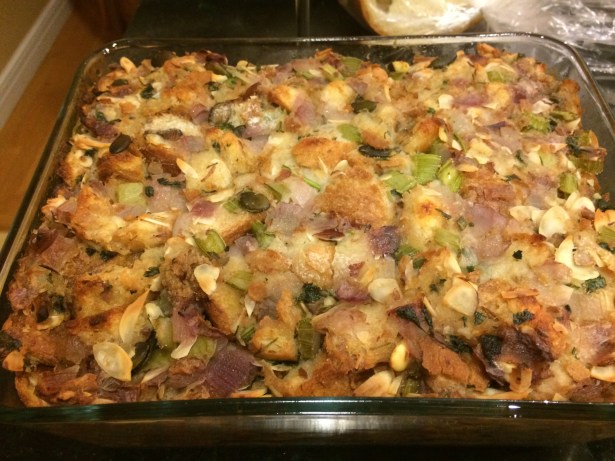
Stuffing baked outside the turkey

Stuffing baked outside the turkey

So one thing that I have learnt is that the mixture that one makes for stuffing the turkey with — which I love, by the way — is better baked separately in a casserole than in the body cavity of the turkey. The reason for this is that it actually takes longer to cook the stuffing all the way inside the turkey than it does to cook the turkey itself. So you either have under-cooked stuffing or overcooked turkey.

So…if you cook the stuffing outside, then…it is not really ‘stuffing’, is it? Of course it is, are we going to think up a new word for it? But…why not call it…bread-cubes-soaked-in-chicken-broth-with-onion-and — wait, are you going to name every single ingredient? Stuffing it is. Stuffing you don’t stuff with.

For this, I used 12 cups of stale, cubed French bread. Sauteed 2 chopped onions and 3 chopped celery ribs and some crimini mushroom stems ribs in a quarter cup of butter. Added parsley and fresh sage from the garden. A cup of slivered almonds and a few raw pumpkin seeds. Toss with the bread cubes, drench the whole thing in warmed chicken broth until it is all nicely moistened — this took more than three cups.

Just before serving, stick it in a 400 oven for about 45 minutes. Covered at first, uncovered later to brown the top. (Recipe source: mother-in-law.)

[11/24/16 Update: Do not add mushrooms, instead add sliced radicchio and sundried tomatoes.]

mashed potatoes

Mashed sweet potatoes

Mashed sweet potatoes

Instead of the regular potatoes my husband requested sweet potatoes because of their richer flavor. Important trick — these can be done ahead of time and saved in the fridge in a baking dish, all ready to go. On the day you want to serve it, they just go into a medium oven (covered) for about 30 minutes. All you have to do is add a little extra milk than you normally would. The texture has to be more runny than you would want; by the time it has reheated in the oven (along with the stuffing above) it will have dried a bit.

To boil the four large sweet potatoes (I refuse to call them yams, because the yam is actually this vegetable), I pressure-cooked them for 20 minutes. Peeled; then added some butter and salt and milk while mashing.

bread rolls

I used my own recipe for laadi pav, but used sourdough starter instead of yeast. This was primarily because I had no room in the fridge, and sourdough takes so long to rise that it could be left outside the entire day. Worked out great! (Recipe forthcoming one of these days.)

giblet gravy

So by the time the turkey comes out of the oven and is carved, people are ready to eat and I get too distracted to make a gravy from the pan sauce. The solution? Pre-make a gravy from the innards of the turkey, that either have too little meat to count (like the neck) or make most Americans cringe (like the gizzard and the liver). So pull those out of the turkey before you set out to dress it, cook them with some onions until they leave a deep, rich fond on the pan surface. Add wine, broth, some flour, and you have yourself a gravy. (Recipe source: Joy of Cooking.)

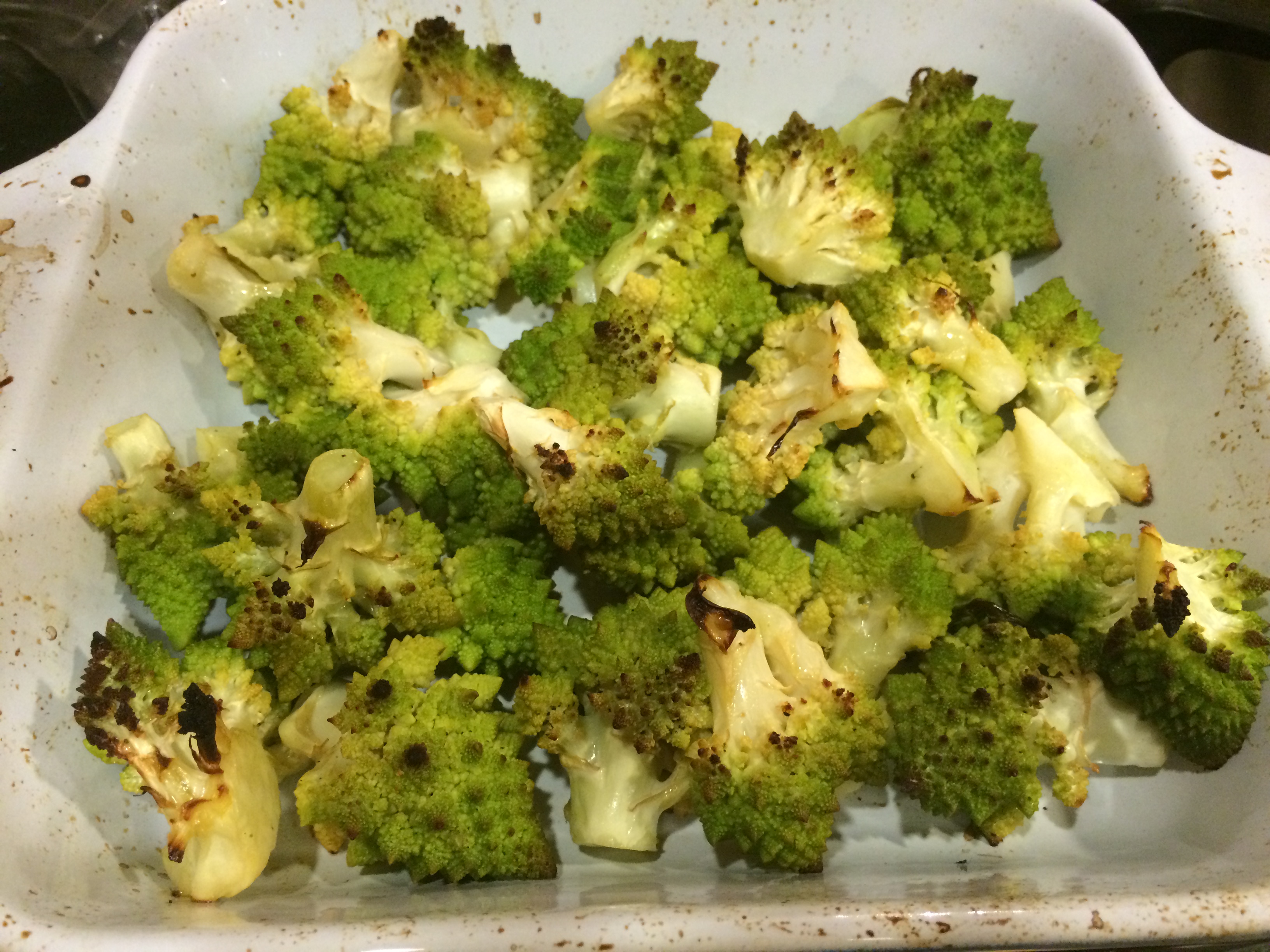
roasted math broccoli

Romanesco broccoli

Romanesco broccoli

Here is a vegetable for math geeks. Romanesco broccoli is a variant that was found in Italy. The number of spirals on its head is from the Fibonacci sequence. Each little flower-head has the same shape as the entire head — so it approximates a fractal. Don’t care about the math stories your vegetables are trying to tell you? Well it tasted great and is a particularly festive looking vegetable. I microwaved them to cook them lightly, then stuck them under the broiler for a few minutes to brown them.

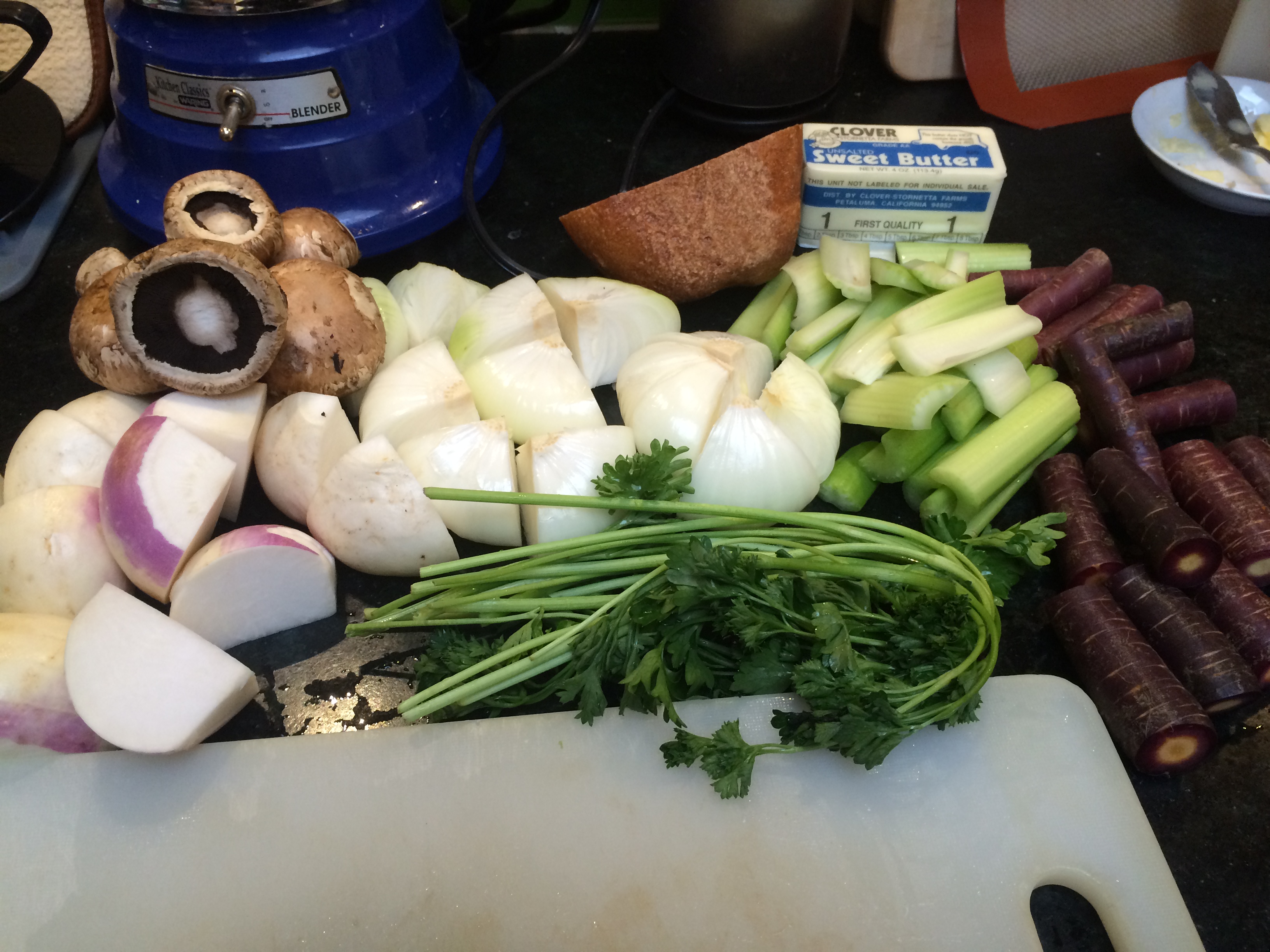
vegetables roasted with turkey
Vegetables roasted with turkey

Vegetables roasted with turkey

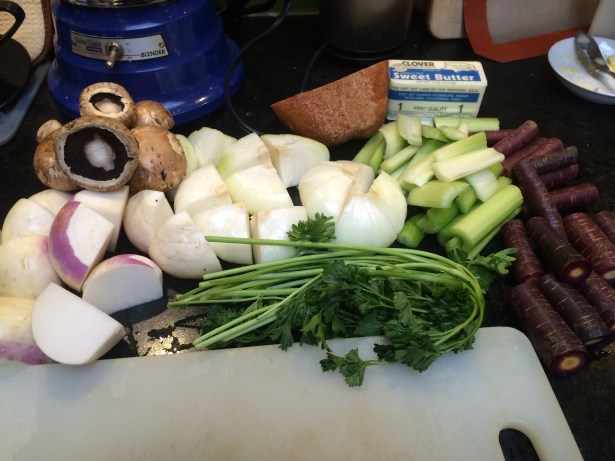
I roasted the turkey with vegetables strewn around it cut up in big chunks. Not only are they delicious when they are done cooking, but make for a lovely pan drippings gravy. As a matter of fact that was the highlight of the meal. Here are the vegetables I used — turnips quartered; cipollini onions quartered; celery ribs, cut up in stalks; carrots cup up few inch long; crimini mushroom caps; small bunches of parsley.

turkey

Lately wild turkeys have made a comeback in our corner of Northern California. Driving down windy hill roads, one sees small flocks of them along the sides, oblivious to human habitation. I feel a deep satisfied thrill upon seeing them, as though our generation has reclaimed a bit of wildness that had been lost forever. Then, I turn my thoughts to the domesticated turkey that is raised for food, and how lacking a life it has compared to its wild cousins. I did the best purchase I could, finding a turkey that the makers claim has had a decent life. So when it comes to being thankful, I would like to thank the turkey.

Turkey before roasting

Turkey before roasting

Here are the tricks I used for roasting (recipe sources: this Tools and Resources forum on Gardenweb):

  • Take it out of the fridge a few hours early to bring to room temperature.
  • Leave it overturned in the sink to drain the cavity as much as you can. The rest of the liquid must be dried with paper towels.
  • Lately brining has become very popular, where the entire turkey is soaked in a salt water bath overnight. While this makes for moister flesh, we don’t prefer this in our family because the meat then tastes ‘brined’. Hard to explain, but we have never taken to it. Also the pan drippings simply can’t be as rich and caramelized, I’m guessing, because of the salt water that would be dripped out of the turkey.
  • To prep, rub about one and half tablespoons of kosher salt all over the inside and outside of the bird.
  • Rub about a quarter cup of softened butter all over also.
  • Rub some butter in between the skin and flesh of the breast. This skin is really quite easy to slip one’s hand under. I also deposited some fresh sage leaves under the skin in various places. The point of doing this is to keep the breast meat moist and allow the skin to brown.
  • Leave it unstuffed. I didn’t. I did put some big chunks of vegetables into the cavity because I could not resist filling it. But ultimately, it just slowed down the cooking, and it never achieved safe temperatures, and we just discarded it. The vegetables strewn around the sides were much better.
  • Use the ‘convection’ setting in your oven if you have it, and if you have a ‘roast’ versus ‘bake’ use the ‘roast’. Use the meat probe if you have one, and stick it into the deepest part of the thigh. Set it to 165ºF.
  • Pour about half a cup of chicken broth or water in the roasting pan.
  • Choose a wide, sturdy pan with a low brim. This is to allow air to circulate around the turkey. Also set the bird on a rack for the same reason.
  • Start the roasting high — at 425ºF. Turn it down to 325ºF after 15 minutes. This will allow it to brown right away, and come to the correct internal temperature more slowly. Once the meat probe shows about 140ºF, tent the entire turkey under foil, so it does not burn.
  • The vegetables strewn around will deepen in color right away, and soon start frying in the fat that drips from the turkey. If any of the pieces threatens to char, lift it out of the pan.
  • Baste the breast once every half hour or so.
  • It will take about 3 hours for a 15 pound turkey, unstuffed.
Roasted turkey

Roasted turkey

pan drippings gravy

This was the highlight of the meal, and I needed to do almost nothing to make it happen. Have a look at the rich brown drippings on the roasting pan above. All that needed to be done was to lift the turkey out, lift the large chunks of vegetables out to serve with the turkey, and scrape the rest into a little pot. Over time, the fat cooled and rose to the top, so it was easy enough to spoon it off. The rest of the caramel brown liquid made for an excellent rich gravy.

Pan drippings gravy

Pan drippings gravy

¹Of course, since garam masala is not a fixed recipe but uses ‘warm’ spices like cloves, nutmeg, ginger, and allspice, you could say that I did indeed use garam masala in my pumpkin pie filling.

(Click here to find me on Facebook and here on Twitter.)

‘Tis the season for Cranberry Pickle

Cranberry pickle

Cranberry pickle

‘Tis the season for cranberries at all our local markets. ‘Tis also the season for South Asian Indian expats to feel like complete non-entities, because during Thanksgiving all references to ‘Indians’ in America means native Americans. Pilgrims and Indians, Indian corn pudding, Indian harvest feast, and so on.

You guys know that Columbus didn’t really find us, right? While he was knocking around off the coast of America, letters of introduction to Indian emperors in his pocket, we were about to be overrun by the Mughals. Mr. Columbus was nowhere near. Luckily we fared better with the Mughals than the ‘other’ Indians did with Columbus and his descendants.

In any case, ’tis also the season to not be a curmudgeon, and instead, be thankful; and indeed I am thankful for all the bounty of the American continent. Where would we, the Desi Indians be, without the potato, the tomato, the chili…all first harvested here. Can you imagine Indian cuisine without any of those? And corn — without corn, no makki di roti, sarson da saag? Thank you for opening the floodgates to this bounty, Mr. Columbus. For the food. For the feasts. And more importantly, for not finding us.

Cranberries cut in half

Cranberries cut in half

Cranberries

Now here is an American crop that us Indians should take up, given our fondness for sour foods. The European settlers of America learned about cranberries from the tribes that lived around New England. They were used in a number of ways. As fruit; beaten into cakes with meat; the leaves were used for tea; as a natural dye; as a laxative or for treating injuries and fever. However, cranberries really took off among the Europeans only when cheap sweeteners became available, when the sourness of cranberries could be turned into the sweet-tartness of cranberry sauce and be used as a condiment with meat.

Now I love cranberry sauce, and I am about to make some with wine today. But, I think it is a pity that this is the only way they get eaten. Someday perhaps I will try grinding the berries with some meat, the way the native Americans did. And, cranberry leaf tea, anyone?

Cranberry pickle

The sourness of cranberries means that it comes with its own natural preservative, so putting it in a pickle is a no-brainer. I like the sourness so much that I did not add any sugar. I made this pickle in the classic (‘real’) Indian style, with mustard oil. First, cut them in half and mix in salt and leave in a flat layer to dehydrate and ‘cook’. Next, put in a jar with other spices and cover with oil.

Cranberries with salt and red chili

Cranberries with salt and red chili

Tossed with spices

Tossed with spices

After a week, dehydrated

After a week, dehydrated

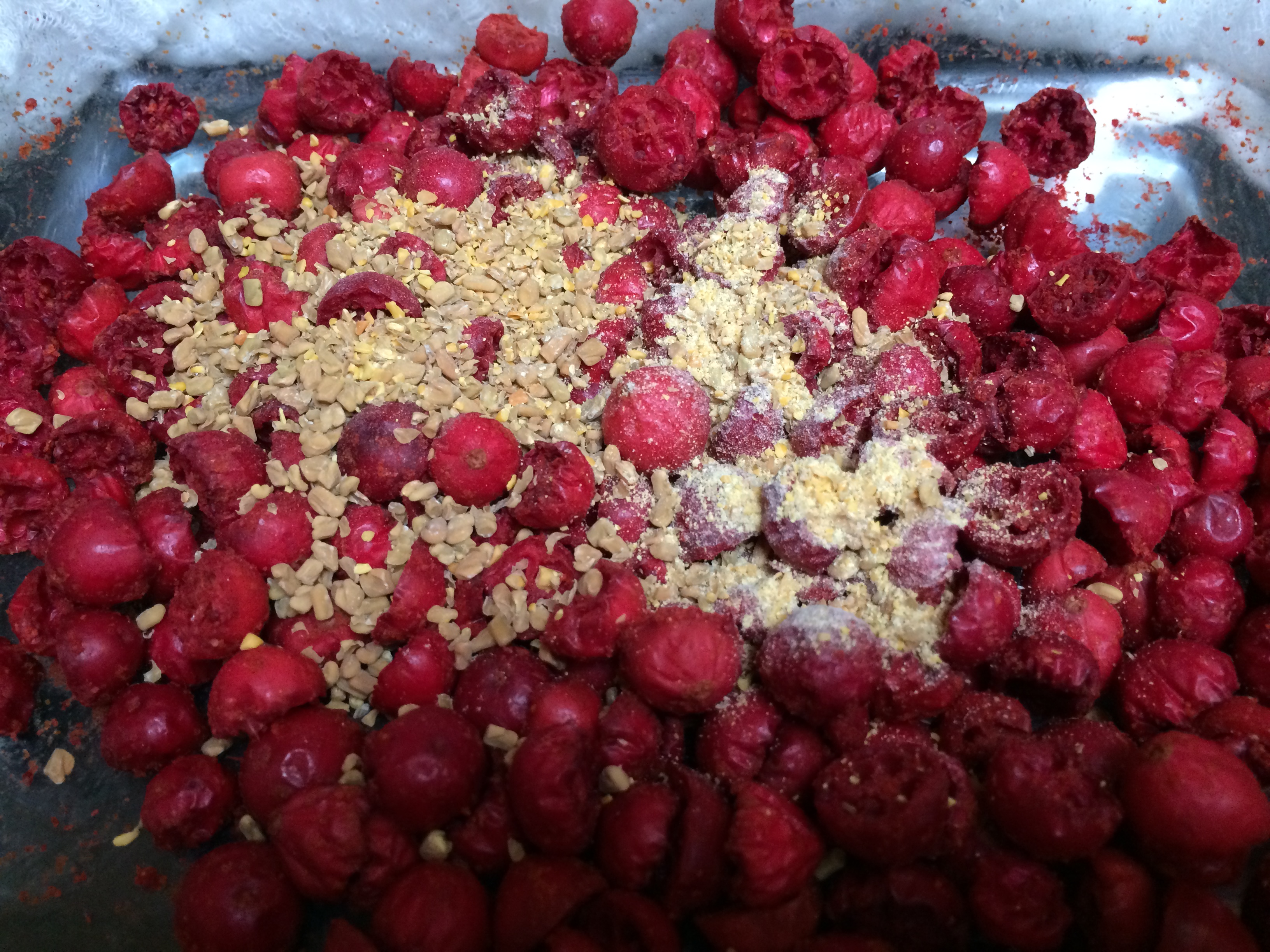
Add cracked fenugreek seeds

Add cracked fenugreek seeds

In a jar

In a jar

Cranberry pickle

Ingredients:
  • Half a pound of fresh cranberries
  • 1 tablespoon salt
  • 1 tablespoon (or to taste) red chili powder
  • 1 tablespoon fenugreek seeds
  • 1 cup or more mustard oil
Method:

Make sure the cranberries are completely dry and cut each in half through the equator. Toss them with the salt and chili powder. Lay them out in a glass or other non-reactive tray in a flattish layer, and cover with cheesecloth. If you get sun part of the day, leave them out in the sun. Each day or two, give them a toss with a clean spoon. Over the days the salt will draw out the moisture and the sun and air will dry it. After three to seven days, they will look dehydrated and shriveled as in the picture above.

Break the fenugreek seeds in a mortar and pestle or in a clean coffee grinder. Mix them in with the cranberries. Empty out the cranberries into a clean non-reactive jar. Pour raw mustard oil over them, shaking once in a while in order to remove bubbles, until the oil comes up to the top. Cover and enjoy.

You do not need to refrigerate this. As for how long it will last, well, a few weeks certainly, but if they go bad I will update this post.


(Click here to find me on Facebook and here on Twitter.)

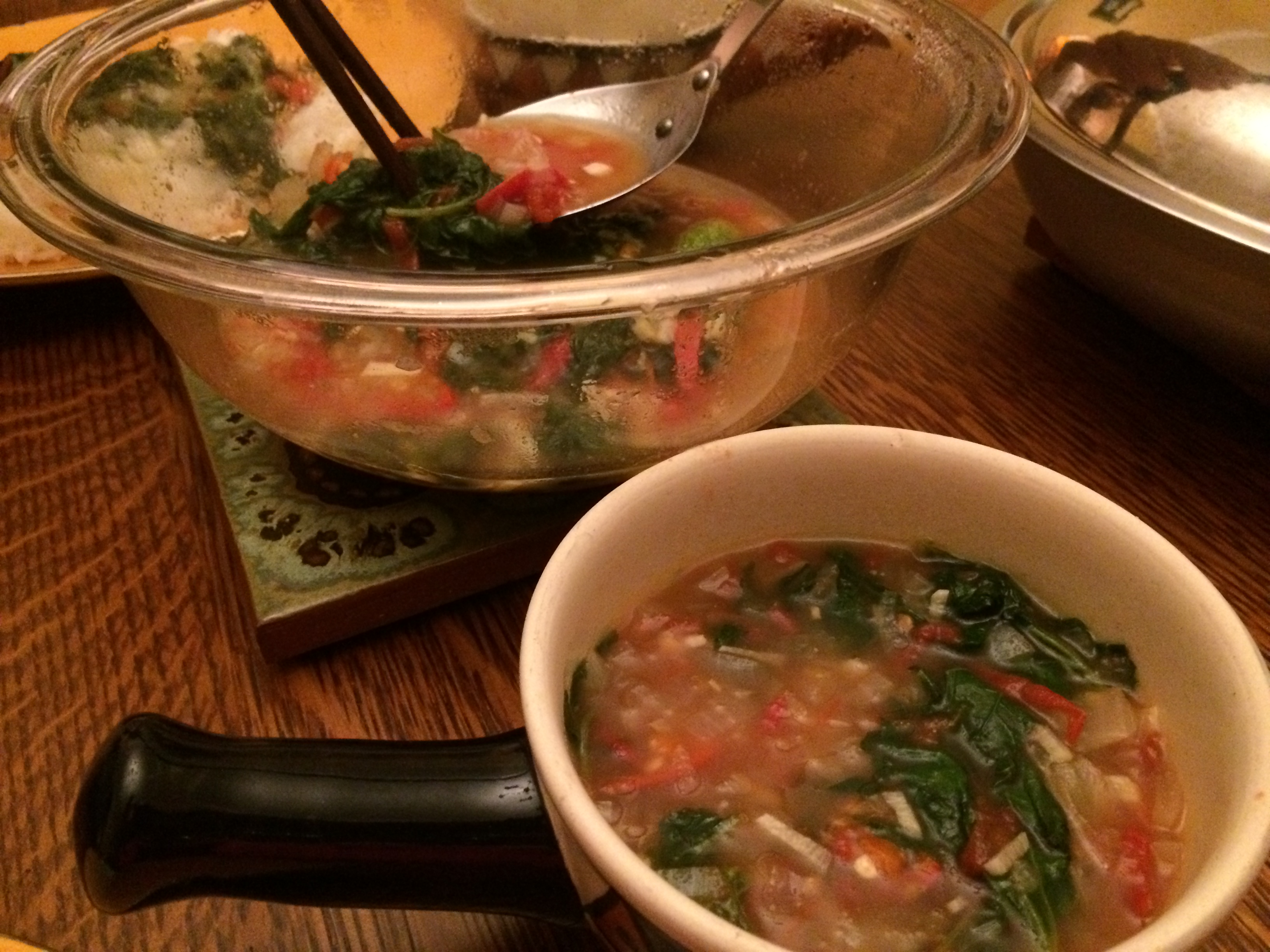
Burmese broth with bitter greens

Burmese broth with bitter greens

Burmese broth with bitter greens

Two things that I’m having a lot of fun discovering — one is Burmese cuisine with its fishy umami and floral flavors . The other is the leaves of the bitter melon. I can’t decide which to be more excited about; but when you combine them? An explosion of flavors!

So let me tell you what I know about both. I have always loved the bitter melon (karela). This is a cousin of your garden-variety cucumbers and cantaloupes, but its seeds are large and hard, its skin is bumpy, and its flesh is scanty and bitter. Certainly for special tastes; but once your tongue has learned to love it, you really love it.

Bitter melon grrens

Bitter melon greens

But then, I recently discovered that its leaves are edible too. One finds them at the farmer’s markets in San Francisco that serve an ethnic clientele. They are sold in giant bunches for a dollar. I leave with my wallet almost intact, and my shopping bag full to bursting with greens, the tendrils spilling over the top.

One of the most enchanting things about buying a bunch of bitter melon greens is the baby gourds one finds attached to some shoots. Normally the gourds are at least six inches long, but with every purchase you also get some baby gourds, some no bigger than your finger tip. These can be thrown into the pot along with the greens, they do not need much cooking.

A baby bitter melon compared to an onion

A baby bitter melon (karela) compared to an onion

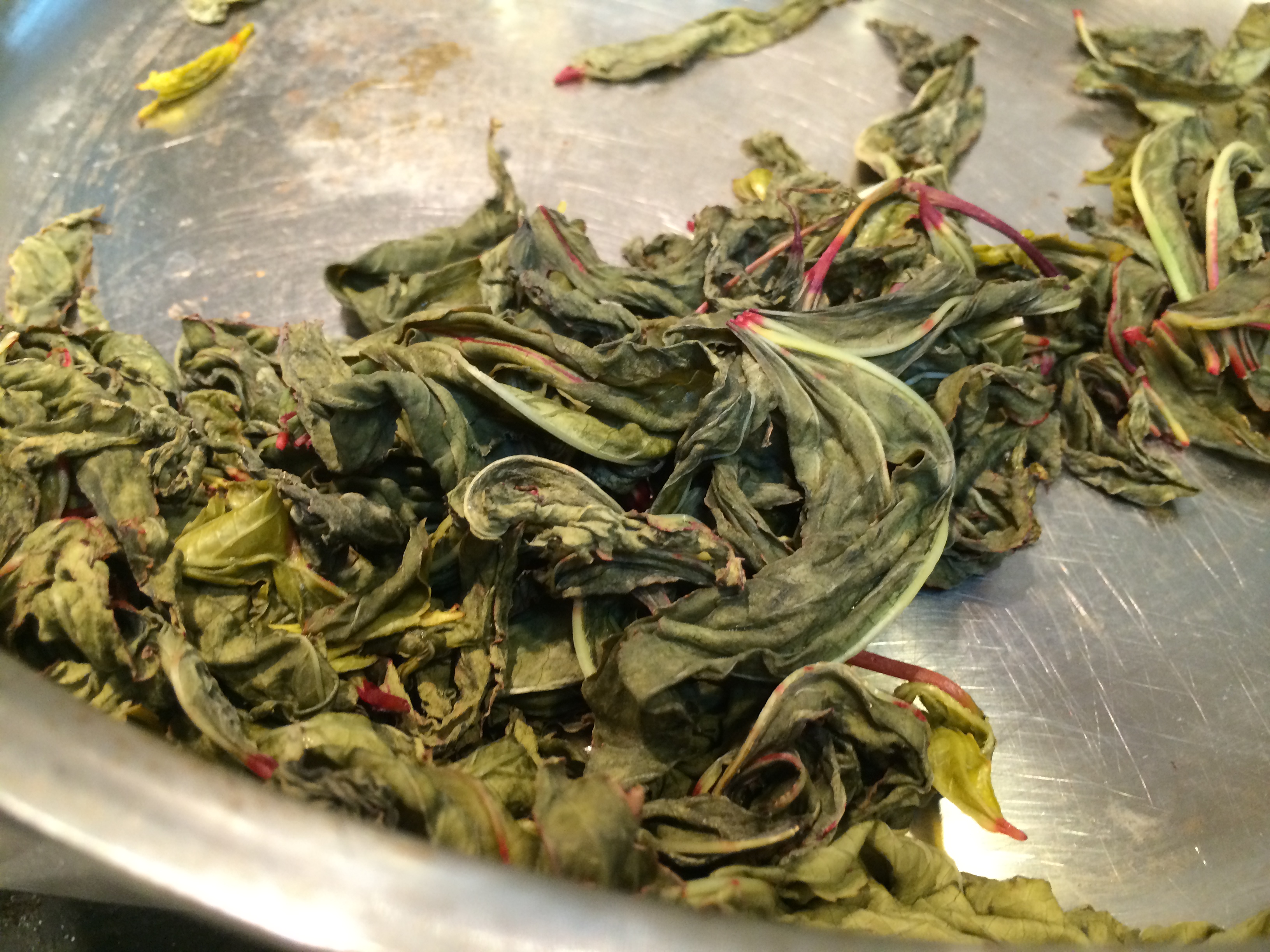
Those of you who want to like dandelion leaves, but find that they are just a little too bitter to enjoy, might love the bitter melon leaves. They only have to be cooked long enough to wilt, and have a complex, grassy bitter-tinged flavor.

Now about Burmese cuisine. I admit I don’t know much about it but I’m starting to learn. I recently got a Burmese recipe book; but rather than make any recipe from it, I tried to understand the techniques and flavors and tried to imbue this particular broth with the Burmese gestalt. At the risk of causing derisive laughter among any Burmese readers, I made what I like to think of as a Burmese broth. Unlike Indian food, it only gently cooks onions; it uses lemongrass infusion; and it uses fish sauce instead of the more Chinese soy.

We loved it with some white rice. please let me know in comments if you did too.

Soften vegetables

Soften vegetables

Vegetables in pot

Vegetables in pot

Softened

Softened

Lemongrass

Lemongrass

Add greens

Add greens

Serve

Serve

Burmese broth with bitter melon greens

Ingredients:
  • Leaves and baby gourds from 1 bunch of bitter melon greens (about 4 cups)
  • 4 big cloves garlic finely minced
  • 2 medium tomatoes sliced
  • 1 chili sliced
  • half onion diced or sliced
  • 1 cleaned stalk of lemongrass (optional)
  • 2 tbsp oil
  • 1.5 cups chicken broth
  • 1 tablespoon fish sauce
  • salt to taste
Method:

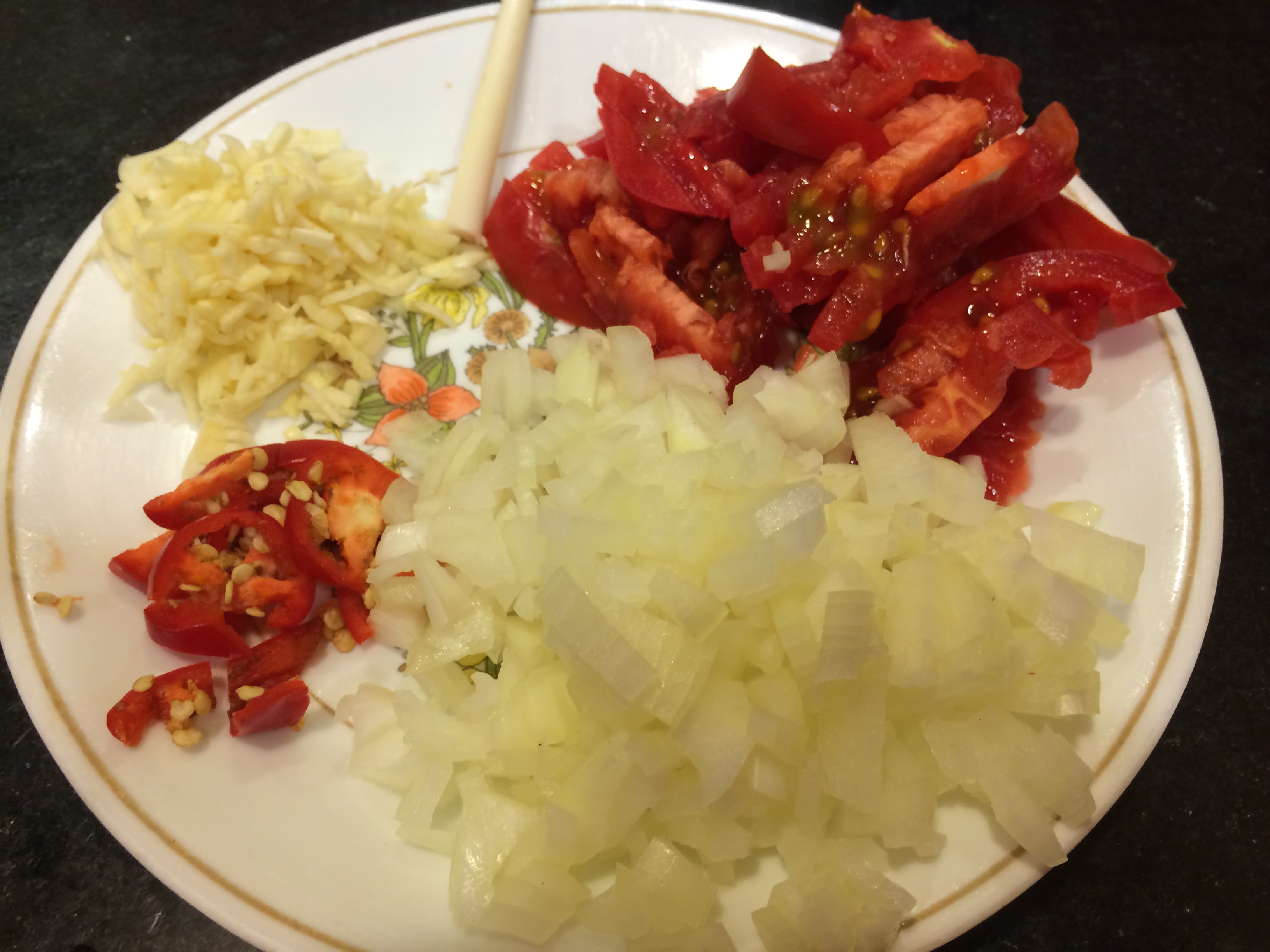
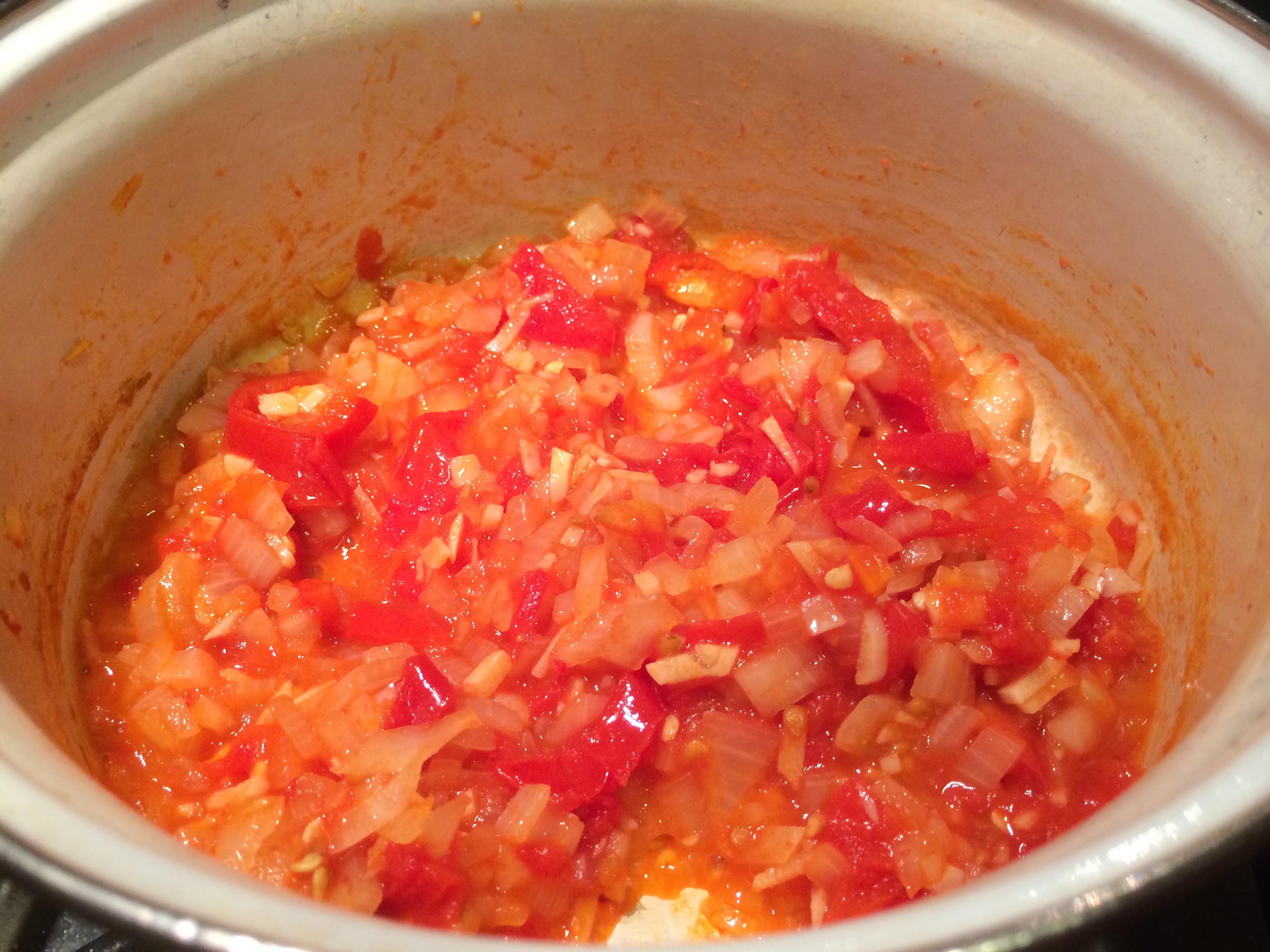
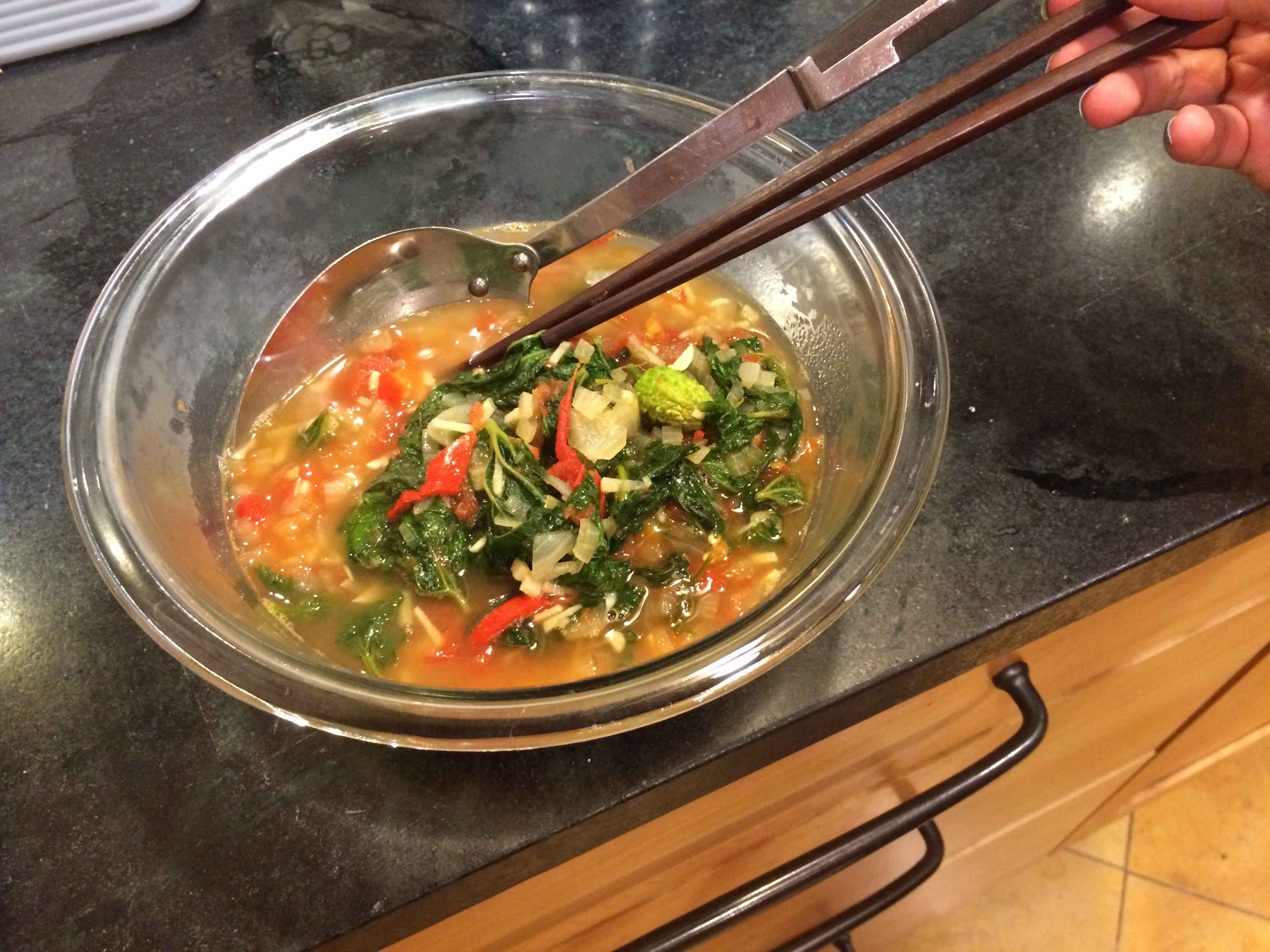
Put oil, onions, tomatoes, garlic and chili all together in a thick-bottomed pot and cook gently until softened (about ten minutes). The tomatoes should have liquefied and somewhat dried by now, if not cook a few minutes longer. Now add the broth, the fish sauce, and the lemongrass. Bring to a boil and simmer for ten minutes or so. Add the greens, and allow them to wilt. Turn off the heat.

Serve in soup bowls, with soup spoons and chopsticks for lifting the greens, and some white rice on the side.

(Click here to find me on Facebook and here on Twitter.)

A chutney made from Hibiscus leaves

Hibiscus chutney (gongura pachadi)

Hibiscus chutney (gongura pachadi)

If you are at the market and someone tries to sell you what they call ‘sorrel’ leaves, stop and give them the eye. Because you see, sorrel just means ‘sour’ and it does not tell you what kind of sour leaf this is. A few widely disparate plants all get called by this name, so all you know when someone tries to sell you sorrel, is that it is a plant that produces at least one edible part, and those edible parts produce so much acid that it tastes sour to us.

Hibiscus sabdariffa leaves

Hibiscus sabdariffa leaves

The sorrel that I am talking about today is Hibiscus sabdariffa, with the lovely maple-shaped leaves pictured above. It is known by many other names aside from sorrel. It is commonly known as roselle because of the lovely pinkish-magenta of its stems and flower buds. It is gongura in the state of Andhra Pradesh in India where it is a part of many beloved homey dishes. Meshta when it is grown for jute fiber in the north of India. ‘The flower of Jamaica’ in Mexico where the sepals are steeped into a tea. Such herbal teas, or tisanes, are made all over the tropical world from the sepals of this plant.

(Sepals or the calyx are the petals’ baby sisters — they are the row of sometimes leafy, usually unexciting petal-like things that grow on the outside of the flower, under the petals. Most flowers have them, and children usually render them in green when they draw their cartoon flowers.)

Calyx of roselle (Hibiscus sabdariffa)

Calyx of roselle (Hibiscus sabdariffa)

Hibiscus sabdariffa has gorgeous deep magenta arching sepals. The flower with its pink papery petals is even more beautiful, of course. The same magenta color is found in the edges and the veins of the leaves, making this a particularly attractive plant to grow, to look at, and to buy at the market. It decorated my kitchen for the few days that it sat on the counter after I brought it home. Almost seemed like a pity to mash it down into a grim-looking (but delicious!) chutney.

Gongura Pachadi (Hibiscus chutney)

Let me tell you a bit about this chutney. Made from the leaves, it needs no added souring agent (that would usually help preserve it) because the leaves themselves are very sour. I did not grow up in Andhra Pradesh but in that state, this chutney is almost part of the state religion and woven into daily customs.

Now you might think, leaves, yes, grind them in a blender and you are done. But wait. There is a technique to it. First, you dry them completely on sheets of paper towel. Then they roast a bit, dry. Then they sauté and shrivel in a bit of oil. Then you grind it up. The point is to remove all moisture from the leaves, which will help preserve it better.

The taste is wonderfully sour, a bit metallic (maybe from the iron?), and complex. You can mix it with rice or spread it on a slice of bread, then top it with sliced vegetables, as I did.

Dry-roasting

Dry-roasting in batches

Completely dry

Completely dry

Saute with oil

Saute with oil

Dry-roast spices

Dry-roast spices

All destined for blender

All destined for blender

Blending

Blending

Labeled

Labeled

Hibiscus chutney

Ingredients:
  • Leaves from a big bunch of roselle
  • 1 tablespoon sesame, coconut or other oil + more for blending
  • A tablespoon of sliced shallot or onion
  • 2 cloves garlic
  • Half inch piece of ginger
  • 3 dry red chilies, or to taste
  • 1 teaspoon mustard seeds
  • Half teaspoon fenugreek seeds
  • 3/4 teaspoon salt
Method:

Make sure the leaves are completely dry after rinsing. You can do this by spreading them out on sheets of napkins for an hour or so. Dry-roast the plucked leaves in a flat pan in batches. You do not want them to steam, just quickly dry up and darken as they roast. Once all the leaves are dried and roasted in this manner, return them to the pan with a bit of oil to sauté. Remove them to a plate.

Meanwhile roast the dry spices (mustard, fenugreek, red chili) until darkened. Let them cool a few minutes then give them a whirl in the spice grinder to get a powder. Peel and roughly chop the garlic, ginger and shallot. Throw them into the blender along with the salt, the leaves, and the dry spices. The blender will probably need some liquid to make the blades go; for this, add some more of the oil, rather than allow any water to come near.

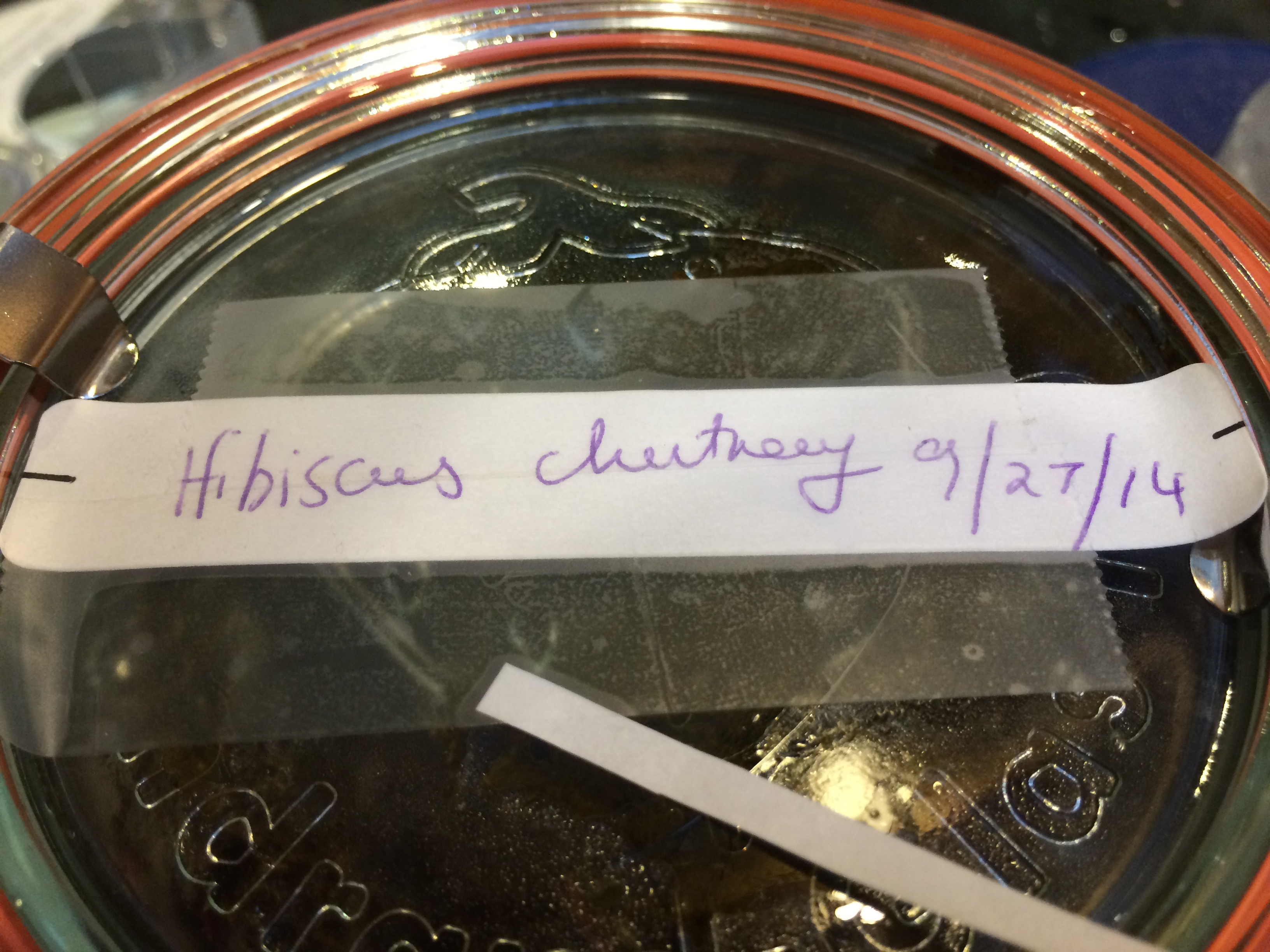
Save in a jar and label it so you don’t forget to eat it!


(Click here to find me on Facebook and here on Twitter.)
Roasting corn the sticky way

Roasting corn

Roasting corn

There was a time when corn was a delicious starchy snack. You had to cook it to enjoy it, and sometimes for quite long. But when you did, the kernels had this indescribable corny flavor that you could enjoy with butter, or chilies, or lime, or a number of other ways.

Wait. Rewind. Start over.

There was a time when corn was nothing but a big grass called teosinte, and the cob was basically a stick, and there were maybe five kernels on it. And they were covered with a hard shell. This corn was, shall we say, inedible.

So various talented ancient breeders who saw the possibilities in corn bred it to grow bigger.  And bigger. And made the kernels edible. Then, tasty. Richly colored with purple and red hues, the cobs would make as good a decoration as the kernels would a nutritious tortilla, if you ground them up and slaked it with lime.

Fine. Then came people (closer to modern times) who didn’t care much for these splashy colors and wanted food to be pure white (picky eaters) possibly to better match their bone china. So they bred corn white.

Great. Unknowingly, they also said goodbye to the wonderful nutrients carried in the purple and red hues. Then they realized that if you pick corn and eat it right away it is sweet. If you wait even a few hours, it is starchy. So they got into a sort of fever to eat corn as soon as it came off the farm like one, two, three, ready…pick…eat!

Then came test-tube-wielding lab-coated people who found a teeny-tiny-leetle thing you could change in corn to make it stay sweet longer, so they did. This corn was not really a very good organism, since it could not reproduce on its own. But it was a very desirable crop.

Sweet corn. A sensation. The lab-coats had nowhere left to go but down. They made corn sweeter. And super-sweeter. Closer and closer to candy. Until there wasn’t much difference left between this and this.

Corn Candy corn

Stop! Just stop already. We recently bought corn at the grocery store and ate it eagerly for dinner…such a disappointment. Sweet it was, very much so; but none of that wonderful corn flavor that comes with the starch. We felt like we had eaten dessert early. Where does one go if one misses the savory flavor of corn that goes with a bit of chili, a bit of lime; perhaps some charring? Where does one go for corn of such arrested development?

To the farmer’s market!

Sticky corn

The other day at the farmer’s market I found mounds of corn that went by the name of sticky corn. Some were purple, some not. They were quite a bit smaller than the regular cobs. What they exactly were was a mystery to me, but judging from the people crowding around the piles I guessed that sticky corn is an Asian specialty.

It turns out that way back in the 1500’s almost right after the Portuguese found corn in America, they brought it to China, where it became quite popular. Now once in a while corn will develop waxy grains. Normally this is a defect and the waxy grains don’t bode well for corn itself. But the Chinese, already used to sticky rice, treasured and tended to the defective sticky corn. It became a delicacy.

Breeding away in backwaters of China, sticky corn escaped this drive to turn everything sweet and easy.

From the 1500’s to present-day farmer’s markets in the Bay Area where certain Indian immigrants (me) are sick and tired of candy-sweet corn and are craving the roasted starchy flavor. Of course I swooped in and grabbed some.

Roasted corn

Now I was trying to recreate a specific thing. All over Mumbai there are food stalls that serve but one dish — roasted corn. There are coals and there is fire, and a simple red chili and salt combination with some lime. It turned out that sticky corn needed pre-cooking to achieve this dish but it turned out delicious.

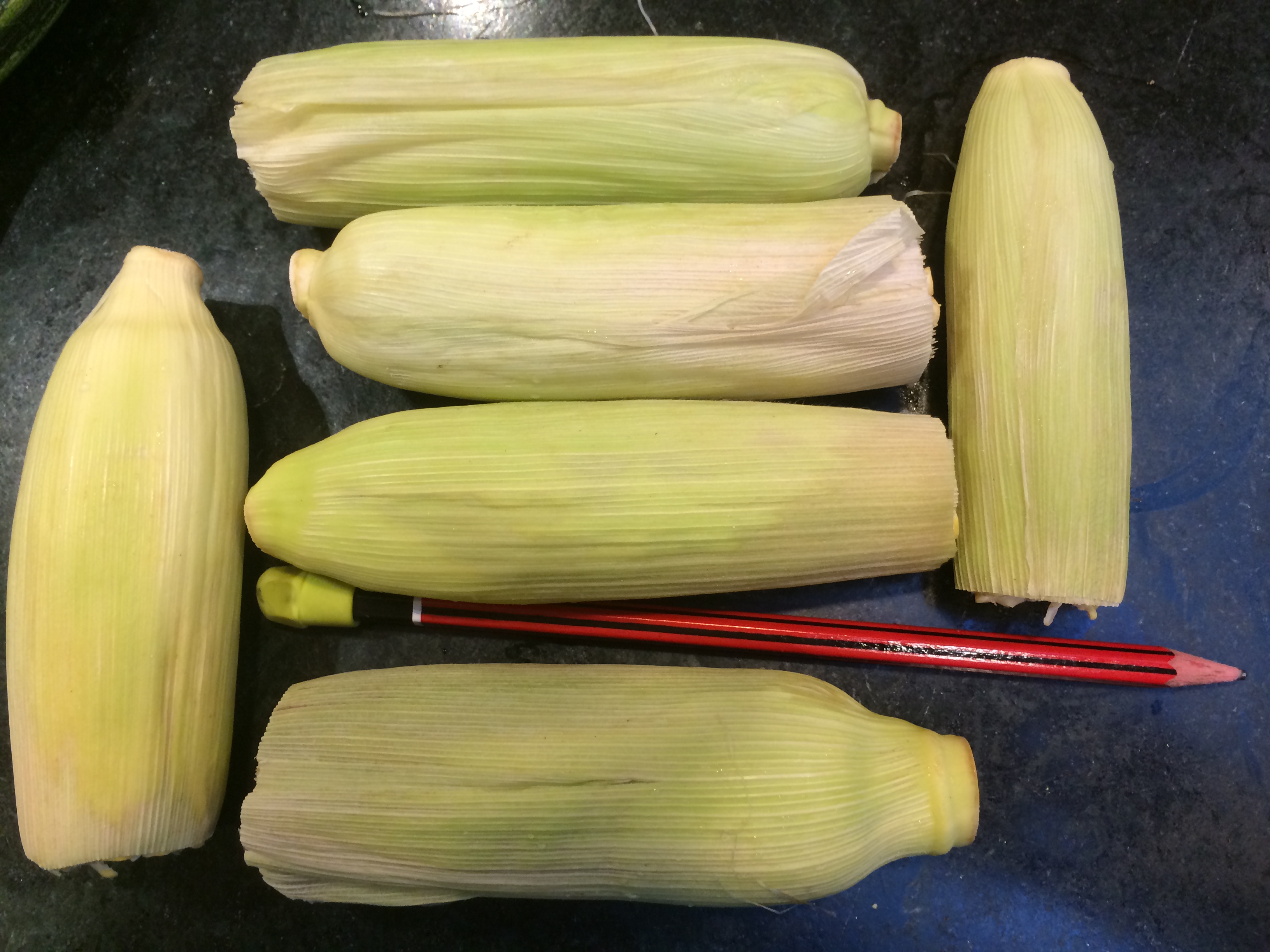
Sticky corn with pencil for scale

Sticky corn with pencil for scale

Sticky corn in pot for boiling

Sticky corn in pot for boiling

Boiled

Boiled

The kernels when boiled

The kernels when boiled

Roasting

Roasting

Served

Served

Roasted sticky corn

  • Servings: 2 cobs per person
  • Print

Ingredients:
  • Sticky corn in their ears
  • Red chili powder
  • Salt
  • Lime or lemon
  • Butter or ghee (optional)
Method:

Pressure cook the ears of corn for 15 minutes with some salt added to the water. If you don’t have a pressure cooker you can boil them for 45 minutes instead.

Take the leaves off the cobs. Hold them with tongs and roast them over an open flame, turning slowly, for about seven minutes each until evenly charred. If you like, rub some ghee or butter over. Serve with quarters of lime and a small bowl with a mix of red chili and salt, so that by dipping the lime in the powdered mix, and rubbing the lime over the entire cob, all the flavorings can be added at once.

Why these beans might fly off at any moment

Winged beans sauteed with red-chili garlic paste

Winged beans sauteed with red-chili garlic paste

The other day, walking through the farmer’s market, I had one of those moments that stops you short in your tracks. I saw an odd sight. I raised a trembling finger and exclaimed — with some rich feeling, I might add — ‘what on earth is that?’

I saw bunches of long frilly green pods sitting next to a whole pile of long frilly green pods. I walked over to the stall where they had already caused a minor stir.

Now The Odd Pantry is no stranger to odd vegetables. It has covered, with delight, the scruffy taro and the anatomical fiddleheads. This one though was new. Completely. At first glance I would have guessed it was a type of seaweed. I could just picture it in great rippling ribbons underwater.

But upon asking the lady of the stall, they turned out to be long beans — yes, legume pods that grow on vines — that had four rows of frills all along the length. Winged beans.

The winged bean

The winged bean

I asked the lady how one would go about eating them.

‘Well,’ she said. Long pause. She looked at me, judging how far to go. ‘Salad, stir-fry.’

Hm. Tight-lipped. The bird was caged but wouldn’t sing. I pressed her for more information. Placing my hand tellingly on my purse, I grilled her for the goods. ‘Out with it,’ I said, noting that she was starting to wilt.

Then it all came tumbling out. She broke off a piece for me to try. Hmm — tastes like — a vegetable. Maybe a fresh green bean of the French sort. ‘Make a paste of garlic and red chili,’ the lady said. ‘I’m Pilipino and that is what we do.’

A man walked up with a cloth shopping bag. ‘You Indian?’ he said to me, waggling his eyebrows. Yes, indeed, I am.

‘You know saag?’ he continues. Eyebrows doing a proper jig, now.

‘Intimately,’ I reply.

‘You cook it like saag!’ he says like a punchline, rifling through the bunch of winged beans.

Hm. I think I’ll stick with what the lady said.

Winged beans (Psophocarpus tetragonolobus)

This has become a habit. The Alemany Farmer’s Market will introduce me to a brand new vegetable that then turns out to be a complete miracle plant, so much so that you would think the Department of Marketing this vegetable is making stuff up. What else can you think about a plant that offers so much?

  • Every part of it can be eaten. From a New York Times article: ‘Theodore Hymowitz, an agronomist at the University of Illinois who is a member of the Academy’s panel on the winged bean, said, ”it’s like an ice cream cone – you eat the whole thing.”
  • Excellent source of vitamins, minerals, protein, calories.
  • It can grow in nutrient-poor soils
  • The seeds can make a coffee substitute
  • The leaves can be a tobacco substitute
  • Can produce a milk like soymilk
  • The milk from the beans can be fermented into tempeh
  • Mushrooms can be grown on the dried pods
  • Can be boiled, roasted, stewed, stir-fried, eaten raw, or in soups
  • Can be grown as animal fodder, and used as a cheap source of protein for fish farmed for food

There is also an enduring mystery about winged beans — nobody has found the wild form of it. Given its wonderful qualities it isn’t surprising to find it cultivated in any resource-poor traditional culture that can grow it. It is grown for its roots in Burma, in South East Asia for its pods, in great variety in New Guinea (where the winged bean has developed a fondness for the mountains).

But the wild form of it has never been found. Where is it really from? Some guess Africa because most of its relatives come from there. Some guess New Guinea because it just seems so at home there. Perhaps the wild form has become extinct. Who knows? Entire careers in botany could be made or broken on this one fact. So if you see a wild winged bean growing somewhere out on your travels, call someone!

Winged bean roots for sale in Burma. (source: Wikimedia Commons user Wagaung own work)

Winged bean roots for sale in Burma. (source: Wikimedia Commons user Wagaung own work)

Winged bean stir-fry

I figured I would stir-fry the winged bean pods using some South East Asian ingredients. Shrimp paste is often used in these cuisines, and I didn’t possess any, so I used anchovies to replace that missing umami flavor. Also, fish sauce. This is a light salty liquid that is extracted from the fermentation of fish. It is a great replacement for soy sauce that can instantly take a dish from tasting Chinese to tasting more tropical, reminiscent of islands and bays and inlets and other such watery waterworlds.

Garlic and red chilies

Garlic and red chilies

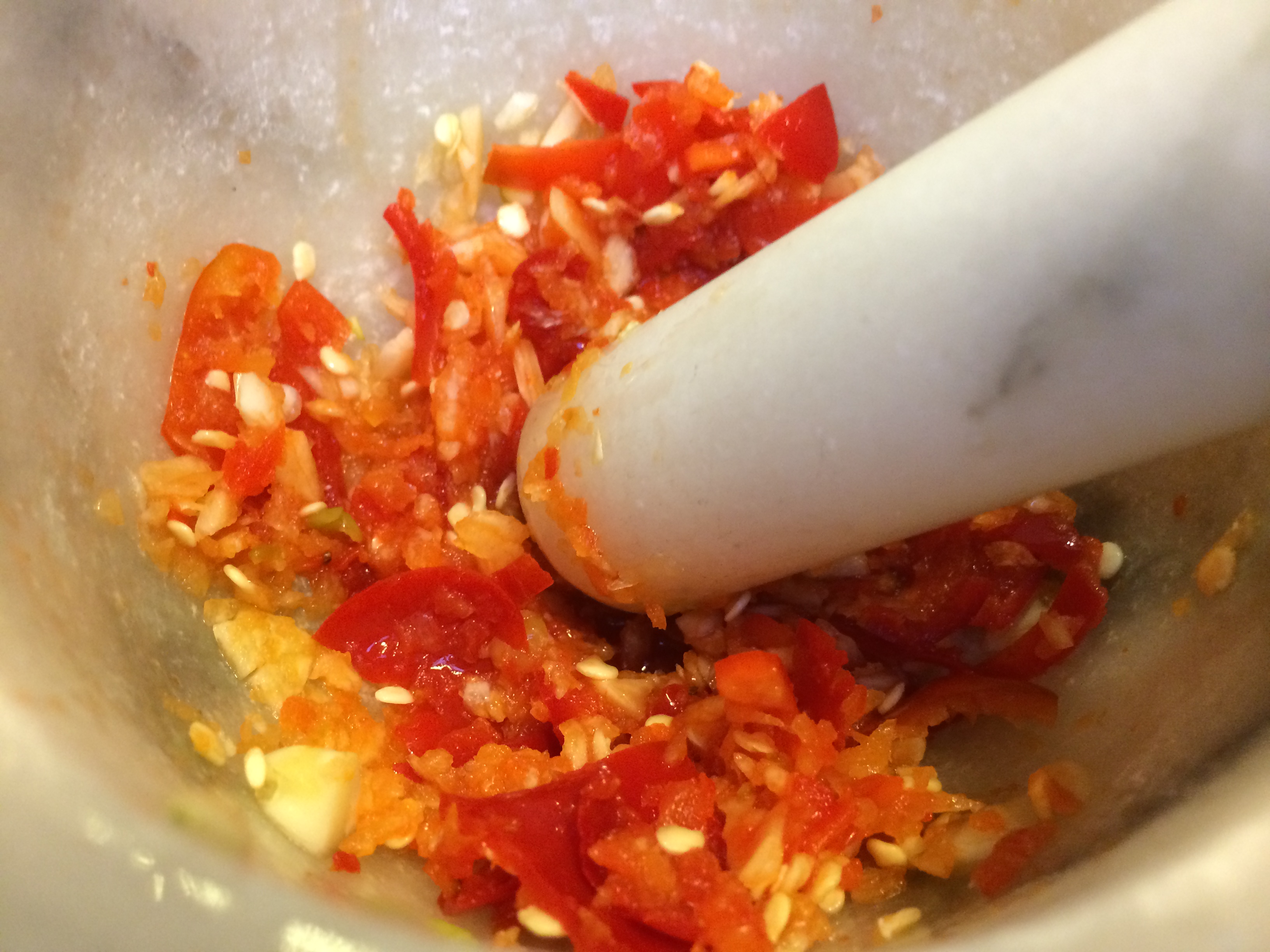
Pound it

Pound it

Anchovies too

Anchovies too

Paste

Paste

Slice the winged beans

Slice the winged beans

Saute

Saute

Sauteed

Sauteed

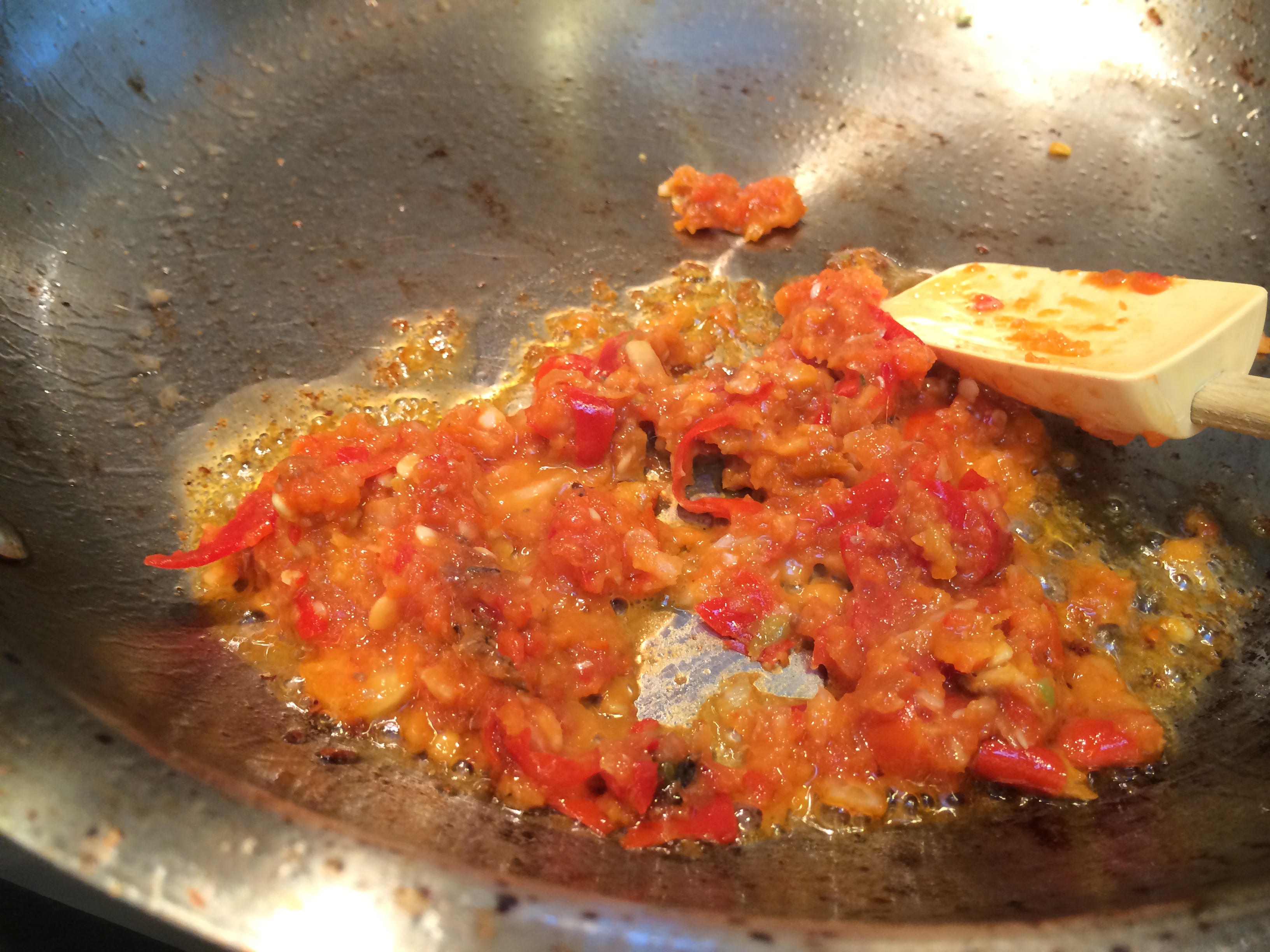
Fry paste

Fry paste

Fried paste

Fried paste

Enter the beans and fish sauce

Enter the beans and fish sauce

Winged bean stir-fry

Ingredients:
  • 3-4 cloves garlic
  • 1-4 fresh red chilies, or according to taste (use fresh green if you can’t find fresh red, I got mine from my garden)
  • a few anchovies (packed in oil)
  • 1 pound winged bean pods (green beans or asparagus would make a good substitute)
  • 1 tablespoon fish sauce
  • 1 – 2 tablespoons oil (I used sesame oil)
Method:

Make a paste of the garlic, fresh chilies and anchovies in a mortar and pestle. Takes about 7 minutes, not too bad. Wash, trim and slice the winged beans lengthwise. If you are using green beans or asparagus, just trim them and leave them intact.

Meanwhile heat half the oil in a wide thick-bottomed pan. When it shimmers put in the winged beans. Stir-fry them on high heat for a few minutes until the frills look a little browned. Remove them with a slotted spoon or tongs.

Add the rest of the oil and fry the paste. It will take a few minutes for it to dry out and for the oil to separate. Watch it carefully and use medium heat to make sure it doesn’t burn. Once this is done, put the winged beans back in, add the tablespoon of fish sauce. Stir to coat the beans with the paste and fish sauce, cover for a few minutes to steam before serving.

(Click here to find me on Facebook and here on Twitter.)

Is it a wrap? A donkey? No–it’s a superbaby…burrito!

Made-from-scratch burrito

Made-from-scratch burrito

When I was new to California, Indian friends who had arrived before me told me eagerly about the exciting new cuisines they had sampled around the Bay Area. It became a bit of a parlor game to find the cuisine ‘most like Indian food’ — which meant, in practice, the most highly flavored with spices. People mentioned Thai food and Ethiopian food as contenders. One strong contender that kept coming up was the Mexican burrito.

Of course, I was told about it from an Indian point of view. Imagine this, friends told me, rice and dal wrapped inside a roti! What could be better! The ‘dal’ in question was refried beans and the ‘roti’ was a tortilla. My friends were talking about the Mission Burrito (=’little donkey’), a fat wrap invented in San Francisco from Mexican ingredients, a cheap and healthful all-in-one meal.

The Mission Burrito is meant to be customized. You stand at the counter while your food server moves through an assembly line with a tortilla laid flat in front of her. You can choose or decline each ingredient. Rice is in. You choose your meat, or none. You choose your beans. I quickly learned that I preferred black beans to refried or whole pinto beans. Shredded iceberg lettuce and cheese are usually turned down by me, but are a yes for most.

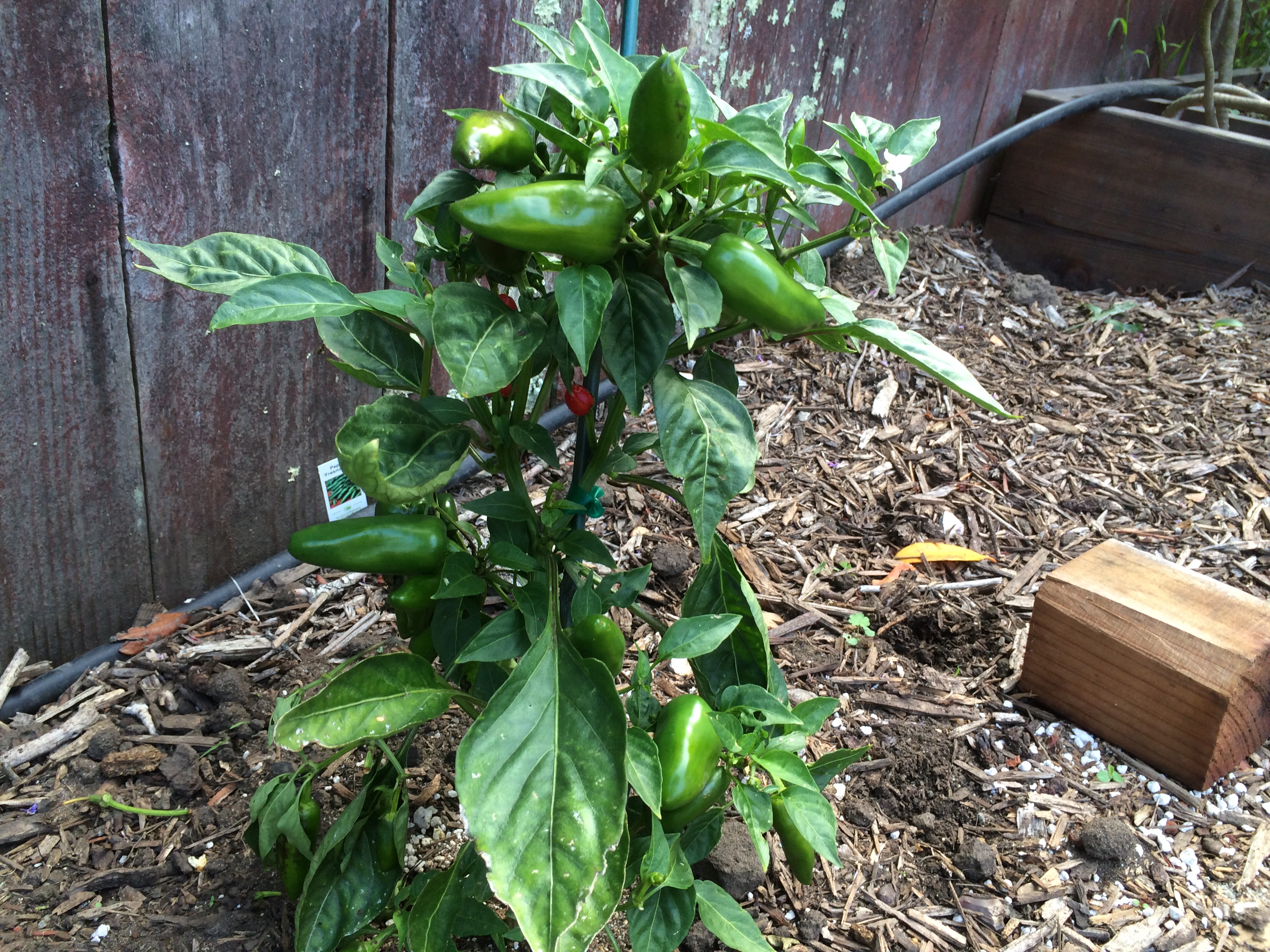
Fresno chilies growing in my yard

Fresno chilies growing in my yard

Then, if you didn’t forget to use the keyword ‘super’ you get the big payoff. The supremacy of the super burrito lies in having all kinds of blandishments added to it — salsa, guacamole, sour cream, hot sauces, heaps of onion and cilantro. For a recent immigrant from India (me, then) — the word ‘super’ meant ‘chutneys’. Fantastic. Then the tortilla is folded into a roll, tucked in at each end, and wrapped in double layers of foil. It can be eaten on the go, with no forks, plates, even napkins around.

People know Silicon Valley for its technical innovations, but its burrito innovations are not far behind. Some places are famous for offering beef brain and beef tongue in the choice of meats. Some offer vegetables grilled on the spot. Many have adopted whole-wheat, spinach or tomato tortillas. One of my favorite taquerías offers cooked cactus (nopales) upon request. A ‘naked’ burrito is served in a bowl, without a tortilla wrapped around it. A ‘baby’ burrito is a smaller sized tortilla, suitable for lunch for a smaller-sized person.

But here’s the other thing about the Bay Area…we must make this at home, from scratch! So here we go.
IMG_3051

Whole-wheat vegan superbaby burrito

For the tortilla I just made an Indian-style whole-wheat roti/chapati that added a nice wheaty complexity to each bite. They were smaller than the regular tortilla size, making this a ‘baby’ burrito. I bought dry black beans and soaked them overnight, then pressure-cooked them for 15 minutes to have the most luscious, earthy, non-metallic tasting black beans ever. The rice was cooked using the liquid drained from the tomatoes. The hot sauce came from this recipe for Mexican hot sauce. For the guacamole I used a nice large Californian Hass avocado. Cilantro and Fresno chilies from my garden. A mix of green zebra and early-girl tomatoes for the salsa. I made it vegan but my husband added some cheddar cheese. You could add sour cream or thick homemade yogurt, whisked.

Yes, it certainly had some Indian flavors….

Black beans soaking

Black beans soaking

Black beans cooked

Black beans cooked

Black beans

Ingredients:
  • 1/4 dry black beans
  • 1/4 teaspoon salt or to taste
Method:

Soak the black beans over night or for about 6 hours. If you are short on time, soak them in near-boiling water for an hour. Drain and pressure-cook for 15 minutes with 1/2 cup water. Add the salt after it is done cooking.

Tomatoes for salsa fresca

Tomatoes for salsa fresca

Tomatoes draining

Tomatoes draining

Onion, chili, cilantro

Onion, chili, cilantro

Salsa Fresca

Ingredients:
  • 4 small tomatoes or 2 medium
  • 1 tablespoon finely chopped onion
  • 1 tablespoon finely chopped hot green chili
  • 1 tablespoon finely minced cilantro
  • Lime juice from half a lime
  • Salt to taste
Method:

Dice the tomatoes and place them in a strainer with some salt mixed in, and allow to drain for half an hour or so. Collect the drained liquid in a bowl, this will be used later for the rice to add a subtle tomato-ness. Meanwhile finely chopped the onion, chili and cilantro. Once the tomatoes seem to be done draining liquid, mix it in with the onion, chili and cilantro. Add lime juice, mix, taste, and adjust for salt.

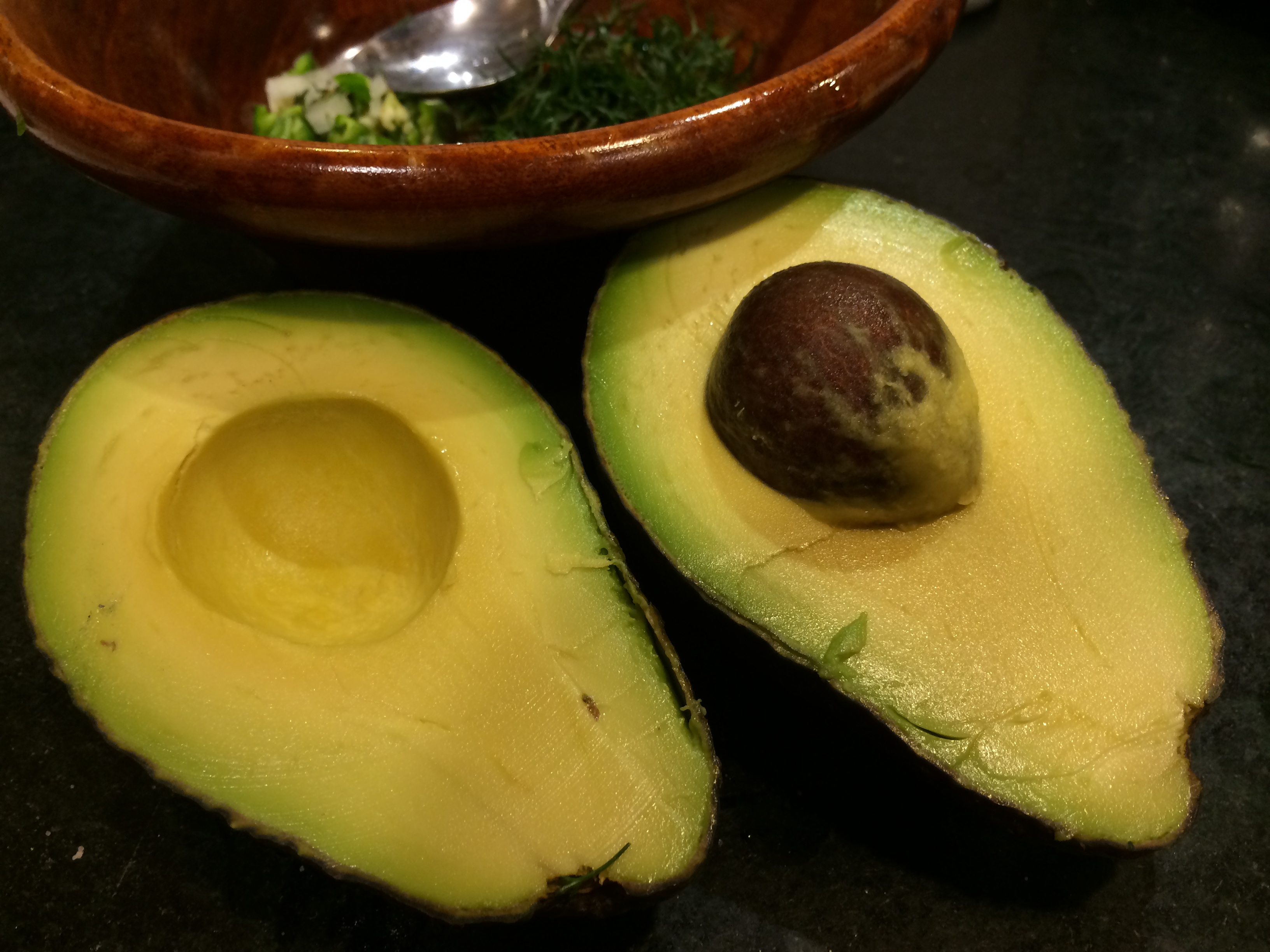
Beautiful Hass avocado

Beautiful Hass avocado

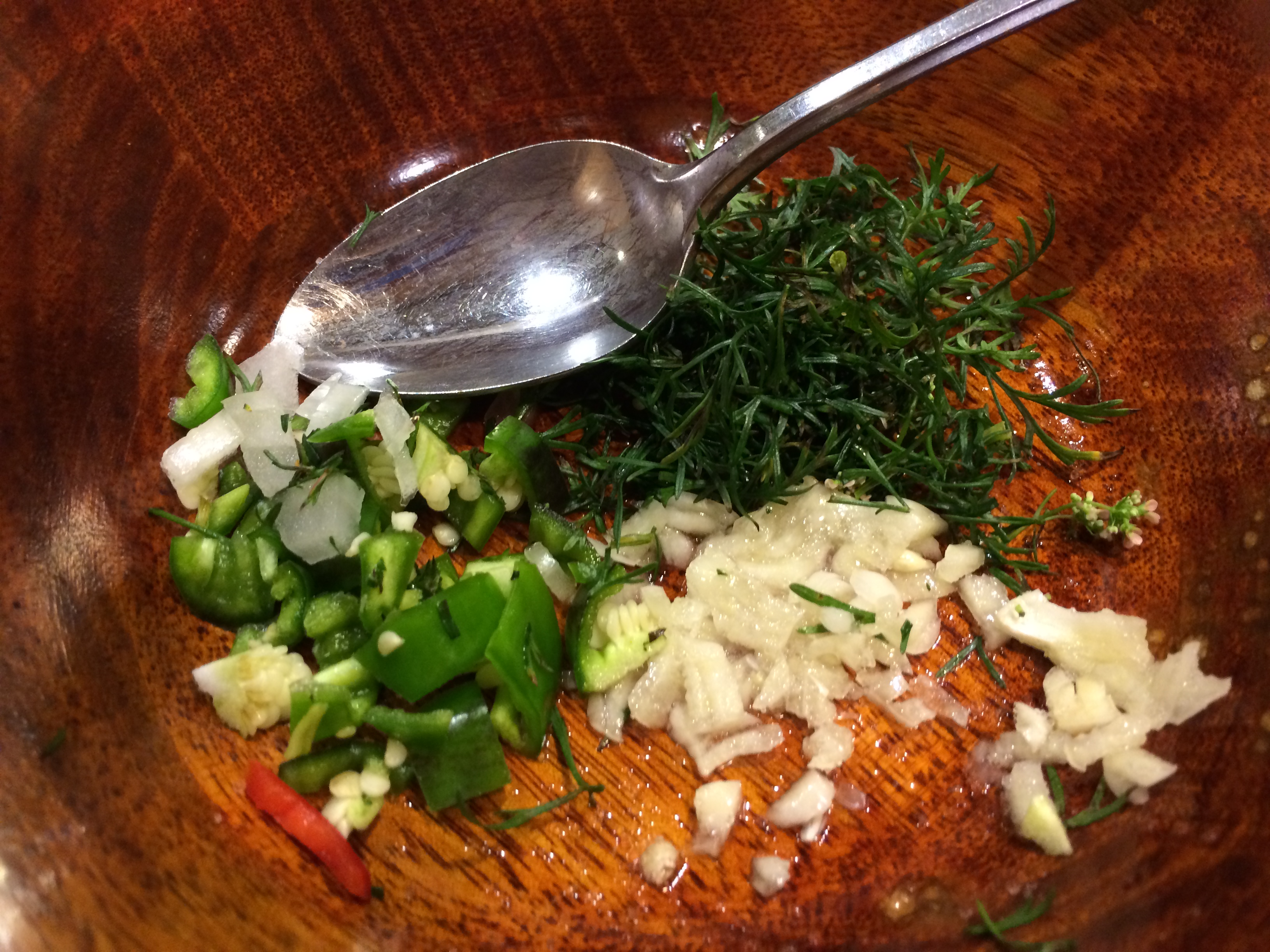
Garlic, chili, cilantro

Garlic, chili, cilantro

Guacamole

Ingredients:
  • One large avocado
  • 1 large garlic clove, minced
  • 1 tablespoon cilantro, minced
  • 1 tablespoon minced chili
  • Juice of half a lime
  • Salt to taste
Method:

Finely mince the garlic, add some salt to it and leave it mixed with salt for about 10 minutes. In this much time it will have turned pasty and ‘cooked’ a little. Cube the avocado flesh, mix it all together with lime juice. You can mash the avocado if you like but I like to leave little chunks.

Rice in pot

Rice in pot

Done

Done

Mexican rice

Ingredients:
  • 1/3 cup rice
  • 2/3 cup water including the liquid drained from tomato
  • 1/4 onion, minced
  • 1/2 teaspoon paprika
  • 1/4 teaspoon cumin powder
  • 1/2 tablespoon oil
  • Salt to taste
Method:

Heat the oil in a thick-bottomed pot. When it shimmers put in the minced onion, the cumin and paprika. Let them cook a few minutes on medium heat. Now in goes the rice. Stir to coat with oil. Next put in the water (including tomato liquid) and salt. Cover, bring to a boil, then simmer for 7 minutes. Turn off the flame and let it rest, covered, for a few minutes before opening the lid.

IMG_3054 IMG_3055 IMG_3057IMG_3063

Assembling the burrito

Ingredients:
  • 1 whole-wheat chapati/roti/tortilla
  • Some cheddar cheese, cubed (leave it out if you want it vegan)
  • Some rice
  • Some black beans
  • Some guacamole
  • Some salsa verde
  • Some hot sauce
Method:

I’ve left the amounts vague because you can customize each the way you want to. Layer the ingredients onto the roti laid out flat. Don’t overstuff it if you want a nice roll that you can bind securely. Fold in the two lateral edges to hold the fillings in place, then roll up the entire burrito starting at the bottom. Enjoy.

Found the Vegan Potluck folks who host a wonderful weekly vegan bash! That’s almost poetic. Entering this recipe there. 
(Click here to find me on Facebook and here on Twitter.)

Idiot-proof vegetable pulao

Vegetable pulav with tomato soup

Vegetable pulao with tomato soup

One of the first dishes I ever tried cooking on my own was flavored rice cooked with a few vegetables. This is known as a vegetable pulao — or pilaf — or pulav, the standard-est and basic-est of Indian home recipes. So why has it taken me this long to blog about it?

Because sometimes the simplest things give you the most trouble. It has taken me years for me to get this right. Sometimes the rice isn’t cooked through. If it is, it is cooked too much. Or the vegetables are cut too big and raw on the inside, or they have turned to mush. If all goes right regarding the timing, the thing is tasteless. Gah.

One way to get around these problems is to cook the rice and vegetables separately then combine them. But while there are many perfectly fine recipes that rely on this method (many from the south — yogurt rice, lemon rice, tomato rice etc.), for vegetable pulao, the flavors must fuse, which means cooking together is a must. They must come out with a flourish, all perfectly done at the same time. They say each grain of rice must be separate, so add that to the list of requirements. It must be gently spiced, but not too much — too much would kick it over into being a biryani. That’s fine, but that’s not what we are after.

So now, finally, I present to you my pulao secrets, recently discovered after many years of trial and error, which should make all doubts vanish under the first whiff aroma that hits you when you open the pot. Here they are.

Secrets of pulao

  1. Be stingy with the water. The vegetables you add will leave off some steam of their own, so I would use about a quarter less water than you would with plain rice.

  2. But if you do that, the danger is that the rice will cook and expand and rise above the water line, leaving the upper layer uncooked. Curses! To get around this problem, we use a pressure cooker. (I believe a tightly closed dutch oven slow-cooked in an oven would work as well, but that is not what I did.)

  3. Do not use vegetables that will turn to mush, like tomatoes or zucchini. The vegetables that you do use must be diced. I use vegetables like green beans, carrots, peas, cauliflower, cabbage, bell peppers, celery, etc.

  4. Rice tends to be a bit bland, so you need to fire on all cylinders where the aromatics are concerned. So that means — garlic, ginger, green chilies, onion, and yogurt for richness.

  5. Now this is the most important — do not caramelize the onions! Cook them till softened, but not browned. A lower flame would help. This is because what we are after is a savory flavor, not a sweet caramel browned flavor (there are other excellent rice dishes that explore this profile, we will go into that at some point).

Armed with these tenets we are ready to begin.

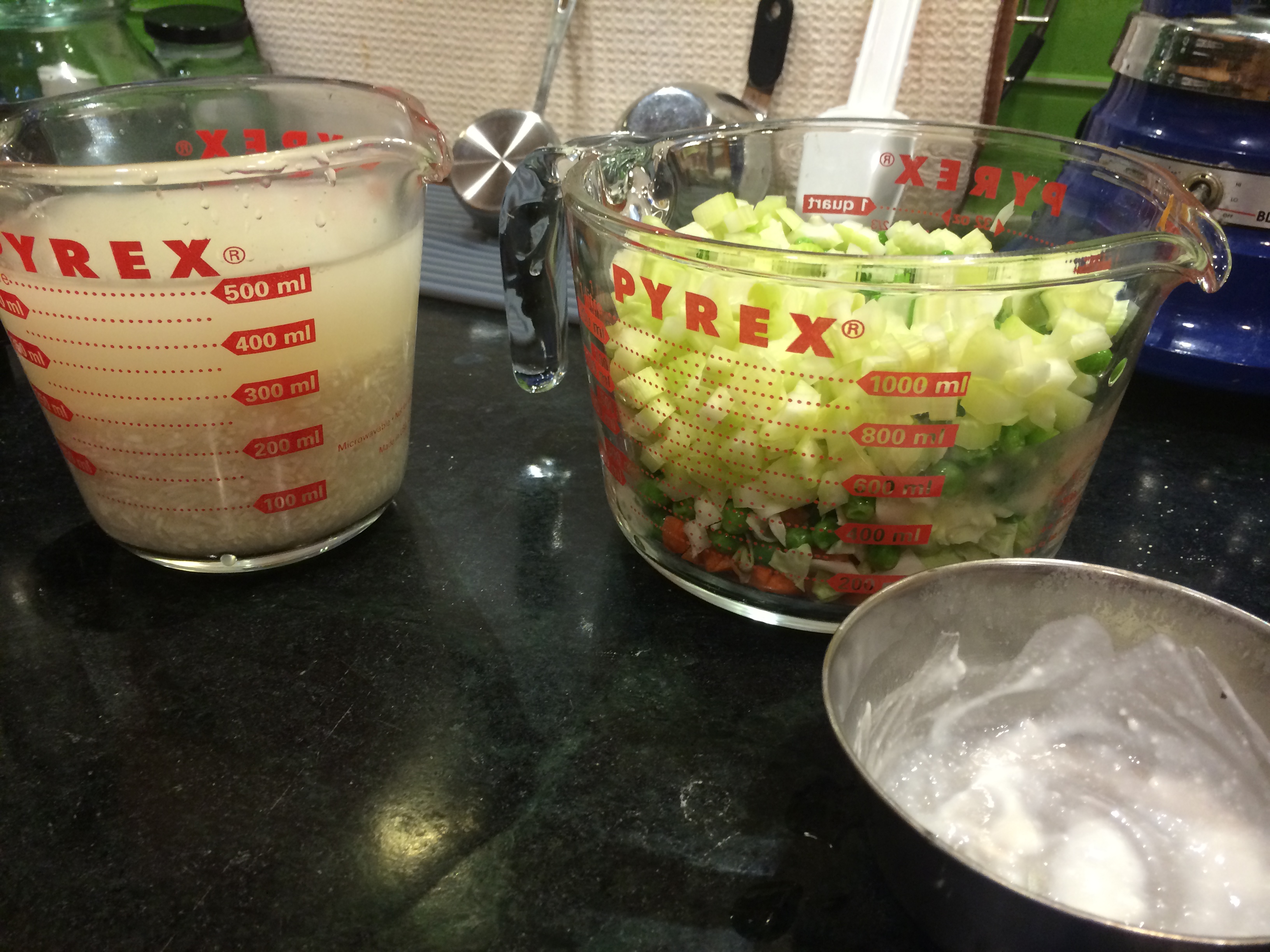
Rice soaking and vegetables diced

Rice soaking and vegetables diced

Ginger garlic chili paste with yogurt

Ginger garlic chili paste with yogurt

Onion cooking with bay leaf and cardamom

Onion cooking with bay leaf and cardamom

Paste enters

Paste enters

Paste drying up

Paste drying up

Vegetables enter

Vegetables enter

Rice enters

Rice enters

Done

Done

Vegetable Pulao

Ingredients
  • 1 cup long-grained rice
  • 1.25 cup water
  • 4 cups diced vegetables, mix of carrots, peas, beans, cauliflower (cut slightly larger, because it has the tendency to turn to mush if overcooked), bell pepper, celery, potatoes
  • 1 black cardamom
  • 1 bay leaf
  • 1/3 cup diced onion (this will be about half a medium onion)
  • 3-4 cloves garlic
  • 1 inch piece ginger
  • 1-3 fresh green chilies
  • 1/4 cup plain yogurt
  • 1 teaspoon salt
  • 2 tablespoons oil
Method

Rinse and soak the rice for about half hour. Dice the vegetables — those that cook quickly (like cauliflower) can be left larger, those that cook slowly (like carrot) can be cut smaller. Blend the yogurt along with ginger, garlic and chilies to make a paste.

Heat oil in the pressure cooker or dutch oven on medium heat. When it shimmers, put in the cardamom and bay leaf. Let them cook until an aroma arises. Then put in the onion. It can cook for a few minutes until softened. Now put in the paste and stir to combine with the oil. In about five minutes of cooking, the paste will have dried up and the oil will show separating from the paste.

Now you can put the vegetables in, and simply toss them around to mix with the oil. Drain the rice and add that in as well, and stir to coat the rice with the oil and spices. Now put in the water and salt, and pressure cook for 15 minutes. If you are using a dutch oven, cover it tightly and cook it in the oven for about 20 minutes at 250ºF.

Let it sit covered for a few minutes after taking it off the heat. Before serving, fluff it up lightly with a fork.


(Click here to find me on Facebook and here on Twitter.)
My slimy old pal, stuffed

Stuffed okra

Stuffed

Here is a riddle for all you wonderful folks. Two cousins. One is hairy, one is slimy. I have talked about the hairy one quite a bit recently. The slimy one doesn’t get much love because many people object to its sliminess. Fear not! There are many ways to make it unobjectionable.

Here is the hairy one. And here is the slimy one. Both from the mallow family.
Cousins

OK I have dragged this one out enough. Of course, the hairy one is cotton. But the slimy one is the subject of today’s recipe — okra. The slime is a form of soluble fiber that has many benefits, from slowing absorption of glucose (diabetics take note) to capturing toxic bile and helping with constipation.

Now okra is often not popular. When I mentioned to my husband that okra and cotton were from the same plant family, he said, ‘no wonder okra tastes like cotton’. Funny guy.

But here’s the thing. You can do one of several things. You can use okra in recipes that absolutely thrive on its sliminess and use it to give cohesion to soups and stews. Like gumbo. Or, you can fry and crisp it up. Once you do that, no one would guess at the great gobs of sticky runny goo that normally erupts out of okra pods.

Or, you could do this.

Okra stuffed with spices (Bharela bhindi)

For this dish, the okra pods are left whole. A slit is made along the length of the pod with a paring knife, taking care to leave a pocket, not bust through to the other side. Stuff the pocket full of spices. Fry it. This process seems to dissolve the sliminess as well and makes it a delicious meal with some roti or rice and dal on the side.

While picking okra one has to be careful to pick the very young pods, where the ribs have not turned fibrous and woody (once that happens, there is no going back, and you will not enjoy eating them). A gentle squeeze while selecting them at the market will tell you if the pods are still young. The pods I found at the farmers market are from a variety that has been bred to have minimal ribs, and can be left on the plant longer without risk of turning woody. Nevertheless, I did find one or two that had, and I discarded them.

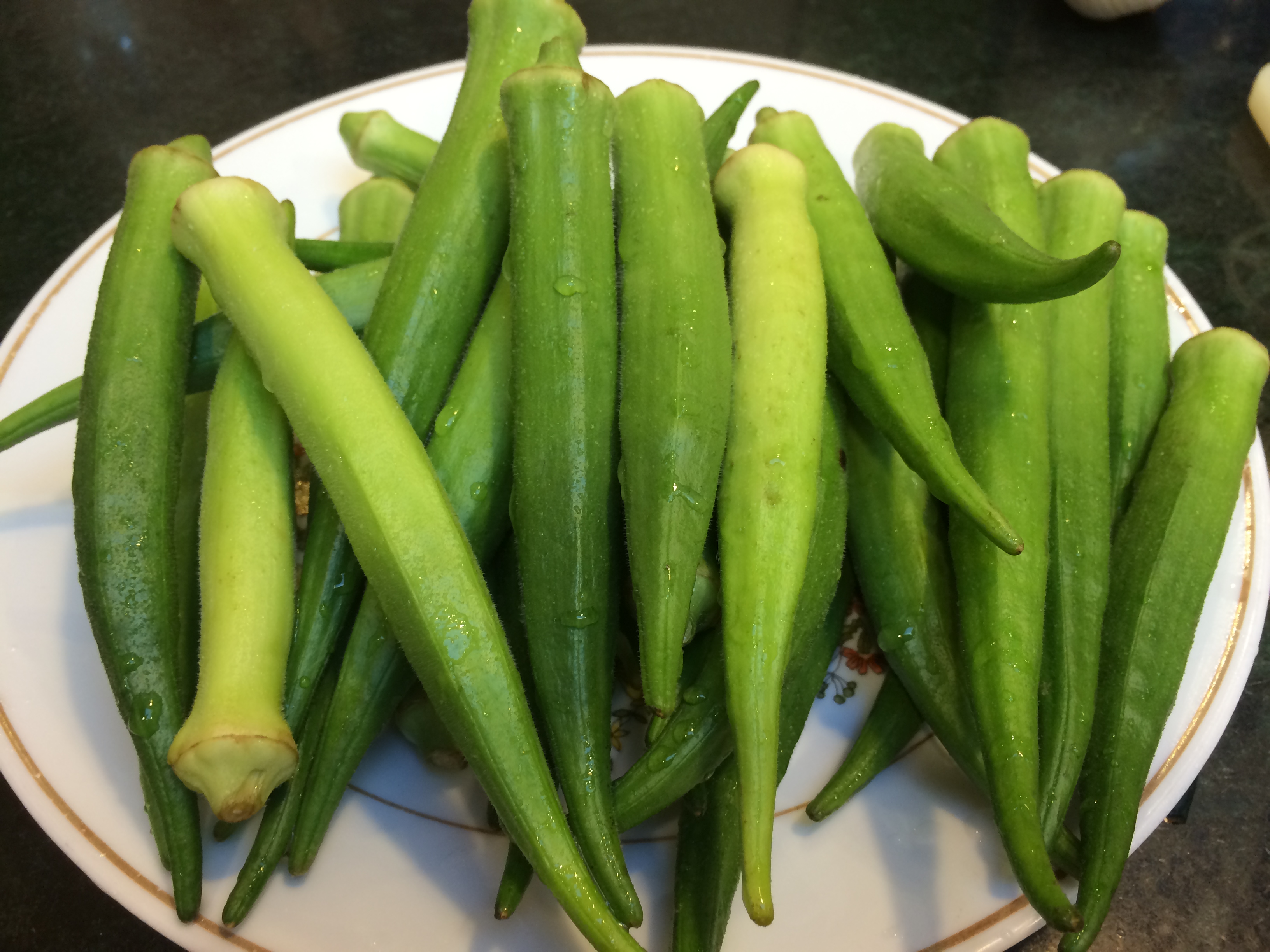
Pound of okra pods

Pound of okra pods

Whole spices

Whole spices

Roasting spices

Roasting spices

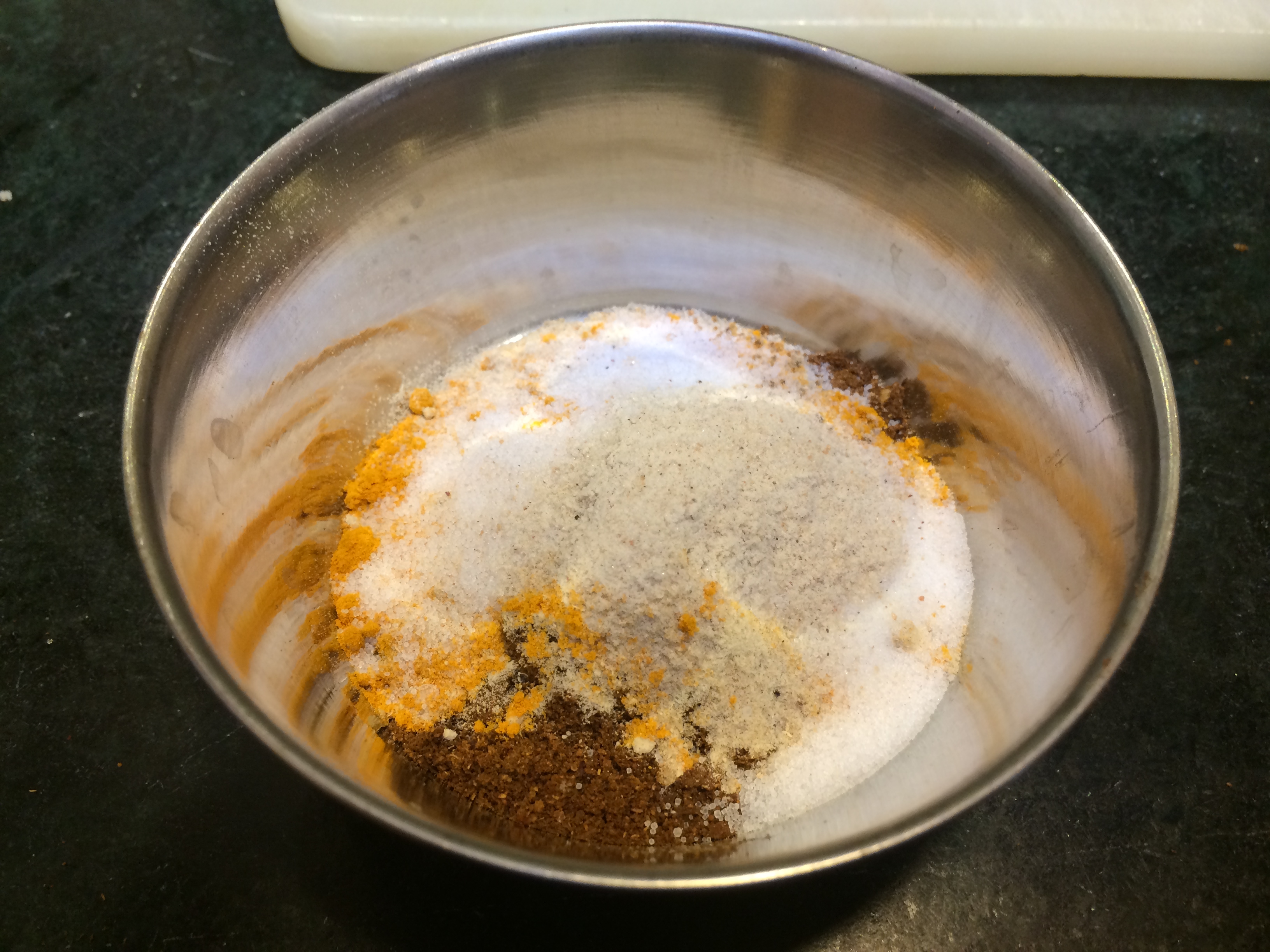
All spices mixed in a bowl

All spices mixed in a bowl

Pocket

Pocket

Stuffing the pocket

Stuffing the pocket

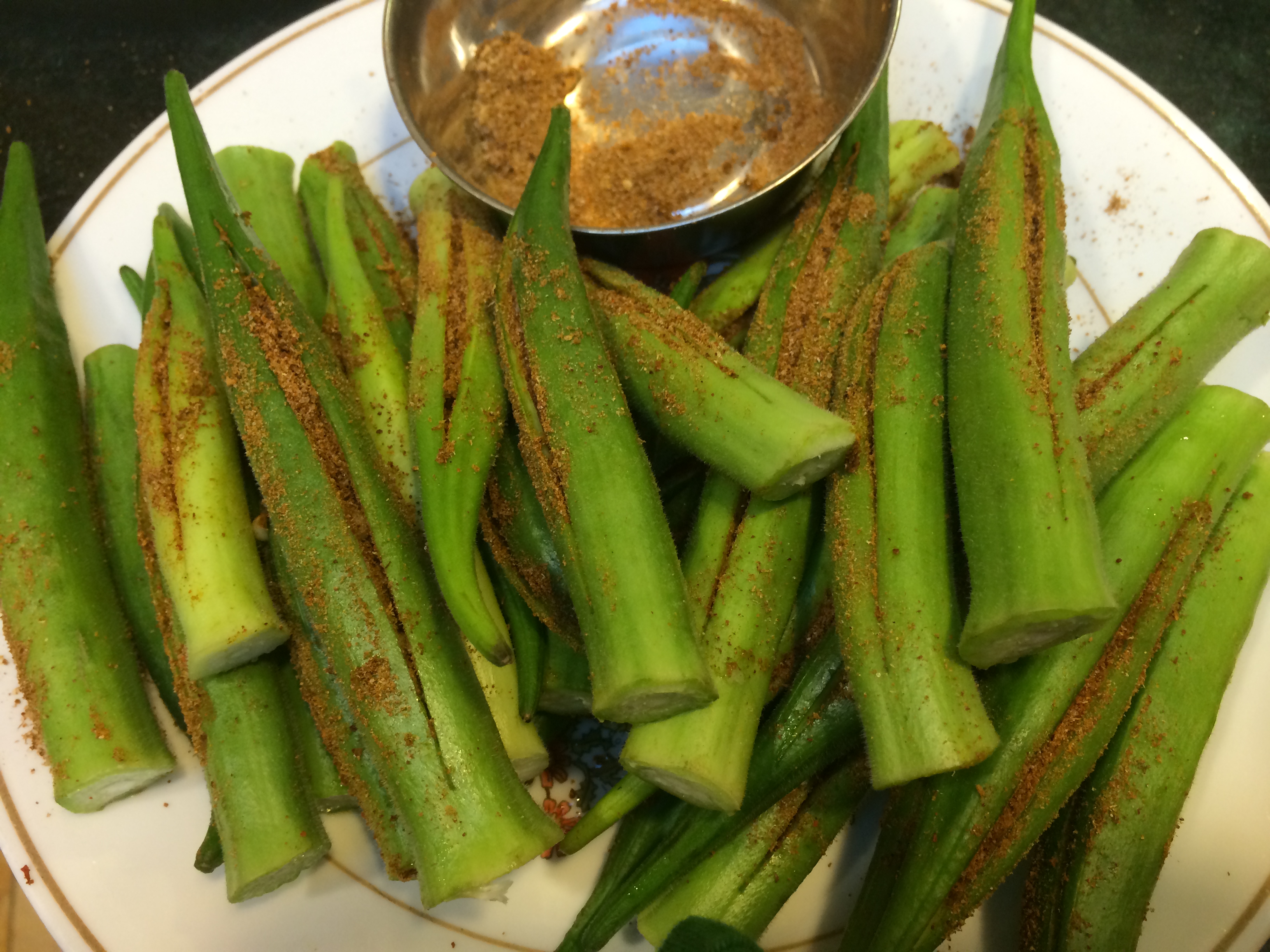
Stuffed and ready to go

Stuffed and ready to go

Frying

Frying

Add onion

Add onion

Done

Done

Stuffed okra/bharela bhindi

Ingredients for the spice mix:
  • 2 teaspoons whole coriander
  • 2 teaspoons whole cumin
  • 1/2 teaspoon whole fenugreek seeds
  • 1/2 teaspoon whole fennel seeds
  • 2 whole red chilies, more if you like
  • 1 teaspoon dry mango powder (aamchur)
  • 1/2 teaspoon turmeric powder
  • 1/4 teaspoon asafetida
  • 1/2 teaspoon red chili (if you want more heat) or paprika (for color and flavor)
  • 1 teaspoon salt
Ingredients for okra
  • 1 pound okra pods
  • 3 tablespoons oil
  • 1/4 onion, sliced (optional)
Method

Roast the whole spices from coriander to red chilies in a thick-bottomed pan, just until an aroma arises. Take it off the heat, wait a few minutes for them to cool and grind in a clean coffee grinder. Now mix in the powdered spices from the dry mango powder to the salt.

Wash and completely dry the okra. Take off the very top, the hat that looks like a beanie where the okra is attached to the stem. Using a sharp paring knife, make a slit along the length of the pod, stopping a little short on both ends, to make a pocket. Fill each okra with the spice mixture. A small spoon is very helpful for this. Then using your fingertips, spread spices nicely inside the pocket.

Once all the okra pods have been stuffed, heat the oil in a wide, thick-bottomed pan. When it shimmers, lay the okra pods flat in a single layer. Let them cook on medium-high heat for 10 to 15 minutes until each side is browned. Once in a while give them a turn with tongs or a spoon. Mostly just leave them be.

When they look pretty much browned, squished and done, throw in the onions. The onions only need to cook for a minute or two, the hot pan will soften them quickly. They do not need to brown. Turn off and cover the pan for a few minutes to allow the steam to finish the job.


(Click here to find me on Facebook and here on Twitter.)