All about dals in one place

Apologies to anyone who might be expecting a fun and interesting new post about kitchen antics from me…instead what I have to offer today is a dry, pedantic review of some dals. I updated my page about dals, and I plan to keep adding to it with other dals I have not yet covered, and of course adding links to more dal recipes. This page is meant to be a one-stop-shop for all dal-related information on The Odd Pantry. Dull, yes, but someone has to do it.

Check it out

Image

Like bhaji on pav

Pav bhaji stall (Photo credit: http://burrp.in.com)

Pav bhaji stall (Photo credit: http://burrp.in.com)

A couple posts ago I did the recipe for pav bread, and possibly some of you thought — well, ok, but where’s the bhaji? Especially if you have lived in Mumbai for any length of time. Those who have not might be forgiven for wondering what the fuss is all about.

You see, there aren’t a lot of dishes that Mumbai can claim as its own: most are brought in from other regions of India by immigrants. Pav bhaji is one of very few that were invented in the city. Just like the culture of the city itself, it is a bit of a mongrel; just like the city itself, it is imbued with street culture. It is street food, but it is so much more than food. It is a fixture of street life. It is fuel for hungry office-workers, cart-pushers, delivery-boys, ward-boys, brick-layers, day-laborers. A cheap lunch date for college romances. For a city that thrives on masala (spice), whether in food or in movies, it is a way to cram as much masala as is humanly possible onto the smallest paper plate.

The Bhaji

Now the word ‘bhaji’ is a bit like my most hated word — ‘curry’ (read this if you want to know why I hate it), in that it is a generic word for spiced and cooked vegetables. It suggests a hodge-podge, something that is so mixed up that one has to resort to vagueness. But in fact, although this dish was invented as a hodge-podge, it has now come to mean one exact dish, with one exact spice mix and one exact set of vegetables. Especially when used with ‘pav‘, as in ‘pav bhaji’.

This particular hodge-podge consists of several boiled vegetables, fried and mashed with spices. The whole thing is done on a giant griddle. Butter is spread all over the griddle and then the boiled vegetables sautéed. The mashing, as I remember, is done with a flat metal spoon. The mashed mixture is served with two pieces of pav bread, which have been sliced and toasted with butter and some of the spicy mix spread on it. The dish is topped with more butter. So there is butter underneath it, in it, and on top of it. Then, raw onions and cilantro are chopped fine, mixed with lime to make a bit of a relish, and that relish is thrown on top to garnish your paper plate.

The whole thing for less than 20 rupees.

Pav bhaji served

Pav bhaji served

History

Pav bhaji was invented by street-food vendors out of leftovers. In the late nineteeth century Bombay’s main industry was textiles; there were 130 mills in the central area of Girgaon (‘mill village’). The last shift let out at midnight. Street food vendors that sprung up around them threw together whatever scraps of vegetables they had from the day’s cooking and mashed it all up to hide its lack of pedigree. For the masala powder, once again, they threw everything in it indiscriminately, from garam masala (warm) spices like cloves to hot spices like dry red chilies.

From textile mill workers the dish became a standard for the underworld that was just getting started up around that time. A movie from some years ago called Vaastav depicts the story of an underworld don who gets started in business by opening a pav bhaji stall. Here is a clip of a song from the movie. I realize it is a little unconventional for a food blog to showcase Bollywood songs, but this one does show how the dish is made. This time, that is my excuse. (Next time I embed a song I won’t need an excuse.)

(Rough translation: here is a short man with a big belly, a man with money. He is eager for food. The griddle is hot, let’s throw the butter on it.)

Pav Bhaji

Today vendors of Pav Bhaji are everywhere from street-food stalls to expensive restaurants. It has lost its whiff of the underworld. Many variations have sprung up — Jain pav bhaji that omits onions and potatoes, khada pav bhaji that isn’t much mashed, Mexican pav bhaji that includes baby corn.  I’m still faithful to the original, so that is what I showcase here. In fact the spice mix has also become commoditized and is available for sale in most Indian grocery stores in nice neat packages labeled ‘Pav Bhaji Masala’, but of course we have to make it from scratch…so here we go.

First the spice mix:

Whole spices for pav bhaji masala

Whole spices for pav bhaji masala

Roasting

Roasting

Going thru the funnel

Going thru the funnel

My 8-year-old helping with a chopstick

My 8-year-old helping with a chopstick

Done and labeled

Done and labeled

Pav bhaji masala

Ingredients:
  • Quarter cup cumin seeds
  • Quarter cup coriander seeds
  • 2 tablespoons whole black pepper
  • 2 tablespoons cloves
  • 1 tablespoon fennel seeds
  • 3 black cardamom (use half of what I have pictured above)
  • 10 dry red chilies (change amount to suit your taste, this is pretty hot)
  • 1 tablespoon turmeric powder
  • 1 tablespoon dry mango powder
Method

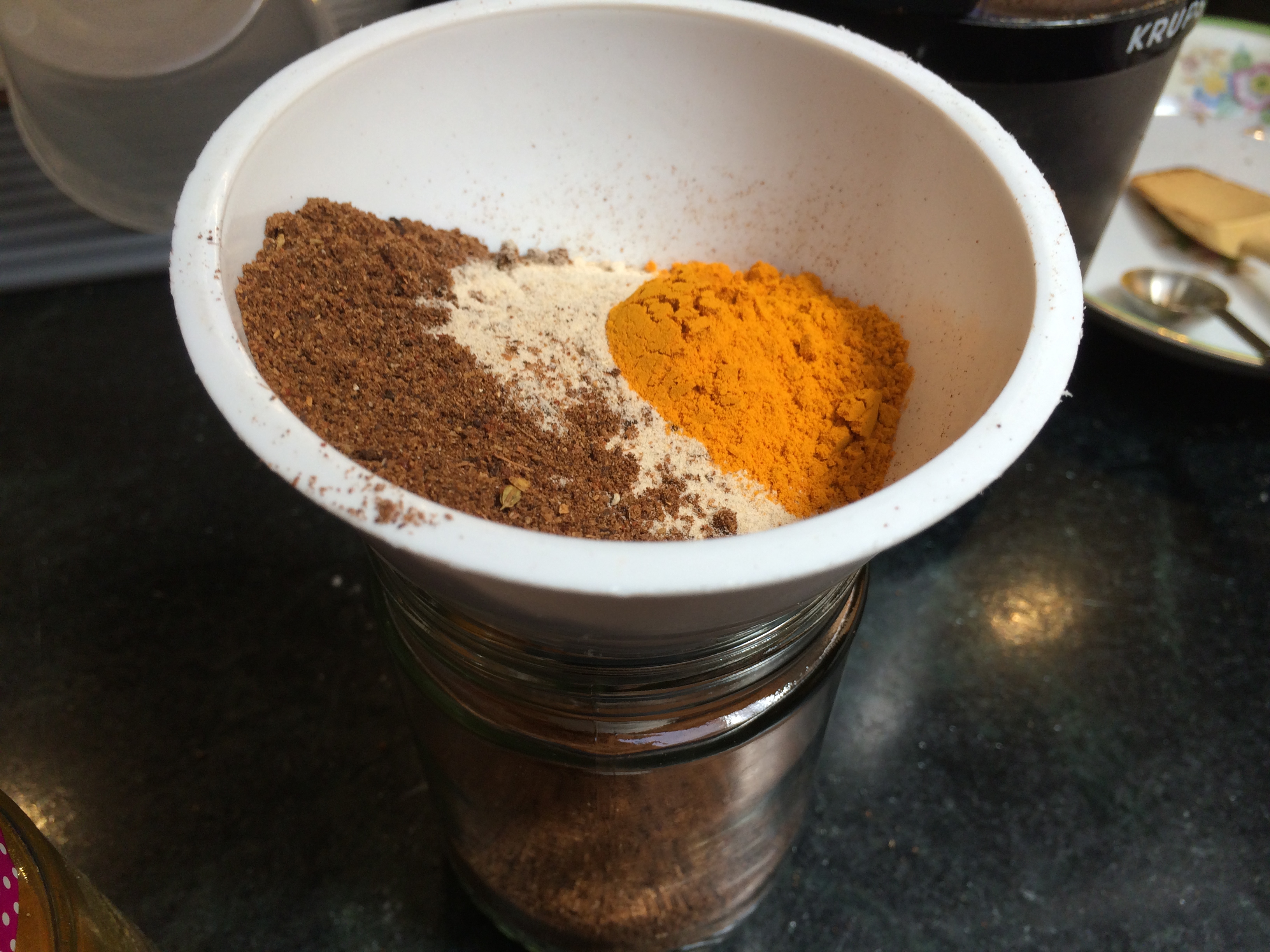
Heat a cast-iron pan on medium heat. We are going to roast spices so be sure you have your windows open and fan on. Roast each spice separately until each is fragrant and slightly darkened. Empty into a plate. Grind them together in a clean coffee grinder. Pour into a jar using a funnel. Now is the time to mix in the already ground turmeric and dry mango powder. Shake to combine. Label and save.

Then the bhaji (vegetables):

Vegetables

Vegetables

Veggies about to be boiled

Veggies about to be boiled

Boiled veggies roughly mashed

Boiled veggies roughly mashed

Saute onions and green bell peppers

Saute onions and green bell peppers

Add ginger-garlic-chili paste

Add ginger-garlic-chili paste

Add tomatoes

Add tomatoes

Dry spices go in

Dry spices go in

Cook dry spices

Cook dry spices

Add vegetables

Add vegetables

Pav bhaji served

Pav bhaji served

Pav Bhaji

Ingredients:
  • Ginger-garlic-chili paste made from 6 garlic cloves, 1 inch piece of ginger, 2 green chilies
  • 1 medium onion chopped up
  • 3 medium tomatoes chopped up
  • 1 green bell pepper (capsicum) diced
  • For boiling:
    • 2 carrots
    • 10 or so green beans
    • 1 medium potato
    • Quarter of a medium cauliflower
    • Quarter of a medium head of cabbage
  • 1 teaspoon salt
  • 2 tablespoons butter or ghee
  • 2 tablespoons pav bhaji masala from above
  • 1/2 teaspoon turmeric powder
Method:

Roughly chop the vegetables that are for boiling, add half a cup of water and the 1 teaspoon salt. Bring to a boil, cover and cook on a simmer until softened, about 15 minutes. When they are done, roughly mash with a potato masher.

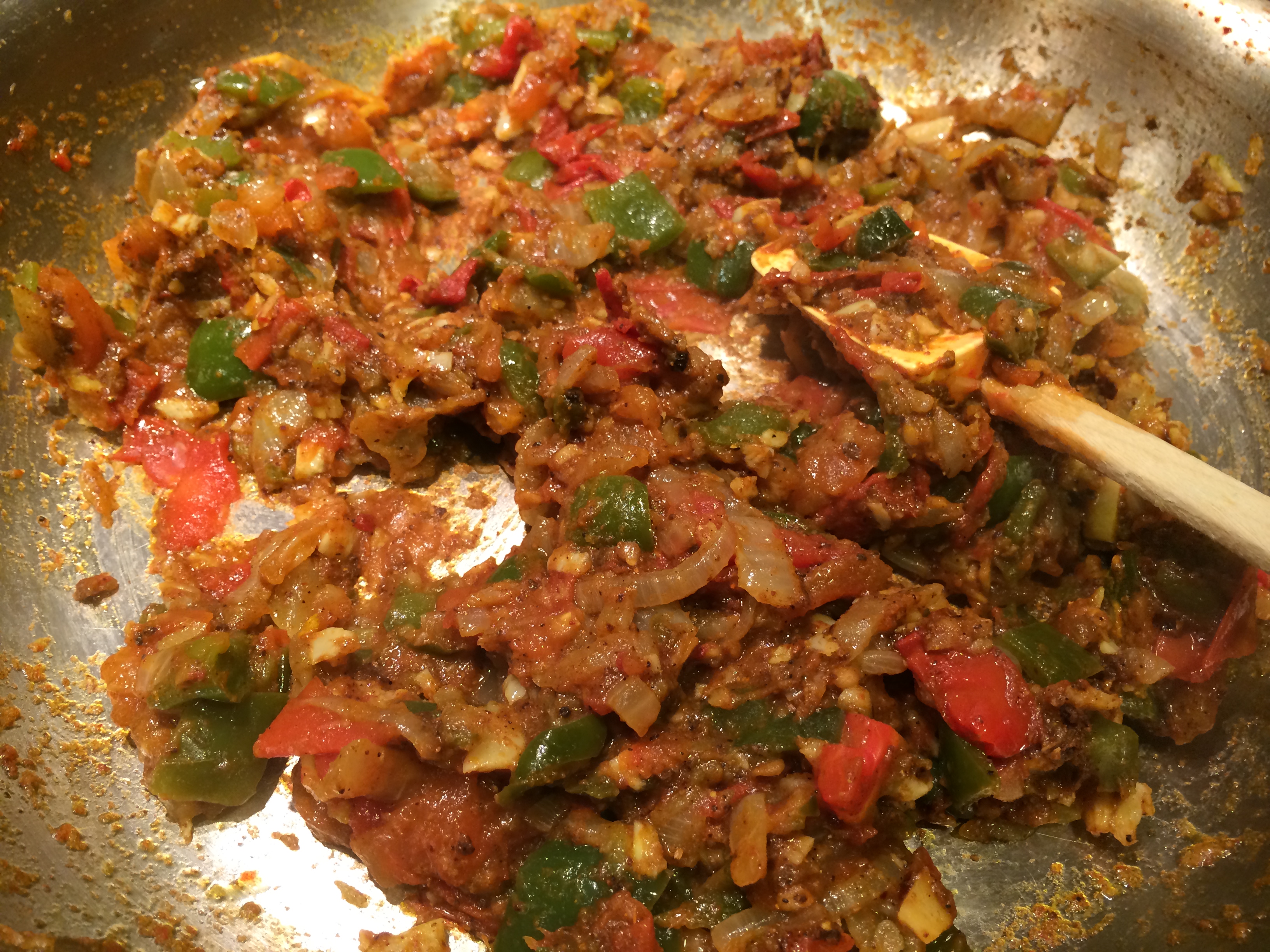
Meanwhile heat the ghee in a thick pan. When it is hot add the onions and bell pepper. Let them soften on medium heat for about 4 minutes. The important thing with the onion is that it must not caramelize — that adds a sweetness and brown flavor that does not go with this dish. Add the ginger-garlic-chili paste and stir, until the oil separates, which means the paste is cooked. Now in goes the tomatoes. They have to first liquefy then dry up. You can turn up the heat for this part.

Once they are dry, you can add the dry spices — the pav bhaji masala and the turmeric powder. Stir them in and cook for a minute. Plop in the mashed vegetables. Mash some more, cook for 10 minutes or so, gently stirring and mashing as you please, until they are well combined.

Give it a taste — now is the time to make adjustments. Adjust the salt. Add red chili if it is not hot enough. Add more ghee or butter swirled in on top for lusciousness.

Serve with pav bread, optionally sliced and toasted on the same pan, with a bit of butter. Garnish with minced onion and lime juice.

Let's connect... FB-f-Logo__blue_29 pinterest_badge_red Google+ twitter-button-small

Salad porn

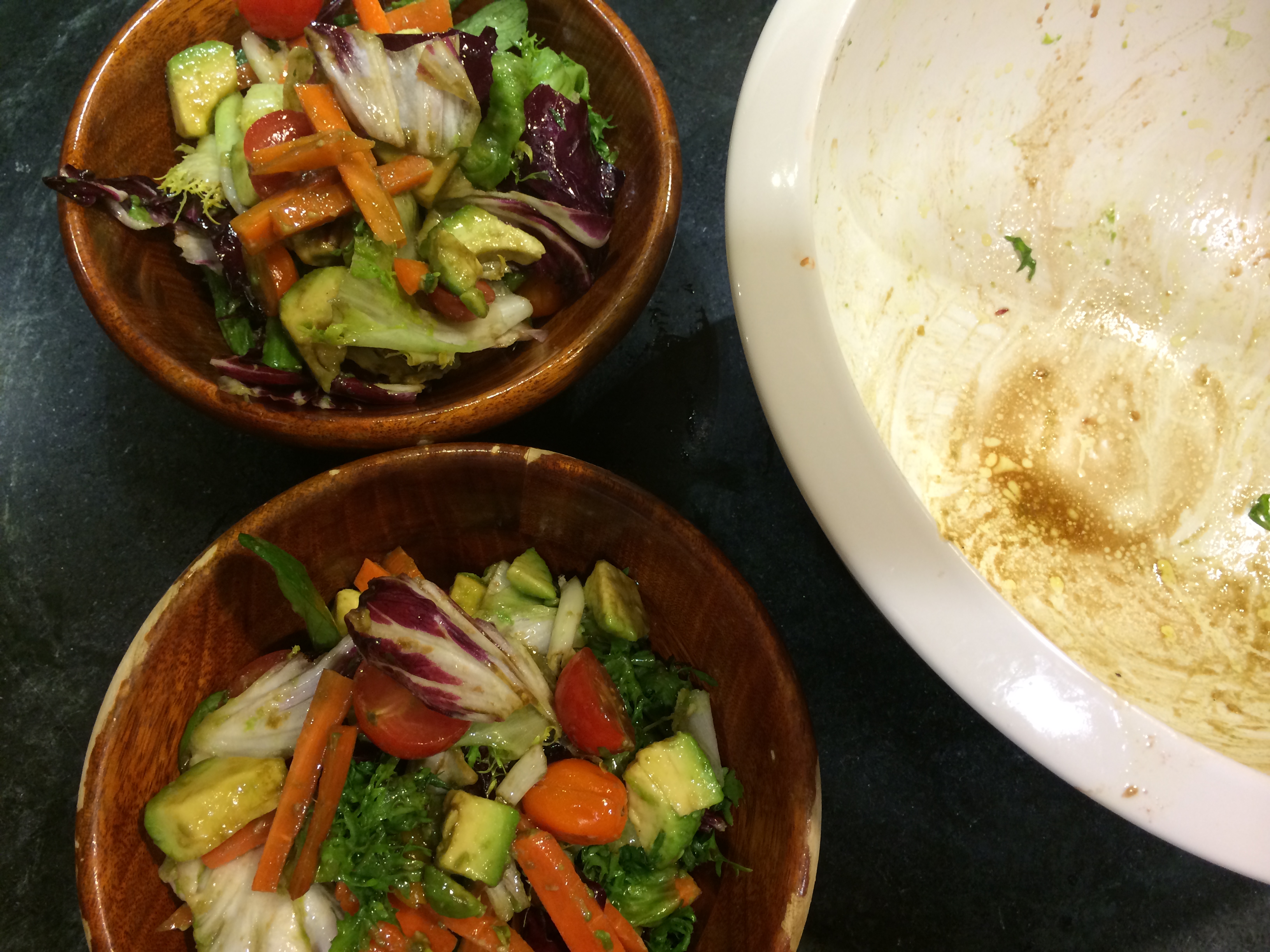
Porn = things that excite you to look at but you can’t touch. That’s what I have for you today, Dear Reader. Not much of a recipe, just pictures of a salad we made for dinner that came out particularly colorful. Lettuce is conspicuous in its absence. In it are bitter radicchio and frisée, cherry tomatoes, blanched green beans, carrots cut into sticks, and avcado.

san bruno 002

Dressed simply with a sprinkle of salt, toss, pours of olive oil, toss, and squirts of balsamic vinegar, toss. It went quick…

san bruno 004


The ? vegetable, roasted

Question

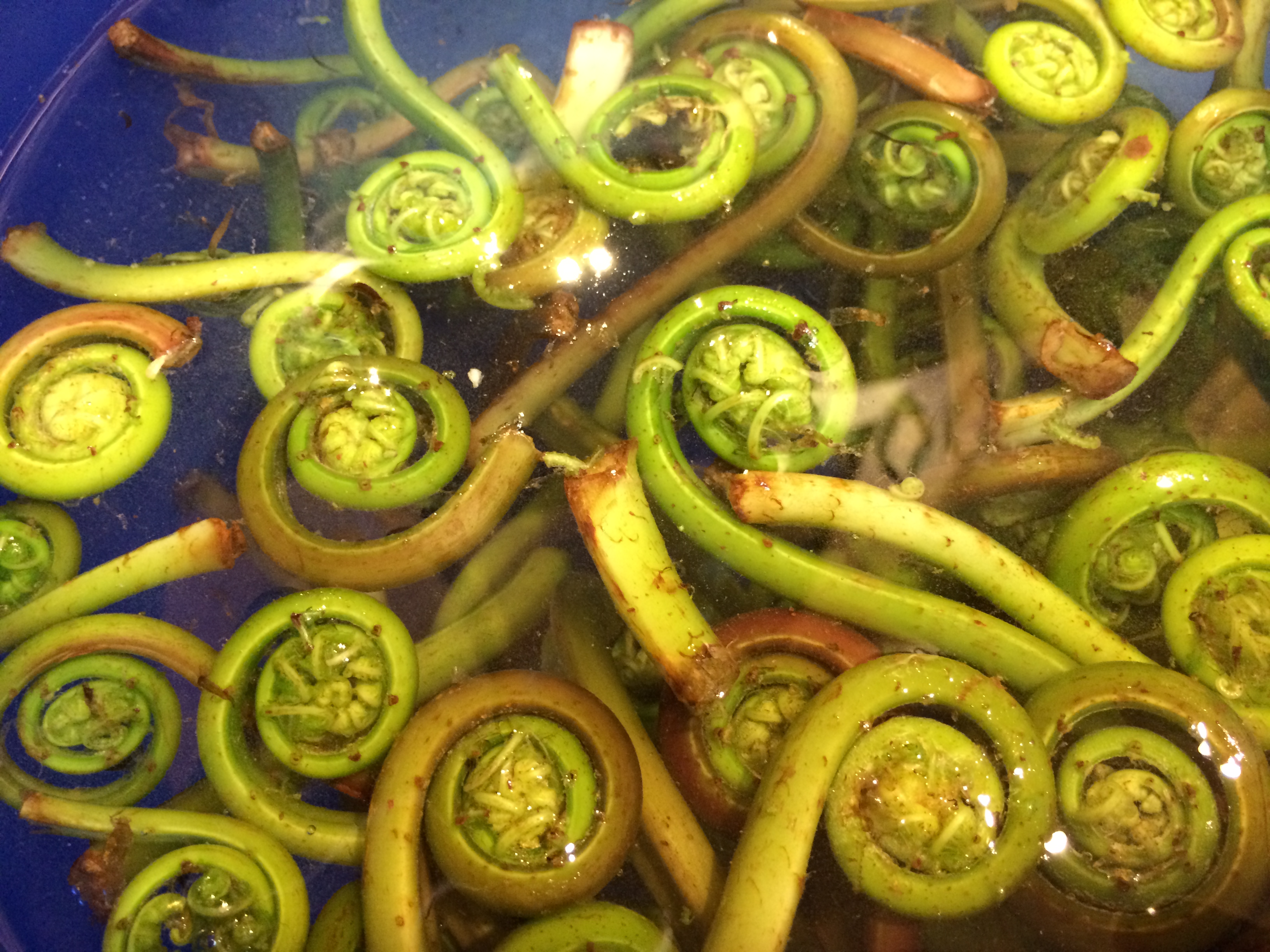
This vegetable taunts and beckons me every time I walk by it at the grocery store. I have earlier compared them to caterpillers or seaweed, but now I’m thinking it looks like nothing but a question mark.

What am I? it seems to say at the grocery store. Don’t you want me? And then when I break down under the emotional blackmail and buy some, the bag sits in the fridge untouched for a couple days while I wonder what on earth to do with it. What will you do with me, huh? they say. Why did you buy me if you have no idea what to do with me? Why? How? What? And more importantly, when?

A permanent rebuke, is what it is. But I’m no slouch. I don’t let a mere vegetable sit there passing judgment on me. I’m a food blogger, is what I am.

Thus fortified, let us try to seek the heart of fiddlehead ferns once again. Here is the first such quest. I think I did better this time.

Here is the thing about fiddleheads. Their flavor is often compared to asparagus, but I feel like it has a sort of medicinal sweetness like that of artichoke, which is enhanced by cooking. The fleshy part is quite scanty compared to that of an artichoke, and comes encased in a stem, the fibrous parts of which would be nice to crisp up. So — it would be nice to fully cook the inside and crisp up the outside. Last time I had tried sautéing it and noted the difficulty of getting it to take on a char that way. So this time I tried a different method.

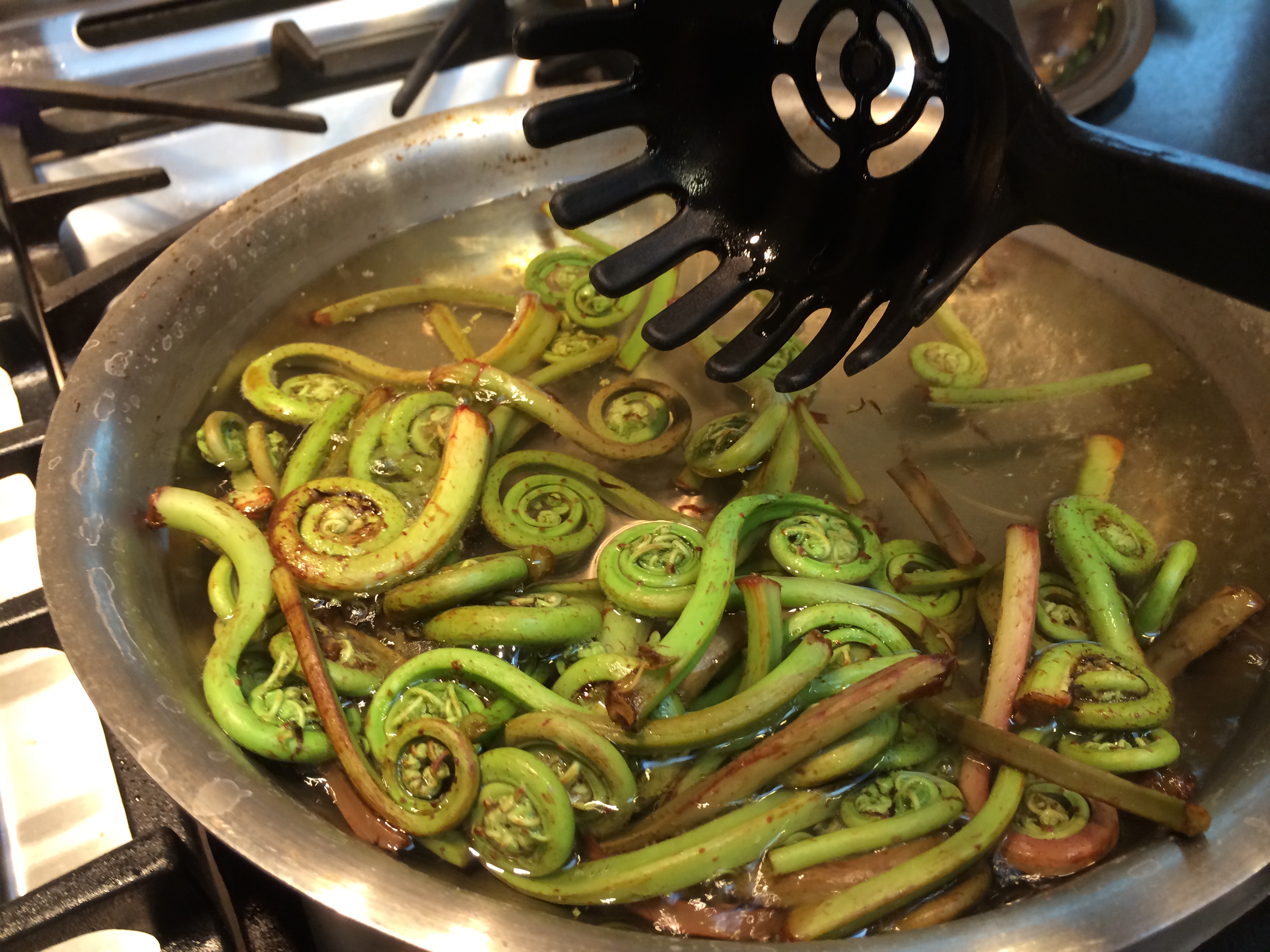
Blanching for 5 minutes to get the inside to cook. Then roasting in a single layer for the crispness.

Roasted fiddlehead ferns

You can see how it turned out. For me, it was finger food. Next time — add some chili powder and maybe lemon squirted on top.

Ingredients:
  • Half a pound of fiddleheads
  • 2 fat cloves of garlic
  • Olive oil — some
  • Salt — some
  • Coriander powder — some
Method:

IMG_1328 IMG_1333 IMG_1335Wash the fiddleheads by soaking in a tub of water and swirling it around and possibly rubbing the baby ferns gently. Bring about 4 cups of water to a boil and salt it. When it is boiling, put the fiddleheads in, bring to a boil once again, and let them blanch this way for about 5 minutes.

Fish them out. Lay them out on roasting pan. Cover with more salt and olive oil. Rub coriander powder all over. Place the two fat cloves of garlic tucked in in a  couple places, covered with oil also. Roast at 450°F open, for about 8 to 10 minutes. Halfway during cooking, pull it out and stir to turn most of them over.

IMG_1351IMG_1352

The garlic is also fully roasted by this point, and the paste from inside can be squeezed out like from a toothpaste tube. A teeny bit of garlic paste with a fingerful of crisp fiddlehead spindles — it was delicious.

For more information on fiddleheads (they are the immature fronds of ostrich ferns)  read this:

http://umaine.edu/publications/4198e/

and of course, don’t miss Wikipedia on the subject:

http://en.wikipedia.org/wiki/Matteuccia_struthiopteris

Is it a chutney? Is it rice? It’s both – cilantro rice

IMG_1349

I am very proud of my husband. He went from being a cilantro-hater to a cilantro-tolerator (only if it is minced fine), from there to a wary cilantro-liker (if used in the right dishes), to a must-have-cilantro-flag-waver (in some dishes), to an unabashed cilantro-promoter. The other day he informed me that someone had brought a dish of cilantro-rice to a work potluck. He thought it tasted very nicely savory and wanted me to try making it at home.

This is what marrying an Indian will do to you. Go marry an Indian, all of you — there certainly are enough of us around.

I know he will insist that I put in a disclaimer — that he still can’t stand cilantro that is un-minced and placed right on top of food in all its stemmy and leafy glory. So there you have it, disclaimer placed.

I had never heard of cilantro rice before. Given that I love cilantro and make chutneys with it all the time (here is one and here is another), and also that I’m constantly looking for ways to dress up rice, this is surprising. Cilantro rice marries these two interests. Now that the match has been made, this will be a staple in my kitchen.

Cilantro rice

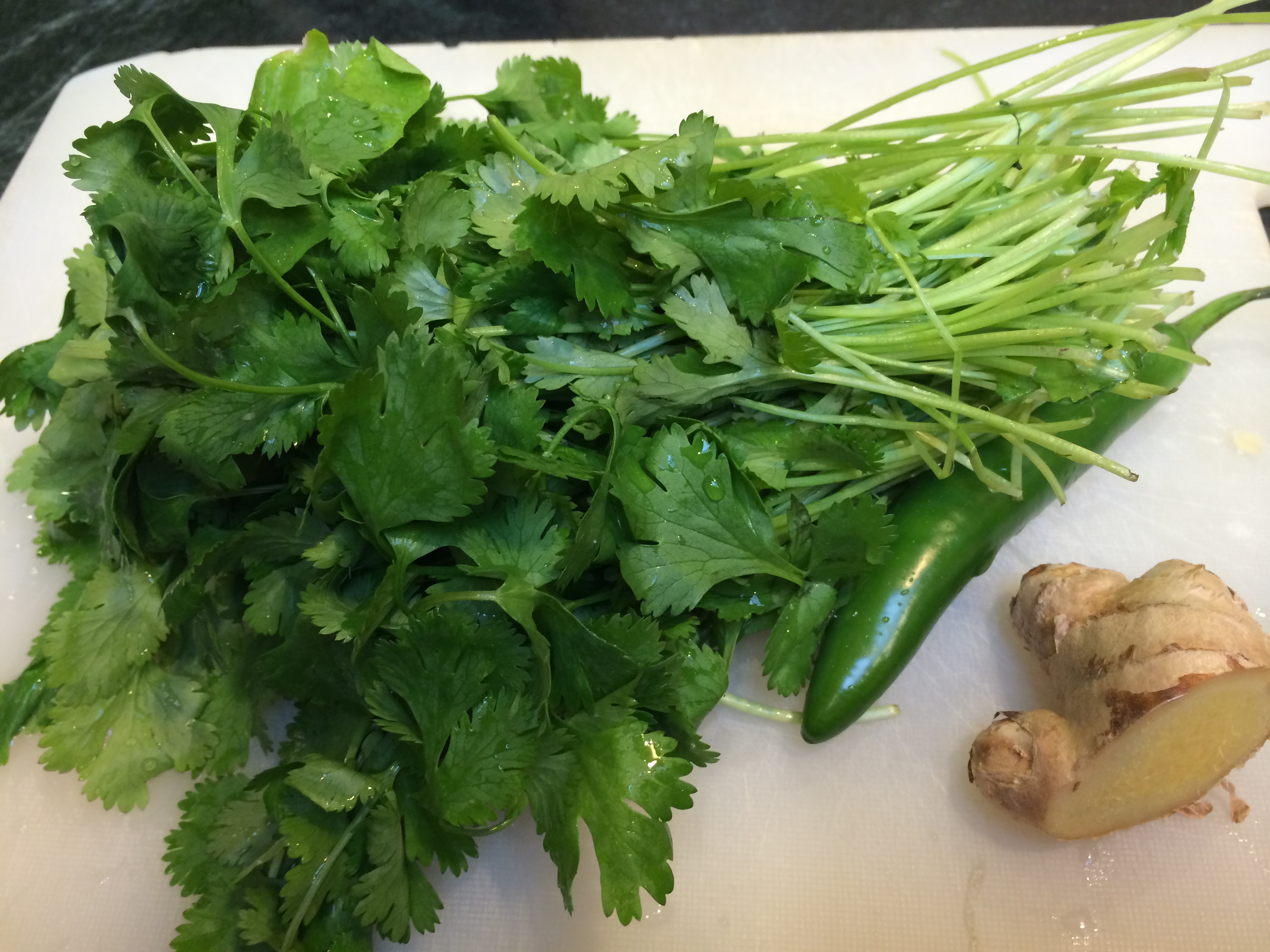
There are various ways to do this but I basically made a chutney out of the cilantro and cooked it then mixed in rice. You could simply mince the cilantro with a knife or not cook it.

Ingredients
  • 3/4 cup rice
  • Half a bunch cilantro
  • An inch piece of ginger
  • 1 – 4 green serrano chilies
  • 1/2 cup finely chopped onion (I used a shallot)
  • For tempering:
    • 1 tablespoon udad dal
    • 1 teaspoon mustard seeds
    • 6 or so curry leaves
  • 1/4 cup cashew
  • 2 tablespoons sesame oil
  • 1 teaspoon salt
Method

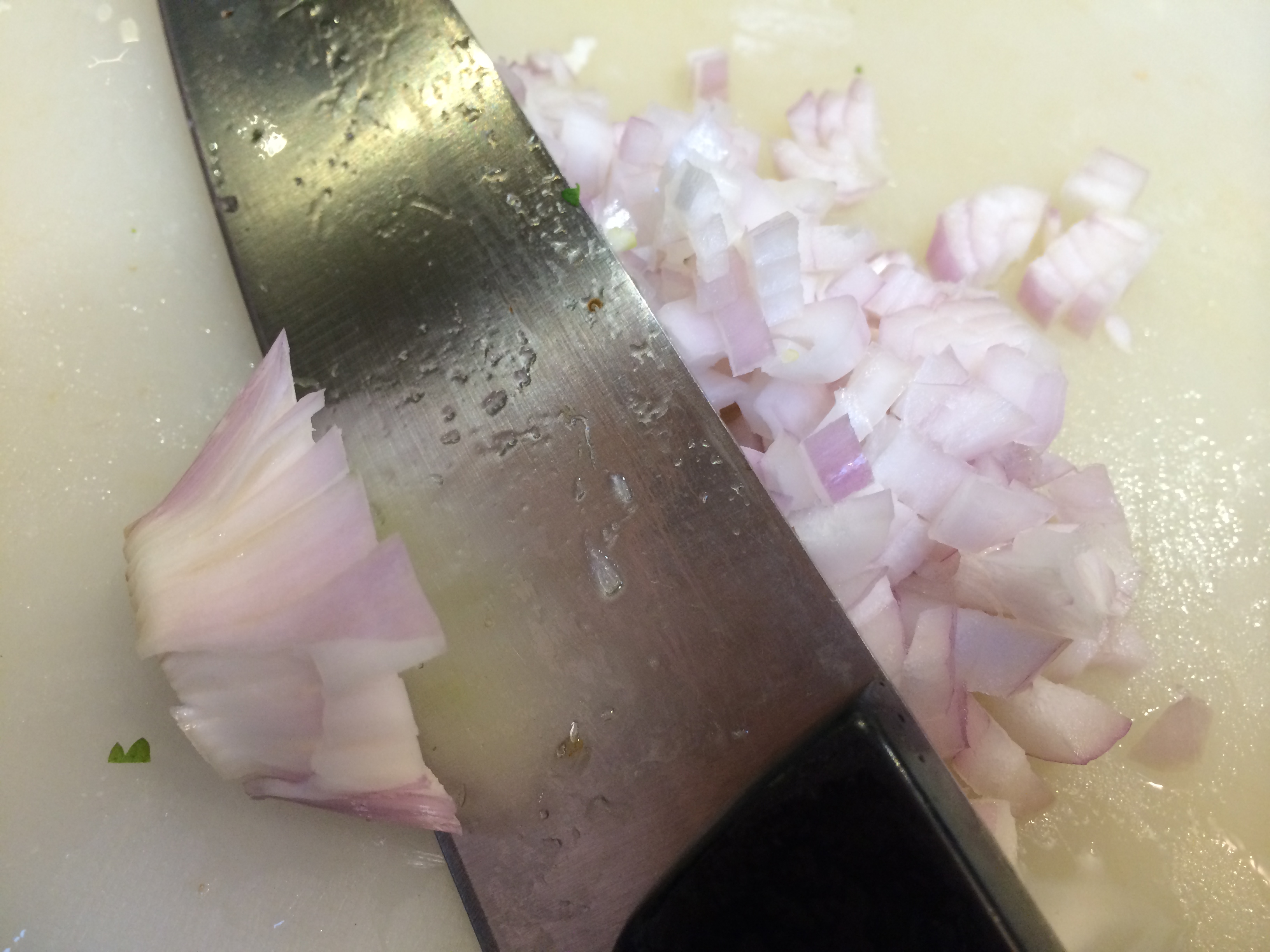
Cook the rice the normal way, but with somewhat less water than usual, to keep the grains from getting too mushy. Grind the cilantro, the chili and the ginger together using as little water as you can get away with — this basically means you are making a chutney. Finely chop the onion.

IMG_1326 IMG_1327

Heat the oil in a wide thick-bottomed pan on medium high. Throw the tempering items in in the following order: first, the udad dal, when it reddens the mustard seeds, when they pop the curry leaves. Stand back if you value your peace. Wait for the leaves to sizzle and be done.

Now in goes the onion. They will start to get translucent and start to redden at the edges.

Clear a little space to make a hot spot on the pan and put in the cashews. As they roast they will take on a few dark spots. This will take a few minutes; now it is time to put in the chutney that you ground before. Throw in the salt, cook the paste down for a few minutes.

IMG_1330 IMG_1345 IMG_1346 IMG_1347 IMG_1348

The rice goes in next. Break up the clumps with your fingers if need be. Stir to coat all the grains with the chutney. Cover and cook for a few minutes on low.

Here is the result — fiddlehead ferns on one side, squash raita on the other. They will come later.

IMG_1354

Country mouse and city mouse – buckwheat pancakes

IMG_0768

Some time ago I hiked up some hills around Lonavla with a friend. We were out having fun, well-prepared with our water bottles and GPS watches and clothes made of modern fabric that is apparently made from gasoline. Our feet were shod in lightweight sneakers that made the shards of rocks underfoot all but disappear.

Incredible views on all sides of us. Buddhist cave carvings from centuries ago ahead of us.

There we ran into a farmer coming downhill on the same trail as us. No gasoline-fabric for him. He had on his airy dhoti around his waist that he probably wore no matter what the situation. A light cloth wound around his head protected him from the sun. Thin as a rake, he walked on those hills as though he didn’t think about it too much, just did it.

I felt weirdly embarrassed. This man naturally belonged here, while we were interlopers from our fat happy internet-savvy world and we clearly didn’t. And he wore no shoes! Shards of rock or not, he was barefoot and scarcely concerned by it. At that moment my shoes happened to pinch a toe or two, and I thought to myself — if the farmer can go without shoes, perhaps I can too. Maybe the rocks are not as bad as they look.

So I tried walking barefoot, hanging the shoes from my neck by their laces. I couldn’t go four steps without hurriedly getting them back on again. Oh, the shooting pain! Tens of jagged rocks at any point poked right into my soft soles.

Marginal environments

As I watched the farmer keep his steady pace down the hill, I realized that although this man had probably never seen a computer keyboard in his life, he had mastered this marginal, mountainous environment and knew secrets about it we didn’t. He fit in here, while the only way we could was to drag paraphernalia from our fat happy internet-savvy world into it.

So…ah yes, buckwheat. Buckwheat is the farmer. Buckwheat grows on mountains with gravelly soil and practically no nourishment and does it six ways to Sunday. It doesn’t need much but gives a lot. Secrets — yes, it knows a few. It scorns pesticides and actively dislikes being coddled with fertilizers. It will grow quickly, produce quickly in a short season from June to September, swamp out the weedy flimflam, laugh blithely about insect pests, and produce a non-grain grain that will feed you all the essential amino acids. Count them — nine — all amino acids essential to humans.

Why a non-grain grain? Because it is a tiny seed and used as a cereal and ground and used as a flour. But it does not come from a grass, as grains usually do. Walks like a grain, quacks like a grain, but is not a grain. As I have gone over before.

Buckwheat certainly has a whiff of the old world. It grows widely in the Himalayas and is used for rotis and gruel. In Japan it is used to make the famous soba noodles. Kasha and blini in Eastern Europe. Immigrants brought this grain to America and in the 18th century 20 times more acreage was devoted to buckwheat than is now.

Then came the use of fertilizer — one of the inventions that fuel our fat happy Internet-savvy generation, and with it crops like wheat and corn that want coddling; and buckwheat was edged out. Makes you wonder what all that buckwheat was being used for, doesn’t it?

Buckwheat pancakes

Undoubtedly a big proportion of the buckwheat flour went into pancakes, given how delicious they are. In our family we were introduced to them via the hippie sensibility of Santa Cruz, where my husband lived for four years. Now they are a weekend staple. They go with maple syrup, but remember to use good, natural, golden maple syrup from the sap of maple trees, not the fake sticky one that comes from corn.

Dry ingredients:
  • 1.5 cups buckwheat flour
  • 1/2 cup white whole wheat flour
  • 1.5 teaspoons baking soda
  • 1 teaspoon salt
Wet ingredients:
  • 2 cups buttermilk
  • 2 eggs
  • 1/4 cup unsalted butter
  • almond oil for cooking
Method:

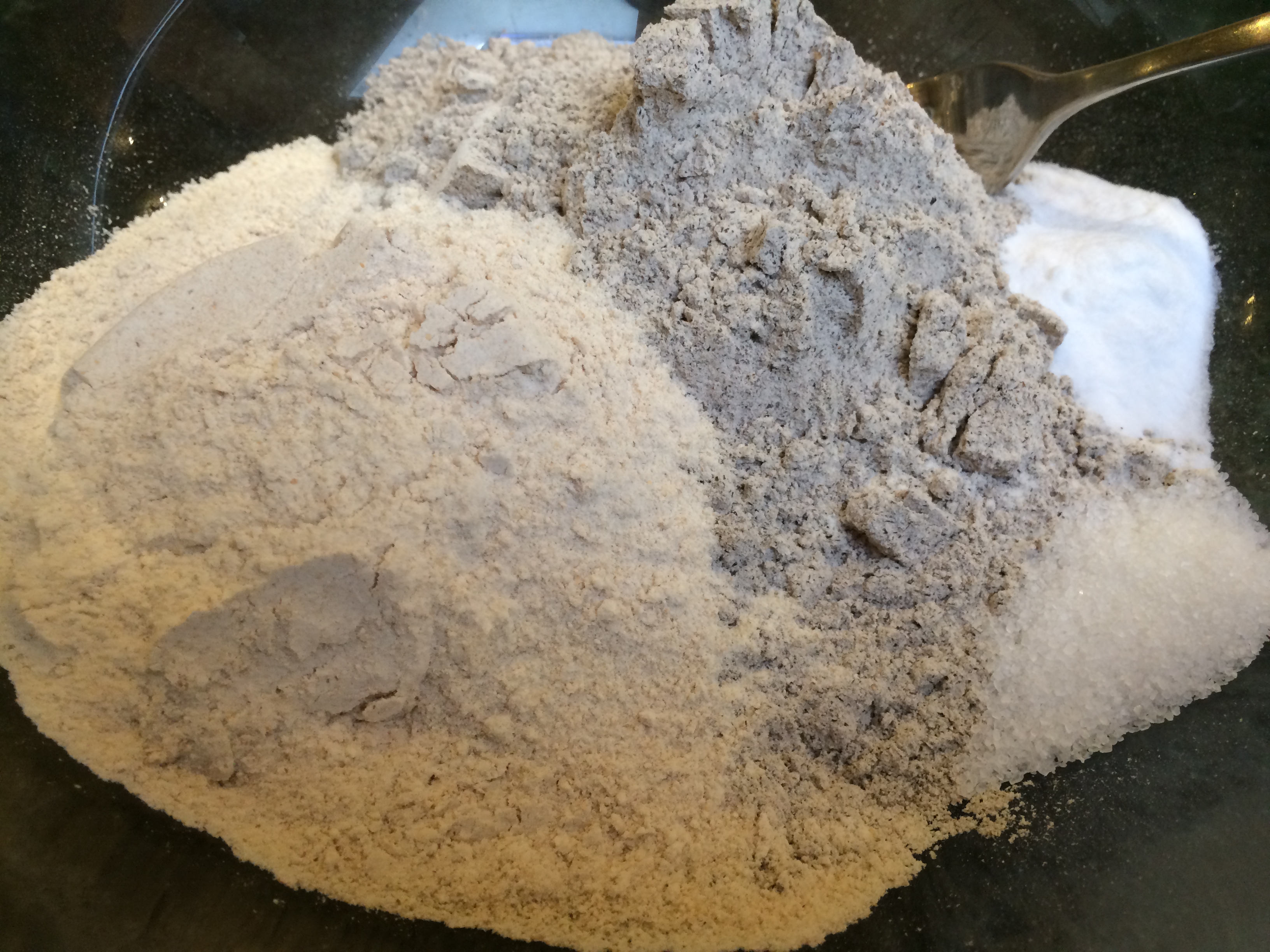
Stir together the dry ingredients in a large bowl.

IMG_0740

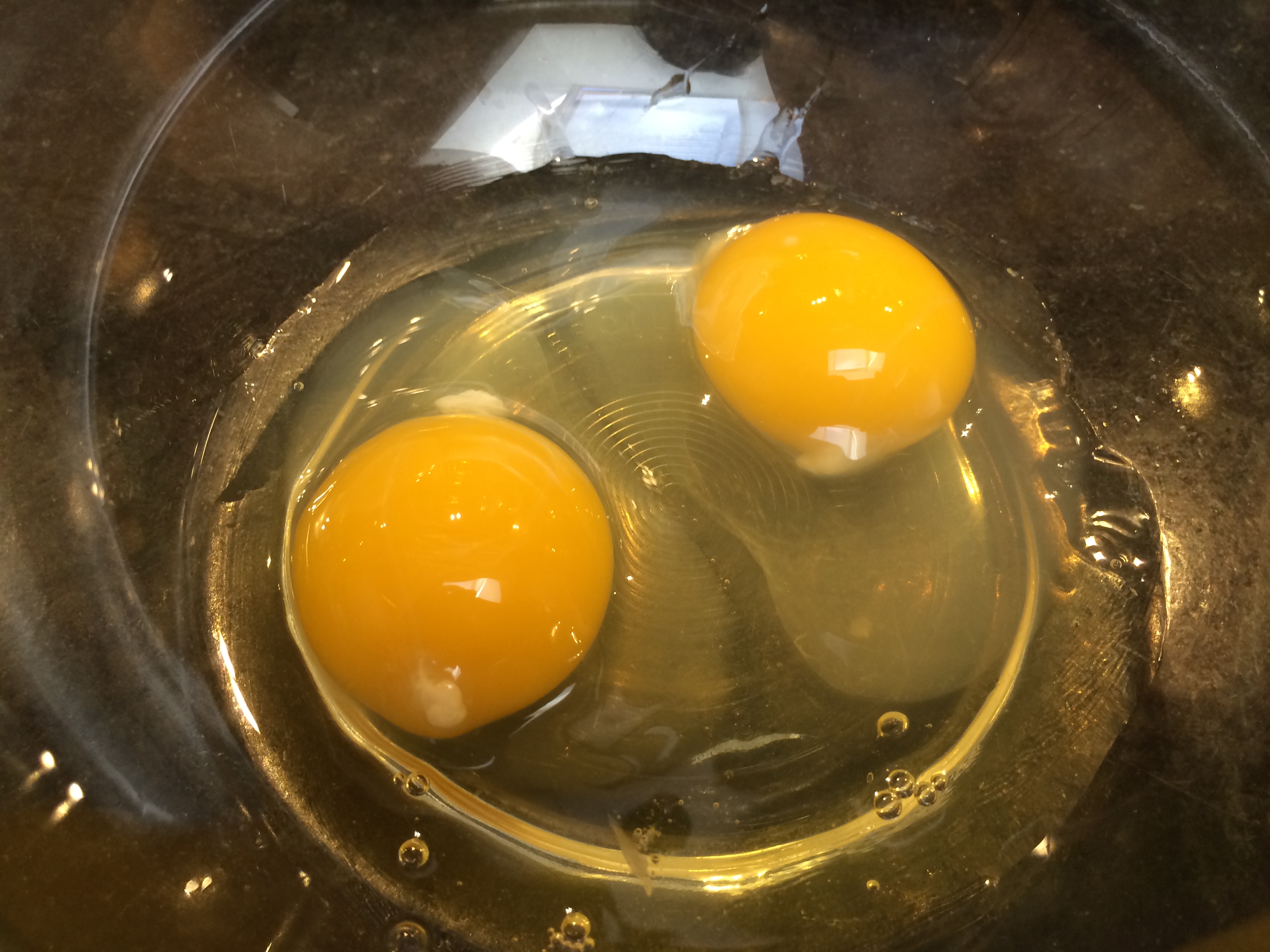
Meanwhile crack the eggs into a separate bowl and whisk. Then whisk in the buttermilk. Melt the butter and whisk that in as well.

IMG_0739 IMG_0745 IMG_0748

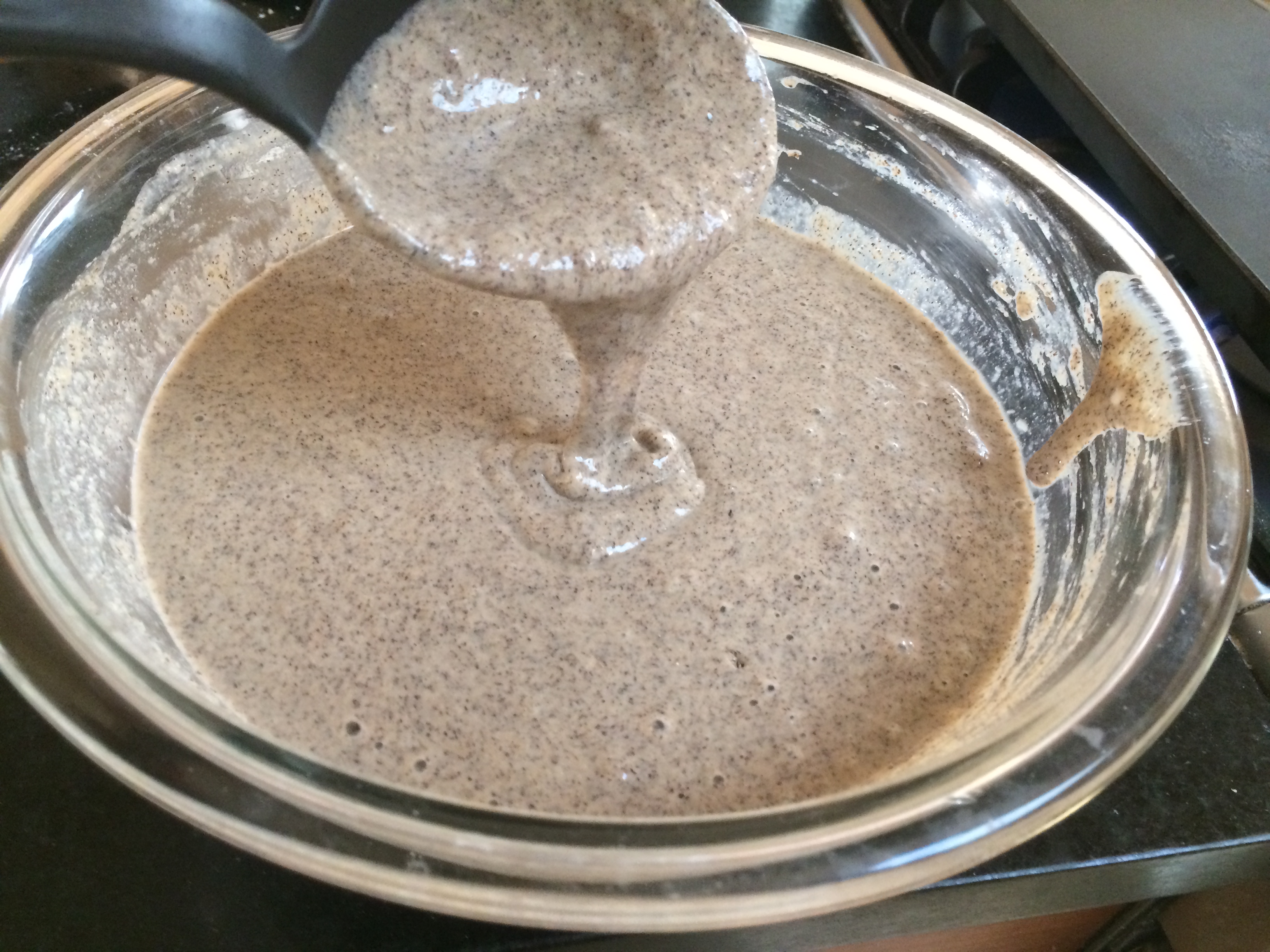
Now that the wet and dry ingredients are separately ready, it is time to combine them. Pour the wet into the dry. Stir gently. Most lumps (almost all) should be gone. The consistency should allow it to pour; you might find you need to add water. I usually add about half a cup.

IMG_0758

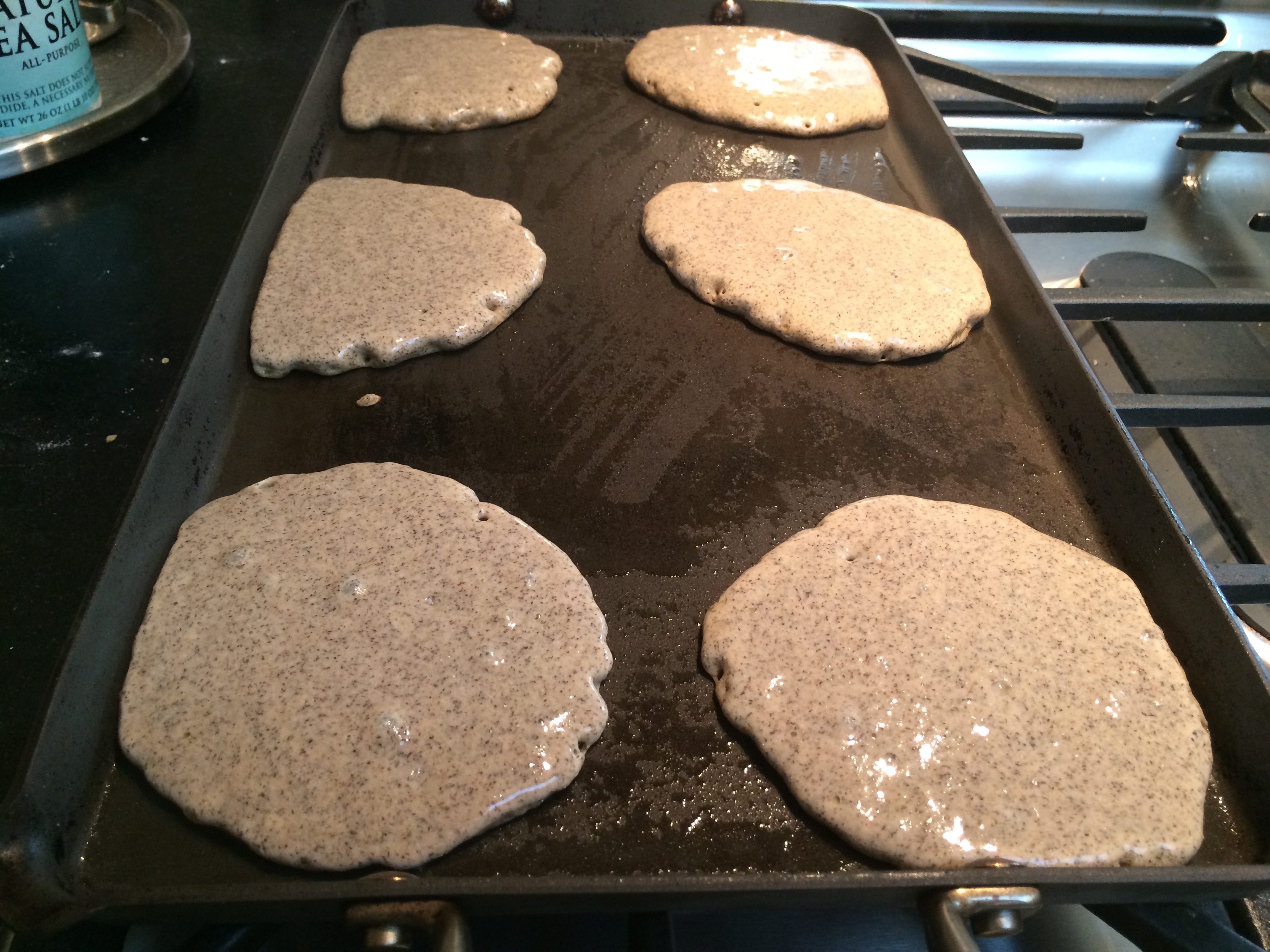
To cook, I have a large non-stick griddle on highish heat. (‘High-ish’ is the point between medium-high and high). We found that butter smokes too much so we use almond oil for cooking. It has a high smoke point and a nice aroma. A tablespoon of oil for each batch of six pancakes works nicely. Spread the oil all over. Pour six ladle-fulls on like shown, each should be about four inches wide. All told you will get about 20 such pancakes.

IMG_0759 IMG_0761

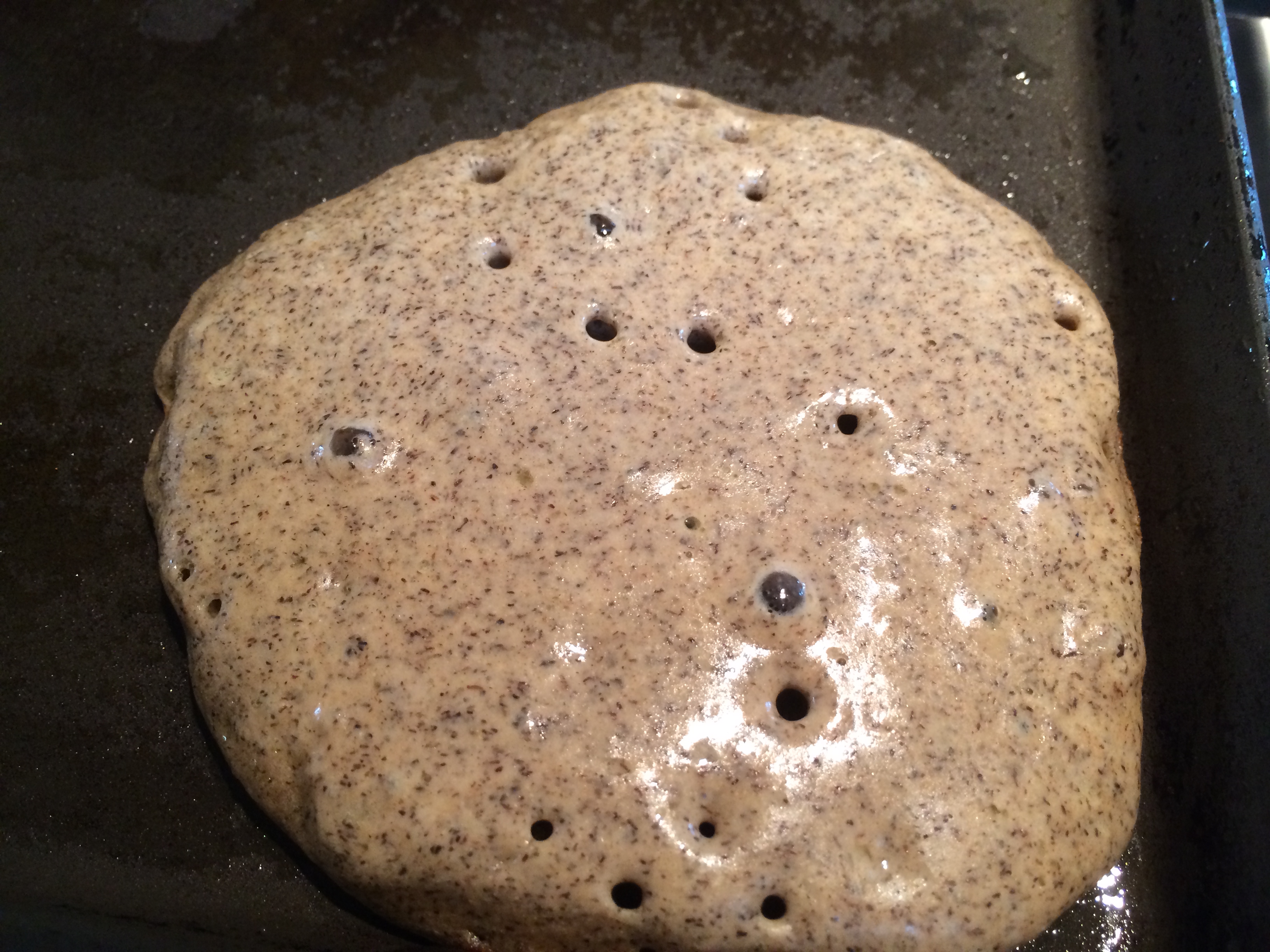
The time to flip each is when several bubbles have arisen and popped; and the edges look set. Flip and cook on the other side for 30 seconds to 1 minute; it will softly rise in the meantime.

IMG_0762 IMG_0763

Here is our nice pile of pancakes. City mouse (wheat flour) meet country mouse (buckwheat).

IMG_0766


Getting off the curry train

India

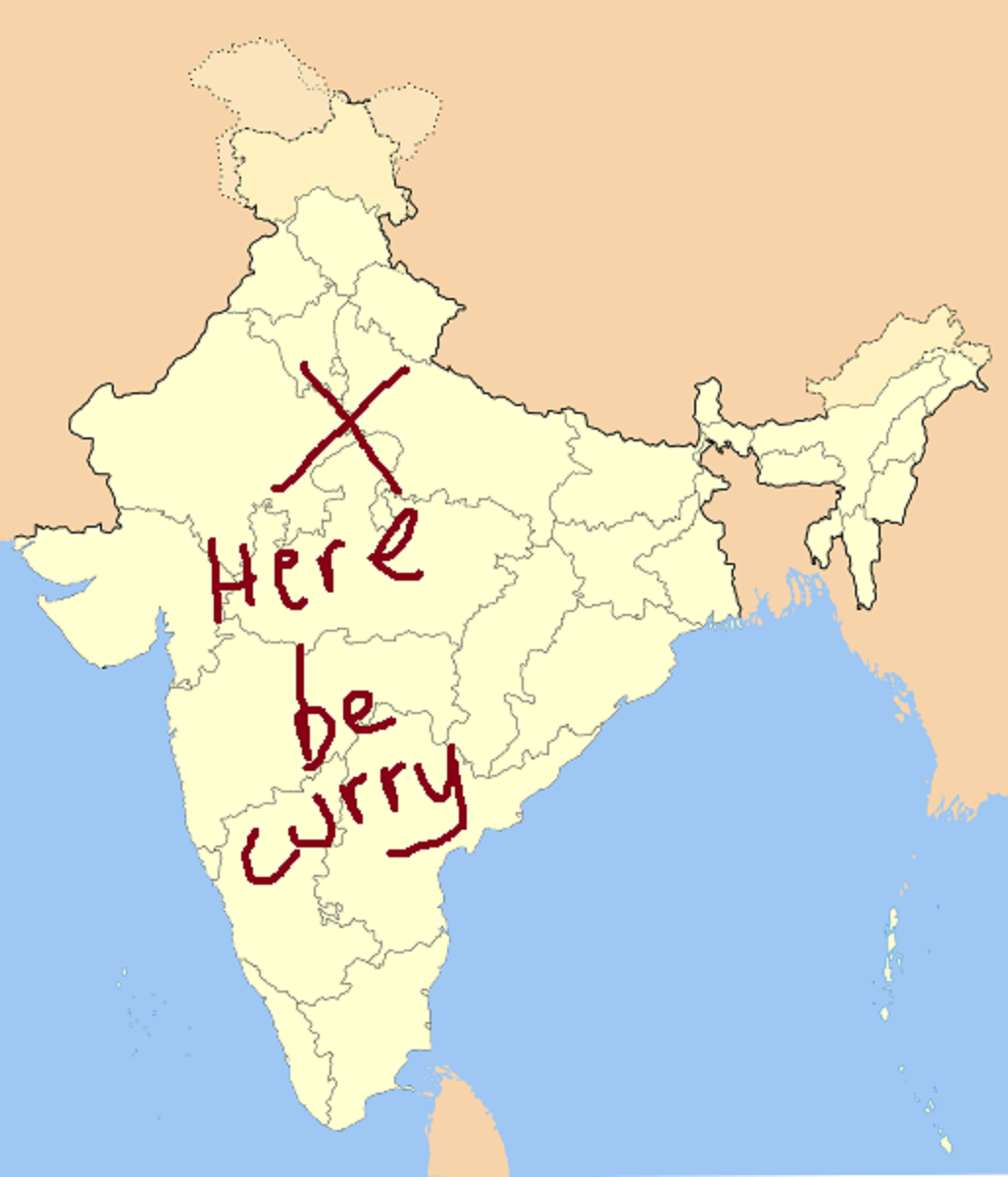
I’m sorry to go all dramatic so soon in the blog post but do you know how there was this guy called Captain Ahab who had sworn revenge on a whale? Sometimes I feel like that when accosted with the word ‘curry’. Seems like an innocuous enough word…and descriptive, so why do I hate it so much? Let me tell you why. It is not descriptive and it is certainly not innocuous. It obfuscates, mystifies and conflates things. And if you think about it, that is exactly the opposite of what language is supposed to do.

Why do I hate the word?

I hate it because it is a word the British made up from half-heard scraps to vaguely signify the entire cuisine of a sub-continent. It is sometimes used as a generic term, but it promotes the notion that all Indians eat a single dish with a single spice mix in it. I hate it more when Indians use it to communicate with English-speakers. Sorry, people. I hate it.

Some ‘Curry’ meanings

People use this word in different senses.

  1. Curry as a Particular Dish: Do you make Curry, people will ask me, or claim to love Curry. I don’t have to spend too much time on this meaning because clearly, Indians don’t all just eat one dish, all billion of us, day in and day out, week after week.

  2. Gloopy Spicy Dish: Moving on. Some people use it to mean: any gloopy, reddish brown, spicy dish. Then the question arises: how many spices? If you stick a bay leaf into a beef stew does it become a curry? It is gloopy and reddish-brown. What about gumbo with its filé? Some Indian dishes may be green, non-gloopy, with merely garlic and mustard seeds in it, is that still a curry? I believe that people who use it in this sense are afflicted with Indian-Restaurant-itis. It is the condition of being mainly familiar with Indian food through the means of Indian restaurants. It is not their fault — it is that Indian restaurants outside India (with a few exceptions) insist on putting everything into everything and turning everything into an indistinguishable, reddish-brown mess. That thing — that indistinguishable mess — is a curry.

  3. Asian Saucy Dishes: Sometimes the word is used to identify dishes from all over South and South-East Asia that consist of some kind of spicy, saucy thing with floaters in it. Here I must simply plead lack of clarity. That subsumes so much variety as to not be a very useful word. It is as if all baked items from the Western world — including bread, muffins, pies, cakes, croissants — all were called ‘bakies’.

  4. A Single Spice: People will often ask me if a certain dish has curry in it. Needless to say, there isn’t a single spice called ‘curry’. Yes, there is a herb used all over South and Central India called ‘curry leaf’ or more properly, ‘kari leaf’ (Murraya koenigii). Red herring alert! This herb does not make your dish spicy. It adds a sort of herbal or grassy flavor to it. It has nothing to do with the spice mix sold as ‘curry powder’. It is not the main ingredient of it, or even an ingredient. In fact, you can’t use these leaves in their dry form at all, they do nothing. They must be used fresh and thrown into hot oil to get their flavor into food. They add a very subtle flavor, and in my opinion, are better left out than substituted.

Curry leaves

Curry leaves

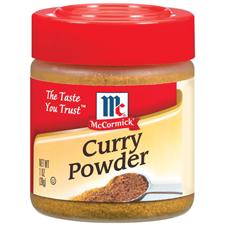
  1. A Particular Spice Mix: As a spice mix called ‘curry powder’. Far be it from me to deny that such a spice mix exists — you could easily go to any grocery store aisle and prove me wrong. I must only insist that this spice mix is British, not Indian.

curry powder

During the Raj the British brought tea to India and took away a notion of savory dishes made of a mélange of onions, ginger, garlic, coriander, cumin, and turmeric. As this blog post explores, cookbooks from the seventeen hundreds had started to experiment with Indian ways of cooking, say, chicken, using onions, ginger and turmeric. By the eighteen hundreds though, a standardized curry powder had replaced the powdered ingredients.

Here is a very early advertisement for Curry Powder: This was being sold to households as ‘exceedingly pleasant and healthful’. Any dish made that used it, apparently became a curry.

First British advert for curry powder from The British Library

First British advert for curry powder from The British Library

Needless to say, Indian food does not use a single spice mix; or necessarily a specific mix at all, most of the time, spices are thrown in whole. Some famous dishes (e.g. sambhar; pav bhaji) have gotten attached to their specific combinations; other specific mixes are used for special needs (garam masala; chaat masala). Often times the spice mix is a paste. Most of the time there is no mix at all, but just spices.

So what does curry mean — do you see what I mean by obfuscation and lack of clarity?

In which I play whack-a-mole

One of the reasons the word ‘curry’ has become such a fixture is that weirdly, there are a number of words all over the subcontinent that vaguely sound like ‘curry’. This makes people nod happily at the word, thinking it is an Anglicization of the one that is most familiar in their language. Most of the words below, by the way, are mostly unrelated to each other, and most have at one time or another claimed to have been the origin of ‘curry’.

A. Kadhi: There are the many ‘kadhi‘ preparations in the north which involve roasting chickpea flour and yogurt. This preparation is not highly seasoned, usually, but rather, mild and yogurty. This comes from a Sanskrit word meaning “boiled stuff“.

B. Tarkaari: In Nepal or thereabouts, tarkaari is the vegetable side that accompanies the daily meal of rice and lentils.

C. Kari: Tamil has a word kari which means black or blackened. Over time this came to mean grilled; then, stir-fried. Tamil uses two types of ‘r’ sounds, this one is the softer one.

D. KaRi: This is the second, unrelated Tamil word with the harsher ‘R’ which means ‘meat’.

E. Carriel: The Portuguese colonized India before the English did, and by the sixteenth century they were claiming that Indians ate something called Carriel. This is reported by a Dutch traveler named Jan Huyghen van Linschoten, He spent time in Goa and this is how he describes food there: “Most of their fish, is eaten with rice, which they seeth in broth, which they put upon the rice, and is somewhat sour, as if it were sodden in gooseberries, or unripe grapes, but it tasteth well, and is called Carriel, which is their daily meat.” Is this from the Tamil kari meaning blackened or grilled? or from the Tamil kaRi meaning meat? This word, Carriel, is still used in Goa in a sense similar to Curry.

There is a pervasive piece of misinformation that first appeared in the  Hobson-Jobson Anglo-Indian Dictionary in 1886, and subsequently has been spread throughout the Interwebs by Wikipedia: this is that Curry comes from the Tamil word ‘kari’ meaning sauce. As I listed above, there is no word ‘kari’ that means sauce in Tamil. Since English does not have the other, harsher ‘r’, we do not know which ‘kari’ they meant.

On the other hand, perhaps the English were already experimenting with ‘curries’ before they ever came to India….

The Forme of Cury

The Forme of Cury

F. Cury: Way back in the 14th century, a cookbook published by King Richard II’s cooks, which contained 196 recipes, was called ‘The Forme of Cury‘. This was way back before colonization ever happened…this word is from the French root ‘cuire’, the same as ‘cuisine’.

Interesting. The mystery deepens.

Here is an article that delves deeper into the history of the word. And another. And another.

So what word to use instead?

Ah, language. I tend to use the word ‘gravy‘ for wetter preparations, such as ‘potatoes in tomato-garlic gravy‘. This is the word we used at home. For drier preparations, I might use the word stir-fry or sauté. In general though, most of these dishes use the method of braising, so that word is usually fitting. ‘Stew’ works too. Spicy stew perhaps?

Help, I feel another rant coming on. ‘Spicy’ does not mean ‘hot’ as in chili hot. Somebody stop me please.

A pair of awards….

I just got a blog award!

I just got a blog award!

Do you know why this guy is happy? He just got a blog award!

Actually it was me that got it. And I got two…from my lovely blogger friends.

The WordPress family award from Chef Divya from Divya’s Indian Cookbook. She has lovely homey recipes, each one of which I want to try. You must check out her blog. Thank you chef! Here is a chef’s hat for you to show my gratitude.

Chef's hat from http://www.chefwear.com

Chef’s hat from http://www.chefwear.com

And a Sunshine award from Apsara of Eating Well Diary. Her focus is vegetarian food. With each recipe she has an eye to its nutritional properties. A true Apsara! Here is a traditional Cambodian Apsara dance for your enjoyment Apsara!

Then, I get to display these proudly on my blog….

wordpress-family-award wpid-11-cosmos-under-blue-sky-cosmos-flower-under-sunshine_1440x900_69080

I am supposed to answer 10 questions…

1. Why did you start blogging?

I cook a lot and experiment a lot and I thought putting things on a blog would help me remember what I did last. It hasn’t.

2. Sweet or savory?

For food, people, experiences, travels, books and children: savory. For music: sweet.

3. If you were to go on any reality TV programme, what would it be and why?

The Apprentice, so that I could be fired personally by Donald Trump. No wait — it is because that is the only reality tv show I ever watched.

4. What was the last thing you Googled?

“Blog awards”

5. Night out or night in?

Depends on who with.

6. What has been your favorite blog post to write?

The one that is yet to come. It will blow your mind. Hold on to your hats.

7. What is the one thing you never leave home without?

My heart. I have heard songs like ‘I left my heart in San Francisco’ and I can’t imagine a worse fate. Even though I live there.

8. Where would you most like to travel to?

The Amazon rainforest.

9. If you could have any super power, what would it be?

To be a fly on any wall I choose, spy on people’s lives, then write stories about them.

10. What can we expect to find on your blog in the future?

Posts.

There, that’s taken care of. Now to pass on the award to my fellow-bloggers…how exciting! In no particular order:

1. Kitchen Counter Culture. Annie has an interest in fermentation like me. Maybe some day we will have a transcontinental collaboration and lob microbes at each other across the ocean. She writes often about the politics surrounding food. This is important.

2. Creative Cravings. Ramya pays attention to ingredients and shares that knowledge. This is important too.

3. Mohabhoj: The author dispenses with the traditional recipe format in favor of descriptions. And to be honest, who always needs recipes? Sometimes all you need is an idea.

4. Feeding the Sonis. Sanjana has an entertaining style, and oh yes, recipes too.

5. Yummy Mummy’s Kitchen. Ostensibly a food blog, the author tells stories about her life that I enjoy reading.

6. Sham’s Kitchen. Home-based South Indian cuisine. Northern too. If I could make everything on her blog I would be an expert.

7. Vegetarian Nirvana. I like her sense of style in her photographs. I could learn from that since I sorely lack any.

8. 1861: A blog in the true sense of the word…a log of events and thoughts on the web. About food.

9. The Garden Pond Blog. No, not about food. But we have a garden pond and I found it useful.

As for which award goes to which blogger…both go to all. How persnickety do you think I am?

A seedy family full of custard

Today in Better-Know-A-Fruit…I will show you some family pictures! This is a family that has origins in Peru and Ecuador, but has pretty much settled all over the world (like a lot of us nowadays), so no matter where you live, you might be familiar with at least one of its members. I have also included my rather dramatic new attempt at an Internet quiz.

Here is the cherimoya (Annona cherimola). This one is as big as a baby’s head. Found all across Latin America, the flesh is studded with hard black seeds that one must spit out; and white flesh so delicious that the seeds can’t stop you from getting at it. They may try, but they won’t succeed.

IMG_1283 IMG_1080 IMG_1081

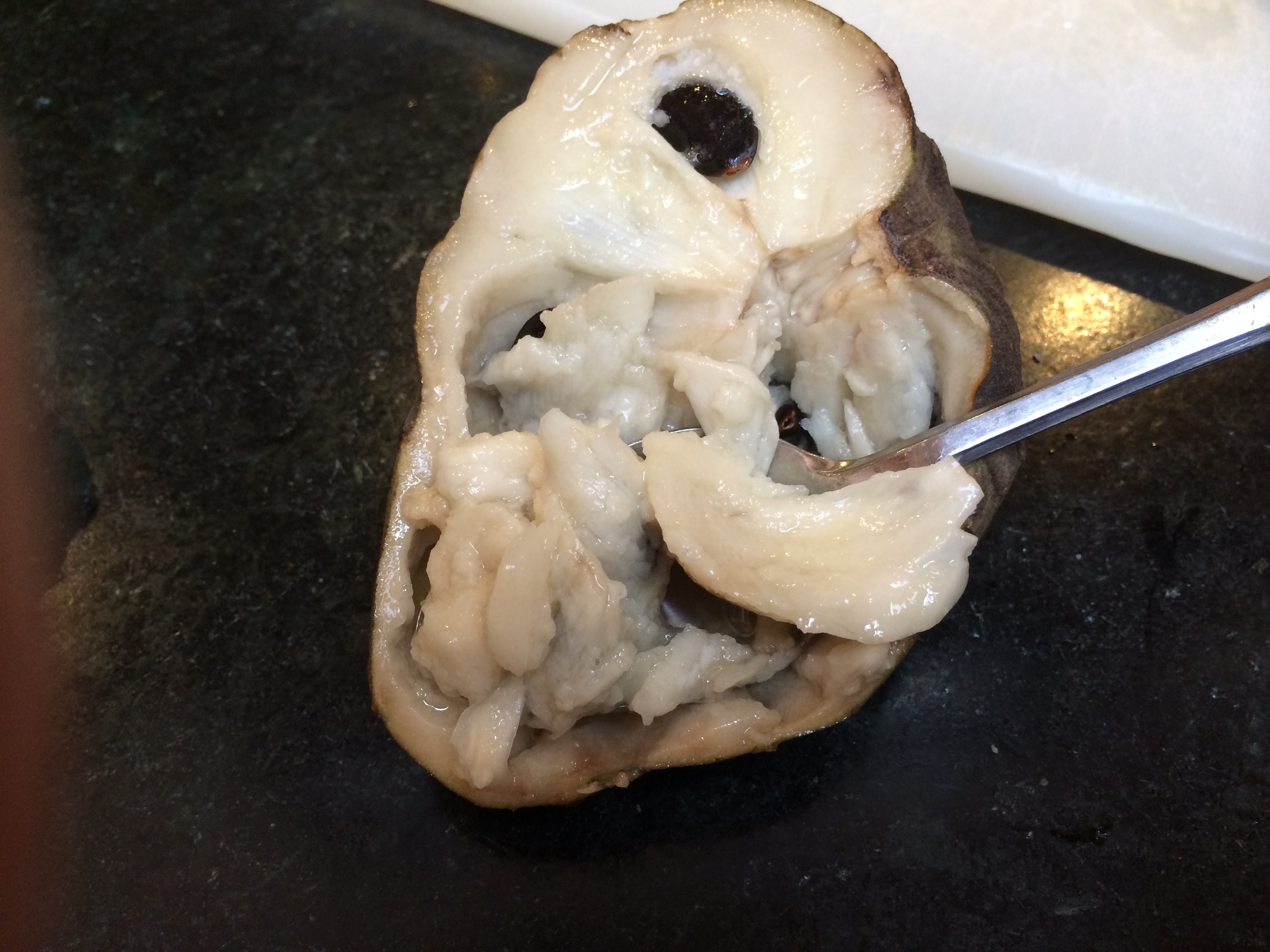
Here is the custard-apple, sugar-apple or Seetaphal (Annona squamosa), found all over Asia. When it is ripe enough one applies very gentle pressure and splits the fruit apart. The off-white custard is studded with seeds. As with the cherimoya, one scoops the flesh up with a spoon as though you are eating ice-cream, and spits out the seeds.

Seetaphal or custard-apple

Seetaphal or custard-apple

Factoid: Seetaphal does not mean ‘Seeta’s fruit’ as the name suggests — Seeta being the heroine from the Hindu epic the Ramayan — instead, the name comes from the Sanskrit root meaning ‘cool fruit’ because of its temperate growing needs. Interestingly, the word ‘cherimoya’ comes from a Quechua word that also means ‘cool seeds’.

The Seetaphal was introduced in India by the Spanish in the seventeenth century. Its fortunate name that made it sound like it hung around Indian forests way back in the days of the Ramayan has lent it a very homey cachet. So when relatives of the Seetaphal were found, of course more characters from the Ramayan were used to name them.

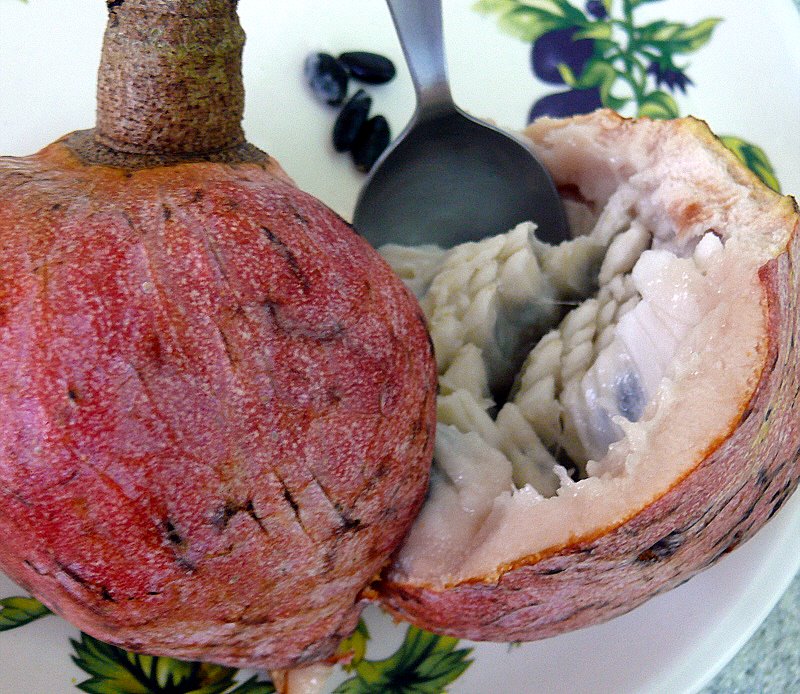
The next fruit in that family they named Ramphal (Annona reticulata). This is the larger, redder and I guess more masculine-looking? version of the Seetaphal. Also known as the wild one of the pair, it is not as tasty as the Seetaphal. Some call it the bullock’s heart, you can see why.

Ramphal

Ramphal

Given that there is a Seetaphal and a Ramphal, could the Lakshmanphal be far behind? This is the graviola or soursop (Annona muricata), known as Lakshmanphal in India. This is now grown throughout the tropics. The flesh is slimy and white just like its cousins, but strangely sour. There have been grand claims made about its ability to cure cancer and conspiracy theories thrown around about corporations that are keeping the news of this medical miracle from us. Status of its cancer-killing claims: undetermined. So whether it cures cancer is unknown, but there are reports that too much of this might actually cause Parkinson’s.

Lakshmanphal / soursop

Lakshmanphal / soursop

Next is the delightfully named paw-paw (Asimina triloba). Not only is this actually one of those rare fruits that are native to the United States, it is actually the largest edible fruit native to the United States. Chew on that for a bit…but do spit out the seeds. Of course the yellowish, custardy flesh of the paw-paw comes studded with seeds also. This fruit does not ripen off the branch and does not keep well; hence, it is not often found on grocery shelves and must be foraged for. You know who else foraged the paw-paw? Lewis and Clark, that’s who.

Paw-paw

Paw-paw

An even more delightfully named ylang-ylang — but we only care about the flower this time. This flower is so fragrant that it has found its way into the rather well-known Chanel No. 5.

That was the Annona family, now for a slightly more distant cousin. Australians may be familiar with this one. The Bolwarra or the native guava (Eupomatia laurina) is another one of those seed-studded, pulpy, custardy fruits that the flesh must be scooped out of. This is often used in jams, jellies and beverages. I have never tried it myself, so, much as it would delight me, I cannot report first-hand on what it tastes like raw.

Like all families these fruits share certain traits. The custardy flesh tends to have floral notes like that of roses. As soft as banana or avocado flesh, it is faintly gritty. They would not work well in fruit salads but would be great in ice-cream. They must be eaten when fully ripe, but when overripe they start to ferment and taste slightly alcoholic. These fruits tend to have a cone-like or bulb-like appearance, and to me look sort of like a clenched fist atop a super-thin wrist.

Botanically, these fruits are interesting too. They tend to have fragrant flowers (remember the ylang-ylang?) because they need to attract beetles by their scent, in order to get their…ahem…male parts into their female parts. Pollination, for the squeamish. The other champion pollinators of the insect kingdom — the bees — these plants have no use for. They were invented before the bees, do not produce nectar for them, their flowers don’t accommodate them, and are basically invisible to them.

Did any of you wonder why these bloody fruits absolutely must be studded everywhere with seeds? Couldn’t they at least try to be convenient like the other fruits and cluster the seeds in the middle? No — because they aren’t a single fruit at all. Millions of years ago separate fruit in these plants got fused together into one — so they are all aggregate fruits.

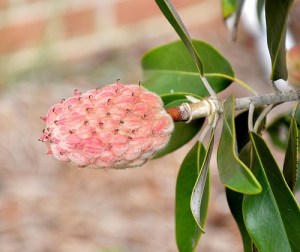
Now for the quiz! Excitement! Big font! Flashy gifs! Here is a relative of this seedy family that should be a rather familiar sight to most North Americans. This one is not edible though unless you are a bird. Can you guess what it is?

55e24851fb31b1288a045c9a474d983d

Click on this link to find out! If you guessed right award yourself 14 Odd Pantry points. That’s right, 14! Aren’t I generous! You can redeem them at any time by writing to: The Editor, The Odd Pantry, the Internet.