Exploring the vegetarian gumbo

Vegetarian gumbo

Vegetarian gumbo

I met a lady from Louisiana over Thanksgiving at my in-laws’ place. Of course, I asked her about gumbo, it being the only thing I know about Louisiana, other than that Louisianians are sometimes inclined to place their banjos on their knees. Well, I’m glad I asked. In her lovely Louisiana accent, she related the story of a dish amalgamated from three different cultures, that has become one of the touchpoints of Cajun people. One browns the flour in grease for hours and hours, constantly stirring, she told me in a faintly challenging tone of voice; of course this made me want to try making it right away.

(By the way — you know how a couple posts ago I threw out this thing about American food not needing a lot of slaving over the hot stove? I knew not whereof I spoke. Because, well, there’s gumbo.)

What is gumbo? People often call it a soup, but from what I can tell it is more of a stew, and eaten with rice. Sometimes seafood is cooked in it, other times meat — never both. But I’m not a huge fan of meat, and the hubby doesn’t much care for seafood. Lucky for us, there is a long tradition of vegetarian gumbos as well, either from the rustic cuisine of people who could not afford meat, or the six-week period of Lent when meat is to be abstained from.

The most interesting thing about gumbo is that each of the peoples that has lived around the Gulf has left their mark on it.

Filé

The Choctaw people have lived around there since the days of the mastodon, which they hunted. If that sounds rather prehistoric, well, it technically is — the mastodon became extinct 12,000 years ago. The Choctaw were intimately familiar with the native plant and animal life around their region; one of the things they contributed to the gumbo is their use of sassafras leaves. This plant (the root of which is the one that gives ‘root beer’ its name) is distantly related to other aromatics such as bay leaf and cinnamon. Sassafras leaves are ground up to make filé, which is used to flavor and thicken gumbo.

Roux

Ten thousand years of sheer Choctaw-ism and then the Europeans show up. What concerns us here, through all the sturm und drang of the European settlement, is the effect it had on gumbo: the small population of French Canadians that were exiled here brought with them some notions of French cooking. This includes roux — the cooking of flour in fat that many French sauces are based on. French cooking tends to use butter, but then the French roux seems to be mostly left pale; for gumbo the roux is cooked for hours till browned, and in that situation the butter would burn, so for gumbo, oils or lard are used instead.

Interesting tidbit — the word ‘Cajun‘ is a corruption of the word ‘Acadian’ — Acadia, Canada being the place that the French Canadians were exiled from.

The holy trinity

Cooking aromatics into the base of the stew is another common European method. The French call it mirepoix and the Spanish call it sofrito. The standard set used in gumbo is called the holy trinity and is made up of equal amounts of onion, celery and green bell pepper (capsicum). This particular set clearly shows the Spanish influence on the region.

Okra and rice

Another set of cultural influences arrived with the Africans brought over through the slave trade. Now once again, many tears and blood have been spilled over this, but what concerns us for gumbo is that the Africans brought over a couple of my old friends to America — my slimy old pal the okra (bhindi) that I have loved since childhood, and rice. West African stews often cook down okra into it with onions and meat: the okra gives off its glutinous slime (I say that with love) to make the whole stew have integrity. Hello, okra. And rice has become the traditional accompaniment to gumbo; there are other rice-based dishes in Cajun cuisine as well (like jambalaya).

Three types of vegetarian gumbo

Now a lot of veteran gumbo-eaters will probably click away as soon as they hear the word ‘vegetarian’ spoken before gumbo. But for the rest of you, here are three that I made. Since this was my first time making gumbo, I tried to keep it very simple, and not add too many flavorings; at the risk of sacrificing flavor, perhaps, but all the better to learn the basic palate of these few key ingredients. I also used whole wheat instead of white flour, because I am a bit of a fanatic. The only difference it made is that I believe the final result was a bit grittier than it would be with white flour.

The Gumbo base

The amounts specified here can form up to four separate gumbo meals for two.

Ingredients:

  • 1/3 cup fat (oil or ghee or lard — I used lard)
  • 1/2 cup whole wheat flour
  • 1 medium onion
  • 2 sticks celery
  • 1 medium green bell pepper (capsicum)
  • 1/2 teaspoon salt

Method:

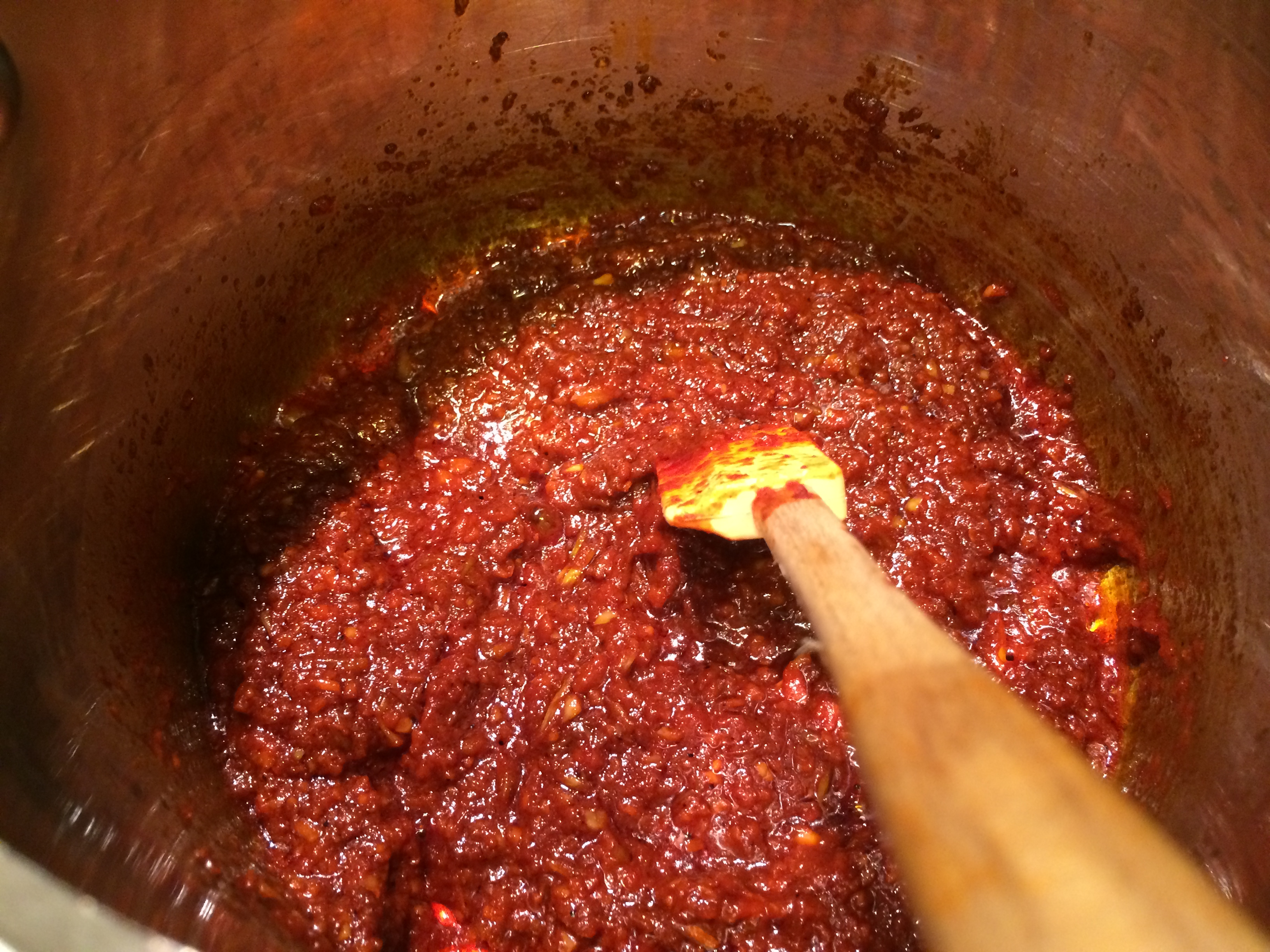
Heat the fat in a thick-bottomed pot and when it melts, put in the flour. Stir to combine into a paste. There, the roux is underway. Now the idea is that it has to go from a blond color to a dark chocolate brown. For me, this took about two hours, because I had the heat on medium to medium-low, which made it so that I could stir it every minute or so. If you are willing to stir it every ten seconds or so, you can have the heat higher and it will be done faster.

So in about two hours I went from this to this. Remember I started with whole wheat flour so it was already brownish from the beginning.

IMG_1034 IMG_1039

Now chop up the vegetables into little dice and put it into the pot along with the salt. Even if the roux had been calmly cooking away, you will notice that upon entry the vegetables will immediately sizzle, showing how hot the fat really is. In about 20 minutes of cooking, the vegetables soften down and the gumbo base is done.

IMG_1035 IMG_1037 IMG_1040 IMG_1041

I divided the gumbo base into 4 quarters to store. Each quarter can be used to make an entire gumbo meal for two people. Each quarter will take about 2-3 cups of additional liquid (water, stock, milk); so using that hint you can make any gumbo dish. The resulting meal, once the base is done, is very quick and can be easily put together on a weeknight.

1. Greens-okra Gumbo

Greens and okra gumbo

Greens and okra gumbo

In this gumbo, okra is cooked into the stew and greens are added later. I love the earthiness that okra adds here. Instead of pureeing the greens as is often done, I left them in ribbons, and enjoyed that textural variation. A little vinegar is added at the end for some brightness.

Ingredients: 

  • 2 quarters of the gumbo base from above
  • 1/2 pound okra, destemmed and sliced
  • 1/2 teaspoon paprika
  • 1 bay leaf
  • 1 teaspoon salt
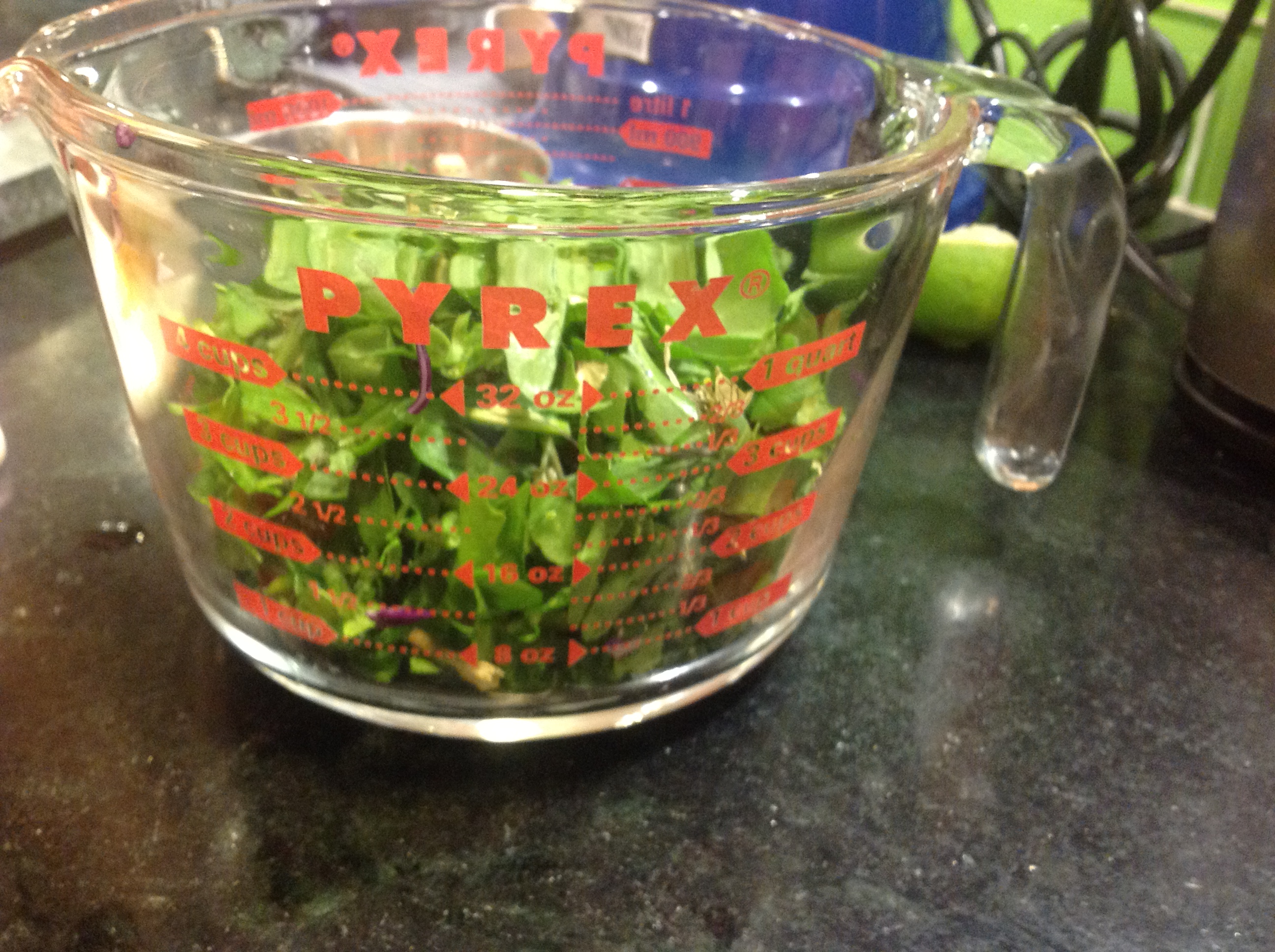
  • half a bunch mix of greens, sliced into ribbons (mustard, kale, spinach, chard, etc.)
  • 1 tablespoon white vinegar

Method:

Heat the gumbo base in a pot. Once it is hot, add about 5 cups of hot water, little at a time, after each time stirring the roux into a paste. This is the classic French method of making béchamel sauce, except that the liquid in that case is milk. Once all the water has been incorporated — this will take a few minutes — bring to a low boil. Add the okra, the paprika, bay leaf and salt. Boil for half hour to one hour on a low boil. Now add the greens. They only need to cook for ten minutes or so. Add the vinegar, taste for salt, and you are done.

IMG_1042 IMG_1044 IMG_1045

2. Cabbage Gumbo

Cabbage is found as an ingredient in some older recipes from the region and has lately gone out of style…why? Because — cabbage! Come on! Well I’m pretty déclassé myself so this recipe definitely attracts me. Milk is used as the liquid this time. Also this time I used filé powder at the time of serving; it thickens and adds a herbal something.

Ingredients:

  • Quarter of the gumbo base recipe from above
  • 1/3 head of cabbage, shredded
  • 1 serrano or jalapeno chili
  • 2 cups milk
  • 1/2 teaspoon salt
  • 1/2 teaspoon filé powder

Method:

Heat the gumbo base in a pot along with the serrano chili, sliced. Put in the milk in the style of béchamel sauce, stirring to combine into a paste each time, making sure that there are no lumps. Once all the milk has been added, bring to a low boil. Add the cabbage and salt. Let it cook until the cabbage is softened, about 20 minutes. Serve with rice and some filé powder, which is to be stirred in.

Cabbage gumbo

Cabbage gumbo

3. Tomato-okra Gumbo

Most of you won’t care one whit but I guess I am dipping my toe into controversy. Some people don’t consider that tomatoes belong in a gumbo at all, but then I find tons of tomato gumbo recipes on the interwebs. So here it is, for what it is worth. Authentic or not, it was delicious.

Ingredients:

  • Quarter portion of gumbo base from above
  • 1/4 cup dry red kidney beans
  • 3 – 4 cloves garlic (I used several sticks of wild garlic)
  • About a dozen pods okra, sliced
  • 1 pasilla pepper, sliced
  • 1 cup thick tomato purée
  • 1 teaspoon salt

Method:

Soak the red kidney beans overnight, or, in very hot water for an hour. Then put them in a pot with about a cup of water, bring to a boil, cover and simmer for half hour or so till softened.

IMG_1194

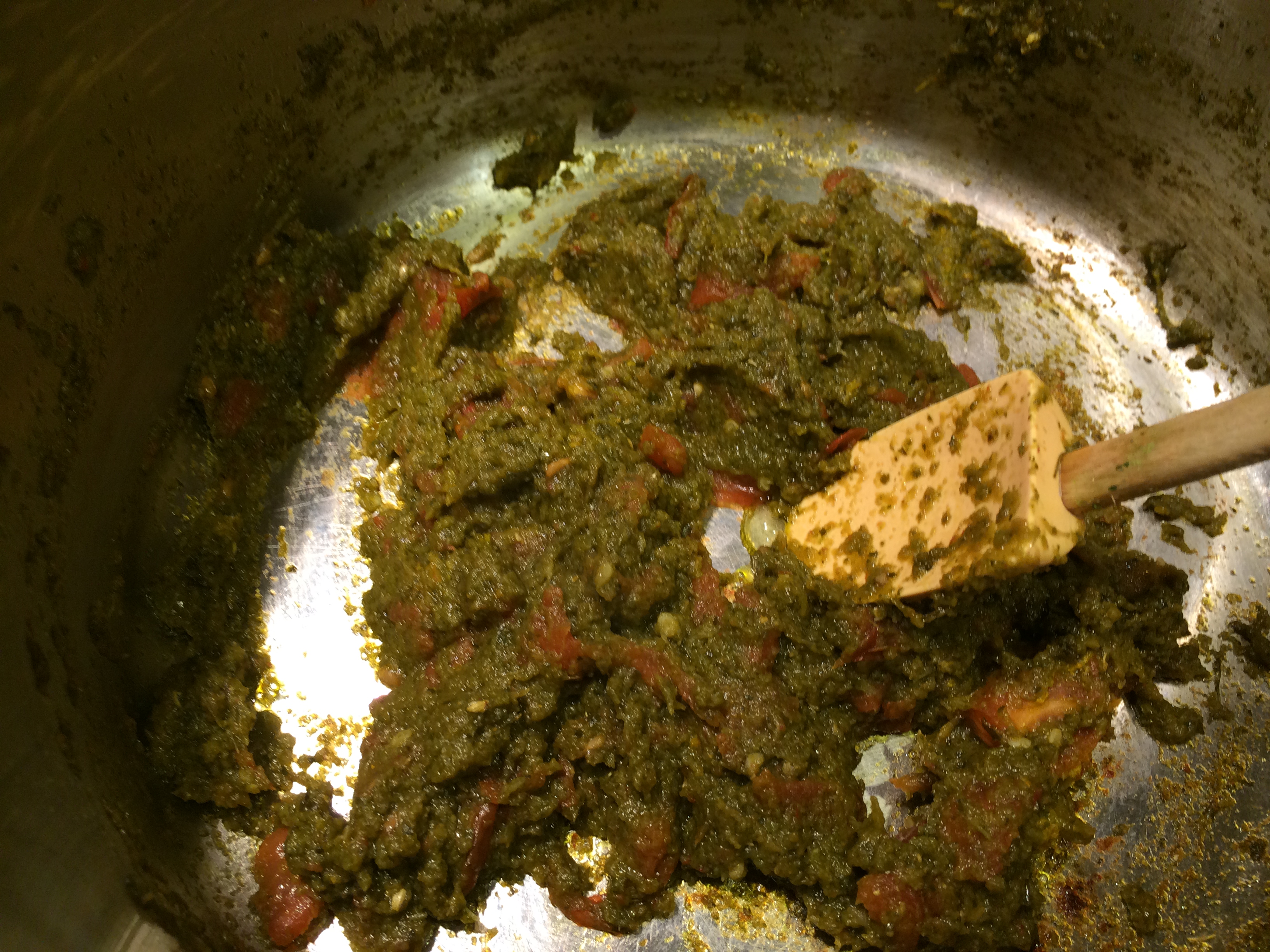
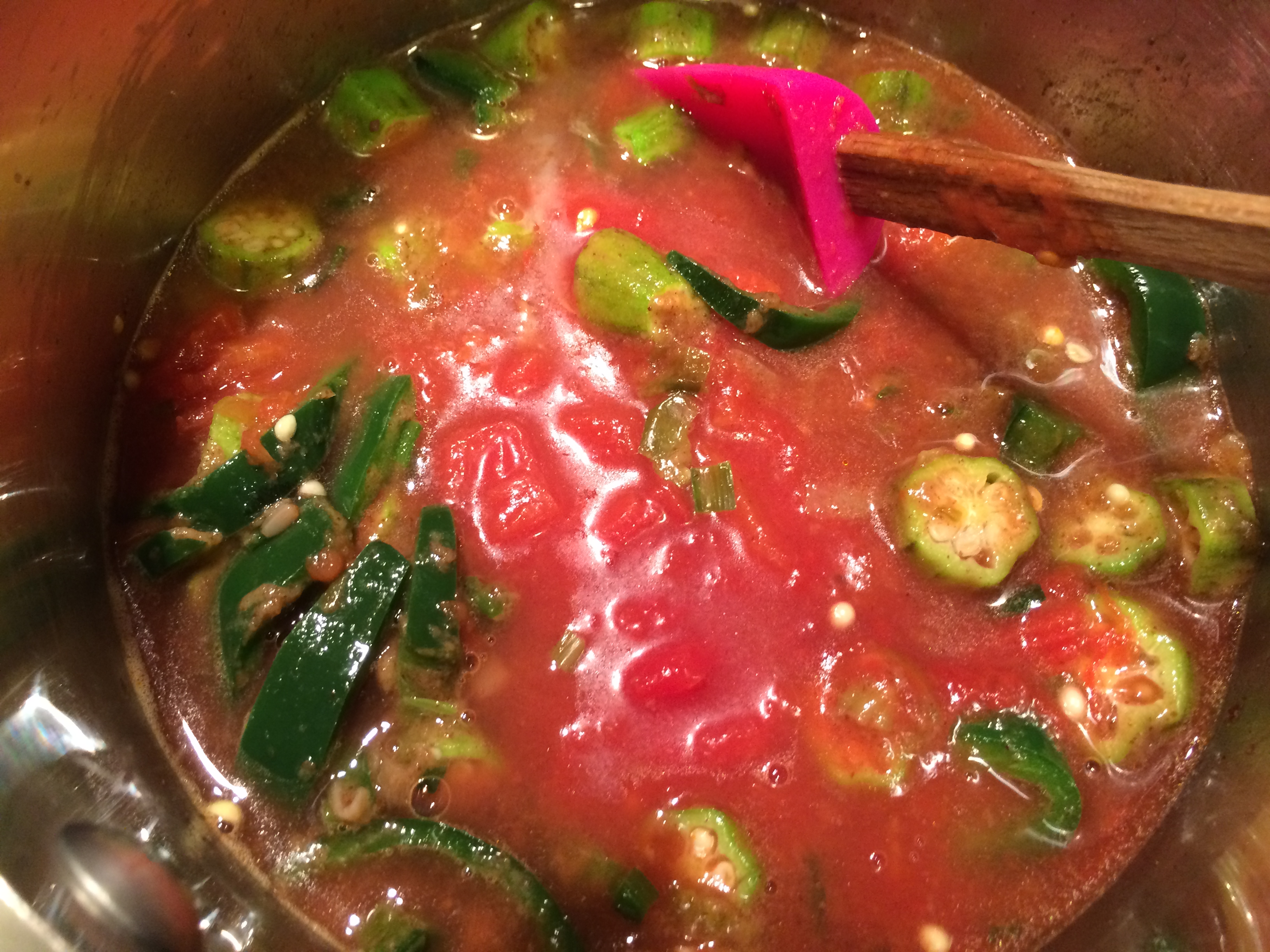
Put the gumbo base in a pot on medium heat. Once it is hot, sweat the three vegetables in it, one by one: first the garlic for a few minutes, then the pasilla peppers, and then the okra. Now in goes the tomato purée along with a cup and a half of extra water. If you had any water left over from cooking the beans, now is the time to add it. Add the salt. Bring to a boil, leave at a simmer for at least half hour, or as long as you want, until the vegetables are as softened as you like. In the last ten minutes of cooking, put in the kidney beans to meld its flavors together.

IMG_1193 IMG_1196

So what did my adventure with vegetarian gumbo teach me? It can be done with excellent results. My husband enjoyed all three gumbo meals; he never once asked ‘where’s the meat?’ But he is so spoiled with Indian food that he did ask — ‘where’s the masala?’ I guess that is a compliment?

Tomato Gumbo

Tomato Gumbo

I referred to several webby recipes for Gumbo. Here are some of them.

http://www.nola.com/food/index.ssf/2010/05/cabbage_gumbo.html

http://www.101cookbooks.com/archives/vegetarian-gumbo-recipe.html

http://www.gumbocooking.com/veggie-gumbo.html

Late breaking news:

Of course, the lard makes it not be vegetarian! Please use ghee for a ‘pure’ vegetarian experience. Or a good oil with a high smoke point. I used lard because I had some in the freezer, but then I’m not big on purity (of any sort!) I just like the taste of vegetables and am not keen on the taste of meat.

My Parathas turned Purple

IMG_0940

I have a huge amount of respect for nutrition scientists. But one can sense that in food, they have met a worthy adversary.

Carbohydrate, fat and protein

WHO Food pyramid

WHO Food pyramid

There were the days when they confidently issued proclamations about ‘food pyramids’ that could be rendered in the colors available in a child’s crayon pack. There was carbohydrate, fat, and protein. Various experiments were performed on unsuspecting dogs and rats that led them to believe that out of the three, protein was the one true nutrient.

Then came sailors and prisoners who were given protein enough, but were afflicted with swollen gums, purple spots, and finally, death. This disease was called scurvy. This disease had been known since the Roman times, and had often been treated with herbal cures such as lemon juice. Another time, a sailor stepped ashore and ate some cactus fruit, and found that it had curative properties too.

The vitamins

So what was it about lemon juice and cactus fruit that had the magical property to cure scurvy? Surely, they thought, since scurvy was a disease of ‘putridness’, whatever that means, and clearly, acid cuts ‘putridness’, it has got to be the acid in lemon juice that does the trick. So they began dosing sailors with diluted sulfuric acid and vinegar, to no avail. This acid treatment went on pointlessly for years, apparently, until a doctor named James Lind had a forehead-smacking moment and realized the sulfuric acid was doing more harm than good.

James Lind feeding citrus fruit to a scurvy-stricken sailor aboard HMS Salisbury in 1747 (Artist: Robert A Thom)

It was through such nightmarish means that scientists were forced to accept that the complexity of nutrition went beyond the big three of fat, carbohydrate and protein, and the ph dimension of alkaline and acid. By the early twentieth they had identified nutrients that were given the name ‘vitamins‘ which meant ‘force of life’, or something. Vitamin C cured scurvy while Vitamin B cured beri beri and pellagra; others were discovered too.

So food science climbed up the ladder of complexity, but you can tell how many nutrients they expected to find in food, because they started naming them after the alphabet. There may be ten, there may be twenty, surely it would not go beyond A through Z, right? They found 13 vitamins.

Phytonutrients

The farther one goes, the farther behind one gets. Now they have identified so many nutrients that this layperson (me) has lost all hope of catching up.

Phytonutrients‘ is the name used to describe all kinds of nutrients available only through plants. They help plants perform all their planty duties: fight germs, fight aging, fight toxins, stay alive, in other words. They give the plants their colors; their smells; their pungency. When we eat plants, we get the benefit of these chemicals too, for surprisingly similar functions.

Now there is a type of phytonutrient that is a pigment that gives plants a purple color (anthocyanins). There is tons of tantalizing research about how beneficial these pigments are for us. There is evidence from folk medicine — hibiscus has been used for liver dysfunction, while bilberry has been used to cure night-blindness. There is evidence from the test-tube that the purple pigment prevents the growth of cancer cells. There is evidence from tests on rats that the purple aids in cardiovascular health.

The pigments have antioxidant properties, so that is one reason why they might have so many benefits. But scientists are now alive to the dangers of accepting the simple explanation. These pigments belong to a set of 4000 other compounds called flavonoids; plants use all of them in concert to perform various functions through their lives. So it is not just this or that chemical that provides this or that benefit; it might be any of the 4000 thousand put together that does it. So it isn’t the purpleness itself; it is the army of its cousins working together in the plant.

That makes sense — plants do not live on vitamin supplements. They use whatever they’ve got in whatever combination they can, to do the things they need done. If we eat those plants, we ingest those chemical complexes and gain similar benefits.

We have come a long way from the time scientists dosed sailors with vinegar. Now one can imagine them shaking their fist and saying, ‘Just — just go eat purple food.’

Well, that’s easy.

My purple parathas

I love stuffing cauliflower or potato into rotis to make parathas. Eating them with plain yogurt is soul-satisfying. But on this day, I made them purple.

Ingredients for the roti:

  • Have a look at this recipe (Rolling the Roti) and make as much as you need. I made 2 potato parathas and 8 cauliflower ones = 10 rotis total.
  • Oil or ghee as needed.

Ingredients for potato filling (for 2 parathas):

  • 1 medium purple potato
  • 1 – 2 tablespoons finely chopped onion
  • 1 tablespoon finely minced cilantro
  • 1 small green chili sliced, or substitute with half a teaspoon red chili
  • 1 teaspoon chaat masala
  • Salt to taste

Ingredients for cauliflower filling (for 8 parathas):

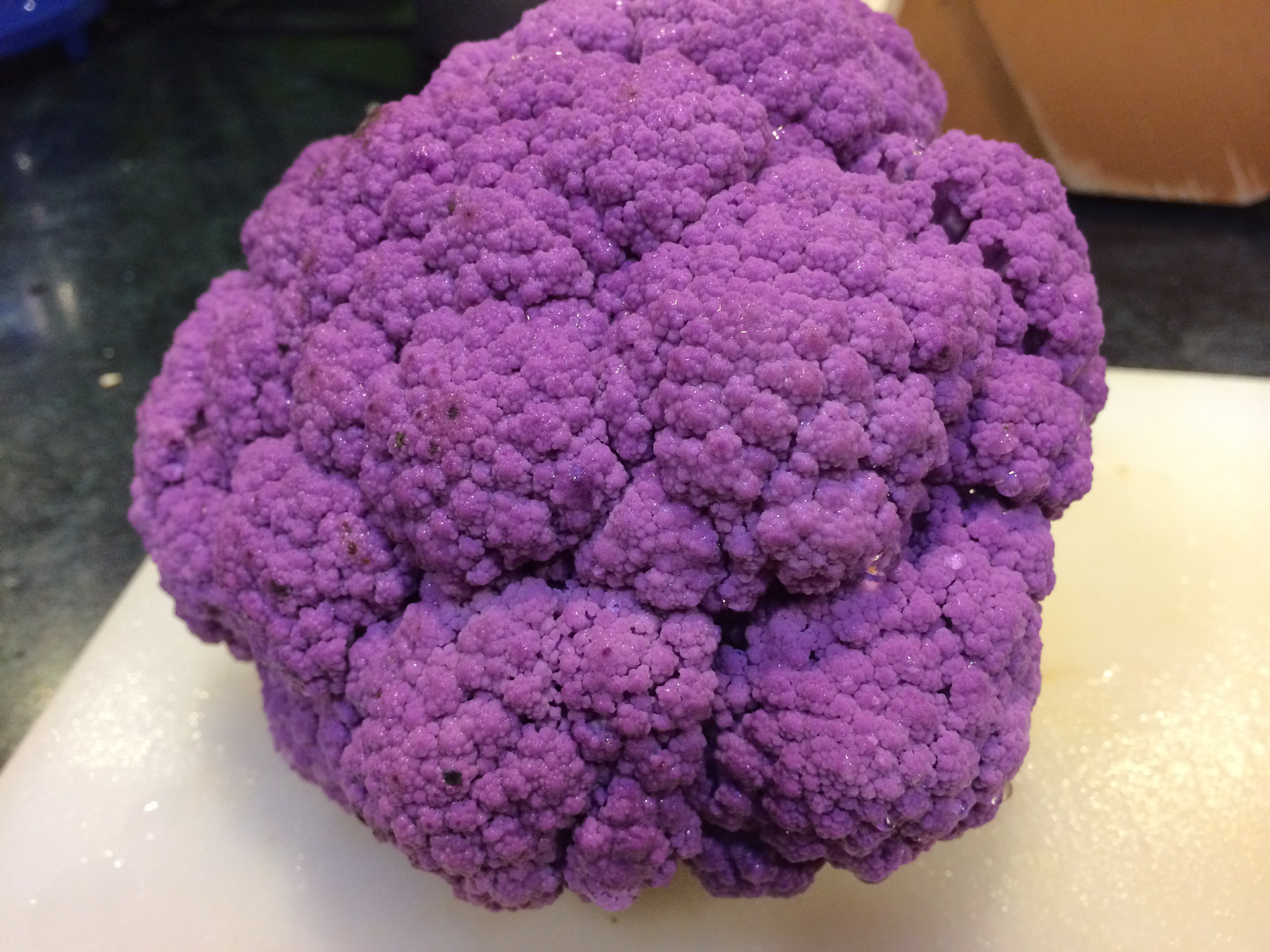
  • About 4 cups purple cauliflower florets
  • An inch of ginger, minced fine
  • 1 – 2 green serrano chilies
  • 1 tablespoon oil
  • 2 – 3 teaspoons chaat masala
  • 3/4 teaspoon salt
  • Half a teaspoon cumin seeds (optional)
  • Sprinkle of asafetida (optional)

Method for potato filling:

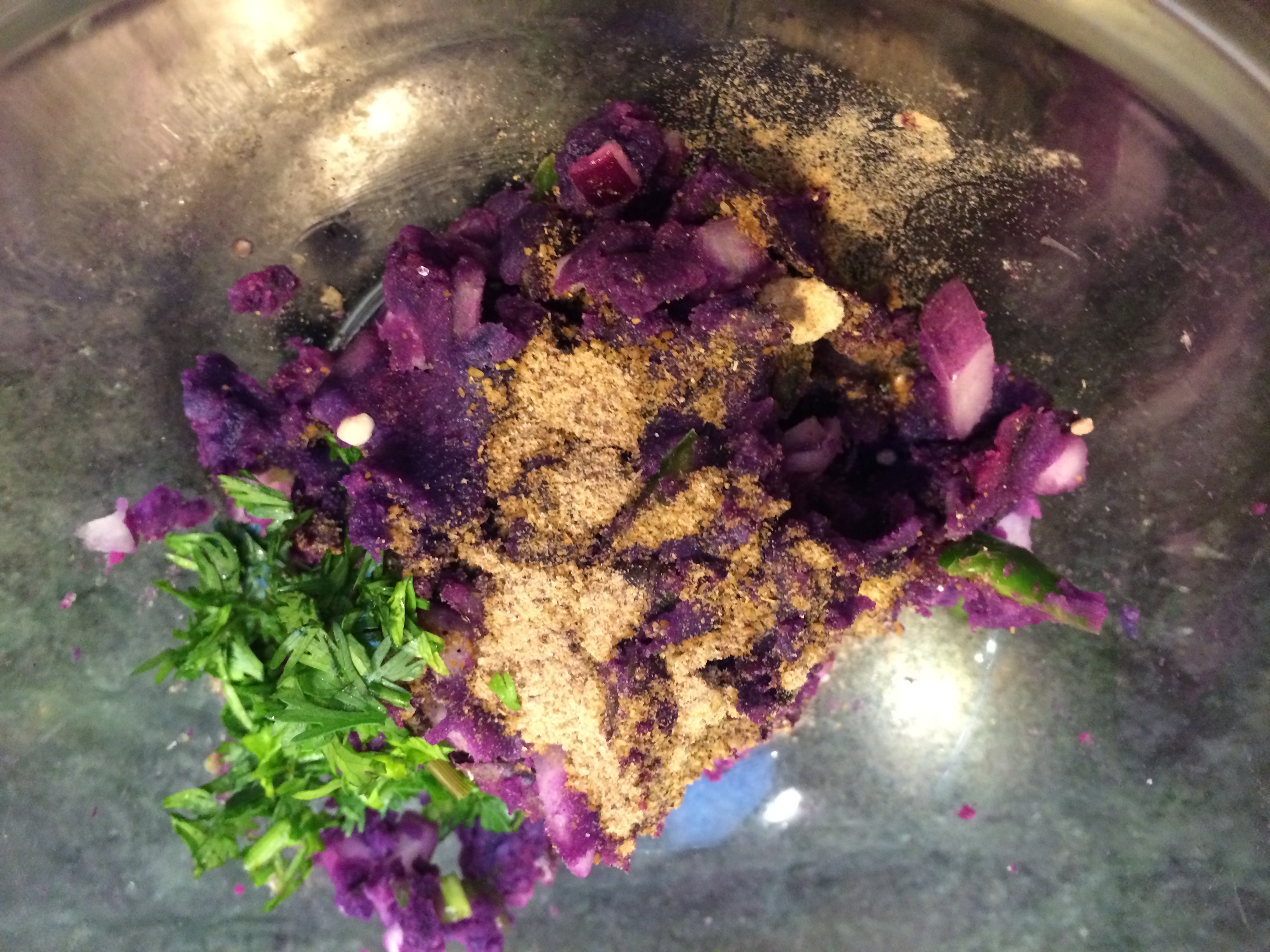
Microwave the potato until it is soft. Mash it, peel and all. Mix in the other ingredients, squeeze it into a sort of dough, and divide into two disks. The filling is ready, each disk will go into one paratha.

IMG_0932 IMG_0933

Method for cauliflower filling:

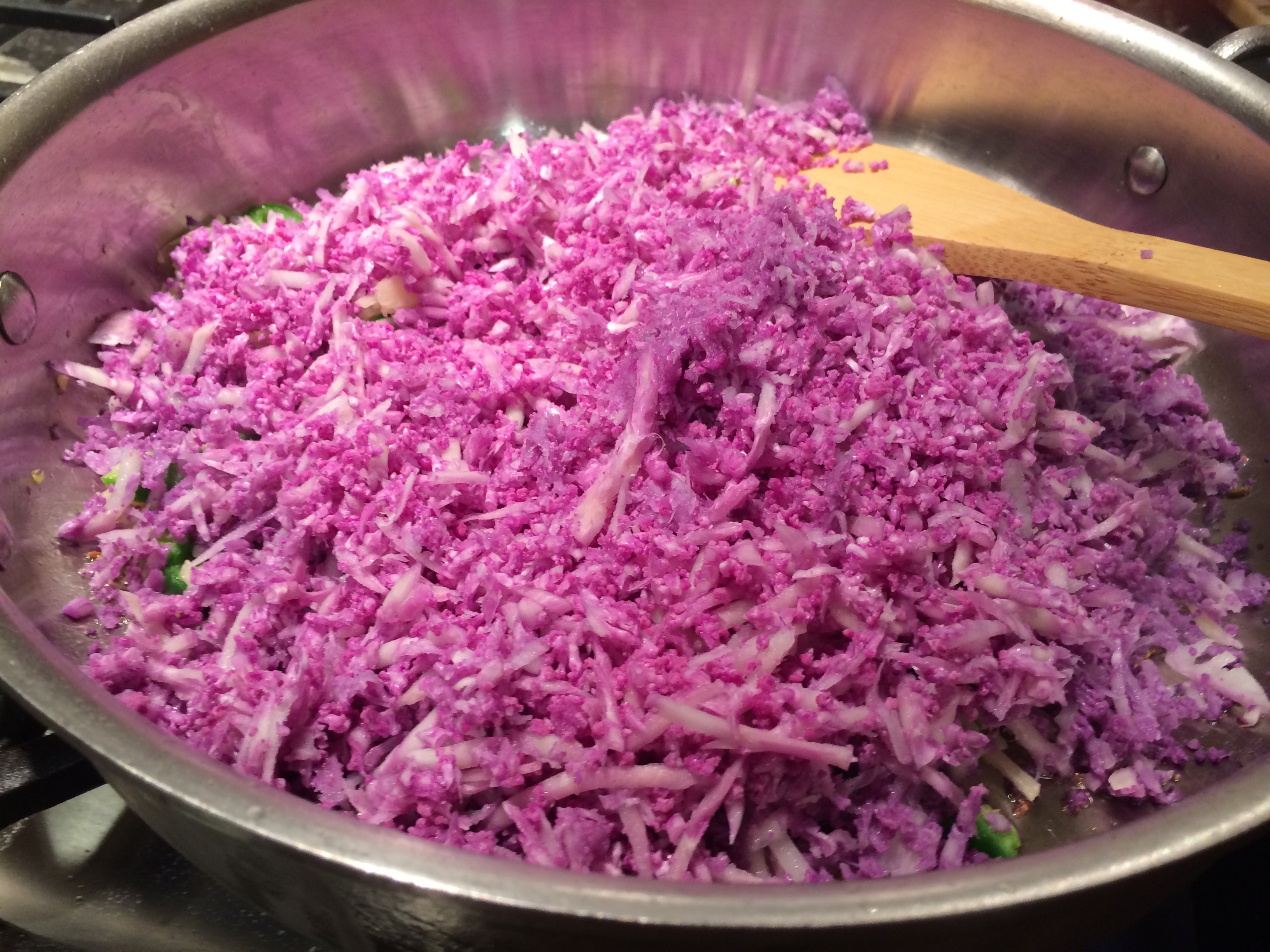
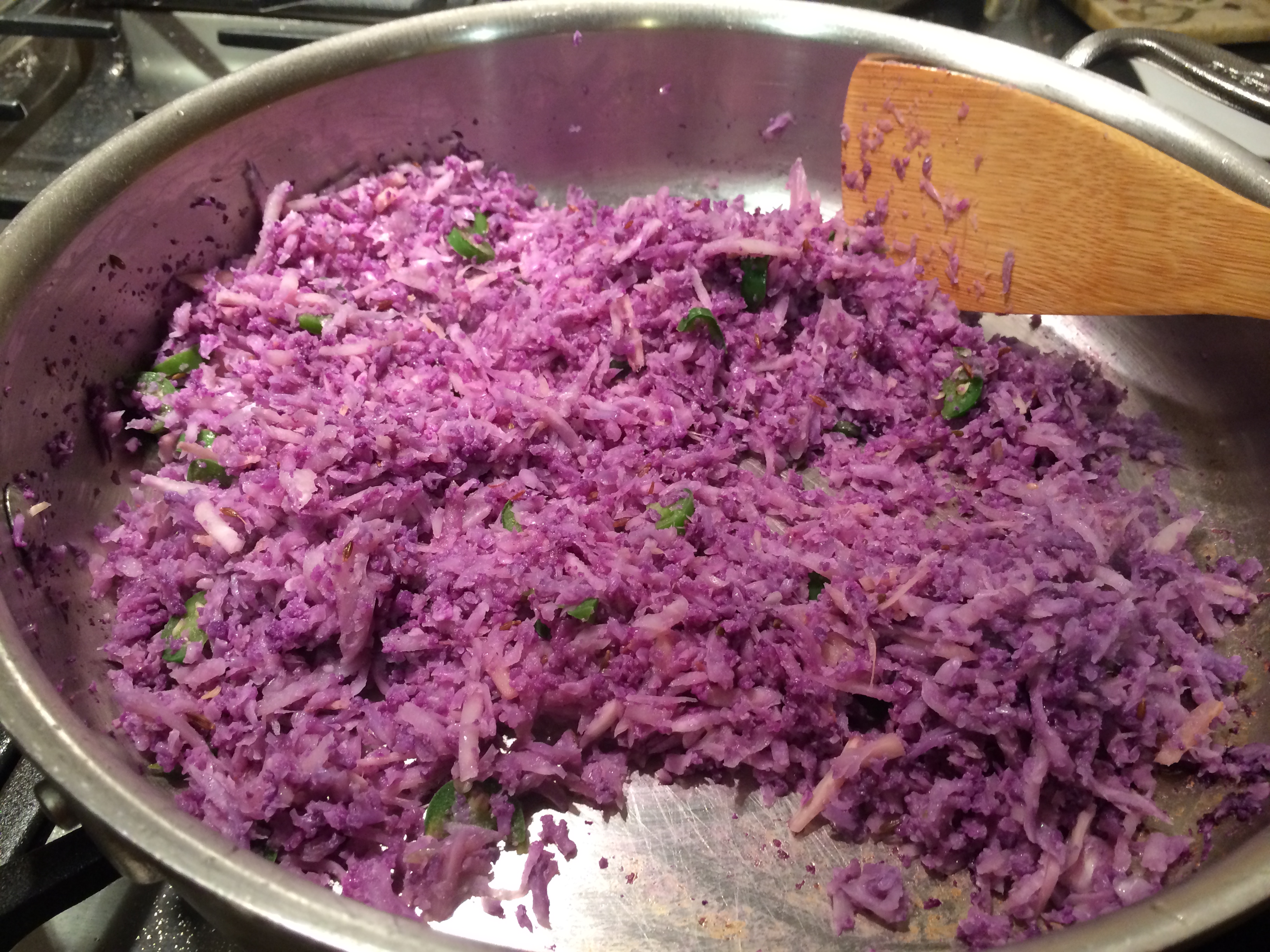
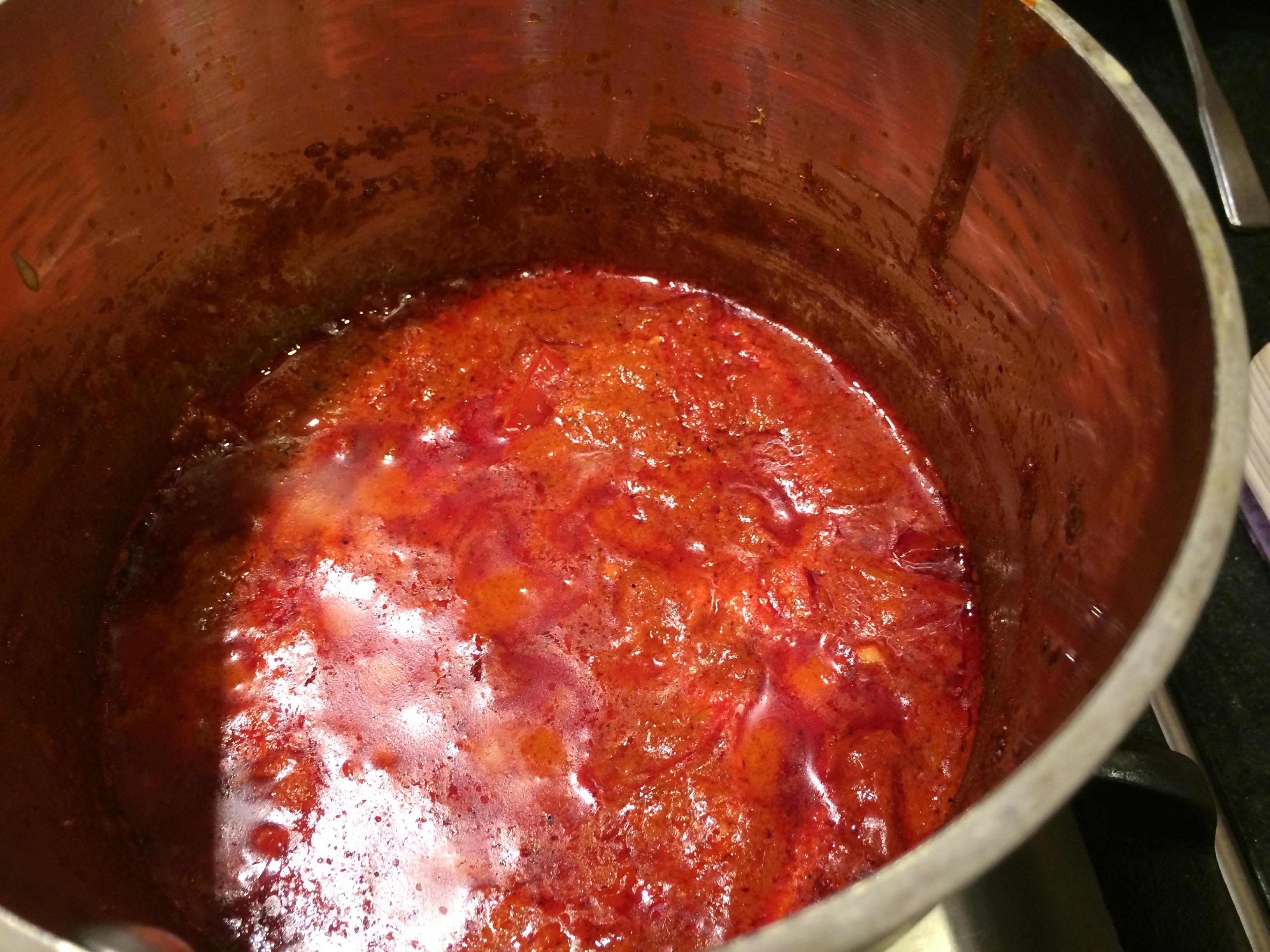
Grate the cauliflower, mince the ginger and chili. Heat the oil in a large thick-bottomed pan on medium heat. When it shimmers put in the asafetida and the cumin. When they sizzle put in the ginger, chili, and grated cauliflower. Stir to coat with oil. Add the salt and the chaat masala. Raise to heat to nicely dry the cauliflower. It is very important to get the cauliflower to be as dry as possible, or it will make your life hell while rolling out the parathas. When it is dry enough, turn off the heat and let it dry.
IMG_1022 IMG_1023 IMG_1024 IMG_1025 IMG_1026 IMG_1027

Method for composing the parathas:

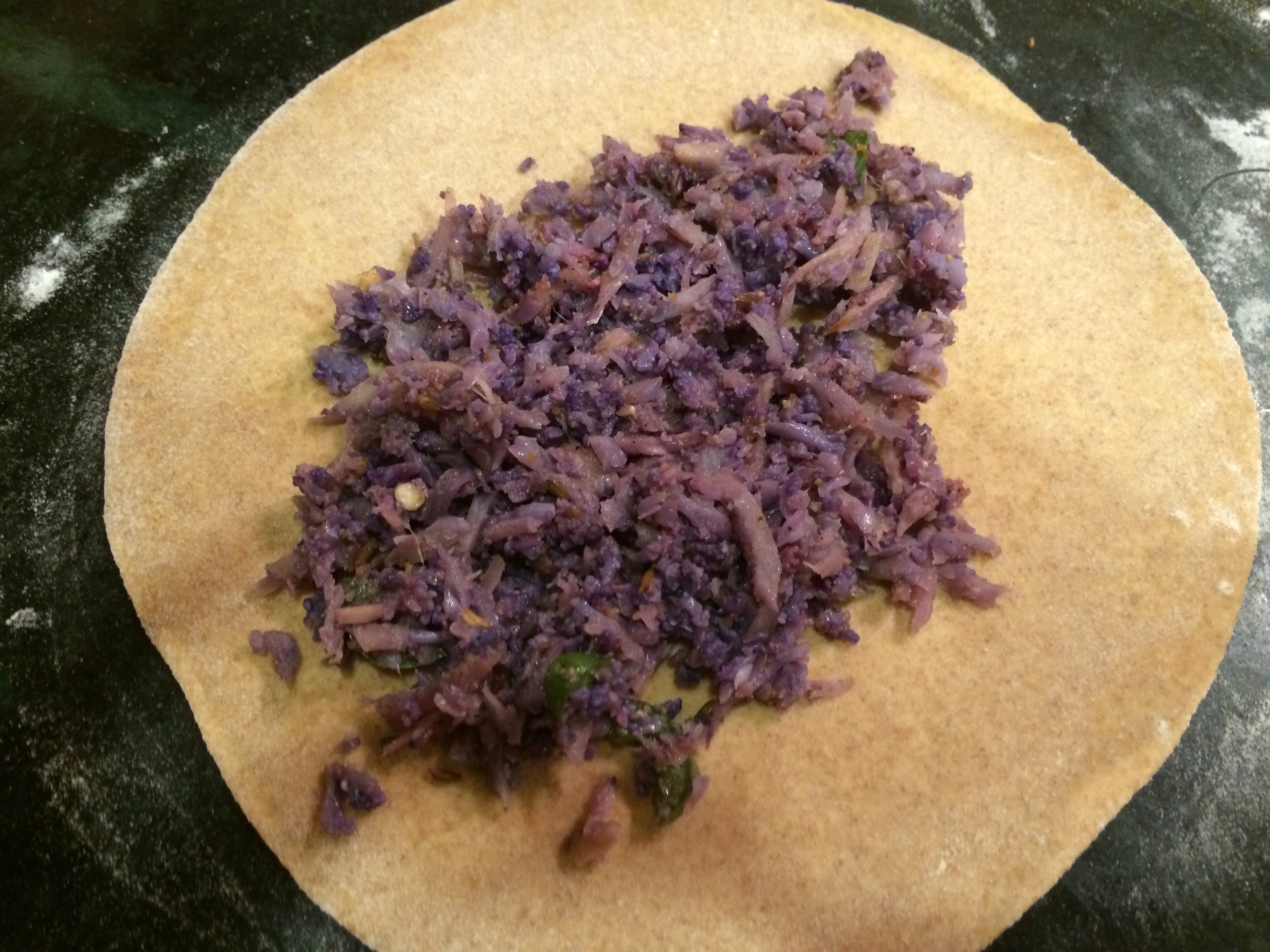
Roll out a roti about 6 inches in diameter. Place the right amount of filling in the center. For the cauliflower it is about 3 heaped tablespoons, for the potato filling it is about a 2 – 3 inch disk of potato. Gather up the edges of the roti and give it a squeeze. Flatten the pouch into a disk and start rolling it flat with the filling inside.

IMG_0934 IMG_1028 IMG_0935 IMG_0937

While rolling parathas the ever-present danger is that the filling will come squeezing out like toothpaste out of a tube. One must learn to avoid that. One way is to use a very gentle hand while rolling — you don’t want a few long, weighty rollings, instead many quick, darting, gentle rollings. Use dry flour as needed to patch up holes.

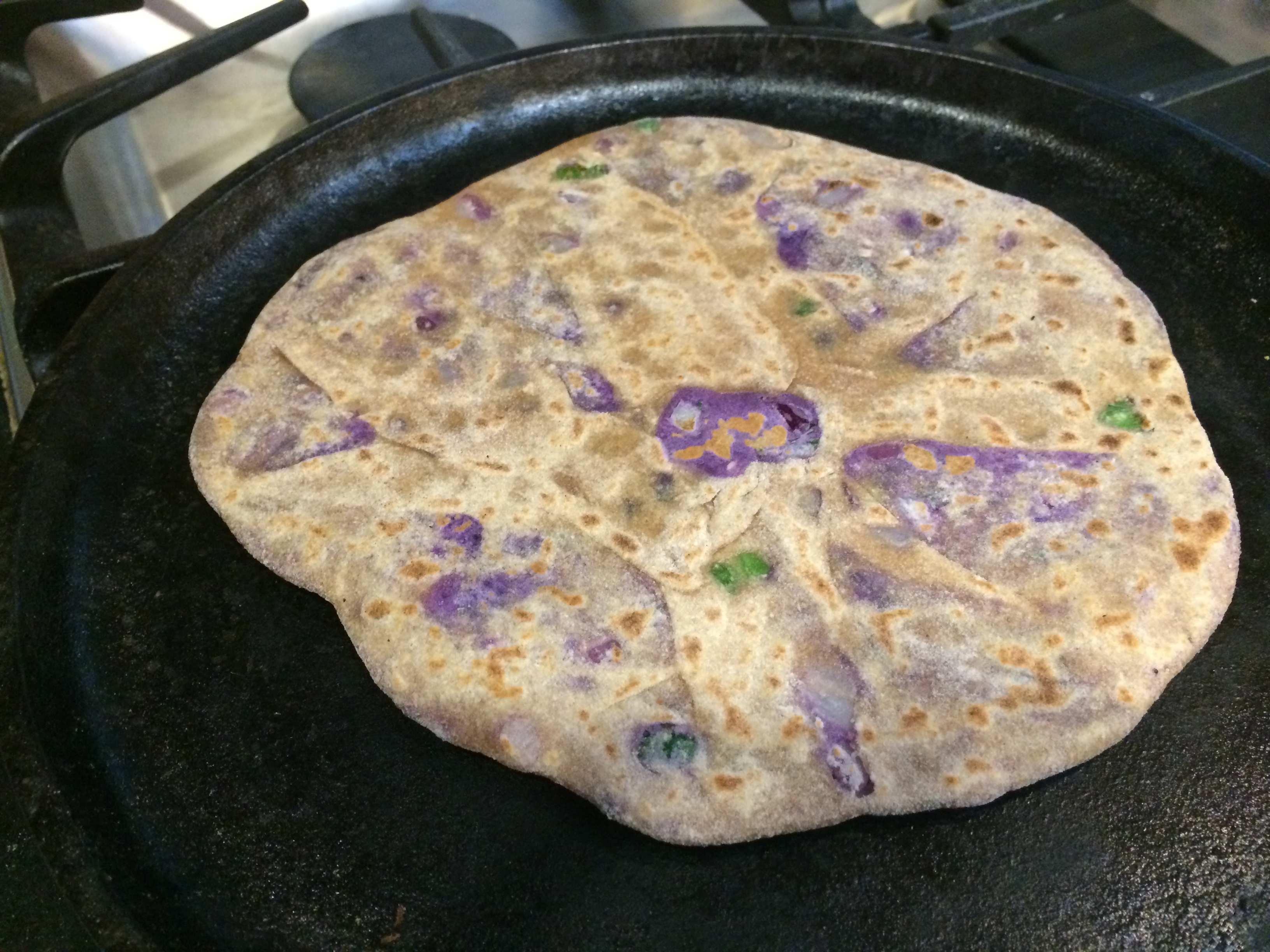
The ideal paratha, when rolled out, has such a thin roti cover that one can see the filling peeping out in various places, but it doesn’t actually fall out. Keep your eye on that ideal.

Meanwhile have a cast-iron griddle or tawa going on a medium-high flame. Slap a prepared paratha on. After 30 seconds, the top surface will seem a little set. Flip it over. Wait 30 seconds. Now spread a bit of oil or ghee over the top surface and flip it over for another 30 seconds. Repeat. In total, each side has been cooked dry twice, then cooked with oil twice.

IMG_0938 IMG_0939

While one paratha is cooking, did you think it was time to stand around and have a coffee break? No, my dear, get busy rolling out the next one. When one gets practiced one can have two griddles going at once.

IMG_1031

Have it with some plain yogurt on the side, nothing else is needed.

Avocado Relish

There are some Westerners who go to India and fall in love with being Indian. They make all sorts of claims about their souls being Indian, or having been Indian in some previous life time; and, if you think about it, there couldn’t be a better proof of feeling Indian than throwing around claims about previous life times. Some start to wear rudraksha beads and saffron robes. The more extreme among them might take on a Hindu name.

We have all met at least a couple such people; if not, visit your nearest ISKCON and you will. But today I will introduce you to one such friend of mine — the avocado.

This fruit with buttery green flesh is native to Mexico. To me, the taste of the avocado has always been reminiscent of the flesh of young coconut: the kind you stick a straw in first to drink up the water and then the coconut-wallah scrapes the flesh off from the inside and hands it to you, using the shell as a bowl.

But stick it in a saffron robe and you would think this fruit was born and raised in India. It takes well to a number of Indian preparations. Mix it with yogurt to make a raita. Stick in a paratha. Spice it up to make chutneys. As I experiment I will be blogging about various Indian treatments for the avocado. But today, I will make that quintessential fresh accompaniment to rich and heavily spiced food — the kachumber.

Kachumbers are little salads or relishes that emphasize freshness and coolness. A bite of this is supposed to freshen your mouth during the meal. It usually consists some combination of onion, tomato, cucumber with lime juice. Try it with avocado, as below; it brings the taste of kachumber up to lusciousness.

This makes enough as a dinner side for two.

Avocado Kachumber

Ingredients:

  • Half an avocado, large, diced
  • Quarter cup finely diced red onion
  • Quarter cup finely diced tomato
  • One third cup finely diced cucumber
  • 1 green chili, serrano or jalapeno, finely diced
  • 1-2 teaspoon minced cilantro
  • Juice of one lime or lemon
  • Half a teaspoon salt

Method:

Couldn’t be simpler. Mix it all up! We had this as a side to fish and rice.

IMG_0693IMG_0695

Post script: Although I first tasted the avocado only after I came to California, where it grows easily even in home gardens, it turns out that avocado grows in India as well, under the guise of butter fruit. It seems to be known mostly in the south, and is only available during August and September. It also has trouble hitting that right moment of ripening — sometimes the fruit rots before getting there. But if you see it, do purchase it!

Exercise your right to choose — the chili

There there, I know what ails you. You love the smoky flavor of dried red chilies, but their heat makes you run for the jug of water. It may also give you the runs. You curse the American continent for inventing these pods of TNT. You wish that you could turn into a bird, not so that you could then fly, oh so free! — but because then you would lack the pain receptors for capsaicin that you share with other mammals.

Don’t worry, I understand! You can cry on the shoulders of Aunt Odd Pantry.

Chili pods drying

Chili pods drying

And still, the flavor of chilies haunts you! How to get one without the other? There is a way! You see, just like some countries invest heavily in defense (like my home, the United States), while others have to expend so much energy to just survive in the desert that they don’t have much left over for defense (like Dubai in the UAE), chilies come in two styles as well. Chilies that grow in wetter climates, where their sworn enemy (the fungus Fusarium semitectum) grows easily, invest a lot in defense and become hotter. While chilies that grow in drought conditions have to be more judicious in how much heat they develop. The arch enemy — the fungus — is less of a problem in drought anyway, because it needs wetness too.

The hottest chilies in the world are the bhoot jholokia from Nagaland, India and the Trinidad Moruga Scorpion — both come from very wet climates.

But then there is the panoply of larger, not-hot chili peppers — the pasilla, the Kashmiri, the ancho — that can be added to the mix to add flavor and color but not the heat. They thought of everything.

Anaheim Chilies from About Mexican Food

Anaheim Chilies from About Mexican Food

This dish in particular is based around that smoky flavor of chilies. Tomatoes and garlic play a supporting role. Yogurt is used to moderate the taste further. Like several of my other recipes, this is a gravy that one can throw anything into. It goes very well over rice, or with chapatis, or dosas, for that matter.

The recipe below makes enough for about 6 people.

Chili-tomato gravy

Ingredients:

  • A few big, mild chilies — I used 4 Kashmiri
  • A few small, hot chilies — I used 5 cayenne
  • 8 cloves garlic
  • Quarter cup cilantro — I used some thick stems I had left over
  • 3 medium tomatoes
  • 1/3 cup plain yogurt
  • 2 tablespoons oil
  • Half a teaspoon turmeric
  • 1.5 teaspoon salt

Method:

This proportion of mild to hot chilies gave me a pretty hot gravy. Feel free to use a different proportion, from no hot chilies at all to all hot chilies. You better know what you are doing if you choose the latter.

Heat a roasting pan on medium-high and place the dry chilies on it for a few minutes until they darken. Remove them to cool for a few minutes. When they are cool enough to handle, you can destem and deseed them. Grind them to a fine powder in a clean coffee grinder.

IMG_0298 IMG_0299IMG_0300

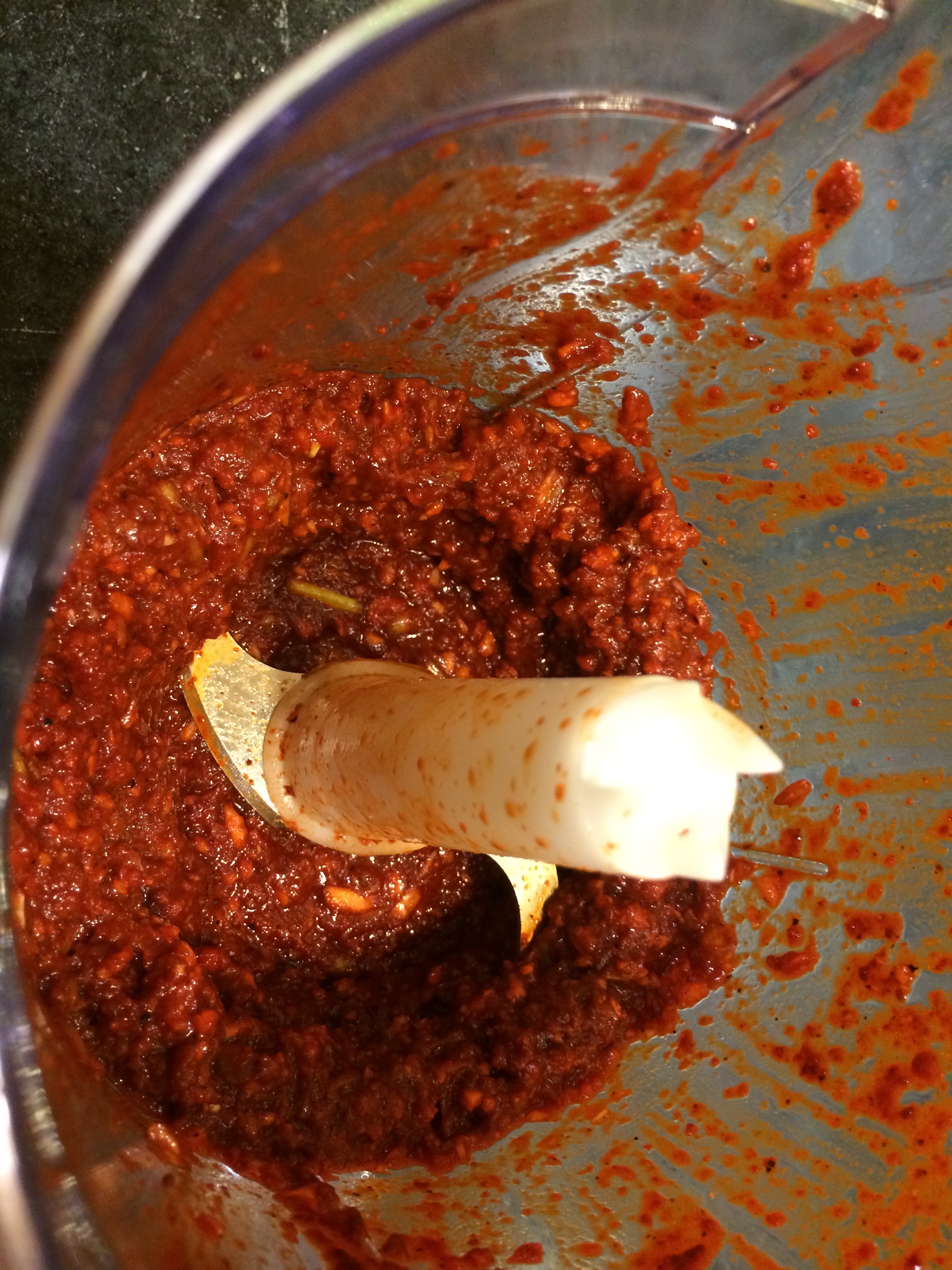
Make a paste of garlic, cilantro and chili powder, adding as little water as you can get away with.

IMG_0302 IMG_0303

Heat the oil in a thick-bottomed pot. When it shimmers put in the paste. Stir and let it cook until it darkens, on medium heat. Soon you will see the oil shimmering and the paste will seem drier and yet shinier. Then you know it is done.

IMG_0305 IMG_0306

Now whip up the yogurt and swirl it in. Stir and let that cook as well. In a few minutes, it will have properly merged with the paste and become homogeneous. Now it is time to put in the roughly chopped tomatoes.

IMG_0309 IMG_0311

At this point the paste is probably so liquid that you can raise the heat to highish. Let the tomatoes liquefy and boil off mostly. Add the turmeric and the salt. At this point, the basic gravy is done.

IMG_0312 IMG_0314

Add anywhere from a half cup to one-and-half cup of water to allow it to boil for a few minutes; also, by controlling the amount of water you are controlling what sort of dish you want it to be. If you plan to add some potatoes to it and have it over rice, for instance, you could make it more liquid, because potatoes will have their own thickening starch. If you plan to add chicken bite-sized pieces, and want a drier sauce around it, you can skip the water entirely — the chicken will let out some of its own liquid.

As you might have guessed, now is the time to make a dish out of it by adding whatever things you want to this sauce. Care must be taken to make sure that whatever you add will have similar cooking times. One trick is to precook the vegetables in a microwave and then add it in to blend.

Here are some ideas:

  • Chicken breast cut up with cilantro garnish
  • The ever-popular paneer blocks with peas
  • A combination of small cut up vegetables: carrots, peas, cauliflower, bell peppers, french beans, potatoes, raisins.
  • Fillet of strong-flavored fish, covered with the sauce, and simmered until done

This is what I did with it — paneer and peas.

20131224_192020

You say potato pancake, I say aalu tikki, she says kartoffelpuffern

Potatoes take supremely well to crisping up in oil. The brown crunchy coating that they develop, given enough oil and heat, is quite beguiling. Then again the insides consisting of the potato itself tends to be quite bland, so needs some help in the taste department. Also, potato does not hold itself together while frying, so it also needs some help in the ‘having integrity’ department. A conscience? No, a binder.

I have basically described an aalu tikki — a cake of mashed, spiced potato that is bound with some bread and fried in oil. This is a common Sindhi dish, eaten as an appetizer, a side, or an evening snack with possibly some sweet and hot chutney on the side.

My first clue that cultures have discovered this basic paradigm over and over came from a Swiss girl who interned at my work place. Invited over to our home for a meal, she spied a plate of aalu tikkis and said — ‘kartoffelpuffern!’ Kartoffel — potato, puffern — cake. Till today, this pair consists of the only German words I know.

Another such concoction is the Eastern European/Jewish latke. Here the potato is grated rather than boiled and mashed, and clearly the Indian version is more spicy, but the end result is similar. Latkes are traditionally eaten at Hannukah; we are a little late for that, but nice and early for the next one.

The recipe below makes about two dozen tikkis.

Aalu Tikki

Ingredients:

  • 3 russet or other starchy large potatoes
  • 1 tablespoon salt for boiling
  • 3 slices bread. It should not be sweet. I used crusty sourdough.
  • 1 tablespoon chaat masala, substitute with dry mango powder, substitute that with lime juice
  • 2 teaspoons coriander powder
  • 1.5 teaspoons salt
  • Quarter to half cup finely chopped onion
  • Quarter to half cup finely chopped cilantro leaves
  • 3 – 4 finely sliced fresh chilies, if you are cooking for kids you can leave them out.
  • Up to half a cup of oil

Method:

Boil the potatoes in about 3 – 4 cups of water. Put them in cold, add about a tablespoon of salt to the water, bring to a boil, and simmer, covered, till the potatoes are soft. I used a pressure cooker and it took about 10 minutes under pressure. Drain the potatoes when done and peel them when cool.

IMG_0270 IMG_0272

Meanwhile have the bread slices soaking in water until the crusts are softened. This will take at least 15 minutes. Now, squeeze out the water from the slices and save the bread. This will be used as the binder.

IMG_0274

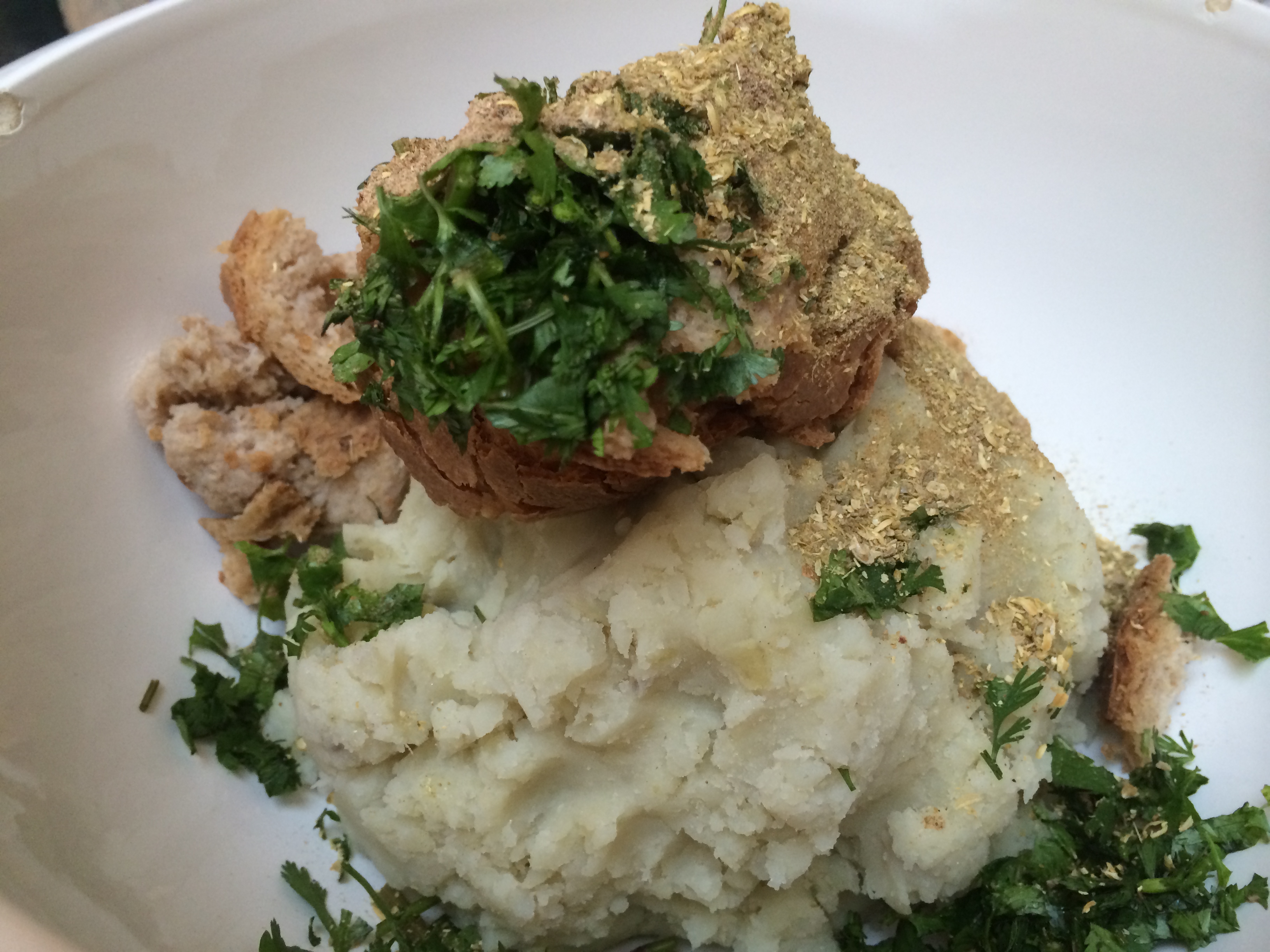
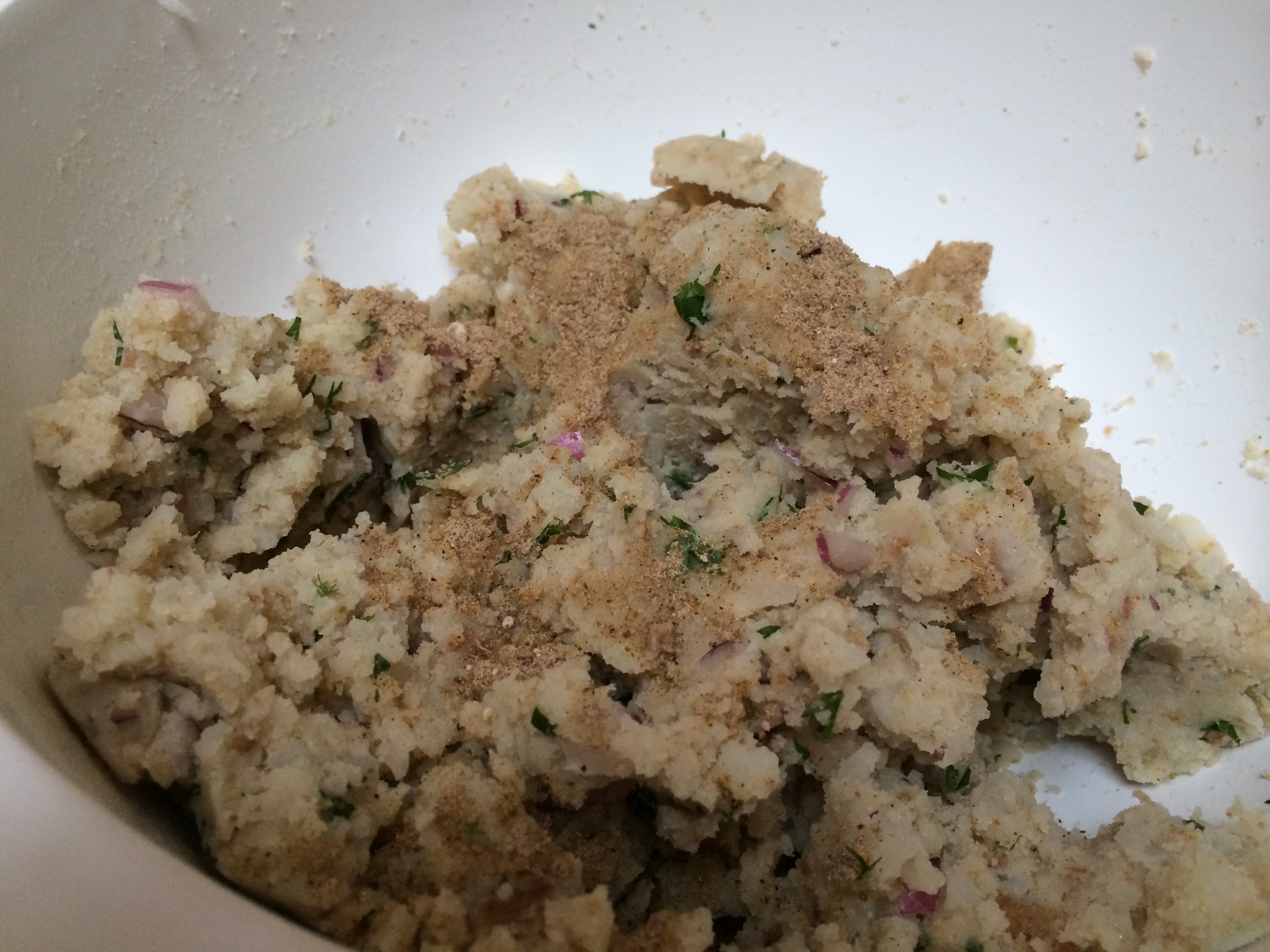
Mash the potatoes. Once the lumps are more-or-less gone, add in the squeezed bread, the spices, salt, and the minced vegetables. The point is to mix this stuff nicely into a mostly homogeneous dough. I have found that this works best with your hands. There is no other kitchen implement that has five rubbery prongs with such fine control, plus the strength of the heel of your hand.

IMG_0276 IMG_0277

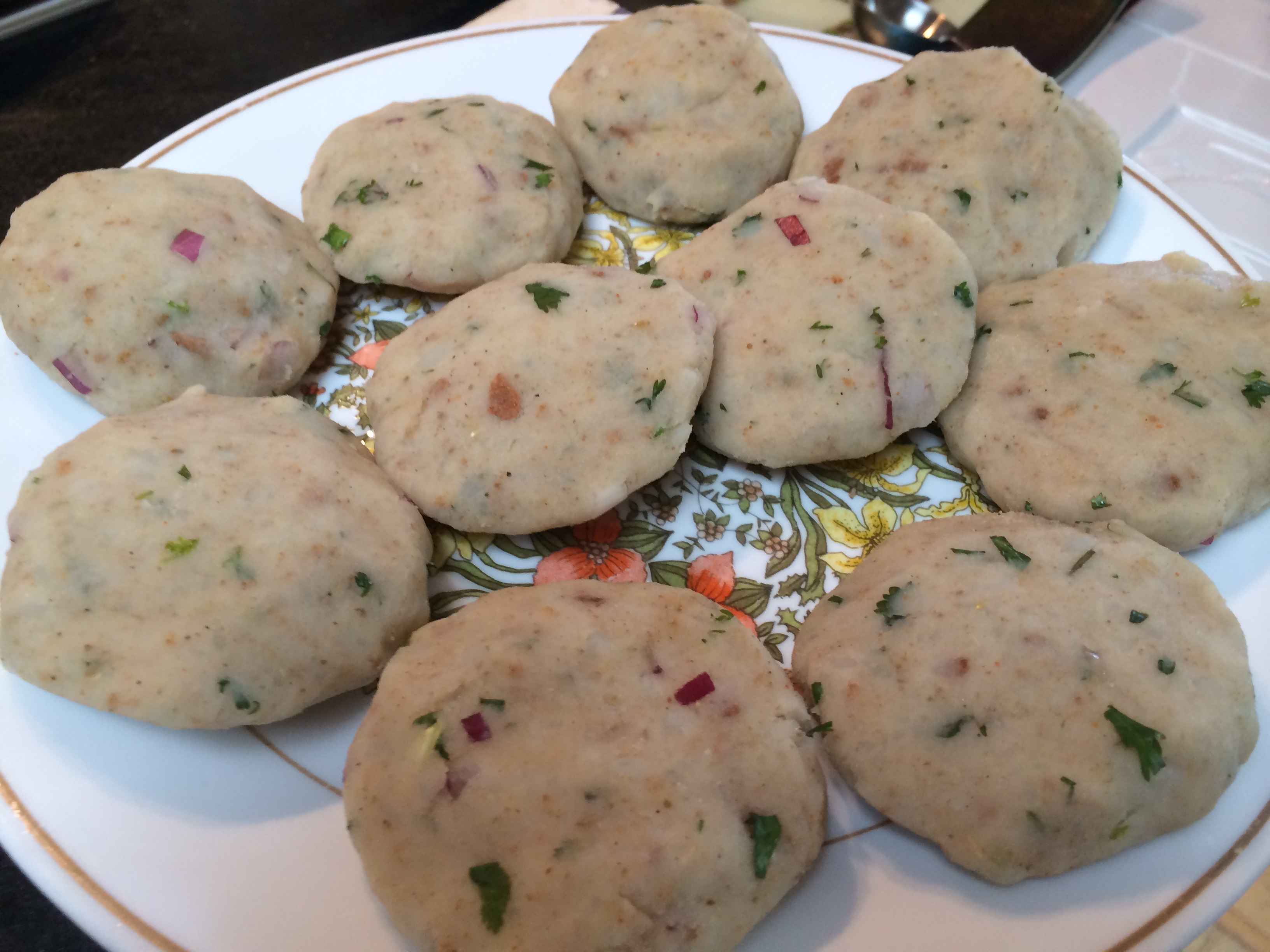
Anyway. Once the dough is ready, one is ready to fry them. Form small fistfuls of the dough into flying saucer shaped disks and save them on a plate. Clearly this must be done by hand, but oil your hands first to get it to not stick.

IMG_0278

Heat two tablespoons of oil at a time in a large, flat, thick-bottomed, non-stick pan. Once it is shimmering, put in as many disks as will fit in a single layer with gaps around. Flatten and spread them with a spatula somewhat. This is best done on high-ish heat with enough oil bubbling away beneath; in this configuration each side should take about five minutes.

Flip each tikki when it is browned underneath. Add more oil for this side. Five minutes on this side should suffice as well.

IMG_0280

Remove them and place on a paper towel to soak up the extra oil.

These are best eaten fresh, with a bit of chutney or ketchup on the side; if you like sandwich a tikki between bread slices and have it that way.

The bane of every Sindhi child

IMG_0176

This is a meal that every Sindhi child has made faces over at the dinner table while dawdling over their food. But by the time that Sindhi child has grown up into a Sindhi adult, they begin to crave it with an intensity that is only matched by their craving for home.

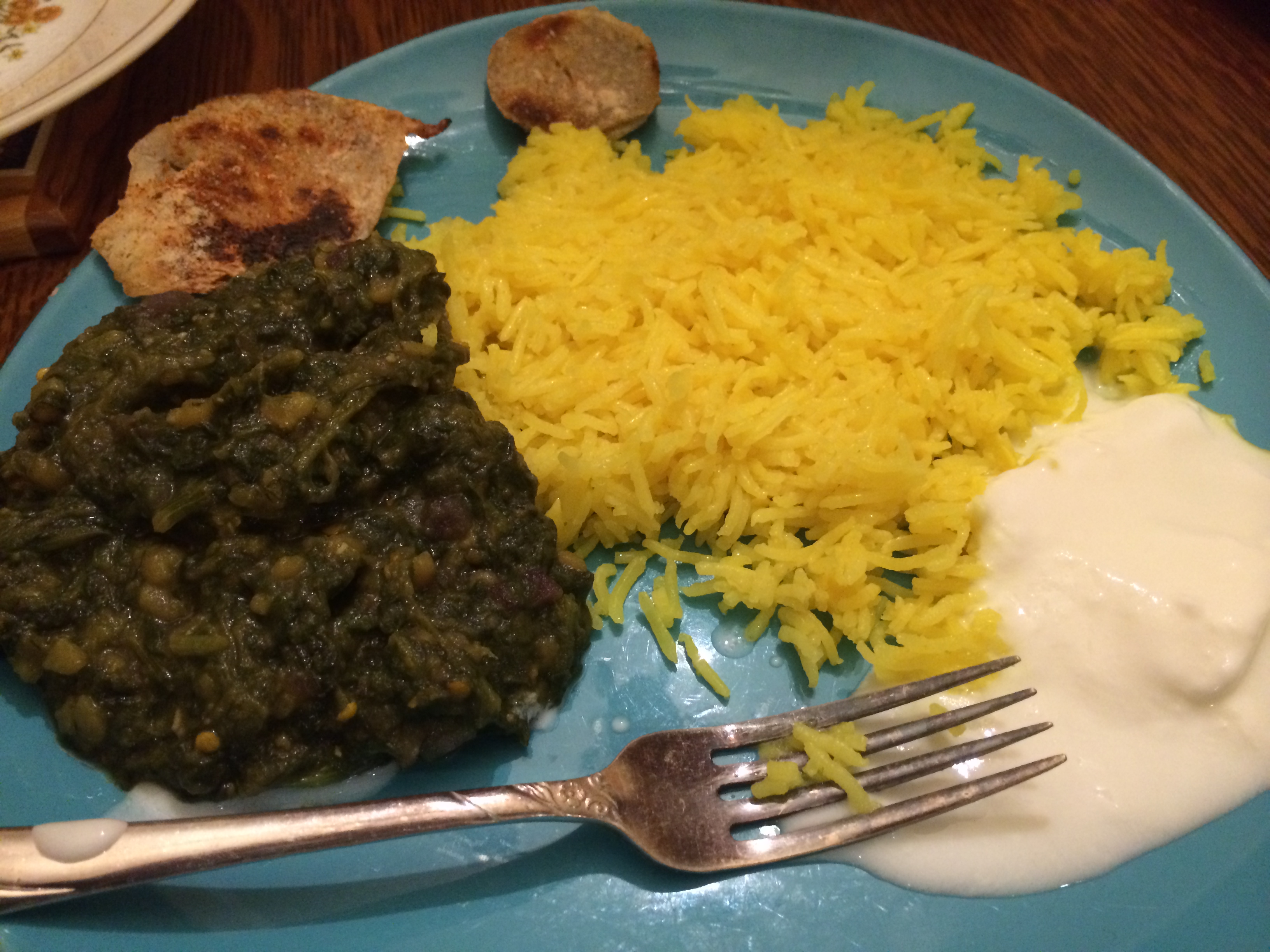
When I was the Sindhi child making faces at Sai Bhaji — which translates simply to ‘greens’ — no amount of talking up by my mother about how this meal is a nutritional powerhouse mattered to me at all. Now as an adult (and a mother myself) I’m thinking — a delicious, simple-to-make, nutritional-powerhouse meal-in-a-pot! What’s not to like?

Sai Bhaji is a stewed concoction of spinach and other greens, some lentils, with other veggies thrown in. It is eaten with rice and plain yogurt and possibly something fried on the side.

One of the selling points of this dish is that you can throw in basically any vegetable you have lying around in portions that are too small to make a meal themselves. The taste of spinach and dill is strong enough that all these mini-portions will be swallowed, subsumed, absorbed and spat out as part of the Sai Bhaji empire. Thus adding even more nutrition.

Sai Bhaji (spinach-lentils stew)

Ingredients:

  • One bunch spinach
  • Half a bunch fresh dill
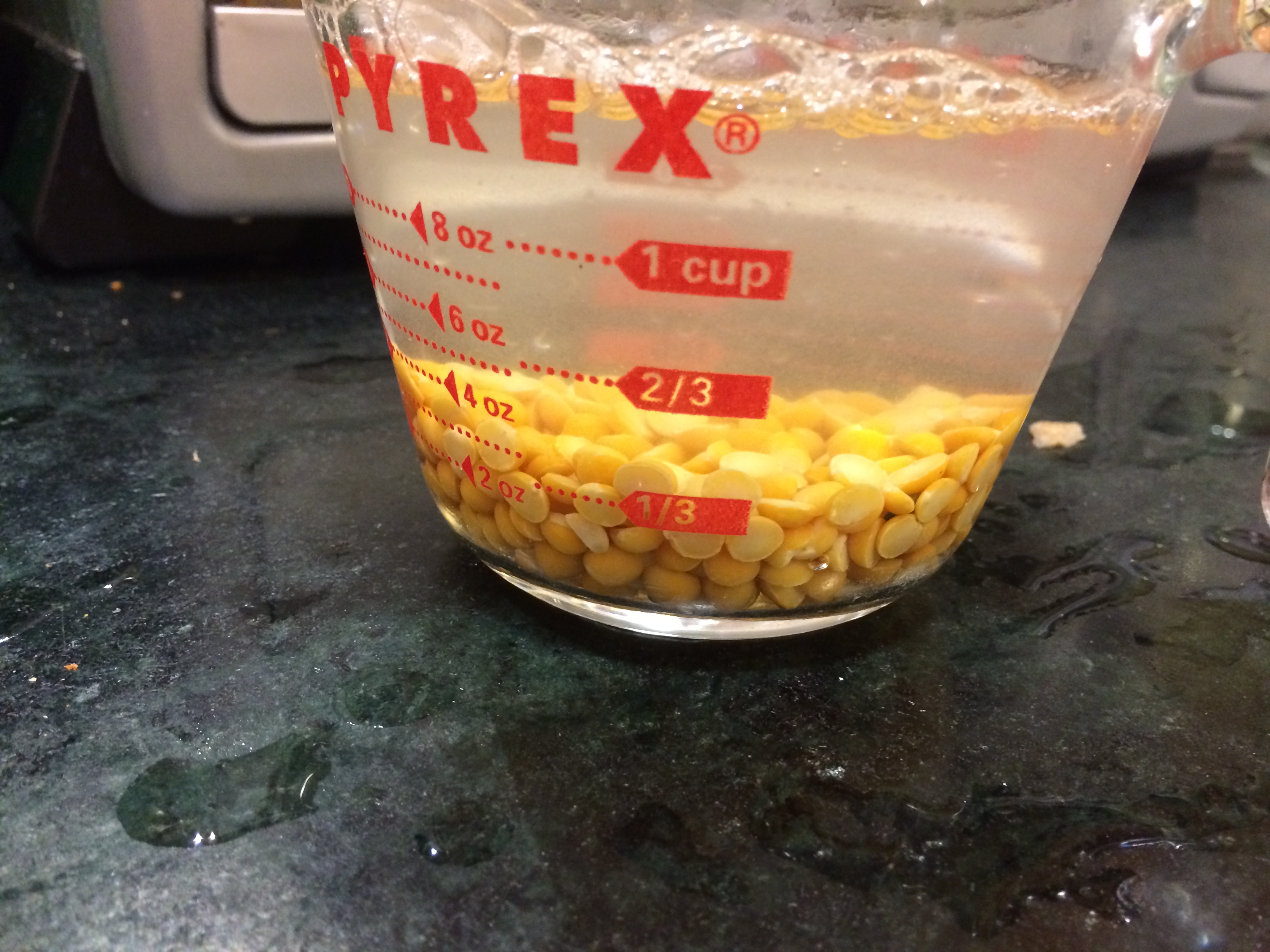
  • Two tablespoons channa dal, soaked for half an hour at least. This post talks more about channa dal.
  • 1 – 2 tablespoons oil
  • One small potato chopped
  • Half an onion, chopped
  • 1 – 4 fresh chilies, jalapeno/serrano/bird’s eye/cayenne
  • Half inch slice of ginger root, minced
  • One teaspoon coriander powder
  • Half a teaspoon turmeric powder
  • One teaspoon dry mango powder (aamchur) or substitute with lime/lemon
  • One teaspoon salt
  • Optional: 1 cup of other chopped vegetables, such as eggplant, zucchini, tomato, carrots, bell peppers, etc.

Method:

Have the channa dal soaking in plenty of water for about half an hour. Wash the green thoroughly in a sink full of water a few times. Chop them up roughly including the stems that are not too woody.

IMG_0163 IMG_0162

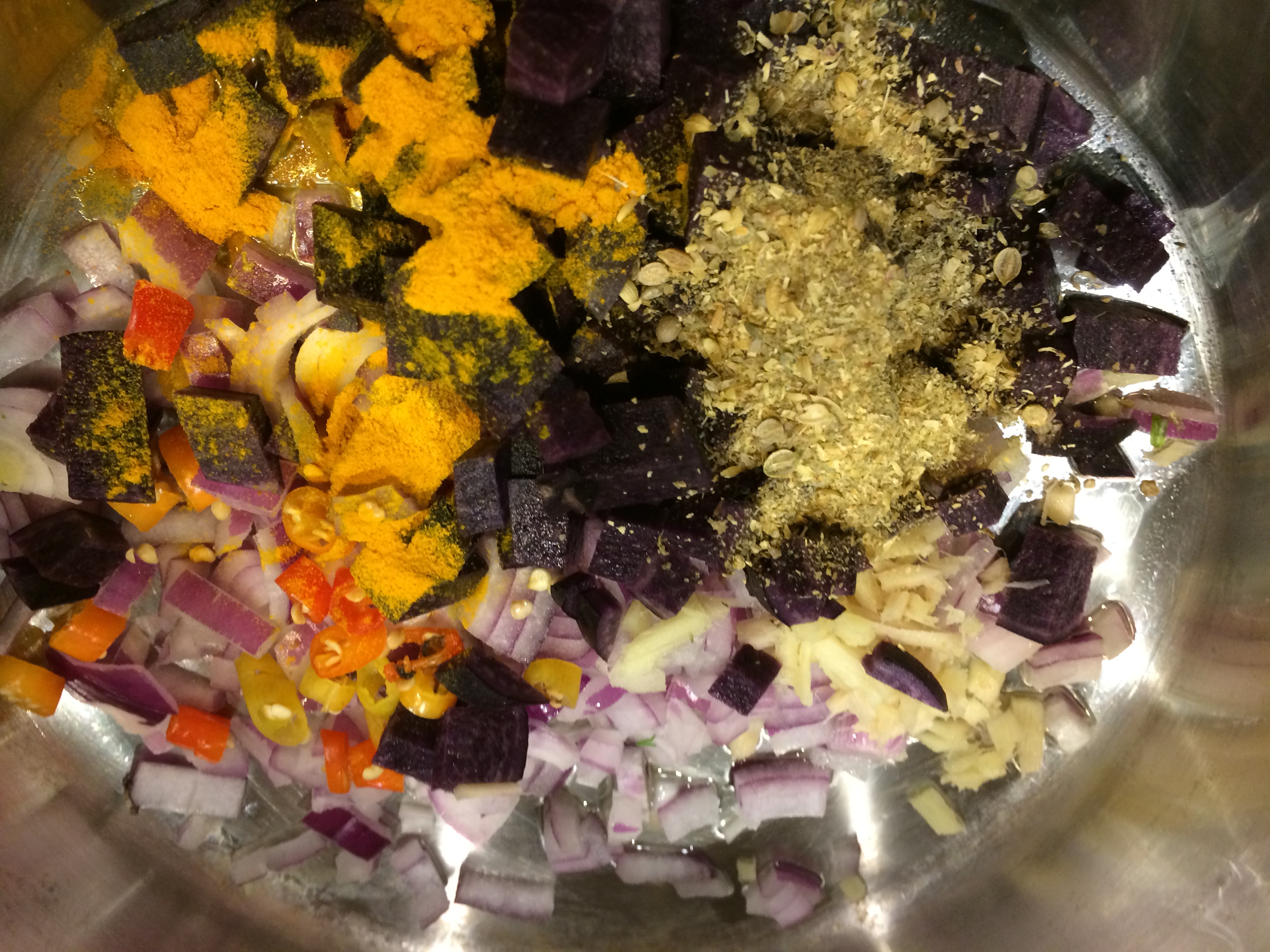
Now start layering the dish in a thick-bottomed pot with a well-fitting lid. First, the oil. Then, the onions, chili and ginger. Then, the potatoes, and the coriander and turmeric powders. Then about half the greens. Sandwiched between this and the other half of the greens throw in the drained channa dal. After the last of the greens, sprinkle the salt over, cover, and bring to a boil. The water from rinsing the greens should be enough to cook, or add about a quarter cup if it seems dry.

IMG_0164 IMG_0165 IMG_0166

Once it comes to a boil lower to a simmer and let it be, covered, simmering for about 45 to 50 minutes.

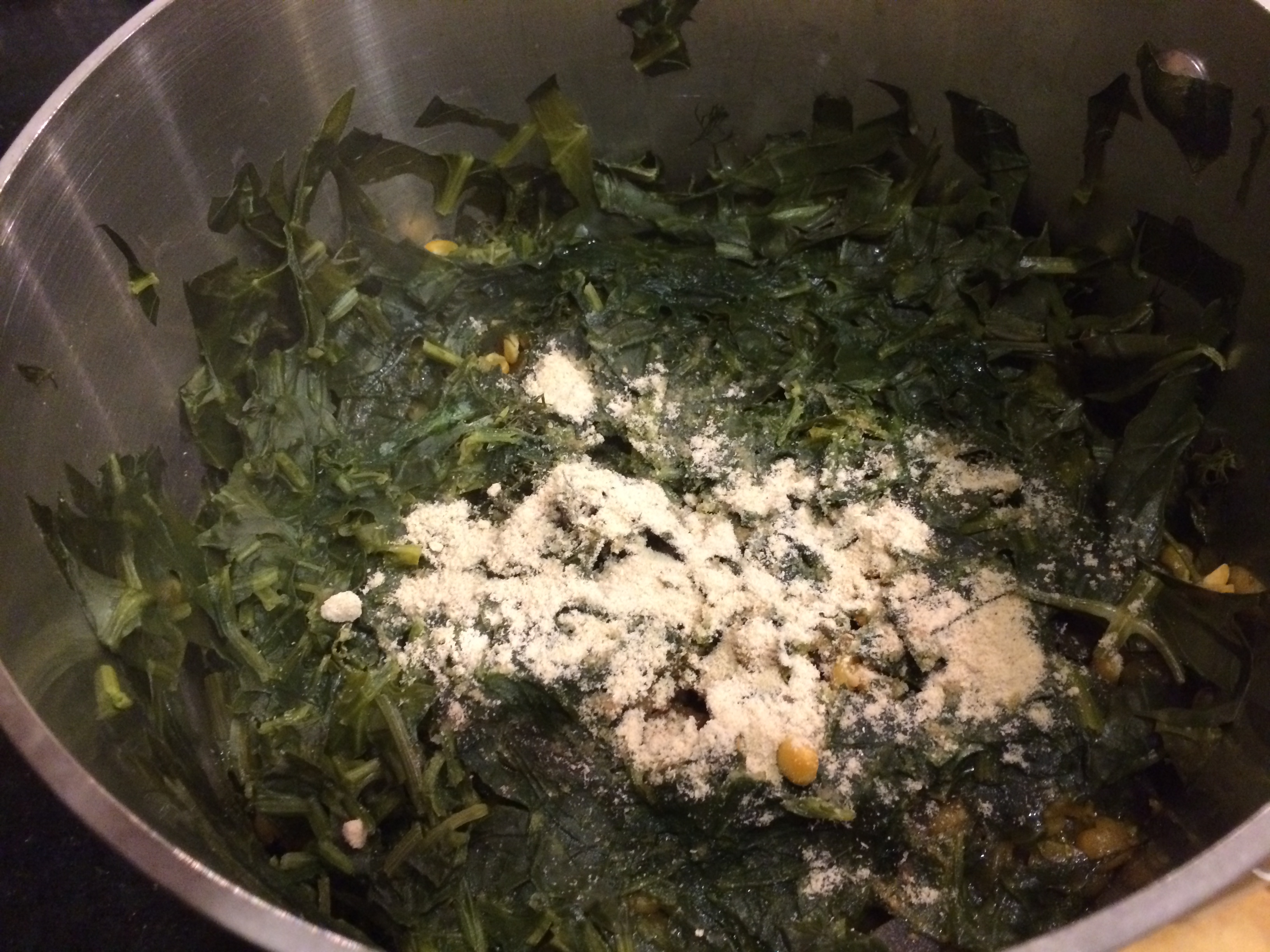
When you open the lid, the lentils should be softened and the greens cooked down a lot. Add the dry mango powder or lime/lemon juice, and mash it with a potato masher or the handy-dandy mandheera.

IMG_0172

mandheera

mandheera

IMG_0175

Warm it through before serving. This is generally eaten mixed with rice and plain yogurt. Three types of rice dishes work well: rice browned with onions, khichdi rice, or yellow garlic rice (recipe forthcoming).

On my plate, I served sai bhaji, rice and yogurt in three neat sides, with some fried taro on the side. My husband however likes it all piled up, like this:

IMG_0176 IMG_0178

Far be it from me to dictate which way you choose to eat it, but you won’t be sorry you did.

Garlic-fenugreek gravy with absolutely anything

IMG_0112

This is a Sindhi gravy that you can throw anything into, and make a wonderful meal, sort of like this gravy. And it is so simple to do, that you will be left wondering if you left out any steps. You didn’t!

Greenish in color from the fresh herbs, it also has the wonderful warm aroma of garlic. The herbs and the garlic together make an intense and unfamiliar aroma that most people are intrigued by.

As for what to put in it — some common Sindhi preparations use okra, or King mackarel fish, or zucchini; I have made a successful combination of paneer and peas in this gravy or potatoes and peas. You also have your choice about how wet or dry to make the result; and whether to have it with roti as a side, or over plain white rice. But use your imagination and let’s get started.

Thoom-methi gravy with potatoes and peas

Ingredients:

  • Half a large red or yellow onion, roughly chopped
  • 3 – 4 largish cloves garlic
  • 3 (or to taste) fresh chilies, jalapeno, serrano, bird’s eye or cayenne
  • half a bunch of cilantro, roughly chopped
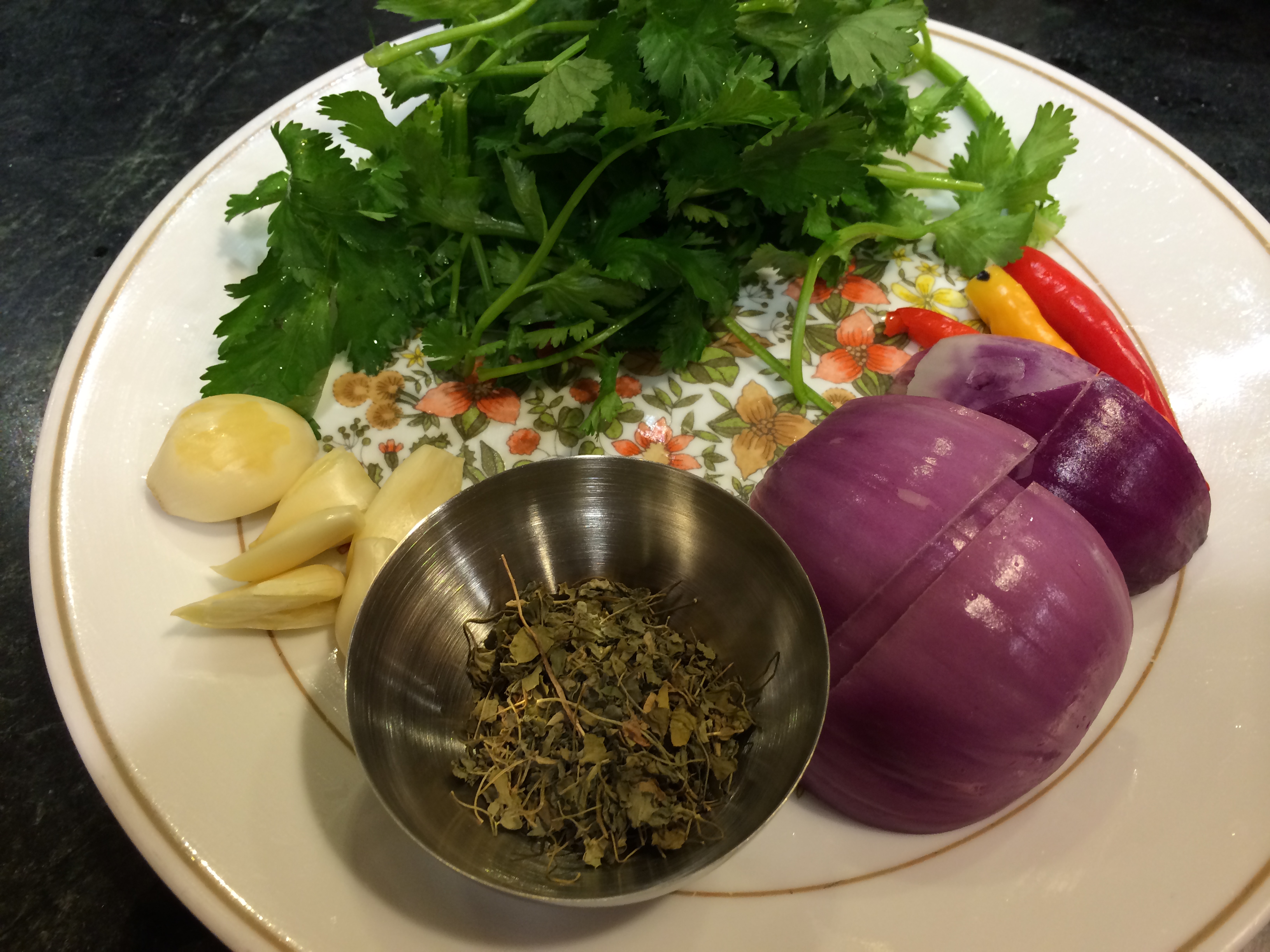
  • 1 tablespoon dry fenugreek or half a cup fresh if you can find it
  • One large tomato
  • 1 teaspoon coriander powder
  • half teaspoon turmeric
  • 1 teaspoon salt
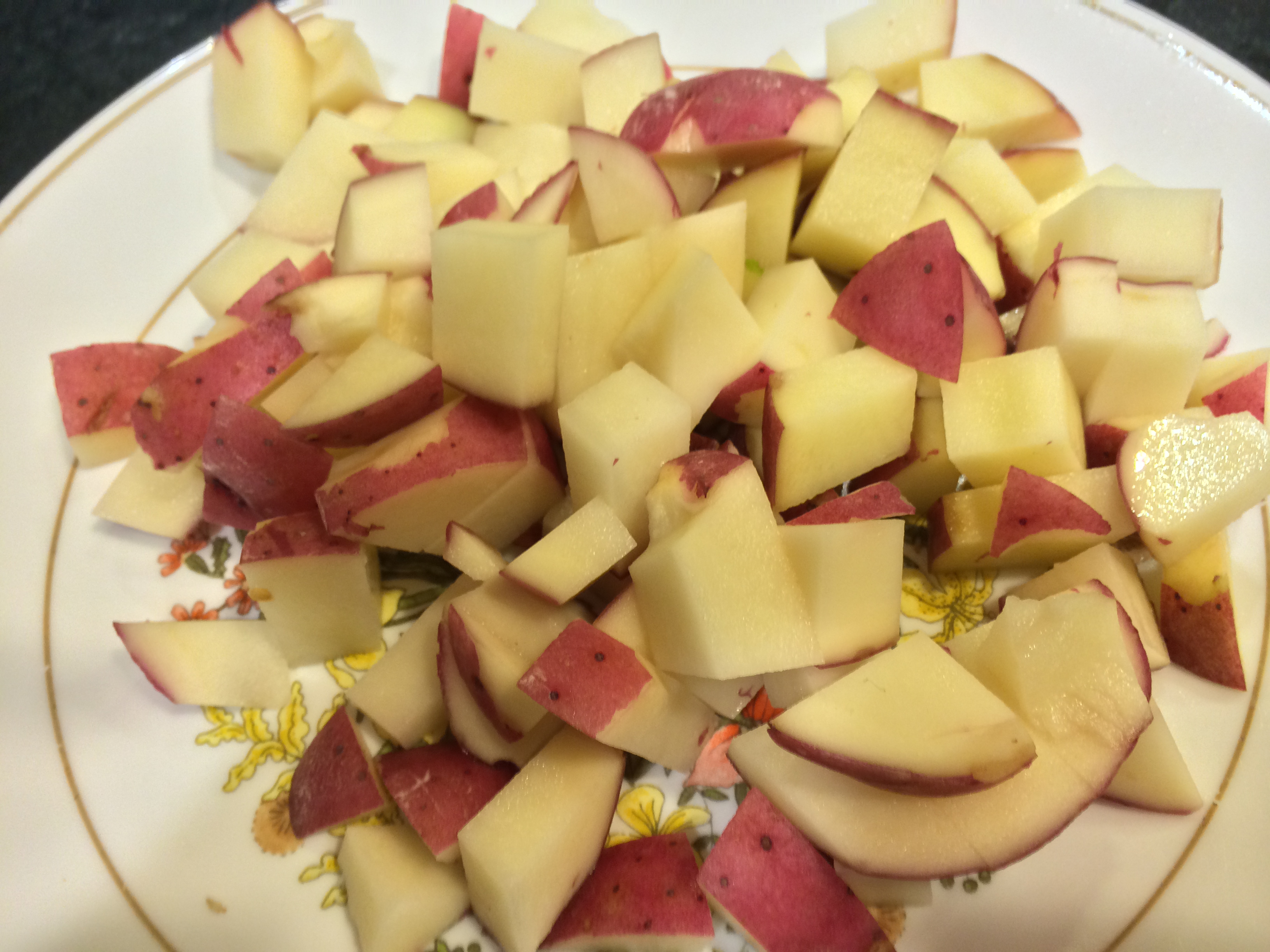
  • 3 cups of chopped vegetables: I used 3 cubed red potatoes and half a cup of peas.
  • 1 – 2 tablespoons oil

Method:

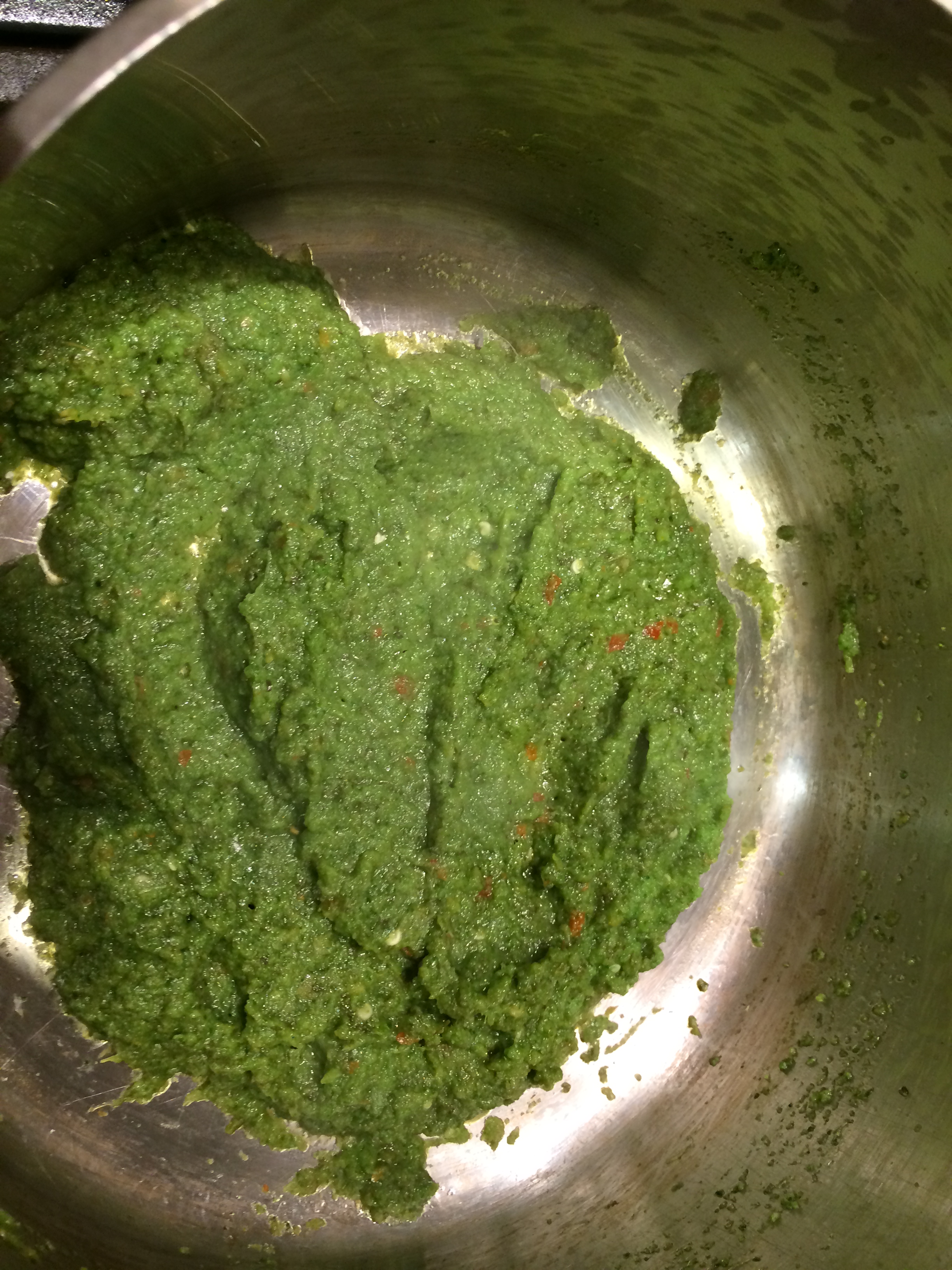
Combine in a blender the following roughly chopped vegetables, with about a quarter cup of water: onion, garlic, cilantro, fenugreek and chilies. Blend to a paste consistency, as shown below.

IMG_0098 IMG_0100

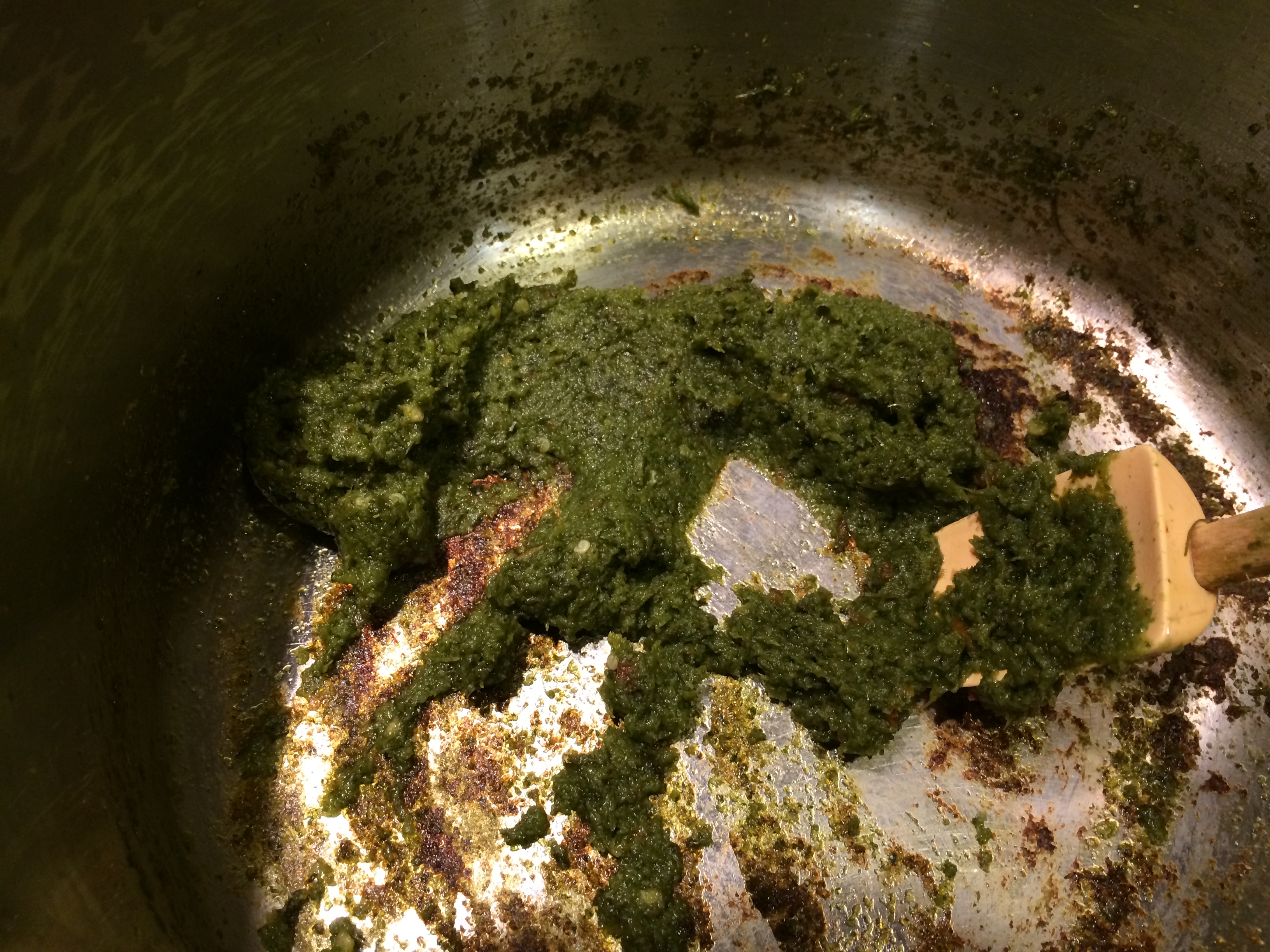
Heat oil in a thick-bottomed pot and when it shimmers, put in the paste and cook it on medium-high. In about ten minutes it will dry up and start to darken; keep stirring it once in a while. When it goes from looking like this:

IMG_0101

to looking like this:

IMG_0102

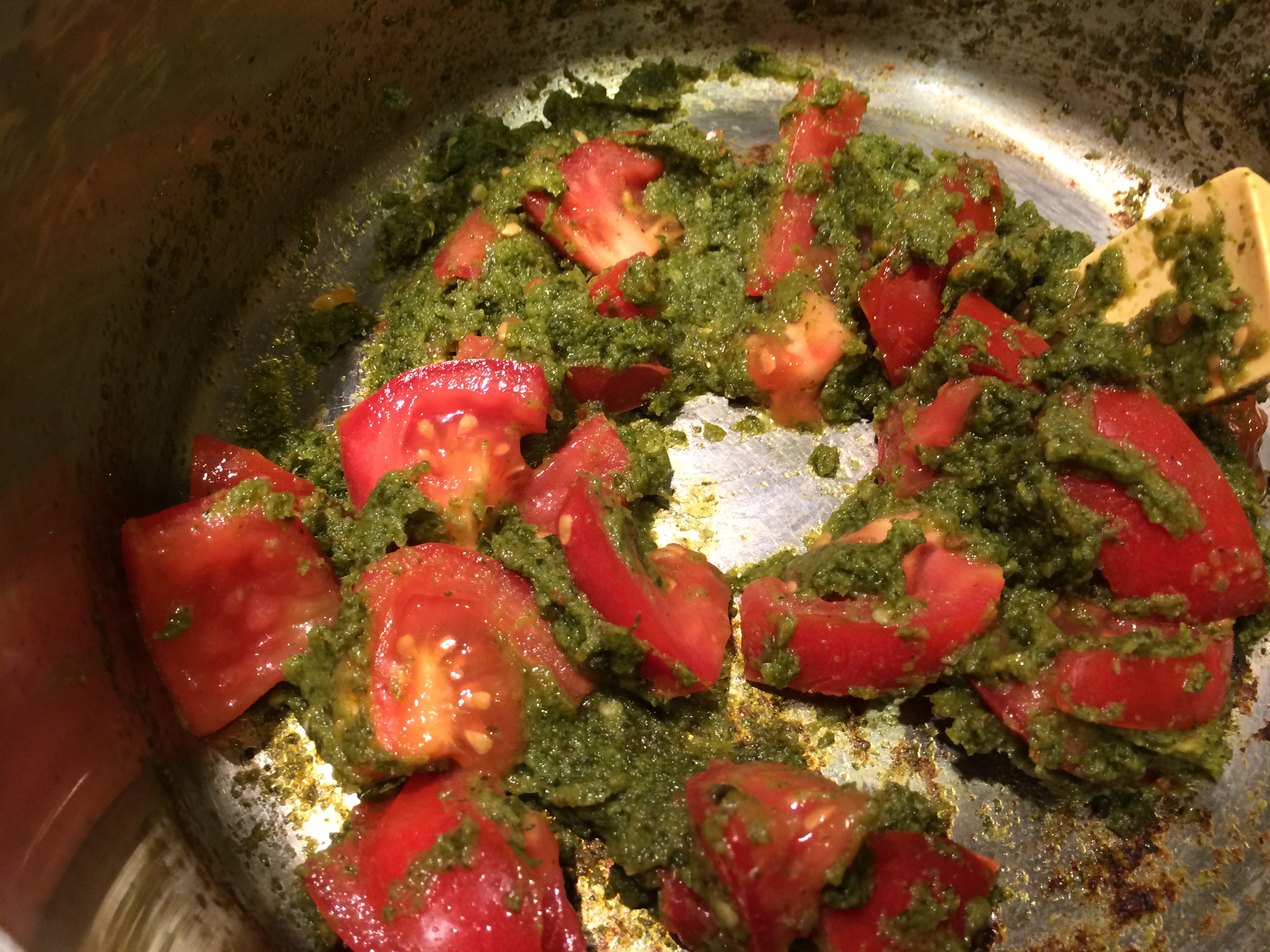
put in the chopped tomatoes. The tomatoes will first liquefy and then turn pasty and combine nicely with the rest of the spice. Stir for about 5 minutes; when they are more or less dry, put in the coriander and turmeric powders and stir. Now put in about a cup or cup and a half of water, bring to a boil.

IMG_0104 IMG_0105IMG_0106

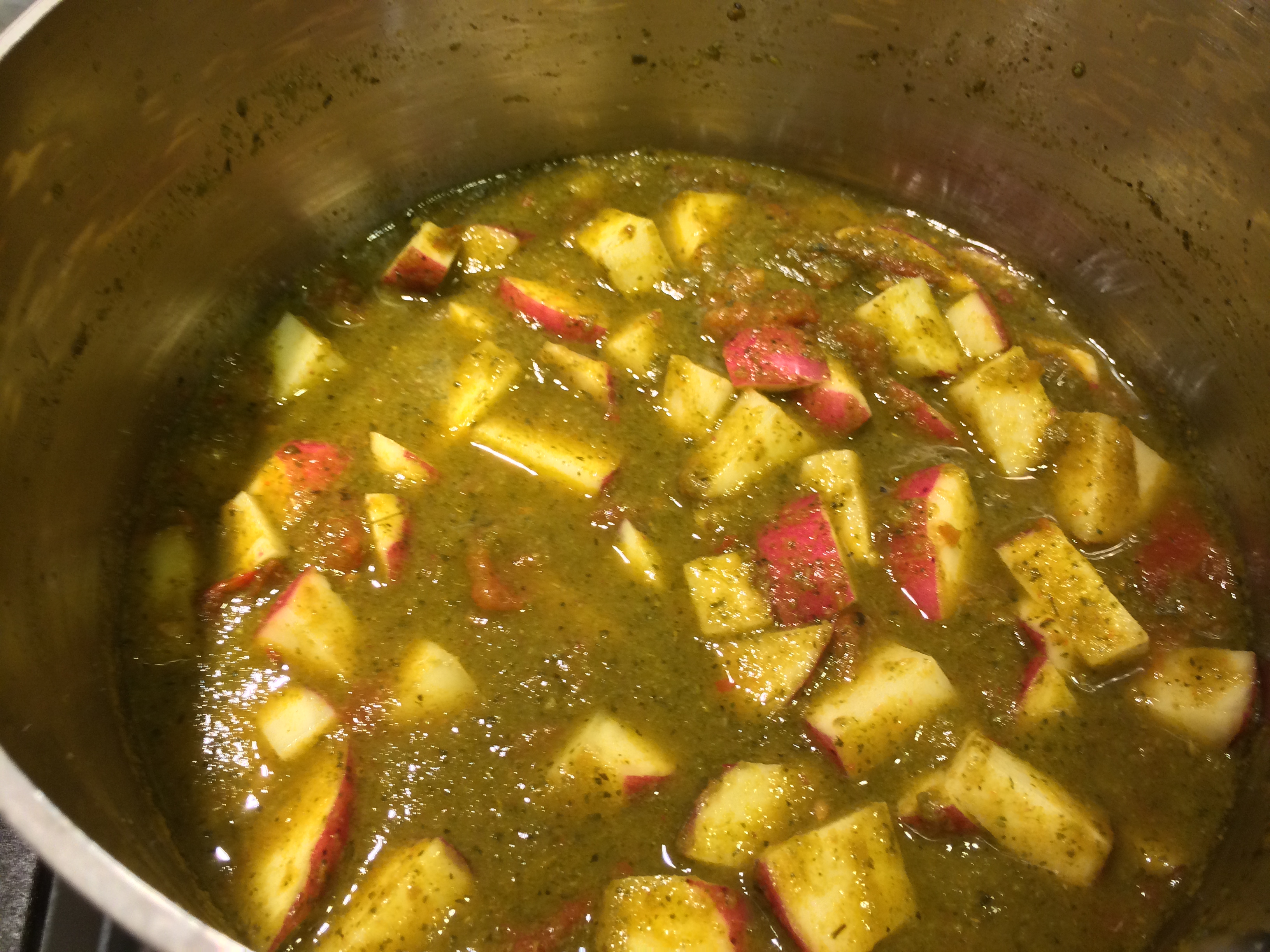
Now the gravy is ready, and it is time to put in whatever chopped vegetables you want. I put in cubed potatoes, and simmered them with the lid on for 15 minutes to cook; then I put in the frozen peas and only cooked them enough to heat through.

IMG_0109 IMG_0111

Oh — I added the salt along with the vegetables so that they absorb the salinity properly.

An excellent use for loofah in the kitchen

Loofahs are pretty useful little scratchy devices that one can use as scrubbies, usually in the bath on your pretty pink toesies. That’s great and all, but does my kitchen have any use of them? Yes.

Start with this:

Loofah

Loofah

And go back in time several months at which time it looked like this:

Ridged luffa squash

Ridged luffa squash

At this point, loofah can be used to make an excellent meal. When these gourds are harvested green, the flesh is soft and delicious with a hint of sweetness. Leave it on the vine, and the flesh becomes fibrous and scratchy.

When young, I always knew this vegetable as ‘toori’. Its true name is luffa, which is where the more fancy appellation ‘loofah’ comes from. Now I love toori so much that if I was the farmer in whose job it was to grow a crop for loofahs, not many would make it that far.

Ridged luffa squash with garlic and tomatoes

Ingredients:

  • 3 largish ridged luffa squash or equivalent amount
  • 3-4 large cloves of garlic
  • 1 large or 2 small tomatoes
  • 3 fresh green chilies or to heat tolerance
  • 6 or so curry leaves
  • Half a teaspoon mustard seeds
  • half a teaspoon turmeric
  • 1 teaspoon coriander powder
  • salt to taste
  • 2 tablespoons oil

Method:

Peel the squash with a vegetable peeler; for the first pass, center the peeler on the ridges; once the ridges are removed, the second pass will remove the rest of the peel.

IMG_0764 IMG_0765 IMG_0763 IMG_0767

The flesh inside is soft and pale. The seeds, at this stage, are not developed into being hard and can be eaten. Chop up the flesh into cubes. Mince garlic and the chilies. Chop up the tomato.

Heat oil in a thick-bottomed pan on medium-high heat. When it shimmers, put in the mustard seeds and wait till they start popping. Then put in the minced garlic and chilies, and the curry leaves (I didn’t have these so I left them out). When these start to shrivel, you can put in the chopped tomato.

toori and spoonrest 001

Now the standard with this type of dish is to let the tomato liquid boil off. This intensifies the flavor of the tomato. So keep the heat on medium-high, and stir the tomatoes once in a while, helping it along by crushing it with the back of your spoon.

Once the tomatoes seem pretty dry, put in the turmeric and coriander powder. Stir. Now put in the squash cubes and give them a stir to coat with the spices. Add the salt, use your judgment about the amount. Cover with a lid, bring to a boil (no added liquid is necessary, the salt will draw out the high water content of the squash flesh itself). When it comes to a boil, leave it with the lid on at a simmer.

toori and spoonrest 003 IMG_0768

In another 15-20 minutes, the squash will be much reduced, and done. If you want, garnish with minced cilantro.

IMG_0771

This goes very well with roti/chapati, or as a side with rice and dal.

Clay pot potatoes from Nepal

Dum Aloo Nepali

Dum Aloo Nepali

For all intents and purposes, Nepal is very much Indian. To keep things even-handed, I am also going to insist that India is very much Nepali. Other than the fact that Nepal had a king until very recently, while us Indians dispensed with our gaggle 60 years ago, our cultures are very close, we share a majority religion, and most of our food heritage.

Speaking of which, I recently discovered from this book — 660 Curries by Raghavan Iyer — that Nepal has its own version of a Dum Aloo. How enticing!

‘Dum’ is a method of cooking that the Mughal emperors brought to India. It involves cooking in a deep pot of unglazed clay (called a handi), which is sealed with a flour paste; the food is cooked slowly over coals. The seal is only broken at the moment of serving; at which point the collected aroma is meant to make the guests keel over in delight.

‘Aloo’ of course means potato. This dish traditionally uses whole baby potatoes that have been first fried. The Kashmiri version of this dish is best known, but today we alter it slightly by going a little to the east, and a tiny bit south. To Nepal.

Dum Aloo Nepali

Ingredients:

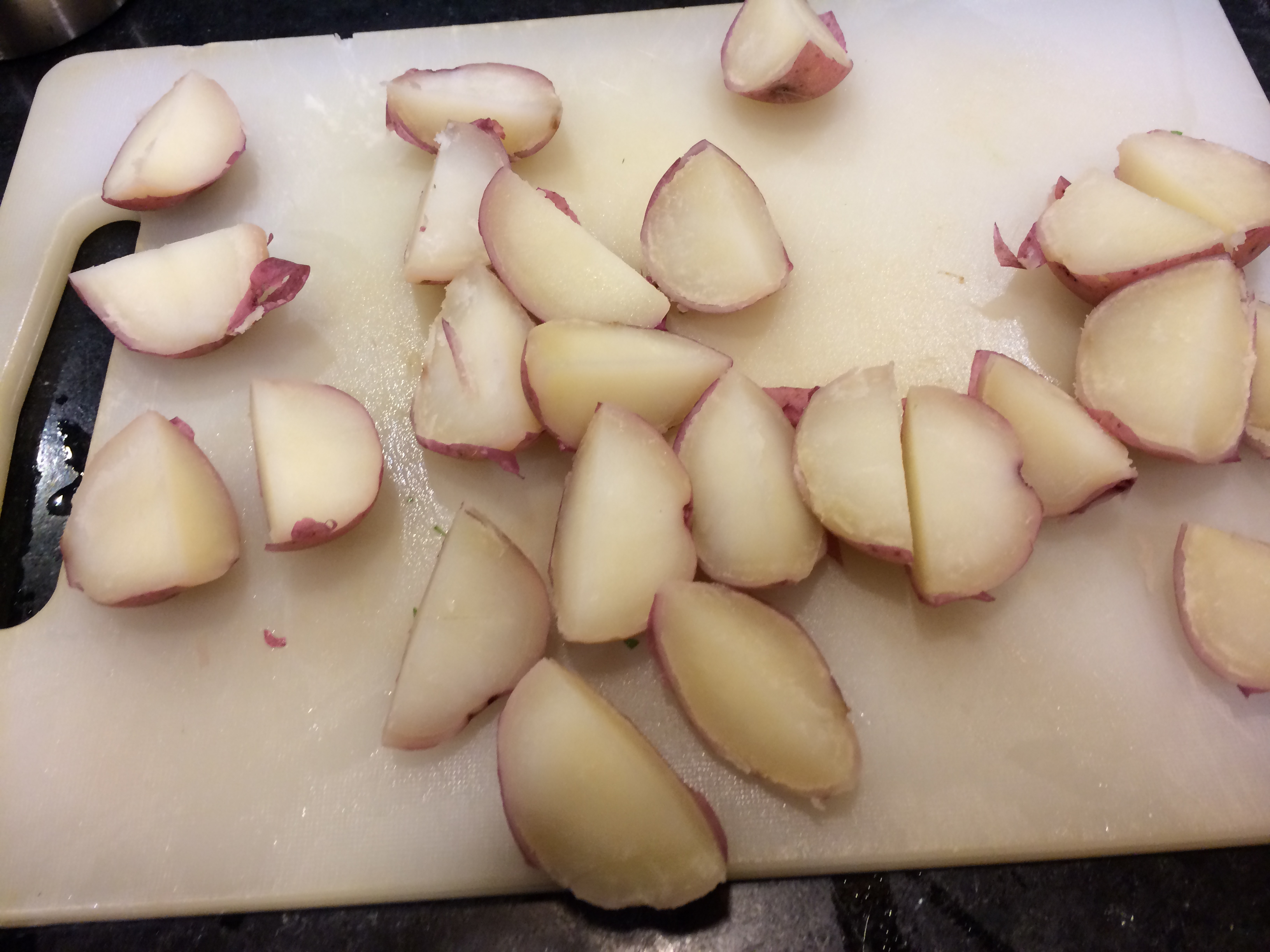
  • About 15-20 tiny new red potatoes; each potato should form one or two bites. I couldn’t find any small enough, so I used 6 larger red potatoes, which I then quartered.
  • 3-4 large cloves of garlic
  • fresh chilies according to heat tolerence, I used 3 cayenne
  • one bay leaf
  • half a teaspoon cumin seeds
  • half a teaspoon fennel seeds
  • half a teaspoon ajwain seeds
  • half a teaspoon turmeric
  • 1.5 teaspoons salt total
  • 2 tablespoons mustard oil; if you don’t have this, use any oil.
  • some lime juice sprinkles if you like
  • minced cilantro for garnish

Method:

Of course I am not going to use a clay pot nor seal it with flour; nor do coals make an appearance. We are going to ‘dum’ the 21st century way, in an oven.

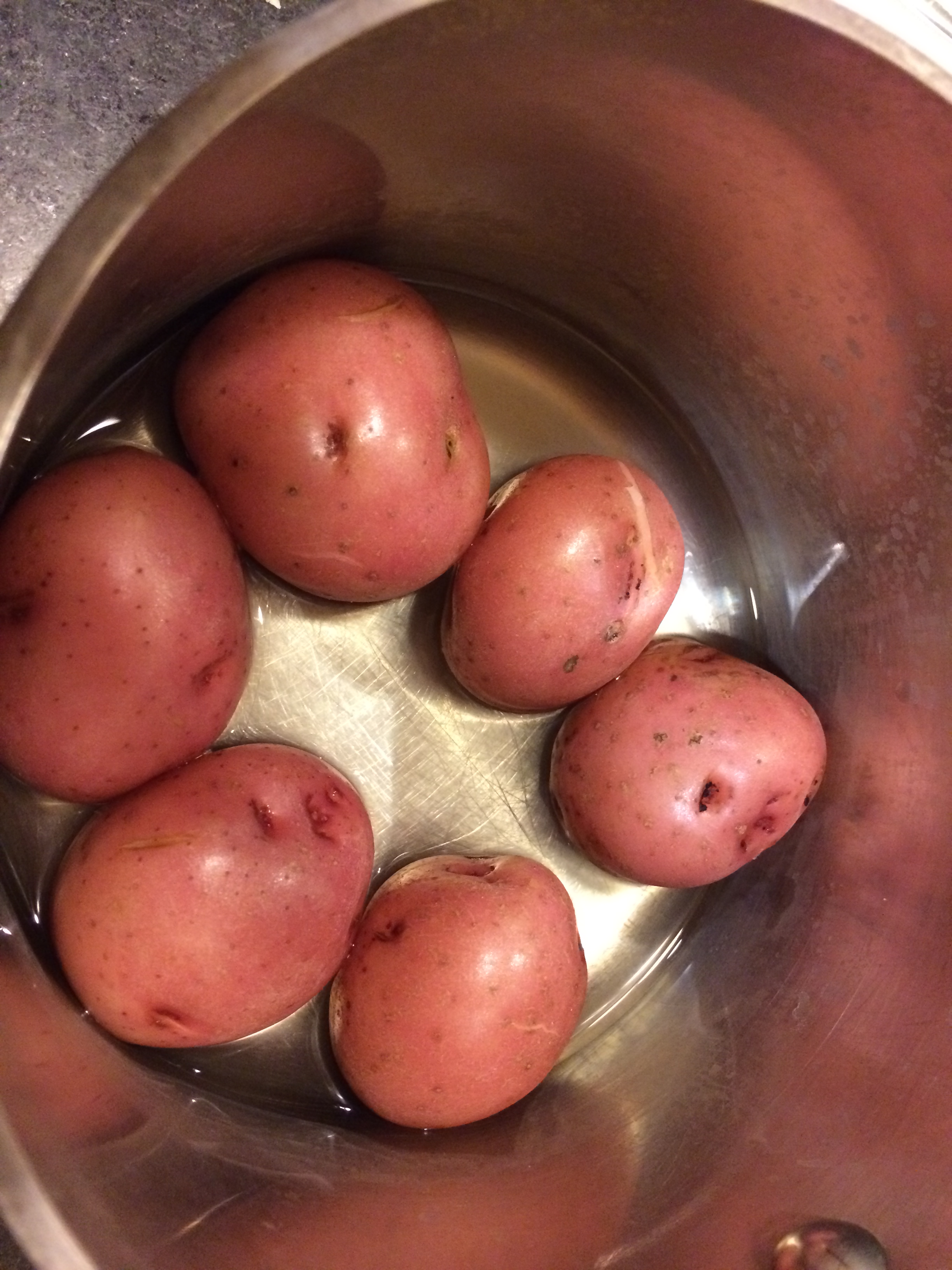
First, wash and boil the potatoes in about a cup and a half of water, lightly salted (put potatoes into cold water, bring to a boil, simmer for 10 minutes). The potatoes should be more or less cooked, which you can test by piercing with a knife.

IMG_0017 IMG_0020 IMG_0022

Take the potatoes out and quarter while leaving the peel on. Also, do save the water, we will use it later.

Chop the chili and garlic and make a paste as I explain in ‘Rustic ginger-garlic paste with the optional chili‘. Of course leave the ginger out in this case.

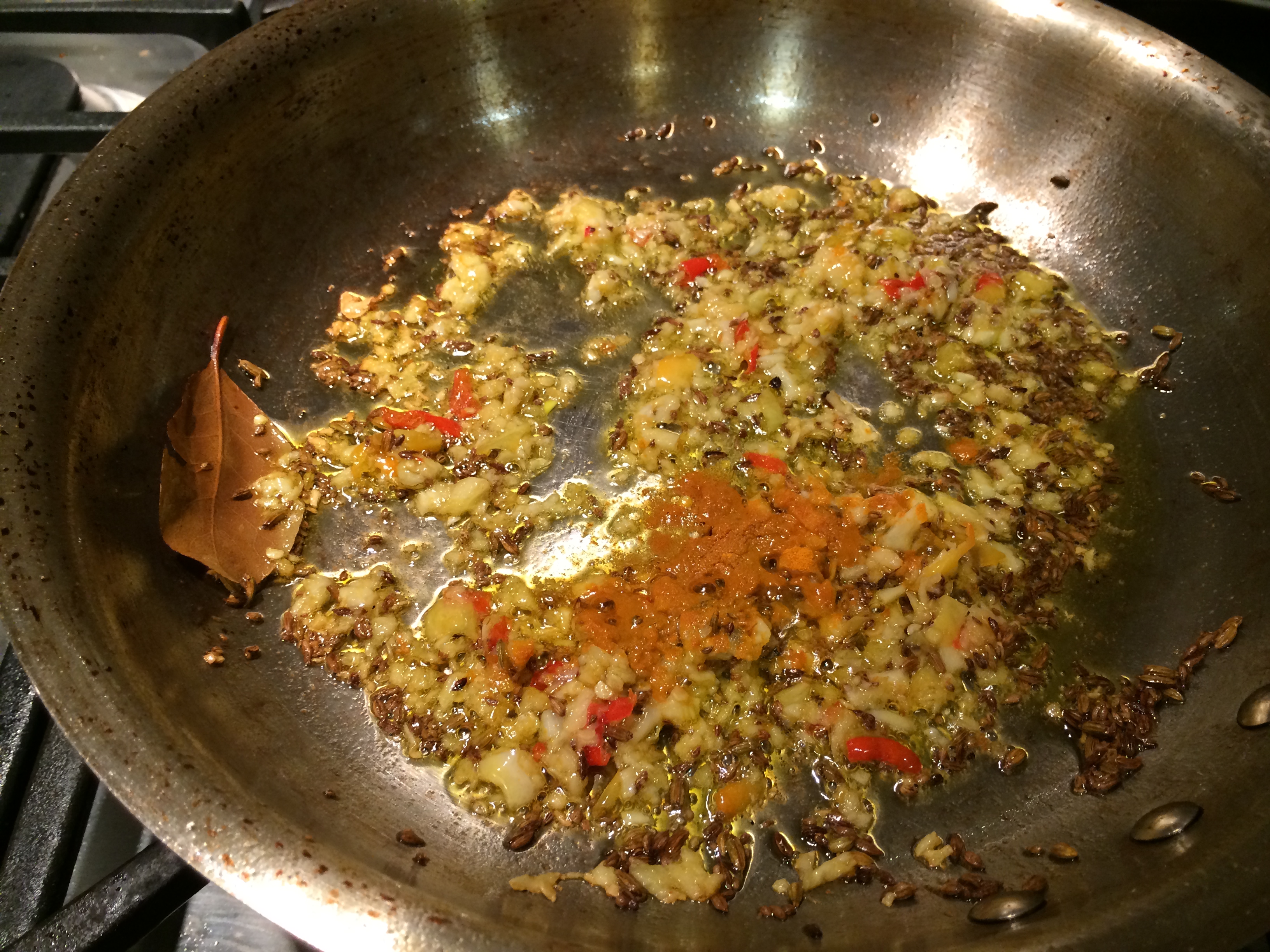
IMG_0018 IMG_0021

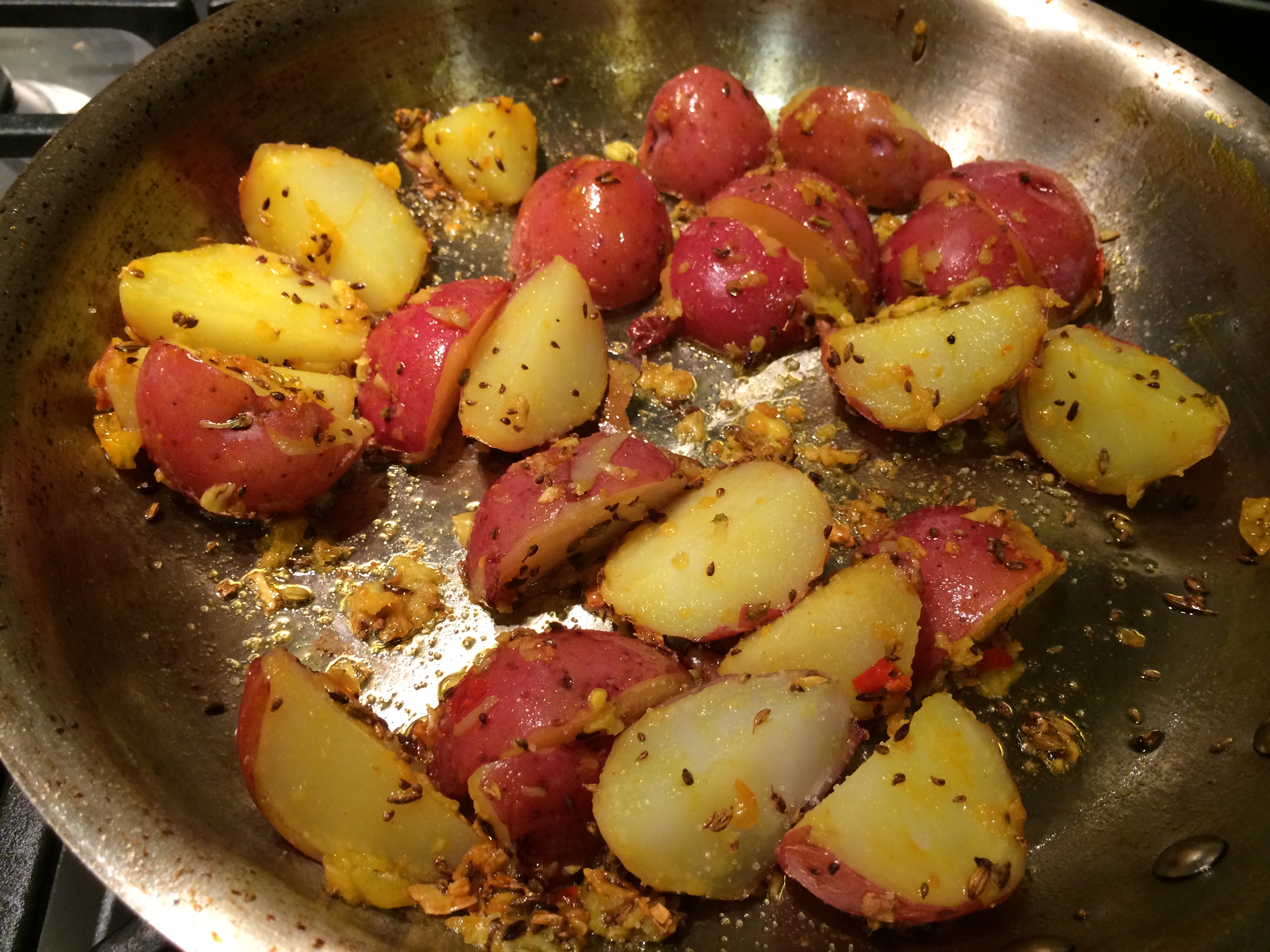
Heat oil in a thick bottomed pan on medium-high heat. When it shimmers add the seeds and the bay leaf. When they sizzle add the garlic-chili paste. Let it cook for a minute, then add the turmeric and quartered potatoes. Saute them gently to cover with the spice paste; add salt. Remember that you have added some salt in the boiling water already and some presumably in the garlic-chili paste; so adjust the total amount or go by taste. After a couple minutes of this, put in the water saved from boiling the potatoes. Stir gently and bring to a boil.

IMG_0023 IMG_0024 IMG_0025 IMG_0026

At this point I do a dum facsimile. Transfer the potatoes into a deep pot with a tight lid. Cover with the lid, but you might also want to seal it with a layer of foil in between the pot and the lid. Put it into a 300 F oven for 20 minutes.

Open the lid just before serving; add some lime juice and some cilantro, stir gently and watch your guests keel over.

660 Curries by Raghavan Iyer is an excellent book by the way, and has many unusual recipes. It is a keeper despite my allergy to the word ‘curry’. On which more later.

King Julienne

King Julien

King Julien

King Julien is a strange character in the Madagascar series of movies. The talented Sacha Baron Cohen does his voice, and gives him an Indian accent, even though he is a native of the Madagascar island. He is a fun-loving narcissist, a ring-tailed lemur who counts bush babies among his subjects.

Odd? Yes, he is very funny, and very odd, which makes him a good mascot for the odd pantry.

This recipe, which basically consists of a number of julienned vegetables (particularly cabbage) is in honor of King Julien. I guess since it features cabbage you could call it a coleslaw which derives from Dutch koolsla and basically means cabbage salad. The dressing here is not mayonnaise-based, which gives it a lot more sharpness than the usual coleslaw.

Oddly sharp coleslaw

Ingredients

  • A scant 4 cups of shredded purple cabbage
  • A scant 4 cups of shredded arugula, loosely packed
  • Half a cup of green beans, microwaved or blanched, and julliened
  • Half a cup of firm apple, julliened
  • 1 tablespoon pinenuts
  • 1 tablespoon julliened ginger (Optional. This makes it really sharp, and if you are into that, you will love it)
  • Salt to taste
  • Half a teaspoon crumbled oregano
  • 3 – 4 tablespoon extra virgin olive oil
  • 1 tablespoon red wine vinegar or balsamic vinegar

Method:

IMG_0692 IMG_0695 IMG_0700 IMG_0698 IMG_0697 IMG_0693

Collect all the vegetable ingredients, nicely julliened. Toss them around in a large salad bowl. Add pinenuts, salt and oregano and toss some more. Now add olive oil and the vinegar and toss yet again.

You can eat it right away but the flavor does develop a little more if you wait fifteen minutes or so.

And you know here is a new idea…try eating it with chopsticks. Failing that, use your fingers.

Oddly sharp coleslaw

Oddly sharp coleslaw