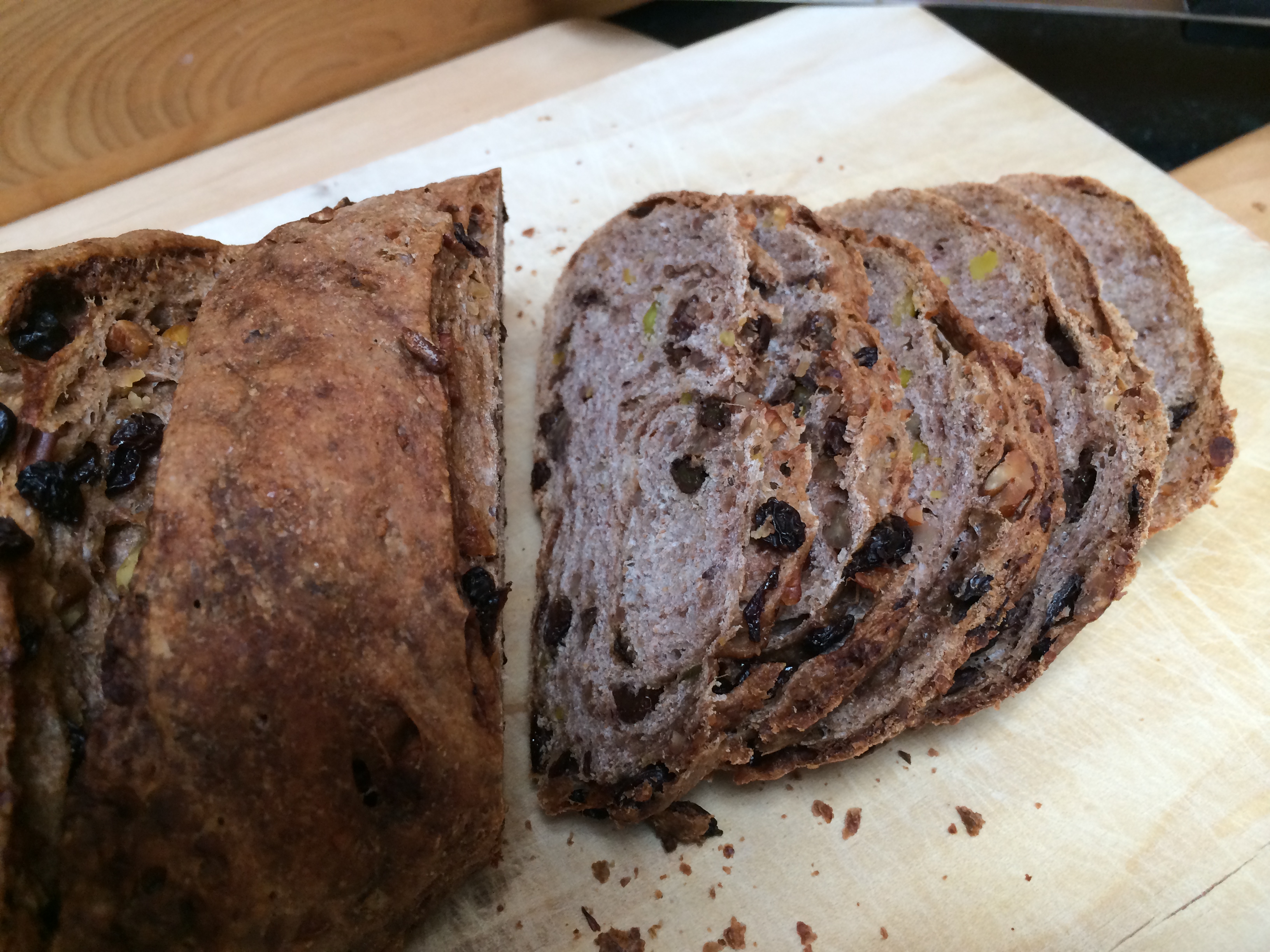
Star-studded raisin-pecan bread

Star-studded bread

Star-studded bread

A lot of what I know about bread-baking I learnt at the home of Rose Levy Berenbaum. No, she is not my favorite aunt or neighbor (though how I wish she were) — she was in her home, on TV, and I was in my home, watching TV and earnestly taking notes.

I have made several of the breads in her book The Bread Bible, and this one is one of my favorites. Of course breads with raisins and nuts are quite common. But the standard configuration they come in is the sliced bread with a square shape, sprinkled with cinnamon and a swirl in the middle. Now that is wonderful, but there’s more to raisin-nut breads than the cinnamon swirl.

The Bread Bible

The Bread Bible

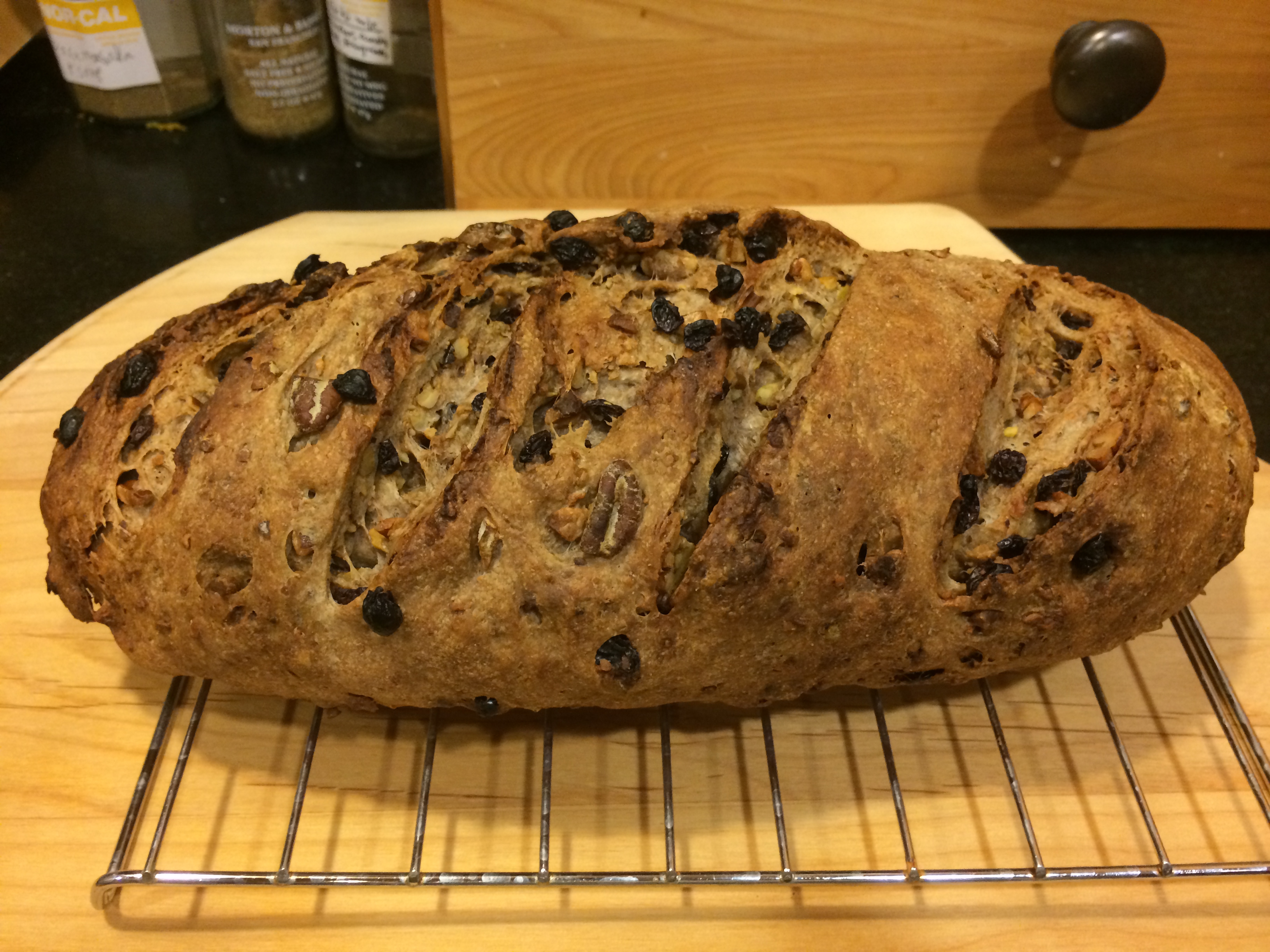
This particular bread (called the Raisin Pecan bread in the book) is a free-form loaf that is baked ‘naked’ in the oven, outside of any pans. Those are my favorite kinds of breads because of their crustiness. There is no cinnamon — that is the other difference. There is no swirl, instead the raisins and pecans are nicely spread throughout the loaf, hence the name that I gave it — star-studded. There is no added sweetness, making it less of a confection and more of an adult dinner bread. Spread with something creamy like clotted cream or a nice white cheddar it is one of the most popular snacks in our home.

She uses some ingenious tricks to enhance the flavor. A sponge is mixed hours ahead or the previous day. Raisins are soaked for 30 minutes, no more; and the soaking water is used in the bread. Some of the pecans are ground fine to be mixed in with the dough, some are just broken bits and add a delightful crunchiness to many bites. The nut and raisins are mixed in in a very delicate procedure, after all the heavy kneading is done,  to avoid a mess of runny raisin juice. Simple, small tricks, but they make a big difference.

I made one more modification — I substituted quite a bit of the flour with whole wheat, because we like that in our household.

Star-studded Raisin-Nut Bread
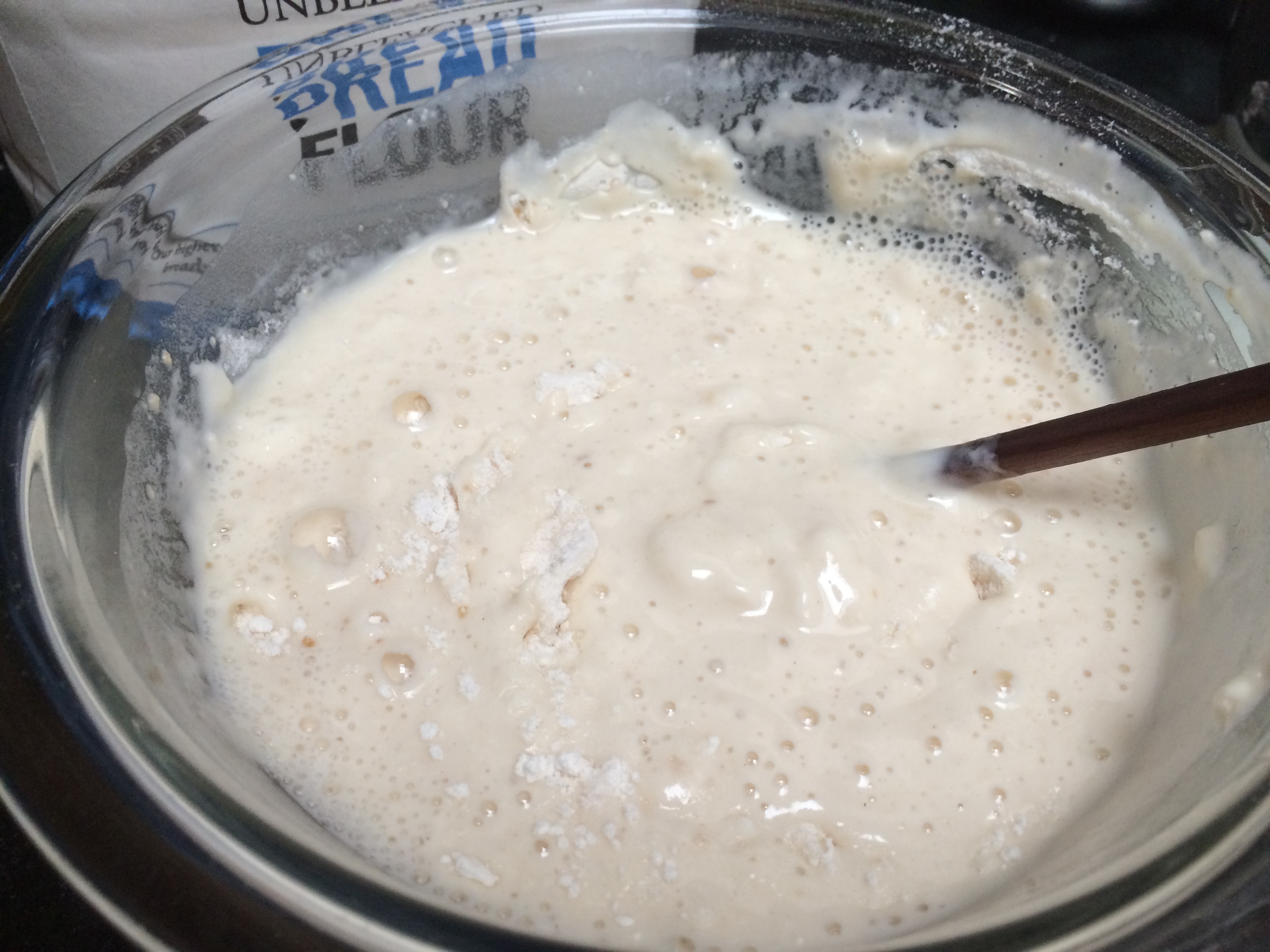
Mixing the sponge
Mixing the sponge

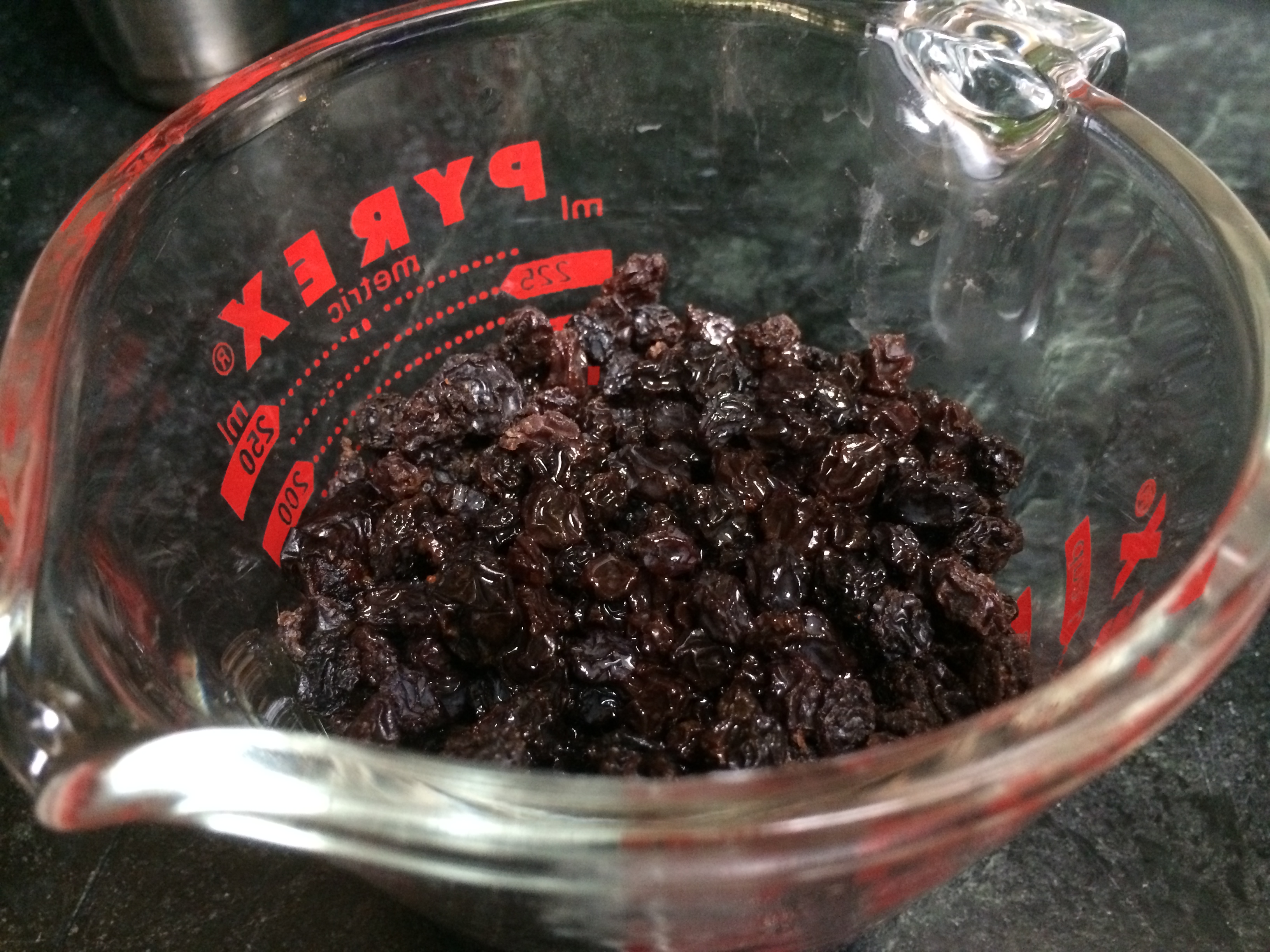
Soaked raisins

Soaked raisins

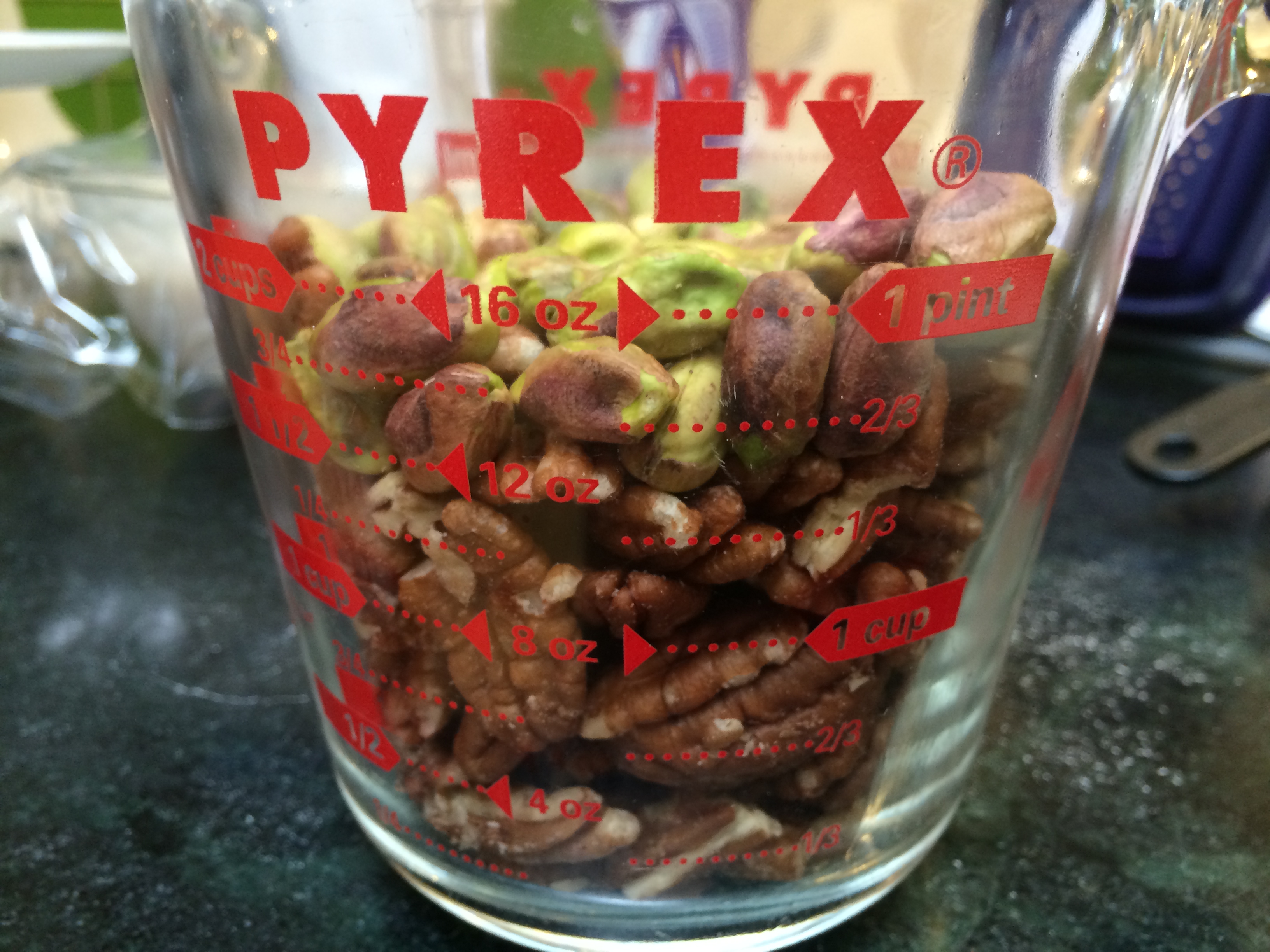
Pecans

Pecans with some pistachio thrown in
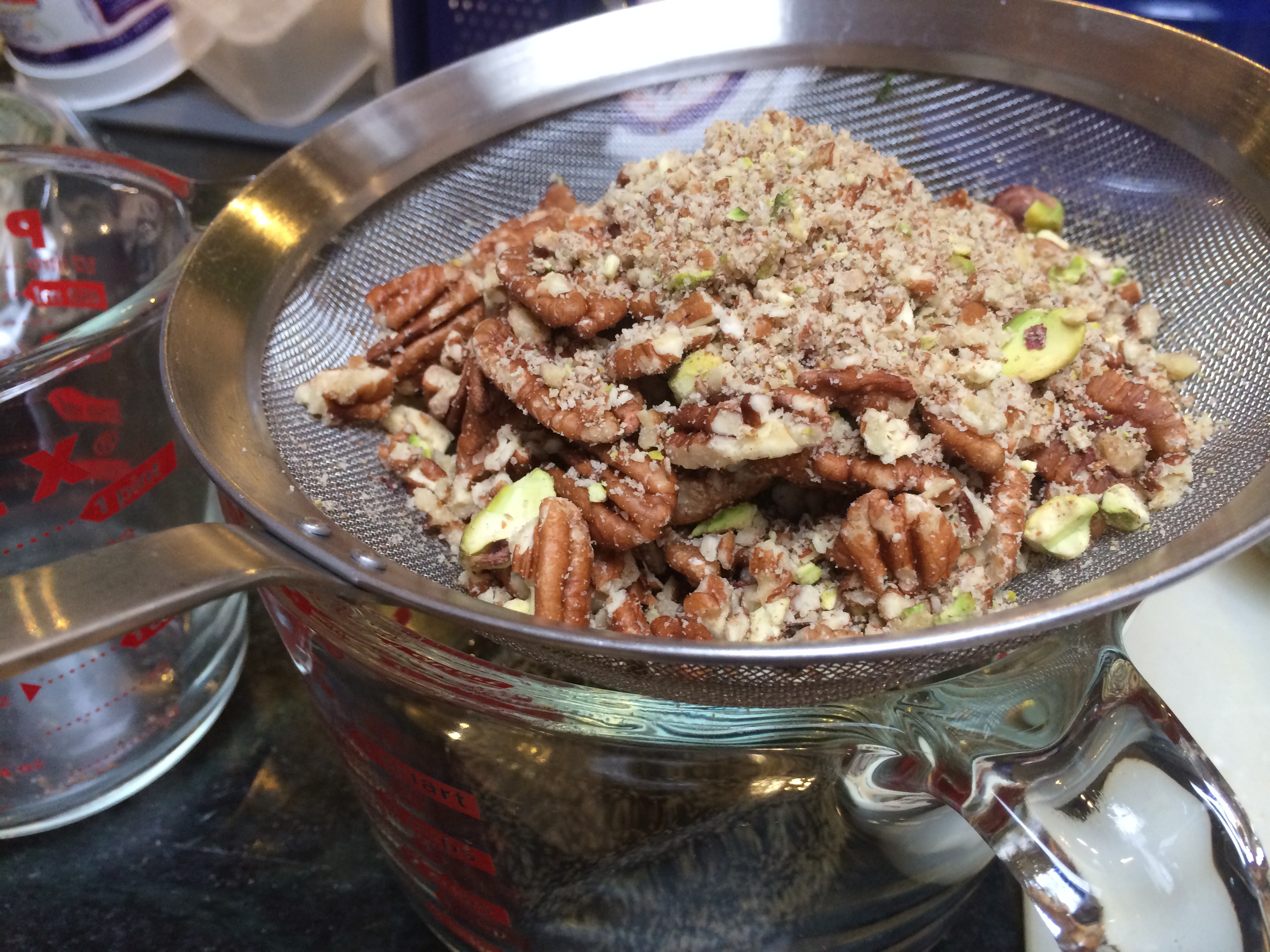
Straining ground pecans
Straining ground pecans

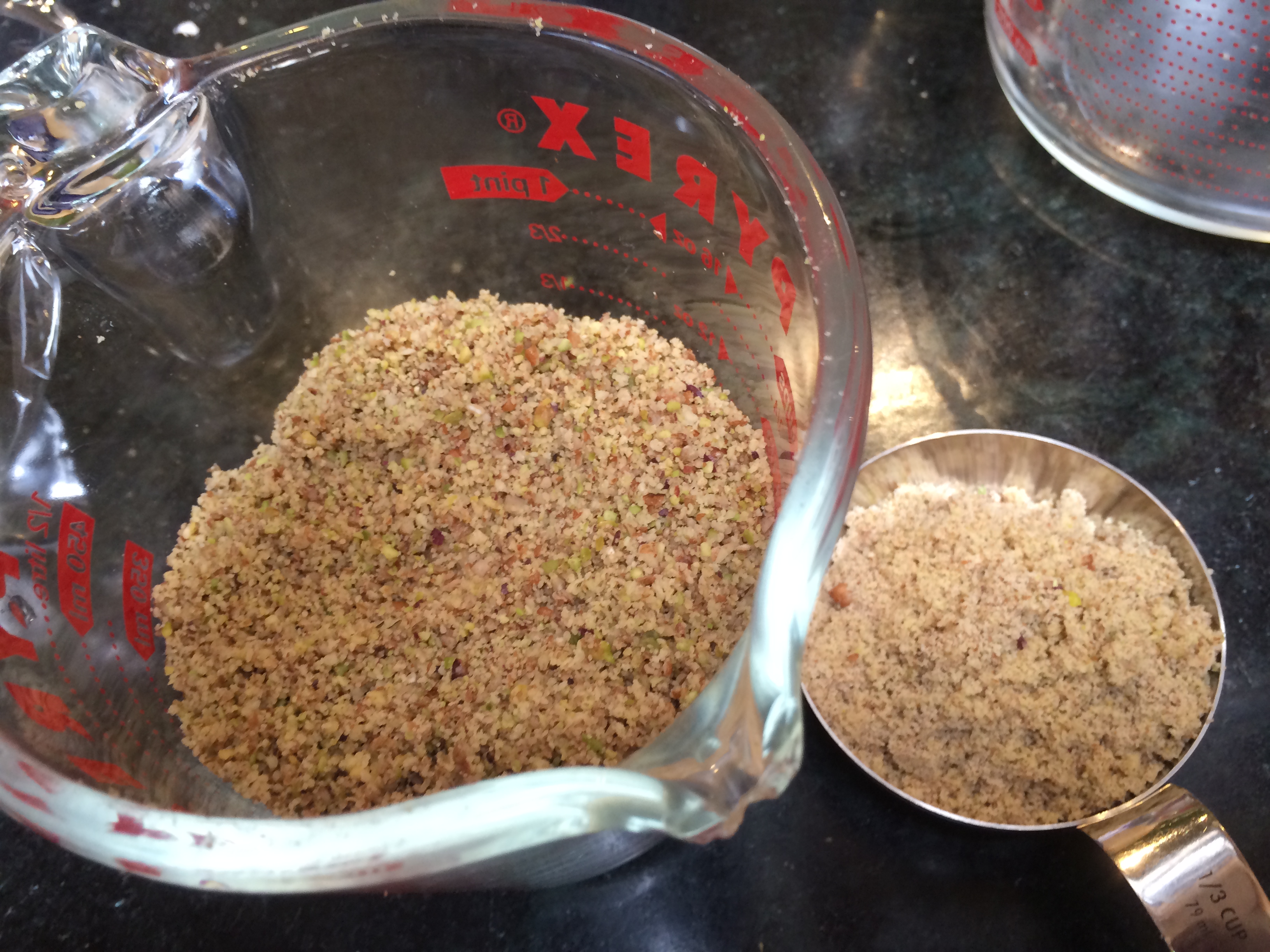
Ground pecans and bits
Ground pecans and bits

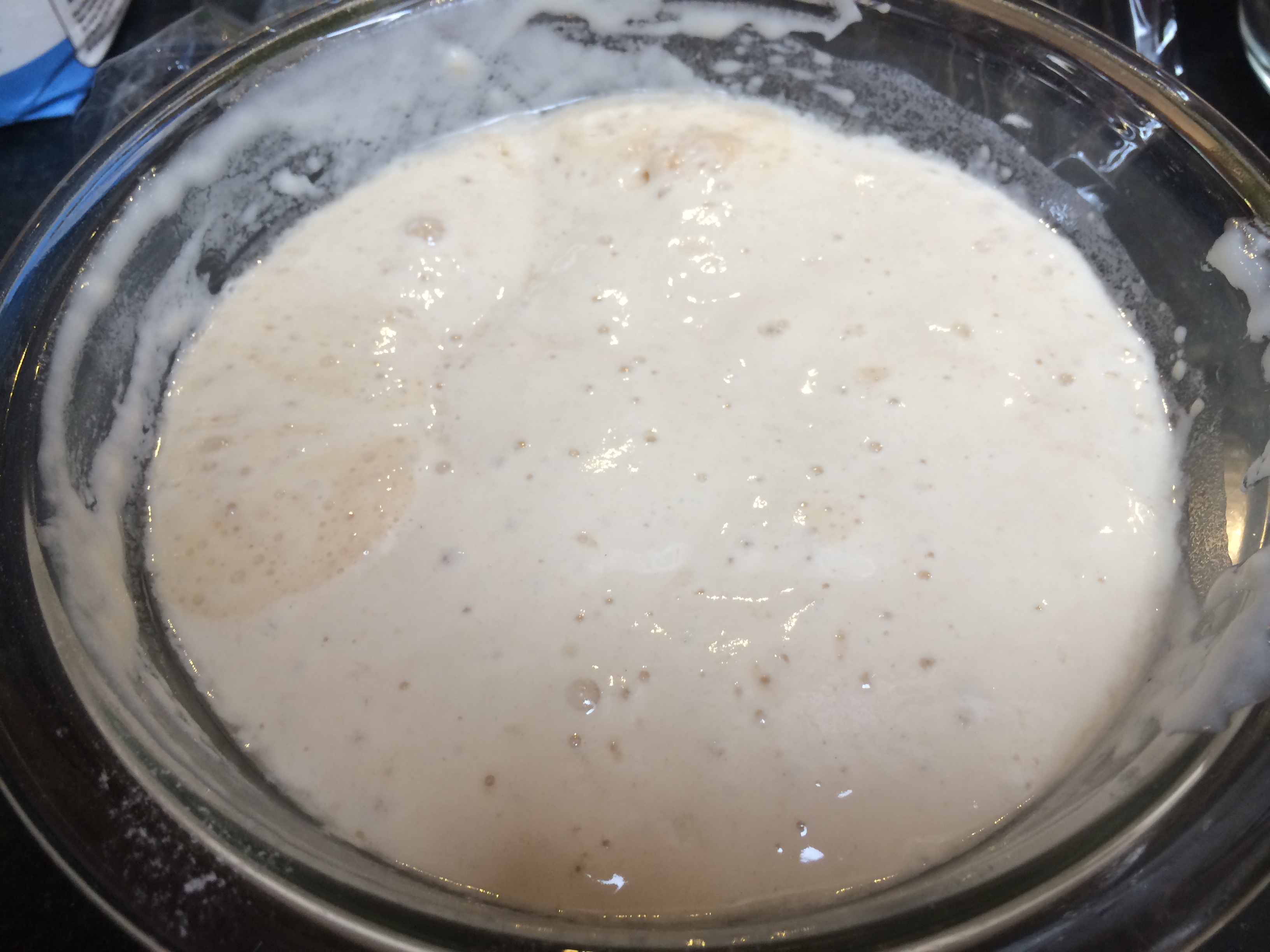
Sponge risen
Sponge risen

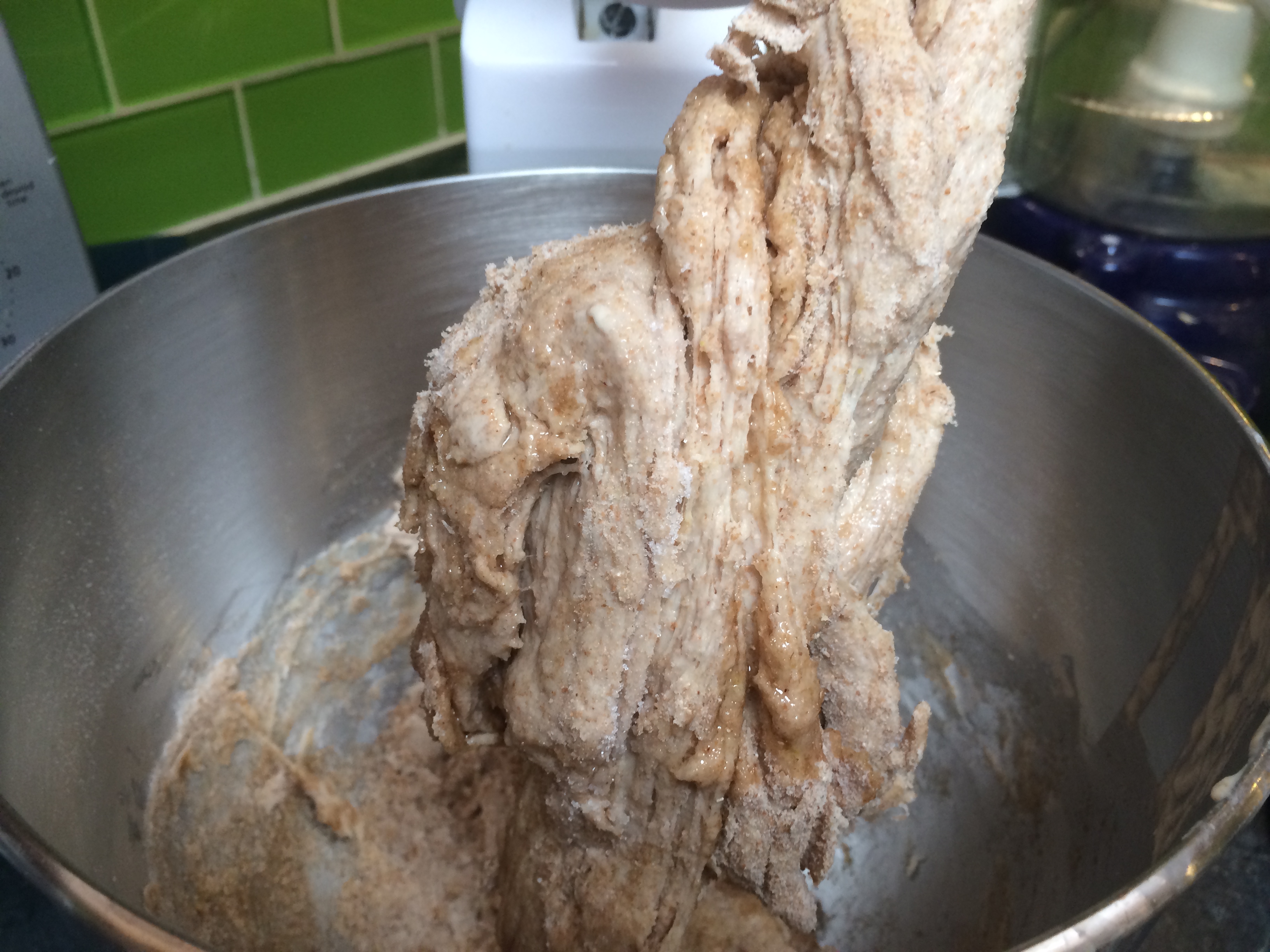
Mixing the dough

Mixing the dough

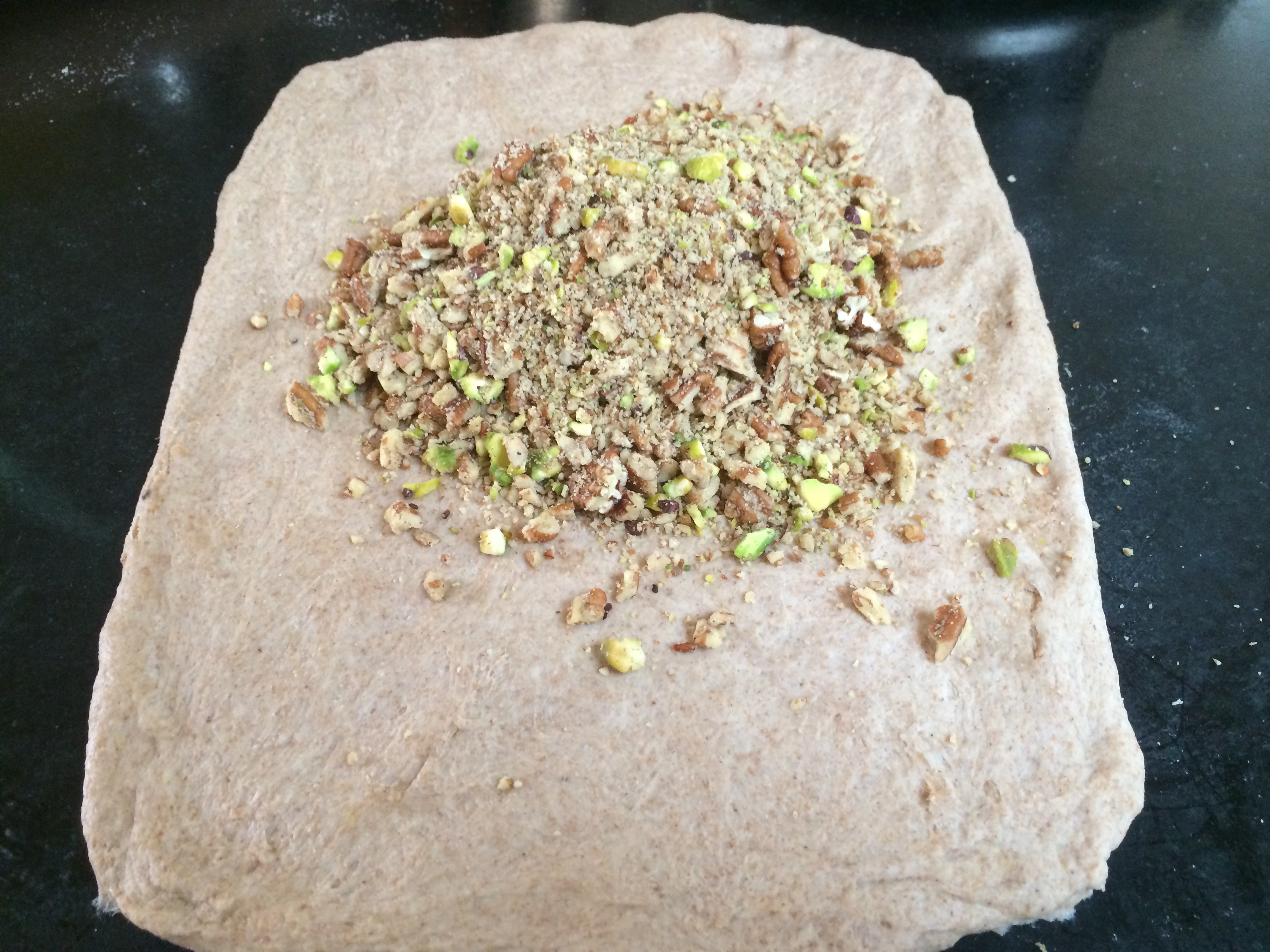
Spreading pecans

Spreading pecans

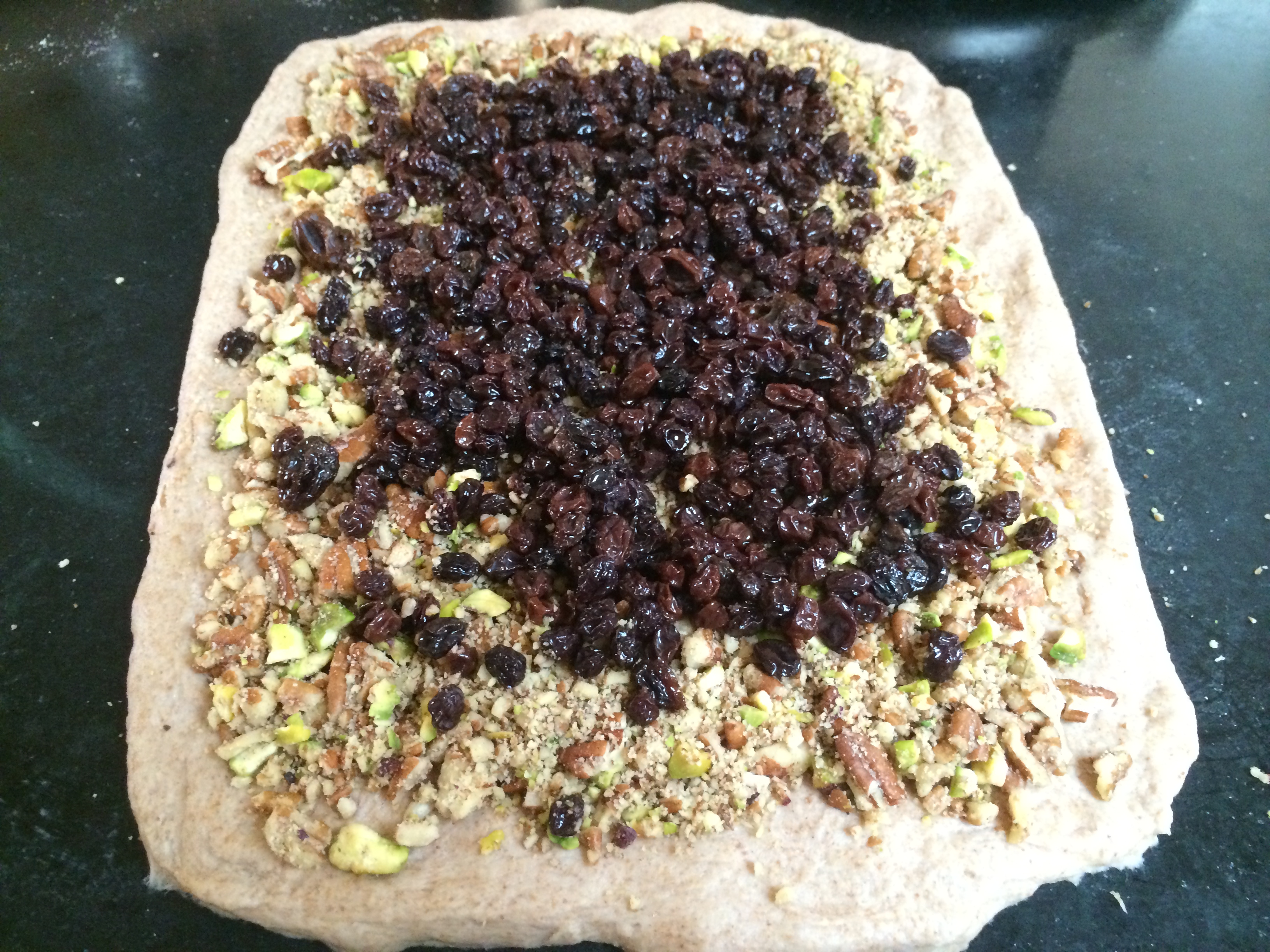
Adding raisins

Adding raisins

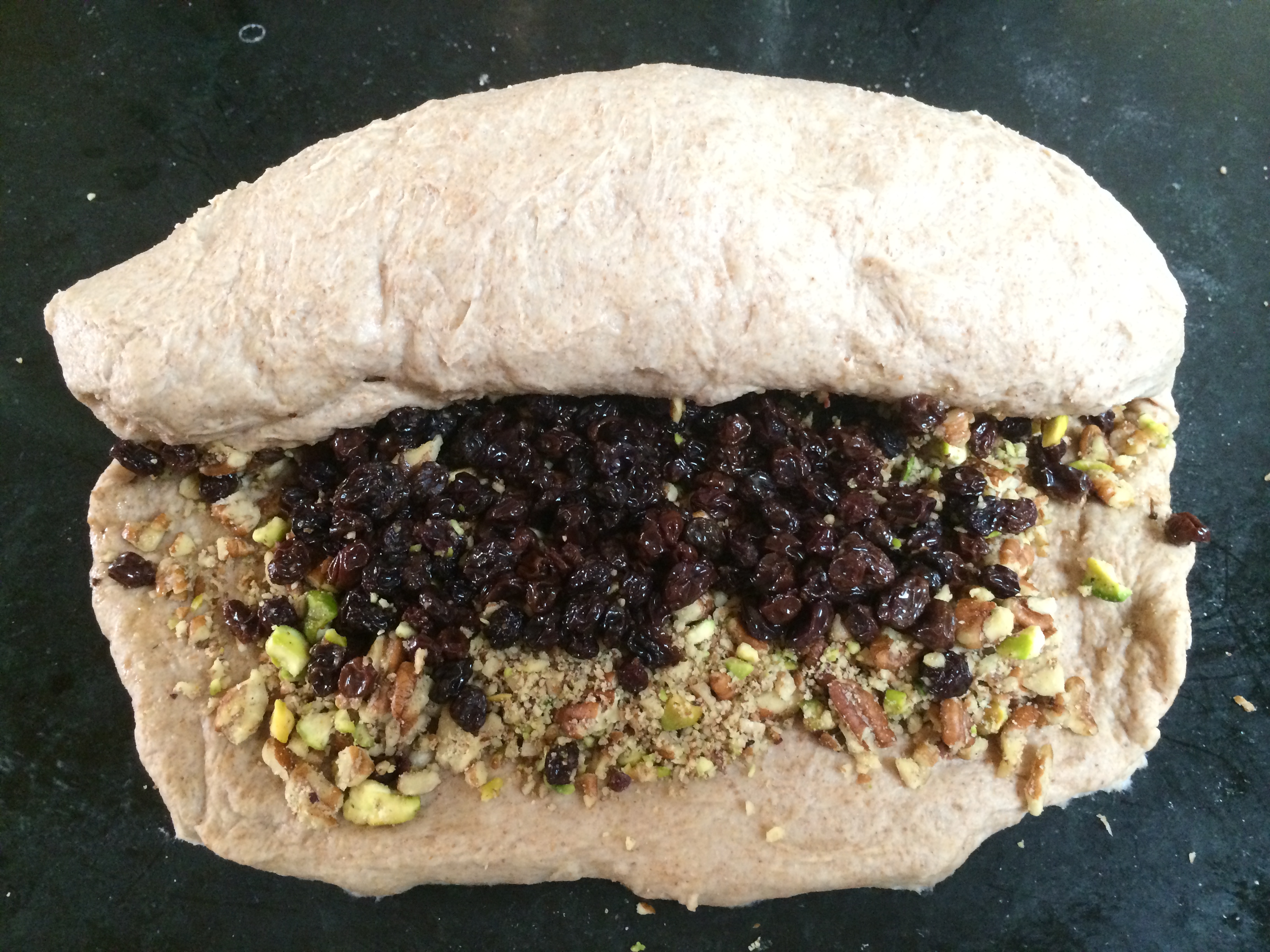
Rolling it up

Rolling it up

Ready for first rise

Ready for first rise

Shaped ready for second rise
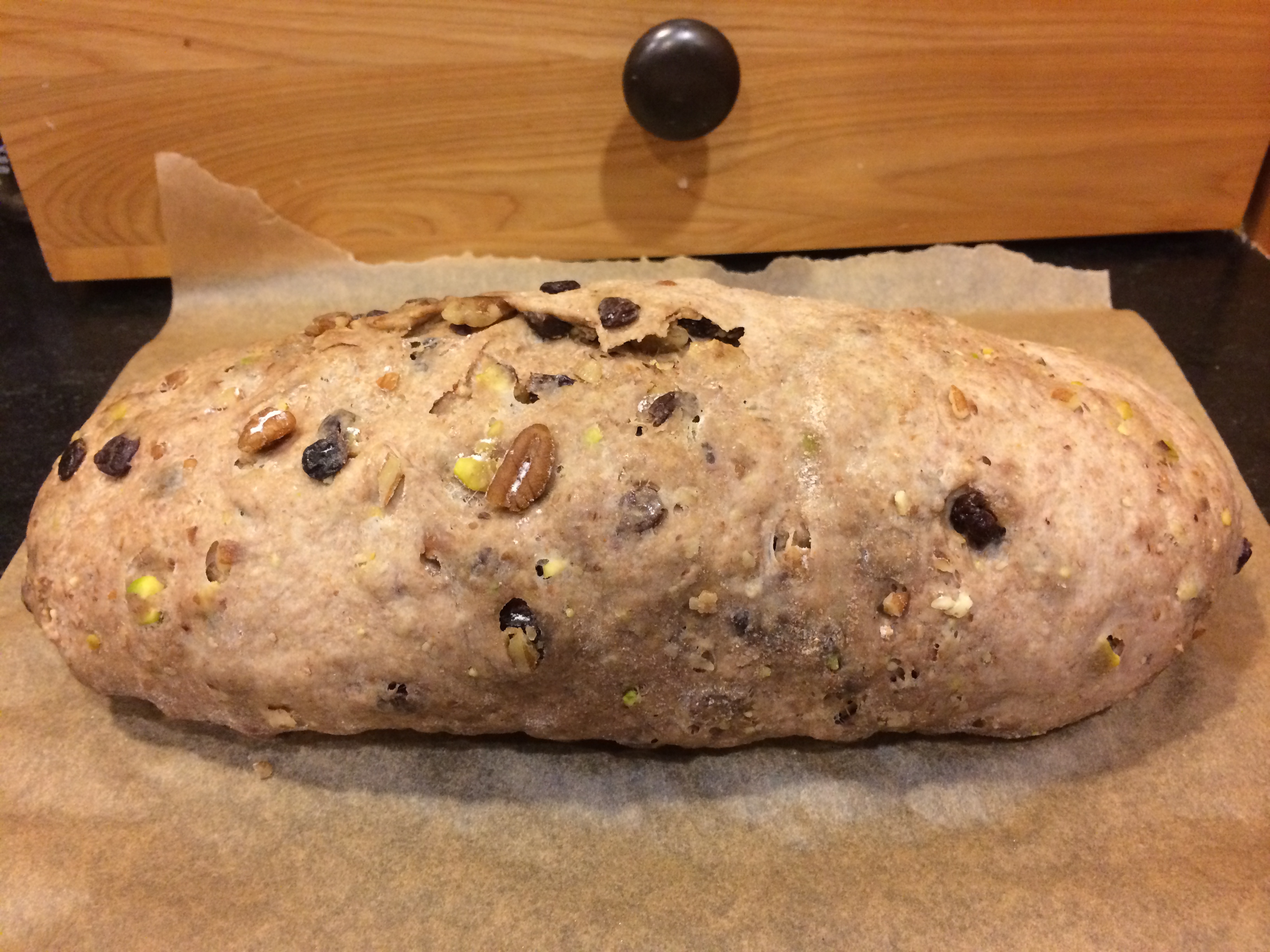
Shaped ready for second rise

Risen
Risen

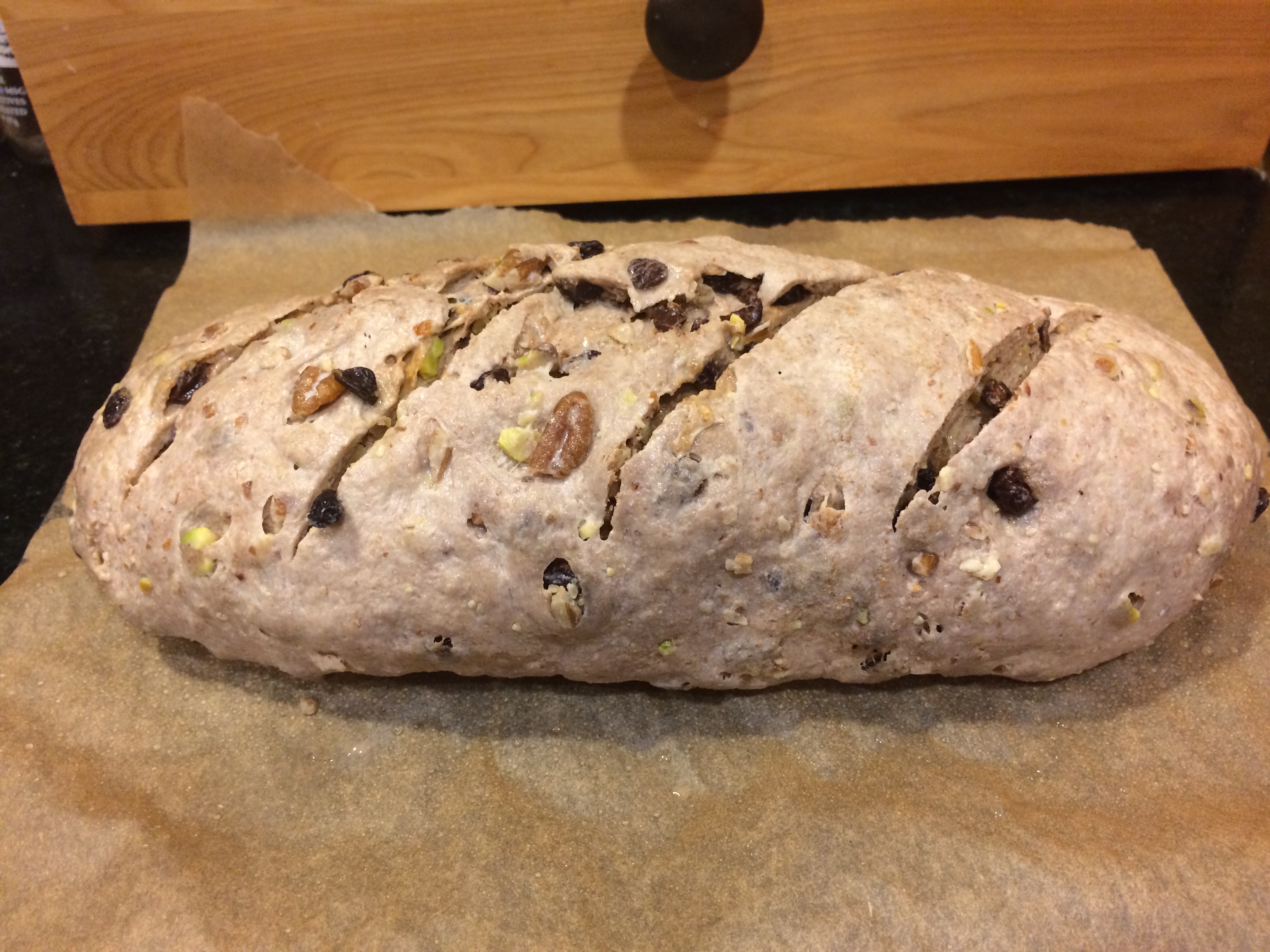
Scored

Scored

Done

Done

Star-studded bread (adapted from Rose Levy Berenbaum's raisin-pecan bread)

  • Servings: 2 pound loaf
  • Print

Ingredients for soaking raisins:
  • 1 cup raisins or currants
  • 1/3 cup water
Method for soaking raisins:

Soak the raisins in hot water for half an hour. At this point, drain the raisins and you will be left with 1/4 cup water, that you can use to make the sponge below.

Ingredients for sponge:
  • 1 cup bread flour
  • 1/2 teaspoon instant yeast
  • 1 cup water (including raisin soaking water)
  • 1 tablespoon demerara sugar
Method for sponge:

Mix the dry ingredients together in a bowl, then pour in the water (remember to use 1/4 cup of the raisin water for added flavor), and stir stir stir with a wooden spoon or chopstick, almost like you are whisking it. The sponge will look like batter with some air incorporated into it. Cover with a plastic wrap and keep aside at room temperature for at least 1.5 hours, at most a whole day.

Ingredients for dough:
  • 1.5 cups plus couple teaspoons more of whole wheat flour
  • 3/4 teaspoon instant yeast
  • 1.25 teaspoon salt
  • 1/2 cup finely ground pecans
  • 1.5 cups coarsely broken pecans (I substituted some with pistachios)
  • 1 tablespoon oil
  • All the sponge from above
  • All the raisins from above
Method for dough:

Stir together the flour, the yeast, the salt. Add in the sponge and the oil and the ground pecans, stir with a chopstick or the dough hook to moisten fully.  Cover with plastic wrap and leave it aside for 10 minutes. Come back to it and knead it properly into a dough. Let it rest for 10 more minutes.

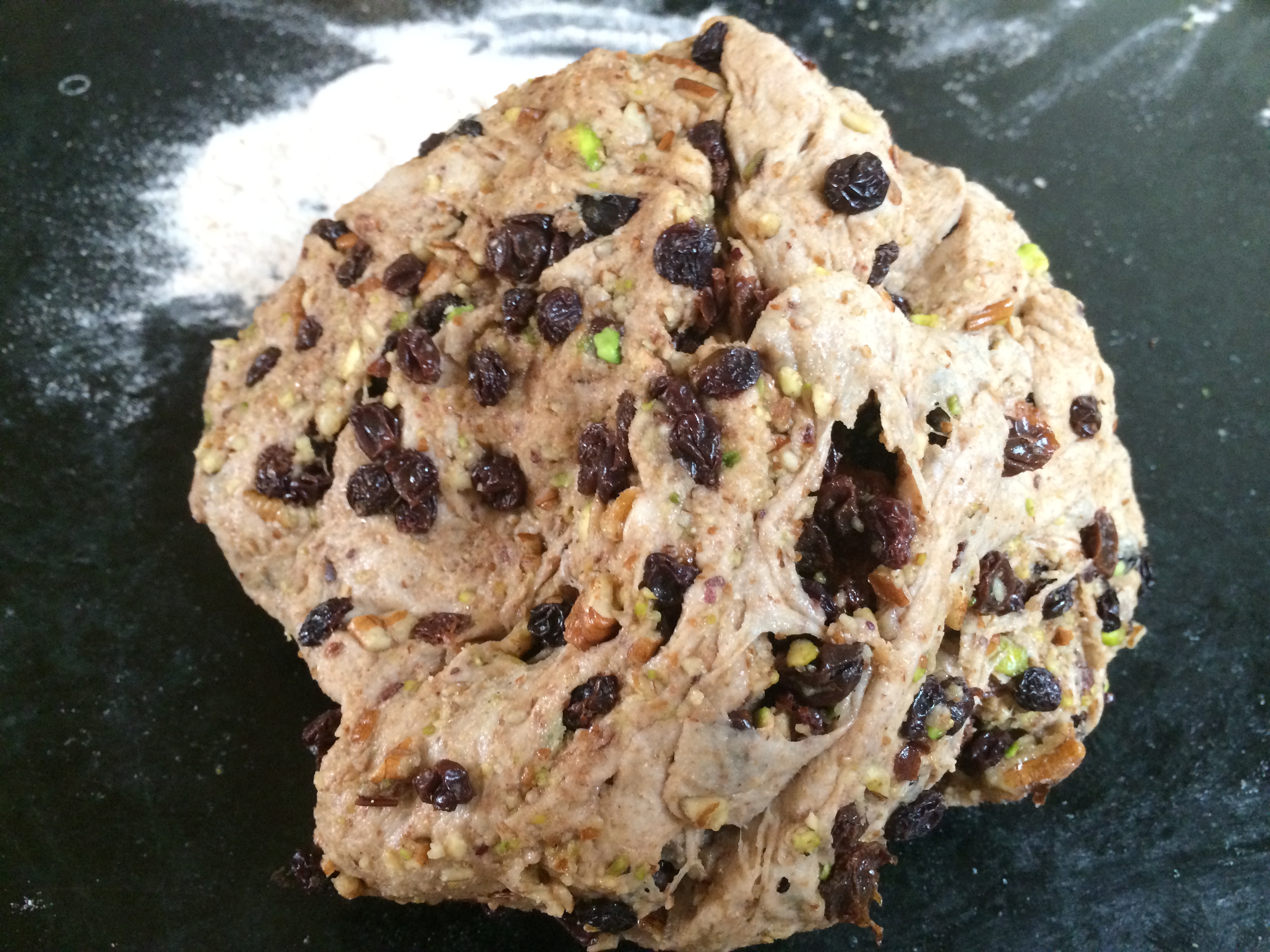
Now flatten the dough and spread it out into a rough rectangle about 10 inches by 15 inches. Spread the broken pecans bits all over the rectangle leaving an inch border on all sides. Then spread the raisins over the same area evenly. Start rolling up the dough from a short end, also taking care to tuck in the edges. All the nuts and raisins will be hidden inside.

You do need to knead it lightly after, just to get it all to combine. At this point nuts and raisins might start falling out of your dough ball, just do your best to tuck them back in.

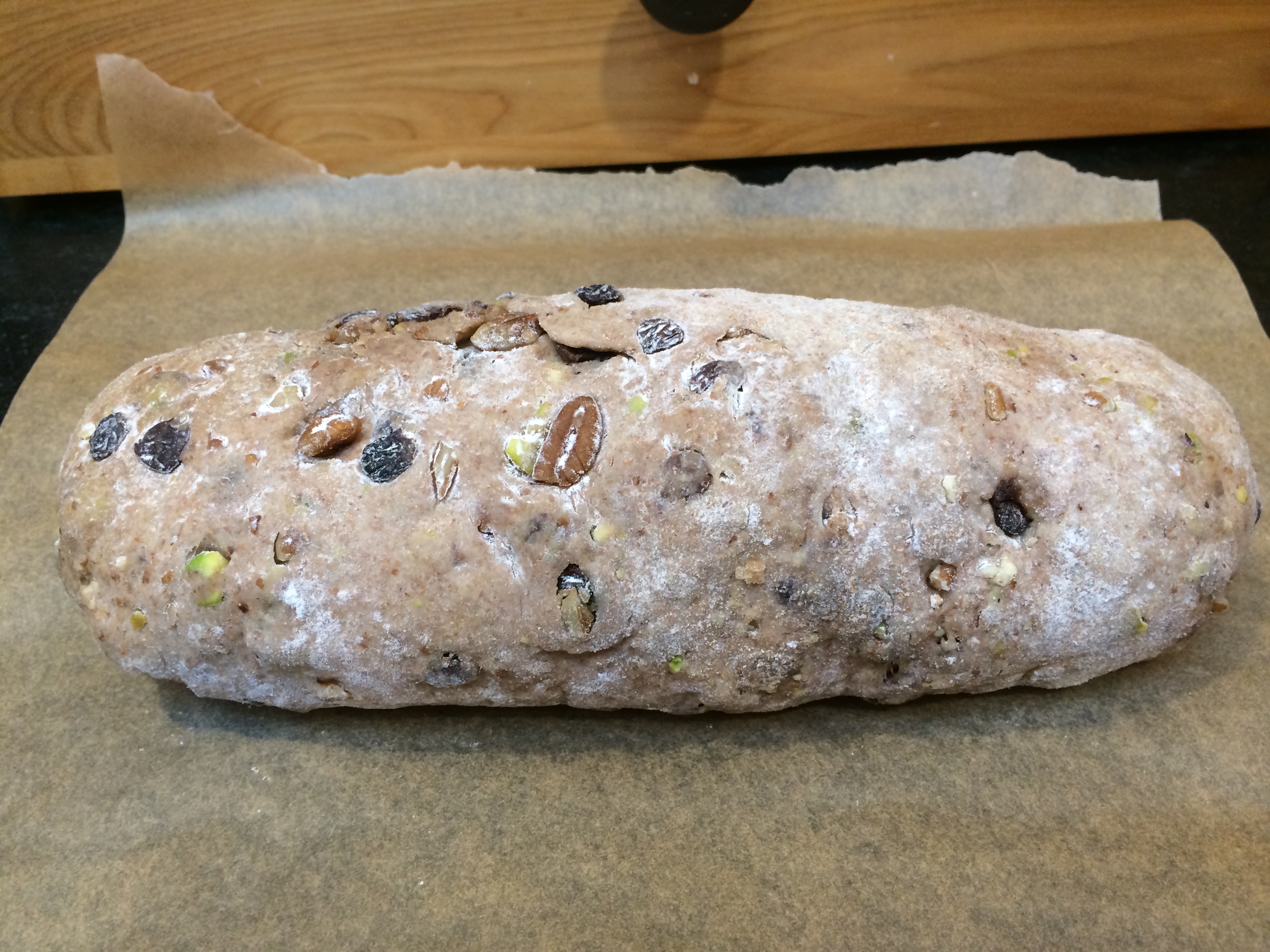
Cover with oil and allow the first rise until it is doubled, which will take about 2 hours. Shape it into a loaf and allow the second rise till doubled, covered with plastic wrap or a damp towel. This will take about 1 hour.

Heat the oven to 400ºF. Score the bread with a sharp, serrated knife. Each cut should go about half an inch deep. Mist the bread and put into the oven on a middle rack. In the first 5 minutes, mist inside the oven with a water spray bottle and quickly close the oven, about 3 or 4 times. After the first 5 minutes bring the temperature down to 375ºF. Continue baking for 40 to 50 minutes until it is golden brown.

A Russian salad for America’s Independence Day

Russian Salad

Russian Salad

If by reading the title you expected intrigue and a spy-vs-spy story, you came to the right place. The story of Salad Olivier begins in Czarist Russia when wealth and luxuries were not yet verboten. A Belgian chef known as Lucien Olivier came to Moscow in the 1860’s bearing secrets of French cooking. He opened a fancy-shmancy restaurant in Moscow called The Hermitage. This was not a one-room affair, rather an entire building with multiple dining rooms. Here Chef Olivier served a salad with every manner of luxury ingredient and choice meat — caviar, capers, game hen, crayfish tails. He called this the Salad Olivier.

Hermitage restaurant, Moscow (source: http://www.sras.org/russian_olivier_salad)

Hermitage restaurant, Moscow (source: http://www.sras.org/russian_olivier_salad)

Of course, he did not invent this salad out of his sheer imagination but rather based it on a famous dish from Provençe known as Le Grand Aioli. This is essentially a feast of vegetables and meats, laid out separately to serve with aioli, which is basically a mayonnaise with garlic and mustard. He served his salad in layers, the ‘Provençal sauce’ on the side, to be poured over. His Russian customers would dispense with the niceties and simply mix it all up. So he followed their lead and Salad Olivier was served the Russian way, all mixed up with his Provençal sauce.

Salad Olivier made his restaurant famous; although the main ingredients of the salad were obvious for all to see, he never divulged the secret of what went into his mayonnaise. Now remember that mayonnaise at the time was a French import, not ubiquitous on every grocery shelf from Japan to the United States. It had to be made by hand. It is an emulsion, which means the liquids involved in it are so well mixed together that it is impossible to tell what went into it. So as you can see, mayonnaise is inherently mysterious. So is milk, another emulsion.

A lovely graphic showing emulsion by blog.ioanacolor.com

A lovely graphic showing emulsion by blog.ioanacolor.com

Sorry for the bad pun, but Lucien Olivier milked it. The secrets of his mayonnaise remained hidden until his grave. They had to come to his restaurant for the salad, or else go without. But then, a disgruntled local employee called Ivan Mikhailovich Ivanov tricked him into leaving his kitchen momentarily while the famous mayo was being whipped up. He managed to note down the ingredients, left the restaurant, and began selling his facsimile of Salad Olivier at a different restaurant, under the name of Capital Salad (Stolichny Salad).

This stolen salad was never quite as good as the original, but it did mean that the rest of middle-class Russia was able to partake in it. With the revolution came the backlash against all things bourgeois, and this salad was stripped of its more expensive ingredients. A sort of consensus developed around a small set of ingredients — potatoes, hard-boiled eggs, boiled chicken, peas, pickles.

From Russia it spread to the Middle-east and Asia, and to India. Growing up, my introduction to Russian salad happened in a vegetarian restaurant in India that avoided the chicken. Somewhere en route from Russia to India a very important modification was made to it — Russian salad in India always includes chunks of some crunchy fruit — pineapple, apple, etc. In my opinion this is the best part.

In fact that makes it, to my palate, more delicious than the potato salad that is traditional for July 4th barbecues, so that is what I brought to a friend’s. Any hint of treason is purely for taste.

First the mayonnaise. Lucien Olivier’s mayonnaise was an aioli, which includes garlic and mustard. I used this recipe (which used this recipe) and whipped it up in a jar.

Garlic and mustard

Garlic and mustard

Eggs, oil, garlic-mustard, lemon juice in a jar

Eggs, oil, garlic-mustard, lemon juice in a jar

Improvised double-boiler

Improvised double-boiler

Garlic mustard mayonnaise (aioli)

Ingredients:
  • 1 cup almond oil (you can use any light-tasting oil)
  • 2 medium eggs or 1 large
  • 2 cloves garlic
  • 1 teaspoon mustard seeds
  • Juice of half a lemon
  • Salt to taste
Method:

Put minced garlic and mustard into  a mortar along with a pinch of salt. Give it ten minutes to sit and then pound it to a paste together. You do not have to powder the mustard seeds completely. Put the oil, eggs, garlic-mustard, lemon juice in a Ball jar or Weck jar or empty jam jar. Using an immersion blender, whir it for just about 30 seconds or a minute. The mayonnaise should come together right away.

Now my salad was going to be sitting out in the sun so I chose to heat it up to to 135ºF in a double boiler while blending away. You do not need to do this, specially if you use pasteurized eggs.

Now for the Russian salad, based on a French salad, made the Indian vegetarian way, for America’s Independence day. These are the ingredients I used, but please be creative and add whatever makes sense to you.

Ingredients for salad

Ingredients for salad

All diced

All diced

Dish lined with lettuce

Dish lined with lettuce

Mixed

Mixed

Vegetarian Russian Salad

Ingredients:
  • About 6 small red potatoes
  • 1 large carrot
  • 1 cup of frozen peas, thawed
  • 3/4 large red apple
  • 3 tablespoons slivered almonds
  • 1 small cucumber (substitute with celery)
  • About 8 outer leaves of butter lettuce
  • Half a teaspoon paprika, more for garnish
  • Salt to taste
  • About a cup of mayonnaise from above
Method:

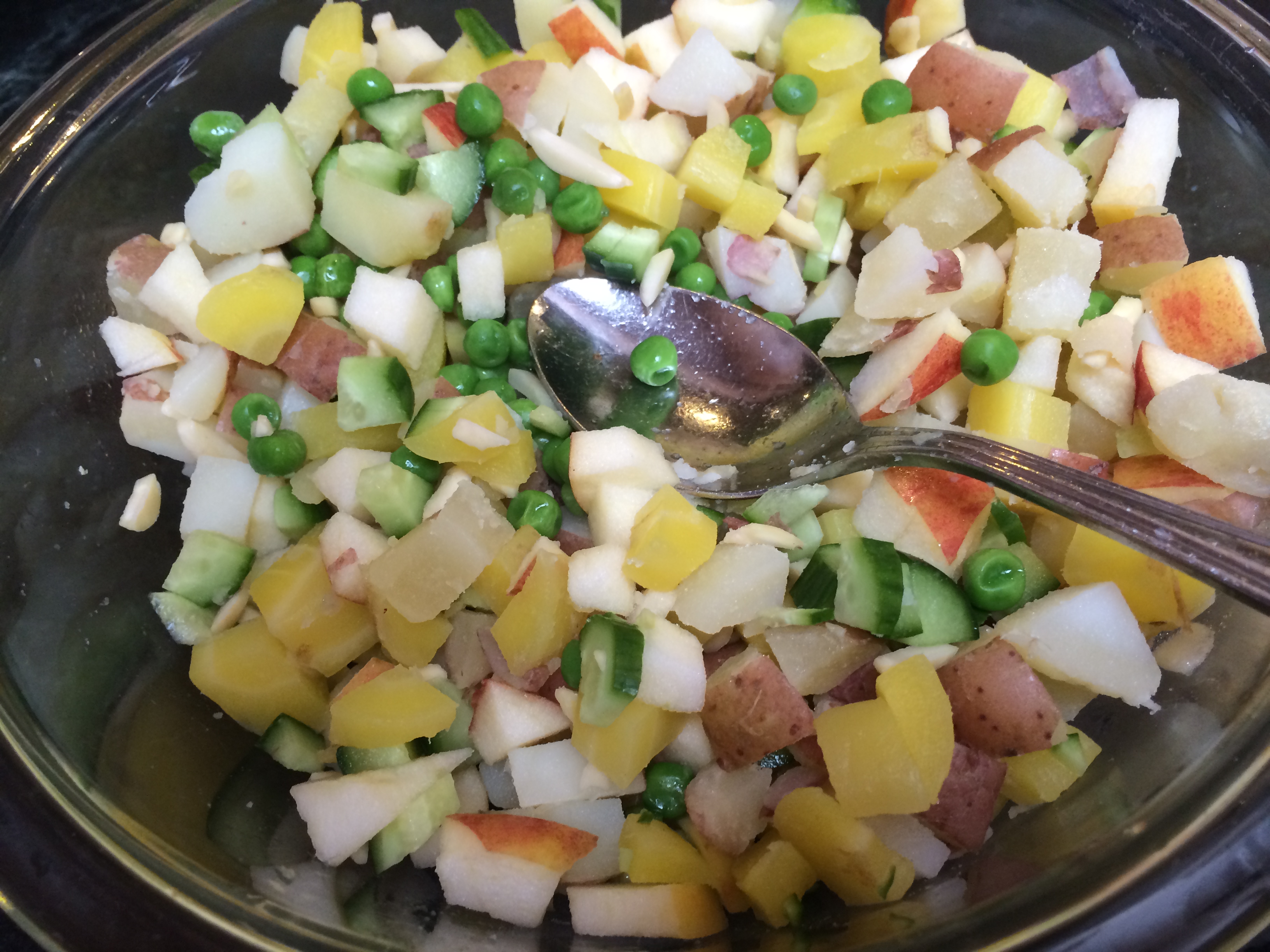
Boil the potatoes and carrots in their skins, in salted water. When done, drain, let them cool, then dice into small pea-sized pieces. Dice the apple and cucumber into similar sized dice as well. Leave the skin on (adds a nice colorful touch). Thaw the peas.

Line your serving dish with the lettuce. Mix the ingredients together in a mixing bowl. Add the mayonnaise, paprika, and salt to taste. Mix together nicely. Serve it out in the bed of lettuce.


(Click here to find me on Facebook and here on Twitter.)

I’m no pastry chef, but look, chocolate cake!

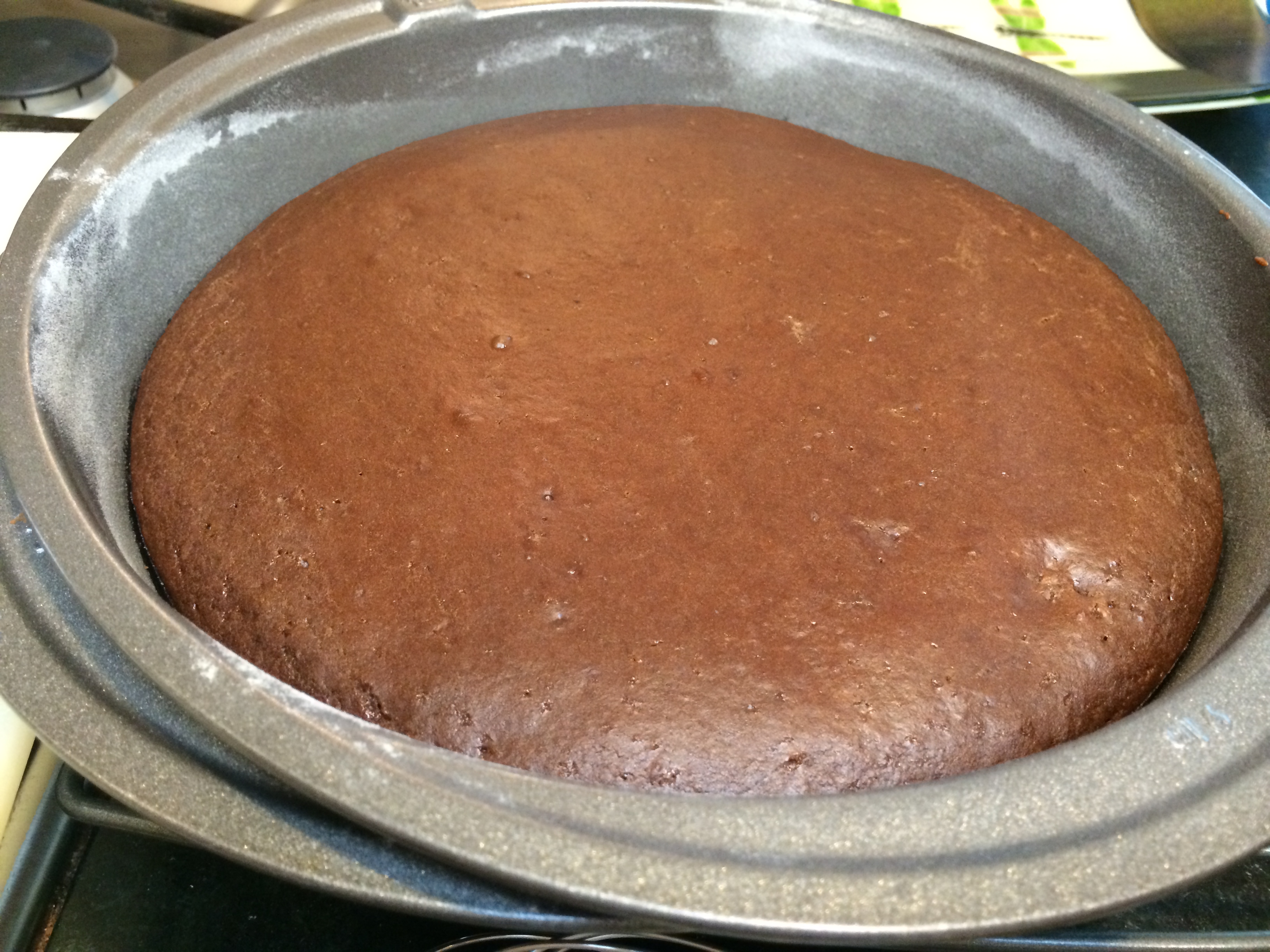
Eggless chocolate cake

Eggless chocolate cake

Situation:

Husband: Has a birthday. Chocolate fan. Not a spring chicken, worries about sugar and fat. But wants cake. Needs cake.

Me: Not a fan of chocolate. Don’t have a sweet tooth. Not much of a pastry chef either. But cake must be had!

Daughter: wants to ‘help’!

I think I did decently. My husband thought so, even though he spent the whole time worrying if I was making the frosting rich enough and covering all the gaps and the rest of the time worrying about how much fat he would be consuming.

In any case, this is about the simplest cake one can make and it turns out great. I got the recipe from the King Arthur site, but just to show how simple the cake and frosting are to make, I will put down the recipe in a sort of telegraphese.

Kiddo helping with the mixing

Kiddo helping with the mixing


One layer

One layer


Slathering

Slathering


Slice

Slice

Cake

In a bowl, stir together the dry ingredients: 1.5 cups all purpose flour, 2/3 cups brown sugar, 1/4 cup unsweetened cocoa, 1 teaspoon baking soda, 1/2 teaspoon salt.

Pour in the wet ingredients: 1/3 cup almond oil, 1 tablespoon vinegar, 1 teaspoon vanilla, 1 cup milk.

Stir it all together.

Pour half into one 8-inch round cake pan, half into another. Bake at 350°F for 20 minutes. If you pour it all together into a single cake pan, let it bake for about 30-35 minutes.

Frosting

In a bowl, microwave 1 cup cream for 1 minute. Put in 8 ounces bittersweet chocolate and stir, microwave again for 1 minute. Keep stirring, if the chocolate still refuses to melt, give it 30 second whirls at a time and stir, stir, stir. Eventually, it will become luscious and smooth. Allow it to cool slightly, then slather it over one layer of the cake, lay the other layer over it, and slather over it some more, and slather over the sides.

Recipe source: 

King Arthur Flour’s original cake-pan cake

Chocolate ganache

(Click here to find me on Facebook and here on Twitter.)

Global unity through hot sauces

Sambal

Sambal Hebi

The other day I was doing my favorite thing — making a hot sauce, in preparation for doing my other favorite thing — eating a meal with a hot sauce. And I started to think upon the unity of all humanity. While I have been known to have the occasional Deep Thought, I usually need some prodding to produce one. The prodding that produced this particular Deep Thought was the following.

Over the course of the past couple months I had occasion to make a few hot sauces. These were from different cuisines: we made burritos at home, so I made a Mexican hot sauce once; another time, for dosas, I made a tomato chutney; and then the other day, experimenting with Malaysian food, I tried making a chili paste called Sambal Hebi. I seem to be doing the same thing over and over, I thought. With just a couple twists each time to add some local flavor.

Tomato chutney

Tomato chutney

Well, given that they all use dried red chilies for heat, and perhaps some garlic or onions as aromatics, there certainly is commonality. Humans from these three rather disparate regions of the world really do seem to think alike — perhaps we are all the same under the skin?

So here is my global hot sauce template; if you are able to adapt this method to yet another hot sauce from another cuisine I’d love to hear about it.

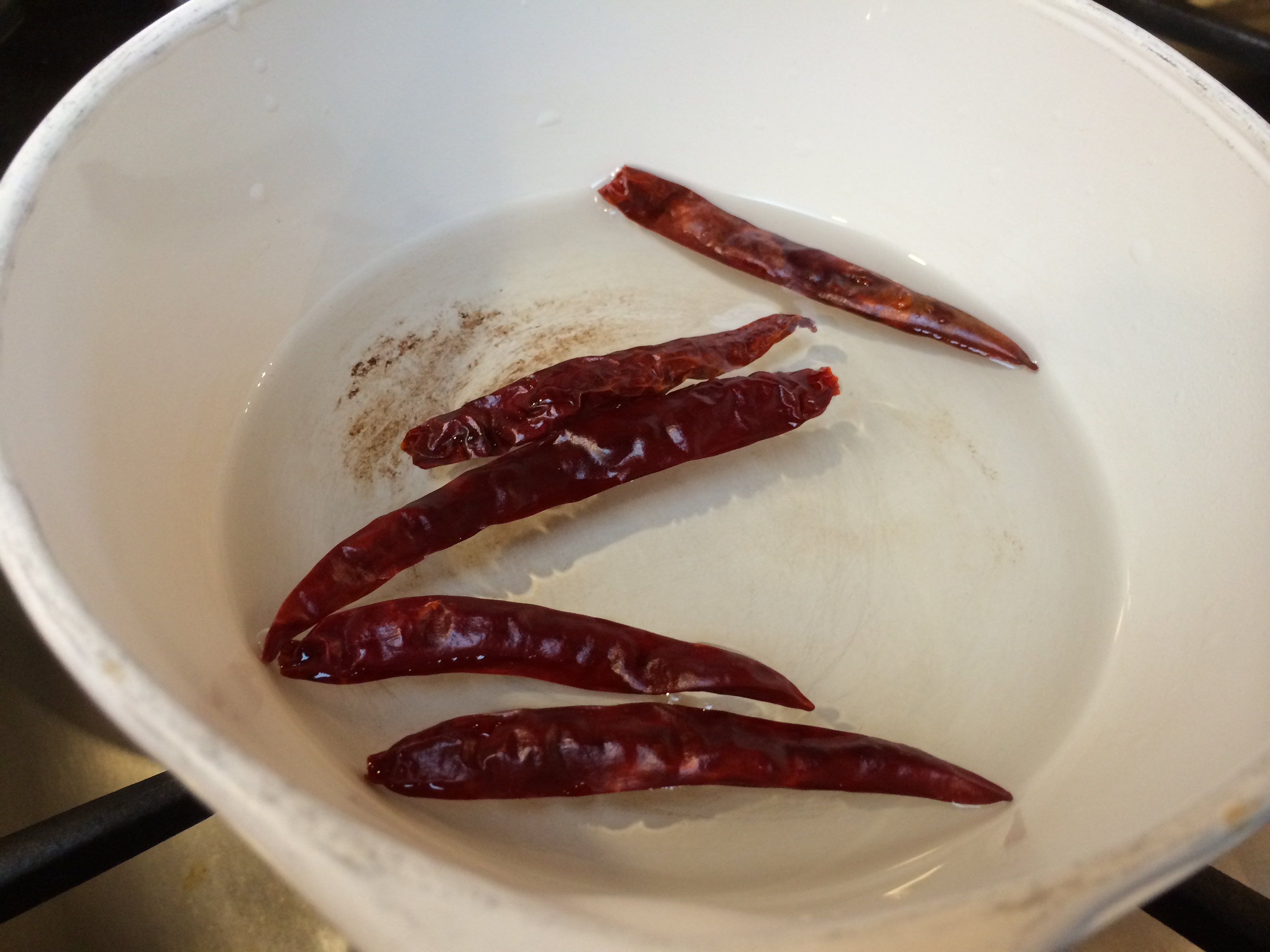
Step 1: Soak the dried chilies in hot water.

Same for all the hot sauces. Choose a mix of large, not-so-hot dried red chilies, and small, hot dried red chilies, according to your heat tolerance. Bring a cup of water to a boil and soak chilies in it until softened, about 15 minutes. Pull off the stem and remove seeds and ribs if you like. They are ready for the sauce.

Soaking dried red chilies

Soaking dried red chilies

Step 2: Broil the vegetables.

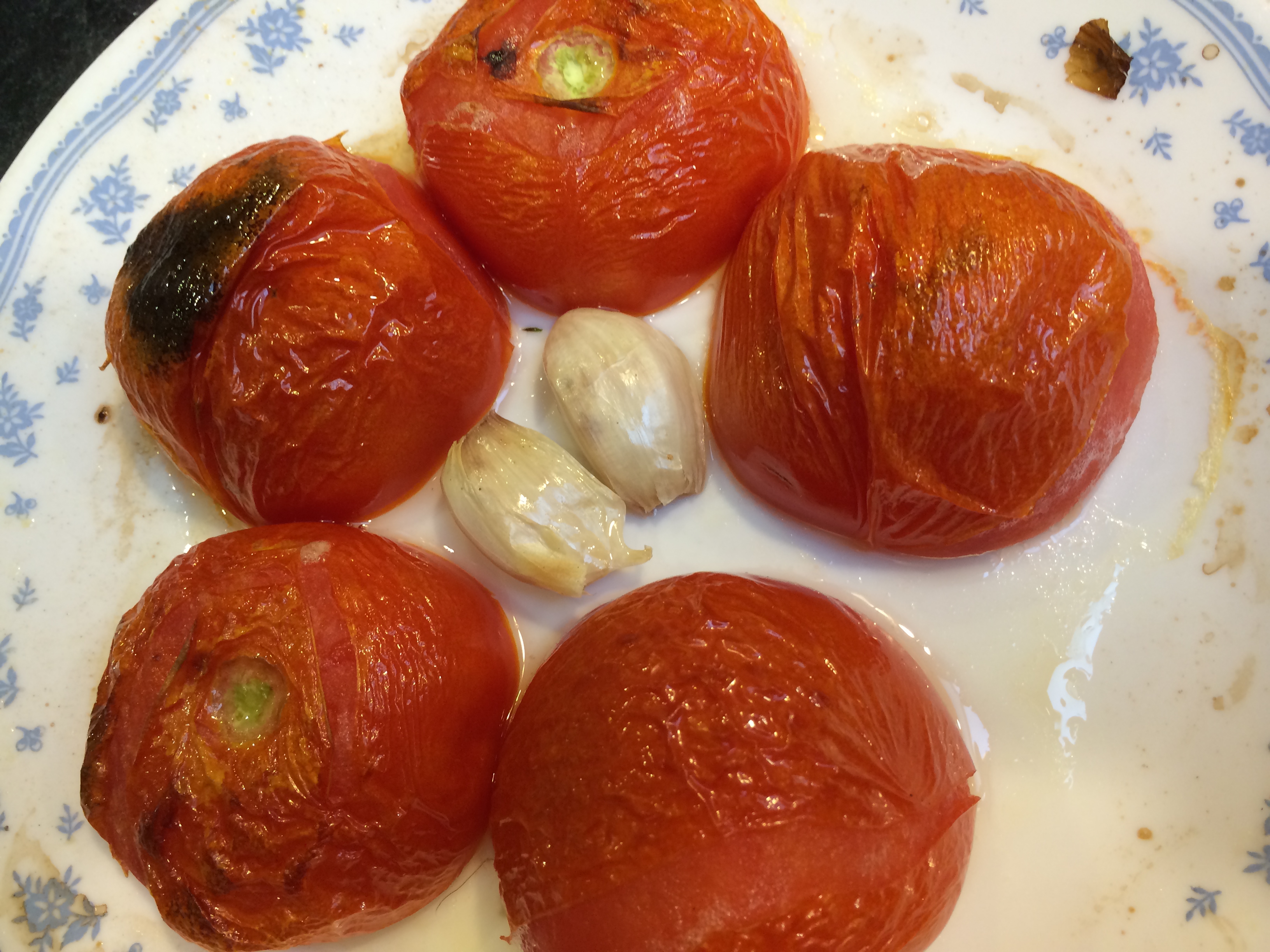
Mexican hot sauce: I used half an onion, 3-4 cloves garlic, 3 tomatoes, halved. South Indian tomato chutney: I used 2 cloves garlic, 3 tomatoes, halved. Malaysian sambal: I used half an onion, 3-4 cloves garlic.

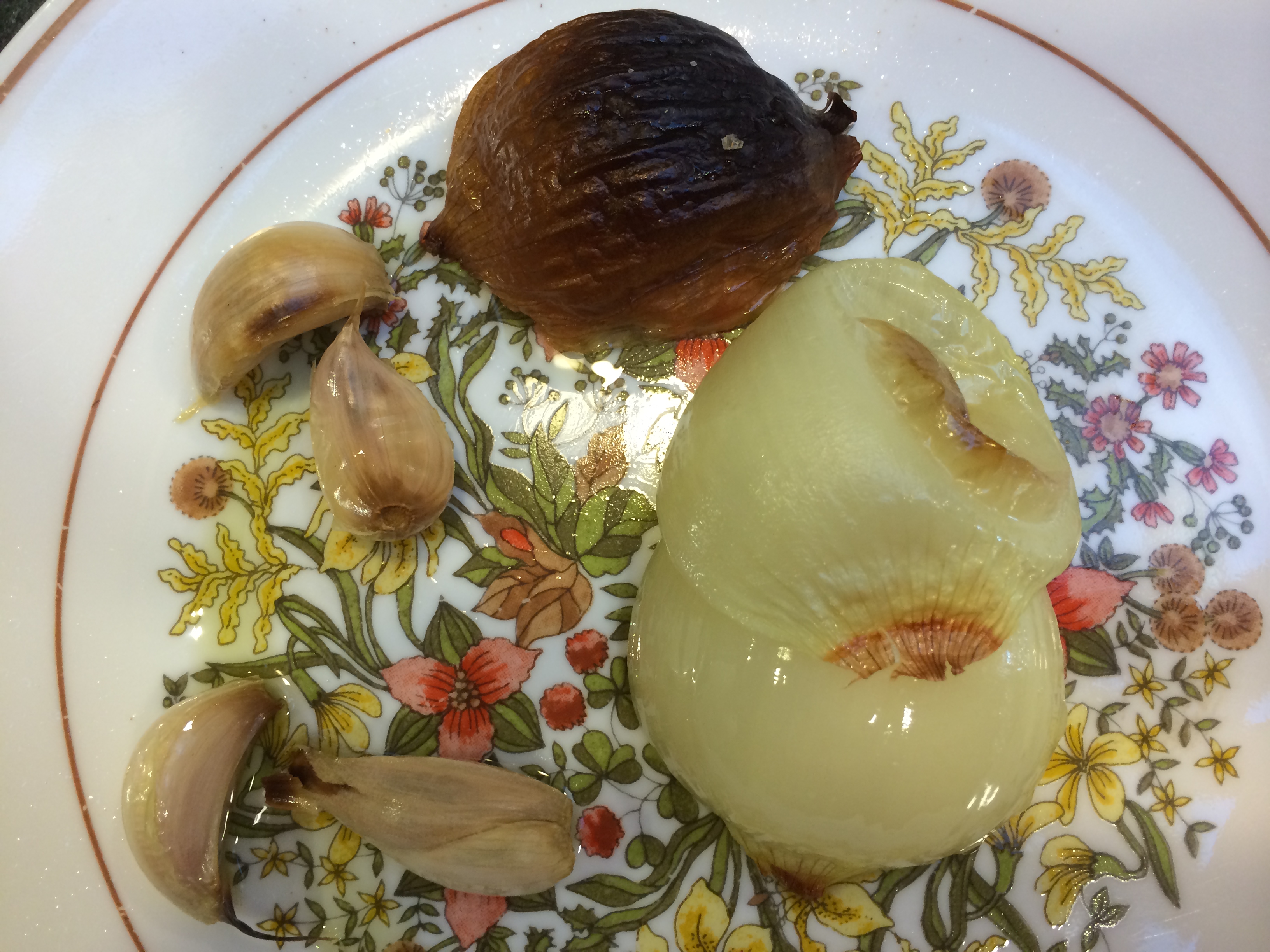
Leave the garlic, onion, tomato unpeeled. Rub some oil over and broil for about 6 minutes. At this point, the papery skin of garlic/onion will have darkened, and the tomato skin can simply be peeled off.

Broiling onion and garlic for Sambal

Broiling onion and garlic for Sambal

Broiling tomato and garlic for tomato chutney

Broiling tomato and garlic for tomato chutney

Step 3: Blender

Vegetables and softened chilies go into the blender together. Along with salt to taste. If you need liquid to make the blender happy, pour in some of the oil and collected juices from broiling the vegetables; if you need more, add some of the chili soaking liquid.

Step 4: Cook

Empty out the blended hot sauce into a pot and bring to a boil. Then simmer. It only needs to cook for a few minutes. The color will change. Give it a preliminary taste to make sure the salt is right.

Tomato chutney on stovetop

Tomato chutney on stovetop

Step 5: Finishing for the Mexican hot sauce:

If you are doing a Mexican hot sauce, add a teeny bit of vinegar or lime; that’s it, you are done. Slather it over some refried beans.

Step 5: Finishing for the South Indian tomato chutney:

You can let this chutney cook longer to dry it somewhat more than the Mexican hot sauce, as it doesn’t have to be of a pouring consistency.

Heat a tablespoon of coconut oil in a pan. When hot, put in a half teaspoon of split and dehusked urad dal (Vigna Mungo), when that reddens, half a teaspoon of black mustard seeds, when they pop a few curry leaves. When they shrivel turn off the flame and pour the coconut oil into the tomato chutney. Stir to combine.

Step 5: Finishing for the dried shrimp sambal (Sambal Hebi):

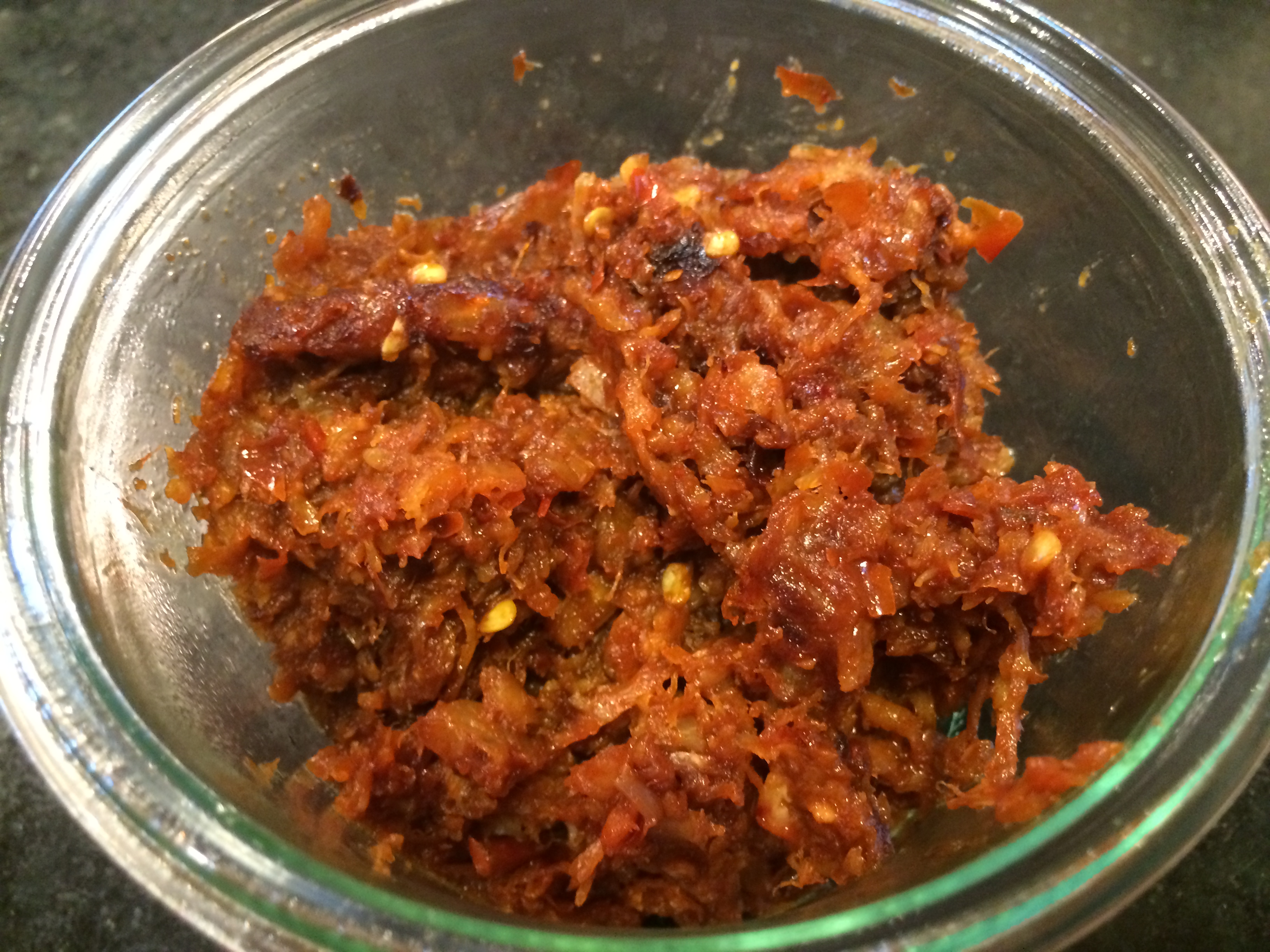
First, a bit about this chili paste, because it was new to me. ‘Sambal oelek’ is a simple chili paste used all over Singapore/Malaysia as a base for many of their dishes; while ‘Sambal Hebi’ has added dried shrimp, garlic and shallots. With the excellent umami additions, this paste can be had as a simple and delicious accompaniment for rice (that’s not how I used it, but the story of what I did with it will have to wait).

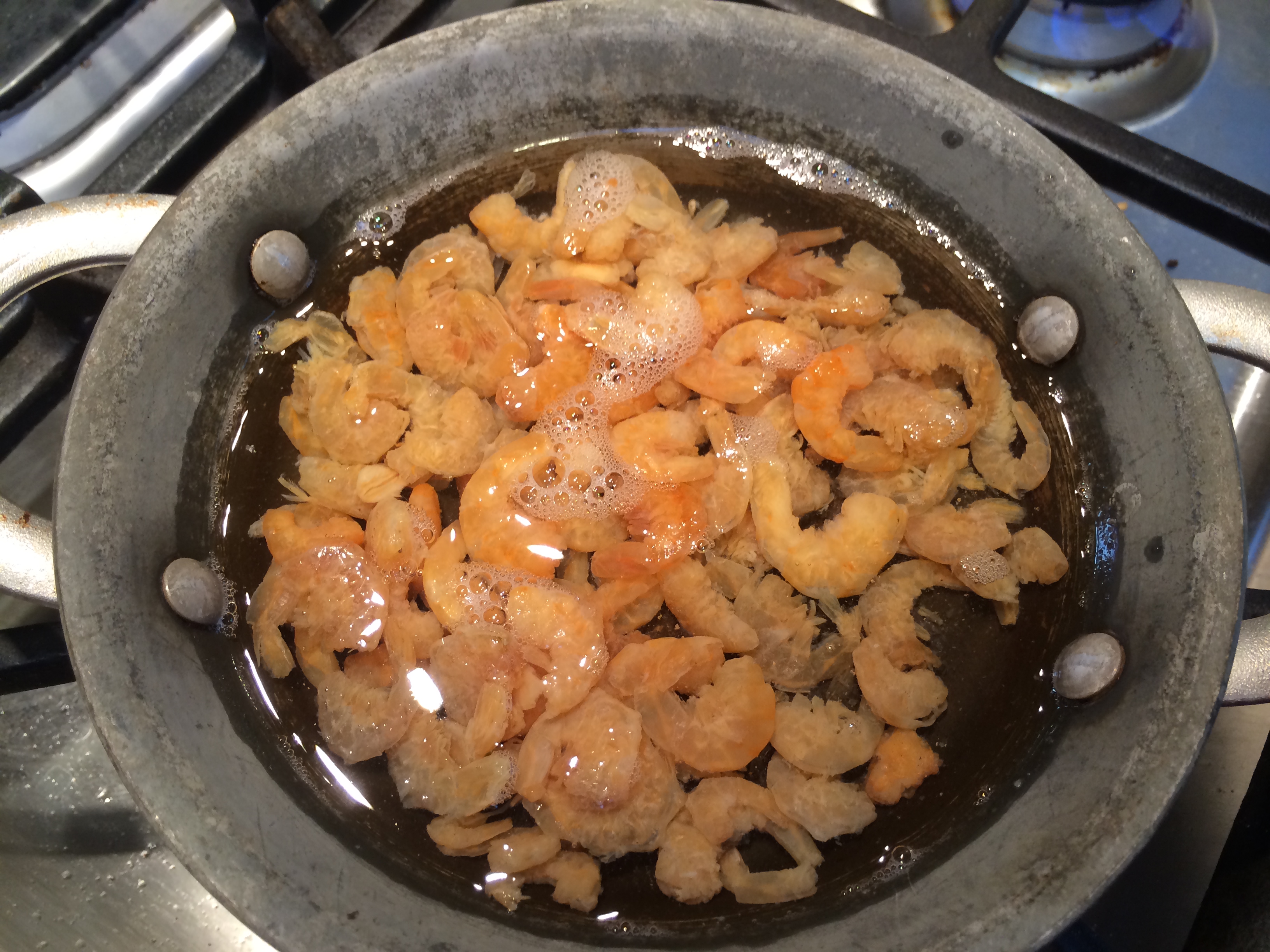
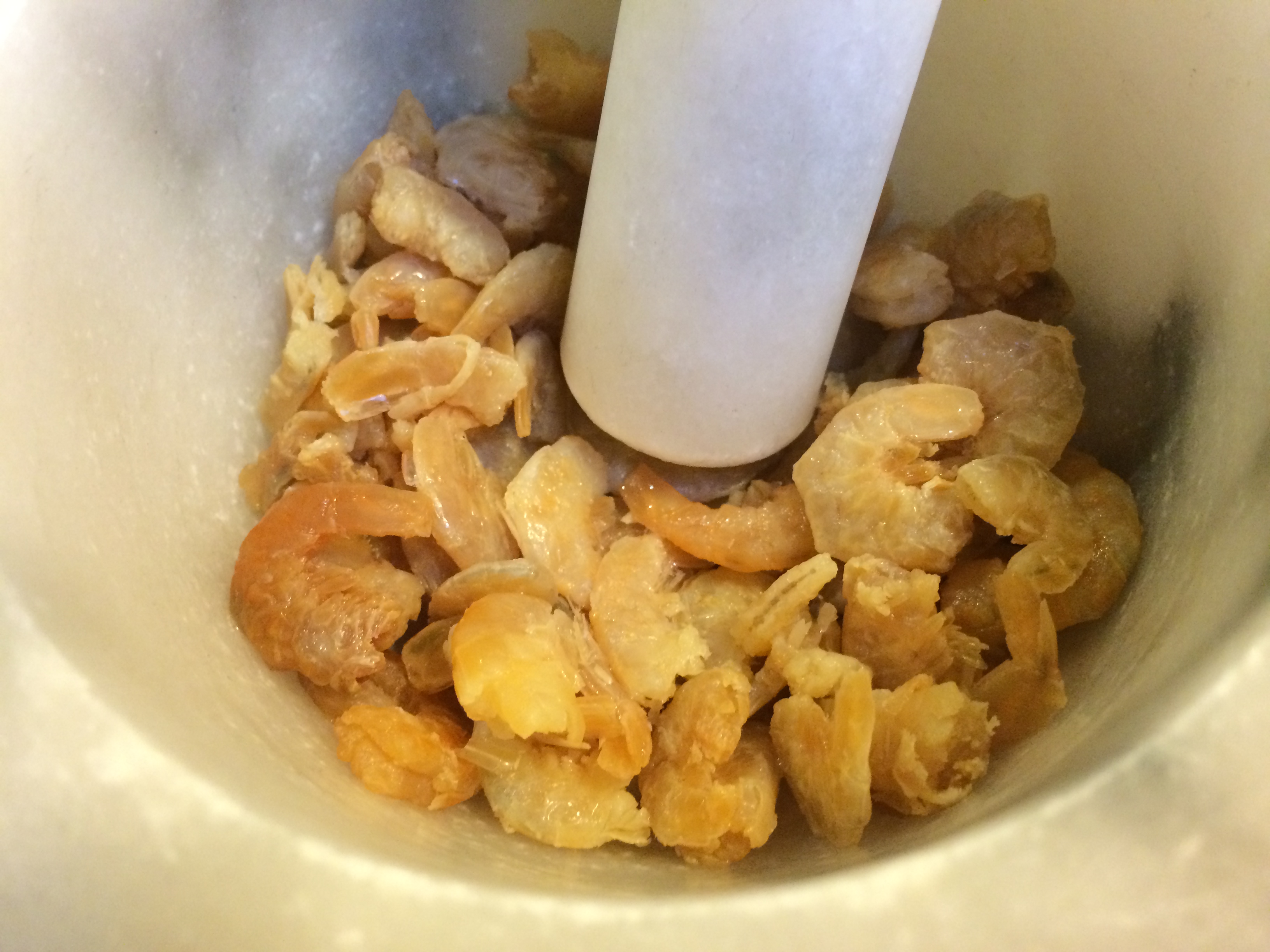
Bags of dried shrimp should be available at an Asian grocery store. Here is an online source of it: The Asian Cook Shop. While you are preparing the rest of the sauce, soak about half a cup of dried shrimp in hot simmering water to soften. In 15 minutes, that should be done; take the shrimp out and smash them in a mortar and pestle if you have patience, if not, whirl them in a blender.

Dried shrimp for sambal

Dried shrimp for sambal

Dried shrimp softening in hot water

Dried shrimp softening in hot water

Now remember for the sambal we did not use any tomato, just the garlic, onion and chilies. So the paste will be drier to start with. When you cook the paste, use a bit of oil, and cook it longer than the above two until the oil separates. Also, I did not use any salt at all, preferring to add enough soy sauce to cover the needed saltiness.

Next put the dried shrimp into the pot: stir to have them cook and the entire paste dry up — about 10 minutes. Add a tablespoon of soy sauce, stir to combine, and you are done.

Pounding dried shrimp

Pounding dried shrimp

Pounded dried shrimp

Pounded dried shrimp

Sambal Hebi is done, ready for use as a base for noodles, as a sauce for vegetables, or simply with rice. Recipe source: Indochine Kitchen.

Pounded shrimp added

Pounded shrimp added

Soy sauce added

Soy sauce added

Mexican hot sauce

Ingredients:
  • 3 large tomatoes
  • Half a medium onion
  • 3-4 cloves garlic
  • Mix of hot and mild dried red chilies according to taste
  • Salt to taste
  • 1 tablespoon lime juice or 1 teaspoon vinegar
Method:

Described in detail above but in brief: soak the dried red chilies in hot water for 15 minutes. Cover with oil and broil the vegetables (unpeeled) for 6 minutes. Blend along with salt. Cook on stovetop for a few minutes. Add lime juice/vinegar.

South Indian tomato chutney

Ingredients:
  • 3 large tomatoes
  • 3-4 cloves garlic
  • Mix of hot and mild dried red chilies according to taste
  • Salt to taste
  • 1 tablespoon coconut oil
  • 1/2 teaspoon urad dal (split and dehusked black gram)
  • 1/2 teaspoon black mustard seeds
  • Few curry leaves
Method:

Described in detail above but in brief: soak the dried red chilies in hot water for 15 minutes. Cover with oil and broil the vegetables (unpeeled) for 6 minutes. Blend along with salt. Cook on stovetop until reduced a bit. Heat coconut oil until shimmering. Add, in this order, the urad dal, when they redden the mustard seeds, when they pop the curry leaves. Turn off and empty the coconut oil into the chutney and stir well.

Malaysian sambal hebi

Ingredients:
  • Half a medium onion or couple shallots
  • 3-4 cloves garlic
  • 1 tablespoon oil
  • Mix of hot and mild dried red chilies according to taste
  • 1/3 to 1/2 cup dried shrimp
  • 1 tablespoon soy sauce
Method:

Described in detail above but in brief: soak the dried red chilies in hot water for 15 minutes. Cover with oil and broil the vegetables (unpeeled) for 6 minutes. Blend to a paste.

Meanwhile prepare the shrimp: soak in hot water for 15 minutes until softened. Pound with a mortar and pestle.

Heat oil in a small pot. Empty the chili paste from the blender into it and cook until the oil separates. Add the shrimp to the pot, stir well to combine, and cook for 10 minutes until dry. Now add the soy sauce and stir nicely.


(Click here to find me on Facebook and here on Twitter.)

Gujarati kadhi to soothe the heart of beasts

Gujarati Kadhi

Gujarati Kadhi

I must have had a stressful week at work because this is my second post about comfort food with rice.

It is probably foolhardy to attempt a definition, but ‘kadhi’ is a boiled liquid of yogurt and chickpea flour that is made in various ways all over India. It combines the sourness of yogurt with the body added by the chickpea flour, and some sweetness, usually. The result is so soothing that the aromas can bring the most hardened criminal rushing back home to his mother’s kitchen. While I’m not suggesting you use this for crime management anytime soon, it is certainly one of the simplest Indian recipes to put together for non-Indian cooks.

Now every region of India, even every micro-region, has its own version. But the salience of each of the few ingredients in this recipe is such that each cook’s kadhi will be a little different. The number of tablespoons of chickpea flour used makes a difference, as does the sourness of the yogurt you started with; also how much chili heat has been added or how much sugar.

I grew up eating lunch at Gujarati friends’ houses, so I have a special place in my heart for the Gujarati kadhi. It goes well with soft white rice or creamy khichdis. But we had it with Bhutanese black forbidden rice and green beans on the side.

This version is from Taste of Gujarat by Nita Mehta.

Paste of chili and ginger

Paste of chili and ginger

Blending yogurt, chickpea flour, turmeric, chili-ginger paste

Blending yogurt, chickpea flour, turmeric, chili-ginger paste

Whisking kadhi on stovetop

Whisking kadhi on stovetop

Kadhi ready to temper

Kadhi ready to temper

Tempering spices for kadhi

Tempering spices for kadhi

Cilantro

Cilantro

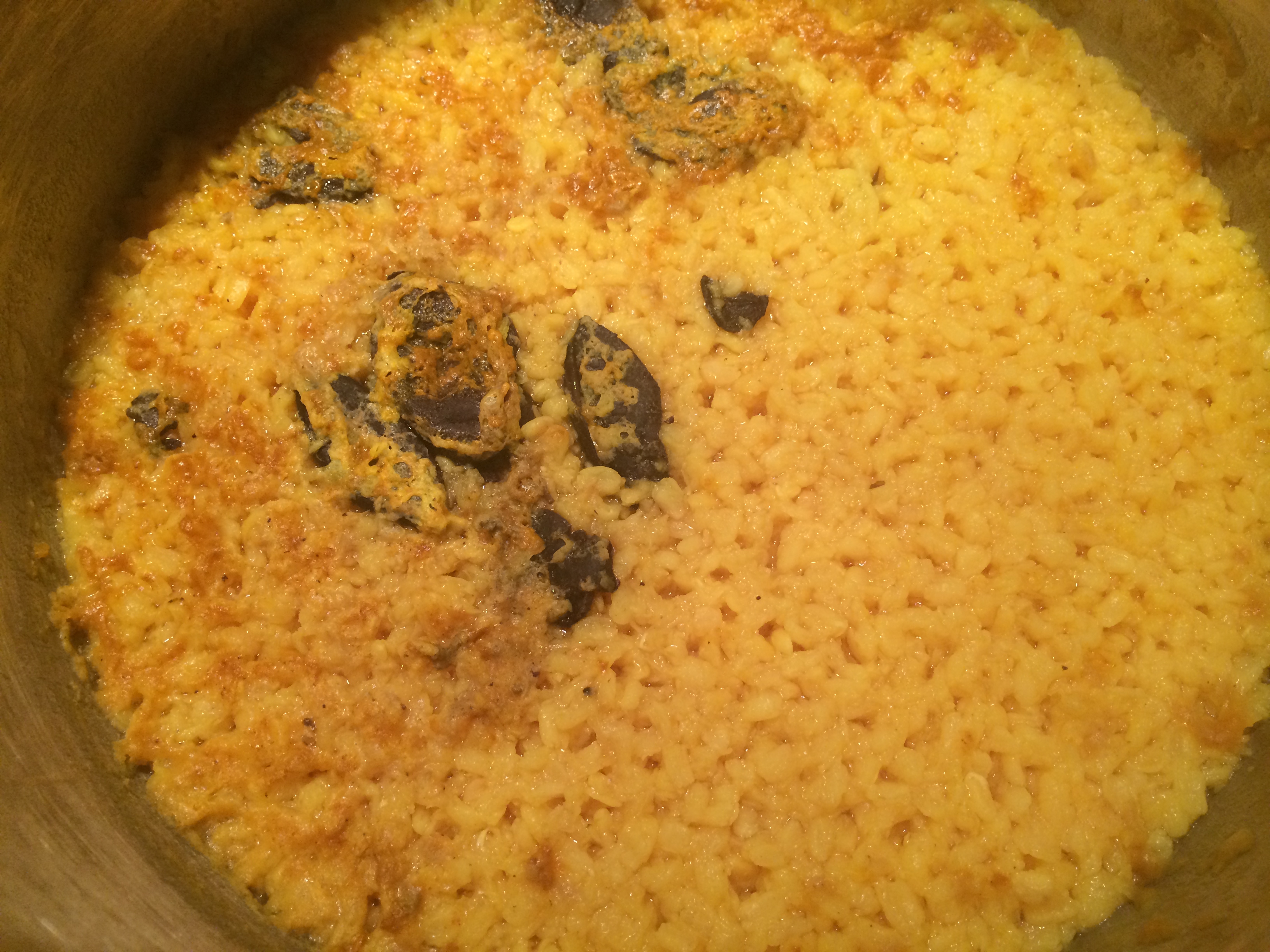
Kadhi done

Kadhi done

Kadhi over black rice

Kadhi over black rice

Gujarati Kadhi

Ingredients
  • 1 cup yogurt (sour is good)
  • 1 tablespoon chickpea flour (besan)
  • 1 – 3 fresh green chilies, as per your heat tolerence
  • Half inch piece of ginger
  • 1/4 teaspoon turmeric powder
  • 1/2 teaspoon salt
  • 1/4 piece of Indian jaggery, or 1 teaspoon honey, or 1/2 teaspoon sugar
  • Some minced cilantro
  • Tempering:
    • 1 tablespoon ghee (substitute with oil)
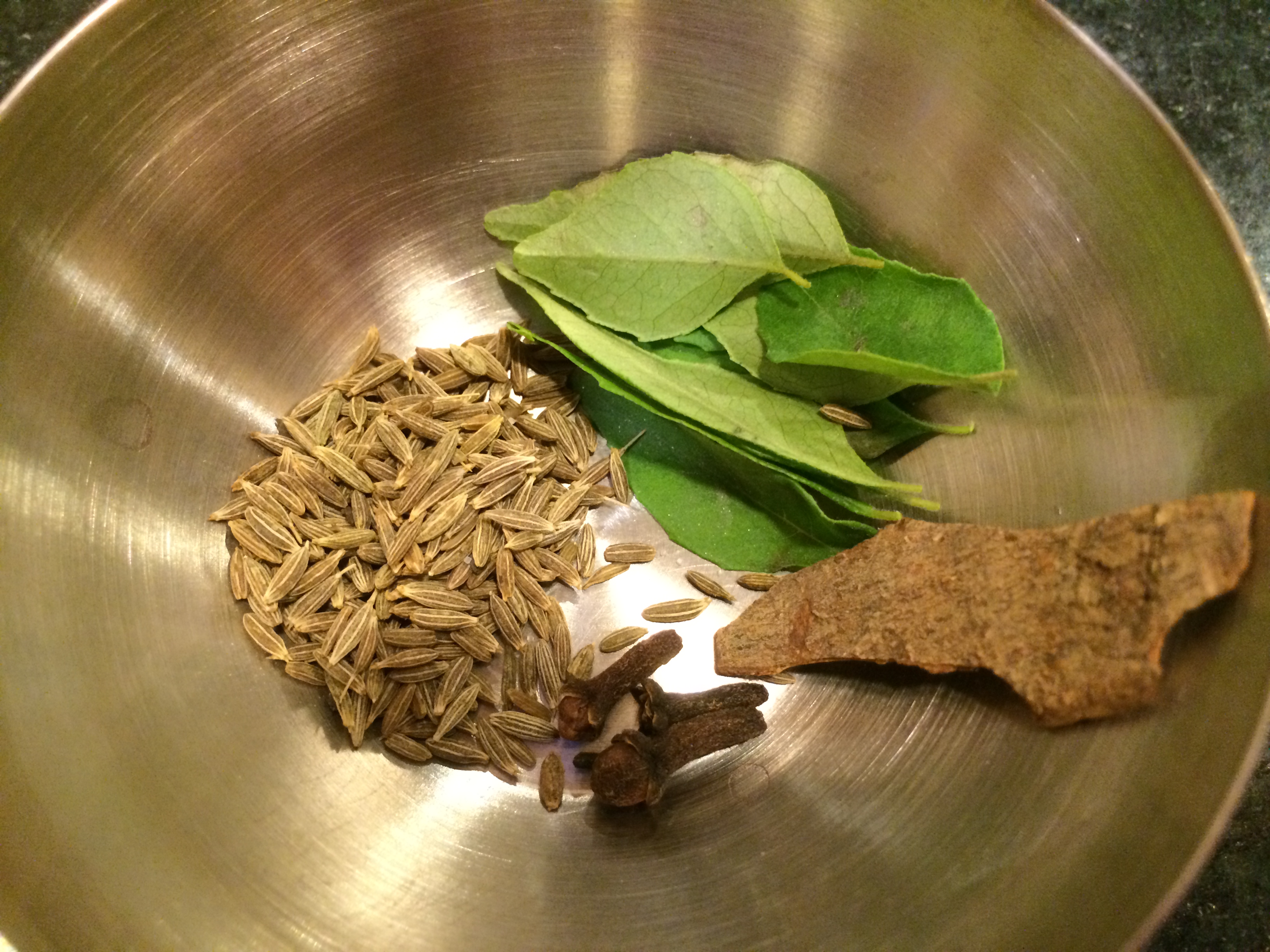
    • 1 small piece cinnamon
    • 4 cloves
    • 5-6 curry leaves (if you don’t have this leave it out)
    • 1/2 teaspoon whole cumin seeds
Method

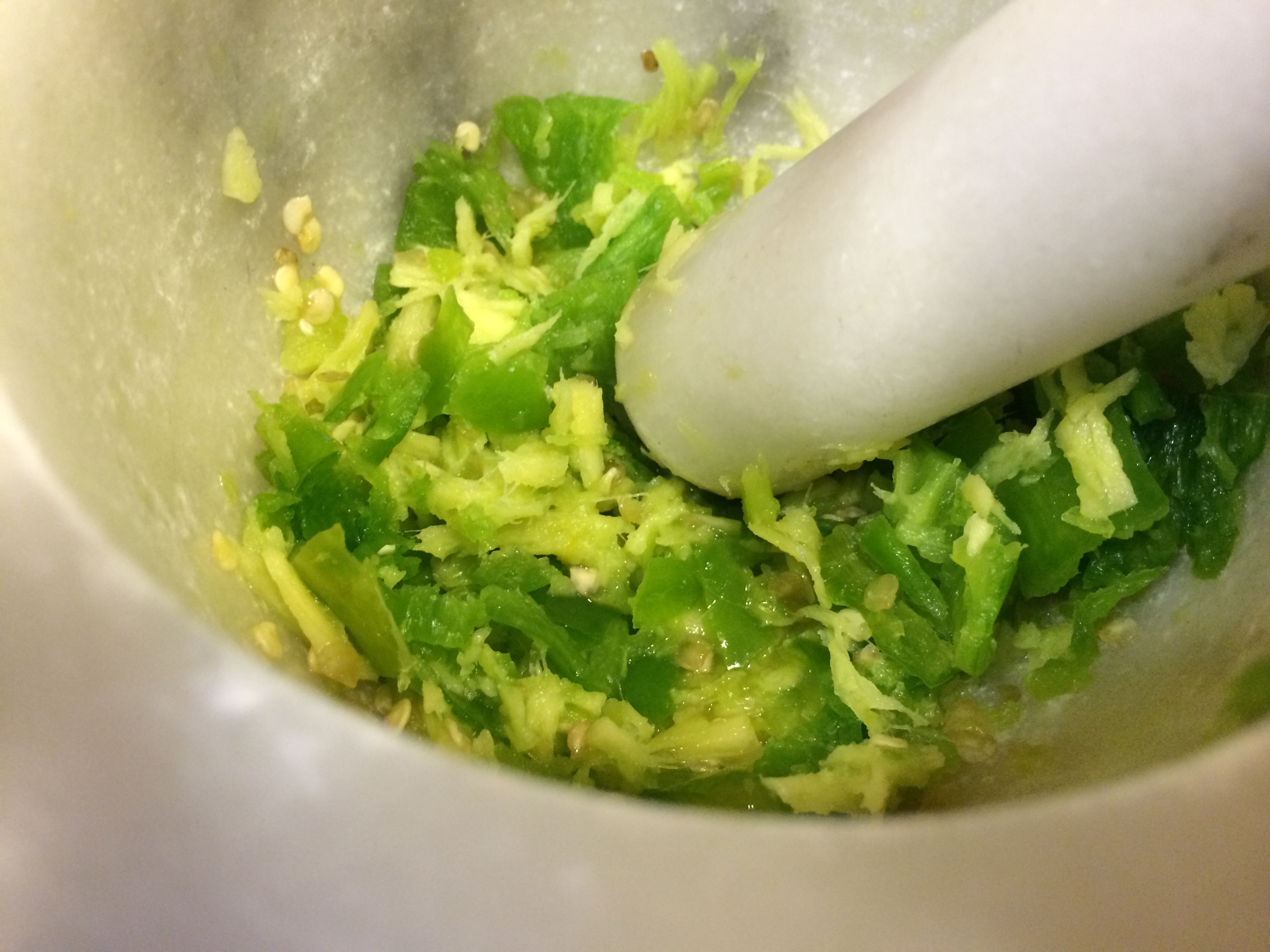
Make a paste of the ginger and chili in a mortar and pestle. In a blender, put in the yogurt, the chickpea flour, turmeric, salt, the paste from above, and 1 cup water. Give it a whirl to combine. Put this soup in a pot and bring it to a boil. At this point you can add the sweetener. Let it simmer, uncovered, for about 15 minutes.

Now the kadhi is more-or-less done, all that is left is the tempering. Turn it off and cover it. Heat the ghee in a small pan. When fully melted and shimmering, put in the cinnamon and cloves; when they sizzle the cumin seeds; when that sizzles the curry leaves. They will shrivel up quickly. Turn off the heat and pour the ghee into the kadhi. Also add the minced cilantro (this does not need cooking). Stir nicely and enjoy with rice.

Yellow mung dal with mangosteen

Moong dal served with radish cucumber salad

Moong dal served with radish cucumber salad

People have been eating locally long before it became a ‘thing’ and got its own hashtag. Thousands of years back essentially everyone was a locavore. All food was made out of plants that grew in the backyard fields or roots and shoots gathered from nearby forests. And sometimes a couple of these backyard ingredients came together in recipes that have remained classics.

I like to think of it has the boy-next-door and the girl-next-door getting married. How can a dish like that not be comfort food!

One such ingredient from the West coast of India is mung bean. There is more information about it here. This recipe calls for the split, dehusked form.

The other locally grown ingredient from the same region is the Indian mangosteen fruit. It grows mostly wild around the wet evergreen forests. The website Aayi’s recipes focuses on recipes from the Konkan coast and has great information (and pictures!) about it here. I have to admit that unlike that author, I did not grow up lobbing fresh mangosteen fruit at my brother. In fact I have never seen a fresh one, as far as I know. I had a city upbringing, and we obtained the dried and blackened rinds of the fruit in a bag. This is how it is used in this and in most other recipes.

kokum

Dried rind of Indian mangosteen, kokum

I can only imagine the sizzle and joy when these two ingredients first came together in a pot. Moong dal cooks into a creamy yellow pulpy thing, and the added rind of mangosteen (kokum) adds a very subtle sourness in a way that cannot be replaced by lemon or other souring agent. This dish is made more liquid to go with rice. There are no sharp flavors here — it is pure comfort food. When I was a child I enjoyed making it more bland by mixing it with some plain yogurt.

Some pictures to show the process.

Soaked and drained moong dal, turmeric, kokum together in a pot

Soaked and drained dal, turmeric, kokum together in a pot

Herbs for moong dal, prepared

Herbs for moong dal, prepared

Moong dal, cooked

Moong dal, cooked

Herbs, sizzling

Herbs, sizzling

Moong dal all done

Moong dal all done

Moong dal with kokum

  • Servings: 2
  • Difficulty: Easy
  • Print

Ingredients:
  • 3/4 cup dehusked and split yellow moong dal
  • 5 or 6 pieces of dried rind of mangosteen fruit (kokum)
  • 1/2 teaspoon turmeric
  • 1-4 fresh green chilies (I used serrano)
  • 4-5 large cloves of garlic
  • 5-6 curry leaves, if you don’t have them leave them out
  • 3/4 teaspoon mustard seeds (optional)
  • 2 tablespoons oil
  • 3/4 teaspoon salt
Method:

Rinse the dal in several changes of fresh water, running your fingers through to free up the loose starchy powder, until the water runs somewhat clear.

Put it in a pot along with the turmeric and the kokum and three cups of water. Bring it to a boil, then let it simmer for about an hour, partially covered. Or, you can use a pressure cooker, cooking under pressure for 15 minutes.

Once the dal is cooked down to being completely mashable, whisk the liquid to make it creamy. Add salt and turn it off, covered.

At this point, let’s start the tempering. Slice the garlic and the chilies. Just for the fancies, I sliced one of my chilies and simply vertically halved the other. Heat the oil in a small thick-bottomed pan. When it shimmers, put in the mustard seeds. They will presently pop. The rest of the fresh herbs, chilies, garlic, curry leaves go in. They will sizzle and cook. When done, turn off, pour the oil over the dal, and stir it in nicely.

Cilantro for garnish if you like. This goes well with white rice, with some salad or relish of fried stuff alongside.

All about dals in one place

Apologies to anyone who might be expecting a fun and interesting new post about kitchen antics from me…instead what I have to offer today is a dry, pedantic review of some dals. I updated my page about dals, and I plan to keep adding to it with other dals I have not yet covered, and of course adding links to more dal recipes. This page is meant to be a one-stop-shop for all dal-related information on The Odd Pantry. Dull, yes, but someone has to do it.

Check it out

Image

Beet parathas; a classic recipe book

Beet paratha

Beet paratha

Some years ago I found a book in a used bookstore that really spoke to me in the depths of my soul. It electrified me from the title alone, even before I cracked open the pages.

Now a few books have been known to be enormously influential in people’s lives. For some it may be ‘Thus Spake Zarathustra’ by Nietzche, or ‘Atlas Shrugged’ by Ayn Rand. For others it might be ‘War and Peace’ by Tolstoy. For me, it was this:

tasty dishes from waste items by Aroona Reejsinghani

tasty dishes from waste items by Aroona Reejsinghani

For the 1970’s in India, in the midst of famine, this book was quite apropos. I remember talk of the high prices of vegetables at every social gathering. Meat for many was simply out of the question. This book begins with an acknowledgement of the scarcity that every housewife has to deal with. It goes on to celebrate the leaves, stems, peels, leftovers that most of us throw away. The author painstakingly lists the vitamin content of each of these leaves and rinds, including the mysterious Vitamin P (?)

Not only is it completely impressive that she was able to do this research in the days before Google, it is astounding how many recipes she was able to come up with.

In here one finds 5 recipes that make use of banana peels (throw away the outer green part, she advises), 9 recipes that use turnip leaves, 2 that want you to fry up potato skins. Curdled milk, of course, is an industry, and the author dwells on that for a bit. Stale bread gets its own section with 36 recipes. Leftover fish, meat, chicken each get their own sections as well.

Now we no longer live in a world of food scarcity but quite the opposite. Most developed countries don’t spend over 10% of their income on food, in the US, where I live, it is around 7%. But the message of this book is more relevant than ever. The cost of food production remains very high, it just doesn’t come out of our paychecks, but instead we pay for it with depleted soils and poorer biodiversity.

I have to admit I don’t go scavenging around the thrown away peels for my next meal, but instead compost everything. Given my chunky waistline, I figure it is even better to feed the worms than me.

Beetroot

Beetroot from foodreference.com

Beetroot from foodreference.com

Now, about beets. Here is basically the entire beet plant from roots up to the leaves. Stare at the leaves for a bit. You all know that the greens are nothing but chard, right? Beetroot and chard are not even different species but simply different breeds. Just like a Dalmatians may be bred for running and bloodhounds for tracking a scent, but both remain dogs, chard is bred for fancy leaves and beetroots for fancy roots, but both remain Beta vulgaris. The roots of the first and the leaves of the second can be eaten. This website has more on this: Is chard root edible.

If you have no use for the greens, you could discard them I guess, but for goodness sake don’t throw them away and then go buy chard at the market!

Out of the bunch pictured, here are the parts I ended up throwing away for this recipe, the rest was all eaten. I threw away the long tails of the roots. I threw away the part where the roots turn into stems — that tends to be tough. I peeled the roots thinly with a vegetable peeler. Last, some stems have thick fibers that simply zipper all the way off; if I caught hold of some of those, I threw them away, otherwise I chopped them up along with the stems and leaves.

Parathas with beet root and greens filling

A reader might be forgiven for wondering if I’m going through the little-girl spectrum for my parathas; some time ago I did a recipe for purple parathas, this time they are pink.

Anyway, the idea of the stuffed paratha is simple — it is a whole wheat flatbread stuffed with filling inside. The filling for these consists of the grated root and the finely chopped leaves and stems, cooked together with seasonings. Parathas are great with some plain yogurt on the side.

Tails trimmed

Heads and tails trimmed

Greens finely chopped

Greens finely chopped

Grated, cooking with oil

Grated, cooking with oil

Cooked down and dry

Cooked down and dry

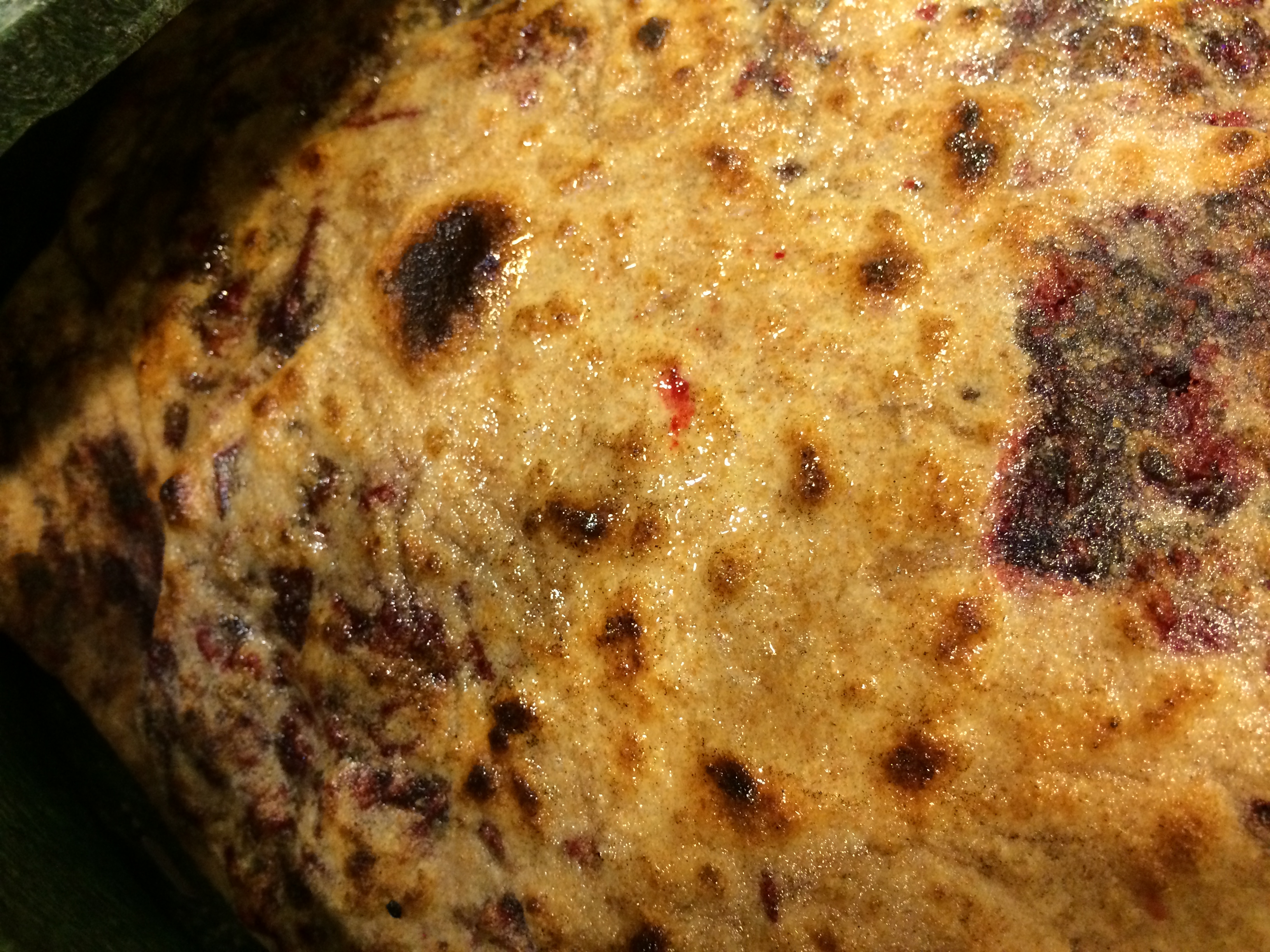
Uncooked paratha, pink showing

Uncooked paratha, pink showing

Cooked paratha, stacking up

Cooked paratha, stacking up

See the pink?

See the pink?

Parathas with beet root and greens filling

  • Servings: 8 parathas
  • Print

Ingredients for filling:
  • 3 medium beetroots with greens and stems
  • 1 teaspoon salt
  • 1 teaspoon red chili powder (or to taste)
  • 1 teaspoon chaat masala, substitute with dry mango powder, substitute that with lime/lemon juice
  • 1 tablespoon oil
Ingredients for parathas:
  • Roti dough made out of about 1 cup whole-wheat flour as in this recipe
  • Oil or ghee or butter for shallow frying on griddle.
Method:

Make the dough and set aside for half hour to rest. Make the filling: peel, trim and grate the roots. Rinse and finely chop the greens and stems. Heat the 1 tablespoon oil in a wide pan. When it shimmers, put in the beets, greens and all. Stir to coat with oil. They will very quickly start to cook down. Add the salt, the red chili, and the chaat masala and stir. The point is to dry out the filling. Once it looks pretty dry, turn off the flame and wait for it to cool. Taste for seasoning and adjust. I generally prefer the filling to be highly seasoned because the dough does not have any seasoning at all.
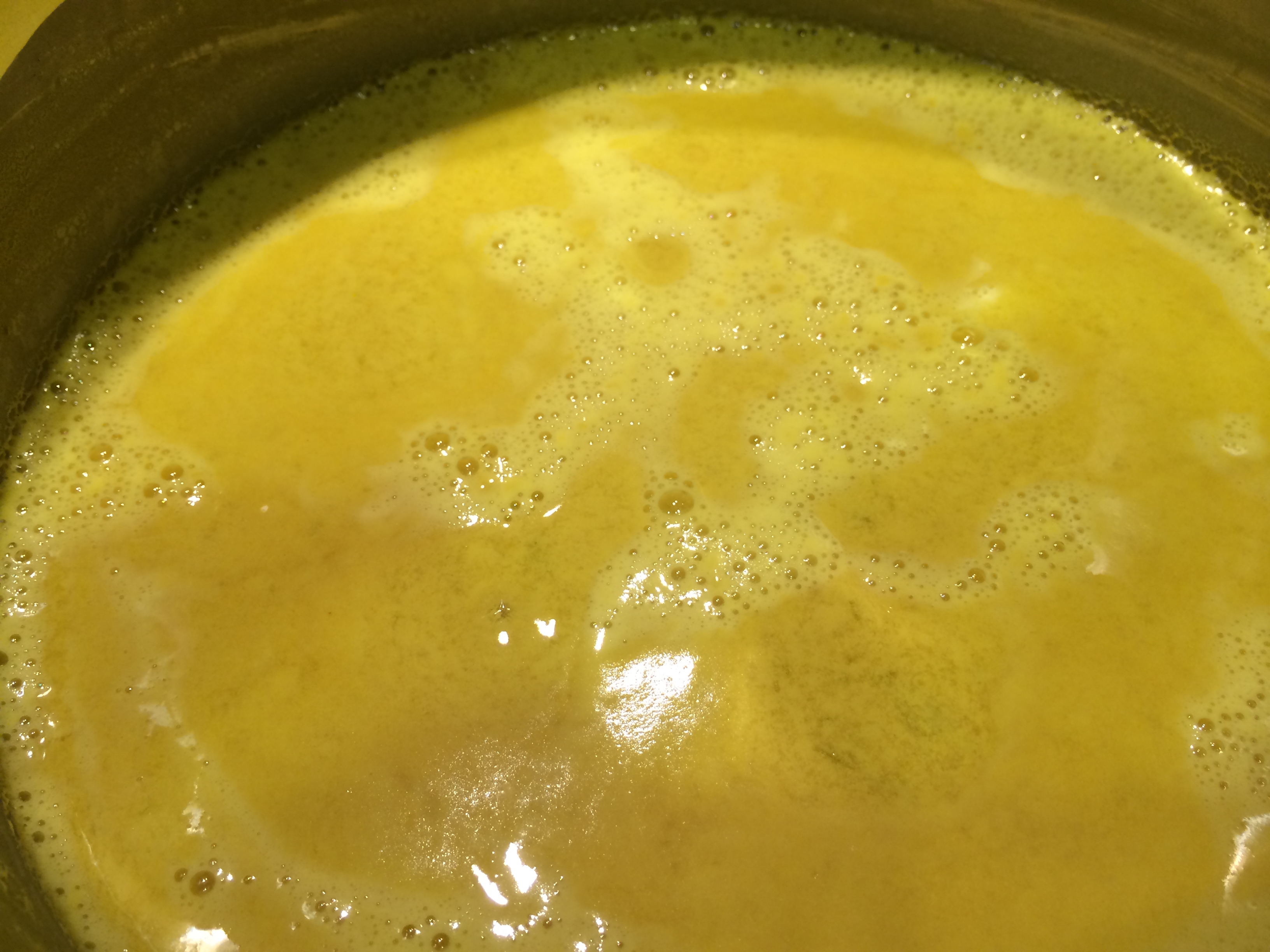
To make the parathas you can refer to this recipe, but I’m including most of the steps anyway. The dough is the same as used for rotis/chapatis. Roll out a thin circle about 5-6 inches wide. Place a couple tablespoons of the filling in the middle. Gather up the edges of the disk into a pouch. Flatten the pouch with your fingers, then roll it out again carefully so as to prevent the filling from escaping. Once it is a flat disk once again, about an eighth of an inch thick, it is time to shallow-fry on the griddle.

Heat the griddle on medium-high. When some drops of water thrown on it sizzle, it is time to put the rolled out paratha on. Wait for 30 seconds while the underside cooks; then flip it. Wait for another 30 seconds while the second side cooks. Now spread a few drops of oil or ghee on the top surface and flip it, to have the bottom shallow-fry in oil. A minute of this, now spread a few drops of oil on this surface and flip it again, letting it cook another 30 seconds. This way, each surface has been cooked twice, first roasted dry, then with oil, on the griddle.
Stack up the prepared parathas; enjoy them with some plain yogurt on the side. Greek yogurt is very popular nowadays, it would make a great dip for these.

I’m entering this in the Family Foodies challenge for May, which is to do with frugal eating. Perfect! Minds knitted together across the interwebs…that’s what blogging is all about.

This is hosted over at Bangers and Mash and Eat Your Veg…this is a link to the May challenge. May the cheapest skinflint win!


An early summer beverage

Spiced buttermilk

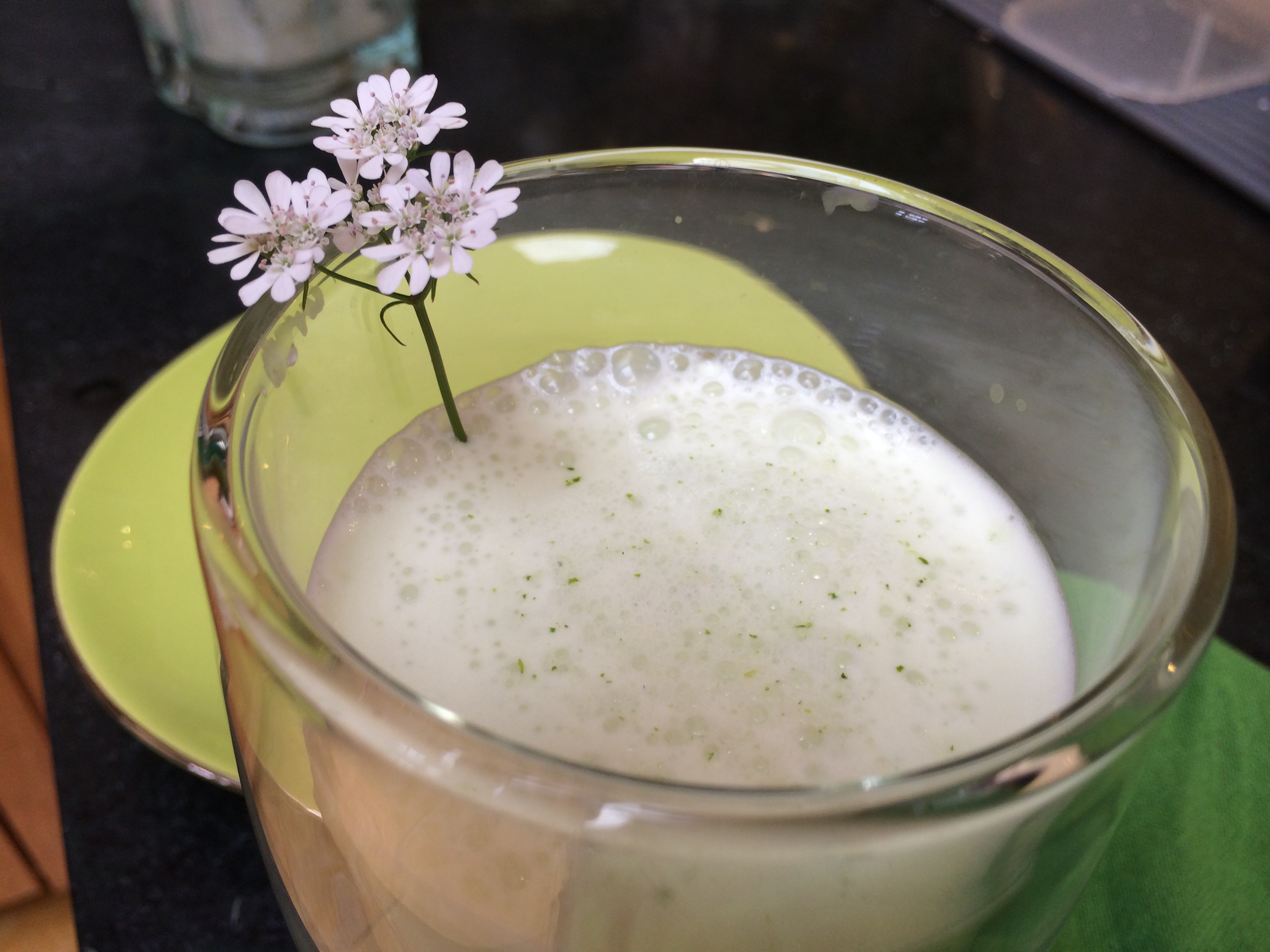
Spiced buttermilk with cilantro flower

Summer has come early to San Francisco this year; sometimes it feels like it never left. With climate change looming, this is not as good news as it might seem. But let’s not worry our pretty little food-blogging heads about this just yet and cool off with this yogurt beverage.

Spiced buttermilk: Neeru majjige

This is another specialty from the southern state of Karnataka from my friend Rashmi. Just think — instead of reaching for a sugary soda you could cool down with a tall glass of spicy yogurty neeru majjige. Better to taste and way better for your body.

Ingredients for Neeru Majjige

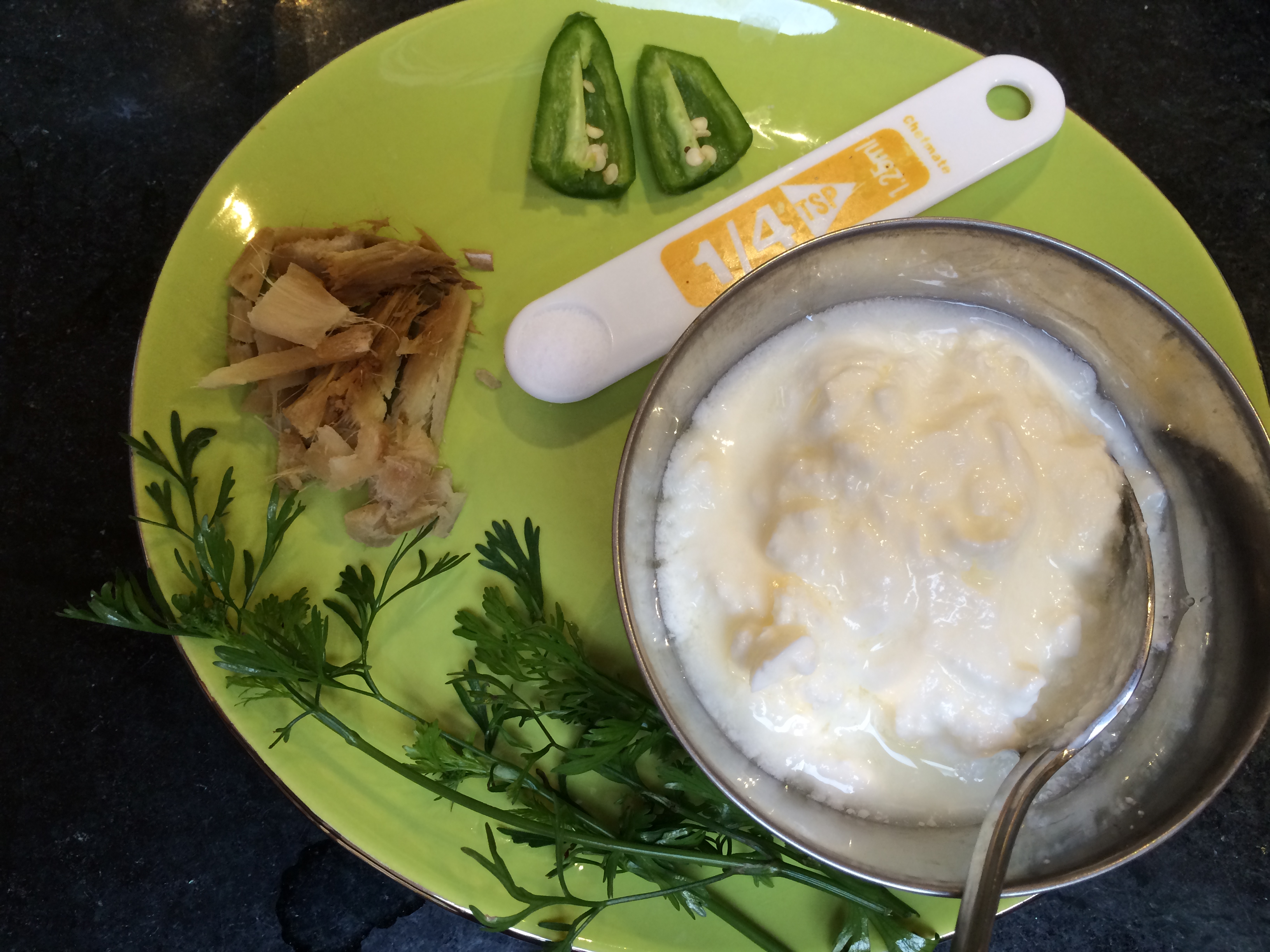
All the ingredients

Blend it

Blend it

Strain it

Strain it

Squeeze dry

Squeeze this stuff dry

Spiced buttermilk

Done – spiced buttermilk

Spiced Buttermilk (Neeru Majjige)

Ingredients:
  • A cup of yogurt
  • A cup to cup and a half water
  • Quarter inch ginger
  • Half a green chili
  • Few sprigs cilantro
  • Quarter teaspoon salt
Method:

Simpler than simple. Blend all the ingredients together. Strain it. Squeee–eeee-ze the green remains dry. The mixture is a pale green, the squeezing will drip delicious light green drops on it. Refrigerate for half hour if you like.

Garnish with a sprig of cilantro, or like I did, a cilantro flower from the garden.

Like bhaji on pav

Pav bhaji stall (Photo credit: http://burrp.in.com)

Pav bhaji stall (Photo credit: http://burrp.in.com)

A couple posts ago I did the recipe for pav bread, and possibly some of you thought — well, ok, but where’s the bhaji? Especially if you have lived in Mumbai for any length of time. Those who have not might be forgiven for wondering what the fuss is all about.

You see, there aren’t a lot of dishes that Mumbai can claim as its own: most are brought in from other regions of India by immigrants. Pav bhaji is one of very few that were invented in the city. Just like the culture of the city itself, it is a bit of a mongrel; just like the city itself, it is imbued with street culture. It is street food, but it is so much more than food. It is a fixture of street life. It is fuel for hungry office-workers, cart-pushers, delivery-boys, ward-boys, brick-layers, day-laborers. A cheap lunch date for college romances. For a city that thrives on masala (spice), whether in food or in movies, it is a way to cram as much masala as is humanly possible onto the smallest paper plate.

The Bhaji

Now the word ‘bhaji’ is a bit like my most hated word — ‘curry’ (read this if you want to know why I hate it), in that it is a generic word for spiced and cooked vegetables. It suggests a hodge-podge, something that is so mixed up that one has to resort to vagueness. But in fact, although this dish was invented as a hodge-podge, it has now come to mean one exact dish, with one exact spice mix and one exact set of vegetables. Especially when used with ‘pav‘, as in ‘pav bhaji’.

This particular hodge-podge consists of several boiled vegetables, fried and mashed with spices. The whole thing is done on a giant griddle. Butter is spread all over the griddle and then the boiled vegetables sautéed. The mashing, as I remember, is done with a flat metal spoon. The mashed mixture is served with two pieces of pav bread, which have been sliced and toasted with butter and some of the spicy mix spread on it. The dish is topped with more butter. So there is butter underneath it, in it, and on top of it. Then, raw onions and cilantro are chopped fine, mixed with lime to make a bit of a relish, and that relish is thrown on top to garnish your paper plate.

The whole thing for less than 20 rupees.

Pav bhaji served

Pav bhaji served

History

Pav bhaji was invented by street-food vendors out of leftovers. In the late nineteeth century Bombay’s main industry was textiles; there were 130 mills in the central area of Girgaon (‘mill village’). The last shift let out at midnight. Street food vendors that sprung up around them threw together whatever scraps of vegetables they had from the day’s cooking and mashed it all up to hide its lack of pedigree. For the masala powder, once again, they threw everything in it indiscriminately, from garam masala (warm) spices like cloves to hot spices like dry red chilies.

From textile mill workers the dish became a standard for the underworld that was just getting started up around that time. A movie from some years ago called Vaastav depicts the story of an underworld don who gets started in business by opening a pav bhaji stall. Here is a clip of a song from the movie. I realize it is a little unconventional for a food blog to showcase Bollywood songs, but this one does show how the dish is made. This time, that is my excuse. (Next time I embed a song I won’t need an excuse.)

(Rough translation: here is a short man with a big belly, a man with money. He is eager for food. The griddle is hot, let’s throw the butter on it.)

Pav Bhaji

Today vendors of Pav Bhaji are everywhere from street-food stalls to expensive restaurants. It has lost its whiff of the underworld. Many variations have sprung up — Jain pav bhaji that omits onions and potatoes, khada pav bhaji that isn’t much mashed, Mexican pav bhaji that includes baby corn.  I’m still faithful to the original, so that is what I showcase here. In fact the spice mix has also become commoditized and is available for sale in most Indian grocery stores in nice neat packages labeled ‘Pav Bhaji Masala’, but of course we have to make it from scratch…so here we go.

First the spice mix:

Whole spices for pav bhaji masala

Whole spices for pav bhaji masala

Roasting

Roasting

Going thru the funnel

Going thru the funnel

My 8-year-old helping with a chopstick

My 8-year-old helping with a chopstick

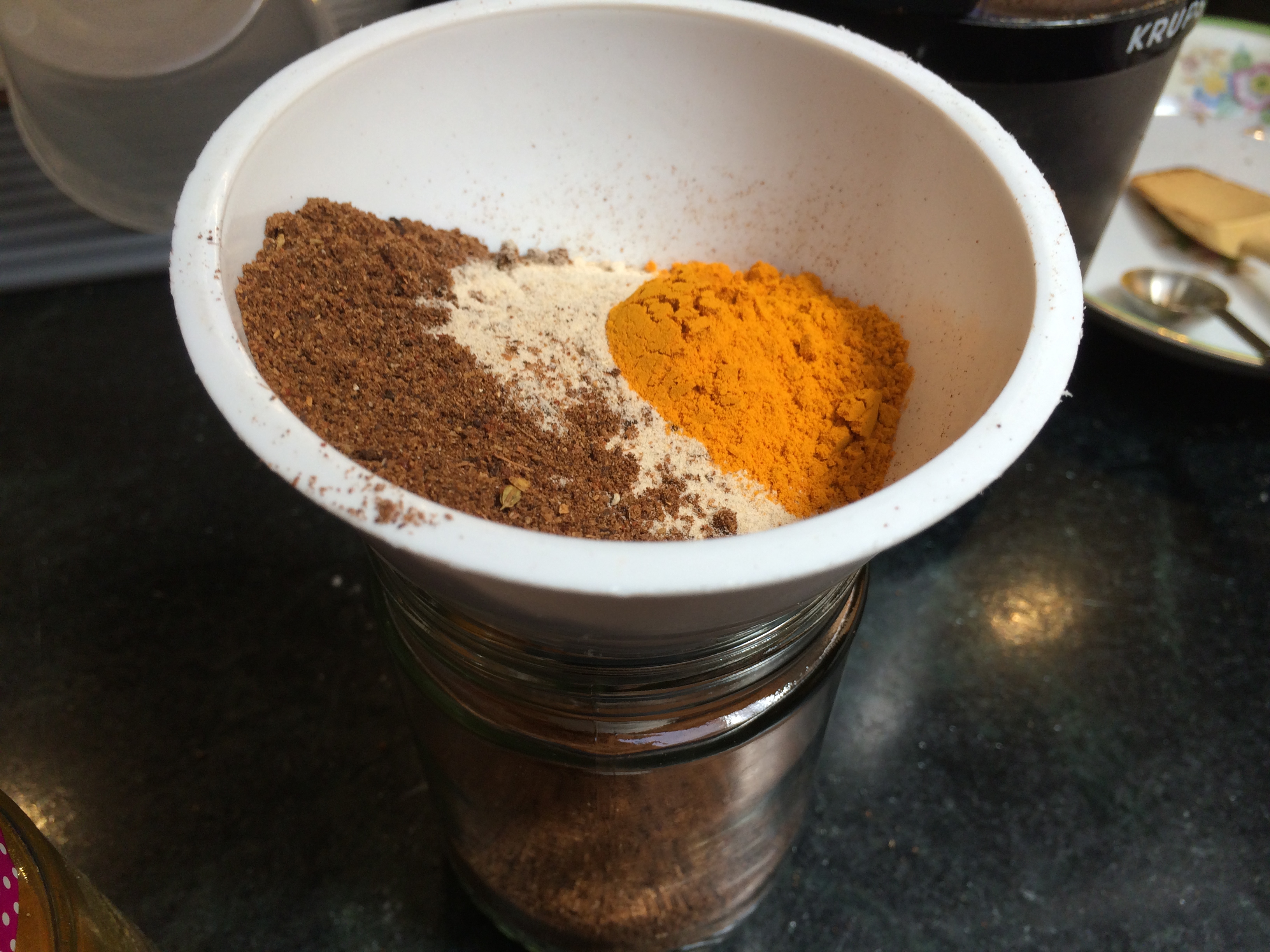
Done and labeled

Done and labeled

Pav bhaji masala

Ingredients:
  • Quarter cup cumin seeds
  • Quarter cup coriander seeds
  • 2 tablespoons whole black pepper
  • 2 tablespoons cloves
  • 1 tablespoon fennel seeds
  • 3 black cardamom (use half of what I have pictured above)
  • 10 dry red chilies (change amount to suit your taste, this is pretty hot)
  • 1 tablespoon turmeric powder
  • 1 tablespoon dry mango powder
Method

Heat a cast-iron pan on medium heat. We are going to roast spices so be sure you have your windows open and fan on. Roast each spice separately until each is fragrant and slightly darkened. Empty into a plate. Grind them together in a clean coffee grinder. Pour into a jar using a funnel. Now is the time to mix in the already ground turmeric and dry mango powder. Shake to combine. Label and save.

Then the bhaji (vegetables):

Vegetables

Vegetables

Veggies about to be boiled

Veggies about to be boiled

Boiled veggies roughly mashed

Boiled veggies roughly mashed

Saute onions and green bell peppers

Saute onions and green bell peppers

Add ginger-garlic-chili paste

Add ginger-garlic-chili paste

Add tomatoes

Add tomatoes

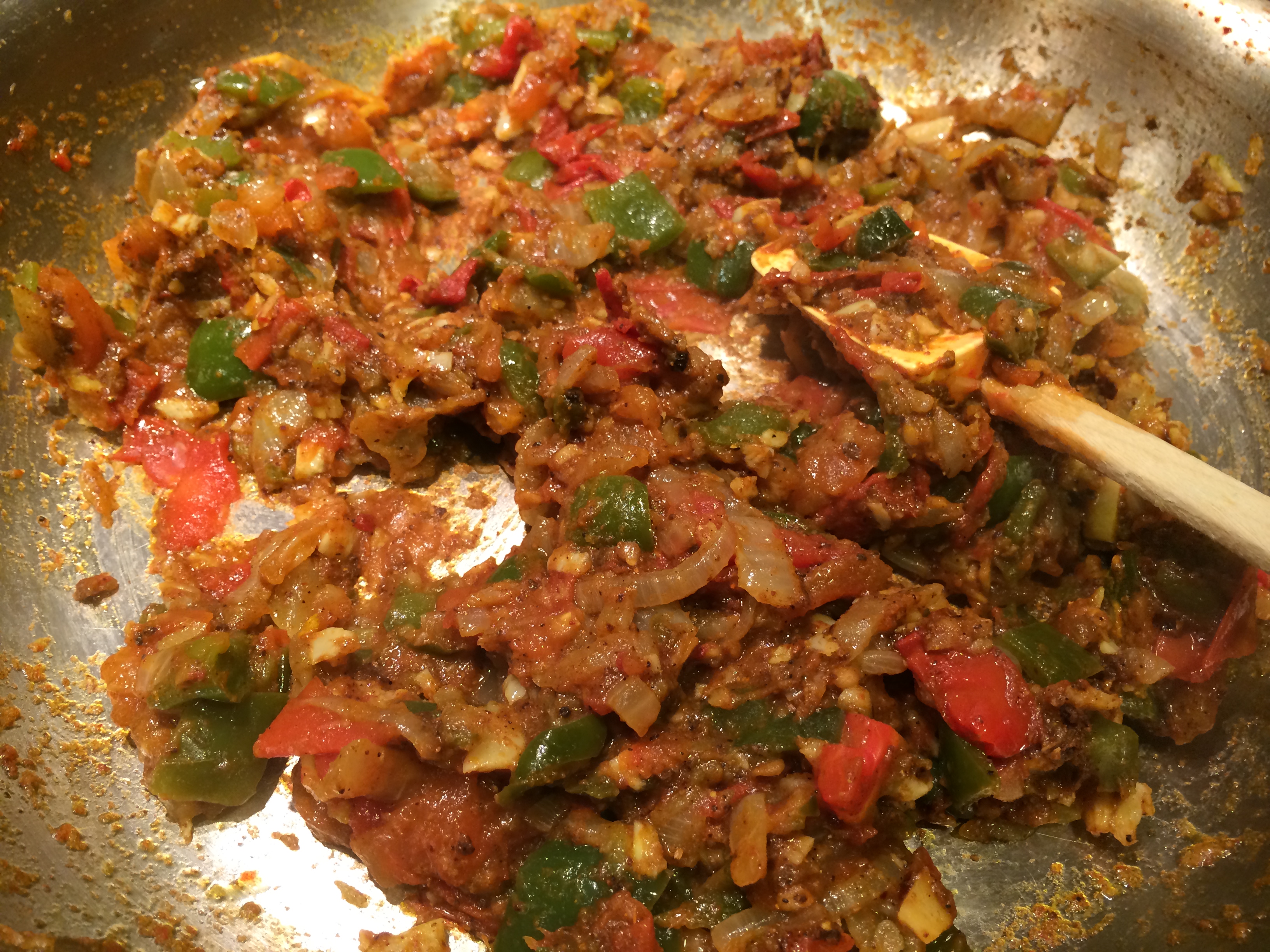
Dry spices go in

Dry spices go in

Cook dry spices

Cook dry spices

Add vegetables

Add vegetables

Pav bhaji served

Pav bhaji served

Pav Bhaji

Ingredients:
  • Ginger-garlic-chili paste made from 6 garlic cloves, 1 inch piece of ginger, 2 green chilies
  • 1 medium onion chopped up
  • 3 medium tomatoes chopped up
  • 1 green bell pepper (capsicum) diced
  • For boiling:
    • 2 carrots
    • 10 or so green beans
    • 1 medium potato
    • Quarter of a medium cauliflower
    • Quarter of a medium head of cabbage
  • 1 teaspoon salt
  • 2 tablespoons butter or ghee
  • 2 tablespoons pav bhaji masala from above
  • 1/2 teaspoon turmeric powder
Method:

Roughly chop the vegetables that are for boiling, add half a cup of water and the 1 teaspoon salt. Bring to a boil, cover and cook on a simmer until softened, about 15 minutes. When they are done, roughly mash with a potato masher.

Meanwhile heat the ghee in a thick pan. When it is hot add the onions and bell pepper. Let them soften on medium heat for about 4 minutes. The important thing with the onion is that it must not caramelize — that adds a sweetness and brown flavor that does not go with this dish. Add the ginger-garlic-chili paste and stir, until the oil separates, which means the paste is cooked. Now in goes the tomatoes. They have to first liquefy then dry up. You can turn up the heat for this part.

Once they are dry, you can add the dry spices — the pav bhaji masala and the turmeric powder. Stir them in and cook for a minute. Plop in the mashed vegetables. Mash some more, cook for 10 minutes or so, gently stirring and mashing as you please, until they are well combined.

Give it a taste — now is the time to make adjustments. Adjust the salt. Add red chili if it is not hot enough. Add more ghee or butter swirled in on top for lusciousness.

Serve with pav bread, optionally sliced and toasted on the same pan, with a bit of butter. Garnish with minced onion and lime juice.

Let's connect... FB-f-Logo__blue_29 pinterest_badge_red Google+ twitter-button-small