Feeding the husband’s habit

Husband's habit bread

Husband’s habit bread

Several years ago, poking around google looking for an oat bread recipe, I found that an unknown denizen of the Internet had put up a good-sounding recipe under the name of ‘Habit Bread‘. I made it that very day. My husband, who is a big fan of oat breads (he has his toasted with almond butter), said that I had aced it on the first try.

Since then, this loaf has become a standard in our family. Like with every other recipe I have made modifications — I call my version the Husband’s Habit Bread. It is so much part of my husband’s weekly routine that I try to have a loaf sliced and frozen at all times.

Here is a trick to storing loafs of bread, specially of this dense variety. One thing I have found is that the freezer works great, but unless one wants to thaw the entire loaf at once, it is better to pre-slice it. Then you can pull out one slice at a time.

Go ahead, pull one out. What? You can’t?! You can’t because all the slices stuck together when they froze?

Exactly. That’s why I put sheets of parchment or waxed paper in between each pair of slices before I freeze them. Put all the slices thus separated in a freezer bag, squeeze out as much air as you can from it, bind it tightly and put it in the freezer.

Husband’s Habit Bread

This recipe makes one 9″x5″ loaf.

Wet Ingredients:

  • 1 cup dry rolled oats
  • 1/4 cup unsalted butter
  • 2 tablespoons honey
  • 1/2 cup corn polenta
  • 1/2 cup dry milk
  • 1 teaspoon salt
  • 2 cups water

Dry Ingredients:

2 cups whole wheat flour (I use King Arthur’s premium whole wheat)

1 cup bread flour

2 teaspoons instant yeast

Method:

Combine all the wet ingredients together into a pot and bring to a gently boil. Stir nicely to get it all to combine, paying special attention to breaking up the dry milk lumps. Once it comes to a boil, turn off the heat and wait for it to cool.

IMG_0186 IMG_0188 IMG_0189

The unknown denizen of the Internet who is the originator of the Habit Bread recipe mentions that a bowl of cooked oatmeal is notorious for holding onto heat and that is true. It takes a while for this mixture to cool to lukewarm. At the same time, you don’t want to wait too long, because then the mixture will turn into a giant lump and the bread will not mix very well. I have found through trial and error that this time period is about half an hour; but test before using.

Meanwhile combine the dry ingredients in the bowl of a mixer; if you choose to knead by hand, just combine in a large bowl. Stir the flours with a fork. Put the (lukewarm) wet ingredients in and stir with the dough hook for about 3 – 4 minutes until the dry ingredients are moistened. You may find you need to add up to 1/4 cup extra water while kneading. Leave it covered with a plastic wrap for about 10 to 20 minutes.

Come back to it; by this point due to the autolyse process the dough will be much easier to knead into a smooth ball.

Turn on the mixer with the dough hook for another few minutes or so; first the dough will come together into a shaggy mass. I like to finish kneading by hand until maximal smoothness.

Cover with oil and let it rise at room temperature in an oiled bowl for about 2 hours. It should double in volume.

IMG_0190 IMG_0192 IMG_0193

Take it out of the bowl, flatten it gently into a rectangle and roll into a loaf, while taking care to tuck the ends in. Squeeze the seam shut all the way across to seal it. Oil the shaped dough and put into a 9 inch by 5 inch loaf pan, also oiled. Cover with a plastic wrap and let it rise at room temperature for an hour to an hour and a half more.

This is a pretty dense bread, and it is quite a job for the wheat flour gluten to lift up the great heft of the oats and the corn polenta. Plus we are using a large percentage of whole wheat flour, the bran in which tends to counteract the lift of gluten. So this bread is not going to win any light-and-airy contests. By the time it has peeked over the rim of the loaf pan, it is probably done rising.

IMG_0194 IMG_0195

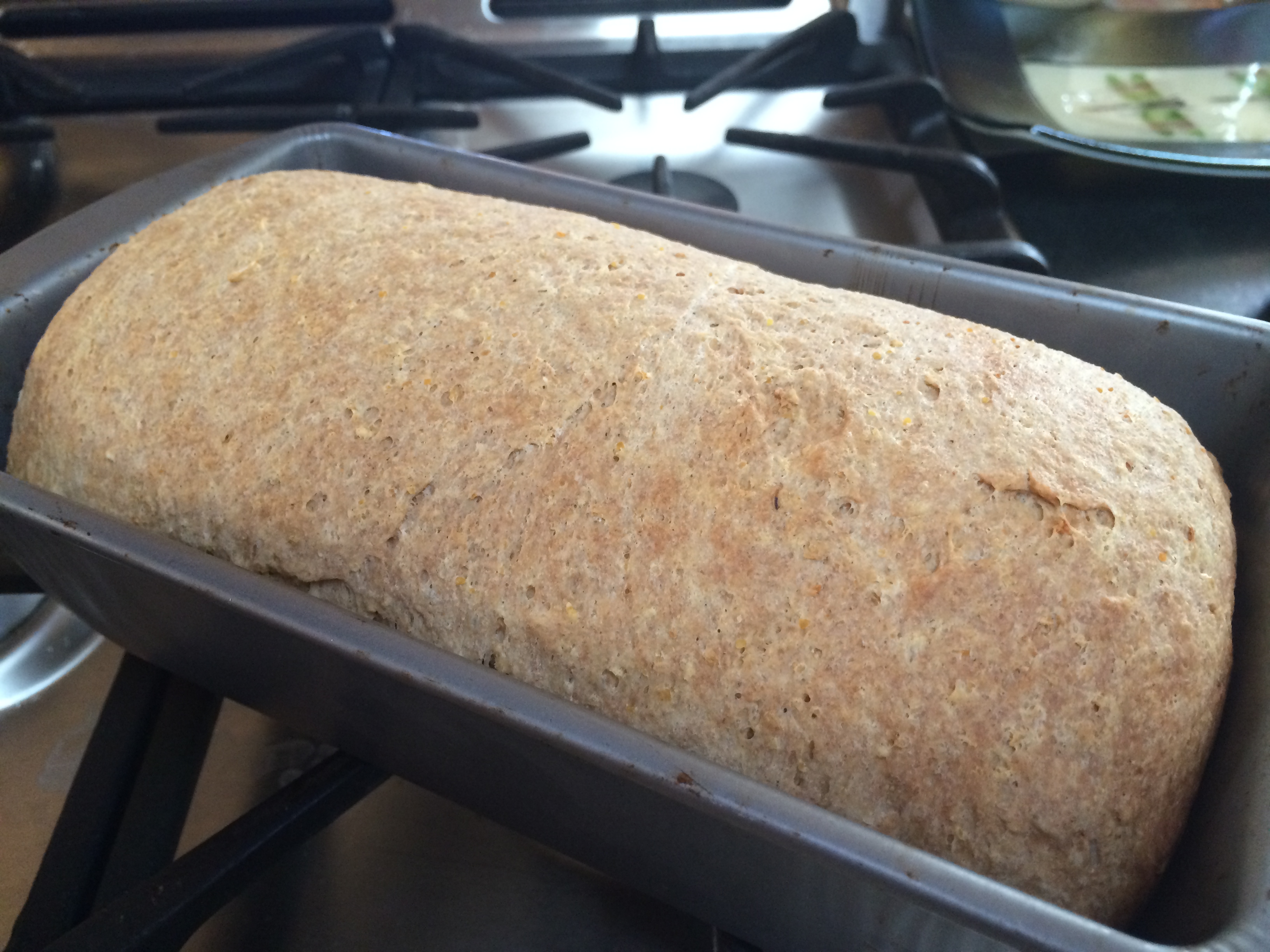
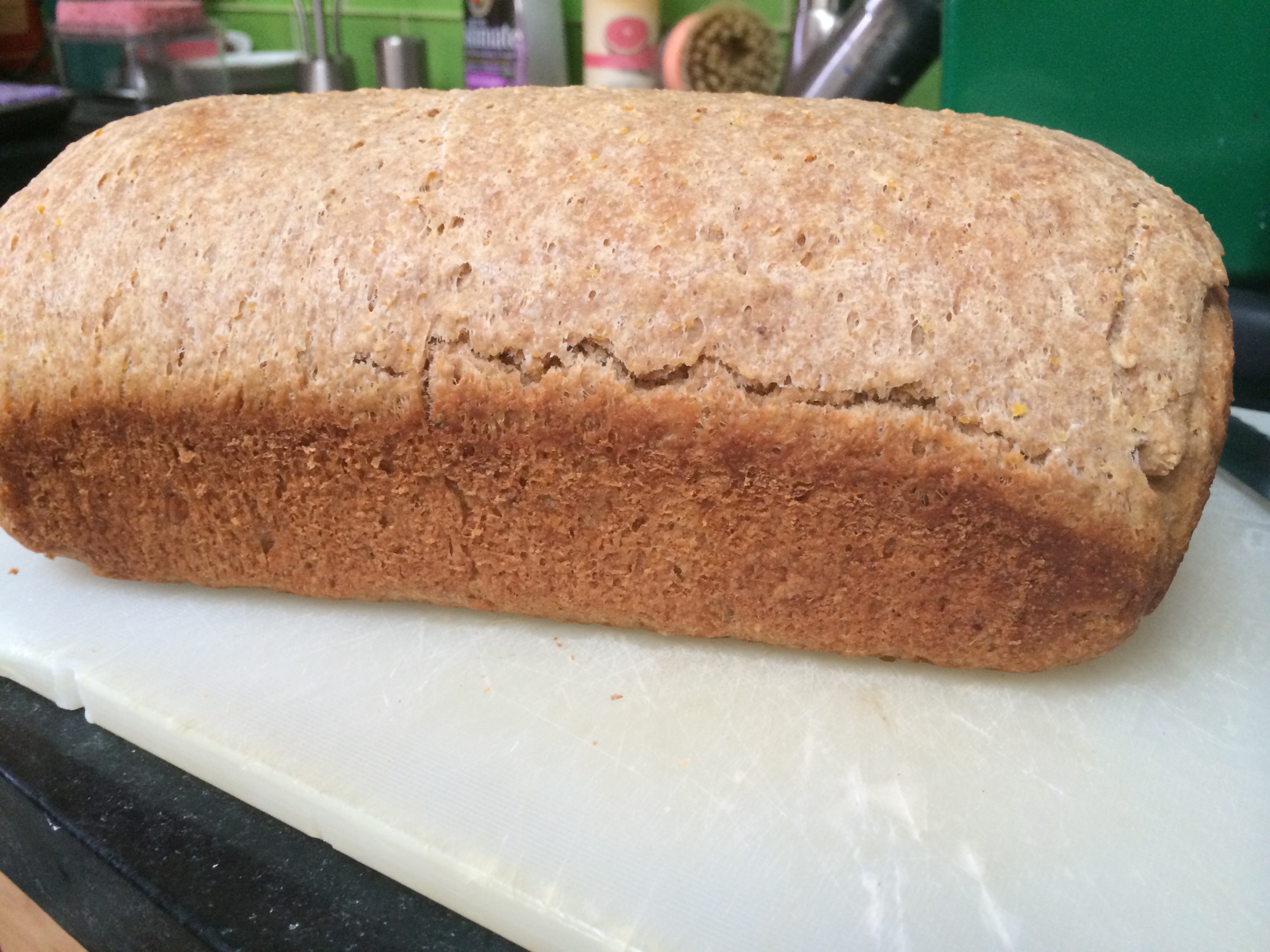
Bake in a 350 F oven for 55 minutes. An instant-read thermometer inserted into the meat of the loaf should read 200 F. Take it out of the oven and let it cool on a rack for an hour before slicing into it. Thank you, unknown denizen of the Internet.

IMG_0196

Yellow garlick rice

IMG_0170

Yes I know there is a misspelling in the title, I just like the way that looks. Please direct all complaints to: The Editor, The Odd Pantry, Internet.

This is a simple rice preparation that looks quite grand (some people will mistake the yellow as coming from saffron which is the world’s most expensive spice). But it is simple enough to do for an everyday meal. Basically, use this recipe when you want to do a minor feast; not, for instance, when you have the Prime Minister of Senegal over.

Yellow garlick rice

Ingredients:

  • 1 cup long-grained rice
  • 3 – 4 cloves of garlic, minced
  • Half a teaspoon turmeric
  • Quarter teaspoon salt
  • One tablespoon oil

Method:

Rinse the rice once and soak it for about 10 minutes to half hour. Drain the soaking water.

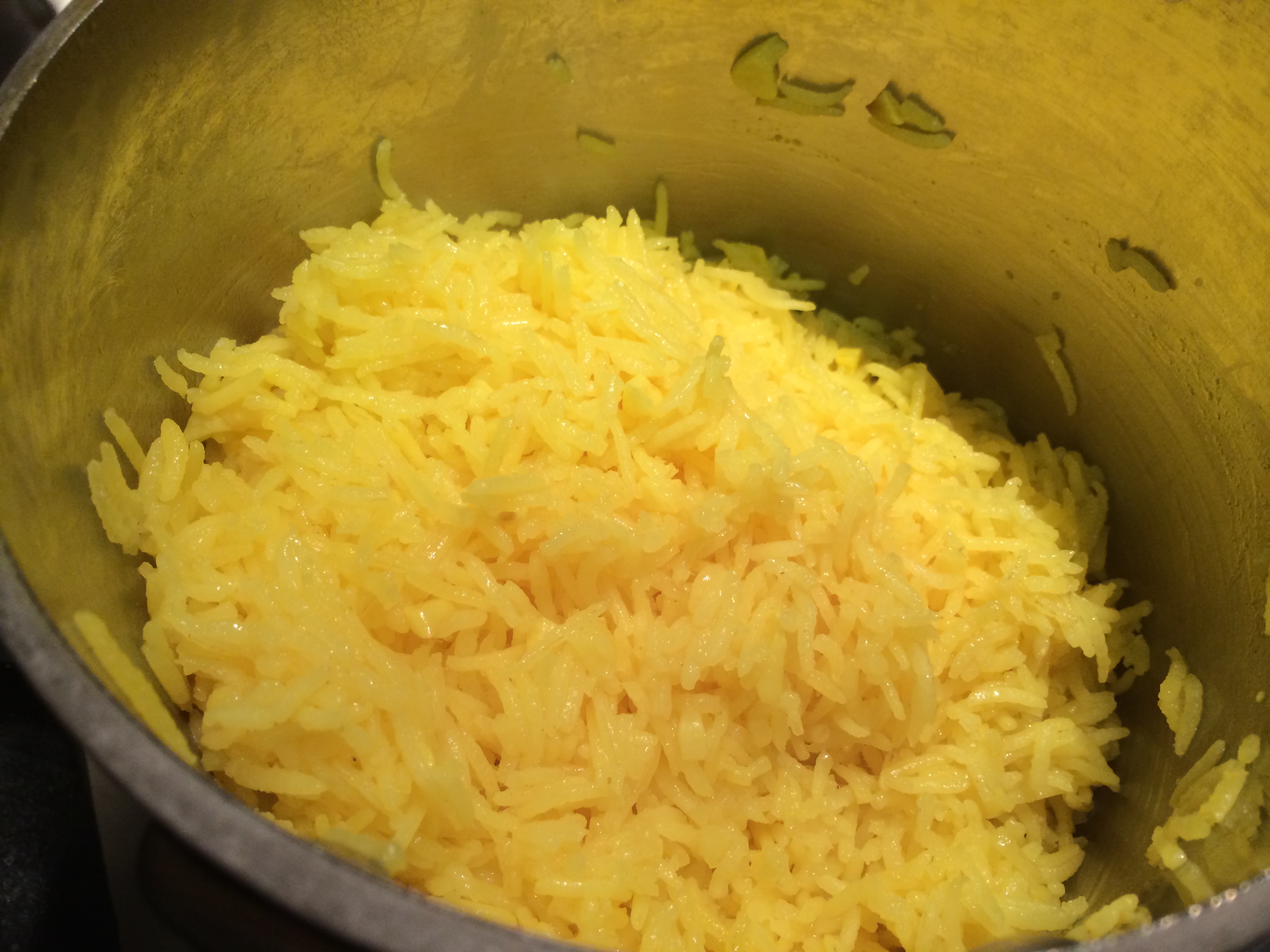
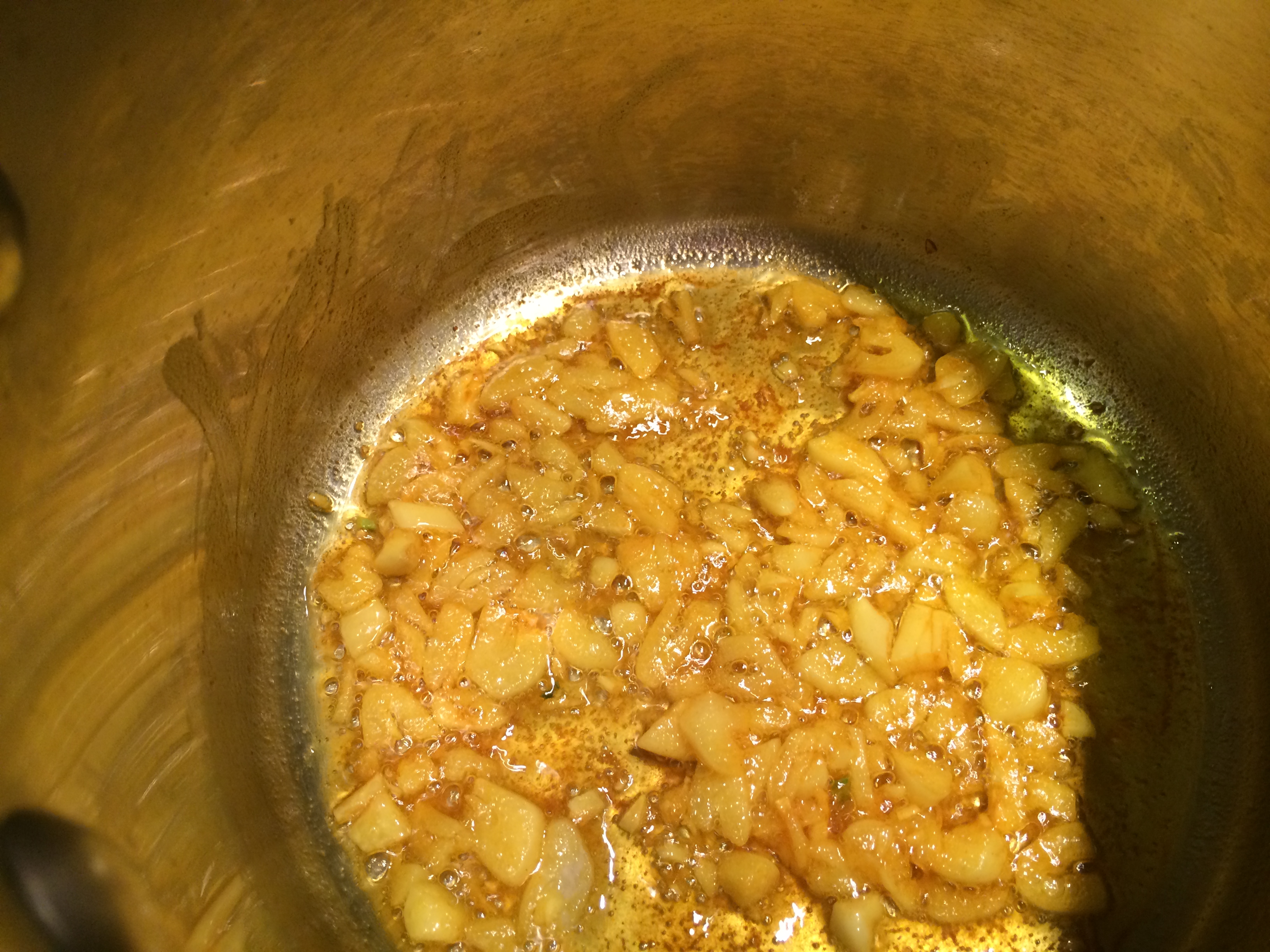
Heat the oil in thick-bottomed pot. Put in the garlic and the turmeric when the oil shimmers and stir it around for a couple minutes until the garlic looks shriveled. Now put in the drained rice and the salt, and stir to coat the grains with oil. Most of the grains will start to look opaque once they toast in the oil.

IMG_0167 IMG_0169

Put in one and a quarter cup of water and bring to a boil, covered. Turn it down to a simmer, tightly covered, and let it simmer for about seven minutes. Turn the heat off and leave it covered, in place, for about ten more minutes. This last step of waiting ensures that the collected steam is absorbed by the rice.

If you like, fluff with a fork before serving.

Variation: If you like, throw in a quarter cup of frozen peas before bringing to a boil. It will look a little fancier and be tasty too.


Licky spice mix

Sometimes exact translations don’t quite work, do they? Subtle thing, this language business.

Anyway, ‘chaat masala’ — so named because it is supposedly so delicious that one wants to lick — it? your fingers? — at any rate, one wants to lick some indeterminate thing — is today’s topic. ‘Chaat’ means ‘lick’ and ‘masala’ means spice mix in Hindi. Chaat masala is sprinkled on all manner of delicious snacky, faintly junky food, that are often eaten at street vendor stalls in the warm evenings while out on a stroll with your pals. In fact, many would claim, chaat masala is often responsible for the deliciousness. Making one want to lick stuff, is the key.

Here is the mix I use in my kitchen. I always have a jar on hand and hate myself when I don’t. So don’t be that person, and do make this mix.

Modified from 1000 Indian Recipes by Neelam Batra.

Chaat masala

Ingredients for chaat masala

Ingredients for chaat masala

Ingredients:

Method:

I realize that some of you will have to make a trip to an Indian grocery (if you live outside India) to collect these ingredients. Just be sure you don’t come back with a ready-made mix of chaat masala, though that will probably be available too, because that will wreck the whole point of this post.

Heat a small thick-bottomed pan on a medium-high flame. When it is hot put in the whole spices (cumin, black pepper, carom) — individually, because each of them will take a different amount of time to roast. Stir gently, and roast each spice for a couple minutes until they turn a shade darker. Empty into a bowl.

Stuff 021

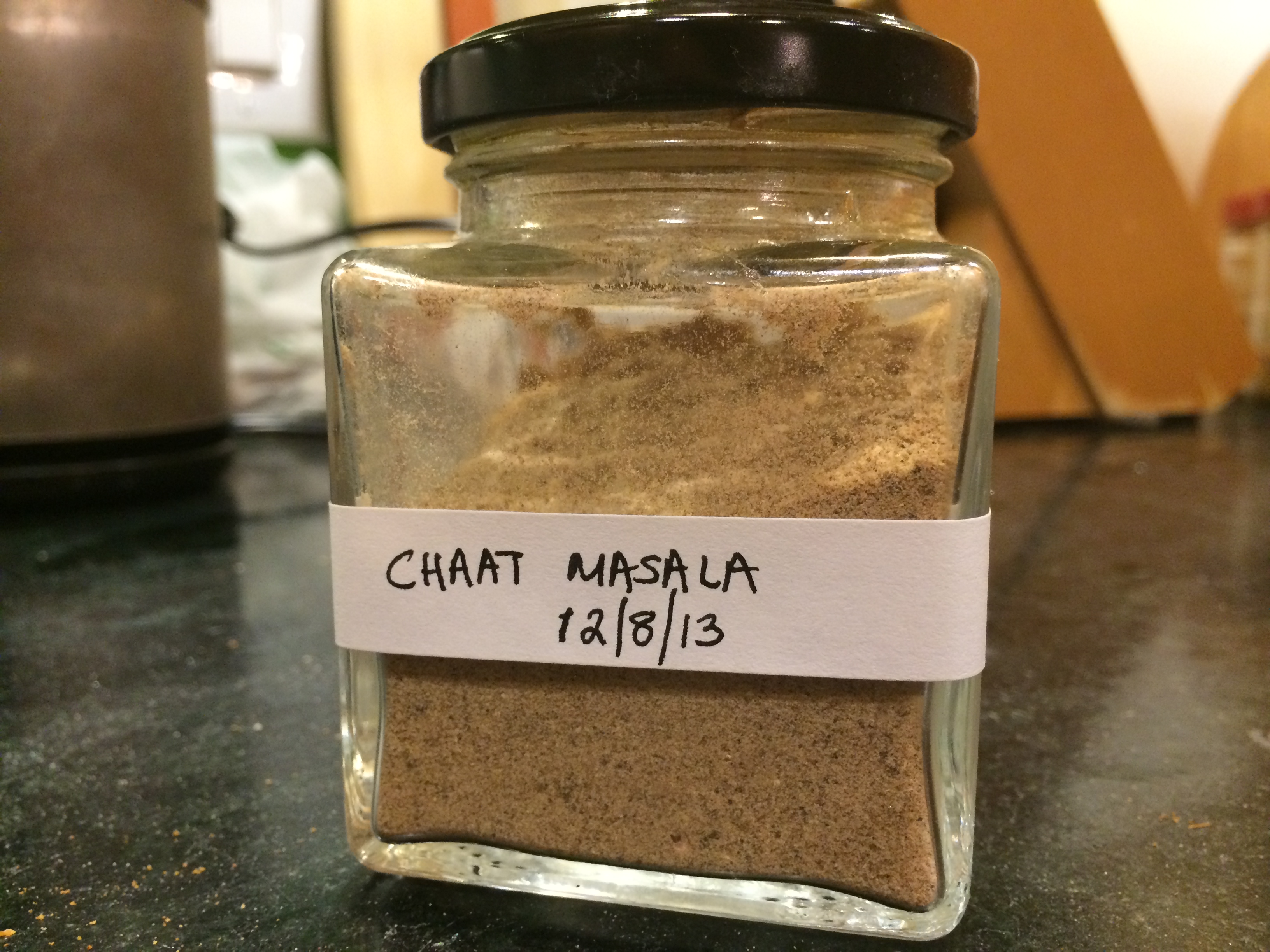
Using a clean coffee grinder, powder the three whole spices. Then pour into a clean jar with a funnel along with the other three already powdered spices — asafetida, black salt and dry mango powder. Close the jar tightly and shake to combine. Label it and date it.

Stuff 024

What is this ‘sinfully delicious’ you speak of?

IMG_0138

Bear with me please, I certainly understand ‘delicious’ but am struggling to understand why something delicious should be sinful. Yes, even dessert! This rustic pie makes a few healthy choices along the way and ends up with as close to a tonic as you would find in the dessert kingdom. At the risk of chasing away my readers with shear tedium, I will give little sidebars on the healthy choices I made and why.

This recipe makes two tarts.

Rustic Strawberry Tart

Ingredients for pie crust:

  • 2.5 cups stone-ground white whole wheat
    Whole wheat flour includes the germ and the bran and that’s where the nutrients generally hide. “White” whole wheat is made from a softer, albino wheat, that lacks the tannins of the red bran of the regular wheat. That is why it has a milder flavor and is more appropriate for the non-bread uses of flour: what I call the flakey-cakey family. Stone-grinding ensures that the flour does not heat up excessively while grinding and lose nutrients.
  • One and quarter teaspoon salt
  • One cup (2 sticks) unsalted butter
    I recently read that — yes, I did a double-take too — there is no evidence that fat is fattening. Also that all those decades of advice telling us to avoid saturated fat were based on very flimsy evidence. So let us rejoice in butter and lard, people. And please do not scorn the wondrous coconut. As a matter of fact the supposedly heart-healthy butter substitutes are way worse for you than butter itself, while also (coincidentally?) needing more processing than good old fashioned butter, and so just happen to line various pockets more.
  • I did not sweeten the crust at all.
    Most pie crust recipes ask for a tablespoon or more of sugar. I desist. I don’t see the point: the filling is sweet, and I like the contrast with the crust. Sugar is metabolized by the liver and this makes it especially bad — worse than an equal amount of any other type of calories — for reasons I only dimly understand. Yes, worse than fat, the bogeyman from the last generation (Us Gen-X’ers would like our own bogeymen, please). But watch this or read this if you want to delve into it more.

Ingredients for filling:

  • 2 – 3 cups stemmed and chopped strawberries
  • 2 tablespoons raw organic demerera sugar
    In general, with sugar, the less refined the better. This kind of sugar has some of the molasses left in it. Clearly this is dessert so it is bound to have some sugar in it, but everything in moderation!
  • 1 tablespoon flour
  • 1 teaspoon butter

Method for the pie crust:

First, let us make the crust. A good flaky pie crust uses the following principles: First, you handle the flour as little as possible to avoid gluten from building up. Second, you keep things cold, for a similar reason; so you avoid touching with flour with your hands and their warmth. Third, you ‘cut’ the fat in, rather than knead it in, and leave it in little pea-sized bits till the end, because while cooking those bits will melt and leave holes in the pastry, and your client will go — mmm, flaky!

So bread-making is all about developing the gluten while pie crust is all about NOT developing the gluten. One is spongy and the other is flaky. This is how a single word can hide whole reams of tradition and science.

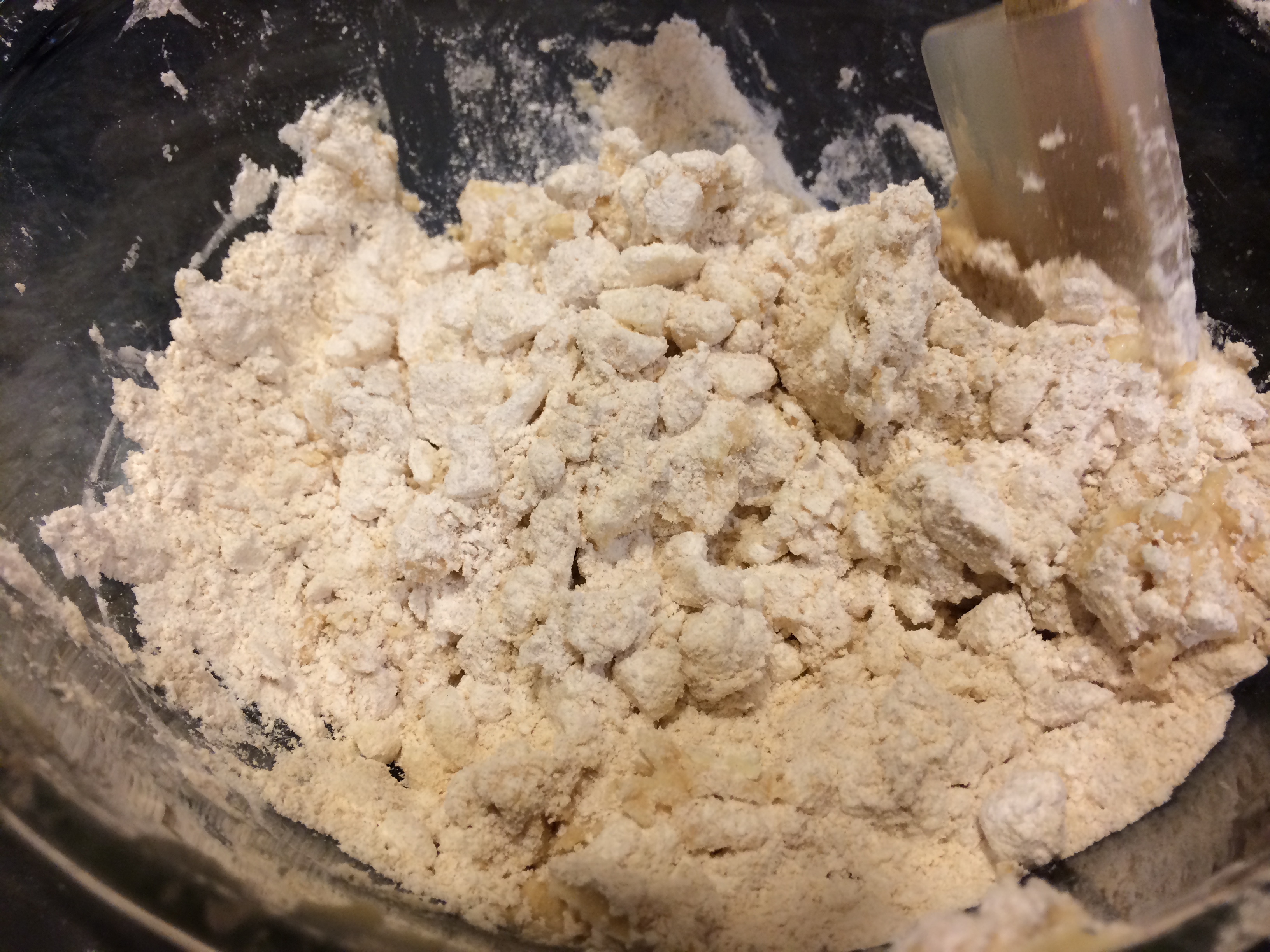
Start with all the flour and the salt generally mixed in in a large bowl. Get your stick of butter out of the fridge, and unwrap it only partially, so that you are holding it by means of the waxed paper wrapping, and keeping things cool. Using a paring knife, slice off bits of butter into the flour until the entire stick has been sliced off. Stir the butter bits around to coat with the flour. Then start cutting at the butter bits with a knife. This process can take about 10 minutes, but when you are done, the flour should all be touching butter or touching flour that is touching butter. Sorry that is the best way to describe it. It certainly does not look wet nor gathered together at all. The largest butter piece should be about the size of a pea.

IMG_0115 IMG_0118

Now add 2 tablespoons of refrigerated water sprinkled over the top. Using a spatula start moistening the flour and pressing it together into a mass. Remember, no touching and no kneading! The flour will readily press together as soon as it is moistened, but will remain rather shaggy. Collect it all in a sheet of plastic wrap or waxed paper, and using those flaps, press it together some more, until you can wrap it up into a parcel and put it into the fridge to chill.

IMG_0120 IMG_0122 IMG_0124

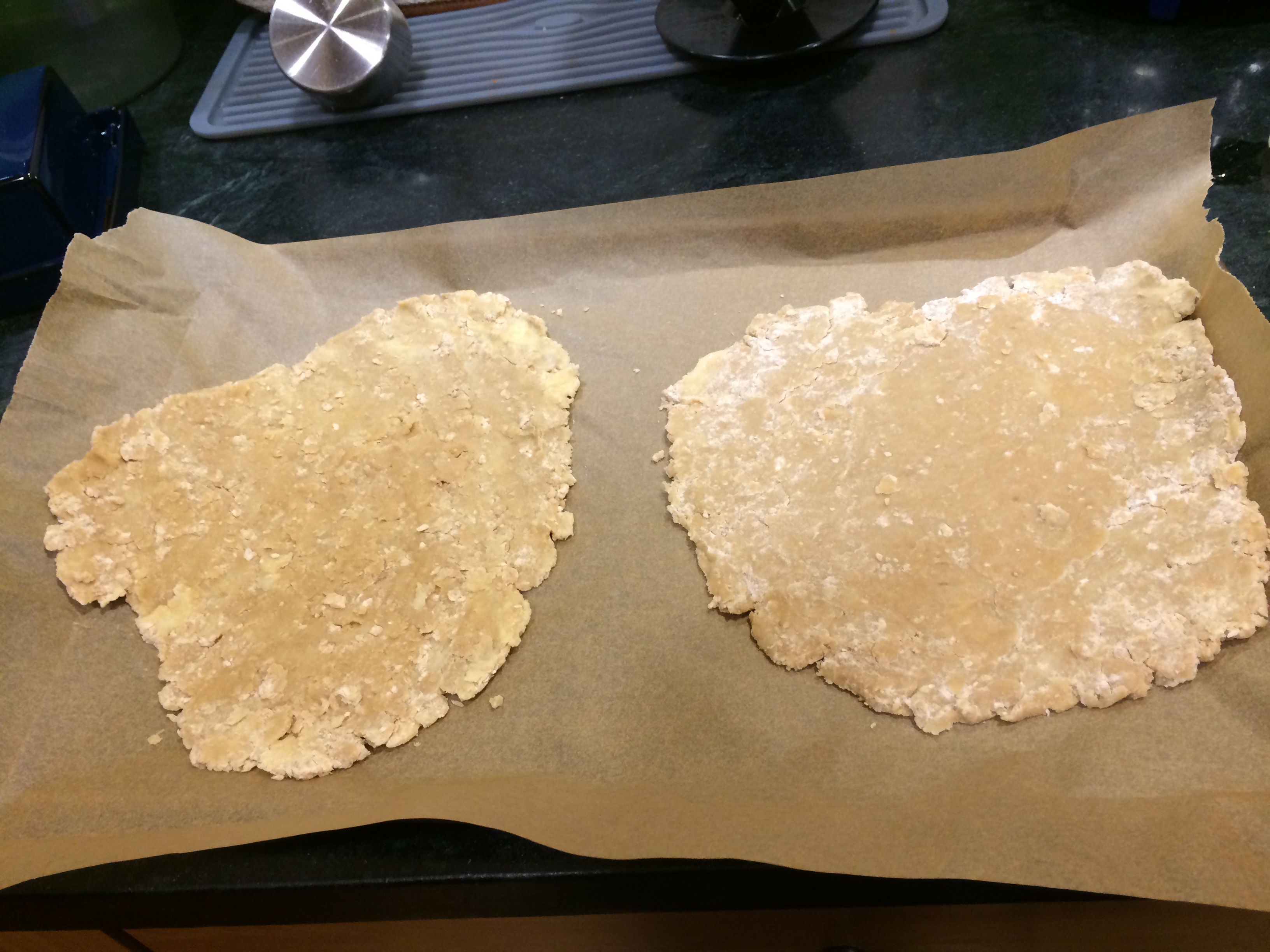
Great. Now the dough is chilled and hard and impossible to roll, now what? Before rolling, leave it out for about half hour. Cleanly slice it into two halves, then start rolling each into a rough circle.

The major, major problem with rolling this type dough is that it is sticky and squelchy with the butter bits. Two techniques come to our rescue: one, try rolling it between two sheets of waxed paper or plastic wrap. Two, sprinkle dry flour on the surface where necessary but do this sparingly.

All right, now you have two rough circles. Lay them out on a cookie sheet.

IMG_0131

Method for assembling the pie:

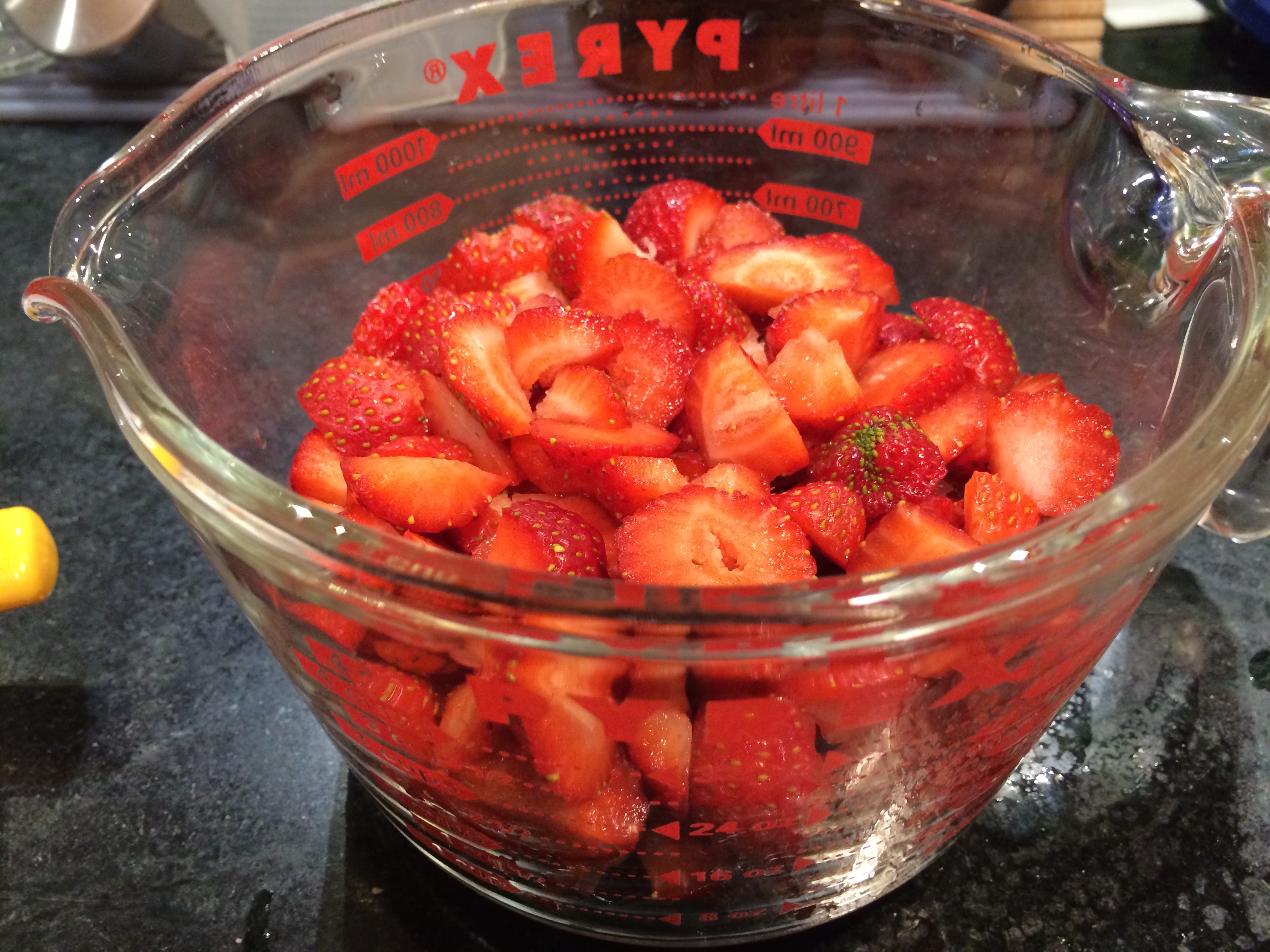
Rinse, de-stem and slice the strawberries.

Since I am doing a strawberry pie I clearly didn’t exactly ‘choose’ strawberries. But strawberries are an incredibly healthy fruit with a number of antioxidants, second only to other berries and walnuts.

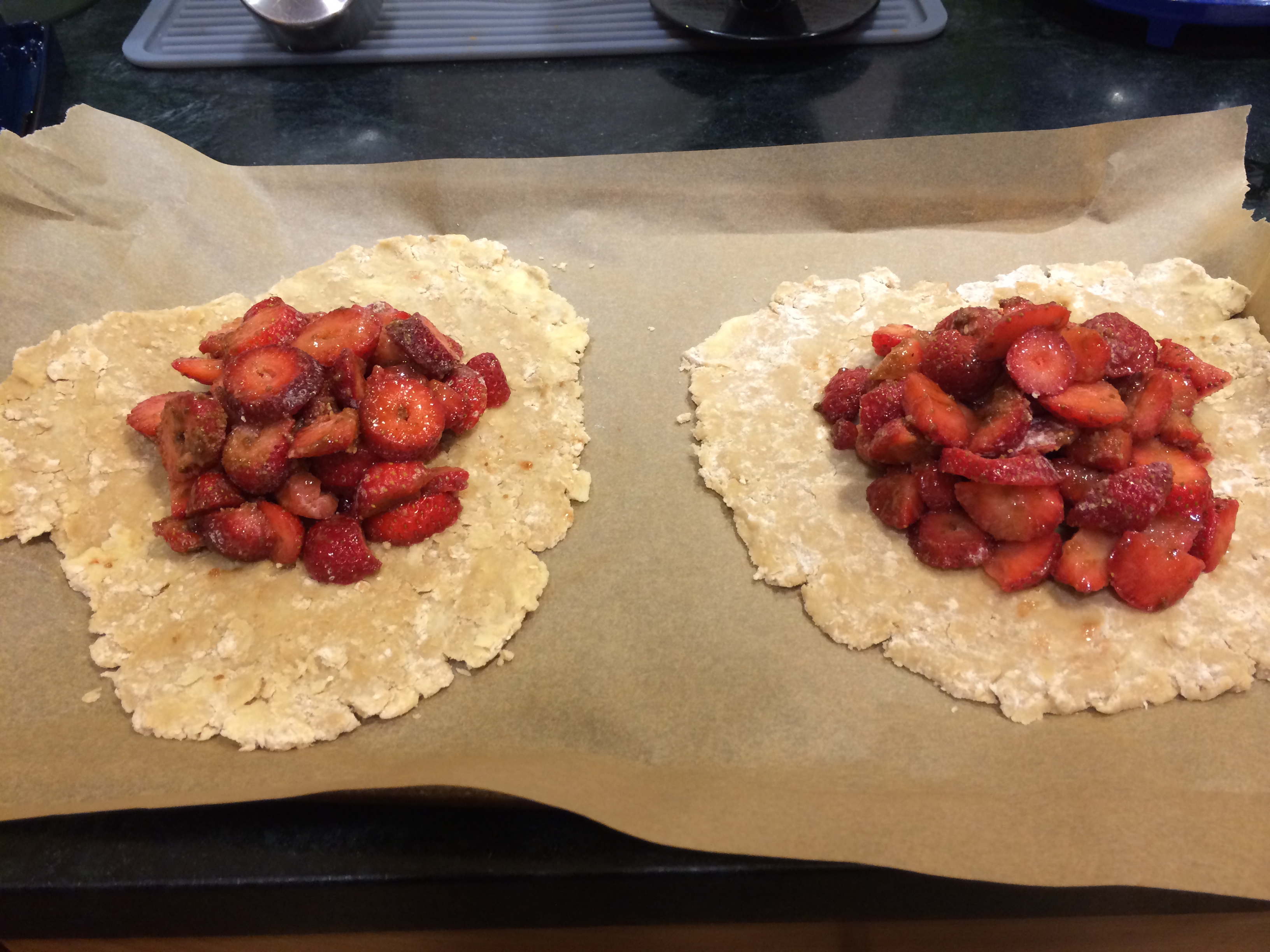
Gently mix with the sugar and the flour. Now pile them in the rough center of each of the pie crusts. Fold the edges over the pile of strawberries to partially cover them. Dot each open center with a dab of butter.

IMG_0129 IMG_0132 IMG_0133 IMG_0135

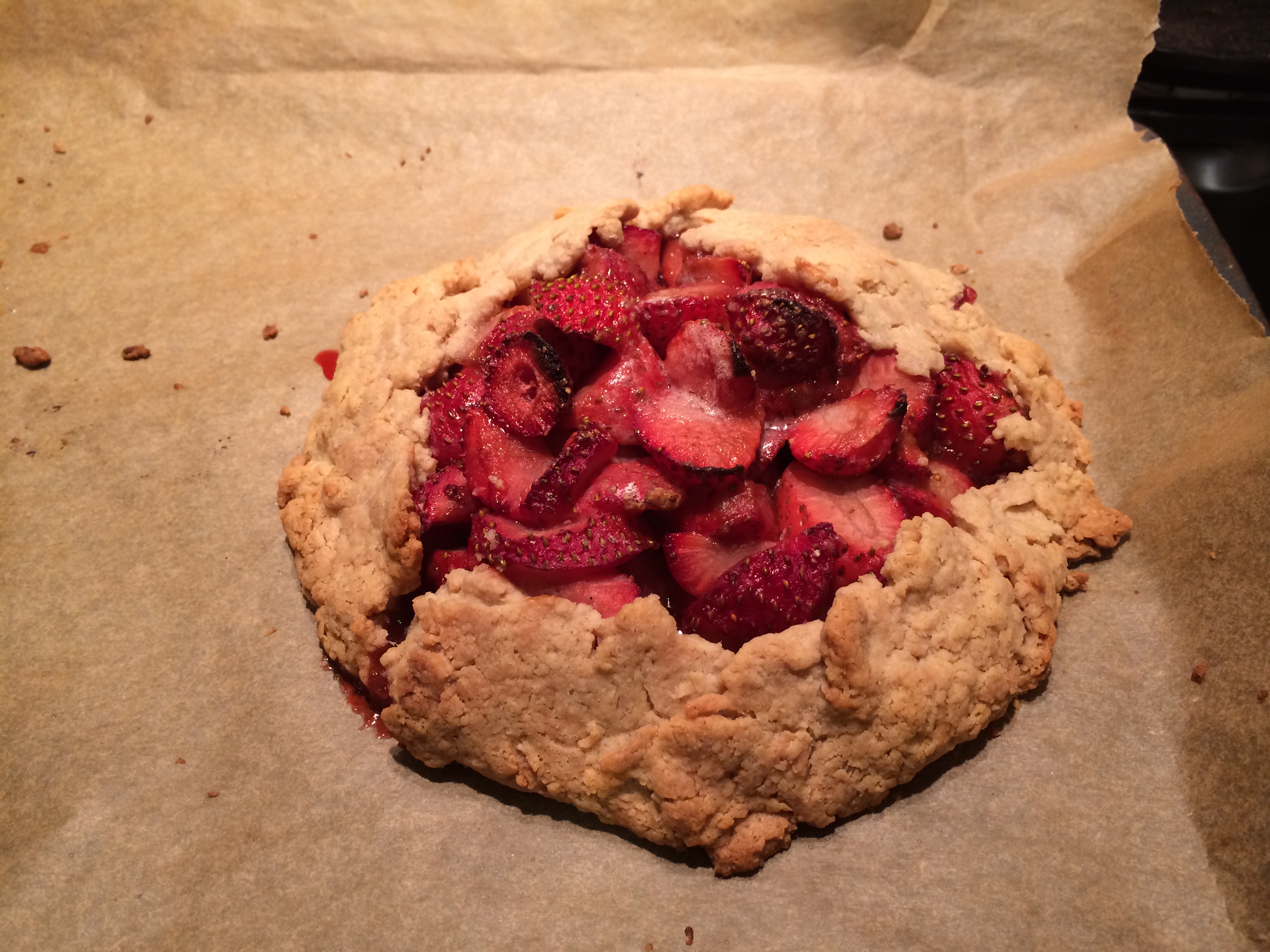
Now bake as they are in a 400 F oven for 25 minutes or until the edges are browned.

IMG_0137

Garlic-fenugreek gravy with absolutely anything

IMG_0112

This is a Sindhi gravy that you can throw anything into, and make a wonderful meal, sort of like this gravy. And it is so simple to do, that you will be left wondering if you left out any steps. You didn’t!

Greenish in color from the fresh herbs, it also has the wonderful warm aroma of garlic. The herbs and the garlic together make an intense and unfamiliar aroma that most people are intrigued by.

As for what to put in it — some common Sindhi preparations use okra, or King mackarel fish, or zucchini; I have made a successful combination of paneer and peas in this gravy or potatoes and peas. You also have your choice about how wet or dry to make the result; and whether to have it with roti as a side, or over plain white rice. But use your imagination and let’s get started.

Thoom-methi gravy with potatoes and peas

Ingredients:

  • Half a large red or yellow onion, roughly chopped
  • 3 – 4 largish cloves garlic
  • 3 (or to taste) fresh chilies, jalapeno, serrano, bird’s eye or cayenne
  • half a bunch of cilantro, roughly chopped
  • 1 tablespoon dry fenugreek or half a cup fresh if you can find it
  • One large tomato
  • 1 teaspoon coriander powder
  • half teaspoon turmeric
  • 1 teaspoon salt
  • 3 cups of chopped vegetables: I used 3 cubed red potatoes and half a cup of peas.
  • 1 – 2 tablespoons oil

Method:

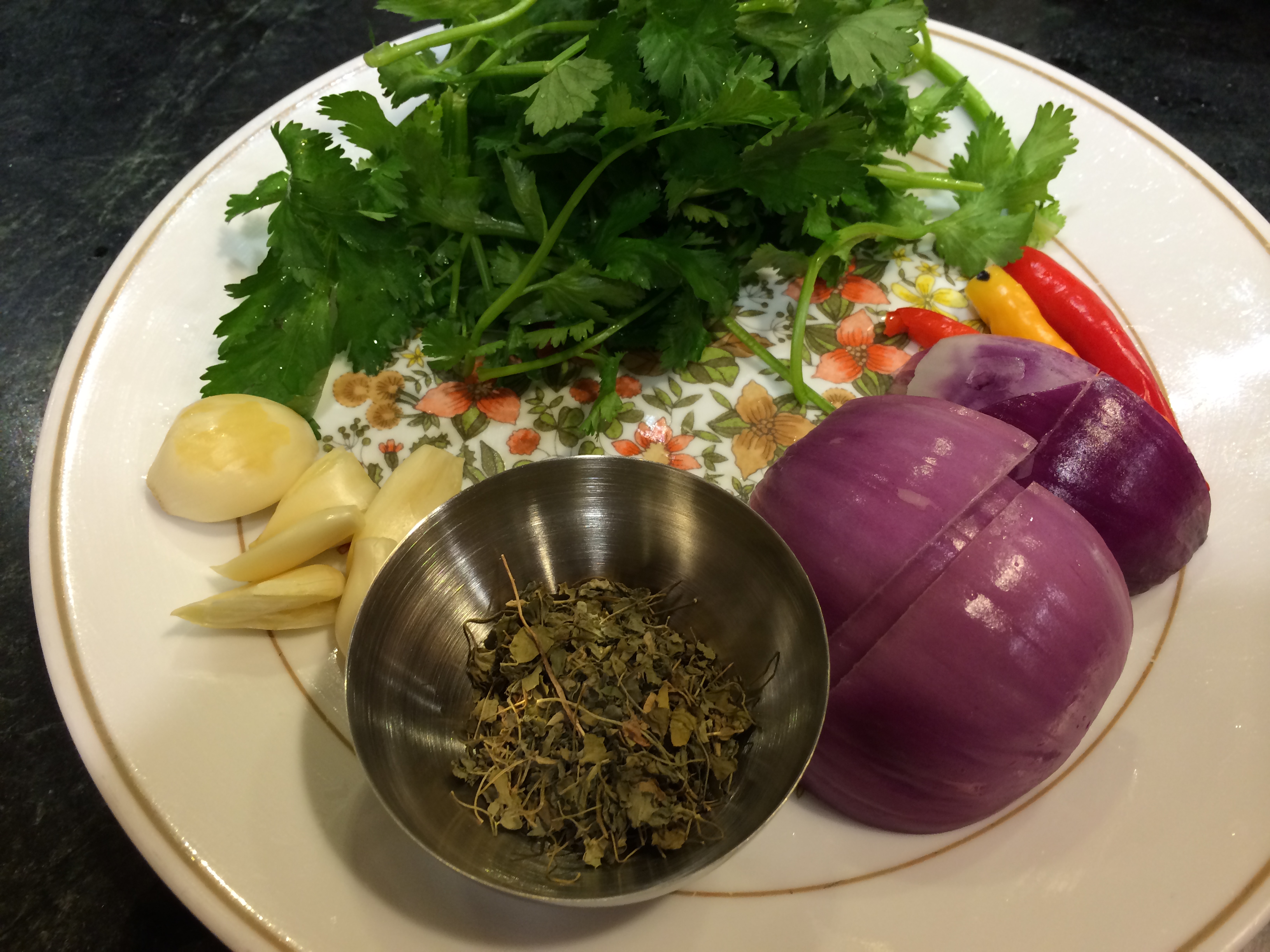
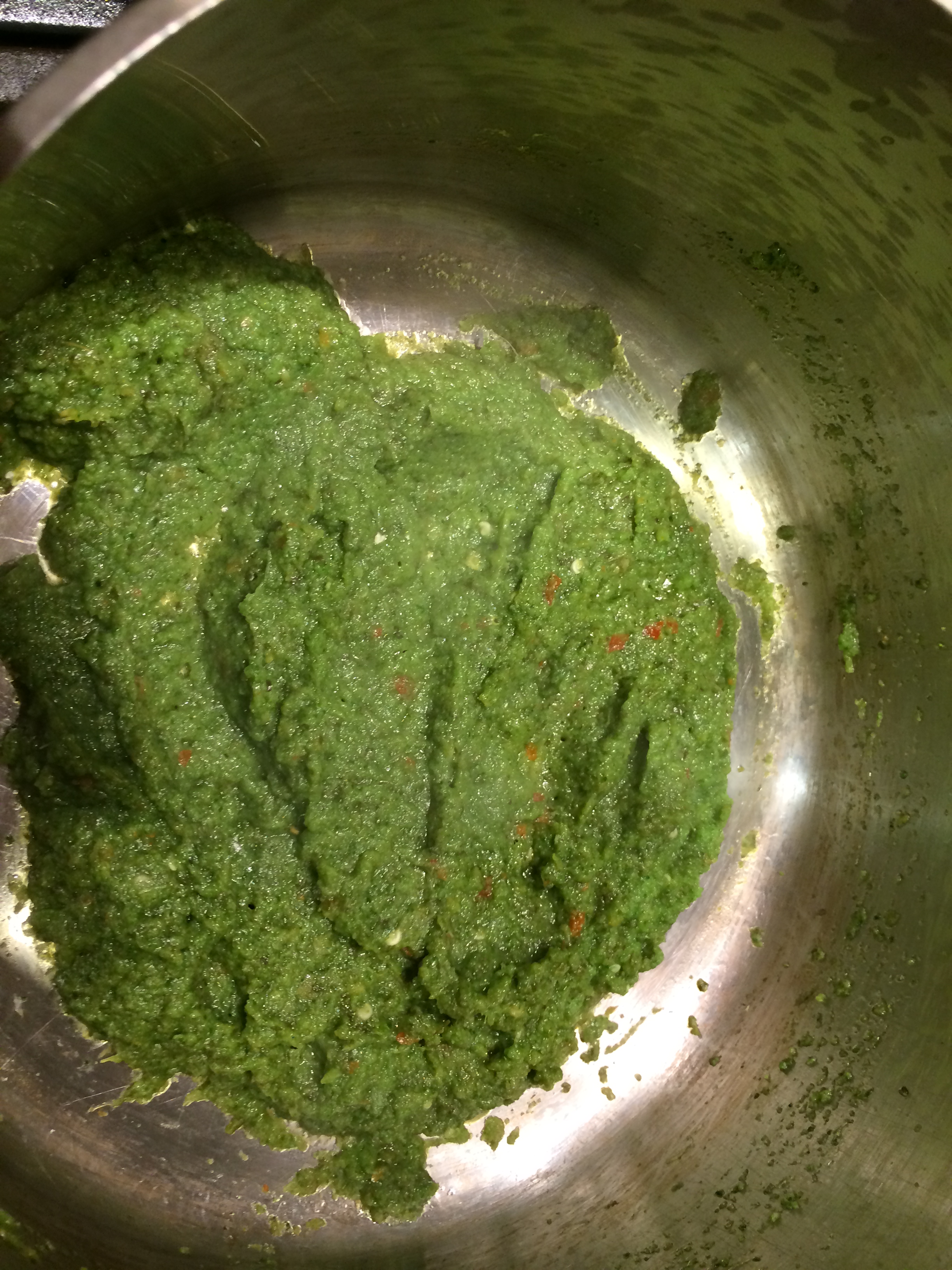
Combine in a blender the following roughly chopped vegetables, with about a quarter cup of water: onion, garlic, cilantro, fenugreek and chilies. Blend to a paste consistency, as shown below.

IMG_0098 IMG_0100

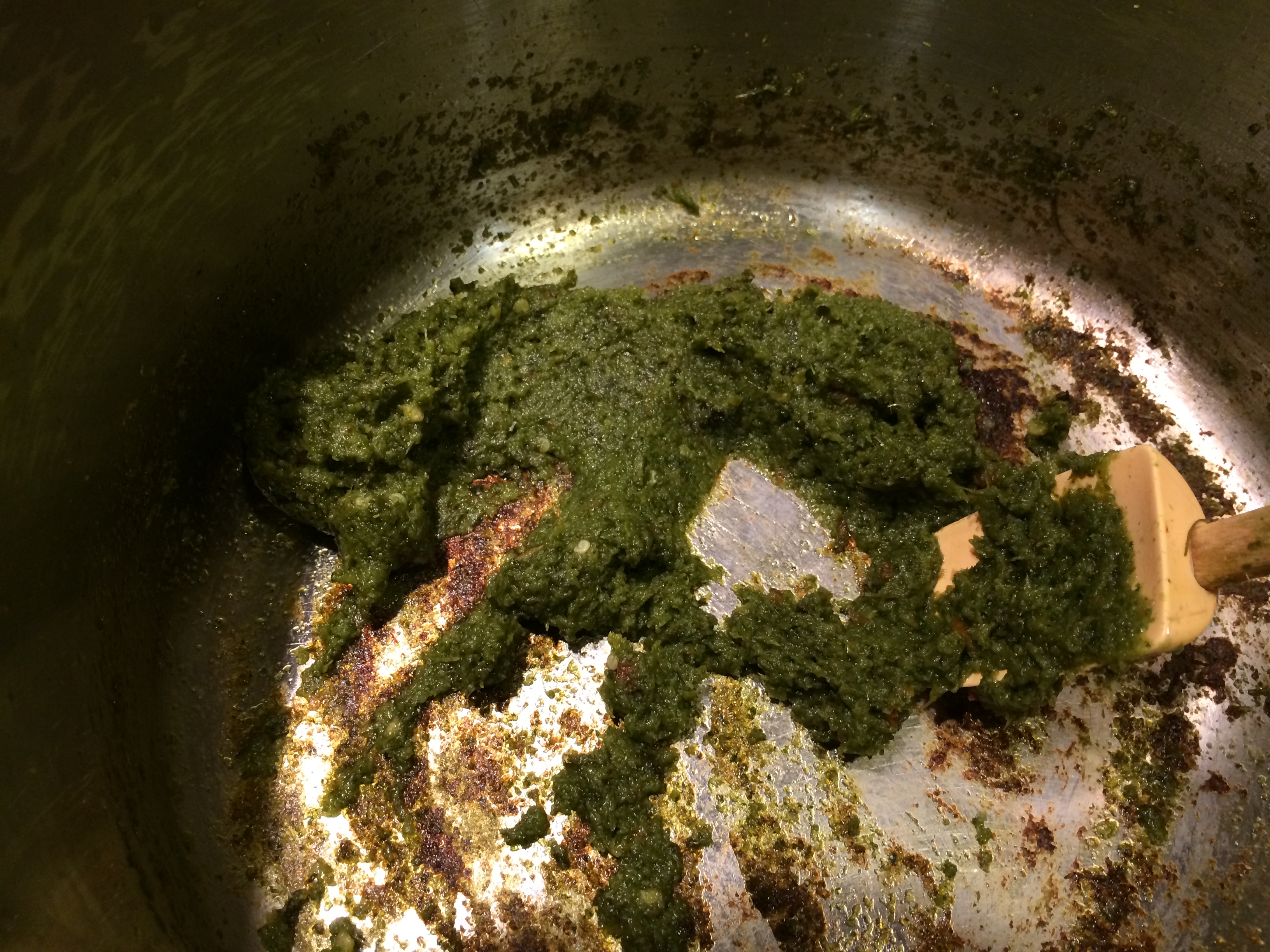
Heat oil in a thick-bottomed pot and when it shimmers, put in the paste and cook it on medium-high. In about ten minutes it will dry up and start to darken; keep stirring it once in a while. When it goes from looking like this:

IMG_0101

to looking like this:

IMG_0102

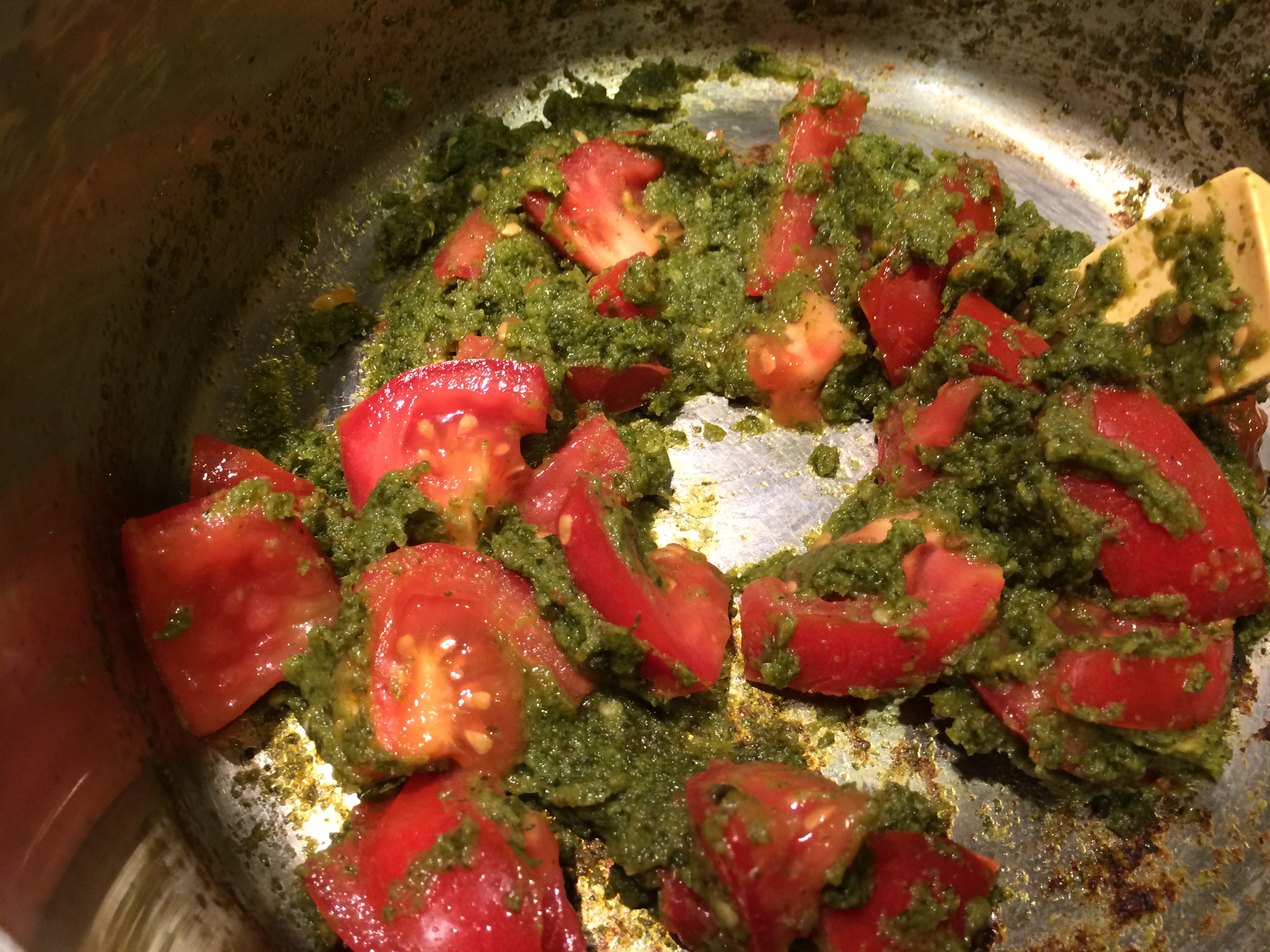
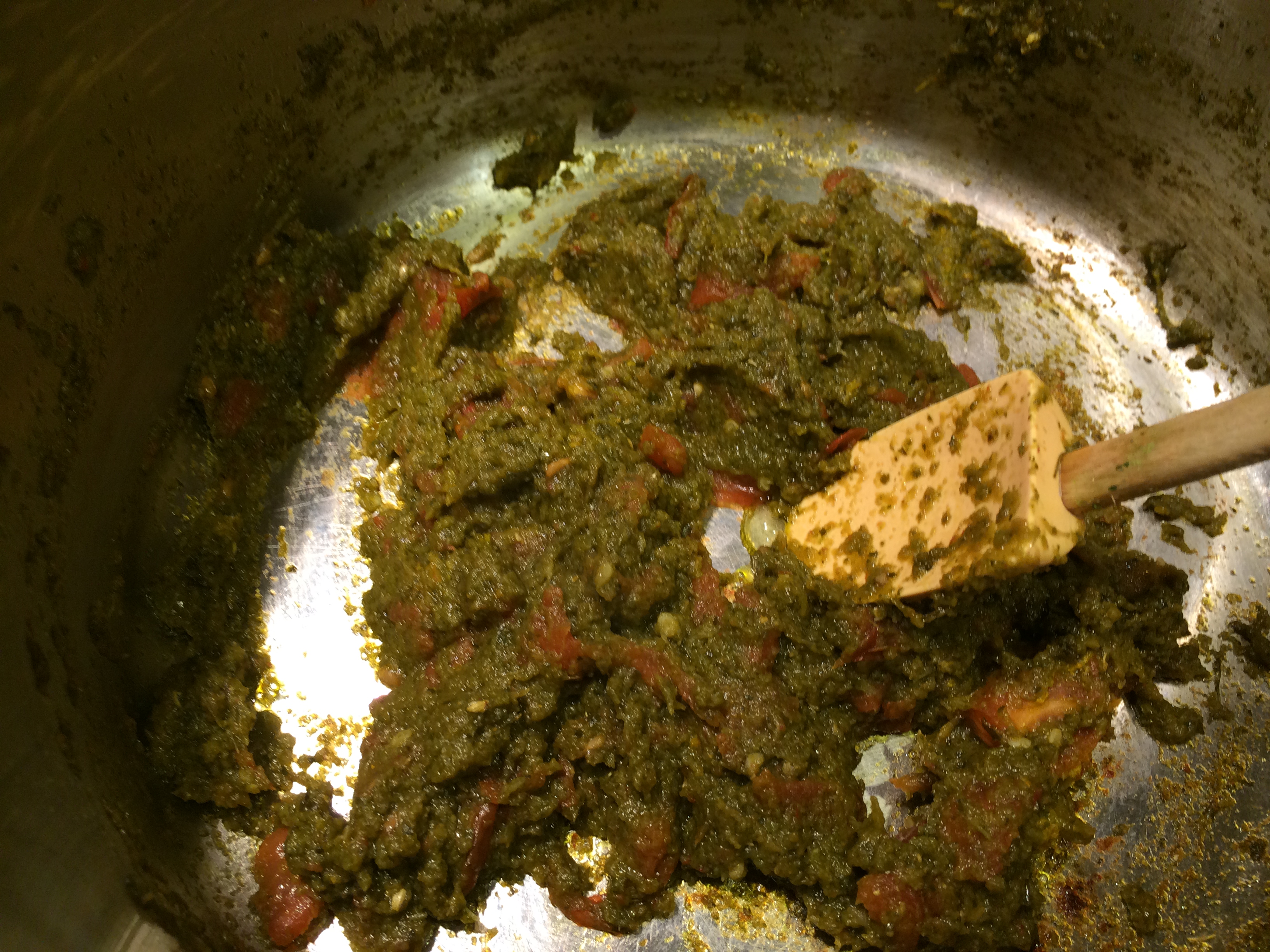
put in the chopped tomatoes. The tomatoes will first liquefy and then turn pasty and combine nicely with the rest of the spice. Stir for about 5 minutes; when they are more or less dry, put in the coriander and turmeric powders and stir. Now put in about a cup or cup and a half of water, bring to a boil.

IMG_0104 IMG_0105IMG_0106

Now the gravy is ready, and it is time to put in whatever chopped vegetables you want. I put in cubed potatoes, and simmered them with the lid on for 15 minutes to cook; then I put in the frozen peas and only cooked them enough to heat through.

IMG_0109 IMG_0111

Oh — I added the salt along with the vegetables so that they absorb the salinity properly.

Beasties in my batter

My mother always said that South Indians are much smarter than the rest of us simpletons because they eat a lot of urad dal. This is a bean I have mentioned before. It is alternatively called black gram or Vigna Mungo; this is what it looks like:
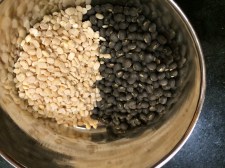
Vigna mungo, black gram, urad dal: whole on the left, split and dehusked on the right.

Vigna mungo, black gram, urad dal: whole on the top, split and dehusked on the bottom.

It is closely related to the more well-known moong dal (mung bean), they are both in the Vigna genus, which means they are about as closely related as…say…the polar bear and the grizzly bear to each other. Urad dal, though, has a blacker husk, and white (not yellow) underneath.

Even though this bean is eaten as a dal all over India, its most interesting use is in the fermented cakes and crepes of South India — idlis and dosas. In order to ferment it, the lentil is first soaked and ground thoroughly, and mixed with rice batter.

Fermentation of the Lactic Acid type

Let’s take a little digression into what fermentation does to the batter.
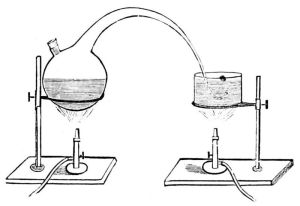
Fermentation

Fermentation

  • The mixture is kept warm, and you know what happens when you leave something out of the fridge — a whole jungle gets started in it.
Jungle of beasties

Jungle

  • Creatures like lactic acid bacteria, yeast, and bacteria that like to breathe air. They do battle, and one-by-one, are felled. The air-breathing bacteria (we know them as ‘contaminants’) are killed off right away, while soaking. The yeast also goes nowhere (unless you cheat by adding commercial yeast, which basically sends reinforcements to the yeast faction). The salt kills off many other weaklings.
  • What wins out is a certain lactic acid bacteria called Leuconostoc mesenteroides; and it brings a lactic acid bacterium friend, called Streptococcus faecalis.
Leuconostoc mesenteroides

Leuconostoc mesenteroides

  • These guys get busy stuffing their faces with your batter. They mostly gorge on the sugars and starch.
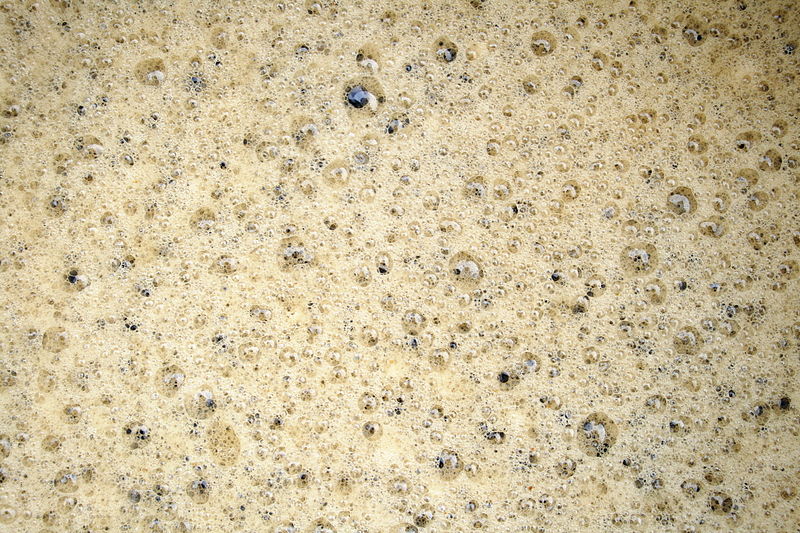
  • You know what happens when creatures eat — they produce stuff. All right, let’s get graphic — they excrete. One thing they produce is lactic acid, which is responsible for the pleasantly sour taste of idlis and dosas. Another thing they do is pass gas — in this case, it is carbon dioxide. This gas — CO2 — which is also responsible for the bubbles in bread, soda and beer — makes the batter rise and become fluffy. The cool kids call this ‘leavening’.
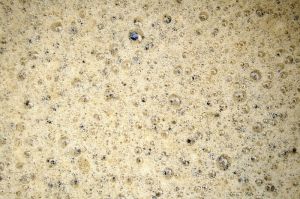
CO2 bubbles

CO2 bubbles

  • They also somehow increase the amount of vitamin B1, B2 and B3 in the batter.
  • Even though beans and dals of all types are really good for you, they also come with a bit of a sting in the tail — they have some ‘anti-nutritional’ properties which prevent your body from absorbing the goodness. Well, fermentation reduces those bad things.
  • One of the anti-nutritional properties of beans are those that cause you to…you know…flatulate. So the beasties in your batter are helping you from doing that too much, which is a good thing.

So now I’m thinking that my mother was wrong…it is not just urad dal that makes you smarter; it is the little beasties that ferment it.

Idli / dosa batter

Ingredients:

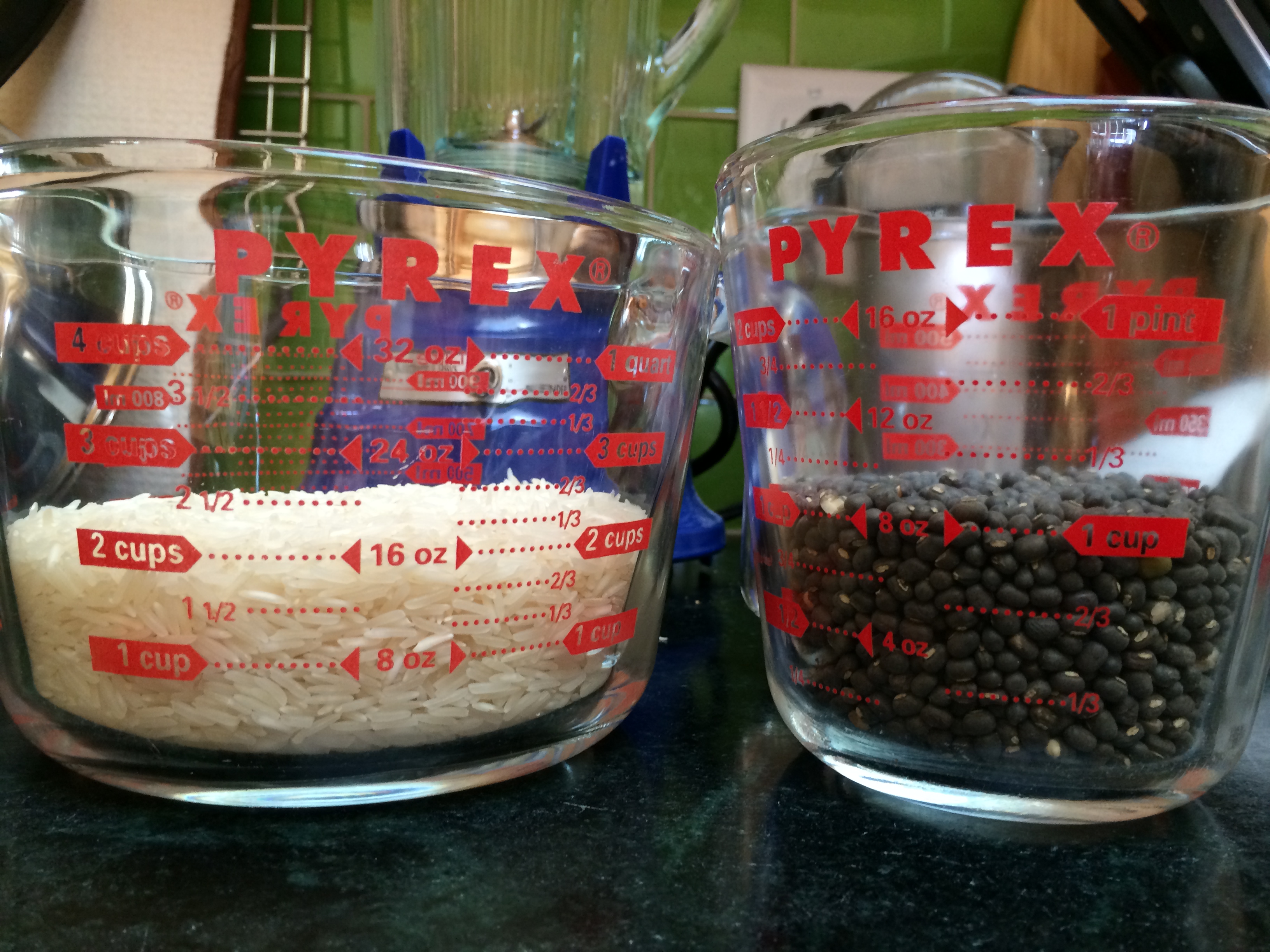
  • 1 cup urad bean, whole, skin on (I used whole grain to add that extra bit of nutrition to it).
  • 2 cups uncooked white rice (I used basmati but a short or medium grain white rice would work as well or better).
  • (in general a 1:2 ratio or dal to rice works well; you can experiment with 1:3, but don’t alter it more.)
  • 2 teaspoons salt (lactic acid bacteria finds salt very congenial, unlike yeast).

Method:

Rinse the dal and rice once in plain water and drain. Now leave them to soak in very generous quantities of filtered, room temperature water, separately. You must leave them for at least six hours; but I let them soak for more than twelve.

IMG_0016 IMG_0033

At the end of this time, the rice will have almost doubled, while the beans will have almost tripled. The black gram beans will have become lighter into a green, as seen below:

Black gram (urad dal), soaked

Black gram (urad dal), soaked

Now it is time to grind them separately. I used my trusty blender. This is not the ideal choice, because there is a chance the blades get overheated and kill the beasties. The ideal would be a stone grinder (also known as a wet grinder). Maybe someday I will make the big bucks and spring for one of those. In the meantime, I slum it with my blender (that I got for free from American Express). I have never had a problem.

Let’s do the rice first. I drained it, and added a cup of fresh filtered water along with it. Blend it for about 4 minutes, with breaks. The end result will be a thick white liquid. When you squeeze some between your fingers, you should feel tiny grit, which is the ground up rice. You are not trying to get this to be perfectly smooth. Tiny grit is what you are looking for. Empty it out into a very large bowl, that will be used for rising.

Next let’s do the drained dal. This time you will need to add a cup and a quarter of water to the blender. Blend for about 4 minutes, with breaks. The batter this time will be fluffier and not as watery. When you feel it with your fingers, it should feel smooth, not gritty.

IMG_0036

Black gram (urad dal) batter mixing with rice batter

Pour the dal batter in along with the rice batter. Add 2 teaspoons salt. Mix it with your hands; this is one of those instructions that every South Indian mother imparts to her children; as far as I am aware, no scientist has tested why this is so. The beasties are already on the bean, so it isn’t that. Could it be that this step imparts warmth? In any case, using your clean (but not sanitized) hand, gently stir the batter to combine. Leave it covered in a corner in your kitchen.

Now. I left it at room temperature in San Francisco, but the ideal is room temperature in South India, which would be in the nineties Fahrenheit. So if you like, you can leave it in the oven to rise, with either the oven light on to create warmth, or, after turning on the oven to about a 110 F and turning off. In a warm oven with the light on, this will take 12 hours.

Room temperature of about 70 F worked fine for me, but it did take longer.

In about 12 hours I raised the lid to take a whiff — oof! Wet socks, toe jam, belly button cheese…not sure what else it reminded me of. Clearly, my batter had developed a yeast infection. Be not squeamish, ye of little faith! Put the lid down and keep going.

Now I am not sure if this is typical, but it sure smelled like the batter went through a yeast infection phase on its way to a proper lactic acid bacterial infection. It could be that because I do so much bread in my kitchen (including sourdough) that the little yeasties are floating about just dying to get their naughty little hands into stuff.
IMG_0043

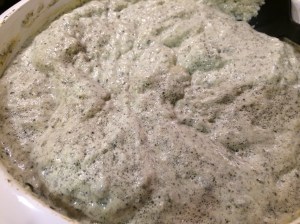
Risen idli/dosa batter

Risen idli/dosa batter

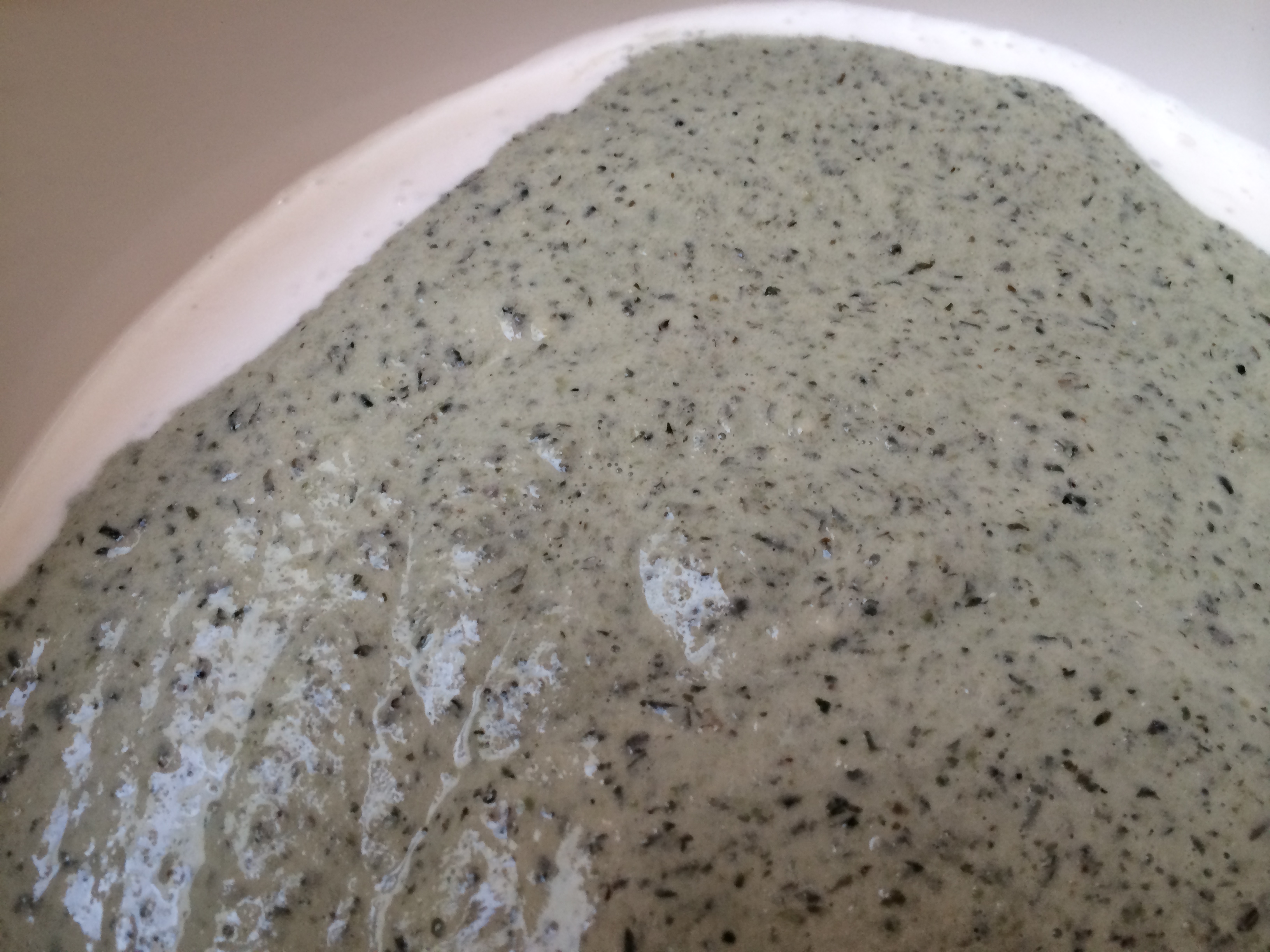
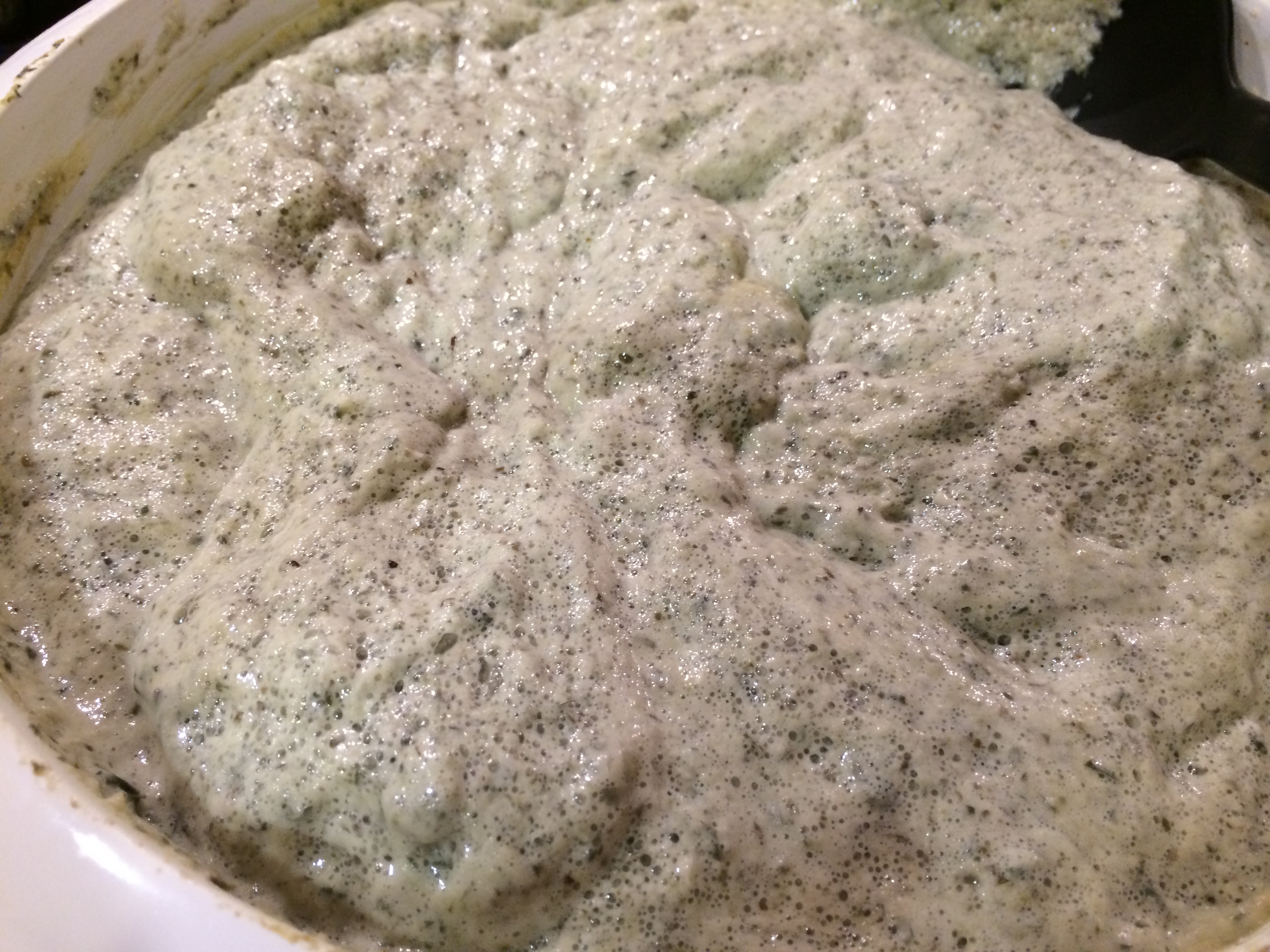
In any case, within about 24 hours of rising, I certainly smelled some of that lactic acid goodness — it smelled sour. It had risen to almost double the original size. The batter was ready.

Idli cakes

Ingredients:

  • 3 cups idli batter from above (this will make one dozen)
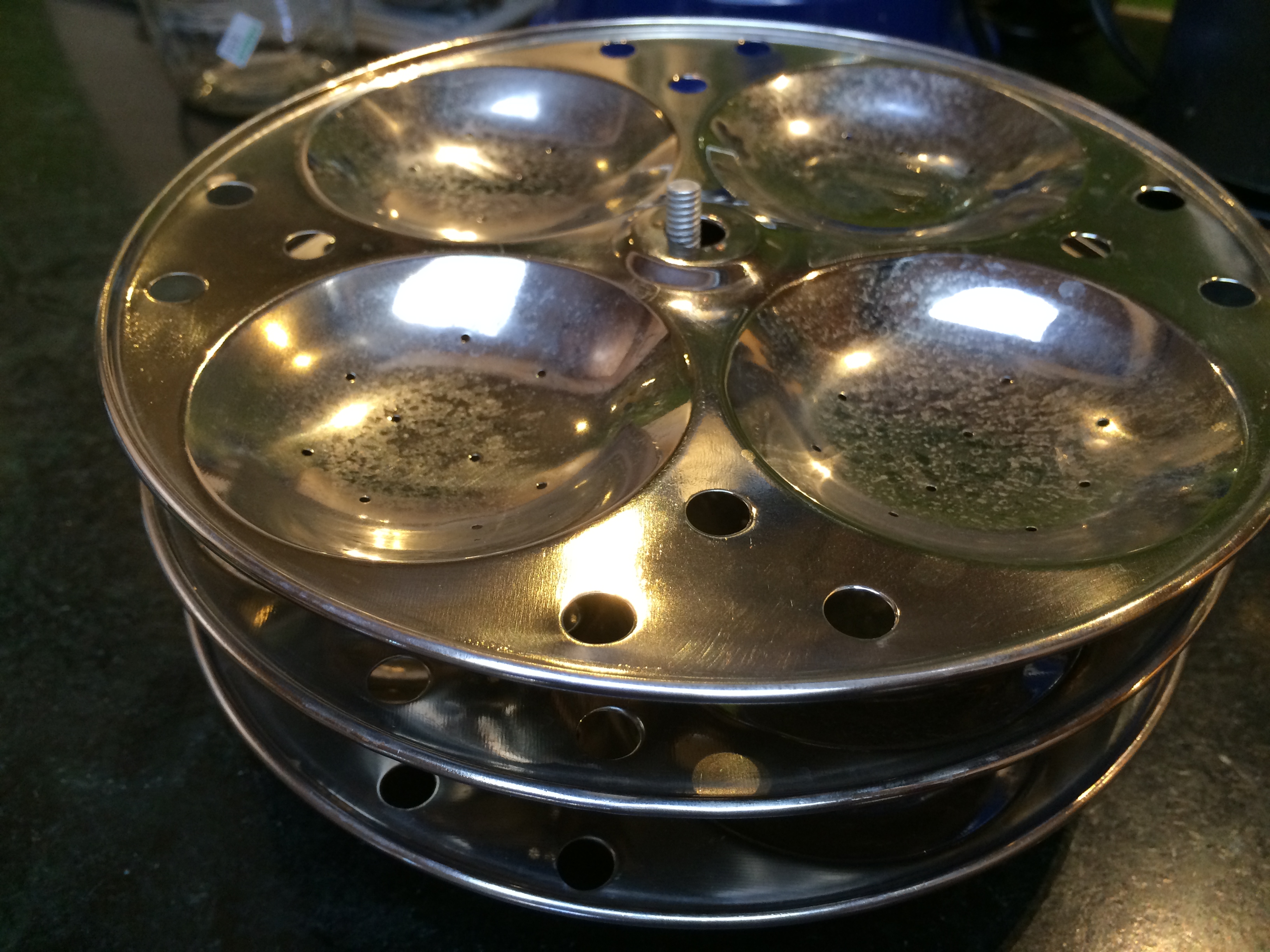
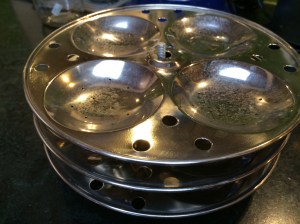
  • Idli steamer which usually comes with 12 perforated cups
  • some oil

Method:

Rub a bit of oil on each of the idli trays. Pour about a quarter cup of batter on each. Now place it in a pot with water to about a couple inches already at a boil; cover, turn it down to a simmer, and steam the cakes for about 12 minutes with the lid on.
IMG_0053 IMG_0054 IMG_0055 IMG_0057

Idlis are great with any manner of chutney on the side, or sambhar (dal made out of pigeon peas and its characteristic spice blend).

Dosa crepes

Ingredients:

  • 1 cup batter (this will make about 4 decent sized crepes)
  • 4 teaspoons oil

Method:

Thin out the batter with about a third to half again as much water. So if you start with a cup of water, use between a third of a cup to half a cup extra water. Basically, the batter should flow easily, much like crepe batter.

Heat a wide nonstick pan on medium high heat. Spread about a teaspoon of oil around. Now, we pour about a third of a cup of thin batter and spread it.

Spreading dosa batter into a nice thin layer is an art form. Here is what you need to know.

  • You don’t have to have a thin layer. But the thinner you spread it, the more crisp. Until you achieve that pinnacle of thinness, crispiness and paperiness — paper dosa.
  • If you pour batter on to a hot pan, it will immediately congeal and instead of spreading, you will get a rubbery mass. So the pan needs to be hot while cooking, but cool while pouring on. Traditionally people have used the onion trick — rub half a cut onion on the pan to cool it down. I used the French way of lifting it off the flame as I pour the batter on.
  • To spread it, people have traditionally used a spiral motion — take a flat ladle and spread the batter around with its bowl in a spiral fashion. Once again, I used the French method of tipping the pan this way and that to spread it.

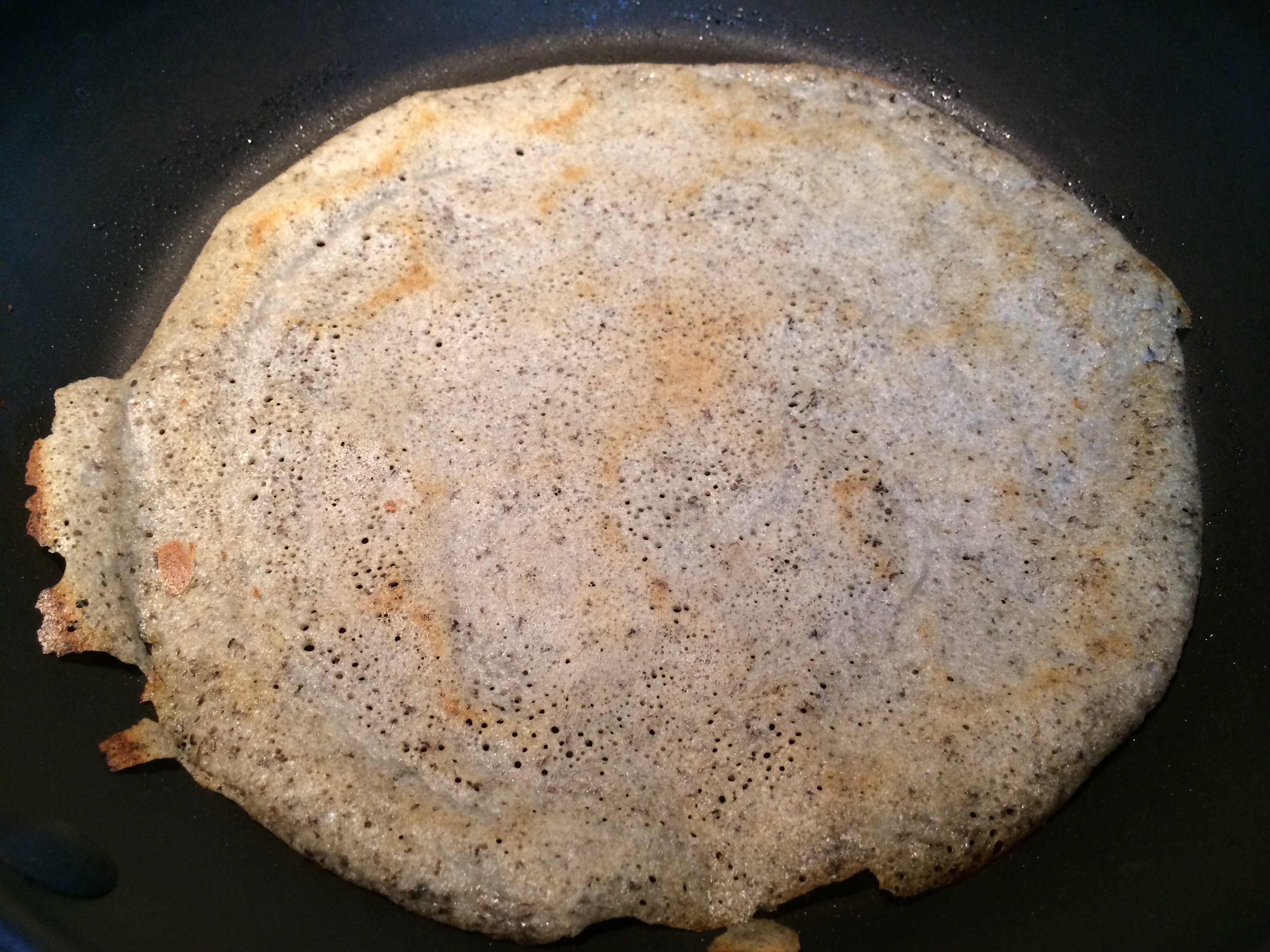
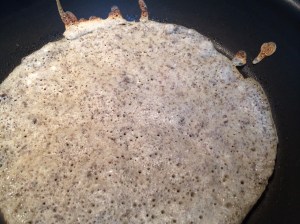
In some places, the batter will be spread so thin that it is lacy.
IMG_0058 IMG_0060

Cover with a lid and cook on high heat for about three minutes. Or four. At this point, the underside will definitely look brown and crisp. If you try to lift it off, the crepe will easily peel off; even the thin lacy parts. You can cook it on the other side if you like but it is not strictly necessary.

Lacy, crisp edges of dosa after I took a bite

Lacy, crisp edges of dosa after I took a bite

Dosa can be eaten with similar accompaniments as idli; chutneys, sambhar; or really any manner of vegetable or meat viand. The South Indian restaurant standard is to make a wrap with a potato preparation inside.

Enjoy, and thank you beasties!

Prickly in pink

I have by now spent an enormous number of years on this planet, more than I care to admit, and about half of that time has been in the United States. But there are still occasional things that pop up to surprise me.

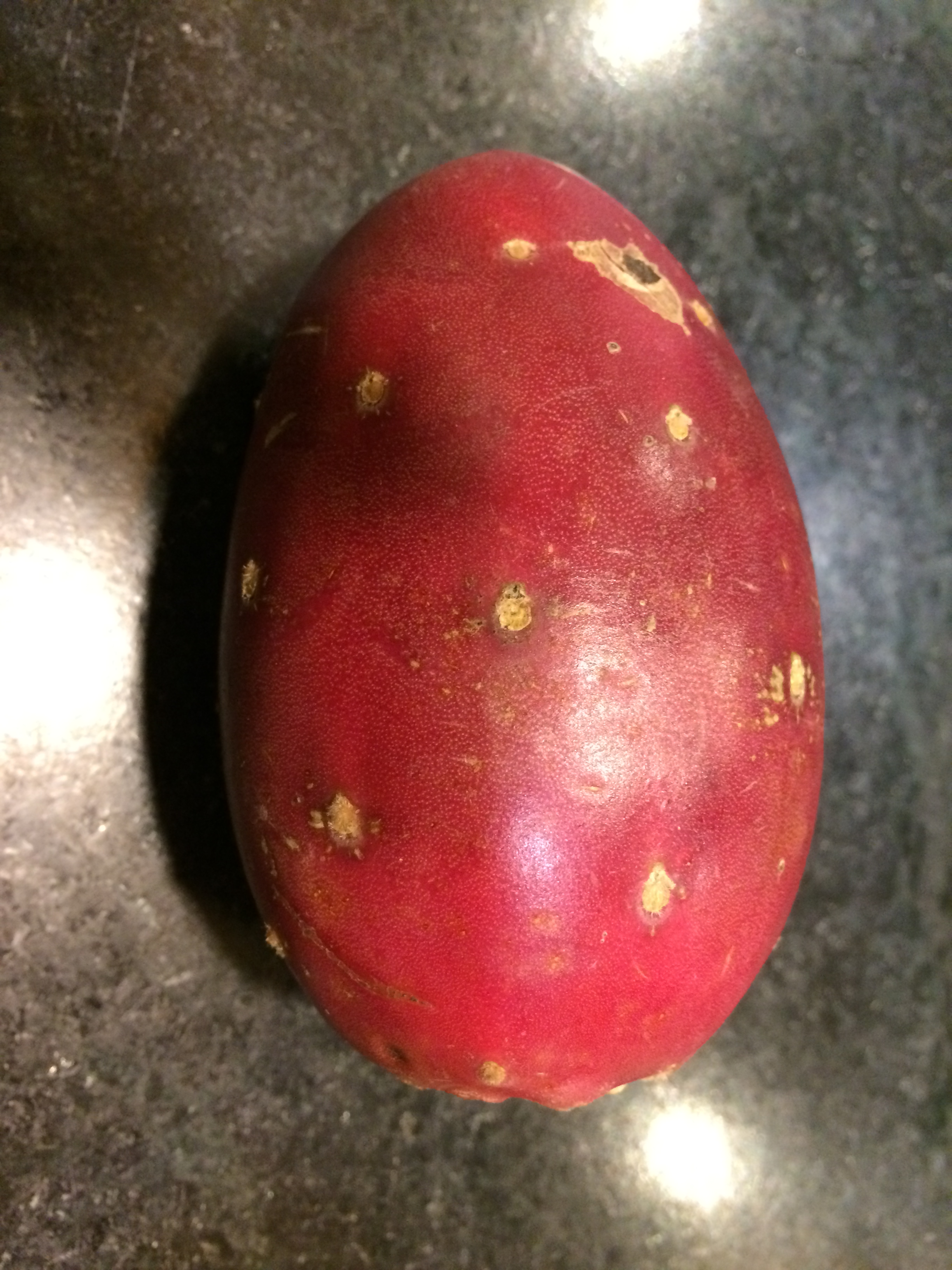
My pink mottled egg

My pink mottled egg

This time it was a pink egg. A giant, pink, mottled egg that sat all by its lonesome in a farmer’s stall in a market. Visions of pretty pink birdlings hatching out of it floating before me, I purchased it. Who could resist?

The man at the stall was nice enough to tell me that this was a cactus fruit. Now cactus plants are a bit of a strange beast for me, in the sense that I can’t easily place them in the plant family. Is that big fleshy thing supposed to be a leaf or a stem? Do they fruit? Why does the fruit appear stuck to the blade of what appears to be a leaf?¹

Clearly there are many, many gaps in my knowledge. But thanks to Mr. Farmers Market, I have filled one small gap.

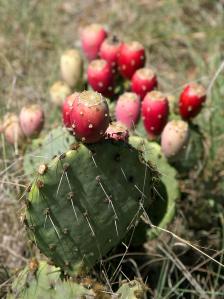
Prickly pear cactus in Texas, courtesy of PDPhoto.org

Prickly pear cactus in Texas, courtesy of PDPhoto.org

Nopales or ‘prickly pear’ is a type of cactus that is native to Mexico. It has giant green oblong pads covered in spines. The pads are chopped up and eaten as a vegetable (very often by me, in my burrito). These pads produce pink egg-shaped fruit. This prickly pear fruit is what I saw that morning at the market.

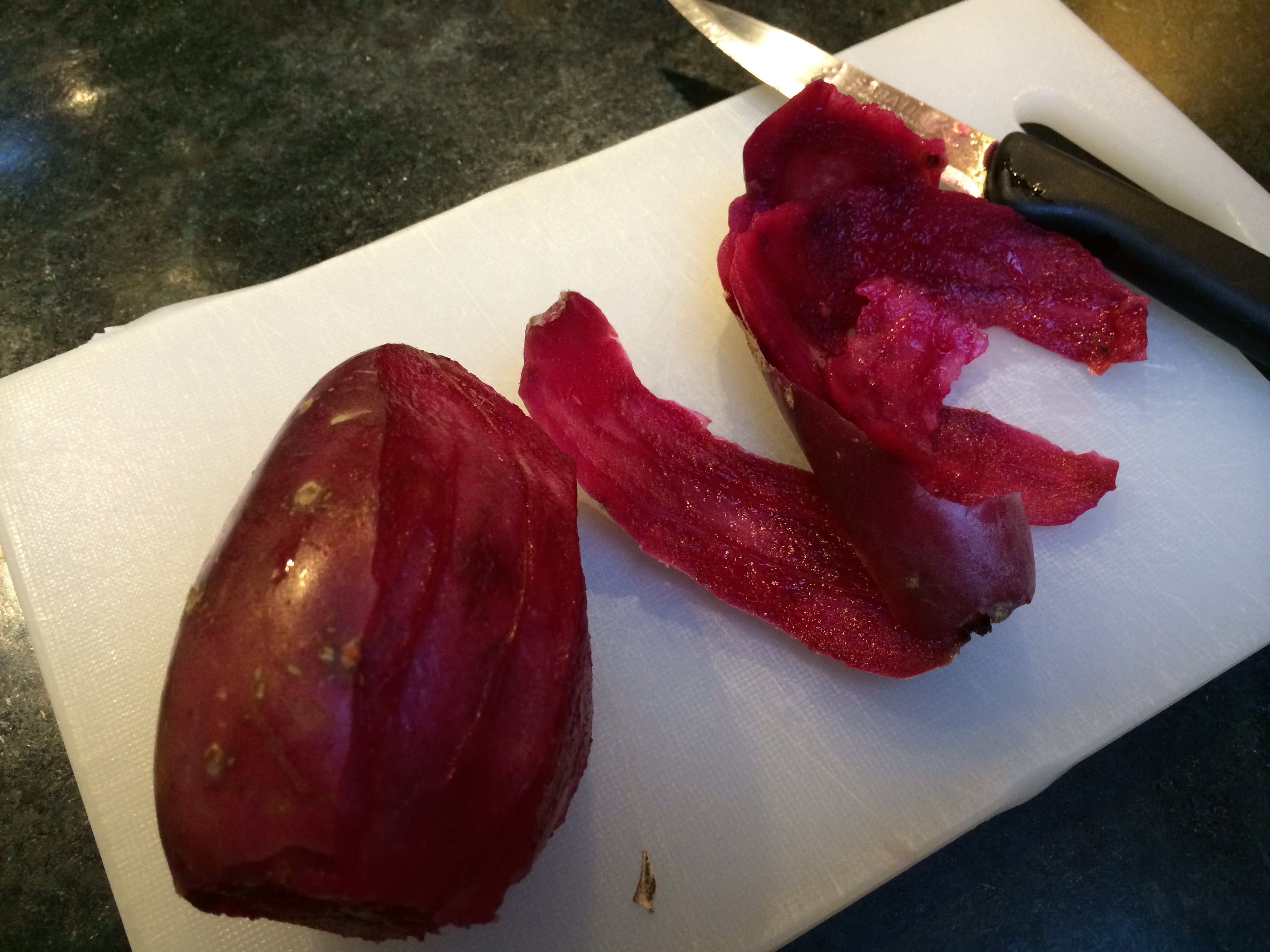
The way one eats it is — first, before all else, remove the spines. Now this was already done for me at the market, and if you are lucky this is how you will find the fruit sold. Next, peel off the outer thick peel, which comes off quite easily with a paring knife.

IMG_0006 IMG_0008

Inside, you find flesh of a deep magenta, granular and with high water content. The texture resembles kiwi or watermelon. The flesh can be eaten raw. But it has small round seeds studded throughout the flesh. There is actually no way to avoid eating the seeds, which to me were a nice crunchy backdrop to the melony flesh. But I can see that it would bother the squeamish. The seeds do limit it use in things like fruit salads and pies.

How was it to taste? Very unobjectionable. It has a mild flavor and is not terribly sweet. Apparently it is a nutritional powerhouse with high amounts of vitamin C, magnesium and calcium. I do sense that there is some hype surrounding its magical restorative properties on the interwebs though.

Other than eating it as is, here are a couple things you can do with it.

Juice it in a blender, then strain out the seeds. I believe you will want to sweeten the juice and perhaps liven it up with some lime or lemon.

Another trick was suggested to me by Mr. Farmers Market: put some cubes in some clear filtered water; this will quickly take on the deep magenta of the fruit while the flavor is affected in a very mild way. A good way to make a base for fruit punch, or, perhaps drinkable ‘blood’ for Halloween.

My fake blood using prickly pear cubes

My fake blood using prickly pear cubes

¹I have since discovered that in a typical cactus, the leaves have been adapted into the spines, while the stems have adapted to form the green (photosynthetic) part — usually the succulent, squat structure that bears the spines. This is called the areoles. So in the nopales cactus, the vegetable part that one eats is the modified stem. Now it is no mystery that the egg-shaped fruit comes attached to what I believed to be the leaf blade: that is indeed, the stem, and the fruit grow from the stem in the usual way.

An excellent use for loofah in the kitchen

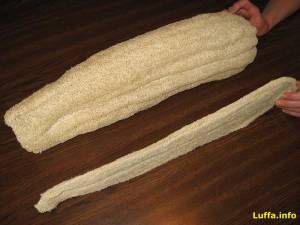
Loofahs are pretty useful little scratchy devices that one can use as scrubbies, usually in the bath on your pretty pink toesies. That’s great and all, but does my kitchen have any use of them? Yes.

Start with this:

Loofah

Loofah

And go back in time several months at which time it looked like this:

Ridged luffa squash

Ridged luffa squash

At this point, loofah can be used to make an excellent meal. When these gourds are harvested green, the flesh is soft and delicious with a hint of sweetness. Leave it on the vine, and the flesh becomes fibrous and scratchy.

When young, I always knew this vegetable as ‘toori’. Its true name is luffa, which is where the more fancy appellation ‘loofah’ comes from. Now I love toori so much that if I was the farmer in whose job it was to grow a crop for loofahs, not many would make it that far.

Ridged luffa squash with garlic and tomatoes

Ingredients:

  • 3 largish ridged luffa squash or equivalent amount
  • 3-4 large cloves of garlic
  • 1 large or 2 small tomatoes
  • 3 fresh green chilies or to heat tolerance
  • 6 or so curry leaves
  • Half a teaspoon mustard seeds
  • half a teaspoon turmeric
  • 1 teaspoon coriander powder
  • salt to taste
  • 2 tablespoons oil

Method:

Peel the squash with a vegetable peeler; for the first pass, center the peeler on the ridges; once the ridges are removed, the second pass will remove the rest of the peel.

IMG_0764 IMG_0765 IMG_0763 IMG_0767

The flesh inside is soft and pale. The seeds, at this stage, are not developed into being hard and can be eaten. Chop up the flesh into cubes. Mince garlic and the chilies. Chop up the tomato.

Heat oil in a thick-bottomed pan on medium-high heat. When it shimmers, put in the mustard seeds and wait till they start popping. Then put in the minced garlic and chilies, and the curry leaves (I didn’t have these so I left them out). When these start to shrivel, you can put in the chopped tomato.

toori and spoonrest 001

Now the standard with this type of dish is to let the tomato liquid boil off. This intensifies the flavor of the tomato. So keep the heat on medium-high, and stir the tomatoes once in a while, helping it along by crushing it with the back of your spoon.

Once the tomatoes seem pretty dry, put in the turmeric and coriander powder. Stir. Now put in the squash cubes and give them a stir to coat with the spices. Add the salt, use your judgment about the amount. Cover with a lid, bring to a boil (no added liquid is necessary, the salt will draw out the high water content of the squash flesh itself). When it comes to a boil, leave it with the lid on at a simmer.

toori and spoonrest 003 IMG_0768

In another 15-20 minutes, the squash will be much reduced, and done. If you want, garnish with minced cilantro.

IMG_0771

This goes very well with roti/chapati, or as a side with rice and dal.

Clay pot potatoes from Nepal

Dum Aloo Nepali

Dum Aloo Nepali

For all intents and purposes, Nepal is very much Indian. To keep things even-handed, I am also going to insist that India is very much Nepali. Other than the fact that Nepal had a king until very recently, while us Indians dispensed with our gaggle 60 years ago, our cultures are very close, we share a majority religion, and most of our food heritage.

Speaking of which, I recently discovered from this book — 660 Curries by Raghavan Iyer — that Nepal has its own version of a Dum Aloo. How enticing!

‘Dum’ is a method of cooking that the Mughal emperors brought to India. It involves cooking in a deep pot of unglazed clay (called a handi), which is sealed with a flour paste; the food is cooked slowly over coals. The seal is only broken at the moment of serving; at which point the collected aroma is meant to make the guests keel over in delight.

‘Aloo’ of course means potato. This dish traditionally uses whole baby potatoes that have been first fried. The Kashmiri version of this dish is best known, but today we alter it slightly by going a little to the east, and a tiny bit south. To Nepal.

Dum Aloo Nepali

Ingredients:

  • About 15-20 tiny new red potatoes; each potato should form one or two bites. I couldn’t find any small enough, so I used 6 larger red potatoes, which I then quartered.
  • 3-4 large cloves of garlic
  • fresh chilies according to heat tolerence, I used 3 cayenne
  • one bay leaf
  • half a teaspoon cumin seeds
  • half a teaspoon fennel seeds
  • half a teaspoon ajwain seeds
  • half a teaspoon turmeric
  • 1.5 teaspoons salt total
  • 2 tablespoons mustard oil; if you don’t have this, use any oil.
  • some lime juice sprinkles if you like
  • minced cilantro for garnish

Method:

Of course I am not going to use a clay pot nor seal it with flour; nor do coals make an appearance. We are going to ‘dum’ the 21st century way, in an oven.

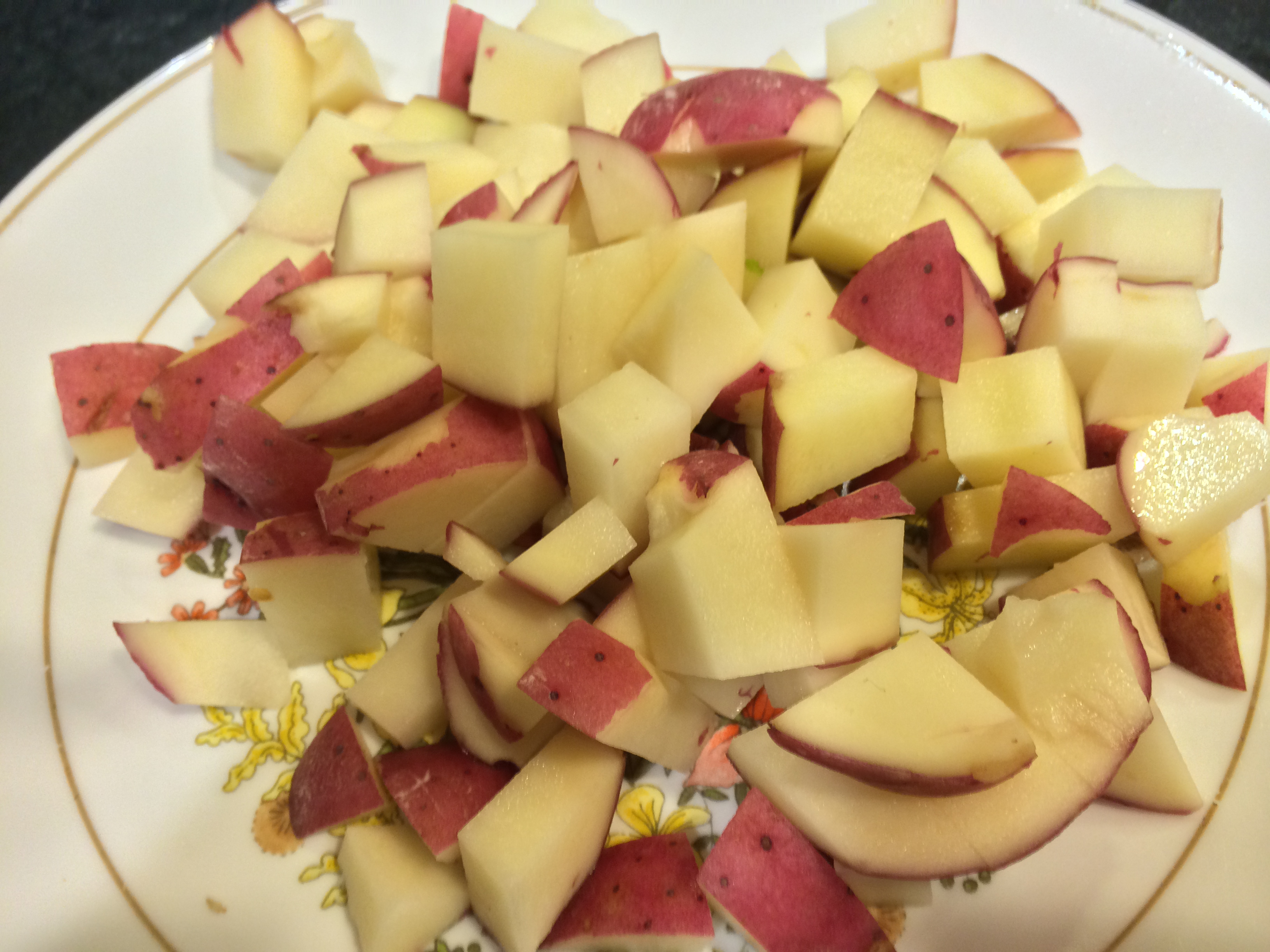
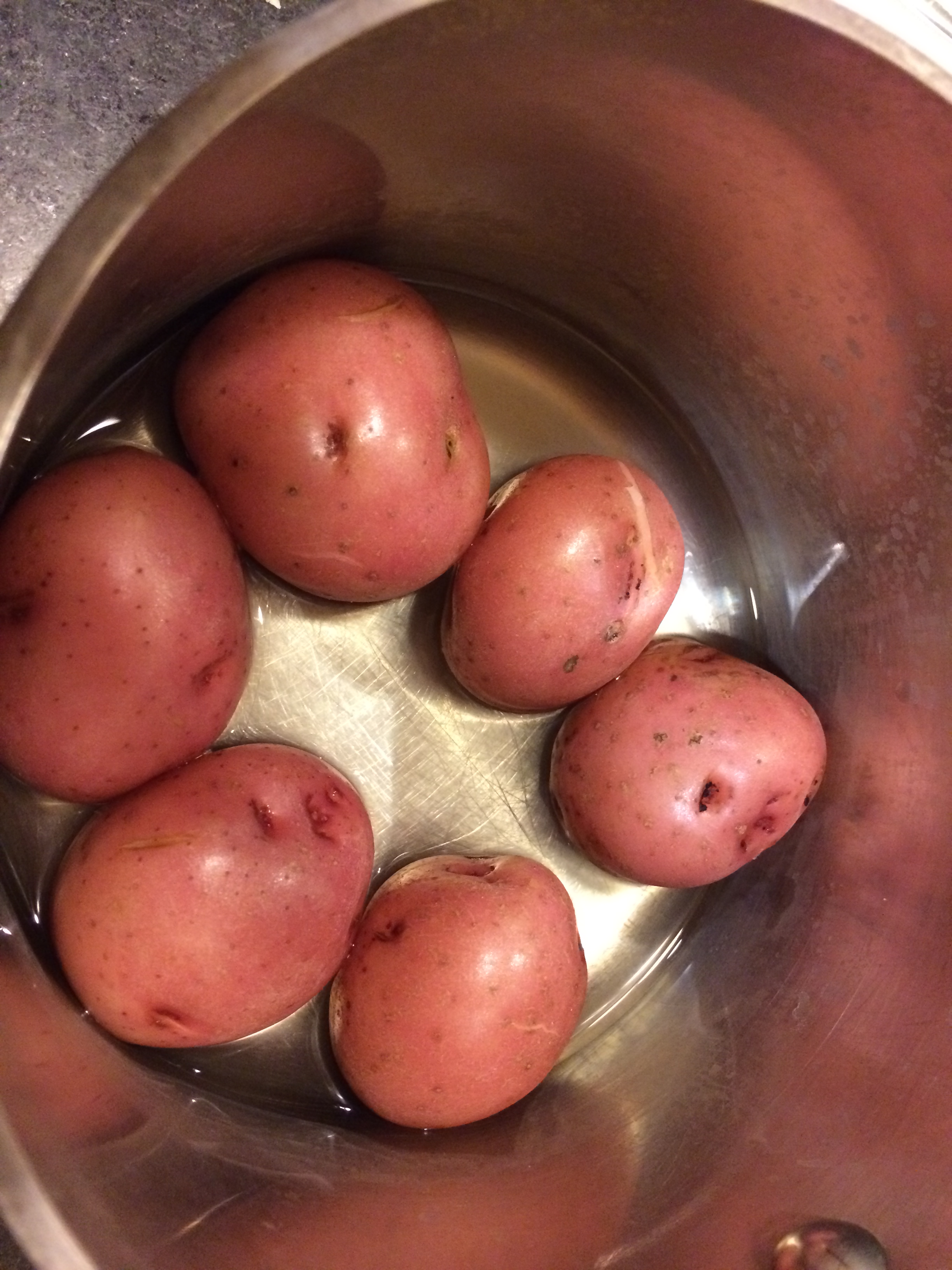
First, wash and boil the potatoes in about a cup and a half of water, lightly salted (put potatoes into cold water, bring to a boil, simmer for 10 minutes). The potatoes should be more or less cooked, which you can test by piercing with a knife.

IMG_0017 IMG_0020 IMG_0022

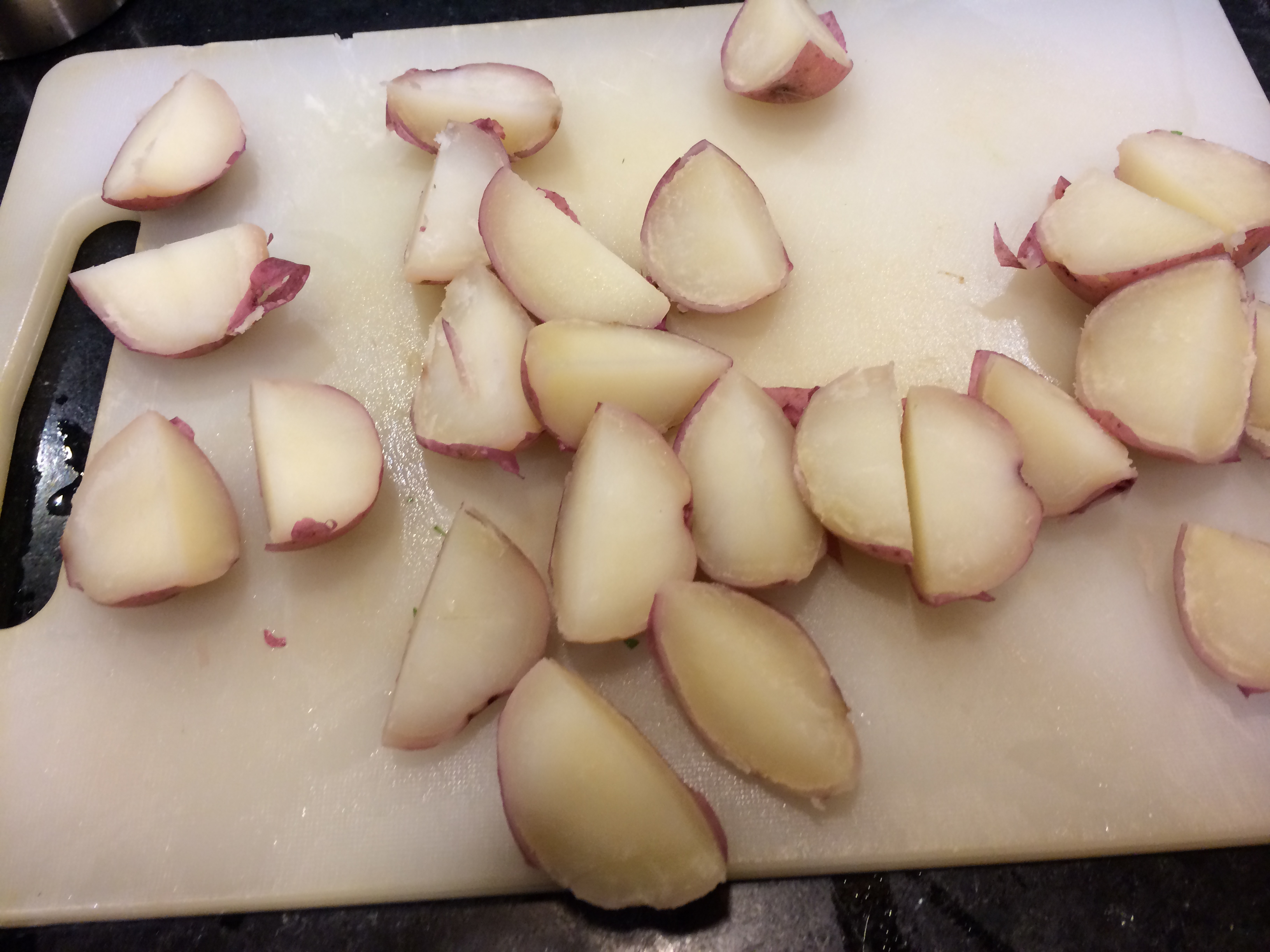
Take the potatoes out and quarter while leaving the peel on. Also, do save the water, we will use it later.

Chop the chili and garlic and make a paste as I explain in ‘Rustic ginger-garlic paste with the optional chili‘. Of course leave the ginger out in this case.

IMG_0018 IMG_0021

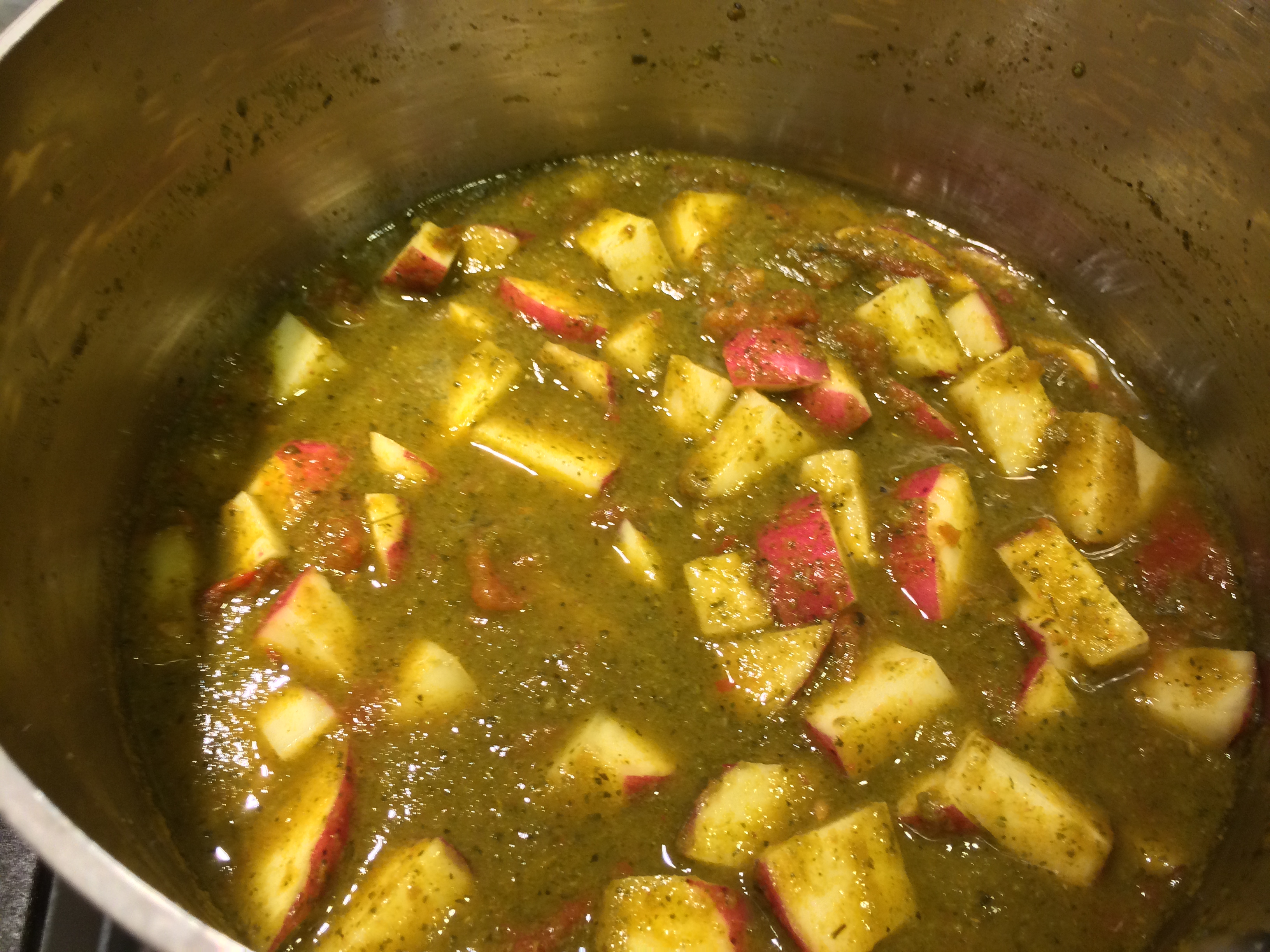
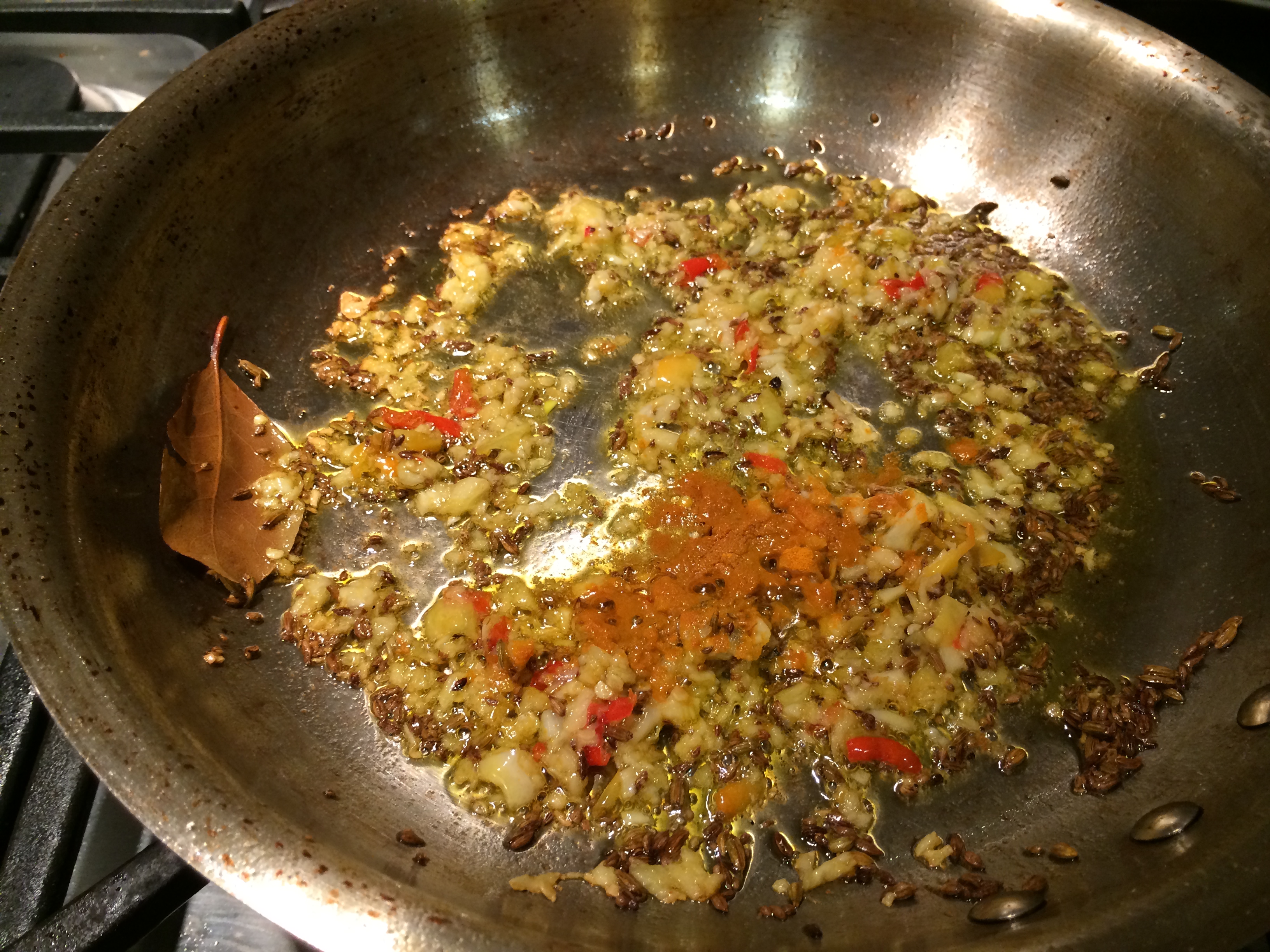
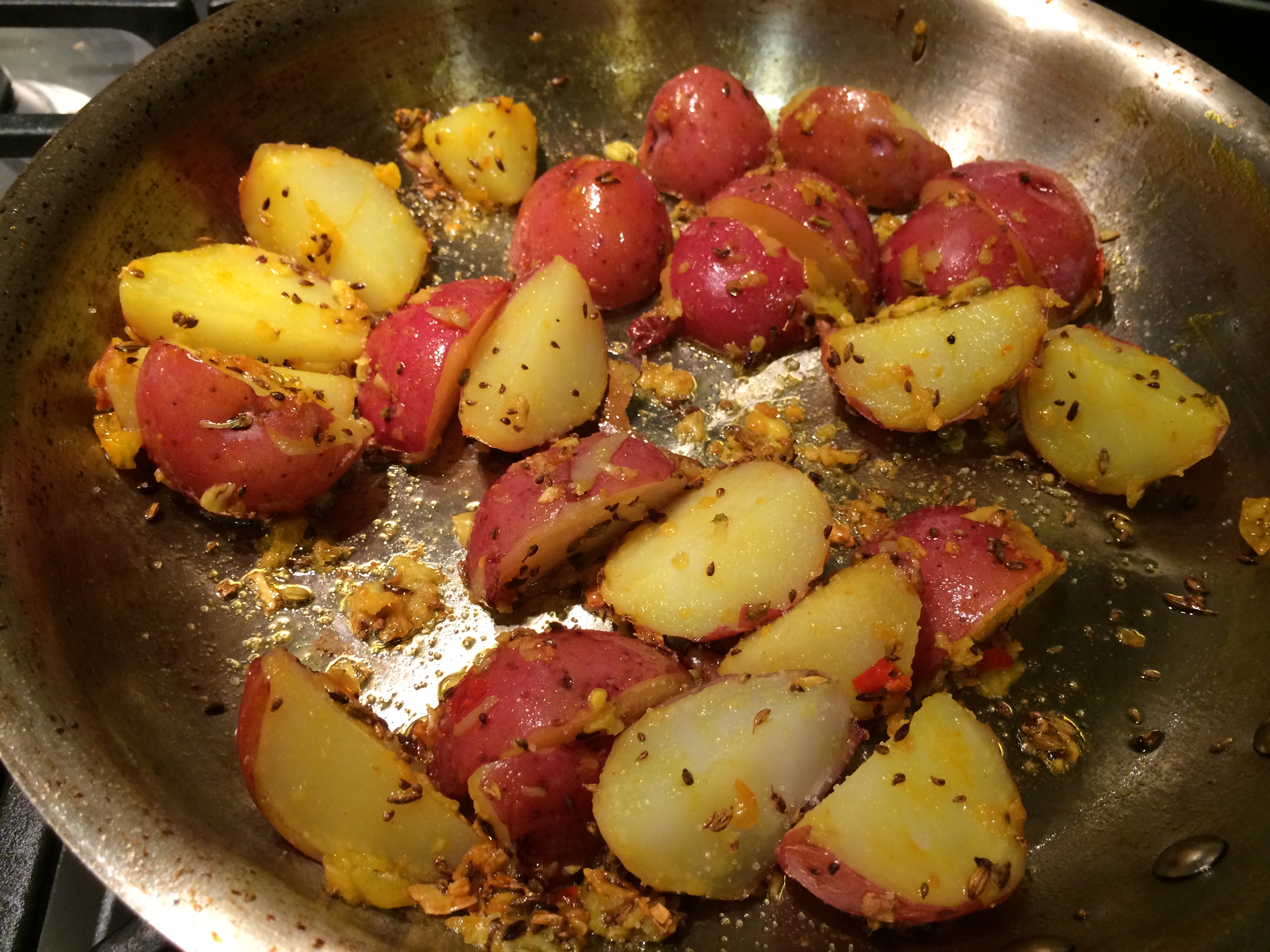
Heat oil in a thick bottomed pan on medium-high heat. When it shimmers add the seeds and the bay leaf. When they sizzle add the garlic-chili paste. Let it cook for a minute, then add the turmeric and quartered potatoes. Saute them gently to cover with the spice paste; add salt. Remember that you have added some salt in the boiling water already and some presumably in the garlic-chili paste; so adjust the total amount or go by taste. After a couple minutes of this, put in the water saved from boiling the potatoes. Stir gently and bring to a boil.

IMG_0023 IMG_0024 IMG_0025 IMG_0026

At this point I do a dum facsimile. Transfer the potatoes into a deep pot with a tight lid. Cover with the lid, but you might also want to seal it with a layer of foil in between the pot and the lid. Put it into a 300 F oven for 20 minutes.

Open the lid just before serving; add some lime juice and some cilantro, stir gently and watch your guests keel over.

660 Curries by Raghavan Iyer is an excellent book by the way, and has many unusual recipes. It is a keeper despite my allergy to the word ‘curry’. On which more later.

Jay, the Earl of the Bombay Sandwich

Sada Bombay Sandwich

Sada Bombay Sandwich

The ancestor of Bombay sandwich is the dainty cucumber sandwich that the British have served with their afternoon tea since the Victorian days. It even makes an appearance in Oscar Wilde’s The Importance of being Earnest. It has no protein and not much nutrition. But a cucumber sandwich is cooling, and so is tea! Which is why, I can only imagine, the British colonialists brought this tradition over to my hot, hot country India, where they spent about two hundred years, overstaying their welcome by about…I don’t know, a hundred and fifty years or so?
Bombay Gymkhana, that dates from colonial times

Bombay Gymkhana, that dates from colonial times

The cucumber sandwich thrived in cricket clubs, gymkhanas and tea houses where Indian servers would thinly slice bread and cucumbers, lop the crust off the slices, and serve these elegant little squares to their British bosses. Then those bosses were gone. They left behind a bunch of expert cucumber slicers, who I guess decided to use their skill in a very Indian — and really, a very Bombay way — hawk this sandwich from the roadside and add some chutney.

Ah. That is what makes it. Two hundred years and the British didn’t learn to add chutney to the cucumber sandwich. They left it pallid. Tasty, but pallid. And rather limp. But here, add mint chutney, beef it up with some potato, throw some sev on top, panini press it, put samosa filling it it; my god, the streetside stalls in Bombay have come up with a hundred variations.

But today we focus on the sada (plain) Bombay vegetable sandwich.

Sandwichwallah

Sandwichwallah

Sandwich stalls are found all over the sidewalks of Bombay. All of them can produce a killer sada sandwich. All one needs really is a stand about two feet square. There was a sandwichwallah on my street growing up — G Road. Around seven in the evening there would be a flock around him. His hands would be moving rapidly. There are very few choices for the customers to make — more chutney or less, and that’s about it. Everyone went away happy with six neat squares on a sheet of newspaper.

This is a far cry from the way I imagine cucumber sandwiches were served during the British days, on gold-inlaid bone china. But they do say newspaper makes street food taste better. I can vouch for that. Buzzing flies help too.

Jay Sandwich Menu

Jay Sandwich Menu

In college, by great good luck, I ended up in a streetside sandwichwallah’s personal empire. Yes, technically, the college is an official building, and Jay sandwichwallah just occupies the sidewalk outside it; but sometimes it felt like Jay Sandwich Stall is the main feature, and they built the college around him.

His two-feet square stall has expanded to occupy the entire sidewalk. It has a shade and a counter for customers. It even has a marquee. He has an extensive menu, all based on the original sada sandwich. He has a staff. The stall has killer aphorisms posted all over it, like ‘Please Use Dustbin’ and ‘Sandwich in One Hand Money in the Other’.

JaySandwichMarquee

But it has no seating. You are not permitted to order from your car either. You stand in front, order, wait, take the sandwich and go.

He even has a fan club on Facebook. That is how you know he has arrived. And do you know how your humble blog, The Odd Pantry, has arrived? I have a field reporter! My intrepid reporter in the field, Lata Wadhwani, got the following recipe for me from the Man Himself.

Sada Vegetable Sandwich from Jay Sandwich Stall

Ingredients:

  • 2 slices white bread, store bought or use this recipe for my very own Wondrous Bread
  • 2 pats of butter, one for each slice
  • 1 – 2 tablespoons green mint chutney (modify my soap chutney this way to make Jay’s green chutney: 1/2 cup fresh mint, 1/2 cup green chilies, 1 cup cilantro, salt to taste).
  • 1 tablespoon tomato ketchup
  • About 10 slices thinly sliced cucumber
  • About 6 slices thinly sliced tomato
  • About 6 slices thinly sliced boiled potato
  • About 6 slices boiled and sliced beetroot (optional, I skipped this)
  • About 6 slices thinly sliced red onion (optional, I skipped this)
  • Salt
  • Pepper

Method:

In the grand tradition of cucumber sandwiches, lop off the crusts of the bread. I didn’t, but I tend to be iconoclastic.

Apply butter on one side of each slice. Apply green chutney on one slice and ketchup on the other; if you want it spicier, skip the ketchup and use green chutney on both slices. This is what I did.

IMG_0679 IMG_0681

I must mention — work rapidly with big, flat sharp knives to get into the spirit of it.

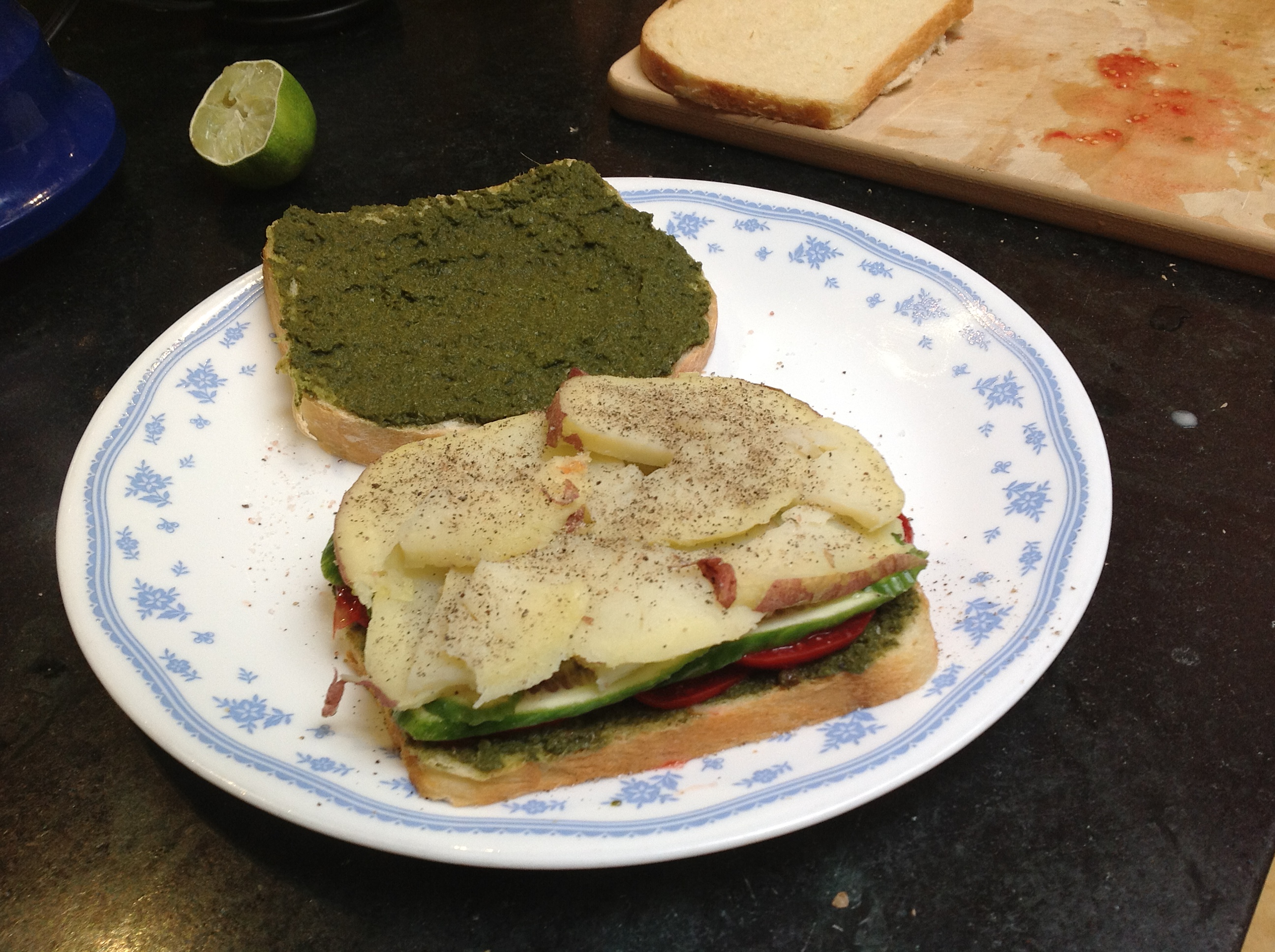
Lay the slices down. First layer the cucumber on, somewhat overlapping. Then salt that layer. Then lay down the tomato slices somewhat overlapping, and salt that layer as well. Then comes the potato. This time you should add salt and pepper as well, just because potatoes love pepper so much.

IMG_0683 IMG_0682 IMG_0684

If you like, add layers of onion and beetroot.

Now cover with the other slice. Press down firmly to get the sandwich to meld into one. Give it one cut vertically with a super sharp knife, and two cuts horizontally to make 6 little squares. Slide the squares onto a sheet of newsprint (or what the heck, use foil) and serve.

IMG_0685

Hand the customer the sandwich with one hand and take the money with the other.

A version of this recipe has earlier appeared in this book: The Lazy Gourmet, Magnificent Meals Made Easy, as ‘Bombay Sandwich’.