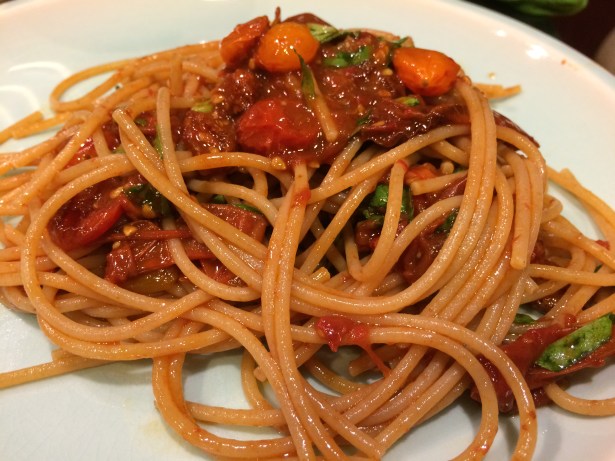
 Nature made tomatoes delicious but She also drenched them in unappealing wateriness. All tomato sauces are based on rescuing the flavor out of the swamp. It is simply a matter of technique.
Some insist that the skin and seeds must be removed. Some put great stock in canned tomatoes as opposed to fresh; others swear by long cooking. These are all fine techniques; but the one that works in my kitchen is one that I haven’t seen other recipe writers talk about much. This is surprising, because there is literally no way to describe how deep and dark is the flavor that results.
It is more of a technique than a single recipe, though I will give you a couple of variations that I often make. It involves long-roasting in the oven instead of long-cooking on the stove-top: four hours is ideal, but three hours can work too, at a slightly higher temperature.
Since it takes no fussing over, you can set it in the oven and leave the house, or putter about your other household duties. Long-cooking is no strain if your appliances do all the work. Yes, it does take a bit of planning and it does take about 5-8 nice plump medium tomatoes.
The basics
As to why this technique results in flavor so much deeper than the traditional method of cooking in a pot, I can offer some educated guesses.
One of the components of the flavor is the deep caramelization of the cut surfaces of the tomatoes as they are exposed to the dry heat of the oven. The juiciness ensures that they do not burn, but you can see the chocolaty color on the edges in the pictures below. This color shows that the Maillard reaction has occurred, imparting a welcome depth.
Nor does the the tomato liquid dry out evenly, as it would on the stove-top. I have often tried long-cooking simply chopped-up fresh tomatoes in a pot; and while the flavor certainly intensifies, the waxiness of the peel and the bitterness of the seeds stand out, diminishing the flavor. Of course one could peel and seed the tomatoes, but if one is to remove all the fiber from a thing, why even bother?
The great advantage of the long-roasted sauce is that the peel and seeds all go in, impart a caramelized edge, and yet, deep pockets of juiciness are left behind; as the oven has not dried out the fruit indiscriminately. The residue one is left with is approximately like a hybrid of sundried tomatoes on the cut-surfaces, and deep juice bombs inside.
The basic steps are these. Cut up the tomatoes either in halves, quarters or eighths. Place them cut-side-up, salted, drenched in olive oil in the oven, in a single layer, at a low temperature for up to 4 hours. At the end, a simple dressing of fresh olive oil, vinegar, garlic or herbs are necessary. Mashing them roughly with the back of a wooden spoon or a potato masher produces a sauce that will cover long pasta like linguini or spaghetti.
Variation with red wine vinegar and garlic


Roast tomato sauce with garlic and red wine vinegar
Ingredients:
- 6 medium tomatoes
- 1 fat clove garlic
- Few tablespoons extra virgin olive oil
- A splash of red wine vinegar
- Salt to taste
Method:
Spread a bit of oil in a flat ceramic dish and start the oven at 250ºF (if you have 4 hours) or 300ºF (if you have 3). Meanwhile halve the tomatoes and remove the stem. Place them cut side up in the dish, as crowded as you can, so they hold each other up. Sprinkle with salt and squirt more oil on the surface. Place them in the oven and set the time for either 4 hours (if set to the lower temperature) or 3 hours (if set to the higher).
Meanwhile crush the garlic and mix in some salt. This will liquefy and cook it, which will take about half hour.
At the end of the roasting time, mash the tomatoes a bit with the back of a wooden spoon. Stir in the garlic and the splash of red wine vinegar.
Cook and drain spaghetti or other long pasta; stir to combine thoroughly with the sauce.
Variation with fresh basil and olive oil


Roast tomato sauce with fresh basil and olive oil
Ingredients:
- 6 Kumato or other tomatoes
- a handful of cherry tomatoes
- 6 tablespoons extra virgin olive oil
- salt to taste
- about a dozen leaves of fresh basil
Method:
Spread some oil on a flat ceramic dish. Quarter the Kumato tomatoes and halve the cherries. Spread them tightly crowded on the dish, tucking the cherry halves into the gaps between the others. Sprinkle with salt and more olive oil. Reserve about 3 tablespoons of olive oil for later.
Roast at 250ºF (if you have 4 hours) or 300ºF (if you have 3).
Slice the basil leaves into ribbons.
Once the tomatoes are done, take out of the oven, mash and taste for salt. Add the reserved olive oil and the basil. Toss with pasta.
Variation with infused oregano and black pepper


Roasted tomato sauce with oregano and black pepper
Ingredients:
- 7 or so medium tomatoes
- quarter cup of olive oil
- a few sprigs of fresh oregano
- several twists of black pepper
- salt to taste
Method:
Prepare the roasting dish with some olive oil spread on the base.
This time cut the tomatoes into eighths. Spread them tightly in the dish, cut sides up. Since the pieces are smaller, use the higher oven setting (300º F) and the shorter time (3 hours). Cover with salt to taste and olive oil. The sprigs of oregano are to be tucked into the dish and black pepper sprinkled onto the tomatoes. As the roasting proceeds, a savory aroma will filter through the kitchen.
When done, remove the oregano sprigs. Mash gently, add more olive oil and toss with freshly cooked long pasta.
I would love to hear your thoughts in comments below. Follow me on Twitter, like my Facebook page, or email me at aneela -at- theoddpantry.com. You can also subscribe to this blog here:


 Just think—what is pumpkin, but a combination of excrutiatingly delicious orange pumpkin matter, and water. Water is water. It’s great. Stuff of life, 90% of the body, et cetera, et cetera. But it isn’t where the deliciousness lives. In fact, it mingles with the deliciousness of pumpkin flesh and—waters it down.


 Once upon a time, the dark cold months were months of deprivation. No green shoots appeared in the ground, no fruit swelled on the trees. The young ones went without, or raided the underground cellars for the grains and husks that they shared with their rodents. But the old ones said no, look, here’s what you do. You collect your bounty in the sunlit months; then you preserve it to feast on in the dark months.
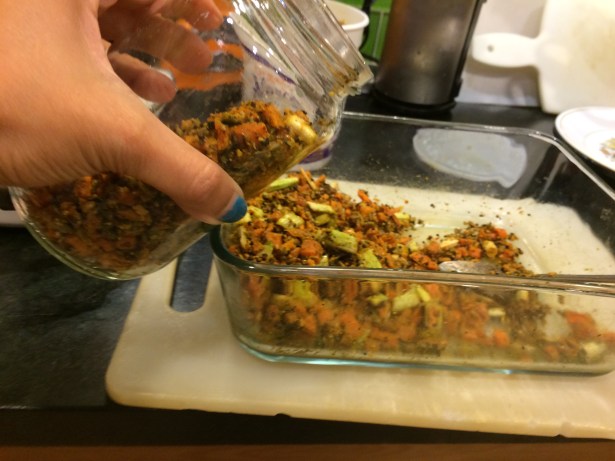 But at first, the young ones shrank from the taste. “Pooh!” they said. “We see that this is imbued with the deep orange of a carrot, but the saltiness scours our tongue. And the mango—did you have to preserve it when green and sour? Could you not have waited for its velvety sweetness to emerge? Ah, we would give our firstborn for the taste of a sweet mango now! That clay jar under the ground—could that be cabbage? But heed the fumes—did a dog die in there?”
 “But heed,” the old ones intoned, “while fermentation is hip, do not forget, it is not the only way. Remember, water is needed for all of creation, and all of creation harbors it; the bad microbes desire it with a thirst so deep that it might be a thirst for life itself. What if one were to draw the water out of our foods, and leave it shrunken and dry; the microbes would find it as bare as a moonscape and would not deign to enter. Then: what if one were to cover the whole thing in oil, perhaps an oil such as from the mustard plant, that is practically a warrior against microbes itself, what then?”
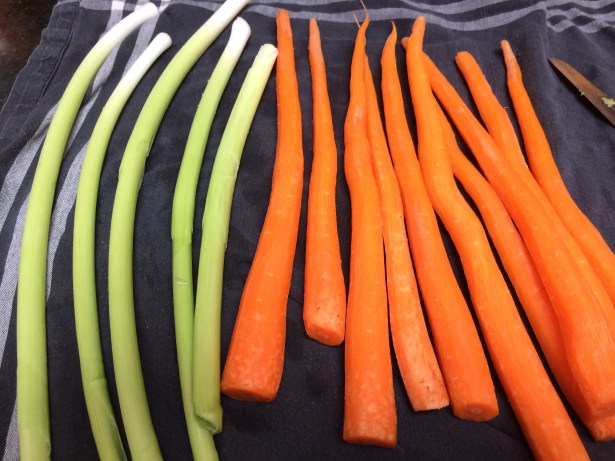 This is the basic method I have used with such disparate ingredients as


 I’m guessing that not many of you will have heard about the dal or bean I’m about to write about today. I certainly hadn’t. It is a small flattened bean, multicolored in a spectrum that goes from beige to dark coffee brown. It is commonly known by the rather picturesque name of ‘horse gram’; and if you think that a word like that harks back to a time when crops were named after farm animals, while animals were named for their use on the farm, you’ve got horse gram pinned.
 Some practical matters


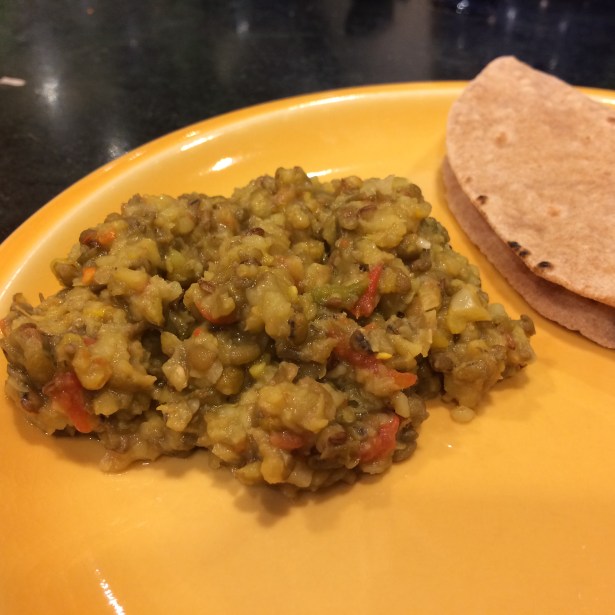 As I have said before, dals are such an integral part of food in India that each type may be used in four different ways: the whole bean, the split bean with the green peel left on, the split bean ‘cleaned’ of the green peel, and ground. And the amazing thing is, that at each of these stages, the cooked dal presents a different look, a different flavor, and a different meal entirely.


 There are people who like ginger, and there are those who don’t. Both are within the bounds of normalcy. But then there are people who like ginger beyond all reason and sense. My husband is one of them. He is not satisfied with a ginger-flavor suffusing the food; it must have that, and also ginger sticks in addition, so he can actually taste it.
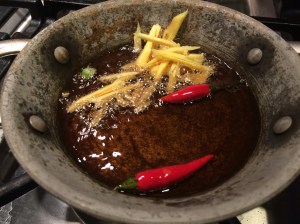
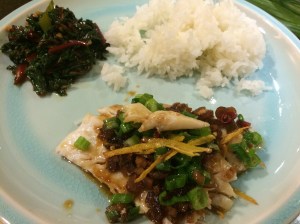
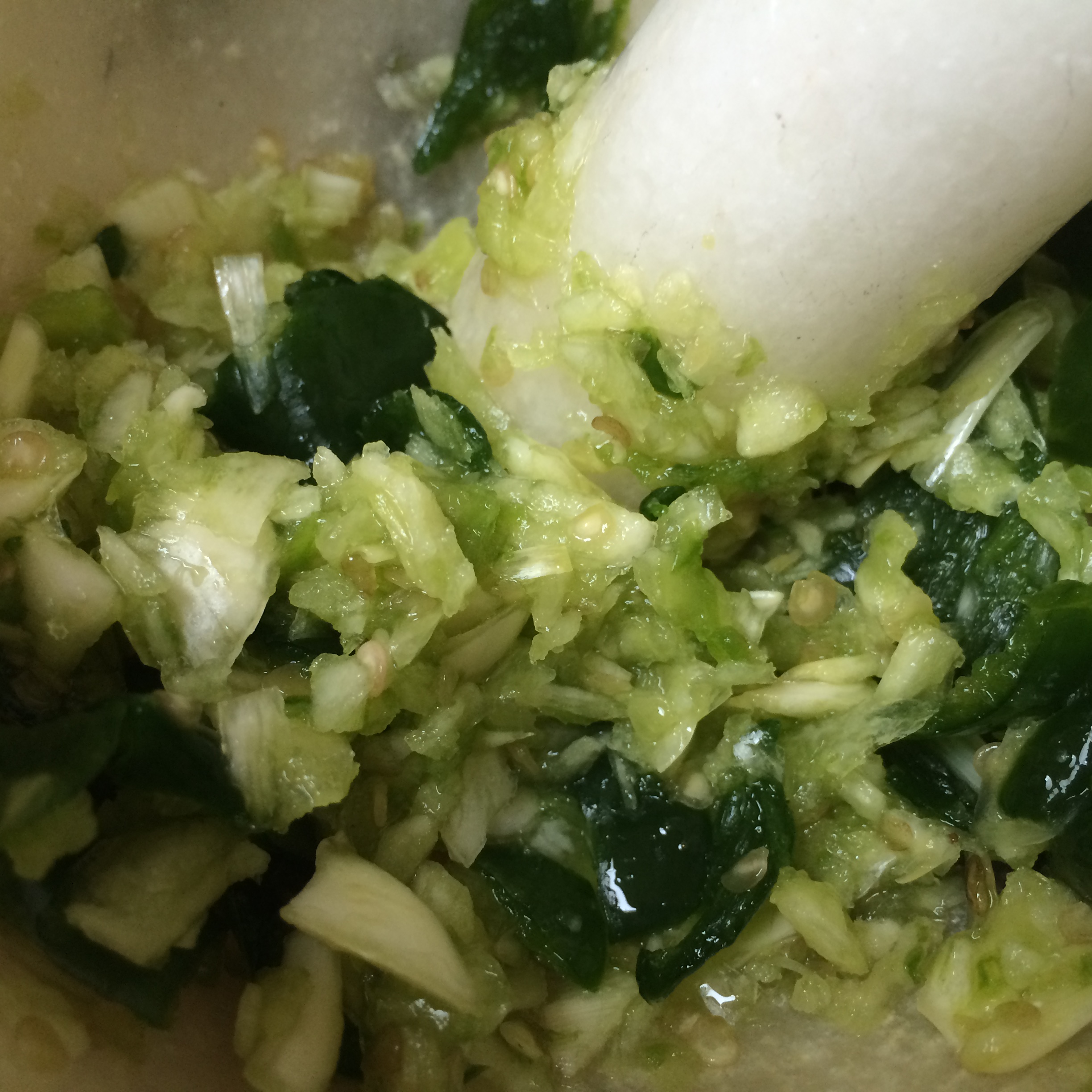
 Both dressings use the same trio of scallions, chilies and ginger. The first dressing, which is simmered in soy, has these items minced fine (on the left). While the second dressing, which is fried in sesame oil, has the chilies whole and the ginger in long sticks (on the right).













 The Odd Pantry