Pallid halibut. Pallibutt.

It has taken me a long time to get used to American food. And I don’t mean those paragons of American cultural invasion — the pizzas and the hamburgers. I mean the food that actual, real-life Americans eat in their homes; the food that mothers, and increasingly, fathers, cook to feed their families. You know, the protein, vegetable and starch trifecta that graces dinner plates across the nation at 6:30pm, with a basket of rolls by the side. The meal that is etched in my mind in a multiplicity of images: a little sandy-haired boy wearing shorts, leaning over the dining table with his elbows, pushing peas around with his fork. The bright, skirted wife/mother carrying a big roasted bird on a tray. The suit-wearing father with his pipe, wearing a frilly apron as a joke, handing rolls around the table.

An American family at the dinner table

An American family at the dinner table

I don’t know where these images come from (probably from America’s giant lifestyle industry), but you catch my drift.

It has taken me a long time to get used to this type of meal. Being Indian, I could not understand how meat could be eaten without a lot of spices, or how starch could be eaten just by itself — without mixing in a lot of spicy gravy. And what kind of a way is it to cook vegetables anyway — just steaming? Meat cooked in a plain way is the most challenging — after a few bites, it feels like rubber. This, for example, is what I was used to for the first 24 years of my life:

Indian food image from Wikimedia Commons

Indian food image from Wikimedia Commons

Yes, I have had my challenges with the American meal. But since I married an American he has learned about my cuisine and I have learned about his. Now I can appreciate how the simplest of ingredients, unadorned, can please.

Hence this.

Halibut, cooked with a simple poaching. In milk. Turning it paler than pale. Pleasing my American husband immensely. And — can I admit it? Me too.

Pallid Halibut

Ingredients:

  • 3/4 pound halibut fillet
  • 1 cup milk
  • half an onion, minced
  • 4 green cardamom pods
  • 10 or so whole black pepper
  • 1 bay leaf
  • salt to taste

Method:

Collect the whole spices and minced onion in a pan. Pour milk over and bring to a simmer. Sprinkle salt over the fish and lay into the simmering milk; salt some of the surrounding milk as well. Keep ladling some of the milk over the fish along with the spices and onion once in a while. In about 15 to 20 minutes, while you keep the milk at a simmer, it should be done.

IMG_0068 IMG_0071

So — about done-ness. This is a concept that was new to me from Western cooking. The simplest way to check is to use a Thermapen thermometer to check the internal temperature of the fish — it should reach around 140 F. Another method is just to use a fork to see if the fish flakes easily and is opaque all the way in. Of course, some people like it more translucent.

IMG_0072 IMG_0073

Here is my pallid hallibut, the center of our very American meal that evening.

IMG_0074

Garlic-fenugreek gravy with absolutely anything

IMG_0112

This is a Sindhi gravy that you can throw anything into, and make a wonderful meal, sort of like this gravy. And it is so simple to do, that you will be left wondering if you left out any steps. You didn’t!

Greenish in color from the fresh herbs, it also has the wonderful warm aroma of garlic. The herbs and the garlic together make an intense and unfamiliar aroma that most people are intrigued by.

As for what to put in it — some common Sindhi preparations use okra, or King mackarel fish, or zucchini; I have made a successful combination of paneer and peas in this gravy or potatoes and peas. You also have your choice about how wet or dry to make the result; and whether to have it with roti as a side, or over plain white rice. But use your imagination and let’s get started.

Thoom-methi gravy with potatoes and peas

Ingredients:

  • Half a large red or yellow onion, roughly chopped
  • 3 – 4 largish cloves garlic
  • 3 (or to taste) fresh chilies, jalapeno, serrano, bird’s eye or cayenne
  • half a bunch of cilantro, roughly chopped
  • 1 tablespoon dry fenugreek or half a cup fresh if you can find it
  • One large tomato
  • 1 teaspoon coriander powder
  • half teaspoon turmeric
  • 1 teaspoon salt
  • 3 cups of chopped vegetables: I used 3 cubed red potatoes and half a cup of peas.
  • 1 – 2 tablespoons oil

Method:

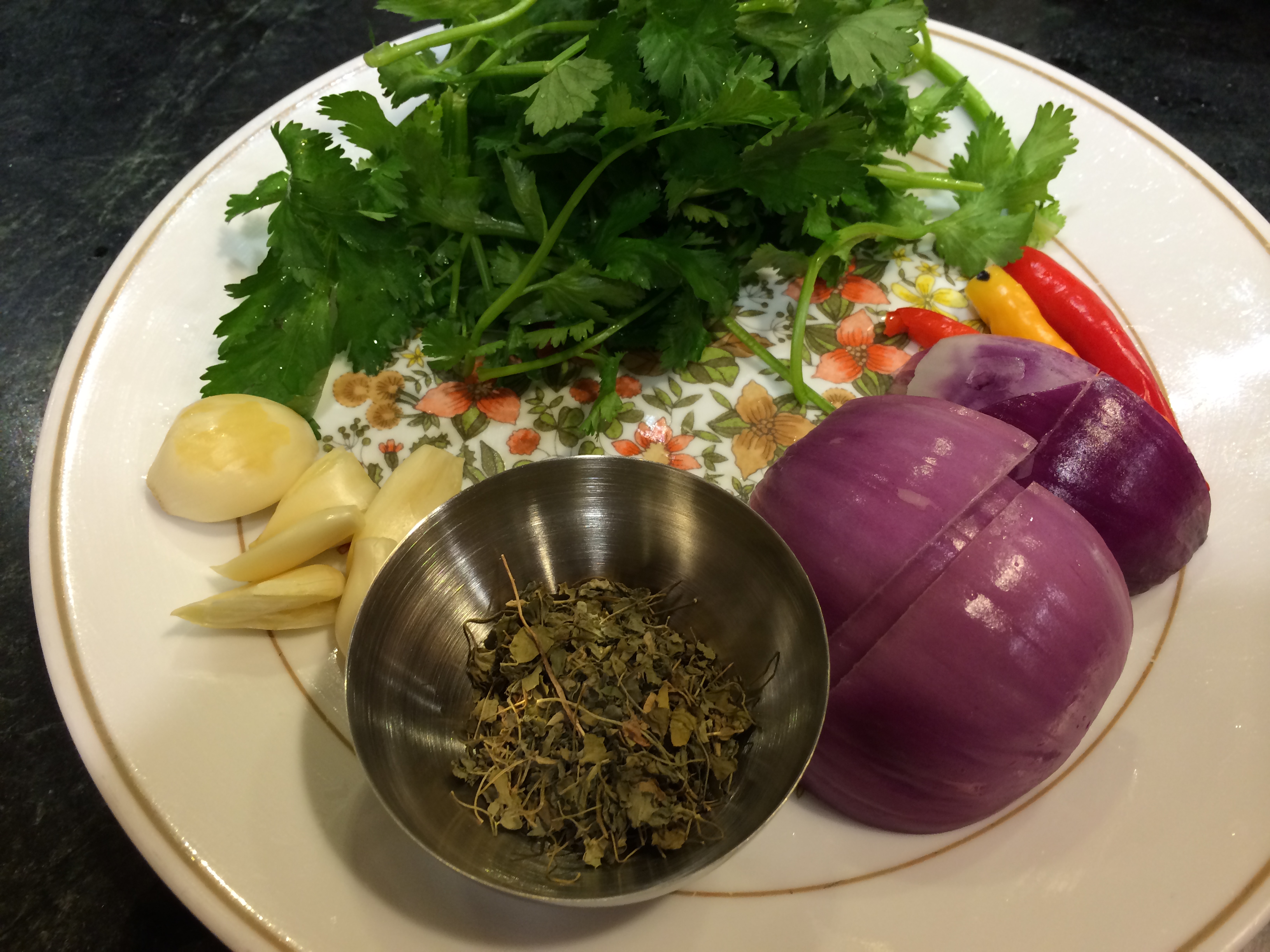
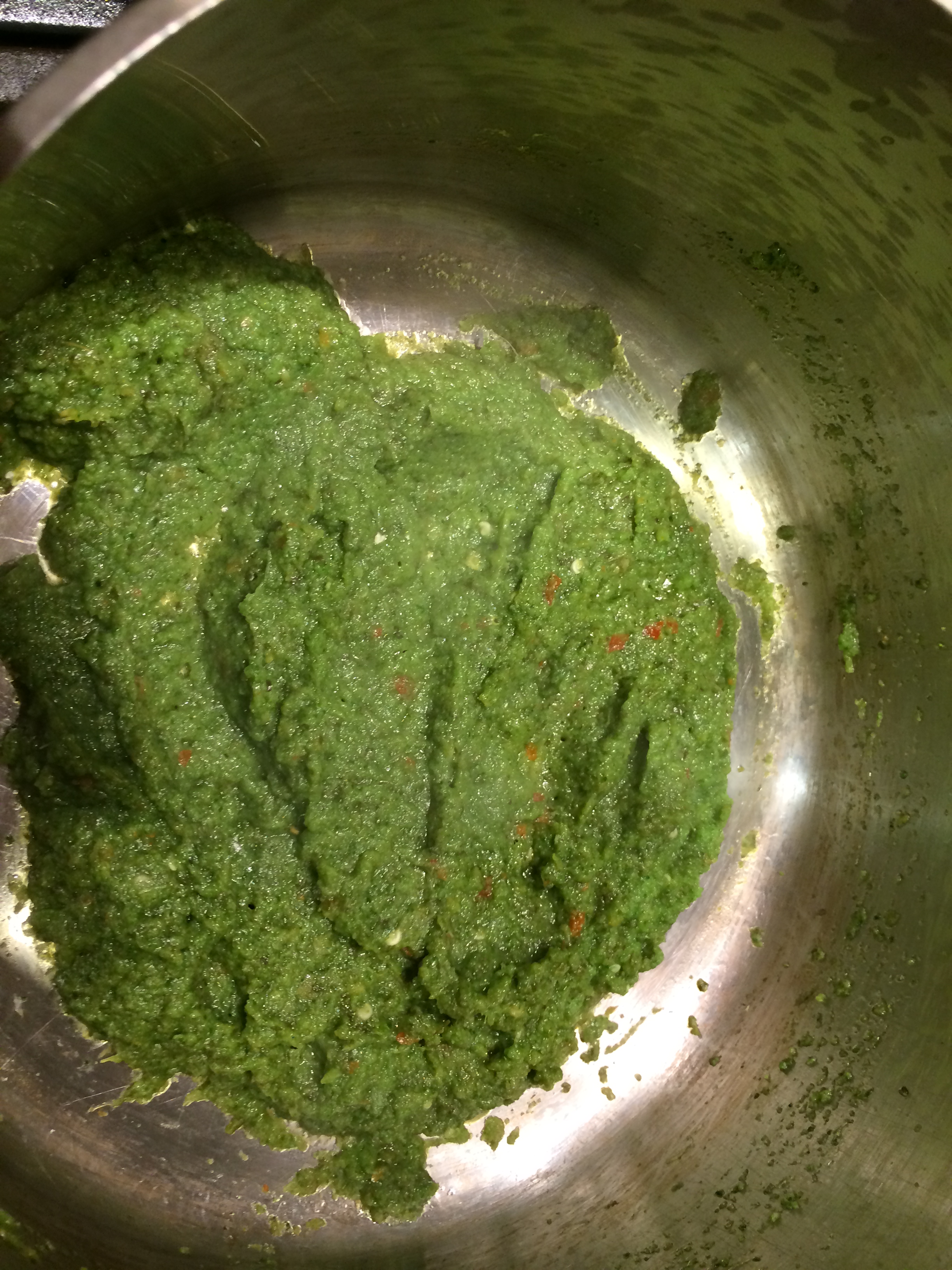
Combine in a blender the following roughly chopped vegetables, with about a quarter cup of water: onion, garlic, cilantro, fenugreek and chilies. Blend to a paste consistency, as shown below.

IMG_0098 IMG_0100

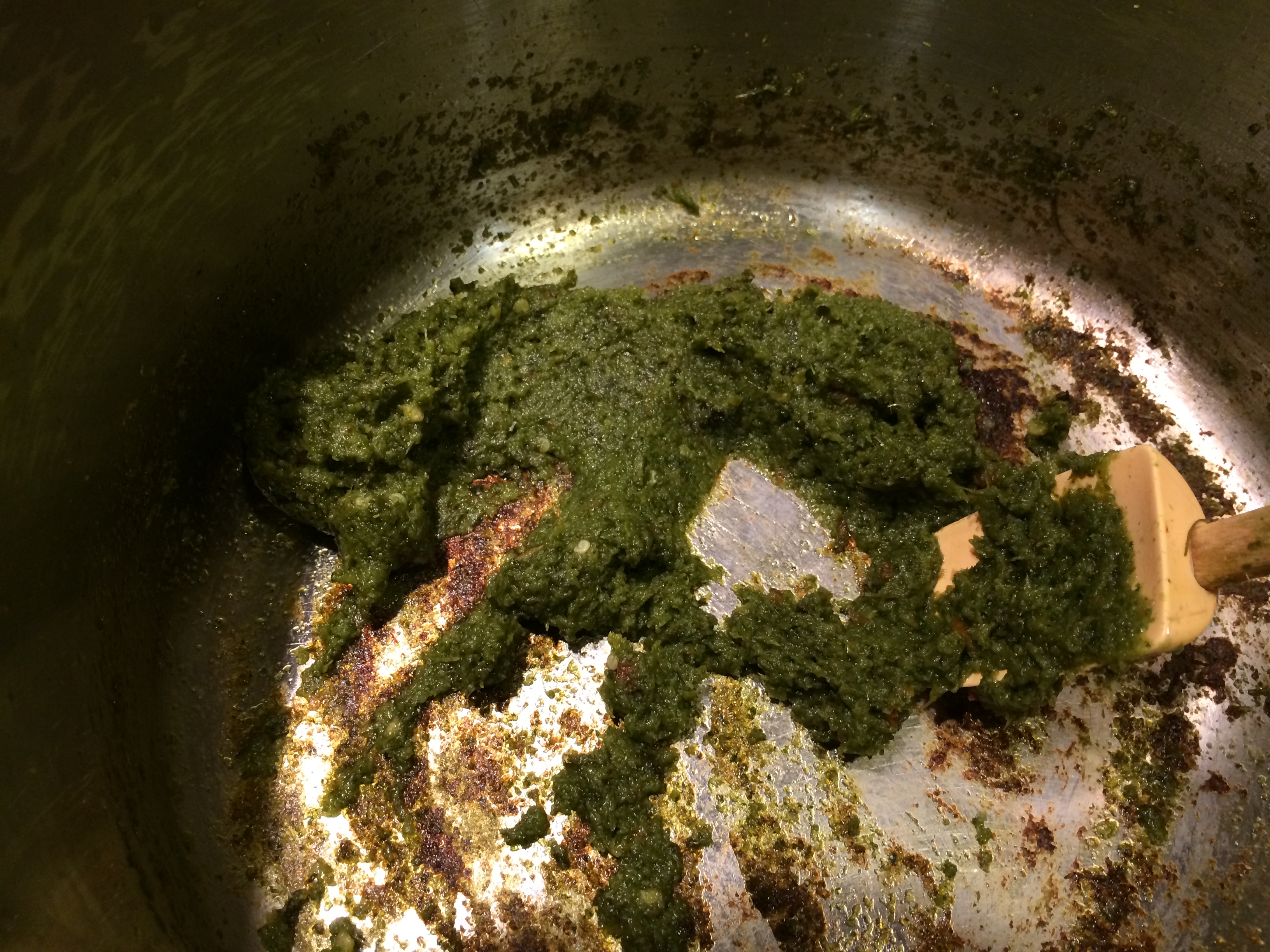
Heat oil in a thick-bottomed pot and when it shimmers, put in the paste and cook it on medium-high. In about ten minutes it will dry up and start to darken; keep stirring it once in a while. When it goes from looking like this:

IMG_0101

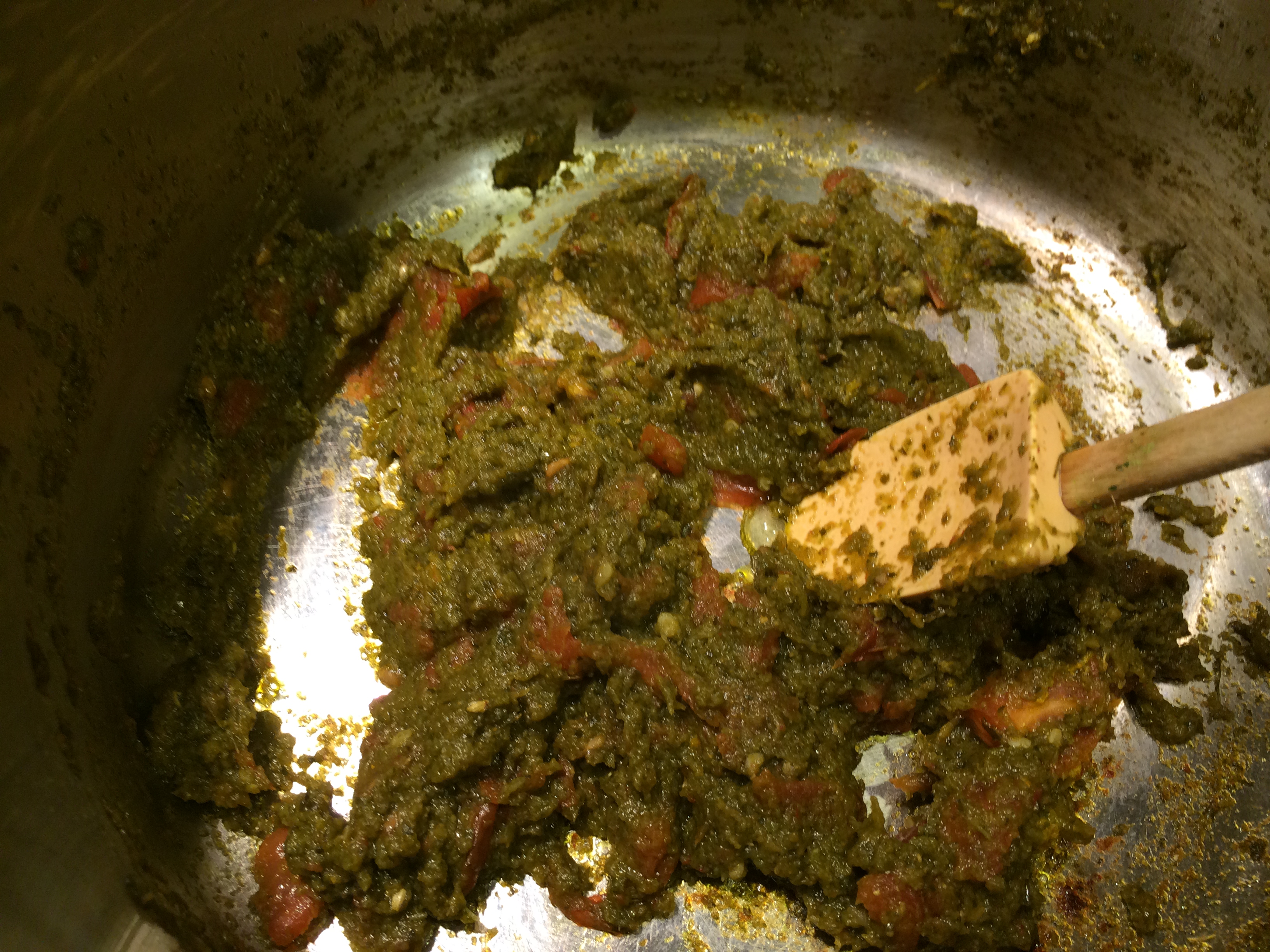
to looking like this:

IMG_0102

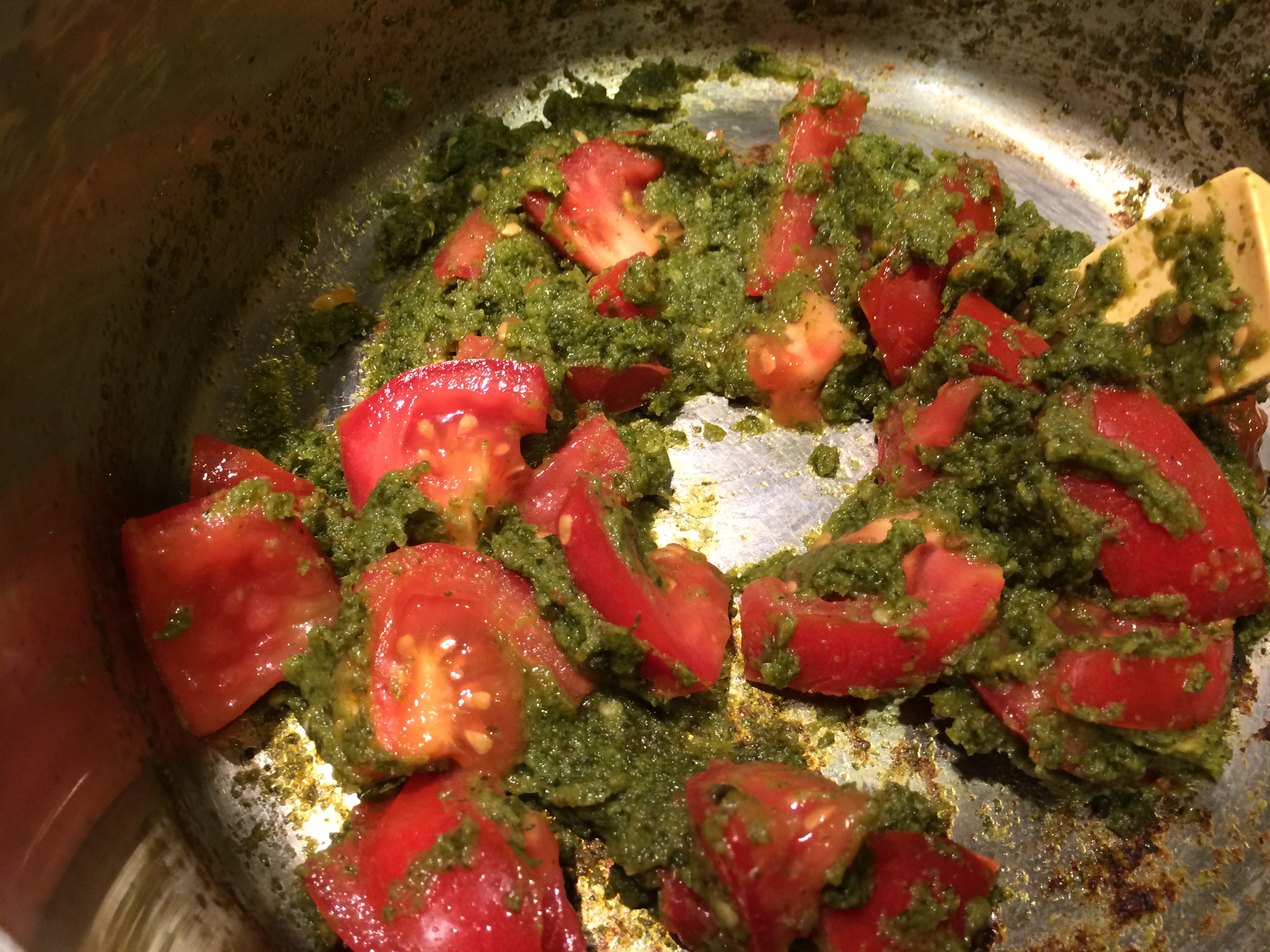
put in the chopped tomatoes. The tomatoes will first liquefy and then turn pasty and combine nicely with the rest of the spice. Stir for about 5 minutes; when they are more or less dry, put in the coriander and turmeric powders and stir. Now put in about a cup or cup and a half of water, bring to a boil.

IMG_0104 IMG_0105IMG_0106

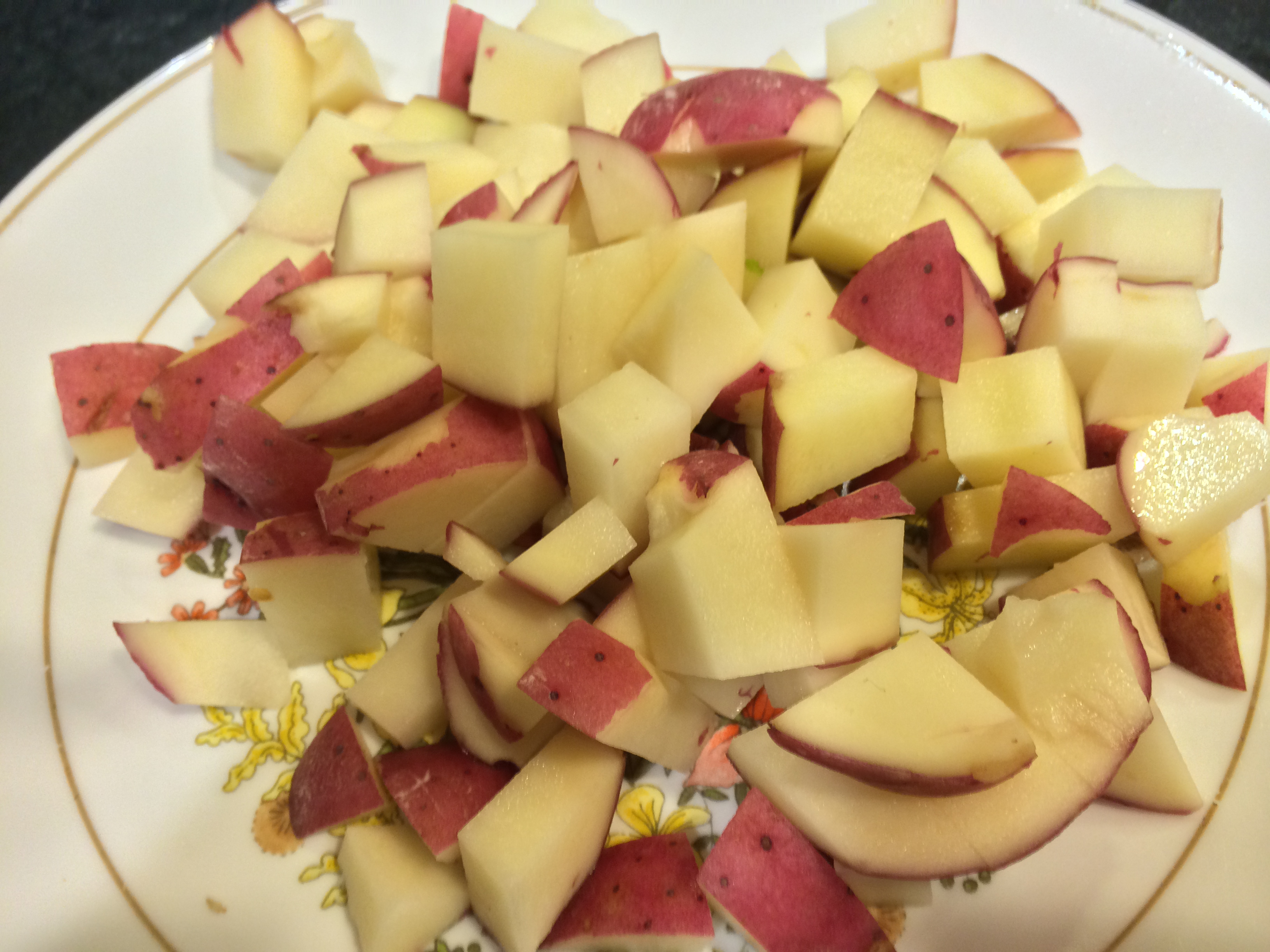
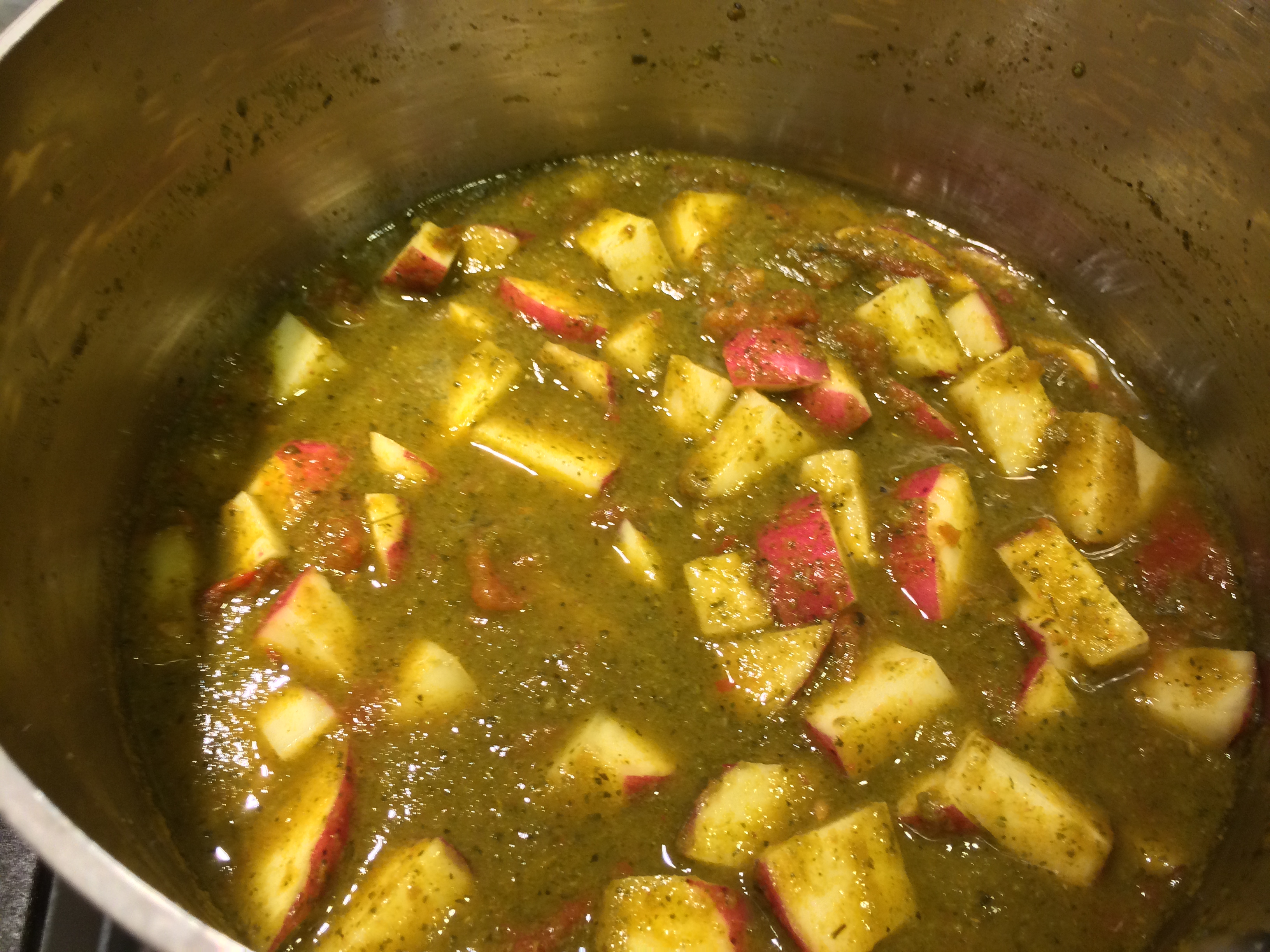
Now the gravy is ready, and it is time to put in whatever chopped vegetables you want. I put in cubed potatoes, and simmered them with the lid on for 15 minutes to cook; then I put in the frozen peas and only cooked them enough to heat through.

IMG_0109 IMG_0111

Oh — I added the salt along with the vegetables so that they absorb the salinity properly.

King Julienne

King Julien

King Julien

King Julien is a strange character in the Madagascar series of movies. The talented Sacha Baron Cohen does his voice, and gives him an Indian accent, even though he is a native of the Madagascar island. He is a fun-loving narcissist, a ring-tailed lemur who counts bush babies among his subjects.

Odd? Yes, he is very funny, and very odd, which makes him a good mascot for the odd pantry.

This recipe, which basically consists of a number of julienned vegetables (particularly cabbage) is in honor of King Julien. I guess since it features cabbage you could call it a coleslaw which derives from Dutch koolsla and basically means cabbage salad. The dressing here is not mayonnaise-based, which gives it a lot more sharpness than the usual coleslaw.

Oddly sharp coleslaw

Ingredients

  • A scant 4 cups of shredded purple cabbage
  • A scant 4 cups of shredded arugula, loosely packed
  • Half a cup of green beans, microwaved or blanched, and julliened
  • Half a cup of firm apple, julliened
  • 1 tablespoon pinenuts
  • 1 tablespoon julliened ginger (Optional. This makes it really sharp, and if you are into that, you will love it)
  • Salt to taste
  • Half a teaspoon crumbled oregano
  • 3 – 4 tablespoon extra virgin olive oil
  • 1 tablespoon red wine vinegar or balsamic vinegar

Method:

IMG_0692 IMG_0695 IMG_0700 IMG_0698 IMG_0697 IMG_0693

Collect all the vegetable ingredients, nicely julliened. Toss them around in a large salad bowl. Add pinenuts, salt and oregano and toss some more. Now add olive oil and the vinegar and toss yet again.

You can eat it right away but the flavor does develop a little more if you wait fifteen minutes or so.

And you know here is a new idea…try eating it with chopsticks. Failing that, use your fingers.

Oddly sharp coleslaw

Oddly sharp coleslaw

Wondrous bread

Dear Reader, I am aware that not all visitors to my blog are foodies. Some of you want your daily bread and water and to not be bothered to put all manner of unfamiliar pastes and blocks in your mouth (“just try one bite!”) I have non-foodies in my family, and I get you. I really do.

And when it comes to bread, the non-foodie likes the square sliced white bread. I do too! Sliced white bread is a neutral substrate for any kind of sandwich. Cube it and turn it into croutons. Toast it and butter it. Batter-fry it. Dip it in soup. The shape is predictable, even, easy to cut into little squares or triangles. This kind of bread is a workhorse.

In India we grew up with white bread of this variety:

WibsLogo

But as with many things, the primary innovation of making a square loaf, preslicing it and packaging it in waxed paper was American. It was a Wonder! And in case you need prodding to feel sufficiently celebratory, here, I will help:

It was a Wonder_Bread_logo.svg!

Sliced bread was invented in the 1920’s by a man named Otto Frederick Rohwedder. Not only did he come up with a bread slicer but also the idea of wrapping them in waxed paper to keep the slices fresh. After an initially doubtful populace, sliced bread began to fly off the shelves.

Pretty soon households were addicted to sliced white bread; that created its own problems. They became malnourished; the government had to insist that vitamins and minerals be added to the bread. Also, people began to forget what bread was supposed to taste like. Over the decades, the ‘bakeries’ where the bread was made turned into ‘factories’: the taste suffered, but nobody noticed. The product still flew off the shelves; ever more convenient, ever cheaper to make, sell, buy; it lasted longer and longer in our pantries. Until we ended up with this:

Wonder bread ingredients from http://theysmell.com

Wonder bread ingredients from http://theysmell.com

But never forget that the original soft white sandwich loaf really is wondrous. Easy to slice — not so crusty that the knife sends bread shards shooting into your eye. Not so soft that the knife mangles it with one gash. Easy to use for any kind of sandwich. And delicious.

Wondrous Bread

This recipe is from King Arthur Flour: Classic White Sandwich Bread. You should click the link for instructions and background but I’m repeating the entire recipe here.

Dry Ingredients:

  • 4 cups unbleached all purpose flour
  • 1/3 cup dry milk powder (unsweetened)
  • 2 1/4 teaspoon instant yeast

Wet Ingredients:

  • 1 tablespoon honey
  • 1 3/4 teaspoon salt
  •  2 tablespoons soft butter
  • 1 1/2 cup water

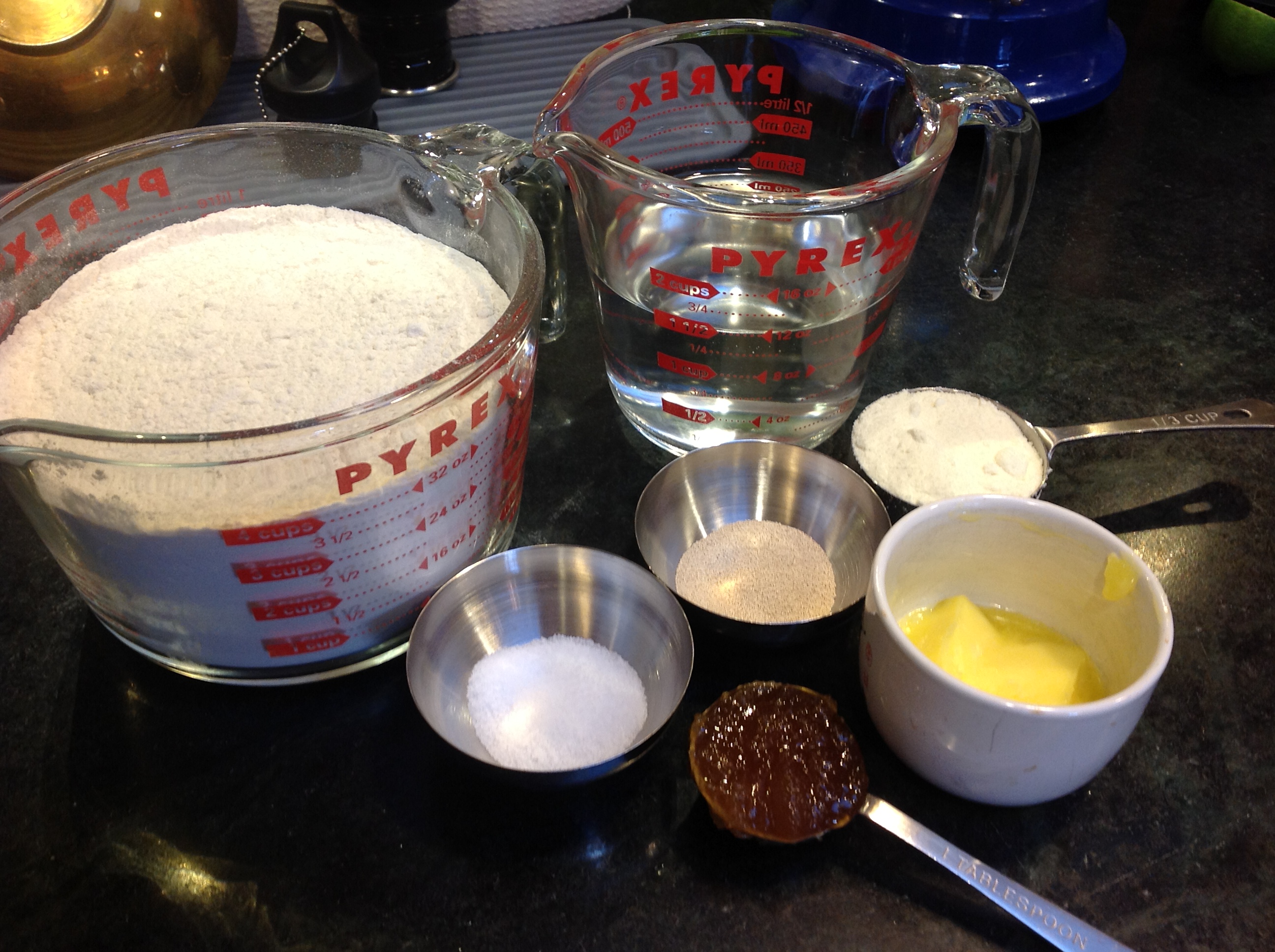
IMG_0639

Method:

Mix the dry ingredients in the bowl of a stand mixer with a dough hook attachment. Mix the wet ingredients separately (no need to get it super combined). Make a well in the dry ingredients and pour the wet stuff in.

IMG_0641 IMG_0643

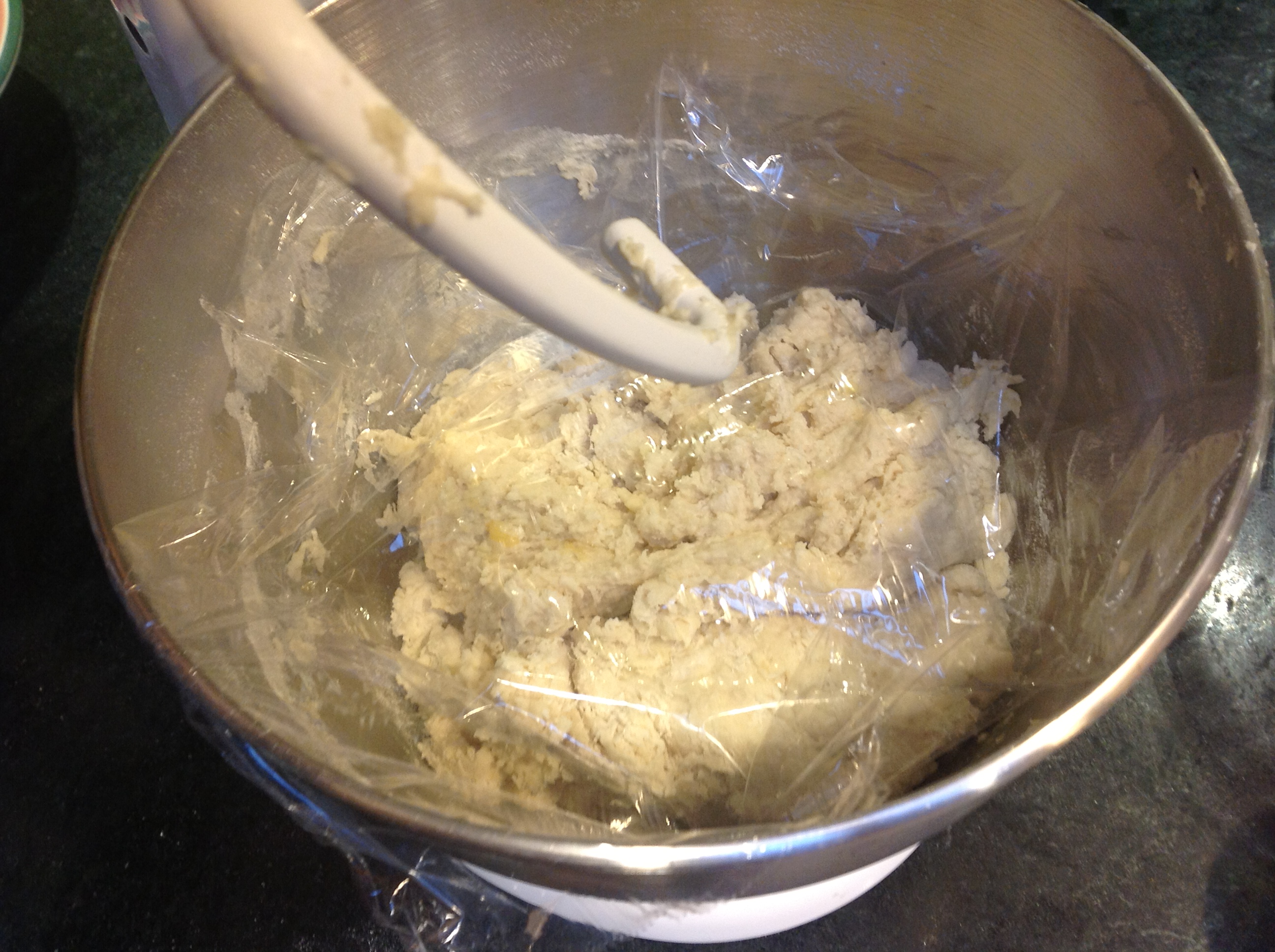
Stir with a dough hook until it sort of comes together in a shaggy mass. Cover with plastic wrap and leave it aside for about 10 minutes. Come back, run the mixer at this point for about 5 minutes until it comes together into a rough dough, like this:

IMG_0647

At this point, I like to finish kneading by hand, until it becomes a smooth dough like this:

IMG_0648

How do you know when you have kneaded enough? This is a trick I learnt from the book The Bread Baker’s Apprentice by Peter Reinhart. Take a little marble-sized ball of dough. Spread it as thin as you can into a little sheet, gently. If you are able to tease the dough into a translucent sheet (light should be able to shine through) without breaking it, you are there. If it breaks off into chunks rather than become a translucent sheet, you are not there and need to knead further. This is called the windowpane test.

Windowpane test

Windowpane test

OK. Oil the dough to keep it from drying out and put it in a large container to rise. I usually mark the level at which it is with a sticky tape. Leave it at room temperature until it doubles. This will take about 2 hours.

IMG_0656 IMG_0660

Now comes the shaping. The loaf needs to go into a 9″ by 5″ loaf pan. Form the dough into a rough rectangle, and start rolling it into a log from the long side, gently pressing the seam closed as you go. Take care to tuck in the ends as you roll. The shaped loaf should have its seam closed everywhere, almost like a zipped up sleeping bag.

IMG_0662 IMG_0664

Place it into a greased loaf pan and cover with a plastic wrap. In an hour or 90 minutes the loaf will have risen to an inch above the rim. Now it is ready to go into an oven.

IMG_0669 IMG_0667

Preheat the oven to 350 F. When it comes to temperature the loaf pan goes in (without the plastic wrap, please!)  Bake the bread for 35 – 40 minutes. Around the middle of the cooking time, turn the pan 180 to allow it to cook evenly on all sides, and, tent it with aluminium foil to prevent it from browning too much.

IMG_0671 IMG_0674

When it is done, allow it to cool in the pan with some airflow under it, then take it out and slice it. There! sliced white bread.

IMG_0678 IMG_0675

The Tahoe gratin

Tahoe Gratin

Tahoe Gratin

We spent labor day in a rented cabin in the Tahoe region. We had a state of the art kitchen at our disposal, a warm cozy evening for dining in, a few vegetables in the fridge, but no spices whatsoever. What’s an Indian cook to do?

Gratin!

I love gratins — the creamy cheesy crusty casseroles. I was first introduced to gratins in an strange fashion — a pure vegetarian Gujarati restaurant in Bombay had a ‘Vegetable Au Gratin’ on the menu and it was delicious. Restaurants in India have this strange quirk where the advertised cuisine hardly matters — a South Indian dosa restaurant will have an entire Indian Chinese menu, and throw in a club sandwich as well. They don’t seem to believe in specialization of cuisine.

Sort of like the proprietor here at The Odd Pantry you say? Hmm.

At any rate, this is a pure vegetarian gratin, and it is built in layers of potato, cauliflower and corn…all vegetables with distinct flavors that nevertheless that have a certain savoriness that unites them.

The Tahoe gratin

Ingredients:

  • 1 large red potato or 2 medium
  • Half a head of cauliflower
  • Half a pound bag of frozen corn kernels
  • One and half cup milk
  • 1 – 2 tablespoons butter
  • 1 – 2 tablespoons whole wheat flour (same amount as butter)
  • salt to taste
  • A 2″ by 2″ by 2″ block of good sharp cheddar cheese

Method:

In this dish I precook all the vegetables to minimize and equalize the gratin baking time. The other principle I follow is to salt each layer on its own.

First, the potatoes. Slice the potato as thin as you can get them (eighth of an inch). Put them in a pyrex container, add salt enough for the potatoes, and submerge them in half a cup milk. Microwave for 2 – 3 minutes and then set aside.

IMG_0578 IMG_0579

Next the cauliflower. Slice the florets into quarter inch thick slices, put them in a bowl, add some salt, and once again, microwave for 2 – 3 minutes and set aside.

IMG_0580

Next the corn. Same routine — put in a bowl, add salt enough for the corn, and microwave. With the frozen corn all we are trying to do is thaw them.

Vegetables are ready. Let’s make the bechamel sauce. Heat the butter in a small pot. When it melts, add the flour and stir, stir, stir on gentle heat. It will foam and bubble and perhaps turn a shade darker. Now put in the milk. Stir with your wooden spoon for dear life as you slowly pour the milk in. You may need to resort to a whisk, the idea is we are trying to not have any lumps. Keep the heat gentle. You can also pour in any extra milk from the potato cooking bowl. Once all the milk has gone in, and the mixture is smooth, you can up the heat and bring to a boil. Add salt enough for this sauce.

IMG_0581 IMG_0582 IMG_0584

Once it comes to a boil, turn it off after a minute. We are ready to compose the layers. In a flat baking dish, first layer in the potato slices, trying to keep even thickness. Next put on the cauliflower florets in a layer. Next the corn. Now pour the bechamel sauce all over the vegetables, pushing and prying with a spatula to get it everywhere.

IMG_0583

Cut the cheese up into tiny cubes. Cover the top of the casserole with cheese. Cover with foil and bake for 45 minutes at 425 F. In the last 10 minutes, take the foil off to get it to brown. If you want more of a brown crust, stick it under the broiler for 5 extra minutes.

IMG_0585 IMG_0587


Here are some other ideas for other vegetables to add to the mix: peas, leeks, roasted zucchini.


Broiled tomato soup in potato oyster mushroom fond

Broiled tomato soup

Broiled tomato soup

Bright red tomatoes

Bright red tomatoes

So here I am, with bright red tomatoes at the ready, thirsting for some soup. But no chicken broth in the house. Of course one can use water, but I do need to add back in some of that lovely savoriness that a broth would have added.

So I choose a multi-pronged attack.

a) Saute oyster mushrooms into the base. This takes care of the missing umami taste.

b) Brown tiny potato cubes in the base of the pot, to add some of that Maillard goodness.

c) Broil the tomatoes before adding them in to the soup, to add the caramelized flavor of the browned skin.

d) Add some milk/cream at the end to add in the missing protein flavor. Also adds creaminess.

e) Add some Worcestershire sauce, which basically being bottled umami flavor, is a bit of a cheat. The interesting thing here is that one of the ‘natural flavorings’ used in this sauce may be asafetida (heeng), which is used extensively in Indian cooking. And yes, I can vouch for its umami-ness. Among its ingredients is tamarind, also an old stand-by in Indian cooking. I guess those British did pick up a few tidbits about Indian food in the 200-odd years they spent hanging around us.

Oh — and for an aromatic, parsley. Just parsley.

Ingredients:

Handful of chopped parsley

Fistful of chopped oyster mushrooms

One medium potato (new red or purple) chopped into small cubes

Six small tomatoes

Olive oil – some

Salt to taste

Worcestershire sauce – one teaspoon. Substitute with red wine or balsamic vinegar.

Quarter cup milk or cream.

Method:

Heat 2-3 tablespoons of oil in a thick-bottomed pot. Add potato cubes to it and a sprinkle of salt. Saute on medium-high heat for about 10-15 minutes. The potato will start to brown and stick to the bottom of pot for dear life. Let it brown, then dark brown, do not worry. We will deglaze off all that stuck goodness later.

Potatoes browning

Potatoes browning

When it seems that it is on the verge of actually just charring (you do not want that), add in the chopped mushrooms. They will sweat and unstick some of the potato fond. Oh, yes, that is exactly what ‘fond’ means — the foundation or base of a sauce. After a few minutes the mushrooms will have sweated and shrunk. Now add in the minced parsley. Cook, stirring occasionally. You can cover it if you like, to get it to sweat more. Now sprinkle in the Worcestershire sauce, and stir, to deglaze some more.

Minced parsley and chopped oyster mushrooms

Minced parsley and chopped oyster mushrooms

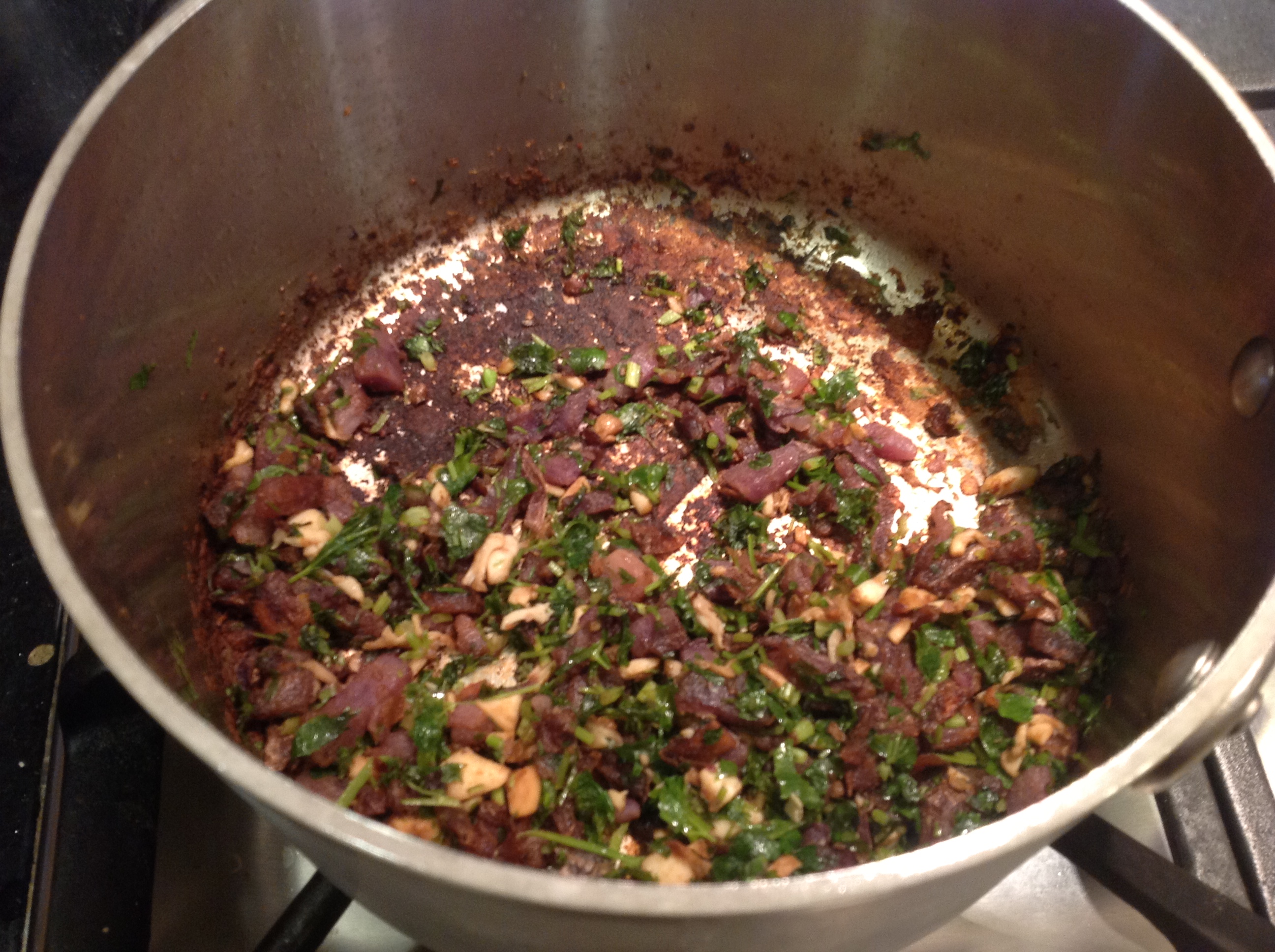
Soup fond nicely browned

Soup fond nicely browned Soup fond nicely browned and water added

Once the mixture looks — I don’t know, kind of soup-base-y, put in a cup and a half of water, bring to a boil, and leave at a very gentle simmer, uncovered.

Halved tomatoes with olive oil

Halved tomatoes with olive oil

Meanwhile, rise and stem the tomatoes. Cut them in half, place face down on an oven-safe dish, and rub olive oil all over them. Broil for 7 minutes or until the skin has wrinkled and charred. Take them out of the oven. You can peel them if you like but I left the peel on. Puree them and toss into the soup.

Broiled tomato halves

Broiled tomato halves

Simmer the soup another ten or twenty minutes, check for salt and blend again if you like it smooth. Add milk and just heat through (do not bring to a boil at this point, because otherwise it will curdle).

IMG_0459[1] IMG_0462[1]

Serve! Possible garnish: shaved parmesan cheese, croutons, parsley, chives. And, I didn’t miss the chicken broth at all.

How bread can teach you patience

Yeast makes bread rise, but lesser yeast makes better bread. Bread made with a quarter teaspoon yeast develops more flavor than a good heaping helping of two teaspoons. So why would anyone ever add more yeast? Well, you pay for it with time.

If you mix your dough, forget about it for a few hours; or leave it out overnight or stick it in the fridge for a day — if that process doesn’t drive you crazy — you draw more flavor out of the wheat. Take a deep breath, forget about it, and wait.

So when I saw a recipe from King Arthur that emphasized the minimal amount of yeast, I figured I would try it. It had a couple more qualities that I look for in bread.

  1. Half the flour is whole wheat. You get all the fiber from the bran and all the nutrients from the germ. I’m sold.
  2. This is an artisan bread, which I prefer, not an enriched loaf. What’s the difference, you ask? Both are yeasted breads, but quite different animals. Here are the differences.
  • artisan breads are free-form, while enriched breads are usually made in loaf pans to get that characteristic (some might say cartoonish?) square bread shape with wings at top
  • artisan breads have a strong crust and holes inside, while enriched breads are softer with an even texture throughout
  • artisan breads tend to emphasize just the taste of the wheat and often have just flour, water, yeast and salt as the ingredients. While enriched breads are — you know, enriched — with sugar, dairy, fat, raisins, cinnamon, cheddar, what have you
  • artisan breads are cooked faster and hotter, while enriched breads are cooked for longer at a more gentle oven temperature
  • artisan breads are good for tearing off bits to have with butter or olive oil, while the raison d’etre of enriched breads is toast and sandwiches.

Artisan loaves are somewhat fetishized (one could argue I’m fetishizing them right now); so it is rare to find a whole wheat artisan bread because the bran detracts from the holey chewiness somewhat. This recipe is a find.

The recipe makes two loaves.

Whole wheat artisanal loaves based on King Arthur’s recipe

Step 1: Make the sponge

whole wheat artisanal loaf 001

Whole wheat loaf: mixing the sponge

One cup whole wheat flour (I used King Arthur’s premium whole wheat), 1/16 teaspoon instant yeast (basically, a pinch), half cup water. Stir with a whisking motion, my favorite implement for this is a chopstick. You might have to use your fingers at the end. The point is not to knead it, just combine it into a very sticky mixture. Leave this on the countertop overnight or all day, covered with plastic wrap.

whole wheat artisanal loaf 002

Whole wheat loaf: sponge

whole wheat artisanal loaf 003

Whole wheat loaf: sponge ready to rise

whole wheat artisanal loaf 005

Whole wheat loaf: sponge after it has risen

Step 2: Make the dough

By next morning the sponge will have expanded; if you touch it lightly with your fingertip it will press in easily just like a — like a baby’s cheek. Now mix the dough.

Mix the dry stuff first:

2 1/4 cup bread flour (substitute with all purpose; this is not the whole grain)

1 1/4 cup whole wheat flour

1/4 teaspoon yeast

1 1/2 salt

Put the dry flours into the bowl of a mixer if you are using one, otherwise a large bowl. Stir the dry stuff together with a fork. Try not to let the salt come in contact with the yeast, because it kills it. The way to do that is stir the yeast in with the flour first, then sprinkle the salt on, and stir that in next.

Now break the sponge from Step 1 into walnut-sized bits and throw into the dry stuff. Once in a while stir to cover the wet sponge with the dry flour.
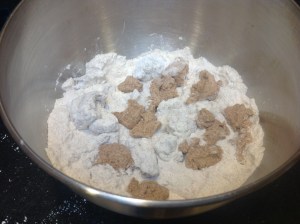
whole wheat artisanal loaf 010

Whole wheat loaf: breaking the sponge into bits

Now put in 1 cup + 3 tbsp filtered water (not tap water since it is chlorinated). Start the mixer on the slowest speed for just a minute until all the water is combined with the flour and forms a shaggy mass. If it looks like there is dry flour at the bottom that simply will not get combined, you can help it along with a spatula; or if they still can’t find enough water, give them a spoon or two, the poor babies.
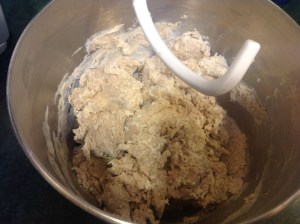
whole wheat loaf: a shaggy mass

whole wheat loaf: a shaggy mass

Now cover with plastic wrap and leave it be for 10 minutes. This process is called autolysis, which gets the dough to start the process of building gluten on its own, in the presence off water, without you doing a thing.  Except waiting. I told you this was all about waiting.

This recipe for chapati/roti, even though it is about a flat bread, has some explanation of the process of building gluten.

Now, the kneading will proceed a lot faster. Turn on the mixer on slow speed for about 5 minutes.

whole wheat artisanal loaf 016

Whole wheat loaf: done with mixer

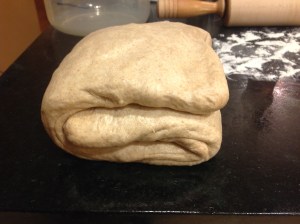
Pull out the dough, and finish the process by hand on a counter top. You now have a smooth dough. Put it into an oiled container, cover the dough with oil inside and out, and mark the level to which the dough comes up to.
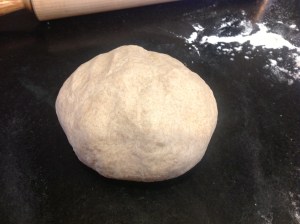
Whole wheat loaf: a smooth dough

Whole wheat loaf: a smooth dough

At this point you will be waiting for 3 – 4 hours; if this doesn’t fit your schedule and you want to wait longer, use the fridge.

whole wheat artisanal loaf 019

Step 3: Folding once in a while

While the bread is rising, give it some folds while handling it gently (don’t pound at it). The first time after an hour of rising, the second time another hour later, or skipping it is fine too. This is how you fold the bread — that I learnt from Rose Levy Berenbaum’s book The Bread Bible. Drag the dough out and flatten it into a rectangle. Fold both ends in one on top of the other as though you are trying to wrap a present. Flatten it out gently, give it one quarter turn, stretch it out widthwise, and give it another fold.
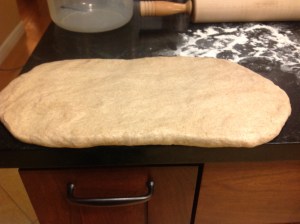
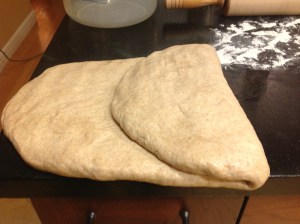
whole wheat artisanal loaf 020 whole wheat artisanal loaf 022 whole wheat artisanal loaf 023 whole wheat artisanal loaf 024

Put the dough back in its container. Allow it to rise until it is at least doubled, which you can tell from the line you drew to mark its level. When it is fully risen it will be very puffy with air and you might even see bubbles at the surface. Look carefully at the picture on the right below — you can see bubbles enveloped in a thin stretch of dough.

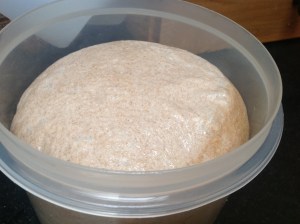
whole wheat artisanal loaf 027 whole wheat artisanal loaf 028

Step 4: Shaping

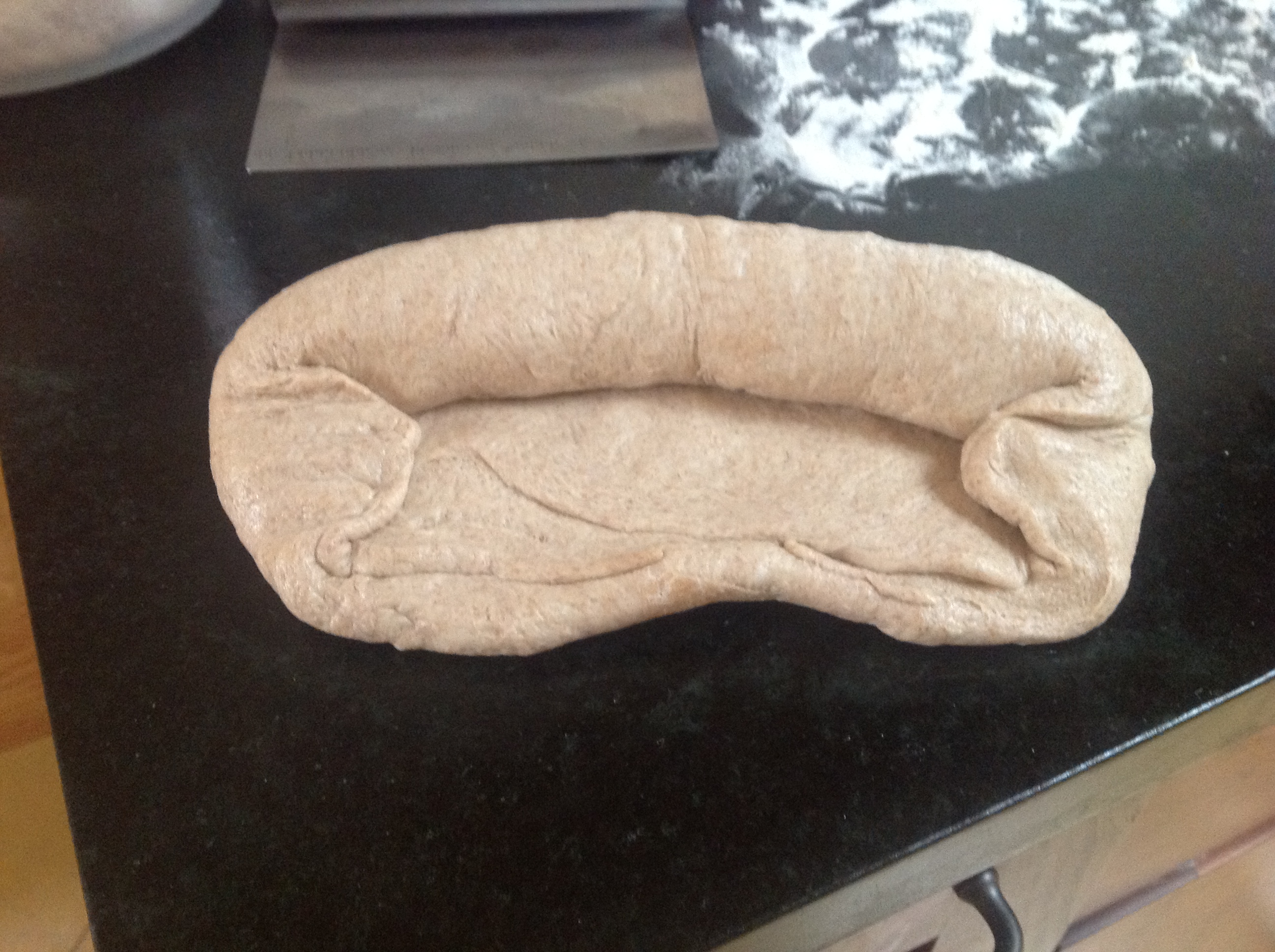
At this point you are ready to shape the dough into loaves. Pull the dough out gently, lay it on the counter, and cut it into two. Each half will be shaped separately. The idea with shaping is you flatten the dough out and start rolling it width-wise, quite tightly, while firmly tucking in all ends. At the end you will have a cylindrical roll. Pinch the seams closed. When you think of bread rising, the easiest way to think of it is that you are stretching the dough at the surface to increase surface tension and make a sort of balloon — a gluten balloon — that will trap the air in as the yeast breathes out CO2.

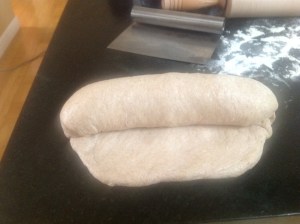
whole wheat artisanal loaf 030 whole wheat artisanal loaf 034whole wheat artisanal loaf 032 whole wheat artisanal loaf 033

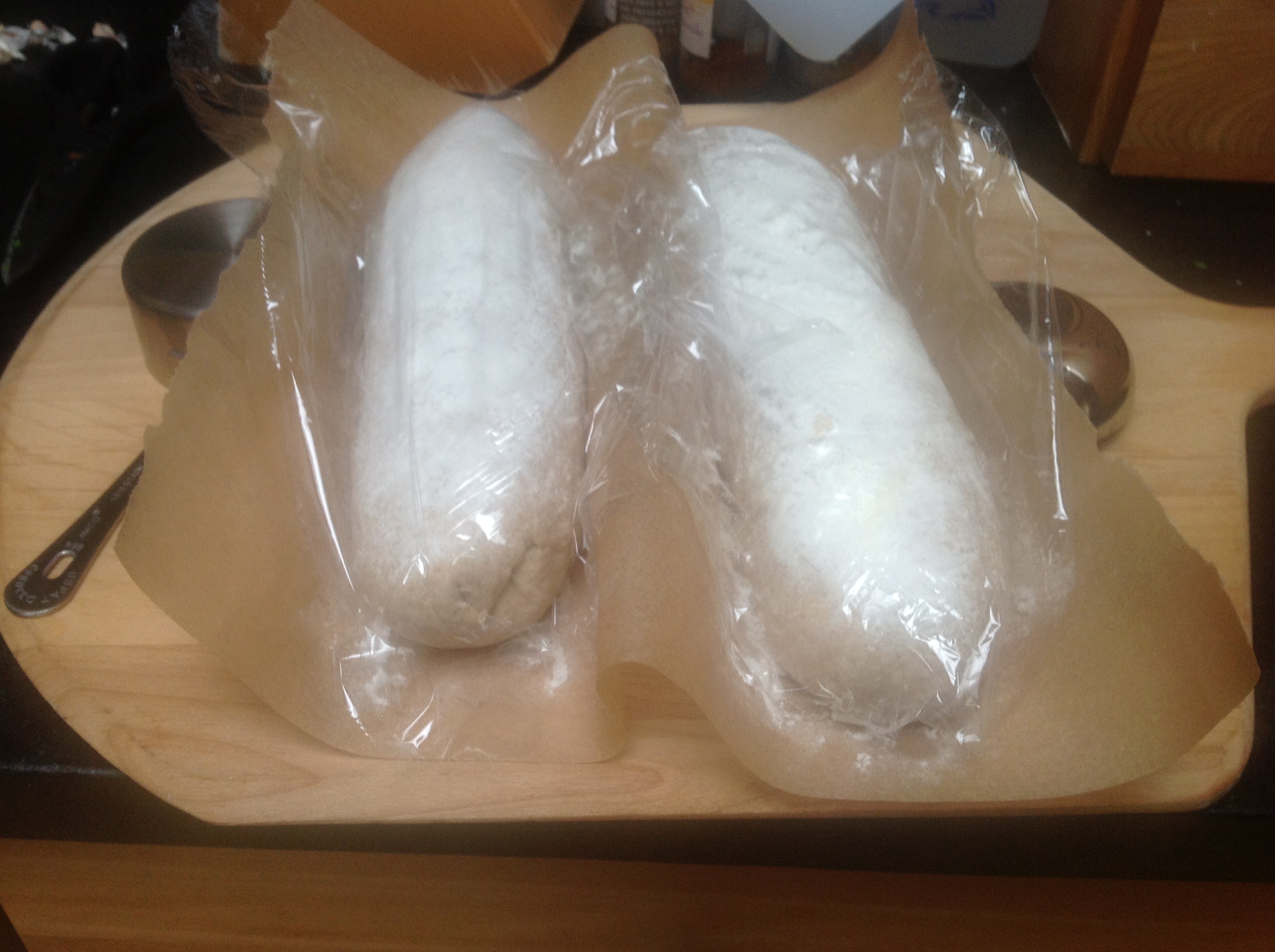
Dust the loaves with some dry flour, place them on a parchment paper on a cookie sheet to rise. Cover with plastic wrap so that the surface does not dry out.
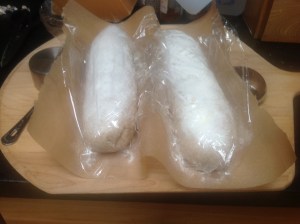
whole wheat artisanal loaf 038

Whole wheat loaves: final rise

At this point wait 1.5 hours until the loaves have expanded 1.5 times.

Step 5: Scoring

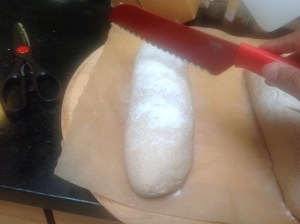
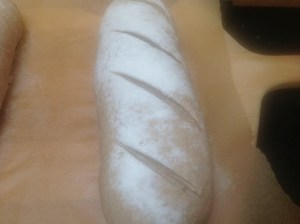
Preheat the oven at 475 F. Before putting the loaves into the oven one has to score them, which means make half inch deep cuts on the surface. Once it starts baking in the oven the rapid expansion of steam inside the dough is going to make the bread rise so much that it wants to explode (the gluten balloon will want to pop). The cuts guide the ‘explosion’ to happen along those channels instead of an untidy way anywhere along the loaf (usually along the seams).
whole wheat artisanal loaf 042 whole wheat artisanal loaf 041

So take a sharp, serrated knife, and make swift, slicing cuts along the top surface with a very gentle motion. Half inch deep at least. Now mist the loaves with water from a spray bottle, and they are ready to pop into the oven.

Step 6: Baking

The oven at this point is very hot (475 F, and if you have a pizza stone stick it in there as well). We are going to circulate the heat around so it penetrates the loaves as fast as possible using steam. During the first 10 minutes, mist the loaves to create steam: open the oven door very briefly and spray water around inside. Mist it a few times — three or four times — during the first 10 minutes of baking.

Now lower the temperature to 400 F, and bake for an additional 25 minutes. Take the bread out and let them cool for an hour before slicing.

whole wheat artisanal loaf 046

Whole wheat artisanal loaf

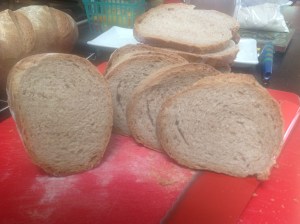
The crumb of this bread was quite nice with a few small holes.
whole wheat artisanal loaf 052

Remember I said above that the explosion in the oven will want to happen along the seam, and you want to avoid that? I wasn’t able to avoid that completely, witness the explosion along the side below.

whole wheat artisanal loaf 048

Well I sliced right into that explosion and the whole thing was delicious anyway.

Efficient butternut-tomato soup

A quick and easy soup that can be done quickly for a weeknight dinner but does not sacrifice flavor at all. This amount of soup was enough for four as a soup course, or for two as dinner.

Step 1: Squash.

butternut squash soup 001

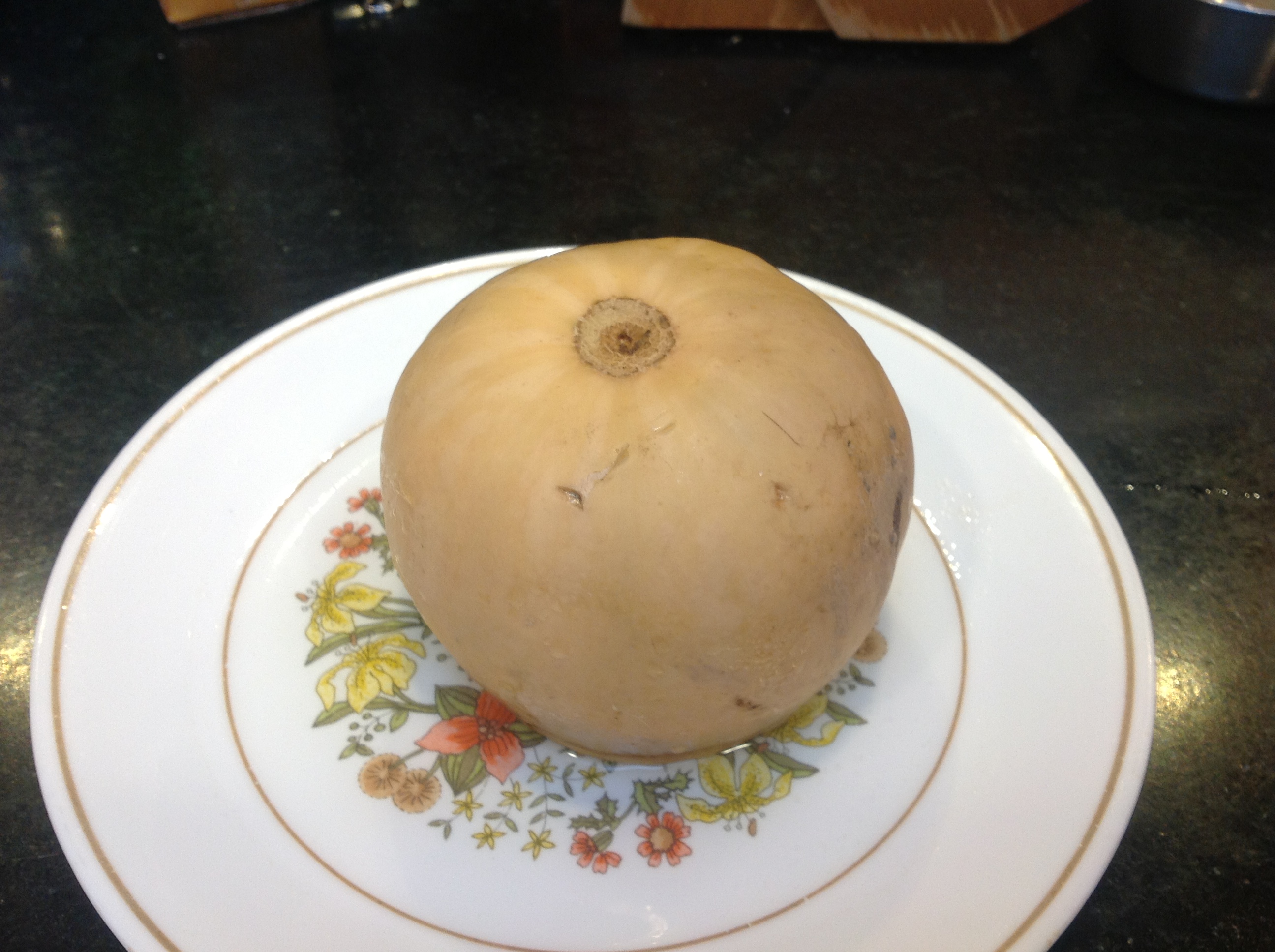
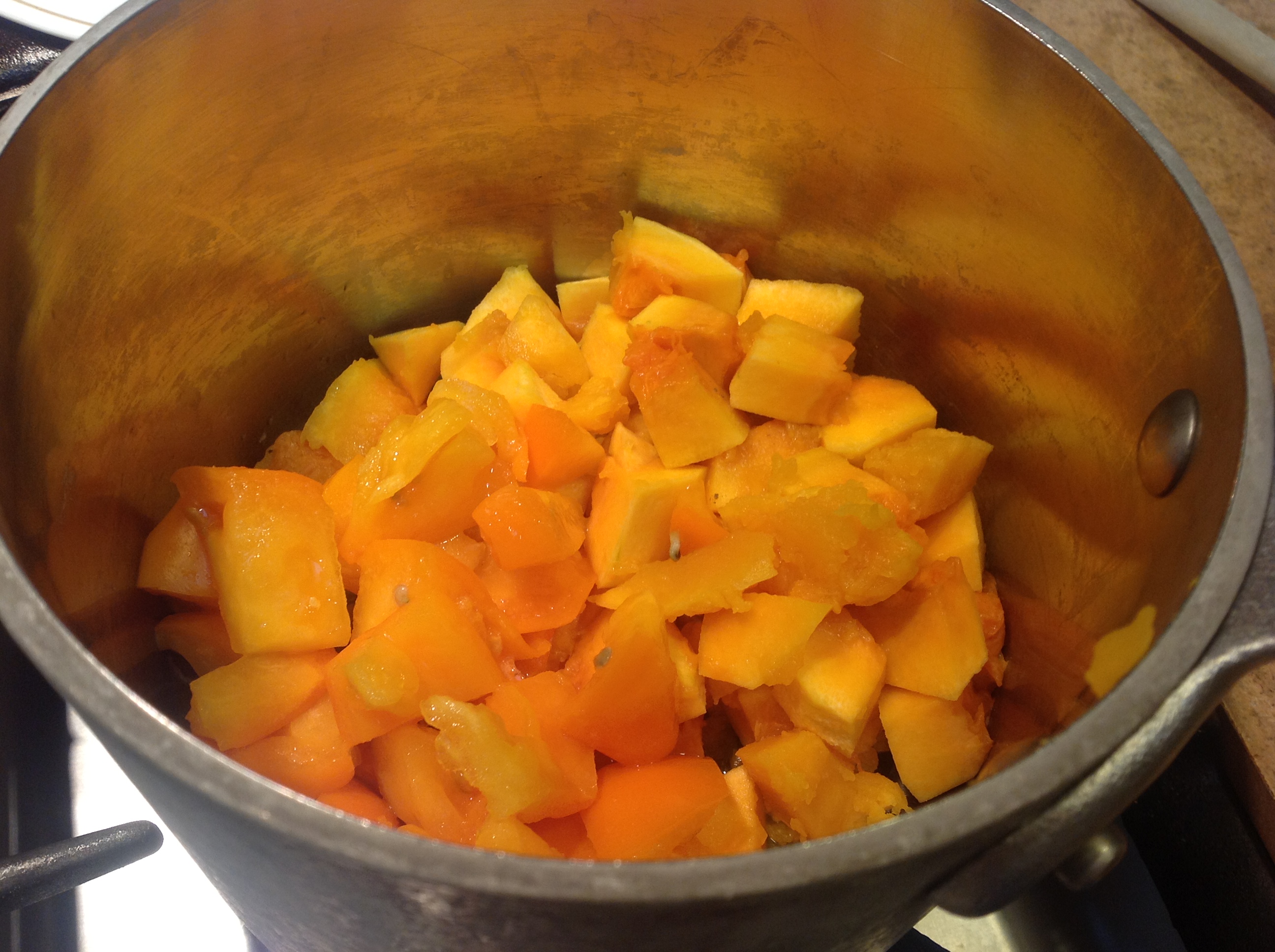
Start with about half a medium butternut squash. Or you could go with pumpkin, but as you can see, I went with butternut. Put some water on the dish and stick it in the microwave for 5 minutes.

Step 2: Deseed and peel.

butternut squash soup 002

The squash comes out softened and partially cooked, as seen above. Cut in half across, it becomes very easy to deseed with a scoop-shaped spoon, as pictured below. As far as the seeds go, I like to chomp on a few of them as they are, the shell and the pith notwithstanding.

butternut squash soup 006

The peel easily pares off with a sharp paring knife. Chop up the flesh into cubes and have it ready to go into the soup.

butternut squash soup 008

Step 3: Aromatics.

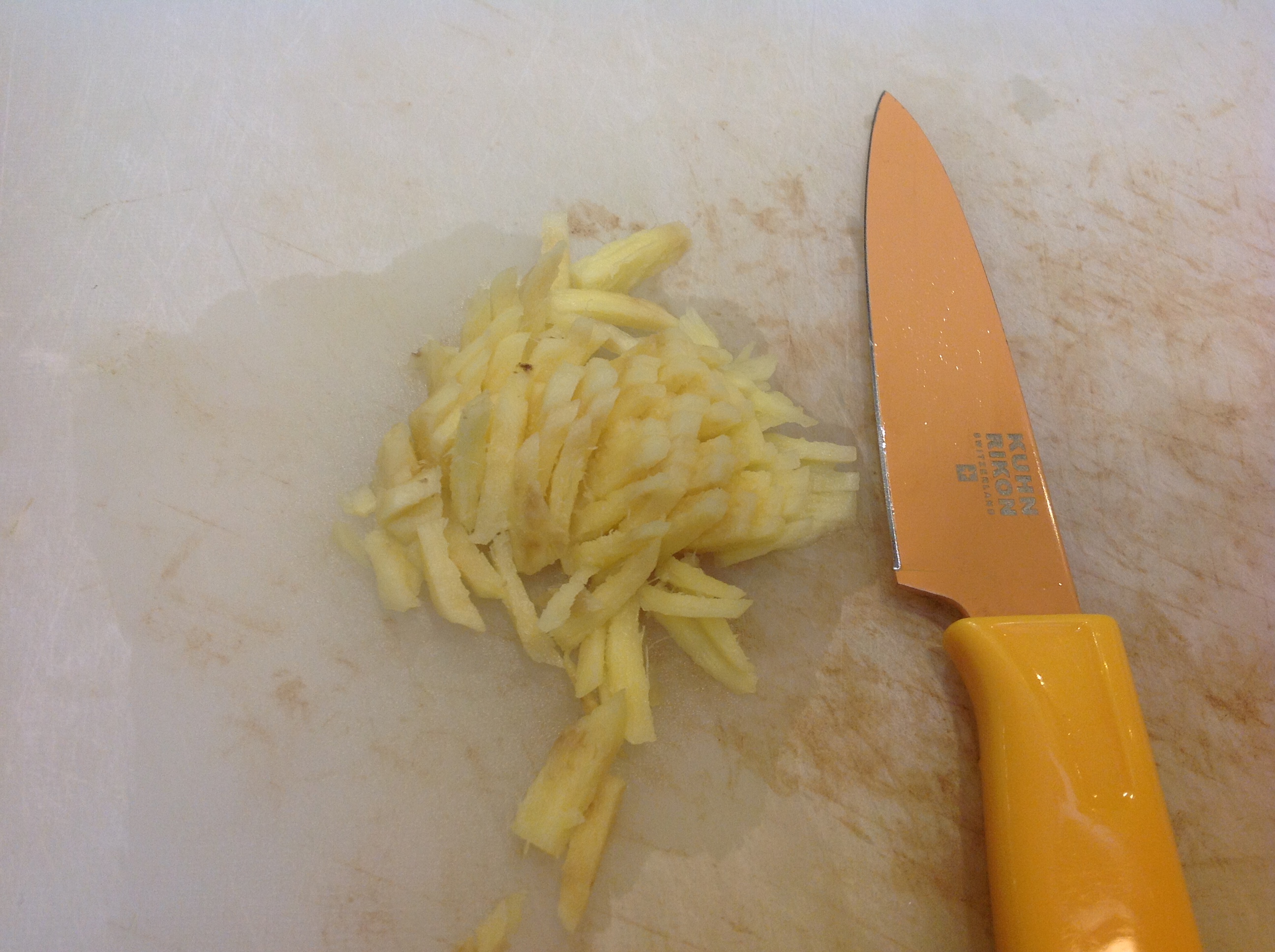
I used an inch-long piece of ginger and chopped it into thin strips thusly.

butternut squash soup 004

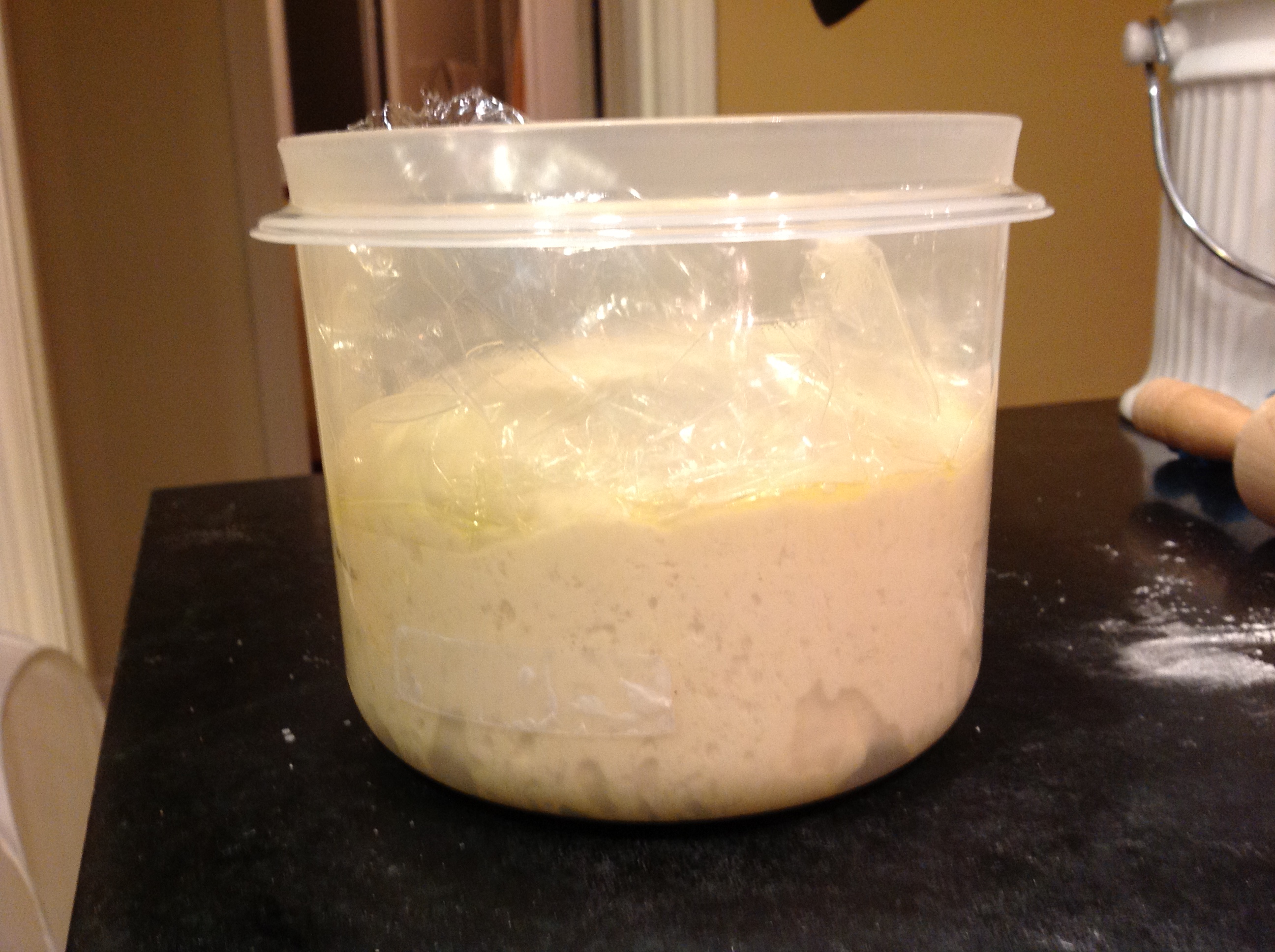
Now, heat about three tablespoons of extra virgin olive oil in a pot and saute the ginger strips, along with one bay leaf, for a few minutes.
Step 4: Broth and everything else

butternut squash soup 009

Throw in the squash, along with one chopped tomato. I used an orange tomato, not in order to match the squash, but just because that’s all I had. Also put in 3 cups of chicken broth, some salt to taste, and bring to a boil.

Keep it at a healthy simmer for about fifteen minutes.

Step 5: Soupify and correct seasoning.

Now, the soup is ready for its journey through the blender. Pull out the bay leaf first of course! Once smooth, you have the choice to strain it. We did, but used a strainer with rather large holes, to make it easier on ourselves. Return the soup to the pot, and check for salt, and also sweetness. I found the squash I used somewhat lacking in sweetness, and added a few squirts of balsamic vinegar to complement it. Heat it through, mix it, and serve.

butternut soup 2 001

The welcome home salad

synthesis pancakes and welcome home salad 014

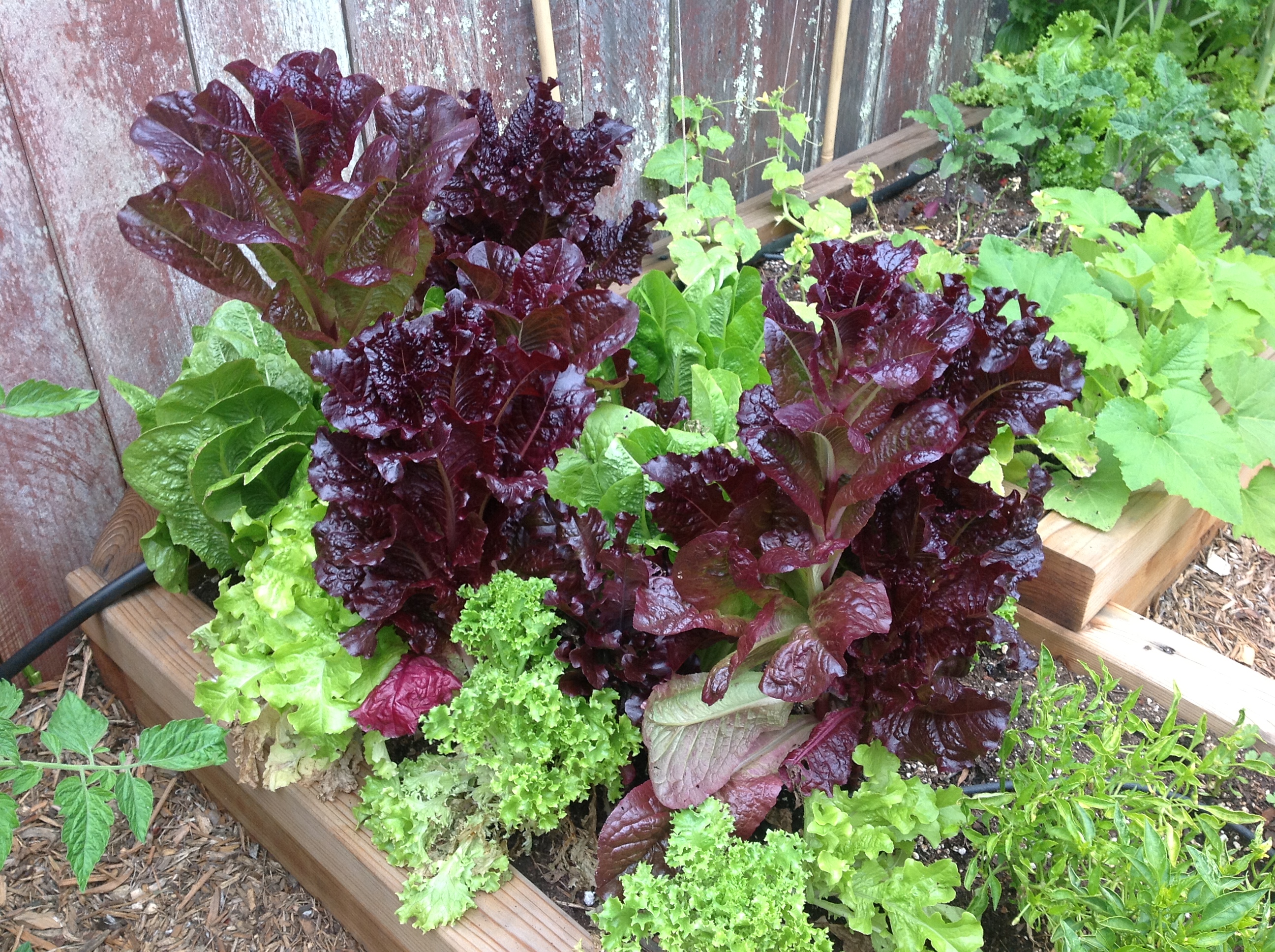
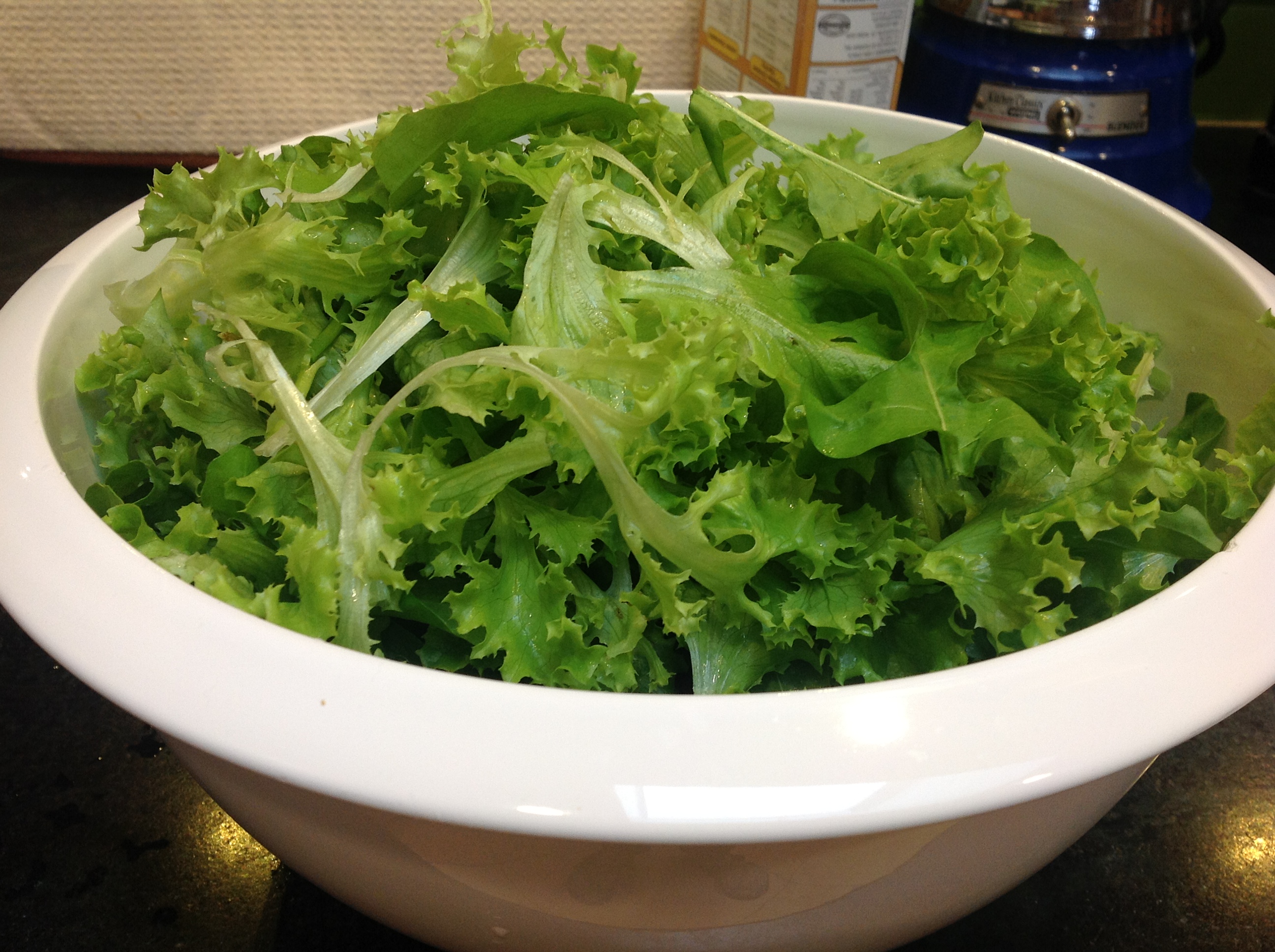
What better way to end a trip — come home to a garden with lettuce spilling out of its borders, waiting to be picked. I picked some of the arugula and some frisee and made a giant salad, which was definitely a relief after airport food. The standard dressing I use is the epitome of simple, but there is a technique to it, so file this under ‘basic methods’.

synthesis pancakes and welcome home salad 012

Step 1: Salt

Salt the greens lightly, and toss it around with your fingers. You could use tongs but there is no implement quite as blunt, rubbery, strong, and with as fine control as your fingers.

Step 2: Oil.

Pour some good, green-tinged xtra virgin olive oil around on the greens. How much? Well, just like distance can be measured in light-years, I can tell you the amount of oil in seconds — for a big bowl of greens, squirt oil for around ten seconds. Once again, toss with your fingers. What this step does is coat the greens with the oil, and thereby, the grains of salt are trapped under the sheen of oil, and the seasoning has been captured; and will not easily slip off the greens into a super-seasoned pool in the bottom of the bowl.

Step 3: Vinegar.

I used balsamic. Sprinkle about five seconds (half of the oil) of balsamic vinegar on the greens and toss with your fingers. Considering that the oil is already coating the leaves, the vinegar will bead up on them (oil and vinegar don’t mix), and create little bursts of flavor.

Step 4: Accessorize.

synthesis pancakes and welcome home salad 015

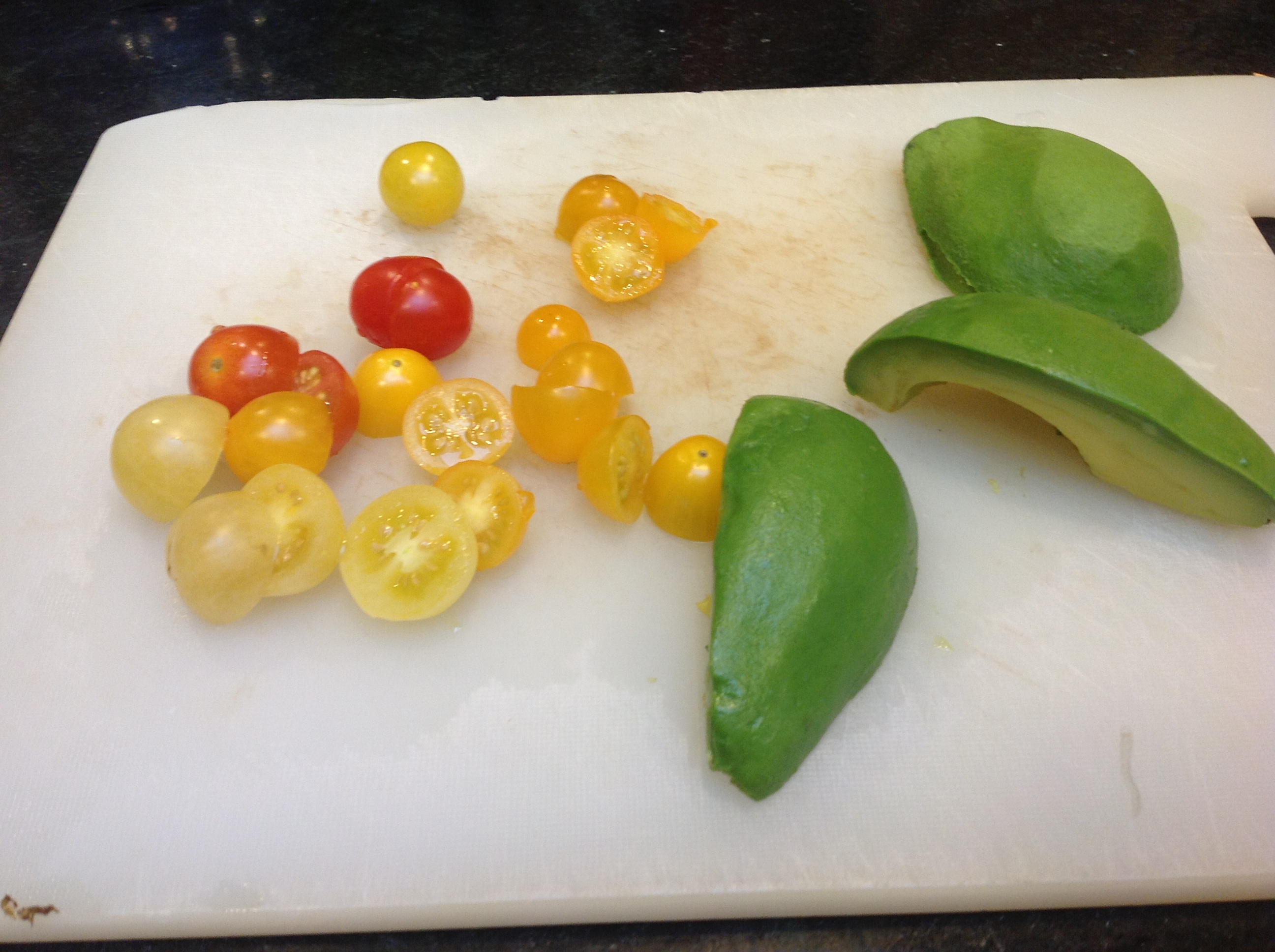
Scoop the greens into bowls and add your choice of toppings. We used one avocado, cubed; and cherry tomatoes, halved. Please do halve them; the juicy insides absorb flavors better than the plastic peel on the outside; and when you’ve got good olive oil and good balsamic, that is a good thing. Place them on the bed of greens.

Hat tip: Nick Stellino, the TV chef.

Roasted fennel

I have no idea why I planted so much fennel. We don’t much care for it in salad, and although my daughter loves chomping on the seeds, I’m not going to let it go to seed, because it is a noxious weed in California. So why did I do it? There’s all the fennel, waving in the breeze (hi fennel!) that I have to do something with.

fennel 012

Last afternoon I pulled out one entire plant, mostly to allow the mint hiding under the fronds to get some some sun. Cut out the leaves and the roots, and this is what I was left with: 3 bulbs.

fennel 001

Don’t they look like three buddies? The short and stout one, the tall and skinny one, and the one right in the middle? Slice them up an eighth of an inch thick, and you end up with this:

fennel 002

I love how pretty the insides are — the symmetrical petal shapes that emanate out of the center. I focused on one particularly pretty slice below:

fennel 004

This is one of those recipes where I wasn’t sure what I was going to do until I had done it. I knew baking in an oven was involved, salt and olive oil too. So I started with that. Rub a few teaspoons of XVOO all over them with your fingers. Sprinkle with some salt to taste. Then, squirt a few squirts of lemon around. Now for juicy vegetables roasted in this way where one expects some browning, some crunch on top is desirable. I went with cracked coriander seeds (just pulverized a bit, not ground up completely); and, scanning the pantry shelves, I saw almond meal, so I used that as well. A teaspoon of cracked coriander sprinkled on top, and a teaspoon of almond meal spread around. This is what I ended up with.

fennel 009

Into the oven it goes. Set to bake at 425 F, for 20 minutes. This is what comes out:

fennel 011

In retrospect, I could have gone higher on the oven temperature, perhaps 450 F next time?

It made a very nice vegetable side for two. It would also be great on pizza or focaccia. The fennel was still a little sweet and crunchy on top. I loved the lemon but it does make it a little intense, so if one prefers less intensity in flavor one could leave it out.

Oh — and this recipe would be great with belgian endives — a similarly juicy and crunchy vegetable.