Why these beans might fly off at any moment

Winged beans sauteed with red-chili garlic paste

Winged beans sauteed with red-chili garlic paste

The other day, walking through the farmer’s market, I had one of those moments that stops you short in your tracks. I saw an odd sight. I raised a trembling finger and exclaimed — with some rich feeling, I might add — ‘what on earth is that?’

I saw bunches of long frilly green pods sitting next to a whole pile of long frilly green pods. I walked over to the stall where they had already caused a minor stir.

Now The Odd Pantry is no stranger to odd vegetables. It has covered, with delight, the scruffy taro and the anatomical fiddleheads. This one though was new. Completely. At first glance I would have guessed it was a type of seaweed. I could just picture it in great rippling ribbons underwater.

But upon asking the lady of the stall, they turned out to be long beans — yes, legume pods that grow on vines — that had four rows of frills all along the length. Winged beans.

The winged bean

The winged bean

I asked the lady how one would go about eating them.

‘Well,’ she said. Long pause. She looked at me, judging how far to go. ‘Salad, stir-fry.’

Hm. Tight-lipped. The bird was caged but wouldn’t sing. I pressed her for more information. Placing my hand tellingly on my purse, I grilled her for the goods. ‘Out with it,’ I said, noting that she was starting to wilt.

Then it all came tumbling out. She broke off a piece for me to try. Hmm — tastes like — a vegetable. Maybe a fresh green bean of the French sort. ‘Make a paste of garlic and red chili,’ the lady said. ‘I’m Pilipino and that is what we do.’

A man walked up with a cloth shopping bag. ‘You Indian?’ he said to me, waggling his eyebrows. Yes, indeed, I am.

‘You know saag?’ he continues. Eyebrows doing a proper jig, now.

‘Intimately,’ I reply.

‘You cook it like saag!’ he says like a punchline, rifling through the bunch of winged beans.

Hm. I think I’ll stick with what the lady said.

Winged beans (Psophocarpus tetragonolobus)

This has become a habit. The Alemany Farmer’s Market will introduce me to a brand new vegetable that then turns out to be a complete miracle plant, so much so that you would think the Department of Marketing this vegetable is making stuff up. What else can you think about a plant that offers so much?

  • Every part of it can be eaten. From a New York Times article: ‘Theodore Hymowitz, an agronomist at the University of Illinois who is a member of the Academy’s panel on the winged bean, said, ”it’s like an ice cream cone – you eat the whole thing.”
  • Excellent source of vitamins, minerals, protein, calories.
  • It can grow in nutrient-poor soils
  • The seeds can make a coffee substitute
  • The leaves can be a tobacco substitute
  • Can produce a milk like soymilk
  • The milk from the beans can be fermented into tempeh
  • Mushrooms can be grown on the dried pods
  • Can be boiled, roasted, stewed, stir-fried, eaten raw, or in soups
  • Can be grown as animal fodder, and used as a cheap source of protein for fish farmed for food

There is also an enduring mystery about winged beans — nobody has found the wild form of it. Given its wonderful qualities it isn’t surprising to find it cultivated in any resource-poor traditional culture that can grow it. It is grown for its roots in Burma, in South East Asia for its pods, in great variety in New Guinea (where the winged bean has developed a fondness for the mountains).

But the wild form of it has never been found. Where is it really from? Some guess Africa because most of its relatives come from there. Some guess New Guinea because it just seems so at home there. Perhaps the wild form has become extinct. Who knows? Entire careers in botany could be made or broken on this one fact. So if you see a wild winged bean growing somewhere out on your travels, call someone!

Winged bean roots for sale in Burma. (source: Wikimedia Commons user Wagaung own work)

Winged bean roots for sale in Burma. (source: Wikimedia Commons user Wagaung own work)

Winged bean stir-fry

I figured I would stir-fry the winged bean pods using some South East Asian ingredients. Shrimp paste is often used in these cuisines, and I didn’t possess any, so I used anchovies to replace that missing umami flavor. Also, fish sauce. This is a light salty liquid that is extracted from the fermentation of fish. It is a great replacement for soy sauce that can instantly take a dish from tasting Chinese to tasting more tropical, reminiscent of islands and bays and inlets and other such watery waterworlds.

Garlic and red chilies
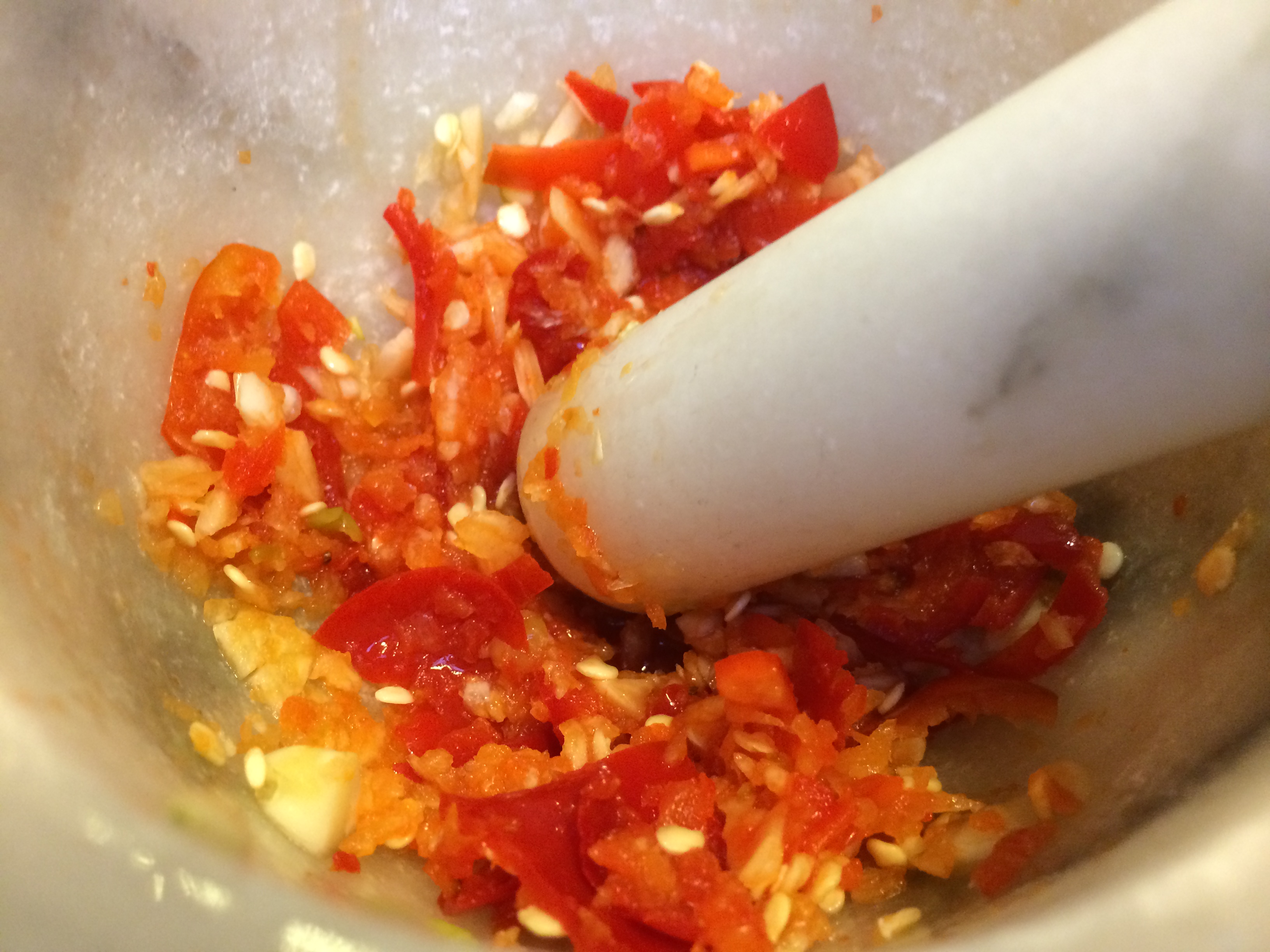
Garlic and red chilies

Pound it

Pound it

Anchovies too

Anchovies too

Paste

Paste

Slice the winged beans

Slice the winged beans

Saute

Saute

Sauteed

Sauteed

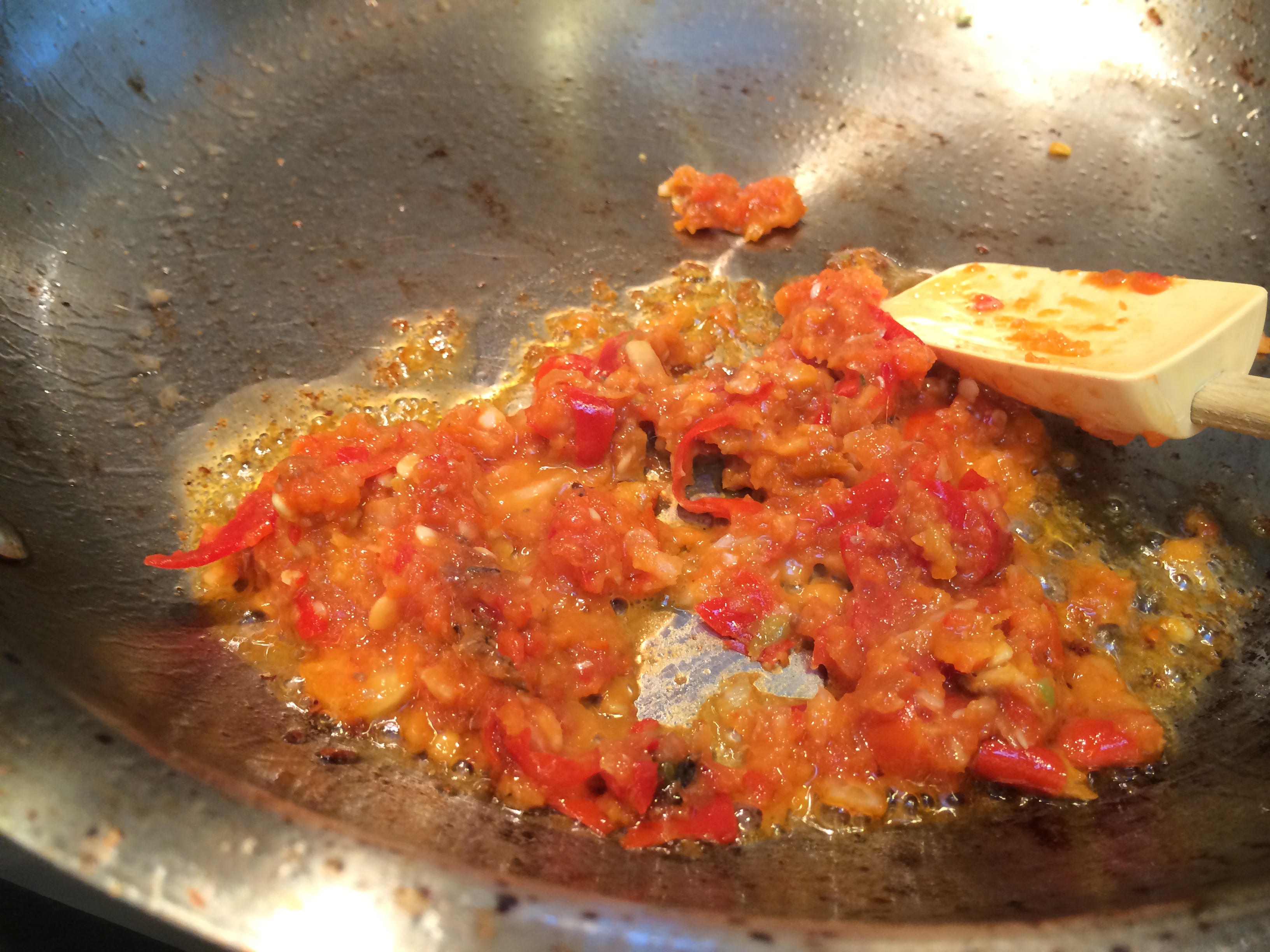
Fry paste

Fry paste

Fried paste

Fried paste

Enter the beans and fish sauce

Enter the beans and fish sauce

Winged bean stir-fry

Ingredients:
  • 3-4 cloves garlic
  • 1-4 fresh red chilies, or according to taste (use fresh green if you can’t find fresh red, I got mine from my garden)
  • a few anchovies (packed in oil)
  • 1 pound winged bean pods (green beans or asparagus would make a good substitute)
  • 1 tablespoon fish sauce
  • 1 – 2 tablespoons oil (I used sesame oil)
Method:

Make a paste of the garlic, fresh chilies and anchovies in a mortar and pestle. Takes about 7 minutes, not too bad. Wash, trim and slice the winged beans lengthwise. If you are using green beans or asparagus, just trim them and leave them intact.

Meanwhile heat half the oil in a wide thick-bottomed pan. When it shimmers put in the winged beans. Stir-fry them on high heat for a few minutes until the frills look a little browned. Remove them with a slotted spoon or tongs.

Add the rest of the oil and fry the paste. It will take a few minutes for it to dry out and for the oil to separate. Watch it carefully and use medium heat to make sure it doesn’t burn. Once this is done, put the winged beans back in, add the tablespoon of fish sauce. Stir to coat the beans with the paste and fish sauce, cover for a few minutes to steam before serving.

(Click here to find me on Facebook and here on Twitter.)

Is it a wrap? A donkey? No–it’s a superbaby…burrito!

Made-from-scratch burrito

Made-from-scratch burrito

When I was new to California, Indian friends who had arrived before me told me eagerly about the exciting new cuisines they had sampled around the Bay Area. It became a bit of a parlor game to find the cuisine ‘most like Indian food’ — which meant, in practice, the most highly flavored with spices. People mentioned Thai food and Ethiopian food as contenders. One strong contender that kept coming up was the Mexican burrito.

Of course, I was told about it from an Indian point of view. Imagine this, friends told me, rice and dal wrapped inside a roti! What could be better! The ‘dal’ in question was refried beans and the ‘roti’ was a tortilla. My friends were talking about the Mission Burrito (=’little donkey’), a fat wrap invented in San Francisco from Mexican ingredients, a cheap and healthful all-in-one meal.

The Mission Burrito is meant to be customized. You stand at the counter while your food server moves through an assembly line with a tortilla laid flat in front of her. You can choose or decline each ingredient. Rice is in. You choose your meat, or none. You choose your beans. I quickly learned that I preferred black beans to refried or whole pinto beans. Shredded iceberg lettuce and cheese are usually turned down by me, but are a yes for most.

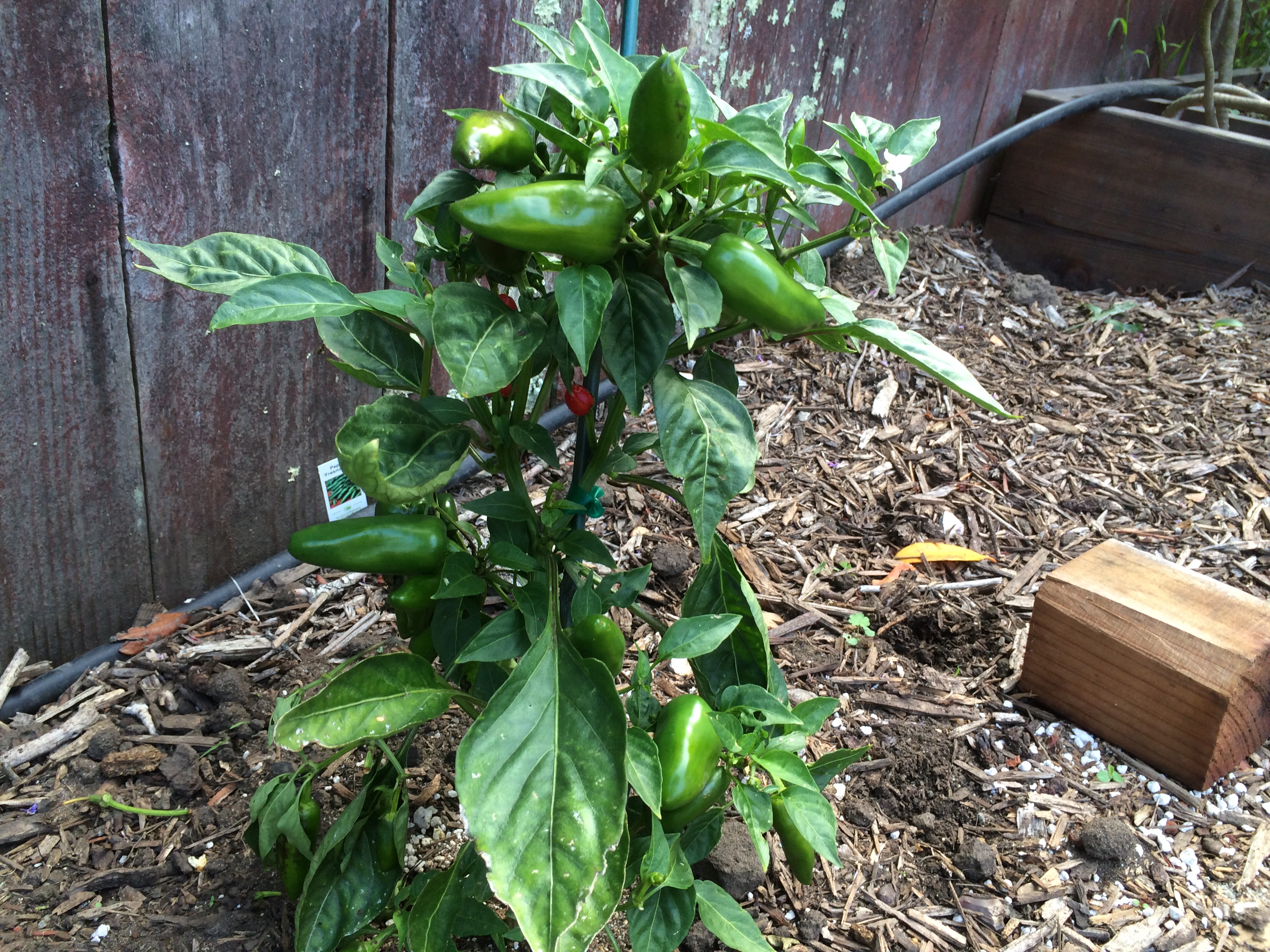
Fresno chilies growing in my yard

Fresno chilies growing in my yard

Then, if you didn’t forget to use the keyword ‘super’ you get the big payoff. The supremacy of the super burrito lies in having all kinds of blandishments added to it — salsa, guacamole, sour cream, hot sauces, heaps of onion and cilantro. For a recent immigrant from India (me, then) — the word ‘super’ meant ‘chutneys’. Fantastic. Then the tortilla is folded into a roll, tucked in at each end, and wrapped in double layers of foil. It can be eaten on the go, with no forks, plates, even napkins around.

People know Silicon Valley for its technical innovations, but its burrito innovations are not far behind. Some places are famous for offering beef brain and beef tongue in the choice of meats. Some offer vegetables grilled on the spot. Many have adopted whole-wheat, spinach or tomato tortillas. One of my favorite taquerías offers cooked cactus (nopales) upon request. A ‘naked’ burrito is served in a bowl, without a tortilla wrapped around it. A ‘baby’ burrito is a smaller sized tortilla, suitable for lunch for a smaller-sized person.

But here’s the other thing about the Bay Area…we must make this at home, from scratch! So here we go.
IMG_3051

Whole-wheat vegan superbaby burrito

For the tortilla I just made an Indian-style whole-wheat roti/chapati that added a nice wheaty complexity to each bite. They were smaller than the regular tortilla size, making this a ‘baby’ burrito. I bought dry black beans and soaked them overnight, then pressure-cooked them for 15 minutes to have the most luscious, earthy, non-metallic tasting black beans ever. The rice was cooked using the liquid drained from the tomatoes. The hot sauce came from this recipe for Mexican hot sauce. For the guacamole I used a nice large Californian Hass avocado. Cilantro and Fresno chilies from my garden. A mix of green zebra and early-girl tomatoes for the salsa. I made it vegan but my husband added some cheddar cheese. You could add sour cream or thick homemade yogurt, whisked.

Yes, it certainly had some Indian flavors….

Black beans soaking

Black beans soaking

Black beans cooked

Black beans cooked

Black beans

Ingredients:
  • 1/4 dry black beans
  • 1/4 teaspoon salt or to taste
Method:

Soak the black beans over night or for about 6 hours. If you are short on time, soak them in near-boiling water for an hour. Drain and pressure-cook for 15 minutes with 1/2 cup water. Add the salt after it is done cooking.

Tomatoes for salsa fresca

Tomatoes for salsa fresca

Tomatoes draining

Tomatoes draining

Onion, chili, cilantro

Onion, chili, cilantro

Salsa Fresca

Ingredients:
  • 4 small tomatoes or 2 medium
  • 1 tablespoon finely chopped onion
  • 1 tablespoon finely chopped hot green chili
  • 1 tablespoon finely minced cilantro
  • Lime juice from half a lime
  • Salt to taste
Method:

Dice the tomatoes and place them in a strainer with some salt mixed in, and allow to drain for half an hour or so. Collect the drained liquid in a bowl, this will be used later for the rice to add a subtle tomato-ness. Meanwhile finely chopped the onion, chili and cilantro. Once the tomatoes seem to be done draining liquid, mix it in with the onion, chili and cilantro. Add lime juice, mix, taste, and adjust for salt.

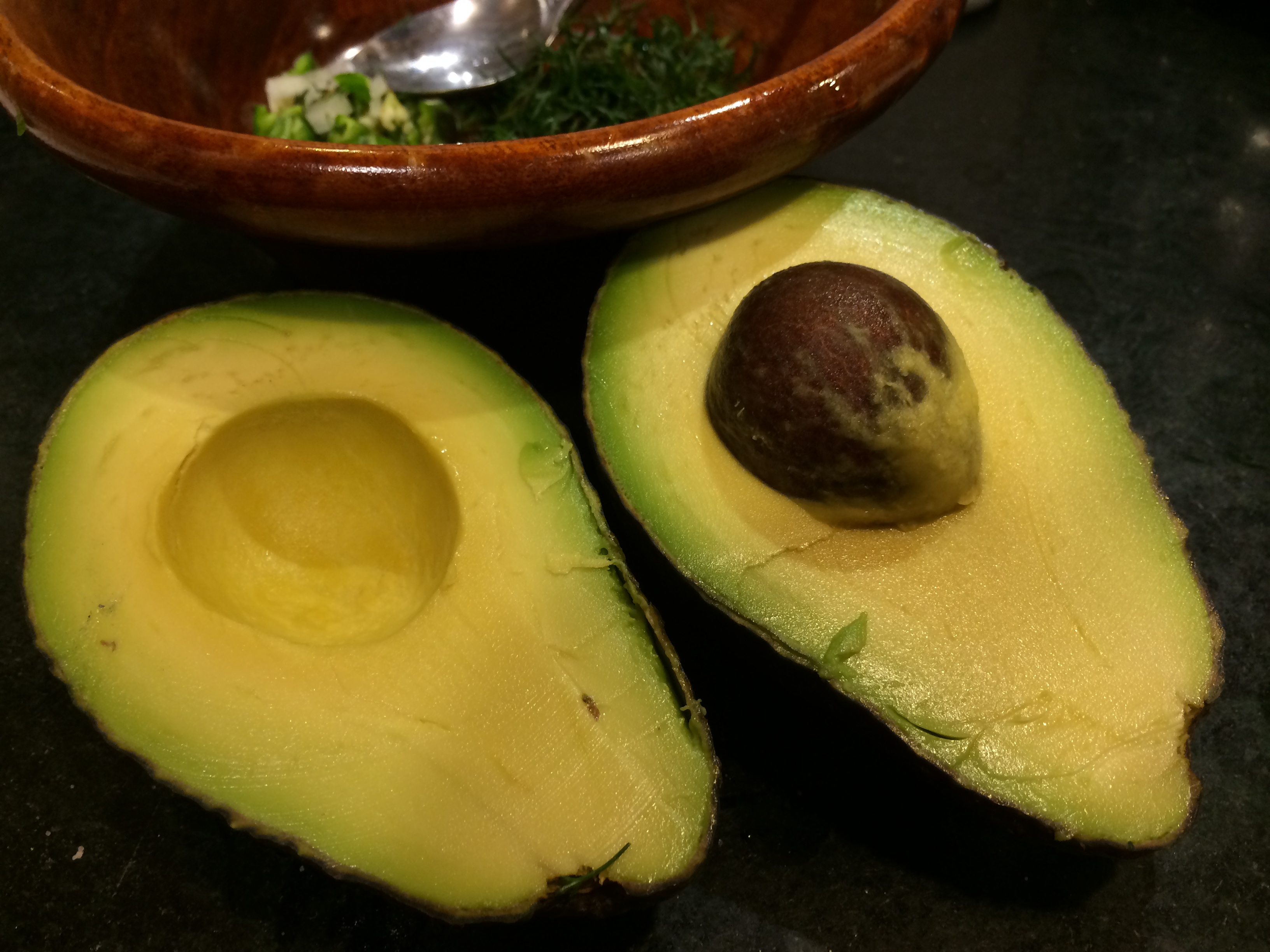
Beautiful Hass avocado

Beautiful Hass avocado

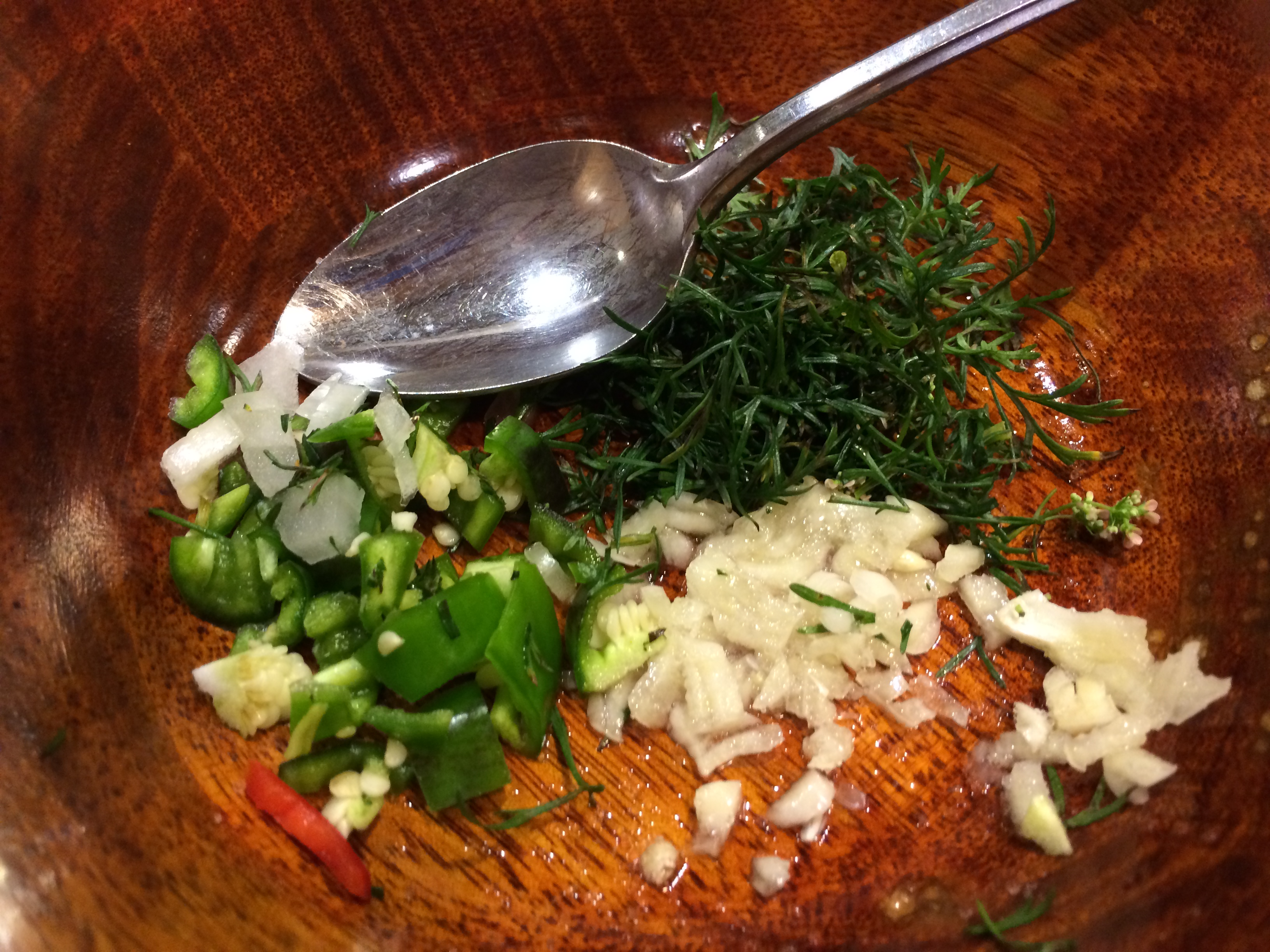
Garlic, chili, cilantro

Garlic, chili, cilantro

Guacamole

Ingredients:
  • One large avocado
  • 1 large garlic clove, minced
  • 1 tablespoon cilantro, minced
  • 1 tablespoon minced chili
  • Juice of half a lime
  • Salt to taste
Method:

Finely mince the garlic, add some salt to it and leave it mixed with salt for about 10 minutes. In this much time it will have turned pasty and ‘cooked’ a little. Cube the avocado flesh, mix it all together with lime juice. You can mash the avocado if you like but I like to leave little chunks.

Rice in pot

Rice in pot

Done

Done

Mexican rice

Ingredients:
  • 1/3 cup rice
  • 2/3 cup water including the liquid drained from tomato
  • 1/4 onion, minced
  • 1/2 teaspoon paprika
  • 1/4 teaspoon cumin powder
  • 1/2 tablespoon oil
  • Salt to taste
Method:

Heat the oil in a thick-bottomed pot. When it shimmers put in the minced onion, the cumin and paprika. Let them cook a few minutes on medium heat. Now in goes the rice. Stir to coat with oil. Next put in the water (including tomato liquid) and salt. Cover, bring to a boil, then simmer for 7 minutes. Turn off the flame and let it rest, covered, for a few minutes before opening the lid.

IMG_3054 IMG_3055 IMG_3057IMG_3063

Assembling the burrito

Ingredients:
  • 1 whole-wheat chapati/roti/tortilla
  • Some cheddar cheese, cubed (leave it out if you want it vegan)
  • Some rice
  • Some black beans
  • Some guacamole
  • Some salsa verde
  • Some hot sauce
Method:

I’ve left the amounts vague because you can customize each the way you want to. Layer the ingredients onto the roti laid out flat. Don’t overstuff it if you want a nice roll that you can bind securely. Fold in the two lateral edges to hold the fillings in place, then roll up the entire burrito starting at the bottom. Enjoy.

Found the Vegan Potluck folks who host a wonderful weekly vegan bash! That’s almost poetic. Entering this recipe there. 
(Click here to find me on Facebook and here on Twitter.)

Idiot-proof vegetable pulao

Vegetable pulav with tomato soup

Vegetable pulao with tomato soup

One of the first dishes I ever tried cooking on my own was flavored rice cooked with a few vegetables. This is known as a vegetable pulao — or pilaf — or pulav, the standard-est and basic-est of Indian home recipes. So why has it taken me this long to blog about it?

Because sometimes the simplest things give you the most trouble. It has taken me years for me to get this right. Sometimes the rice isn’t cooked through. If it is, it is cooked too much. Or the vegetables are cut too big and raw on the inside, or they have turned to mush. If all goes right regarding the timing, the thing is tasteless. Gah.

One way to get around these problems is to cook the rice and vegetables separately then combine them. But while there are many perfectly fine recipes that rely on this method (many from the south — yogurt rice, lemon rice, tomato rice etc.), for vegetable pulao, the flavors must fuse, which means cooking together is a must. They must come out with a flourish, all perfectly done at the same time. They say each grain of rice must be separate, so add that to the list of requirements. It must be gently spiced, but not too much — too much would kick it over into being a biryani. That’s fine, but that’s not what we are after.

So now, finally, I present to you my pulao secrets, recently discovered after many years of trial and error, which should make all doubts vanish under the first whiff aroma that hits you when you open the pot. Here they are.

Secrets of pulao

  1. Be stingy with the water. The vegetables you add will leave off some steam of their own, so I would use about a quarter less water than you would with plain rice.

  2. But if you do that, the danger is that the rice will cook and expand and rise above the water line, leaving the upper layer uncooked. Curses! To get around this problem, we use a pressure cooker. (I believe a tightly closed dutch oven slow-cooked in an oven would work as well, but that is not what I did.)

  3. Do not use vegetables that will turn to mush, like tomatoes or zucchini. The vegetables that you do use must be diced. I use vegetables like green beans, carrots, peas, cauliflower, cabbage, bell peppers, celery, etc.

  4. Rice tends to be a bit bland, so you need to fire on all cylinders where the aromatics are concerned. So that means — garlic, ginger, green chilies, onion, and yogurt for richness.

  5. Now this is the most important — do not caramelize the onions! Cook them till softened, but not browned. A lower flame would help. This is because what we are after is a savory flavor, not a sweet caramel browned flavor (there are other excellent rice dishes that explore this profile, we will go into that at some point).

Armed with these tenets we are ready to begin.

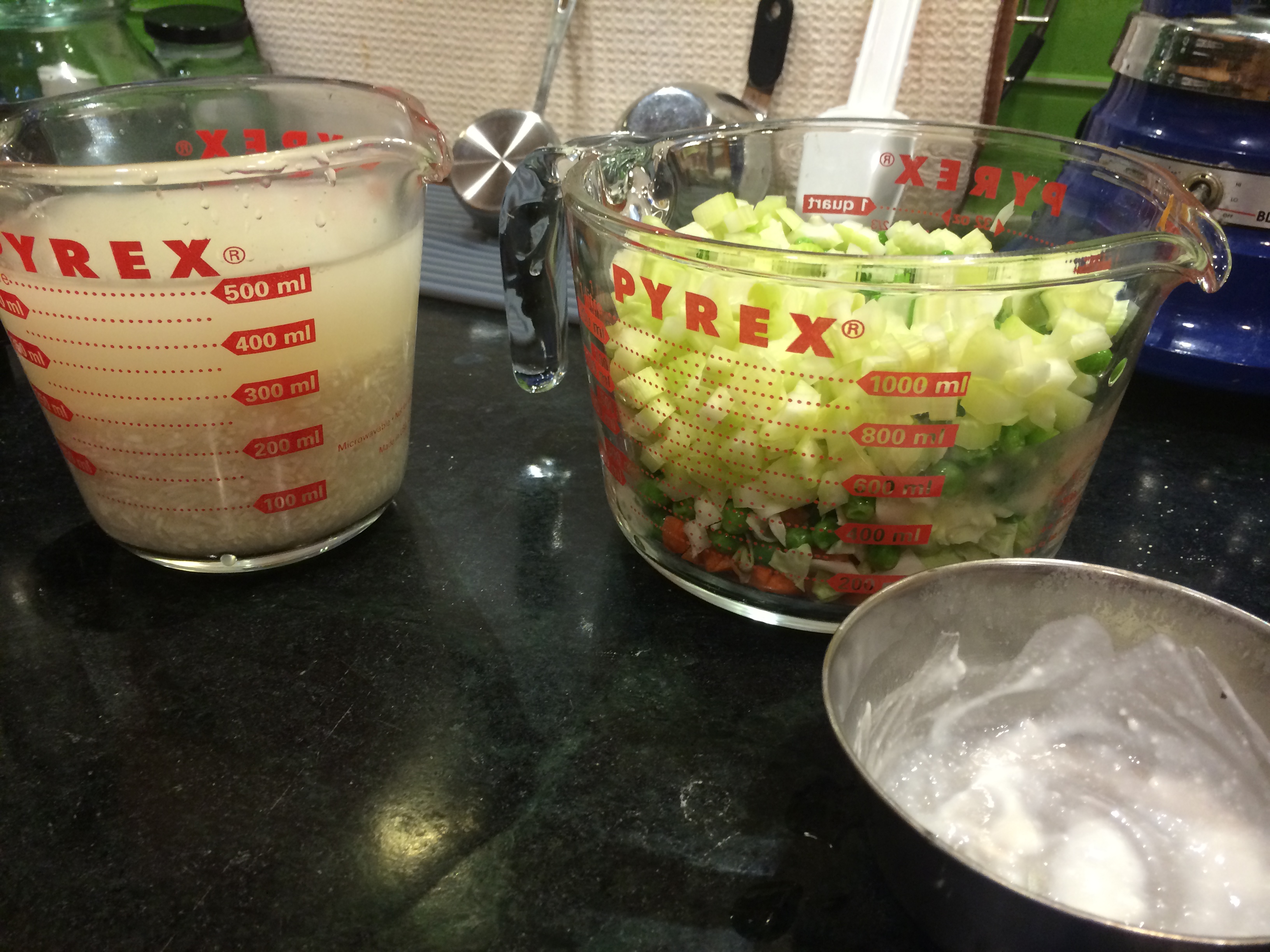
Rice soaking and vegetables diced

Rice soaking and vegetables diced

Ginger garlic chili paste with yogurt

Ginger garlic chili paste with yogurt

Onion cooking with bay leaf and cardamom

Onion cooking with bay leaf and cardamom

Paste enters

Paste enters

Paste drying up

Paste drying up

Vegetables enter

Vegetables enter

Rice enters

Rice enters

Done

Done

Vegetable Pulao

Ingredients
  • 1 cup long-grained rice
  • 1.25 cup water
  • 4 cups diced vegetables, mix of carrots, peas, beans, cauliflower (cut slightly larger, because it has the tendency to turn to mush if overcooked), bell pepper, celery, potatoes
  • 1 black cardamom
  • 1 bay leaf
  • 1/3 cup diced onion (this will be about half a medium onion)
  • 3-4 cloves garlic
  • 1 inch piece ginger
  • 1-3 fresh green chilies
  • 1/4 cup plain yogurt
  • 1 teaspoon salt
  • 2 tablespoons oil
Method

Rinse and soak the rice for about half hour. Dice the vegetables — those that cook quickly (like cauliflower) can be left larger, those that cook slowly (like carrot) can be cut smaller. Blend the yogurt along with ginger, garlic and chilies to make a paste.

Heat oil in the pressure cooker or dutch oven on medium heat. When it shimmers, put in the cardamom and bay leaf. Let them cook until an aroma arises. Then put in the onion. It can cook for a few minutes until softened. Now put in the paste and stir to combine with the oil. In about five minutes of cooking, the paste will have dried up and the oil will show separating from the paste.

Now you can put the vegetables in, and simply toss them around to mix with the oil. Drain the rice and add that in as well, and stir to coat the rice with the oil and spices. Now put in the water and salt, and pressure cook for 15 minutes. If you are using a dutch oven, cover it tightly and cook it in the oven for about 20 minutes at 250ºF.

Let it sit covered for a few minutes after taking it off the heat. Before serving, fluff it up lightly with a fork.


(Click here to find me on Facebook and here on Twitter.)
My slimy old pal, stuffed

Stuffed okra

Stuffed

Here is a riddle for all you wonderful folks. Two cousins. One is hairy, one is slimy. I have talked about the hairy one quite a bit recently. The slimy one doesn’t get much love because many people object to its sliminess. Fear not! There are many ways to make it unobjectionable.

Here is the hairy one. And here is the slimy one. Both from the mallow family.
Cousins

OK I have dragged this one out enough. Of course, the hairy one is cotton. But the slimy one is the subject of today’s recipe — okra. The slime is a form of soluble fiber that has many benefits, from slowing absorption of glucose (diabetics take note) to capturing toxic bile and helping with constipation.

Now okra is often not popular. When I mentioned to my husband that okra and cotton were from the same plant family, he said, ‘no wonder okra tastes like cotton’. Funny guy.

But here’s the thing. You can do one of several things. You can use okra in recipes that absolutely thrive on its sliminess and use it to give cohesion to soups and stews. Like gumbo. Or, you can fry and crisp it up. Once you do that, no one would guess at the great gobs of sticky runny goo that normally erupts out of okra pods.

Or, you could do this.

Okra stuffed with spices (Bharela bhindi)

For this dish, the okra pods are left whole. A slit is made along the length of the pod with a paring knife, taking care to leave a pocket, not bust through to the other side. Stuff the pocket full of spices. Fry it. This process seems to dissolve the sliminess as well and makes it a delicious meal with some roti or rice and dal on the side.

While picking okra one has to be careful to pick the very young pods, where the ribs have not turned fibrous and woody (once that happens, there is no going back, and you will not enjoy eating them). A gentle squeeze while selecting them at the market will tell you if the pods are still young. The pods I found at the farmers market are from a variety that has been bred to have minimal ribs, and can be left on the plant longer without risk of turning woody. Nevertheless, I did find one or two that had, and I discarded them.

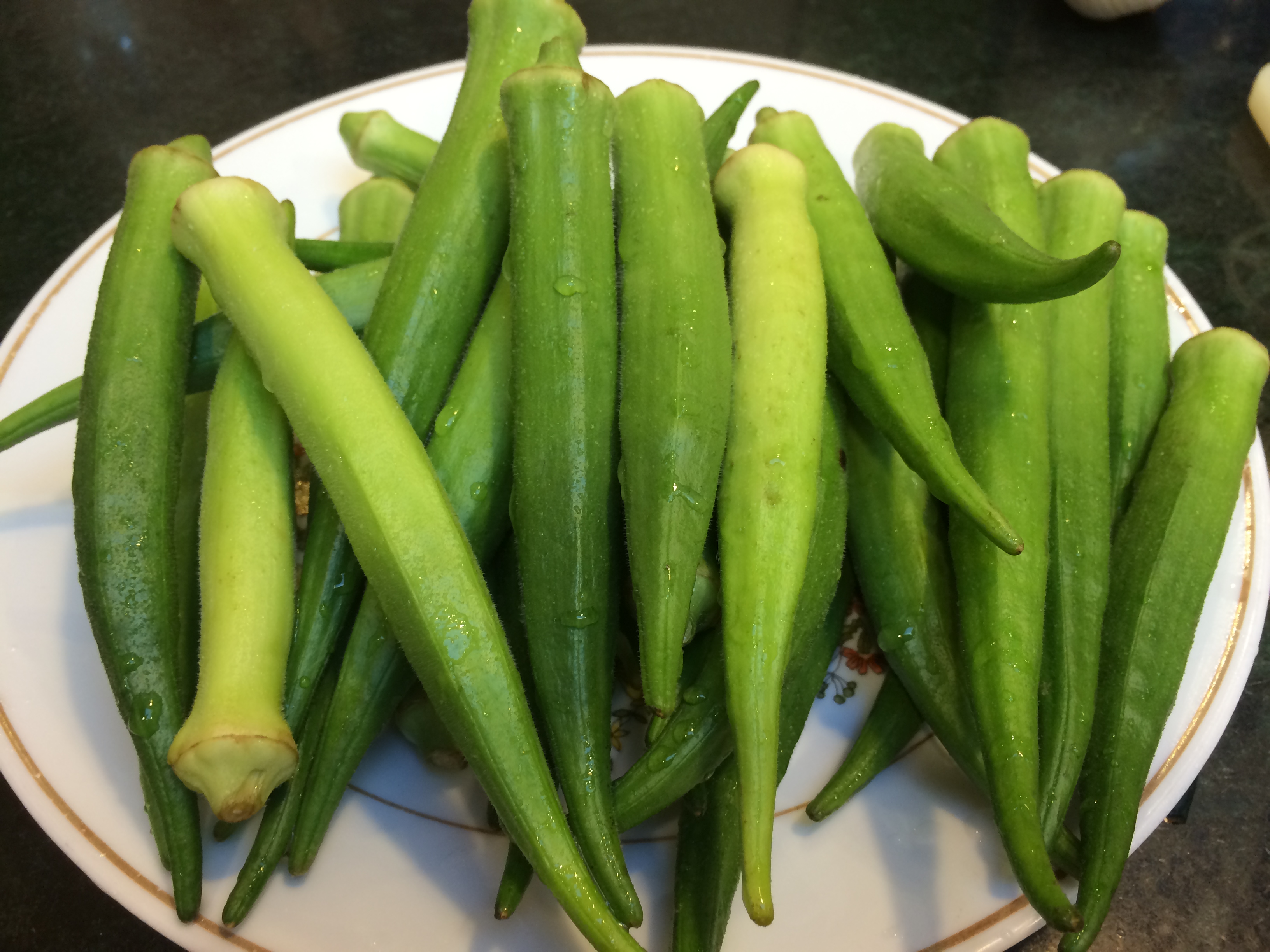
Pound of okra pods

Pound of okra pods

Whole spices

Whole spices

Roasting spices

Roasting spices

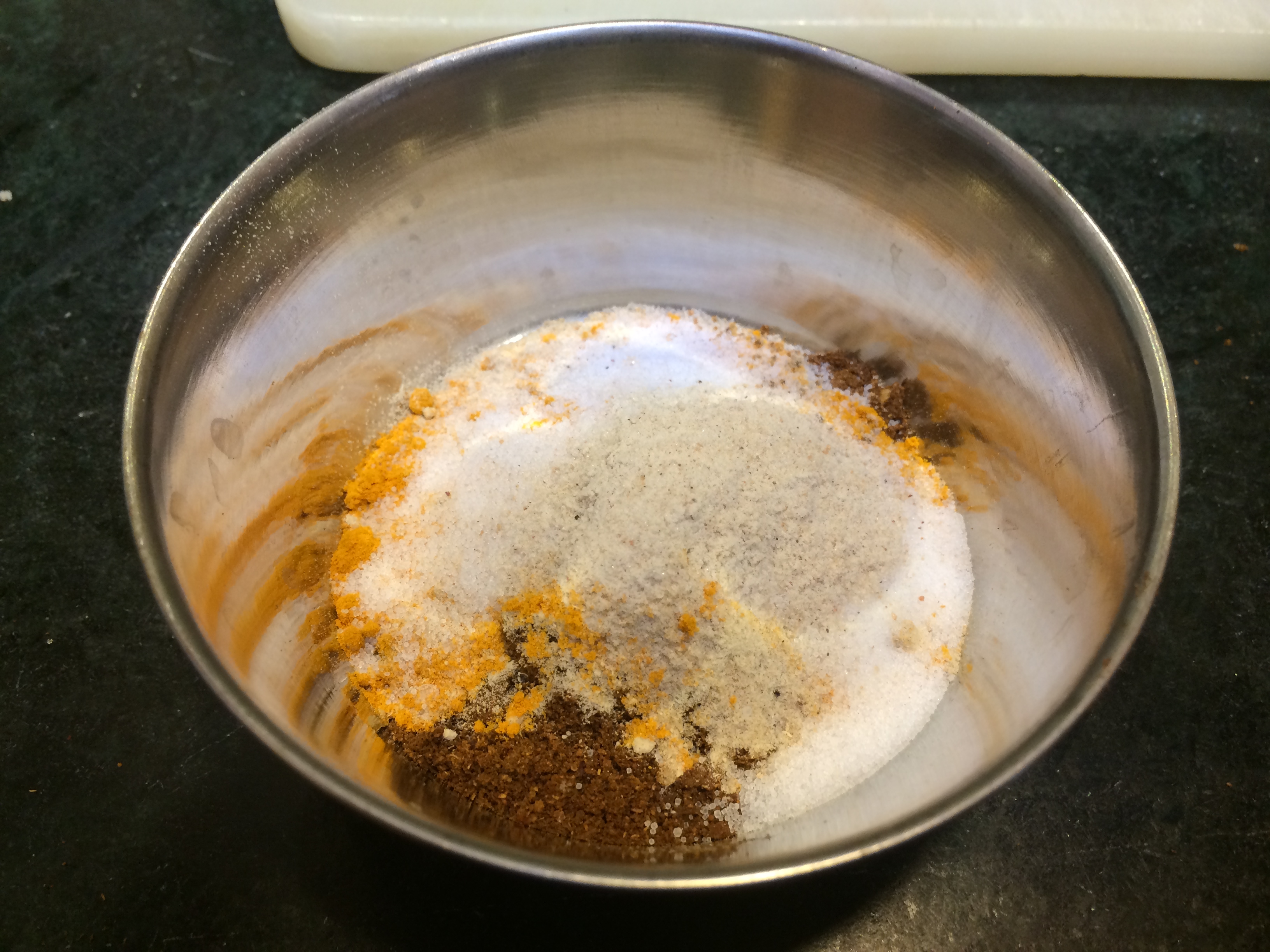
All spices mixed in a bowl

All spices mixed in a bowl

Pocket

Pocket

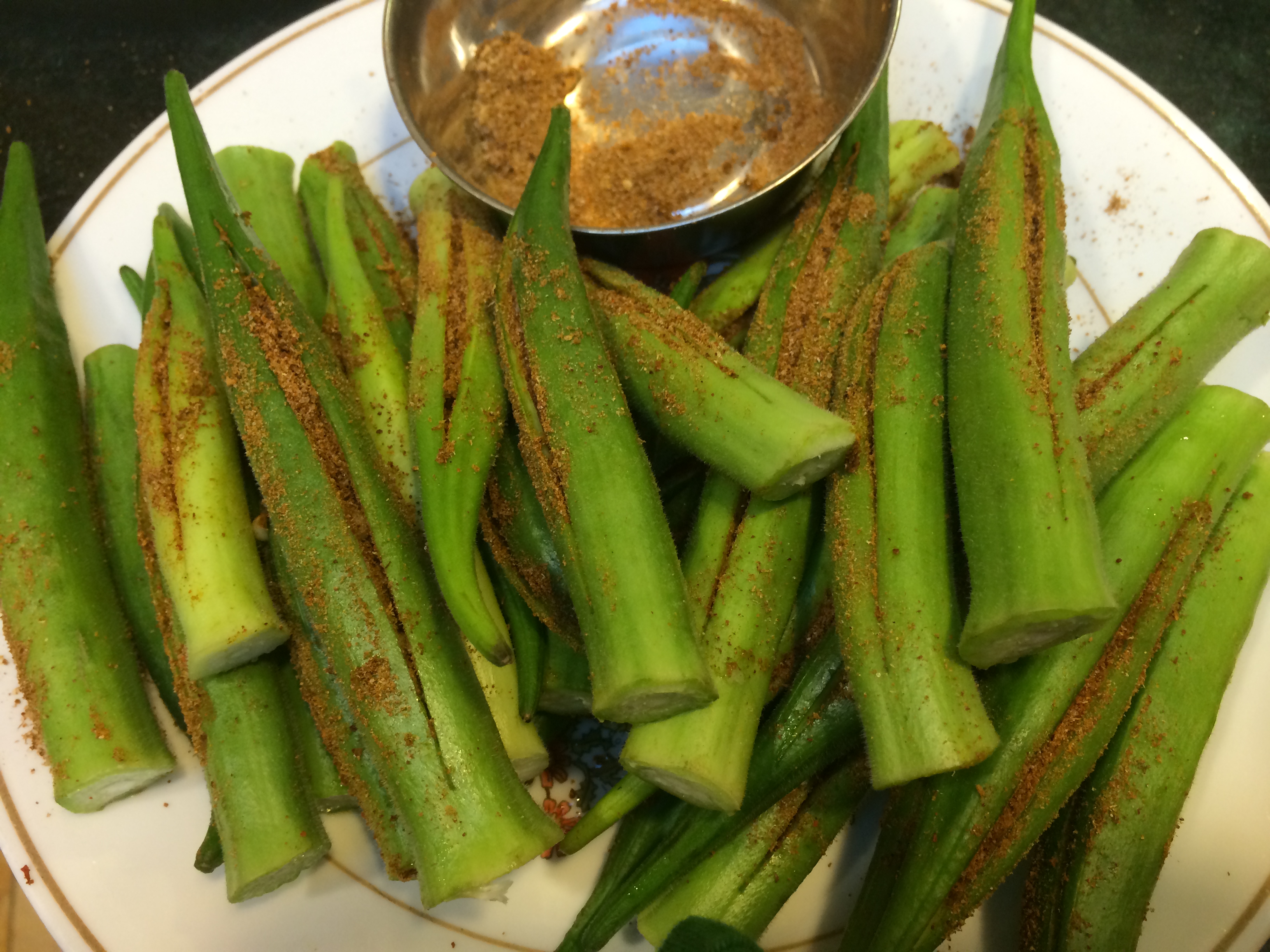
Stuffing the pocket

Stuffing the pocket

Stuffed and ready to go

Stuffed and ready to go

Frying

Frying

Add onion

Add onion

Done

Done

Stuffed okra/bharela bhindi

Ingredients for the spice mix:
  • 2 teaspoons whole coriander
  • 2 teaspoons whole cumin
  • 1/2 teaspoon whole fenugreek seeds
  • 1/2 teaspoon whole fennel seeds
  • 2 whole red chilies, more if you like
  • 1 teaspoon dry mango powder (aamchur)
  • 1/2 teaspoon turmeric powder
  • 1/4 teaspoon asafetida
  • 1/2 teaspoon red chili (if you want more heat) or paprika (for color and flavor)
  • 1 teaspoon salt
Ingredients for okra
  • 1 pound okra pods
  • 3 tablespoons oil
  • 1/4 onion, sliced (optional)
Method

Roast the whole spices from coriander to red chilies in a thick-bottomed pan, just until an aroma arises. Take it off the heat, wait a few minutes for them to cool and grind in a clean coffee grinder. Now mix in the powdered spices from the dry mango powder to the salt.

Wash and completely dry the okra. Take off the very top, the hat that looks like a beanie where the okra is attached to the stem. Using a sharp paring knife, make a slit along the length of the pod, stopping a little short on both ends, to make a pocket. Fill each okra with the spice mixture. A small spoon is very helpful for this. Then using your fingertips, spread spices nicely inside the pocket.

Once all the okra pods have been stuffed, heat the oil in a wide, thick-bottomed pan. When it shimmers, lay the okra pods flat in a single layer. Let them cook on medium-high heat for 10 to 15 minutes until each side is browned. Once in a while give them a turn with tongs or a spoon. Mostly just leave them be.

When they look pretty much browned, squished and done, throw in the onions. The onions only need to cook for a minute or two, the hot pan will soften them quickly. They do not need to brown. Turn off and cover the pan for a few minutes to allow the steam to finish the job.


(Click here to find me on Facebook and here on Twitter.)

Star-studded raisin-pecan bread

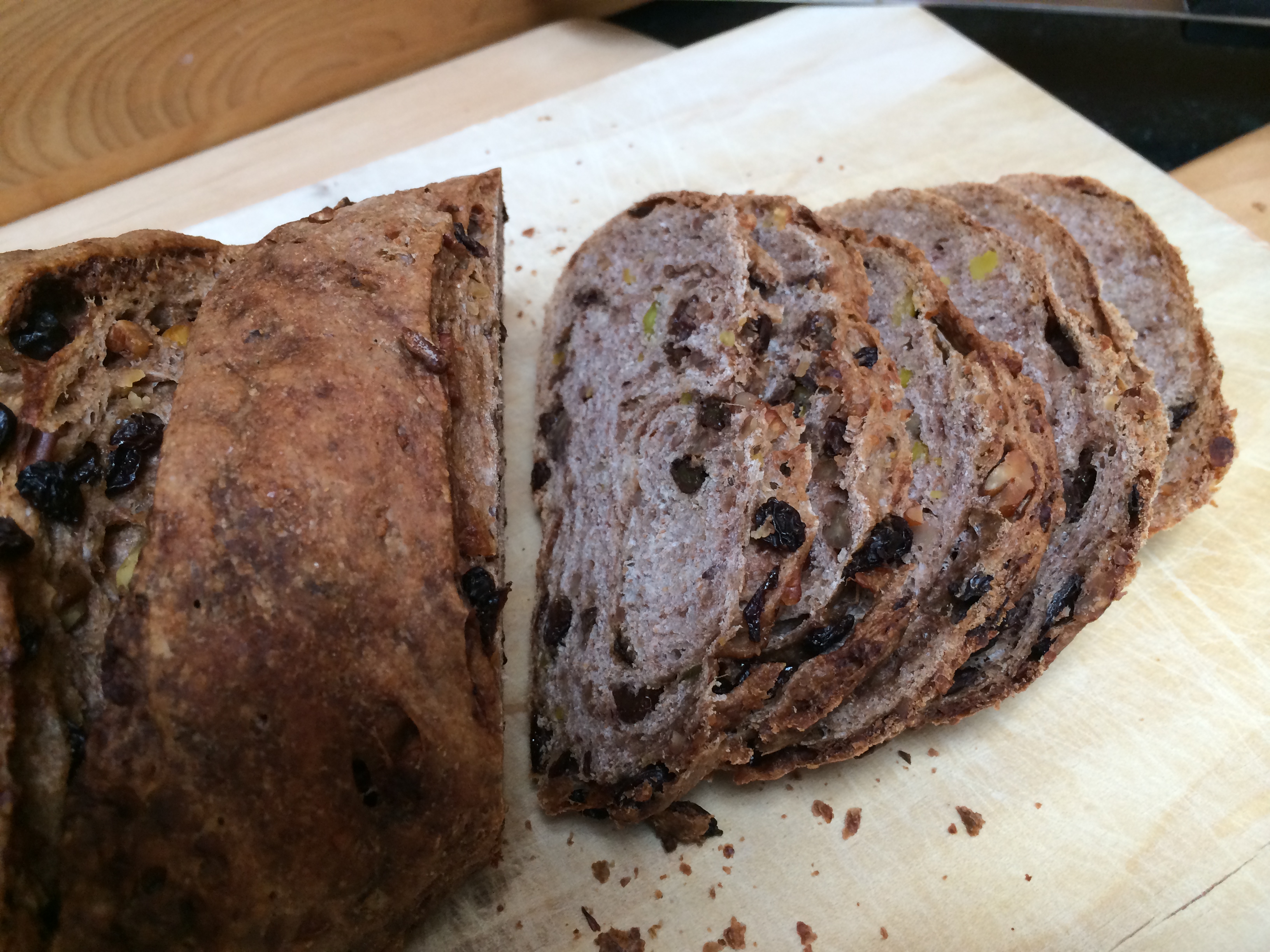
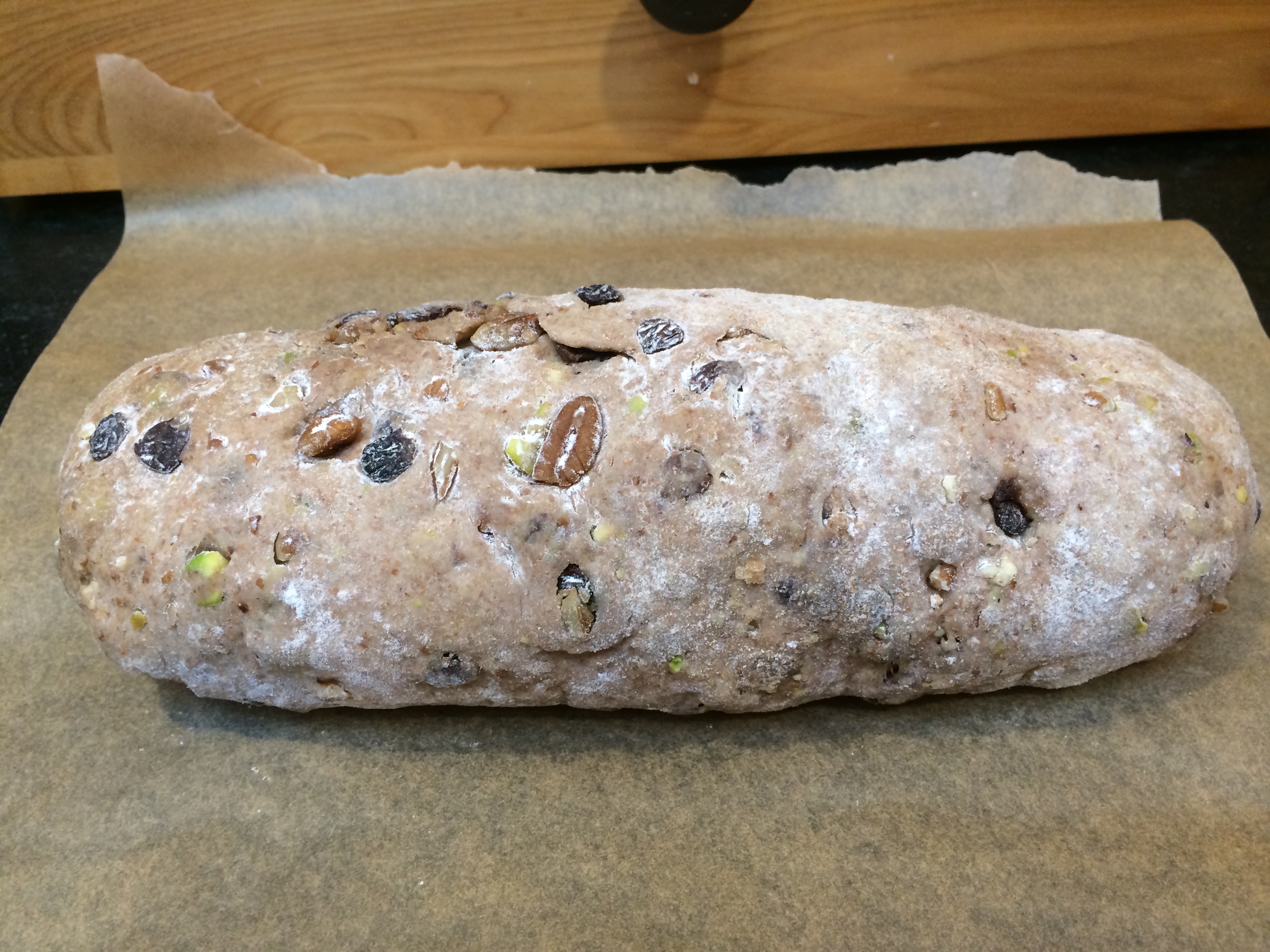
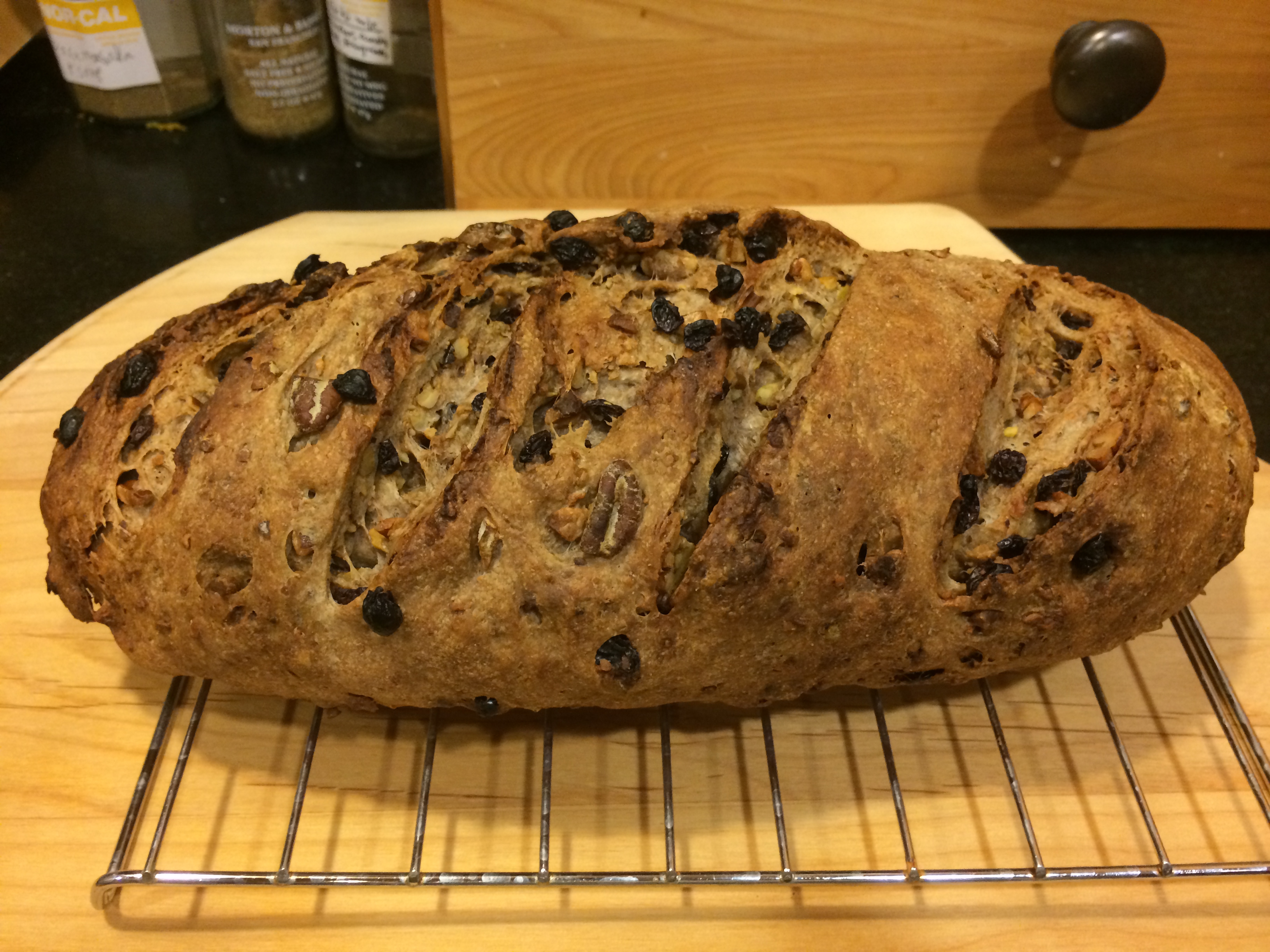
Star-studded bread

Star-studded bread

A lot of what I know about bread-baking I learnt at the home of Rose Levy Berenbaum. No, she is not my favorite aunt or neighbor (though how I wish she were) — she was in her home, on TV, and I was in my home, watching TV and earnestly taking notes.

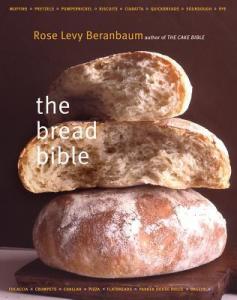
I have made several of the breads in her book The Bread Bible, and this one is one of my favorites. Of course breads with raisins and nuts are quite common. But the standard configuration they come in is the sliced bread with a square shape, sprinkled with cinnamon and a swirl in the middle. Now that is wonderful, but there’s more to raisin-nut breads than the cinnamon swirl.

The Bread Bible

The Bread Bible

This particular bread (called the Raisin Pecan bread in the book) is a free-form loaf that is baked ‘naked’ in the oven, outside of any pans. Those are my favorite kinds of breads because of their crustiness. There is no cinnamon — that is the other difference. There is no swirl, instead the raisins and pecans are nicely spread throughout the loaf, hence the name that I gave it — star-studded. There is no added sweetness, making it less of a confection and more of an adult dinner bread. Spread with something creamy like clotted cream or a nice white cheddar it is one of the most popular snacks in our home.

She uses some ingenious tricks to enhance the flavor. A sponge is mixed hours ahead or the previous day. Raisins are soaked for 30 minutes, no more; and the soaking water is used in the bread. Some of the pecans are ground fine to be mixed in with the dough, some are just broken bits and add a delightful crunchiness to many bites. The nut and raisins are mixed in in a very delicate procedure, after all the heavy kneading is done,  to avoid a mess of runny raisin juice. Simple, small tricks, but they make a big difference.

I made one more modification — I substituted quite a bit of the flour with whole wheat, because we like that in our household.

Star-studded Raisin-Nut Bread

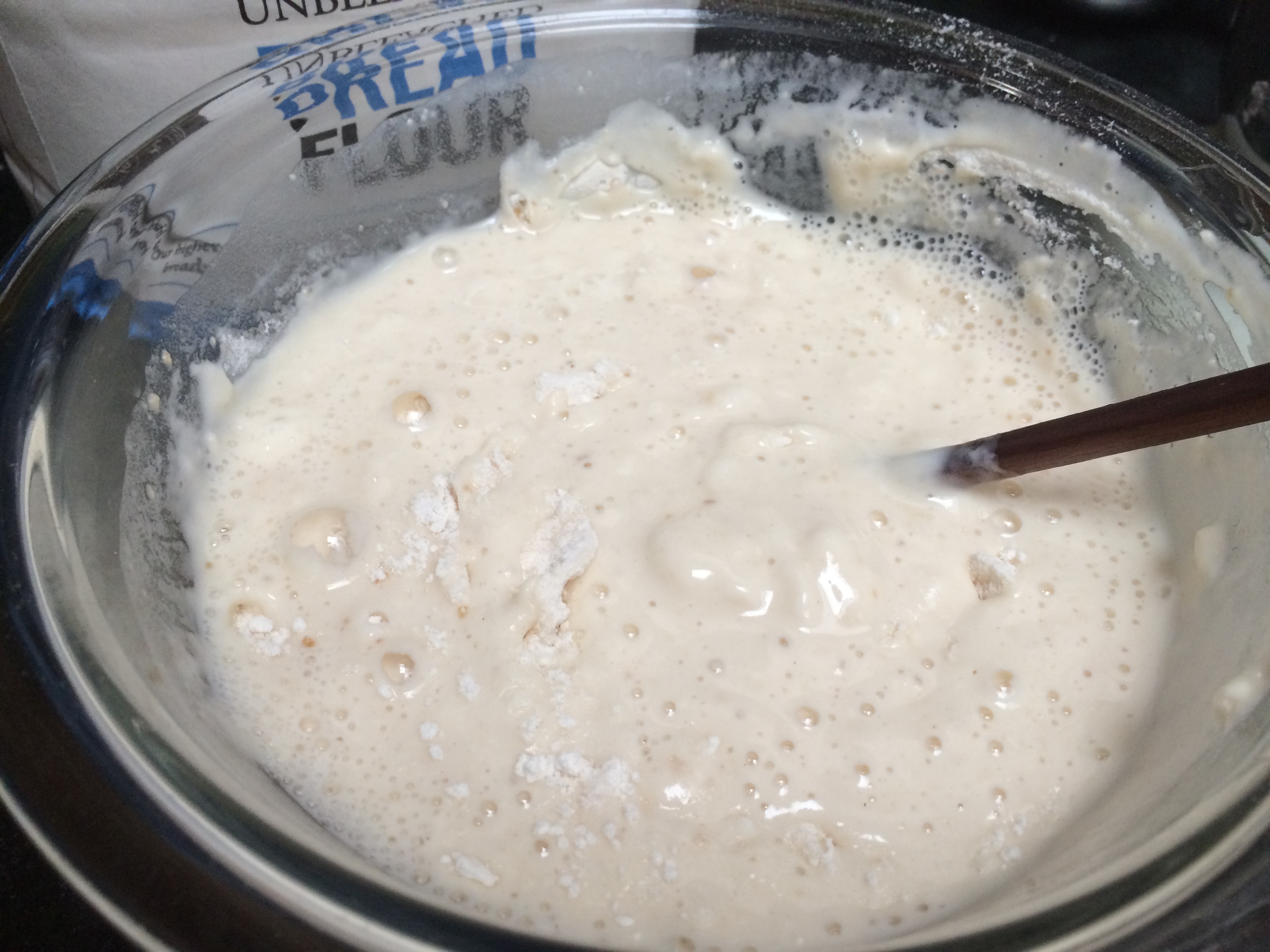
Mixing the sponge

Mixing the sponge

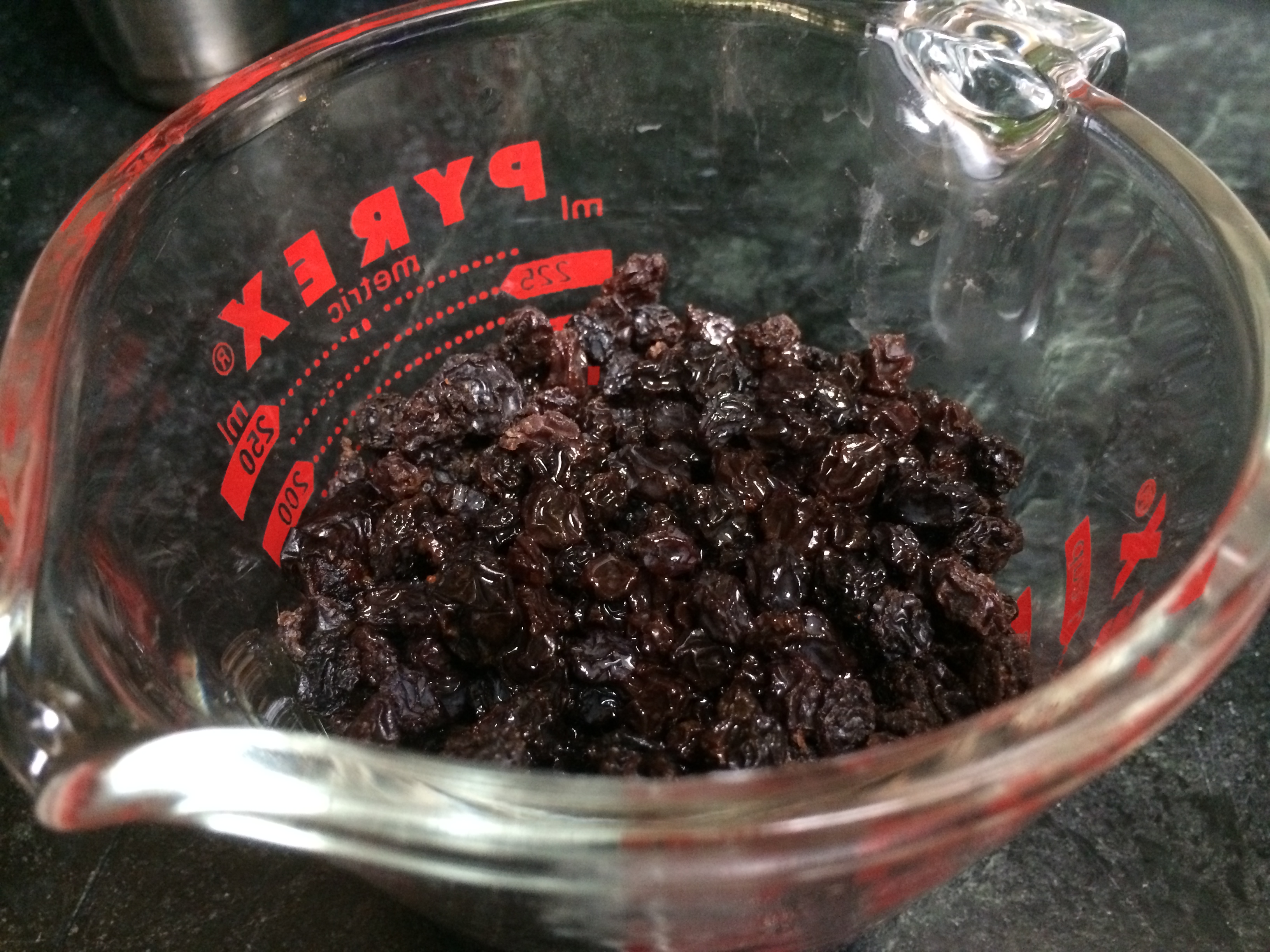
Soaked raisins

Soaked raisins

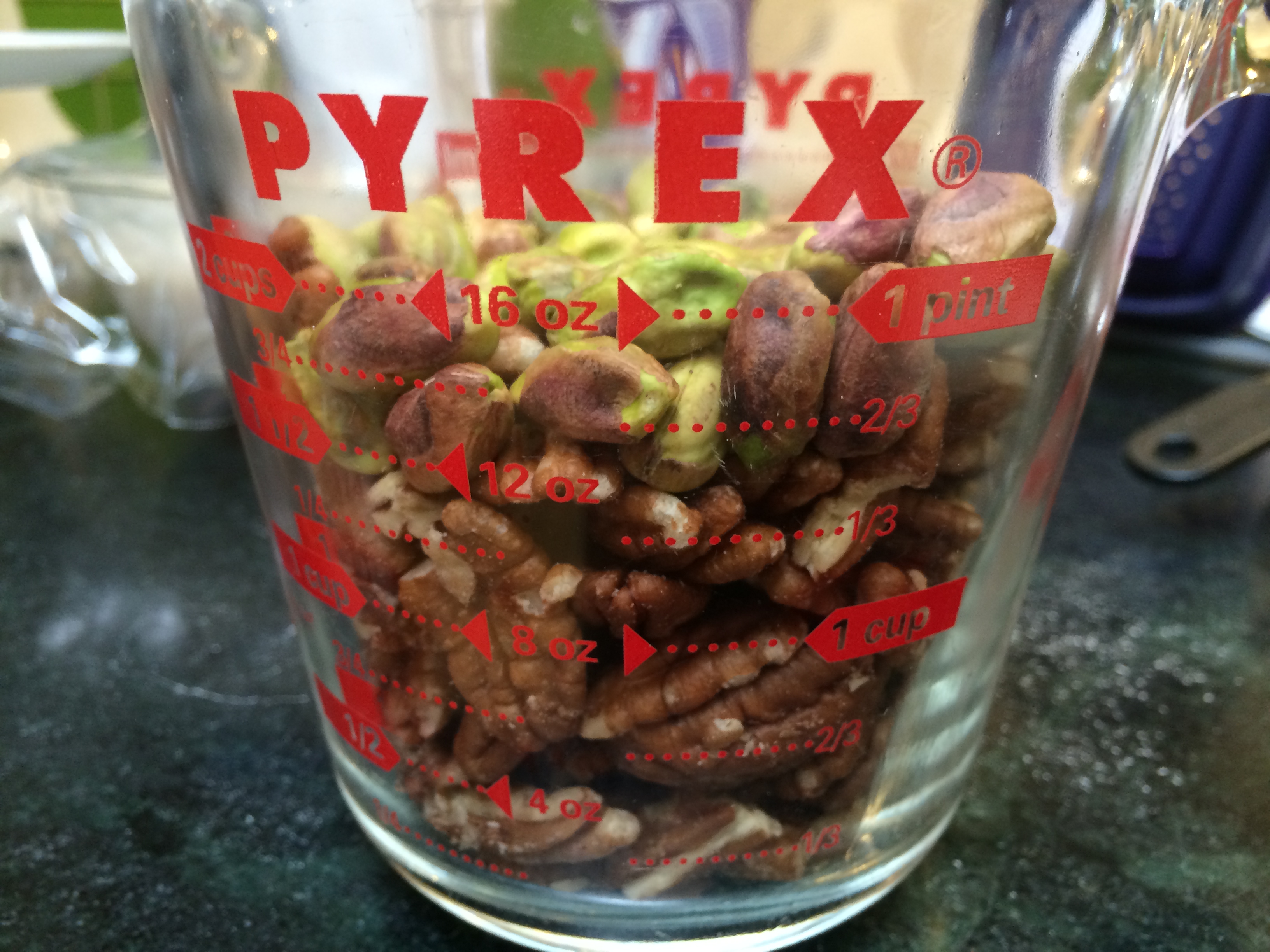
Pecans

Pecans with some pistachio thrown in

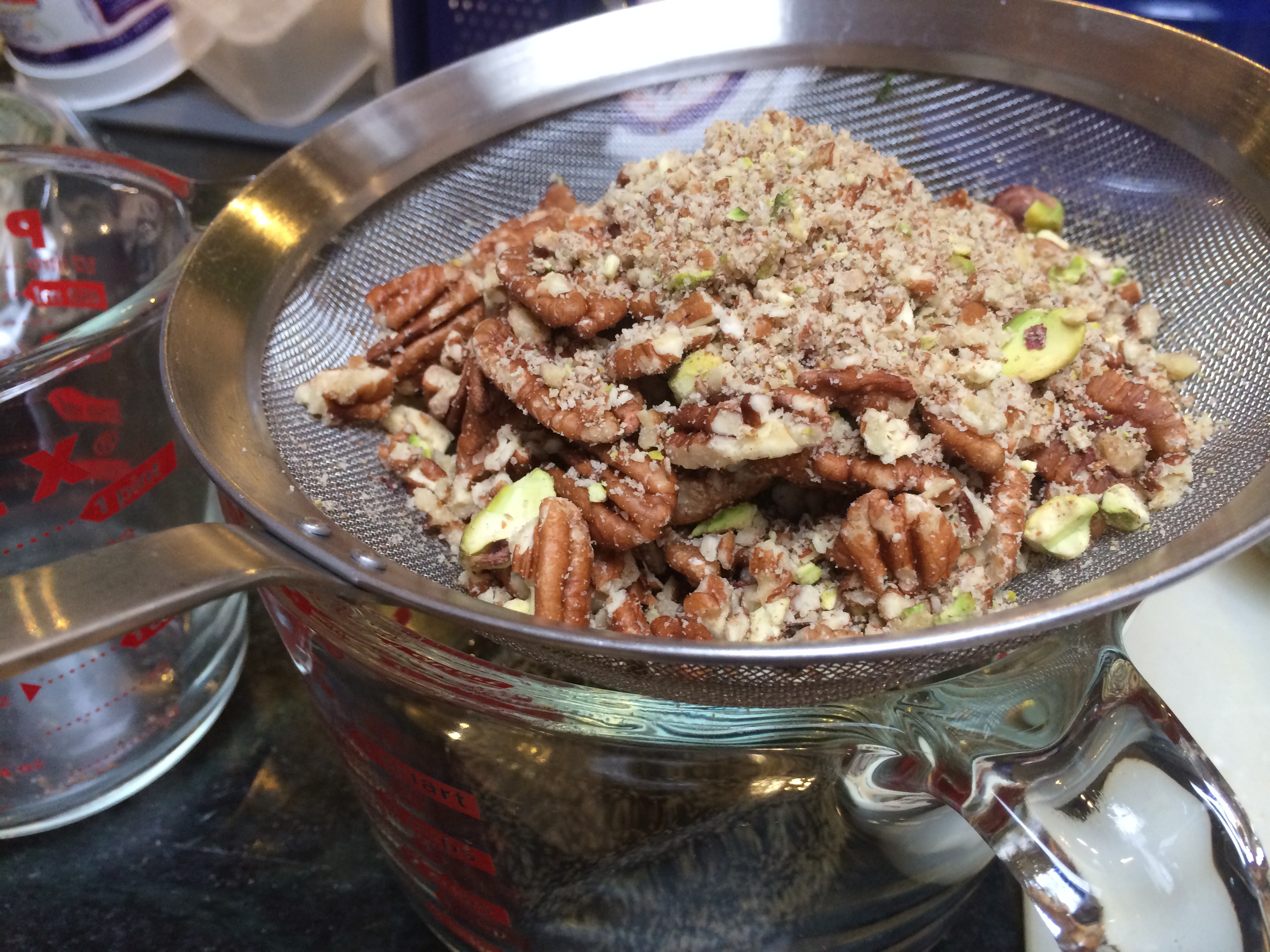
Straining ground pecans

Straining ground pecans

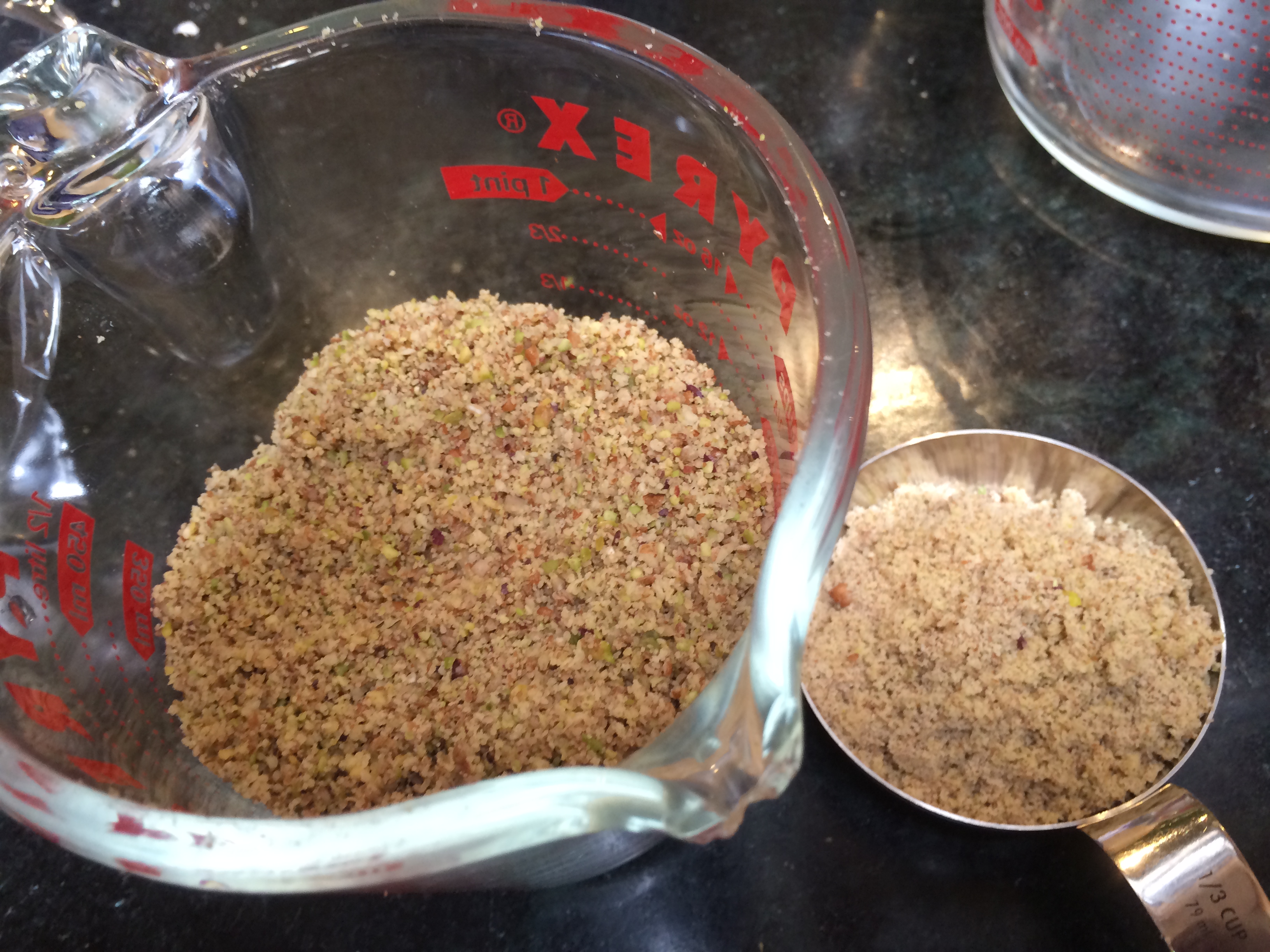
Ground pecans and bits

Ground pecans and bits

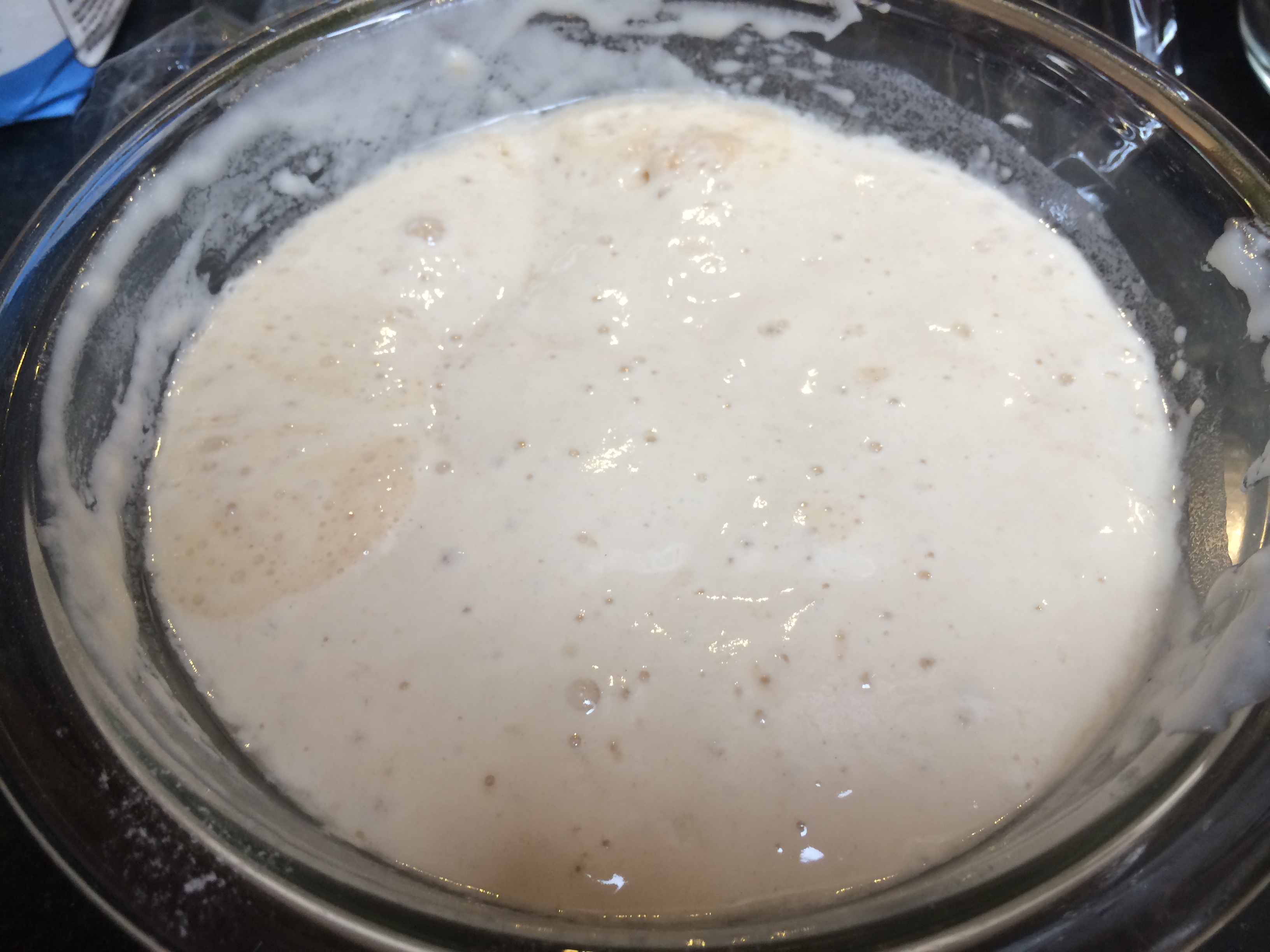
Sponge risen

Sponge risen

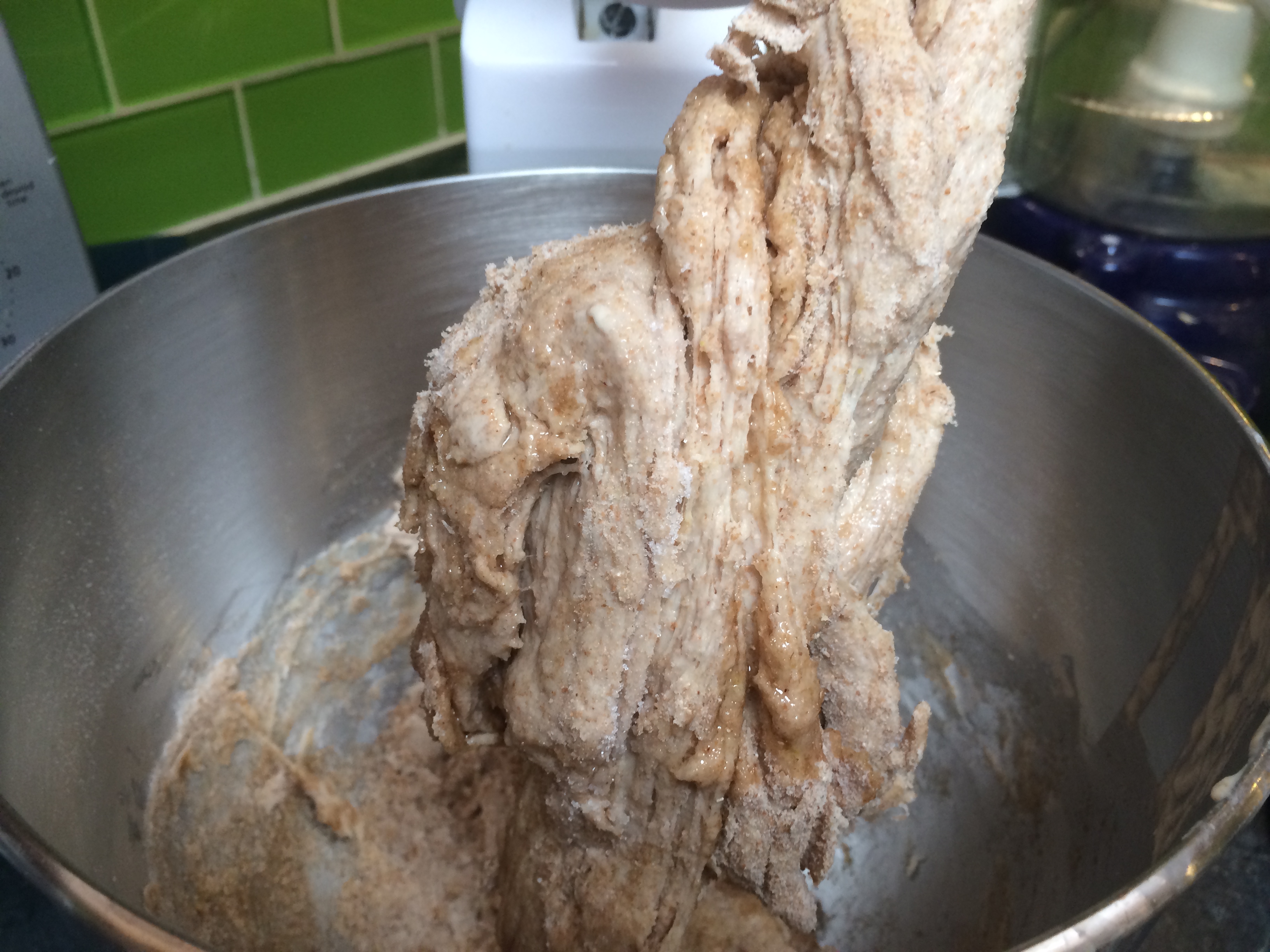
Mixing the dough

Mixing the dough

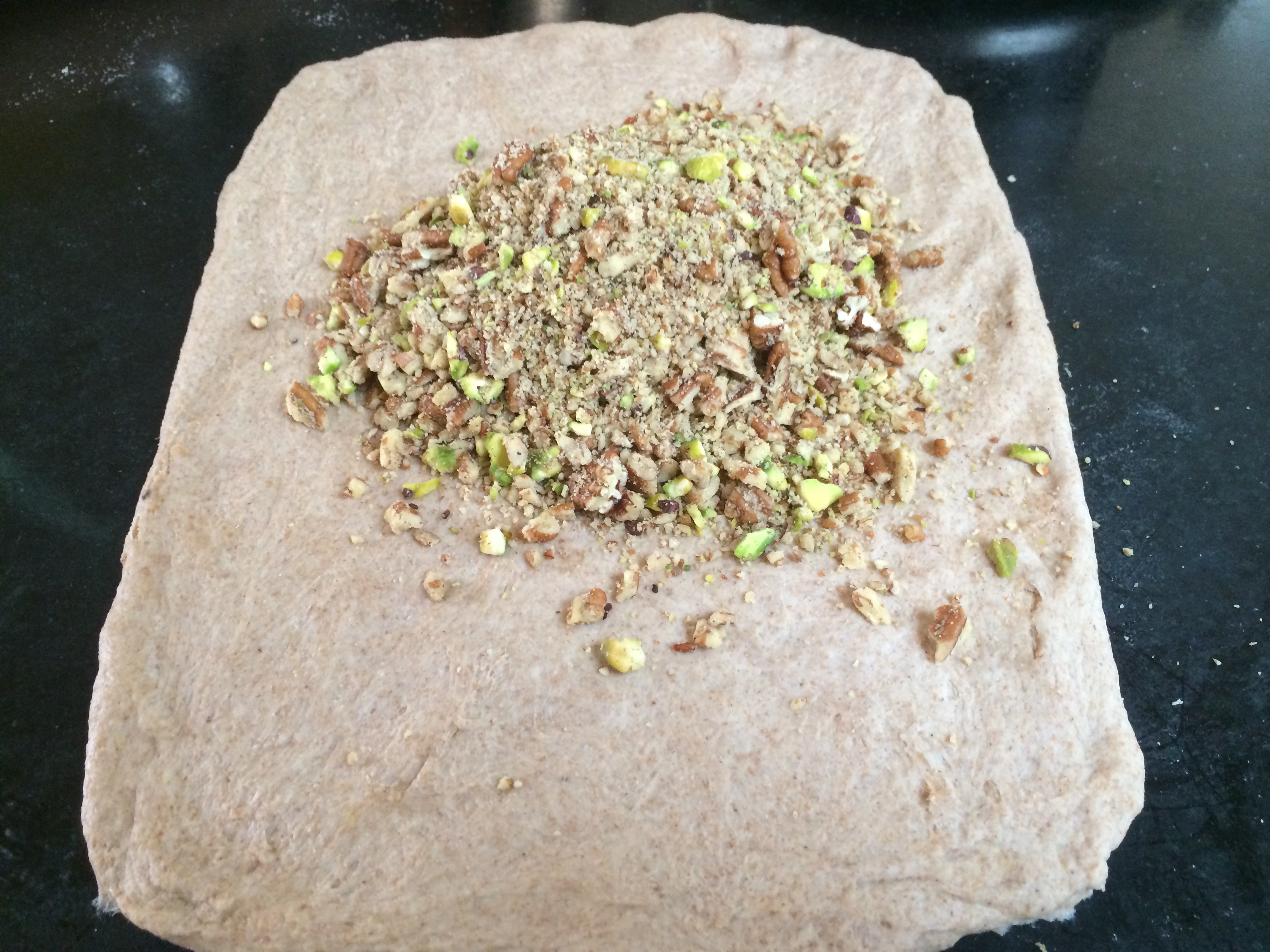
Spreading pecans

Spreading pecans

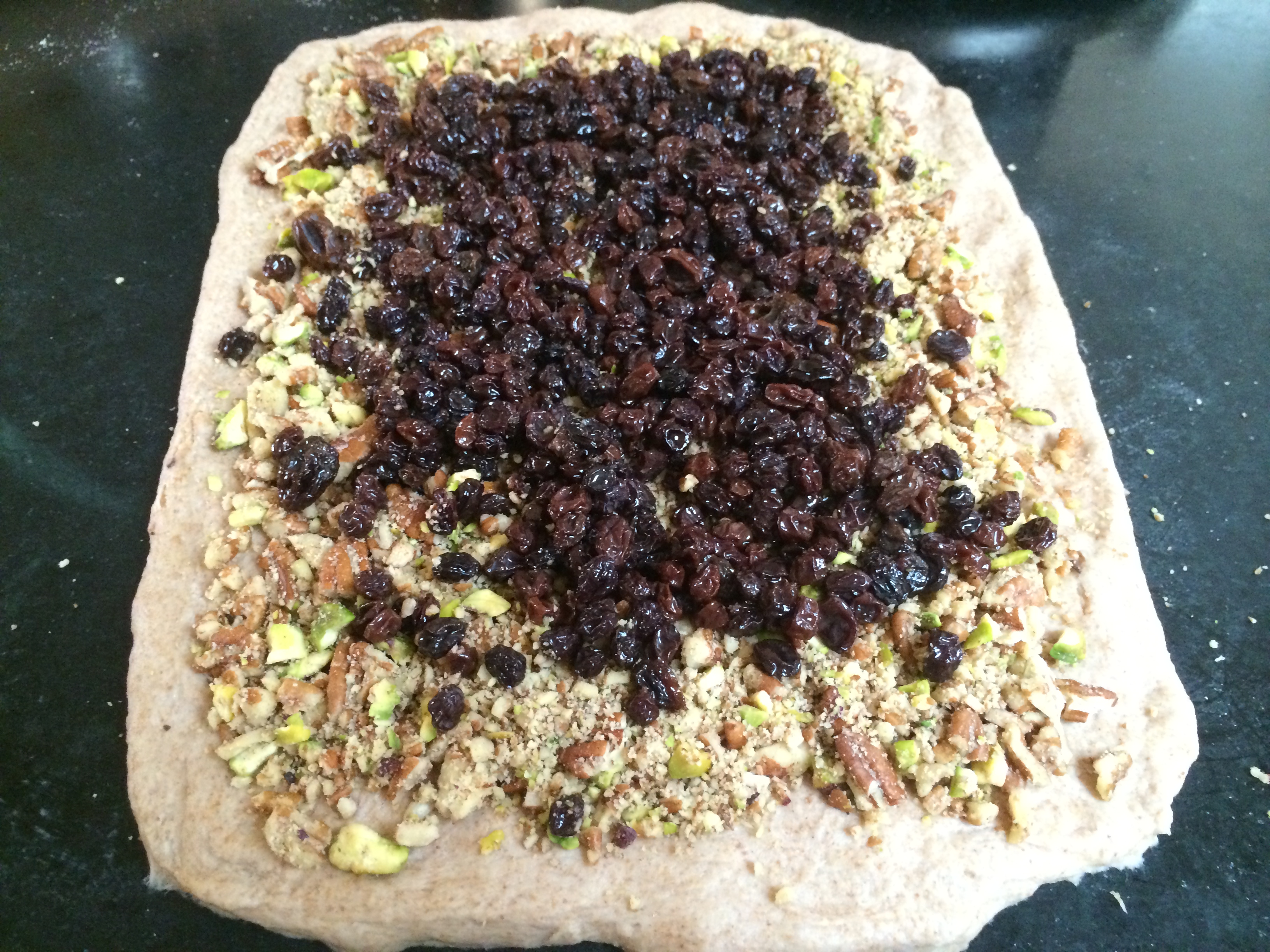
Adding raisins

Adding raisins

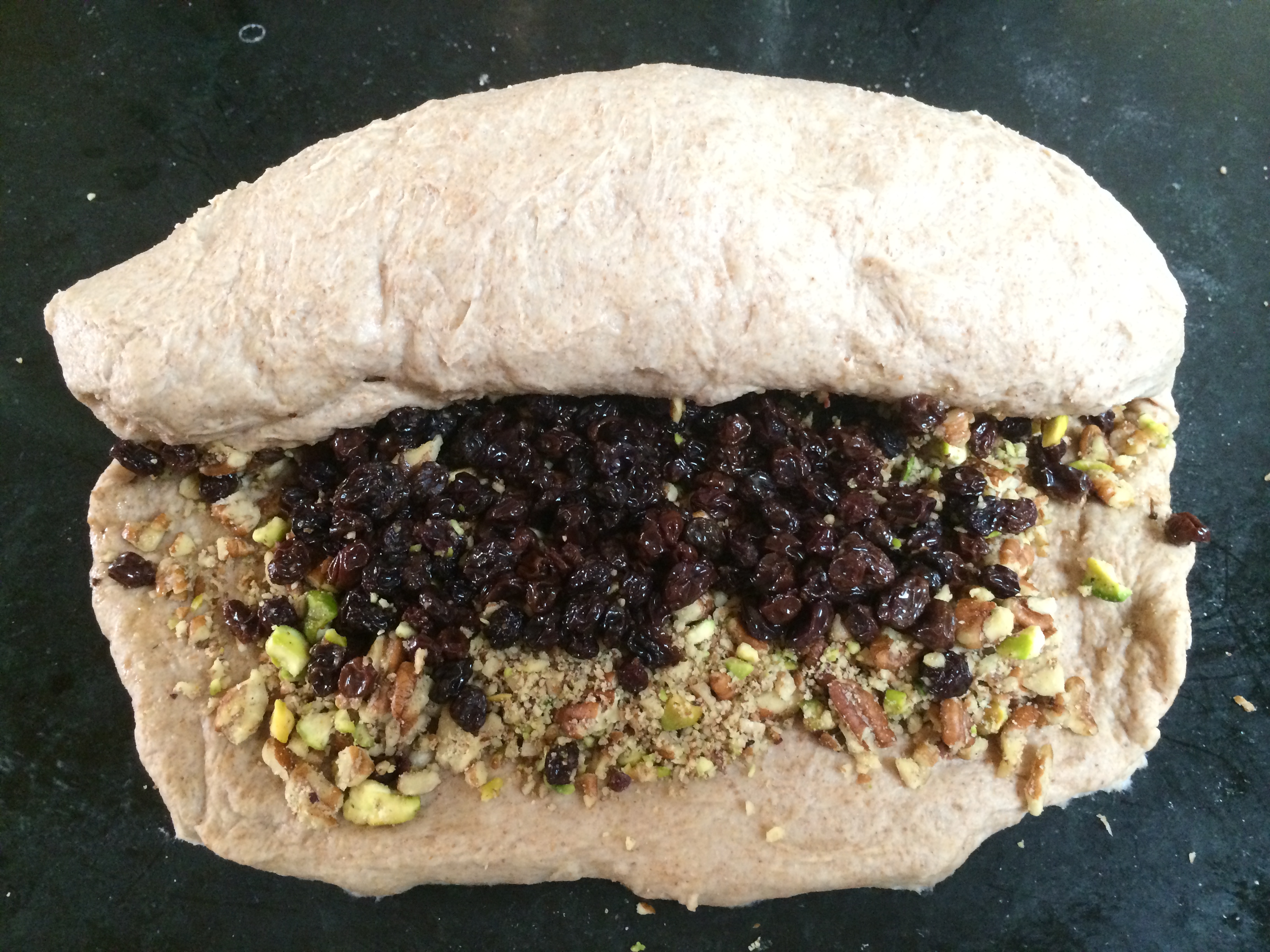
Rolling it up

Rolling it up

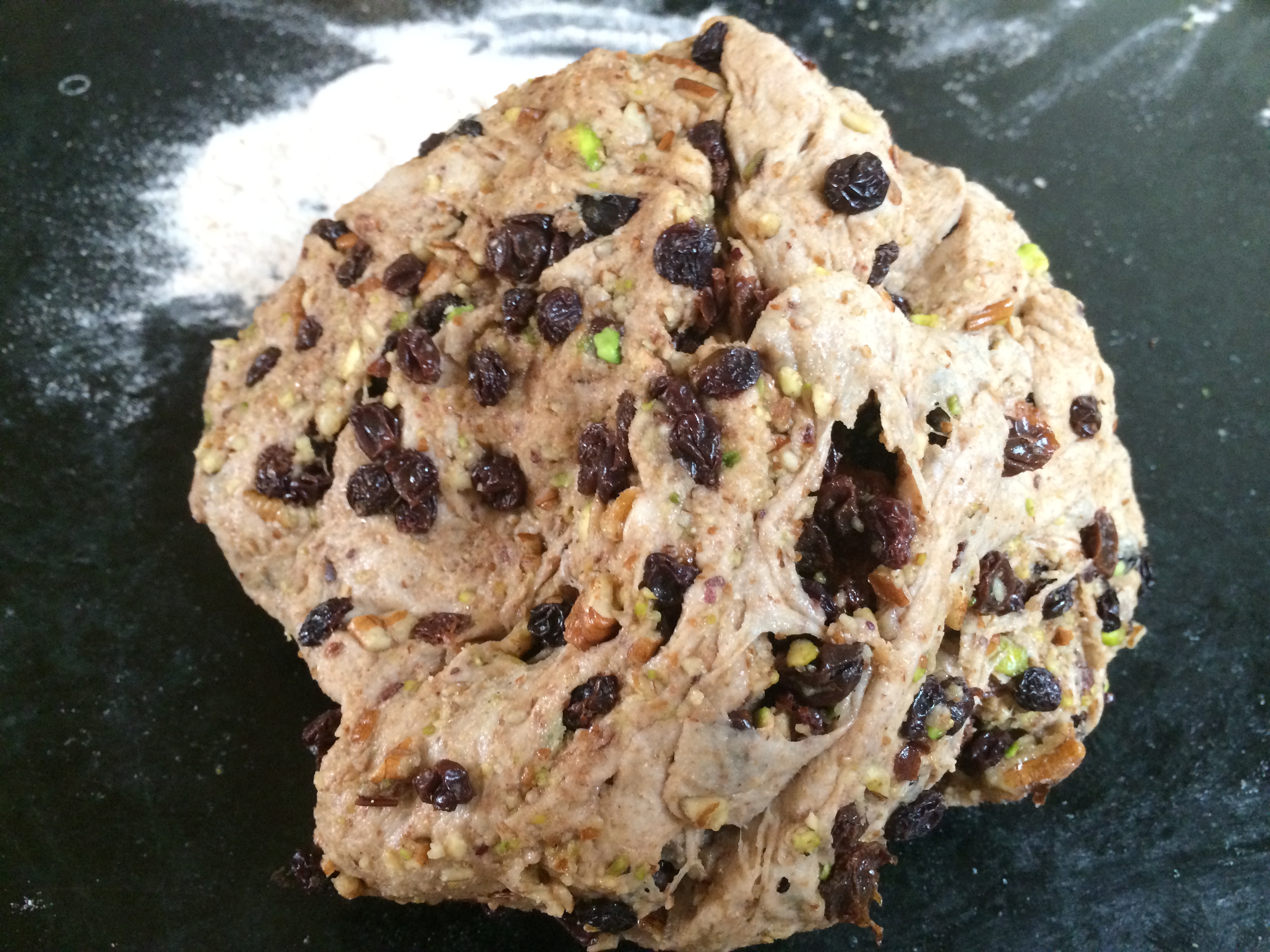
Ready for first rise

Ready for first rise

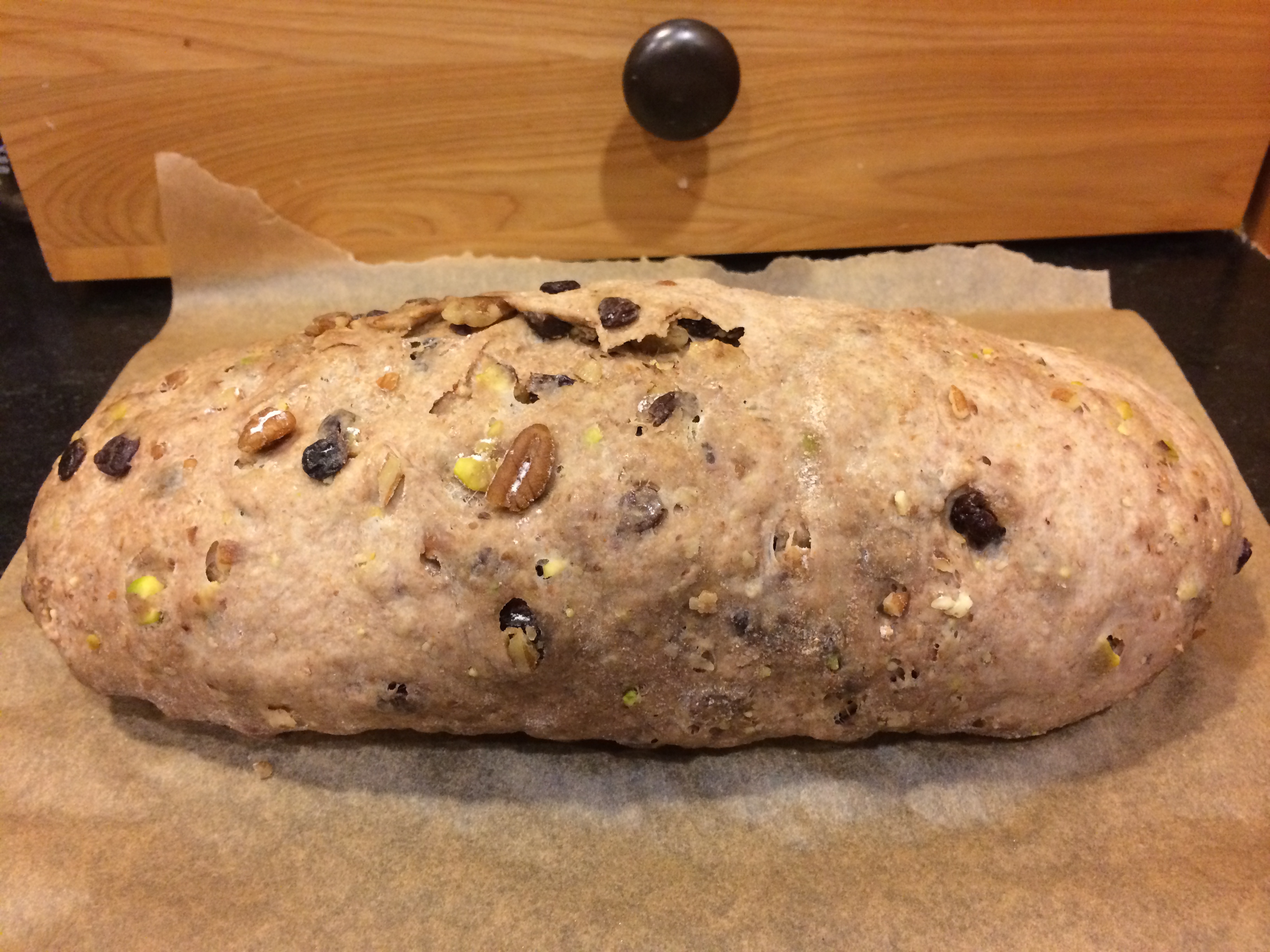
Shaped ready for second rise

Shaped ready for second rise

Risen

Risen

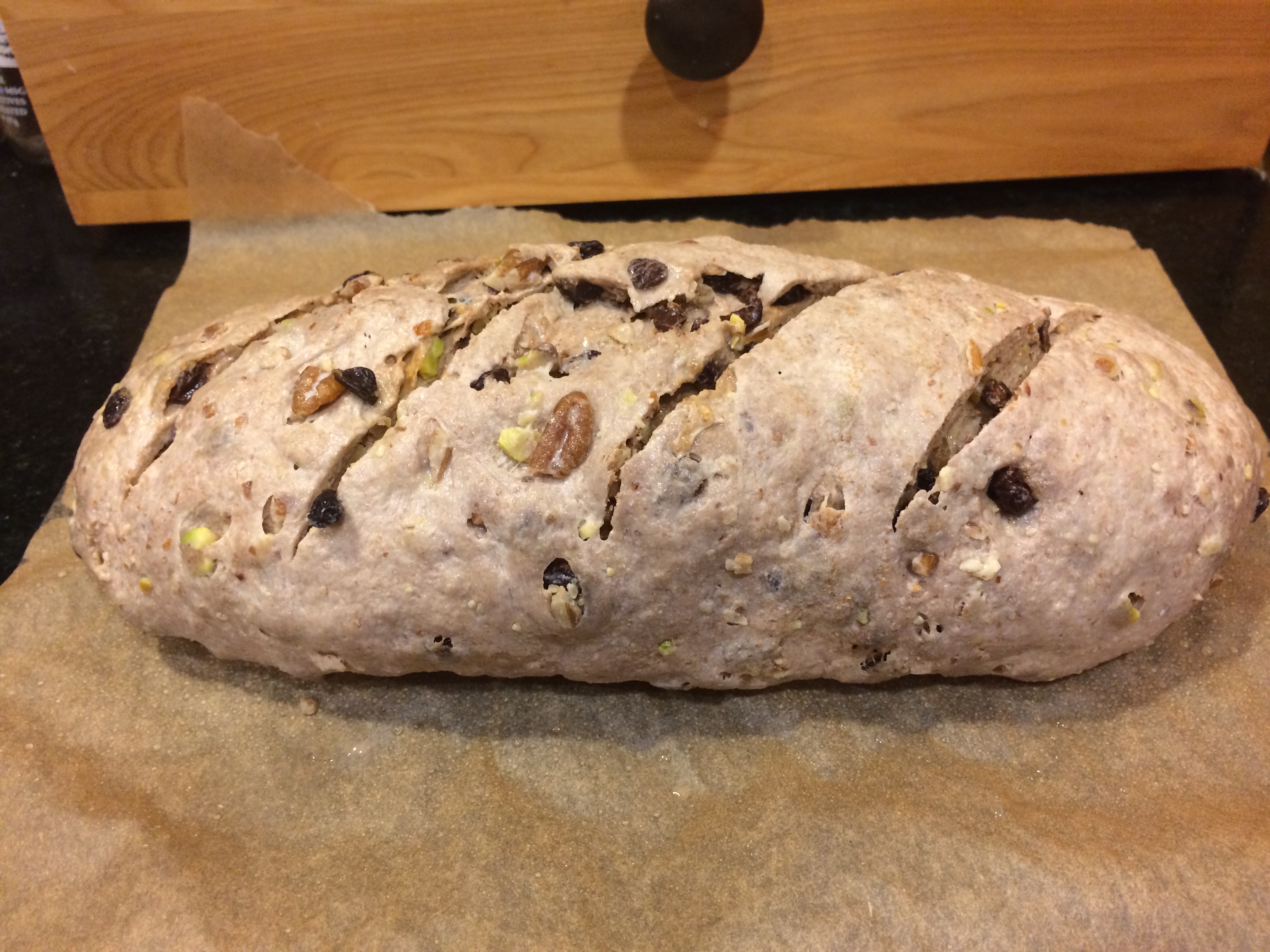
Scored

Scored

Done

Done

Star-studded bread (adapted from Rose Levy Berenbaum's raisin-pecan bread)

  • Servings: 2 pound loaf
  • Print

Ingredients for soaking raisins:
  • 1 cup raisins or currants
  • 1/3 cup water
Method for soaking raisins:

Soak the raisins in hot water for half an hour. At this point, drain the raisins and you will be left with 1/4 cup water, that you can use to make the sponge below.

Ingredients for sponge:
  • 1 cup bread flour
  • 1/2 teaspoon instant yeast
  • 1 cup water (including raisin soaking water)
  • 1 tablespoon demerara sugar
Method for sponge:

Mix the dry ingredients together in a bowl, then pour in the water (remember to use 1/4 cup of the raisin water for added flavor), and stir stir stir with a wooden spoon or chopstick, almost like you are whisking it. The sponge will look like batter with some air incorporated into it. Cover with a plastic wrap and keep aside at room temperature for at least 1.5 hours, at most a whole day.

Ingredients for dough:
  • 1.5 cups plus couple teaspoons more of whole wheat flour
  • 3/4 teaspoon instant yeast
  • 1.25 teaspoon salt
  • 1/2 cup finely ground pecans
  • 1.5 cups coarsely broken pecans (I substituted some with pistachios)
  • 1 tablespoon oil
  • All the sponge from above
  • All the raisins from above
Method for dough:

Stir together the flour, the yeast, the salt. Add in the sponge and the oil and the ground pecans, stir with a chopstick or the dough hook to moisten fully.  Cover with plastic wrap and leave it aside for 10 minutes. Come back to it and knead it properly into a dough. Let it rest for 10 more minutes.

Now flatten the dough and spread it out into a rough rectangle about 10 inches by 15 inches. Spread the broken pecans bits all over the rectangle leaving an inch border on all sides. Then spread the raisins over the same area evenly. Start rolling up the dough from a short end, also taking care to tuck in the edges. All the nuts and raisins will be hidden inside.

You do need to knead it lightly after, just to get it all to combine. At this point nuts and raisins might start falling out of your dough ball, just do your best to tuck them back in.

Cover with oil and allow the first rise until it is doubled, which will take about 2 hours. Shape it into a loaf and allow the second rise till doubled, covered with plastic wrap or a damp towel. This will take about 1 hour.

Heat the oven to 400ºF. Score the bread with a sharp, serrated knife. Each cut should go about half an inch deep. Mist the bread and put into the oven on a middle rack. In the first 5 minutes, mist inside the oven with a water spray bottle and quickly close the oven, about 3 or 4 times. After the first 5 minutes bring the temperature down to 375ºF. Continue baking for 40 to 50 minutes until it is golden brown.

Interview with an Indian GMO farmer

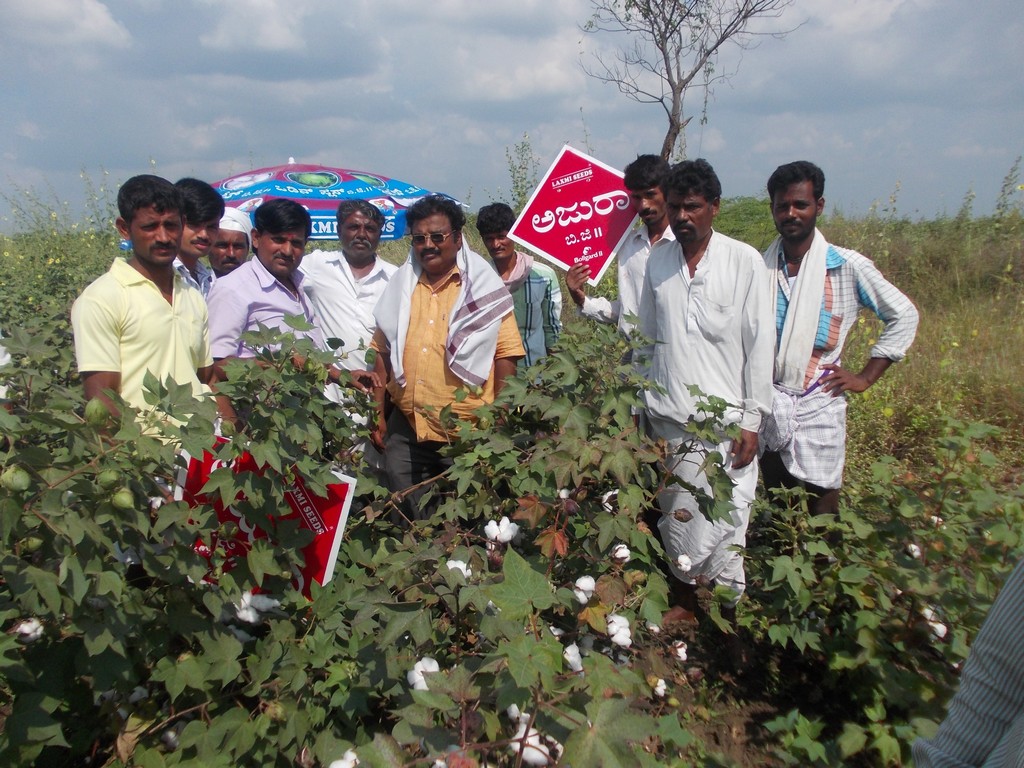
Sudhindra Kulkarni at his farm

Sudhindra Kulkarni at his farm

Dear Reader, at this point I’m starting to think that Bt cotton is quite popular among Indian farmers. I got my first hint when I realized that there is a black market for Bt cotton seeds. If you think about it, there isn’t usually a black market for undesirable goods. The second hint came from the reading I did for this post, where I realized that Bt cotton improves yield for the farmers and reduces insecticide use, overall.

The third hint came a couple days ago, but this time it was bigger than a hint, it was more like someone setting off an alarm clock in my ear, kind of like this:

That was this. A Bt cotton farmer from Karnataka state contacted me after seeing my post and wanted to tell me his story. I had a half-hour long conversation with him in Hindi (second language for both of us) and he gave me permission to put his story on The Odd Pantry. Not to put too fine a point on it, he LOVES GMO cotton.

Background:

Sudhindra Kulkarni is a farmer in the Gulbarga district of Karnataka state. He sounds like a progressive and savvy farmer who has improved his lot far beyond the grinding poverty of his ancestors, all of whom were farmers. In 2012 his name was recommended by someone, he doesn’t know who, to join the Global Farmer Roundtable in Des Moines, Iowa. He was also sent to China as a progressive farmer by the Karnataka government. He had a lot of difficulties communicating because his English is not strong but it sounds like he did make a few good contacts there. He sent me this letter, that he calls his autobiography. I’m not sure why he wrote it, but it is also found on another website, exactly as the one he sent to me.

Interview:

(OP is The Odd Pantry, SK is Sudhindra. His answers translated by me)

OP: How long have you been farming?
SK: This is our family trade. I have been farming since my childhood. In my father’s days we grew wheat, cotton, sorghum. We also kept bullocks [OP: Indian cattle]. He practiced traditional farming methods and faced a lot of poverty. I stayed in the farming line when I grew up. My brother is an entomologist in the Dharwad University. I supported him with my farming. He himself was hardworking and smart and got scholarships. I learnt about modern farming methods and was able to pay back debts. I also built a pakka house for my family [OP: Pakka house is a cement house as opposed to a hut].

OP: How much land do you farm and what do you grow?
SK: I have 25 acres that I inherited from my forefathers and I lease about 25 more for Rs. 8000/= per acre per annum. I grow Bt cotton then rotate with pigeon pea and chickpea. I also grow sorghum for cattle feed [OP: I’ll take some too, please]. I have bullocks.

OP: How did you learn about modern farming methods?
SK: I learnt from my interest in improvement. The government has agriculture programs. I learnt from watching programs on TV. I leveled my land and got better yield. Now I use micronutrients for the soil and urea, potash and DAP. But I use organic methods too. In April we spread cowdung on the fields for manure. I used to practice purely organic methods but I had to give that up. In the old days we never tilled the soil, now we do. But we are still completely dependent on the monsoon. Four or five months of the year we get canal water. The rest of the time we depend on the rains.

Sudhindra's Bt cotton farm

Sudhindra’s Bt cotton farm

OP: How has your experience with Bt cotton been?
SK: I have been growing Bt cotton for ten years. It gives me excellent yield. I get one-and-half to two tons per acre. A farmer that I know is getting excellent yield with Bt cotton with purely organic methods. My cattle eat Bt cotton plants with no problems.

OP: Who helped you write your letter in English?
SK: My brother helps me with English. My 9th standard daughter helps me with Facebook and email. My language is Kannada. I don’t speak English well so it is difficult for me to get my message across.

OP: What is your message for my readers?
SK: My message is this. I have a sincere request. Please think about the economic condition of the farmer. Without good yield a farmer is nothing. Without good yield, a farmer cannot survive. My family would be destroyed. Without good yield, we are zero. Please do not listen to all the stories about farmer suicides. This is not just my story, it is the story of my whole village. [OP: He repeated this request five or six times throughout our conversation.] I don’t have good English so I cannot convince anyone. All this talk that the farmers will become slaves, this is all wrong. We need good yield.

[OP: He ended the conversation with inviting me and my family to stay at his farm, as is the Indian way. Perhaps someday. Then, I sent him one last question by email because I could not understand on the phone. What follows is his answer verbatim, not translated by me.]

OP: What difficulties did you face while practicing organic methods?
SK: # Ans: Animal Manure & cow dung not easily available ( Jeevaamruta )..varmi compost . pest control not possible..because environment not help # After that yield not getting..what we expected.. # Cost of production,overheads..all expense..after calculation..i didn’t get rate. # For me not possible to store my agri products till high rate,because i have also financial commitment .whatever rate i should sale.

Thoughts

So there you have it. Before I talked to him on the phone, my husband and I wondered the usual things one has to: like, is he telling the truth? Has he been coached? Or bribed? Once I talked to him, I immediately felt ashamed for wondering those things. He is clearly an intelligent and committed farmer. To think that he must have been coached to have certain thoughts smacks of condescension. Even to think that he is coachable smacks of condescension.

But in a sense, I am surprised at myself for being surprised at his story. The main beneficiaries of agricultural technology from the start have been farmers. This is true for GMO as well. American farmers have certainly voted with their feet to buy these seeds. Indian farmers are not that different, I guess. We are not Martians, after all.

Obviously, he may love Bt cotton for the high yield it gives him and it could still have other problems. The bollworm could develop resistance to it. Or there could be ripple effects in the environment. Or perhaps there really are no other problems, or if there are, they are better than spraying general insecticides. All or any or none could be true. That would be a different post, however.
(Click here to find me on Facebook and here on Twitter.)

A Russian salad for America’s Independence Day

Russian Salad

Russian Salad

If by reading the title you expected intrigue and a spy-vs-spy story, you came to the right place. The story of Salad Olivier begins in Czarist Russia when wealth and luxuries were not yet verboten. A Belgian chef known as Lucien Olivier came to Moscow in the 1860’s bearing secrets of French cooking. He opened a fancy-shmancy restaurant in Moscow called The Hermitage. This was not a one-room affair, rather an entire building with multiple dining rooms. Here Chef Olivier served a salad with every manner of luxury ingredient and choice meat — caviar, capers, game hen, crayfish tails. He called this the Salad Olivier.

Hermitage restaurant, Moscow (source: http://www.sras.org/russian_olivier_salad)

Hermitage restaurant, Moscow (source: http://www.sras.org/russian_olivier_salad)

Of course, he did not invent this salad out of his sheer imagination but rather based it on a famous dish from Provençe known as Le Grand Aioli. This is essentially a feast of vegetables and meats, laid out separately to serve with aioli, which is basically a mayonnaise with garlic and mustard. He served his salad in layers, the ‘Provençal sauce’ on the side, to be poured over. His Russian customers would dispense with the niceties and simply mix it all up. So he followed their lead and Salad Olivier was served the Russian way, all mixed up with his Provençal sauce.

Salad Olivier made his restaurant famous; although the main ingredients of the salad were obvious for all to see, he never divulged the secret of what went into his mayonnaise. Now remember that mayonnaise at the time was a French import, not ubiquitous on every grocery shelf from Japan to the United States. It had to be made by hand. It is an emulsion, which means the liquids involved in it are so well mixed together that it is impossible to tell what went into it. So as you can see, mayonnaise is inherently mysterious. So is milk, another emulsion.

A lovely graphic showing emulsion by blog.ioanacolor.com

A lovely graphic showing emulsion by blog.ioanacolor.com

Sorry for the bad pun, but Lucien Olivier milked it. The secrets of his mayonnaise remained hidden until his grave. They had to come to his restaurant for the salad, or else go without. But then, a disgruntled local employee called Ivan Mikhailovich Ivanov tricked him into leaving his kitchen momentarily while the famous mayo was being whipped up. He managed to note down the ingredients, left the restaurant, and began selling his facsimile of Salad Olivier at a different restaurant, under the name of Capital Salad (Stolichny Salad).

This stolen salad was never quite as good as the original, but it did mean that the rest of middle-class Russia was able to partake in it. With the revolution came the backlash against all things bourgeois, and this salad was stripped of its more expensive ingredients. A sort of consensus developed around a small set of ingredients — potatoes, hard-boiled eggs, boiled chicken, peas, pickles.

From Russia it spread to the Middle-east and Asia, and to India. Growing up, my introduction to Russian salad happened in a vegetarian restaurant in India that avoided the chicken. Somewhere en route from Russia to India a very important modification was made to it — Russian salad in India always includes chunks of some crunchy fruit — pineapple, apple, etc. In my opinion this is the best part.

In fact that makes it, to my palate, more delicious than the potato salad that is traditional for July 4th barbecues, so that is what I brought to a friend’s. Any hint of treason is purely for taste.

First the mayonnaise. Lucien Olivier’s mayonnaise was an aioli, which includes garlic and mustard. I used this recipe (which used this recipe) and whipped it up in a jar.

Garlic and mustard

Garlic and mustard

Eggs, oil, garlic-mustard, lemon juice in a jar

Eggs, oil, garlic-mustard, lemon juice in a jar

Improvised double-boiler

Improvised double-boiler

Garlic mustard mayonnaise (aioli)

Ingredients:
  • 1 cup almond oil (you can use any light-tasting oil)
  • 2 medium eggs or 1 large
  • 2 cloves garlic
  • 1 teaspoon mustard seeds
  • Juice of half a lemon
  • Salt to taste
Method:

Put minced garlic and mustard into  a mortar along with a pinch of salt. Give it ten minutes to sit and then pound it to a paste together. You do not have to powder the mustard seeds completely. Put the oil, eggs, garlic-mustard, lemon juice in a Ball jar or Weck jar or empty jam jar. Using an immersion blender, whir it for just about 30 seconds or a minute. The mayonnaise should come together right away.

Now my salad was going to be sitting out in the sun so I chose to heat it up to to 135ºF in a double boiler while blending away. You do not need to do this, specially if you use pasteurized eggs.

Now for the Russian salad, based on a French salad, made the Indian vegetarian way, for America’s Independence day. These are the ingredients I used, but please be creative and add whatever makes sense to you.

Ingredients for salad

Ingredients for salad

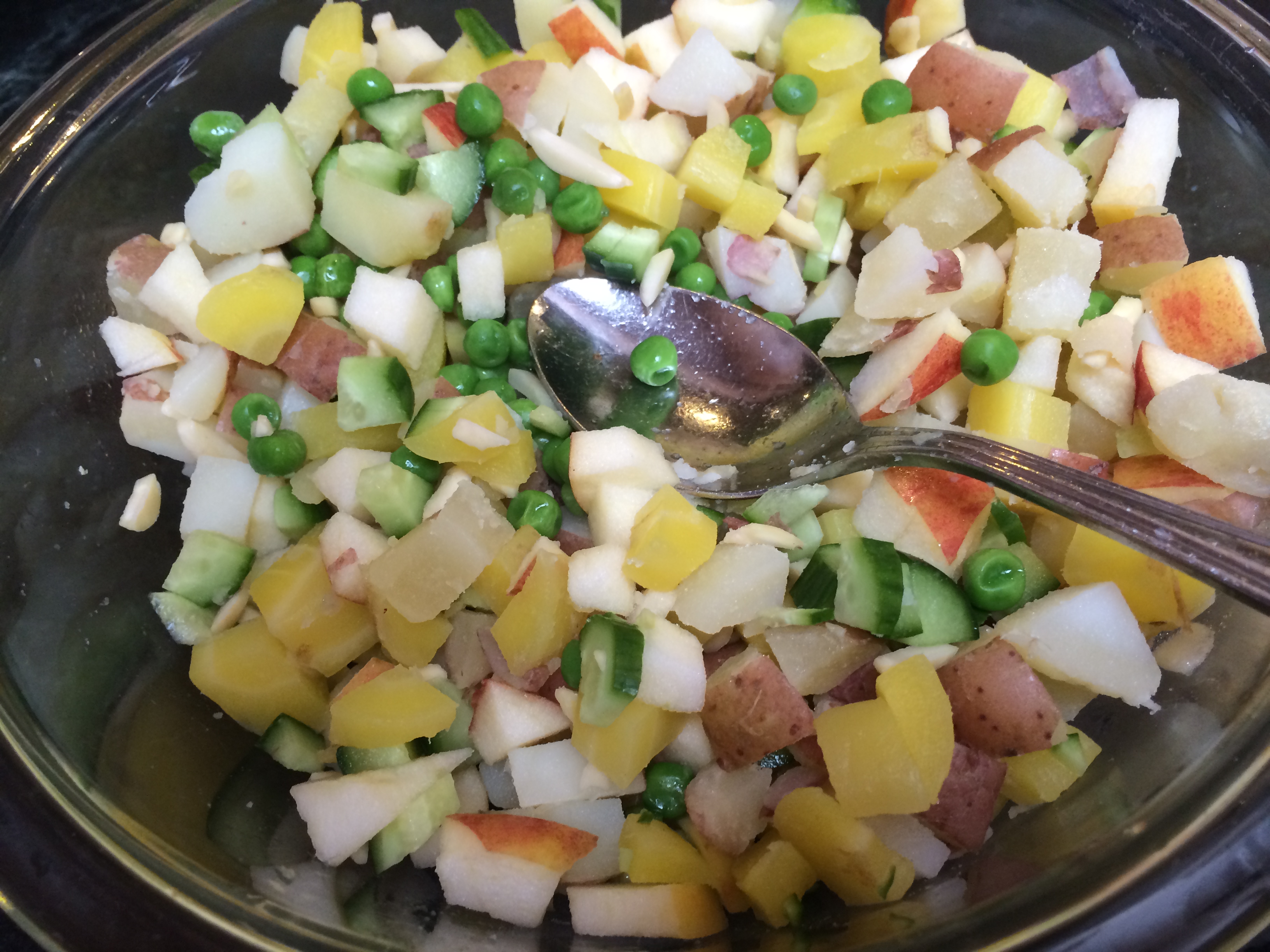
All diced

All diced

Dish lined with lettuce

Dish lined with lettuce

Mixed

Mixed

Vegetarian Russian Salad

Ingredients:
  • About 6 small red potatoes
  • 1 large carrot
  • 1 cup of frozen peas, thawed
  • 3/4 large red apple
  • 3 tablespoons slivered almonds
  • 1 small cucumber (substitute with celery)
  • About 8 outer leaves of butter lettuce
  • Half a teaspoon paprika, more for garnish
  • Salt to taste
  • About a cup of mayonnaise from above
Method:

Boil the potatoes and carrots in their skins, in salted water. When done, drain, let them cool, then dice into small pea-sized pieces. Dice the apple and cucumber into similar sized dice as well. Leave the skin on (adds a nice colorful touch). Thaw the peas.

Line your serving dish with the lettuce. Mix the ingredients together in a mixing bowl. Add the mayonnaise, paprika, and salt to taste. Mix together nicely. Serve it out in the bed of lettuce.


(Click here to find me on Facebook and here on Twitter.)

The GMO debate as a fable

IMG_2365[1]The other day my daughter and I did a fun kitchen project which had nothing to do with food — we made beeswax hand lotion at home. Never having done this before, I found myself a little befuddled. I had to stir in stuff while the beeswax was still melted. But how to keep it warm and not let it stiffen up while the whisking is going on? Luckily, my experience with a completely different recipe — chocolate frosting — helped me. I stole a step from that very different recipe. I set up a double boiler and kept the beeswax warm in that. It took a while but it worked.

I hope that did not raise any eyebrows. How dare I steal a step from one recipe to another? Did my hand lotion start to smell chocolatey? Of course not, I didn’t add any chocolate to it. Is my hand lotion now forever tainted as being somehow impure? Or unnatural? No — I demand that my misbegotten hand lotion be given its proper place in the pantheon of hand lotions. I ask that my hand lotion be accorded the same respect as other hand lotions, which means, please judge it on its traits. Does it smell good? Does it make your hands feel soft? And so on.

What does this have to do with genes? Everything.

DNA

DNA is a recipe. It isn’t really a recipe for living beings — it is a recipe for proteins, which in turn are a recipe for us. Sometimes biologists stress that all life on earth is related. So every weed you see growing in a sidewalk crack, or every bacteria that you can’t even see — is your cousin. Mostly we know that because all of our DNA’s are written in the same language.

I’m going to call this language Dnaelic, just to irritate my science readers and my Gaelic readers in one stroke. Where English has 26 letters, Dnaelic has just four: A, T, C and G. Words in Dnaelic are made up of 3 letters and are called codons. So CCC is a codon, TGT is a codon, and so on. Just like a sentence in English is a sequence of words that expresses a complete thought, a gene in Dnaelic is a sequence of codons that expresses a complete protein. Dnaelic even has punctuation marks like English to mark the start and end of genes.

Gene splicing

OriginalHandLotion

DNA for hand lotion

Imagine if the chocolate frosting recipe had been written in say, Choctaw, while the hand lotion steps were in English, I would find it pretty difficult to transfer steps from one to the other. Since they were both in English, it was easy. In fact, I will show you what I did.

On the left is my original recipe. I’m going to call it the DNA for hand lotion. Now I am going to ‘cheat’ and drag in an instruction from the DNA for chocolate frosting.

Genetically modified DNA for hand lotion

Genetically modified DNA for hand lotion

Can you spot the difference? My DNA for hand lotion now has an instruction spliced in. It will make better hand lotion, I promise. It will be softer (because the ingredients mixed in better) and will be way easier to grow. Sorry, I mean, way easier to make. And you will certainly be able to sell more of it.

I’m going to call that dragged in step the trans-step. As you can see, it does not look any different than any other step. Theoretically, I could have just thought it up out of the blue (mutation) or, possibly, I might have got that inspiration to use a double-boiler by watching other hand-lotion makers at work (cross-breeding). Nevertheless, I got it from chocolate frosting, and to mark that special history, I will call it a trans-step.

GMO on the Interwebs

No doubt the example I gave above is a bit of a fable and much simplified. But as I read the commentary on GMO all over the Interwebs I find a weird dichotomy; the debate between the science folks proceeds at a very sophisticated level, while the debate between laypeople shows no understanding of the basics of genetics. Once in a while when there is cross-communication between the two communities, the debate devolves into accusations of idiocy and political hackery. The two communities cannot speak to each other! Our DNA’s may speak the same language but we certainly don’t.

As laypeople, we need to understand the basics of this very important debate. We are all voters. So let me reframe some common GMO debates in the light of my hand lotion fable.

The Debate!

Layperson: “Genetically engineered foods have not been proven to be safe or healthy. You keep asserting over and over again that they are safe, but that does not convince me.”

Scientist: “I only keep saying that because I want to keep things simple. In reality what I mean is, ‘genetically engineered food’ is not a useful category. It is like saying all recipes that have borrowed steps from very different recipes are suspect. This is not a useful way to look at it. One has to study each genetically modified creature on its own to see if the introduced traits are good or bad (and, we have). In the hand lotion example, the borrowed step made a good hand lotion. But we could have as well borrowed a step that ruined it — say, a step that said ‘now throw it down the drain’. That would make a terrible hand lotion or actually, not make a hand lotion at all.

“There are many genetic engineering research projects ongoing. Let’s judge each on its merits. Here is one that will control the mosquito population to prevent them causing malaria. Here is one that could help Vitamin-A-blindness in the tropics. Aren’t those good things?”

Educated layperson: “I do actually think that genetically engineered food as a whole is something to worry about. I worry that you don’t understand the recipes of living beings well enough to be tweaking them. What if you put in a gene and it produces a protein as expected but it also has another unexpected effect? I also worry that your actual process is not very precise.

Scrambled instruction

Scrambled instruction

Transgene

Transgene

What if instead of the clean splicing that you showed in the hand lotion above, the spliced gene actually goes in scrambled (left) or like this (right) where the transgene is ‘loose’ inside the DNA or somehow different? What if you are introducing proteins into a creature that has never had a protein quite like that before — does it matter? It is as if you put in a step in the hand lotion recipe to add something no hand lotion has ever seen before — like, say, I don’t know, Coca Cola. Would that cause allergies? Would it still be hand lotion?

The Odd Pantry (moderator): “Good points, Educated Layperson. I might have to do a post on each of your concerns.”

Layperson: “Genetically engineered foods are unnatural. Nature should not be meddled with.”

Scientist: “I find it amusing that you are typing this out on a keyboard and sending me this over the Internet. Did that not strike you as ironic? Everything natural isn’t good. The dinosaurs were wiped out by a perfectly natural asteroid that they would have loved to have meddled with.

“You seem to have insufficient respect for how much humans have meddled with nature already, even before GMO.

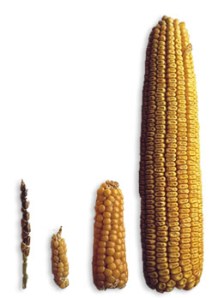
Teosinte to corn (source: http://www.kukurydza.org)

Teosinte to corn (source: http://www.kukurydza.org)

We have turned corn from this (left) to this (right) with just conventional breeding (and some help from nuclear technology). No, I’m not joking.

“On the other hand, you have insufficient respect for the tricks that nature gets up to already with DNA. The usual thing of a mother and father mating to produce offspring is one thing. But our DNA is being constantly altered by completely random mutations, most of which are fatal. Did you know that while scientists carefully selected a bacterial gene to put into corn for a specific purpose, nature does this all the time? Bacteria not only transfer genes to each other (without mating), but have known to transfer genes to insects, and even humans. In a completely random, unpredictable way.”

Educated layperson: “You are right, Scientist. Nature is vaster than any of us can imagine and calling something ‘unnatural’ is, well, childish. But I will rephrase my concern. My concern is that GMO foods do not promote biodiversity, on the contrary, they promote an extreme form of monoculture. The corn example you gave — yes, I am aware that we have bred teosinte into corn, a huge distance (and not always for the good). But you know what? The breeding didn’t happen in a lockbox. Corn was always free to spread its pollen far and wide as plants will do. Wild species and cultivated species could mate. With GMO, it is single strain that is expected to be grown in a lockbox and not share pollen with other plants. I’m sorry to go back to that word, but this is unnatural.”

Scientist: “That’s not me demanding that strains of crops grow in a lockbox, that’s Business.”

Educated layperson: “True, but all the fun you have in the lab doesn’t really come to us except through Business.”

The Odd Pantry (moderator): “You are on fire today, Educated Layperson. I might have to do a post on what the problem with monoculture really is, since you didn’t really explain it.”

Layperson: “GMO foods contaminate the environment.”

Scientist: “Oh, that again. Look, I agree with Educated Layperson above that GMO plants will want to cross-breed with wild plants. But whether that counts as ‘contamination’ — doesn’t that depend on whether the GMO plant has good traits or bad?”

Educated layperson: “Good for what, and bad for what? A plant may do exactly what it is engineered to do, for example have insecticide. But if it escapes or mates with wild plants, you now have insecticide plants growing all over (think: superweed). They are going to be quite invulnerable, don’t you think? And what about the decimation of the insect population that might occur? It seems to me that you often ignore the second-order ecological impact of the plants you build.”

The Odd Pantry (moderator): “Oooh, ‘second-order ecological impacts’. Mind if I steal that? Another post, I guess. I better get busy, I have a lot of posts to bore my readers with.”

[Disclaimer: all characters are fictional and not meant to represent any real person. I will admit to having a special fondness for Educated Layperson, though.]

In my kitchen of #cookingfail

Ship FAIL

Shipment FAIL

The Internet has spawned its own jargon. One of these is the word ‘Fail’ attached as critique to a thought or an image. The classic is the image of a container ship running aground, boxes awry, with the words ‘Shipment Fail’ emblazoned on it. It originated from people poking fun at a late 90’s Japanese video game that used the phrase ‘You Fail It’ as a game over message. It has now become a way to simply interject disdain, without having to explain anything, while nudging and pointing at an unfortunate scene. The anonymity of the Internet sometimes encourages the worst of humanity, allowing one to mock the Anonymous Other without the moderating influence of having to do it in their presence.

In other words, I love it!! Let’s get started! Here is a litany of unfortunate scenes in my kitchen this month, for the IMK party hosted at the lovely Fig Jam and Lime Cordial blog.

One. Broil the Handle.

Broil the handle

Broil the handle

Starving for an eggless omelette made from chickpea flour, but really, starving in general, I brusquely threw some flour in with some water and neglected to measure amounts. Who needs to measure stuff when one’s instinct is so fine-tuned, I thought. Well, the batter was too wet; it wouldn’t set on the stovetop; so I popped it under the broiler for a few, forgetting that plastic and broiler don’t go well together. Result: flames (I apologize I couldn’t take pictures of the flames, since I was too busy dousing them); and next, ashes.

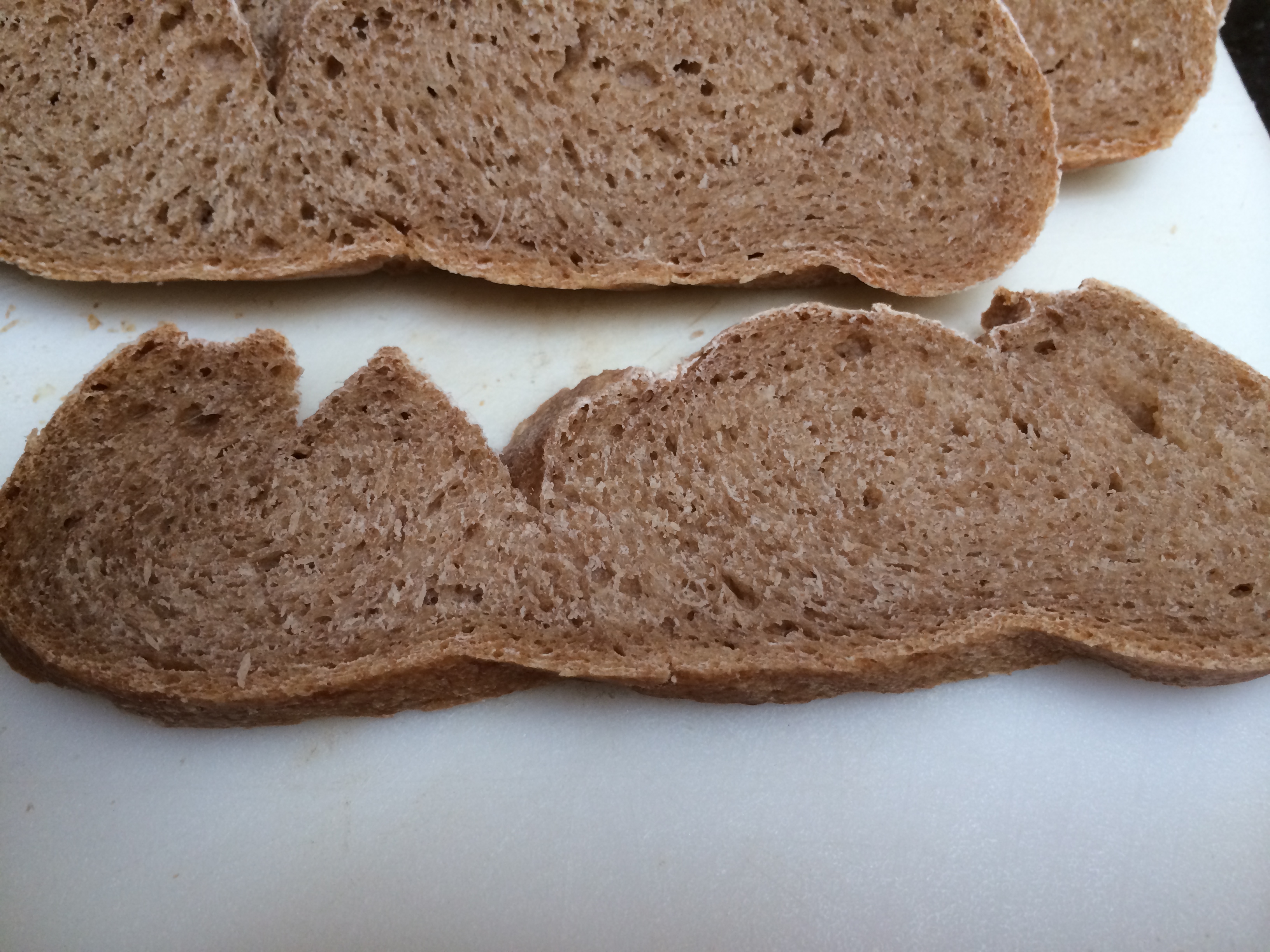
Two. Disembowel the Bread.

Disemboweled bread

Disemboweled bread

Deeply cut slice from disemboweled bread

Sawtooth slice from disemboweled bread

I usually shape the loaf and score it just fine. This time I tried a new method of shaping that involved making a sort of purse with infinitely rolled in edges. Well, you see the result. The process of baking made this loaf sort of explode from the inside and spill all its guts out. Still tasted fine, though.

Three. Flop the Yeast

Poof and its flat

Poof and its flat

Dosa batter is risen with the wild lactic acid bacteria found on the beans. While sourdough bread is risen with a culture of wild yeasts and lactic acid bacteria. Slight difference; so shouldn’t sourdough starter work on dosa batter? Well, you can’t reason with the microbes, I found. I tried this experiment, and yes, there was rising activity; but here is what I found.

Bubbles arose within a day. But instead of bubbles foaming nicely everywhere, they seemed to explode out of the middle, as you can see. It smelled nicely sour, but perhaps a bit too sour? Still hopeful, I tried making crepes (dosas) and cakes (idlis) with it. That’s when I realized what had happened: there had been so much microbial activity that the thing was as sour as a lemon and all the bubbles had foamed up and gone, so instead of a nicely risen idli, I got a flat goo. Unfortunate.

Note: This was supposed to be my entry for the first ever Novice Gardener challenge at the lovely blogger Angie’s place. The rules stated it must use yeast and herbs. I used both; consider this my late, rueful, tail-between-my-legs entry.

Four. Dough-rolling Disaster

Sticky dough on waxed paper

Sticky dough on waxed paper

Sticky dough shreds waxed paper

Sticky dough shreds waxed paper

I have been doing this for years, you would think I would have figured it out. While making this weekend staple breakfast from my childhood, I found that the dough had turned out a little too sticky. Instead of doing the smart thing and adding more flour, I thought I would try rolling it out between waxed paper sheets. This is the sort of thing that is supposed to work, right? Well I did get the dough rolled into a nice flat circle, but when I tried to peel the waxed paper off, I realized that the two sheets of paper and my dough circle had fused together into a single mass, and there was no separating them, under pain of death. You can see what happened — the paper ripped apart rather than let go. I had a miserable breakfast.

Five. No gluten FAIL

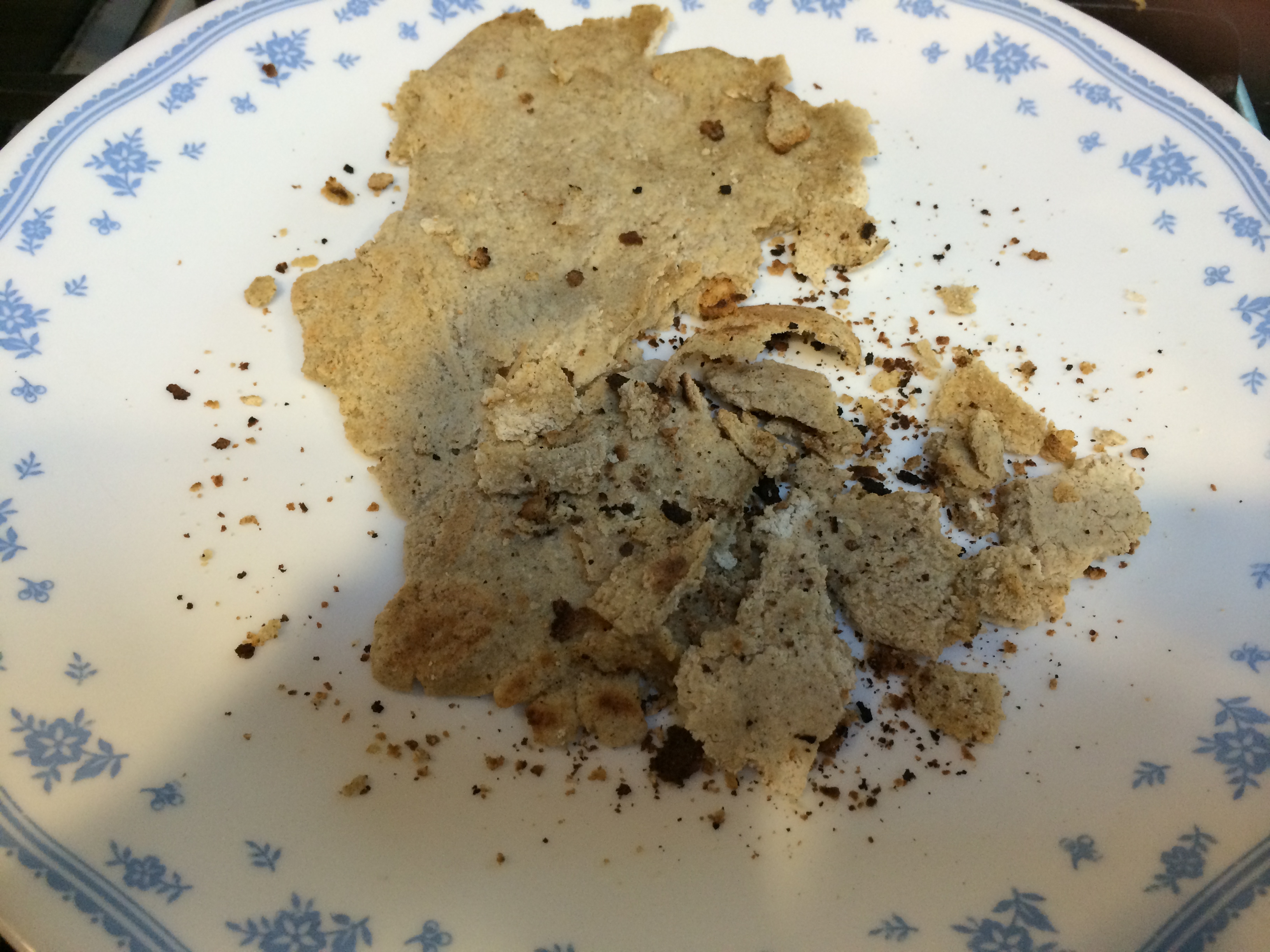
Flatbread that WILL NOT hold together. Fail.

Sorghum flatbread that WILL NOT hold together.

Falls apart more while on griddle.

Falls apart more while on griddle.

Brunt crumbs. Fail

Burnt crumbs. Fail

Ugh. Epic fail.

Ugh. Epic fail.

I am concerned that they may take away my Indian Food Blogger card if I admit this; but I am a disaster at making gluten-free rolled out flatbreads. The other day I tried doing this with sorghum (jowar). Sorghum has no gluten. Gluten is what holds bread together and allows it to be rolled out. How on earth is one supposed to do this?

Other food bloggers seem to have no problem with it. There must be a secret Twitter group that I don’t belong to where they dispense these secrets. Here’s a blogger (Chef Divya) doing a millet flatbead. Here is a blogger (Food Flavor Fascination) doing a sorghum one. And look what I got. Urrgh.
(Click here to find me on Facebook and here on Twitter.)

I’m no pastry chef, but look, chocolate cake!

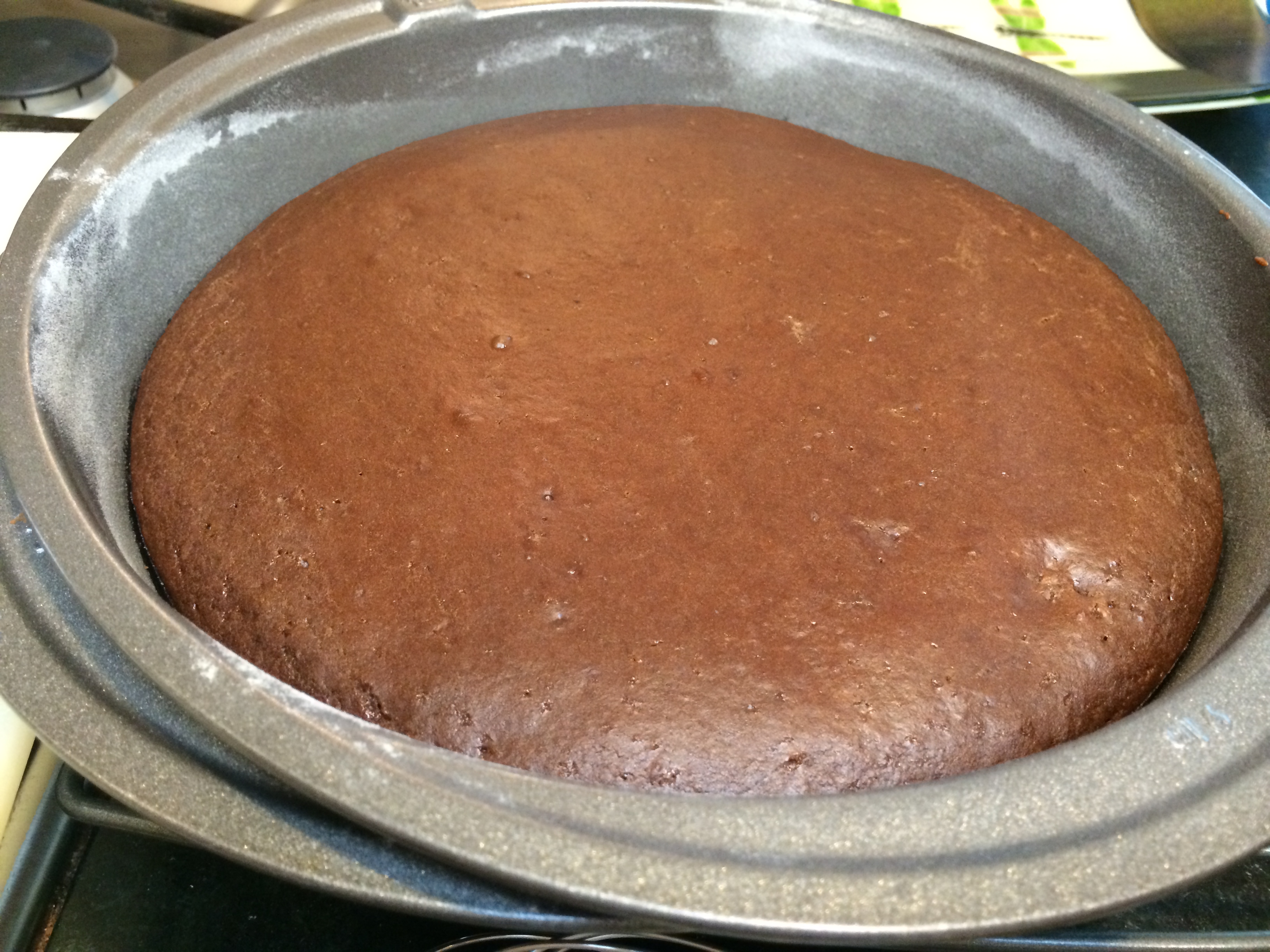
Eggless chocolate cake

Eggless chocolate cake

Situation:

Husband: Has a birthday. Chocolate fan. Not a spring chicken, worries about sugar and fat. But wants cake. Needs cake.

Me: Not a fan of chocolate. Don’t have a sweet tooth. Not much of a pastry chef either. But cake must be had!

Daughter: wants to ‘help’!

I think I did decently. My husband thought so, even though he spent the whole time worrying if I was making the frosting rich enough and covering all the gaps and the rest of the time worrying about how much fat he would be consuming.

In any case, this is about the simplest cake one can make and it turns out great. I got the recipe from the King Arthur site, but just to show how simple the cake and frosting are to make, I will put down the recipe in a sort of telegraphese.

Kiddo helping with the mixing

Kiddo helping with the mixing


One layer

One layer


Slathering

Slathering


Slice

Slice

Cake

In a bowl, stir together the dry ingredients: 1.5 cups all purpose flour, 2/3 cups brown sugar, 1/4 cup unsweetened cocoa, 1 teaspoon baking soda, 1/2 teaspoon salt.

Pour in the wet ingredients: 1/3 cup almond oil, 1 tablespoon vinegar, 1 teaspoon vanilla, 1 cup milk.

Stir it all together.

Pour half into one 8-inch round cake pan, half into another. Bake at 350°F for 20 minutes. If you pour it all together into a single cake pan, let it bake for about 30-35 minutes.

Frosting

In a bowl, microwave 1 cup cream for 1 minute. Put in 8 ounces bittersweet chocolate and stir, microwave again for 1 minute. Keep stirring, if the chocolate still refuses to melt, give it 30 second whirls at a time and stir, stir, stir. Eventually, it will become luscious and smooth. Allow it to cool slightly, then slather it over one layer of the cake, lay the other layer over it, and slather over it some more, and slather over the sides.

Recipe source: 

King Arthur Flour’s original cake-pan cake

Chocolate ganache

(Click here to find me on Facebook and here on Twitter.)