Sookha aalu, Indian home fries

All right, Americans, I will admit it, you are better at naming recipes than us Indians. The dish called ‘sookha aalu’ which is made in different guises all over India means nothing but ‘dry potato’. Descriptive, yes, but lacks a certain punch.

Some American marketing geniuses

American marketing geniuses

Then the American marketing geniuses come in, and decide that any recipe name is improved by bunging in the word ‘home’. And on top of that, they came up with the word ‘fries’…. “Guess what guys, we won’t include the word ‘potato’ at all…a light touch…a bit of indirection.”

Genius! Home fries. My point here is that India has legions of most excellent sookha aalu recipes and really they are almost exactly what people in America recognize as home fries, except with Indian spices. Here is my version, and it is most delectable.

Sookha Aalu, Indian home fries

Ingedients:

  • 1 large red potato or 2 medium or several small.
  • salt to taste
  • half a teaspoon mustard seeds
  • half a teaspoon red chili powder
  • half a teaspoon coriander powder
  • 1 teaspoon dry mango powder (aamchur) or substitute with lime juice
  • 2 tablespoons oil

Method:

Rinse the potato and remove the eyes. Microwave it for 5 minutes or so, or long enough to almost cook it right through.

When it comes out of the microwave, wait till it is cool enough to handle, and cut it into pieces. First, Do Not Peel. If you do you will regret it. The crisped up peel is definitely the most appealing part of this dish.

Next, think about the shapes of the pieces. You could do cubes, if that is your fancy. Don’t make them bigger than about half an inch in width. Or you could do slices, about eighth of an inch thick. Either way works, but choose a method and stick with it, unlike me, I chose slices, then switched to cubes, then had a bit of a hodge podge.

Heat oil in a non-stick pan. When it shimmers put in the mustard seeds. When they pop put in your cut up potato. Stir them around on medium-high heat. Sprinkle salt over in two stages — once, after you have tossed the potatoes with the oil, and next, after  a few minutes, and more stirring.

IMG_0556 IMG_0558 IMG_0559 IMG_0561

You will see them begin to crisp and brown in a few minutes. Keep stirring once in  a while, and cook in all for about ten minutes. Towards the end of cooking time, sprinkle on the chili powder, the coriander powder and the dry mango powder. Adjust for salt and you are done.

Introducing the Eggnach

Eggnach with roti

Eggnach with roti

My People — the Sindhis — have made a lot of contributions to world culture, but I must say this ranks as an important one. Sindhis discovered that spinach and eggplant, when cooked together, meld well, marry well, and make a tasty nutritious brew.

Not only is this technique explored in the very famous Sai Bhaji, but in this rather less well-known dish as well. It goes well with rotis, but would go on the side of rice very well too, if you have some plain yogurt on the side. A very nice accompaniment would be yellow rice — cooked with some garlic, salt and turmeric powder (recipe forthcoming).

I found this recipe in this book and as usual made some modifications.

The Eggnach — eggplant and spinach dish

Ingredients:

  • 1 bunch spinach
  • 1 regular-sized eggplant
  • 1 medium tomato or 2 small ones
  • 4-5 cloves garlic
  • half and inch piece ginger
  • 2 serrano chilies or several smaller birds-eye chilies
  • half a teaspoon coriander powder
  • half a teaspoon cumin seeds
  • half a teaspoon red chili powder
  • salt to taste
  • 2 tablespoons oil
  • 1 tablespoon ghee (optional)

Method:

Rinse and chop the vegetables.

IMG_0547 IMG_0548 IMG_0549 IMG_0550


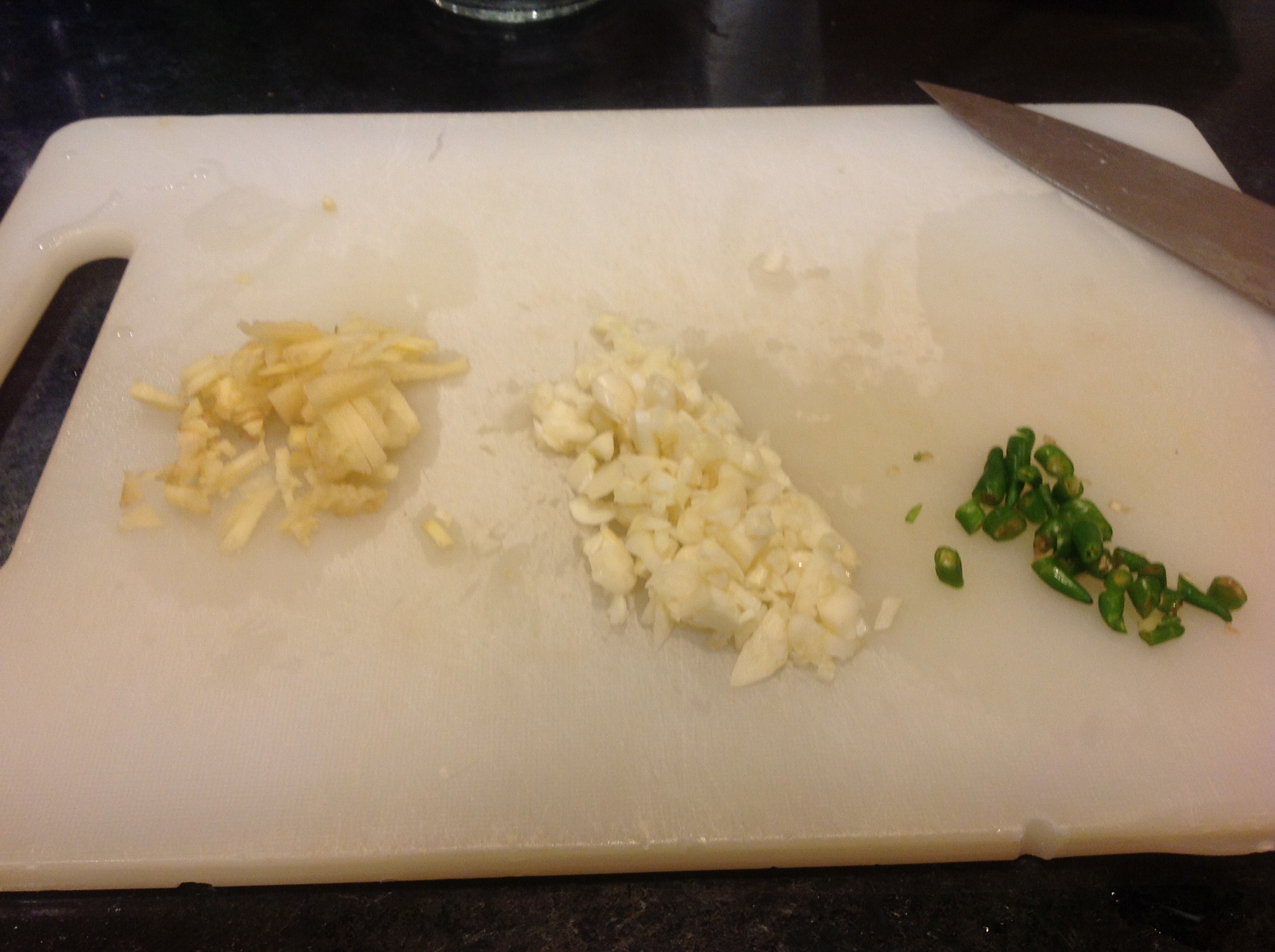
Chop the garlic, ginger and chili. Give them a pounding in a mortar and pestle after sprinkling a bit of salt on it to add a bit of roughage and to draw out moisture.

IMG_0546 IMG_0551

A note about salt: it draws out moisture! This is an incredibly useful fact that helps out in various ways. In this case, I pound it with a bit of salt, so that the paste self-makes itself, without adding even a splash of water.

Salt also pre-cooks food as it draws out the moisture, at least that is how I think of it. If you mince garlic, and salt it, in 10 minutes you will see that it has turned mushy and wet, and by the way, the taste of the garlic will not be as aggressive as when it is raw.

So anyway, getting back to our job. Pound those guys to get them to paste up. You don’t need to go the extra mile, just a simple smashing will do.

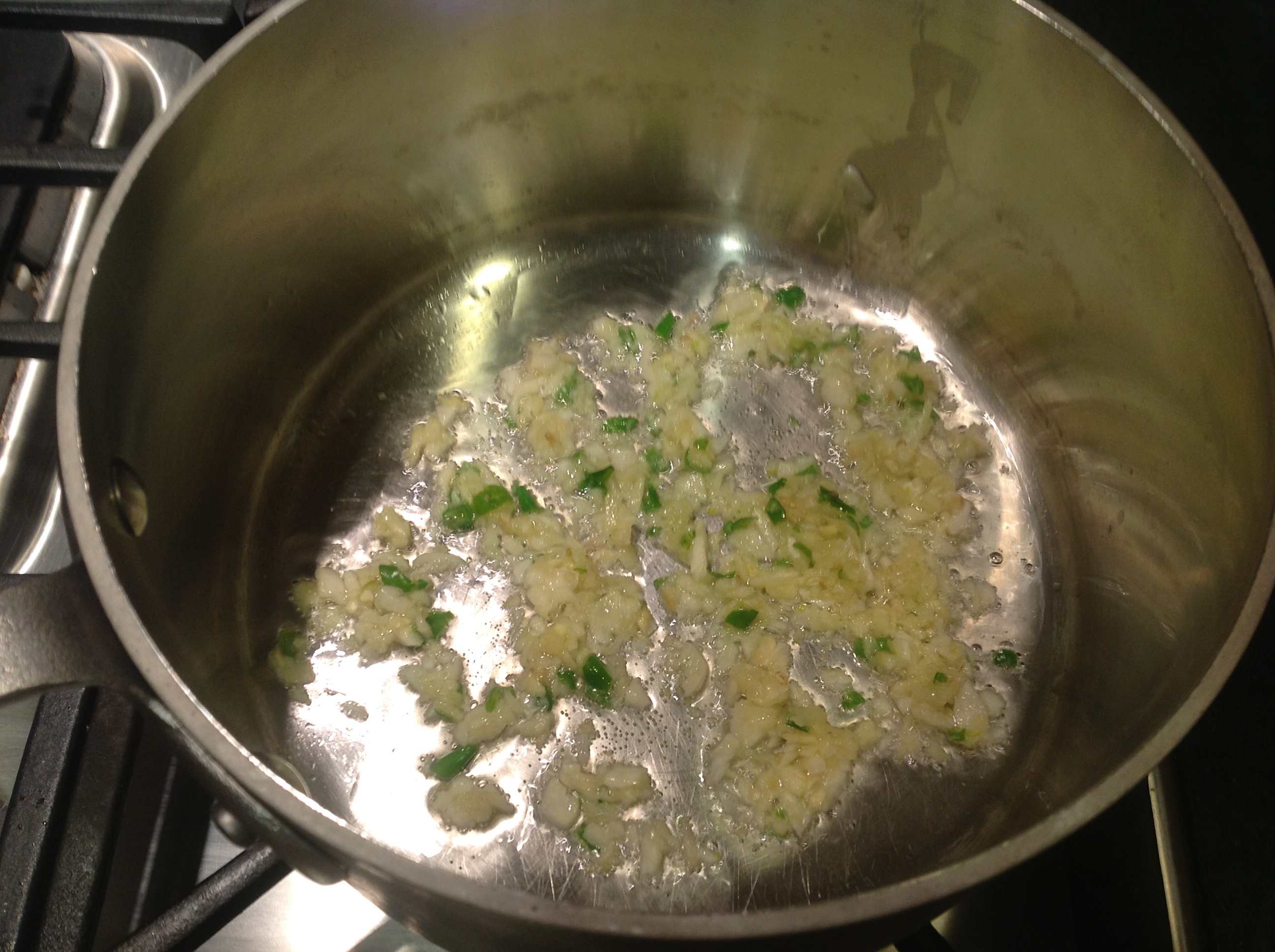
Heat oil in a thick-bottomed pot. When it shimmers, throw in the cumin, red chili powder and coriander powder. Now enters the garlic/ginger/chili paste. Let it sizzle. Now in tumble all the vegetables, chopped. Salt them, stir them around, cover, and cook for 15-20 minutes on medium first, then, when it comes to a boil, on medium-low.

IMG_0553 IMG_0554 IMG_0555 IMG_0557

Everything you have in there is quite mashable by this point. So attack it with a potato masher or simply the back of your spoon.

IMG_0560

Eggnach mashed

If you like, top it with a teaspoon of ghee, and possibly a sprinkle of lemon juice, and you are done.


Simple dal series – Part 3, tuar dal with spinach

(Part 2 of this series is here.)

Here is the pigeon-pea, which has nothing whatsoever to do with pigeons, except that they are both full of protein:

Pigeon pea, tuar dal

Pigeon pea, tuar dal

Tuar dal

Tuar dal

And here is some dementia-fighting spinach:

Spinach

Spinach

And this is what you get when you marry them: spinach dal.

Spinach dal

Spinach dal

Eat enough of this, and you will be lifting weights while remaining completely undemented. But that’s not all. Spinach is a good choice to put into any dal, because it melts in, rather than remain in bits. Whether your intention is a soupy dal or more of a porridgy one, spinach fits right in.

Spinach with tuar dal

Ingredients, for boiling:

IMG_0533[1] IMG_0535[1]

IMG_0539[1] IMG_0540[1]

  • Half a cup tuar dal (dehulled and split pigeon peas)
  • spinach — one bunch (use half a bunch if you want it more yellow than green)
  • 5-6 cloves garlic, smashed
  • 1-2 serrano chilies
  • half a teaspoon turmeric

Ingredients, for seasoning (all of these are optional, but do try to use at least one spice):

Seasoning spinach dal

Seasoning spinach dal

  • 1-2 tablespoon ghee
  • sprinkle of asafetida
  • half teaspoon mustard seeds
  • half teaspoon cumin seeds
  • half teaspoon fenugreek seeds
  • half teaspoon or to taste red chili powder
  • salt to taste
  • Half a lime or lemon squeezed

Method:

Rinse and soak the dal in hot water for an hour or more. It will double in volume, or more. Put the drained dal in a thick-bottomed pot along with the turmeric, garlic, and chili. Add two and half cups water and bring to a boil.

Now. I say this with every dal recipe but it bears repeating. When dal first comes to a boil it will froth up with the rage of a volcano. Let it do so while the pot is uncovered. This way you can watch and the foam is not likely to end up on your burner. Once the foam has spent itself, partially cover, turn it down to simmer for an hour and half.

In the middle of cooking time, put in the washed and chopped spinach. Cover and cook on until the dal grains are soft. Give the soupy stuff a whisk with a whisk or a swoosh around with one of these, a mandheera. Add salt and keep it on a low simmer.

Spinach dal before seasoning

Spinach dal before seasoning

Now for the seasoning. Heat the ghee on medium high heat. By the way this is one dish where I do recommend ghee rather than oil because it enhances the flavor in a very nice way. Of course oil would work too.

When the ghee is completely melted, throw in the seasonings in this sequence: first, the asafetida and the red chili powder; then the cumin seeds; when they sizzle, the mustard seeds; when they pop, the fenugreek seeds. Don’t cook these longer than about 10 seconds, because they will turn bitter if so.

Turn off the heat and pour into the dal. Stir, stir, stir. Simmer for a few minutes to meld the flavors. Squeeze some lemon/lime juice to it to brighten the flavor.

I love this dish with rice but other people recommend rotis. I never would, so there.

IMG_0544[1]

Rice with spinach dal

In which the Manchurian Cauliflower gets brainwashed by the Californians

Gobi Manchurian with fried rice

Gobi Manchurian with fried rice

There is a famous dish in India called Cauliflower Manchurian, which no actual Manchurian person would probably recognize. For that matter, those actual Manchurian people, from the mythical land of Manchuria? They probably wouldn’t call themselves Manchurian either. This is an ancient term that I believe came from the tribe of Manchu, but then became a generic term for a region around the north east of China, and a part of Mongolia. As far as I could determine, it is now used to refer to only two things: The film/novel ‘The Manchurian Candidate’, and this dish — Gobi/Cauliflower Manchurian.

A long time ago a Chinese community that had settled in eastern India created this dish, with Chinese ingredients but an Indian sensibility. They were either from the ethnic Manchu tribe, or perhaps they picked a word that suggested something vague, like ‘from yonder eastern lands’?

In any case, this is one of the most famous Indian Chinese dishes, served in restaurants, and also recreated in many homes, including mine as I was growing up. I recently remembered this dish and made it at home to go with fried rice. As is my wont, I modified it; it is already a hodge-podge between Indian and Chinese, and I added Californian to the mix — what that means, is that instead of deep-frying the cauliflower, I microwaved and roasted it, in order to make it somewhat healthier. This made enough for dinner for two, with no leftovers.

It got high marks from my foremost customer and critic, my husband. So here goes:

Californian Cauliflower Manchurian

Ingredients:

  • Half a cauliflower, cut into half inch wide florets
  • 3-4 cloves garlic
  • half an inch piece of ginger
  • 1 serrano green chili
  • 2 tablespoons soy sauce
  • half a cup chicken broth
  • 1 tablespoon chili sauce, like Lee Kum Kee or Sriracha
  • 1 tablespoon cornstarch
  • 1 tablespoon Ketchup or Worcestershire sauce
  • salt to taste
  • 2-3 tablespoons oil

Method:

Cheddar cauliflower

Cheddar cauliflower

Rinse the cauliflower florets. Set them in a plate and microwave on high for 3 minutes. This will get them cooked on the inside and avoid the need to deep-fry. Next, for surface browning, rub salt and 1 tablespoon olive oil over them, and pop into a 425 F oven for 20 minutes, turning once in the middle. In retrospect I should have broiled it for the last 5 minutes to get it even browner.

Minced ginger, garlic, chili

Minced ginger, garlic, chili

Meanwhile prepare the sauce. Mince garlic, ginger and chili and keep aside.

Liquid ingredients for manchurian

Liquid ingredients for manchurian

In a bowl, mix the chicken broth, soy sauce, chili sauce, cornstarch and ketchup or Worcestershire sauce.

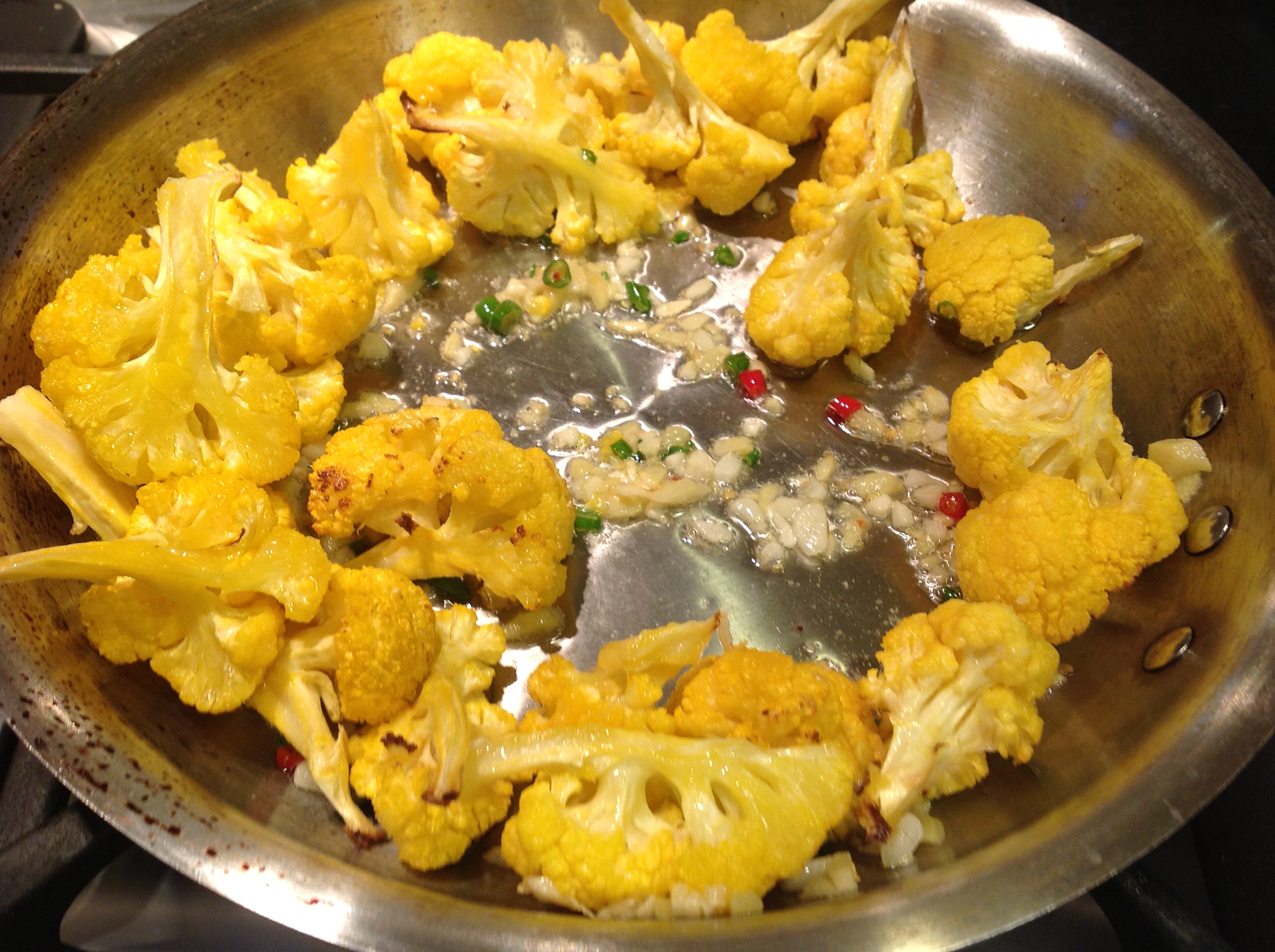
Heat two tablespoons oil in a wide pan. When it shimmers, put in the garlic, ginger and chili, to saute them gently. By this point the cauliflower should be ready and browned, put it into the pan and stir the seasonings with it. Doesn’t hurt to adjust the cauliflower for salt at this point, even though the salty soy sauce is yet to come, one wants the cauliflower to not be bland in itself.

Cauliflower sauteing

Cauliflower sauteing

Now it is time for the liquid mixture to be poured in. Stir, stir, stir to coat the florets. As it comes to a boil, the cornstarch will congeal and make the mixture shiny. You want it to go all over the cauliflower.

IMG_0521[1] IMG_0522[1]

Your dish is ready, but you need garnish. This is what I used for garnish: sliced chili in some white vinegar, heated for 20 seconds in the microwave.

Chili vinegar

Chili vinegar

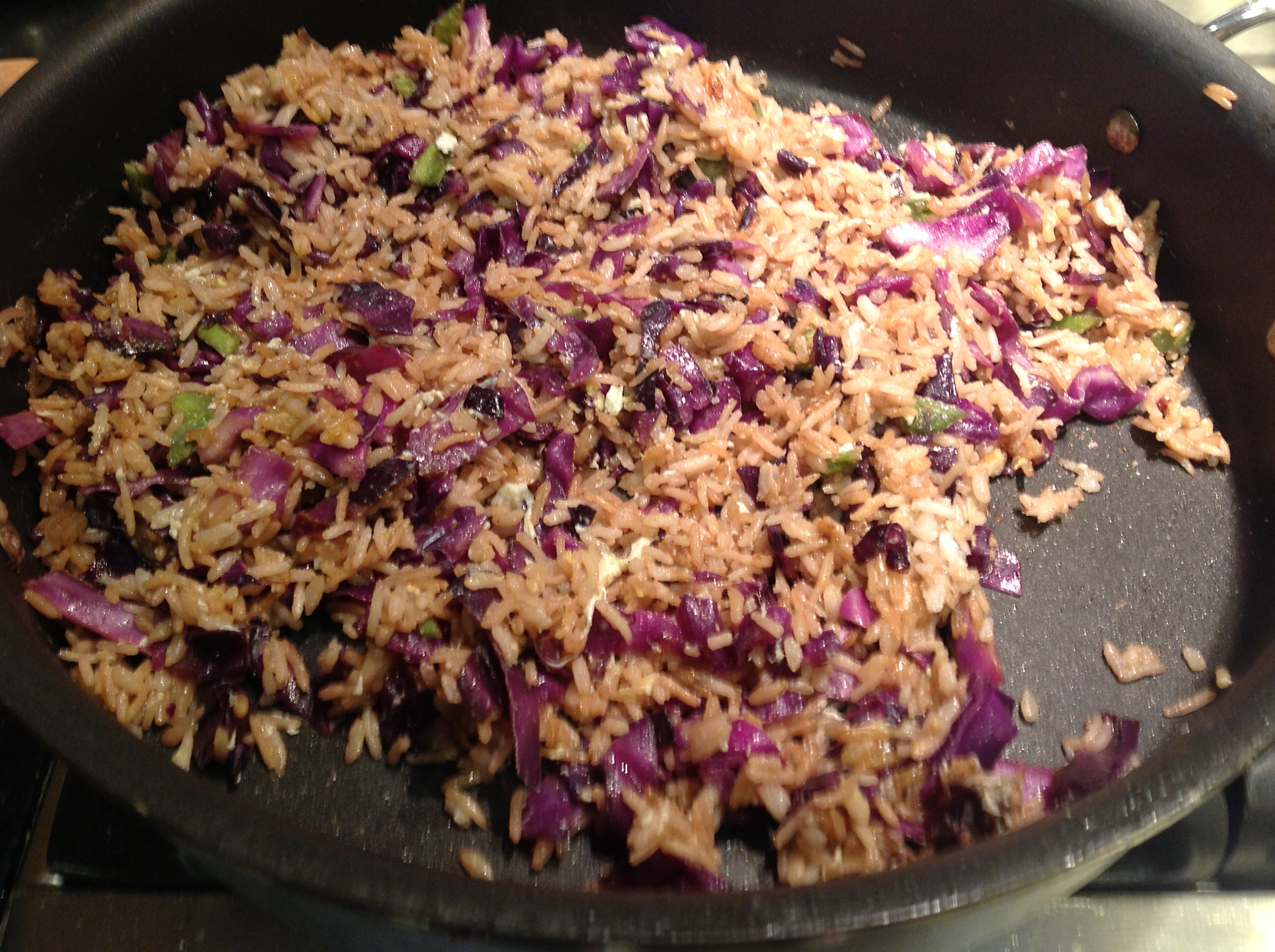
We had it for dinner with this lovely fried rice with purple cabbage, the recipe for which will have to come some other time.

Fried rice with purple cabbage

Fried rice with purple cabbage

Taro the terrible

Kachaalu took

Kachaalu took

Today more Sindhi food — a snack, this time, called kachaalu took.

Here is taro. It is a root or tuber, grown underground in the tropics all over the world. Also known as arbi, colocasia, kachaalu, dasheen.

Taro root

Taro root

This is one scruffy guy, as you can see. You are more likely to find it in a vegetable police lineup than in the vegetable swimsuit catalog. But I’m always happy to find it on my plate.

If you read the Wikipedia article I linked to, you might notice one thing — the countries where taro is eaten are all third world countries. This is telling. I don’t know what it is telling me, but perhaps that taro is not glamorous?

In reality this is a pretty healthy vegetable. Its leaves are large and heart-shaped, and can be eaten simply as greens or rolled around a filling. The tuber can be fried, boiled, mashed, sauted, roasted, baked, sauced, or microwaved (as we will see below) in endless variations. But whether you eat the leaves or the tuber, it must be cooked before eating, because it is somewhat toxic when raw.

The recipe below is eaten as snack either with dinner or before. Traditionally this recipe uses the double-fry method, but to make it somewhat healthier, I use the microwave and get quite comparable results. I also shallow, not deep, fry.

Kachaalu took

Ingredients:

  • A few tubers of taro
  • some salt
  • some oil
  • red chili powder
  • dry mango powder, substitute with lime/lemon juice

Method:

Rinse the tubers to get the lose dirt and hair off. Set them in a plate and microwave for about 5-6 minutes or until softened. Wait for them to cool until you can handle them, then pull the peel off. Now slice the tubers into quarter inch thick slices.

IMG_0498[1] IMG_0499[1]

Heat the oil in a non-stick pan. When it shimmers it is time to lay the slices down. Sprinkle with salt as they are cooking. Also press down on each slice with a spatula to a) get it to be in full contact with the hot oil, and b) flatten out a bit to be in even more contact.

IMG_0500[1] IMG_0501[1]

Pretty soon a delicious aroma of browning will arise, most reminiscent of bacon cooking. When you detect browning on the underside (this will take about 3 minutes on high-ish heat) flip each slice over

Sprinkle this side with salt as well. Flatten each slice with a spatula once again. In three more minutes, they will be browned on both sides.

Remove the slices to a plate and sprinkle with red chili powder and dry mango powder (aamchur). The latter adds a very necessary tang to the dish, so if you don’t have it, use lemon or lime juice instead.

I challenge any greasy-spoon diner to compete with this in sheer sinfulness!

Kachaalu took

Kachaalu took

Simple dal series — Part 2, yellow moong dal with roti

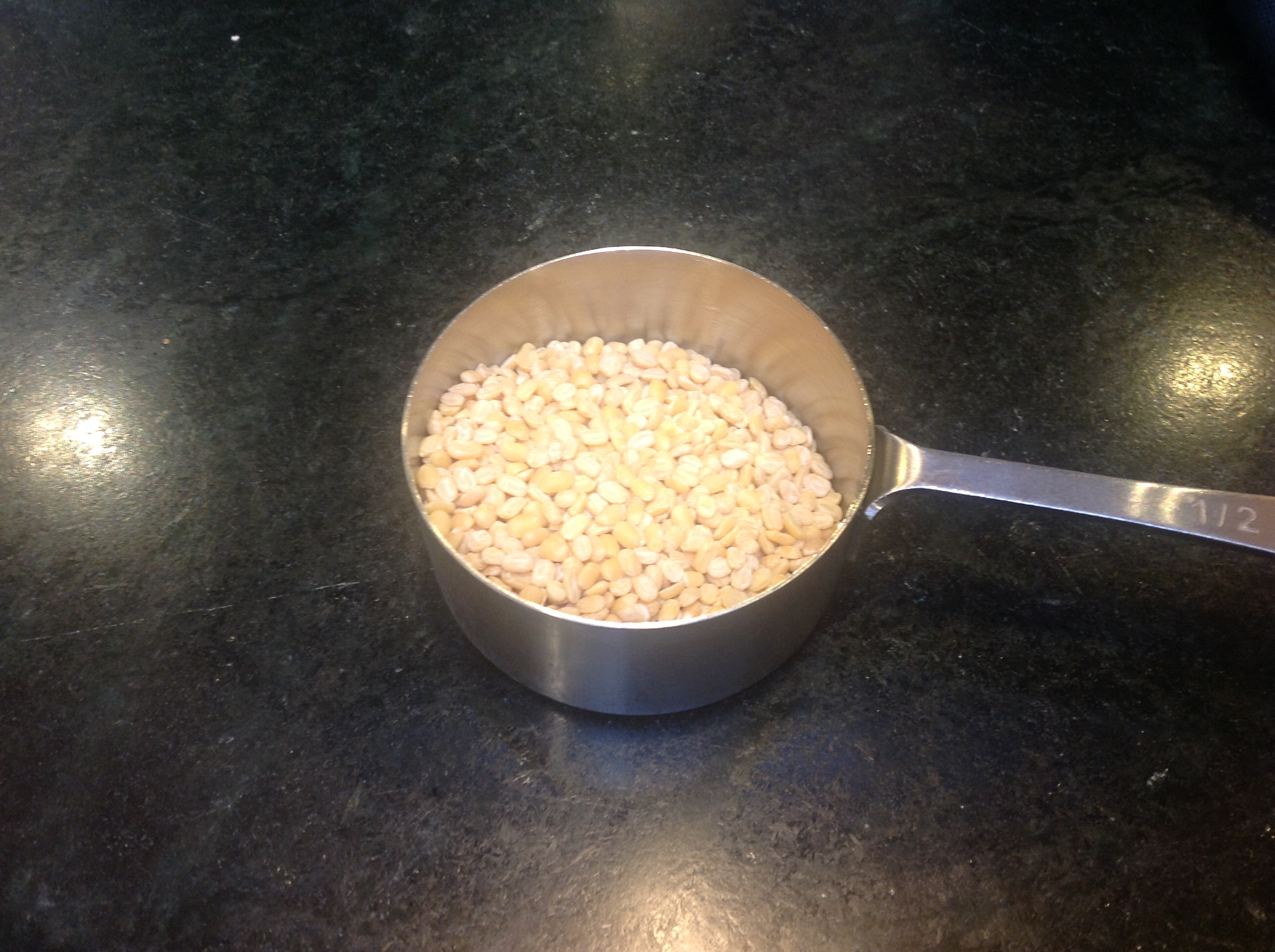
Moong dal

Moong dal

(Part I of the series is here)

(Part 3 of the series is here)

Most Californians know of this tiny bean — moong, or mung — in the form of sprouts in their ‘Californian’ sandwiches that they ask to have left out. Or the translucent tails thrown on top of their pad thai. But there is much more to the moong bean, so much more!

Moong dal

Dehusked, split moong dal

In India moong dal in its dehusked, split form is the ultimate comfort food. Creamy and inviting, it is also extremely simple to make. Often yellow moong dal with rice is a baby’s first grown up meal. It goes equally well with rice or roti, but needs a slightly wetter preparation for rice. This recipe is about the moong dal that goes with roti. It makes enough for a dinner side for two, and is easily multiplied.

Garlicky yellow moong dal

Ingredients:

  • Half cup dehusked and split yellow moong dal
  • 3-4 large cloves garlic, minced
  • 2 serrano or other hot green chilies, minced
  • Curry leaves if you have them, about 6
  • half a teaspoon turmeric
  • 2 tablespoons oil
  • salt to taste

Method:

Rinse the dal and put it in a pot with the turmeric. Add one and half cups of water and bring it to a boil.

IMG_0485

The thing to note while boiling any dal is that as it comes to a boil, the stuff will foam up very suddenly and squirt all over your burner. I can’t count the number of times I’ve had to run to the kitchen to the sound of yellow liquid sizzling all over my burner, and had to tamp down the foam by stirring it. So either leave the lid off while you bring it to a boil, so you can watch, or leave it partially uncovered. Once the the foam has spent itself, it is fine to mostly cover the pot with a lid, and turn it down to a simmer.

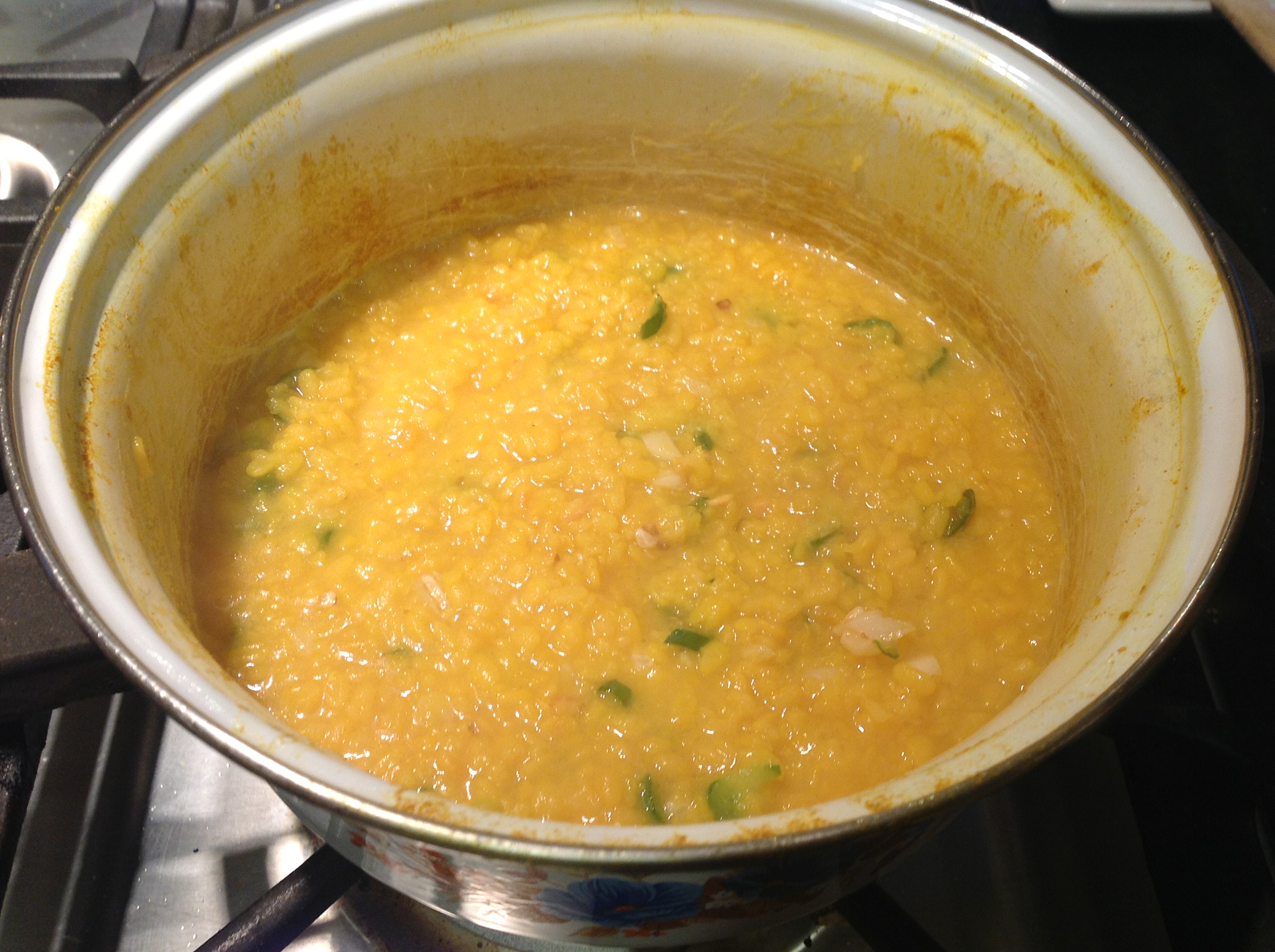
Moong dal, cooked

Moong dal, cooked

This dal will take about 45 minutes to cook. Towards the end of cooking time you can cover it with a lid fully. You can test a grain by squishing it between your finger and thumb. Add salt, turn it off or leave at a very low simmer.

Serrano chilies, one freak, one not

Serrano chilies, one with a freakish cowlick

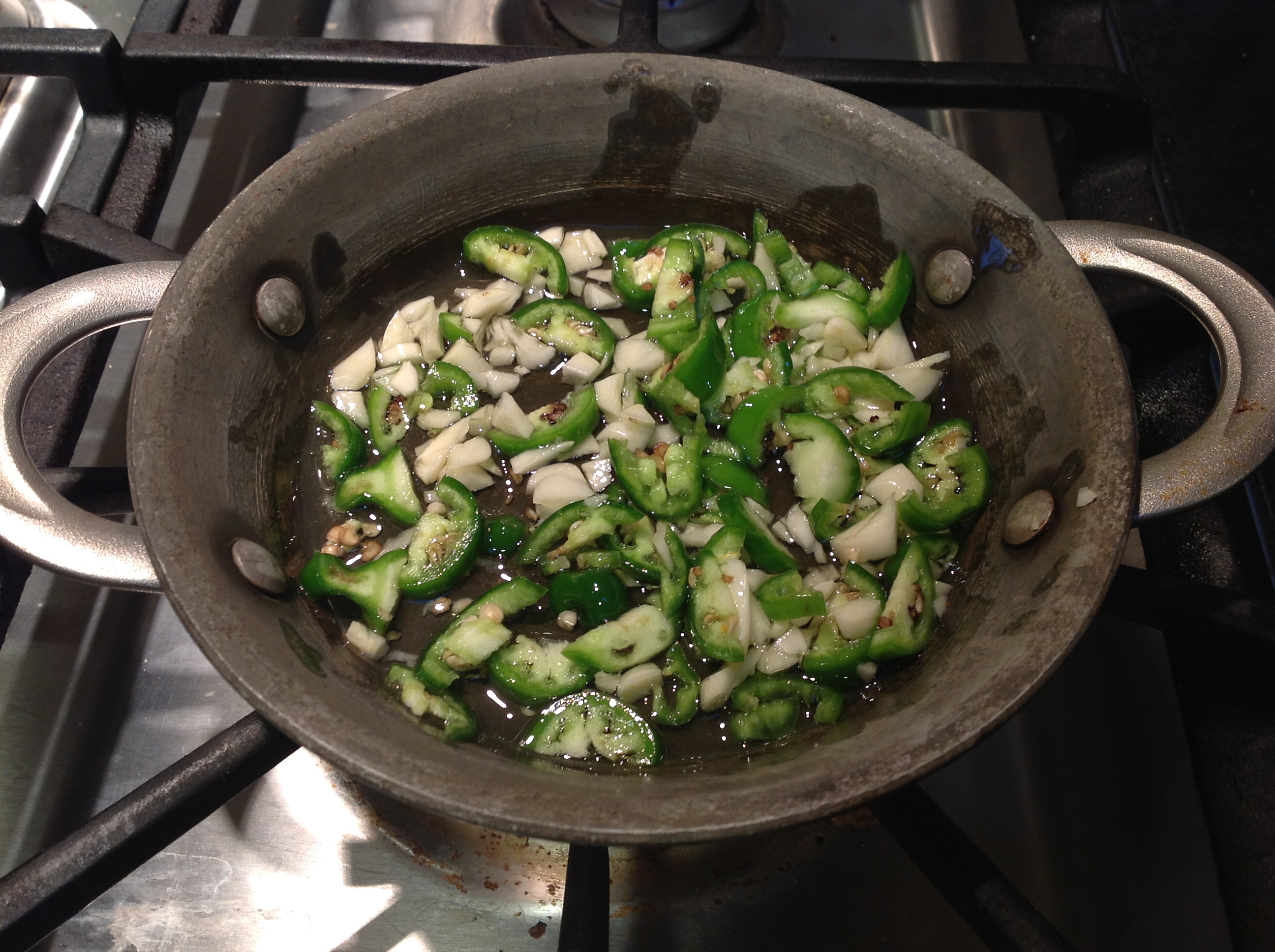
Meanwhile prepare the garlic and chili for the seasoning. Heat oil in a small thick-bottomed pan. When the oil shimmers, put in the garlic, chili and curry leaves.

IMG_0489 IMG_0491

Cook at medium heat till the garlic starts to shrivel and the chili and curry leaves look blistered. Turn off, pour the contents of the pan into the dal, and stir nicely. As you stir, the grains will break up further and become quite creamy.

IMG_0492

This dal, if eaten with chapatis and a simple fried vegetable is an unexpected slice of heaven. To garnish, I usually sprinkle dry mango powder or red chili powder on individual portions.

Simple dal series — Part 1, masoor (red lentils)

Masoor dal

Masoor dal

(Part II of this series is here.)

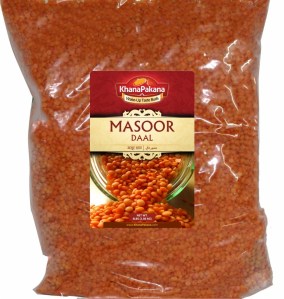
Lentils are eaten all over the world. But the one used in India is called masoor. When whole, it looks much like a bigger French lentil, brown and UFO-shaped. Remove the husk and split it, and one is left with a orange flat disk. This is how masoor is available most of the time. Once cooked, it loses it orange and turns yellow like other dals. This dal has a very subtle flavor, and I find it works well to cook aromatics in the dal when it is simmering, rather than add it in fat later.

Masoor Daal at Khana Pakana

Masoor Daal at Khana Pakana

Simple masoor dal

Ingredients:
  • 3/4 cup masoor dal (red lentils)
  • half a teaspoon turmeric powder
  • half an onion, chopped
  • 3-4 cloves of garlic, minced
  • half an inch piece of ginger, minced
  • 1 serrano or jalapeno chili, sliced
  • 2 small or 1 medium tomato, chopped
  • 3-4 kokum pods, if you don’t have them, leave them out
  • 1-2 tablespoons ghee
  • a sprinkle asafetida
  • a sprinkle or more of red chili powder
  • half a teaspoon cumin seeds
  • half teaspoon mustard seeds
  • salt to taste
Method:

IMG_0465[1] IMG_0468[1]

Rinse the dal and soak it in hot water for just 15 minutes to see the volume double. Longer is fine. Put the turmeric, the drained dal, and two and a half cups of water in a thick-bottomed pot. Add the chopped vegetables except the ginger.

IMG_0466[1]

Bring it to a boil, uncovered. Watch it carefully as it is about to boil, because the foam will rise to the top suddenly and overflow if it is covered. Once it does come to a boil, turn it down to a simmer, with a lid partially on. The dal will take 45 minutes to an hour. When the dal is softened (test it by squeezing between your finger and thumb), you can turn it off, or leave it at a very low simmer.

IMG_0469[1] IMG_0470[1]

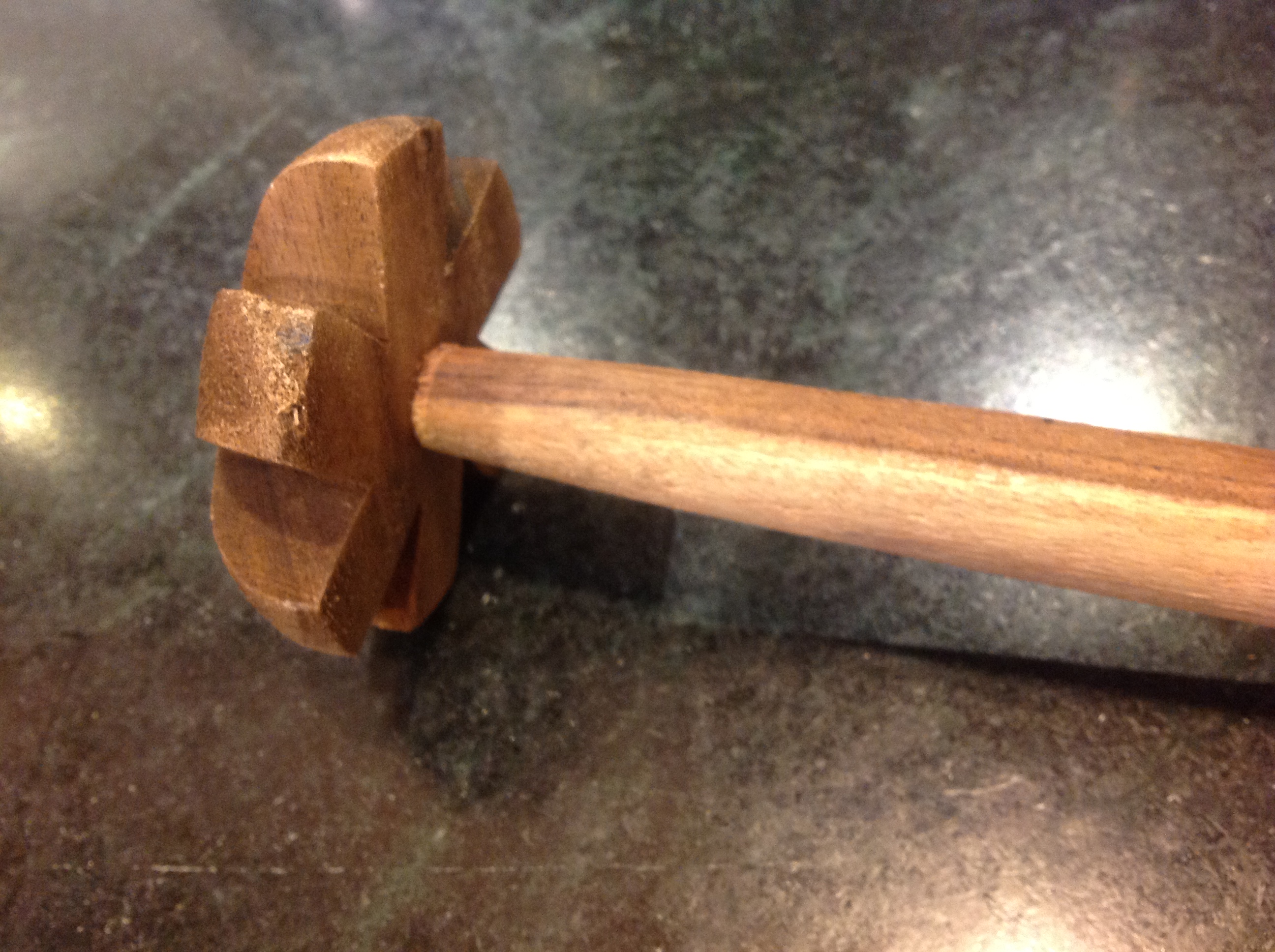
Whisk it with a whisk, or with one of these handy-dandy instruments, called a mandheera. Add salt to taste and cover.

mandheera

mandheera

Meanwhile heat the ghee in a small pan. In this recipe I find that the ghee really helps bring out the flavor of masoor. When the ghee is melted, sprinkle in the asafetida and the red chili powder. They will foam, now put in the cumin; when it sizzles put in the mustard seeds; when they pop, put in the ginger. In a minute or two the ginger will appear shriveled and cooked. Now turn off the flame and pour into the dal. Stir the ghee in.

IMG_0474[1] IMG_0475[1]

At this point, the dal is ready. Adjust the salt. Garnish with chopped cilantro, or add lime juice. This goes well over rice and a dry or fried vegetable on the side.

Malvan’s famous fish: part two, fried fish

fish curry and fried fish and butter tea 035

Malvani fried fish

(Part one is here.)

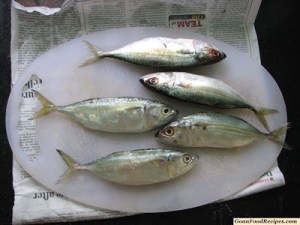
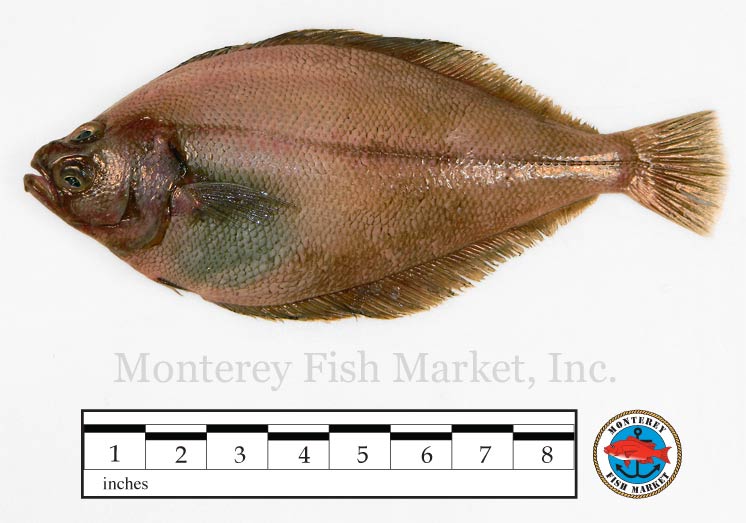
Quick — name two differences and two similarities between these two kinds of fish: Indian Mackarel (bangda) and Pacific Sand dab.

First the differences:

Mackarel

Mackarel

1. Indian Mackarel swims around in the warm coastal waters around the Arabian Sea off the coast of India. While the Pacific Sand dab inhabits a different coastline altogether — the Pacific, around California, Oregon and Washington.

sanddab

sanddab

2. Another thing — while the mackarel has your basic fish shape, the sand dab is a bottom-hugging, sand-dabbing flat fish. Which means, its one eye migrated creepily over to the same side of its head as the other eye.

Now the similarities, which (to give away the point of this exercise) are far more interesting to me right now.

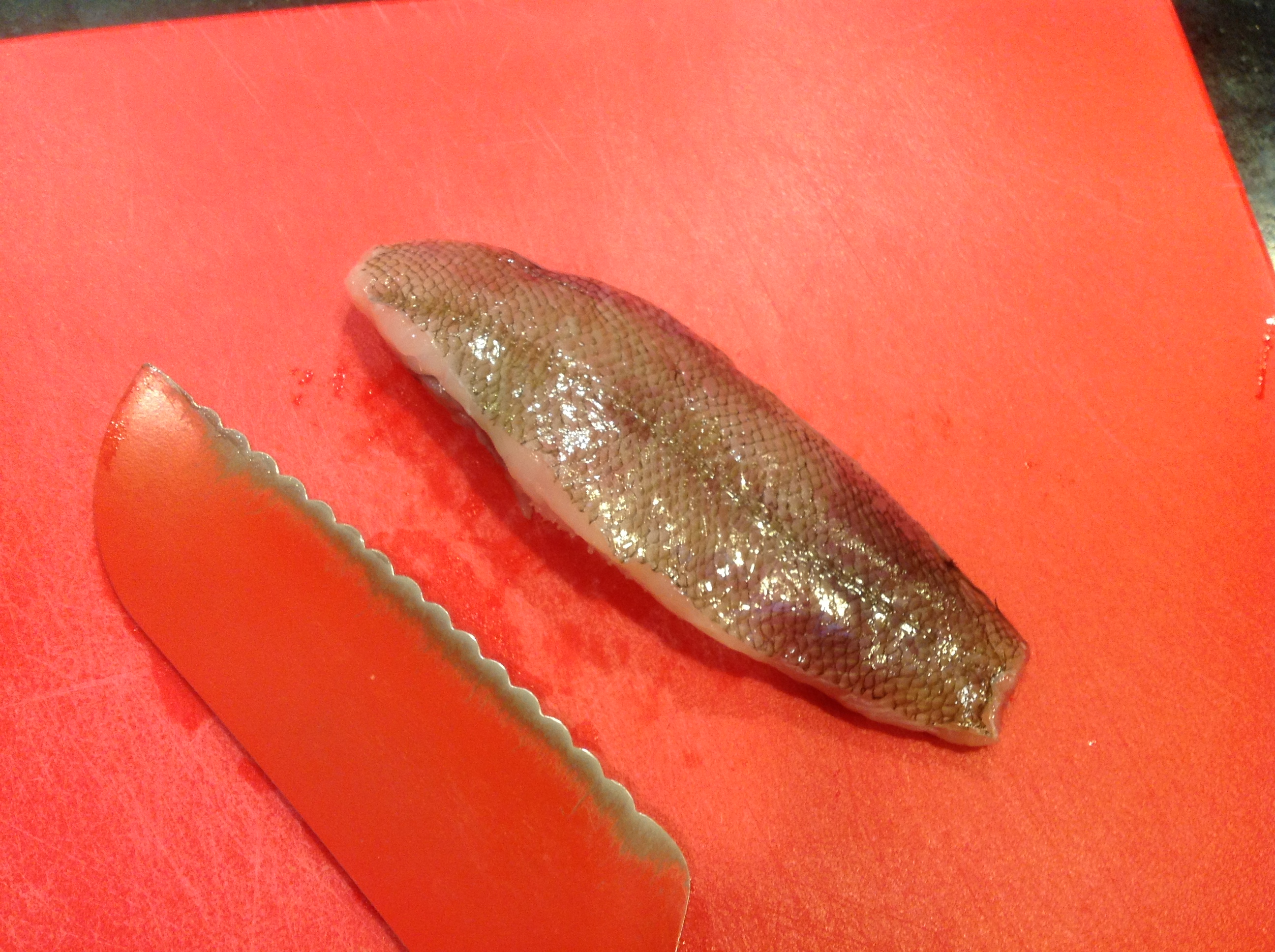
1. They are similar in size (8 – 9 inches), and found on grocery shelves prepared in a similar way — not as fillets or as a steak, but with the head and tail fins removed, skin on. So they both come with the central ribs intact. That is key.

2. And, because of the above similarity in form factor, both Indian Mackarel and Pacific Sand dab can be used to make the Malvani fried fish recipe!

Ah, what a long-winded way to arrive at the point that I couldn’t find bangda fish, so I substituted with sand dab! Readers of this blog: I have never promised brevity.

On to the main business, if I haven’t lost you already.

Malvan’s famous fried fish, using sand dab instead of mackarel:

Two sand dabs will make a single dinner portion. For two sand dabs, use 3-4 tablespoons of the Malvani fish paste. Also have at hand: some salt, some turmeric powder, and some farina (rava/sooji/cream of wheat).

fish curry and fried fish and butter tea 025 fish curry and fried fish and butter tea 026

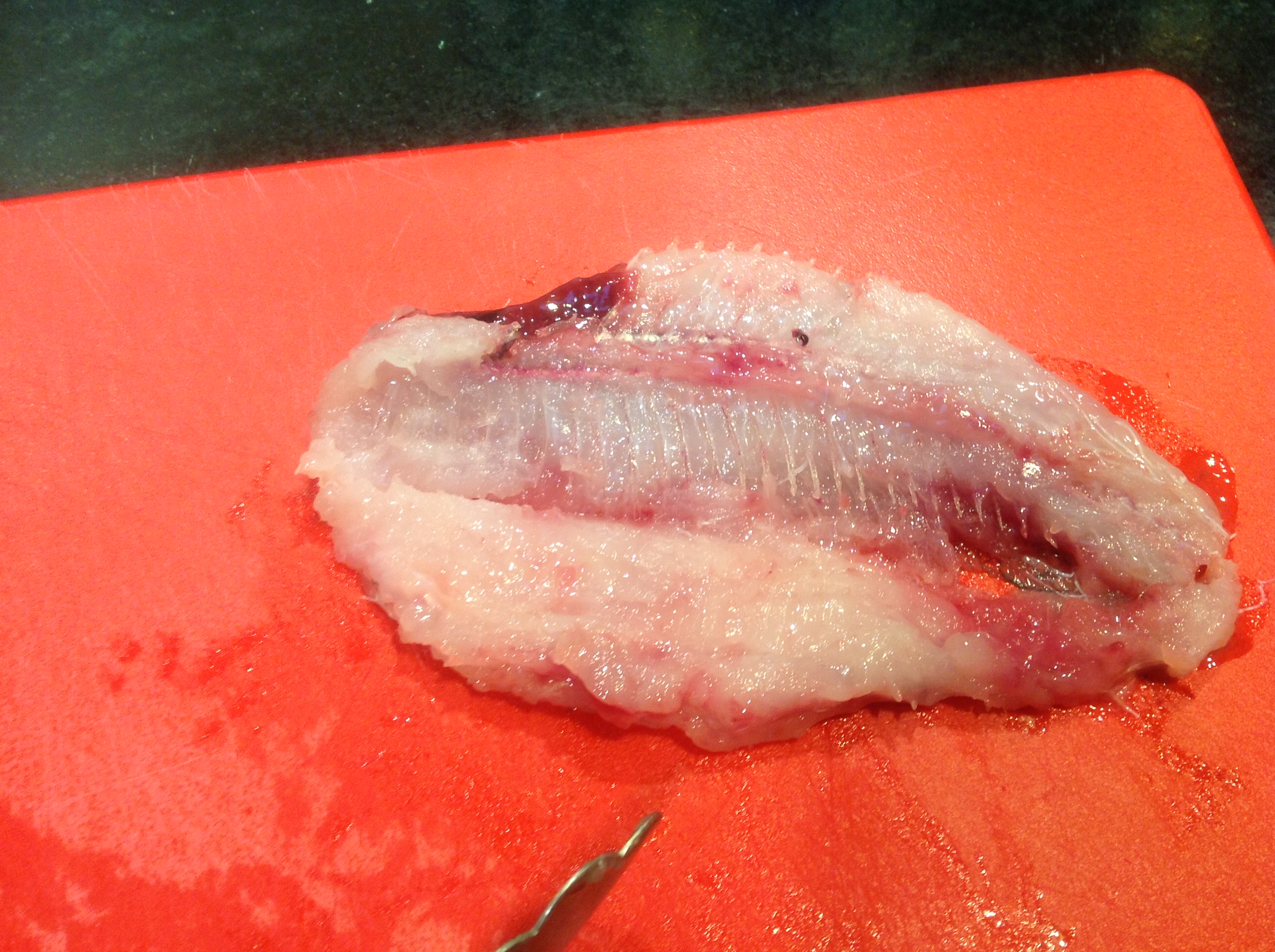
Lay each down flat. Carefully cut open at the line of the central ribs bone, as though you are trying to fillet the fish. Open the fish like a book, but do not cut through. You can leave the bone in. Once it is cooked, it will be much easier to pry it out, I promise. Sprinkle salt and turmeric powder on the flesh.

fish curry and fried fish and butter tea 027 fish curry and fried fish and butter tea 030

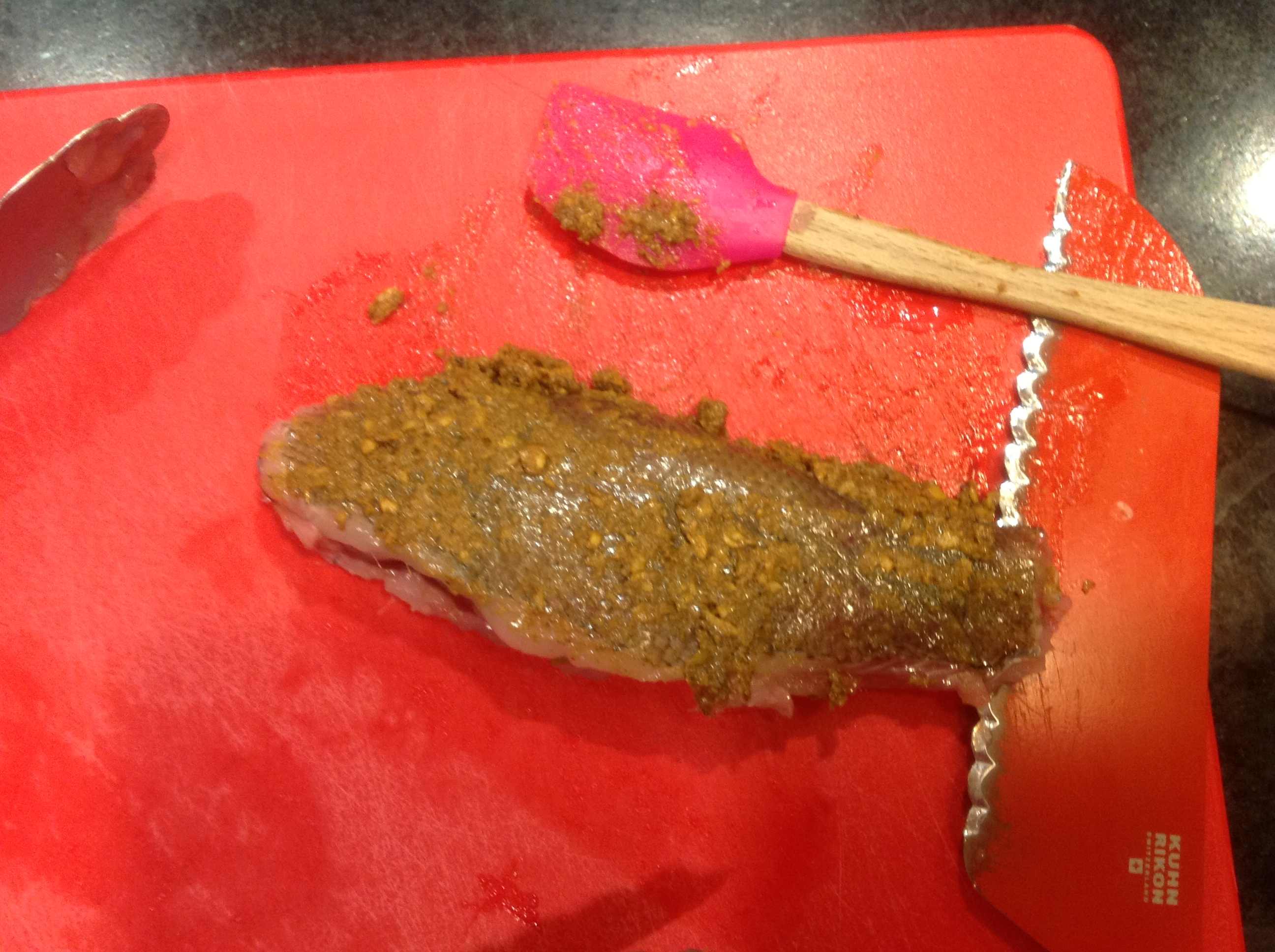
Now spread a thin layer of the spice paste on both open surfaces of the fish. One of the surfaces will have the bone on it, this is fine, just apply the paste over.

fish curry and fried fish and butter tea 032 fish curry and fried fish and butter tea 033

Close the fish book. Spread paste on both outer surfaces. Now dip both sides in the farina to coat. If you are having trouble keeping the fish book closed, you can tie it closed with some kitchen twine.

Now heat 3 tablespoons of oil in a nonstick pan on high-ish heat. When it shimmers, lay the fish down on one side. Let it shallow-fry for 5 minutes or so, then flip it carefully, still closed, to cook for three minutes or so on the other side. Both sides should be browned when done.

One thing to note about Indian preparations of fish — by Western standards, one would consider them overdone. When fried on both sides, the flesh is quite dry, but it is kept succulent by the moisture in the spice paste. One wants to dry it out a little, because otherwise the spice paste will remain mushy, and one does not want that.

Have it as a side with rice and dal or rotis.

Broiled tomato soup in potato oyster mushroom fond

Broiled tomato soup

Broiled tomato soup

Bright red tomatoes

Bright red tomatoes

So here I am, with bright red tomatoes at the ready, thirsting for some soup. But no chicken broth in the house. Of course one can use water, but I do need to add back in some of that lovely savoriness that a broth would have added.

So I choose a multi-pronged attack.

a) Saute oyster mushrooms into the base. This takes care of the missing umami taste.

b) Brown tiny potato cubes in the base of the pot, to add some of that Maillard goodness.

c) Broil the tomatoes before adding them in to the soup, to add the caramelized flavor of the browned skin.

d) Add some milk/cream at the end to add in the missing protein flavor. Also adds creaminess.

e) Add some Worcestershire sauce, which basically being bottled umami flavor, is a bit of a cheat. The interesting thing here is that one of the ‘natural flavorings’ used in this sauce may be asafetida (heeng), which is used extensively in Indian cooking. And yes, I can vouch for its umami-ness. Among its ingredients is tamarind, also an old stand-by in Indian cooking. I guess those British did pick up a few tidbits about Indian food in the 200-odd years they spent hanging around us.

Oh — and for an aromatic, parsley. Just parsley.

Ingredients:

Handful of chopped parsley

Fistful of chopped oyster mushrooms

One medium potato (new red or purple) chopped into small cubes

Six small tomatoes

Olive oil – some

Salt to taste

Worcestershire sauce – one teaspoon. Substitute with red wine or balsamic vinegar.

Quarter cup milk or cream.

Method:

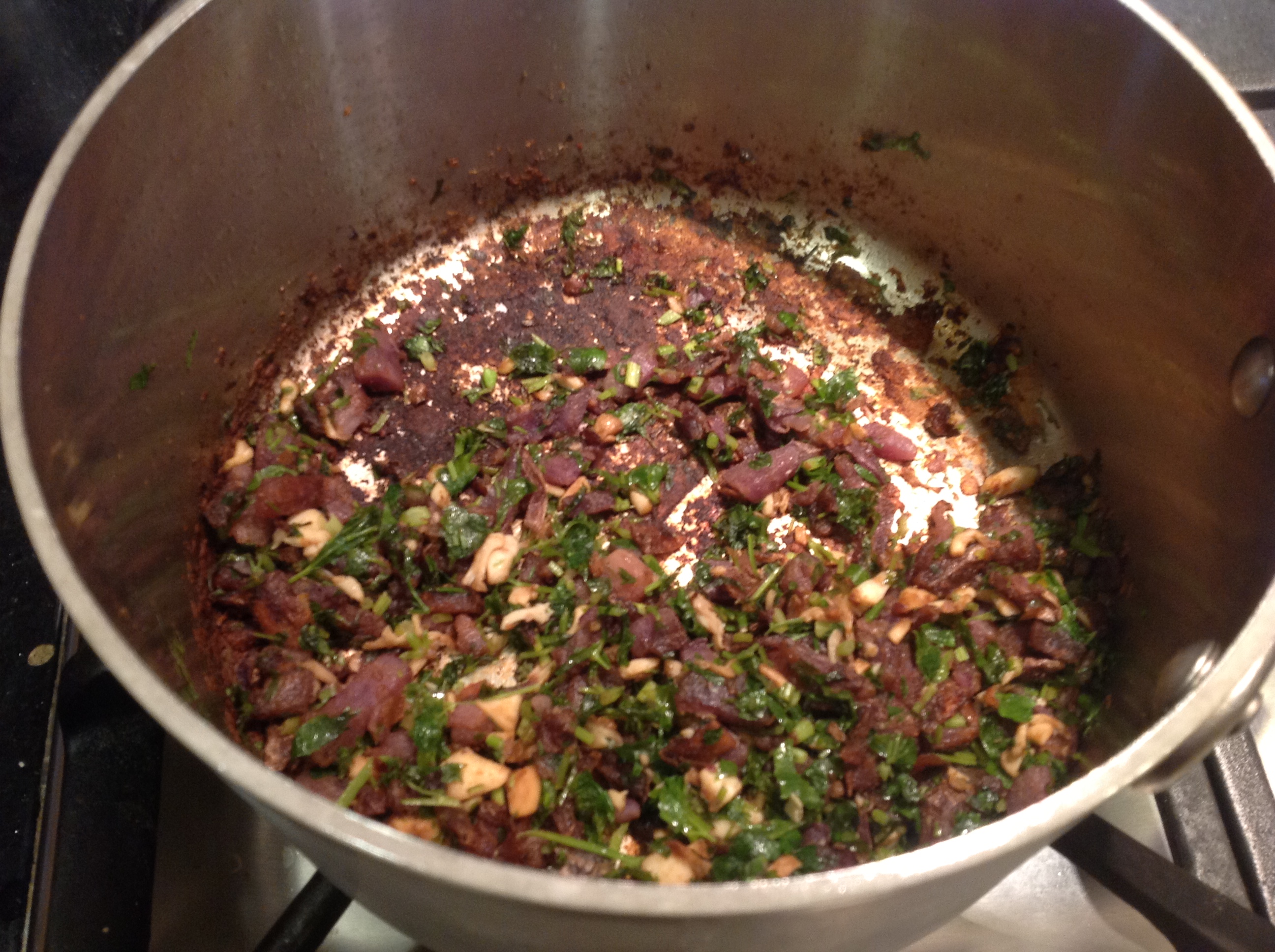
Heat 2-3 tablespoons of oil in a thick-bottomed pot. Add potato cubes to it and a sprinkle of salt. Saute on medium-high heat for about 10-15 minutes. The potato will start to brown and stick to the bottom of pot for dear life. Let it brown, then dark brown, do not worry. We will deglaze off all that stuck goodness later.

Potatoes browning

Potatoes browning

When it seems that it is on the verge of actually just charring (you do not want that), add in the chopped mushrooms. They will sweat and unstick some of the potato fond. Oh, yes, that is exactly what ‘fond’ means — the foundation or base of a sauce. After a few minutes the mushrooms will have sweated and shrunk. Now add in the minced parsley. Cook, stirring occasionally. You can cover it if you like, to get it to sweat more. Now sprinkle in the Worcestershire sauce, and stir, to deglaze some more.

Minced parsley and chopped oyster mushrooms

Minced parsley and chopped oyster mushrooms

Soup fond nicely browned

Soup fond nicely browned Soup fond nicely browned and water added

Once the mixture looks — I don’t know, kind of soup-base-y, put in a cup and a half of water, bring to a boil, and leave at a very gentle simmer, uncovered.

Halved tomatoes with olive oil

Halved tomatoes with olive oil

Meanwhile, rise and stem the tomatoes. Cut them in half, place face down on an oven-safe dish, and rub olive oil all over them. Broil for 7 minutes or until the skin has wrinkled and charred. Take them out of the oven. You can peel them if you like but I left the peel on. Puree them and toss into the soup.

Broiled tomato halves

Broiled tomato halves

Simmer the soup another ten or twenty minutes, check for salt and blend again if you like it smooth. Add milk and just heat through (do not bring to a boil at this point, because otherwise it will curdle).

IMG_0459[1] IMG_0462[1]

Serve! Possible garnish: shaved parmesan cheese, croutons, parsley, chives. And, I didn’t miss the chicken broth at all.

Taking tea Tibetan style

Tibetan butter tea

Tibetan butter tea

Folks, I thought I knew from tea. I grew up with cups of tea being downed two, three, four times a day, to the point where there there’s almost always a pot of tea going on the stove. Mornings and evenings are centered around tea. Tea and toast, tea and eggs, tea and porridge, tea and chaat, but tea, tea and tea.

There were two types of tea, I thought, the mother’s side kind, and the father’s side kind.

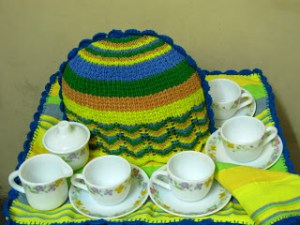
tea cosy

tea cosy

My mother’s side made tea boiled, the Indian way. Loose leaf black, in a pot of water and milk, boil, sugar added to taste, strain into mugs. My father’s side made it the English way because my grandfather had worked with the British in their day. A tray comes to the table, loose leaf black tea steeping in a teapot, covered in a tea cosy. Milk and sugar are in their own pots. Tea is strained into a cup, milk and sugar added to taste. The cup is on a saucer. Always on a saucer.

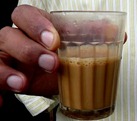
Cutting chai

Cutting chai

Food stalls big and small, all over the alley ways of India, made tea the mother’s way. Except they had a giant pot going all hours a day in all kinds of weather, and their means of straining is a giant white cloth except it is pretty much brown — a grayish mahogany — from years of straining tea. Not sure when and if it gets washed. The liquid is strained into little glasses: you can order the full, in which case it goes up to the brim. Or you order ‘cutting’, in which case it goes up to under the smooth rim.

In my teenage years I discovered, going to Chinese restaurants with friends, that the Chinese had a different take on tea completely. We could not believe it. Just hot water? No milk, no sugar? But it was…strangely addicting. Those little handle-less cups kept being refilled.

OK, so that’s the gamut, right? Wrong.

So I heard recently from my Nepali friend that Tibetans are tea drinkers too, but given that they live among the mountains, and need strong muscles and layers of fat to protect themselves from the cold, they need a lot of butter; and what better place to put it, than in the interminable cups of tea? That’s right folks, Tibetans like their tea with butter.

That’s not all, they like it salty.

I could not believe that salty, buttery tea existed when I first heard of it; next, I wanted to try it. Try it I did, at my friend’s house. It was luscious and soothing. Next, I wanted to try making it. It took me three tries to make something acceptable, but now I am quite fond of it; and you know what, if you are diabetic or happen to need to climb some mountains on your way to work, this may be just the tea for you.

Tibetan butter tea

This recipe makes just one cup but is easily multiplied. Put one cup of water in a pot with one teaspoon loose leaf black tea. I used orange pekoe Indian tea. Heat it on the stove, but there is no need for it to come to a boil, I found that without any sugar to mask the natural bitterness of tea, I needed it to not develop any bitterness at all. Take it off the heat when it seems as though the water has turned a light reddish brown.

black loose leaf tea steeping

black loose leaf tea steeping

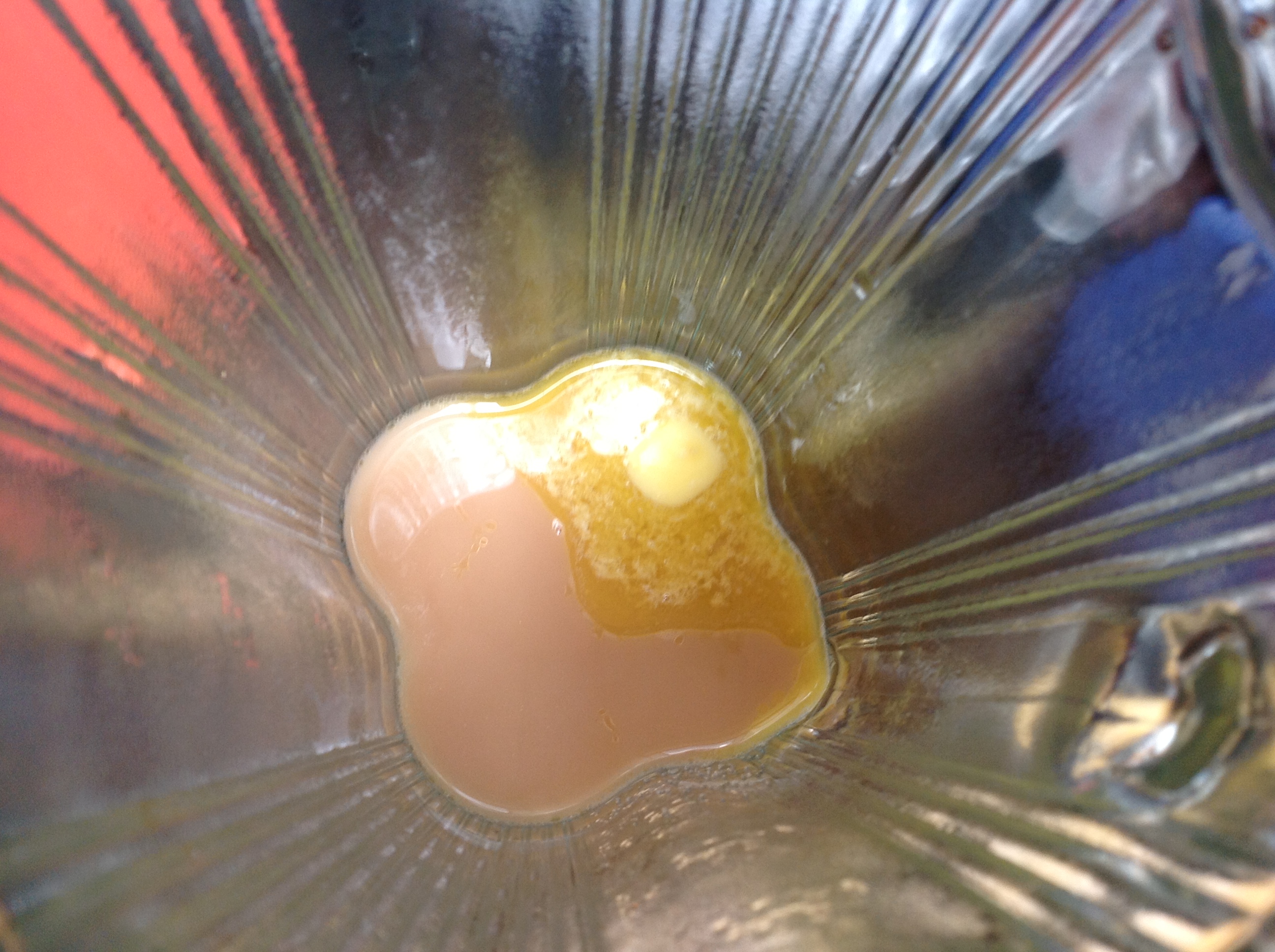
Strain the tea into a blender. In Tibet they use a butter churner that is operated by hand and rather decorative. My blender is nothing to sneeze at but I have to admit it doesn’t compare in sheer beauty to the Tibetan butter churner.

Tibetan tea ingredients in blender

Tibetan tea ingredients in blender

Add 1/8 teaspoon salt, a quarter tablespoon butter, and 2 tablespoons whole milk. In Tibet of course they use yak milk and butter (yak being the male, of course they use the yak’s wife’s milk). I just used the normal cow milk and butter. I have heard though that yak milk is more intense tasting, so if you have access to goat’s milk, you could try using that.

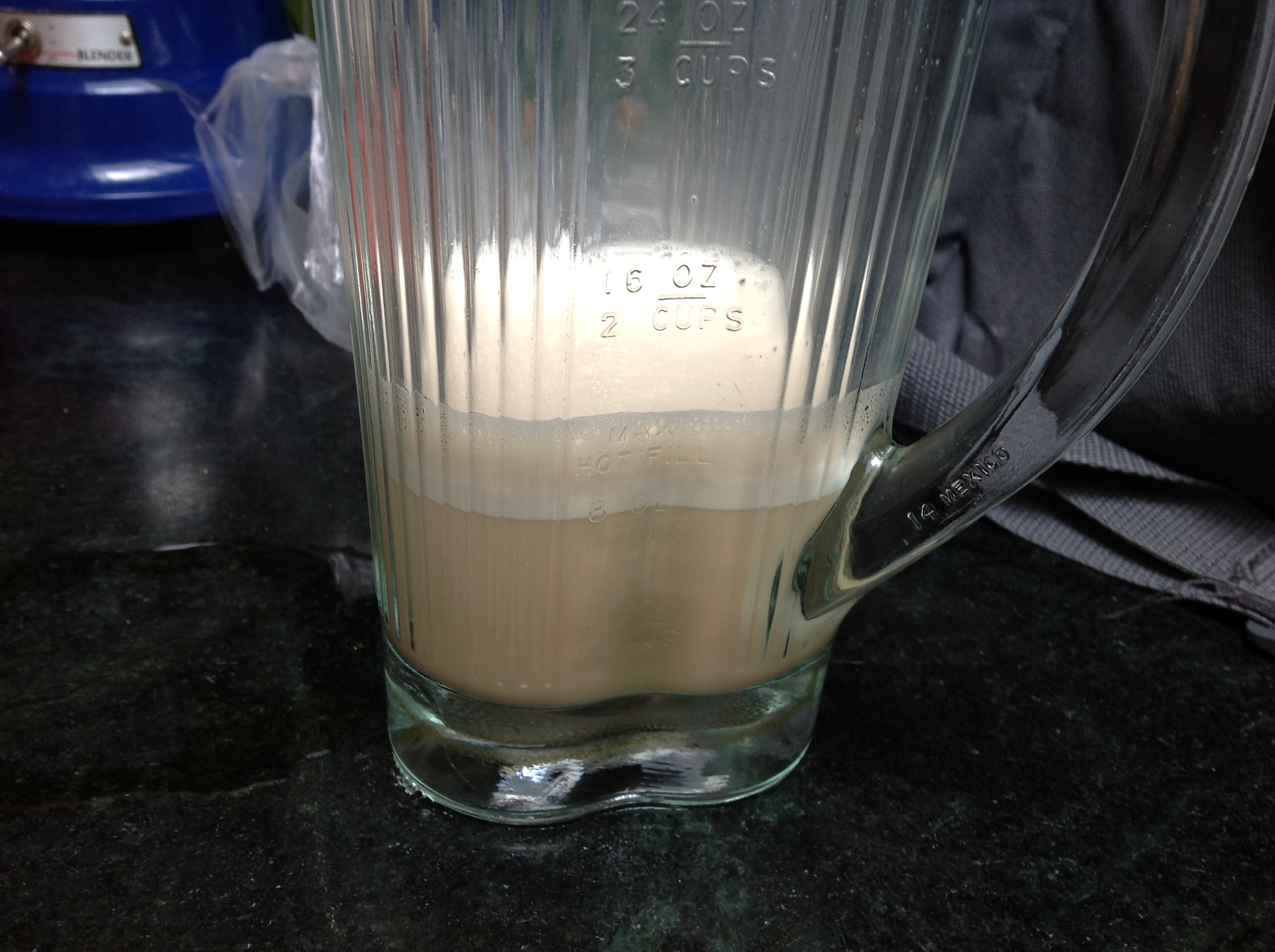
Tibetan tea foamed up in blender

Tibetan tea foamed up in blender

Run the blender for a few minutes till the tea gets very foamy. Pour into a cup and enjoy.