Yellow mung dal with mangosteen

Moong dal served with radish cucumber salad

Moong dal served with radish cucumber salad

People have been eating locally long before it became a ‘thing’ and got its own hashtag. Thousands of years back essentially everyone was a locavore. All food was made out of plants that grew in the backyard fields or roots and shoots gathered from nearby forests. And sometimes a couple of these backyard ingredients came together in recipes that have remained classics.

I like to think of it has the boy-next-door and the girl-next-door getting married. How can a dish like that not be comfort food!

One such ingredient from the West coast of India is mung bean. There is more information about it here. This recipe calls for the split, dehusked form.

The other locally grown ingredient from the same region is the Indian mangosteen fruit. It grows mostly wild around the wet evergreen forests. The website Aayi’s recipes focuses on recipes from the Konkan coast and has great information (and pictures!) about it here. I have to admit that unlike that author, I did not grow up lobbing fresh mangosteen fruit at my brother. In fact I have never seen a fresh one, as far as I know. I had a city upbringing, and we obtained the dried and blackened rinds of the fruit in a bag. This is how it is used in this and in most other recipes.

kokum

Dried rind of Indian mangosteen, kokum

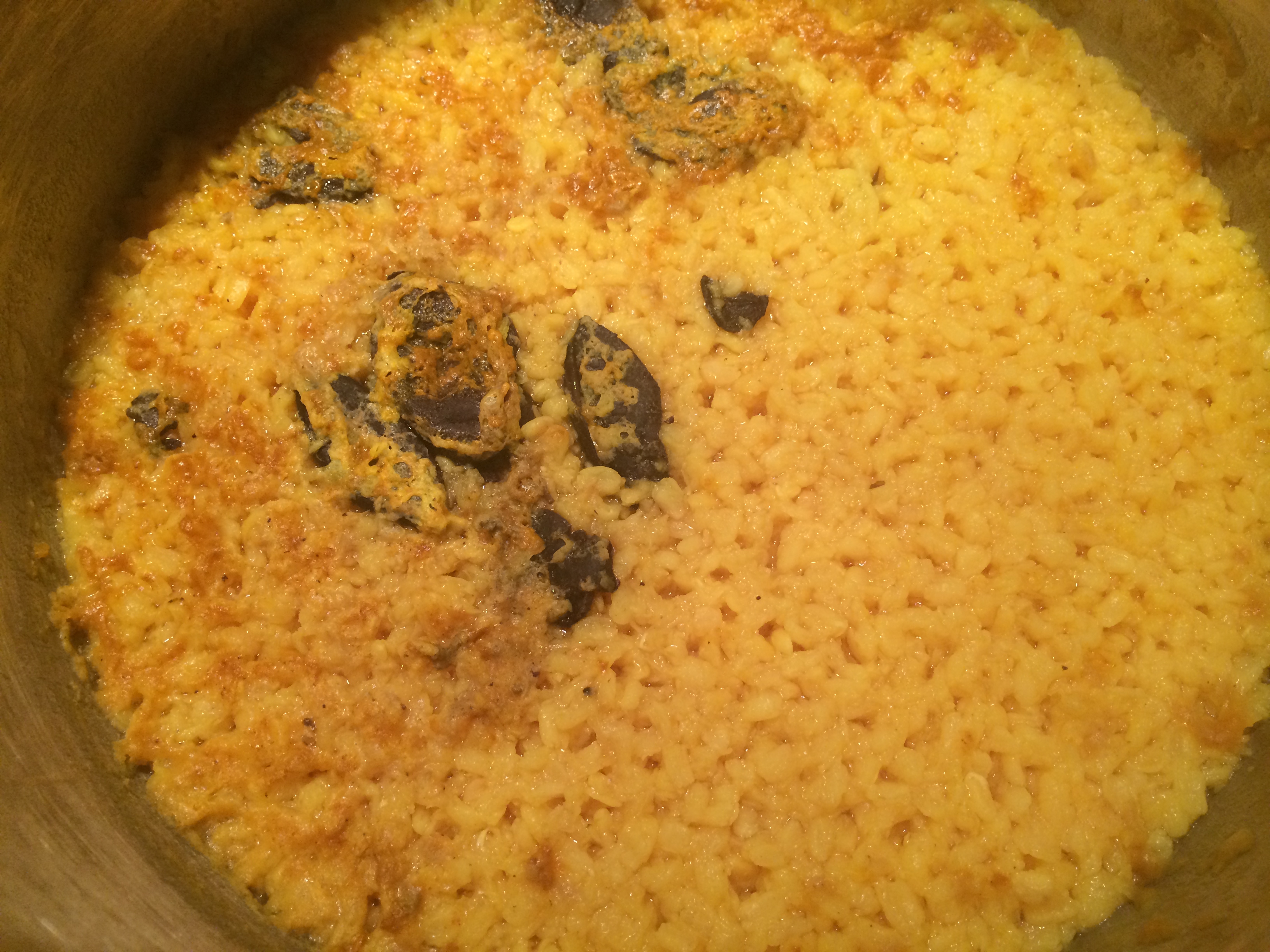
I can only imagine the sizzle and joy when these two ingredients first came together in a pot. Moong dal cooks into a creamy yellow pulpy thing, and the added rind of mangosteen (kokum) adds a very subtle sourness in a way that cannot be replaced by lemon or other souring agent. This dish is made more liquid to go with rice. There are no sharp flavors here — it is pure comfort food. When I was a child I enjoyed making it more bland by mixing it with some plain yogurt.

Some pictures to show the process.

Soaked and drained moong dal, turmeric, kokum together in a pot

Soaked and drained dal, turmeric, kokum together in a pot

Herbs for moong dal, prepared
Herbs for moong dal, prepared

Moong dal, cooked

Moong dal, cooked

Herbs, sizzling

Herbs, sizzling

Moong dal all done

Moong dal all done

Moong dal with kokum

  • Servings: 2
  • Difficulty: Easy
  • Print

Ingredients:
  • 3/4 cup dehusked and split yellow moong dal
  • 5 or 6 pieces of dried rind of mangosteen fruit (kokum)
  • 1/2 teaspoon turmeric
  • 1-4 fresh green chilies (I used serrano)
  • 4-5 large cloves of garlic
  • 5-6 curry leaves, if you don’t have them leave them out
  • 3/4 teaspoon mustard seeds (optional)
  • 2 tablespoons oil
  • 3/4 teaspoon salt
Method:

Rinse the dal in several changes of fresh water, running your fingers through to free up the loose starchy powder, until the water runs somewhat clear.

Put it in a pot along with the turmeric and the kokum and three cups of water. Bring it to a boil, then let it simmer for about an hour, partially covered. Or, you can use a pressure cooker, cooking under pressure for 15 minutes.

Once the dal is cooked down to being completely mashable, whisk the liquid to make it creamy. Add salt and turn it off, covered.

At this point, let’s start the tempering. Slice the garlic and the chilies. Just for the fancies, I sliced one of my chilies and simply vertically halved the other. Heat the oil in a small thick-bottomed pan. When it shimmers, put in the mustard seeds. They will presently pop. The rest of the fresh herbs, chilies, garlic, curry leaves go in. They will sizzle and cook. When done, turn off, pour the oil over the dal, and stir it in nicely.

Cilantro for garnish if you like. This goes well with white rice, with some salad or relish of fried stuff alongside.

All about dals in one place

Apologies to anyone who might be expecting a fun and interesting new post about kitchen antics from me…instead what I have to offer today is a dry, pedantic review of some dals. I updated my page about dals, and I plan to keep adding to it with other dals I have not yet covered, and of course adding links to more dal recipes. This page is meant to be a one-stop-shop for all dal-related information on The Odd Pantry. Dull, yes, but someone has to do it.

Check it out

Image

Beet parathas; a classic recipe book

Beet paratha

Beet paratha

Some years ago I found a book in a used bookstore that really spoke to me in the depths of my soul. It electrified me from the title alone, even before I cracked open the pages.

Now a few books have been known to be enormously influential in people’s lives. For some it may be ‘Thus Spake Zarathustra’ by Nietzche, or ‘Atlas Shrugged’ by Ayn Rand. For others it might be ‘War and Peace’ by Tolstoy. For me, it was this:

tasty dishes from waste items by Aroona Reejsinghani

tasty dishes from waste items by Aroona Reejsinghani

For the 1970’s in India, in the midst of famine, this book was quite apropos. I remember talk of the high prices of vegetables at every social gathering. Meat for many was simply out of the question. This book begins with an acknowledgement of the scarcity that every housewife has to deal with. It goes on to celebrate the leaves, stems, peels, leftovers that most of us throw away. The author painstakingly lists the vitamin content of each of these leaves and rinds, including the mysterious Vitamin P (?)

Not only is it completely impressive that she was able to do this research in the days before Google, it is astounding how many recipes she was able to come up with.

In here one finds 5 recipes that make use of banana peels (throw away the outer green part, she advises), 9 recipes that use turnip leaves, 2 that want you to fry up potato skins. Curdled milk, of course, is an industry, and the author dwells on that for a bit. Stale bread gets its own section with 36 recipes. Leftover fish, meat, chicken each get their own sections as well.

Now we no longer live in a world of food scarcity but quite the opposite. Most developed countries don’t spend over 10% of their income on food, in the US, where I live, it is around 7%. But the message of this book is more relevant than ever. The cost of food production remains very high, it just doesn’t come out of our paychecks, but instead we pay for it with depleted soils and poorer biodiversity.

I have to admit I don’t go scavenging around the thrown away peels for my next meal, but instead compost everything. Given my chunky waistline, I figure it is even better to feed the worms than me.

Beetroot

Beetroot from foodreference.com

Beetroot from foodreference.com

Now, about beets. Here is basically the entire beet plant from roots up to the leaves. Stare at the leaves for a bit. You all know that the greens are nothing but chard, right? Beetroot and chard are not even different species but simply different breeds. Just like a Dalmatians may be bred for running and bloodhounds for tracking a scent, but both remain dogs, chard is bred for fancy leaves and beetroots for fancy roots, but both remain Beta vulgaris. The roots of the first and the leaves of the second can be eaten. This website has more on this: Is chard root edible.

If you have no use for the greens, you could discard them I guess, but for goodness sake don’t throw them away and then go buy chard at the market!

Out of the bunch pictured, here are the parts I ended up throwing away for this recipe, the rest was all eaten. I threw away the long tails of the roots. I threw away the part where the roots turn into stems — that tends to be tough. I peeled the roots thinly with a vegetable peeler. Last, some stems have thick fibers that simply zipper all the way off; if I caught hold of some of those, I threw them away, otherwise I chopped them up along with the stems and leaves.

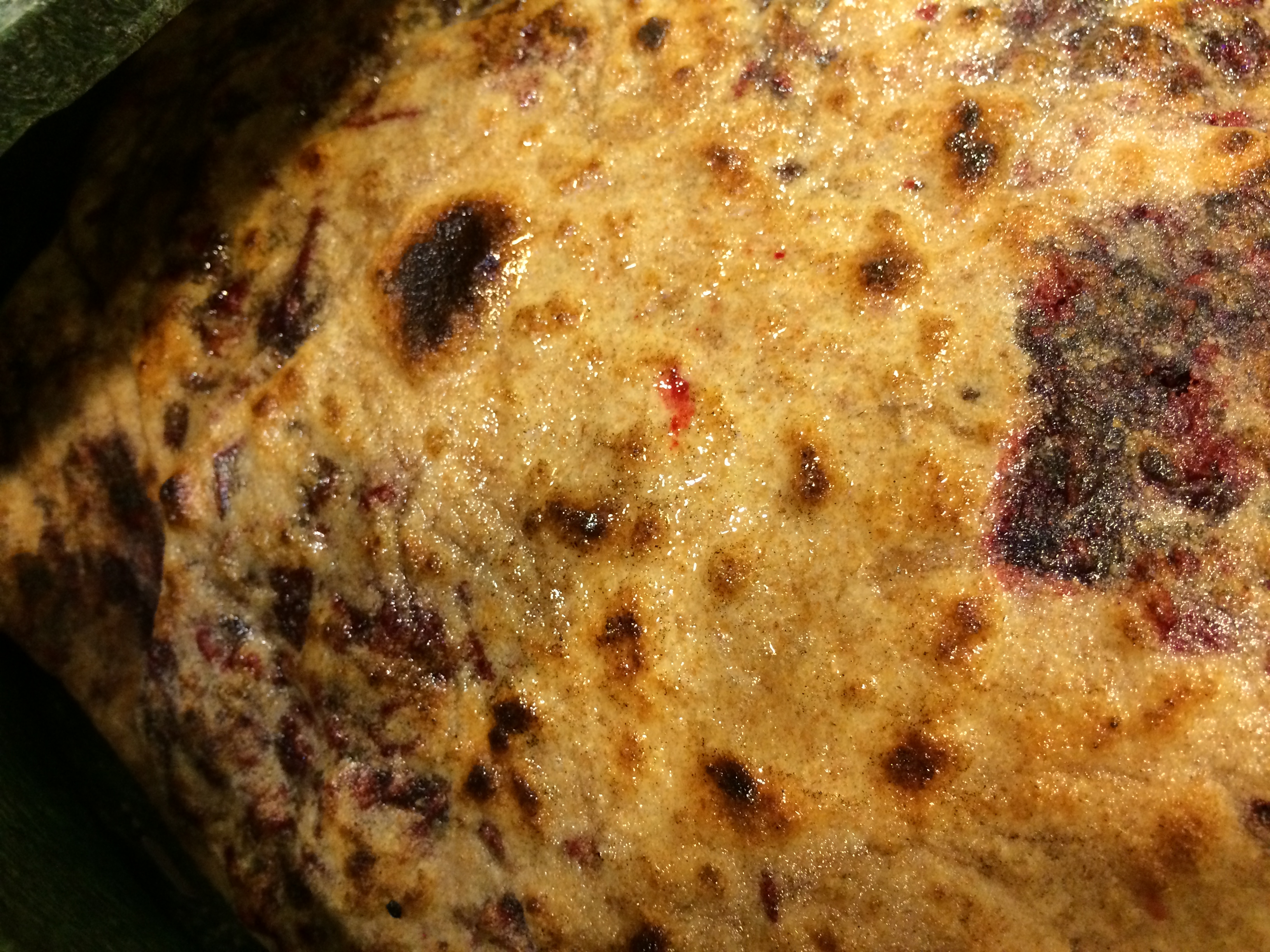
Parathas with beet root and greens filling

A reader might be forgiven for wondering if I’m going through the little-girl spectrum for my parathas; some time ago I did a recipe for purple parathas, this time they are pink.

Anyway, the idea of the stuffed paratha is simple — it is a whole wheat flatbread stuffed with filling inside. The filling for these consists of the grated root and the finely chopped leaves and stems, cooked together with seasonings. Parathas are great with some plain yogurt on the side.

Tails trimmed

Heads and tails trimmed

Greens finely chopped

Greens finely chopped

Grated, cooking with oil

Grated, cooking with oil

Cooked down and dry

Cooked down and dry

Uncooked paratha, pink showing

Uncooked paratha, pink showing

Cooked paratha, stacking up

Cooked paratha, stacking up

See the pink?

See the pink?

Parathas with beet root and greens filling

  • Servings: 8 parathas
  • Print

Ingredients for filling:
  • 3 medium beetroots with greens and stems
  • 1 teaspoon salt
  • 1 teaspoon red chili powder (or to taste)
  • 1 teaspoon chaat masala, substitute with dry mango powder, substitute that with lime/lemon juice
  • 1 tablespoon oil
Ingredients for parathas:
  • Roti dough made out of about 1 cup whole-wheat flour as in this recipe
  • Oil or ghee or butter for shallow frying on griddle.
Method:

Make the dough and set aside for half hour to rest. Make the filling: peel, trim and grate the roots. Rinse and finely chop the greens and stems. Heat the 1 tablespoon oil in a wide pan. When it shimmers, put in the beets, greens and all. Stir to coat with oil. They will very quickly start to cook down. Add the salt, the red chili, and the chaat masala and stir. The point is to dry out the filling. Once it looks pretty dry, turn off the flame and wait for it to cool. Taste for seasoning and adjust. I generally prefer the filling to be highly seasoned because the dough does not have any seasoning at all.

To make the parathas you can refer to this recipe, but I’m including most of the steps anyway. The dough is the same as used for rotis/chapatis. Roll out a thin circle about 5-6 inches wide. Place a couple tablespoons of the filling in the middle. Gather up the edges of the disk into a pouch. Flatten the pouch with your fingers, then roll it out again carefully so as to prevent the filling from escaping. Once it is a flat disk once again, about an eighth of an inch thick, it is time to shallow-fry on the griddle.

Heat the griddle on medium-high. When some drops of water thrown on it sizzle, it is time to put the rolled out paratha on. Wait for 30 seconds while the underside cooks; then flip it. Wait for another 30 seconds while the second side cooks. Now spread a few drops of oil or ghee on the top surface and flip it, to have the bottom shallow-fry in oil. A minute of this, now spread a few drops of oil on this surface and flip it again, letting it cook another 30 seconds. This way, each surface has been cooked twice, first roasted dry, then with oil, on the griddle.

Stack up the prepared parathas; enjoy them with some plain yogurt on the side. Greek yogurt is very popular nowadays, it would make a great dip for these.

I’m entering this in the Family Foodies challenge for May, which is to do with frugal eating. Perfect! Minds knitted together across the interwebs…that’s what blogging is all about.

This is hosted over at Bangers and Mash and Eat Your Veg…this is a link to the May challenge. May the cheapest skinflint win!


In my kitchen of alternative uses (May 2014)

Centenarian

My 100th post! (Centenarian from socyberty.com)

I often read the ‘In My Kitchen‘ posts hosted over at Fig Jam and Lime Cordial and am always impressed by the beauty in them. The sense of style, the creativity in food on display there is quite inspiring. I feel like such a clod in comparison! Well, clods like us have our uses too. I would like to own my useful cloddiness.

For my 100th post (purely fortuitous, this) I looked around my kitchen and thought I’d talk about some of the gadgets, widgets, tools, thingamajigs, etc., that I found the most useful this month.

But here is the catch. Clearly a post that goes something like — ‘The Fridge! it keeps things cool. The Stove for cooking’ — would get boring really fast. So the catch is that I want to talk about 10 things in my kitchen that I find tremendously useful in unintended ways. That is, in ways that the manufacturer did not intend.

ONE. Oven light as yogurt maker: Here is a secret — you do not need a yogurt maker to make excellent yogurt at home. If your oven light works, leave yogurt to set all night in the oven with the light on. It shields from drafts and creates a gently toasty environment for the lacto-beasties to get to work. Here is more about the process. You can also use it to speed up the rise of your dough for bread.

An 'X' to remind not to turn on the oven while yogurt is setting

An ‘X’ to remind not to turn on the oven while yogurt is setting

TWO. Oven timer for good parenting: Readers who are parents might concur that parenting is a lot about negotiation. I let you play for 5 minutes if you jump into the bath right after. Read a book for 15 minutes exactly, then it’s homework time. And so forth. I avoid endless arguments like — ‘that wasn’t ten minutes! That was just ONE minute!’ by using the kitchen timer on my oven. And this is how little my kid trusts me — she has to be the one to set the timer. The advantage of the oven timer is that it is at her face level and is easy to set and easy to read. And my, the beep is loud.

Get into the bath, Now!

Get into the bath, Now!

THREE. Sushi serving platter as spoon rest: If you read this post of mine you might know that I scorn the wimpy spoon-rests one can buy at the store. The aspect ratio of the perfect spoon-rest in my mind is a wide and not very deep rectangle so several spoons can be rested on it on just their bowl parts. So I use sushi platters instead. They can be quite decorative. As is the one pictured, a birthday gift from my husband.

Sushi platter as spoon rest

Sushi platter as spoon rest

FOUR. Compost pail as utensil holder: Speaking of wimpy…the usual utensil holders available from, say, William Sonoma, are completely inadequate for the number of spatulas, slotted spoons, wooden spoons, tongs and turners that I need near my stovetop. So I use one of those ceramic compost pails which really are a bit too decorative to consign to collecting rubbish anyway.

Compost pail as utensil holder

Compost pail as utensil holder

FIVE. Coffee grinder as spice grinder: Buying pre-ground spices is a mug’s game because of their propensity to turn into cardboard (turmeric is an exception). One must have freshly-ground spices, but how?! The mortar and pestle is one option, but for a busy weeknight dinner one needs to unleash the grinding power of a thousand suns. In other words, the electrical coffee grinder. Except mine is always used for spices and is always situated on the counter.

Spice grinder

Spice grinder

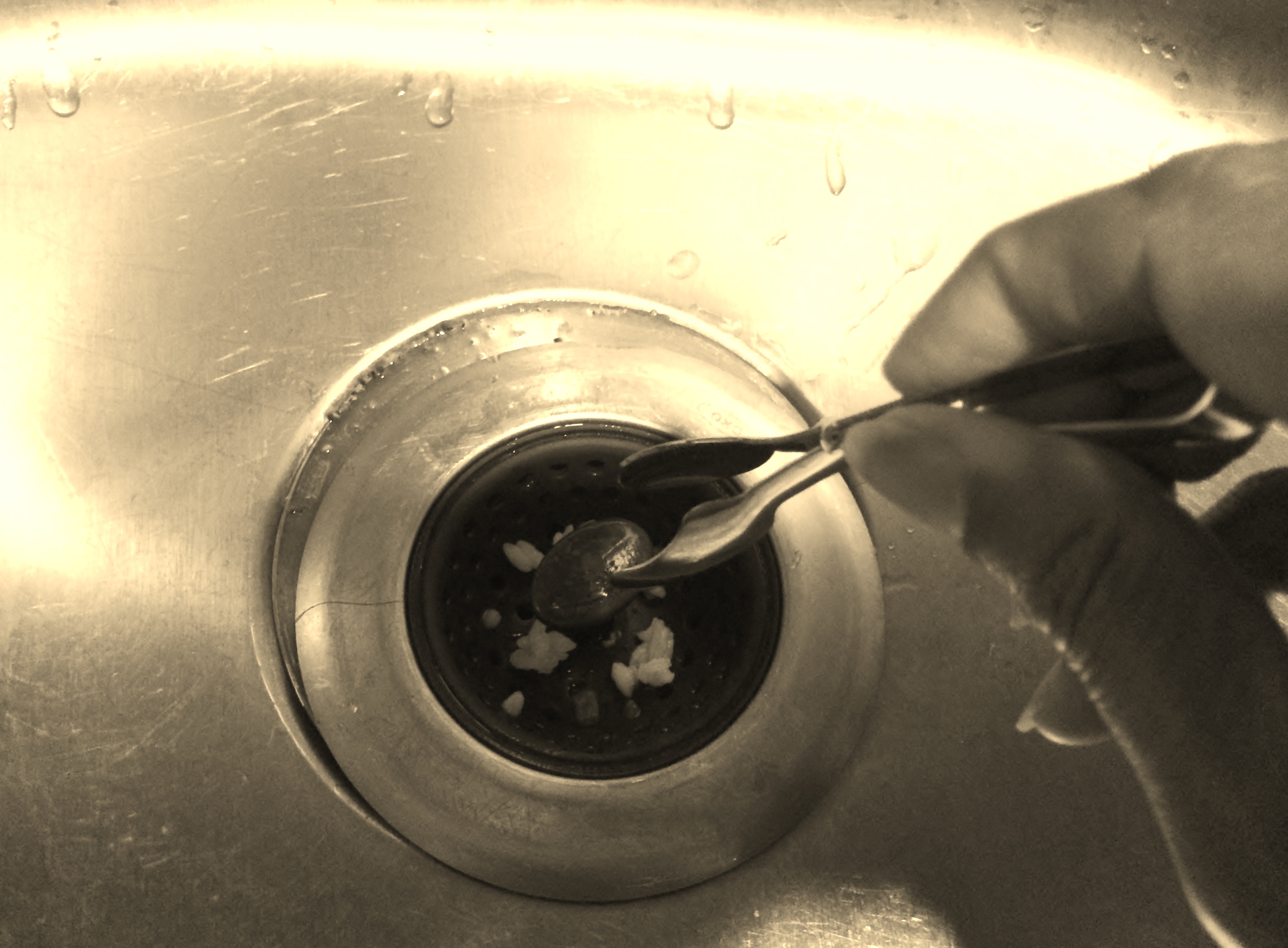
SIX. Lobster tongs to clean sink traps: My husband came home one day with these precious little lobster tongs that you pinch with forefinger and thumb to pry out whatever one pries out from lobsters. They are about 3 inches long. Given that we never make lobster at home, I thought it was an odd choice. But he knew they would be useful some day, he just didn’t know how. And they are! You know that gunk that seems to collect in sink traps that one is loath to touch, and yet pick out one must? Lobster tongs to the rescue. One has to only once draw out a long hair with gunk all over it and drop it in the bin with one of these to get how useful they are.

Lobster tongs to pick out gunk

Lobster tongs to pick out gunk

SEVEN. Chopsticks as general purpose thingies: Chopsticks are some of the most useful devices known to man. Of course, I know that upwards of a billion people use it every day to eat their meals. But that’s not what I use them for. Instead, they are perfect for a number of kitchen tasks: pushing ground spices through a funnel; stirring flour and water in preparation for making the dough; making little ditches in soil for sowing your seeds.

Stirring flour and water with a chopstick

Stirring flour and water with a chopstick

Pushing through a funnel with a chopstick

My 8-year-old helping with a chopstick

EIGHT. Egg-shell cartons for sprouting seeds: Purely aspirational, this one, but can I please enter it anyway? Please? This idea has been on my mind for years. Imagine neat rows of 12 egg carton ‘pots’ with soil placed in each scoop, and seeds sown in each. Then when it is time to plant, cut the scoops away from each other and the whole thing can go in the garden bed. No need to transplant.

Saved egg cartons waiting forlornly for carrot seeds to be sown

Saved egg cartons waiting forlornly for carrot seeds to be sown

NINE. Coffee cone and filter for oil: There — you’ve done it again, you went and deep-fried something. Delicious, wasn’t it? And now what? Do you throw the oil away? No, you send it through a coffee cone with a coffee filter neatly placed in it, while the filtered oil drains into a jar. It will take hours, but you have time. The result is cleaned oil that you can use again and particulate gunk that you discard.

TEN. Spouse as dish cleaner and lab rat: When I married one of these I could not have conceived of the many alternative uses it has. Its kitchen uses were certainly not on my mind at the time of the courtship. But it turns out, given that one is a cook, the spouse can make a great dish cleaner. Also, my kitchen being a bit of a lab, it sure is useful to have the spouse be the experimental animal.

Hubby (he does in fact have a head)

Hubby (he does in fact have a head)


An early summer beverage

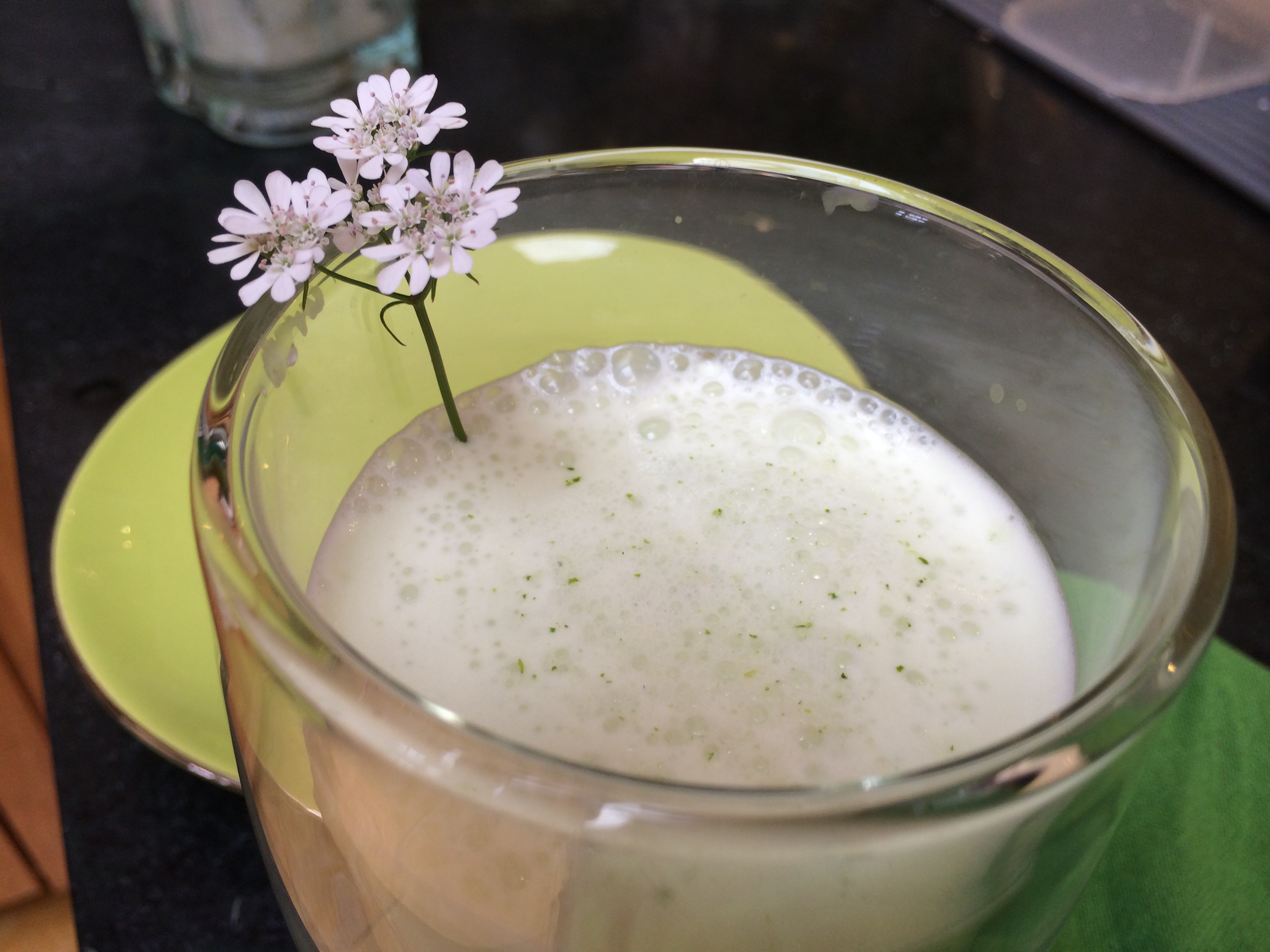
Spiced buttermilk

Spiced buttermilk with cilantro flower

Summer has come early to San Francisco this year; sometimes it feels like it never left. With climate change looming, this is not as good news as it might seem. But let’s not worry our pretty little food-blogging heads about this just yet and cool off with this yogurt beverage.

Spiced buttermilk: Neeru majjige

This is another specialty from the southern state of Karnataka from my friend Rashmi. Just think — instead of reaching for a sugary soda you could cool down with a tall glass of spicy yogurty neeru majjige. Better to taste and way better for your body.

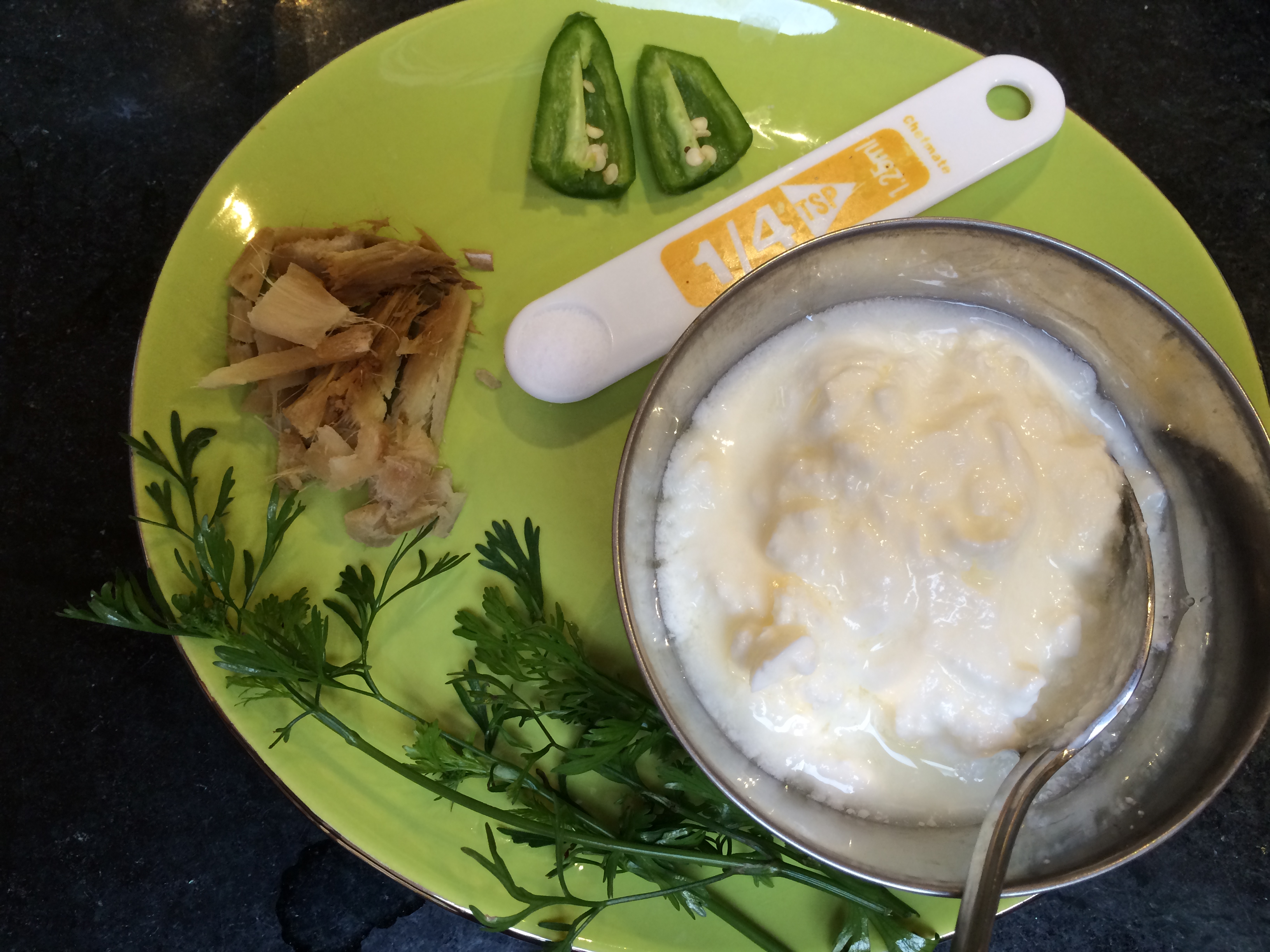
Ingredients for Neeru Majjige

All the ingredients

Blend it

Blend it

Strain it

Strain it

Squeeze dry

Squeeze this stuff dry

Spiced buttermilk

Done – spiced buttermilk

Spiced Buttermilk (Neeru Majjige)

Ingredients:
  • A cup of yogurt
  • A cup to cup and a half water
  • Quarter inch ginger
  • Half a green chili
  • Few sprigs cilantro
  • Quarter teaspoon salt
Method:

Simpler than simple. Blend all the ingredients together. Strain it. Squeee–eeee-ze the green remains dry. The mixture is a pale green, the squeezing will drip delicious light green drops on it. Refrigerate for half hour if you like.

Garnish with a sprig of cilantro, or like I did, a cilantro flower from the garden.