Broiled tomato soup in potato oyster mushroom fond

Broiled tomato soup

Broiled tomato soup

Bright red tomatoes

Bright red tomatoes

So here I am, with bright red tomatoes at the ready, thirsting for some soup. But no chicken broth in the house. Of course one can use water, but I do need to add back in some of that lovely savoriness that a broth would have added.

So I choose a multi-pronged attack.

a) Saute oyster mushrooms into the base. This takes care of the missing umami taste.

b) Brown tiny potato cubes in the base of the pot, to add some of that Maillard goodness.

c) Broil the tomatoes before adding them in to the soup, to add the caramelized flavor of the browned skin.

d) Add some milk/cream at the end to add in the missing protein flavor. Also adds creaminess.

e) Add some Worcestershire sauce, which basically being bottled umami flavor, is a bit of a cheat. The interesting thing here is that one of the ‘natural flavorings’ used in this sauce may be asafetida (heeng), which is used extensively in Indian cooking. And yes, I can vouch for its umami-ness. Among its ingredients is tamarind, also an old stand-by in Indian cooking. I guess those British did pick up a few tidbits about Indian food in the 200-odd years they spent hanging around us.

Oh — and for an aromatic, parsley. Just parsley.

Ingredients:

Handful of chopped parsley

Fistful of chopped oyster mushrooms

One medium potato (new red or purple) chopped into small cubes

Six small tomatoes

Olive oil – some

Salt to taste

Worcestershire sauce – one teaspoon. Substitute with red wine or balsamic vinegar.

Quarter cup milk or cream.

Method:

Heat 2-3 tablespoons of oil in a thick-bottomed pot. Add potato cubes to it and a sprinkle of salt. Saute on medium-high heat for about 10-15 minutes. The potato will start to brown and stick to the bottom of pot for dear life. Let it brown, then dark brown, do not worry. We will deglaze off all that stuck goodness later.

Potatoes browning

Potatoes browning

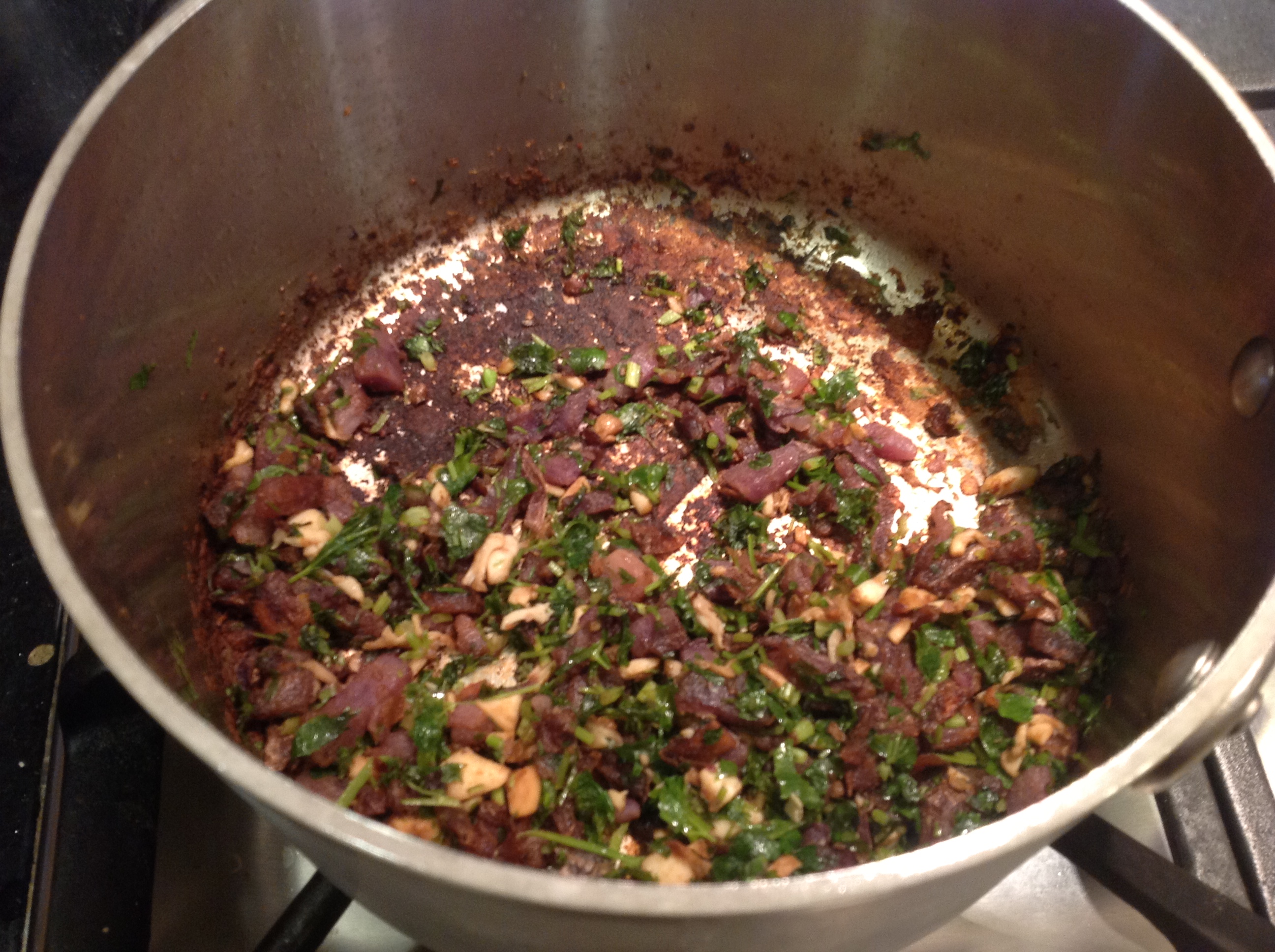
When it seems that it is on the verge of actually just charring (you do not want that), add in the chopped mushrooms. They will sweat and unstick some of the potato fond. Oh, yes, that is exactly what ‘fond’ means — the foundation or base of a sauce. After a few minutes the mushrooms will have sweated and shrunk. Now add in the minced parsley. Cook, stirring occasionally. You can cover it if you like, to get it to sweat more. Now sprinkle in the Worcestershire sauce, and stir, to deglaze some more.

Minced parsley and chopped oyster mushrooms

Minced parsley and chopped oyster mushrooms

Soup fond nicely browned

Soup fond nicely browned Soup fond nicely browned and water added

Once the mixture looks — I don’t know, kind of soup-base-y, put in a cup and a half of water, bring to a boil, and leave at a very gentle simmer, uncovered.

Halved tomatoes with olive oil

Halved tomatoes with olive oil

Meanwhile, rise and stem the tomatoes. Cut them in half, place face down on an oven-safe dish, and rub olive oil all over them. Broil for 7 minutes or until the skin has wrinkled and charred. Take them out of the oven. You can peel them if you like but I left the peel on. Puree them and toss into the soup.

Broiled tomato halves

Broiled tomato halves

Simmer the soup another ten or twenty minutes, check for salt and blend again if you like it smooth. Add milk and just heat through (do not bring to a boil at this point, because otherwise it will curdle).

IMG_0459[1] IMG_0462[1]

Serve! Possible garnish: shaved parmesan cheese, croutons, parsley, chives. And, I didn’t miss the chicken broth at all.

Bounty for under 25 dollars

Look at all this bounty I got from the Alemany Farmers Market which is is held every Saturday, pretty much all day, in San Francisco.

I love Alemany Farmers Market!Image

Look at what I got: squash blossoms, okra, berries, tiny Thai eggplants, sticky purple corn, oyster mushrooms, purple beans…a bounty of color and phytonutrients!

Taking tea Tibetan style

Tibetan butter tea

Tibetan butter tea

Folks, I thought I knew from tea. I grew up with cups of tea being downed two, three, four times a day, to the point where there there’s almost always a pot of tea going on the stove. Mornings and evenings are centered around tea. Tea and toast, tea and eggs, tea and porridge, tea and chaat, but tea, tea and tea.

There were two types of tea, I thought, the mother’s side kind, and the father’s side kind.

tea cosy

tea cosy

My mother’s side made tea boiled, the Indian way. Loose leaf black, in a pot of water and milk, boil, sugar added to taste, strain into mugs. My father’s side made it the English way because my grandfather had worked with the British in their day. A tray comes to the table, loose leaf black tea steeping in a teapot, covered in a tea cosy. Milk and sugar are in their own pots. Tea is strained into a cup, milk and sugar added to taste. The cup is on a saucer. Always on a saucer.

Cutting chai

Cutting chai

Food stalls big and small, all over the alley ways of India, made tea the mother’s way. Except they had a giant pot going all hours a day in all kinds of weather, and their means of straining is a giant white cloth except it is pretty much brown — a grayish mahogany — from years of straining tea. Not sure when and if it gets washed. The liquid is strained into little glasses: you can order the full, in which case it goes up to the brim. Or you order ‘cutting’, in which case it goes up to under the smooth rim.

In my teenage years I discovered, going to Chinese restaurants with friends, that the Chinese had a different take on tea completely. We could not believe it. Just hot water? No milk, no sugar? But it was…strangely addicting. Those little handle-less cups kept being refilled.

OK, so that’s the gamut, right? Wrong.

So I heard recently from my Nepali friend that Tibetans are tea drinkers too, but given that they live among the mountains, and need strong muscles and layers of fat to protect themselves from the cold, they need a lot of butter; and what better place to put it, than in the interminable cups of tea? That’s right folks, Tibetans like their tea with butter.

That’s not all, they like it salty.

I could not believe that salty, buttery tea existed when I first heard of it; next, I wanted to try it. Try it I did, at my friend’s house. It was luscious and soothing. Next, I wanted to try making it. It took me three tries to make something acceptable, but now I am quite fond of it; and you know what, if you are diabetic or happen to need to climb some mountains on your way to work, this may be just the tea for you.

Tibetan butter tea

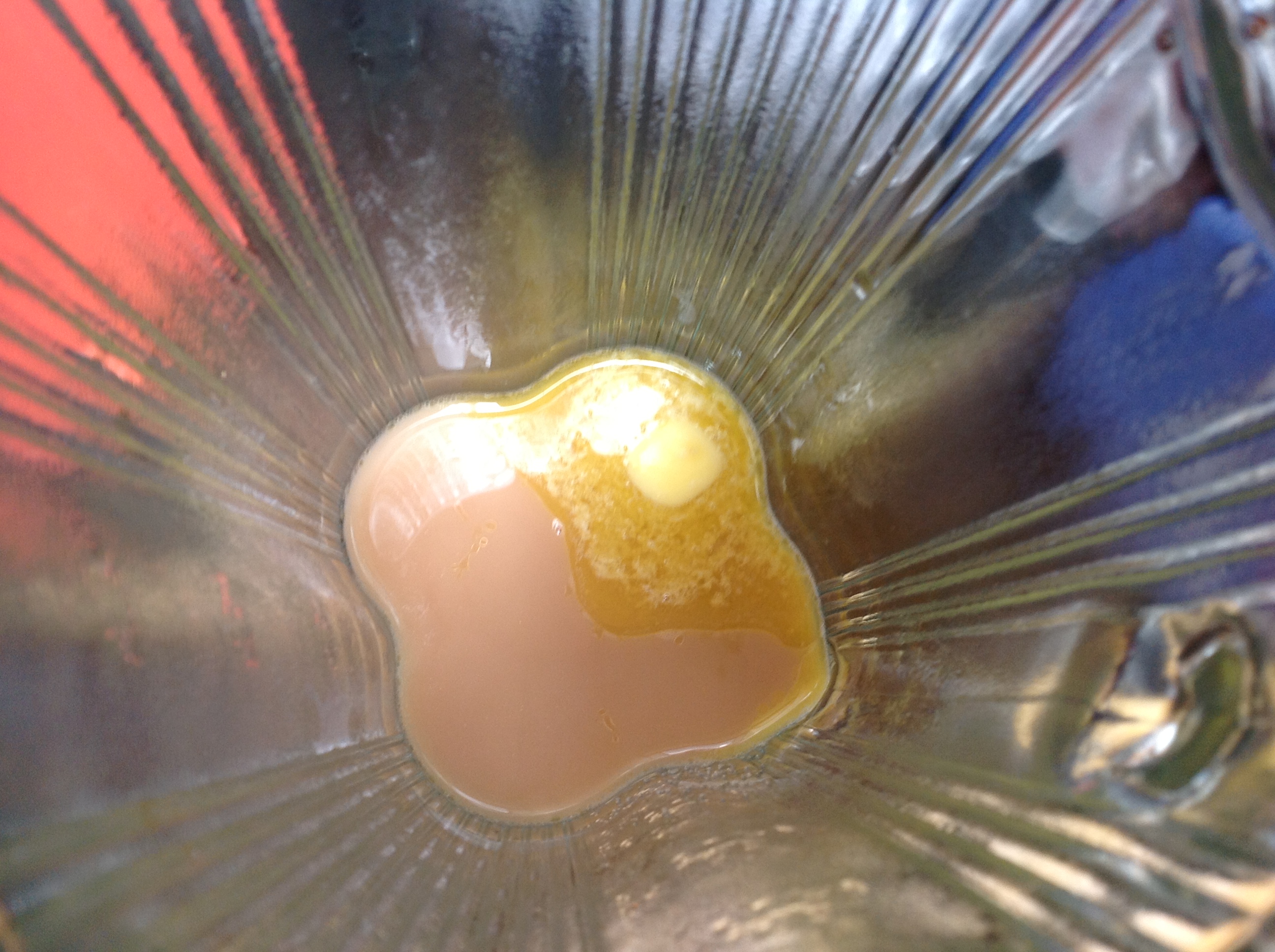
This recipe makes just one cup but is easily multiplied. Put one cup of water in a pot with one teaspoon loose leaf black tea. I used orange pekoe Indian tea. Heat it on the stove, but there is no need for it to come to a boil, I found that without any sugar to mask the natural bitterness of tea, I needed it to not develop any bitterness at all. Take it off the heat when it seems as though the water has turned a light reddish brown.

black loose leaf tea steeping

black loose leaf tea steeping

Strain the tea into a blender. In Tibet they use a butter churner that is operated by hand and rather decorative. My blender is nothing to sneeze at but I have to admit it doesn’t compare in sheer beauty to the Tibetan butter churner.

Tibetan tea ingredients in blender

Tibetan tea ingredients in blender

Add 1/8 teaspoon salt, a quarter tablespoon butter, and 2 tablespoons whole milk. In Tibet of course they use yak milk and butter (yak being the male, of course they use the yak’s wife’s milk). I just used the normal cow milk and butter. I have heard though that yak milk is more intense tasting, so if you have access to goat’s milk, you could try using that.

Tibetan tea foamed up in blender

Tibetan tea foamed up in blender

Run the blender for a few minutes till the tea gets very foamy. Pour into a cup and enjoy.

The Packet Protocol

ravioli goan masala 027

Butternut squash ravioli in sage butter sauce

I apologize for the sinister, Ludlumesque title. Really all I’m talking about is butternut squash ravioli — those pillow-soft — umm, pillows — made of pasta and filled with fillings.

Stuffing things into dough is something that every culture seems to get up to eventually. In India we have parathas and samosas, in China they do the won tons, in Nepal and Tibet they have momos, in Latin America they have the pupusa, and of course we get the ravioli from Italy (just one of their many filled pastas).

Butternut squash ravioli has been my husband’s favorite for years. He would always order it at Italian restaurants if it was available on the menu; that didn’t happen often enough, so we found a source of made raviolis at Rainbow Grocery and farmers markets. That source was not consistent either, so he coaxed me into getting out my pasta machine out from storage to attempt making it at home. The dough of course, is the same for any pasta shapes you might want to make; the recipe for the filling and the procedure follows.

One thing to note is that this is a vegan filling, which is somewhat unusual. We have always sought out vegan fillings (not because we don’t eat dairy, we do) but because most fillings seem to be so full of cheese and creaminess that one can hardly taste the actual flavor of the stuff. This one is chock full of butternut squash flavor.

Butternut squash ravioli with sage butter sauce: Ingredients:

Half a recipe of pasta dough from “It’s nice to be kneaded“, made into sheets

Half a regular-sized butternut squash

A teaspoon of olive oil

Salt to tast

Two tablespoons butter

Some slivered almonds

5-6 leaves of sage, chopped

Butternut squash ravioli with sage butter sauce: method:

ravioli goan masala 016

preparing the squash

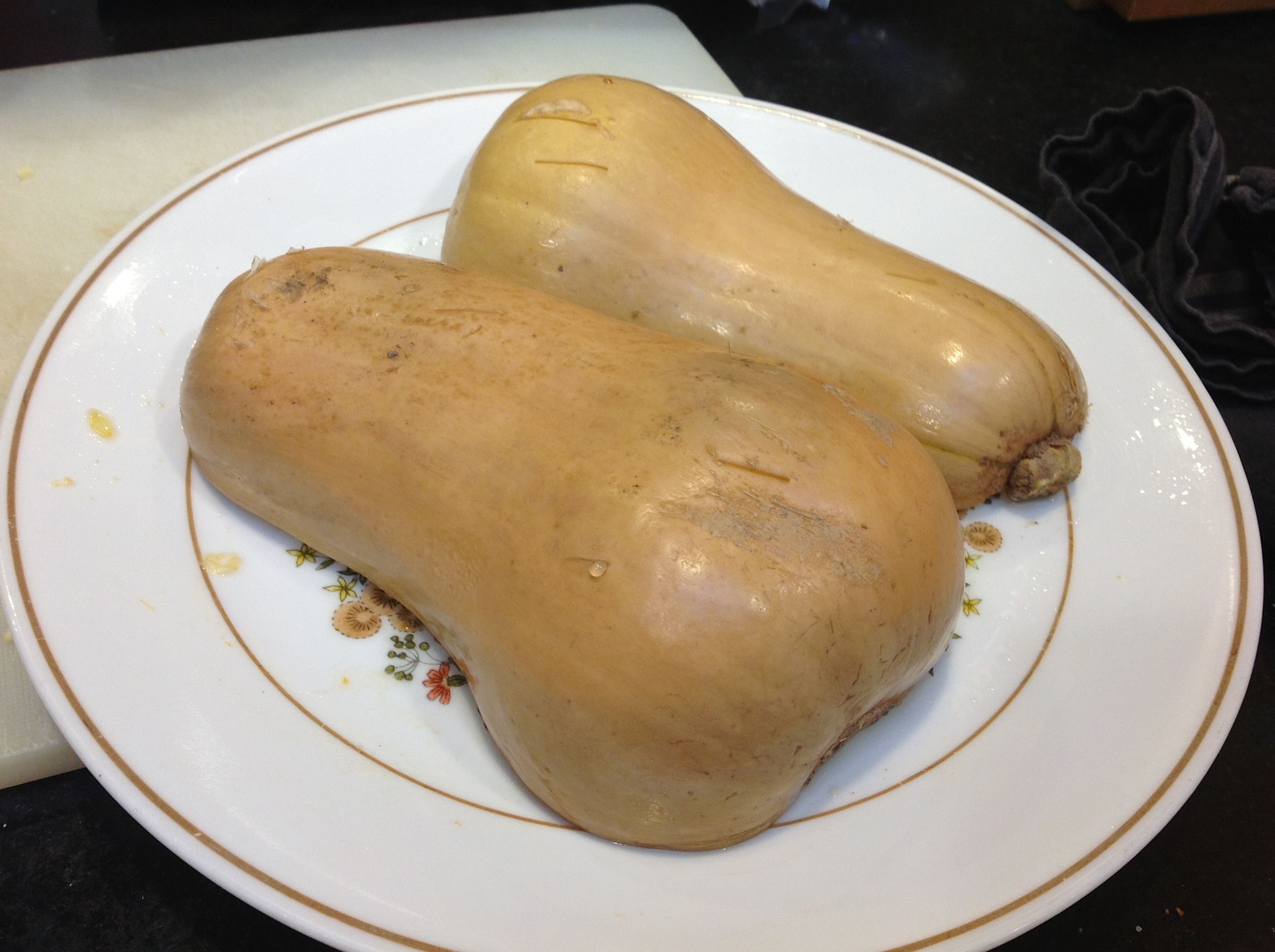
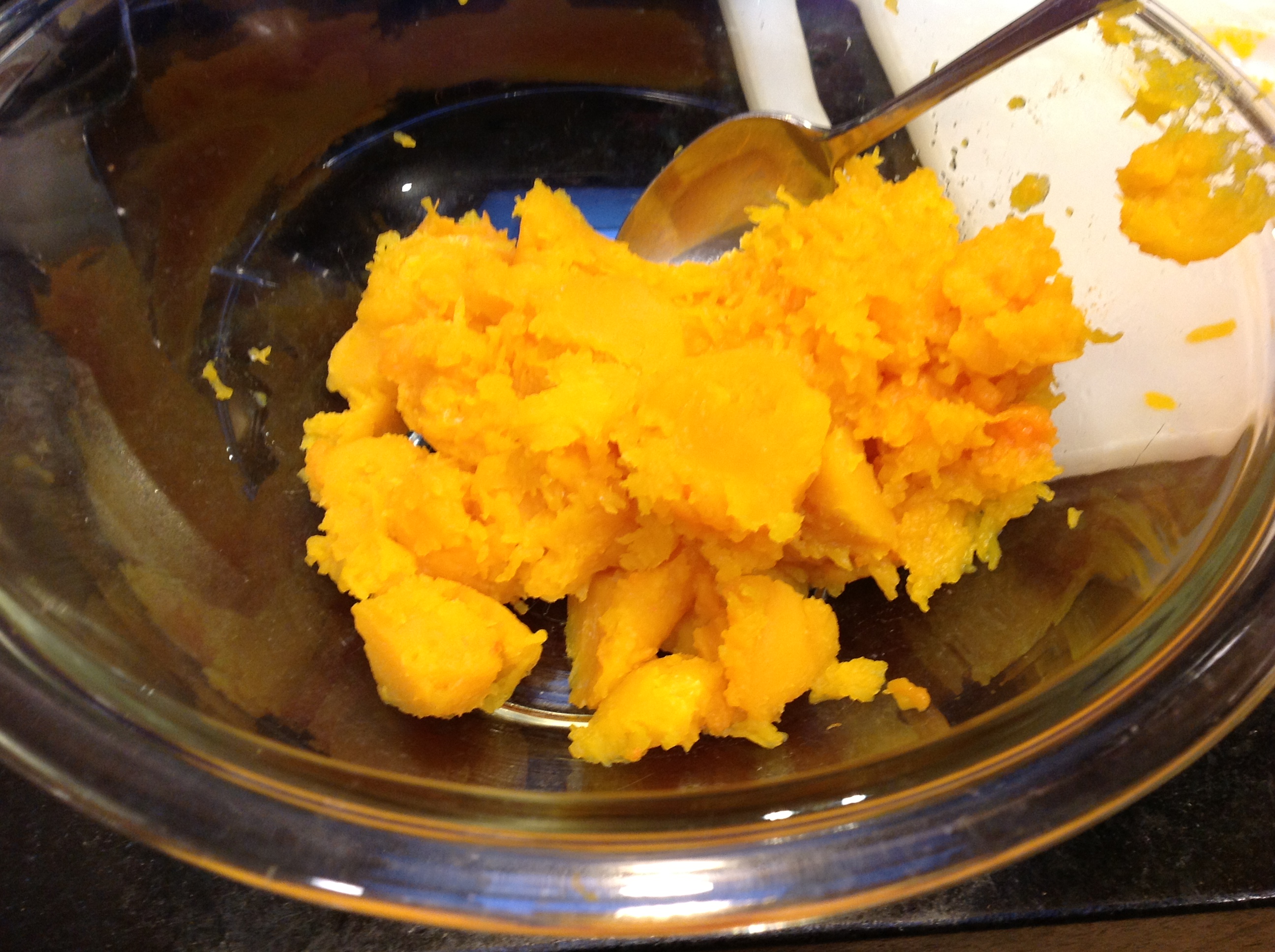
Cut the squash into halves lengthwise. Place it face-down on a plate, with a few tablespoons of water, and stick it in the microwave for 8 minutes or until done. Test it with a knife — it should as soft as butter. When it cools a little, it should be easy to scoop out the seeds to discard, and the flesh to save in a bowl.

Mix in some salt and the olive oil, and whisk them in, which should have the effect of making the filling more luscious. Filling is done.

ravioli goan masala 017 ravioli goan masala 018

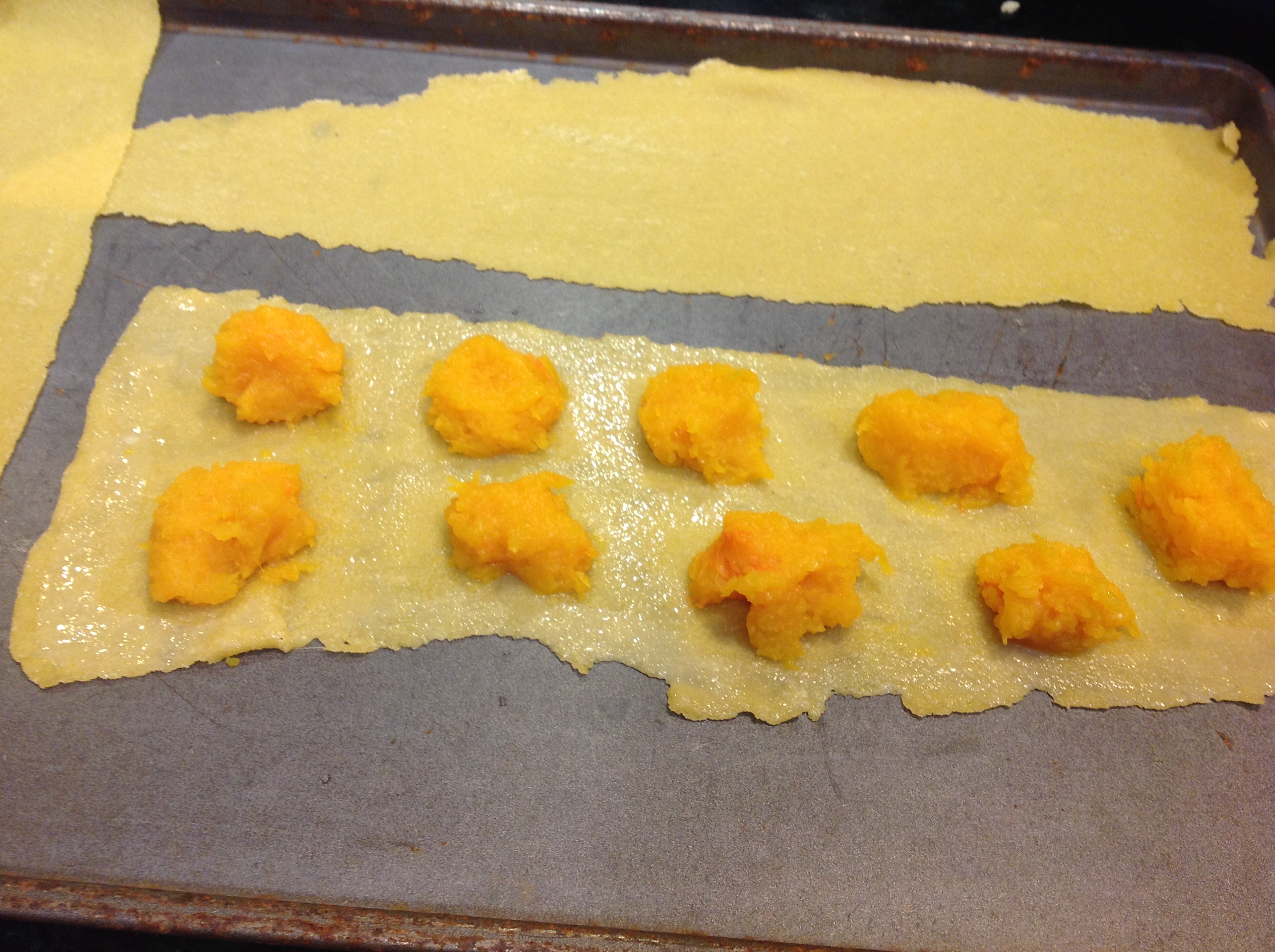
Now we construct the ravioli. Find two sheets of pasta that are roughly even in size. Lay out one (after dusting the surface with flour). Then place the filling in dots along the sheet, a teaspoon each, while leaving a lot of space around to stitch up the pillow seams, so to speak.  Using some water to dip your finger in, carefully moisten the gaps in between the filling rounds.

ravioli goan masala 019 ravioli goan masala 020 ravioli goan masala 021 ravioli goan masala 022

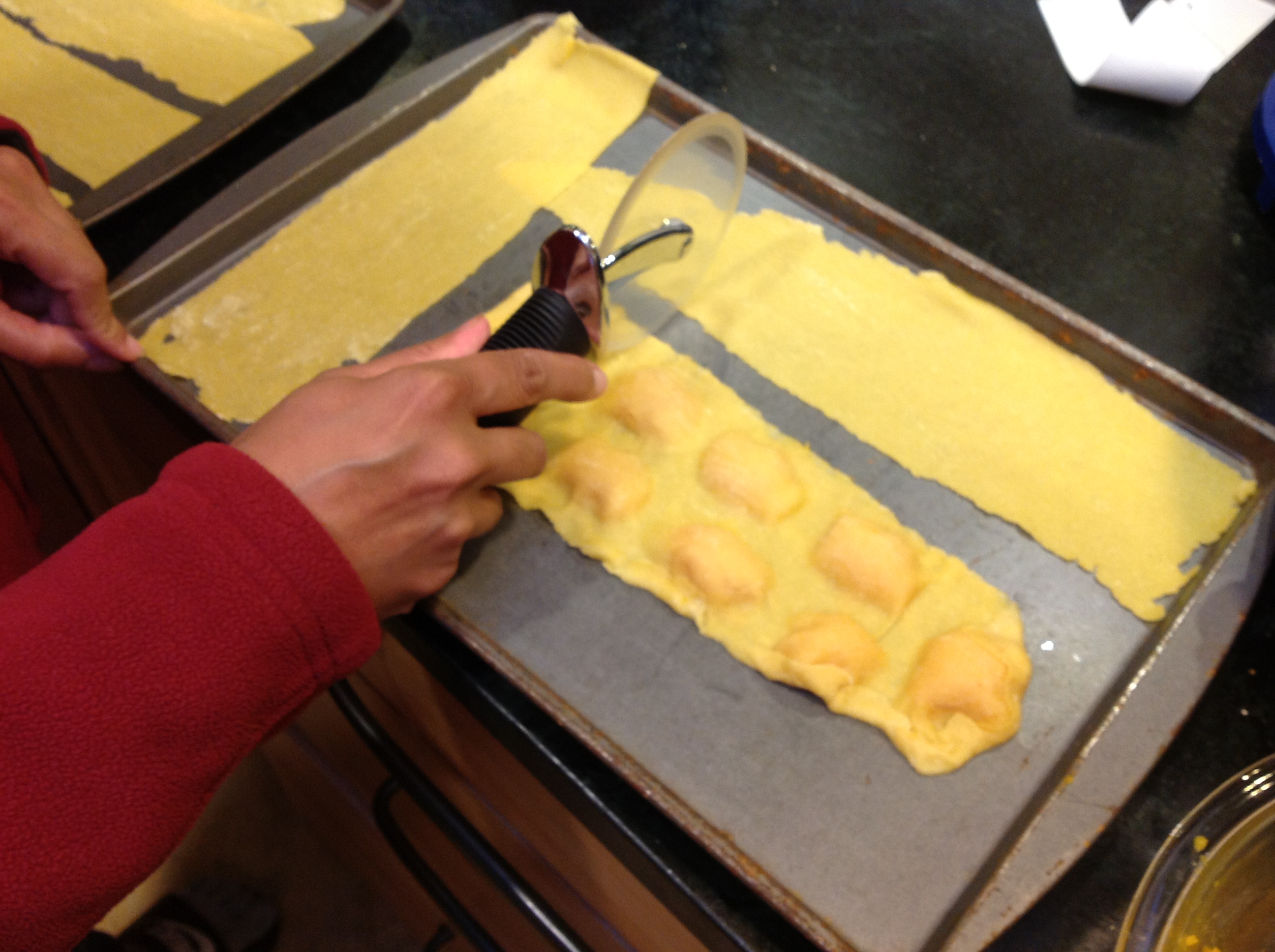
The other sheet of pasta gets laid carefully over to cover. Press down gently but firmly to stick to its brother sheet on the bottom, along the channels that you dampened with water. Try to squeeze out any air from the pocket. Now, using a pizza cutter if you have one, or a butter knife if you don’t, cut the ravioli into squares along the pillow seams. Keep dusting with flour as you remove the prepared squares to a plate.

If you have some weird shapes left, don’t throw them away, I at any rate wrap filling into the scraps and fold over like a won ton, or find a few misshapen scraps to combine into a plausible ravioli.

These are ready, now to cook them and the sauce. Set a big pot of water to boil with a teaspoon of salt. While that is coming to a boil, prepare the very simple sauce in a wide pan. Heat up the butter; in it, gently saute the sage leaves and the slivered almonds. Let it simmer very gently.

sage butter sauce

sage butter sauce

Once the water comes to a rolling boil, put in the raviolis (do not toss them in, or the hot water will toss back at you). They only need to cook for a few minutes, and you will know when they are done when they float up to the top. Remove them with a slotted spoon into the sauce, and add a few ladles of the pasta cooking water to make the sauce flowing. Stir, simmer additionally for a few minutes with the cover on, and they are ready.

ravioli goan masala 026

ravioli in sage butter sauce

It’s nice to be kneaded

There are a lot of kids who will eat nothing but pasta. Imagine if they helped you manufacture the pasta themselves, watched the strands appear, then saw those same strands on their plates for dinner? Wouldn’t they feel special, knowing that their own little hands created their dinner? Wouldn’t they feel — I don’t know — needed?

Well pasta dough relishes some kneading too. So let’s get to it.

You might have heard of semolina flour. It is yellower than the flour used for bread, and coarser. This is the official flour used for making pasta. What is so special about it that makes it suitable for pasta, where the regular bread wheat is not?

Durum Wheat Grain crop 041

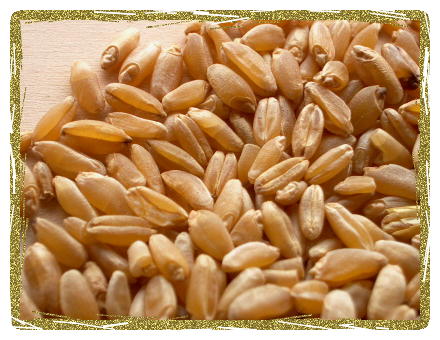
Durum wheat image from Purcell Mountain farms

Semolina is made out of durum wheat, a different species than bread wheat. This one has a somewhat different gluten. It is very strong (stronger than bread wheat) but not as elastic. When I first heard that it was a revelation to me. One can see that in the substance of pasta itself. It can definitely hold its shape, but doesn’t expand — can you imagine a spongy spaghetti filled with air bubbles? I can’t. There’s your durum. Strong gluten, but not elastic.

Much as I would love it if it were so, semolina is not whole grain. In fact the word ‘semolina’ describes a certain kind of grind of wheat:

– it is coarse,

– it doesn’t include the bran (the fibrous outer covering, think egg shell)

– it doesn’t include the germ (the new baby wheat plant in utero, think egg yolk)

– it is entirely composed of endosperm, which in any seed is the starchy part that would form the food of the new plant, if it were to germinate (think egg white).

pasta machine 002

pasta machine

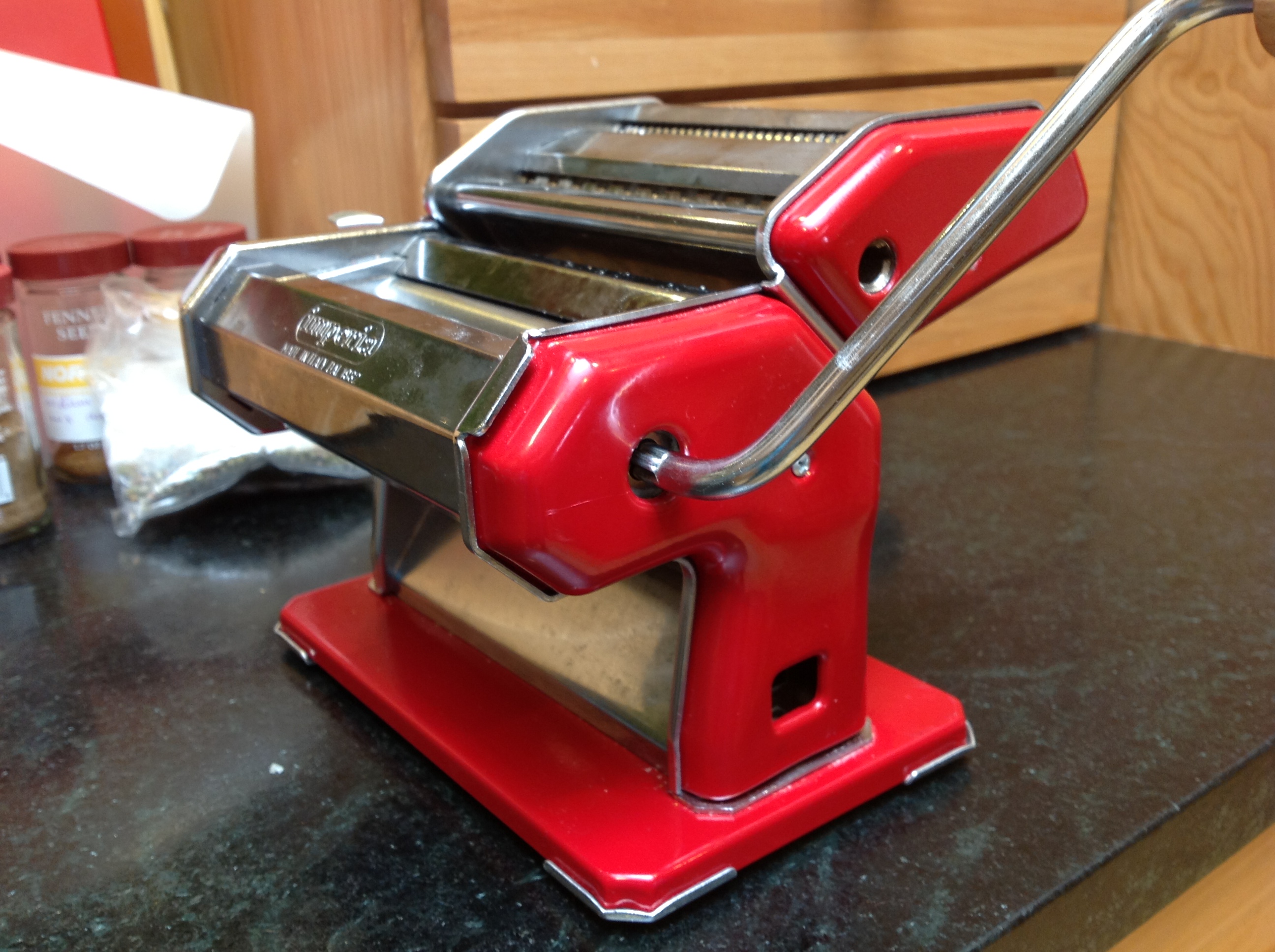
Although you could make pasta with a simple rolling pin, it is so much easier, if you are in the mood to splurge, to go buy a hand-cranked pasta machine. Plus that means a kid can crank the handle, feed the dough in, choose shapes, and have a great time. My kid certainly did and she doesn’t even like pasta.

Homemade pasta — the dough:

Put in a bowl: one and three-quarters cup semolina flour for four dinner portions; half a teaspoon salt, and stir with a fork. Make a well in the center and break three eggs into it.

ravioli goan masala 007

Semolina with eggs

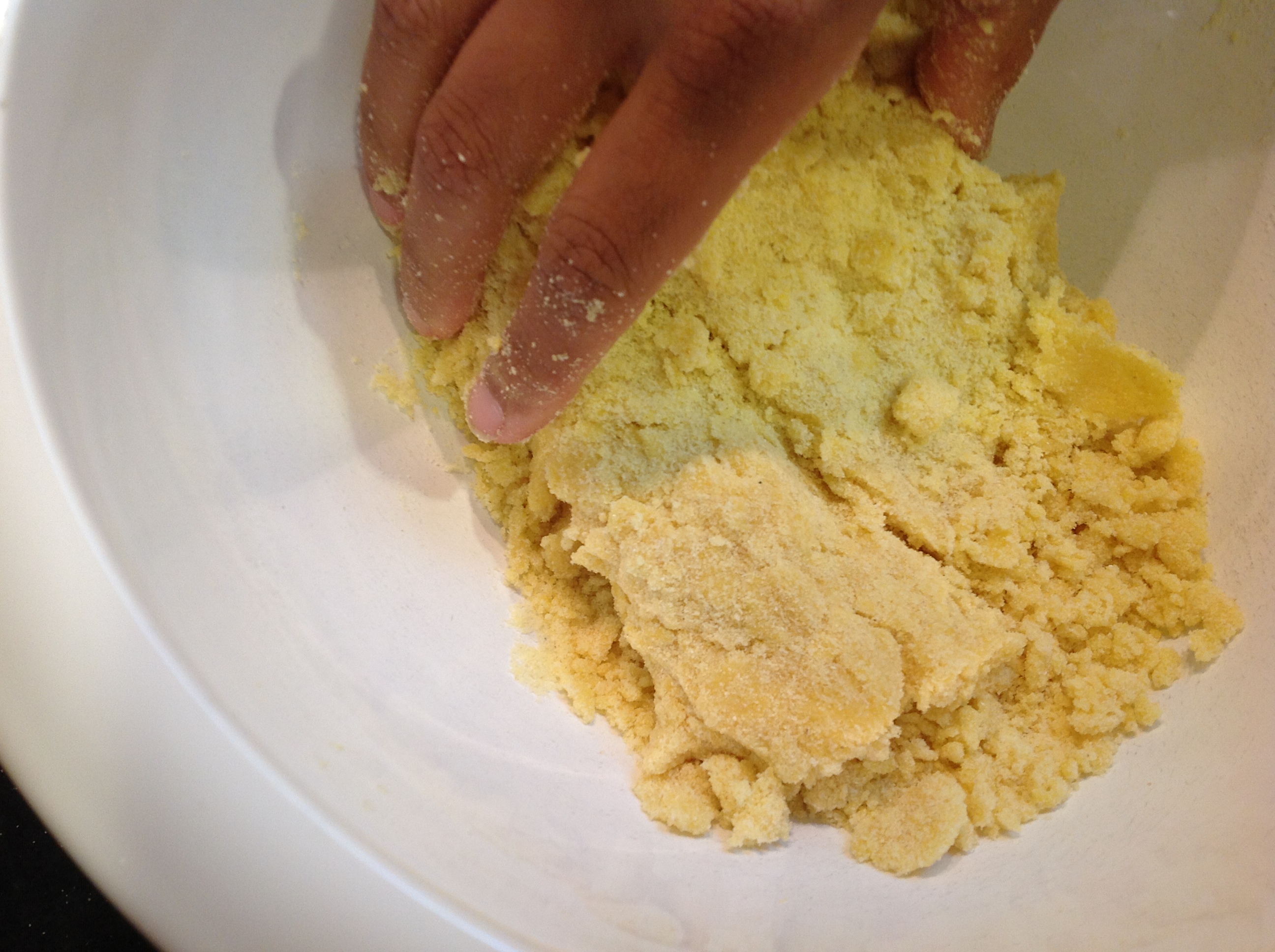
Stir the eggs to break the yolks, and gradually start pulling in the dry semolina. When the middle part of the semolina is more or less moistened, and quite wet, it is time to use your fingers and upper body strength. You might want to put the dough out onto the counter as well.

ravioli goan masala 008 ravioli goan masala 011

This dough comes together relatively easily. Could it be the strong gluten? Keep pushing the dry bits into the center of the dough to integrate them; if you need to add a few drops of olive oil to add moisture, you can; or add a spoon or two of extra dry flour if too sticky. The dough should be integrated, smooth, and only a little tacky.

Leave it aside for about half an hour, covered.

Homemade pasta — the sheets or shapes:

Divide up the dough into even sized pieces. Flatten each piece and send it through the pasta machine while cranking it. You will start with size 1 (where the rollers are at their widest). What comes out will be a thick sheet approximately rectangular in shape. Send it through again with the next size up: 2.

ravioli goan masala 013 ravioli goan masala 014

Sometimes you will see that the sheet comes out with a few rips in it. My guess is that the gluten wasn’t developed enough. Perhaps not enough kneading, or not enough waiting after kneading. This happened to me, but I solved it by folding over one of the rectangles two or three times, and then sending it through, thus kneading again, by means of the pasta machine.

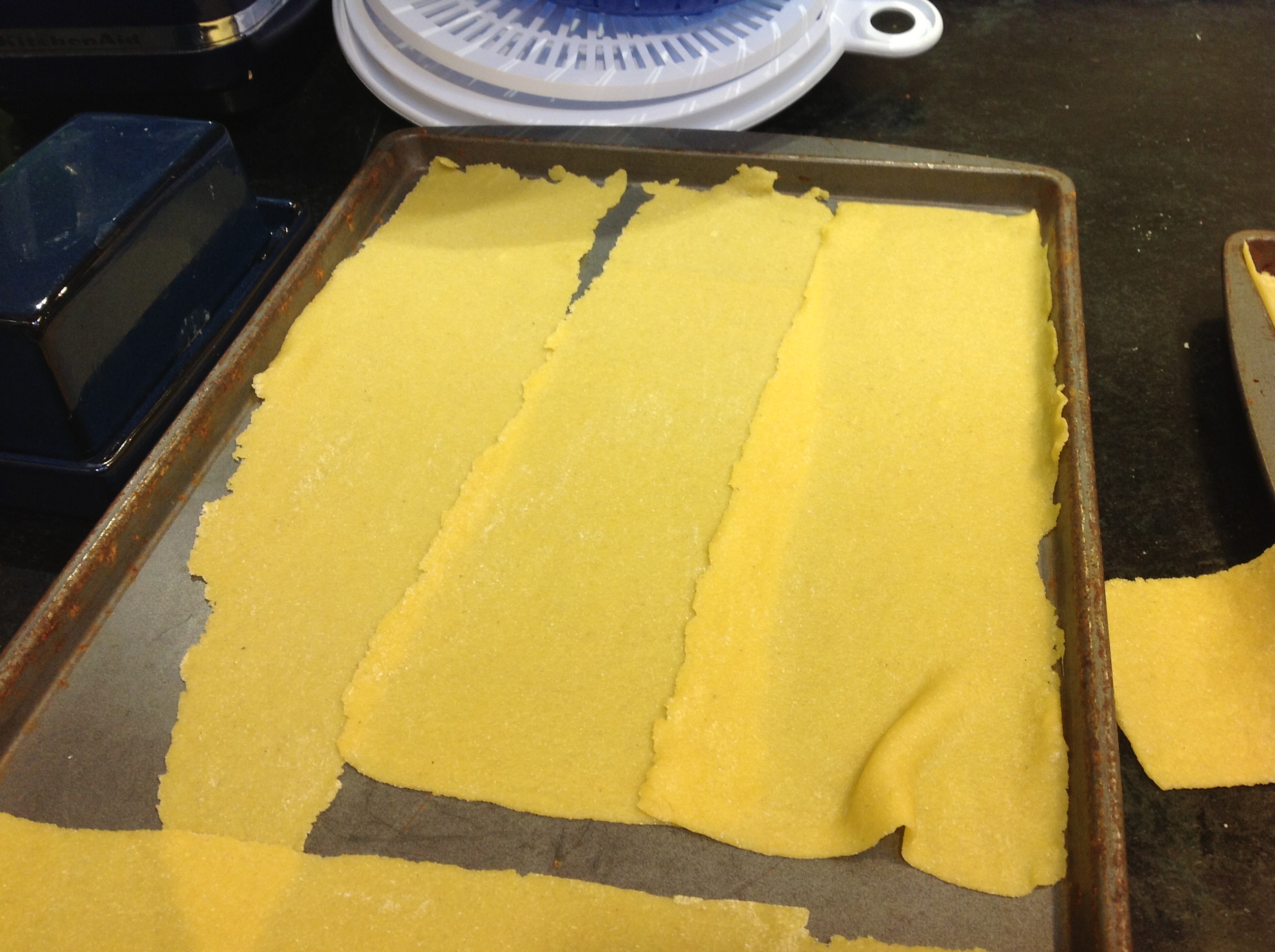
Get it as thin as you like, I went up to size 5 and thought that was enough. Most machines come with some shapes too for you to experiment with. I did plain rectangular sheets to make raviolis with below:

ravioli goan masala 015

pasta sheets for ravioli

Oh — and dust with dry flour once in a while, so the sheets or noodles don’t stick together!

Hot stuff – ginger chutney

adrak chutney 016

I hope you are clutching your socks, Dear Reader, because this recipe is going to Knock Them Off. It combines the heat of chilies with the singe of ginger, spiked with garlic. Just when you think you’ve been slapped around enough, in comes the soothing savoriness of lentils, and then you get your sweet reward.

I thought I was familiar with South Indian food, having grown up in cosmopolitan Bombay. But every once in a while I hear of a preparation that reminds me that restaurant cuisine (for any regional food) is rather more limited than what families actually eat. Restaurant cuisine is a cartoon representation of the reality that plays out in home kitchens.

South Indian food is culturally quite different from North Indian. There is a heavier reliance on rice than on wheat, for one. Then there’s the prevalence of coconut. But the one thing that really interests me (and one that I’ve used in quite diverse recipes, like on salmon — details later) — is that some lentils are used as a spice.

The main one is urad dal (Vigna mungo). This is known as ‘black lentil’ when it is whole, and ‘white lentil’ when it has been split and skin removed. This bean is native to India and one of those stealth ingredients that appears in various forms all over the country — maa ki dal in Punjab, dahi vada all over the north, a third of the grain content for dosas and idlis, and in innumerable recipes as a sprinkling in hot oil as a spice. When used as a spice, it does not add heat, but a sort of sharp savoriness and crunch. Imagine a quieter peanut. It is hard to describe.

But the star of this show is ginger, another tropical beauty. So let us proceed with ginger chutney. I got this recipe from my friend Rama who hails from South India. She will vouch for its authenticity and I vouch for hers.

Ingredients:

2 inch piece of ginger

2 cloves garlic

1 tablespoon urad dal (split and skinned)

1.5 tablespoon channa dal (bengal gram)

4 – 5 dry red chilies, or adjust to your heat preference

half a teaspoon tamarind paste (I use the paste that comes in a jar rather than the pods) — or substitute lime juice

half an inch square of jaggery — substitute with sugar

salt to taste

Method:

Mince the ginger and garlic. Their relative proportion are shown here:

adrak chutney 003

Ginger chutney: ginger and garlic

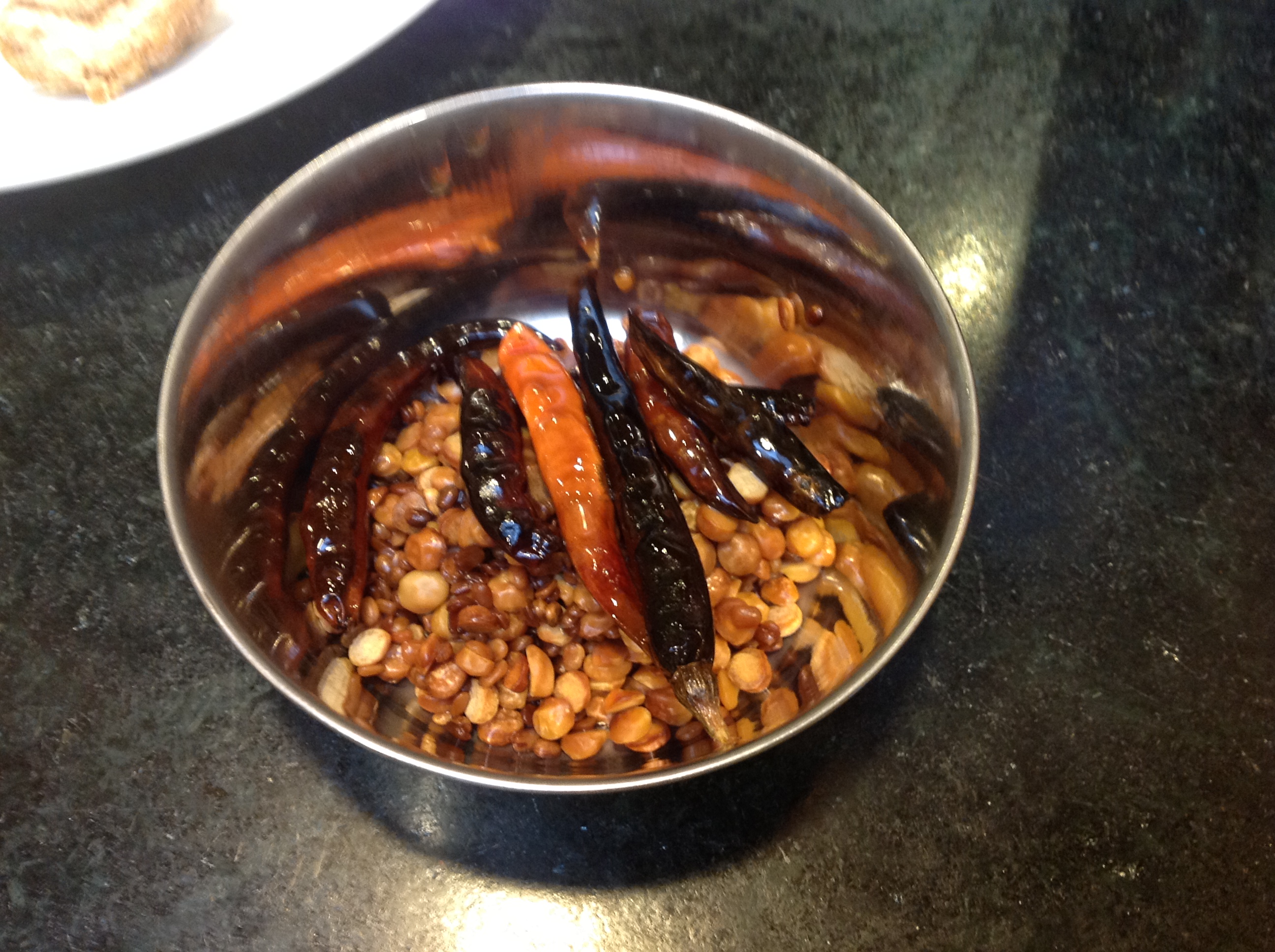
Also have the dals and dry red chilies ready to go, and their relative proportion is shown here:

adrak chutney 004

Ginger chutney: dals and red chilies

Warm a small, thick-bottomed pan with a teaspoon of oil. When the oil shimmers, put in the dals, first. Stir for around 5 minutes on high-ish heat, until they smell roasty and get reddened. They will turn color into something like this:

adrak chutney 007

Ginger chutney: roasted dals

Remove them to a vessel while draining the oil, and in the same oil, roast the dry red chilies. In a few seconds they will swell and in several more seconds they will darken. Turn the hood on if you have one or open windows, or you will pay for it by coughing. Remove the chilies once they darken. The spices to be dry-ground are done.

adrak chutney 010

Ginger chutney: dry spices

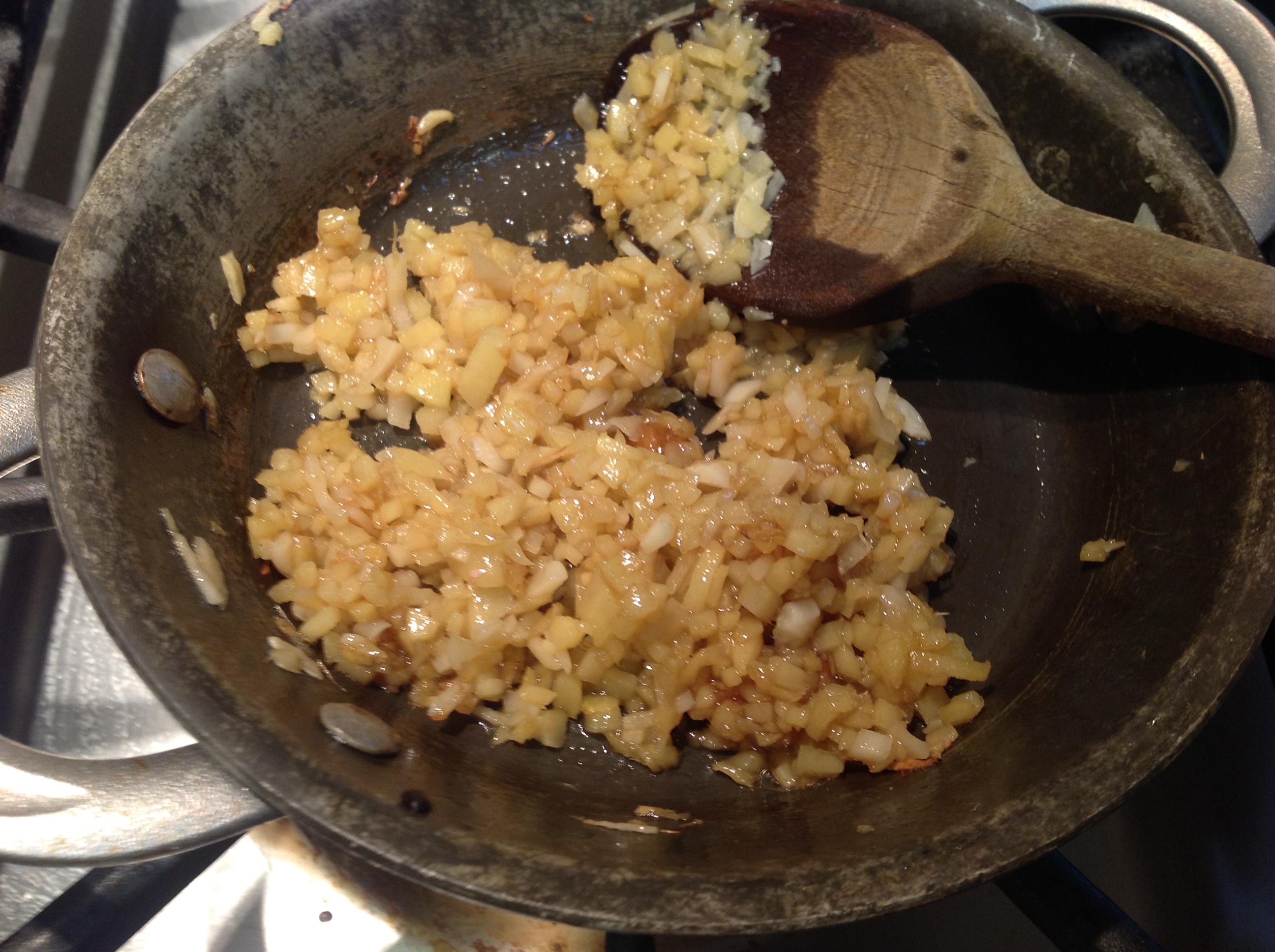
Now in the remaining oil, add the ginger and garlic. Add a drop more oil if needed, to moisten them completely. Stir on medium heat until they look shrunken and cooked (not brown). Like so:

adrak chutney 011

Ginger chutney: ginger garlic

At this point, I put the jaggery into the hot oil along with the ginger and garlic, to get some of that caramel flavor going. The heat, and the pressing with wooden spoon, got the jaggery melted and combined with the ginger and garlic, like so:

adrak chutney 013

Ginger chutney: ginger, garlic, jaggery

Turn of the flame, and now the grinding starts. First the dry spices are ground separately in a coffee grinder to produce a coarse powder:

adrak chutney 014

Ginger chutney: dry spices

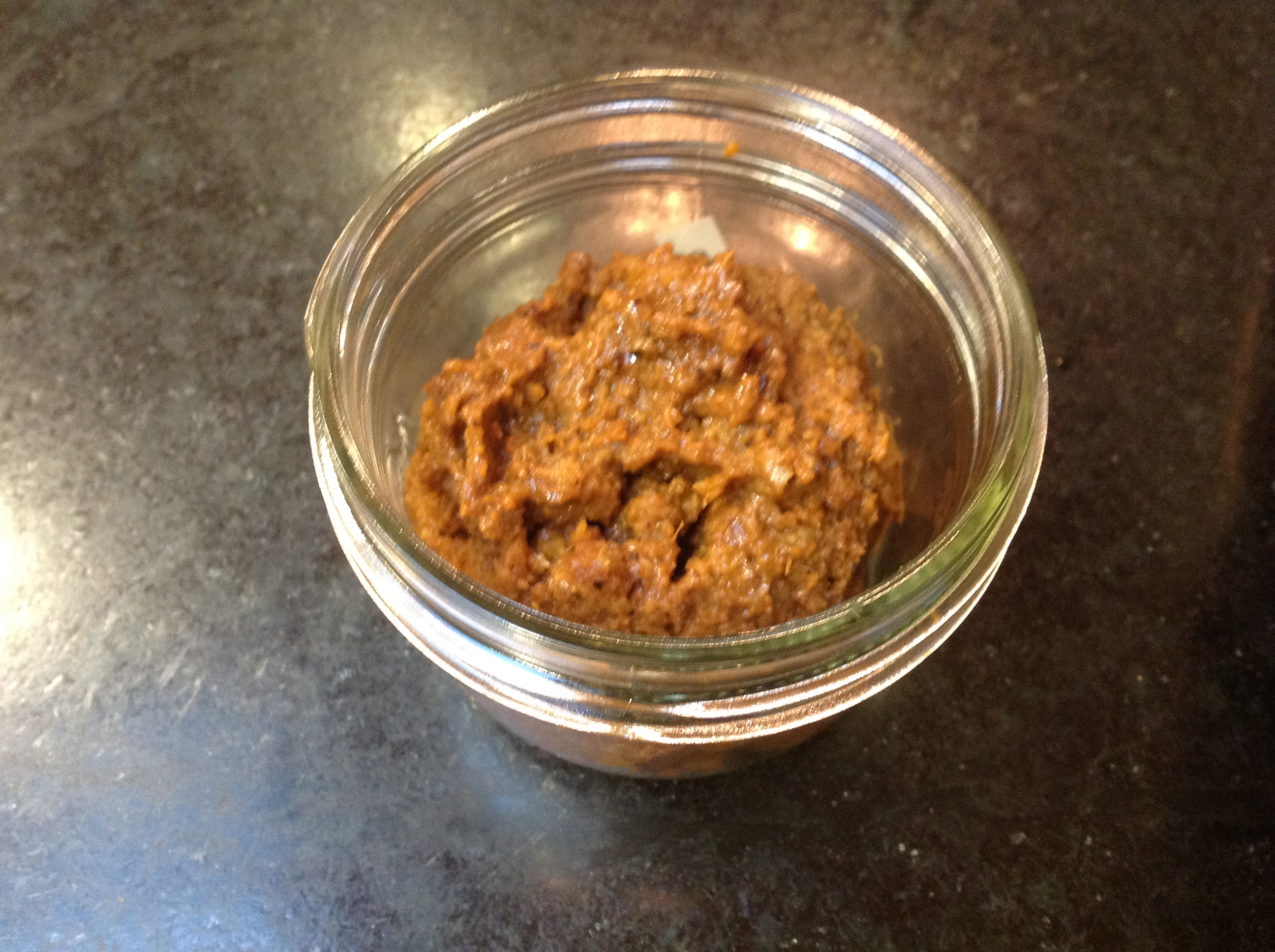
Now for the blender step. Pour the dry spices, the ginger and garlic, the half teaspoon of tamarind, some salt to taste, and some water to lubricate the blades. Blend for about 3-4 minutes to get a smooth paste:

adrak chutney 015

There, you have your ginger chutney, ready to eat with idlis or dosas. Those are just the traditional accompaniments, but this chutney could add a lot to a sandwich with roasted vegetables, or a felafel wrap, or spread on baked chicken.

Update on 3/28/14: So months after posting this, I’m entering this in this month’s Spice Trail contest which is about ginger, hosted by Vanesther at the Bangers and Mash blog:

http://bangermashchat.wordpress.com/

Go thou and explore!

How bread can teach you patience

Yeast makes bread rise, but lesser yeast makes better bread. Bread made with a quarter teaspoon yeast develops more flavor than a good heaping helping of two teaspoons. So why would anyone ever add more yeast? Well, you pay for it with time.

If you mix your dough, forget about it for a few hours; or leave it out overnight or stick it in the fridge for a day — if that process doesn’t drive you crazy — you draw more flavor out of the wheat. Take a deep breath, forget about it, and wait.

So when I saw a recipe from King Arthur that emphasized the minimal amount of yeast, I figured I would try it. It had a couple more qualities that I look for in bread.

  1. Half the flour is whole wheat. You get all the fiber from the bran and all the nutrients from the germ. I’m sold.
  2. This is an artisan bread, which I prefer, not an enriched loaf. What’s the difference, you ask? Both are yeasted breads, but quite different animals. Here are the differences.
  • artisan breads are free-form, while enriched breads are usually made in loaf pans to get that characteristic (some might say cartoonish?) square bread shape with wings at top
  • artisan breads have a strong crust and holes inside, while enriched breads are softer with an even texture throughout
  • artisan breads tend to emphasize just the taste of the wheat and often have just flour, water, yeast and salt as the ingredients. While enriched breads are — you know, enriched — with sugar, dairy, fat, raisins, cinnamon, cheddar, what have you
  • artisan breads are cooked faster and hotter, while enriched breads are cooked for longer at a more gentle oven temperature
  • artisan breads are good for tearing off bits to have with butter or olive oil, while the raison d’etre of enriched breads is toast and sandwiches.

Artisan loaves are somewhat fetishized (one could argue I’m fetishizing them right now); so it is rare to find a whole wheat artisan bread because the bran detracts from the holey chewiness somewhat. This recipe is a find.

The recipe makes two loaves.

Whole wheat artisanal loaves based on King Arthur’s recipe

Step 1: Make the sponge

whole wheat artisanal loaf 001

Whole wheat loaf: mixing the sponge

One cup whole wheat flour (I used King Arthur’s premium whole wheat), 1/16 teaspoon instant yeast (basically, a pinch), half cup water. Stir with a whisking motion, my favorite implement for this is a chopstick. You might have to use your fingers at the end. The point is not to knead it, just combine it into a very sticky mixture. Leave this on the countertop overnight or all day, covered with plastic wrap.

whole wheat artisanal loaf 002

Whole wheat loaf: sponge

whole wheat artisanal loaf 003

Whole wheat loaf: sponge ready to rise

whole wheat artisanal loaf 005

Whole wheat loaf: sponge after it has risen

Step 2: Make the dough

By next morning the sponge will have expanded; if you touch it lightly with your fingertip it will press in easily just like a — like a baby’s cheek. Now mix the dough.

Mix the dry stuff first:

2 1/4 cup bread flour (substitute with all purpose; this is not the whole grain)

1 1/4 cup whole wheat flour

1/4 teaspoon yeast

1 1/2 salt

Put the dry flours into the bowl of a mixer if you are using one, otherwise a large bowl. Stir the dry stuff together with a fork. Try not to let the salt come in contact with the yeast, because it kills it. The way to do that is stir the yeast in with the flour first, then sprinkle the salt on, and stir that in next.

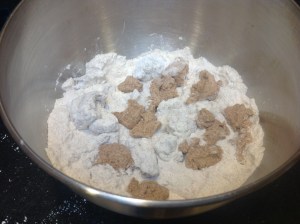
Now break the sponge from Step 1 into walnut-sized bits and throw into the dry stuff. Once in a while stir to cover the wet sponge with the dry flour.
whole wheat artisanal loaf 010

Whole wheat loaf: breaking the sponge into bits

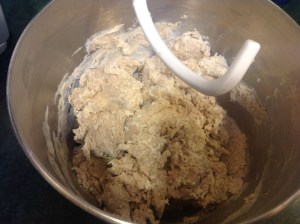
Now put in 1 cup + 3 tbsp filtered water (not tap water since it is chlorinated). Start the mixer on the slowest speed for just a minute until all the water is combined with the flour and forms a shaggy mass. If it looks like there is dry flour at the bottom that simply will not get combined, you can help it along with a spatula; or if they still can’t find enough water, give them a spoon or two, the poor babies.
whole wheat loaf: a shaggy mass

whole wheat loaf: a shaggy mass

Now cover with plastic wrap and leave it be for 10 minutes. This process is called autolysis, which gets the dough to start the process of building gluten on its own, in the presence off water, without you doing a thing.  Except waiting. I told you this was all about waiting.

This recipe for chapati/roti, even though it is about a flat bread, has some explanation of the process of building gluten.

Now, the kneading will proceed a lot faster. Turn on the mixer on slow speed for about 5 minutes.

whole wheat artisanal loaf 016

Whole wheat loaf: done with mixer

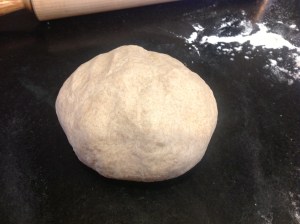
Pull out the dough, and finish the process by hand on a counter top. You now have a smooth dough. Put it into an oiled container, cover the dough with oil inside and out, and mark the level to which the dough comes up to.
Whole wheat loaf: a smooth dough

Whole wheat loaf: a smooth dough

At this point you will be waiting for 3 – 4 hours; if this doesn’t fit your schedule and you want to wait longer, use the fridge.

whole wheat artisanal loaf 019

Step 3: Folding once in a while

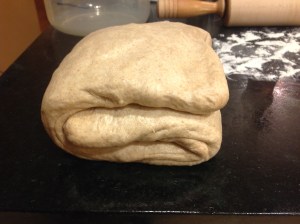
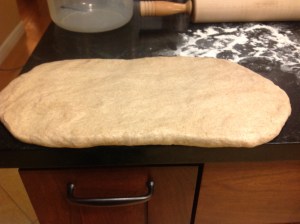
While the bread is rising, give it some folds while handling it gently (don’t pound at it). The first time after an hour of rising, the second time another hour later, or skipping it is fine too. This is how you fold the bread — that I learnt from Rose Levy Berenbaum’s book The Bread Bible. Drag the dough out and flatten it into a rectangle. Fold both ends in one on top of the other as though you are trying to wrap a present. Flatten it out gently, give it one quarter turn, stretch it out widthwise, and give it another fold.
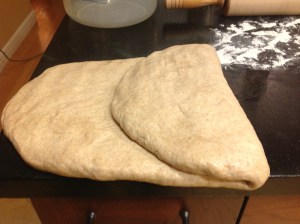
whole wheat artisanal loaf 020 whole wheat artisanal loaf 022 whole wheat artisanal loaf 023 whole wheat artisanal loaf 024

Put the dough back in its container. Allow it to rise until it is at least doubled, which you can tell from the line you drew to mark its level. When it is fully risen it will be very puffy with air and you might even see bubbles at the surface. Look carefully at the picture on the right below — you can see bubbles enveloped in a thin stretch of dough.

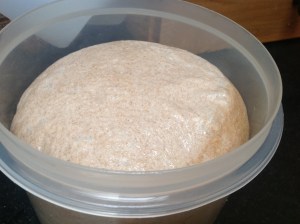
whole wheat artisanal loaf 027 whole wheat artisanal loaf 028

Step 4: Shaping

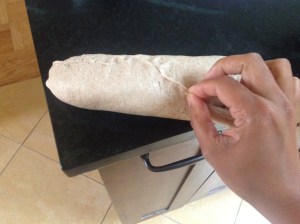
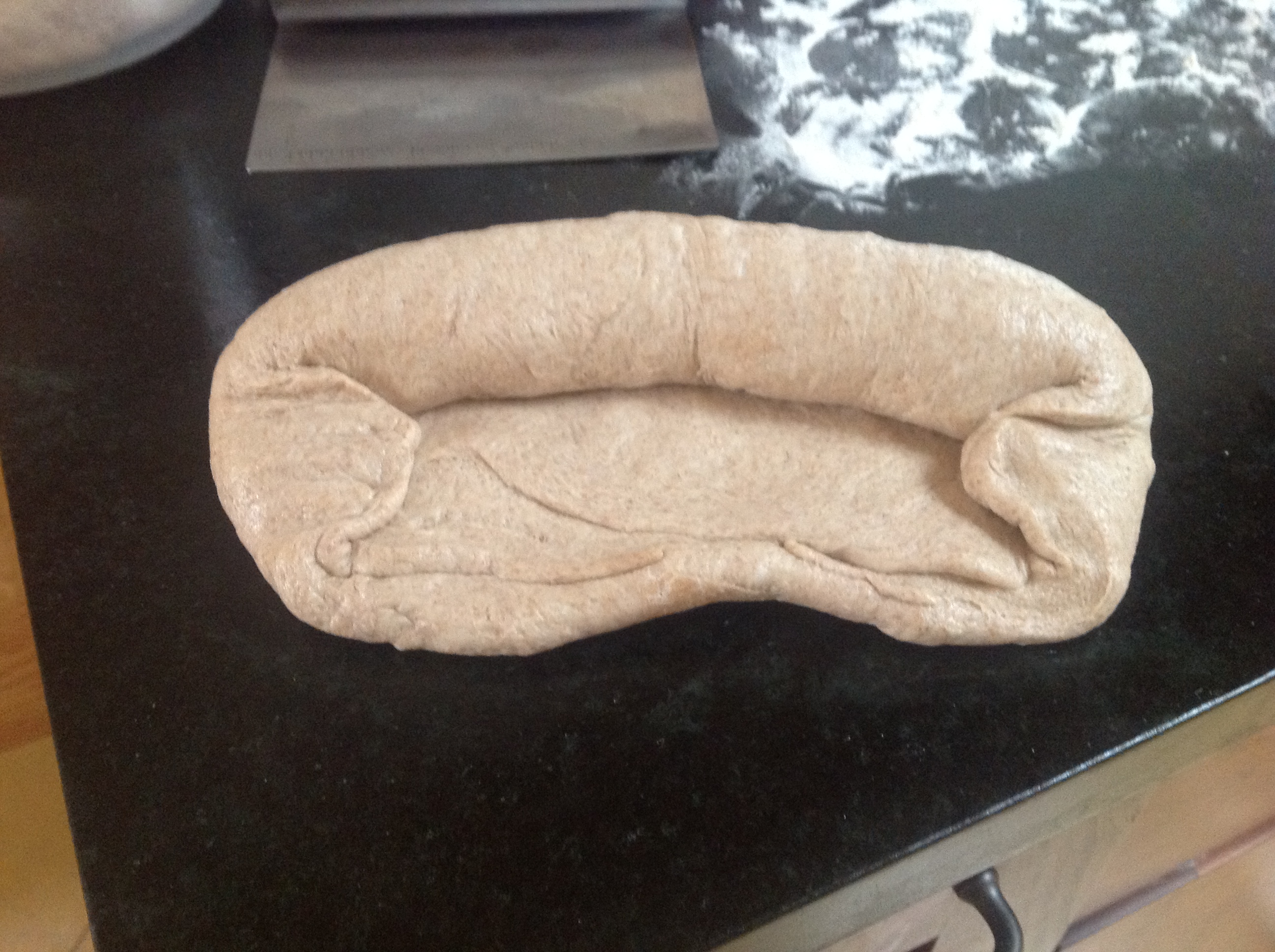
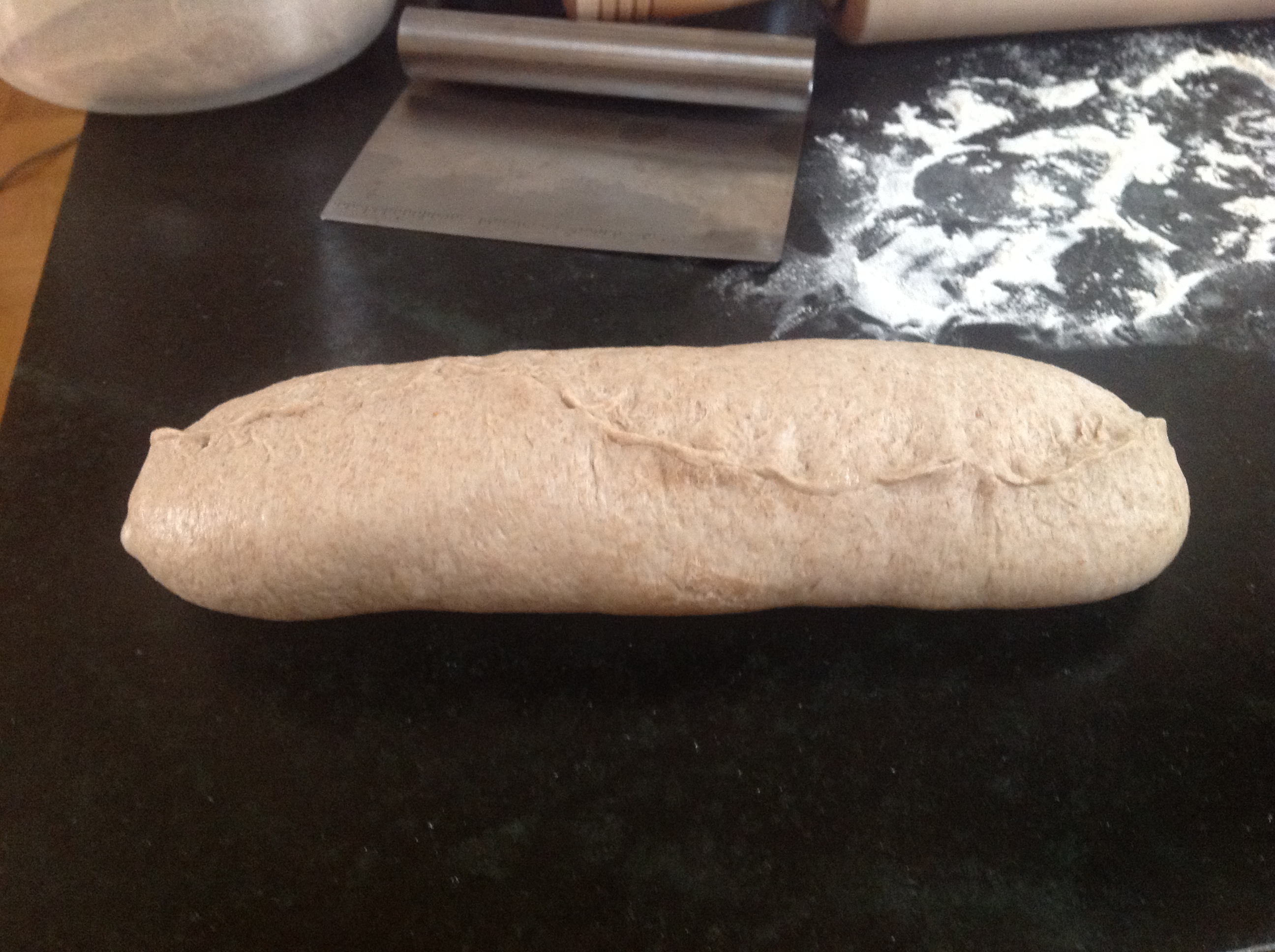
At this point you are ready to shape the dough into loaves. Pull the dough out gently, lay it on the counter, and cut it into two. Each half will be shaped separately. The idea with shaping is you flatten the dough out and start rolling it width-wise, quite tightly, while firmly tucking in all ends. At the end you will have a cylindrical roll. Pinch the seams closed. When you think of bread rising, the easiest way to think of it is that you are stretching the dough at the surface to increase surface tension and make a sort of balloon — a gluten balloon — that will trap the air in as the yeast breathes out CO2.
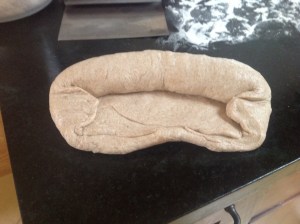
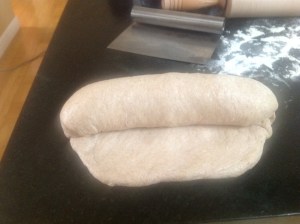
whole wheat artisanal loaf 030 whole wheat artisanal loaf 034whole wheat artisanal loaf 032 whole wheat artisanal loaf 033

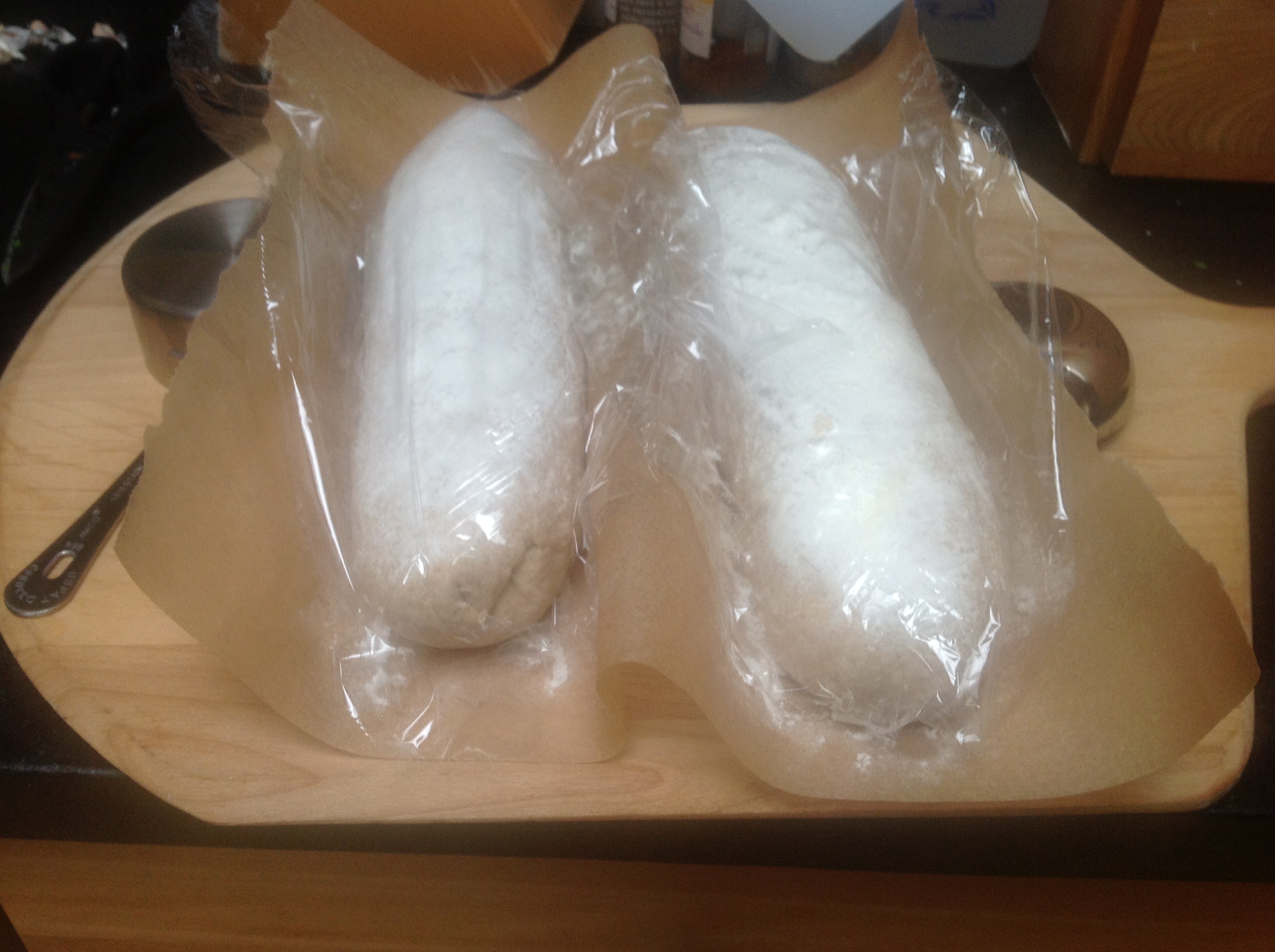
Dust the loaves with some dry flour, place them on a parchment paper on a cookie sheet to rise. Cover with plastic wrap so that the surface does not dry out.
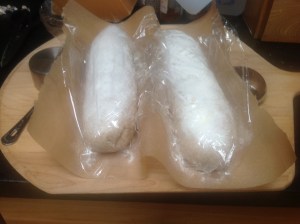
whole wheat artisanal loaf 038

Whole wheat loaves: final rise

At this point wait 1.5 hours until the loaves have expanded 1.5 times.

Step 5: Scoring

Preheat the oven at 475 F. Before putting the loaves into the oven one has to score them, which means make half inch deep cuts on the surface. Once it starts baking in the oven the rapid expansion of steam inside the dough is going to make the bread rise so much that it wants to explode (the gluten balloon will want to pop). The cuts guide the ‘explosion’ to happen along those channels instead of an untidy way anywhere along the loaf (usually along the seams).
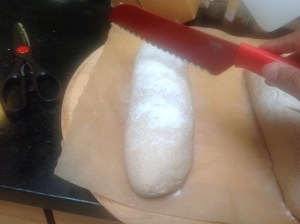
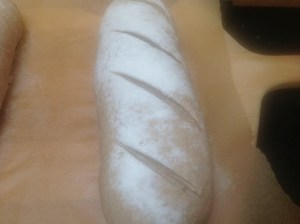
whole wheat artisanal loaf 042 whole wheat artisanal loaf 041

So take a sharp, serrated knife, and make swift, slicing cuts along the top surface with a very gentle motion. Half inch deep at least. Now mist the loaves with water from a spray bottle, and they are ready to pop into the oven.

Step 6: Baking

The oven at this point is very hot (475 F, and if you have a pizza stone stick it in there as well). We are going to circulate the heat around so it penetrates the loaves as fast as possible using steam. During the first 10 minutes, mist the loaves to create steam: open the oven door very briefly and spray water around inside. Mist it a few times — three or four times — during the first 10 minutes of baking.

Now lower the temperature to 400 F, and bake for an additional 25 minutes. Take the bread out and let them cool for an hour before slicing.

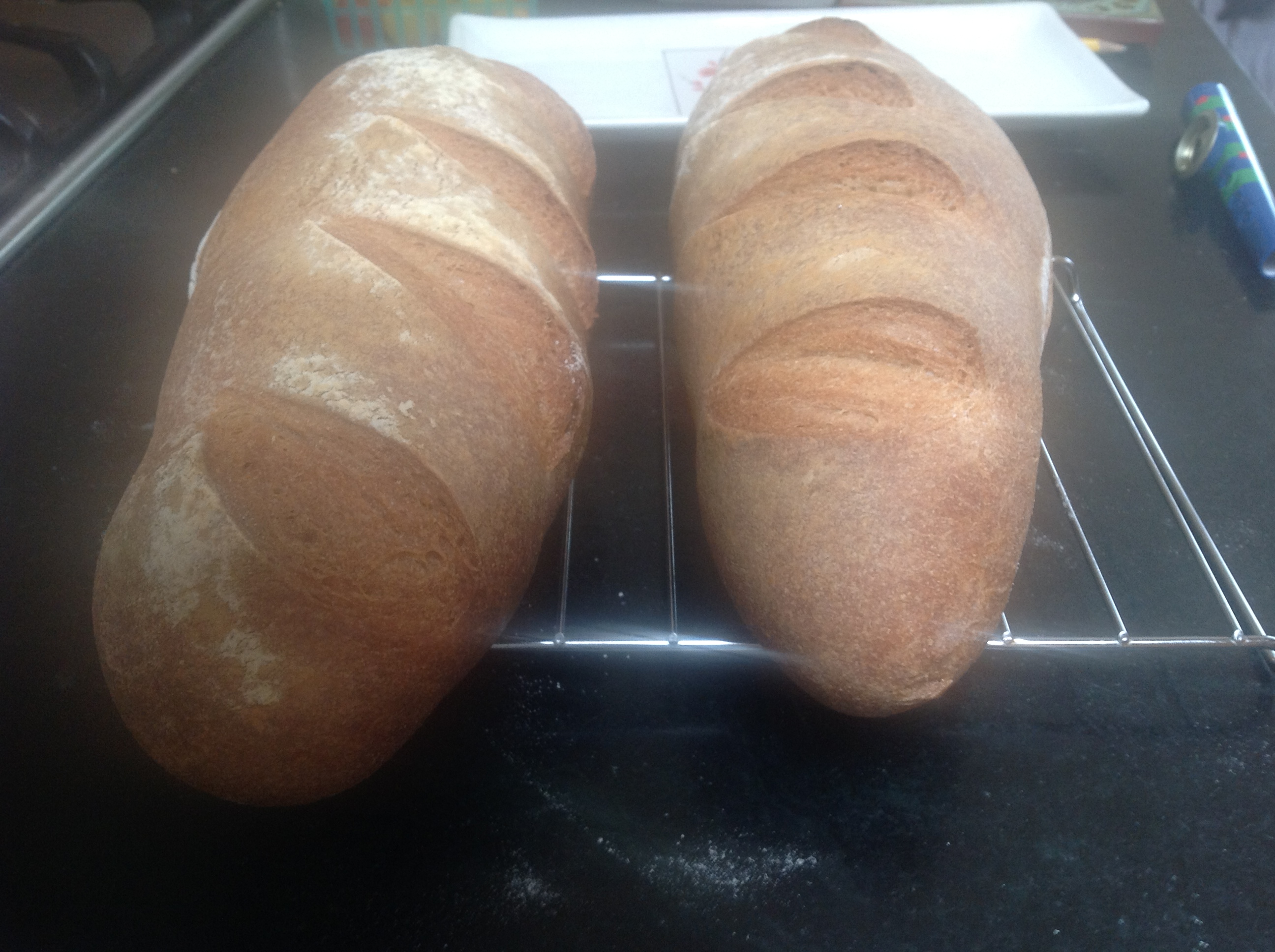
whole wheat artisanal loaf 046

Whole wheat artisanal loaf

The crumb of this bread was quite nice with a few small holes.
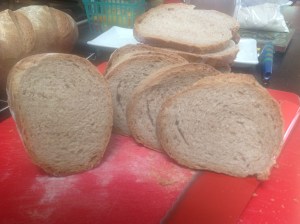
whole wheat artisanal loaf 052

Remember I said above that the explosion in the oven will want to happen along the seam, and you want to avoid that? I wasn’t able to avoid that completely, witness the explosion along the side below.

whole wheat artisanal loaf 048

Well I sliced right into that explosion and the whole thing was delicious anyway.

Cauliflou, cauliflower, cauliflowest

I adore cauliflower. I know, that is not a statement one is likely to hear often. But I do. That strong sulphuric smell when I steam and then roast cauliflower is enough to send me into a tizzy. I grew up on rice steamed with cauliflower for lunch every week day, and I tell you, you haven’t smelled white rice cooking until you’ve smelled it cooking with cauliflower.

All right, all you unsympathetic ears. I made this dish for a housemate once, and he said he had never, before then, actually enjoyed cauliflower. Plus there are the incredible cancer-fighting, DNA-repairing traits of cauliflower that it shares with its cruciferous brethren like broccoli, cabbage, kale, and so on.  So here is a simple way that can be included in any Indian meal, with chapatis or naan, with rice and dal; or with any Western meal that has strong flavors as the vegetable side. Or — what the heck — put it in a burrito.

Presenting Gobi Masala done in a Sindhi way.

Ingredients:

Half a head of cauliflower, rinsed and chopped into thin florets, none wider than half an inch

Half a teaspoon whole cumin seed

Few sprinkles of asafetida

Half a teaspoon red chili powder

Half a teaspoon turmeric powder

One teaspoon coriander powder

One inch piece of ginger minced

One-two serrano chilies, sliced

One medium tomato, choopped

Salt to taste

Chopped cilantro to garnish

Method:

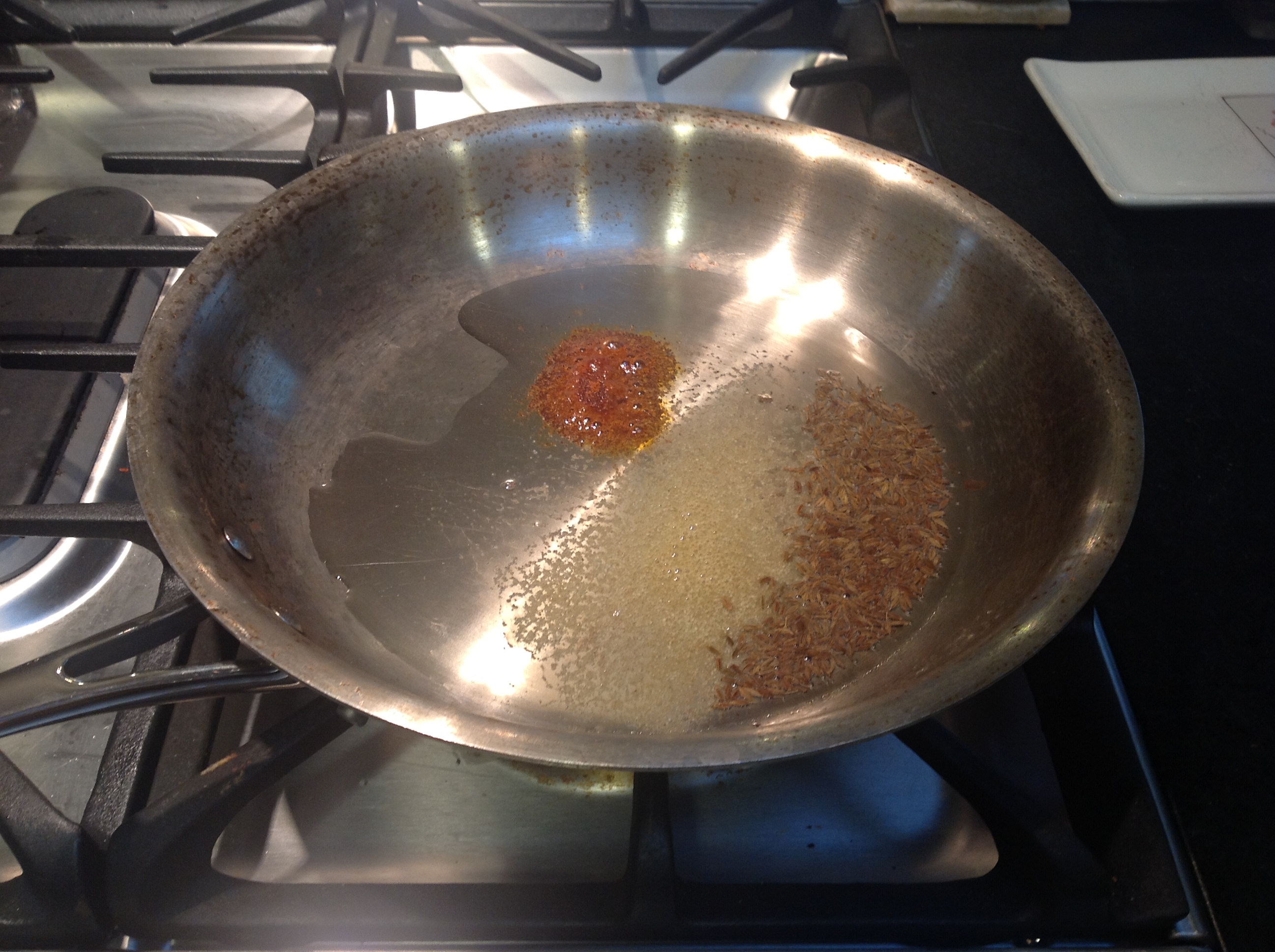
Heat 3 tablespoons of oil in a thick-bottomed pan on medium-high. When it shimmers, put in the asafetida, the cumin seeds, and the red chili powder.

cauliflower 002

Gobi masala : spices

They will sizzle presently. In go the ginger and serrano chili. They will start to look blistered.

cauliflower 003

Gobi masala: ginger and chili looking sizzling

Now it is time for the cauliflower to go in. Stir to coat with the oil. Sprinkle with salt. Stir occasionally, while leaving the pan uncovered, on medium-high.

cauliflower 005

Gobi masala: cauliflower coated with oil and spices

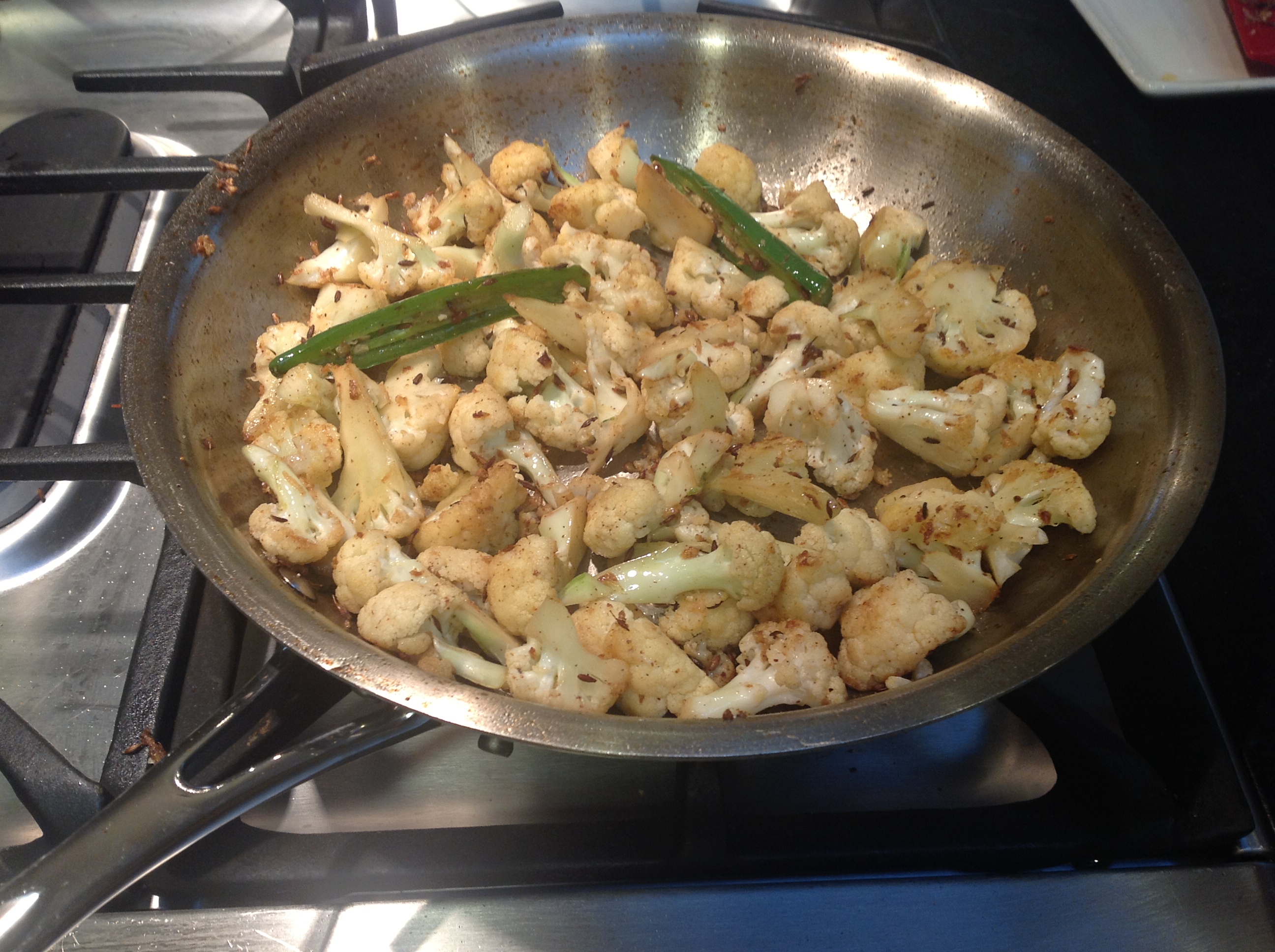
Fifteen minutes later, some of the florets will show some translucence on the stems, and some browning on the buds.

cauliflower 006

Gobi masala: some browning on florets

Now, put in the coriander, turmeric, and tomatoes, some extra salt to taste, and stir to coat the florets once again.

cauliflower 007

Gobi masala: tomatoes added

Cover, lower the temperature to medium, and let it cook for another ten minutes. At the end, garnish with cilantro.

cauliflower 014

Gobi masala: complete with garnish

Roti from the mountains

From the nuances of rotis from the flatlands of India, let’s go across the border to Nepal, where they have a different take on roti entirely. Here wheat flour does not feature at all in any form, nor for that matter any grain. A non-grain-based roti! I am intrigued.

Instead, phapar ko roti, which merely means buckwheat roti, is made out of the flour of the seeds of the buckwheat plant. Not being a grass (in fact, I have some growing in my garden, and it has club-shaped, distinctly non-grass-like leaves), buckwheat seeds are not properly considered a grain at all.

Perhaps that is a tad too clever. At any rate buckwheat seeds are turned into flour, turned into breakfast cereal, turned into noodles, risen with yeast, and in most ways eaten like a grain.

I came upon buckwheat by way of Santa Cruz, California, where my husband first discovered buckwheat pancakes. I recreated them at home, and since then we have been big fans of the distinctly…umm…muddy (meaty?) taste of buckwheat.

A flat, savory buckwheat crepe was a completely new concept for me when I heard about it from my Nepali friend. I’m always looking for new taste sensations, so let’s get started — Phapar ko roti.

Ingredients (just two, as in the more familiar wheat roti)

phapar ko roti 002

Quarter cup of buckwheat flour

1/4 cup buckwheat flour

1/4 cup + 1 tbsp water

(this much is enough for one serving, increase as needed)

Method:

phapar ko roti 003

Buckwheat flour: stir with whisking motion

Phapar ko roti batter

Phapar ko roti batter

Stir the water in with the buckwheat flour using a sort of whisking motion until you get a batter that can be poured. Feel free to adjust either the water or the flour. Heat a large non-stick pan on medium-high. Now the recipe I read actually suggested not using any oil at all; I tried that, but all I got was a mess.

phapar ko roti 010

Phapar ko roti: my lovely mess

phapar ko roti 011

Phapar ko roti: second attempt

So next I tried using a teaspoon of oil on the Calphalon pan, spreading it around, and then pouring my batter on. Tilt the pan this way and that to get the batter to spread. It will start to set very quickly. I flipped it over in a matter of ten or twenty seconds, when most of the top surface has set. Cook on the other side for about another twenty seconds.

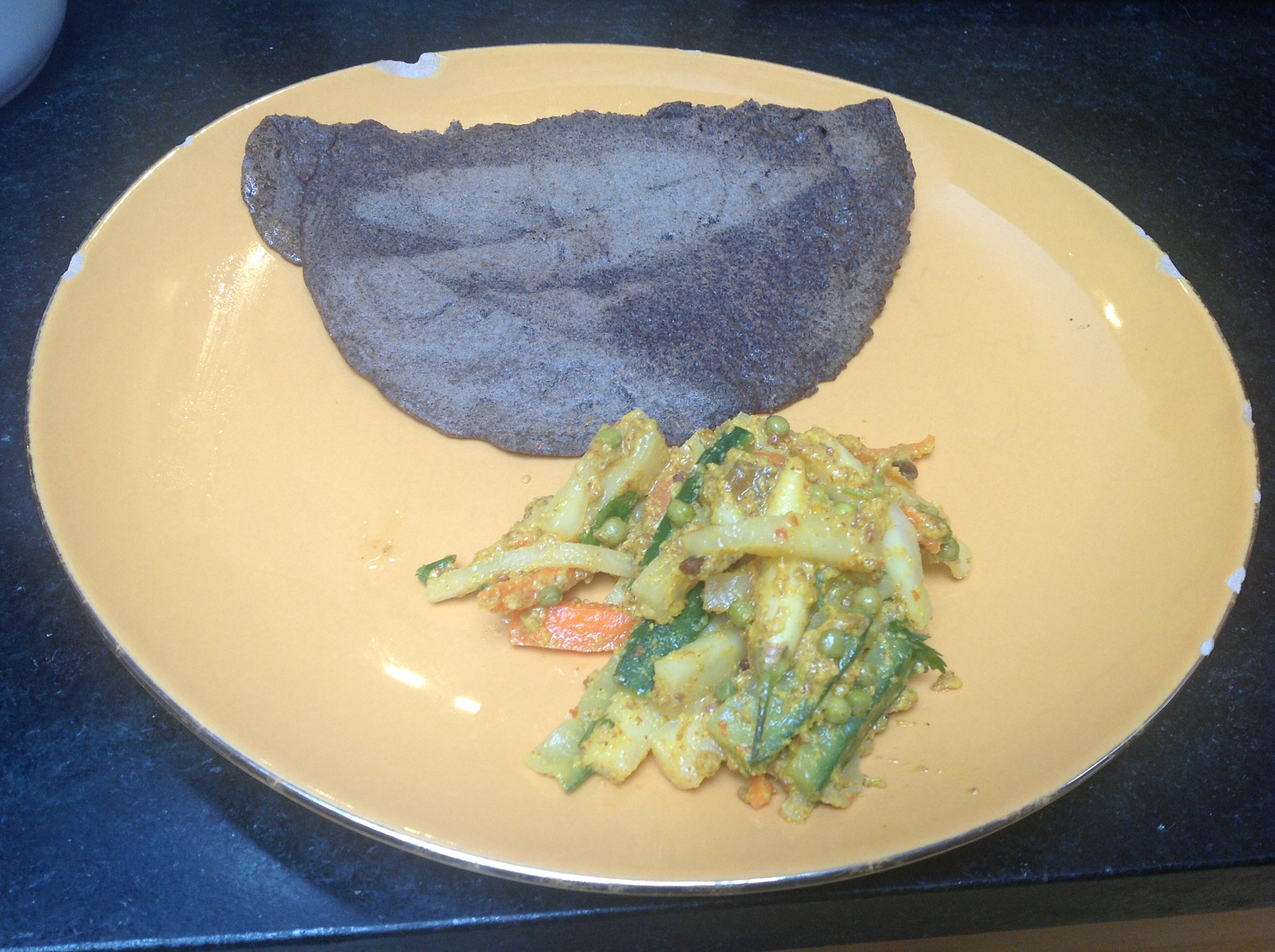
Take it off the pan. Here is my lunch:

phapar ko roti with radish achaar

phapar ko roti with radish achaar

I will have to blog the Nepali radish pickle another time. The flavor of the roti was very mild and made a good substrate for a spicy side.

Rolling the roti half a world away

In my home in Bombay, we never bought flour, we bought wheat. And we didn’t buy wimpy five-pound bags either. We bought enough wheat in bulk to fill up a tin canister as tall as one’s knees. Once a month or thereabouts, we would hire a neighborhood working lady to hoist that tin canister up on her head and carry it to the neighborhood burr mill. They would stone-grind the wheat into flour, completely whole — germ, bran and all — which they would testify to by weighing the product before and after. The burr mill would single-file through the customer requests, in order to be able to testify to flour wholeness.

This is chakki ka atta (translated: burr mill flour), that we used rest of the month to make chapati (roti), poori, or paratha.

Let’s start with the simplest of them, the chapati. There are just two ingredients — water and flour.

Kneaded together, a new ingredient magically comes alive inside the dough. This is gluten, the protein that is formed inside dough in the presence of water. Gluten is what gives dough its stretchiness and its stubbornness. Wheat dough is not just pliable — it wants to fight back. It takes a shape, but wants to go back to its previous shape. The pliability; the ability to hold a shape; the elasticity; all this is because of its gluten.

I like to imagine multitudes of tiny balloons inside the dough, all of which can be blown up without breaking, while keeping the dough from breaking into bits. These gluten balloons fill up with air so bread can rise and hold all the air inside instead of escaping. The gluten balloon allows chapatis to puff up with steam.

That brings me to a common misunderstanding — chapatis/rotis are often called the unleavened flat breads of India. But they are not unleavened. Leavened just means risen, and rotis are indeed risen, at the last minute of cooking, when they puff up with steam. Steam leavening is a respectable form of leavening that is probably the most ancient. I picture housewives in the Indus Valley civilization slapping circles of dough on their wood-burning griddles and watching them puff up.

They are unfermented, however, and no external leavening agent like yeast or baking soda are added.

During my childhood we had a chapati meal for either lunch or dinner every day. Two circular chapatis with a few dark brown spots, folded into quarters. A dal, a vegetable and a cup of yogurt completed the meal. When this is everyday food, one scorns it; half a world away in California, deprived of one’s neighborhood burr mill, a source of wheat, and the proper chapati-making expertise, it becomes an undertaking.

For years I tried to approximate chakki ka atta in California by mixing half and half of whole wheat and all purpose flour. But I was never thrilled about the lack of wholeness there (yes I’m a bit of a fanatic); and one day I used straight whole wheat, the rotis came out perfectly fine, so I have stuck with that. This makes sense — the species of wheat used for bread-making in the West (triticum aestivum) is the same as most of the wheat grown in India, mainly for the use of making chapatis. (There are many different subspecies though.) The grain size of chakki ka atta is probably smaller. But I haven’t found this to be a huge problem. I use King Arthur’s Premium Whole Wheat flour and get perfectly good, puffed up, rustic rotis.

Ingredients:

2 cups whole wheat flour

3/4 cup + 3 tbsp water

Method for dough:

roti 010

Making roti: whole wheat flour and water

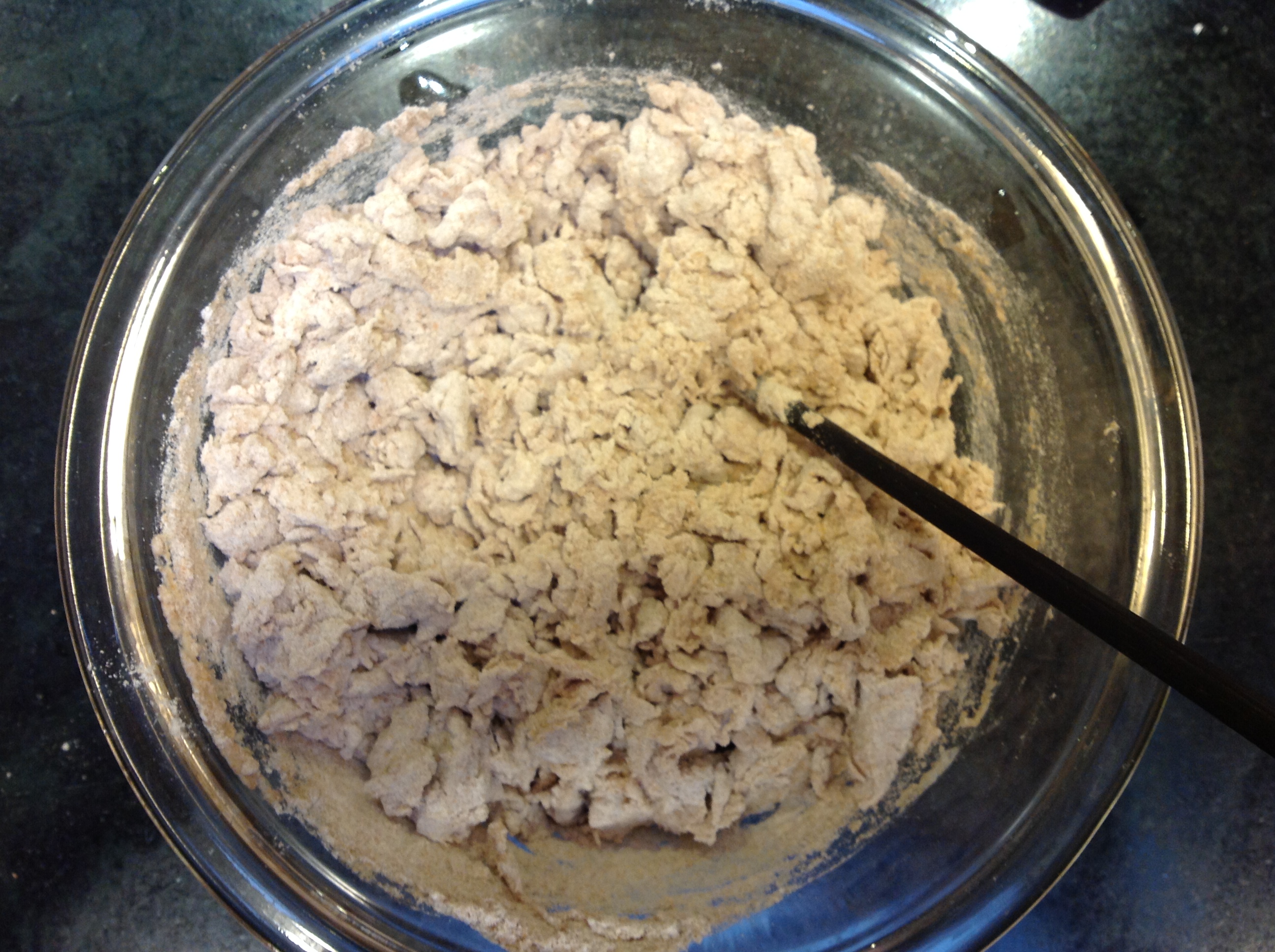
Put the flour in a bowl, make a sort of well in the center, and pour the water in. Use a spoon or a chopstick to stir the water into the flour till you get a shaggy mass and most of the flour is moistened. Cover with a plate, and walk away for 10 minutes or so.

roti 012

Making roti: a shaggy mass

Why? The short wait gets the process of the flour absorbing the water started, and just allows the kneading to happen faster. It’s the lazy person’s method — allow time to do the work that you would have otherwise had to expend elbow grease for.

If the 10 minutes stretch to 20 minutes, that’s fine too, but do cover the flour, to prevent it from drying out.

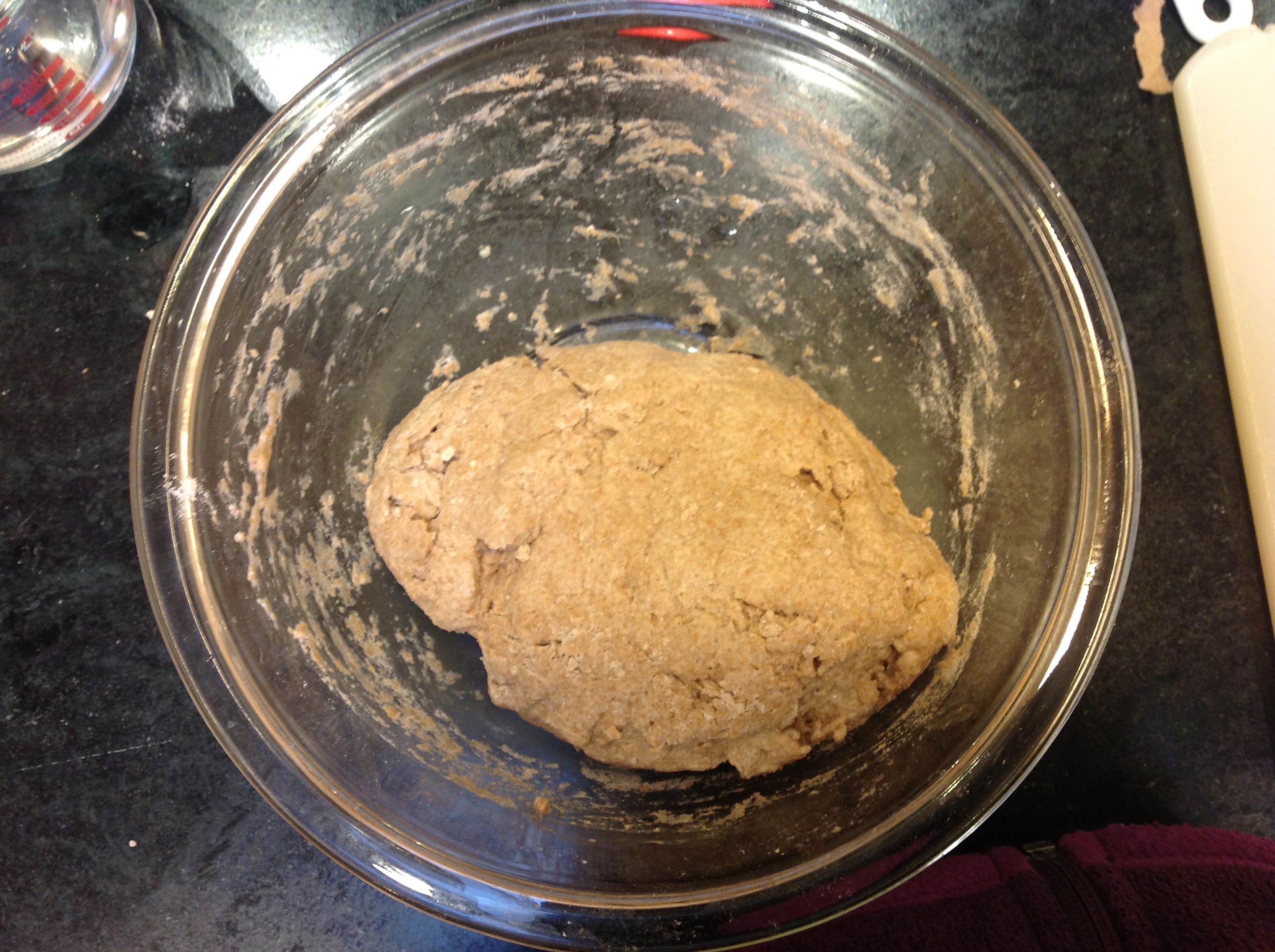
Come back to your dough and combine it into a rough ball with your fingers. This should be relatively easy to do (should take just a minute) but will still have a shaggy appearance.

roti 015

Making roti: a shaggy ball

Now the kneading begins. Clear a 2′ by 2′ square on your counter and place the dough there. Push it, squeeze it, fold it; squeeze it and fold it over and over again, for about 7 minutes. Use your strength. Be firm with the dough. From a shaggy mass the dough will become satiny smooth and hold together in an oblong. It should feel a lot like human muscle when squeezed, but more like slack than taut muscle. If too sticky, add some dry flour, spoon-by-spoon; if too taut, spread it out flat, sprinkle some water on it, and incorporate it with more kneading.

roti 016

Making roti: completed dough

Keep it aside for half hour or so before making rotis with it. The extra wait allows the gluten to relax. This is a lot like exercising: the way one pushes one’s muscles to work, until they feel a little too taut; then one waits a few minutes to relax before exercising some more.

Coat with oil on the outside to keep from drying out. If you want to stash it for another day, it will be good in the fridge in tupperware for a week or even two.

Method for rolling and roasting chapatis

Step 1: Make a few golf-ball-sized balls. I make around 8 (the evening’s dinner amount), roll them to make smooth balls, flatten them slightly into disks, and cover with flour to keep from drying out.

roti 021

Rolling rotis: make flat disks covered with flour

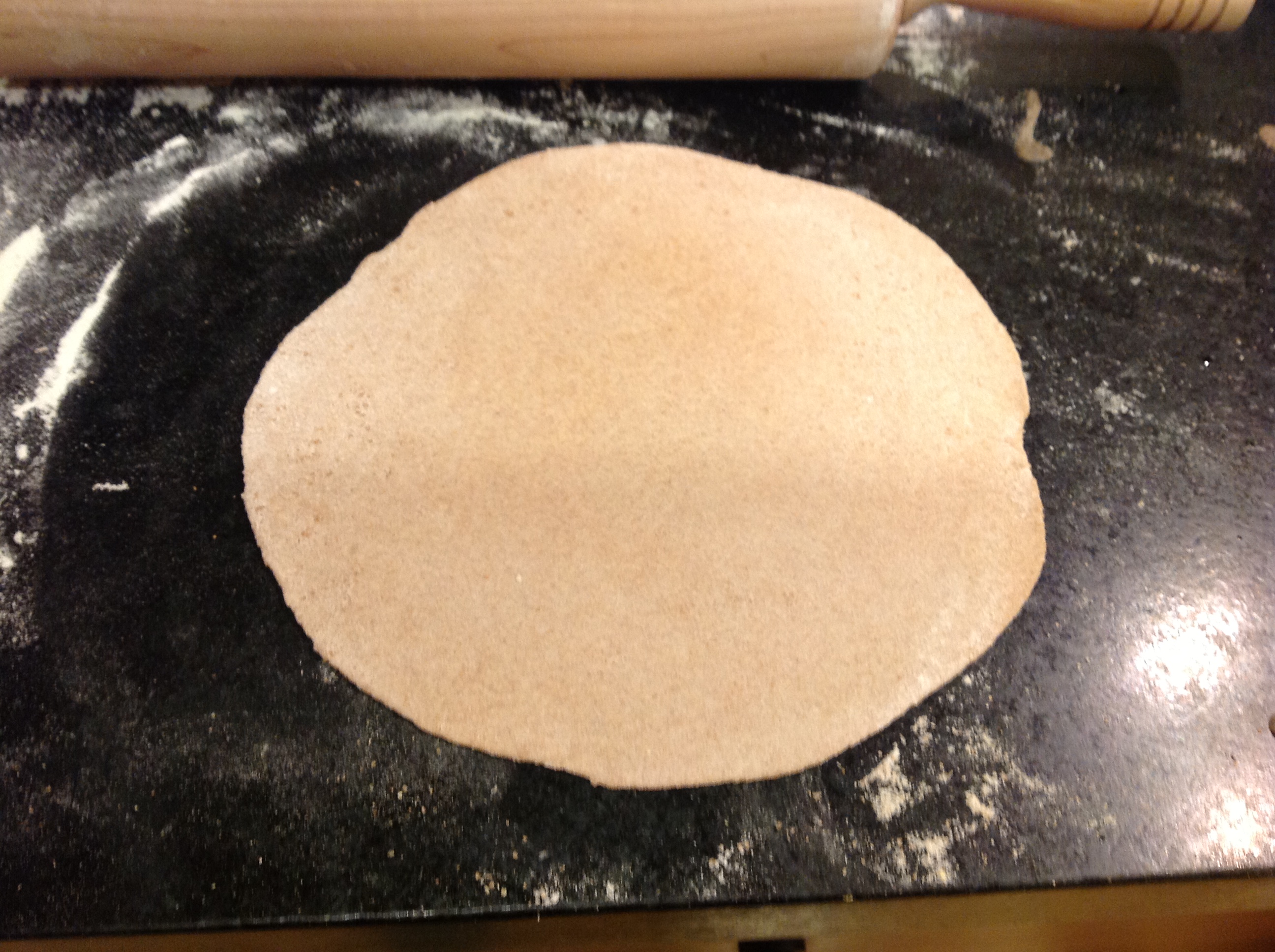
Step 2: Roll. Start with the first disk you made. This gives it a few minutes to relax after being handled. Use a good heavy rolling pin and roll out into a thin disk about 6-7 inches in diameter. You will need to sprinkle some dry flour on the counter and on the dough to keep it from sticking; here I use all purpose, but whole wheat will do as well.

roti 022

Rolling roti: thin six inch circle

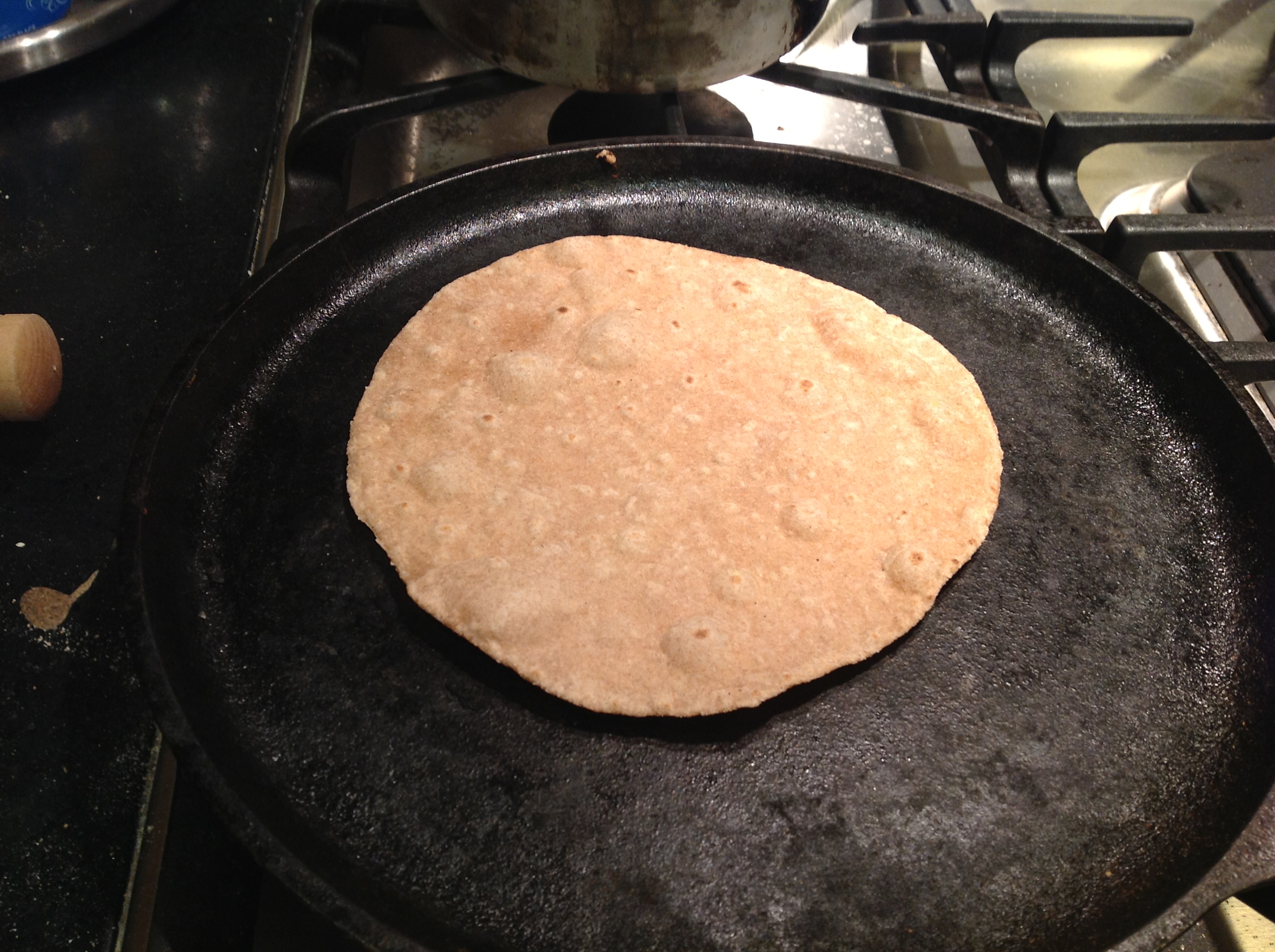
Step 3: Roast. Have a griddle on medium-high heat. No oil needed. When hot, slap a disk on. Wait thirty seconds; the chapati will start to show small bubbles. Flip. Wait another thirty seconds; this time the small bubbles will combine into a few bigger bubbles.

roti 026

Roasting roti: ready for first flip

roti 027

Roasting roti: ready for second and final flip

Now you have a choice. Either flip once again for the last time, wait thirty seconds (hopefully it should puff out more) and take the chapati off the griddle.

Or, turn on the flame on a separate burner, and flip the chapati onto the open flame using the burner grate to place it on. It should puff up in a few seconds. Turn off the flame and pull it off with tongs. Don’t leave it on longer than ten seconds or so, because it will burn.

Roti: puffing up on burner

Roti: puffing up on burner

If you want, sprinkle some ghee on top of the still hot chapati.

Some of these steps take practice. So get thee to the kitchen and get started!