Stemming the tide of mustard greens

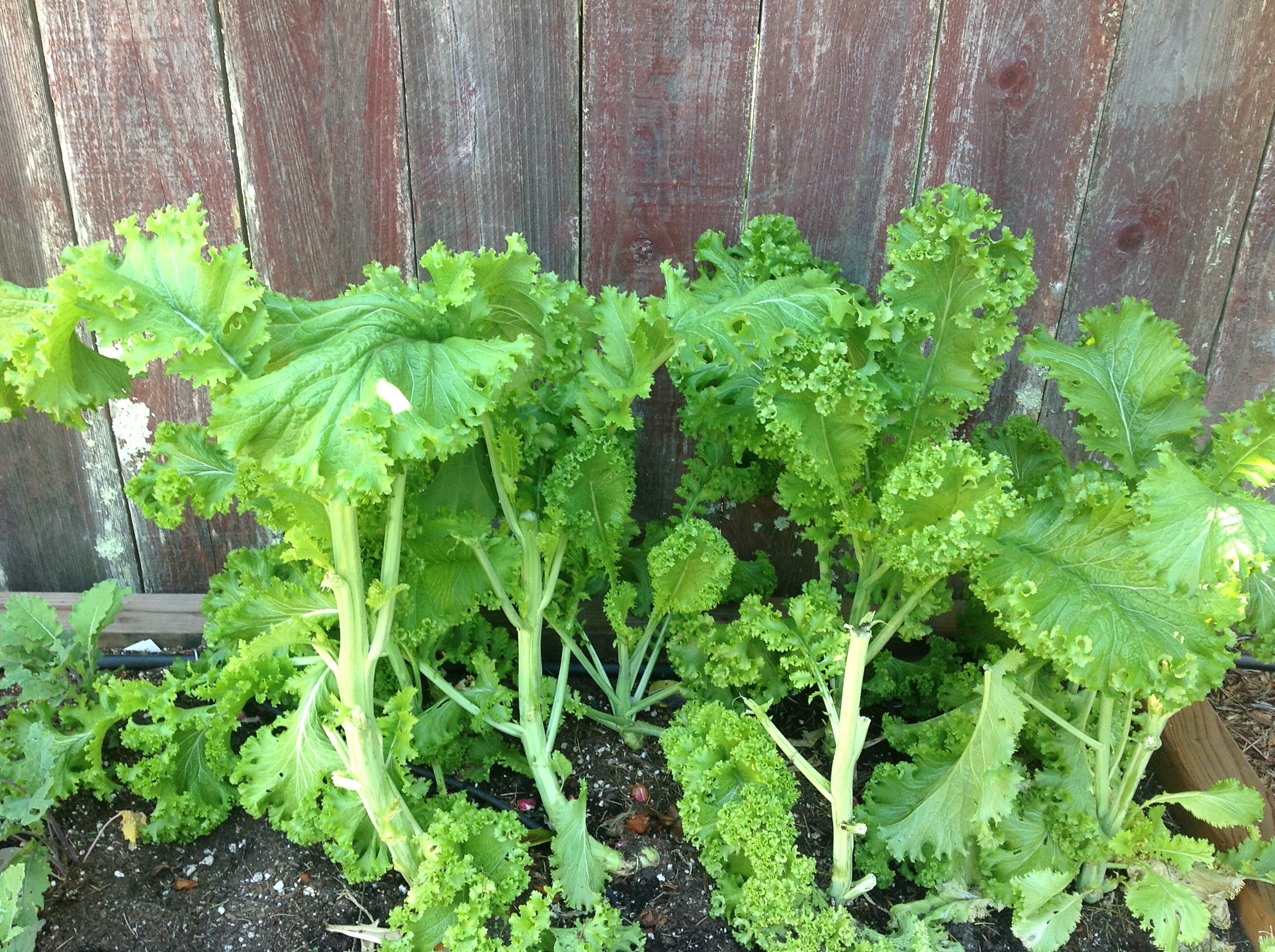
When we first brought our mustard seedlings home, they were petite and unassuming. Planted them in the ground, and given San Francisco’s freakishly warm weather, we soon had curly monsters threatening to swamp the house. Naturally we set about consuming them as fast as we could.
fennel 015

Mustards after a lot of rampaging

Harvested an entire meal’s amount to make Punjab’s famous ‘sarson ka saag’, which means ‘greenish pulpy thing made out of mustard’. It was good, but made not a whit of difference in the amount of curly monsters in the garden.

Soon we were eating sarson ka rice, sarson ka pasta, sarson ka…everything.

On the way, I learnt an important lesson about cooking mustard greens that the Punjabi chefs learnt thousands of years ago. Unless you cook and puree the mustards, the curls in the leaves — which are quite tough, by the way — will interlock and will not separate, and you either get a mouthful of mustards all clumped together, or you get none at all. Pureeing after cooking makes them luscious and even. So here is the basic technique for the Punjabi sarson ka saag, and then my other variations.

Sarson ka saag

Step 1: is the most important:boil and puree.
synthesis pancakes and welcome home salad 004

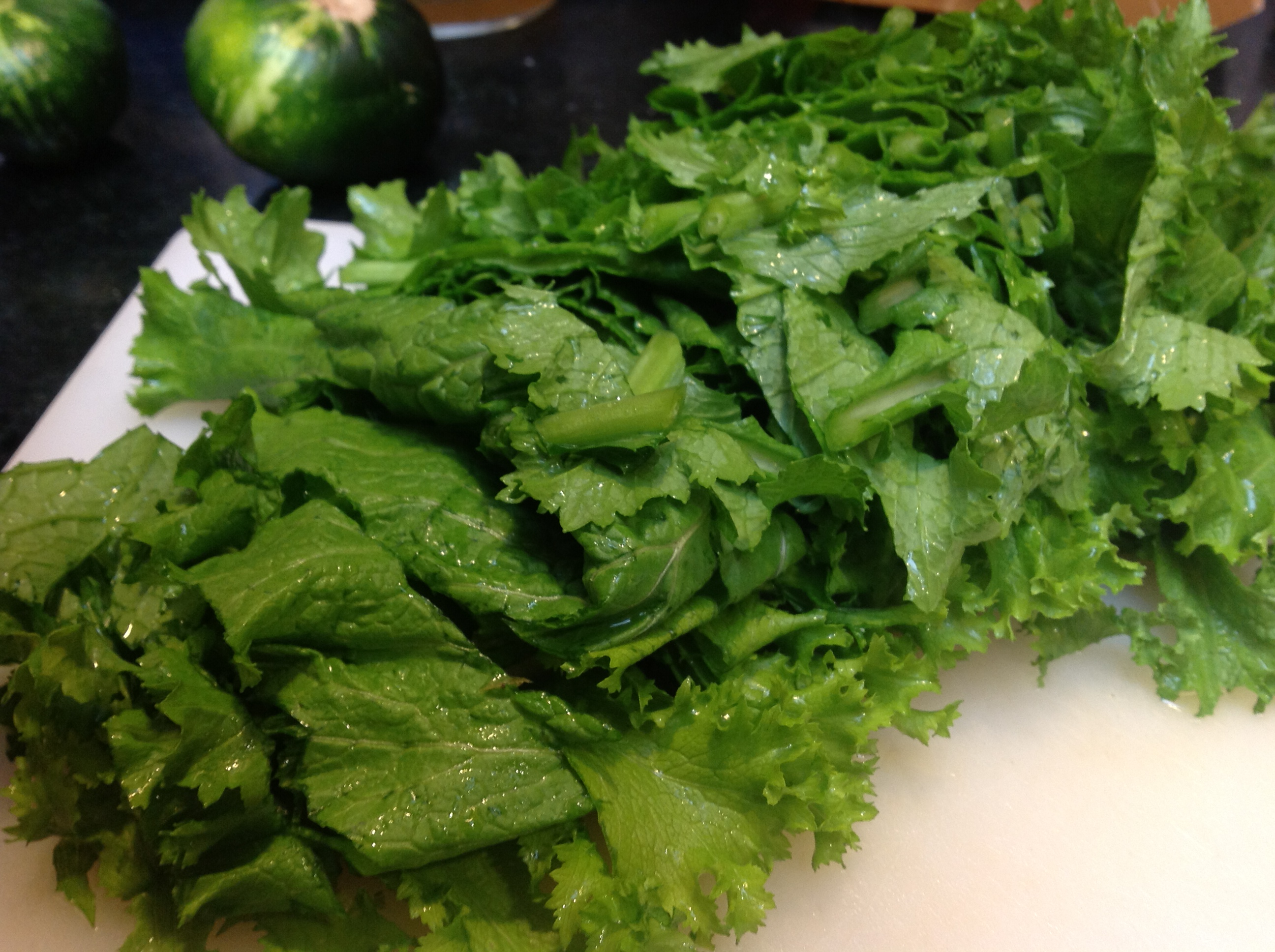
Mustard greens washed and chopped

Rinse, roughly chop a bunch of mustard greens. Put them in a pot with a quarter cup water, salt, half an onion, roughly chopped, two green chilies, roughly chopped, and a quarter cup chopped cilantro. Bring to a boil, cover, simmer and cook for about fifteen minutes, or until the mustards are no longer bright green. Cool for a few minutes and puree in a blender, although there is no need to make it completely smooth.

Step 2: Seasoning

I couldn’t tell you if every villager in Punjab uses this set of seasonings, but this is what I used, and it was good. I heated two tablespoons of ghee in a small thick bottomed pan on medium-high. Then put in a teaspoon of cumin seeds and 3-4 cloves of garlic, minced. Also half a teaspoon or more of red chili powder. Once they sizzle and the garlic looks cooked (not browned), put in two tablespoons of besan (chickpea flour) and stir. I think the more typical ingredient here is cornmeal so if you have that, use a quarter cup of that instead. Allow the besan (or cornmeal) to roast in the oil for a few minutes. Then empty the seasoning into the mustard puree and stir.

sarson ka saag - mustard greens puree

sarson ka saag

Step 3: Simmer a little longer

Check for salt and add more if needed. Simmer a little longer to meld the flavors and fully cook the besan. Sprinkle some lemon juice over the top (inauthentic ingredient alert). Serve with roti/chapati.

Sarson ka pasta…bucatini with mustard greens

Step 1: boil and puree

Here I boiled the greens with just a quarter onion and some salt. After about fifteen minutes of simmering, I roughly pureed them in a blender. Keep it aside.

Step 2: Seasonings

For the oil, I used about four tablespoons of extra virgin olive oil. Heat it in a large pan on medium. Without waiting for it to heat, put in four large cloves of garlic, minced; three anchovies from a jar; and a few sprinkles of cracked red pepper. The anchovies, as they cook, will melt into the sauce, and add a delicious umami, proteiny flavor. Wait till they sizzle; break up the anchovies with a wooden spoon; then empty the pureed greens into it. Simmer gently, stirring, for a few minutes

Step 3: Pasta

Meanwhile, get a big pot of salted water to boil; once it boils, put in half a pound of bucatini (this is enough for a dinner for two). Wait till it is almost done to al dente, then fish out the pasta with a pasta spoon and put it into the greens along with a few good sized ladles of the pasta water. Use your judgment here — if the greens aren’t saucy enough, add a little more pasta water. Stir nicely to break up the clumps of mustards to combine with the pasta water and turn it into a sauce. Remember the sauce has to coat the pasta, not remain in clumps at the bottom. Stir to cover the pasta with the greens, cover the pot and simmer for just a minute or two. Turn off heat; pour some fresh XVOO on the top, and parmesan shavings if you like, and serve.

This makes a wonderfully light green sauce for the pasta that looks as nutritious as it, in reality, is.

Seeking the heart of fiddlehead ferns

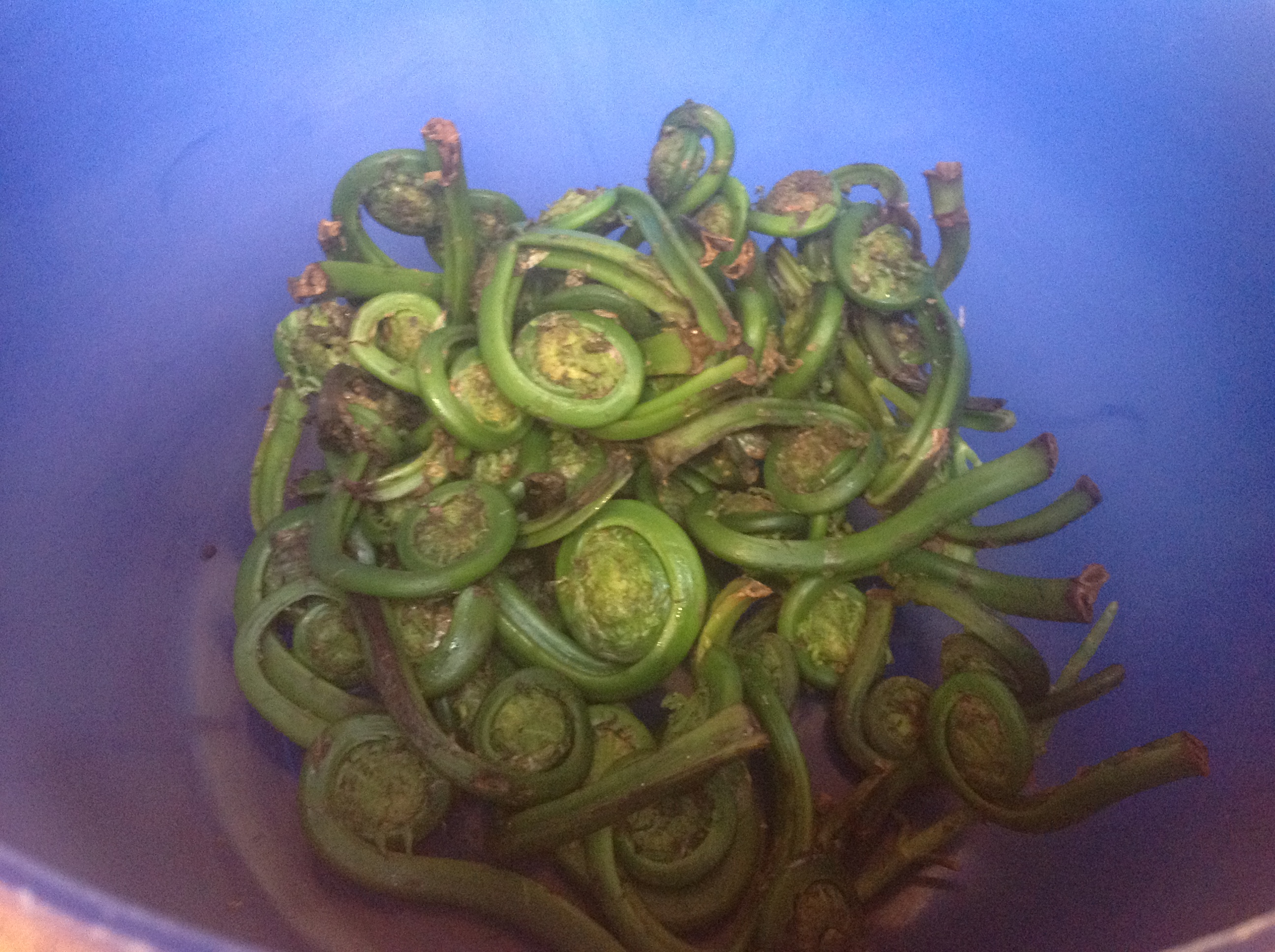
If anyone ever asks me why this blog is called the ‘odd’ pantry — it is named so for vegetables like fiddlehead ferns. When one first encounters them on the grocery shelves one isn’t even really sure what kingdom of life they belong to. They could be worms — no, more like caterpillars — or maggots — curled up. They could be giant microbes, like the spirogyra we learned about in school. They might be seaweed. Have a look:

iPad 064

Are we really supposed to eat that thing?

Fiddlehead ferns are the baby fronds of various types of ferns. They are harvested wild, not cultivated, which explains their rarity on the shelves. But when you happen to see them, grab some, because they are full of fiber, omega-3’s, potassium, and so forth. I believe the fiddleheads one sees in California are the ostrich ferns.

To clean them, soak them in warm water for a few minutes to shake the dirt off, rinse, and do this again. I don’t think you can get all the brown off (at least I wasn’t able to), but not all the brown stuff is dirt. Do snip off the brown tips of the stems.

Having never tried them before, I had to guess about their taste and how to cook them.

First, I tried a method very much like in this recipe. Good, but the fiddleheads don’t seem to char very easily; and, they have a slippery and chunky texture which needed a stronger set of seasonings to stand up to it, I thought.

So second, I tried a different method, which I thought was better.

Step 1:

ipad hijinks 012

Cut them up in about half inch sized lengths.

Step 2: Saute

Heat about 2 tablespoons of oil in a pan on medium high. When it shimmers, put in mustard seeds; wait till they pop, then put in the fiddleheads. Stir. They will go from looking like this:

ipad hijinks 016

to looking like this in a few minutes of medium high sauteing.

ipad hijinks 017

At this point, I threw in some onions. This time I cut them in thin strips, by first halving the onion, giving it one cross cut from root end to stem end, and then slicing it as narrowly as I can. Put them into the pan and stir for a minute.

ipad hijinks 018

Then it is time for half a teaspoon turmeric, red chili powder, and the salt.

ipad hijinks 019

Now the problem with the slippery texture of the fiddleheads is that spices don’t stick to it. So, we need glue in the dish, that the spices will combine with, and that will stick to the ferns. What ingredient is a good glue? Hmm…I used sesame seeds,  ground up, about a third of a cup (super useful to keep a coffee grinder around, just for spices; takes just a minute for jobs of this sort).

Step 3: Braise.

ipad hijinks 020

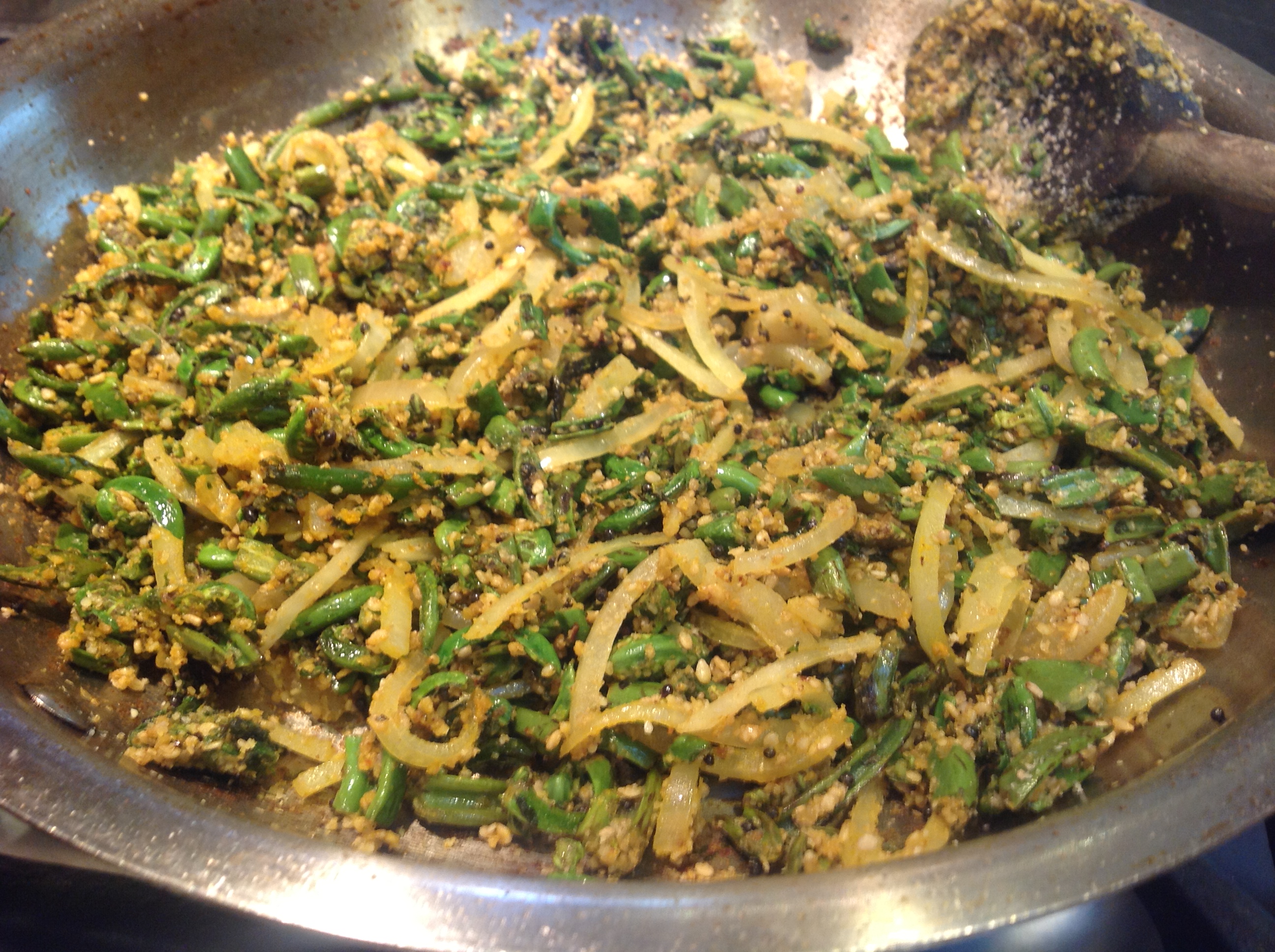
Stir the sesame seed paste with the fiddleheads, add a half a cup of water, and there — we have the glue that we wanted. One teaspoon of tamarind paste goes in. Stir, cover, simmer on low for about ten minutes, and what we have is this:

ipad hijinks 024

How did it turn out? Well, we had it as one of the sides with roti, for dinner. I thought it was yummy.

But I don’t think my quest for the heart of fiddlehead ferns is over yet. This dish was good but didn’t show off their quintessential fiddlehead-ness. I will be trying other ways to cook them…watch this space.

Primer on caramelizing onions

At some point in their life, every able-bodied human will be called upon to caramelize onions. If you are Indian, this might happen three times in one evening. So let us learn to do this right.

Onions:

Let’s say you start with one yellow onion. Peel it and chop it. You do not want chunky pieces of onion. What you want is to maximize the cut surface area to expose more of it to the saute it is about to undergo. You can do this one of three ways: slice the onion paper thin; or first give it cross cuts with a sharp knife to produce a fine dice; or, get lazy and puree in a food processor with a few tablespoons of water. All methods work, but the wet purees will take a few minutes to lose their water, and only then will the onion start to caramelize. With the food processor, make sure to pull out a few chunks the blades inevitably leave behind and chop them by hand.

Saute:

Choose a thick-bottomed pan that will not allow the onions to burn. Stainless steel is best; Calphalon will work; you do not need Teflon. About three-four tablespoons of oil per medium onion is the proportion of oil you need. The flame should be medium-high at first. Be careful not to overfill the pot! If the uncooked onions come up halfway up the pot sides, they will steam instead of searing. Also, no lid needed.

Choices, choices:

Now, if you caramelize the Indian way, you will saute on medium-high for fifteen minutes or so, every few minutes giving the onions a vigorous stir. If you caramelize the Western way, you will turn the heat down to low after they first start sizzling, and keep the oil at a simmer for a good 45 minutes to an hour, only stirring every ten minutes or so. I think the Western way draws more sweetness out of the onions and is great when onions are the star of the show. In contrast, in Indian dishes, caramelized onions usually are the base for a spicy gravy.

Sprinkle of salt:

After they have started sizzling, I usually add a sprinkle of salt. This draws moisture out of the onions and helps them caramelize faster.

Proceeding:

As the onions cook, they will first get translucent, then the edges will start to brown. And their volume will shrink. There may be brown bits stuck to the pan as well; don’t worry about them! As long as you used a thick-bottomed pan that distributes heat well, this is fine. Remember, dark brown = good, black = bad. No doubt it is a subtle difference. But if you notice the edges turning black instead of brown, turn the heat down a bit. As it proceeds, it is wise to turn the heat down a bit anyway.

Finishing:

You can stop when you see some brown, or wait till you see mostly brown. It is a judgment call. The middles of the onion pieces will still be translucent till the end. If you want to scrape up the brown bits stuck to the pan, you can either wait till the next liquid comes in — whether it is tomatoes, yogurt, or other meat or vegetables — as they steam, the brown bits can be easily deglazed. If no further liquid is coming in, cover the pan for a few minutes, allow the onions to sweat, and the resulting liquid can be used to scrape them up.

The caramelization process:

After having done this a few hundred times, one might wonder — what on earth is going on? Well essentially the sugars in the onion oxidize and break down, browning occurs, and produce that familiar aroma. It is the same kind of caramelization process that is used while making creme caramel, otherwise known as flan; and a multitude of other desserts. Here is more information about it.
(Click here to find me on Facebook and here on Twitter.)

Sindhi party chicken

We hardly ever had chicken for dinner growing up in Bombay, but when guests were over for a dinner party, it was a must. While it doesn’t speak volumes for our creativity that  it was always the same recipe, it is certainly delicious. So here goes: the definitive Party Chicken.

This book about Sindhi cooking has something very similar in it under the heading of Seyal Chicken: The Essential Sindhi Cookbook.

Step 1: Purchase the chicken.

I usually buy thighs for this dish because they stand up better to stewing. Skinless; bone-in is better but you can go with boneless. Have the butcher cut each thigh in half. And do try to go to a meat store that sources from a farm that treats their animals with humanity. I went to Guerra Quality Meats in San Francisco, and they sell poultry from Mary’s Chickens from the Pittman family farm. Eight thighs should be good for 4 people.

Step 2: Aromatics:

Puree one large onion, 5 cloves of garlic, and an inch long piece of ginger together with a few tablespoons of water. There is no need to get a smooth puree, a fine mince is what one is looking for. If you’d rather chop by hand, be my guest.

Step 3: Oil and whole spices:

iPad 053

Use a pressure cooker if you have one. Heat about 3 tablespoons of oil on medium-high heat and put in the whole spices: 2 black cardamoms, 6 whole cloves, one stick of Indian cinnamon. You can also choose to put in some of the following: bay leaf; green cardamom; allspice. These will all work but give you a slightly different character. In a minute, put in the onion mixture. It will be very wet at first, but will slowly dry and caramelize. If you are new to browning onions, please read this post before continuing. Sorry, brevity has never been one of my strengths. So be it.

Above, you can see how much I started out with, after browning the onions, I ended up with this:

iPad 055

Step 4: In goes the chicken.

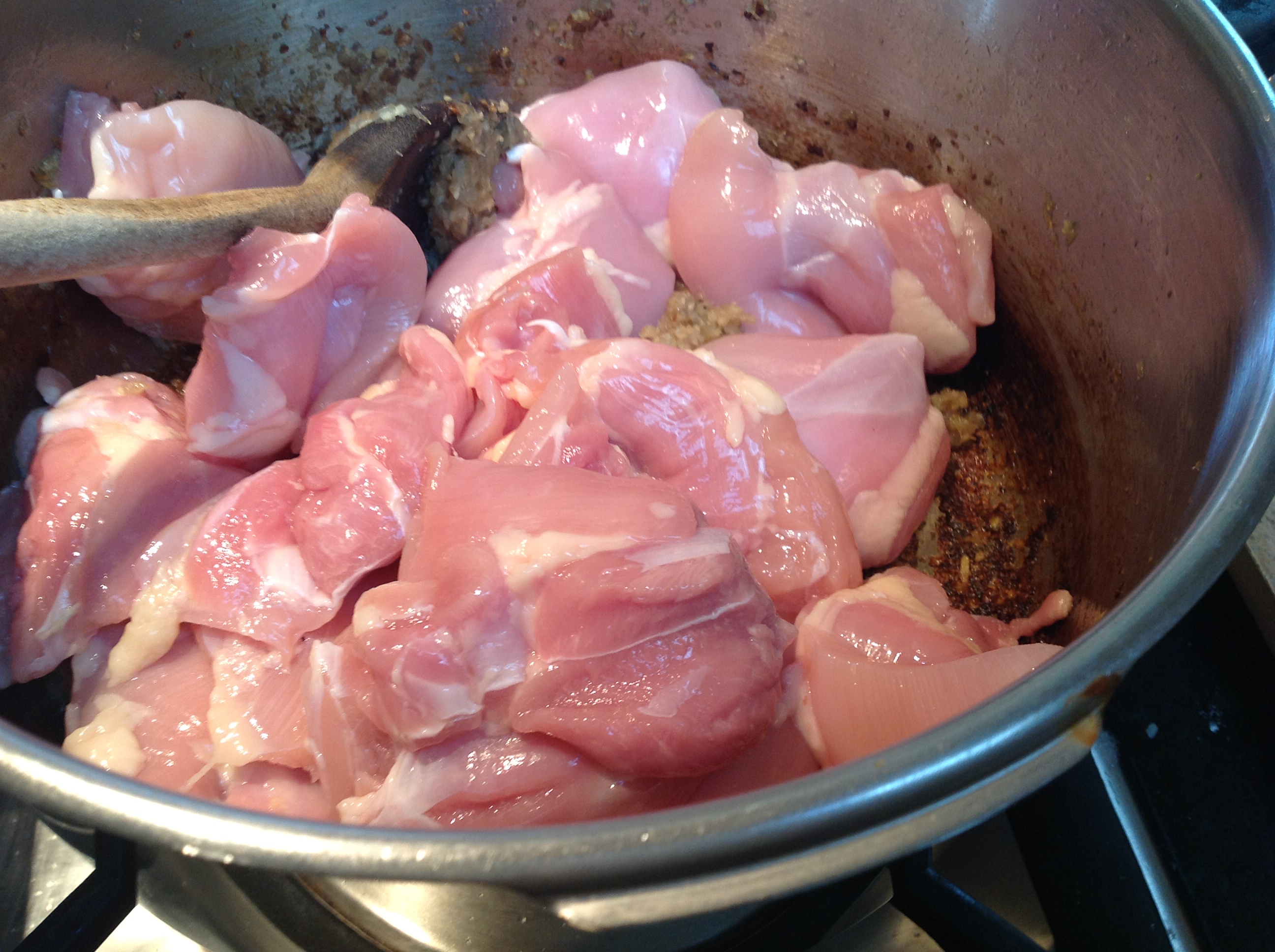
Put the chicken pieces in all at once, add some salt (more can come later), and 1 teaspoon turmeric. Stir to coat the chicken pieces with the spices and the oil mixture.

iPad 056

Now. This is important. We are not trying to sear the chicken. We are trying to get it to sweat out most of the liquid. In Western cooking, the standard technique is to quickly subject the surface of the meat to high heat; which creates a sear, and seals in the moisture keeping the meat moist. Not so in Indian curries. My mom taught me that one wants all the ‘chickeny liquid’ to be gone — so the idea is to keep cooking, stirring, pushing the pieces around; they will first become opaque as the protein is denatured; then, they will start to sweat and shrink. A luscious gravy will start to form around the shrunken chicken pieces. Keep it going for at least 20 minutes on medium heat.

Above, you can see how big the thighs were to start with, below is what I ended up with. This is with no additions, just the cooking of chicken, uncovered, stirring, for 20 minutes.

iPad 058

Isn’t the chicken going to be dry and leathery? No, because of the braising that is about to occur, which pulls moisture back in, but this time, it is Our liquid with Our spices, not the ‘chickeny liquid’.

Step 5: Liquid and stewing:

iPad 059

One can use chopped tomatoes; one can use a mixture of water and some vinegar; but I used yogurt. Take about a cup and a half of yogurt and first whisk it to break the curds. Put that into the pressure cooker along with some whole green chilies, stems removed, and a cut through the middle; some red chili powder; half a tablespoon coriander powder; and, importantly, salt to taste. Stir to submerge the chicken pieces, like so:

iPad 061

Cover and pressure cook for 15 minutes. If you don’t have a pressure cooker, cover tightly, bring to a boil, and simmer for about 45 minutes.

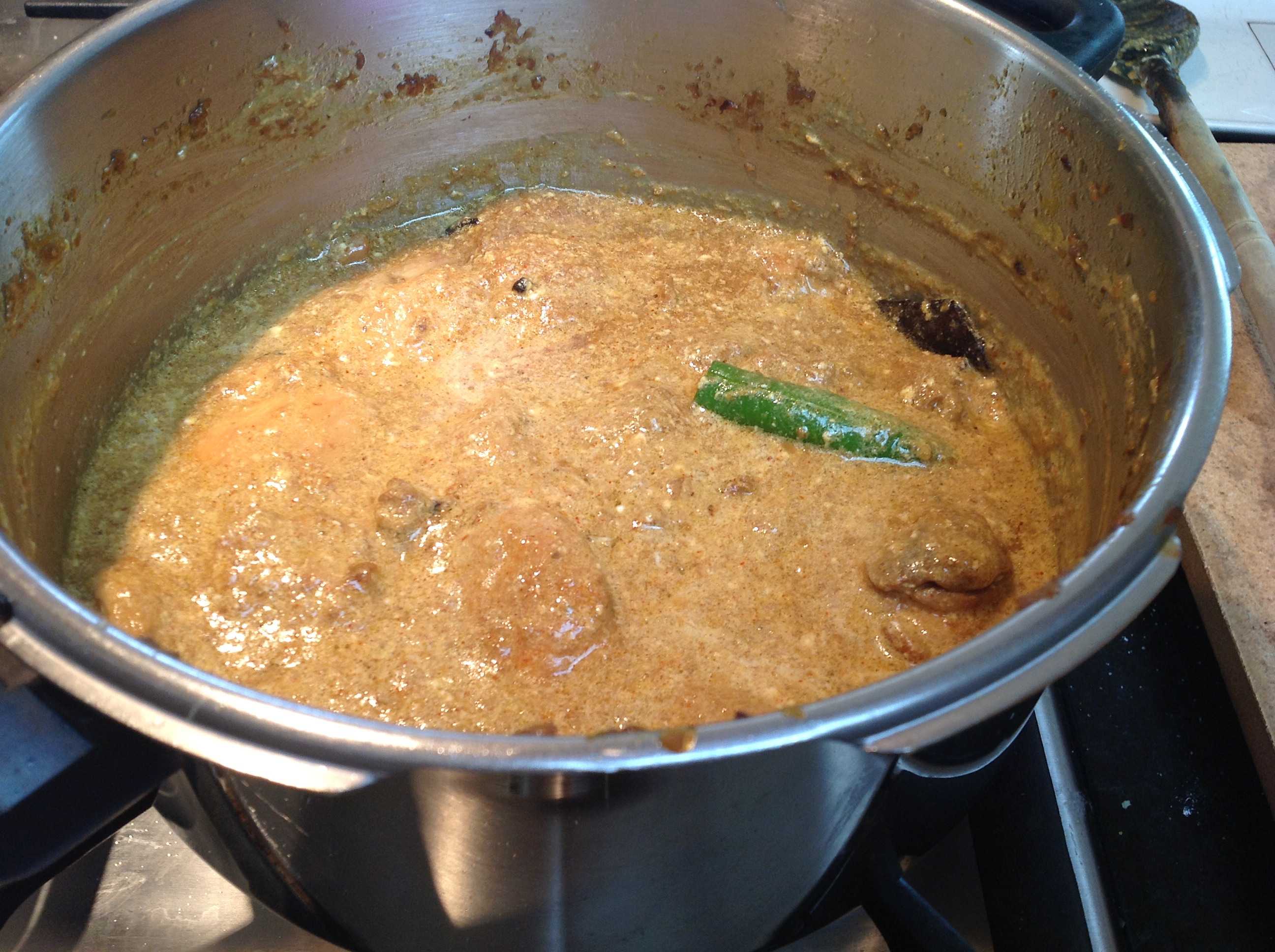
This is the braising process, during which the spiced liquid is both tenderizing and flavoring the meat. When you open the lid, you will see some of the oil separated, and the gravy is much darker:

iPad 063

Step 6: De-fatting and garnishing.

De-fat the gravy by scooping some of the oil off, if you like; pull out the whole spices with tongs, if you like; sprinkle some garam masala on top; garnish with minced cilantro.

Thepla — spicy flat bread from Gujarat

One of my themes in food is simplicity. Not only because I’m lazy, but also because I like to have each ingredient be meaningful, and not be drowned in a cacophony of flavors.

Few recipes are purer and more basic than the roti recipe. Whole wheat flour mixed with water, kneaded, rolled out, and roasted. Just two ingredients, and yet there is an infinity of variations on that theme.

Add a few ingredients, and a whole new set of possibilities open up. I first tried theplas when I was nine, and a classmates mom made a whole stack to share at school. What I remember is the strong flavor of asafetida (the ‘fetid resin’, or, the ‘devil’s feces’), along with some heat. Just a few additions, and yet, this is an entirely different meal than the basic roti.

Step 1: The flour mixture for one serving.

thepla and pulao 025

3/4 cup whole wheat flour (I use King Arthur’s premium whole wheat), half to one teaspoon asafetida, half a teaspoon turmeric, half a teaspoon or more red chili powder, a fistful of dry methi if you can’t acquire the fresh one, one quarter cup plain yogurt (I prefer Nancy’s plain whole milk yogurt, if not homemade), salt to taste. Knead into a taut dough.

Step 2: Roll out.

thepla and pulao 033

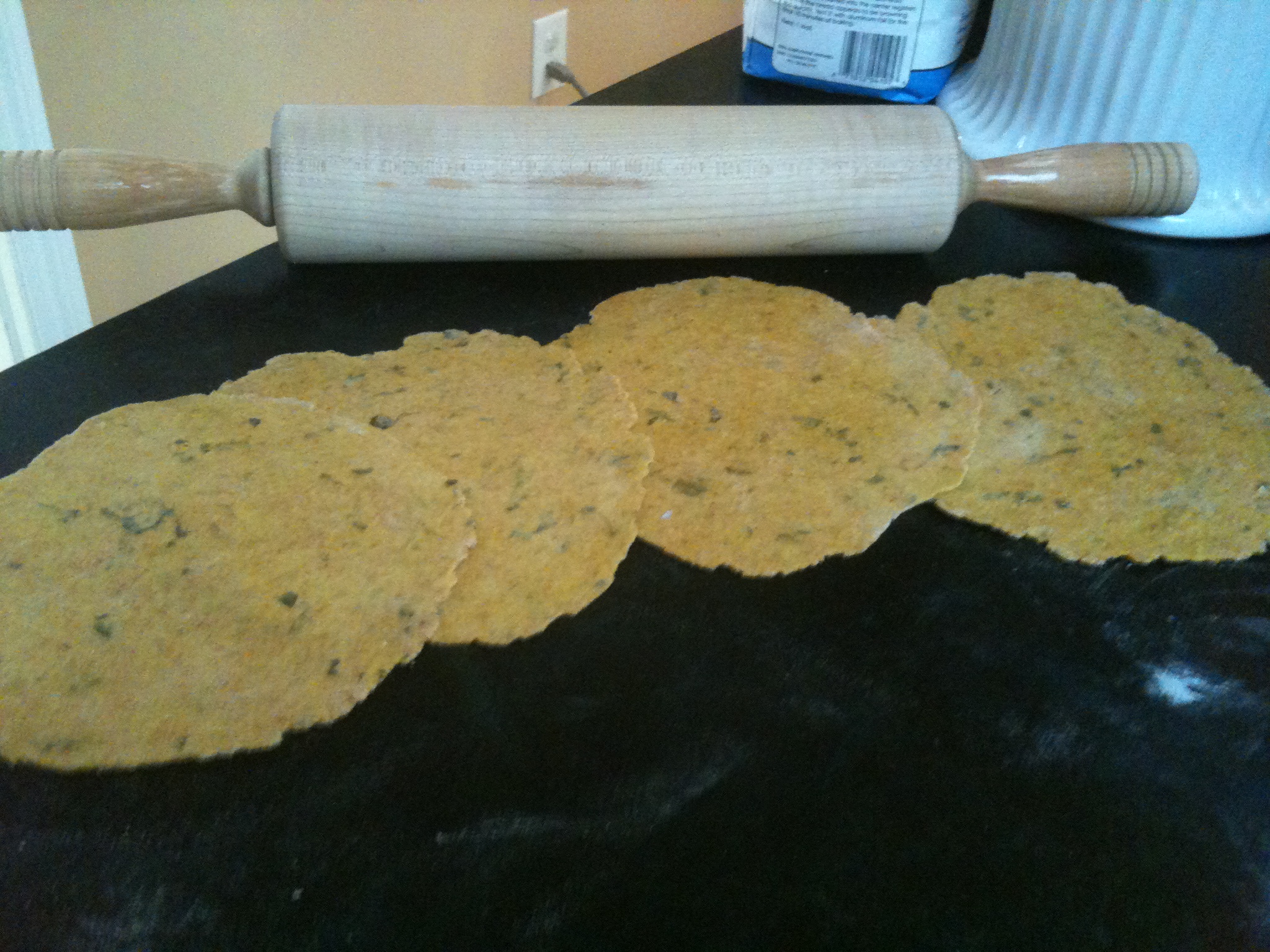
Using sprinklings of all purpose flour as a non-stick device, roll them into five-inch rounds on the counter or wooden board. A ball of dough about two inches in diameter will produce a round that large. Try to get it as thin as you can.

Step 3: Roasting.

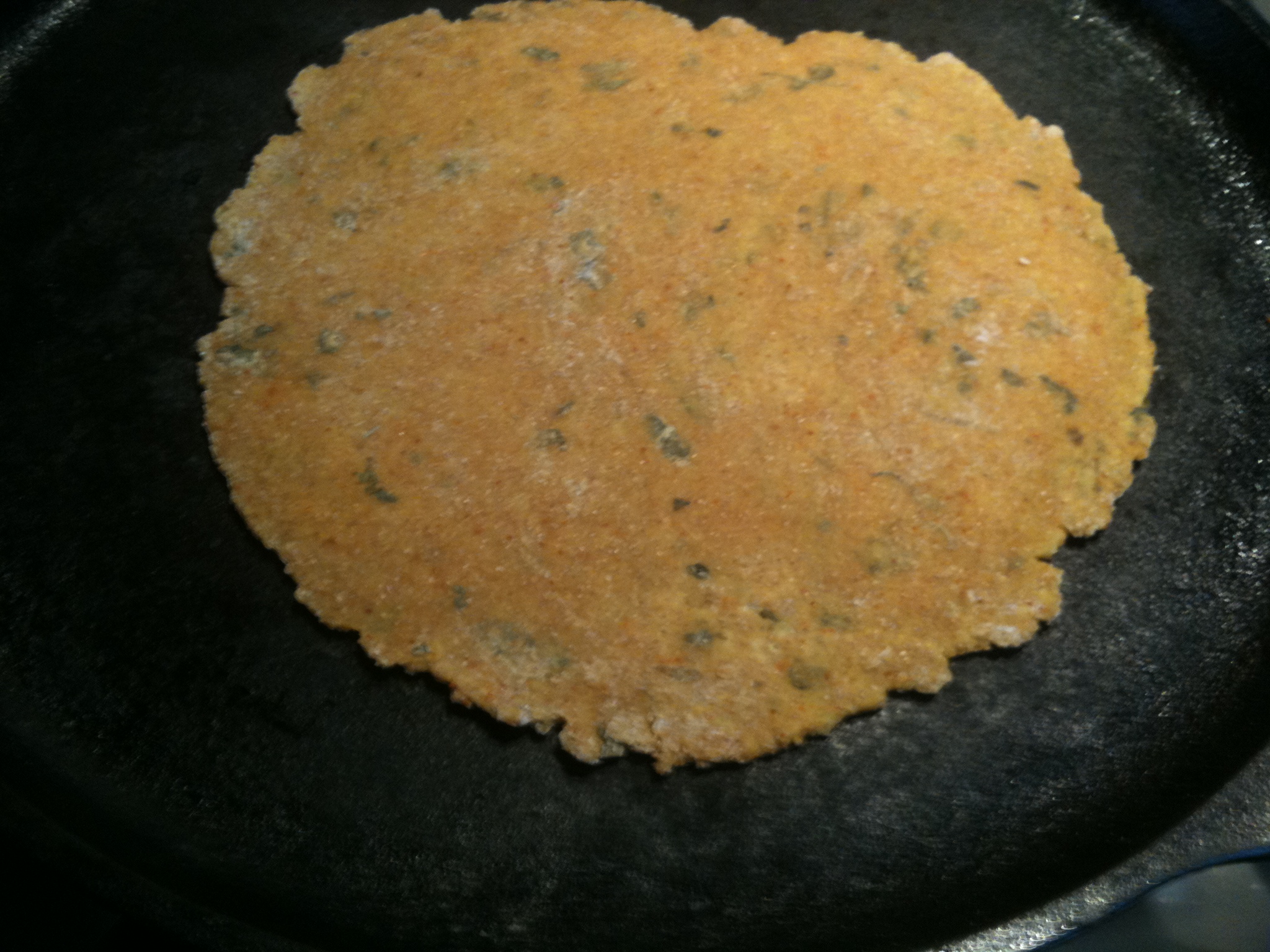
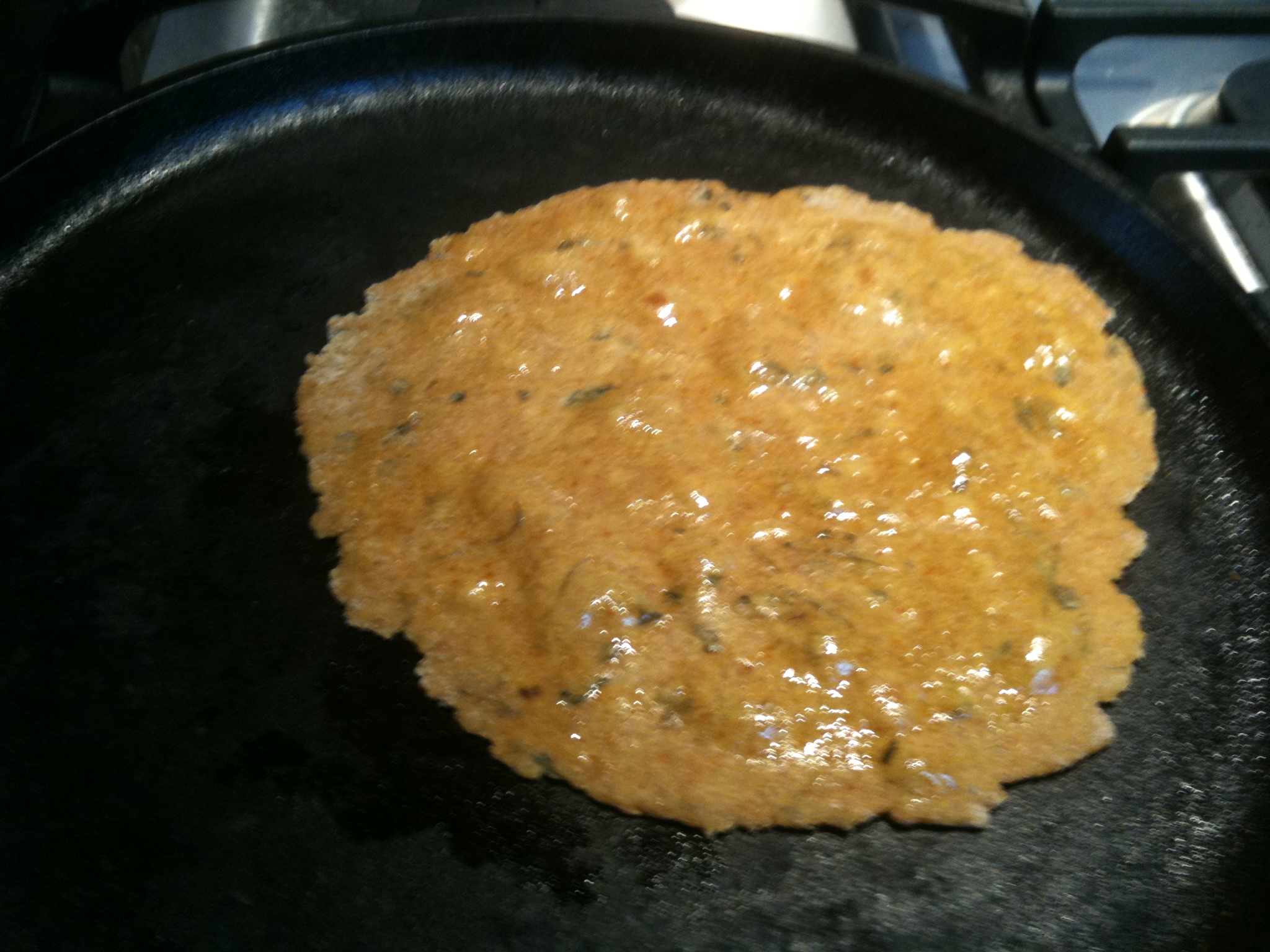
Get your griddle nice and hot on a medium-high flame. The roasting follows the standard pattern: first side, about 30 seconds, until the dough turns a shade darker and small air bubbles start to appear; flip it. Second side, another 30 seconds, until the air bubbles combine and form a few large ones; spread a few drops of oil on the thepla and flip it once again; 30 seconds more, spread another few drops of oil, and flip it once more for the last time. So we have had four flips, and each side has been cooked twice, once with and once without oil.

This series of pictures shows the progression.

thepla and pulao 031

Next:

thepla and pulao 039

Next:

thepla and pulao 041

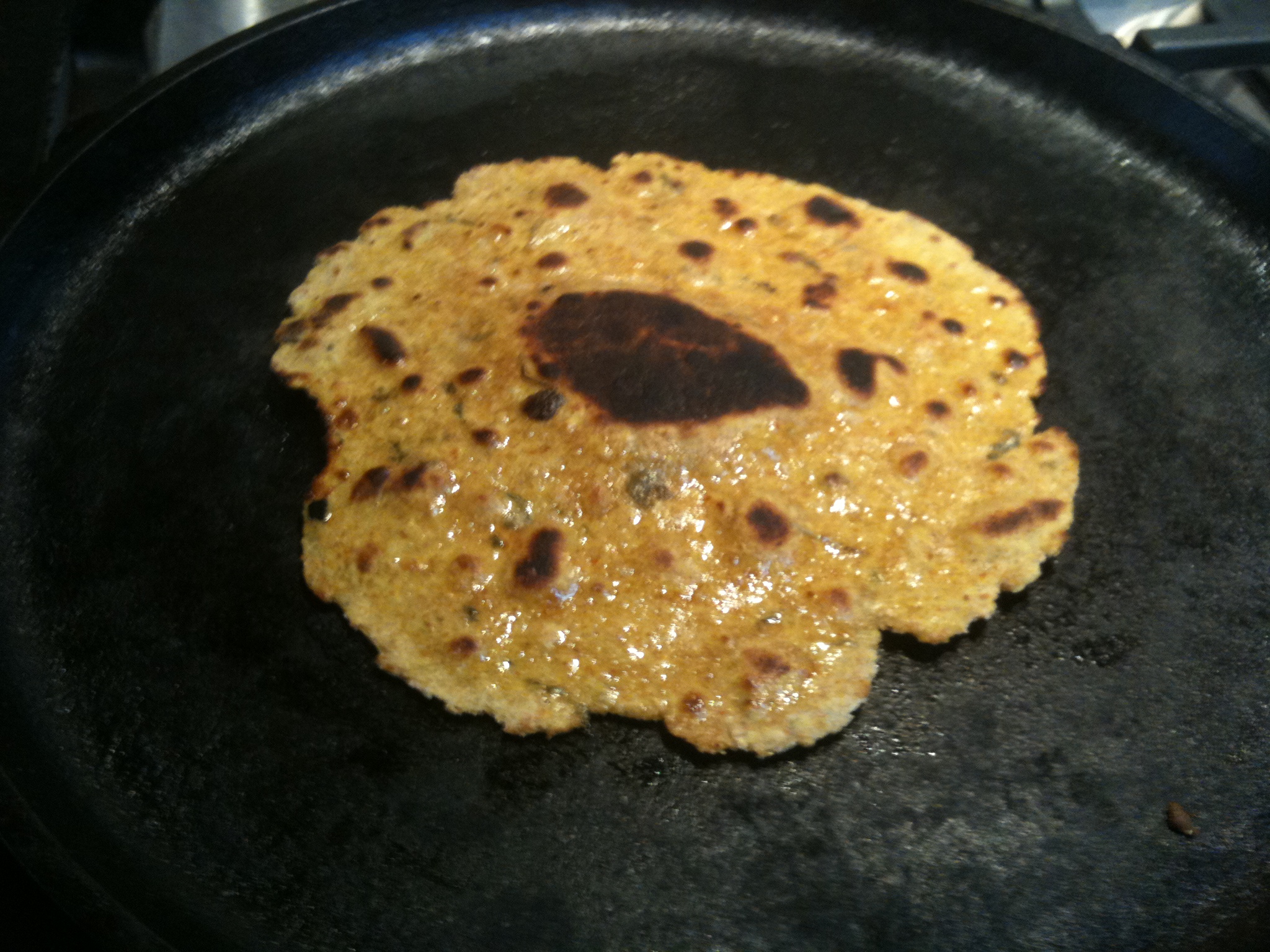
Next (and yes, I got it a little extra burnt):

thepla and pulao 045

Stack up the prepared theplas on a platter. A good accompaniment is a sweet mango pickle; yogurt is a standard too.

Here is my Sunday morning meal: theplas, yogurt, and some sour mango pickle.

thepla and pulao 047

Shishito (or padron) peppers with okra

You often see shishito peppers for sale in those little plastic boxes in grocery stores; they look so tempting, but it is often a struggle to know what to do with them. They are not hot at all, and take very well to grilling.The idea is that you pop the whole thing in your mouth and pull out the stem.

I have tried that method, and they were good, but not very versatile, being mostly suited as finger food or appetizer. What does one do with them when one isn’t having a party with a platter full of appetizers?

Well this simple recipe did the trick. It can go with any Indian meal, be a filling in a sandwich, be the vegetable side for a heartily seasoned piece of fish, etc.

I also got to use up the leftover okra in the fridge; and far from being filler, it went very well with the at once dark and bright flavor of the shishitos. In fact, I might have discovered a soul bond between these two vegetables.

Step 1: Wash, prepare and slice the vegetables.

seyal and shishito and oat pancakes 043

I used one pint box of the peppers and about the same amount of okra. Rinse and air dry the vegetables; take the stem tops off. Then, slice them into even-sized slices about half an inch wide.

Step 2: Dry-saute.

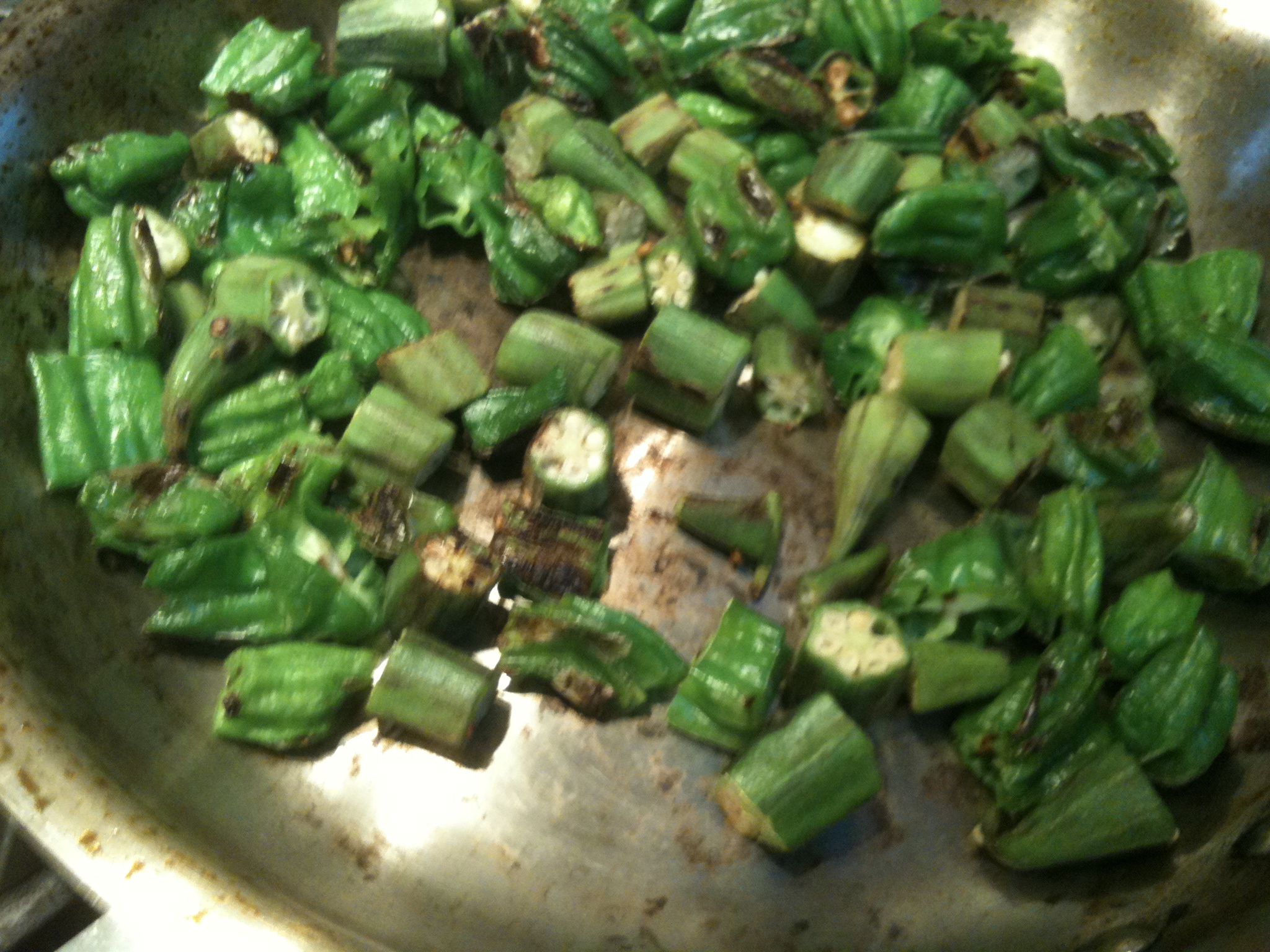
seyal and shishito and oat pancakes 046

I use the same method of dry-saute that I used in this recipe: A way with greens. That method quickly pulls the surface moisture off the vegetables, and sears them; and I believe seals the rest of the moisture in. If grilling is good, this is a facsimile and works in the same flavor profile. Don’t stop the dry-saute until you see many hearty brown spots and the vegetables look completely dry. Something like this:

seyal and shishito and oat pancakes 049

Step 3: Saute.

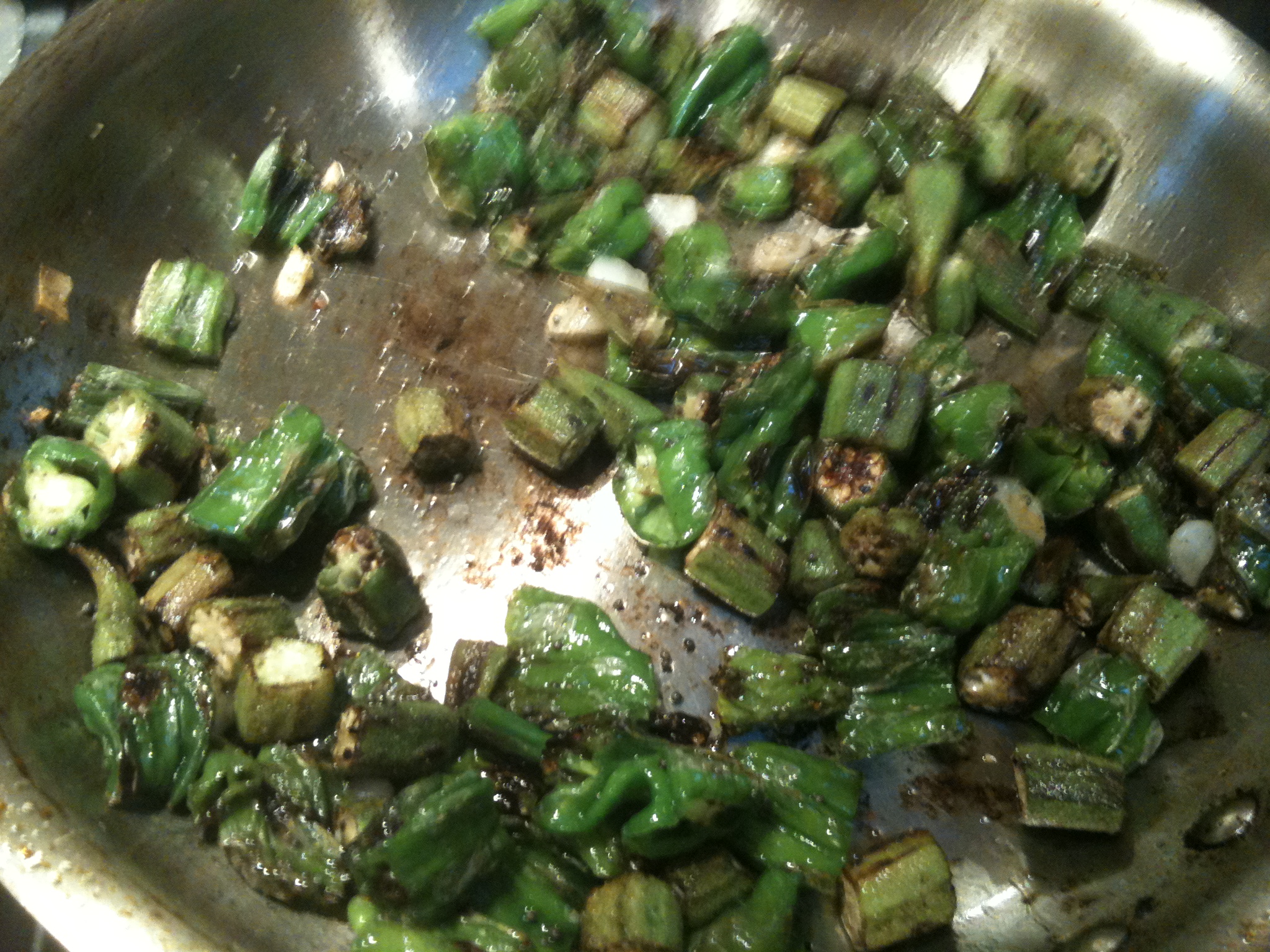
seyal and shishito and oat pancakes 052

Now comes the oil. I use pure olive oil for these high heat methods, because the smoke-point of extra virgin is quite low and would work better with a gentle simmering. Clear a spot in the pan, put in the oil, watch it shimmer instantly (because the pan is hot); then stir in the vegetables, thus giving them their first true saute. Now add salt to taste and keep the contents of the pan moving every minute or so. The saute process lasts about five minutes.

Step 4: The seasoning.

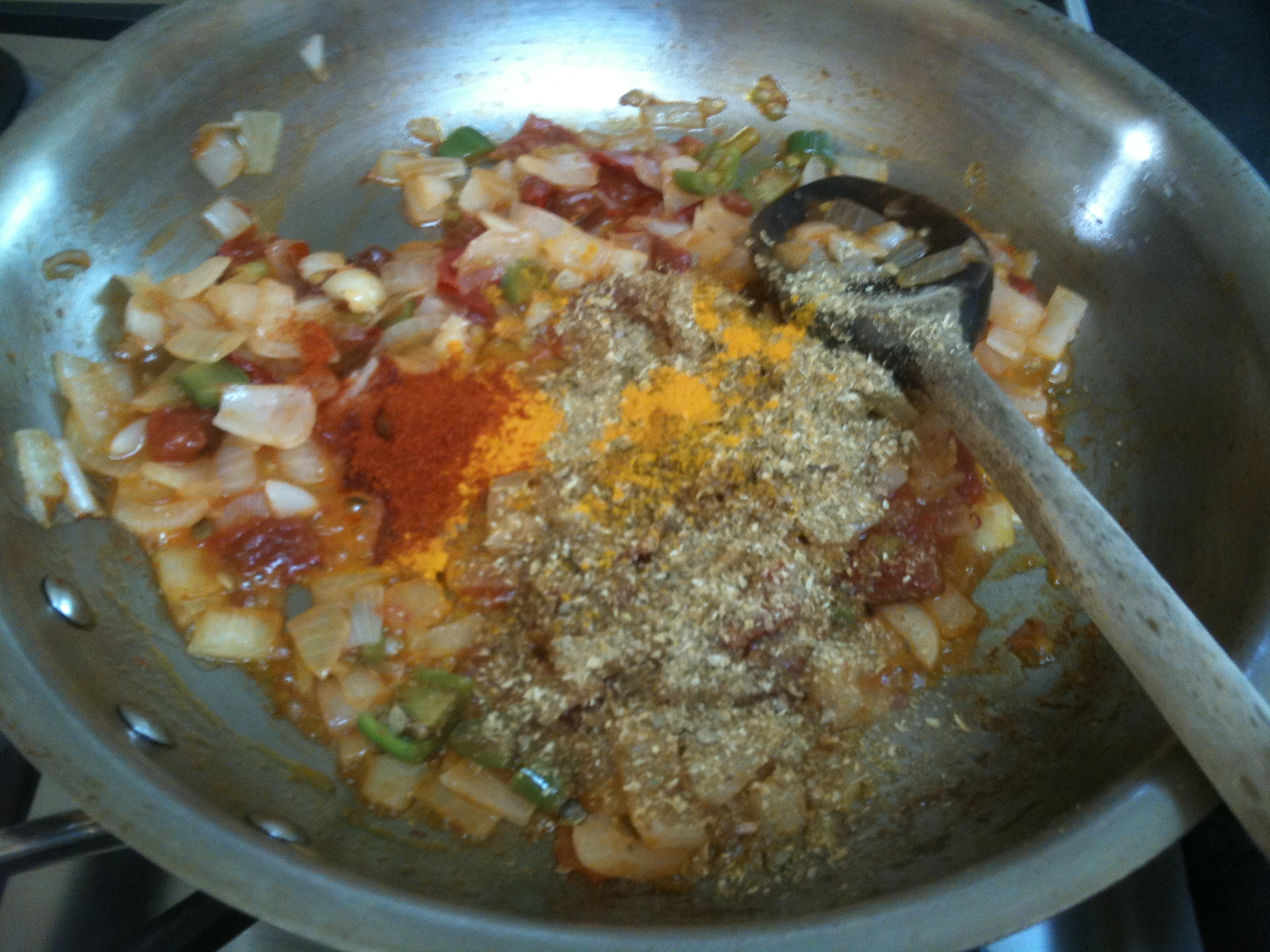
I chose a simple, simple seasoning method for this recipe, that hardly betrays its Indian origins. Use two kinds of heat — a healthy amount of black pepper, and some red chili powder. Either could be skipped. I also added a teaspoon of dry mango powder (aamchoor). Most pantries don’t have this, so some squirts of lime juice would work too. Stir for half a minute, while still on a hot pan; then turn off.

We had it with rotis, but it could go with rice and dal, be fabulous in a raita once the vegetables have cooled; or insert them between two slices of focaccia with some avocado, lettuce and cheese.

Seyal bread — the panzanella of Sindh

Bread usually goes stale before it starts to rot or mold. And therein lies a whole category of recipes.

When bread goes stale it becomes dry, leathery and unpalatable. Although it seems like the bread is losing water, apparently there is no net loss of water or intake of water from the outside air — it is just that some starch starts to crystallize, drawing water in from the surrounding bread substance. To some extent, this process can be reversed by warming the bread. This book — On Food and Cooking: The Science and Lore of the Kitchen — has a great explanation of the staling process.

Frugal housewives have always looked for ways to revive that unpalatable brick. Some methods take it all the way to dryness, like croutons and breadcrumbs. Others soak it in liquid. One famous example is panzanella, the Italian bread salad made out of stale bread chunks. Another from Sindh is seyal bread. This is a method of cooking bread with spicy liquid that is often eaten for breakfast.

To get started, cut your stale bread into chunks about and half an inch all around so you have an idea of how much substance you are trying to rescue. I love French bread in this recipe, or leftover rotis, but not enriched sliced breads that have some sugar in them — but that is a personal preference.

seyal and shishito and oat pancakes 010

For the amount of bread shown above,  I used:

half an onion, chopped but not too fine; 3 big cloves garlic, minced; one serrano chili, minced; and two medium tomatoes, chopped. For spices, about half a tablespoon of ground coriander, and half a teaspoon ground turmeric. Add some red chili powder to up the heat if you like. Some salt to taste. And for garnish, lots of fresh cilantro, chopped fine.

Heat about two tablespoons of oil in a thick-bottomed pan. Put in the onion, garlic and chili at once and stir. The idea is to not let the onions caramelize, because that sweetens them, and this recipe is all about the savory. In fact, that is a commonality in all seyal recipes (one can seyal fish, meat, etc.) — that the onion is cooked till translucent, but not browned.

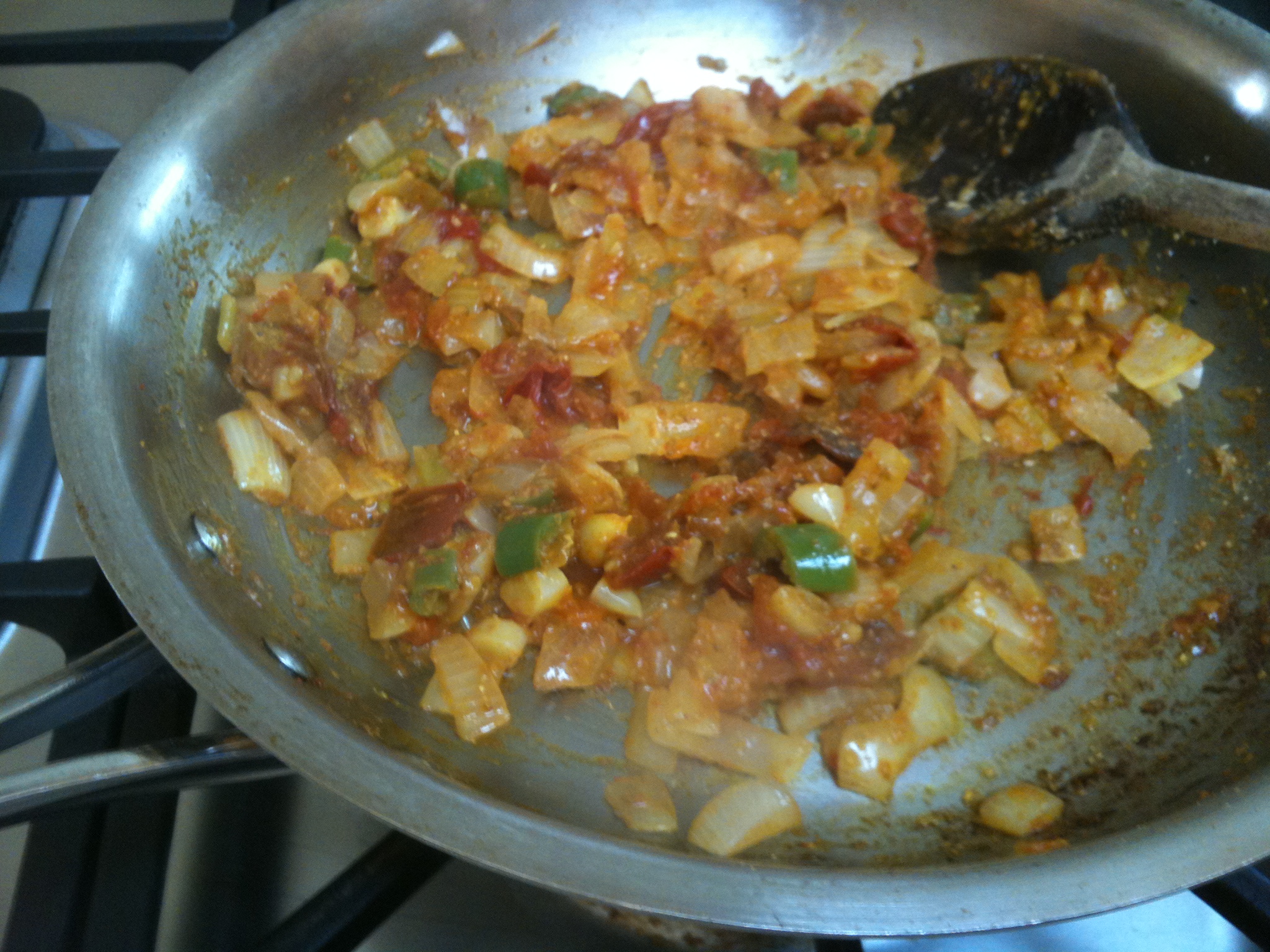
This will happen quickly, in about 3 minutes on medium heat. Now put in the tomatoes. At first juicy, like this:

seyal and shishito and oat pancakes 003

they will start to dry out in the heat (crush them with the back of your spoon to get them to release their juices sooner).

When most of the liquid is gone, put in your dry spices, the coriander and the turmeric and stir.

seyal and shishito and oat pancakes 005

They just need to combine and roast a bit.

seyal and shishito and oat pancakes 008

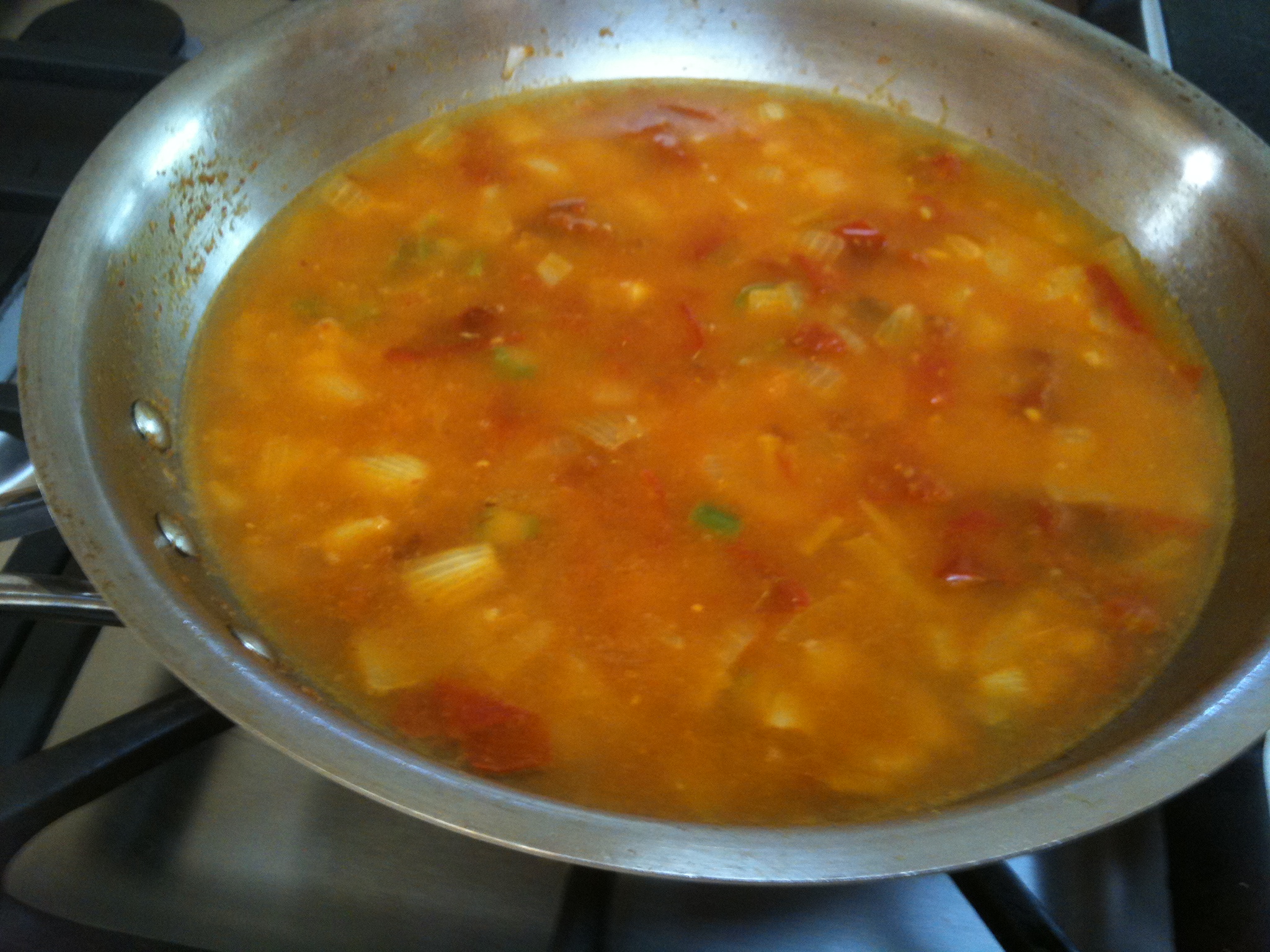
Now goes in about a cup and a half of water, and the whole mixture is brought to a boil. Let it roil for a few minutes, until it goes from looking like this:

seyal and shishito and oat pancakes 013

To looking like this:

seyal and shishito and oat pancakes 016

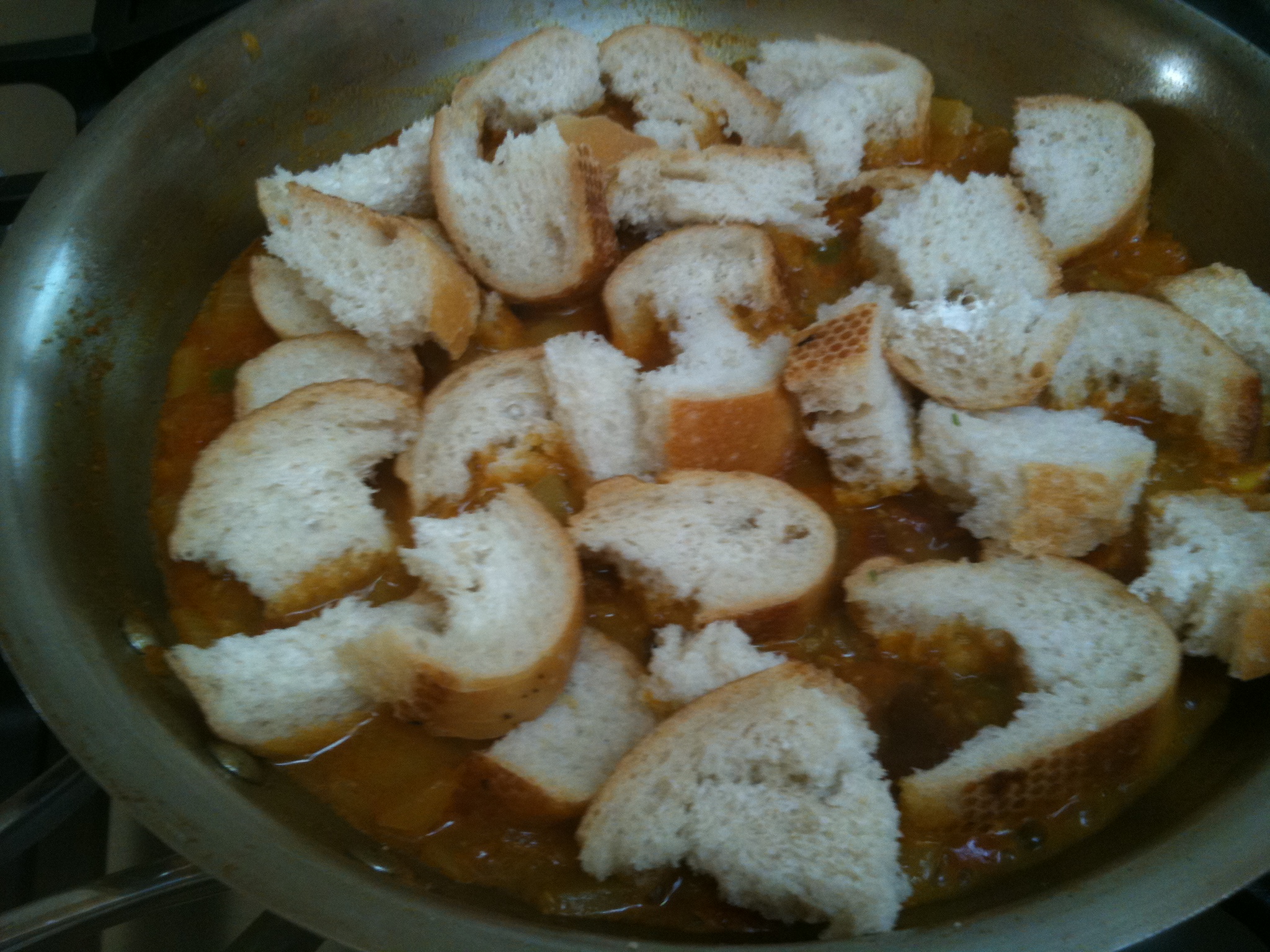
At this point, the cubed bread can go in. The mixture should now be salted, because one has an idea of the size of the meal.

seyal and shishito and oat pancakes 018

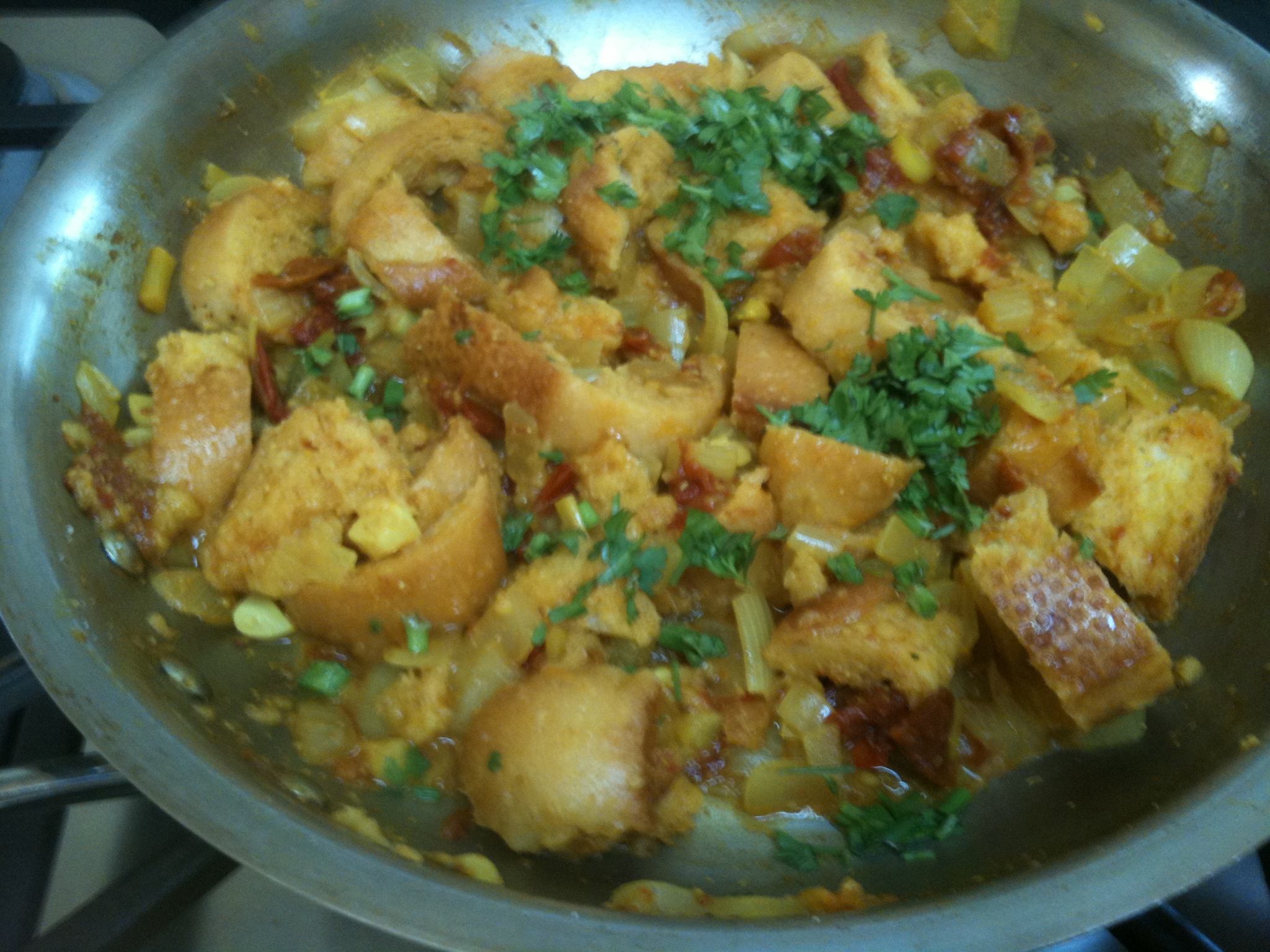
Stir the bread into the liquid to get it to absorb, garnish it liberally with cilantro, and look like this:

seyal and shishito and oat pancakes 021

Have the oven ready at 300 F. Cover the pot, make sure the liquid is simmering, and stick it in the oven to cook for 15 minutes. The last step can also be done on the burner with low heat, and in addition a heat reducer between the burner and the pan. Either way, you end up with a steaming pile of this:

seyal and shishito and oat pancakes 023

Now, don’t be turned off by its rustic look. Rustic it is, and frugal, but it is delicious; and at least for me, brings back lazy Sunday morning breakfasts with hot tea along with seyal bread.

Red chili powder with heat control

What one wants in a red chili powder is for it to be chock-full of that savory, papery chili flavor, but only as hot as one can handle. How to achieve that? The answer is so obvious in retrospect that I almost feel bad about writing it down, but honestly, it has taken me this long to come up with it, so I think it is worth putting down.

There are all kinds of dry chilies available in the market. Some are sweet, some are moderately hot, and some scream. The trick is to combine them. Here is a rough proportion:

seyal and shishito and oat pancakes 025

Here I have used 3 large aji amarillo chilies, which is a kind of not very hot Peruvian orange chili, dried; and I have used several of the dried cayennes, which are very hot. Ground up together, the larger ones will add a lot of flavor which harmonizes with the flavor and heat of their smaller cousins, to make a somewhat medium hot spice.

With chilies, by the way, a good rule of thumb is, the smaller the hotter.

Dry saute them in a hot pan for a few minutes, turning with tongs, until they are blackened. As they roast, they might make you cough, so turn up the hood if you have one, or else open windows. Turn off the gas when you have something that looks like this.

seyal and shishito and oat pancakes 027

OK. Handling these packets of multi-pronged heat carefully, remove the stems, and if you want, the seeds and ribs. I shake them off, but I am by no means scrupulous about it.

They are roasted so they will break easily. Put them into a spice grinder (I use a coffee grinder I save only for spices) and grind until you have a fine powder.

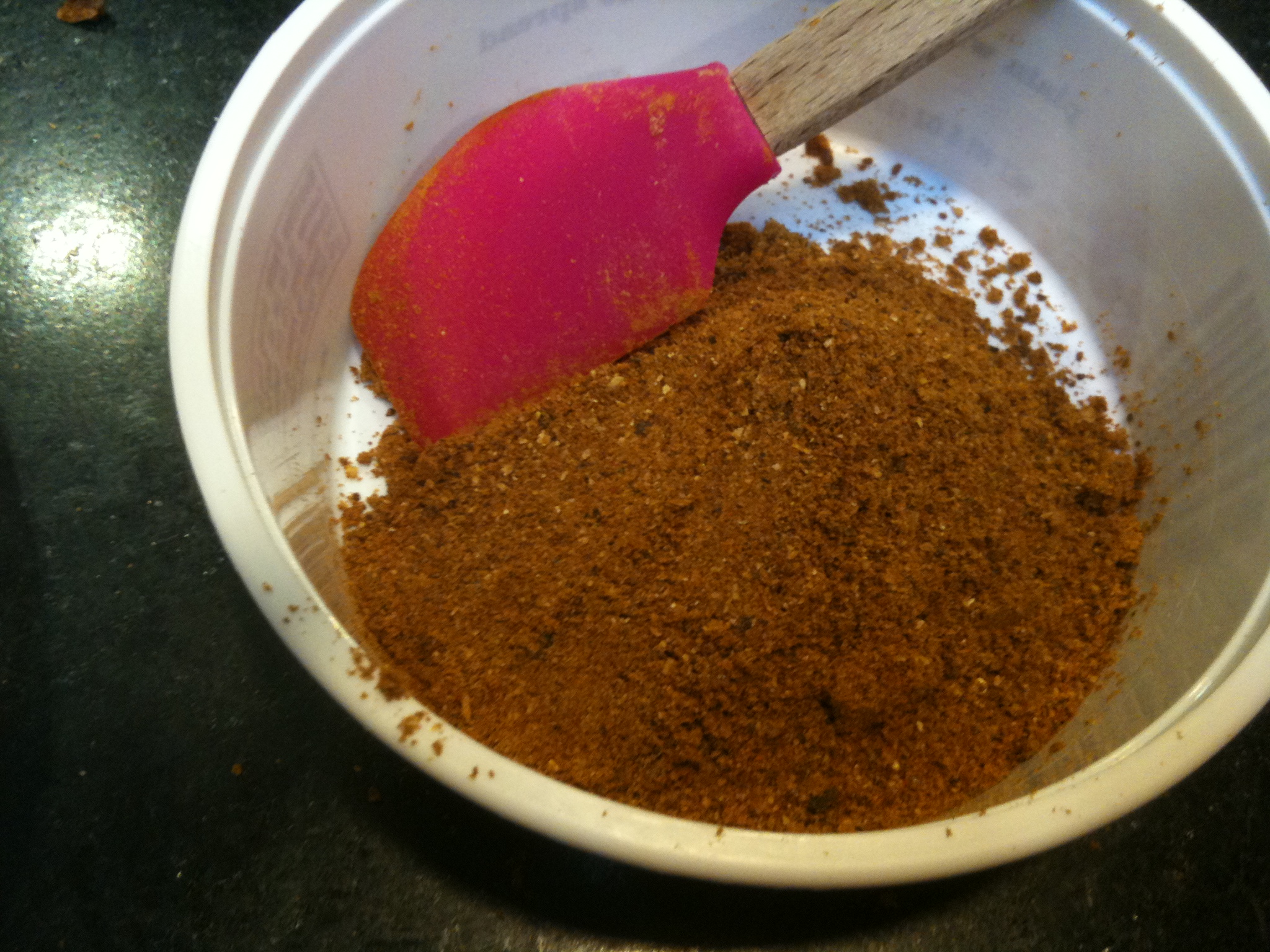
A few tablespoons powder is what I got, and I believe it will last for about four to five uses. To save, put it into a small glass jar and for god’s sake, label and date it! You will love yourself later.

seyal and shishito and oat pancakes 034

Sindhi Besan Kadhi

Image

I’m convinced that every little province and village in India has their own variation on the common theme of a gravy made with chickpea flour, with their own specific set of spices, and their own means of adding sourness, sweetness, heat, and random floating stuff. Sindhis do as well. It would be more accurate to say that each region of Sindh had their own version, and my family’s version is more-or-less shared with other Hyderabadi Amils.

First things first. Chickpea flour, or besan, is the fine flour ground from channa dal. It is one of the most versatile ingredients I know of — it can be mixed into rotis, used like eggs to make omelets, thicken stews, deep-fried to make pakoras, and finally, cooked with liquid to make a thick gravy with a deep musky fragrance that can be poured over rice. That, my friends, in all its endless variations, is a kadhi.

A kadhi’s base is besan. There may be as little as one tablespoon for four cups of liquid, or as much as half a cup. There is a liquid — it is, after all, a gravy — which may be yogurt, buttermilk, water, or pureed tomatoes. The besan may be roasted in oil, or not. The spices often used are cumin seeds, asafetida, fenugreek; but any or all may be omitted or others added. There is usually a source of sourness. Sometimes the yogurt or pureed tomatoes suffice, sometimes tamarind is added. The musky flavor of besan goes well with sweet, so a small amount of jaggery is usually added. Sugar is fine too.

On to the main business: Sindhi kadhi.

Step 1: Mise en place and tempering

Image.

Collect your spices. Have your besan at hand with a half cup measure. Have your wooden spoon by your side. Put in about a quarter cup of oil in a thick-bottomed pot on medium high. If you have a pressure cooker, use that. When the oil shimmers, put in a sprinkling of asafetida and a half a teaspoon of red chili powder. Then, half a tablespoon of cumin seeds, wait ten seconds, and then half a tablespoon of fenugreek seeds. If you have curry leaves, put in about six of them. Minced ginger — half an inch piece — goes in next. If you want additional heat sliced serrano chilies can go in too. Stir for a minute. The oil has been seasoned.

Step 2: Roasting the besan.

Image

I use about half a cup of besan. I like the stuff. Lower the heat to medium-low. Put the besan into the oil and stir vigorously. It should look like the picture above — all the besan should be dissolved into the oil — if there is too little oil, you will have a hard time moistening all of the besan. In that case, add a few spoons more of oil. Gently sizzling, the besan will roast; you might notice a wonderful aroma of roastiness arising. Keep stirring. Keep this going for about seven minutes. It might darken a shade or two, but be careful not to burn it.

Step 3: water

Image

I use four cups of hot water, and stir vigorously to make sure there are no lumps. Sometimes I resort to a whisk. You can pour in the water all at once, or if you want to make a ritual out of it, do it bit by bit. I doubt it matters. Bring it to a boil, and keep it on a simmer for about 10 minutes. The smell of cooked besan will arise, it is heavenly. And, in about ten minutes, the gravy will thicken, and look like this:

Image

Step 4: Salty, sour and sweet.

Add your salt to taste, add a half teaspoon of tamarind paste, and a half inch piece of jaggery if you have it, otherwise a teaspoon of sugar.

Step 5: Floating stuff — the vegetables.

ImageNow each kadhi needs some kind of floating stuff that cooks with the gravy, and equally lends and borrows flavor. Many, many versions of kadhi use dumplings made out of — well, more besan. The Sindhi version chooses the healthier route of vegetables, known as vakhar. This is a generic term for all vegetables that are chosen to be the free floating blocks in one’s kadhi.

What to use? Of course, this is up to one’s taste and what one has in the pantry. But some commonly used vegetables are: cauliflower; french beans; okra; Indian drumstick (pods of Moringa oleifera); guar or cluster bean pods; young potatoes; tinda which is a type of gourd, easily substituted with zucchini; eggplant. Basically anything chunky and not too starchy can be used.

The key thing is that they must all be cubed into rather large cubes to avoid them melting into the sauce. Two-inch cubes is what one is aiming for. Cauliflowers in particular must be kept rather large because they turn mushy so easily.

Anyway, a plateful of vegetables, in they go. Salt the vegetables separately in order to get your salt estimate correct. If you have a pressure cooker, cover, bring to a whistle, and pressure cook for exactly 5 minutes 30 seconds — I’m serious, that is the number you want. If you don’t, simply bring to a boil and simmer, half covered, for twenty minutes, and keep checking for done-ness of the vegetables. Remember — the besan, though it certainly needs its rawness cooked out of — has already been cooked enough. The rest is about the vakhar.

This is what they look like when they have first been put in:

sindhi kadhi 017

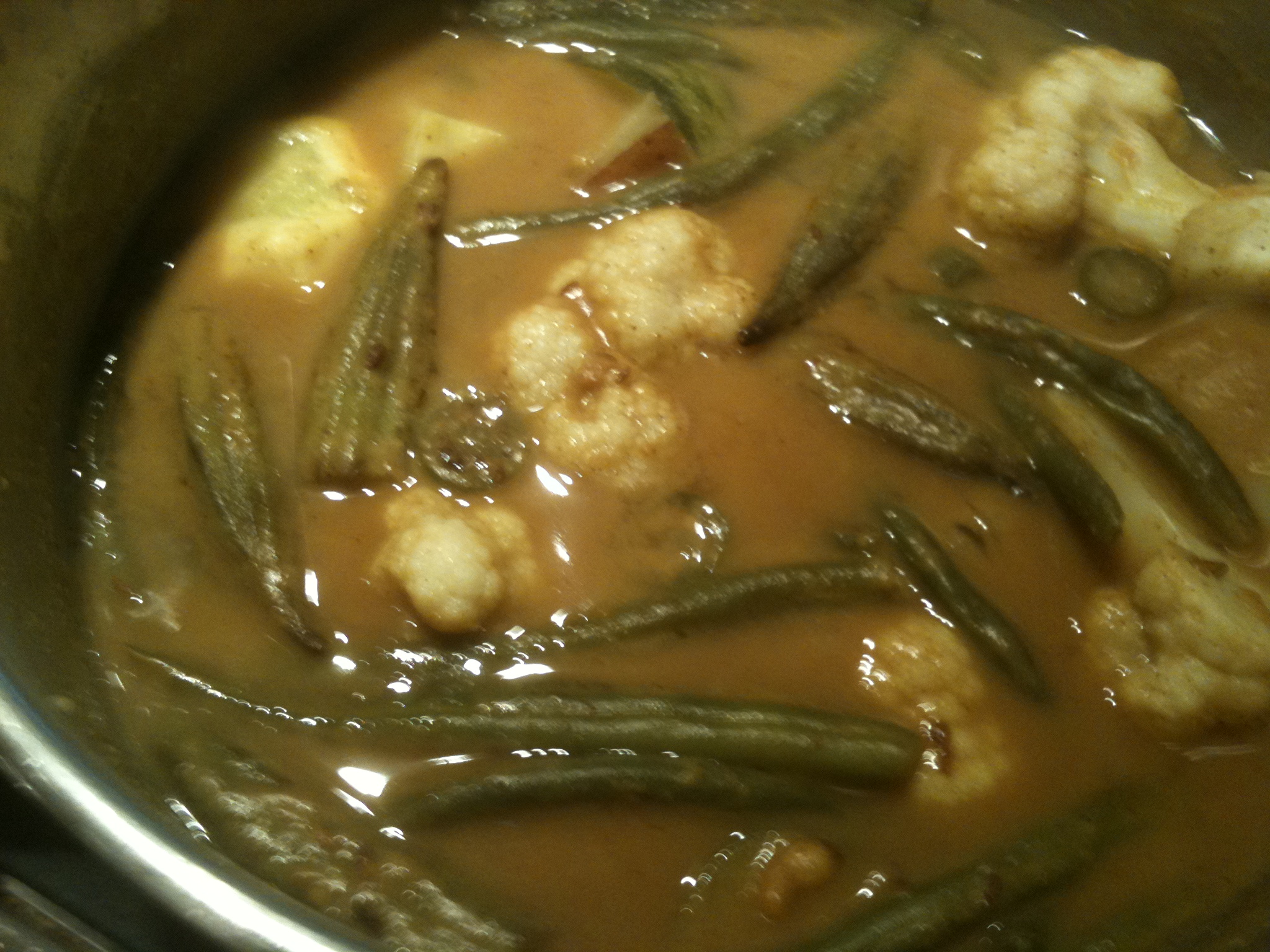
And after going through the pressure cooker, they will alter into this:

sindhi kadhi 021

Subtly different, but infinitely luscious. Enjoy with a plateful of long-grained white rice. Pour so much gravy onto the rice that you feel the need to use a spoon rather than a fork. Then you know you have hit the sweet spot.

Easy peasy black-eyed peasy

A nice and creamy black-eyed peas recipe. Its greatest virtue is its simplicity. None of that lengthy caramelizing of onions, no tomatoes, just simple, simple, simple.

Step 1: Half cup of black-eyed peas — soak either overnight or for an hour in near-boiling water. Its volume will quadruple. As seen below — I started with half a cup.

Image

Step 2: Boil:

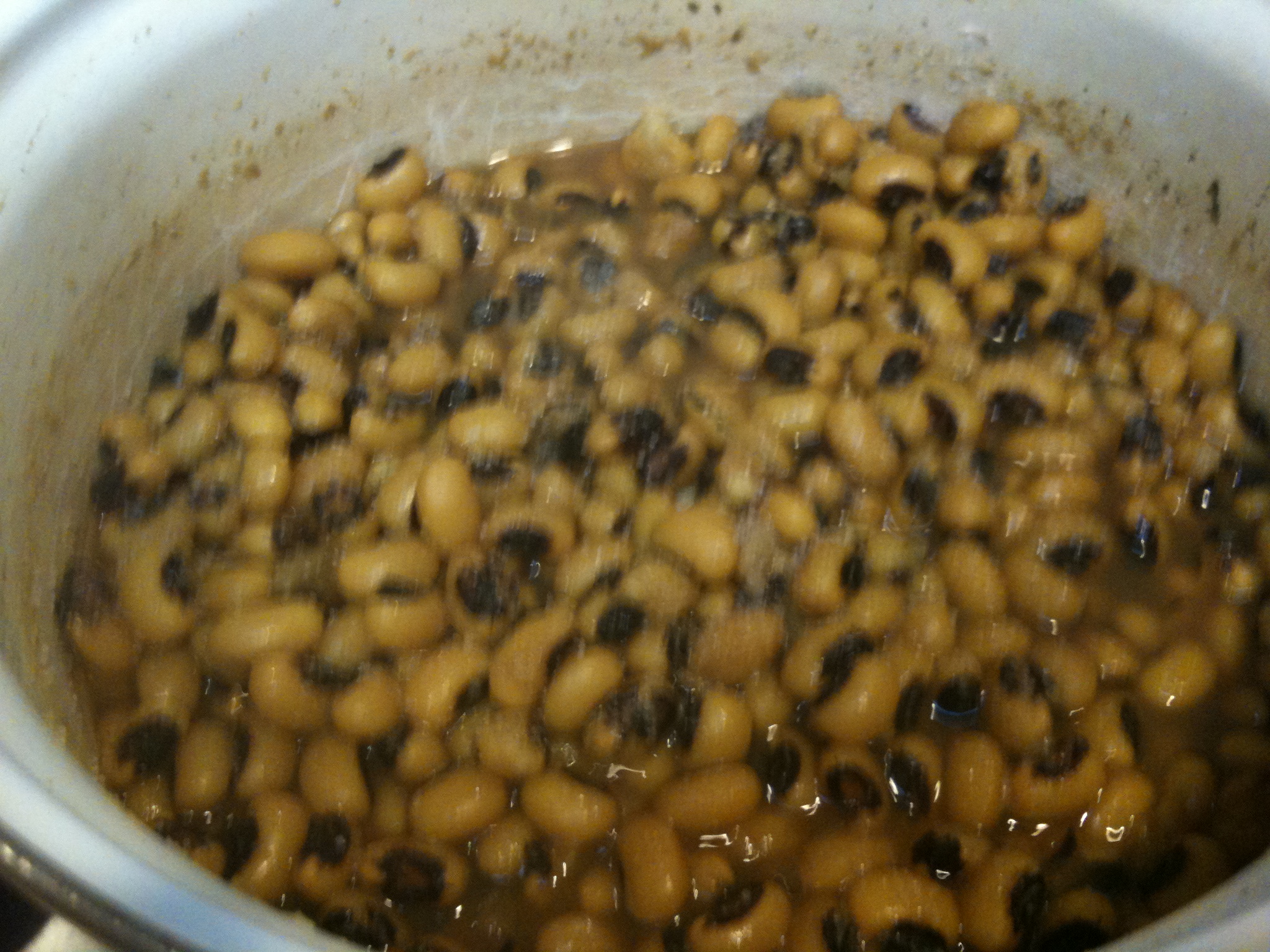
Drain the peas and put it into a pot with half a teaspoon of turmeric and one and half cups of water. Cover partially and bring to a boil. Turn down to a simmer, keep it mildly bubbling away for about an hour. They may not look much different but if you squeeze one pea it should be very very squish-able. Add salt to taste and either turn off the flame or keep it on very low.

It will go from this:

Image

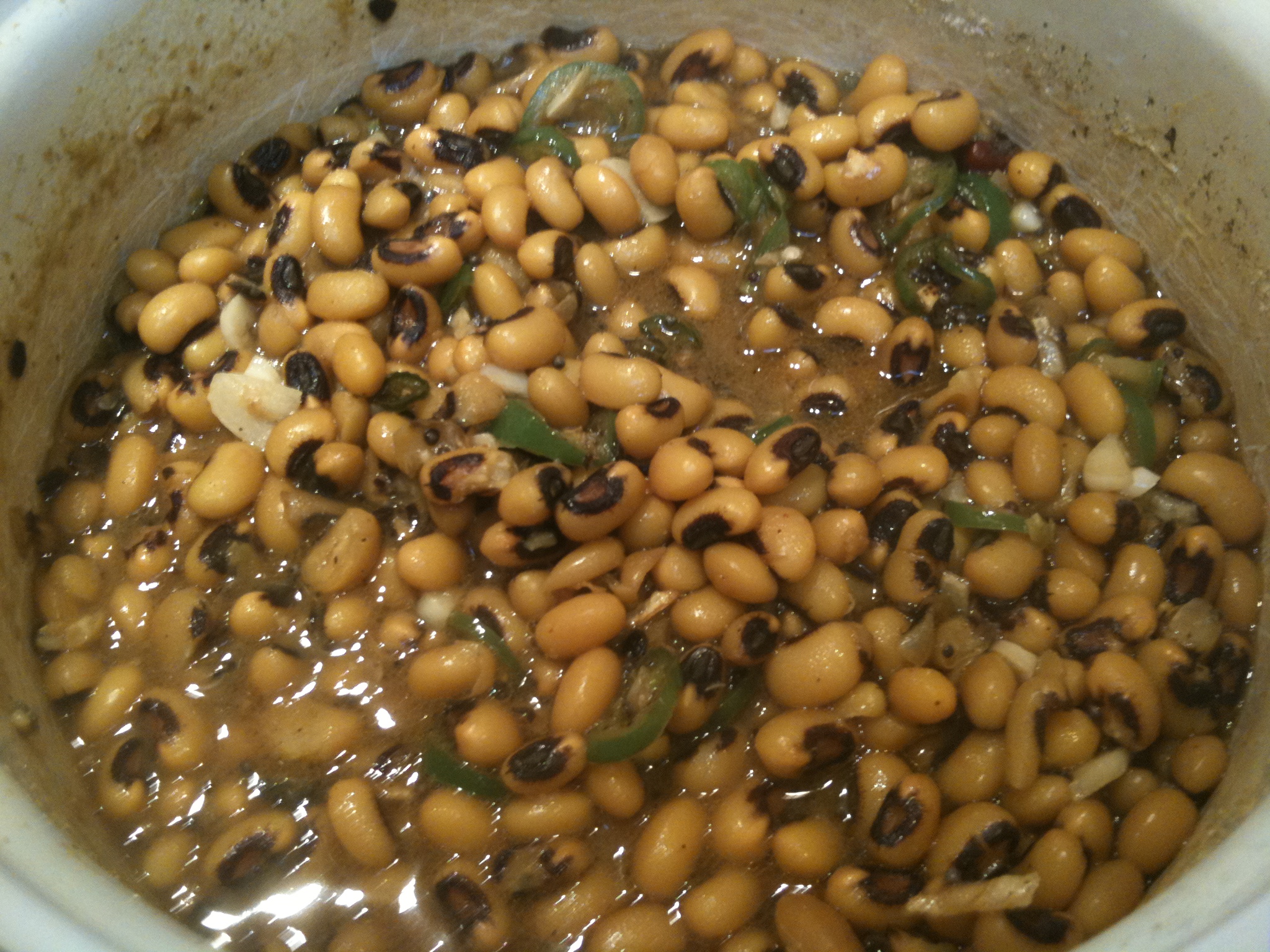
To this in 45 minutes to an hour:

Image

Step 3: Seasoning

This is the set of seasonings I used: Mustard seeds, red chili powder, garlic and serrano chili. No fuss, no muss. Heat a few tablespoons of oil (I use pure olive oil) to a thick-bottomed pan and heat it on medium-high till the oil shimmers. Throw in a teaspoon of mustard seeds. Wait till they start to pop, then a half a teaspoon of red chili powder. It will darken immediately. Put in a few cloves of garlic, chopped, and a fat and juicy serrano chili, sliced into thin rounds. Stir to coat with oil.

At this point the heat should not be very high, or the garlic will burn. Let it cook for a few minutes until the chili and garlic look somewhat shriveled. Turn off the heat and pour the contents into the black-eyed peas. Stir.

If I had curry leaves, I would have added about 5 of them along with the garlic and chili.

Image

Step 4: Finishing.

At this point the only task left is to draw the right creaminess out of the cooked peas. If it is too watery, boil off some of the water or crush some peas with the back of a spoon to meld into the liquid. At any rate let it sit with the seasonings for ten minutes or so to combine the flavors. Garnish with chopped cilantro if you wish. Or, lemon juice, parsley, chives? Go for it. Basil? No, not quite.

As you can see, I didn’t garnish at all.

Image

We had it with chapatis, which is really the only way.