Simple dal series — Part 1, masoor (red lentils)

Masoor dal

Masoor dal

(Part II of this series is here.)

Lentils are eaten all over the world. But the one used in India is called masoor. When whole, it looks much like a bigger French lentil, brown and UFO-shaped. Remove the husk and split it, and one is left with a orange flat disk. This is how masoor is available most of the time. Once cooked, it loses it orange and turns yellow like other dals. This dal has a very subtle flavor, and I find it works well to cook aromatics in the dal when it is simmering, rather than add it in fat later.

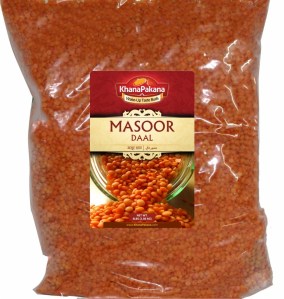
Masoor Daal at Khana Pakana

Masoor Daal at Khana Pakana

Simple masoor dal

Ingredients:
  • 3/4 cup masoor dal (red lentils)
  • half a teaspoon turmeric powder
  • half an onion, chopped
  • 3-4 cloves of garlic, minced
  • half an inch piece of ginger, minced
  • 1 serrano or jalapeno chili, sliced
  • 2 small or 1 medium tomato, chopped
  • 3-4 kokum pods, if you don’t have them, leave them out
  • 1-2 tablespoons ghee
  • a sprinkle asafetida
  • a sprinkle or more of red chili powder
  • half a teaspoon cumin seeds
  • half teaspoon mustard seeds
  • salt to taste
Method:

IMG_0465[1] IMG_0468[1]

Rinse the dal and soak it in hot water for just 15 minutes to see the volume double. Longer is fine. Put the turmeric, the drained dal, and two and a half cups of water in a thick-bottomed pot. Add the chopped vegetables except the ginger.

IMG_0466[1]

Bring it to a boil, uncovered. Watch it carefully as it is about to boil, because the foam will rise to the top suddenly and overflow if it is covered. Once it does come to a boil, turn it down to a simmer, with a lid partially on. The dal will take 45 minutes to an hour. When the dal is softened (test it by squeezing between your finger and thumb), you can turn it off, or leave it at a very low simmer.

IMG_0469[1] IMG_0470[1]

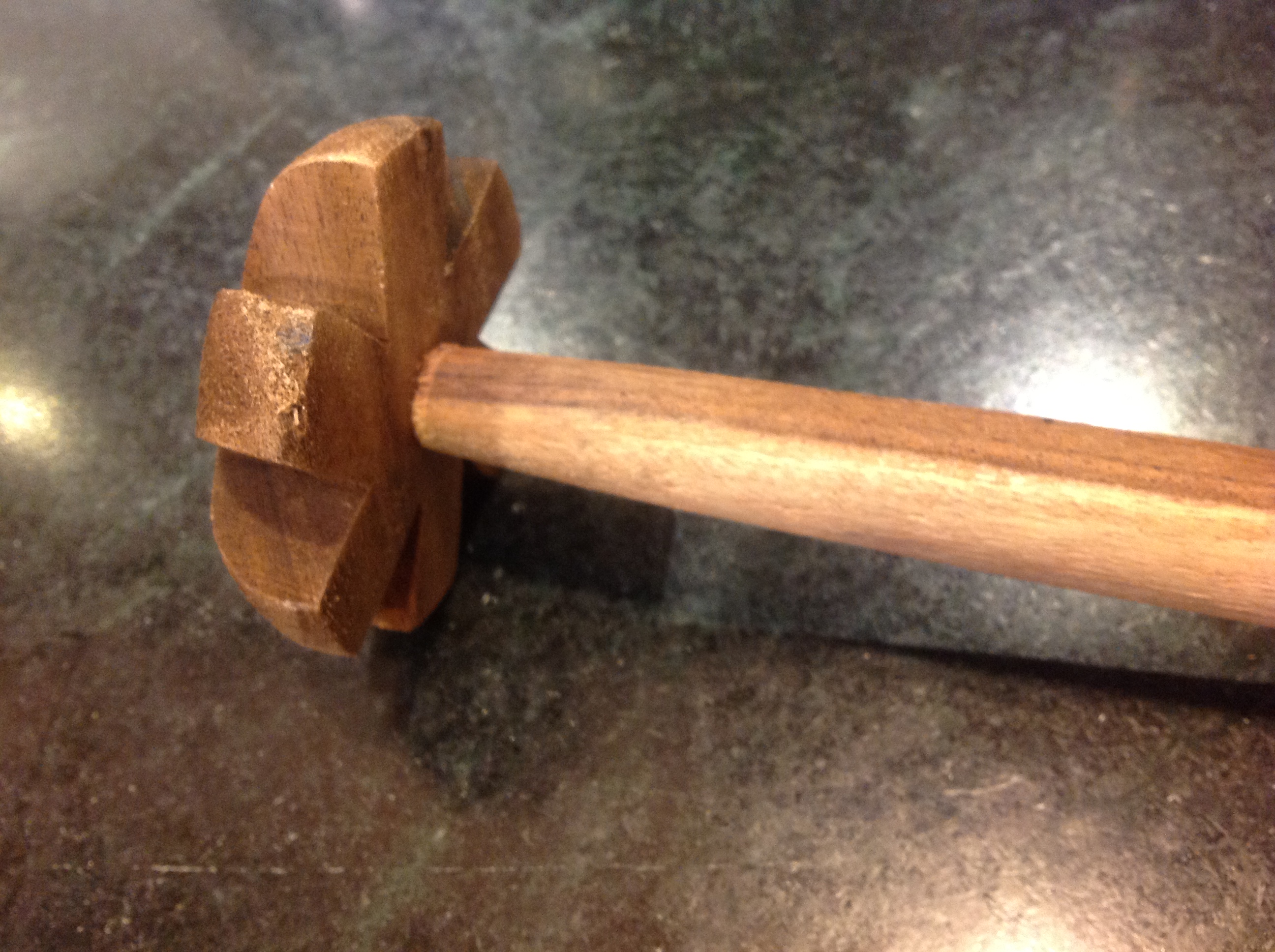
Whisk it with a whisk, or with one of these handy-dandy instruments, called a mandheera. Add salt to taste and cover.

mandheera

mandheera

Meanwhile heat the ghee in a small pan. In this recipe I find that the ghee really helps bring out the flavor of masoor. When the ghee is melted, sprinkle in the asafetida and the red chili powder. They will foam, now put in the cumin; when it sizzles put in the mustard seeds; when they pop, put in the ginger. In a minute or two the ginger will appear shriveled and cooked. Now turn off the flame and pour into the dal. Stir the ghee in.

IMG_0474[1] IMG_0475[1]

At this point, the dal is ready. Adjust the salt. Garnish with chopped cilantro, or add lime juice. This goes well over rice and a dry or fried vegetable on the side.

Malvan’s famous fish: part two, fried fish

fish curry and fried fish and butter tea 035

Malvani fried fish

(Part one is here.)

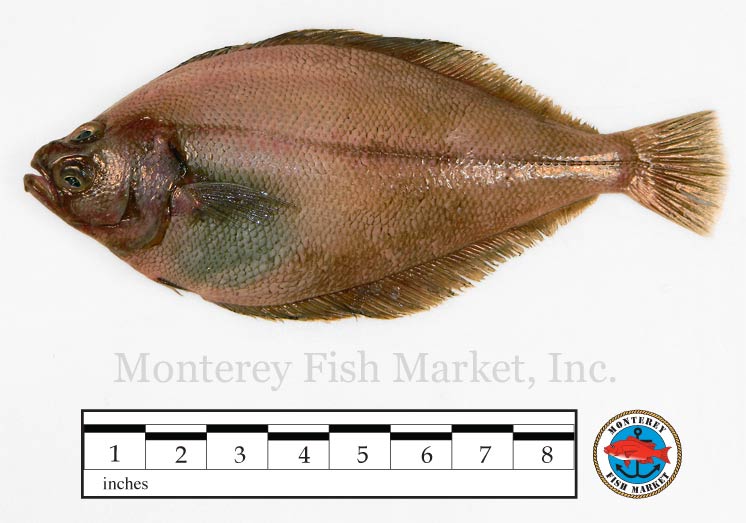
Quick — name two differences and two similarities between these two kinds of fish: Indian Mackarel (bangda) and Pacific Sand dab.

First the differences:

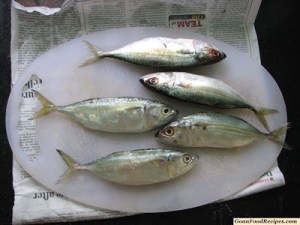
Mackarel

Mackarel

1. Indian Mackarel swims around in the warm coastal waters around the Arabian Sea off the coast of India. While the Pacific Sand dab inhabits a different coastline altogether — the Pacific, around California, Oregon and Washington.

sanddab

sanddab

2. Another thing — while the mackarel has your basic fish shape, the sand dab is a bottom-hugging, sand-dabbing flat fish. Which means, its one eye migrated creepily over to the same side of its head as the other eye.

Now the similarities, which (to give away the point of this exercise) are far more interesting to me right now.

1. They are similar in size (8 – 9 inches), and found on grocery shelves prepared in a similar way — not as fillets or as a steak, but with the head and tail fins removed, skin on. So they both come with the central ribs intact. That is key.

2. And, because of the above similarity in form factor, both Indian Mackarel and Pacific Sand dab can be used to make the Malvani fried fish recipe!

Ah, what a long-winded way to arrive at the point that I couldn’t find bangda fish, so I substituted with sand dab! Readers of this blog: I have never promised brevity.

On to the main business, if I haven’t lost you already.

Malvan’s famous fried fish, using sand dab instead of mackarel:

Two sand dabs will make a single dinner portion. For two sand dabs, use 3-4 tablespoons of the Malvani fish paste. Also have at hand: some salt, some turmeric powder, and some farina (rava/sooji/cream of wheat).

fish curry and fried fish and butter tea 025 fish curry and fried fish and butter tea 026

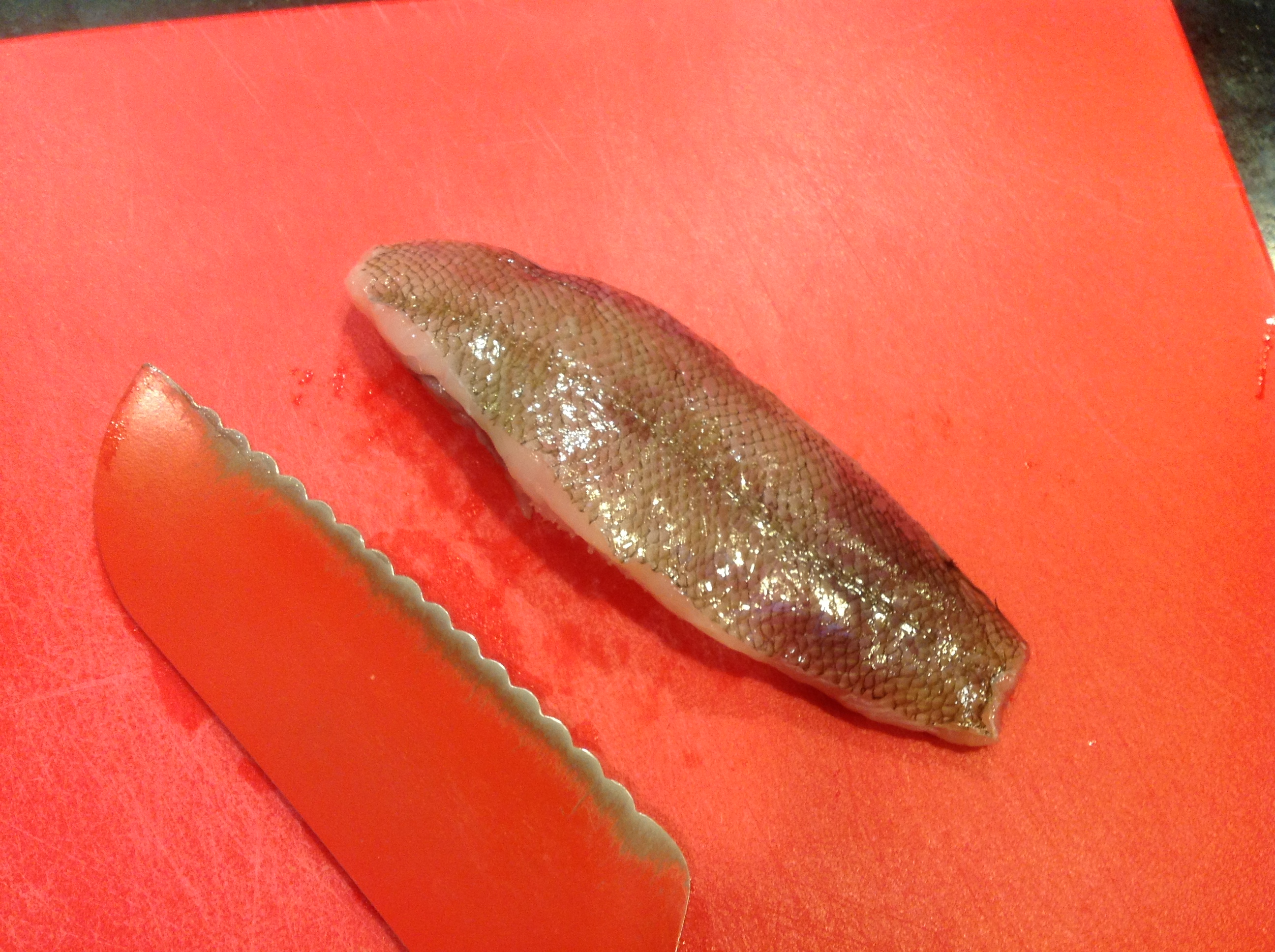
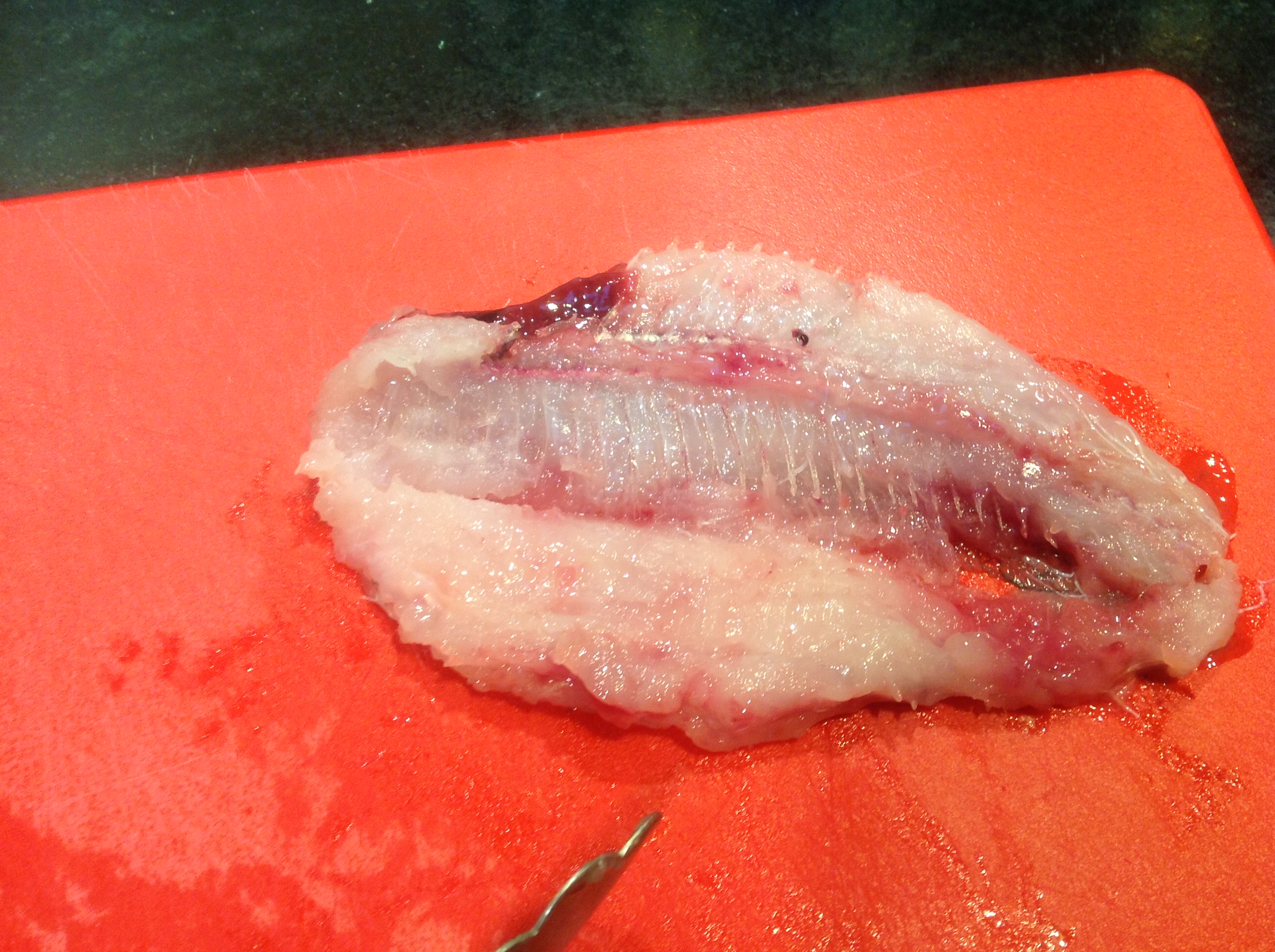
Lay each down flat. Carefully cut open at the line of the central ribs bone, as though you are trying to fillet the fish. Open the fish like a book, but do not cut through. You can leave the bone in. Once it is cooked, it will be much easier to pry it out, I promise. Sprinkle salt and turmeric powder on the flesh.

fish curry and fried fish and butter tea 027 fish curry and fried fish and butter tea 030

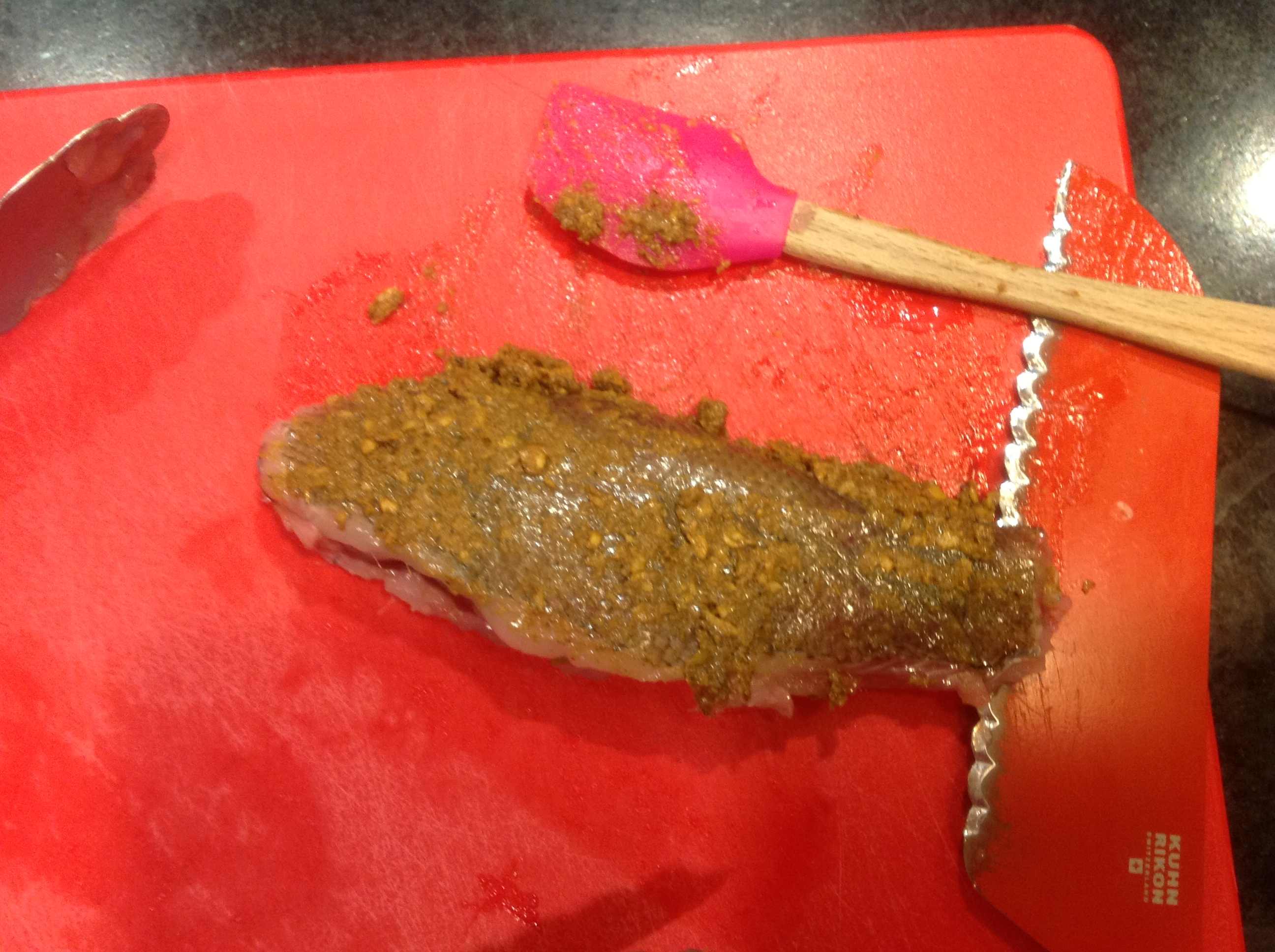
Now spread a thin layer of the spice paste on both open surfaces of the fish. One of the surfaces will have the bone on it, this is fine, just apply the paste over.

fish curry and fried fish and butter tea 032 fish curry and fried fish and butter tea 033

Close the fish book. Spread paste on both outer surfaces. Now dip both sides in the farina to coat. If you are having trouble keeping the fish book closed, you can tie it closed with some kitchen twine.

Now heat 3 tablespoons of oil in a nonstick pan on high-ish heat. When it shimmers, lay the fish down on one side. Let it shallow-fry for 5 minutes or so, then flip it carefully, still closed, to cook for three minutes or so on the other side. Both sides should be browned when done.

One thing to note about Indian preparations of fish — by Western standards, one would consider them overdone. When fried on both sides, the flesh is quite dry, but it is kept succulent by the moisture in the spice paste. One wants to dry it out a little, because otherwise the spice paste will remain mushy, and one does not want that.

Have it as a side with rice and dal or rotis.

Malvan’s famous fish: part one, the spice paste

Malvan

Malvan

Malvan is a little town on the west coast of India. I have never been to it, nor do I know too much about it; but I can tell you that growing up, our nanny/cook (Bai) was Malvani, and she made the most amazing fish. It still haunts my dreams. The fame of her fried bangda (mackarel) spread among relatives and friends. People who worked two floors away from my mom who saw her once a month in the office canteen would phone her to be reminded of the ingredients.

This was not a quirk of our cook or our family. Malvani fish with its red spice paste is renowned all over the Internet. Don’t believe me? Go ahead, google ‘Malvani’ and come back and tell me what you find. Go ahead, I’ll wait.

Satisfied? When I left for foreign lands one of the heirlooms I carried with me is a scribbled version of this recipe. In this post I will describe the method of making the paste. In two following posts, I will describe how to use it in a couple different fish recipes.

A warning note: family recipes in India are handed around with amounts like a fistful of this, a little bit of that. It is all andaaz se, as it is known. So the amounts here are not handed down from Mount Olympus, but just the proportions that I used for a successful rendition.

Malvani fish masala (spice paste)

This makes about 3/4 cup of the paste which will last in the fridge in an airtight container for some months. The vinegar has a preservative action.

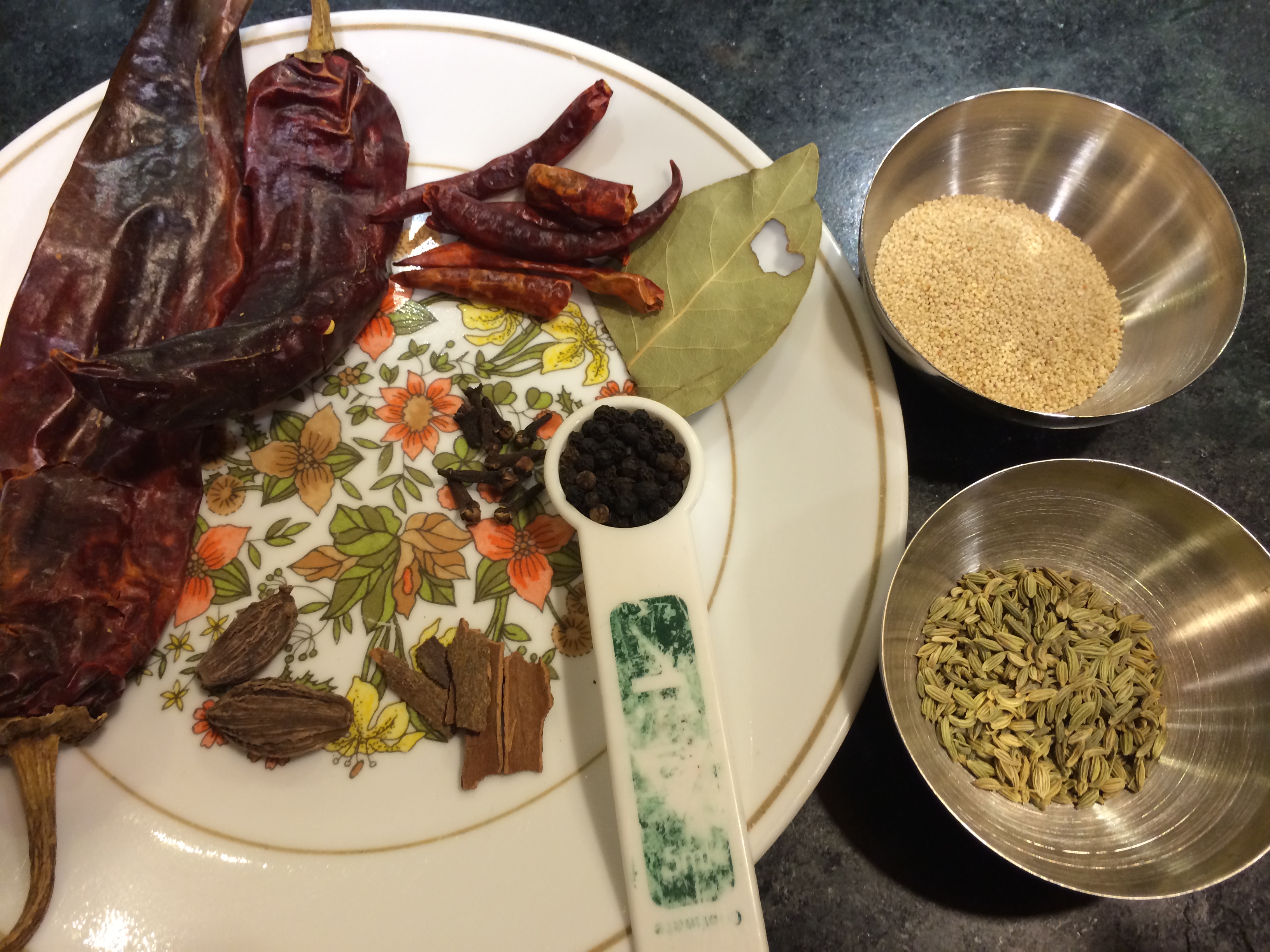
Ingredients (dry spices):

  • 2 large not-hot dry red chilies (Kashmiri, Ancho, Pasilla, or other such)
  • 5 small hot dry red chilies (cayenne)
  • 1 bay leaf
  • 1 cinnamon stick or few small
  • 10 cloves
  • 2 big black cardamom
  • 1 tablespoon white poppy seeds
  • 2 teaspoons fennel
  • 1 teaspoon black pepper seeds

Ingredients (wet spices):

  • 3 large garlic cloves
  • 1 inch piece ginger, peeled
  • 1/4 cup coconut
  • half teaspoon tamarind paste
  • 1/3 cup white vinegar
IMG_1007

Dry spices for Malvani fish masala

The dry spices are to be roasted on a griddle until an aroma starts to arise…but do be careful not to burn them. I did this in stages so I don’t mix the seeds that roast faster with the bigger, slower ones…so do the fennel seeds and the poppy seeds in one batch (they won’t take long) and the rest in the second batch.

Note about why spices are roasted before grinding them: I believe it dries them out a little, makes their skin papery, and easier to grind into a fine powder.

ravioli goan masala 030

Roasted dry spices for Malvani fish masala

Once the dry spices are roasted, wait a few minutes for them to cool and then grind them in a clean coffee grinder.

Now collect the wet spices in a small blender. In goes some ginger, some garlic, half a teaspoon of tamarind paste, a handful of grated coconut. Put in the dry spice powder. To lubricate the blades, add some white vinegar.

ravioli goan masala 035

Wet masala for Malvani fish masala

By the way, Do Not Add Any Water. Malvani Masala not like the H2O. A note about the usage of vinegar: this is not traditional in Indian cooking, but came in by way of the strong Portuguese influence in that region (Goa was colonized by the Portuguese right up until 1960).

Grind it up to a paste, and your red Malvani masala for fish is ready.

ravioli goan masala 036

Masala french toast

french toast and goan masala fish 016

Masala french toast

In India we seem to have a savory correlate for a lot of Western breakfasts. Yes, we have crepes, but we call them dosas and have them with sambhar. Yes we have pancakes, except we call them uttapams and once again dip them in hot chutneys and sambhars. We have our comfort food in cream of wheat (sooji/rawa), except it is cooked with mustard seeds and chilies and onions to make upama.

And of course, we have French Toast, but please stay away from the whipped cream and the sliced bananas and the maple syrup, and instead reach for the chilies and onions — presenting the Masala French Toast. This makes enough  for one serving of brunch.

Step 1: chop the vegetables

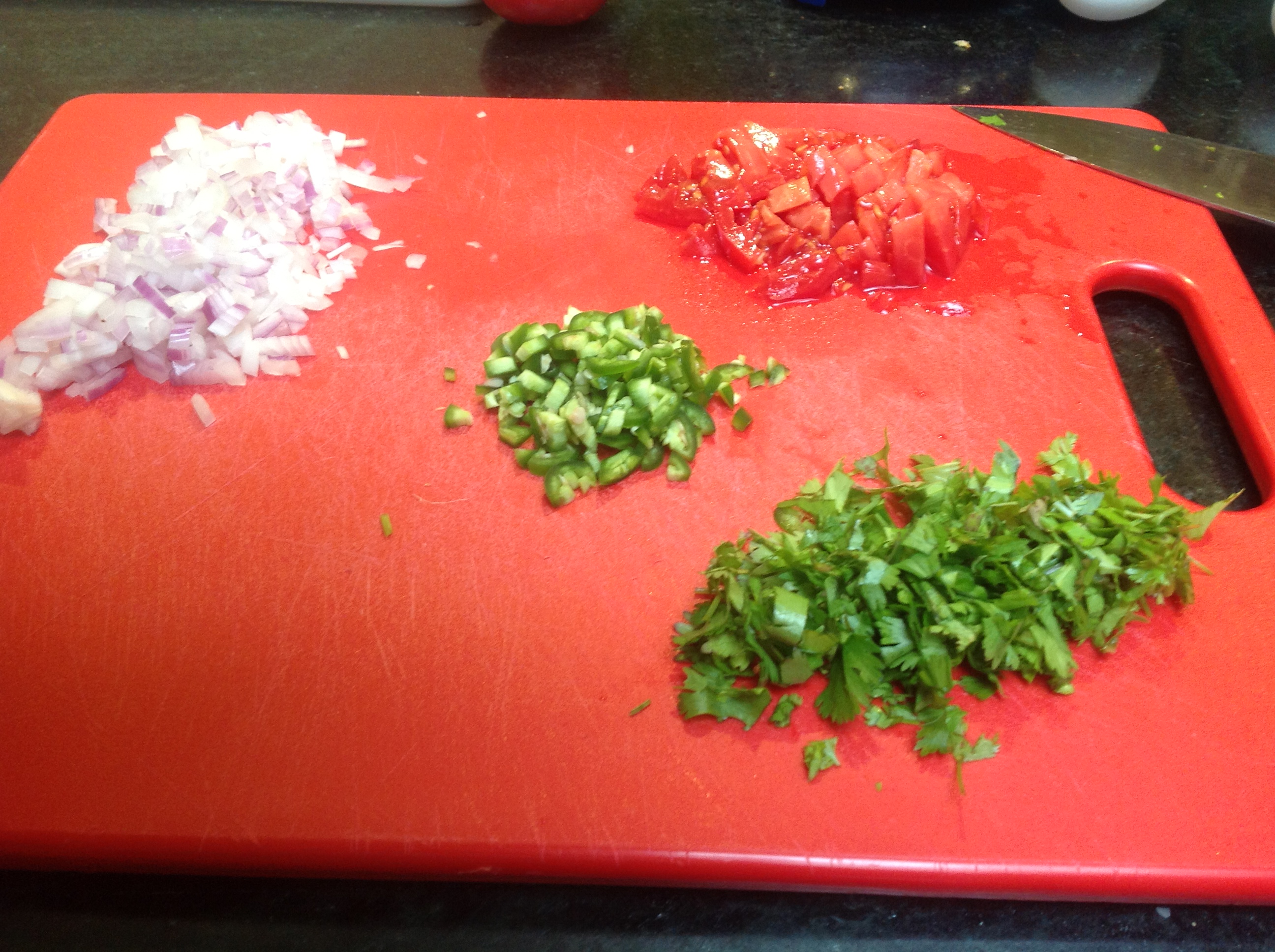
Finely chop: half a small onion, half a small tomato, one serrano chili, a fistful of cilantro.

french toast and goan masala fish 006

Masala french toast vegetables

Step 2: combine with eggs

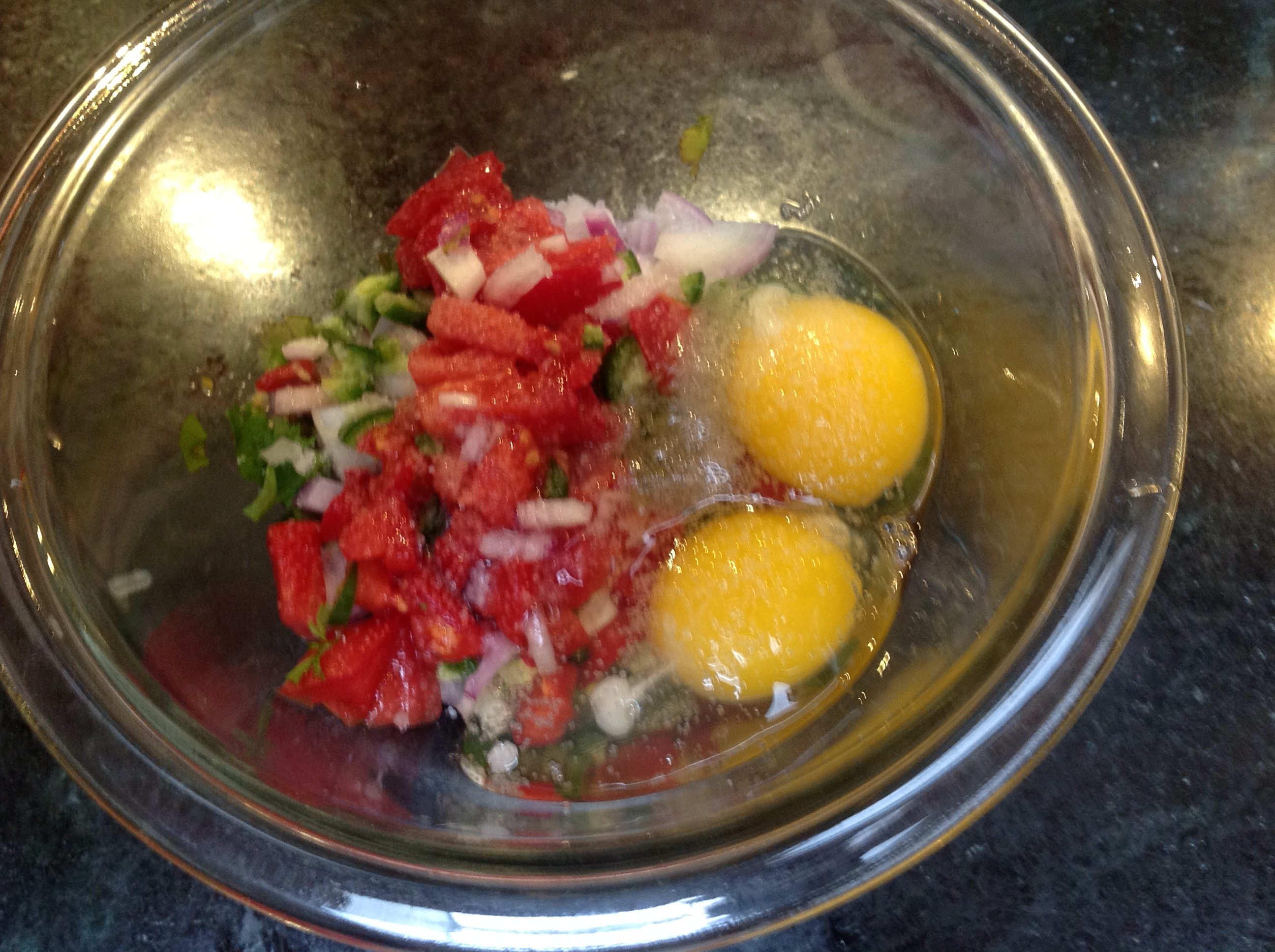
Break two small eggs into a bowl along with the chopped vegetables. Add 3/4 teaspoon salt. Stir with a fork using a beating motion. You could use an egg beater if you like, The eggs will get a little foamy but there is no need to get them completely whipped.

french toast and goan masala fish 008 french toast and goan masala fish 010

Step 3: soak the slices of bread

I used two large slices of white French bread. I generally prefer French bread for this recipe because it has no added sugar (most of the store-bought sliced breads will have added sugar, which clashes with the savoriness of this recipe). Lay them flat on a plate, pour about two-thirds of the egg mixture on. Spread it to cover the slices. The chopped vegetables will cover the slices, that is fine. Soak for a few minutes, turn the slices over, and soak the other side as well. All in all, the slices should soak for about five minutes. Help the egg along onto the dry parts if it is being shy.

french toast and goan masala fish 011

Masala french toast soaking

Step 4: shallow fry

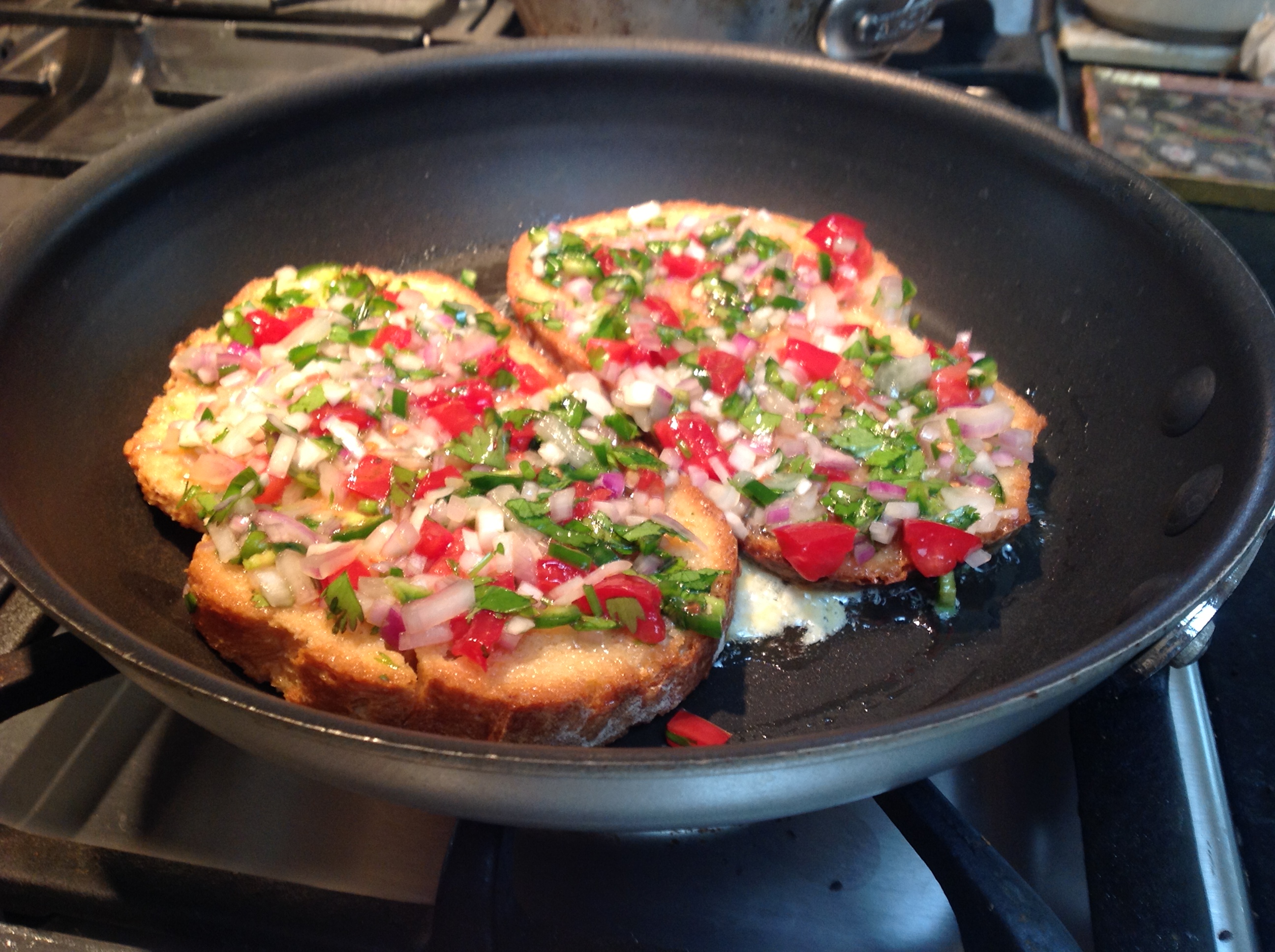
Heat a nonstick pan on medium-high with a teaspoon or two of oil. Spread it around the pan with a spatula. When it shimmers, it is time to lay the soaked slices down: carefully, their structure is probably pretty compromised by egg-soaking by now.

Now one side of each slice will be better soaked than the other (this is what usually happens with me). Lay this side down first, with only a minimal amount of vegetables sticking to it. Our plan is to get this side to crisp up in that wonderfully eggy way, and a thick layer of chopped vegetables will only interfere with the browning.

But the top surface is where the thick layer of chopped vegetables belongs. Once the slices are laid down, pour the rest of the egg mixture on the surface of the slices, spread it around.

french toast and goan masala fish 013

Masala french toast shallow fry

Wait about seven minutes on medium-high heat, and the lower surface will start to brown, crisp up, and will smell quite eggilicious. At this point, carefully flip them over with a spatula. No heroics, just gently lift them up, and lay them down the other side, with the help of a fork. If you try the fancy flipping techniques you will have eggy vegetables strewn all over the stove.

Lower the heat, cook for another few minutes, or just long enough to get the egg to set. Serve!

french toast and goan masala fish 014

Masala french toast flipped over

Hot stuff – ginger chutney

adrak chutney 016

I hope you are clutching your socks, Dear Reader, because this recipe is going to Knock Them Off. It combines the heat of chilies with the singe of ginger, spiked with garlic. Just when you think you’ve been slapped around enough, in comes the soothing savoriness of lentils, and then you get your sweet reward.

I thought I was familiar with South Indian food, having grown up in cosmopolitan Bombay. But every once in a while I hear of a preparation that reminds me that restaurant cuisine (for any regional food) is rather more limited than what families actually eat. Restaurant cuisine is a cartoon representation of the reality that plays out in home kitchens.

South Indian food is culturally quite different from North Indian. There is a heavier reliance on rice than on wheat, for one. Then there’s the prevalence of coconut. But the one thing that really interests me (and one that I’ve used in quite diverse recipes, like on salmon — details later) — is that some lentils are used as a spice.

The main one is urad dal (Vigna mungo). This is known as ‘black lentil’ when it is whole, and ‘white lentil’ when it has been split and skin removed. This bean is native to India and one of those stealth ingredients that appears in various forms all over the country — maa ki dal in Punjab, dahi vada all over the north, a third of the grain content for dosas and idlis, and in innumerable recipes as a sprinkling in hot oil as a spice. When used as a spice, it does not add heat, but a sort of sharp savoriness and crunch. Imagine a quieter peanut. It is hard to describe.

But the star of this show is ginger, another tropical beauty. So let us proceed with ginger chutney. I got this recipe from my friend Rama who hails from South India. She will vouch for its authenticity and I vouch for hers.

Ingredients:

2 inch piece of ginger

2 cloves garlic

1 tablespoon urad dal (split and skinned)

1.5 tablespoon channa dal (bengal gram)

4 – 5 dry red chilies, or adjust to your heat preference

half a teaspoon tamarind paste (I use the paste that comes in a jar rather than the pods) — or substitute lime juice

half an inch square of jaggery — substitute with sugar

salt to taste

Method:

Mince the ginger and garlic. Their relative proportion are shown here:

adrak chutney 003

Ginger chutney: ginger and garlic

Also have the dals and dry red chilies ready to go, and their relative proportion is shown here:

adrak chutney 004

Ginger chutney: dals and red chilies

Warm a small, thick-bottomed pan with a teaspoon of oil. When the oil shimmers, put in the dals, first. Stir for around 5 minutes on high-ish heat, until they smell roasty and get reddened. They will turn color into something like this:

adrak chutney 007

Ginger chutney: roasted dals

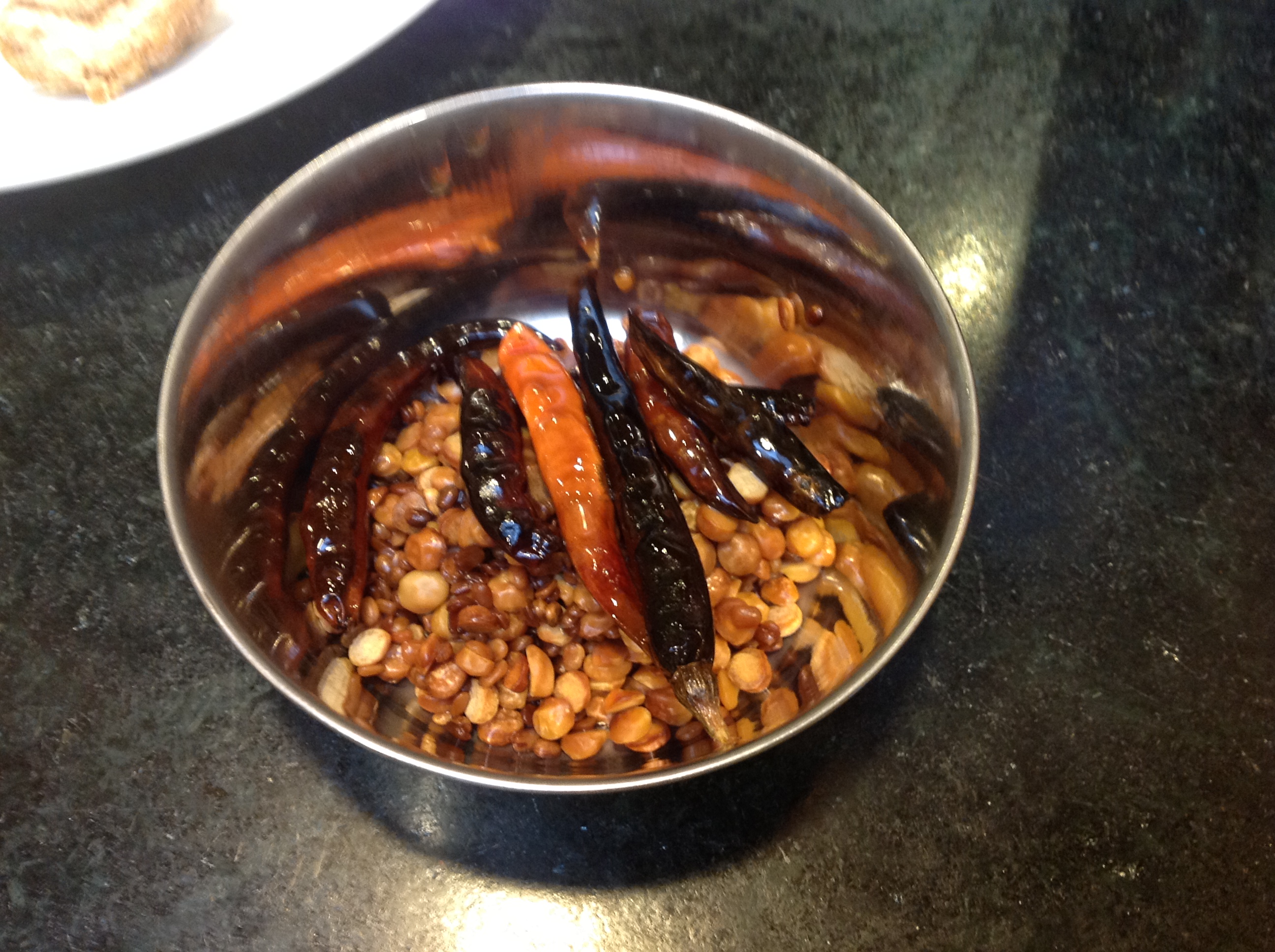
Remove them to a vessel while draining the oil, and in the same oil, roast the dry red chilies. In a few seconds they will swell and in several more seconds they will darken. Turn the hood on if you have one or open windows, or you will pay for it by coughing. Remove the chilies once they darken. The spices to be dry-ground are done.

adrak chutney 010

Ginger chutney: dry spices

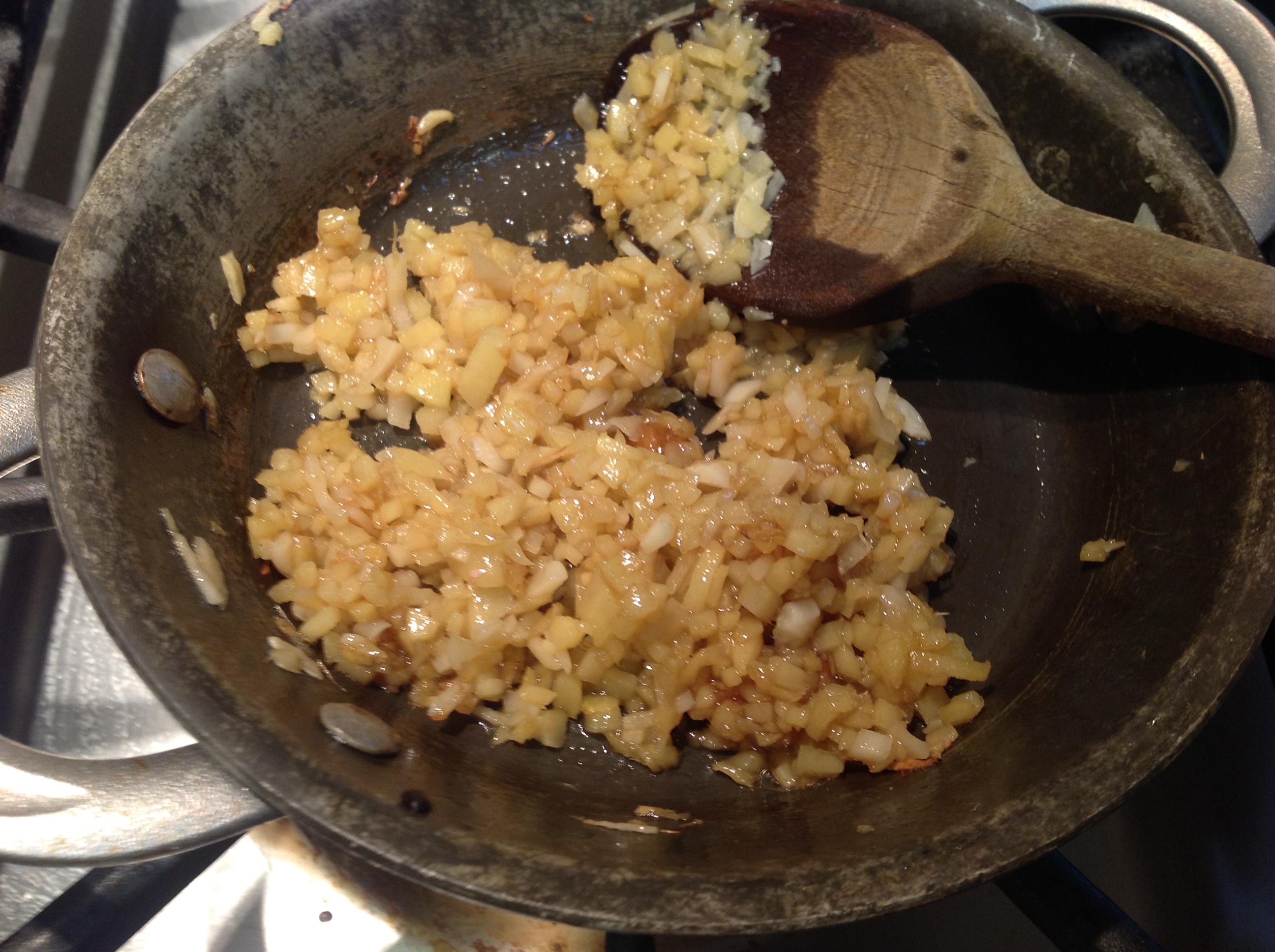
Now in the remaining oil, add the ginger and garlic. Add a drop more oil if needed, to moisten them completely. Stir on medium heat until they look shrunken and cooked (not brown). Like so:

adrak chutney 011

Ginger chutney: ginger garlic

At this point, I put the jaggery into the hot oil along with the ginger and garlic, to get some of that caramel flavor going. The heat, and the pressing with wooden spoon, got the jaggery melted and combined with the ginger and garlic, like so:

adrak chutney 013

Ginger chutney: ginger, garlic, jaggery

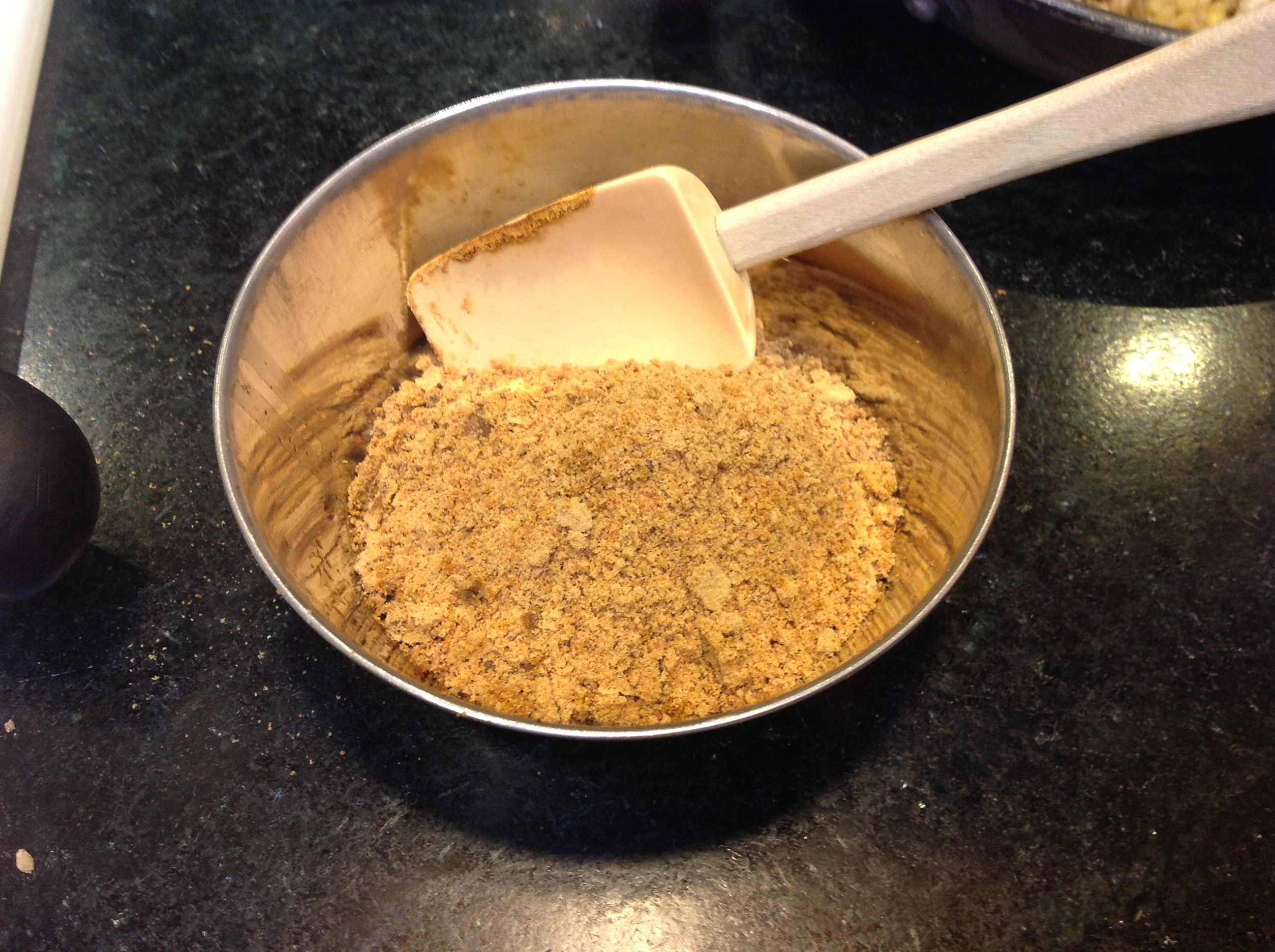
Turn of the flame, and now the grinding starts. First the dry spices are ground separately in a coffee grinder to produce a coarse powder:

adrak chutney 014

Ginger chutney: dry spices

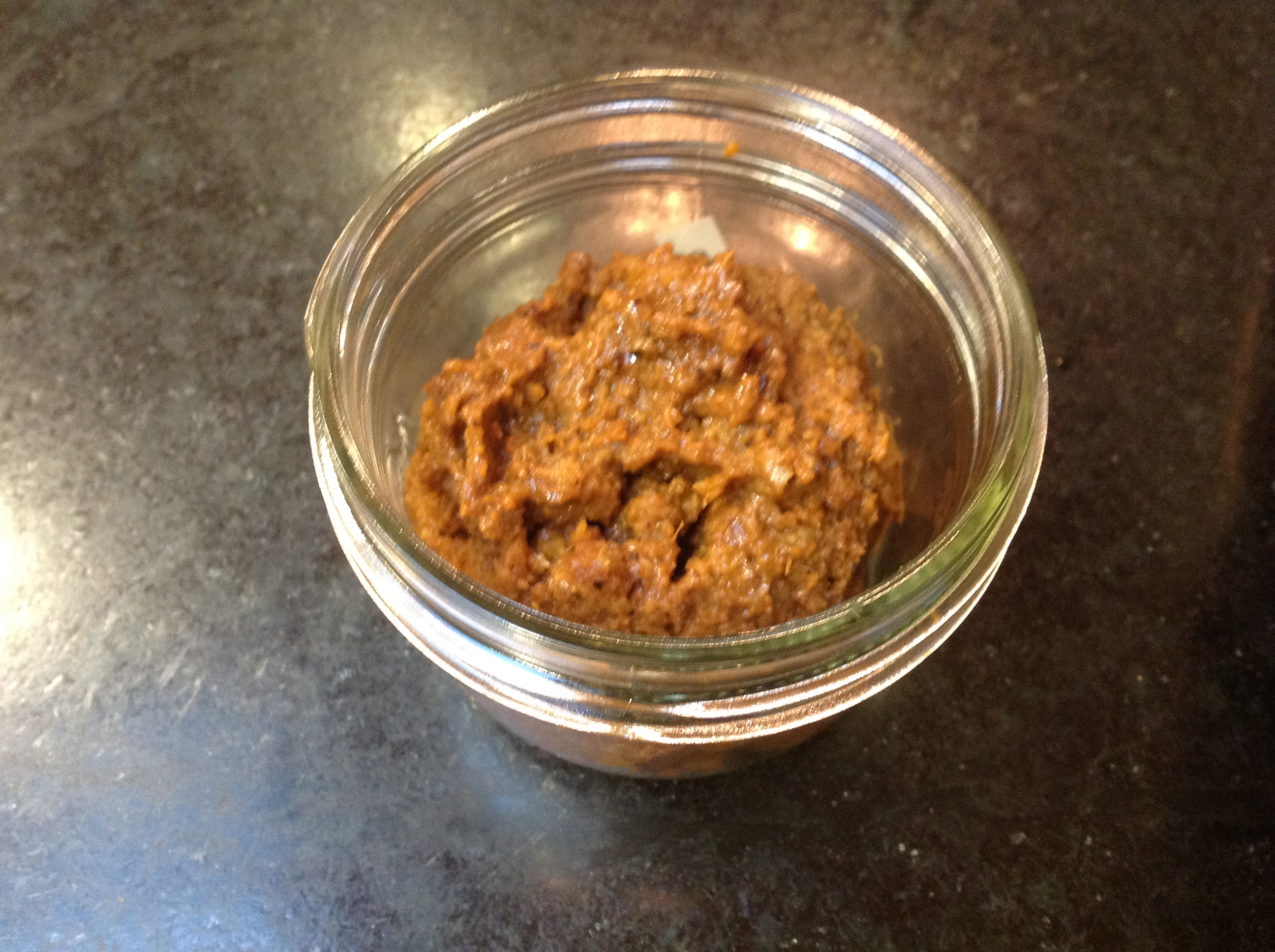
Now for the blender step. Pour the dry spices, the ginger and garlic, the half teaspoon of tamarind, some salt to taste, and some water to lubricate the blades. Blend for about 3-4 minutes to get a smooth paste:

adrak chutney 015

There, you have your ginger chutney, ready to eat with idlis or dosas. Those are just the traditional accompaniments, but this chutney could add a lot to a sandwich with roasted vegetables, or a felafel wrap, or spread on baked chicken.

Update on 3/28/14: So months after posting this, I’m entering this in this month’s Spice Trail contest which is about ginger, hosted by Vanesther at the Bangers and Mash blog:

http://bangermashchat.wordpress.com/

Go thou and explore!

Cauliflou, cauliflower, cauliflowest

I adore cauliflower. I know, that is not a statement one is likely to hear often. But I do. That strong sulphuric smell when I steam and then roast cauliflower is enough to send me into a tizzy. I grew up on rice steamed with cauliflower for lunch every week day, and I tell you, you haven’t smelled white rice cooking until you’ve smelled it cooking with cauliflower.

All right, all you unsympathetic ears. I made this dish for a housemate once, and he said he had never, before then, actually enjoyed cauliflower. Plus there are the incredible cancer-fighting, DNA-repairing traits of cauliflower that it shares with its cruciferous brethren like broccoli, cabbage, kale, and so on.  So here is a simple way that can be included in any Indian meal, with chapatis or naan, with rice and dal; or with any Western meal that has strong flavors as the vegetable side. Or — what the heck — put it in a burrito.

Presenting Gobi Masala done in a Sindhi way.

Ingredients:

Half a head of cauliflower, rinsed and chopped into thin florets, none wider than half an inch

Half a teaspoon whole cumin seed

Few sprinkles of asafetida

Half a teaspoon red chili powder

Half a teaspoon turmeric powder

One teaspoon coriander powder

One inch piece of ginger minced

One-two serrano chilies, sliced

One medium tomato, choopped

Salt to taste

Chopped cilantro to garnish

Method:

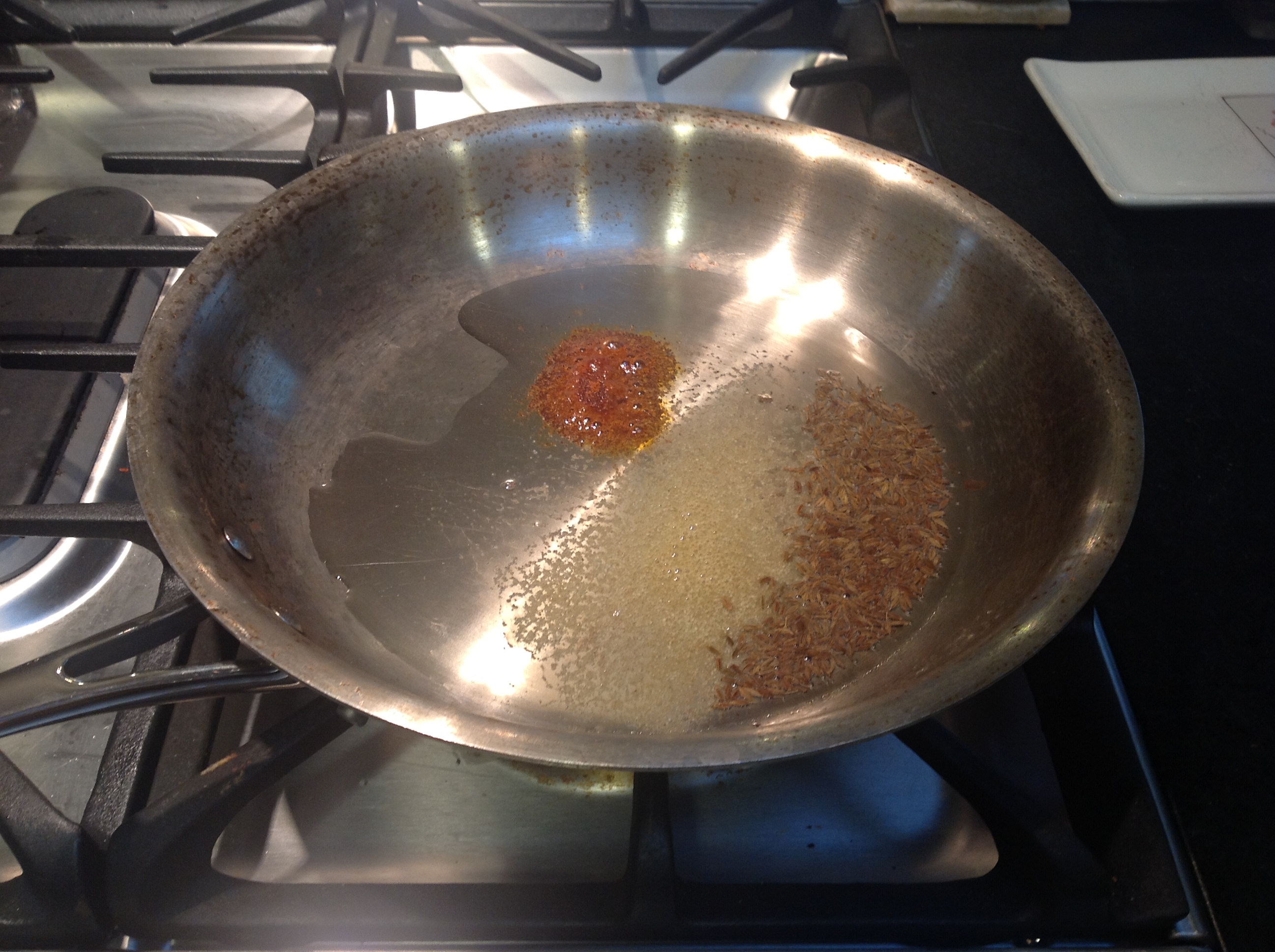
Heat 3 tablespoons of oil in a thick-bottomed pan on medium-high. When it shimmers, put in the asafetida, the cumin seeds, and the red chili powder.

cauliflower 002

Gobi masala : spices

They will sizzle presently. In go the ginger and serrano chili. They will start to look blistered.

cauliflower 003

Gobi masala: ginger and chili looking sizzling

Now it is time for the cauliflower to go in. Stir to coat with the oil. Sprinkle with salt. Stir occasionally, while leaving the pan uncovered, on medium-high.

cauliflower 005

Gobi masala: cauliflower coated with oil and spices

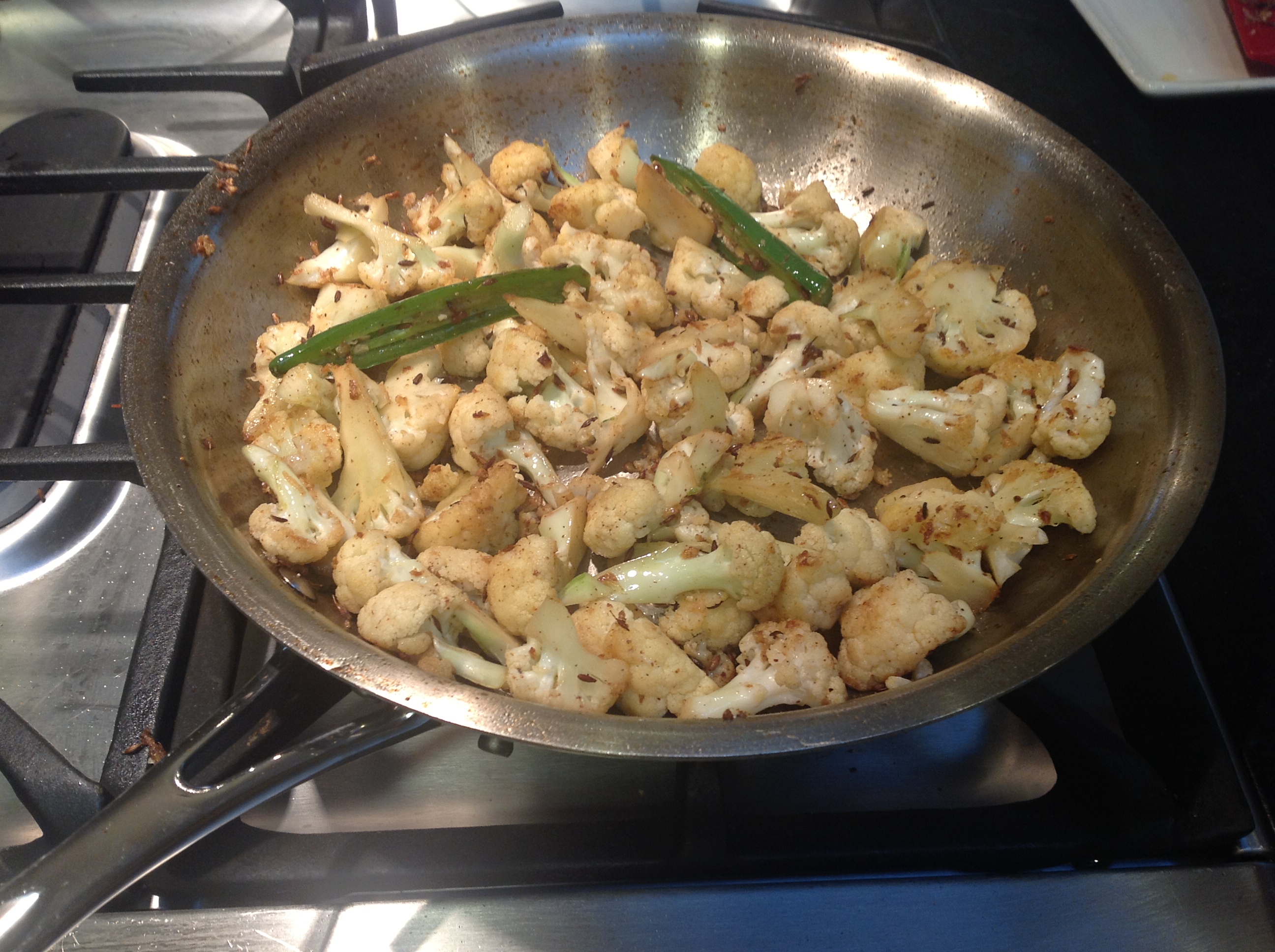
Fifteen minutes later, some of the florets will show some translucence on the stems, and some browning on the buds.

cauliflower 006

Gobi masala: some browning on florets

Now, put in the coriander, turmeric, and tomatoes, some extra salt to taste, and stir to coat the florets once again.

cauliflower 007

Gobi masala: tomatoes added

Cover, lower the temperature to medium, and let it cook for another ten minutes. At the end, garnish with cilantro.

cauliflower 014

Gobi masala: complete with garnish

Rolling the roti half a world away

In my home in Bombay, we never bought flour, we bought wheat. And we didn’t buy wimpy five-pound bags either. We bought enough wheat in bulk to fill up a tin canister as tall as one’s knees. Once a month or thereabouts, we would hire a neighborhood working lady to hoist that tin canister up on her head and carry it to the neighborhood burr mill. They would stone-grind the wheat into flour, completely whole — germ, bran and all — which they would testify to by weighing the product before and after. The burr mill would single-file through the customer requests, in order to be able to testify to flour wholeness.

This is chakki ka atta (translated: burr mill flour), that we used rest of the month to make chapati (roti), poori, or paratha.

Let’s start with the simplest of them, the chapati. There are just two ingredients — water and flour.

Kneaded together, a new ingredient magically comes alive inside the dough. This is gluten, the protein that is formed inside dough in the presence of water. Gluten is what gives dough its stretchiness and its stubbornness. Wheat dough is not just pliable — it wants to fight back. It takes a shape, but wants to go back to its previous shape. The pliability; the ability to hold a shape; the elasticity; all this is because of its gluten.

I like to imagine multitudes of tiny balloons inside the dough, all of which can be blown up without breaking, while keeping the dough from breaking into bits. These gluten balloons fill up with air so bread can rise and hold all the air inside instead of escaping. The gluten balloon allows chapatis to puff up with steam.

That brings me to a common misunderstanding — chapatis/rotis are often called the unleavened flat breads of India. But they are not unleavened. Leavened just means risen, and rotis are indeed risen, at the last minute of cooking, when they puff up with steam. Steam leavening is a respectable form of leavening that is probably the most ancient. I picture housewives in the Indus Valley civilization slapping circles of dough on their wood-burning griddles and watching them puff up.

They are unfermented, however, and no external leavening agent like yeast or baking soda are added.

During my childhood we had a chapati meal for either lunch or dinner every day. Two circular chapatis with a few dark brown spots, folded into quarters. A dal, a vegetable and a cup of yogurt completed the meal. When this is everyday food, one scorns it; half a world away in California, deprived of one’s neighborhood burr mill, a source of wheat, and the proper chapati-making expertise, it becomes an undertaking.

For years I tried to approximate chakki ka atta in California by mixing half and half of whole wheat and all purpose flour. But I was never thrilled about the lack of wholeness there (yes I’m a bit of a fanatic); and one day I used straight whole wheat, the rotis came out perfectly fine, so I have stuck with that. This makes sense — the species of wheat used for bread-making in the West (triticum aestivum) is the same as most of the wheat grown in India, mainly for the use of making chapatis. (There are many different subspecies though.) The grain size of chakki ka atta is probably smaller. But I haven’t found this to be a huge problem. I use King Arthur’s Premium Whole Wheat flour and get perfectly good, puffed up, rustic rotis.

Ingredients:

2 cups whole wheat flour

3/4 cup + 3 tbsp water

Method for dough:
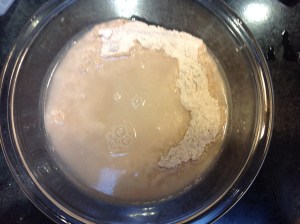
roti 010

Making roti: whole wheat flour and water

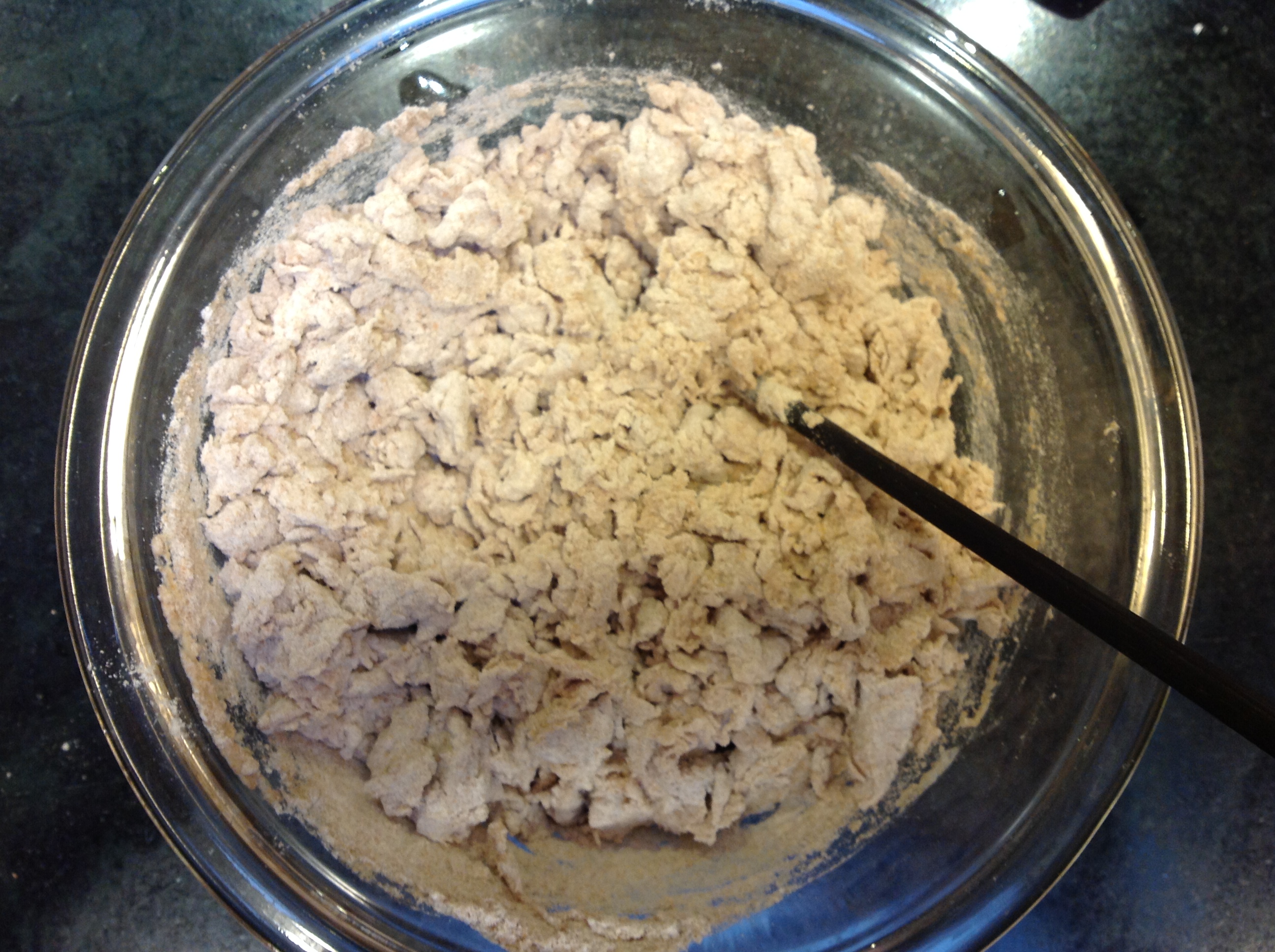
Put the flour in a bowl, make a sort of well in the center, and pour the water in. Use a spoon or a chopstick to stir the water into the flour till you get a shaggy mass and most of the flour is moistened. Cover with a plate, and walk away for 10 minutes or so.

roti 012

Making roti: a shaggy mass

Why? The short wait gets the process of the flour absorbing the water started, and just allows the kneading to happen faster. It’s the lazy person’s method — allow time to do the work that you would have otherwise had to expend elbow grease for.

If the 10 minutes stretch to 20 minutes, that’s fine too, but do cover the flour, to prevent it from drying out.

Come back to your dough and combine it into a rough ball with your fingers. This should be relatively easy to do (should take just a minute) but will still have a shaggy appearance.

roti 015

Making roti: a shaggy ball

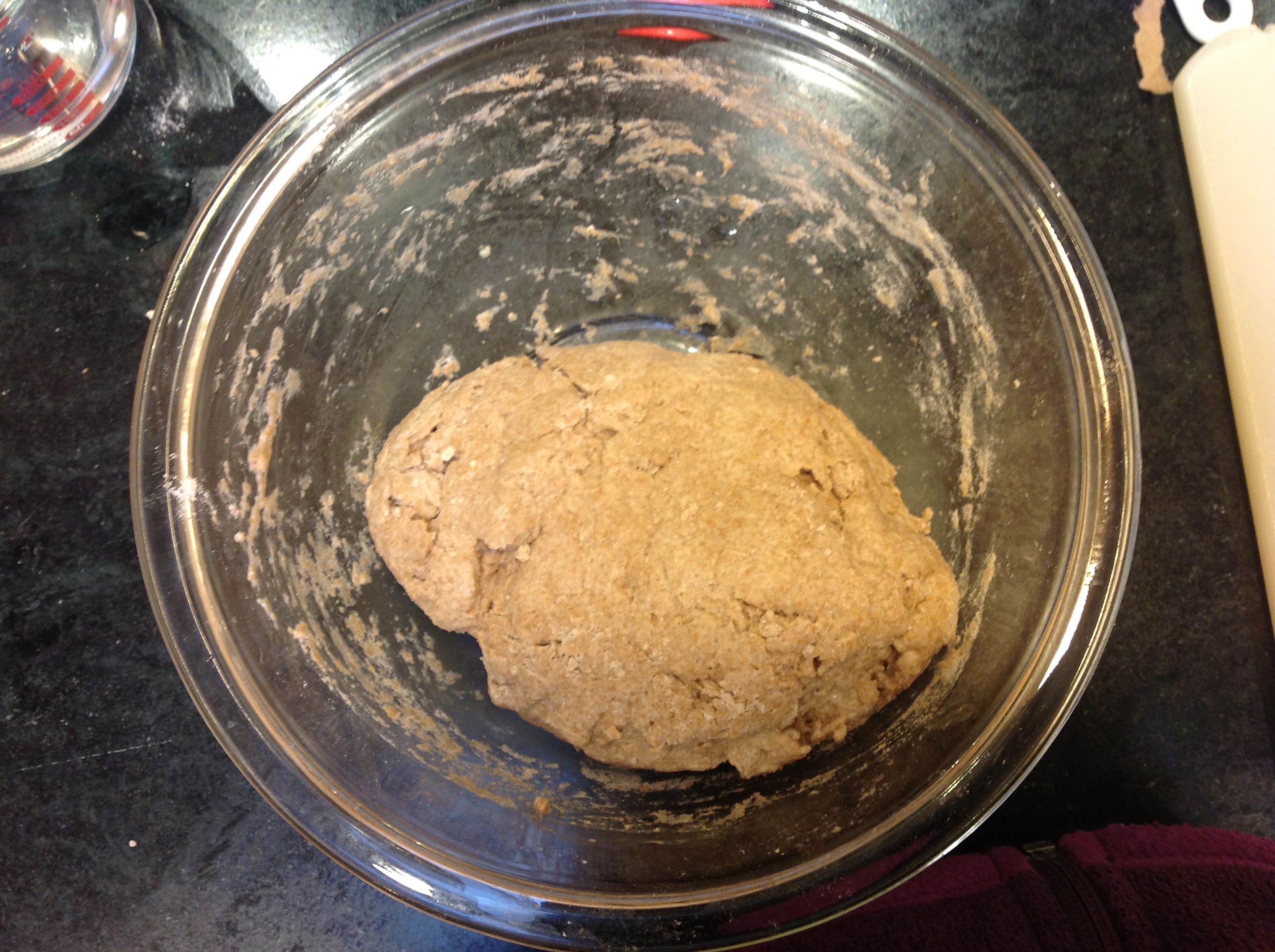
Now the kneading begins. Clear a 2′ by 2′ square on your counter and place the dough there. Push it, squeeze it, fold it; squeeze it and fold it over and over again, for about 7 minutes. Use your strength. Be firm with the dough. From a shaggy mass the dough will become satiny smooth and hold together in an oblong. It should feel a lot like human muscle when squeezed, but more like slack than taut muscle. If too sticky, add some dry flour, spoon-by-spoon; if too taut, spread it out flat, sprinkle some water on it, and incorporate it with more kneading.
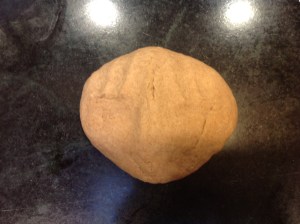
roti 016

Making roti: completed dough

Keep it aside for half hour or so before making rotis with it. The extra wait allows the gluten to relax. This is a lot like exercising: the way one pushes one’s muscles to work, until they feel a little too taut; then one waits a few minutes to relax before exercising some more.

Coat with oil on the outside to keep from drying out. If you want to stash it for another day, it will be good in the fridge in tupperware for a week or even two.

Method for rolling and roasting chapatis

Step 1: Make a few golf-ball-sized balls. I make around 8 (the evening’s dinner amount), roll them to make smooth balls, flatten them slightly into disks, and cover with flour to keep from drying out.
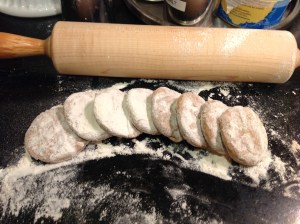
roti 021

Rolling rotis: make flat disks covered with flour

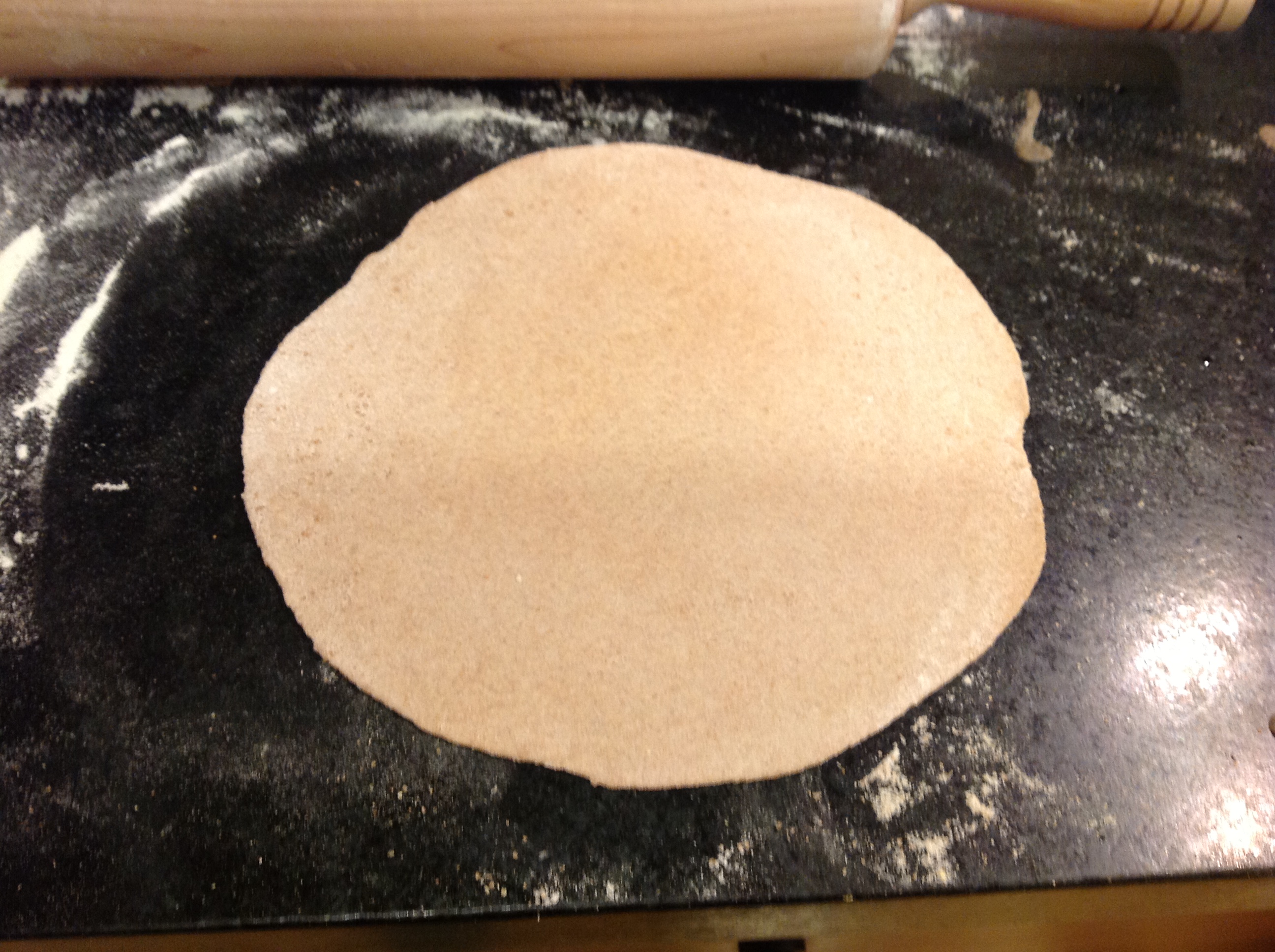
Step 2: Roll. Start with the first disk you made. This gives it a few minutes to relax after being handled. Use a good heavy rolling pin and roll out into a thin disk about 6-7 inches in diameter. You will need to sprinkle some dry flour on the counter and on the dough to keep it from sticking; here I use all purpose, but whole wheat will do as well.
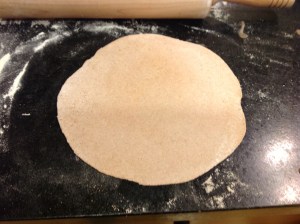
roti 022

Rolling roti: thin six inch circle

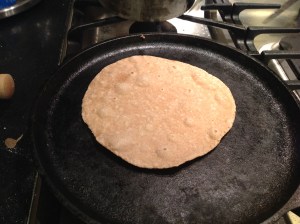
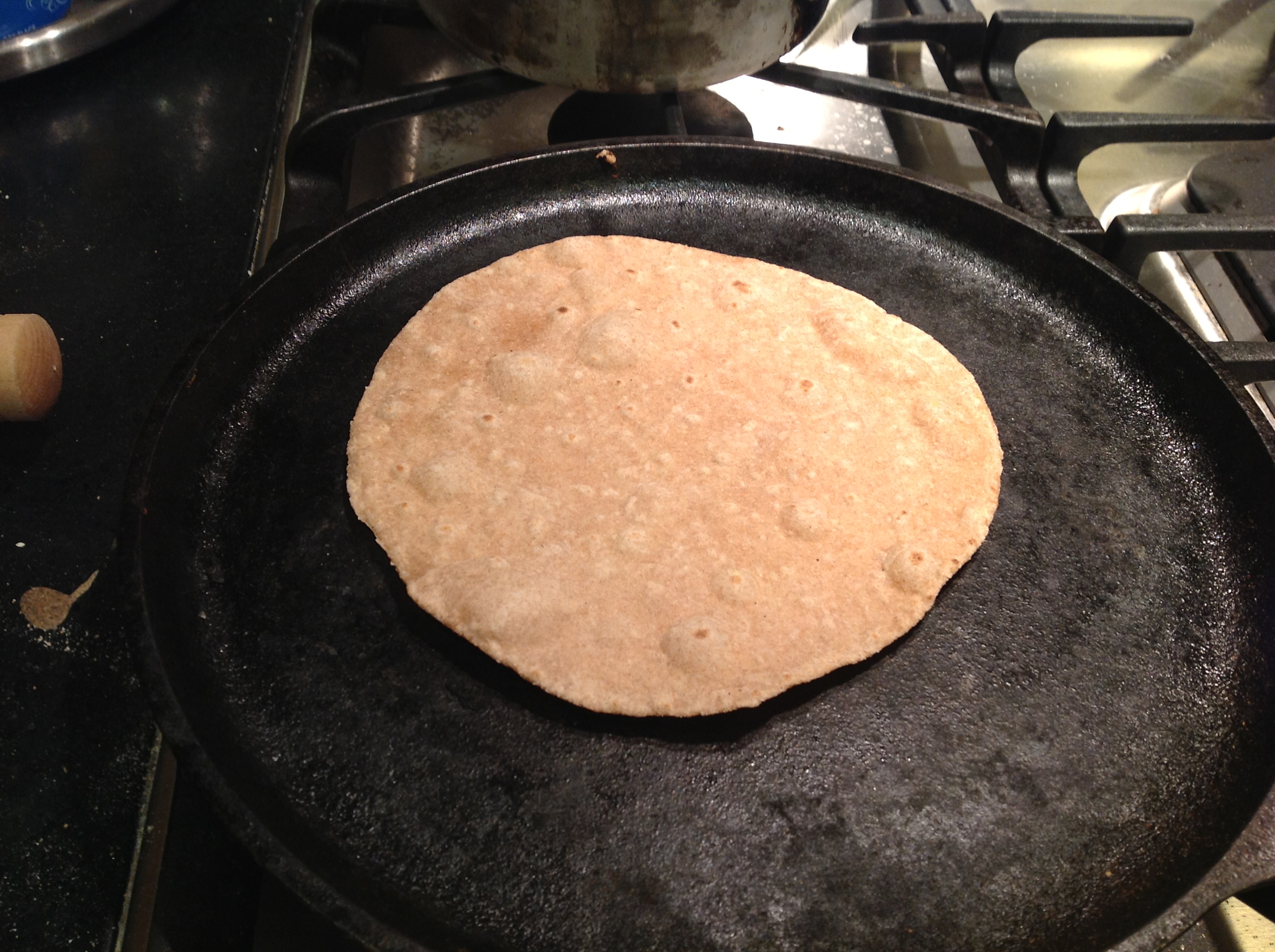
Step 3: Roast. Have a griddle on medium-high heat. No oil needed. When hot, slap a disk on. Wait thirty seconds; the chapati will start to show small bubbles. Flip. Wait another thirty seconds; this time the small bubbles will combine into a few bigger bubbles.
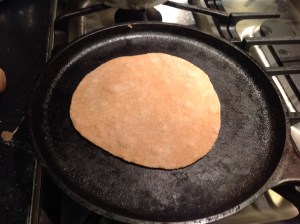
roti 026

Roasting roti: ready for first flip

roti 027

Roasting roti: ready for second and final flip

Now you have a choice. Either flip once again for the last time, wait thirty seconds (hopefully it should puff out more) and take the chapati off the griddle.

Or, turn on the flame on a separate burner, and flip the chapati onto the open flame using the burner grate to place it on. It should puff up in a few seconds. Turn off the flame and pull it off with tongs. Don’t leave it on longer than ten seconds or so, because it will burn.
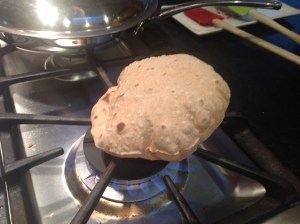
Roti: puffing up on burner

Roti: puffing up on burner

If you want, sprinkle some ghee on top of the still hot chapati.

Some of these steps take practice. So get thee to the kitchen and get started!

The lowly loli: an ancient Sindhi breakfast

During my mother’s childhood in Sindh, her breakfast every single morning was loli. It was the cornflakes of her day.

What is a loli? It is a whole wheat flat bread (roti) with spices, basically — but here is the interesting thing — it belongs more to the pie crust family than the bread family. The reason I say that is that it employs a twist in its mixing. Instead of adding water first and then fat, the fat is added in first; combined thoroughly with the flour to make sort of breadcrumb-sized balls, then just enough water is put in, just enough to combine. No kneading necessary, just a coming together.

No kneading — hence, not bread, in short. Gluten is not developed.

If you think of the way pie crust is made, it shares its basic method with the loli. Fat is cut into the dry flour, thereby creating pellets of floury fat, then water is added just enough to make it combine into a ball. Then it is rolled out, and the result is a rough, uneven circle, that cracks in various places, but holds together enough to lift carefully from place to place. This method results in a flaky pastry that does not exhibit the stretchy integrity of bread or roti, where the gluten does a lot of the work.

Lolis are similarly flaky, except of course they are spicy, not sweet. So let’s get started. This amount makes enough breakfast for two.

Step 1: Dry mixture

loli 001

Spices for loli: onion, chili, cilantro

Chop finely a third of a medium red or yellow onion; two serrano chilies; a third of a cup of cilantro. Add to this 3/4 cup whole wheat flour (I use King  Arthur’s premium whole wheat) and 3/4 teaspoon salt. Stir with your fingers, taking care to break up the onion bits into its layers.

Step 2: Fat

loli 002

Loli flour with spices and oil rubbed in

In the old days, one added ghee; I have to admit I use pure olive oil or other cooking oil now. Add about two tablespoons oil to the flour and stir nicely with your fingers, until you get a breadcrumb texture.

Step 3: Water

loli 004

Loli dough, combined

Add two tablespoons of hot water (why hot? I don’t know. I do as I’m told). Combine it gently with the flour, not to knead (see above) but just to bring it into a ball.

Step 4: Roll

Take about a tennis ball sized amount: there should be about two tennis balls in the dough that you made. Flatten with your fingers into a circle, either by patting, or by rolling out. The circle will be about a quarter to an eighth inch thick and crack in various places, but try to hold it together. Make diagonal lines on it with a knife to get it to cook on the inside.

Step 5: Cook

loli 005

Cooking loli – first flip

Heat a griddle or tawa on medium high heat. When hot, slap the loli on. Wait one minute, then flip.

loli 006

Cooking loli – second flip

Wait another minute, and flip again. Wait another minute, spread some ghee and oil on the surface, and flip again.

loli 007

Cooking loli — third flip

Wait another minute or thirty seconds, spread another few drops of ghee or oil on the surface, and flip one last time. Thirty seconds or a minute more and you are done.

loli 008

My rough and rustic loli

Have it with some nice hot sweet tea.
(Click here to find me on Facebook and here on Twitter.)

I have a bitter and prickly friend…

…that I would like you to meet. It goes by many names — bitter gourd; bitter melon; karela in Hindi; ku gua in Chinese; but more properly, it is known as Momordica charantia. I know, Dear Reader, that you don’t appreciate my bitter and prickly friend. I apologize if you are one of the handful who do appreciate the karela (Hi Rashmi!) but I can probably count the lot of you in Roman numerals that I’m actually quite weak in.

But I’m about to tell you that if you enjoy the occasional hoppy beer; if you don’t freak out about some frisee in your salad; or like some strongly brewed coffee, or better still, your shot of espresso; and who besides my seven-year-old doesn’t like dark chocolate? — you will probably enjoy the Momordica. Plus, its got some major diabetes-fighting skills.

toor dal and karela 004

Karela is an oblong, prickly, warty fruit of a vine that originated in India, from the same family as the various melons, pumpkins, squashes and cucumbers. The resemblance in looks to the rest of its cousins is clear, but the taste, I believe, is rather unique. It is picked and eaten while it is still green. For years I assiduously peeled and seeded the gourd before preparing it, but lately I realized that both the peel and the seeds are edible, and in fact, in this preparation, the seeds add a welcome crunch. I’m all for cutting out steps from food preparation, so now when I prepare karela, I rinse them, slice them, and I’m good to go.

There are many preparations of the karela that add spices and tang to mitigate the bitterness. This method utilizes another trick — it crisps them up. At some point I will write up other, more complicated recipes for bitter gourd, but this is the simplest, and very, very addictive.

Step 1: slicing.

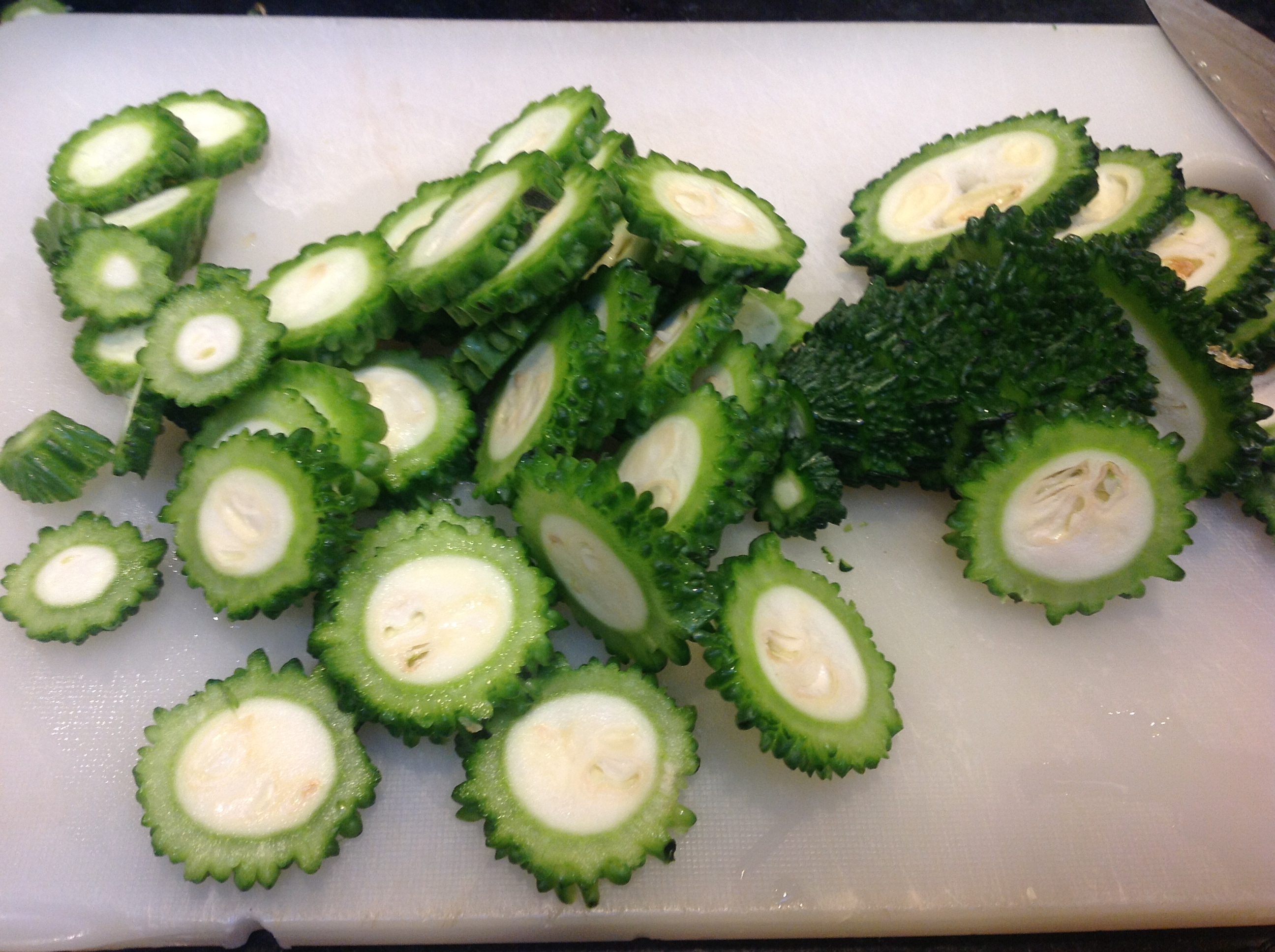
toor dal and karela 005

Rinse, dry and de-stem the bitter gourds. I used three of the smaller Indian variety. With a sharp knife, slice them up into eighth of an inch slices, peel, seeds and all. Don’t worry if you lose a few seeds while slicing. It is more important to keep an even thickness of slice than to get it to be exactly an eighth or a quarter of an inch wide, so that they all cook evenly.

Step 2: saute.

Heat a couple tablespoons of oil in a wide, non-stick pan. A crepe pan, or dosa pan, if you have such, would be ideal. If not, any Calphalon will do. When the oil shimmers, lay out the slices in a single layer, like so:

At this point, lightly salt around the slices, and wait for about 10 minutes, motionless. Oh — you can move, but keep the slices motionless. You might press down on one or two of the recalcitrant slices to ensure touch-age.

toor dal and karela 007

Step 3: flip.

toor dal and karela 015

As for when to flip the slices over, I would say this — be fearless, and have patience. You might see some start to brown at the bottom. Peek at a couple if you like. At any rate wait ten minutes on medium-high heat. Use a spatula and a fork, one in each hand (the fork to give you leverage), and start flipping. Drop a few more drops of oil on the pan and swirl around. Sprinkle some salt on this side as well. Be conservative, you can always salt more later. Let them cook another five minutes.

Step 4: Remove and add spice.

toor dal and karela 017

At this point, most of the slice will be done and crisped up. Remove them into a plate, and toss with a few sprinkles of red chili powder. If you want to do like the street vendors in India do, make cones of newspaper, throw the karela in it, sprinkle the red chili on, and give it a few hearty shakes while holding the flaps closed. Enjoy.

Sweet and sour pigeon peas — tuar dal

Here is one reason to relish your pigeon peas — it is the first legume to have its genome completely sequenced! Now isn’t that appetizing! Here is the other reason — they are delicious.

Pigeon peas are known as tuar dal or toor dal in India, where they are used from south to north, from east to west. When mature, the full lentil looks like a dried beige pea. But the way they are used normally is after having the outer husk removed, and split into halves, so they look like little yellow half-spheres. This, by they way, is how most dals (lentils) are commonly eaten — husk removed and split into halves.

In my family we had soupy tuar dal with rice at least once a week. Its deep musky flavor seems to take very well to some added sweetness and tang. Of course that means the holy pairing of jaggery and tamarind. I could go into a deep digression about each of those, but suffice it to say that you can use brown sugar instead of jaggery, and lemon instead of tamarind; let’s stay on our musky subject of the day, people — tuar dal. Eyes on the ball now.

Step 1: soak and boil.

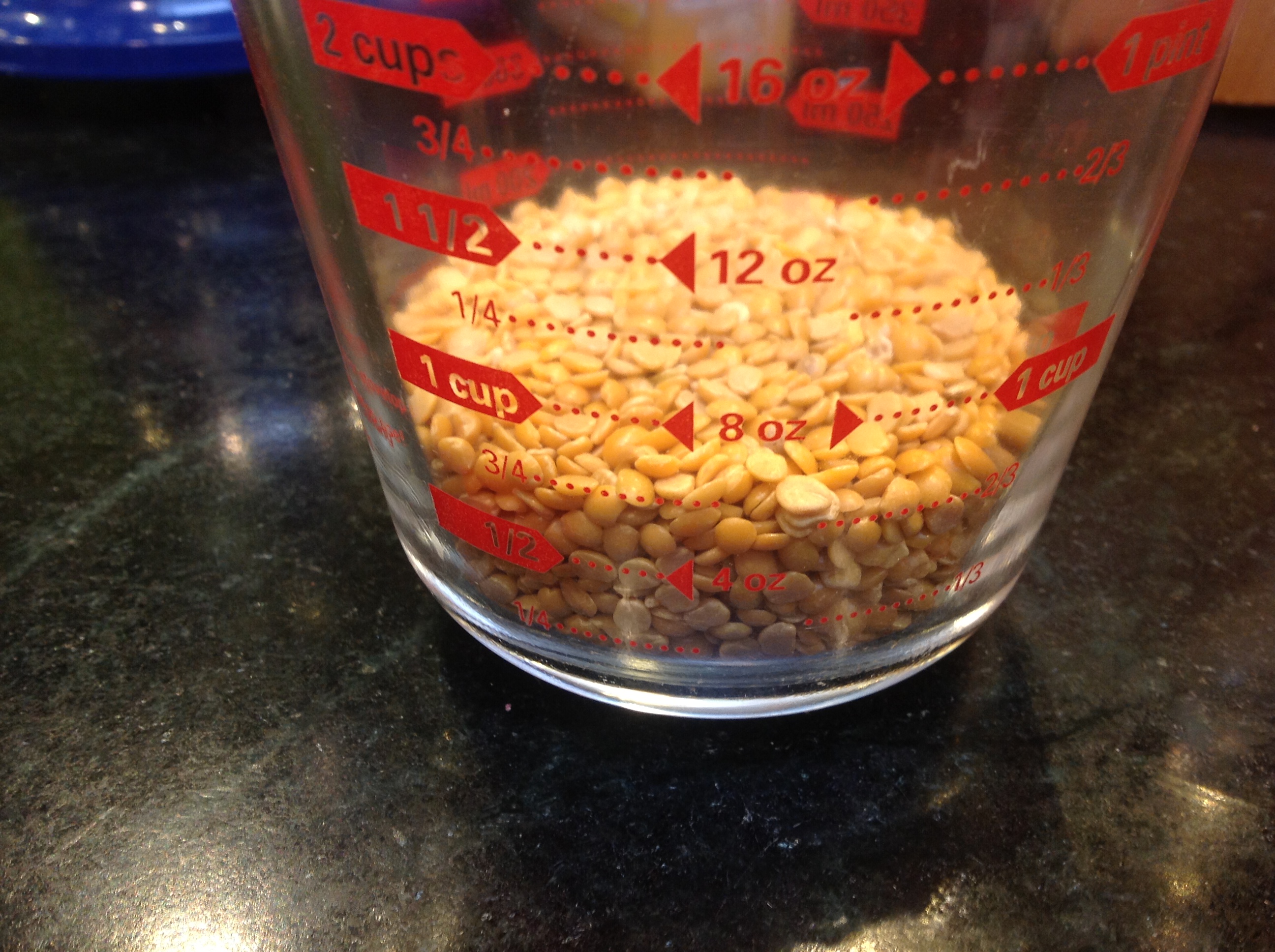
toor dal and karela 001

I started with 3/4 cup of the stuff. Work night dinner means I don’t have the luxury to allow it to soak for a couple hours; so I rinse, and soak in near-boiling water for just about fifteen minutes, and see the volume double. I learned this trick from Madhur Jaffrey and it has served me well.

toor dal and karela 002

Now, time to boil it. Half a teaspoon of turmeric goes into a pressure cooker, the rinsed and drained tuar dal goes in next, and 3 cups of water. Cover the pressure cooker and let it come to a boil; turn it down and cook, pressurized, for twenty minutes. If you don’t have a pressure cooker, a regular saucepan will do, but the time stretches to an hour and a half. Leave the lid open in this case, at first, because as it first comes to a boil, the lentils will spew like a volcano, and leave watery lava all over your burner.

Once this is done, add salt to taste, half a teaspoon of tamarind paste, and a small piece of jaggery. If you don’t have tamarind use lemon juice, and if you don’t have jaggery use a teaspoon of sugar. Leave the dal uncovered on a low simmer while you prepare the seasoning, stirring occasionally.

Step 2: Seasonings

For the fat in this dal, I used one tablespoon of ghee. There are a few dishes where I opt for ghee instead of oil because of the the lusciousness it gives the result. Butter is a substitute, but I have never tried it.

For the seasonings, I used asafetida, red chili powder, cumin seeds, mustard seeds and fenugreek seeds, in that order.

The seasoning of lentils, known in central India as vaghar, and in the north as tadka, takes some special sequencing. Use a small but thick-bottomed pan to heat the fat in. First, the asafetida can go in pretty quickly, as soon as the fat heats up a little. It will foam in seconds. Now put in half a teaspoon of red chili powder.

toor dal and karela 010

Then, in a few seconds, a teaspoon of cumin seeds. They will also sizzle in seconds. Wait a few seconds and put in a teaspoon of mustard seeds. Now, wait.

Wait.

Wait about 30 seconds. The seeds will first make sizzling sounds, then each little ball will pop and you will start to hear popping sounds.  At this point, put in one teaspoon of fenugreek seeds.

toor dal and karela 013

A note on fenugreek seeds. If they saute long enough to turn dark brown, they will be hard and bitter. So to avoid that, they go in last and cook the least in the hot oil. Of course if they do turn bitter, some simmering in soupy stuff will resolve that problem, so no harm done; but we try to avoid them turning bitter at all.

Step 3: Aromatics

In a few seconds the fenugreek will sizzle as well; now put in and inch of ginger, minced thusly:

toor dal and karela 003

…and 2 green chilies, stems removed, and sliced through (if you have curry leaves, use about 6 of them):

Wait till they sizzle, and the chilies show blisters, then empty the entire thing into the dal.

toor dal and karela 018

Allow the dal to still simmer on for a few minutes for the flavors to meld.

Step 4: Garnish

toor dal and karela 021

Garnish with a handful of chopped cilantro and stir. Have it mixed with rice and perhaps a fried or grilled vegetable on the side.