For inspiration on green beans, look east

Green beans with Bengali spices

Green beans with Bengali spices

Bengal is a pretty far away land for me, since I am from the west coast of India, and ancestrally hail from even farther away Sindh. Exotic, I think, is the word I would use. In addition to that, I’m fond of the way Bengali sounds (not intelligible to me), full of rounded vowels; and the things they choose to say, seem old-world and fancy. Then, there is art. Sorry, I meant Art. This is what Bengal is known for above everything else (go google Rabindranath Tagore and Satyajit Ray, just to start). And if you think about it, great art is a lot about judicious choice.

So this is what I want to focus on today. A few  choices, judiciously made.

This dish is a dry sauté of green beans, with a simple tempering of whole spices. For vegetables cooked this way, a few choices you make are very consequential. How you cut the vegetables and how small. If they are small enough the high-heat sauté will be enough to cook them all the way through. If not, a slight steam-braise will be necessary, so cooking on low with the lid on to finish is called for. What fat one uses. Subtle choice, and often not subtle at all; the choice of fat can dramatically alter the dish. How high of heat one uses. High enough it is practically a wok-ish stir-fry. Low enough, and the primary means of cooking is from the steam emanating from the vegetable itself.

Naturally, the spices thrown into the fat to temper is consequential too. This is where the Bengali flair comes in. The famous Bengali spice mix, paanch phoran, consists of five disparate seeds from disparate plant families, that nevertheless come together in oil in an unforgettable partnership. For green beans, I find this to be very congenial and I usually cook them this way.

stuff 026Here is what goes into the paanch phoran, from bottom to top:

Fenugreek seeds: Fenugreek is a legume just like beans and peas. It has a distinctive smell that some have compared to maple syrup and a pleasing bitterness.

Fennel seeds: From the carrot family, fennel seeds are used as a mouth-freshener all over India.

Nigella seeds: Also known as kalonji, these small black droplet-shaped seeds are from the buttercup family. A relative, love-in-a-mist, is grown widely in England as an ornamental, I hear. Their flavor is reminiscent of onions when roasted.

Cumin seeds: Another carrot family member. Cumin has been used as a spice in India since ancient times. Its flavor is earthy and sharp at the same time.

Mustard seeds: Little brown balls with a kick. I have always thought of them as having a biscuity taste, whatever that means.

Bah, one can’t really describe a flavor. Go try it and I won’t need to.

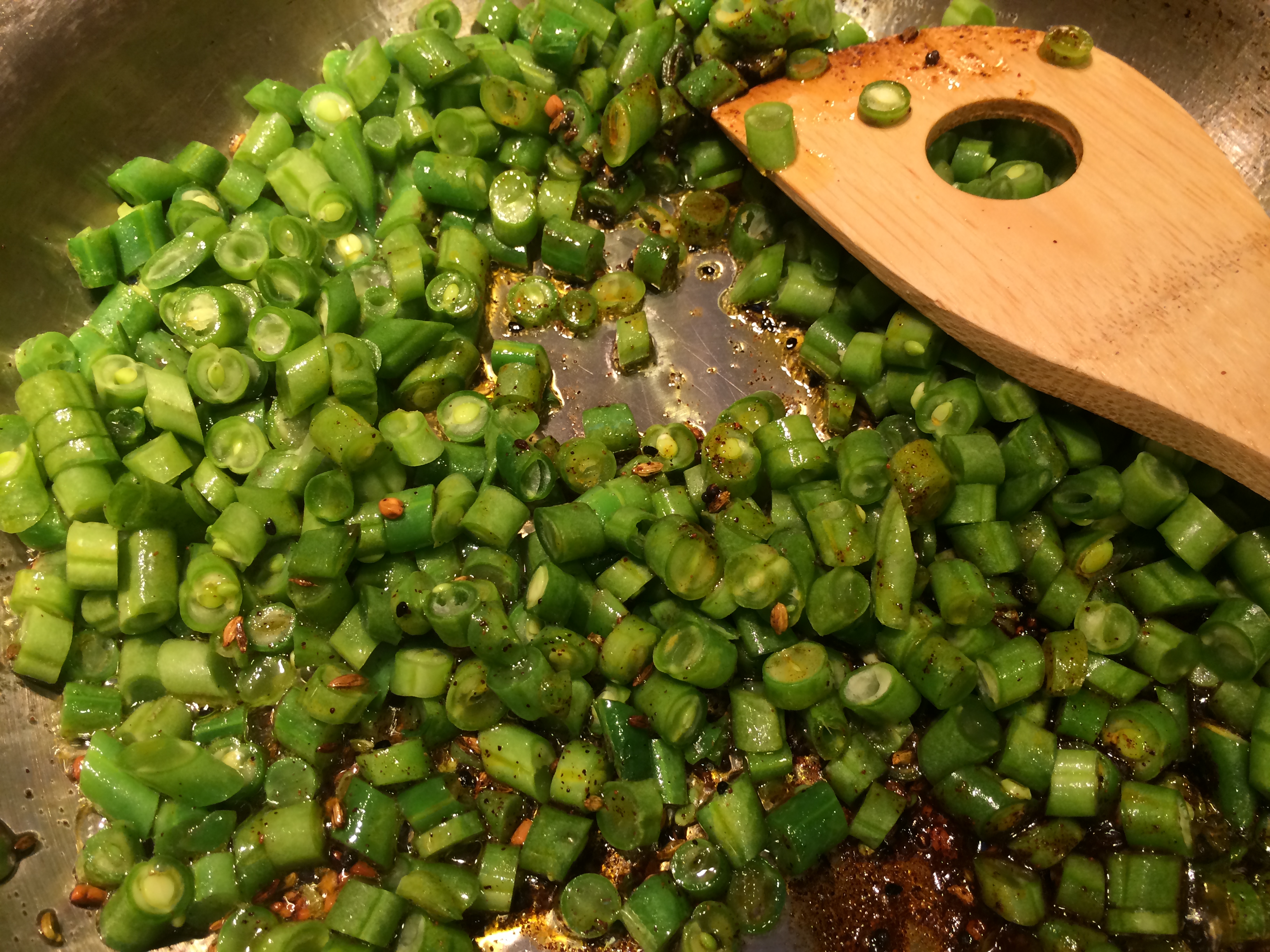
Green beans sauteéd with Bengali spices

I want the green beans to be basically done with the sauté, so I cut them into small pieces, none wider than about a quarter inch. For the fat, I use mustard oil, for more of the Bengali style.
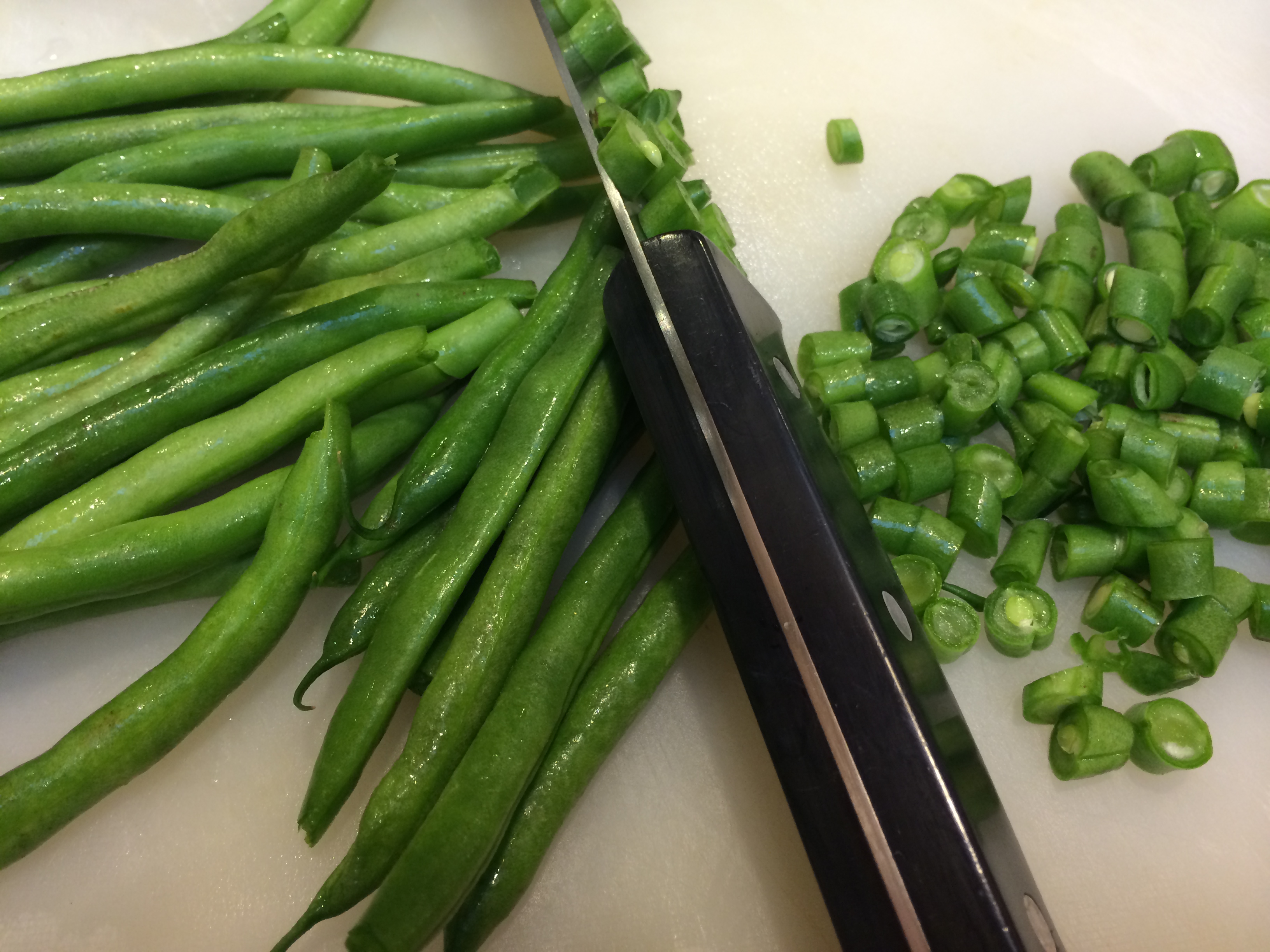
Cutting the green beans into small rounds
Cutting the green beans into small rounds

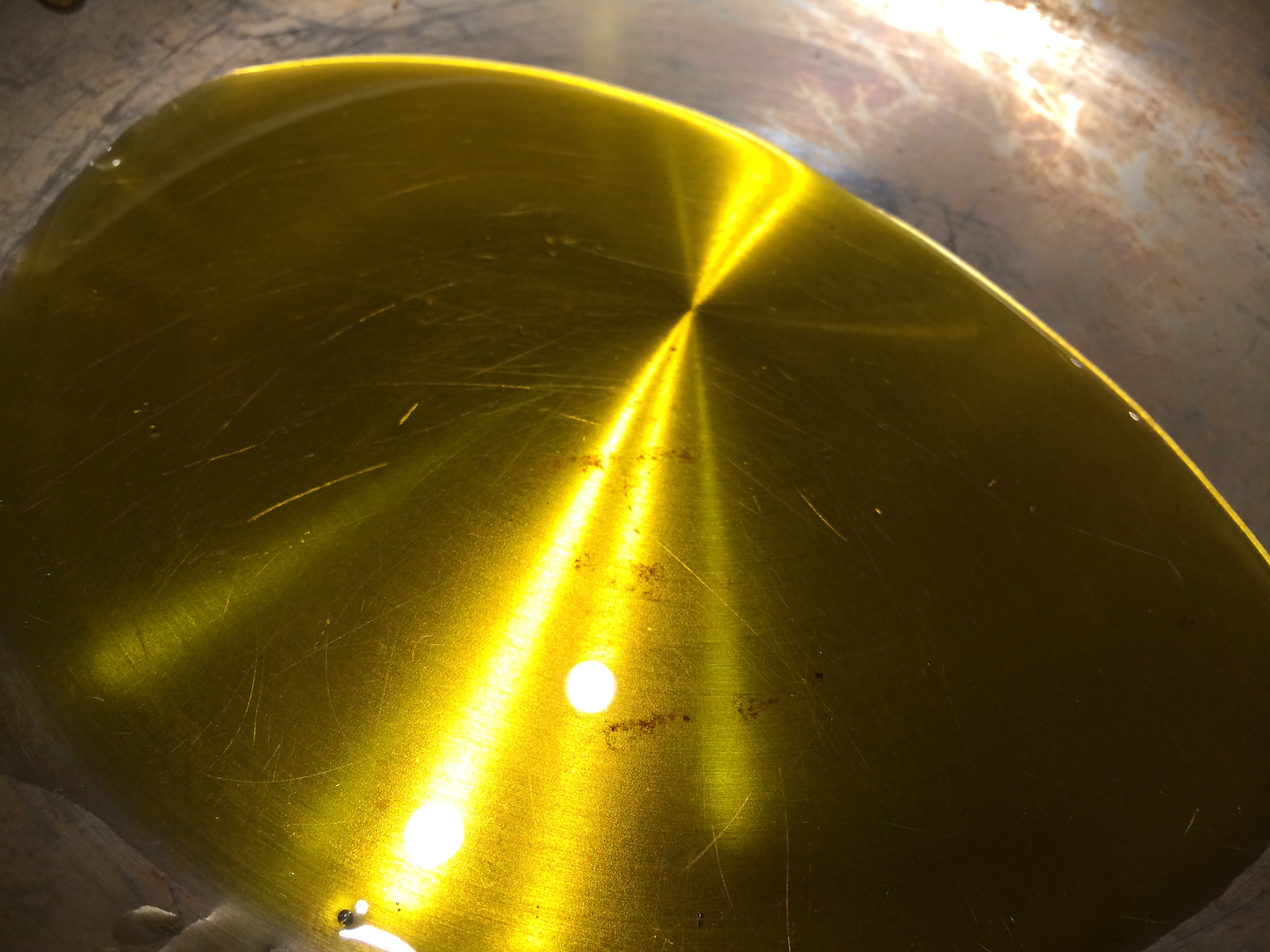
Look how golden the mustard oil is

Look how golden the mustard oil is

Red chili powder
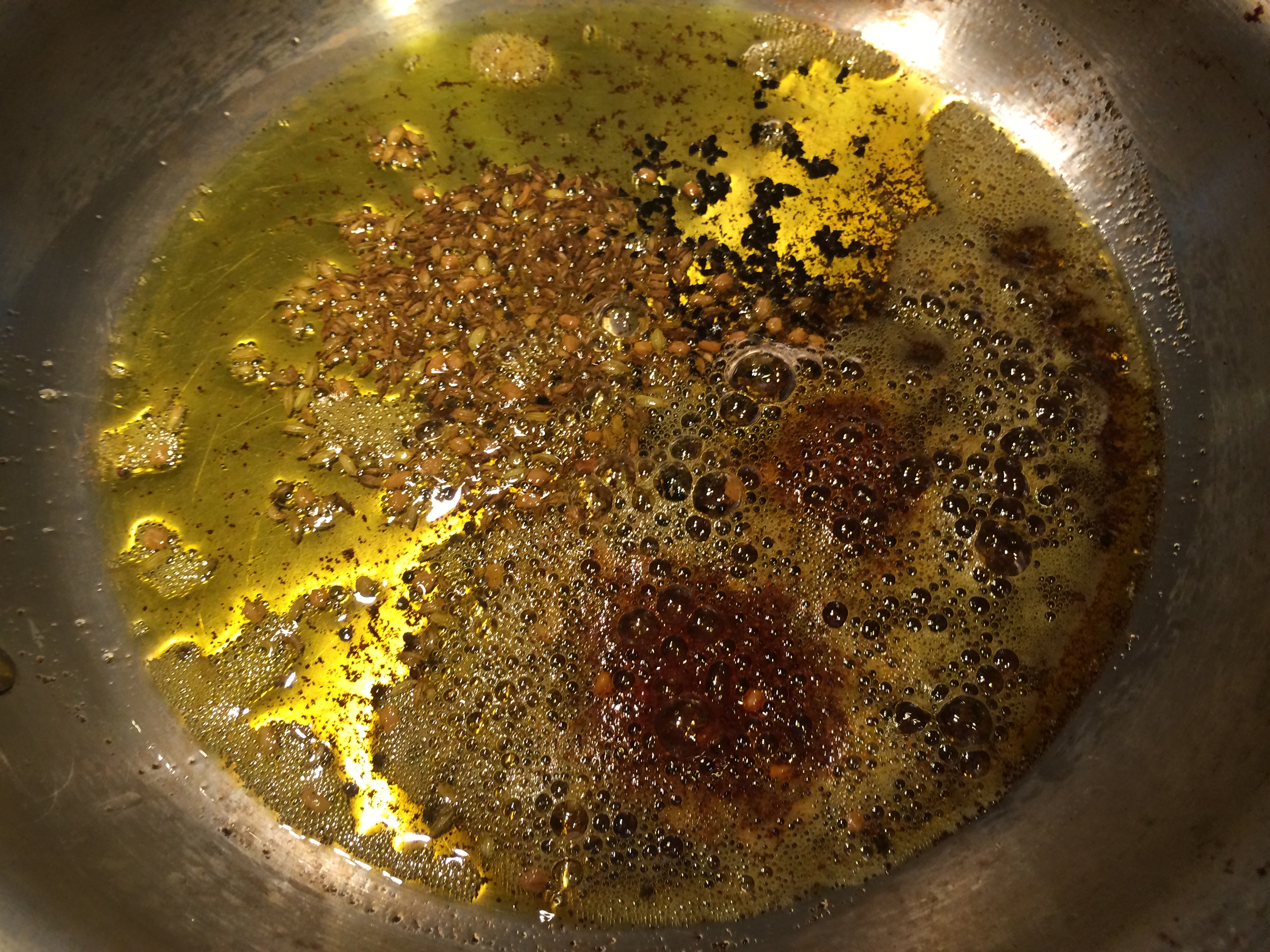
Red chili powder

Tempering spices

Tempering spices

Throw in the green beans

Throw in the green beans

Cook for 10 minutes, uncovered

Cook for 10 minutes, uncovered

Green beans sauteéd with Bengali spices

Ingredients
  • Half a pound of green beans
  • Half a teaspoon red chili powder, or more according to heat tolerence
  • Quarter teaspoon fenugreek seeds
  • Quarter teaspoon nigella seeds (kalonji)
  • Half teaspoon cumin seeds
  • Half teaspoon fennel seeds
  • Half teaspoon mustard seeds
  • 3/4 teaspoon salt
  • 2 tablespoons mustard oil
  • 1 teaspoon brown sugar or jaggery
Method

Heat the oil on medium-high in a wide thick-bottomed pan. This is the temperature that the entire dish will be cooked at. Most Bengali recipes recommend letting the oil smoke first, but I hear that is bad for you, and I like the kick of mustard oil and don’t want to quell it, so I don’t let it smoke.

Throw in the spices in the following sequence: first the red chili powder; then the cumin; when it sizzles the nigella and fennel; when they sizzle the mustard seeds; when those pop the fenugreek.

Now in go the green beans. Stir to coat with oil. Let them cook, uncovered, occasionally stirring. Five minutes in, sprinkle in the salt. Ten minutes in, the beans will be mostly done, some charred, most shriveled, and still crunchy.

In this dish, I really like the effect of some sweetness. The sugar goes in towards the end of cooking, and is simply stirred in. Done.

Is it a chutney? Is it rice? It’s both – cilantro rice

IMG_1349

I am very proud of my husband. He went from being a cilantro-hater to a cilantro-tolerator (only if it is minced fine), from there to a wary cilantro-liker (if used in the right dishes), to a must-have-cilantro-flag-waver (in some dishes), to an unabashed cilantro-promoter. The other day he informed me that someone had brought a dish of cilantro-rice to a work potluck. He thought it tasted very nicely savory and wanted me to try making it at home.

This is what marrying an Indian will do to you. Go marry an Indian, all of you — there certainly are enough of us around.

I know he will insist that I put in a disclaimer — that he still can’t stand cilantro that is un-minced and placed right on top of food in all its stemmy and leafy glory. So there you have it, disclaimer placed.

I had never heard of cilantro rice before. Given that I love cilantro and make chutneys with it all the time (here is one and here is another), and also that I’m constantly looking for ways to dress up rice, this is surprising. Cilantro rice marries these two interests. Now that the match has been made, this will be a staple in my kitchen.

Cilantro rice

There are various ways to do this but I basically made a chutney out of the cilantro and cooked it then mixed in rice. You could simply mince the cilantro with a knife or not cook it.

Ingredients
  • 3/4 cup rice
  • Half a bunch cilantro
  • An inch piece of ginger
  • 1 – 4 green serrano chilies
  • 1/2 cup finely chopped onion (I used a shallot)
  • For tempering:
    • 1 tablespoon udad dal
    • 1 teaspoon mustard seeds
    • 6 or so curry leaves
  • 1/4 cup cashew
  • 2 tablespoons sesame oil
  • 1 teaspoon salt
Method

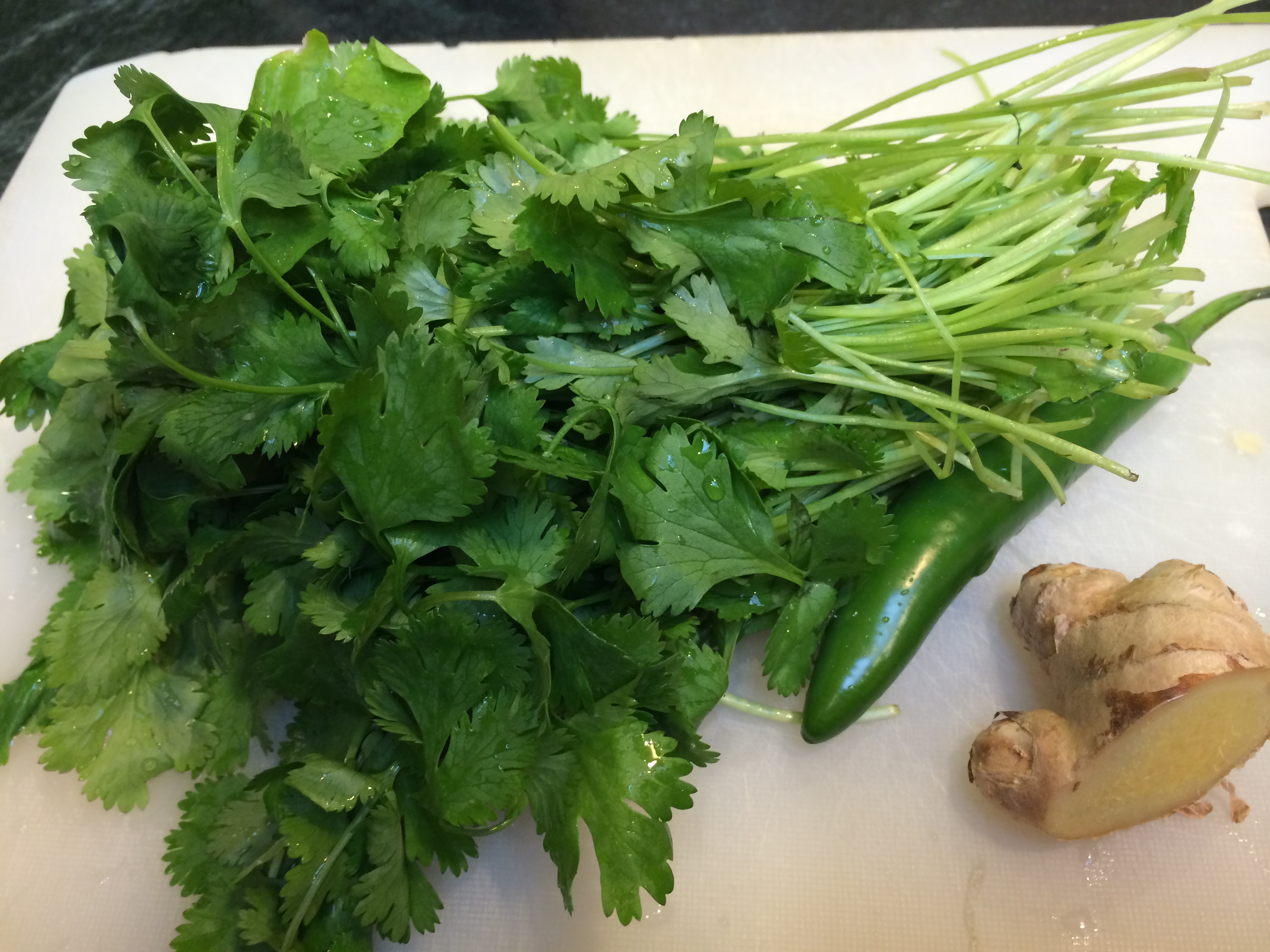
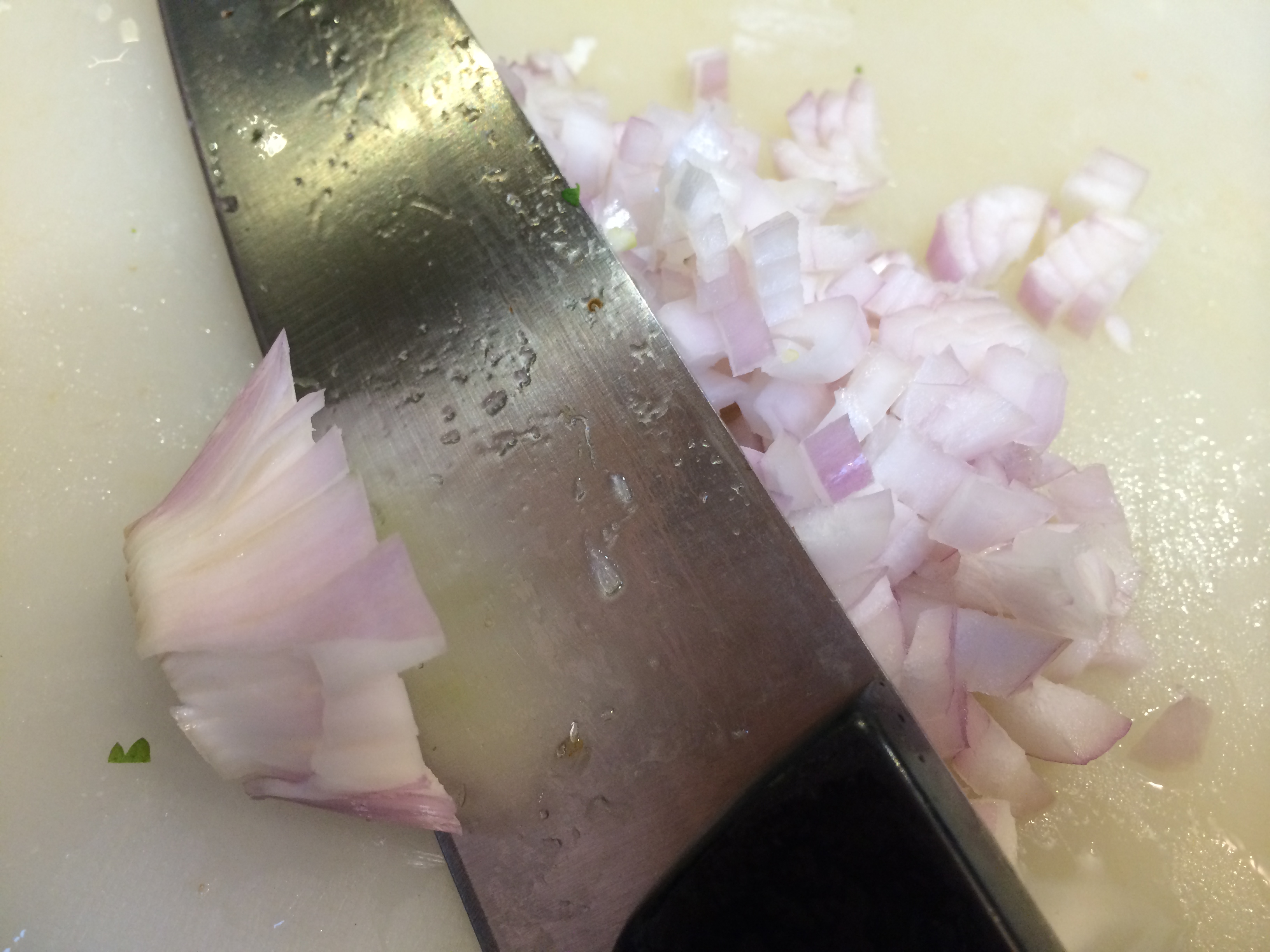
Cook the rice the normal way, but with somewhat less water than usual, to keep the grains from getting too mushy. Grind the cilantro, the chili and the ginger together using as little water as you can get away with — this basically means you are making a chutney. Finely chop the onion.

IMG_1326 IMG_1327

Heat the oil in a wide thick-bottomed pan on medium high. Throw the tempering items in in the following order: first, the udad dal, when it reddens the mustard seeds, when they pop the curry leaves. Stand back if you value your peace. Wait for the leaves to sizzle and be done.

Now in goes the onion. They will start to get translucent and start to redden at the edges.

Clear a little space to make a hot spot on the pan and put in the cashews. As they roast they will take on a few dark spots. This will take a few minutes; now it is time to put in the chutney that you ground before. Throw in the salt, cook the paste down for a few minutes.

IMG_1330 IMG_1345 IMG_1346 IMG_1347 IMG_1348

The rice goes in next. Break up the clumps with your fingers if need be. Stir to coat all the grains with the chutney. Cover and cook for a few minutes on low.

Here is the result — fiddlehead ferns on one side, squash raita on the other. They will come later.

IMG_1354

Getting off the curry train

India

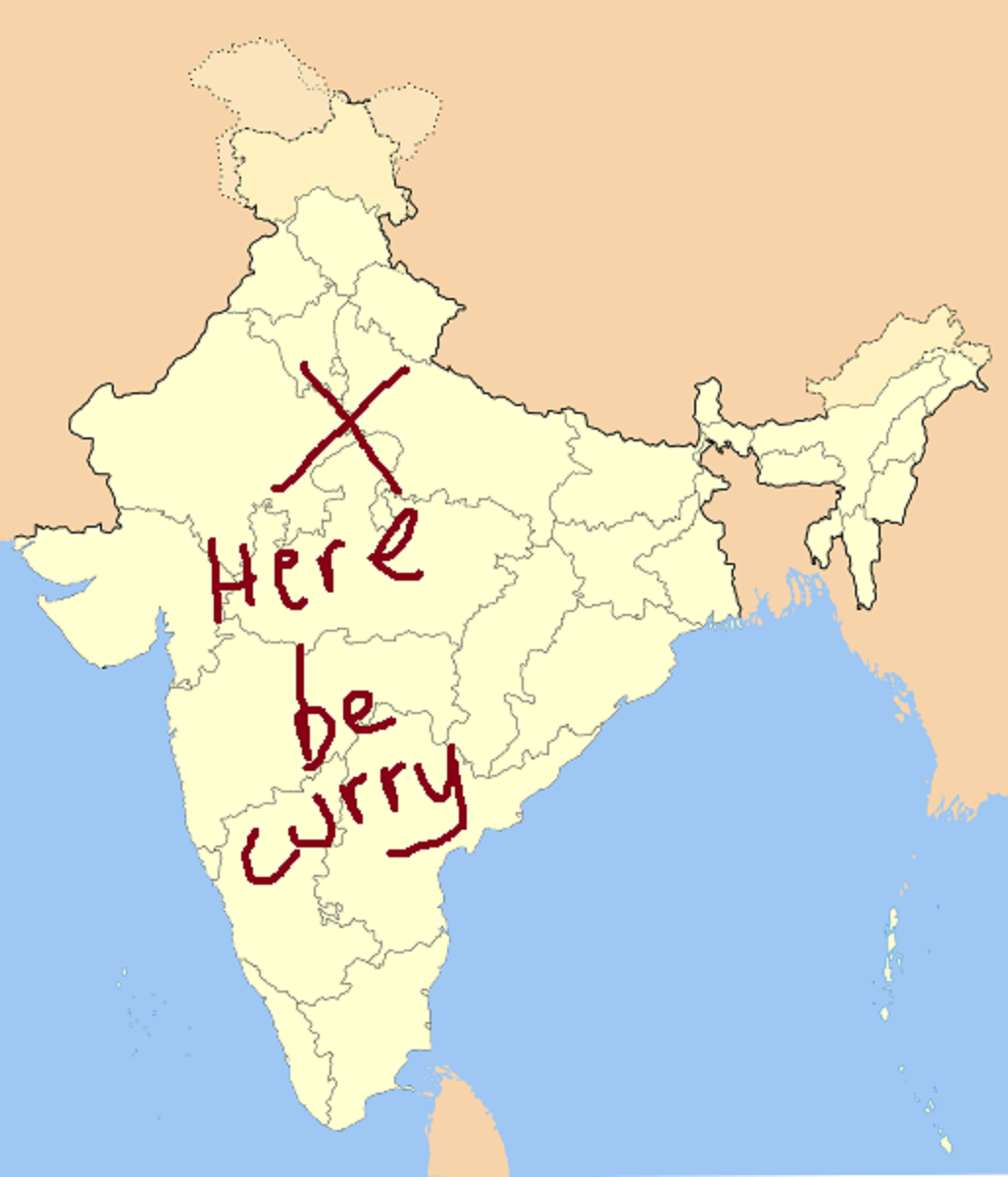
I’m sorry to go all dramatic so soon in the blog post but do you know how there was this guy called Captain Ahab who had sworn revenge on a whale? Sometimes I feel like that when accosted with the word ‘curry’. Seems like an innocuous enough word…and descriptive, so why do I hate it so much? Let me tell you why. It is not descriptive and it is certainly not innocuous. It obfuscates, mystifies and conflates things. And if you think about it, that is exactly the opposite of what language is supposed to do.

Why do I hate the word?

I hate it because it is a word the British made up from half-heard scraps to vaguely signify the entire cuisine of a sub-continent. It is sometimes used as a generic term, but it promotes the notion that all Indians eat a single dish with a single spice mix in it. I hate it more when Indians use it to communicate with English-speakers. Sorry, people. I hate it.

Some ‘Curry’ meanings

People use this word in different senses.

  1. Curry as a Particular Dish: Do you make Curry, people will ask me, or claim to love Curry. I don’t have to spend too much time on this meaning because clearly, Indians don’t all just eat one dish, all billion of us, day in and day out, week after week.

  2. Gloopy Spicy Dish: Moving on. Some people use it to mean: any gloopy, reddish brown, spicy dish. Then the question arises: how many spices? If you stick a bay leaf into a beef stew does it become a curry? It is gloopy and reddish-brown. What about gumbo with its filé? Some Indian dishes may be green, non-gloopy, with merely garlic and mustard seeds in it, is that still a curry? I believe that people who use it in this sense are afflicted with Indian-Restaurant-itis. It is the condition of being mainly familiar with Indian food through the means of Indian restaurants. It is not their fault — it is that Indian restaurants outside India (with a few exceptions) insist on putting everything into everything and turning everything into an indistinguishable, reddish-brown mess. That thing — that indistinguishable mess — is a curry.

  3. Asian Saucy Dishes: Sometimes the word is used to identify dishes from all over South and South-East Asia that consist of some kind of spicy, saucy thing with floaters in it. Here I must simply plead lack of clarity. That subsumes so much variety as to not be a very useful word. It is as if all baked items from the Western world — including bread, muffins, pies, cakes, croissants — all were called ‘bakies’.

  4. A Single Spice: People will often ask me if a certain dish has curry in it. Needless to say, there isn’t a single spice called ‘curry’. Yes, there is a herb used all over South and Central India called ‘curry leaf’ or more properly, ‘kari leaf’ (Murraya koenigii). Red herring alert! This herb does not make your dish spicy. It adds a sort of herbal or grassy flavor to it. It has nothing to do with the spice mix sold as ‘curry powder’. It is not the main ingredient of it, or even an ingredient. In fact, you can’t use these leaves in their dry form at all, they do nothing. They must be used fresh and thrown into hot oil to get their flavor into food. They add a very subtle flavor, and in my opinion, are better left out than substituted.

Curry leaves

Curry leaves

  1. A Particular Spice Mix: As a spice mix called ‘curry powder’. Far be it from me to deny that such a spice mix exists — you could easily go to any grocery store aisle and prove me wrong. I must only insist that this spice mix is British, not Indian.

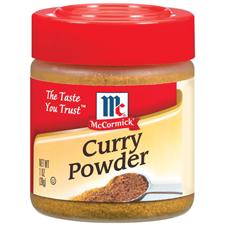
curry powder

During the Raj the British brought tea to India and took away a notion of savory dishes made of a mélange of onions, ginger, garlic, coriander, cumin, and turmeric. As this blog post explores, cookbooks from the seventeen hundreds had started to experiment with Indian ways of cooking, say, chicken, using onions, ginger and turmeric. By the eighteen hundreds though, a standardized curry powder had replaced the powdered ingredients.

Here is a very early advertisement for Curry Powder: This was being sold to households as ‘exceedingly pleasant and healthful’. Any dish made that used it, apparently became a curry.

First British advert for curry powder from The British Library

First British advert for curry powder from The British Library

Needless to say, Indian food does not use a single spice mix; or necessarily a specific mix at all, most of the time, spices are thrown in whole. Some famous dishes (e.g. sambhar; pav bhaji) have gotten attached to their specific combinations; other specific mixes are used for special needs (garam masala; chaat masala). Often times the spice mix is a paste. Most of the time there is no mix at all, but just spices.

So what does curry mean — do you see what I mean by obfuscation and lack of clarity?

In which I play whack-a-mole

One of the reasons the word ‘curry’ has become such a fixture is that weirdly, there are a number of words all over the subcontinent that vaguely sound like ‘curry’. This makes people nod happily at the word, thinking it is an Anglicization of the one that is most familiar in their language. Most of the words below, by the way, are mostly unrelated to each other, and most have at one time or another claimed to have been the origin of ‘curry’.

A. Kadhi: There are the many ‘kadhi‘ preparations in the north which involve roasting chickpea flour and yogurt. This preparation is not highly seasoned, usually, but rather, mild and yogurty. This comes from a Sanskrit word meaning “boiled stuff“.

B. Tarkaari: In Nepal or thereabouts, tarkaari is the vegetable side that accompanies the daily meal of rice and lentils.

C. Kari: Tamil has a word kari which means black or blackened. Over time this came to mean grilled; then, stir-fried. Tamil uses two types of ‘r’ sounds, this one is the softer one.

D. KaRi: This is the second, unrelated Tamil word with the harsher ‘R’ which means ‘meat’.

E. Carriel: The Portuguese colonized India before the English did, and by the sixteenth century they were claiming that Indians ate something called Carriel. This is reported by a Dutch traveler named Jan Huyghen van Linschoten, He spent time in Goa and this is how he describes food there: “Most of their fish, is eaten with rice, which they seeth in broth, which they put upon the rice, and is somewhat sour, as if it were sodden in gooseberries, or unripe grapes, but it tasteth well, and is called Carriel, which is their daily meat.” Is this from the Tamil kari meaning blackened or grilled? or from the Tamil kaRi meaning meat? This word, Carriel, is still used in Goa in a sense similar to Curry.

There is a pervasive piece of misinformation that first appeared in the  Hobson-Jobson Anglo-Indian Dictionary in 1886, and subsequently has been spread throughout the Interwebs by Wikipedia: this is that Curry comes from the Tamil word ‘kari’ meaning sauce. As I listed above, there is no word ‘kari’ that means sauce in Tamil. Since English does not have the other, harsher ‘r’, we do not know which ‘kari’ they meant.

On the other hand, perhaps the English were already experimenting with ‘curries’ before they ever came to India….

The Forme of Cury

The Forme of Cury

F. Cury: Way back in the 14th century, a cookbook published by King Richard II’s cooks, which contained 196 recipes, was called ‘The Forme of Cury‘. This was way back before colonization ever happened…this word is from the French root ‘cuire’, the same as ‘cuisine’.

Interesting. The mystery deepens.

Here is an article that delves deeper into the history of the word. And another. And another.

So what word to use instead?

Ah, language. I tend to use the word ‘gravy‘ for wetter preparations, such as ‘potatoes in tomato-garlic gravy‘. This is the word we used at home. For drier preparations, I might use the word stir-fry or sauté. In general though, most of these dishes use the method of braising, so that word is usually fitting. ‘Stew’ works too. Spicy stew perhaps?

Help, I feel another rant coming on. ‘Spicy’ does not mean ‘hot’ as in chili hot. Somebody stop me please.