A Russian salad for America’s Independence Day

Russian Salad

Russian Salad

If by reading the title you expected intrigue and a spy-vs-spy story, you came to the right place. The story of Salad Olivier begins in Czarist Russia when wealth and luxuries were not yet verboten. A Belgian chef known as Lucien Olivier came to Moscow in the 1860’s bearing secrets of French cooking. He opened a fancy-shmancy restaurant in Moscow called The Hermitage. This was not a one-room affair, rather an entire building with multiple dining rooms. Here Chef Olivier served a salad with every manner of luxury ingredient and choice meat — caviar, capers, game hen, crayfish tails. He called this the Salad Olivier.

Hermitage restaurant, Moscow (source: http://www.sras.org/russian_olivier_salad)

Hermitage restaurant, Moscow (source: http://www.sras.org/russian_olivier_salad)

Of course, he did not invent this salad out of his sheer imagination but rather based it on a famous dish from Provençe known as Le Grand Aioli. This is essentially a feast of vegetables and meats, laid out separately to serve with aioli, which is basically a mayonnaise with garlic and mustard. He served his salad in layers, the ‘Provençal sauce’ on the side, to be poured over. His Russian customers would dispense with the niceties and simply mix it all up. So he followed their lead and Salad Olivier was served the Russian way, all mixed up with his Provençal sauce.

Salad Olivier made his restaurant famous; although the main ingredients of the salad were obvious for all to see, he never divulged the secret of what went into his mayonnaise. Now remember that mayonnaise at the time was a French import, not ubiquitous on every grocery shelf from Japan to the United States. It had to be made by hand. It is an emulsion, which means the liquids involved in it are so well mixed together that it is impossible to tell what went into it. So as you can see, mayonnaise is inherently mysterious. So is milk, another emulsion.

A lovely graphic showing emulsion by blog.ioanacolor.com

A lovely graphic showing emulsion by blog.ioanacolor.com

Sorry for the bad pun, but Lucien Olivier milked it. The secrets of his mayonnaise remained hidden until his grave. They had to come to his restaurant for the salad, or else go without. But then, a disgruntled local employee called Ivan Mikhailovich Ivanov tricked him into leaving his kitchen momentarily while the famous mayo was being whipped up. He managed to note down the ingredients, left the restaurant, and began selling his facsimile of Salad Olivier at a different restaurant, under the name of Capital Salad (Stolichny Salad).

This stolen salad was never quite as good as the original, but it did mean that the rest of middle-class Russia was able to partake in it. With the revolution came the backlash against all things bourgeois, and this salad was stripped of its more expensive ingredients. A sort of consensus developed around a small set of ingredients — potatoes, hard-boiled eggs, boiled chicken, peas, pickles.

From Russia it spread to the Middle-east and Asia, and to India. Growing up, my introduction to Russian salad happened in a vegetarian restaurant in India that avoided the chicken. Somewhere en route from Russia to India a very important modification was made to it — Russian salad in India always includes chunks of some crunchy fruit — pineapple, apple, etc. In my opinion this is the best part.

In fact that makes it, to my palate, more delicious than the potato salad that is traditional for July 4th barbecues, so that is what I brought to a friend’s. Any hint of treason is purely for taste.

First the mayonnaise. Lucien Olivier’s mayonnaise was an aioli, which includes garlic and mustard. I used this recipe (which used this recipe) and whipped it up in a jar.

Garlic and mustard

Garlic and mustard

Eggs, oil, garlic-mustard, lemon juice in a jar

Eggs, oil, garlic-mustard, lemon juice in a jar

Improvised double-boiler

Improvised double-boiler

Garlic mustard mayonnaise (aioli)

Ingredients:
  • 1 cup almond oil (you can use any light-tasting oil)
  • 2 medium eggs or 1 large
  • 2 cloves garlic
  • 1 teaspoon mustard seeds
  • Juice of half a lemon
  • Salt to taste
Method:

Put minced garlic and mustard into  a mortar along with a pinch of salt. Give it ten minutes to sit and then pound it to a paste together. You do not have to powder the mustard seeds completely. Put the oil, eggs, garlic-mustard, lemon juice in a Ball jar or Weck jar or empty jam jar. Using an immersion blender, whir it for just about 30 seconds or a minute. The mayonnaise should come together right away.

Now my salad was going to be sitting out in the sun so I chose to heat it up to to 135ºF in a double boiler while blending away. You do not need to do this, specially if you use pasteurized eggs.

Now for the Russian salad, based on a French salad, made the Indian vegetarian way, for America’s Independence day. These are the ingredients I used, but please be creative and add whatever makes sense to you.

Ingredients for salad

Ingredients for salad

All diced

All diced

Dish lined with lettuce

Dish lined with lettuce

Mixed

Mixed

Vegetarian Russian Salad

Ingredients:
  • About 6 small red potatoes
  • 1 large carrot
  • 1 cup of frozen peas, thawed
  • 3/4 large red apple
  • 3 tablespoons slivered almonds
  • 1 small cucumber (substitute with celery)
  • About 8 outer leaves of butter lettuce
  • Half a teaspoon paprika, more for garnish
  • Salt to taste
  • About a cup of mayonnaise from above
Method:

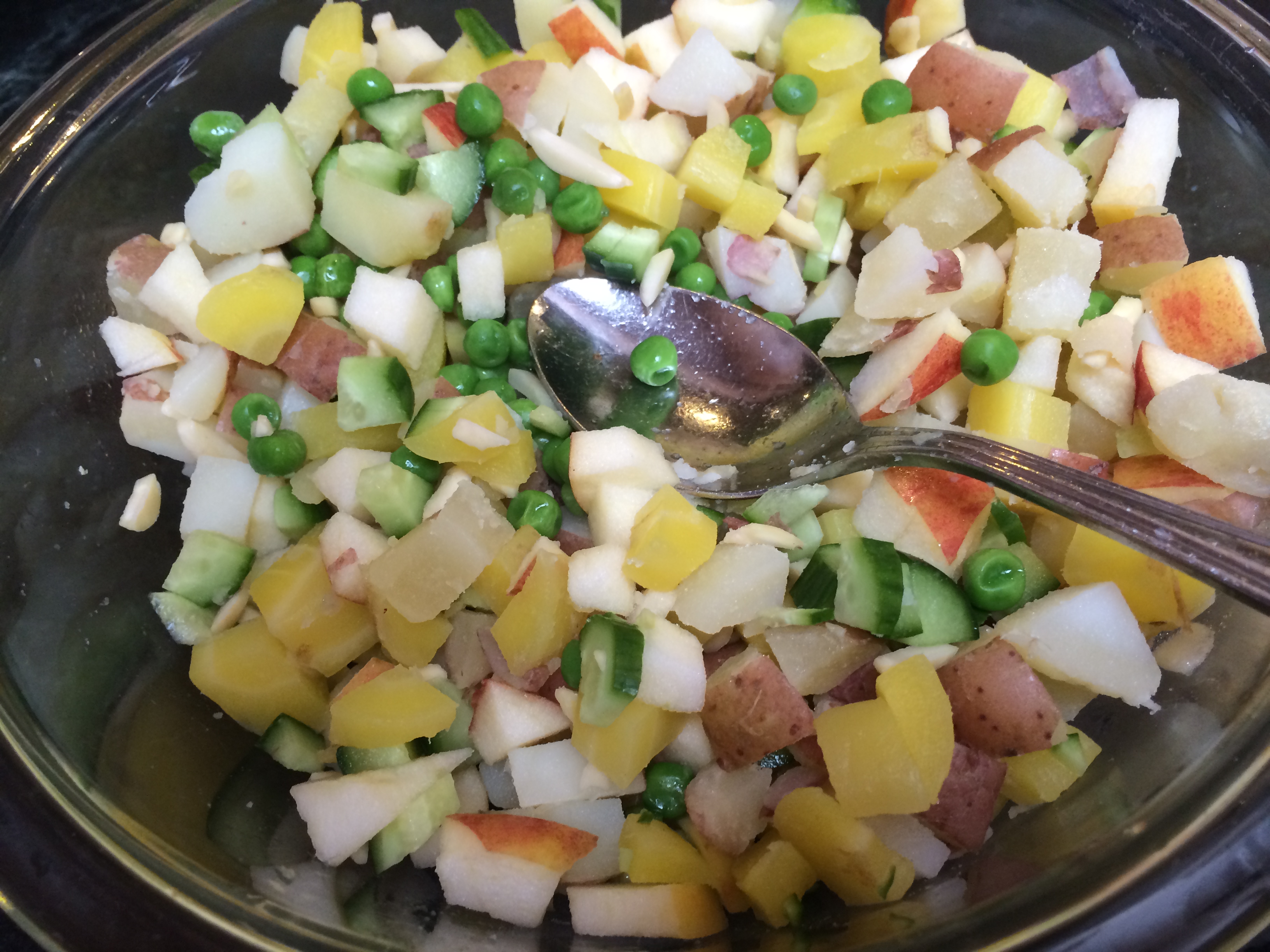
Boil the potatoes and carrots in their skins, in salted water. When done, drain, let them cool, then dice into small pea-sized pieces. Dice the apple and cucumber into similar sized dice as well. Leave the skin on (adds a nice colorful touch). Thaw the peas.

Line your serving dish with the lettuce. Mix the ingredients together in a mixing bowl. Add the mayonnaise, paprika, and salt to taste. Mix together nicely. Serve it out in the bed of lettuce.


(Click here to find me on Facebook and here on Twitter.)

GMO cotton and the Indian farmer

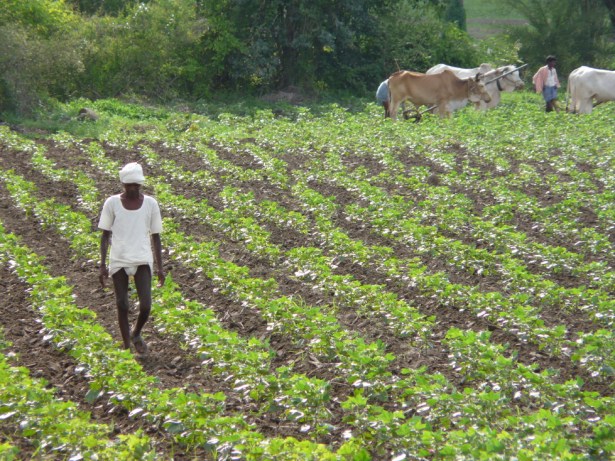
Cotton farmer Warangal district (source: Flickr user Jankie)

Cotton farmer Warangal district (source: Flickr user Jankie)

Cotton is a light and breathable fabric but it sure does get itself into some very contentious debates. It has been a central player in colonialism in India, in the American Civil War, in the practice of slavery, and now, in the GMO wars.

I remember my mother recounting some history from the British Raj days. Can you believe, she would tell me, we grow cotton in India, but we are not allowed to make cloth from it. They ship it to England, it comes back as cloth, and then we have to pay expensive rates to buy it from them. It’s our cotton!

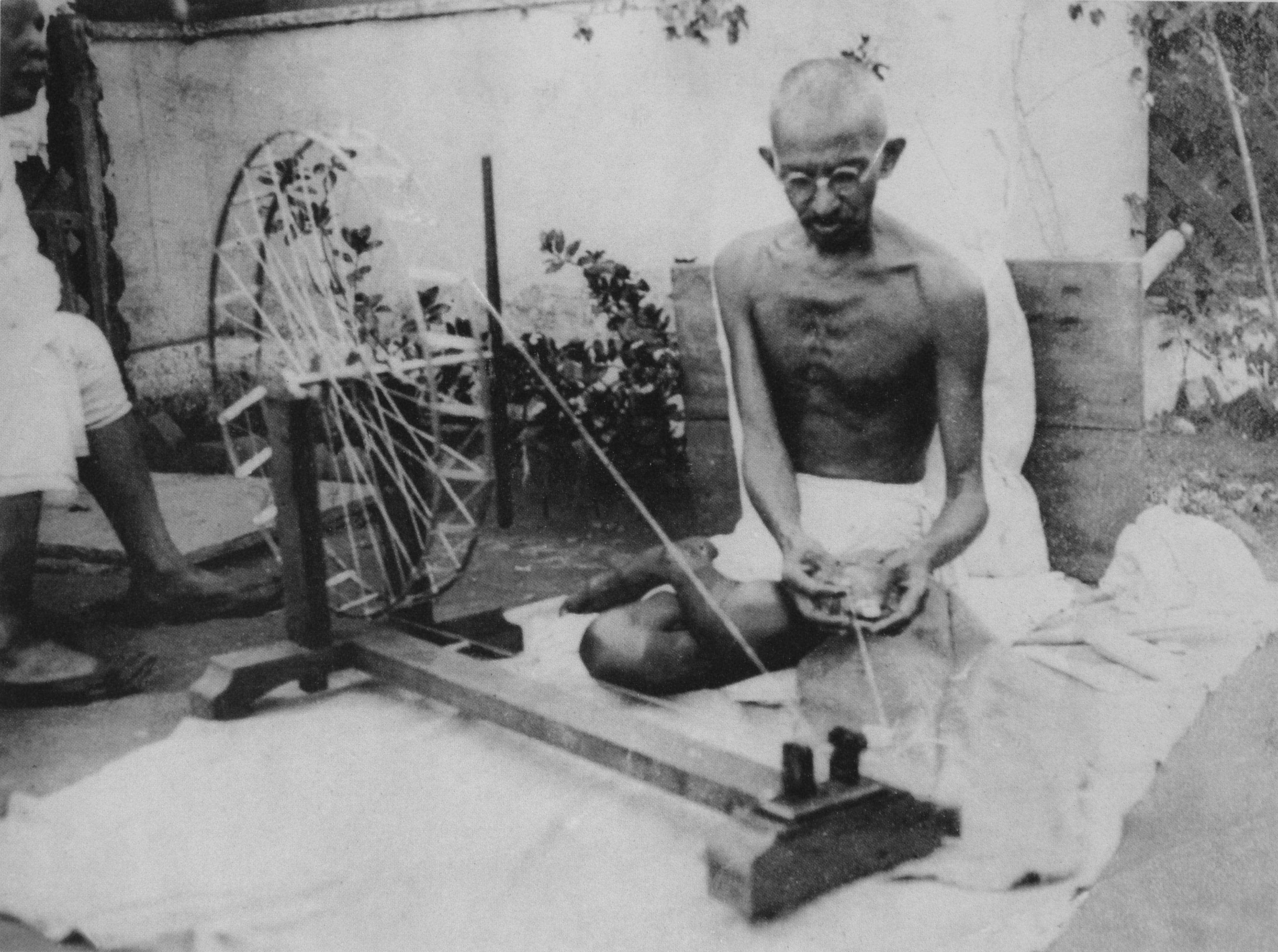
Gandhi at his charkha

Gandhi at his charkha

Mahatma Gandhi championed this viewpoint more than anyone else. He promoted the use of the charkha, the spinning wheel from medieval times. This was his method of thumbing his nose at the Raj. He intended to have every Indian make their own cloth the tedious way, by hand, and thereby collapse England’s profits. He knew what he was doing. Weaving khadi cloth at home became a political act. (Interestingly, today khadi has become a fashion statement.)

One could argue the opposite side as well. As egregious as it seems, England’s business model made sense. The cotton plants (India’s genetic asset) and their growing and picking (India’s manual labor) were only part of the story. Who would pay for the intellectual asset — the invention of the cotton gin, the spinning jenny, and other such picturesquely named devices that made much finer quality cloth, more tightly woven, and many times faster? These are not devices to be sneezed at. These inventions and others like it powered the Industrial Revolution.

A similar debate now rages over genetically modified cotton. The quixotic Gandhi who stands in the way of Progress is Dr. Vandana Shiva. Gandhi spoke up for the imperfect, but diverse, home-weaving industry. Dr. Vandana Shiva speaks up for the unimproved, diverse strains of cotton that haven’t gotten any love from biotech companies like Monsanto.

Is she right? Was Gandhi right? I don’t know, but I want to explore. Let’s talk about Bt Cotton.

Insecticide

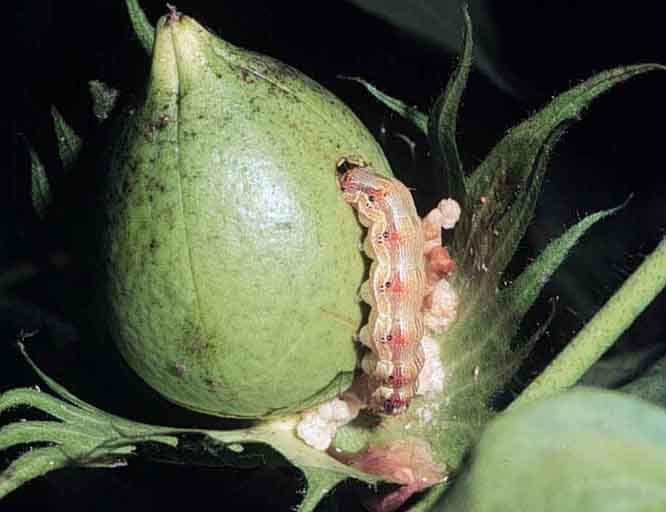
I wrote about Roundup Ready crops some time ago. Bt crops work in exactly the opposite way. Roundup Ready crops make it so that you can spray pesticide without concern for your crops — clearly, you can see how they might incentivize more spraying of pesticide. While Bt crops are not immune to pesticide, they come with pesticide in them. So you can see that theoretically they should not need any pesticide sprayed at all. The pest in this case, is the bollworm — the caterpillar of a certain moth.

I don’t know about you, but when I hear a statement like ‘your food contains insecticide’ I start to smell the wonderful aroma of the Flit product from my childhood. There couldn’t be a better way to ruin my appetite for good. Now here we are talking about a plant growing with insecticide in its cells? Are you serious?

It’s not as bad as that. Let me explain.

I adore insects. But one has to admit, sometimes they work at cross-purposes to us — whether it is cockroaches in the kitchen cupboard, mosquitoes buzzing on a summer evening, or bedbugs making lurid bloodstains all over the sheets. Humans have spent a considerable time time trying to control them.

But we are late entrants to the game. Plants have been indulging in their own battle with insect pests for half a billion years. Since they can’t get up and walk over to the store, they need to make their own. And they do. Plants fight pests silently (to us) but with astonishing vigor. No quarters given.
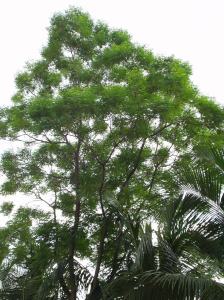
"Who, me, insecticide?!" the Neem tree, looking innocent (source: Wikimedia commons)

The Neem tree, looking innocent (source: Wikimedia commons)

You know those lovely daisies that little girls make daisy chains from and put them around their pretty little heads? They produce pyrethrum, a compound that attacks the insect’s nervous system. Jicama — that recent favorite of Californian foodies (of which I am one, I guess?) — the root that one cuts into sticks and puts in salad — the stems of jicama produce rotenone, a chemical that attacks the energy-production of cells. It is extremely toxic to insects and fish. The Neem tree is famously antisocial, by which I mean it is anti-fungal, antibacterial, anti-inflammatory. Neem’s special contribution is azadirachtin, a chemical that prevents insects from growing, and while they remain stunted, it makes them lose their appetite to the point of starvation. Diabolical. But they actually need to eat the plant tissue to get the poison, so insects that care only about the nectar and pollinate the plant are not affected.

What one looks for in a ‘good’ insecticide is the following: it must not kill indiscriminately — in particular, it must not be toxic to mammals. It should only kill insects pests, not be poisonous to the pollinators, nor to the predators of the insect pests. It must not hang around in the soil for long, i.e. it must biodegrade, but while it is hanging around it must not slosh around and get everywhere.

Bt

Bacillus thuringiensis (source: http://bacillusthuringiensis.pbworks.com/)

Bacillus thuringiensis (source: http://bacillusthuringiensis.pbworks.com/)

In these ways, a certain bacteria called Bacillus thuringiensis makes pretty much the ideal insecticide. This insecticide protein is called ‘Cry’ and that is probably what the insect does upon ingesting it. It works by perforating the insect gut walls full of holes. It can be very specific, as in, there are strains that will affect only beetles that chomp on some Bt, and others that will only affect moths. It is very, very safe for all other animals including us; this is because it cannot work in an acidic environment, which our bellies are, in general. Any Bt left over on leaves will simply degrade in the sun.

Bt has been known as an insecticide since the 1900’s. But no one understood why it killed only moth larvae sometimes and only beetle larvae other times. No one understood its mechanism. Only in the 1980’s, when consumers were souring on wide-spectrum synthetic poisons like DDT, did industry start to take a look at developing biological insecticides into products. Chemical companies across Europe and the US divided up the Bt strains between them — some focused on killing mosquitoes and flies, some on moths, and some on beetles.

Bt crops

Bt had been a sleeper in the insecticide world but its qualities made it a celebrity. Pretty soon scientists understood it down to the gene level, and at that point, given the advancements in gene modification, it was a matter of course to insert that gene into plants.

I mentioned above that Bt spray, when applied to plants, degrades in the sun or simply washes off. While that is one of its beautiful qualities (that it easily biodegrades), it does mean that one has to keep reapplying it. Wouldn’t it be great if the plant cells actually contained Bt inside, so it wouldn’t just disappear in the sun or wash off? Hello, Bt crops.

Bt Cotton in India — Seeds of Suicide?

Cotton with an inserted gene that produces Cry came into the Indian market in 2002. It protects cotton from its main predator, the bollworm. Before 2002, even though cotton was one of India’s main cash crops, the yield was one of the lowest in the world. Pests were a huge problem, and farmers spent more money on pesticide for cotton than for any other crop.

Bt cotton came with the promise of not needing pesticide at all, because it would inherently fight back the bollworm. Before the government approved it, Bt cotton had already created a buzz and seeds from Monsanto had been smuggled in to sell in the black market. After it was approved, by 2010, more than 90% of cotton growers in India used Bt cotton. But while Bt cotton was being widely adopted, activists raised the alarm. Dr. Vandana Shiva in particular called it the seeds of suicide.

Anyone (like your humble servant, The Odd Pantry) asking a simple question  — ‘so, how is it working out?’ — is immediately assaulted by a battery-pack of confusing assertions. Yields have gone up! No! Farmer suicides have gone up! Spraying of insecticide has reduced! No! The bollworm has developed resistance to Bt and aphids have attacked cotton! What is true? What is not? I did a lot of reading the past week to get answers to some basic questions. I may not find the Truth but I can certainly throw my lasso around some facts.

Q. Has Bt cotton improved yields overall? A. Yes. Overall, so far, from 2002 onward, yields have gone up a lot. Not all of the increase is due to genetically modified seeds — other factors have mattered too. But, 19% of the yield increase is because of Bt cotton.

Q. Has it cut down on the amount of insecticide that needs to be sprayed? A. Overall, yes, the use of Bt cotton reduced insecticide use by half in the ten years after it was introduced. This could change as the bollworm develops resistance to Bt or other insect pests start attacking cotton. But in the meantime, yes, insecticide use did go down. An added benefit here is that farmers have reported many fewer cases of pesticide poisoning.

Q. Has the Bollworm developed resistance to Bt cotton? A. Yes, indeed, it has, in some places. It has been 10 years of Bt cotton use in India and considering that 95% of the cotton grown now has the Bt gene, the bollworm has a big fat bull’s eye to evolutionarily aim at — the target being resistance to Bt, and the enormous benefit being that it doesn’t die. In 2010, Monsanto admitted that they had found bollworms in Gujarat that were resistant to the first generation of Bt cotton crops.

Q. Have other pests attacked Bt cotton? A. Nature seeks balance. If Bt cotton crops have become pretenaturally safe from bollworms, other insects will surely be emboldened to attack it. Have they? Yes. In recent years a new pest of cotton called the mirid bug, rejoicing in the absence of the bollworm, has been feasting on cotton (story from China). This did not happen directly because of Bt cotton, but because the farmers had massively cut down on spraying general insecticides on their crop. The rise of the mirid bug is eroding some of the benefits of Bt cotton by forcing them to run out and purchase insecticides anyway.

Q. Did sheep die after grazing on Bt cotton? A. Starting in 2005 shepherds in Andhra Pradesh reported that sheep that grazed on the remains of Bt cotton for 3-4 days seemed to pick up a disease and die. Surprisingly, no one seems to have gotten to the bottom of this claim; was Bt cotton to blame or not?

Activists claim that this is obviously GMO poisoning, but the case is not as clear-cut as that. There were cases of pneumonia mixed in with the sheep that seem to have been poisoned, which makes it hard to separate. And, some investigations found pesticide on the leaves, so it could have been that.

The authorities on the other hand, claim that this is just hearsay, that the sheep simply could not have died from any Bt cotton toxicity, and the tests they have done prove it. But, there actually haven’t been any tests done on sheep (there have been tests on buffaloes, goats, chickens and cows). Also none of the tests involved fresh plant material, they just involved cotton seed meal. It is also possible that the toxin came from the non-Bt parts of Bt cotton. So far, it seems like the authorities in India have failed to get to the bottom of this.

This article is very detailed but is a good account of the sheep deaths.

Q. Have farmer suicides shot up due to Bt cotton? A. Now we come to the most incendiary claim — that the use of GM crops have led to growing numbers of farmers taking their own lives. There is no way to discuss this that isn’t going to sound callous. But let’s try.

There are two ways to look at this — as statistics, or as anecdotes. This paper looks at the question statistically. They chose to use statistics from the crime bureau rather than the ones collected by the state governments, because the ones from the crime bureau are more accurate (and higher). What they found is that farmer suicides have not increased, overall, since the introduction of Bt cotton, although they found local variation.

This paper on the other hand, looks at the question anecdotally, although it doesn’t choose to word it that way. I don’t say this to knock it. Anecdotal accounts may bring tragedies to light that get elided into a blip on a curve when you look at it as a statistic. It seems clear that some farmers did face GM crop failures; and for some of those it meant digging deeper into debt. People in wealthier countries where one can declare bankruptcy might wonder why unpayable debt is a reason to take one’s own life. In India, among the poor, this can be a disaster. They mostly do not have good, regulated microcredit available. I’ve known loan sharks to send hoodlums out to their delinquents for beatings; having their meager possessions auctioned off is a regular occurrence.

If it was indebtedness, can it be blamed on GMO? Well, perhaps it wasn’t the Bt toxin itself. But the GMO seeds they obtained come with a context — a high price, marketing, regulations followed and not followed. I will explore that in the next section.

GMO in the Indian Context

Look, after my week of reading everything I could lay my cursor on, I think I am free to make a qualified claim: so far, overall, Bt cotton has helped Indian farmers. It has helped them, overall, get better yields and make more money. But, it has not been a uniform success. The Indian context in particular has had a bit of a culture clash with the more modern economy that Monsanto usually operates in. When Indian farmers have crop failures, this is often a life-destroying event.

What kind of culture clash? The rural population in India has high rates of illiteracy. Many farm workers cannot read or write, let alone get on the internet to look up seed laws. In this environment, hearsay will always have more influence than the latest official dispatch. Instructions from Monsanto about planting buffer areas with non-Bt cotton were not well understood, or, the farmers didn’t have the luxury to ‘do things right’, leading to some places where the bollworm developed resistance to it. In Andhra Pradesh, some farmers didn’t understand that they did not need to spray insecticide anymore, therefore cutting into the profit they might have had.

They are not jaded with years of marketing-speak and haven’t learnt to discount it. Farmers believed the most inflated talk about yields that they could expect from Bt cotton, and probably did not have the cynicism needed to know that this was advertisement. They might have taken more risk than they ought to have given the high cost of the seeds based on this marketing-speak.

The concept of intellectual property is not well understood either — I know this first-hand, because when I was in India we pirated software with abandon, not really understanding that there was something wrong with this. When we bought grain in bulk, some of the small-time vendors adulterated it with stones. Piracy, the black market, adulteration, these are ubiquitous, specially for poorer farmers who are price-conscious and have no consumer representation. There are several cases of unauthorized Bt cotton being sold in the black market, which is usually adulterated with cheaper conventional cotton. Clearly this crop is not going to be as resistant to the bollworm as the pure variety.

The practice of buying seed from a catalog for each new season, very familiar for American farmers, is a bit of a culture shock to Indian farmers. Monsanto’s seeds lose their vigor after single growing season; farmers who have become trained in the practice of growing GM crop have a high dependence on the private sector and are subject to their price whims.

It also seems like Monsanto and their Indian collaborators have not always chosen the best varieties of cotton for the Indian situation. Some of the initial hybrids they chose were not drought-tolerant; this is fine for modern societies where irrigation is a given, but in India, most farmers are still heavily dependent on the monsoon. Some of the GM crop failures in Andhra Pradesh were because of this. Other times, the hybrids they chose grew fine but had a shorter staple length and did not bring in as much profit as the farmers had counted on.

The Good, the Bad

On the plus side, Bt cotton has the potential to drastically cut down the use of pesticides. Not only is this a health benefit for farm workers (they can’t afford safety equipment like masks while spraying, or really, even shoes, so some exposure is guaranteed), it is also good for the environment. Recently, natural predators of insect pests have had their numbers increase. Also, if cash crops are less prone to be eaten by pests, this is a benefit in and of itself.

Let’s talk about the bad. With an engineer’s hat on, the problem of a pest on a cash crop has a simple solution: find a good insecticide and have the plant produce it. Done.

With an ecological hat on, one wonders about the system one is tampering with. The simple solution starts to look like a silver bullet. In general the scientists believe that a GM crop like this comes with a natural life until the target pests develop resistance to it. I’m not smart enough to think through this very well, but here is a question. We know that Bacillus thuringiensis produces insecticide, but we don’t quite understand its role in the ecology. What happens when these creatures develop a resistance to it out in the wild — what does that do in the environment? What balance does it wreck? I don’t think anybody understands.

But it doesn’t really matter anyway, because these ineffable concerns will never trump the immediate need for profit and predictability, and that might just be the story of industrial farming.

(Click here to find me on Facebook and here on Twitter.)

The GMO debate as a fable

IMG_2365[1]The other day my daughter and I did a fun kitchen project which had nothing to do with food — we made beeswax hand lotion at home. Never having done this before, I found myself a little befuddled. I had to stir in stuff while the beeswax was still melted. But how to keep it warm and not let it stiffen up while the whisking is going on? Luckily, my experience with a completely different recipe — chocolate frosting — helped me. I stole a step from that very different recipe. I set up a double boiler and kept the beeswax warm in that. It took a while but it worked.

I hope that did not raise any eyebrows. How dare I steal a step from one recipe to another? Did my hand lotion start to smell chocolatey? Of course not, I didn’t add any chocolate to it. Is my hand lotion now forever tainted as being somehow impure? Or unnatural? No — I demand that my misbegotten hand lotion be given its proper place in the pantheon of hand lotions. I ask that my hand lotion be accorded the same respect as other hand lotions, which means, please judge it on its traits. Does it smell good? Does it make your hands feel soft? And so on.

What does this have to do with genes? Everything.

DNA

DNA is a recipe. It isn’t really a recipe for living beings — it is a recipe for proteins, which in turn are a recipe for us. Sometimes biologists stress that all life on earth is related. So every weed you see growing in a sidewalk crack, or every bacteria that you can’t even see — is your cousin. Mostly we know that because all of our DNA’s are written in the same language.

I’m going to call this language Dnaelic, just to irritate my science readers and my Gaelic readers in one stroke. Where English has 26 letters, Dnaelic has just four: A, T, C and G. Words in Dnaelic are made up of 3 letters and are called codons. So CCC is a codon, TGT is a codon, and so on. Just like a sentence in English is a sequence of words that expresses a complete thought, a gene in Dnaelic is a sequence of codons that expresses a complete protein. Dnaelic even has punctuation marks like English to mark the start and end of genes.

Gene splicing

OriginalHandLotion

DNA for hand lotion

Imagine if the chocolate frosting recipe had been written in say, Choctaw, while the hand lotion steps were in English, I would find it pretty difficult to transfer steps from one to the other. Since they were both in English, it was easy. In fact, I will show you what I did.

On the left is my original recipe. I’m going to call it the DNA for hand lotion. Now I am going to ‘cheat’ and drag in an instruction from the DNA for chocolate frosting.

Genetically modified DNA for hand lotion

Genetically modified DNA for hand lotion

Can you spot the difference? My DNA for hand lotion now has an instruction spliced in. It will make better hand lotion, I promise. It will be softer (because the ingredients mixed in better) and will be way easier to grow. Sorry, I mean, way easier to make. And you will certainly be able to sell more of it.

I’m going to call that dragged in step the trans-step. As you can see, it does not look any different than any other step. Theoretically, I could have just thought it up out of the blue (mutation) or, possibly, I might have got that inspiration to use a double-boiler by watching other hand-lotion makers at work (cross-breeding). Nevertheless, I got it from chocolate frosting, and to mark that special history, I will call it a trans-step.

GMO on the Interwebs

No doubt the example I gave above is a bit of a fable and much simplified. But as I read the commentary on GMO all over the Interwebs I find a weird dichotomy; the debate between the science folks proceeds at a very sophisticated level, while the debate between laypeople shows no understanding of the basics of genetics. Once in a while when there is cross-communication between the two communities, the debate devolves into accusations of idiocy and political hackery. The two communities cannot speak to each other! Our DNA’s may speak the same language but we certainly don’t.

As laypeople, we need to understand the basics of this very important debate. We are all voters. So let me reframe some common GMO debates in the light of my hand lotion fable.

The Debate!

Layperson: “Genetically engineered foods have not been proven to be safe or healthy. You keep asserting over and over again that they are safe, but that does not convince me.”

Scientist: “I only keep saying that because I want to keep things simple. In reality what I mean is, ‘genetically engineered food’ is not a useful category. It is like saying all recipes that have borrowed steps from very different recipes are suspect. This is not a useful way to look at it. One has to study each genetically modified creature on its own to see if the introduced traits are good or bad (and, we have). In the hand lotion example, the borrowed step made a good hand lotion. But we could have as well borrowed a step that ruined it — say, a step that said ‘now throw it down the drain’. That would make a terrible hand lotion or actually, not make a hand lotion at all.

“There are many genetic engineering research projects ongoing. Let’s judge each on its merits. Here is one that will control the mosquito population to prevent them causing malaria. Here is one that could help Vitamin-A-blindness in the tropics. Aren’t those good things?”

Educated layperson: “I do actually think that genetically engineered food as a whole is something to worry about. I worry that you don’t understand the recipes of living beings well enough to be tweaking them. What if you put in a gene and it produces a protein as expected but it also has another unexpected effect? I also worry that your actual process is not very precise.

Scrambled instruction

Scrambled instruction

Transgene

Transgene

What if instead of the clean splicing that you showed in the hand lotion above, the spliced gene actually goes in scrambled (left) or like this (right) where the transgene is ‘loose’ inside the DNA or somehow different? What if you are introducing proteins into a creature that has never had a protein quite like that before — does it matter? It is as if you put in a step in the hand lotion recipe to add something no hand lotion has ever seen before — like, say, I don’t know, Coca Cola. Would that cause allergies? Would it still be hand lotion?

The Odd Pantry (moderator): “Good points, Educated Layperson. I might have to do a post on each of your concerns.”

Layperson: “Genetically engineered foods are unnatural. Nature should not be meddled with.”

Scientist: “I find it amusing that you are typing this out on a keyboard and sending me this over the Internet. Did that not strike you as ironic? Everything natural isn’t good. The dinosaurs were wiped out by a perfectly natural asteroid that they would have loved to have meddled with.

“You seem to have insufficient respect for how much humans have meddled with nature already, even before GMO.

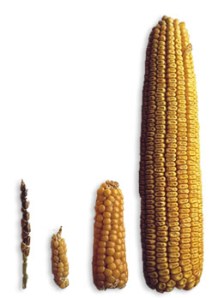
Teosinte to corn (source: http://www.kukurydza.org)

Teosinte to corn (source: http://www.kukurydza.org)

We have turned corn from this (left) to this (right) with just conventional breeding (and some help from nuclear technology). No, I’m not joking.

“On the other hand, you have insufficient respect for the tricks that nature gets up to already with DNA. The usual thing of a mother and father mating to produce offspring is one thing. But our DNA is being constantly altered by completely random mutations, most of which are fatal. Did you know that while scientists carefully selected a bacterial gene to put into corn for a specific purpose, nature does this all the time? Bacteria not only transfer genes to each other (without mating), but have known to transfer genes to insects, and even humans. In a completely random, unpredictable way.”

Educated layperson: “You are right, Scientist. Nature is vaster than any of us can imagine and calling something ‘unnatural’ is, well, childish. But I will rephrase my concern. My concern is that GMO foods do not promote biodiversity, on the contrary, they promote an extreme form of monoculture. The corn example you gave — yes, I am aware that we have bred teosinte into corn, a huge distance (and not always for the good). But you know what? The breeding didn’t happen in a lockbox. Corn was always free to spread its pollen far and wide as plants will do. Wild species and cultivated species could mate. With GMO, it is single strain that is expected to be grown in a lockbox and not share pollen with other plants. I’m sorry to go back to that word, but this is unnatural.”

Scientist: “That’s not me demanding that strains of crops grow in a lockbox, that’s Business.”

Educated layperson: “True, but all the fun you have in the lab doesn’t really come to us except through Business.”

The Odd Pantry (moderator): “You are on fire today, Educated Layperson. I might have to do a post on what the problem with monoculture really is, since you didn’t really explain it.”

Layperson: “GMO foods contaminate the environment.”

Scientist: “Oh, that again. Look, I agree with Educated Layperson above that GMO plants will want to cross-breed with wild plants. But whether that counts as ‘contamination’ — doesn’t that depend on whether the GMO plant has good traits or bad?”

Educated layperson: “Good for what, and bad for what? A plant may do exactly what it is engineered to do, for example have insecticide. But if it escapes or mates with wild plants, you now have insecticide plants growing all over (think: superweed). They are going to be quite invulnerable, don’t you think? And what about the decimation of the insect population that might occur? It seems to me that you often ignore the second-order ecological impact of the plants you build.”

The Odd Pantry (moderator): “Oooh, ‘second-order ecological impacts’. Mind if I steal that? Another post, I guess. I better get busy, I have a lot of posts to bore my readers with.”

[Disclaimer: all characters are fictional and not meant to represent any real person. I will admit to having a special fondness for Educated Layperson, though.]

GMO case study: Roundup Ready crops

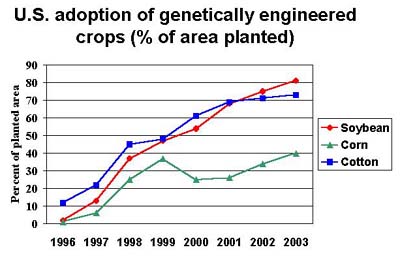
Herbicide resistant crops in US (source: Colorado State University)

Herbicide resistant crops in US (source: Colorado State University)

If you walk down the aisle of any American grocery store, around four-fifths of the packaged food available for sale to you has some genetically engineered ingredients. And of those ingredients, most have been genetically engineered to be resistant to Roundup. So this particular trait is very pervasive, not only in our grocery aisles, but all over the American farmland: most of the corn, almost all of the soybean, most of the cotton is grown to be Roundup resistant. In a sense we are having the debate about whether to label GMO foods quite late; the barn door has been open for a while, the horse has not only exited the barn but is romping around the landscape making daisy chains.

In this particular case, it isn’t the genetically modified seeds that are the issue, but the behavior that those seeds incentivize. The crops have been made invulnerable to Roundup, so that that particular weed-killer can get squirted around with pretty much wild abandon. What does that do?

Roundup

Roundup logo (source: Wikipedia)

Roundup logo (source: Wikipedia)

Glyphosate is a plant poison. It was developed by Monsanto in the 1970’s and, combined with other ingredients (some disclosed, some not) sold as a formulation called Roundup. As a herbicide, it was safer than the others that came before it. The earliest in the 1940’s was 2,4D which formed one half of the ingredients of the defoliant Agent Orange used in Vietnam. Then came Atrizine, which is known to be an endocrine disruptor, and is often found as a contaminant in drinking water.

Glyphosate was a blessing when it was discovered. It works by blocking plants from creating certain kinds of amino acids. Since humans and other animals do not have the ability to synthesize these amino acids in the first place (we must get them from plants), glyphosate simply does not have the power to harm us.

There was another reason why farmers must have rejoiced to have an herbicide like Roundup on their shelves; it is non-selective. A huge variety of plants, whether grasses, leafy plants, woody plants, or conifers, are affected by it. Stepping around on a lawn with Roundup-stained soles will in a few days turn those footsteps into brown patches.

The scientists also found that it generally sticks to the top few inches of soil  and doesn’t easily run off to pollute groundwater. Microbes are able to break it down while it is bound to soil. A miracle herbicide!

Safer but is it safe?

That is the theory. Reality is usually messier. For instance, given a big enough storm, the soil itself (with bound glyphosate) can run off into ground water, and there, microbes cannot break it down. Once in the water, a study showed that it induces changes in frogs by making them stressed as though there is a predator around, even when there isn’t.

Plus, all the studies that talk about the safety of glyphosate miss the point, because the Roundup formulation contains a long list of other ‘inactive’ ingredients that Monsanto is not required to reveal, that are actually more toxic.

A preservative in it — Proxel — can cause dermatitis. Roundup also contains a surfactant called POEA — this chemical allows Roundup to be properly wet, so that the plant can absorb it all the way to its roots — that has been shown to be toxic to fish. It also was found to kill human cells in a test tube, its power magnified by working in concert with glyphosate.

Glyphosate itself has been linked to non-Hodgkin’s lymphoma. Monsanto’s rejoinder to that study was basically that the association was weak, and that it proved correlation, not causation, ignoring the fact that while judging the toxicity of chemicals it is difficult to actually prove cause-and-effect without unethically exposing people to high levels of the stuff, just to see what happens.

Plus, one has to remember that while animals don’t create these amino acids, microbes do. So glyphosate has the obvious potential to harm good bacteria in our guts the same way in which it kills plants. In fact, a study found that glyphosate is implicated in celiac disease due to its impact on gut bacteria.

This factsheet from the Oregon state government is a good summary of harms from Roundup.

Despite all this, weed killers have their uses. Environmentalists, forest-management folks, people with the best of intentions, have used Roundup to remove invasive plants and preserve biodiversity. (There is no reason to use it on your ornamental lawn, however. None.) These folks, and farmers, have gotten by with a judicious application of herbicide where needed. Judicious, judicious, judicious, one must emphasize in the manner of realtors.

However, when Roundup Ready crops came on the market, judicious application of Roundup began to sound a little quaint.

Roundup Ready crops

Conventional crops are just as vulnerable to Roundup as any weeds might be. So farmers could not use it with impunity. They couldn’t use a ton of it or spray indiscriminately; for another thing, they couldn’t use it while their crops were growing, it had to be done before they have germinated. Since they didn’t have a magic bullet, they had to use a mix of weed management methods: a mix of herbicides, a mix of crops, and other ways of controlling weeds.

In the meantime, Monsanto’s patent on Roundup expired in 2000, which must have caused quite a bit of fretting among Monsanto’s business centers. They came up with a very ingenious new product that they could patent. They were able to create seeds of soybean, corn, cotton, etc., that weren’t affected by Roundup the way most plants are. How was this done?

It turns out that bacteria need to produce amino acids as well. But the enzyme they use for this purpose is different than the ones most plants use. Different enough that it doesn’t get affected by glyphosate, but similar enough that it can produce the needed amino acids. Scientists were able to take a gene from these bacteria that produces this slightly different enzyme to put into seeds to turn them into glyphosate tolerant crops.

It made the farmer’s life a lot easier, because they could spray Roundup all over without concern for the crops. It was Roundup and only Roundup, and a couple sprays all over did the job. Some called it agricultural heroin for farmers.

For Monsanto, this meant more sales of Roundup and a near-monopoly on sales of seeds.

For farmers, it meant convenience and certainty, at first. But, notice, they are subject to this rather pincer-like business practice of Monsanto — you have to buys seeds from the same company that sells you the spray, and neither can work without the other.

For consumers, it means that we are consuming a lot more herbicide. All samples of GMO soy were found to have residues of Roundup in a study published by Food Chemistry.

What does it mean for the environment? To examine this, we must forget about the marginal toxicities of Roundup that are the subject of endless debates and look squarely at what Roundup is advertised to do.

The missing monarchs

In the insect world the monarch butterfly is a bit of a prima donna. It is not only the showy good looks, but also how exacting it is in its needs. Eggs must be laid on a milkweed plant, because the emerging caterpillar will eat nothing else. Without it, the caterpillar will simply perish. Every year, monarchs migrate down from Canada to Mexico flying over the Midwest where they seek out milkweed. In recent years this population has dwindled down by 81%. The monarch is such a star that people noticed. Not only does it drive tourist business in Mexico, but is also the state insect for several American states.

Monarch caterpillar on milkweed (source: Wikimedia Commons)

Monarch caterpillar on milkweed (source: Wikimedia Commons)

Scientists have now found the cause to be the rampant spraying of glyphosate across farmlands in the Midwest. Milkweed happens to grow in those ignored areas that us humans don’t have much respect for — on the edges of farms, along highway shoulders. An edge of farmland that looks scrubby and pointless does not get the same respect as say a forest would. Since the advent of Roundup Ready crops, milkweed has declined by 58% with predictable devastation of the monarch population.

I want to emphasize that people only noticed the decline in the monarch population because of its glamour. There very well could be many other species that have been affected because of glyphosate use doing exactly what it is advertised to do — kill weeds.

Superweeds

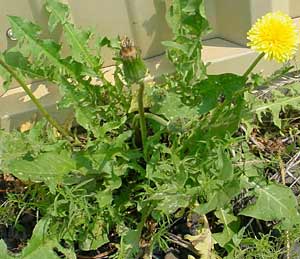
When I’m pulling weeds in my garden I often find that some weeds have deviously designed themselves to escape me. One such is the dandelion. Its leaves lie flat to the ground and spread out, which makes it hard to get a grip under the plant and pull it. If you manage to, you realize that it is anchored to the ground by a thick ropy taproot with a grip of death. Then as I tug on the root, it breaks off easily, leaving a part of it still underground ready to spring up into a new rosette when I’m gone.

Dandelion (source: http://www.garden.org)

Dandelion (source: http://www.garden.org)

Weeds are called that because they are escape artists. They have developed traits that let them survive whatever weed management you might use on them. If it is a lawn that is often mowed, they might lie flat against the mower (again, like the dandelion). If you mostly get rid of them by pulling, they might give you a false sense of security by breaking off easily but leave underground bulbs behind (like Oxalis, Bermuda buttercup). This is why we are forced to use several tricks to adapt to their adaptations; some by pulling, some by letting loose caterpillars that might feed on them exclusively; some by solarization.

With Roundup, it seems, farmers were not this nimble. With active encouragement from Monsanto they came to depend entirely on spraying of glyphosate since the Roundup Ready crops came on the market. While glyphosate use grew a lot in the years since 1997, the use of other herbicides fell.

Well, that was nothing but an invitation to weeds to independently develop their own resistance to glyphosate. Those farms were basically sitting ducks.

Pigweed (source: Wikimedia Commons user Pompilid)

Pigweed (source: Wikimedia Commons user Pompilid)

Two such weeds — pigweed and waterhemp — have become huge problems in the cotton and soy farms of the Midwest. Because of these and others, farmers were forced to use even more glyphosate, based on advice from Monsanto’s scientists, as says this statement from farmer Troy Roush.

Monsanto’s business practices are culpable here. In their 1993 petition to the US government to deregulate the use of Roundup Ready soybean, they insisted that weeds developing resistance to it was “highly unlikely” (the 1993 petition, page 56), mostly because no weeds had become glyphosate-resistant until then. They assumed that there was something about glyphosate that made it hard for weeds to develop resistance; also since glyphosate does not hang around in the soil, they would not have the time. Were their scientists trying to delude the government, or were they deluded themselves?

Nature is nimbler than you think

This ought to be a lesson to both sides — those that insist that GMO is contrary to nature, and those that insisted (above) that nature could never pull off what Monstanto’s smart scientists had taken ten years of intensive research to do. The trait in question — resistance to glyphosate’s ability to block creation of amino acids.

Interestingly, the first discovery of nature’s glyphosate-resistant weeds did not happen in a corn or soy farm, but in the backyard of Monsanto’s chemical factory along the Mississippi river. There, in ditches where glyphosate residue was often discarded, plants had been fighting this particular enemy for a while. By the 1980’s some weeds had already developed resistance to glyphosate in Monsanto’s own backyard and were growing happily in the sludge. When the scientists bothered to look, they found examples of Roundup Ready genes made by nature in their own ditches that did the job far more effectively than the gene they had spent ten years developing.

Yes, nature was easily able to pull off creating resistance to glyphosate. It just needed a reason.

Going to explore GMO in these pages for a bit

Dear readers, I have been remiss in posting recipes and reading all of your wonderful blogs. It’s just that a new bug has taken hold of me. I’ve become obsessed with learning as much as I can about genetically modified food. What is it? Is it healthy? Does it matter? What is the firestorm about? 

As I write this, one American state — ONE — Vermont, has passed laws requiring labeling of GMO foods as such. There have been reports of increasing farmer suicides in India over seed lawsuits. How much is hype, how much reality? What do I think about these issues?

Until about a month ago, I didn’t know what I should think, let alone what I did think. I have my biases. As my readers might have guessed (if nothing else, from the title itself) I love food, odd, wonderful, strange, bio-diverse foods. I don’t want to live in a world that is blanketed by one single strain of wheat across the all the temperate farmlands. 

I also love science. I don’t care a fig for politicians, CEO’s, football stars, movie stars, rock stars, even novelists and poets (very few exceptions to the last two). But when a scientist speaks, I listen. 

So I been on a journey to understand this complex debate. Being a writer, as I explore, I have been writing. What better way to understand? I am hoping that my following posts on GMO may interest some of you, maybe help clarify your thoughts too? 

I would love to hear in comments. Should I stick to recipes? I’d like to hear that too, if so. I will be doing posts on GMO hopefully interspersed with recipes. First up is my exploration of the world of Roundup Ready crops from Monsanto.

In my kitchen of #cookingfail

Ship FAIL

Shipment FAIL

The Internet has spawned its own jargon. One of these is the word ‘Fail’ attached as critique to a thought or an image. The classic is the image of a container ship running aground, boxes awry, with the words ‘Shipment Fail’ emblazoned on it. It originated from people poking fun at a late 90’s Japanese video game that used the phrase ‘You Fail It’ as a game over message. It has now become a way to simply interject disdain, without having to explain anything, while nudging and pointing at an unfortunate scene. The anonymity of the Internet sometimes encourages the worst of humanity, allowing one to mock the Anonymous Other without the moderating influence of having to do it in their presence.

In other words, I love it!! Let’s get started! Here is a litany of unfortunate scenes in my kitchen this month, for the IMK party hosted at the lovely Fig Jam and Lime Cordial blog.

One. Broil the Handle.

Broil the handle

Broil the handle

Starving for an eggless omelette made from chickpea flour, but really, starving in general, I brusquely threw some flour in with some water and neglected to measure amounts. Who needs to measure stuff when one’s instinct is so fine-tuned, I thought. Well, the batter was too wet; it wouldn’t set on the stovetop; so I popped it under the broiler for a few, forgetting that plastic and broiler don’t go well together. Result: flames (I apologize I couldn’t take pictures of the flames, since I was too busy dousing them); and next, ashes.

Two. Disembowel the Bread.

Disemboweled bread

Disemboweled bread

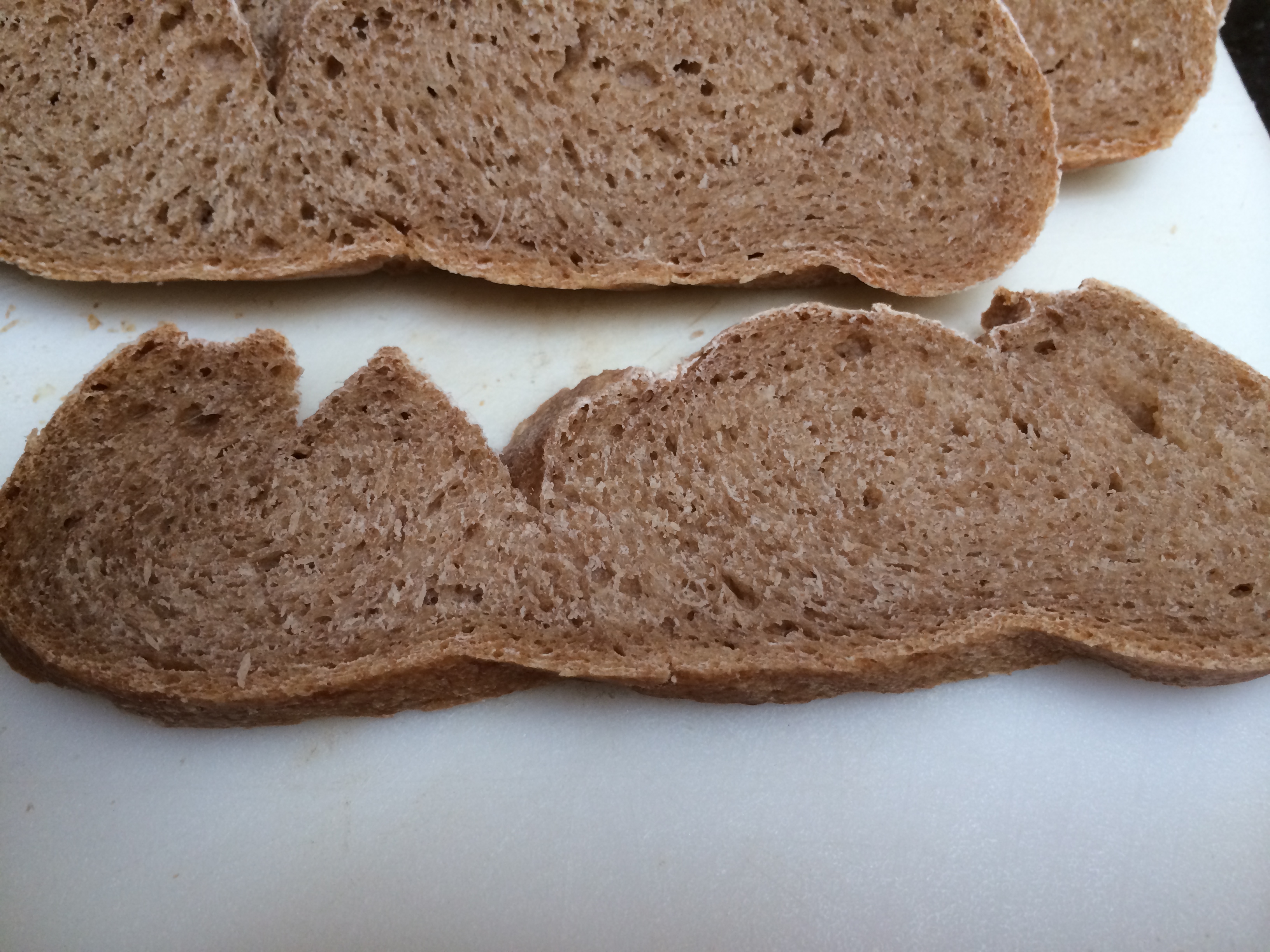
Deeply cut slice from disemboweled bread

Sawtooth slice from disemboweled bread

I usually shape the loaf and score it just fine. This time I tried a new method of shaping that involved making a sort of purse with infinitely rolled in edges. Well, you see the result. The process of baking made this loaf sort of explode from the inside and spill all its guts out. Still tasted fine, though.

Three. Flop the Yeast

Poof and its flat

Poof and its flat

Dosa batter is risen with the wild lactic acid bacteria found on the beans. While sourdough bread is risen with a culture of wild yeasts and lactic acid bacteria. Slight difference; so shouldn’t sourdough starter work on dosa batter? Well, you can’t reason with the microbes, I found. I tried this experiment, and yes, there was rising activity; but here is what I found.

Bubbles arose within a day. But instead of bubbles foaming nicely everywhere, they seemed to explode out of the middle, as you can see. It smelled nicely sour, but perhaps a bit too sour? Still hopeful, I tried making crepes (dosas) and cakes (idlis) with it. That’s when I realized what had happened: there had been so much microbial activity that the thing was as sour as a lemon and all the bubbles had foamed up and gone, so instead of a nicely risen idli, I got a flat goo. Unfortunate.

Note: This was supposed to be my entry for the first ever Novice Gardener challenge at the lovely blogger Angie’s place. The rules stated it must use yeast and herbs. I used both; consider this my late, rueful, tail-between-my-legs entry.

Four. Dough-rolling Disaster

Sticky dough on waxed paper

Sticky dough on waxed paper

Sticky dough shreds waxed paper

Sticky dough shreds waxed paper

I have been doing this for years, you would think I would have figured it out. While making this weekend staple breakfast from my childhood, I found that the dough had turned out a little too sticky. Instead of doing the smart thing and adding more flour, I thought I would try rolling it out between waxed paper sheets. This is the sort of thing that is supposed to work, right? Well I did get the dough rolled into a nice flat circle, but when I tried to peel the waxed paper off, I realized that the two sheets of paper and my dough circle had fused together into a single mass, and there was no separating them, under pain of death. You can see what happened — the paper ripped apart rather than let go. I had a miserable breakfast.

Five. No gluten FAIL

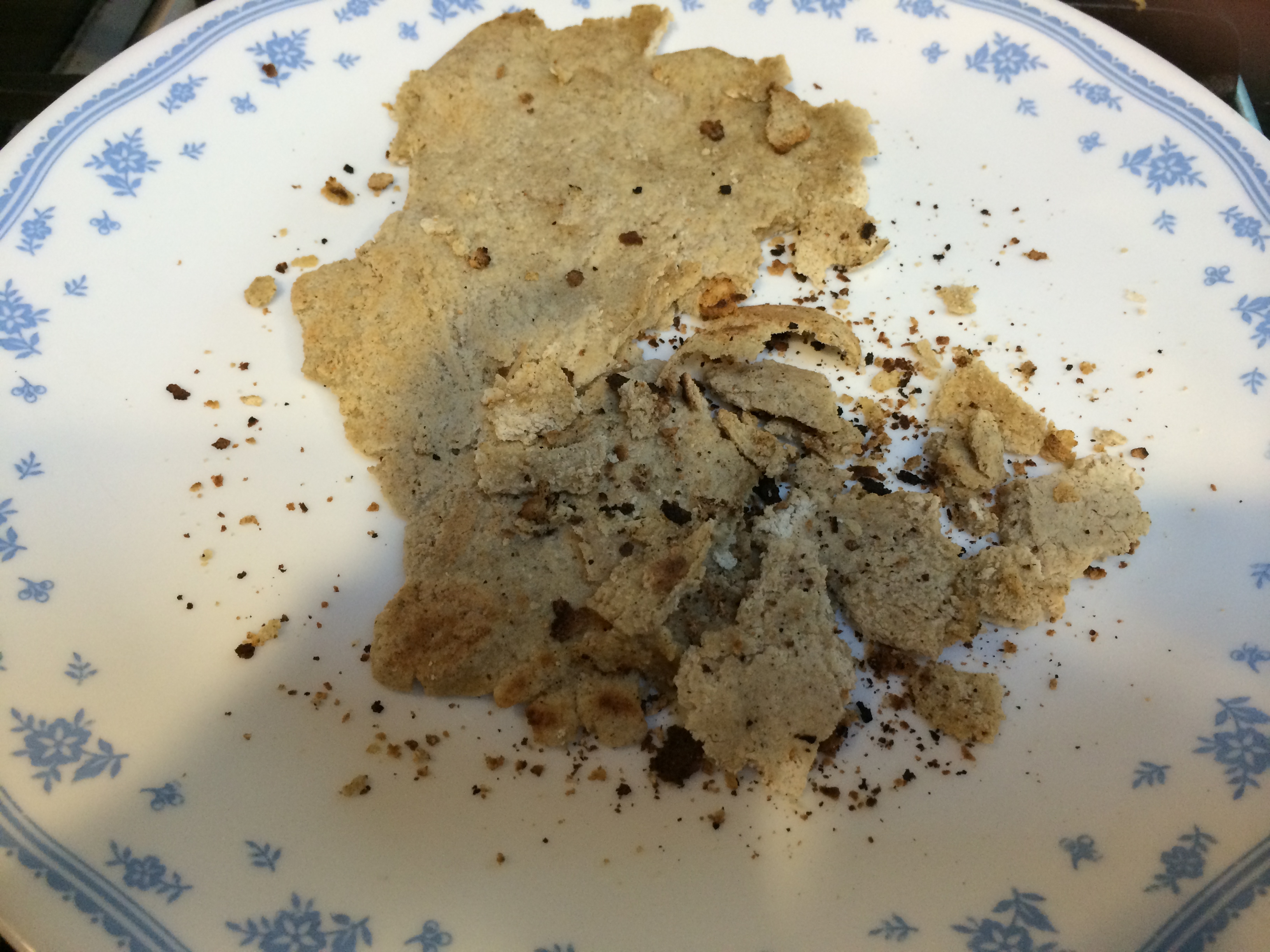
Flatbread that WILL NOT hold together. Fail.

Sorghum flatbread that WILL NOT hold together.

Falls apart more while on griddle.

Falls apart more while on griddle.

Brunt crumbs. Fail

Burnt crumbs. Fail

Ugh. Epic fail.

Ugh. Epic fail.

I am concerned that they may take away my Indian Food Blogger card if I admit this; but I am a disaster at making gluten-free rolled out flatbreads. The other day I tried doing this with sorghum (jowar). Sorghum has no gluten. Gluten is what holds bread together and allows it to be rolled out. How on earth is one supposed to do this?

Other food bloggers seem to have no problem with it. There must be a secret Twitter group that I don’t belong to where they dispense these secrets. Here’s a blogger (Chef Divya) doing a millet flatbead. Here is a blogger (Food Flavor Fascination) doing a sorghum one. And look what I got. Urrgh.
(Click here to find me on Facebook and here on Twitter.)

I’m no pastry chef, but look, chocolate cake!

Eggless chocolate cake

Eggless chocolate cake

Situation:

Husband: Has a birthday. Chocolate fan. Not a spring chicken, worries about sugar and fat. But wants cake. Needs cake.

Me: Not a fan of chocolate. Don’t have a sweet tooth. Not much of a pastry chef either. But cake must be had!

Daughter: wants to ‘help’!

I think I did decently. My husband thought so, even though he spent the whole time worrying if I was making the frosting rich enough and covering all the gaps and the rest of the time worrying about how much fat he would be consuming.

In any case, this is about the simplest cake one can make and it turns out great. I got the recipe from the King Arthur site, but just to show how simple the cake and frosting are to make, I will put down the recipe in a sort of telegraphese.

Kiddo helping with the mixing

Kiddo helping with the mixing


One layer

One layer


Slathering

Slathering


Slice

Slice

Cake

In a bowl, stir together the dry ingredients: 1.5 cups all purpose flour, 2/3 cups brown sugar, 1/4 cup unsweetened cocoa, 1 teaspoon baking soda, 1/2 teaspoon salt.

Pour in the wet ingredients: 1/3 cup almond oil, 1 tablespoon vinegar, 1 teaspoon vanilla, 1 cup milk.

Stir it all together.

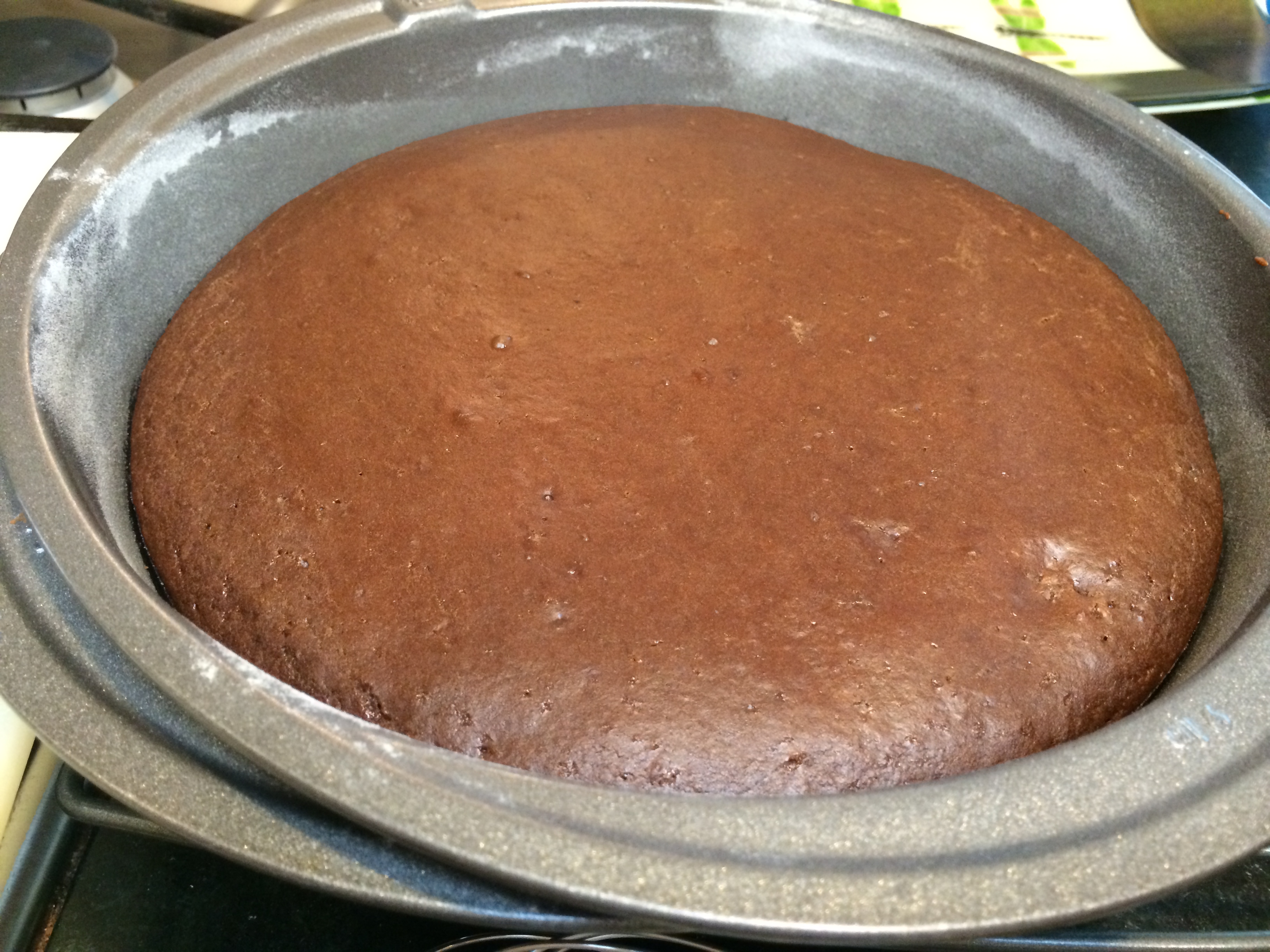
Pour half into one 8-inch round cake pan, half into another. Bake at 350°F for 20 minutes. If you pour it all together into a single cake pan, let it bake for about 30-35 minutes.

Frosting

In a bowl, microwave 1 cup cream for 1 minute. Put in 8 ounces bittersweet chocolate and stir, microwave again for 1 minute. Keep stirring, if the chocolate still refuses to melt, give it 30 second whirls at a time and stir, stir, stir. Eventually, it will become luscious and smooth. Allow it to cool slightly, then slather it over one layer of the cake, lay the other layer over it, and slather over it some more, and slather over the sides.

Recipe source: 

King Arthur Flour’s original cake-pan cake

Chocolate ganache

(Click here to find me on Facebook and here on Twitter.)

Global unity through hot sauces

Sambal

Sambal Hebi

The other day I was doing my favorite thing — making a hot sauce, in preparation for doing my other favorite thing — eating a meal with a hot sauce. And I started to think upon the unity of all humanity. While I have been known to have the occasional Deep Thought, I usually need some prodding to produce one. The prodding that produced this particular Deep Thought was the following.

Over the course of the past couple months I had occasion to make a few hot sauces. These were from different cuisines: we made burritos at home, so I made a Mexican hot sauce once; another time, for dosas, I made a tomato chutney; and then the other day, experimenting with Malaysian food, I tried making a chili paste called Sambal Hebi. I seem to be doing the same thing over and over, I thought. With just a couple twists each time to add some local flavor.

Tomato chutney

Tomato chutney

Well, given that they all use dried red chilies for heat, and perhaps some garlic or onions as aromatics, there certainly is commonality. Humans from these three rather disparate regions of the world really do seem to think alike — perhaps we are all the same under the skin?

So here is my global hot sauce template; if you are able to adapt this method to yet another hot sauce from another cuisine I’d love to hear about it.

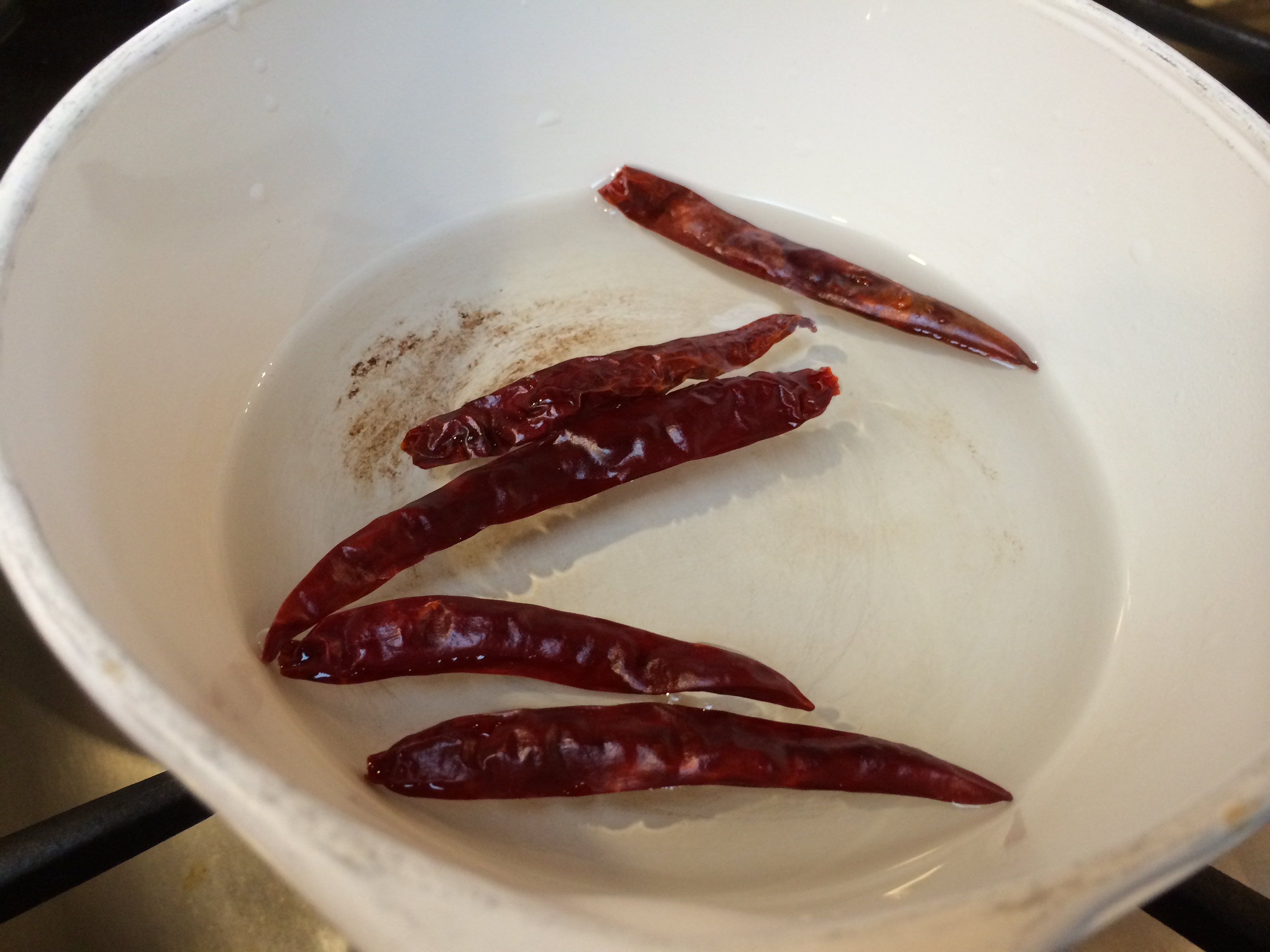
Step 1: Soak the dried chilies in hot water.

Same for all the hot sauces. Choose a mix of large, not-so-hot dried red chilies, and small, hot dried red chilies, according to your heat tolerance. Bring a cup of water to a boil and soak chilies in it until softened, about 15 minutes. Pull off the stem and remove seeds and ribs if you like. They are ready for the sauce.

Soaking dried red chilies

Soaking dried red chilies

Step 2: Broil the vegetables.

Mexican hot sauce: I used half an onion, 3-4 cloves garlic, 3 tomatoes, halved. South Indian tomato chutney: I used 2 cloves garlic, 3 tomatoes, halved. Malaysian sambal: I used half an onion, 3-4 cloves garlic.

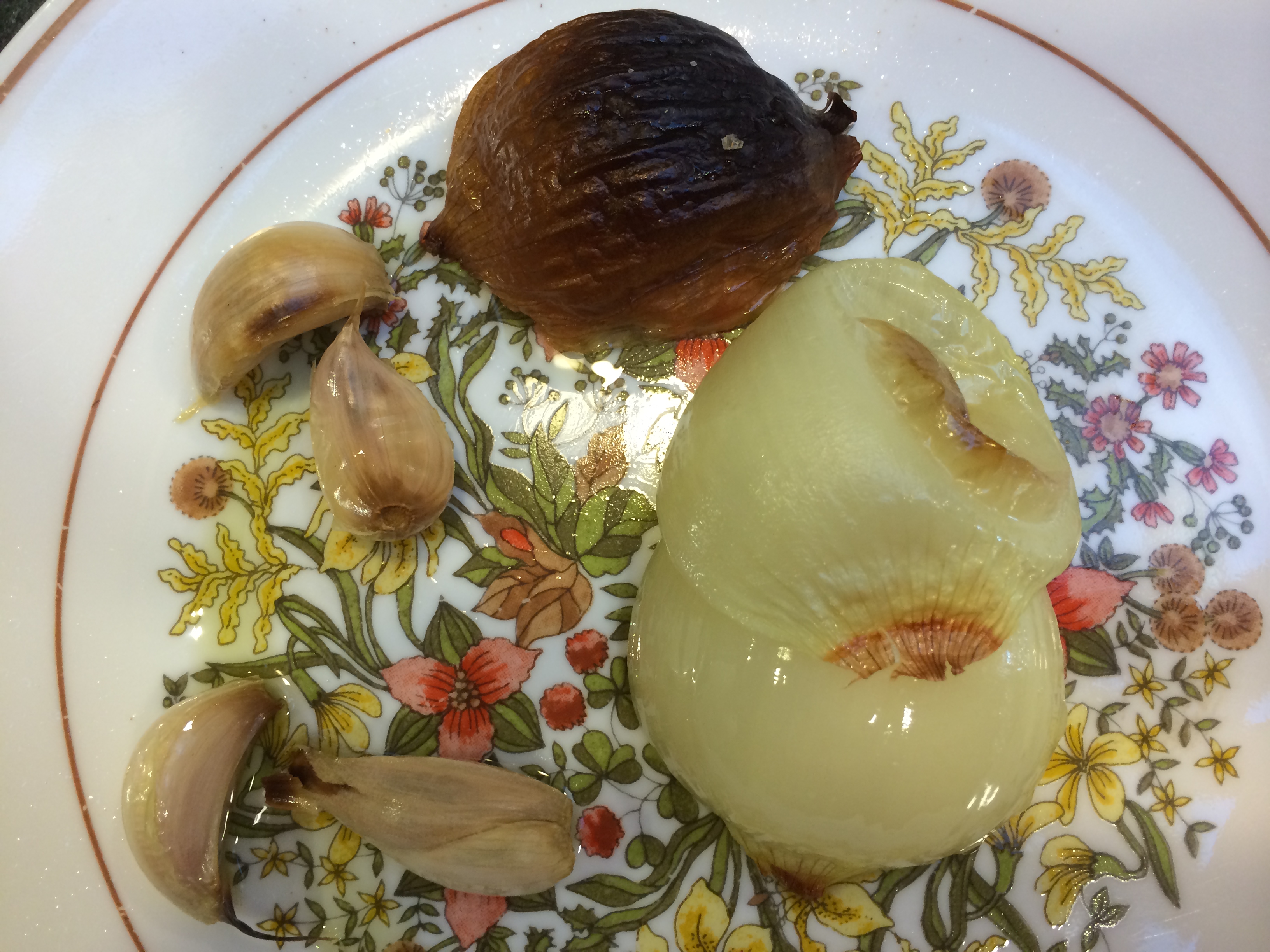
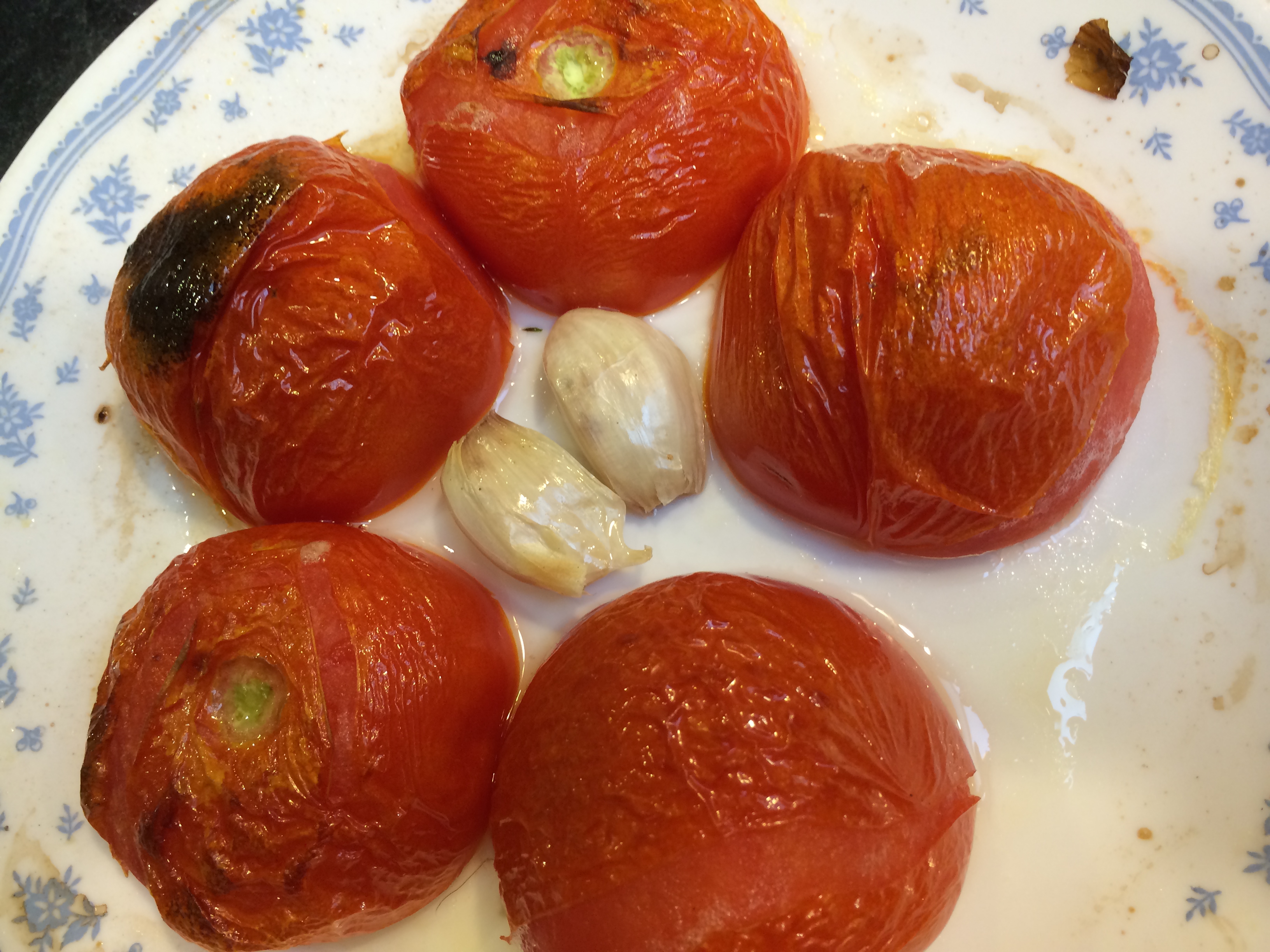
Leave the garlic, onion, tomato unpeeled. Rub some oil over and broil for about 6 minutes. At this point, the papery skin of garlic/onion will have darkened, and the tomato skin can simply be peeled off.

Broiling onion and garlic for Sambal

Broiling onion and garlic for Sambal

Broiling tomato and garlic for tomato chutney

Broiling tomato and garlic for tomato chutney

Step 3: Blender

Vegetables and softened chilies go into the blender together. Along with salt to taste. If you need liquid to make the blender happy, pour in some of the oil and collected juices from broiling the vegetables; if you need more, add some of the chili soaking liquid.

Step 4: Cook

Empty out the blended hot sauce into a pot and bring to a boil. Then simmer. It only needs to cook for a few minutes. The color will change. Give it a preliminary taste to make sure the salt is right.

Tomato chutney on stovetop

Tomato chutney on stovetop

Step 5: Finishing for the Mexican hot sauce:

If you are doing a Mexican hot sauce, add a teeny bit of vinegar or lime; that’s it, you are done. Slather it over some refried beans.

Step 5: Finishing for the South Indian tomato chutney:

You can let this chutney cook longer to dry it somewhat more than the Mexican hot sauce, as it doesn’t have to be of a pouring consistency.

Heat a tablespoon of coconut oil in a pan. When hot, put in a half teaspoon of split and dehusked urad dal (Vigna Mungo), when that reddens, half a teaspoon of black mustard seeds, when they pop a few curry leaves. When they shrivel turn off the flame and pour the coconut oil into the tomato chutney. Stir to combine.

Step 5: Finishing for the dried shrimp sambal (Sambal Hebi):

First, a bit about this chili paste, because it was new to me. ‘Sambal oelek’ is a simple chili paste used all over Singapore/Malaysia as a base for many of their dishes; while ‘Sambal Hebi’ has added dried shrimp, garlic and shallots. With the excellent umami additions, this paste can be had as a simple and delicious accompaniment for rice (that’s not how I used it, but the story of what I did with it will have to wait).

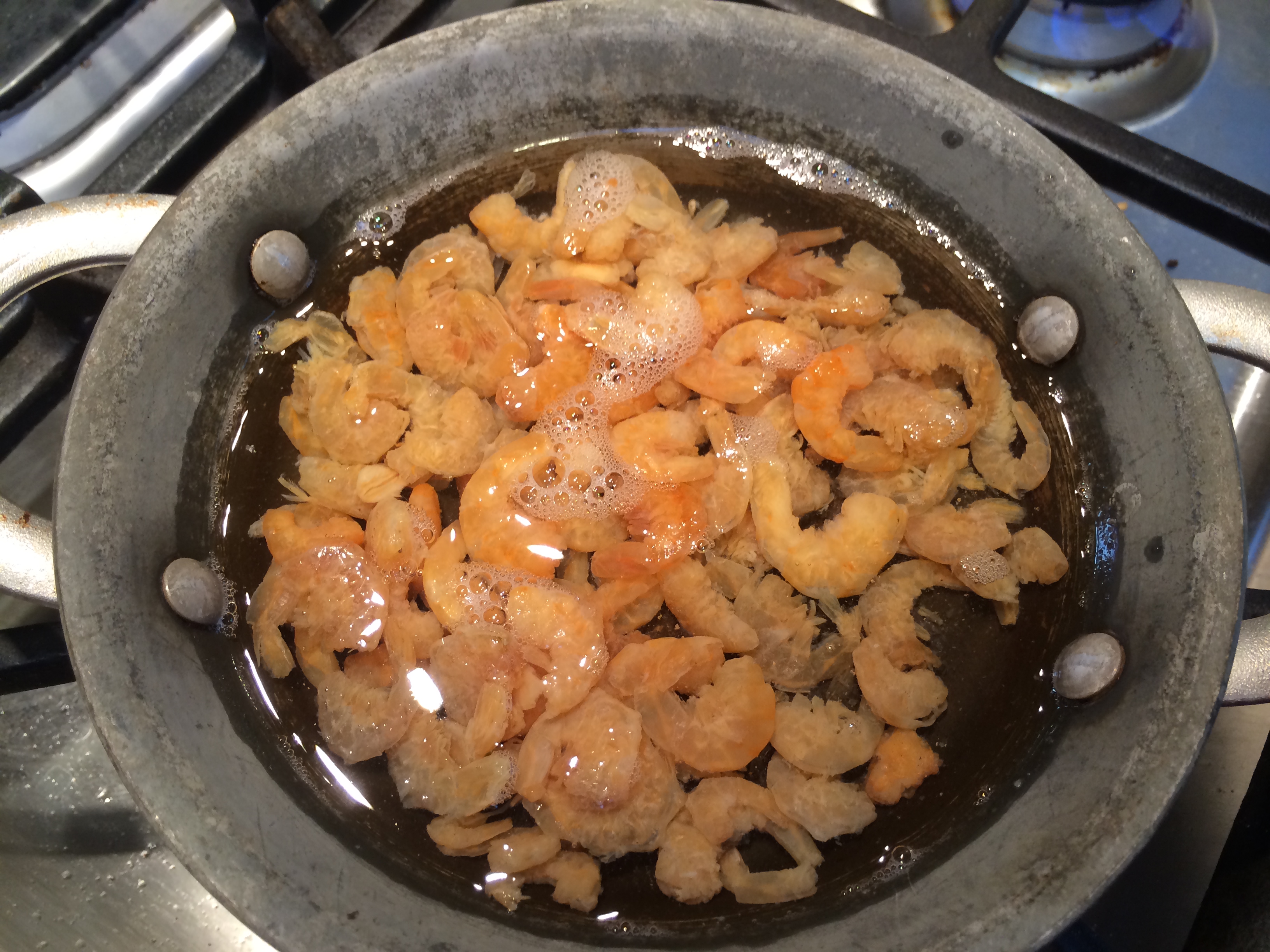
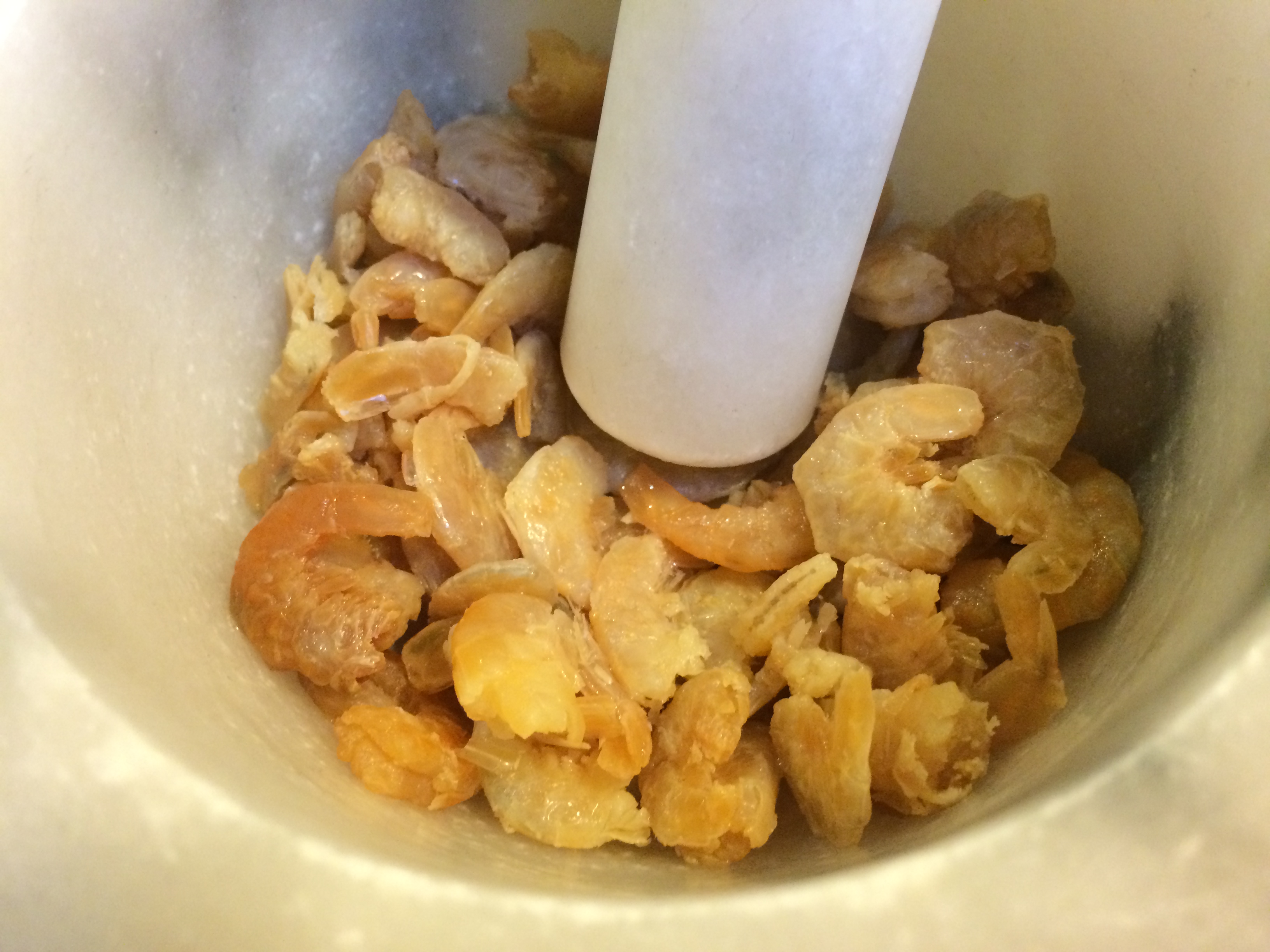
Bags of dried shrimp should be available at an Asian grocery store. Here is an online source of it: The Asian Cook Shop. While you are preparing the rest of the sauce, soak about half a cup of dried shrimp in hot simmering water to soften. In 15 minutes, that should be done; take the shrimp out and smash them in a mortar and pestle if you have patience, if not, whirl them in a blender.

Dried shrimp for sambal

Dried shrimp for sambal

Dried shrimp softening in hot water

Dried shrimp softening in hot water

Now remember for the sambal we did not use any tomato, just the garlic, onion and chilies. So the paste will be drier to start with. When you cook the paste, use a bit of oil, and cook it longer than the above two until the oil separates. Also, I did not use any salt at all, preferring to add enough soy sauce to cover the needed saltiness.

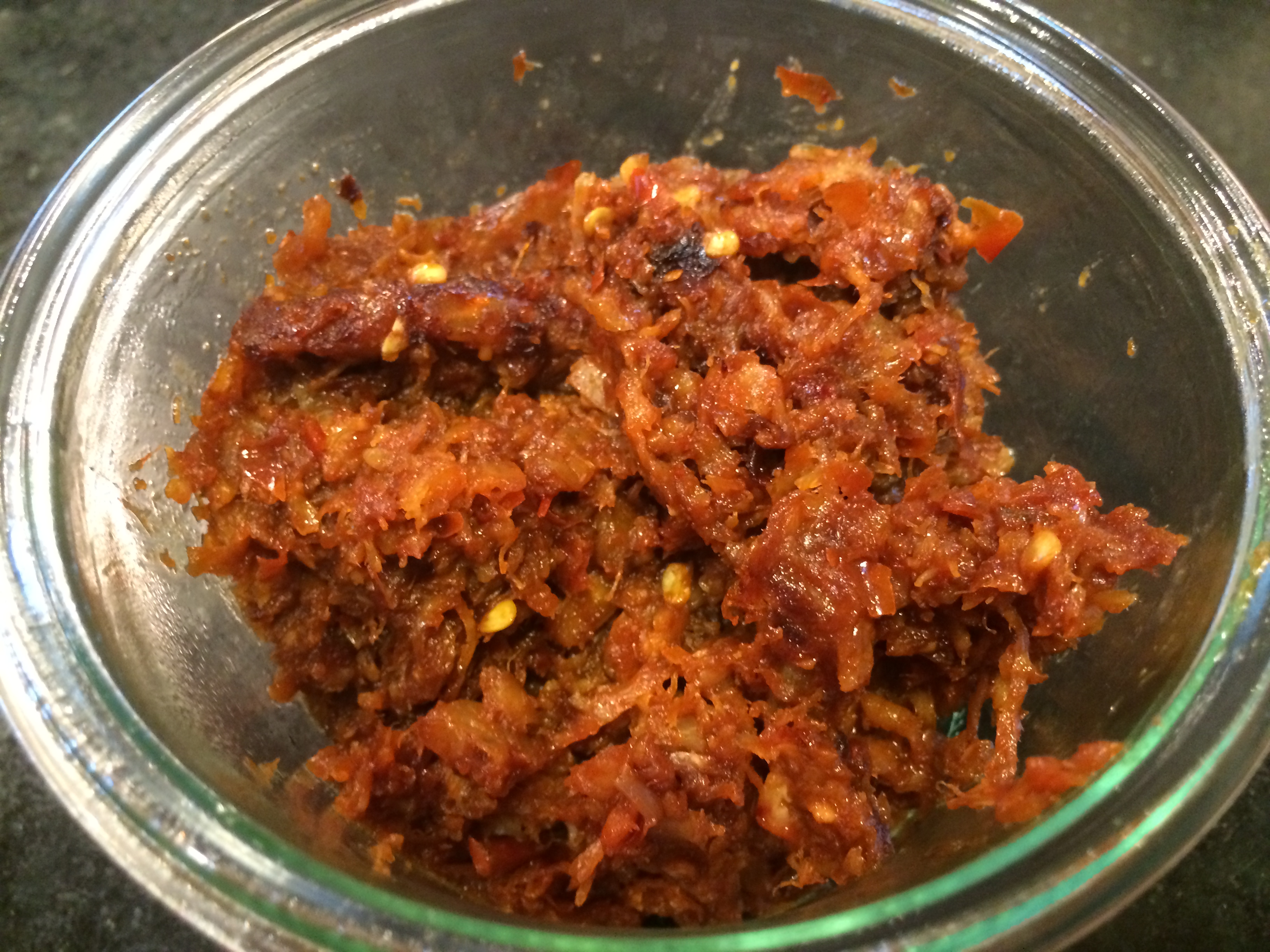
Next put the dried shrimp into the pot: stir to have them cook and the entire paste dry up — about 10 minutes. Add a tablespoon of soy sauce, stir to combine, and you are done.

Pounding dried shrimp

Pounding dried shrimp

Pounded dried shrimp

Pounded dried shrimp

Sambal Hebi is done, ready for use as a base for noodles, as a sauce for vegetables, or simply with rice. Recipe source: Indochine Kitchen.

Pounded shrimp added

Pounded shrimp added

Soy sauce added

Soy sauce added

Mexican hot sauce

Ingredients:
  • 3 large tomatoes
  • Half a medium onion
  • 3-4 cloves garlic
  • Mix of hot and mild dried red chilies according to taste
  • Salt to taste
  • 1 tablespoon lime juice or 1 teaspoon vinegar
Method:

Described in detail above but in brief: soak the dried red chilies in hot water for 15 minutes. Cover with oil and broil the vegetables (unpeeled) for 6 minutes. Blend along with salt. Cook on stovetop for a few minutes. Add lime juice/vinegar.

South Indian tomato chutney

Ingredients:
  • 3 large tomatoes
  • 3-4 cloves garlic
  • Mix of hot and mild dried red chilies according to taste
  • Salt to taste
  • 1 tablespoon coconut oil
  • 1/2 teaspoon urad dal (split and dehusked black gram)
  • 1/2 teaspoon black mustard seeds
  • Few curry leaves
Method:

Described in detail above but in brief: soak the dried red chilies in hot water for 15 minutes. Cover with oil and broil the vegetables (unpeeled) for 6 minutes. Blend along with salt. Cook on stovetop until reduced a bit. Heat coconut oil until shimmering. Add, in this order, the urad dal, when they redden the mustard seeds, when they pop the curry leaves. Turn off and empty the coconut oil into the chutney and stir well.

Malaysian sambal hebi

Ingredients:
  • Half a medium onion or couple shallots
  • 3-4 cloves garlic
  • 1 tablespoon oil
  • Mix of hot and mild dried red chilies according to taste
  • 1/3 to 1/2 cup dried shrimp
  • 1 tablespoon soy sauce
Method:

Described in detail above but in brief: soak the dried red chilies in hot water for 15 minutes. Cover with oil and broil the vegetables (unpeeled) for 6 minutes. Blend to a paste.

Meanwhile prepare the shrimp: soak in hot water for 15 minutes until softened. Pound with a mortar and pestle.

Heat oil in a small pot. Empty the chili paste from the blender into it and cook until the oil separates. Add the shrimp to the pot, stir well to combine, and cook for 10 minutes until dry. Now add the soy sauce and stir nicely.


(Click here to find me on Facebook and here on Twitter.)

Gujarati kadhi to soothe the heart of beasts

Gujarati Kadhi

Gujarati Kadhi

I must have had a stressful week at work because this is my second post about comfort food with rice.

It is probably foolhardy to attempt a definition, but ‘kadhi’ is a boiled liquid of yogurt and chickpea flour that is made in various ways all over India. It combines the sourness of yogurt with the body added by the chickpea flour, and some sweetness, usually. The result is so soothing that the aromas can bring the most hardened criminal rushing back home to his mother’s kitchen. While I’m not suggesting you use this for crime management anytime soon, it is certainly one of the simplest Indian recipes to put together for non-Indian cooks.

Now every region of India, even every micro-region, has its own version. But the salience of each of the few ingredients in this recipe is such that each cook’s kadhi will be a little different. The number of tablespoons of chickpea flour used makes a difference, as does the sourness of the yogurt you started with; also how much chili heat has been added or how much sugar.

I grew up eating lunch at Gujarati friends’ houses, so I have a special place in my heart for the Gujarati kadhi. It goes well with soft white rice or creamy khichdis. But we had it with Bhutanese black forbidden rice and green beans on the side.

This version is from Taste of Gujarat by Nita Mehta.

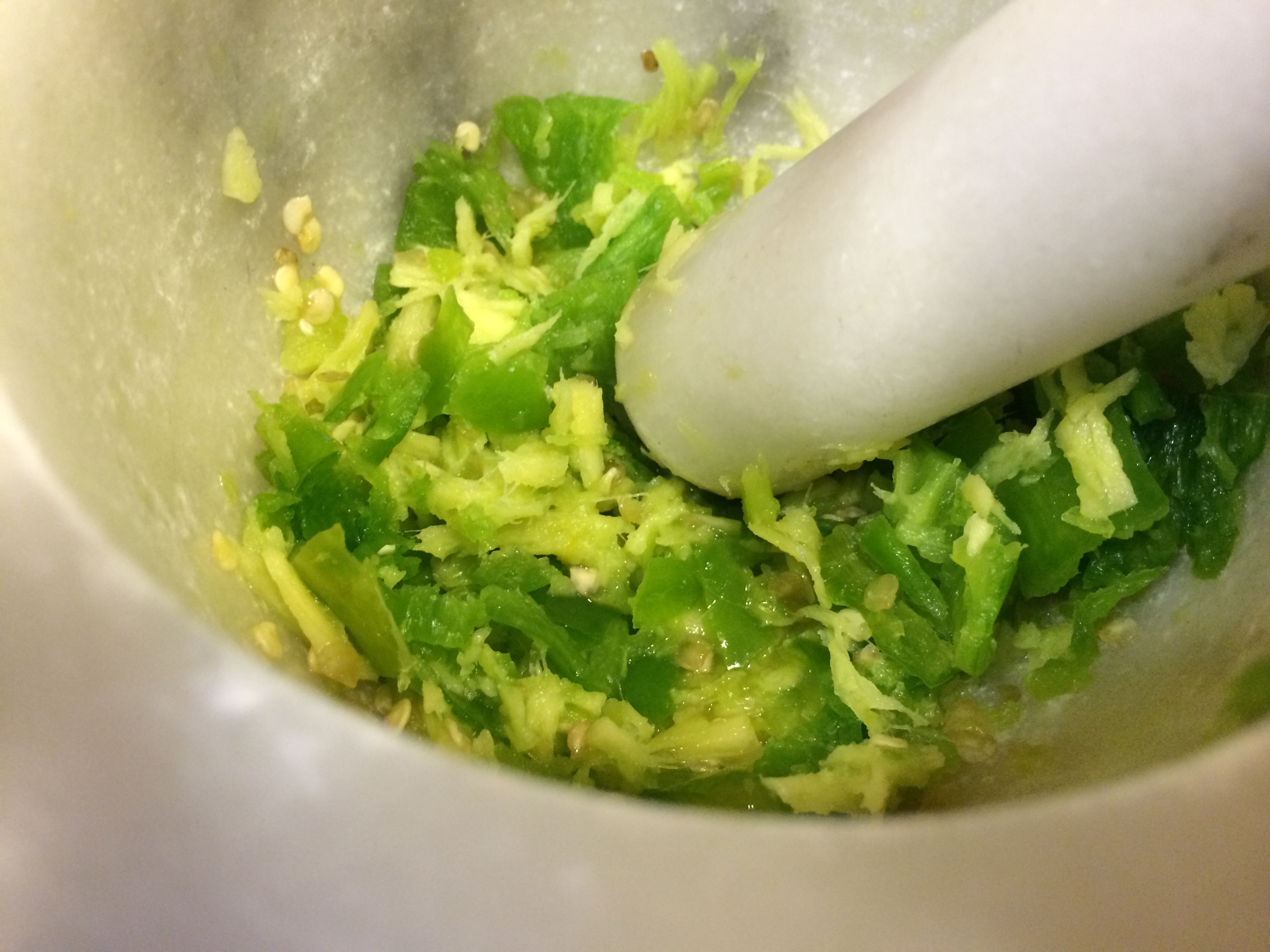
Paste of chili and ginger

Paste of chili and ginger

Blending yogurt, chickpea flour, turmeric, chili-ginger paste

Blending yogurt, chickpea flour, turmeric, chili-ginger paste

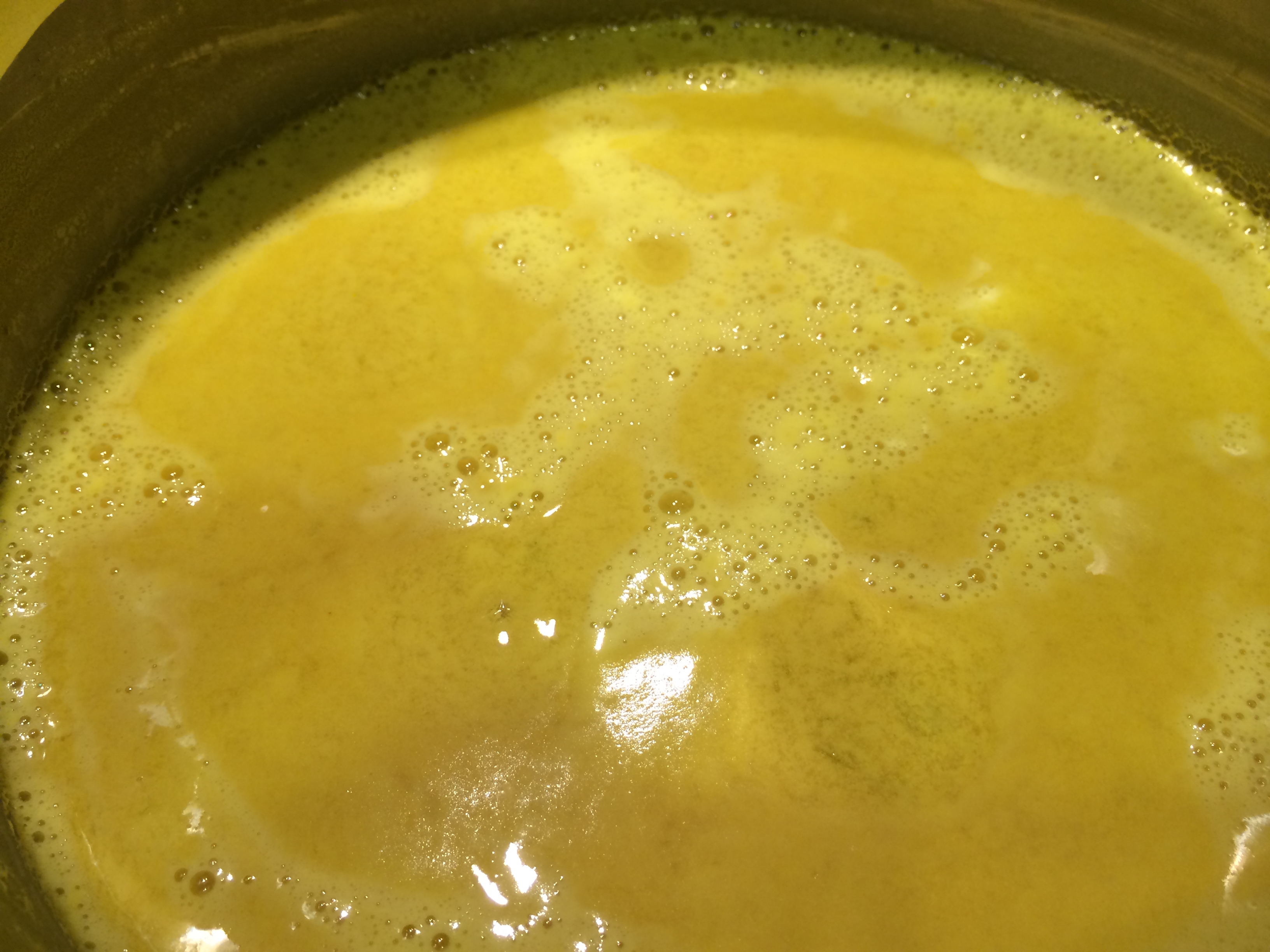
Whisking kadhi on stovetop

Whisking kadhi on stovetop

Kadhi ready to temper

Kadhi ready to temper

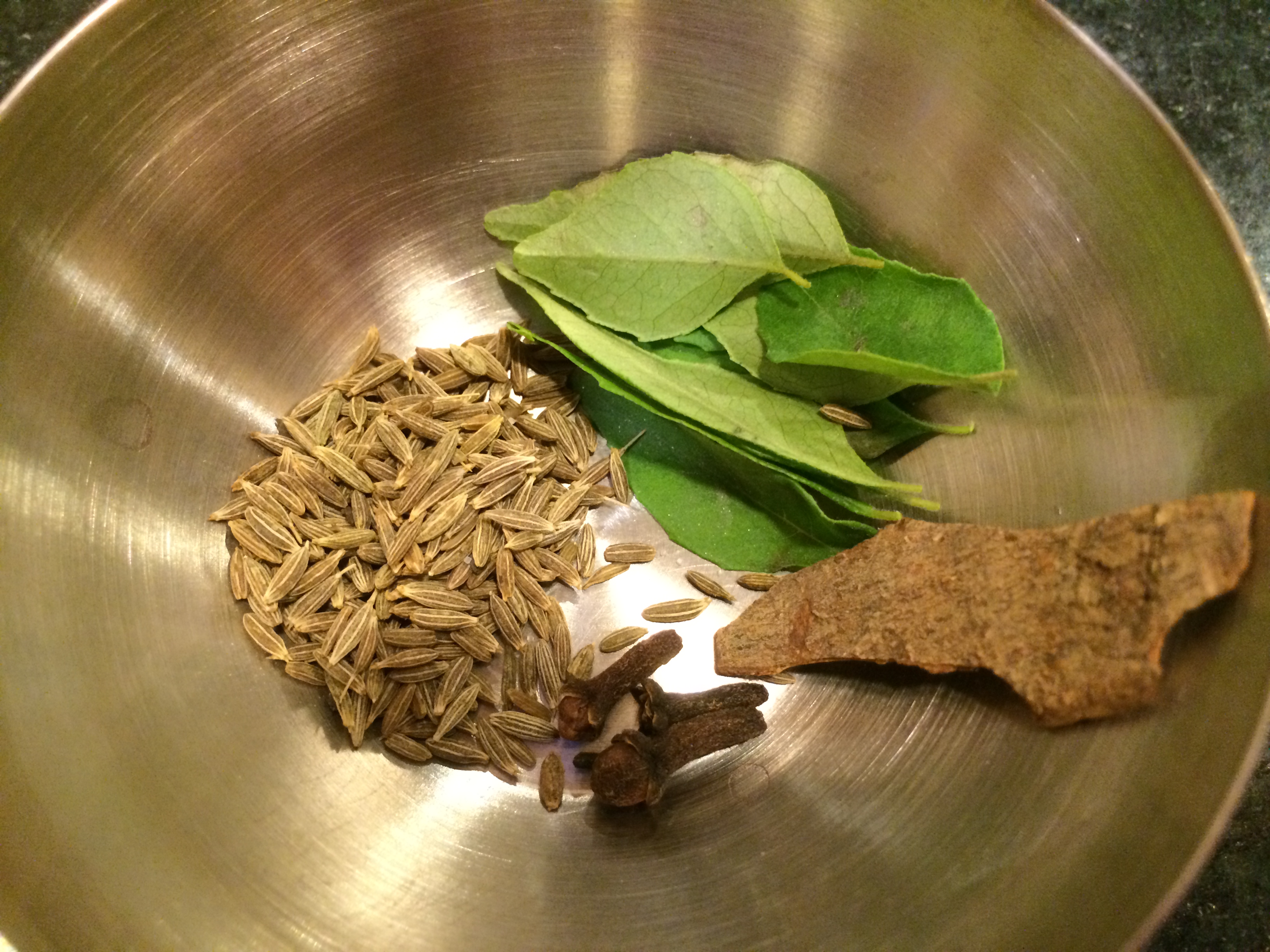
Tempering spices for kadhi

Tempering spices for kadhi

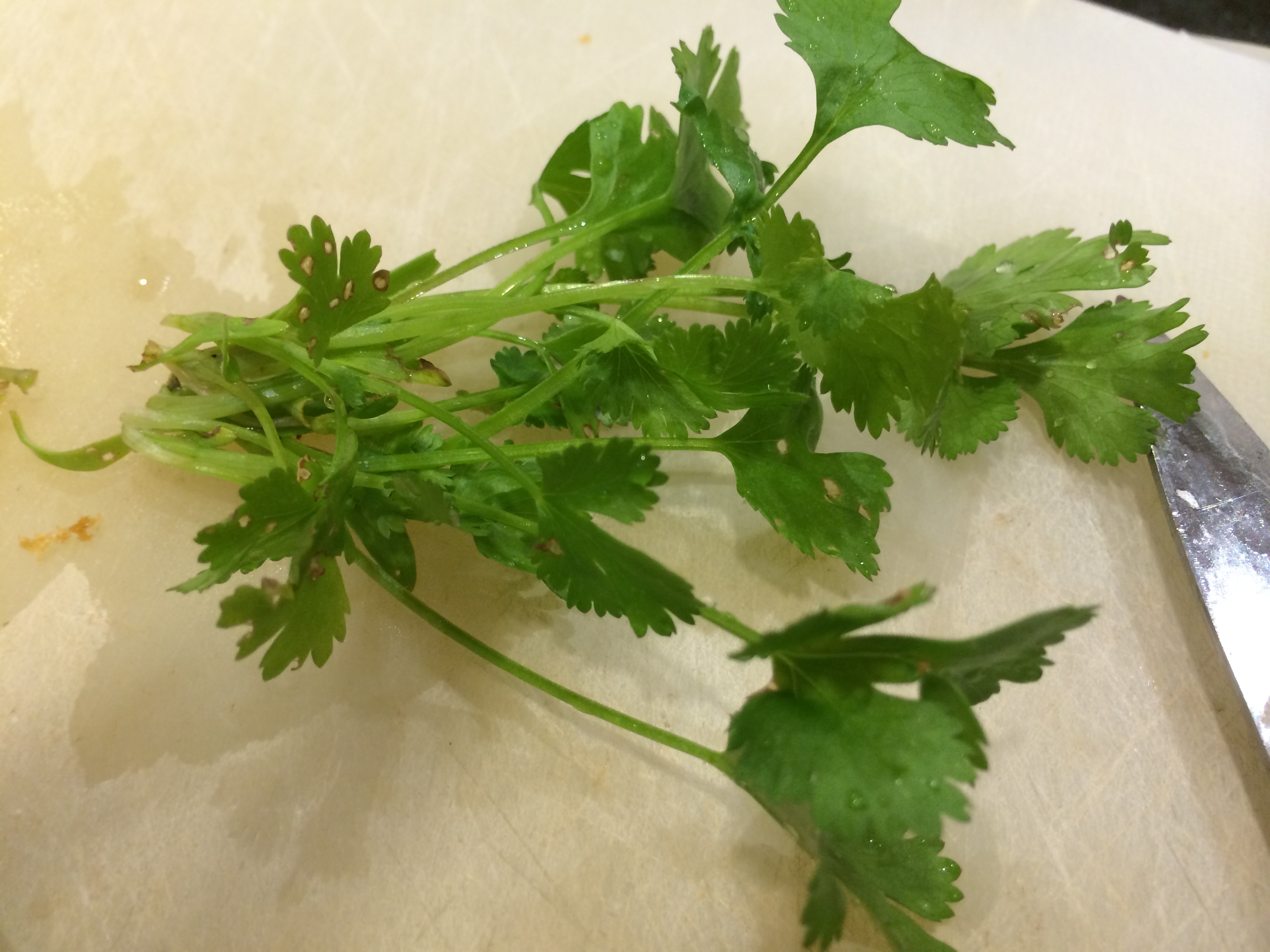
Cilantro

Cilantro

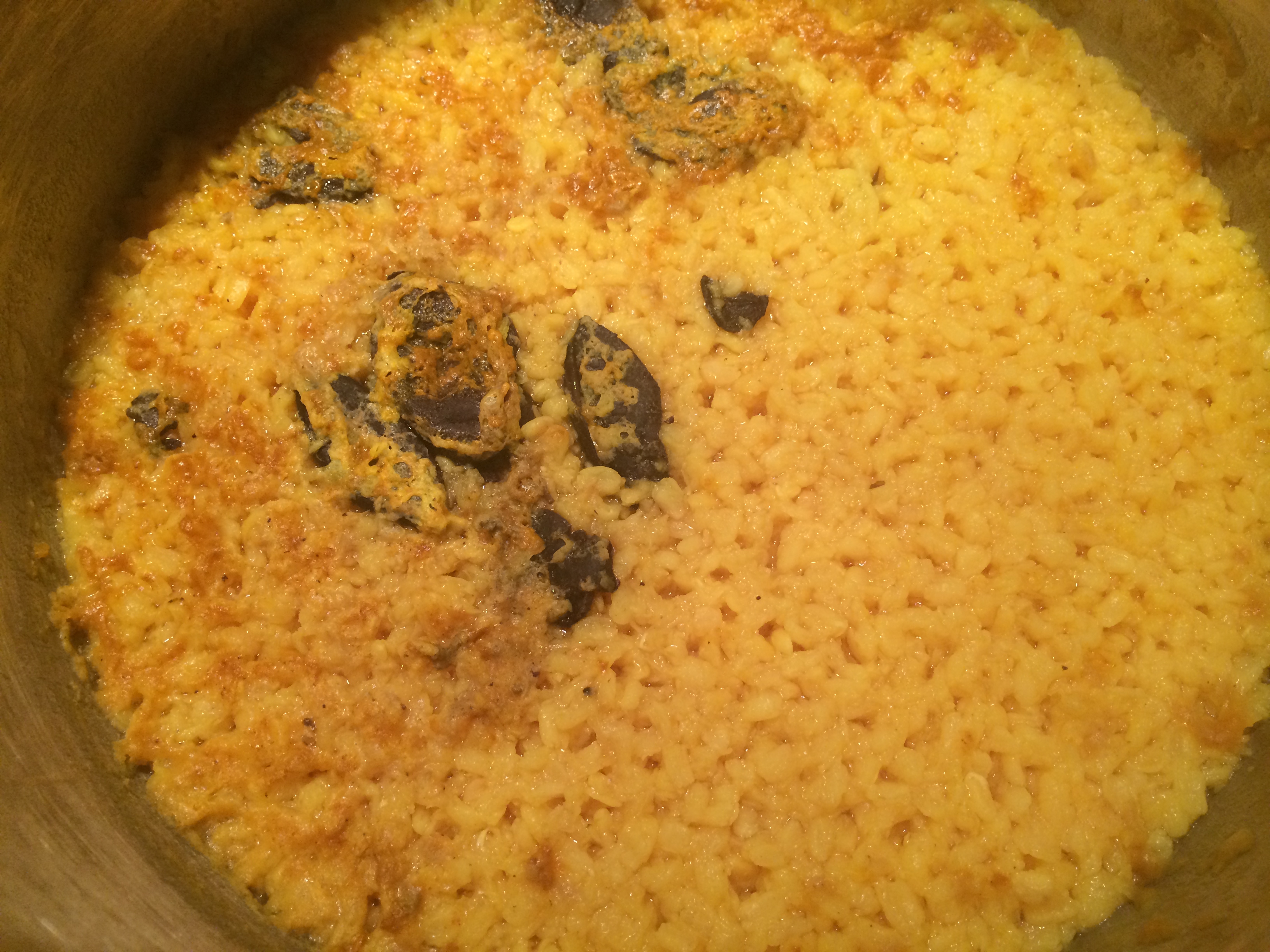
Kadhi done

Kadhi done

Kadhi over black rice

Kadhi over black rice

Gujarati Kadhi

Ingredients
  • 1 cup yogurt (sour is good)
  • 1 tablespoon chickpea flour (besan)
  • 1 – 3 fresh green chilies, as per your heat tolerence
  • Half inch piece of ginger
  • 1/4 teaspoon turmeric powder
  • 1/2 teaspoon salt
  • 1/4 piece of Indian jaggery, or 1 teaspoon honey, or 1/2 teaspoon sugar
  • Some minced cilantro
  • Tempering:
    • 1 tablespoon ghee (substitute with oil)
    • 1 small piece cinnamon
    • 4 cloves
    • 5-6 curry leaves (if you don’t have this leave it out)
    • 1/2 teaspoon whole cumin seeds
Method

Make a paste of the ginger and chili in a mortar and pestle. In a blender, put in the yogurt, the chickpea flour, turmeric, salt, the paste from above, and 1 cup water. Give it a whirl to combine. Put this soup in a pot and bring it to a boil. At this point you can add the sweetener. Let it simmer, uncovered, for about 15 minutes.

Now the kadhi is more-or-less done, all that is left is the tempering. Turn it off and cover it. Heat the ghee in a small pan. When fully melted and shimmering, put in the cinnamon and cloves; when they sizzle the cumin seeds; when that sizzles the curry leaves. They will shrivel up quickly. Turn off the heat and pour the ghee into the kadhi. Also add the minced cilantro (this does not need cooking). Stir nicely and enjoy with rice.

Yellow mung dal with mangosteen

Moong dal served with radish cucumber salad

Moong dal served with radish cucumber salad

People have been eating locally long before it became a ‘thing’ and got its own hashtag. Thousands of years back essentially everyone was a locavore. All food was made out of plants that grew in the backyard fields or roots and shoots gathered from nearby forests. And sometimes a couple of these backyard ingredients came together in recipes that have remained classics.

I like to think of it has the boy-next-door and the girl-next-door getting married. How can a dish like that not be comfort food!

One such ingredient from the West coast of India is mung bean. There is more information about it here. This recipe calls for the split, dehusked form.

The other locally grown ingredient from the same region is the Indian mangosteen fruit. It grows mostly wild around the wet evergreen forests. The website Aayi’s recipes focuses on recipes from the Konkan coast and has great information (and pictures!) about it here. I have to admit that unlike that author, I did not grow up lobbing fresh mangosteen fruit at my brother. In fact I have never seen a fresh one, as far as I know. I had a city upbringing, and we obtained the dried and blackened rinds of the fruit in a bag. This is how it is used in this and in most other recipes.

kokum

Dried rind of Indian mangosteen, kokum

I can only imagine the sizzle and joy when these two ingredients first came together in a pot. Moong dal cooks into a creamy yellow pulpy thing, and the added rind of mangosteen (kokum) adds a very subtle sourness in a way that cannot be replaced by lemon or other souring agent. This dish is made more liquid to go with rice. There are no sharp flavors here — it is pure comfort food. When I was a child I enjoyed making it more bland by mixing it with some plain yogurt.

Some pictures to show the process.

Soaked and drained moong dal, turmeric, kokum together in a pot

Soaked and drained dal, turmeric, kokum together in a pot

Herbs for moong dal, prepared

Herbs for moong dal, prepared

Moong dal, cooked

Moong dal, cooked

Herbs, sizzling

Herbs, sizzling

Moong dal all done

Moong dal all done

Moong dal with kokum

  • Servings: 2
  • Difficulty: Easy
  • Print

Ingredients:
  • 3/4 cup dehusked and split yellow moong dal
  • 5 or 6 pieces of dried rind of mangosteen fruit (kokum)
  • 1/2 teaspoon turmeric
  • 1-4 fresh green chilies (I used serrano)
  • 4-5 large cloves of garlic
  • 5-6 curry leaves, if you don’t have them leave them out
  • 3/4 teaspoon mustard seeds (optional)
  • 2 tablespoons oil
  • 3/4 teaspoon salt
Method:

Rinse the dal in several changes of fresh water, running your fingers through to free up the loose starchy powder, until the water runs somewhat clear.

Put it in a pot along with the turmeric and the kokum and three cups of water. Bring it to a boil, then let it simmer for about an hour, partially covered. Or, you can use a pressure cooker, cooking under pressure for 15 minutes.

Once the dal is cooked down to being completely mashable, whisk the liquid to make it creamy. Add salt and turn it off, covered.

At this point, let’s start the tempering. Slice the garlic and the chilies. Just for the fancies, I sliced one of my chilies and simply vertically halved the other. Heat the oil in a small thick-bottomed pan. When it shimmers, put in the mustard seeds. They will presently pop. The rest of the fresh herbs, chilies, garlic, curry leaves go in. They will sizzle and cook. When done, turn off, pour the oil over the dal, and stir it in nicely.

Cilantro for garnish if you like. This goes well with white rice, with some salad or relish of fried stuff alongside.