Efficient butternut-tomato soup

A quick and easy soup that can be done quickly for a weeknight dinner but does not sacrifice flavor at all. This amount of soup was enough for four as a soup course, or for two as dinner.

Step 1: Squash.

butternut squash soup 001

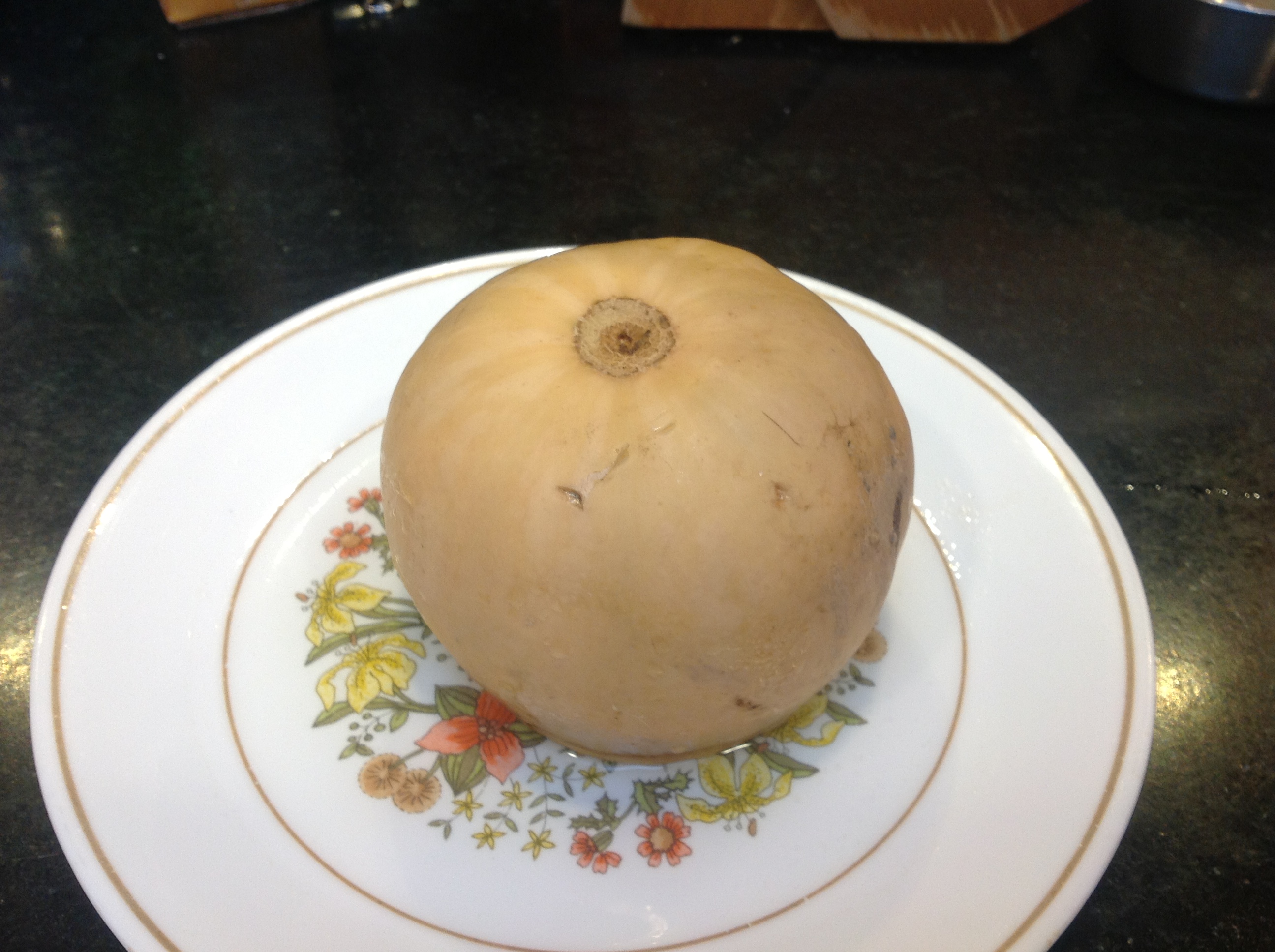
Start with about half a medium butternut squash. Or you could go with pumpkin, but as you can see, I went with butternut. Put some water on the dish and stick it in the microwave for 5 minutes.

Step 2: Deseed and peel.

butternut squash soup 002

The squash comes out softened and partially cooked, as seen above. Cut in half across, it becomes very easy to deseed with a scoop-shaped spoon, as pictured below. As far as the seeds go, I like to chomp on a few of them as they are, the shell and the pith notwithstanding.

butternut squash soup 006

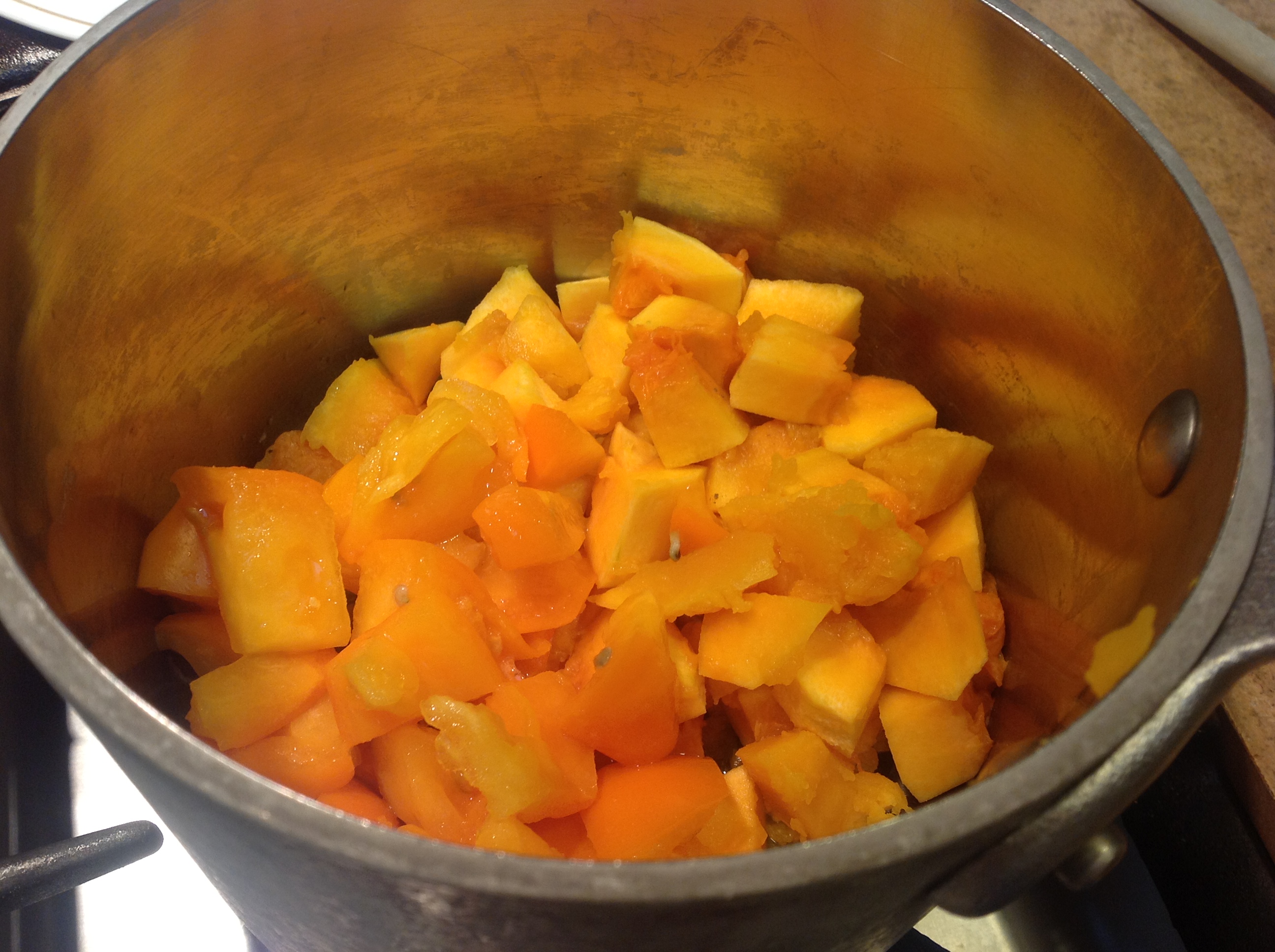
The peel easily pares off with a sharp paring knife. Chop up the flesh into cubes and have it ready to go into the soup.

butternut squash soup 008

Step 3: Aromatics.

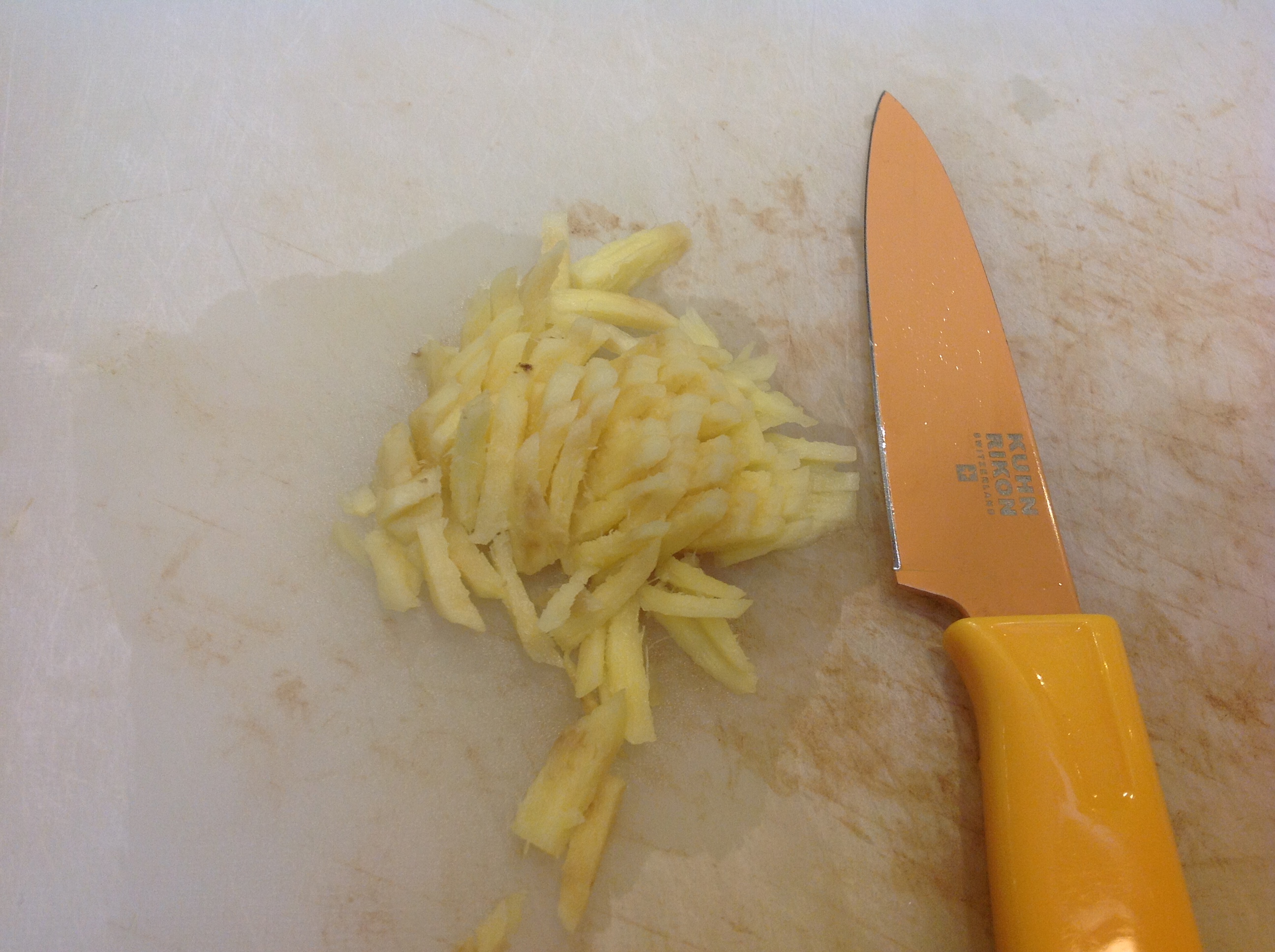
I used an inch-long piece of ginger and chopped it into thin strips thusly.

butternut squash soup 004

Now, heat about three tablespoons of extra virgin olive oil in a pot and saute the ginger strips, along with one bay leaf, for a few minutes.

Step 4: Broth and everything else

butternut squash soup 009

Throw in the squash, along with one chopped tomato. I used an orange tomato, not in order to match the squash, but just because that’s all I had. Also put in 3 cups of chicken broth, some salt to taste, and bring to a boil.

Keep it at a healthy simmer for about fifteen minutes.

Step 5: Soupify and correct seasoning.

Now, the soup is ready for its journey through the blender. Pull out the bay leaf first of course! Once smooth, you have the choice to strain it. We did, but used a strainer with rather large holes, to make it easier on ourselves. Return the soup to the pot, and check for salt, and also sweetness. I found the squash I used somewhat lacking in sweetness, and added a few squirts of balsamic vinegar to complement it. Heat it through, mix it, and serve.

butternut soup 2 001

The welcome home salad

synthesis pancakes and welcome home salad 014

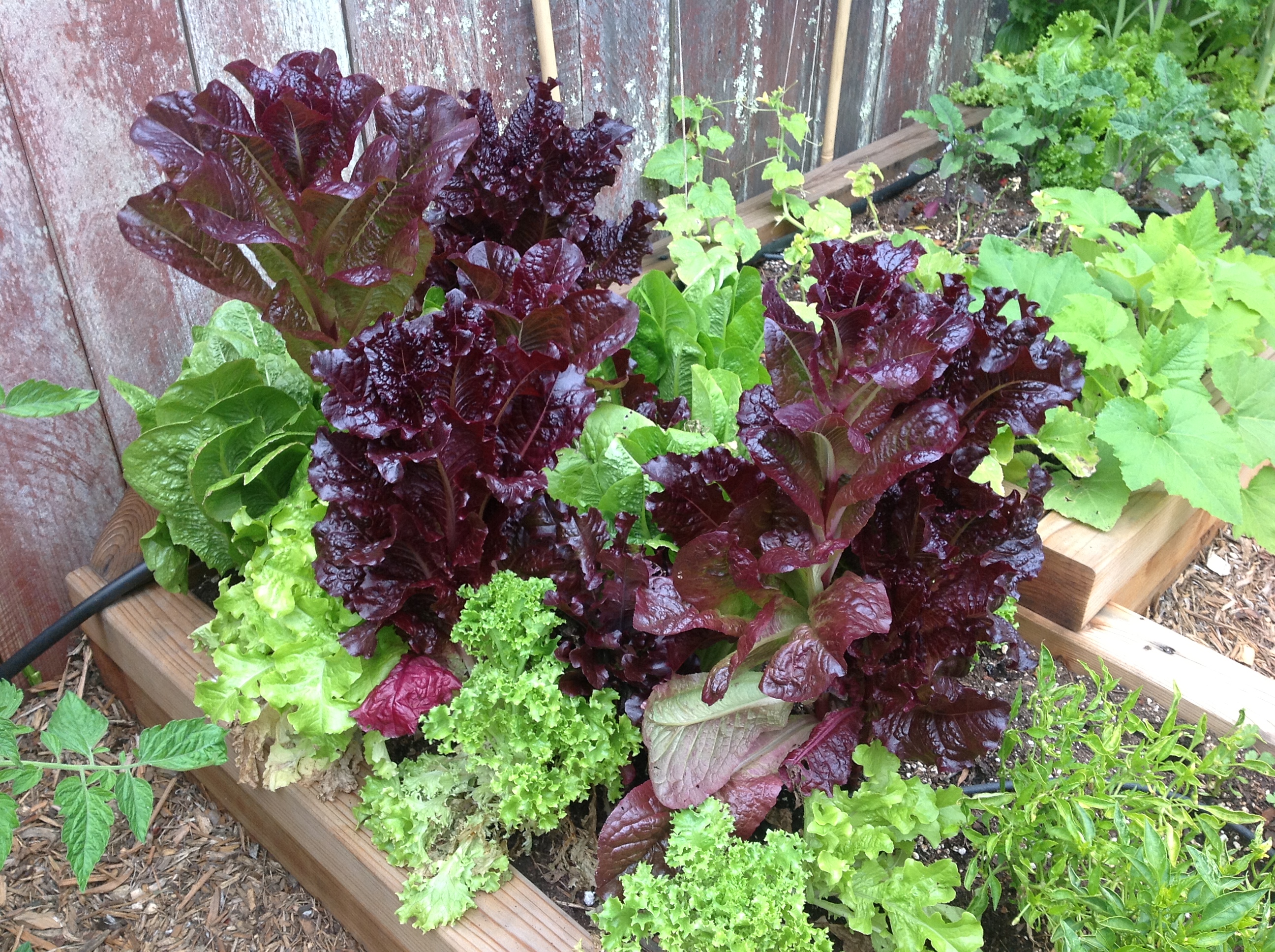
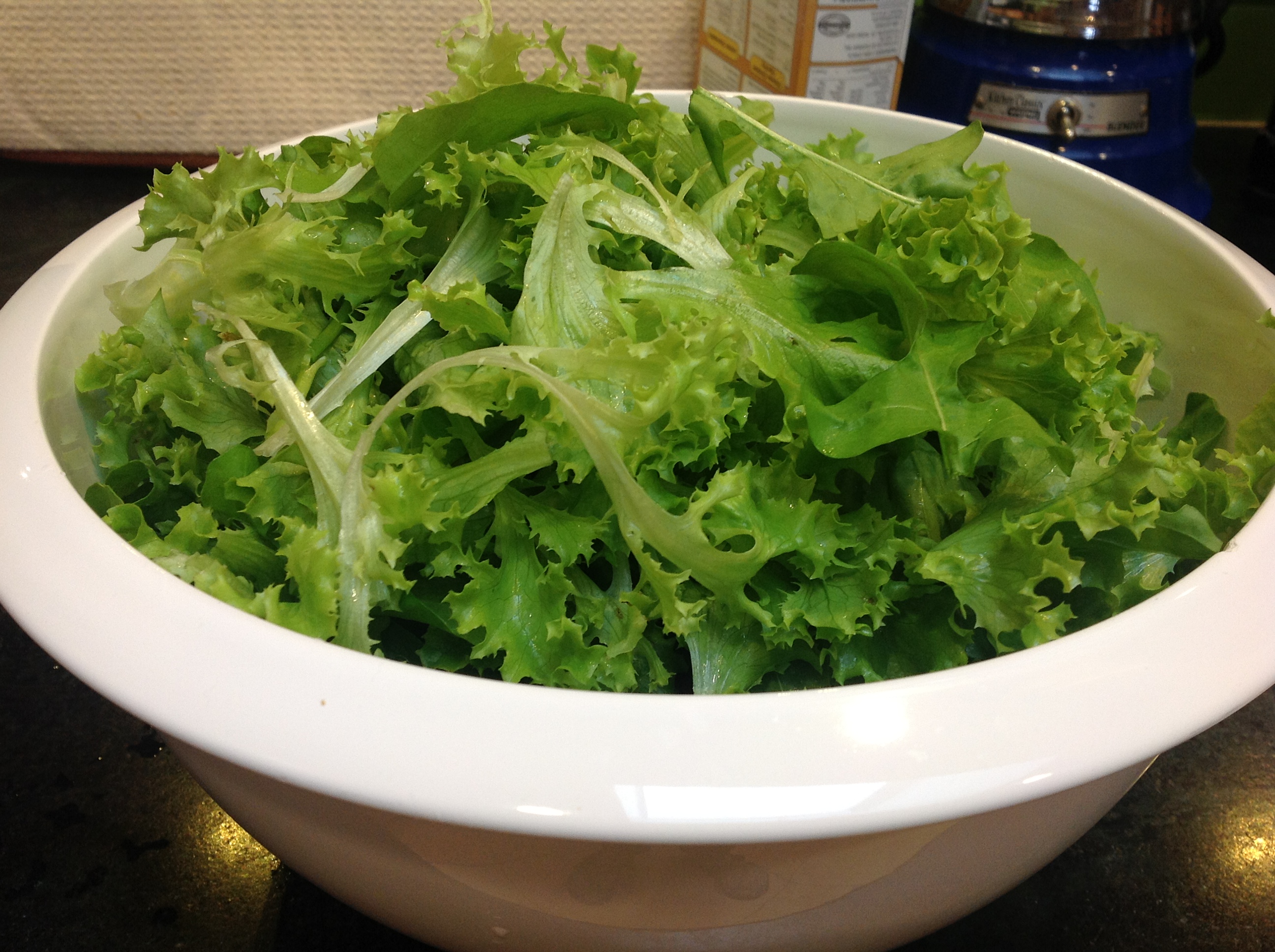
What better way to end a trip — come home to a garden with lettuce spilling out of its borders, waiting to be picked. I picked some of the arugula and some frisee and made a giant salad, which was definitely a relief after airport food. The standard dressing I use is the epitome of simple, but there is a technique to it, so file this under ‘basic methods’.

synthesis pancakes and welcome home salad 012

Step 1: Salt

Salt the greens lightly, and toss it around with your fingers. You could use tongs but there is no implement quite as blunt, rubbery, strong, and with as fine control as your fingers.

Step 2: Oil.

Pour some good, green-tinged xtra virgin olive oil around on the greens. How much? Well, just like distance can be measured in light-years, I can tell you the amount of oil in seconds — for a big bowl of greens, squirt oil for around ten seconds. Once again, toss with your fingers. What this step does is coat the greens with the oil, and thereby, the grains of salt are trapped under the sheen of oil, and the seasoning has been captured; and will not easily slip off the greens into a super-seasoned pool in the bottom of the bowl.

Step 3: Vinegar.

I used balsamic. Sprinkle about five seconds (half of the oil) of balsamic vinegar on the greens and toss with your fingers. Considering that the oil is already coating the leaves, the vinegar will bead up on them (oil and vinegar don’t mix), and create little bursts of flavor.

Step 4: Accessorize.

synthesis pancakes and welcome home salad 015

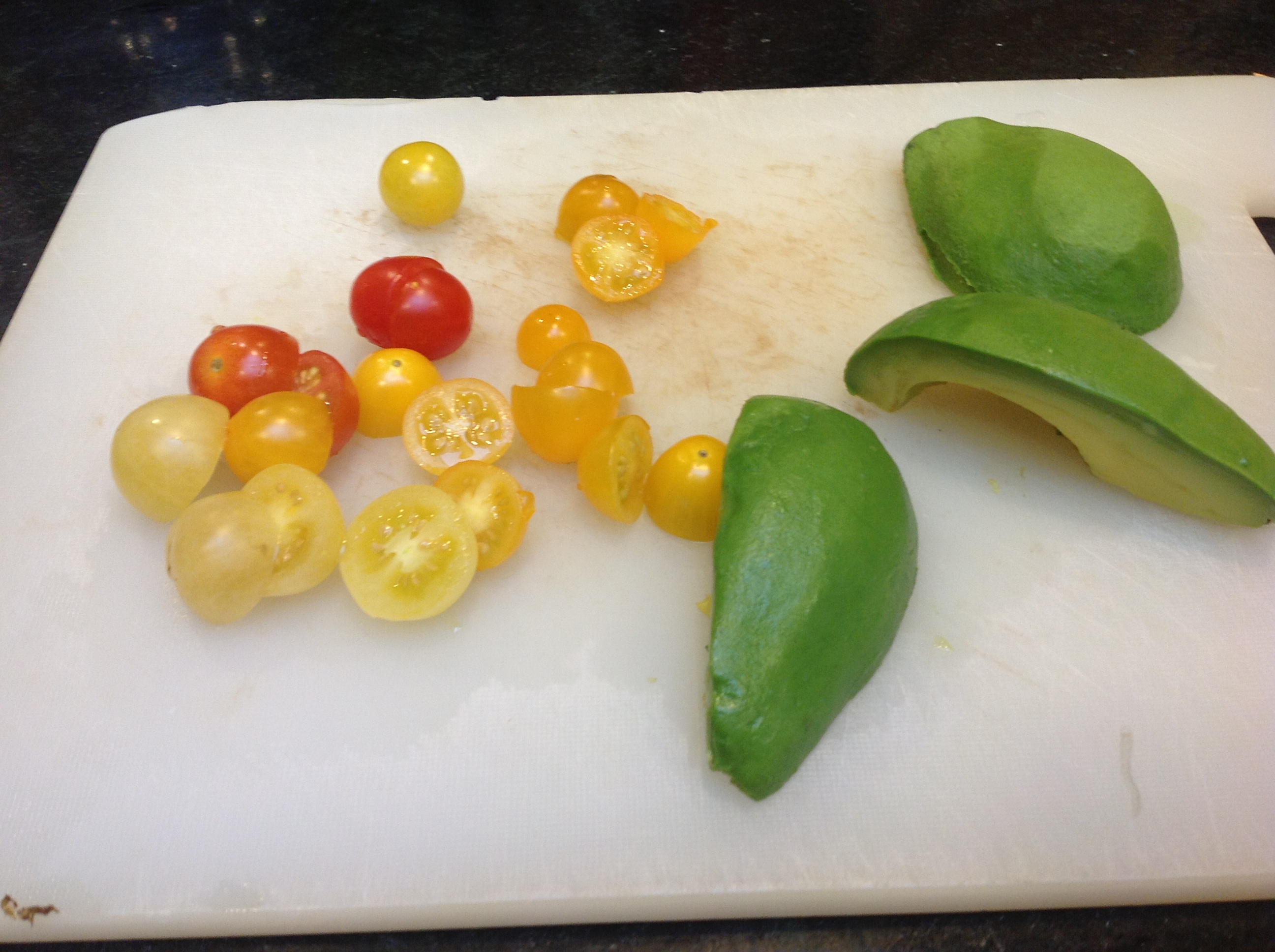
Scoop the greens into bowls and add your choice of toppings. We used one avocado, cubed; and cherry tomatoes, halved. Please do halve them; the juicy insides absorb flavors better than the plastic peel on the outside; and when you’ve got good olive oil and good balsamic, that is a good thing. Place them on the bed of greens.

Hat tip: Nick Stellino, the TV chef.

Stemming the tide of mustard greens

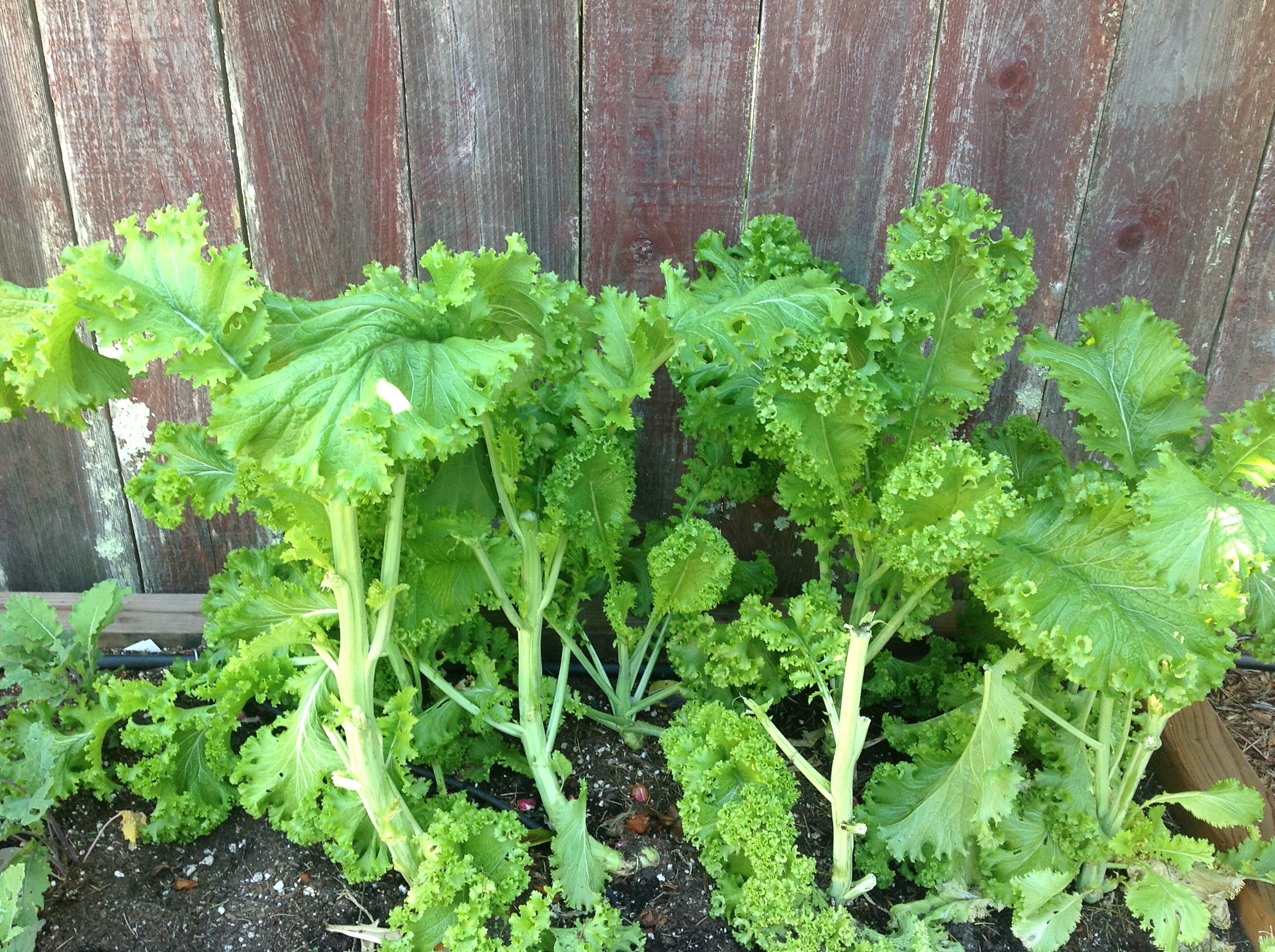
When we first brought our mustard seedlings home, they were petite and unassuming. Planted them in the ground, and given San Francisco’s freakishly warm weather, we soon had curly monsters threatening to swamp the house. Naturally we set about consuming them as fast as we could.

fennel 015

Mustards after a lot of rampaging

Harvested an entire meal’s amount to make Punjab’s famous ‘sarson ka saag’, which means ‘greenish pulpy thing made out of mustard’. It was good, but made not a whit of difference in the amount of curly monsters in the garden.

Soon we were eating sarson ka rice, sarson ka pasta, sarson ka…everything.

On the way, I learnt an important lesson about cooking mustard greens that the Punjabi chefs learnt thousands of years ago. Unless you cook and puree the mustards, the curls in the leaves — which are quite tough, by the way — will interlock and will not separate, and you either get a mouthful of mustards all clumped together, or you get none at all. Pureeing after cooking makes them luscious and even. So here is the basic technique for the Punjabi sarson ka saag, and then my other variations.

Sarson ka saag

Step 1: is the most important:boil and puree.

synthesis pancakes and welcome home salad 004

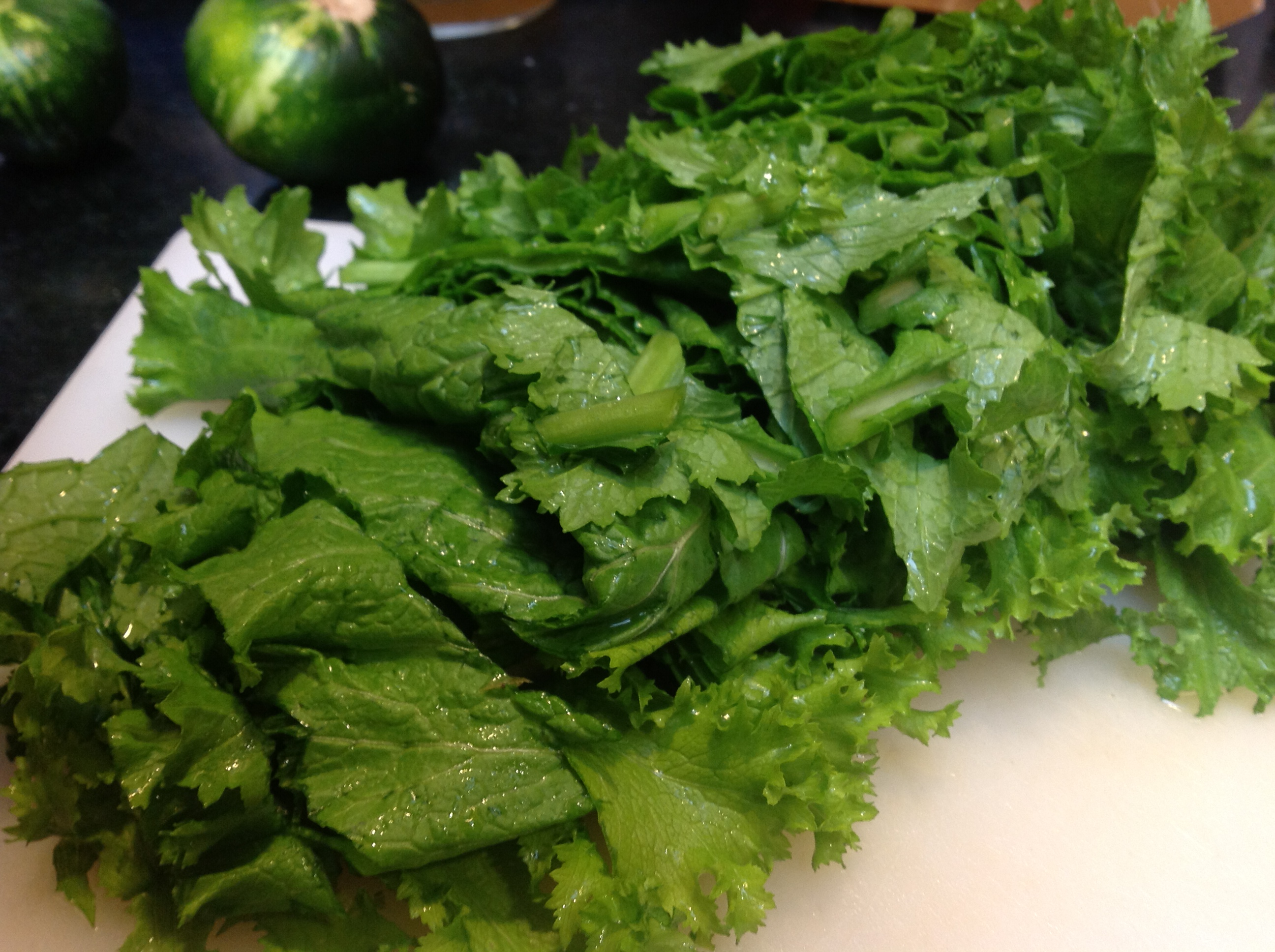
Mustard greens washed and chopped

Rinse, roughly chop a bunch of mustard greens. Put them in a pot with a quarter cup water, salt, half an onion, roughly chopped, two green chilies, roughly chopped, and a quarter cup chopped cilantro. Bring to a boil, cover, simmer and cook for about fifteen minutes, or until the mustards are no longer bright green. Cool for a few minutes and puree in a blender, although there is no need to make it completely smooth.

Step 2: Seasoning

I couldn’t tell you if every villager in Punjab uses this set of seasonings, but this is what I used, and it was good. I heated two tablespoons of ghee in a small thick bottomed pan on medium-high. Then put in a teaspoon of cumin seeds and 3-4 cloves of garlic, minced. Also half a teaspoon or more of red chili powder. Once they sizzle and the garlic looks cooked (not browned), put in two tablespoons of besan (chickpea flour) and stir. I think the more typical ingredient here is cornmeal so if you have that, use a quarter cup of that instead. Allow the besan (or cornmeal) to roast in the oil for a few minutes. Then empty the seasoning into the mustard puree and stir.
sarson ka saag - mustard greens puree

sarson ka saag

Step 3: Simmer a little longer

Check for salt and add more if needed. Simmer a little longer to meld the flavors and fully cook the besan. Sprinkle some lemon juice over the top (inauthentic ingredient alert). Serve with roti/chapati.

Sarson ka pasta…bucatini with mustard greens

Step 1: boil and puree

Here I boiled the greens with just a quarter onion and some salt. After about fifteen minutes of simmering, I roughly pureed them in a blender. Keep it aside.

Step 2: Seasonings

For the oil, I used about four tablespoons of extra virgin olive oil. Heat it in a large pan on medium. Without waiting for it to heat, put in four large cloves of garlic, minced; three anchovies from a jar; and a few sprinkles of cracked red pepper. The anchovies, as they cook, will melt into the sauce, and add a delicious umami, proteiny flavor. Wait till they sizzle; break up the anchovies with a wooden spoon; then empty the pureed greens into it. Simmer gently, stirring, for a few minutes

Step 3: Pasta

Meanwhile, get a big pot of salted water to boil; once it boils, put in half a pound of bucatini (this is enough for a dinner for two). Wait till it is almost done to al dente, then fish out the pasta with a pasta spoon and put it into the greens along with a few good sized ladles of the pasta water. Use your judgment here — if the greens aren’t saucy enough, add a little more pasta water. Stir nicely to break up the clumps of mustards to combine with the pasta water and turn it into a sauce. Remember the sauce has to coat the pasta, not remain in clumps at the bottom. Stir to cover the pasta with the greens, cover the pot and simmer for just a minute or two. Turn off heat; pour some fresh XVOO on the top, and parmesan shavings if you like, and serve.

This makes a wonderfully light green sauce for the pasta that looks as nutritious as it, in reality, is.
Seeking the heart of fiddlehead ferns

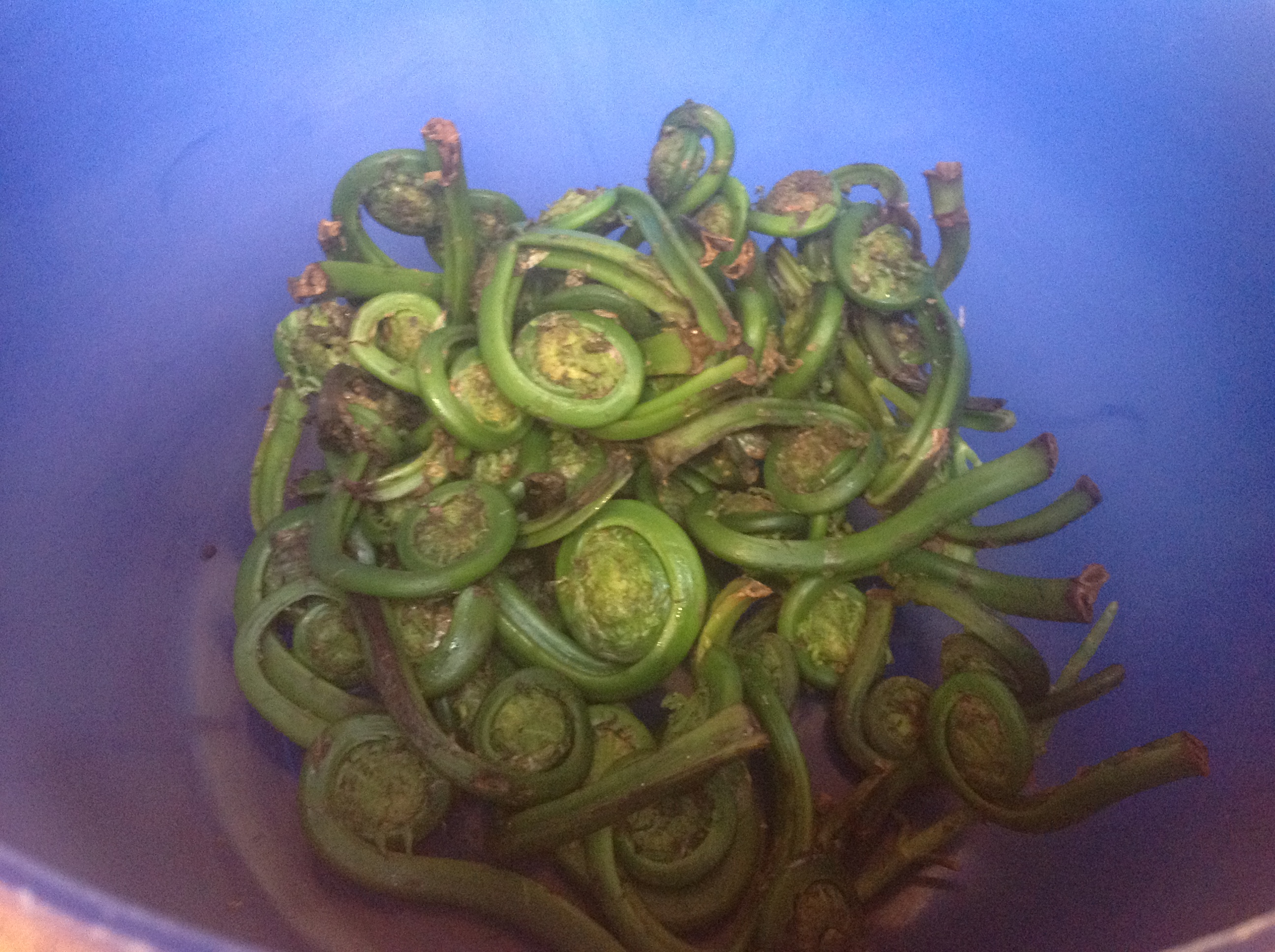
If anyone ever asks me why this blog is called the ‘odd’ pantry — it is named so for vegetables like fiddlehead ferns. When one first encounters them on the grocery shelves one isn’t even really sure what kingdom of life they belong to. They could be worms — no, more like caterpillars — or maggots — curled up. They could be giant microbes, like the spirogyra we learned about in school. They might be seaweed. Have a look:

iPad 064

Are we really supposed to eat that thing?

Fiddlehead ferns are the baby fronds of various types of ferns. They are harvested wild, not cultivated, which explains their rarity on the shelves. But when you happen to see them, grab some, because they are full of fiber, omega-3’s, potassium, and so forth. I believe the fiddleheads one sees in California are the ostrich ferns.

To clean them, soak them in warm water for a few minutes to shake the dirt off, rinse, and do this again. I don’t think you can get all the brown off (at least I wasn’t able to), but not all the brown stuff is dirt. Do snip off the brown tips of the stems.

Having never tried them before, I had to guess about their taste and how to cook them.

First, I tried a method very much like in this recipe. Good, but the fiddleheads don’t seem to char very easily; and, they have a slippery and chunky texture which needed a stronger set of seasonings to stand up to it, I thought.

So second, I tried a different method, which I thought was better.

Step 1:

ipad hijinks 012

Cut them up in about half inch sized lengths.

Step 2: Saute

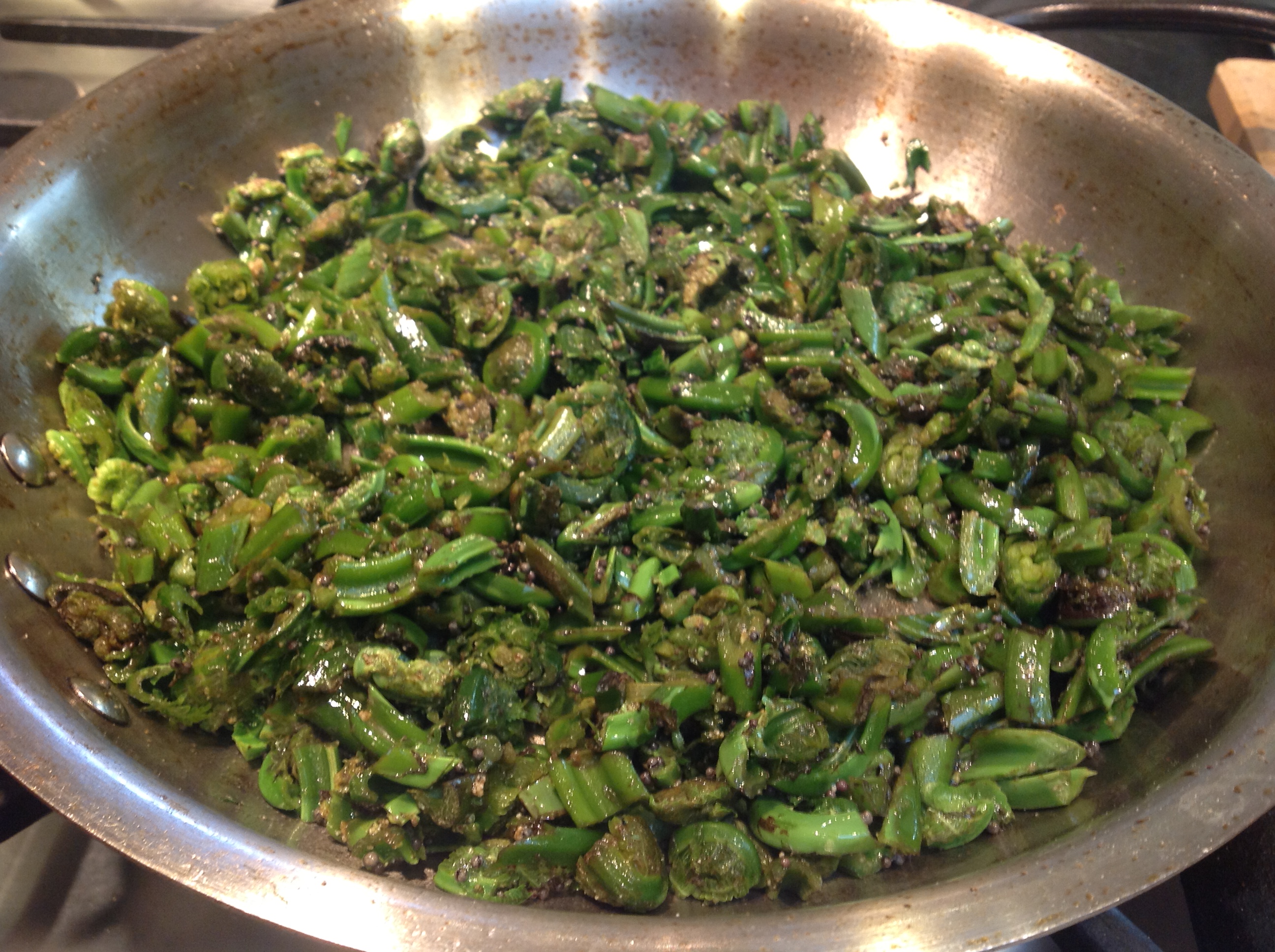
Heat about 2 tablespoons of oil in a pan on medium high. When it shimmers, put in mustard seeds; wait till they pop, then put in the fiddleheads. Stir. They will go from looking like this:

ipad hijinks 016

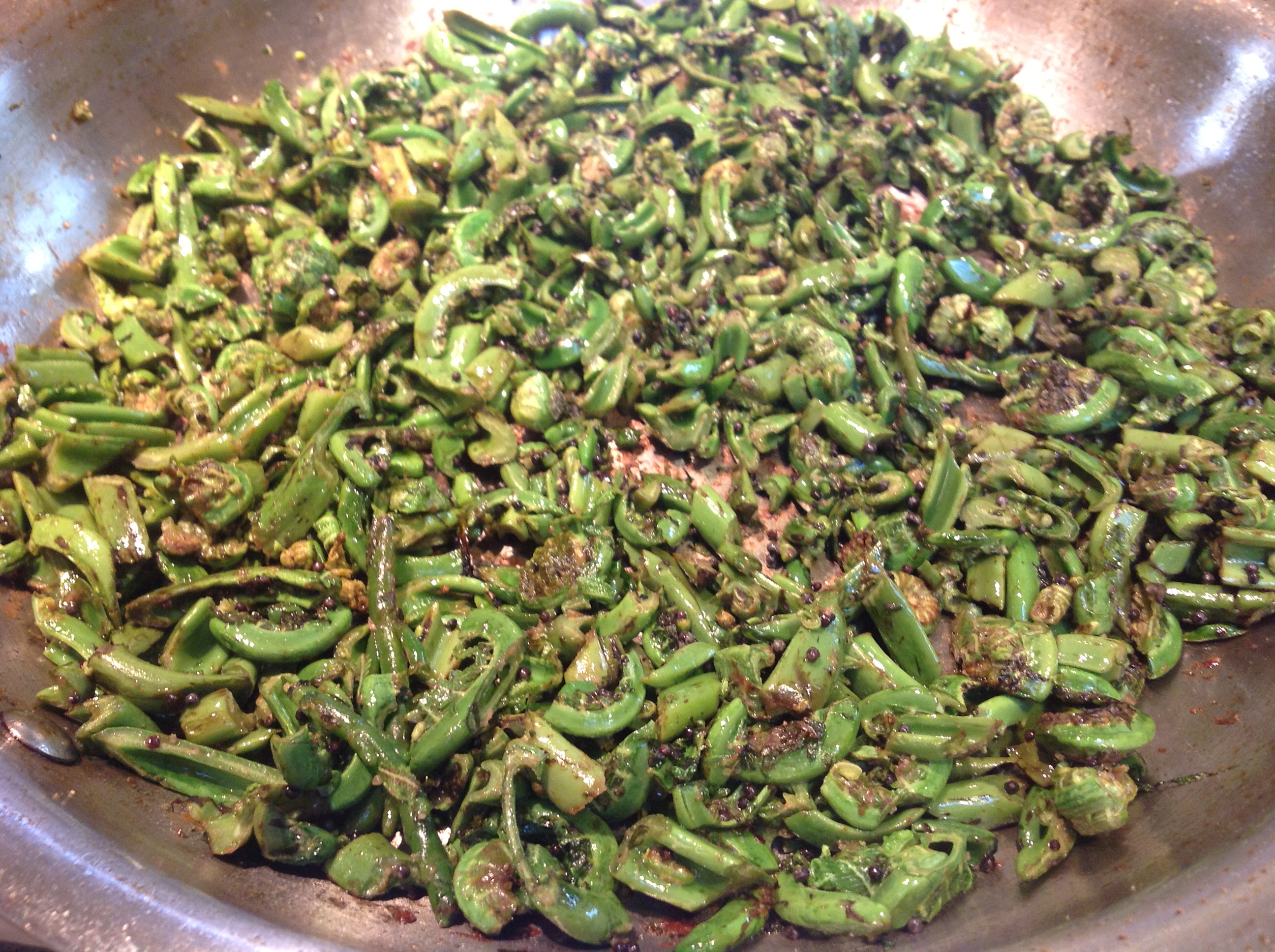
to looking like this in a few minutes of medium high sauteing.

ipad hijinks 017

At this point, I threw in some onions. This time I cut them in thin strips, by first halving the onion, giving it one cross cut from root end to stem end, and then slicing it as narrowly as I can. Put them into the pan and stir for a minute.

ipad hijinks 018

Then it is time for half a teaspoon turmeric, red chili powder, and the salt.

ipad hijinks 019

Now the problem with the slippery texture of the fiddleheads is that spices don’t stick to it. So, we need glue in the dish, that the spices will combine with, and that will stick to the ferns. What ingredient is a good glue? Hmm…I used sesame seeds,  ground up, about a third of a cup (super useful to keep a coffee grinder around, just for spices; takes just a minute for jobs of this sort).

Step 3: Braise.

ipad hijinks 020

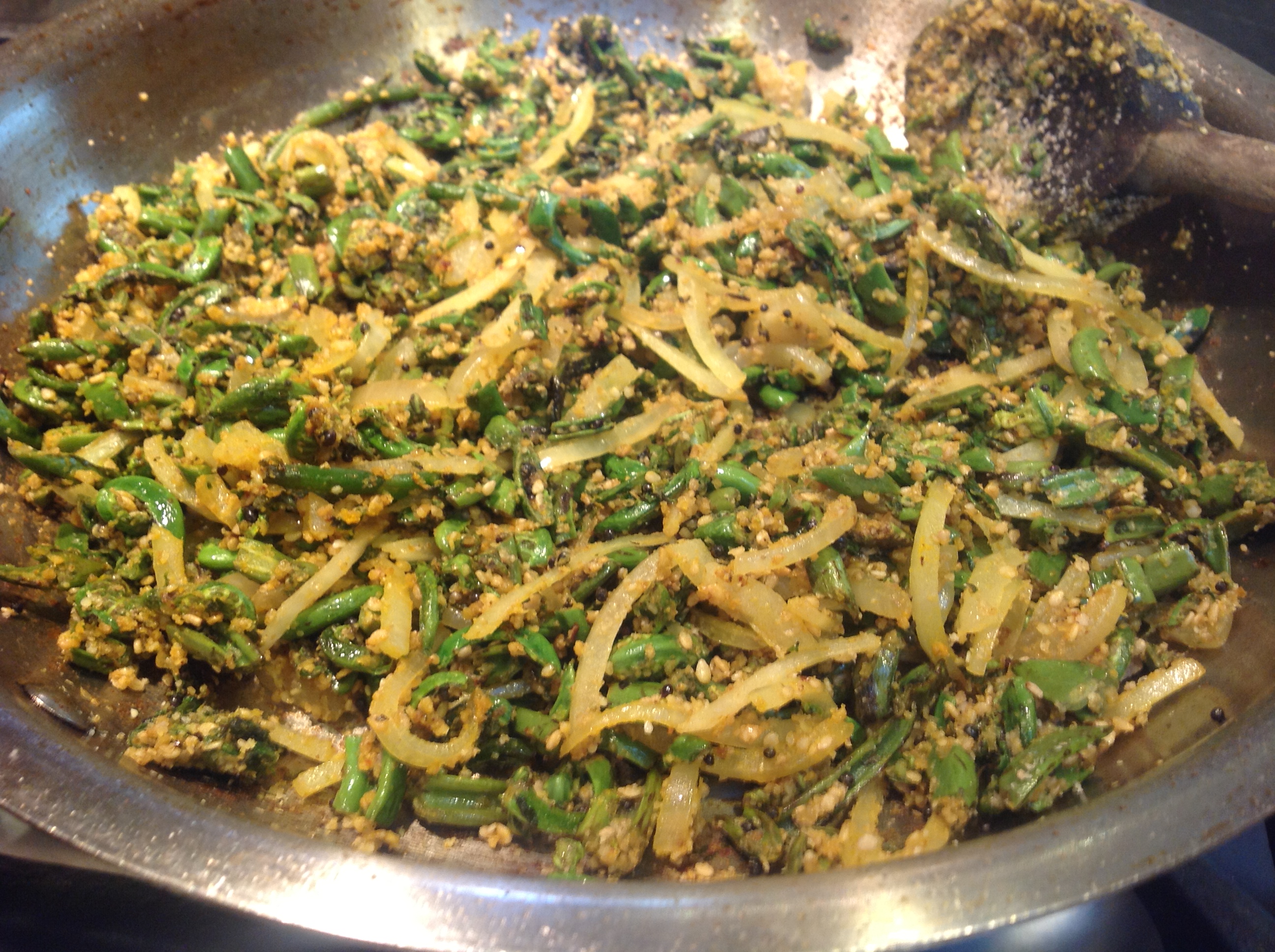
Stir the sesame seed paste with the fiddleheads, add a half a cup of water, and there — we have the glue that we wanted. One teaspoon of tamarind paste goes in. Stir, cover, simmer on low for about ten minutes, and what we have is this:

ipad hijinks 024

How did it turn out? Well, we had it as one of the sides with roti, for dinner. I thought it was yummy.

But I don’t think my quest for the heart of fiddlehead ferns is over yet. This dish was good but didn’t show off their quintessential fiddlehead-ness. I will be trying other ways to cook them…watch this space.