An early summer beverage

Spiced buttermilk

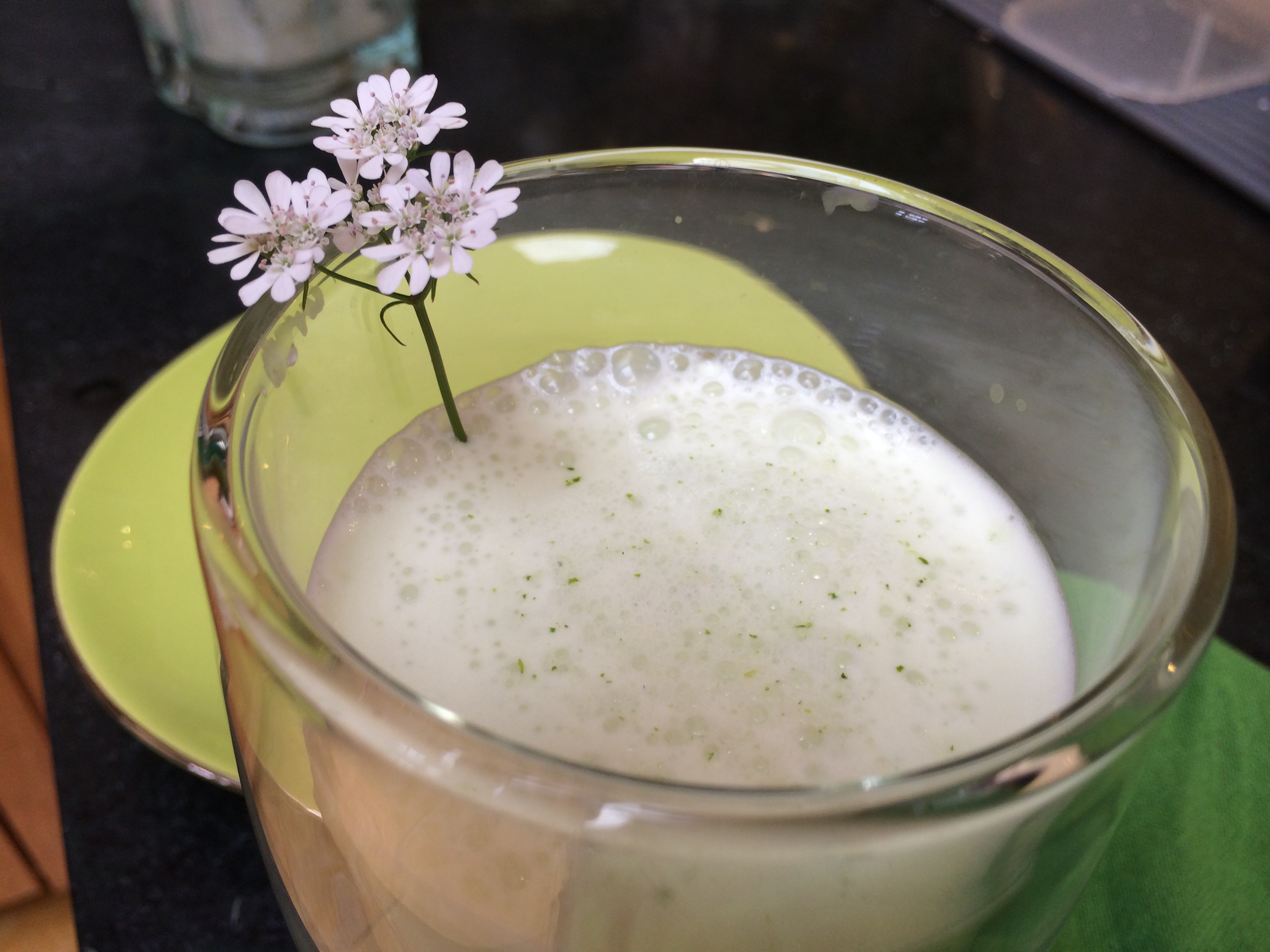
Spiced buttermilk with cilantro flower

Summer has come early to San Francisco this year; sometimes it feels like it never left. With climate change looming, this is not as good news as it might seem. But let’s not worry our pretty little food-blogging heads about this just yet and cool off with this yogurt beverage.

Spiced buttermilk: Neeru majjige

This is another specialty from the southern state of Karnataka from my friend Rashmi. Just think — instead of reaching for a sugary soda you could cool down with a tall glass of spicy yogurty neeru majjige. Better to taste and way better for your body.

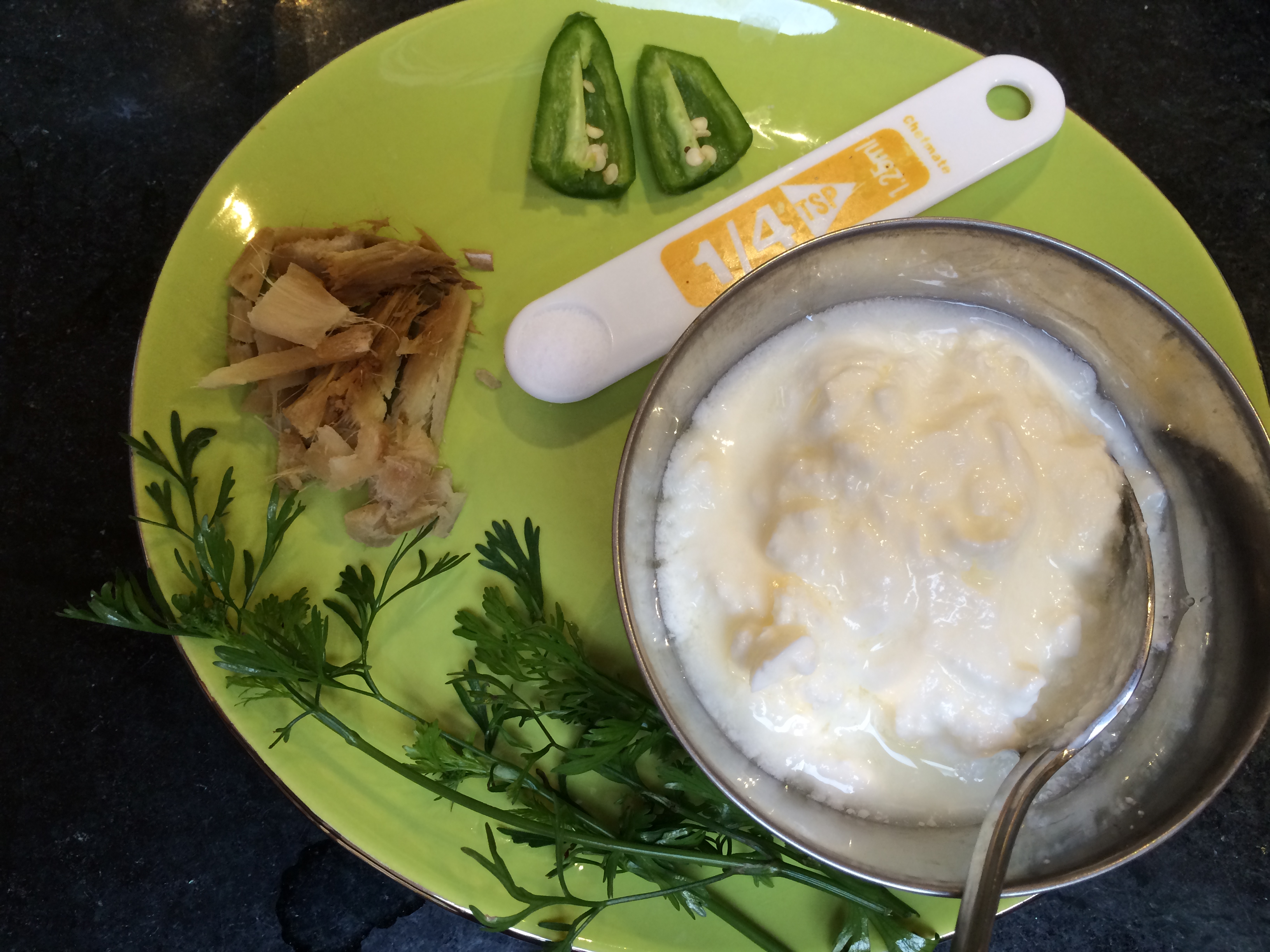
Ingredients for Neeru Majjige

All the ingredients

Blend it

Blend it

Strain it

Strain it

Squeeze dry

Squeeze this stuff dry

Spiced buttermilk

Done – spiced buttermilk

Spiced Buttermilk (Neeru Majjige)

Ingredients:
  • A cup of yogurt
  • A cup to cup and a half water
  • Quarter inch ginger
  • Half a green chili
  • Few sprigs cilantro
  • Quarter teaspoon salt
Method:

Simpler than simple. Blend all the ingredients together. Strain it. Squeee–eeee-ze the green remains dry. The mixture is a pale green, the squeezing will drip delicious light green drops on it. Refrigerate for half hour if you like.

Garnish with a sprig of cilantro, or like I did, a cilantro flower from the garden.

A method to the meadness — Update after 6 days

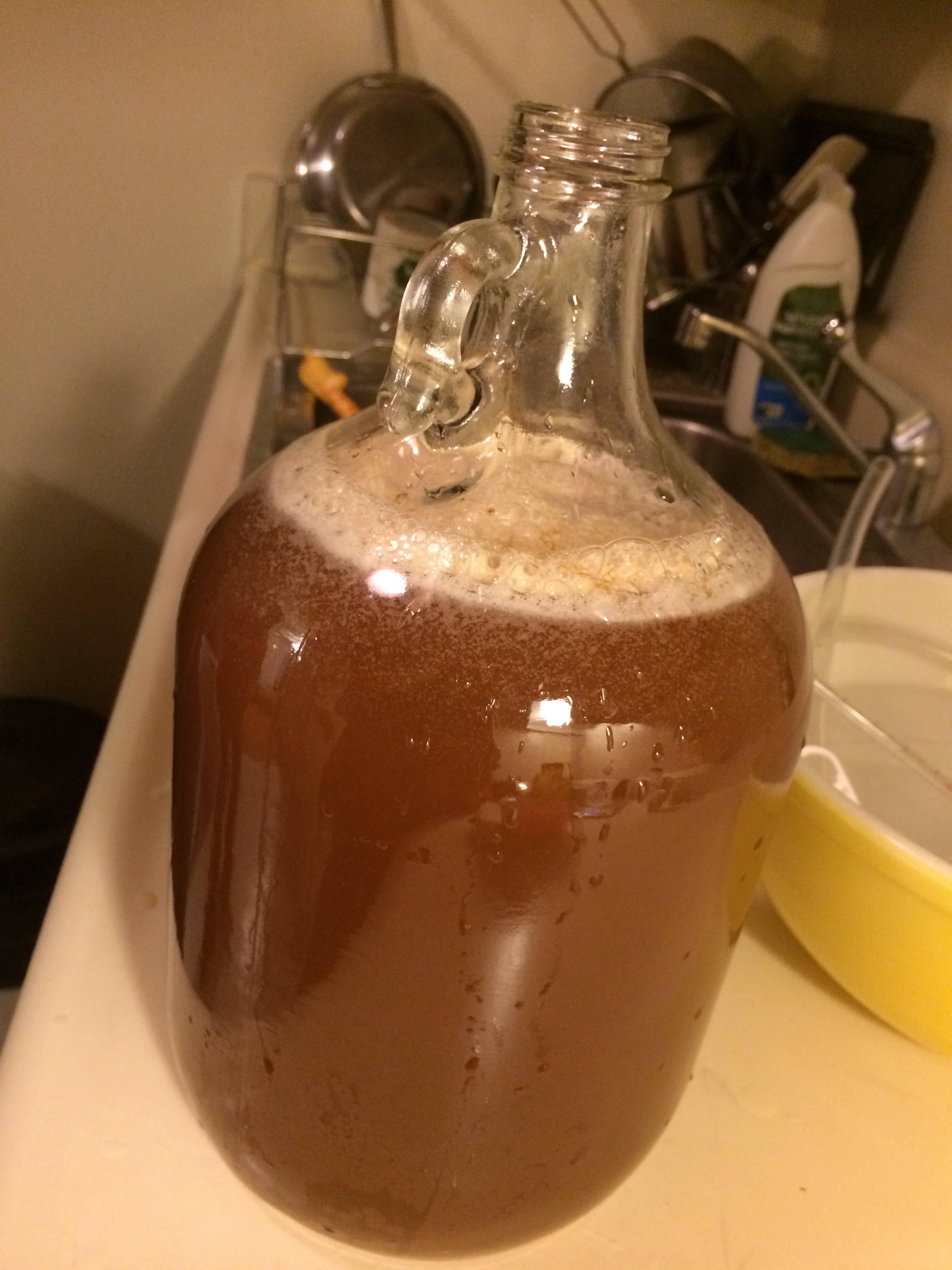
The first post in this series is here. Six days in, our mead-to-be is bubbling along nicely. We have reached peak bubbling of about a bubble every two seconds in the airlock, look:

Bubbles in jug and airlock

Bubbles in jug and airlock

To recap, we have put yeast into a solution of honey and water, shaken it, and waited. What is going on in there?

My friend Saccharomyces cerevisiae ICV D-47

Let us get to know this worthy fellow — Saccharomyces cerevisiae. Out of the many single-celled yeasts out there, that is the one we humans have chosen to adopt. This is the yeast that brewers and bakers cultivate; we see it sold on grocery shelves under various labels: active dry yeast, instant yeast, bread-machine yeast, wine yeast and so on.

Saccharomyces cerevisiae -- the brewer's and baker's yeast from MicrobiologyOnline.org

Saccharomyces cerevisiae — the brewer’s and baker’s yeast from MicrobiologyOnline.org

What is so special about it? Beats me, but I got some clues from my obsessive googling. It reproduces quickly — in an hour and a half, it can double its population. It can ferment both in the presence of oxygen and outside it. In the presence of oxygen it ferments faster. Without, it goes slower. But ferment it does. As for reproducing — it can blithely switch between simply diving into two, like a plant, or having male and female babies that have sex to produce babies, the familiar way.

Yes, all of this parade of life is going on in the glass jug while it ferments.

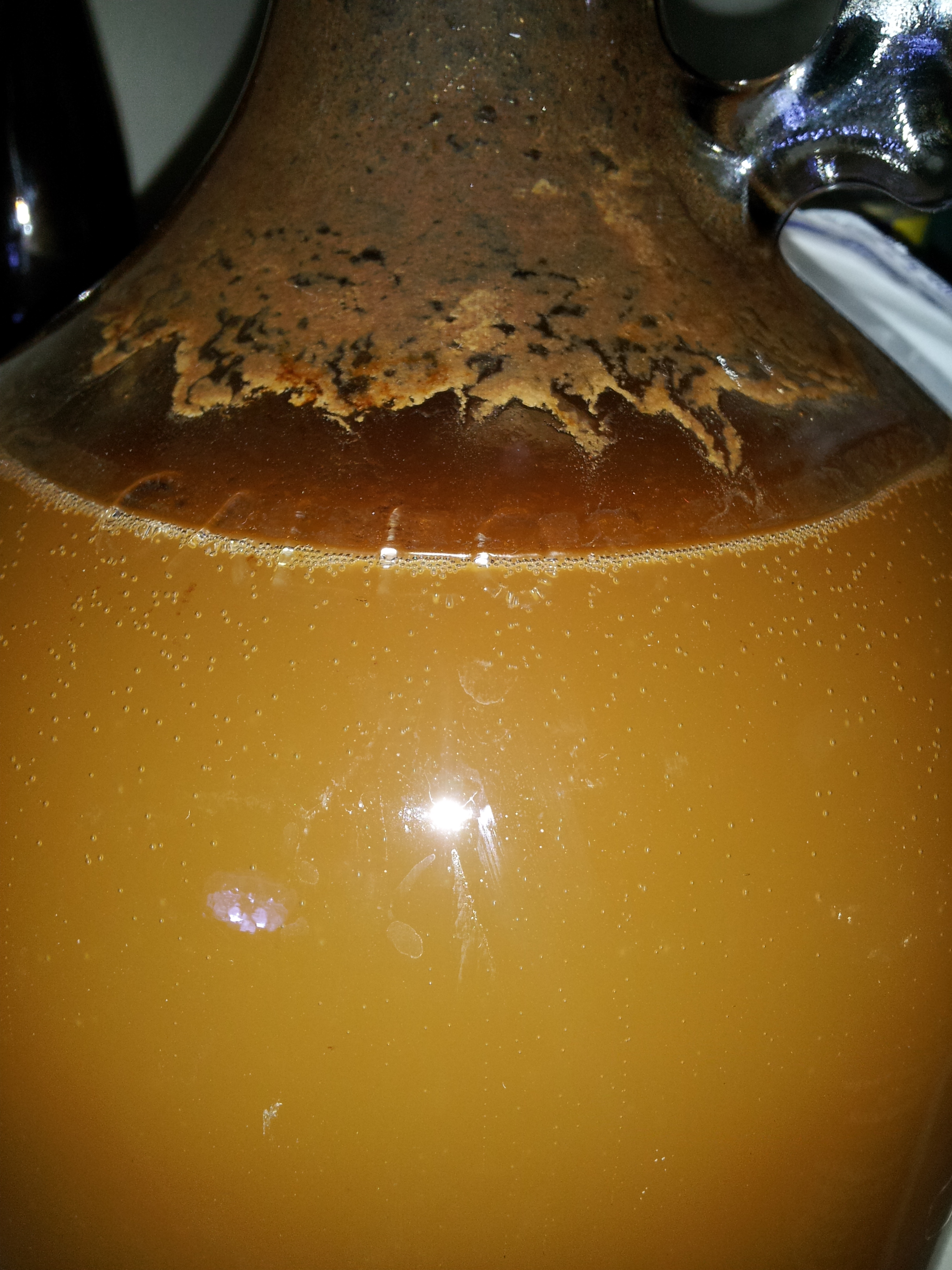
Actually seeing a microbe with a naked eye is not something one usually aspires to (you could fit about two hundred of these, end-to-end, within a single millimeter of your tape measure). But one of the talents this yeast has is to ‘flocculate’. What that means is that individual creatures come together into a ‘floc’, which sounds conveniently like ‘flock’. If only all science words were so conveniently named. Now a flock is actually visible, it looks like brownish residue — as you see below in the picture:

Floc of yeast

Floc of yeast

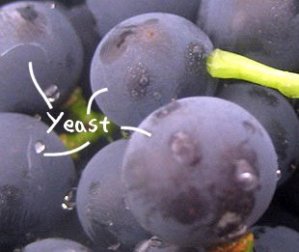
Another way you can actually see it is: next time you buy some red grapes at the store, dust off the whitish powder that you find on its surface. This is nothing but our friend Saccharomyces cerevisiae.

In fact the exact strain of this yeast that we used — ICV D-47 — was dusted off grapes originally in France by a man named Dr. Dominique Delteil, somewhere in the 1980’s.

Airy fermentation

I think of fermentation as ‘incomplete eating by a microbe’. ‘Incomplete’ because even after the microbes have had their fill, there is plenty of stuff left over for you to enjoy, whether it is wine, beer, bread or dosa. ‘Eating’ because that is what the microbes are doing, gorging themselves silly on your sugars, gaining energy enough to meet, marry and multiply. Why only microbes? Because clearly, you would not look very kindly at bigger creatures gorging on your food — we would call them pests.

Our mead right now is in the process of fermenting in an airy way (aerobic fermentation). Remember we shook the jug to allow air to disperse throughout the liquid? Well the yeast is rapidly using that oxygen to produce the bubbles of carbon-dioxide that we see filling the airlock.

These are the same bubbles that we aim to trap inside a loaf of bread to make it rise. In this case, we allow those bubbles to escape. Because what we care about (the alcohol) will come about after all the oxygen has been used up, and we go into the next stage. Stay tuned….

A method to the meadness

Dear Reader, are you willing to follow me in an experiment?

You will be following along in real time, just like a reality TV show! Suspense, excitement, a slightly risque end-product, and the very real possibility of failure. Hopefully this means high ratings!

We will attempt to make mead.

A goblet of mead, Konstantin Makovsky

A goblet of mead, Konstantin Makovsky, from Art and Faith blog

Mead is the grand-daddy of alcoholic beverages. This past New Year’s Eve when you got nicely liquored up, knowingly or not, you raised your glass to the original makers of mead. Those were the guys about 11000 years ago who discovered that honey diluted with water, when left outside, will turn into a hotbed of yeast infection; those yeasties will eat up the sugars in honey thereby turning the beverage ‘dry’; and clearly yeasties that eat must excrete, which they will do, in great globs of alcohol. Those ancients also discovered that this yeast excretion — namely alcohol — has a nicely happy-making effect, adding zest to New Year’s celebrations.

What a perfect season to attempt mead.

This past Christmas we visited my brother and sister-in-law on the East coast. They own a mead-making set, which they have used once, with moldy results. This post chronicles their second attempt. This time, they are determined to see the bubbles of carbonation arise and sip actual alcohol. The Odd Pantry will be reporting from the field.

Deepak and Shannon’s Mead

Ingredients: 

  • 3.25 lb pure honey (buy from a health/nature type of store. Grocery stores often carry adulterated honey. Check the label. If it says the name of the flower it is probably good. Also if it is crystallized it is pure.)
  • Acid sanitizer (amount according to directions on bottle)
  • Yeast nutrient (urea) — 1 teaspoon
  • Yeast energizer — 1 teaspoon
  • Wine yeast — 2.5 g (half package)
  • 1 gallon distilled or spring water
  • Mix of spices and dried fruit (optional), for example a sliver of orange peel; raisins; cinammon; cloves; cardamom

Equipment:

  • Funnel
  • A large bowl for sanitizing
  • A large bowl for mixing
  • Small bowl for rehydrating yeast in 2 cups water
  • 1 gallon glass jug with airlock, or 1 gallon plastic carboy with separate airlock
  • Rubber stopper with no hole for the jug
  • A thermometer that you can sanitize
  • Weighing scale
  • Spatula

Method:

The recipe that follows is adapted from this source.

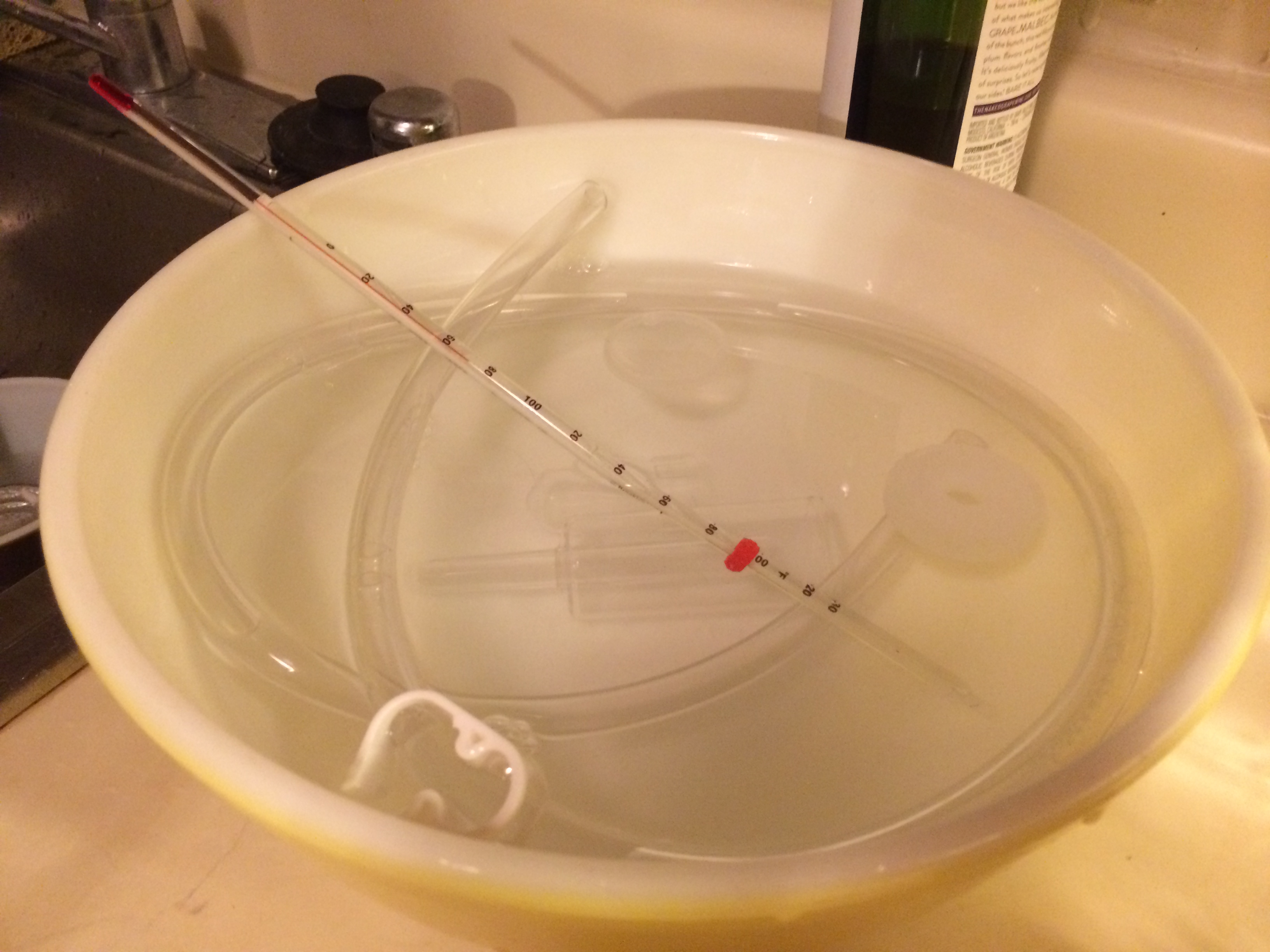
In a large bowl, make a sanitizer and water solution. In this, sanitize all the equipment you will be using, including the inside surface of the mixing bowls. You can use the equipment directly without rinsing off the sanitizer.

Sanitizing

Sanitizing

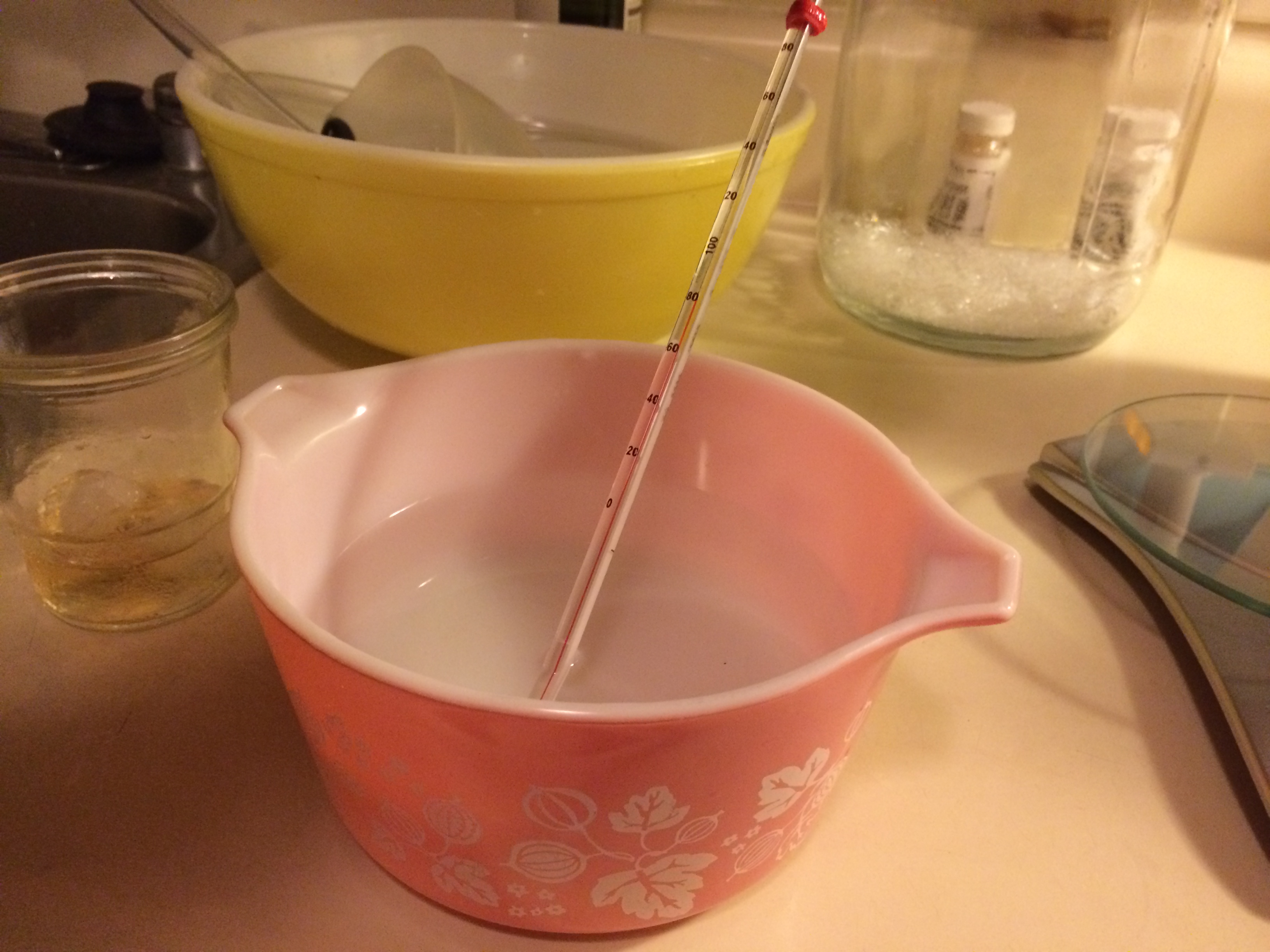
Use 2 cups of the spring water in a small bowl to rehydrate yeast: heat the water in a microwave to between 104 F to 109 F degrees (use the thermometer for accuracy) and pour half the package of yeast in. No need to stir — we will do that in 15 minutes.

Washington DC trip 229 Washington DC trip 231

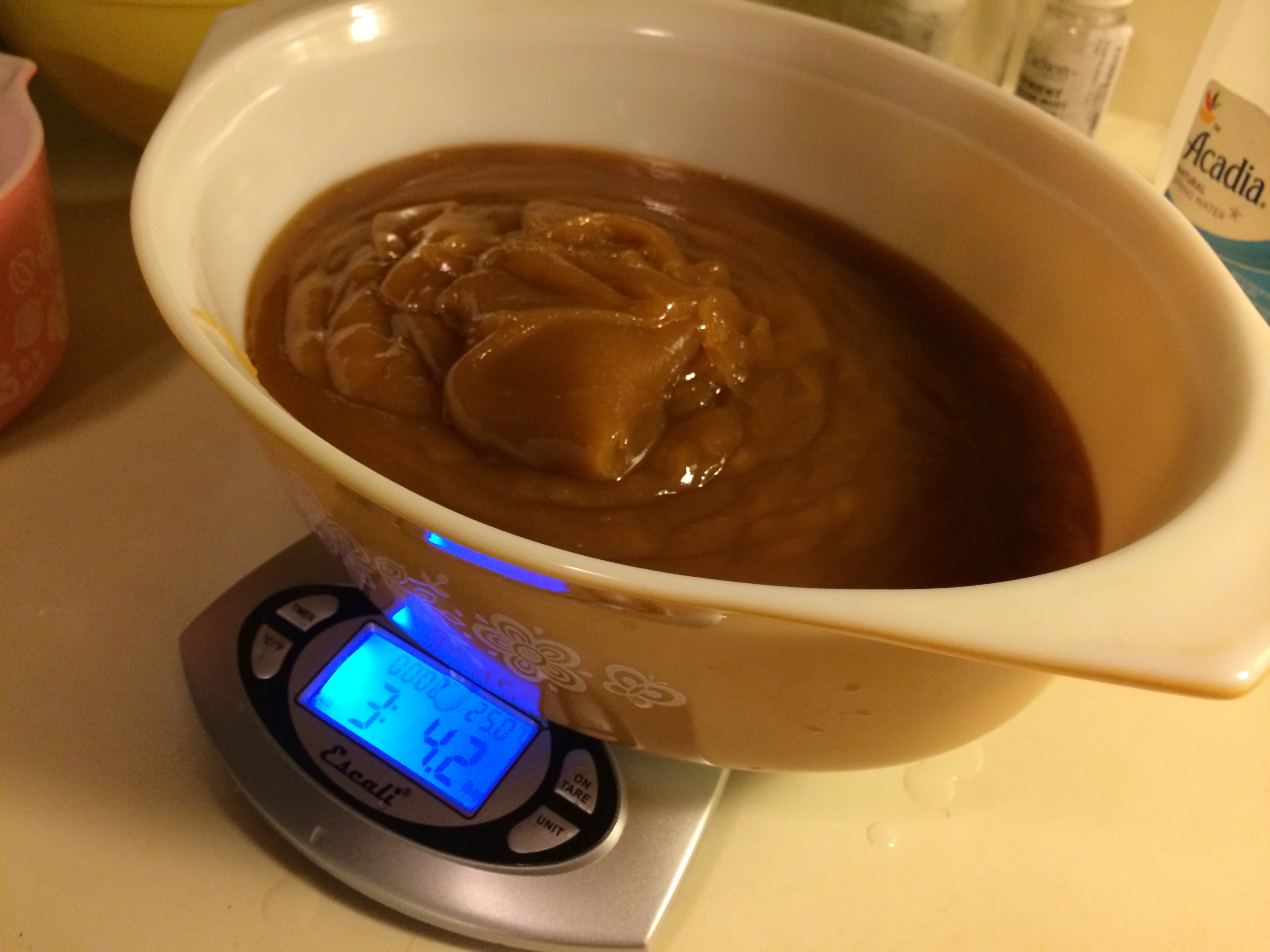
Meanwhile, weigh out 3.25 lb of honey in the large mixing bowl. If the honey has crystallized, you can liquefy it by first putting the jug in a warm water bath; do not microwave it. Add about 2 cups of the spring water in and stir it with the spatula; we are simply making the honey easy to pour into the jug.

Washington DC trip 233 Washington DC trip 235 Washington DC trip 238

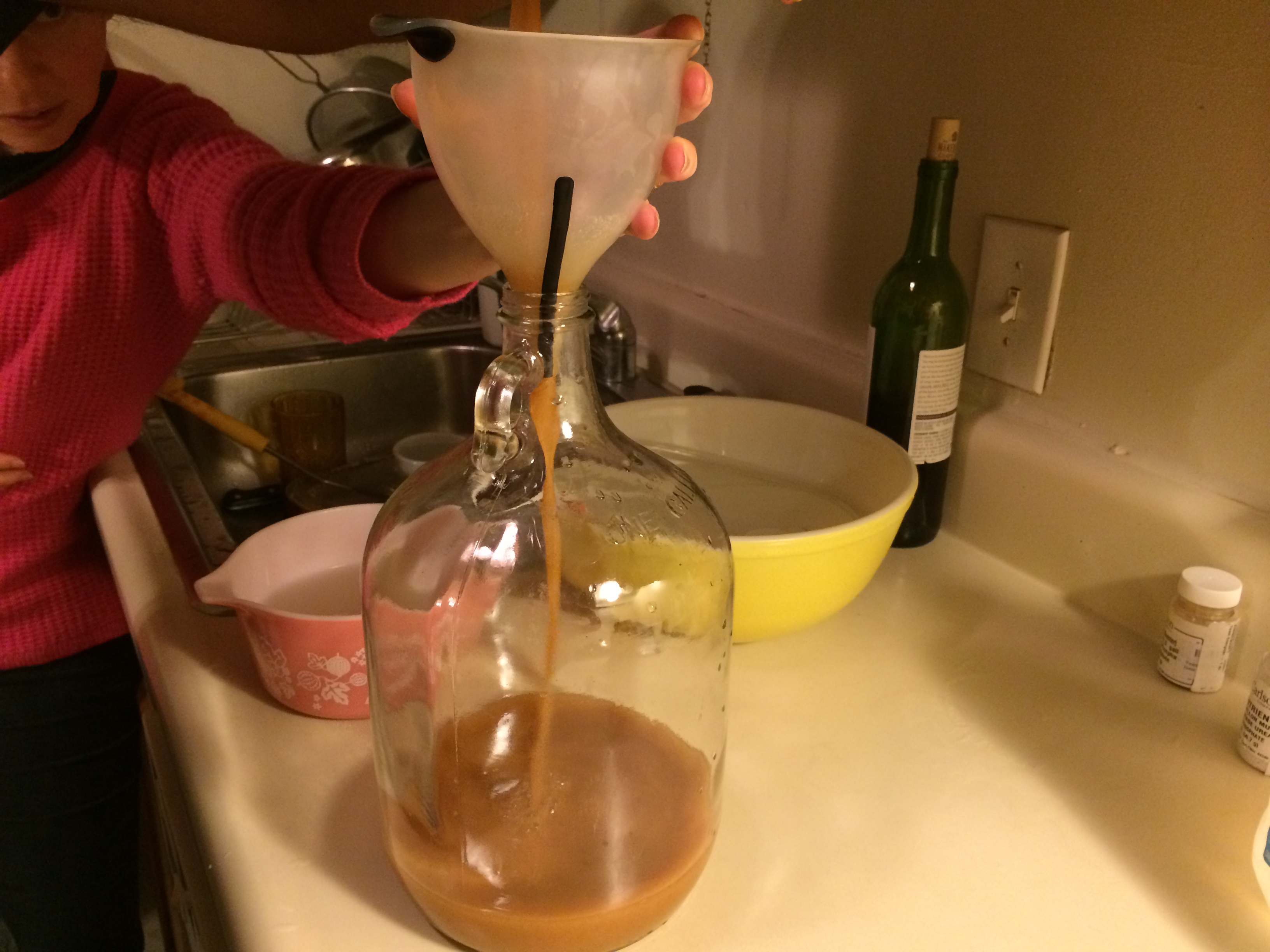
Pour the honey-water mix into the jug using the funnel. If you are using fruit or spices, now is the time to put them into the honey-water mixture.

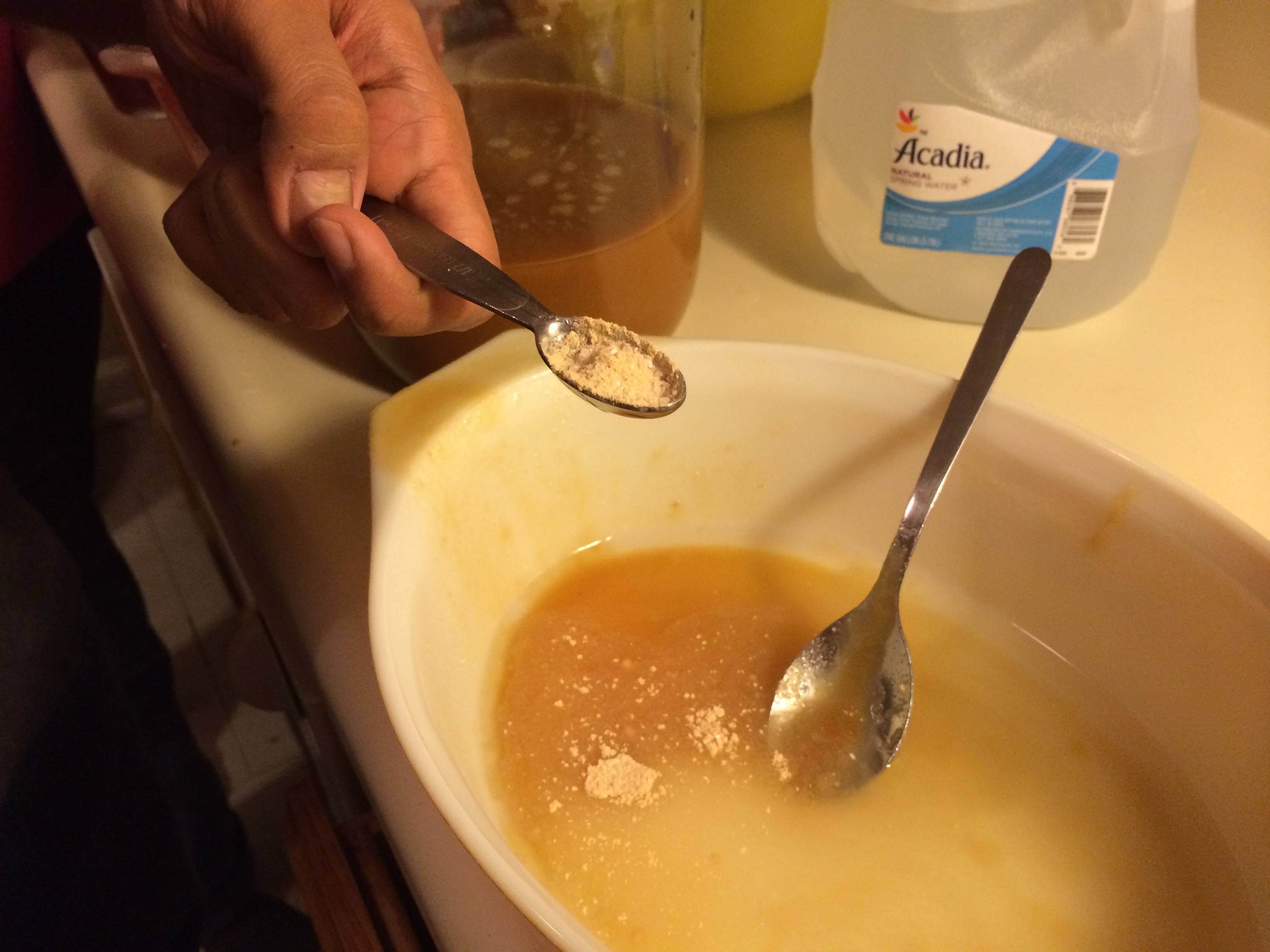
Add another 1 cup of the spring water in the mixing bowl, and add your 1 teaspoon of yeast nutrient, and 1 teaspoon of energizer. Stir and pour into the jug with the honey-water mix.

Washington DC trip 243 Washington DC trip 242

By now the yeast has been rehydrated; give it a stir and pour into the jug as well.

Add enough spring water to the honey in the pitcher to bring it up to the 1 gallon mark. Put the rubber stopper on tightly and give the jug a good shaking for five minutes.

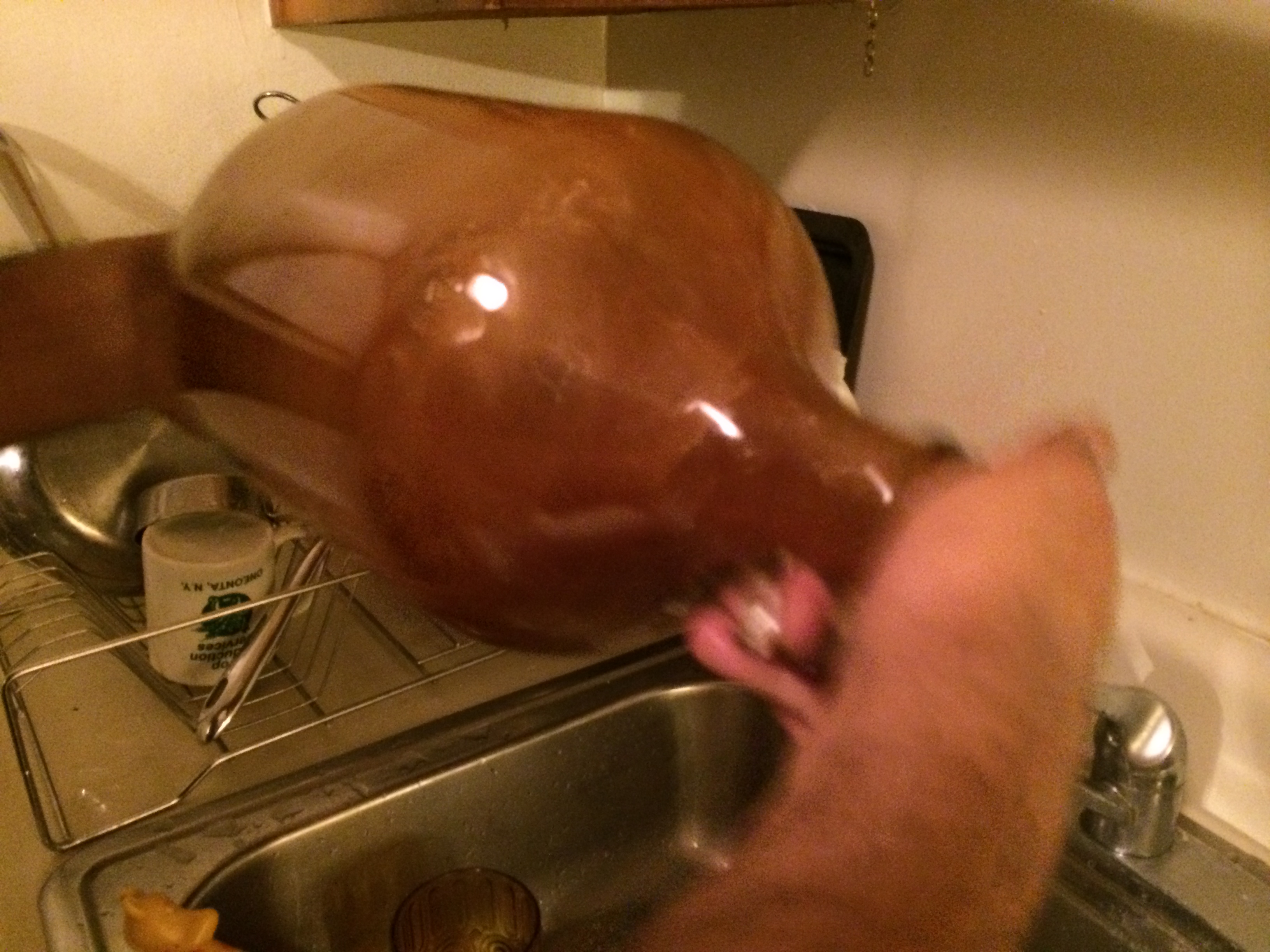
The shaking is important for two reasons — it not only homogenizes the mixture, it also aerates it. Which is something the yeasties need. So, while you are shaking, put it down at intervals, take the rubber stopper off a couple times and let the air escape; put the stopper back on and resume shaking.

Shaking the jug to aerate

Shaking the jug to aerate

Put your sanitized airlock on the jug and cap it. Place the jug in a cool dark place in the house where it will lie undisturbed. Label and date the jug. As you can see, we neglected to do this.

Washington DC trip 250 Washington DC trip 249

In a few days, we should see bubbles of aeration arising in the airlock. Then, the bubbles should die down in a couple to three weeks. Will this happen? To be continued….

Update: 6 days later.


Chicken soup for the pungent soul

In my adopted country (the United States), chicken soup is a magical elixir that soothes every flu-ridden child. It is also a very successful franchise.

Well I have such a magical elixir too, and while it has no chicken in it nor is it a soup, The Odd Pantry is nothing if not opportunistic, so I will ride on the popularity of that successful franchise and call my elixir the chicken soup for the pungent soul.

It is pungent, I can guarantee you that. But not from chilies — from ginger.

In my family when we feel that familiar scratchy throat feeling coming on, we make this strong concentrate of ginger, lemon and honey. I have it straight, my husband dilutes it with water. I have often found that it has curative properties. Much as I am tempted to start dispensing this as medical advice, please be warned that I know nothing of medicine nor has the FDA gotten involved (yet!).

A word on the super-trio that goes into this elixir.

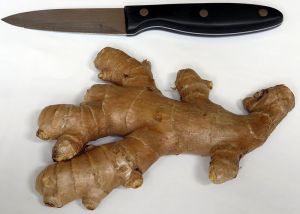
Ginger

Ginger

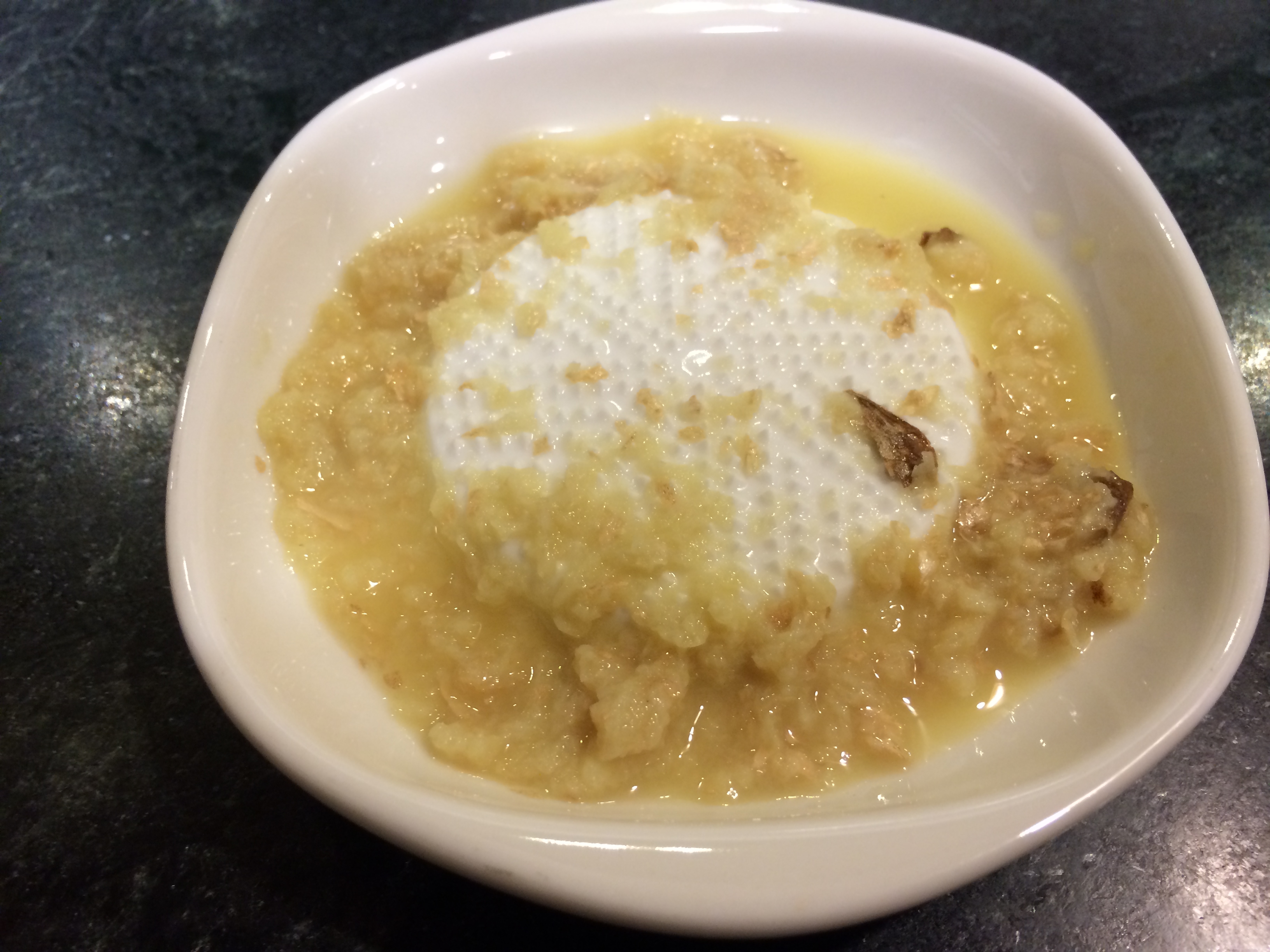
Ginger is an underground stem that is thick with stored water. Although it is extremely fibrous, one can squeeze out an exquisite, pungent, healthful juice out of it using a grater. I have a ceramic ginger grater from Japan that works wonderfully for this. It may be a single-use device, and everyone who knows me knows my intense scorn for single-use kitchen devices, but in this case, I make an exception.

There are compounds in ginger that help with inflammations generally. It also has antimicrobial and fever-reducing properties.

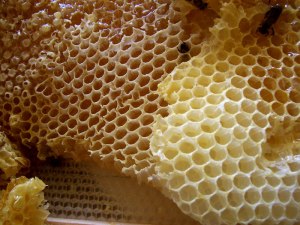
Honey comb

Honey comb

As for honey, those bees have quite a technology going there. Honey has plenty of health benefits, some proven, some not; but the one that concerns us is its antibacterial properties.

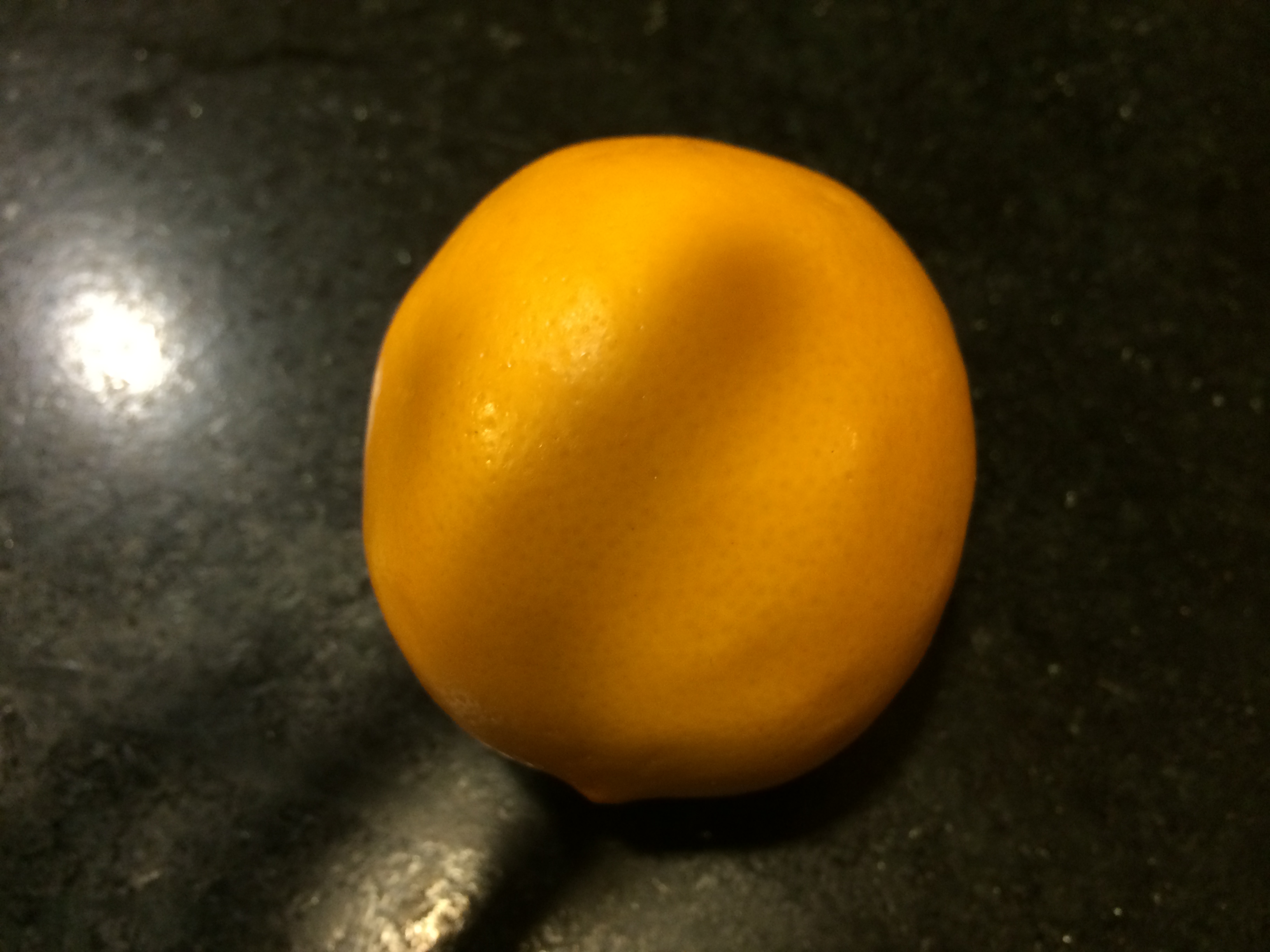
Meyer lemon

Meyer lemon

Lemon juice is a famous purveyor of Vitamin C, which is famous for…you know, colds, sore throats and stuff. Like I said, I am not a doctor. No link needed for this one.

The Odd Pantry’s magical elixir for colds, sore throats and flu

Ingredients:

  • One inch long piece of ginger
  • Juice of one lemon
  • One to one-and-half tablespoons of honey

Method:

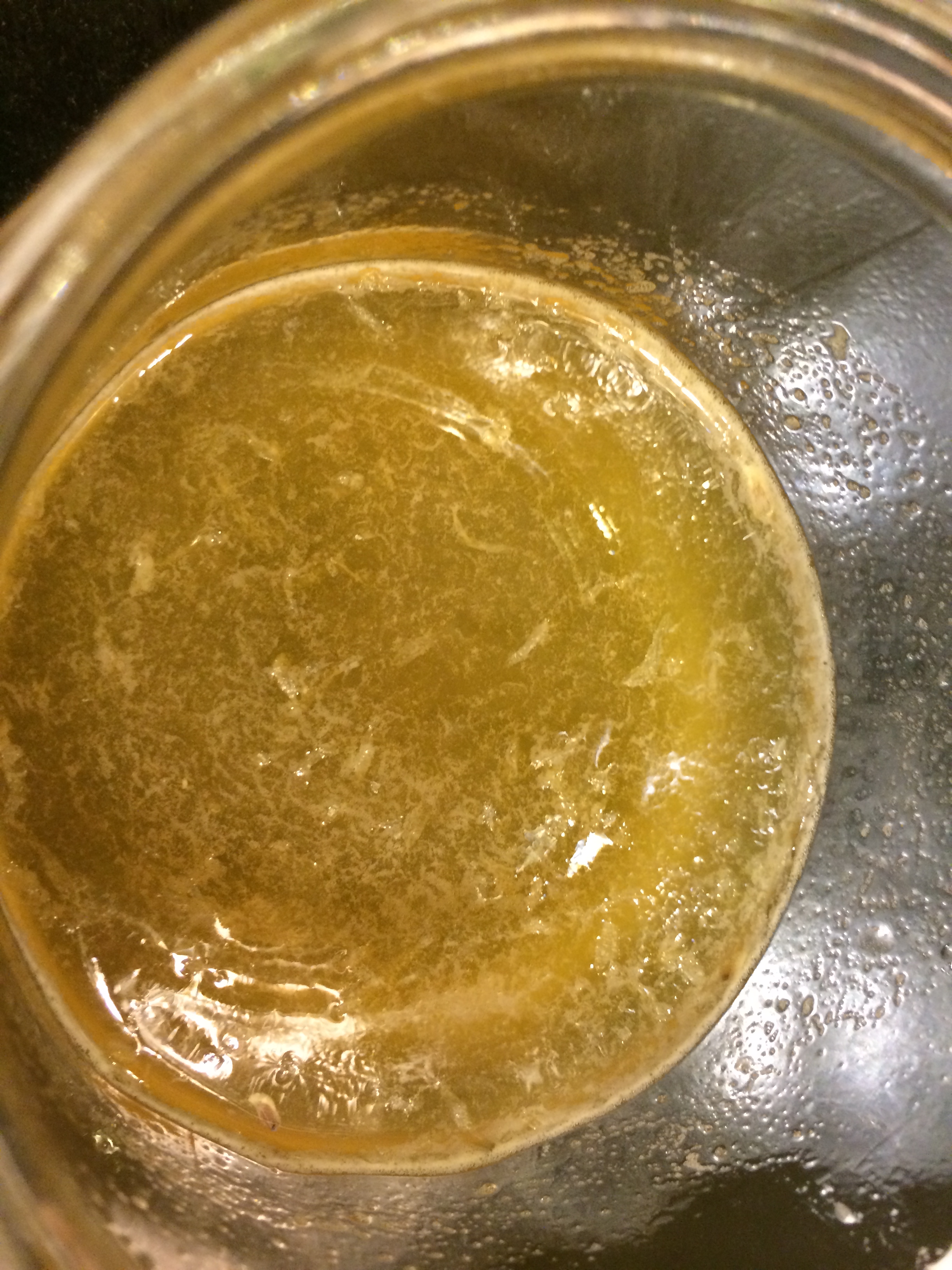
Squeeze out the lemon juice, put in the honey and microwave for 20 seconds or so to get them to combine. Grate the ginger; this will produce some juice. Then you can gather up the fibers and squeeze them to collect more juice. Combine the ginger juice with the honey-lemon.

IMG_0157 IMG_0156 IMG_0161 IMG_0160

Drink a shot of this, straight if you can, diluted with water if you can’t. Have it warm. Feel better.

Even more magical elixir:

Mix in a tablespoon of brandy.

Taking tea Tibetan style

Tibetan butter tea

Tibetan butter tea

Folks, I thought I knew from tea. I grew up with cups of tea being downed two, three, four times a day, to the point where there there’s almost always a pot of tea going on the stove. Mornings and evenings are centered around tea. Tea and toast, tea and eggs, tea and porridge, tea and chaat, but tea, tea and tea.

There were two types of tea, I thought, the mother’s side kind, and the father’s side kind.
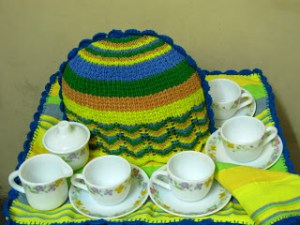
tea cosy

tea cosy

My mother’s side made tea boiled, the Indian way. Loose leaf black, in a pot of water and milk, boil, sugar added to taste, strain into mugs. My father’s side made it the English way because my grandfather had worked with the British in their day. A tray comes to the table, loose leaf black tea steeping in a teapot, covered in a tea cosy. Milk and sugar are in their own pots. Tea is strained into a cup, milk and sugar added to taste. The cup is on a saucer. Always on a saucer.
Cutting chai

Cutting chai

Food stalls big and small, all over the alley ways of India, made tea the mother’s way. Except they had a giant pot going all hours a day in all kinds of weather, and their means of straining is a giant white cloth except it is pretty much brown — a grayish mahogany — from years of straining tea. Not sure when and if it gets washed. The liquid is strained into little glasses: you can order the full, in which case it goes up to the brim. Or you order ‘cutting’, in which case it goes up to under the smooth rim.

In my teenage years I discovered, going to Chinese restaurants with friends, that the Chinese had a different take on tea completely. We could not believe it. Just hot water? No milk, no sugar? But it was…strangely addicting. Those little handle-less cups kept being refilled.

OK, so that’s the gamut, right? Wrong.

So I heard recently from my Nepali friend that Tibetans are tea drinkers too, but given that they live among the mountains, and need strong muscles and layers of fat to protect themselves from the cold, they need a lot of butter; and what better place to put it, than in the interminable cups of tea? That’s right folks, Tibetans like their tea with butter.

That’s not all, they like it salty.

I could not believe that salty, buttery tea existed when I first heard of it; next, I wanted to try it. Try it I did, at my friend’s house. It was luscious and soothing. Next, I wanted to try making it. It took me three tries to make something acceptable, but now I am quite fond of it; and you know what, if you are diabetic or happen to need to climb some mountains on your way to work, this may be just the tea for you.

Tibetan butter tea

This recipe makes just one cup but is easily multiplied. Put one cup of water in a pot with one teaspoon loose leaf black tea. I used orange pekoe Indian tea. Heat it on the stove, but there is no need for it to come to a boil, I found that without any sugar to mask the natural bitterness of tea, I needed it to not develop any bitterness at all. Take it off the heat when it seems as though the water has turned a light reddish brown.

black loose leaf tea steeping

black loose leaf tea steeping

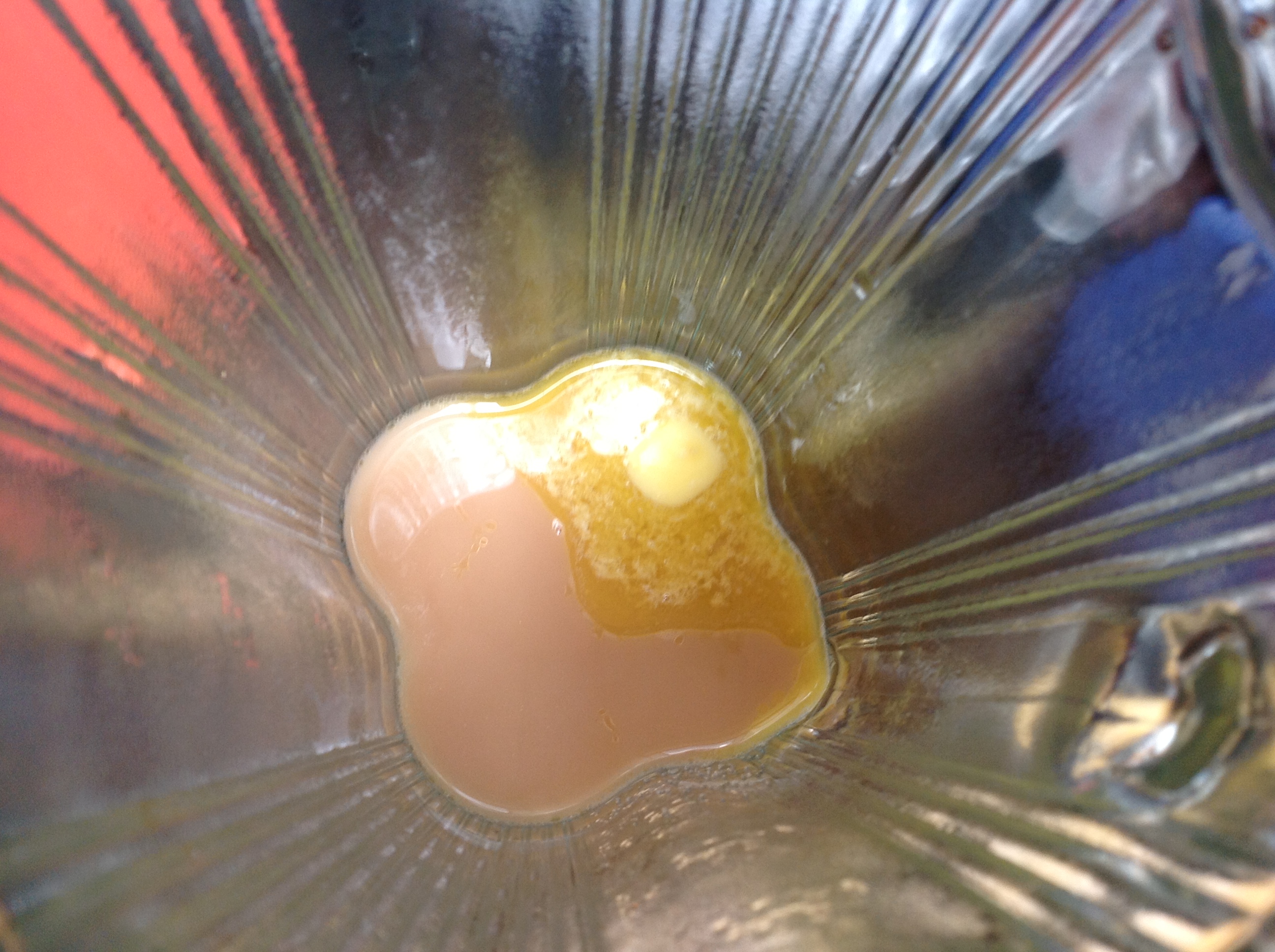
Strain the tea into a blender. In Tibet they use a butter churner that is operated by hand and rather decorative. My blender is nothing to sneeze at but I have to admit it doesn’t compare in sheer beauty to the Tibetan butter churner.

Tibetan tea ingredients in blender

Tibetan tea ingredients in blender

Add 1/8 teaspoon salt, a quarter tablespoon butter, and 2 tablespoons whole milk. In Tibet of course they use yak milk and butter (yak being the male, of course they use the yak’s wife’s milk). I just used the normal cow milk and butter. I have heard though that yak milk is more intense tasting, so if you have access to goat’s milk, you could try using that.

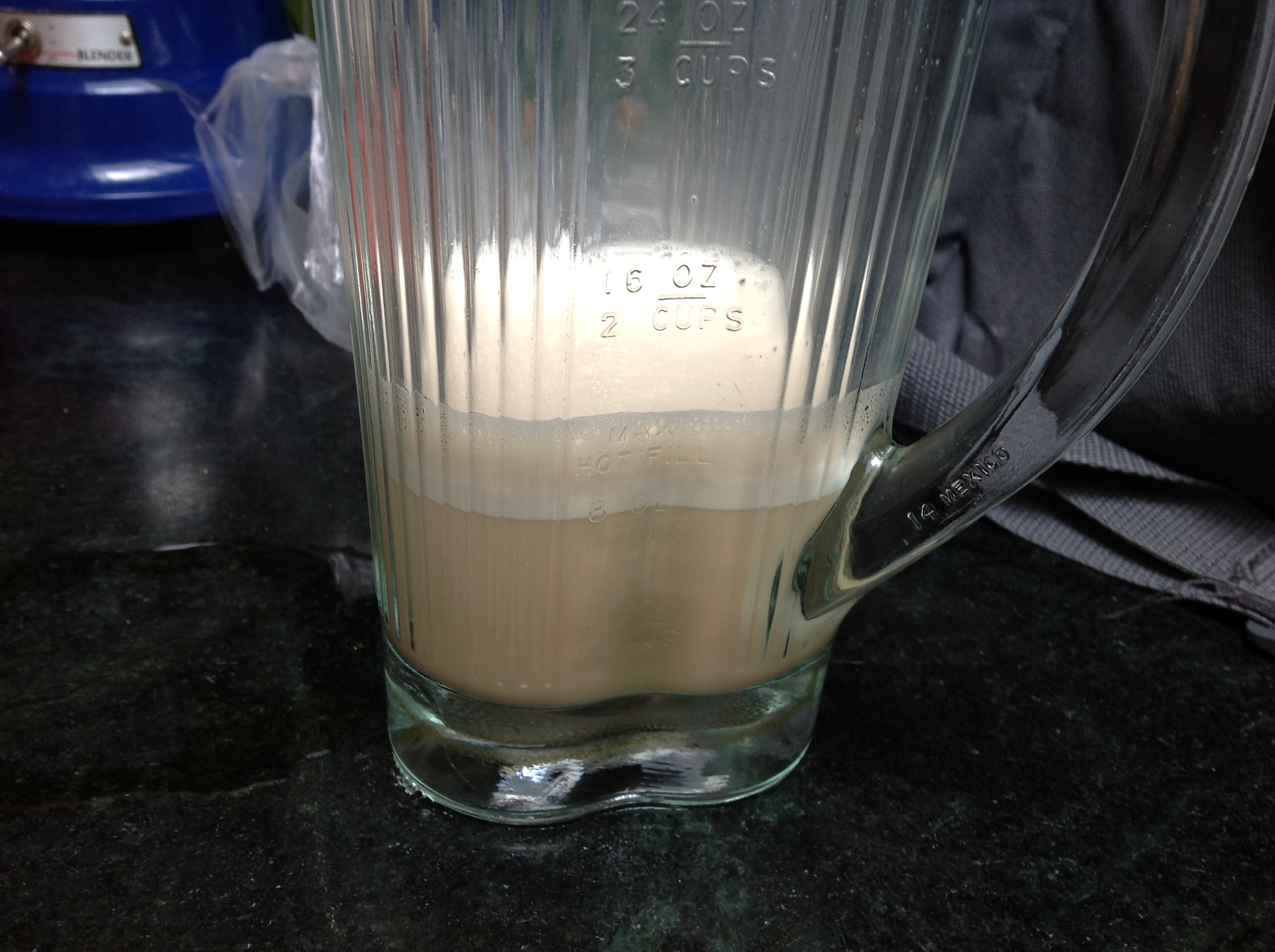
Tibetan tea foamed up in blender

Tibetan tea foamed up in blender

Run the blender for a few minutes till the tea gets very foamy. Pour into a cup and enjoy.